Date
2026-10-21
Duration
7 nights
Departure Port
Luxembourg
Luxembourg
Arrival Port
Nuremberg
Germany
Rating
Luxury
Theme
—


AmaWaterways
Concerto-Class
2012
—
3,600 GT
162
81
51
443 m
12 m
9 knots
No

Luxembourg is Europe's most dramatically situated small capital, perched above deep river gorges and fortified with UNESCO-listed ramparts including seventeen kilometres of underground casemates. Must-dos include exploring the Bock Casemates, dining on Judd mat Gaardebounen, and wandering the charming Grund quarter in the valley below. May through October offers the best weather for enjoying the city's extraordinary terrace views and outdoor cafe culture.
Schweich is a town in the Trier-Saarburg district, in Rhineland-Palatinate, Germany. It is situated on the river Moselle, approx. 10 km northeast of Trier. Schweich is the seat of the Verbandsgemeinde Schweich an der Römischen Weinstraße

Bernkastel-Kues, the twin town straddling the Moselle, has been synonymous with Riesling for six centuries — home to the legendary Bernkasteler Doctor vineyard, whose precipitous south-facing slope has produced wines of such renown that a single hectare once sold for a record price. The Marktplatz, virtually unchanged since the seventeenth century, is Germany's most photogenic half-timbered market square: a stage-set of crooked facades and flower-hung balconies best appreciated over a glass of Spätlese in the late afternoon light. September brings the annual Moselle Wine Festival to the riverbanks. Trier, Germany's oldest city with its spectacular Roman amphitheatre, lies forty minutes upstream.

Alken is a tiny Moselle wine village of 700 residents beneath the twin-towered ruins of 13th-century Burg Thurant, surrounded by some of the world's steepest Riesling vineyards on terraced slate slopes. Must-dos include tasting crystalline Mosel Riesling at village Weinstuben, climbing Burg Thurant for valley views, and walking the vineyard paths above the river. Visit September or October for the wine harvest festival and golden vineyard foliage.

The Reichsburg Cochem — a turreted fairy-tale castle presiding over a loop of the Moselle River — is among Germany's most photogenic medieval fortresses, its silhouette rising above terraced vineyards of ancient Riesling vines. The town below offers a charming ensemble of half-timbered houses, wine-cellar tastings, and cycle paths threading through valley landscapes that have barely changed in centuries. Arrive in September for the harvest festival, when the whole town smells of fermenting Riesling, or choose May for blossom-framed panoramas and long golden evenings on the riverside terraces.

Rüdesheim am Rhein, a jewel of the UNESCO-listed Upper Middle Rhine Valley, is where Germany's most storied wine river cuts through vine-terraced slopes and medieval castle ruins. The pedestrianised Drosselgasse laneway — beloved since the Romantic era — hums with wine taverns pouring the region's celebrated Rieslings, crisp and mineral from the slate soils. The Niederwald Monument surveys the river from the heights, reached by cable car above the vineyards. Day trips by boat unlock Bacharach, Boppard, and the legendary Lorelei rock. September's harvest festivals transform the entire valley into a convivial celebration of the vintage.

Perched at the confluence of the Main and Tauber rivers beneath the romantic ruins of a 12th-century count's castle, Wertheim is one of Franconia's most perfectly preserved medieval towns — a place where timber-framed houses lean over cobbled market squares and where the bone-dry Silvaner poured from the distinctive Bocksbeutel bottle defines the regional table. Day trips to baroque Würzburg, the medieval perfection of Rothenburg ob der Tauber, and the half-timbered town of Miltenberg complete the picture. September's wine harvest brings the Tauber Valley to its most golden.

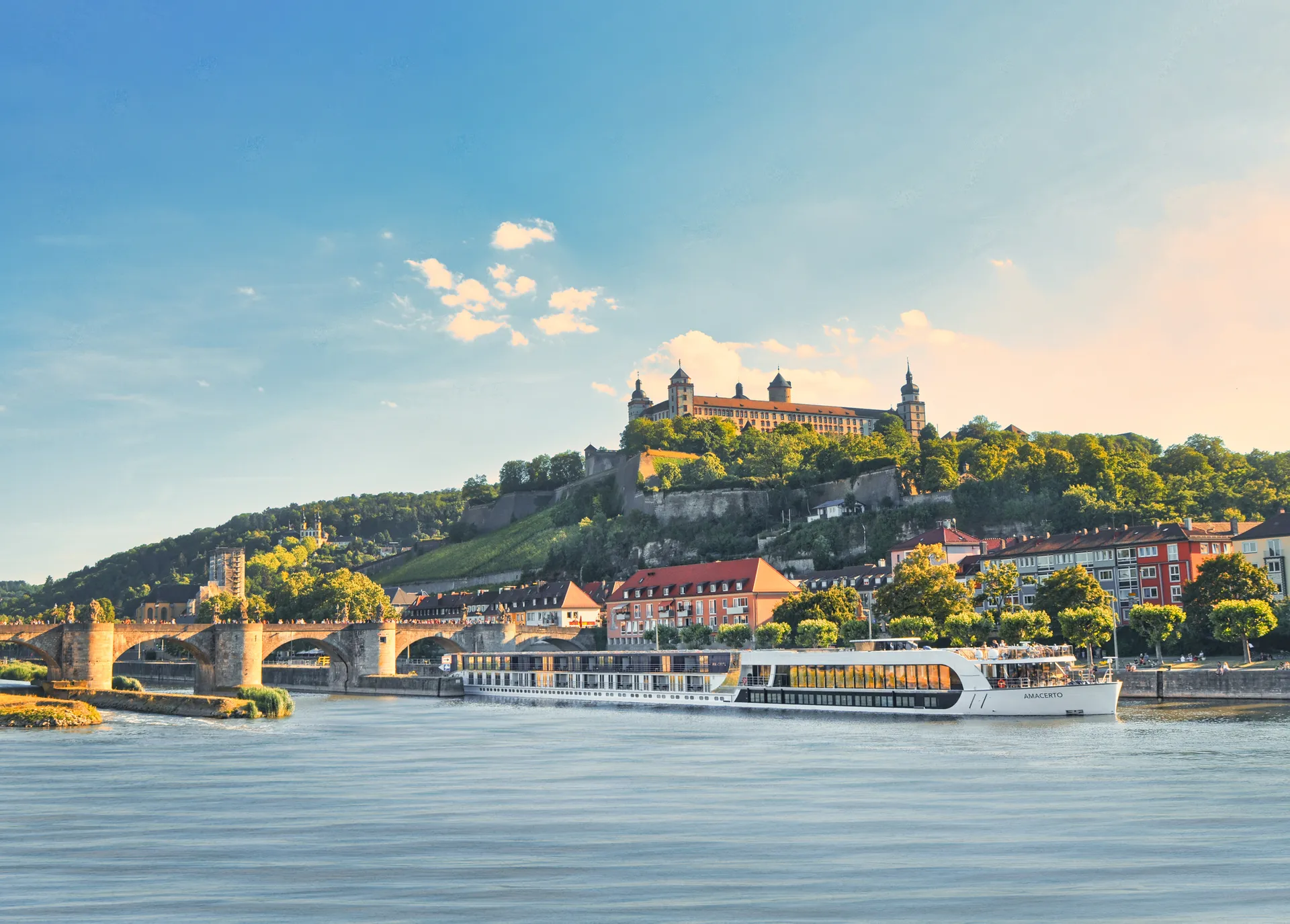
Würzburg, presiding over the Main River at the northern gateway of the Romantic Road, is Bavaria's most elegantly baroque city — its skyline commanded by the medieval Marienberg Fortress and its streets presided over by the magnificent Residenz, a UNESCO-listed princely palace whose frescoed Treppenhaus ceiling by Tiepolo is considered the largest fresco in the world. The surrounding Franconian wine country produces some of Germany's most distinctive Silvaner and Riesling, sold in the iconic bocksbeutel flask from cellars carved directly beneath the old city. Spring through autumn reveals the vine-clad hillsides in their most photogenic splendor; the historic Weinfest am Stein wine festival each September is a highlight of the Franconian calendar.
Eltmann is a charming Franconian town on the Main River in Bavaria, where medieval castle ruins overlook vineyards, half-timbered houses, and one of Germany's premier wine regions. Must-dos include climbing to the Wallburg Castle viewpoint, tasting dry Silvaner wines in their distinctive Bocksbeutel bottles, and excursing to the UNESCO-listed city of Bamberg. May through October offers the warmest weather, open beer gardens, and the most pleasant Main valley cruising conditions.

Nuremberg commands the imagination on two levels: as the glittering medieval city where Holy Roman Emperors held court, Albrecht Dürer was born, and craftsmen produced the first pocket watch — and as the site of the 20th century's darkest chapter, where Nazi rallies and subsequent war crimes trials left permanent marks on European history and conscience. The Kaiserburg castle crowning the hill above the perfectly preserved old town offers sweeping views of a cityscape that, despite wartime bombing, remains one of Germany's most beautiful. The Documentation Centre on the former Nazi Rally Grounds is essential, sobering history; the Christmas Market on the Hauptmarkt, held since 1628, is among Europe's finest. Visit May through October or December.
Day 1

Luxembourg is Europe's most dramatically situated small capital, perched above deep river gorges and fortified with UNESCO-listed ramparts including seventeen kilometres of underground casemates. Must-dos include exploring the Bock Casemates, dining on Judd mat Gaardebounen, and wandering the charming Grund quarter in the valley below. May through October offers the best weather for enjoying the city's extraordinary terrace views and outdoor cafe culture.
Day 2
Schweich is a town in the Trier-Saarburg district, in Rhineland-Palatinate, Germany. It is situated on the river Moselle, approx. 10 km northeast of Trier. Schweich is the seat of the Verbandsgemeinde Schweich an der Römischen Weinstraße

Bernkastel-Kues, the twin town straddling the Moselle, has been synonymous with Riesling for six centuries — home to the legendary Bernkasteler Doctor vineyard, whose precipitous south-facing slope has produced wines of such renown that a single hectare once sold for a record price. The Marktplatz, virtually unchanged since the seventeenth century, is Germany's most photogenic half-timbered market square: a stage-set of crooked facades and flower-hung balconies best appreciated over a glass of Spätlese in the late afternoon light. September brings the annual Moselle Wine Festival to the riverbanks. Trier, Germany's oldest city with its spectacular Roman amphitheatre, lies forty minutes upstream.
Day 3

Alken is a tiny Moselle wine village of 700 residents beneath the twin-towered ruins of 13th-century Burg Thurant, surrounded by some of the world's steepest Riesling vineyards on terraced slate slopes. Must-dos include tasting crystalline Mosel Riesling at village Weinstuben, climbing Burg Thurant for valley views, and walking the vineyard paths above the river. Visit September or October for the wine harvest festival and golden vineyard foliage.

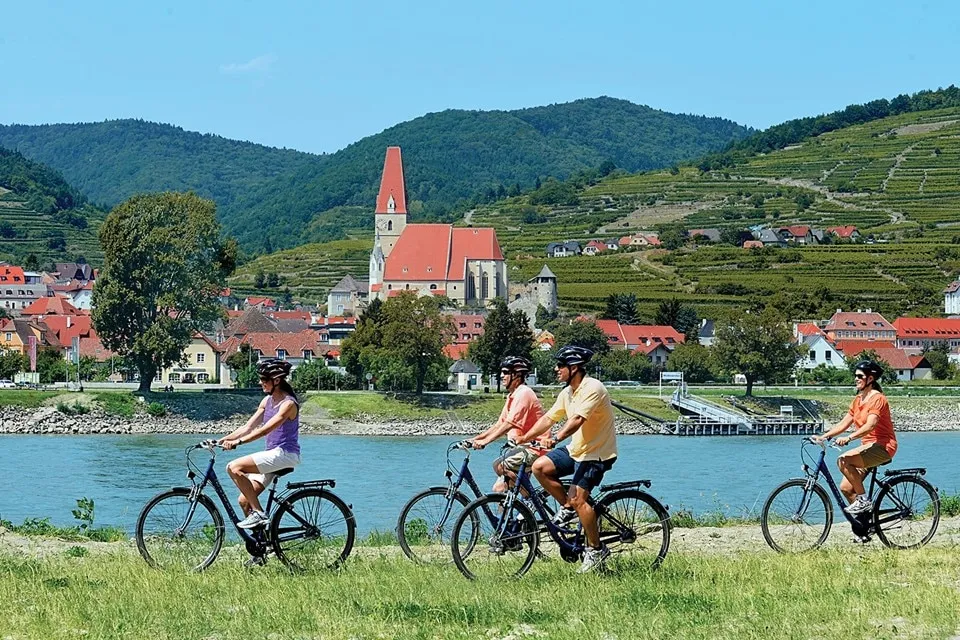
The Reichsburg Cochem — a turreted fairy-tale castle presiding over a loop of the Moselle River — is among Germany's most photogenic medieval fortresses, its silhouette rising above terraced vineyards of ancient Riesling vines. The town below offers a charming ensemble of half-timbered houses, wine-cellar tastings, and cycle paths threading through valley landscapes that have barely changed in centuries. Arrive in September for the harvest festival, when the whole town smells of fermenting Riesling, or choose May for blossom-framed panoramas and long golden evenings on the riverside terraces.

Rüdesheim am Rhein, a jewel of the UNESCO-listed Upper Middle Rhine Valley, is where Germany's most storied wine river cuts through vine-terraced slopes and medieval castle ruins. The pedestrianised Drosselgasse laneway — beloved since the Romantic era — hums with wine taverns pouring the region's celebrated Rieslings, crisp and mineral from the slate soils. The Niederwald Monument surveys the river from the heights, reached by cable car above the vineyards. Day trips by boat unlock Bacharach, Boppard, and the legendary Lorelei rock. September's harvest festivals transform the entire valley into a convivial celebration of the vintage.
Day 5

Perched at the confluence of the Main and Tauber rivers beneath the romantic ruins of a 12th-century count's castle, Wertheim is one of Franconia's most perfectly preserved medieval towns — a place where timber-framed houses lean over cobbled market squares and where the bone-dry Silvaner poured from the distinctive Bocksbeutel bottle defines the regional table. Day trips to baroque Würzburg, the medieval perfection of Rothenburg ob der Tauber, and the half-timbered town of Miltenberg complete the picture. September's wine harvest brings the Tauber Valley to its most golden.
Day 6

Würzburg, presiding over the Main River at the northern gateway of the Romantic Road, is Bavaria's most elegantly baroque city — its skyline commanded by the medieval Marienberg Fortress and its streets presided over by the magnificent Residenz, a UNESCO-listed princely palace whose frescoed Treppenhaus ceiling by Tiepolo is considered the largest fresco in the world. The surrounding Franconian wine country produces some of Germany's most distinctive Silvaner and Riesling, sold in the iconic bocksbeutel flask from cellars carved directly beneath the old city. Spring through autumn reveals the vine-clad hillsides in their most photogenic splendor; the historic Weinfest am Stein wine festival each September is a highlight of the Franconian calendar.
Day 7
Eltmann is a charming Franconian town on the Main River in Bavaria, where medieval castle ruins overlook vineyards, half-timbered houses, and one of Germany's premier wine regions. Must-dos include climbing to the Wallburg Castle viewpoint, tasting dry Silvaner wines in their distinctive Bocksbeutel bottles, and excursing to the UNESCO-listed city of Bamberg. May through October offers the warmest weather, open beer gardens, and the most pleasant Main valley cruising conditions.
Day 8

Nuremberg commands the imagination on two levels: as the glittering medieval city where Holy Roman Emperors held court, Albrecht Dürer was born, and craftsmen produced the first pocket watch — and as the site of the 20th century's darkest chapter, where Nazi rallies and subsequent war crimes trials left permanent marks on European history and conscience. The Kaiserburg castle crowning the hill above the perfectly preserved old town offers sweeping views of a cityscape that, despite wartime bombing, remains one of Germany's most beautiful. The Documentation Centre on the former Nazi Rally Grounds is essential, sobering history; the Christmas Market on the Hauptmarkt, held since 1628, is among Europe's finest. Visit May through October or December.


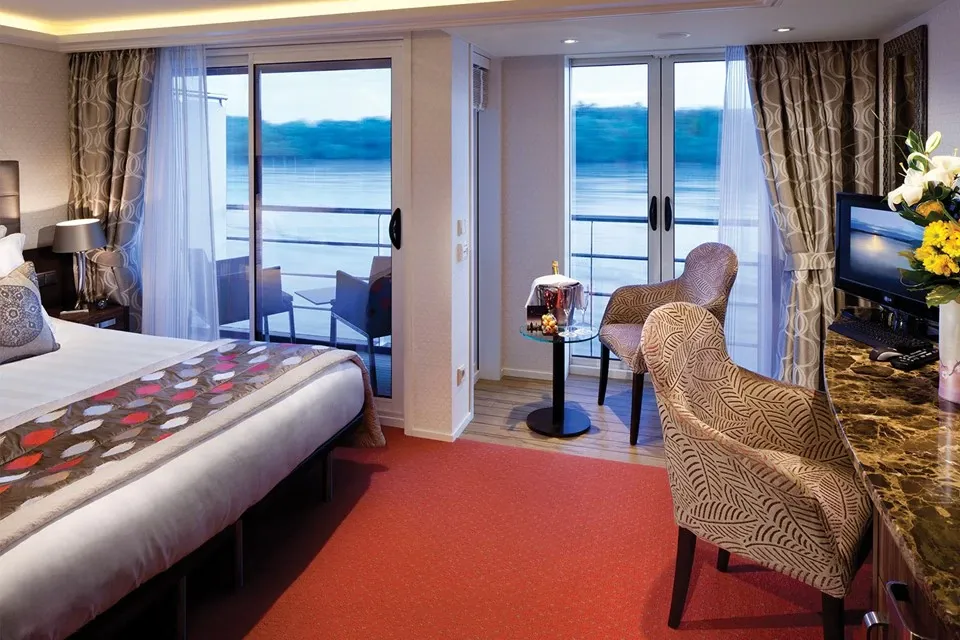
In-room temperature control
Deluxe hotel-style bedding with Egyptian linen, down pillows and duvet
Spacious bathrooms with multi-jet showerheads
Large wardrobe, full-length mirror, hair dryer, safe and direct-dial telephone
Flat-screen TV that also works as a computer
Entertainment on Demand system providing complimentary TV, movies and music library
Complimentary internet and Wi-Fi
Complimentary bottled water replenished daily
Desk and chair


In-room temperature control
Deluxe hotel-style bedding with Egyptian linen, down pillows and duvet
Spacious bathrooms with multi-jet showerheads
Large wardrobe, full-length mirror, hair dryer, safe and direct-dial telephone
Flat-screen TV that also works as a computer
Entertainment on Demand system providing complimentary TV, movies and music library
Complimentary internet and Wi-Fi
Complimentary bottled water replenished daily
Desk and chair


In-room temperature control
Deluxe hotel-style bedding with Egyptian linen, down pillows and duvet
Spacious bathrooms with multi-jet showerheads
Large wardrobe, full-length mirror, hair dryer, safe and direct-dial telephone
Flat-screen TV that also works as a computer
Entertainment on Demand system providing complimentary TV, movies and music library
Complimentary internet and Wi-Fi
Complimentary bottled water replenished daily
Desk and chair


In-room temperature control
Deluxe hotel-style bedding with Egyptian linen, down pillows and duvet
Spacious bathrooms with multi-jet showerheads
Large wardrobe, full-length mirror, hair dryer, safe and direct-dial telephone
Flat-screen TV that also works as a computer
Entertainment on Demand system providing complimentary TV, movies and music library
Complimentary internet and Wi-Fi
Complimentary bottled water replenished daily
Desk and chair
Our cruise specialists can help you find the perfect cabin and the best available pricing.
(+886) 02-2721-7300Contact Advisor