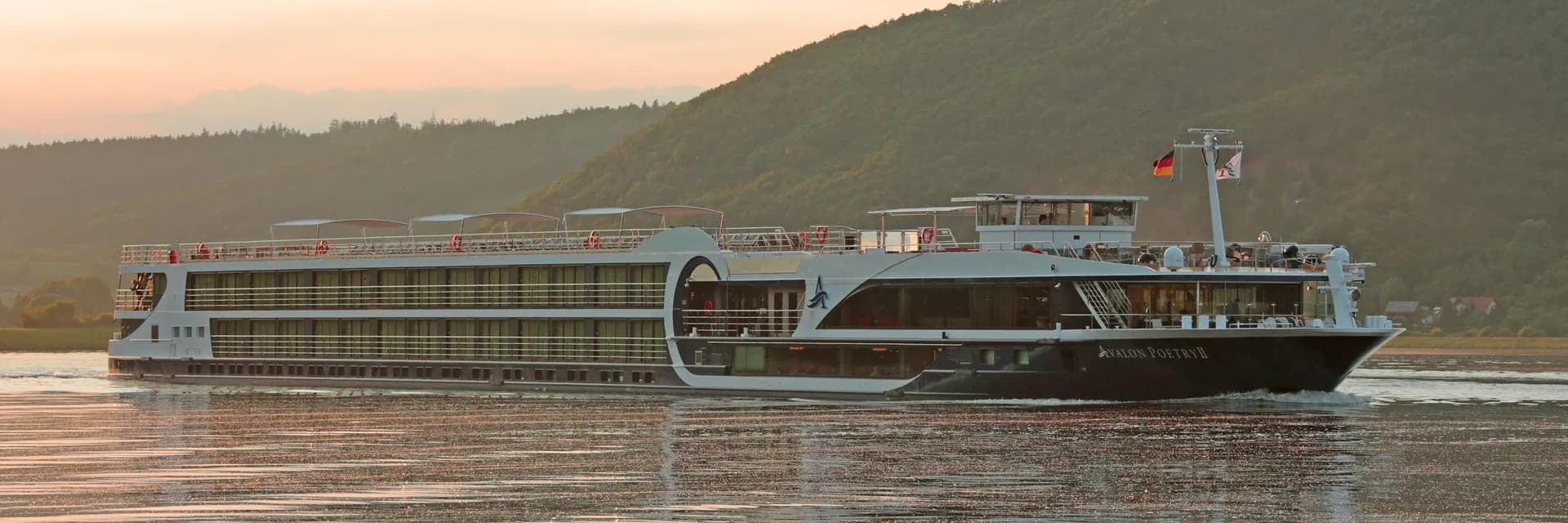
Avalon Waterways60412
France, Uncorked: The Rhone, The Seine & Bordeaux with 2 Nights in French Riviera
Date
April 12, 2026
Duration
20 nights
Departure Port
Nice
France
Arrival Port
Bordeaux
France
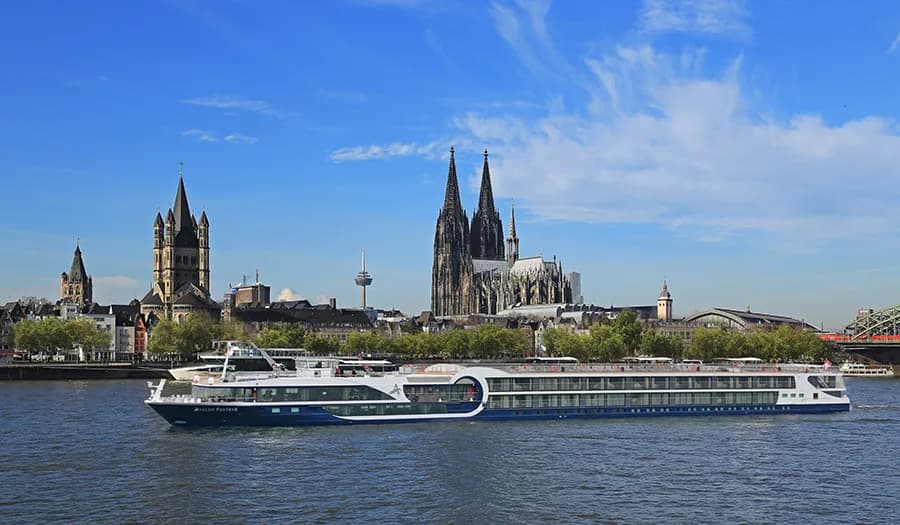
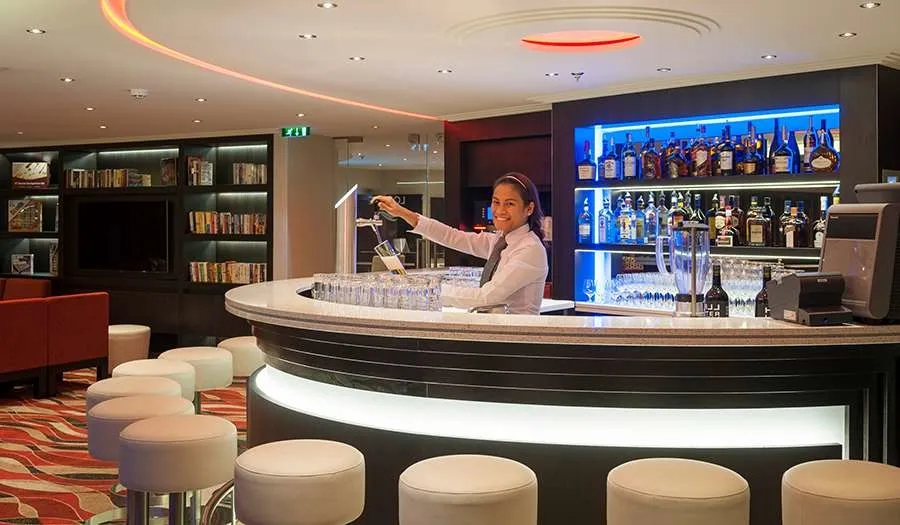
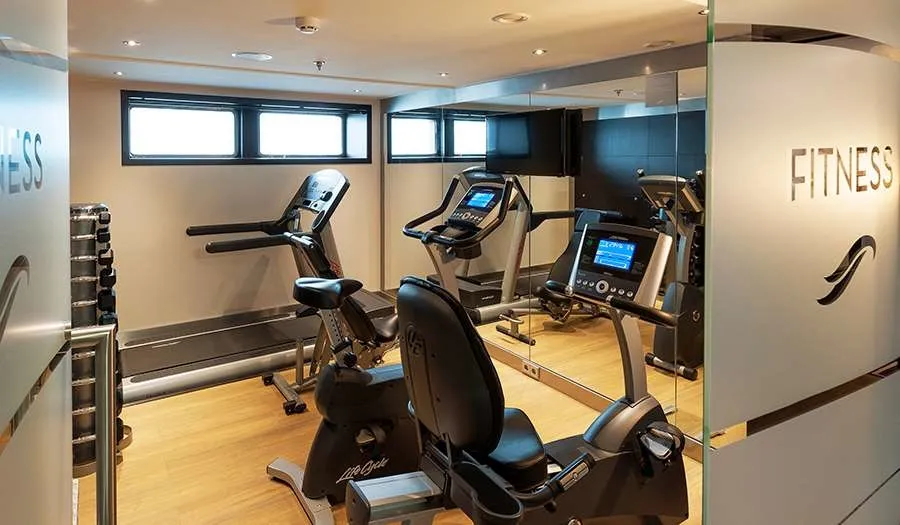
Avalon Waterways
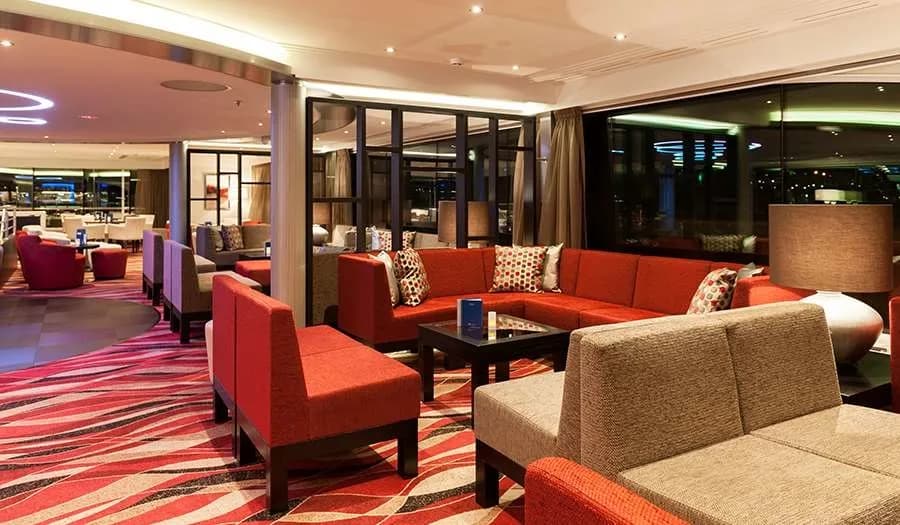
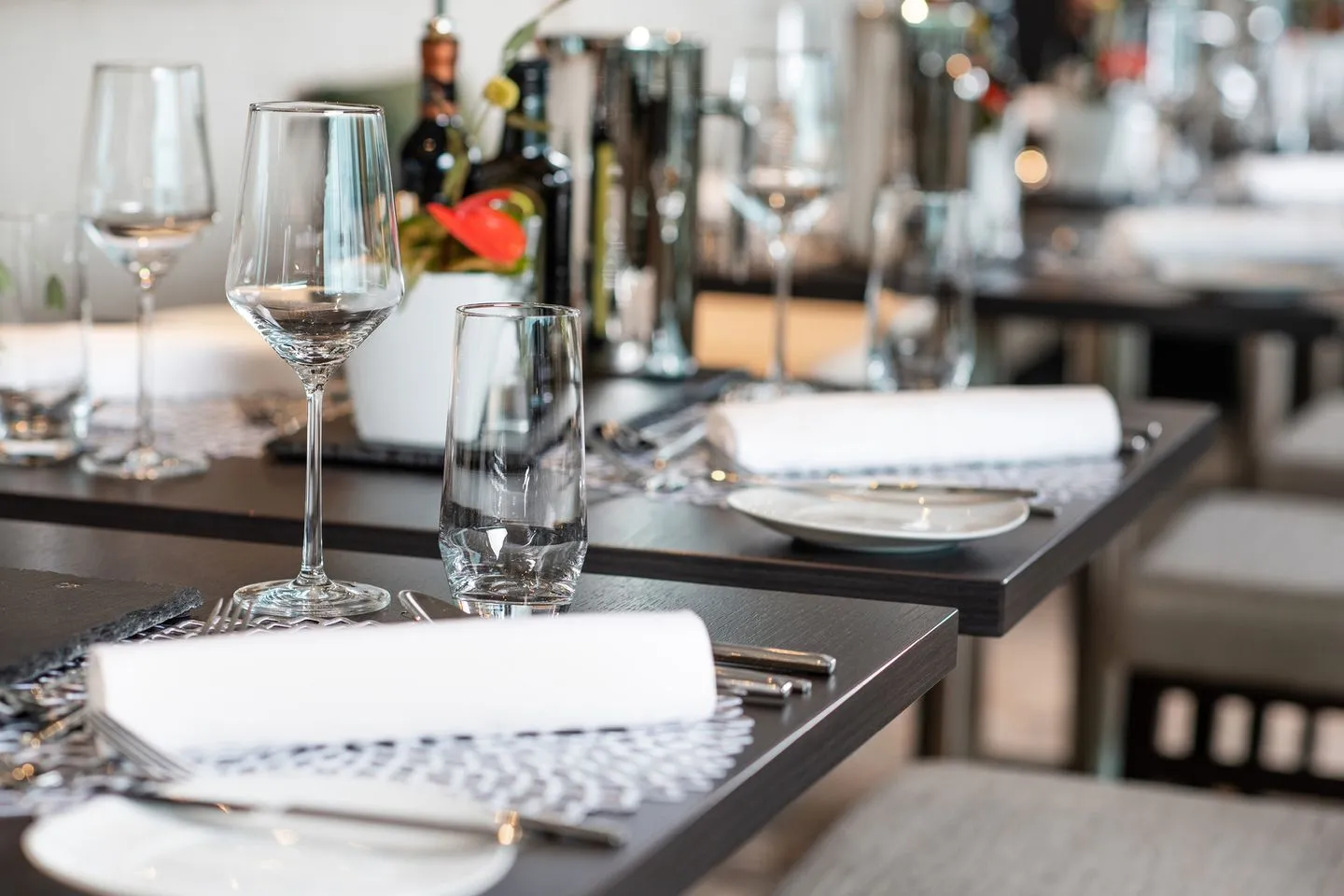
Avalon Poetry II
Launched
2014-01-01
Tonnage
2,022 GT
Length
361 m
Speed
12 knots
Cabins
64 / 130 guests
Crew
37
Itinerary
Day 1
Day 1
Nice
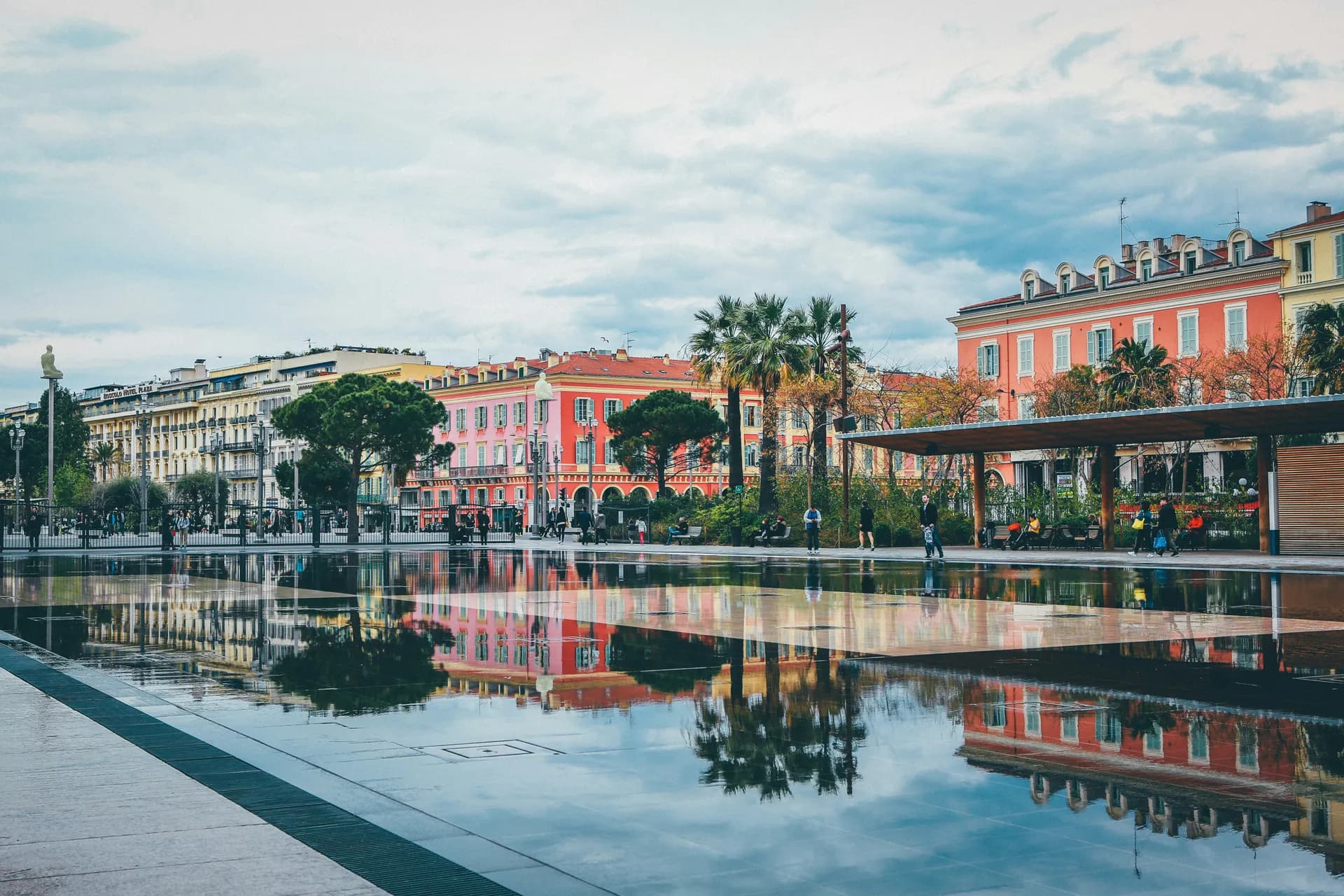
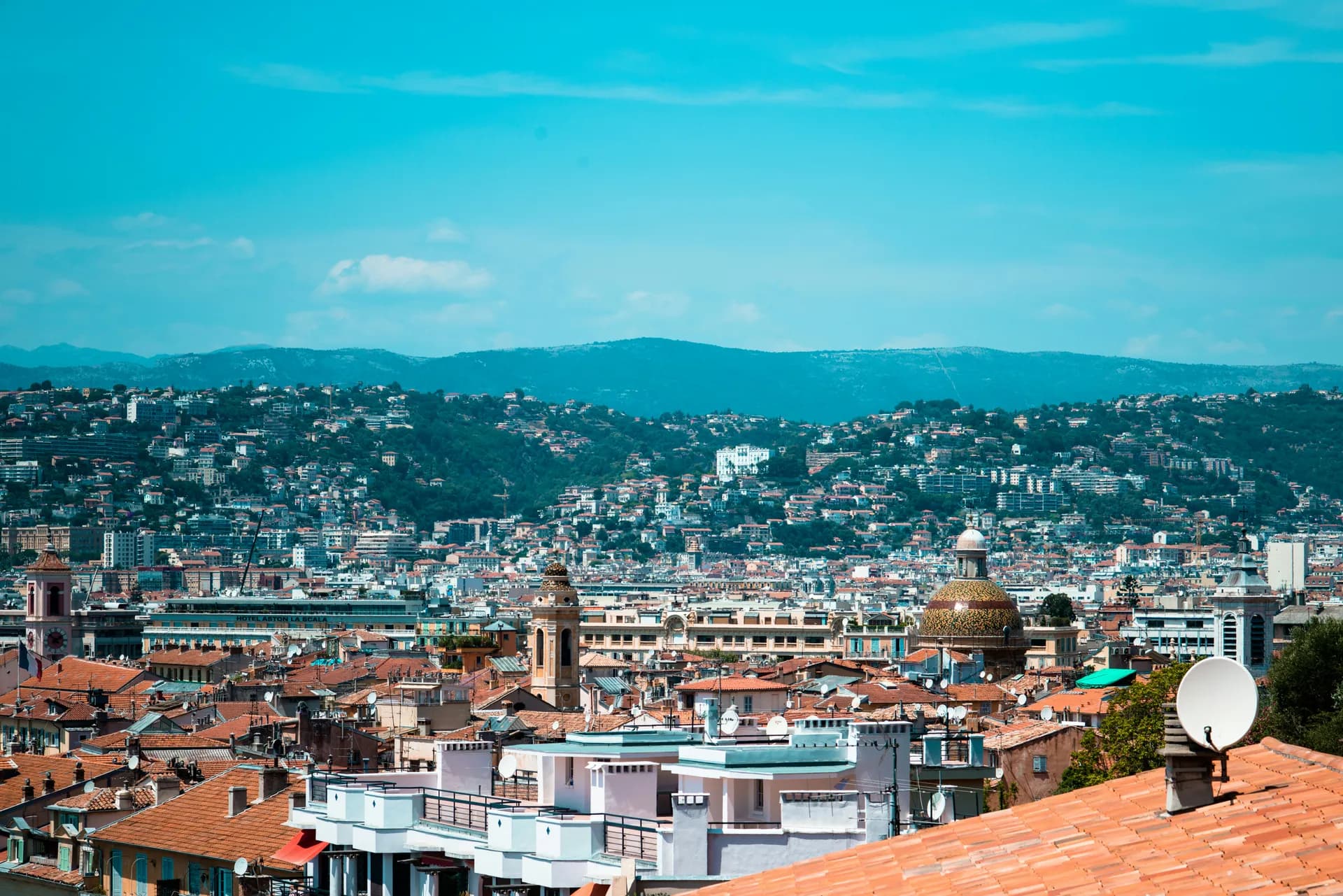
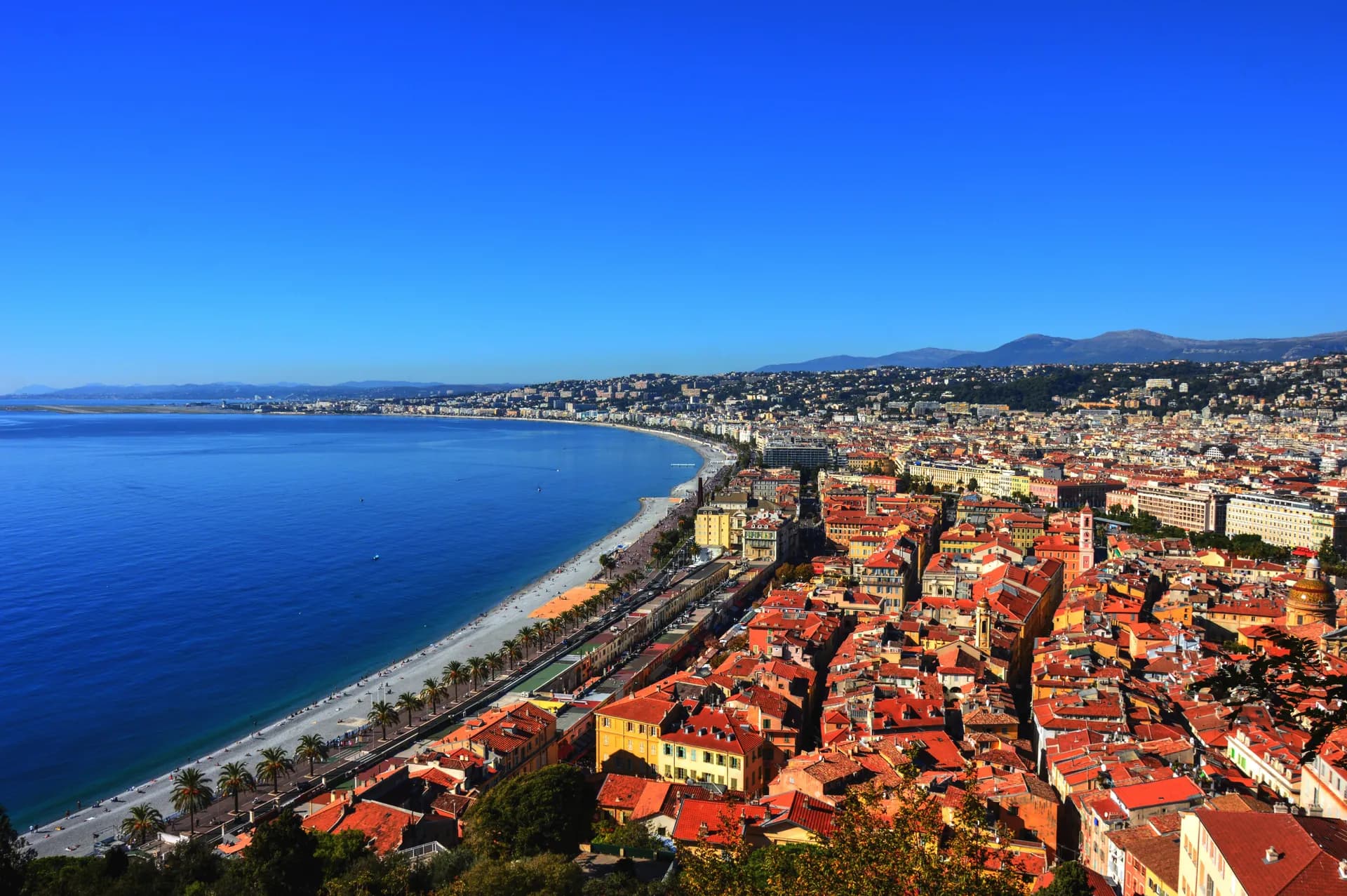
FranceNice, often called the Queen of the Riviera, is a delightful city that is fashionable yet relaxed and fun. Sprawling over an extensive area, Nice comprises a wonderful blend of old and new. The old town is one of the delights of the Riviera. Narrow streets and winding alleys are lined with faded 17th- and 18th-century buildings, where families sell crafts and produce. The Italian façades of modern Nice and the exuberant, early 20th-century residences, which made the city one of Europe's fashionable winter retreats, remain intact. Although not blessed with the best beaches, its pebbled sands continue to attract scores of visitors every year. Adding to the city's attractions are relics of its ancient past. Greek seafarers founded Nice around 350 BC. The Romans took control 196 years later, settling farther uphill in the area that is now Cimiez. By the 10th century, Nice was ruled by the Counts of Provence and in the 14th century fell to the House of Savoy. Although the French occupied Nice for short periods during the 18th and 19th centuries, the city did not become a definitive part of France until 1860 when Napoleon III made a deal with the House of Savoy. Nice grew in popularity during the Victorian period when the English aristocracy favored it as a winter retreat because of the mild climate. Backed by scenic mountains, the city is generally divided into the Old Town and modern Nice. The look of the old town has changed little since the 1700s. Its colorful flower market should not be missed. The celebrated, palm-lined Promenade des Anglais follows the gently curved beachfront for about three miles and visitors as well as residents enjoy strolling along its path. Everything costs more along this famed strip; expensive shops, restaurants and art galleries blend with more modest establishments. The showpiece of the Promenade des Anglais is the palatial Hotel Negresco. North of the Old Town, the stately Place Massena is the main hub of Nice. The square is surrounded by neo-classical, arcaded buildings painted in shades of ochre and red. The central part of the city contains fine restaurants and hotels and is particularly known for its pedestrian zone with many boutiques of well-known designers. North of the city center is the posh suburb of Cimiez, where several museums are located.
Day 2
Day 2
Nice
FranceNice, often called the Queen of the Riviera, is a delightful city that is fashionable yet relaxed and fun. Sprawling over an extensive area, Nice comprises a wonderful blend of old and new. The old town is one of the delights of the Riviera. Narrow streets and winding alleys are lined with faded 17th- and 18th-century buildings, where families sell crafts and produce. The Italian façades of modern Nice and the exuberant, early 20th-century residences, which made the city one of Europe's fashionable winter retreats, remain intact. Although not blessed with the best beaches, its pebbled sands continue to attract scores of visitors every year. Adding to the city's attractions are relics of its ancient past. Greek seafarers founded Nice around 350 BC. The Romans took control 196 years later, settling farther uphill in the area that is now Cimiez. By the 10th century, Nice was ruled by the Counts of Provence and in the 14th century fell to the House of Savoy. Although the French occupied Nice for short periods during the 18th and 19th centuries, the city did not become a definitive part of France until 1860 when Napoleon III made a deal with the House of Savoy. Nice grew in popularity during the Victorian period when the English aristocracy favored it as a winter retreat because of the mild climate. Backed by scenic mountains, the city is generally divided into the Old Town and modern Nice. The look of the old town has changed little since the 1700s. Its colorful flower market should not be missed. The celebrated, palm-lined Promenade des Anglais follows the gently curved beachfront for about three miles and visitors as well as residents enjoy strolling along its path. Everything costs more along this famed strip; expensive shops, restaurants and art galleries blend with more modest establishments. The showpiece of the Promenade des Anglais is the palatial Hotel Negresco. North of the Old Town, the stately Place Massena is the main hub of Nice. The square is surrounded by neo-classical, arcaded buildings painted in shades of ochre and red. The central part of the city contains fine restaurants and hotels and is particularly known for its pedestrian zone with many boutiques of well-known designers. North of the city center is the posh suburb of Cimiez, where several museums are located.
Day 3
Day 3
Nice
FranceNice, often called the Queen of the Riviera, is a delightful city that is fashionable yet relaxed and fun. Sprawling over an extensive area, Nice comprises a wonderful blend of old and new. The old town is one of the delights of the Riviera. Narrow streets and winding alleys are lined with faded 17th- and 18th-century buildings, where families sell crafts and produce. The Italian façades of modern Nice and the exuberant, early 20th-century residences, which made the city one of Europe's fashionable winter retreats, remain intact. Although not blessed with the best beaches, its pebbled sands continue to attract scores of visitors every year. Adding to the city's attractions are relics of its ancient past. Greek seafarers founded Nice around 350 BC. The Romans took control 196 years later, settling farther uphill in the area that is now Cimiez. By the 10th century, Nice was ruled by the Counts of Provence and in the 14th century fell to the House of Savoy. Although the French occupied Nice for short periods during the 18th and 19th centuries, the city did not become a definitive part of France until 1860 when Napoleon III made a deal with the House of Savoy. Nice grew in popularity during the Victorian period when the English aristocracy favored it as a winter retreat because of the mild climate. Backed by scenic mountains, the city is generally divided into the Old Town and modern Nice. The look of the old town has changed little since the 1700s. Its colorful flower market should not be missed. The celebrated, palm-lined Promenade des Anglais follows the gently curved beachfront for about three miles and visitors as well as residents enjoy strolling along its path. Everything costs more along this famed strip; expensive shops, restaurants and art galleries blend with more modest establishments. The showpiece of the Promenade des Anglais is the palatial Hotel Negresco. North of the Old Town, the stately Place Massena is the main hub of Nice. The square is surrounded by neo-classical, arcaded buildings painted in shades of ochre and red. The central part of the city contains fine restaurants and hotels and is particularly known for its pedestrian zone with many boutiques of well-known designers. North of the city center is the posh suburb of Cimiez, where several museums are located.
Day 3
Day 3
Arles
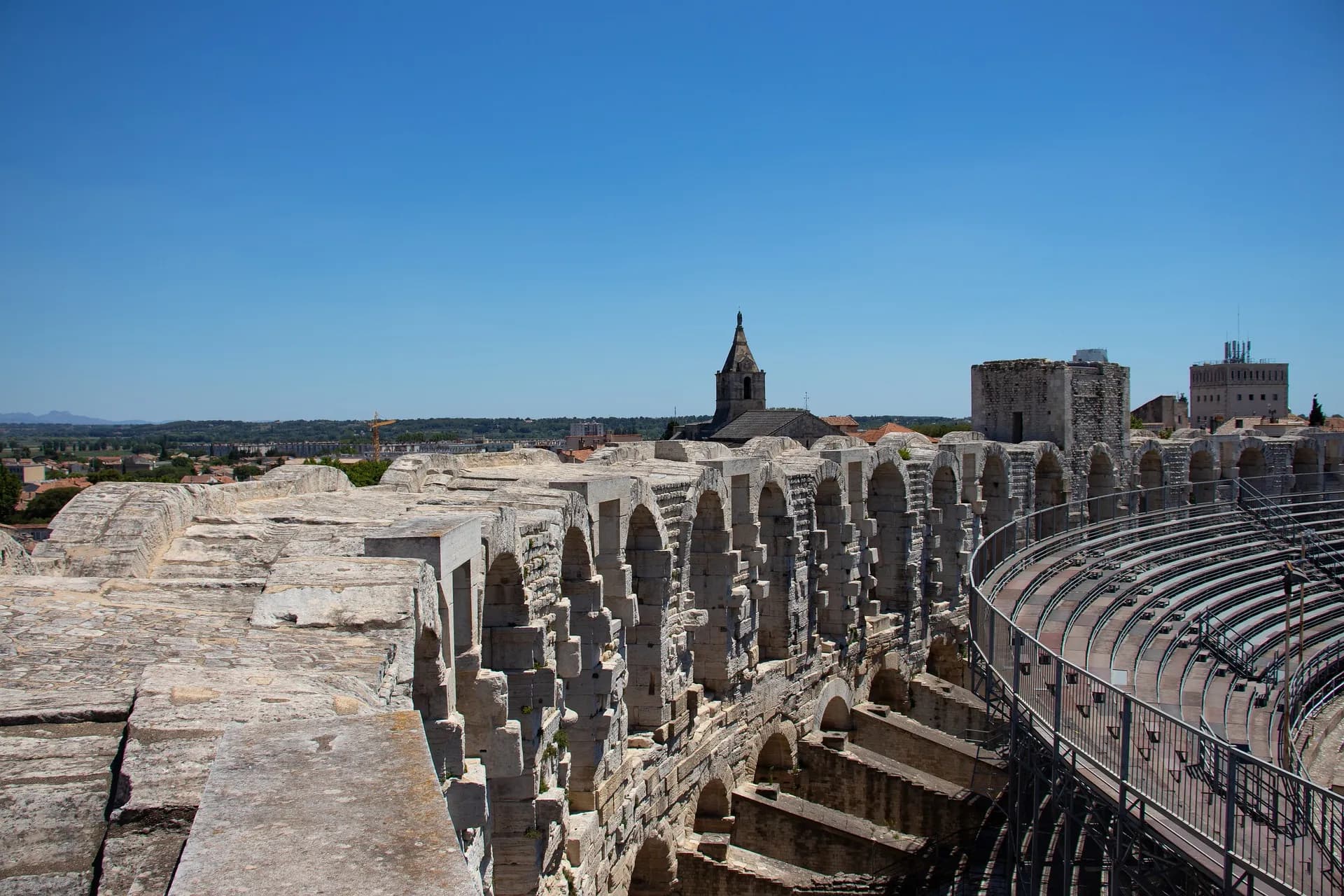
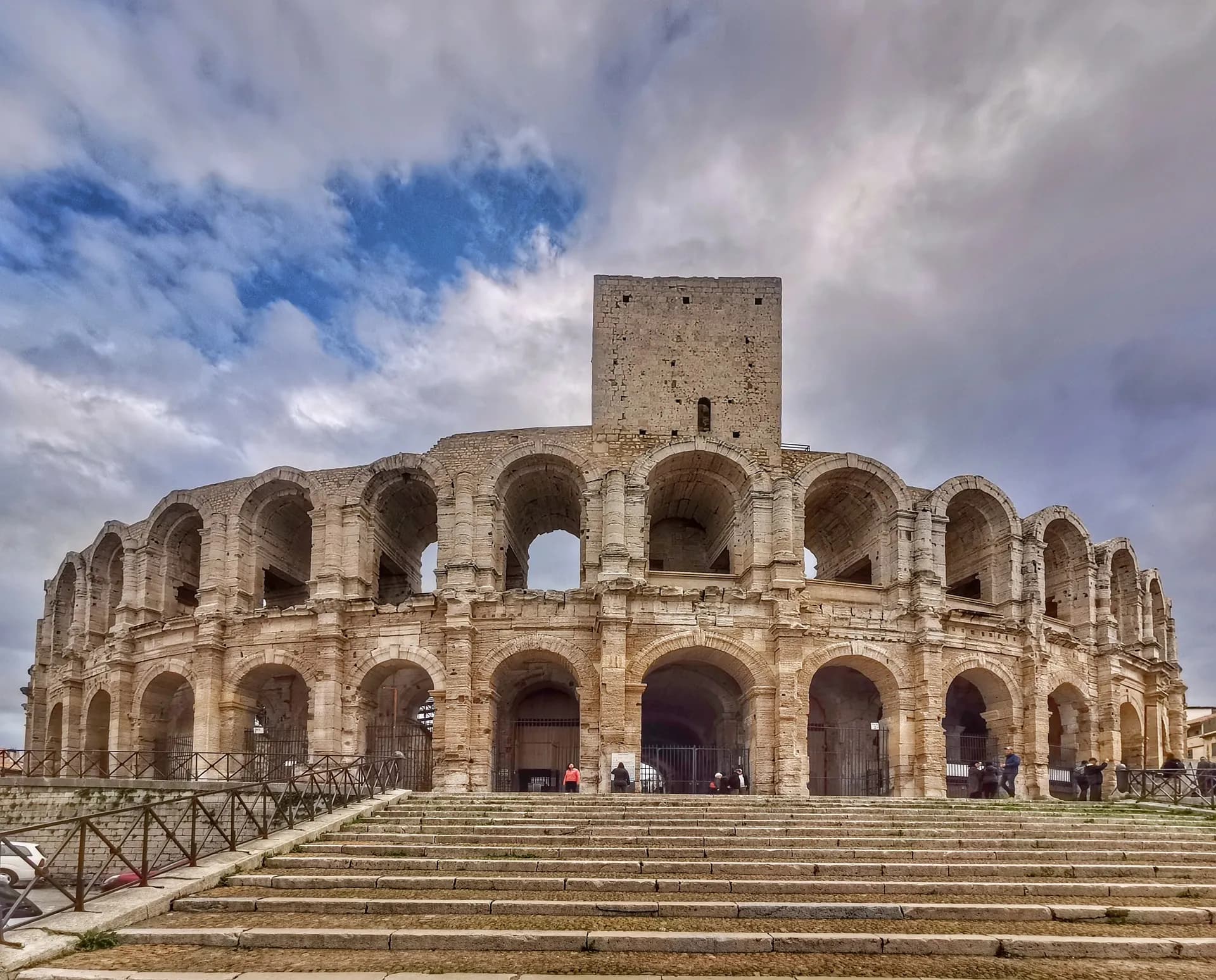
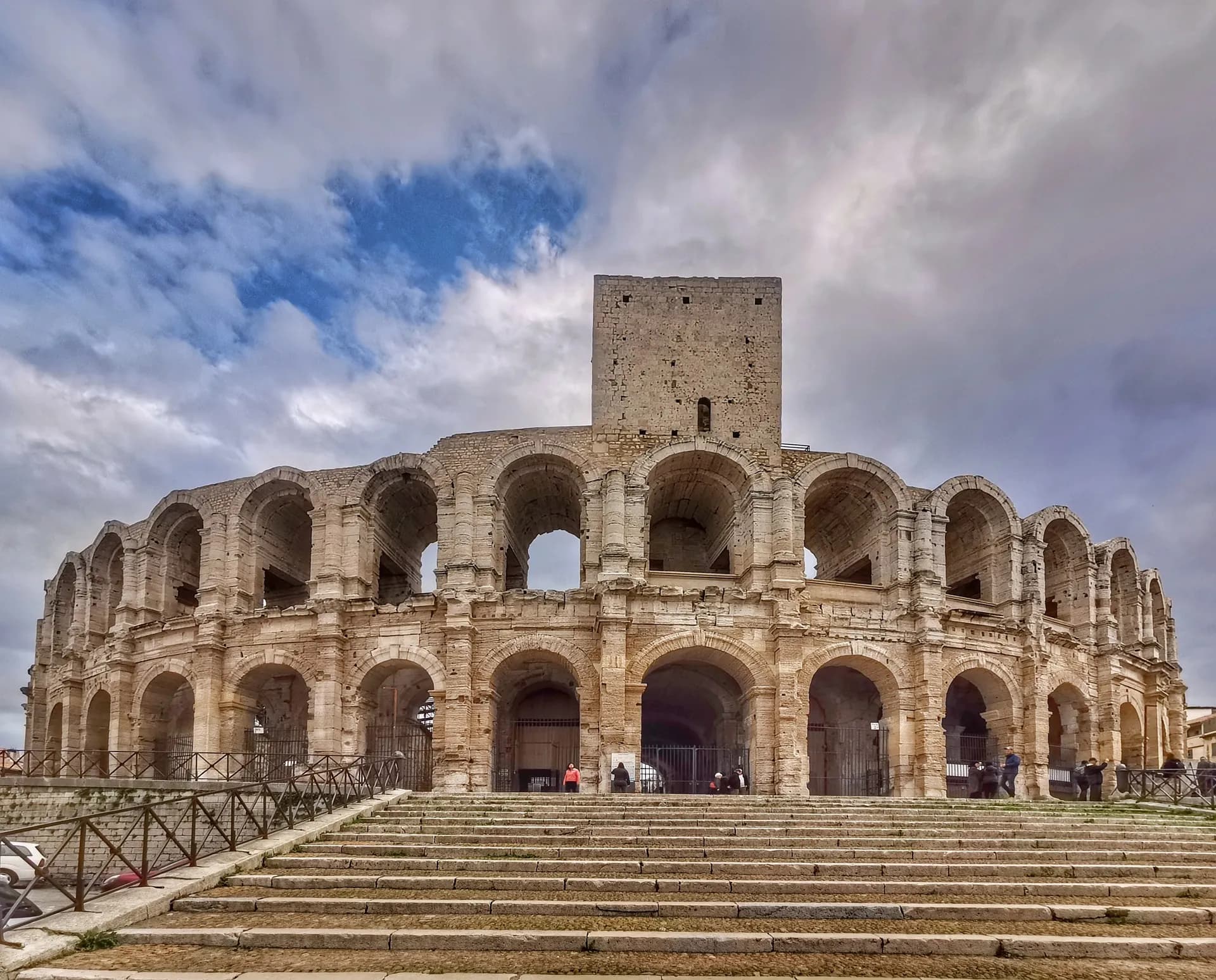
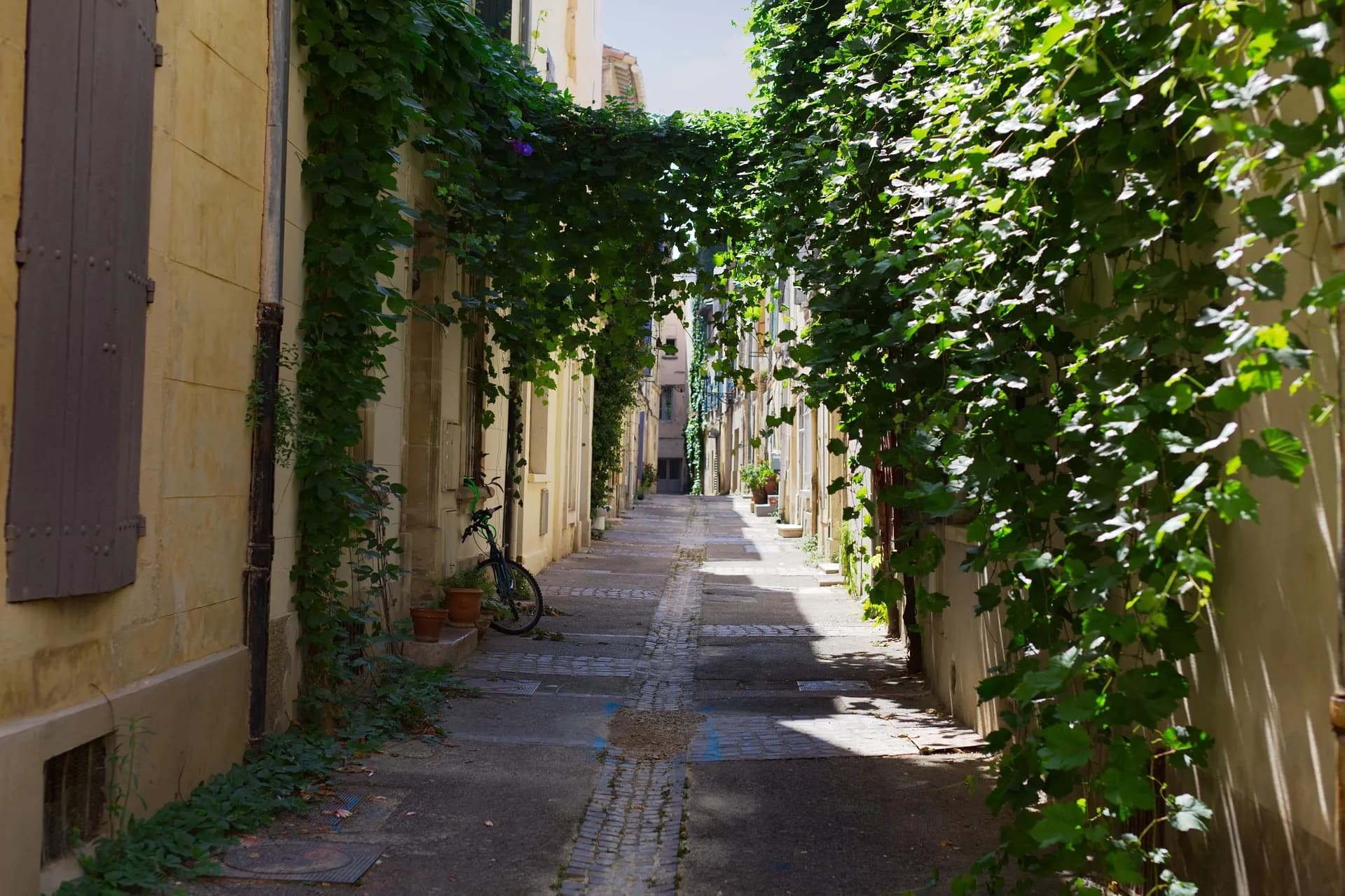
FranceIf you have a love of Roman history, then Arles should be on the visiting itinerary. Situated on the Rhône River, in Southern France, the city was at one time a provincial capital of ancient Rome. The Roman influence can still be seen to this day in its historical sites. Its semi-circular Roman theatre still stands on a hilltop. Its Amphitheatre, built between the 1st and 2nd century, and capable of accommodating over 20,000 spectators, is used today for plays, festivals and bullfights. While the Alyscamps, or Roman Necropolis, built by the Romans and Greeks, is the most famous burial site in the western world. Another site worthy of mention is the Constantine Thermes, built between the 3rd and 4th centuries during the reign of the Emperor Constantine. Arles is also said to have influenced Van Gough’s paintings, and the contemporary art on show at the Vincent Van Gough Foundation.
Day 4
Day 4
Arles
FranceIf you have a love of Roman history, then Arles should be on the visiting itinerary. Situated on the Rhône River, in Southern France, the city was at one time a provincial capital of ancient Rome. The Roman influence can still be seen to this day in its historical sites. Its semi-circular Roman theatre still stands on a hilltop. Its Amphitheatre, built between the 1st and 2nd century, and capable of accommodating over 20,000 spectators, is used today for plays, festivals and bullfights. While the Alyscamps, or Roman Necropolis, built by the Romans and Greeks, is the most famous burial site in the western world. Another site worthy of mention is the Constantine Thermes, built between the 3rd and 4th centuries during the reign of the Emperor Constantine. Arles is also said to have influenced Van Gough’s paintings, and the contemporary art on show at the Vincent Van Gough Foundation.
Day 5
Day 5
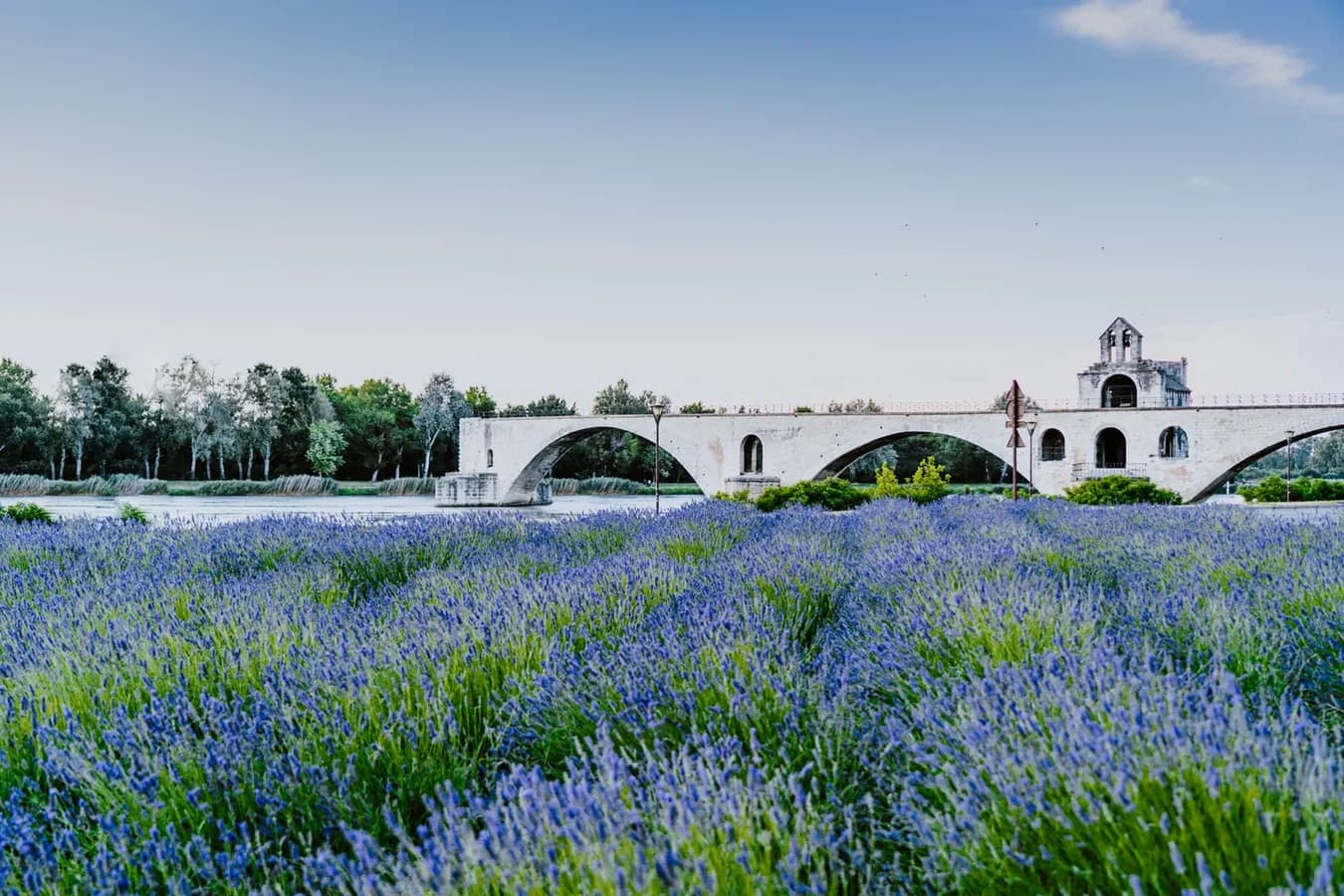
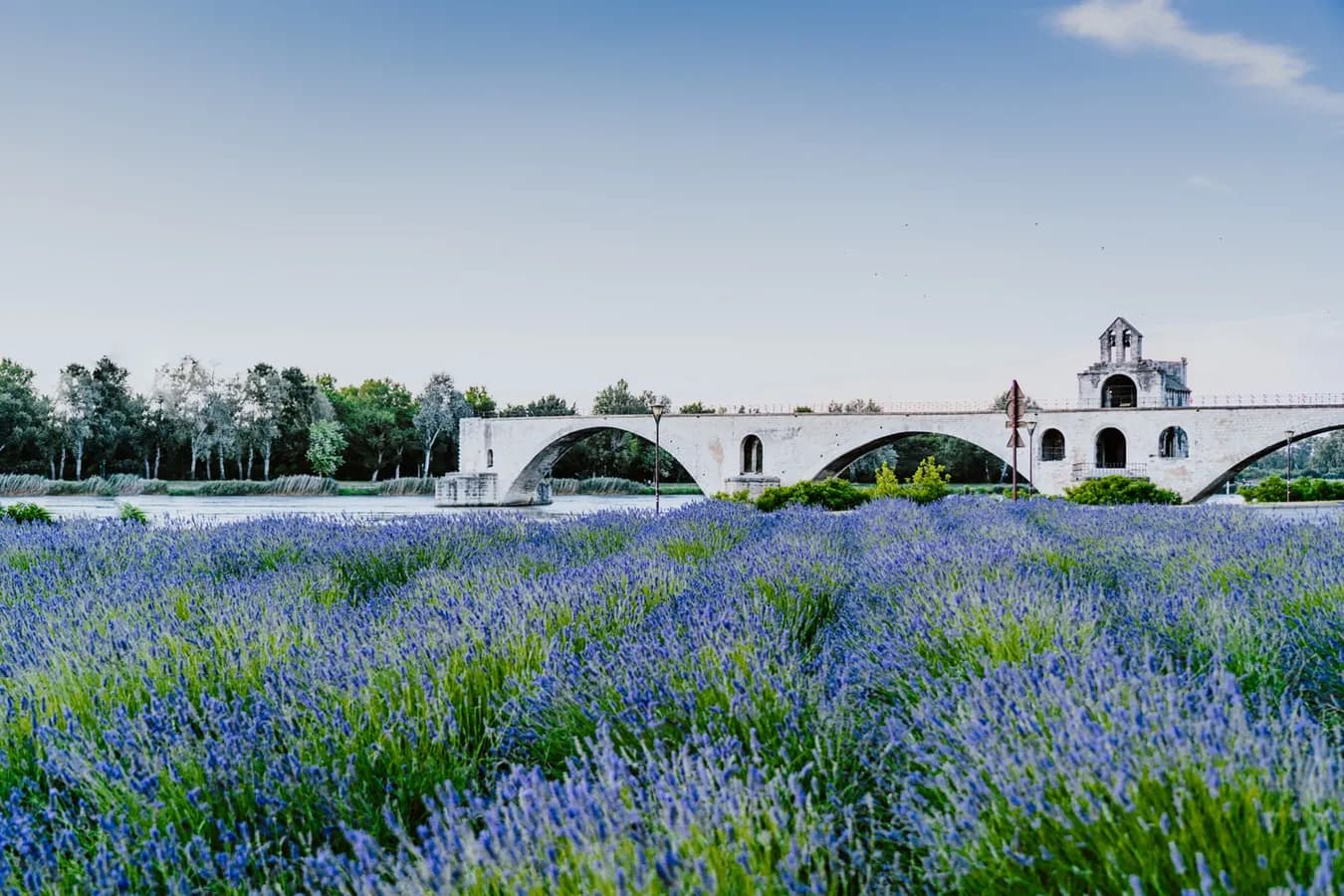
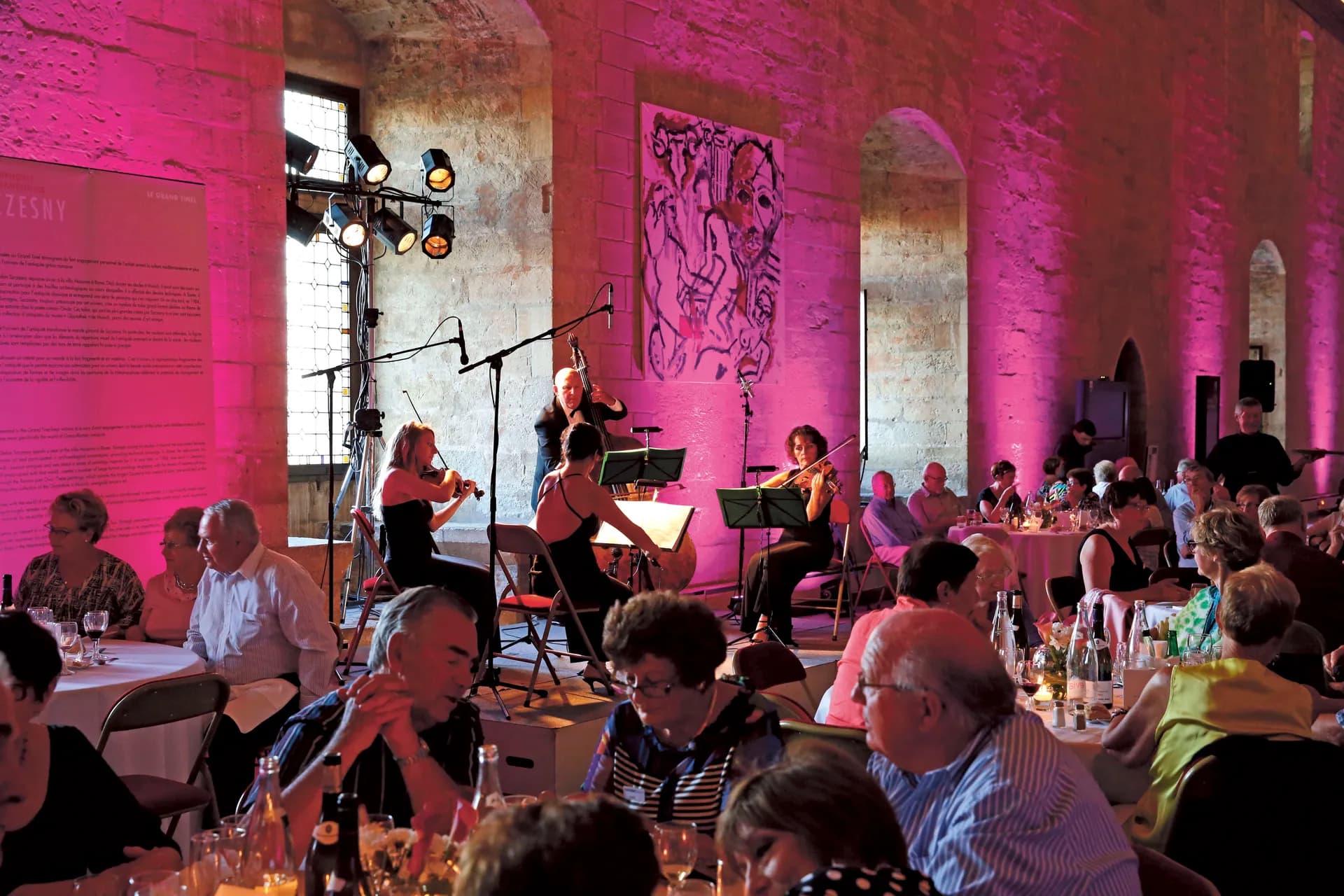
Avignon
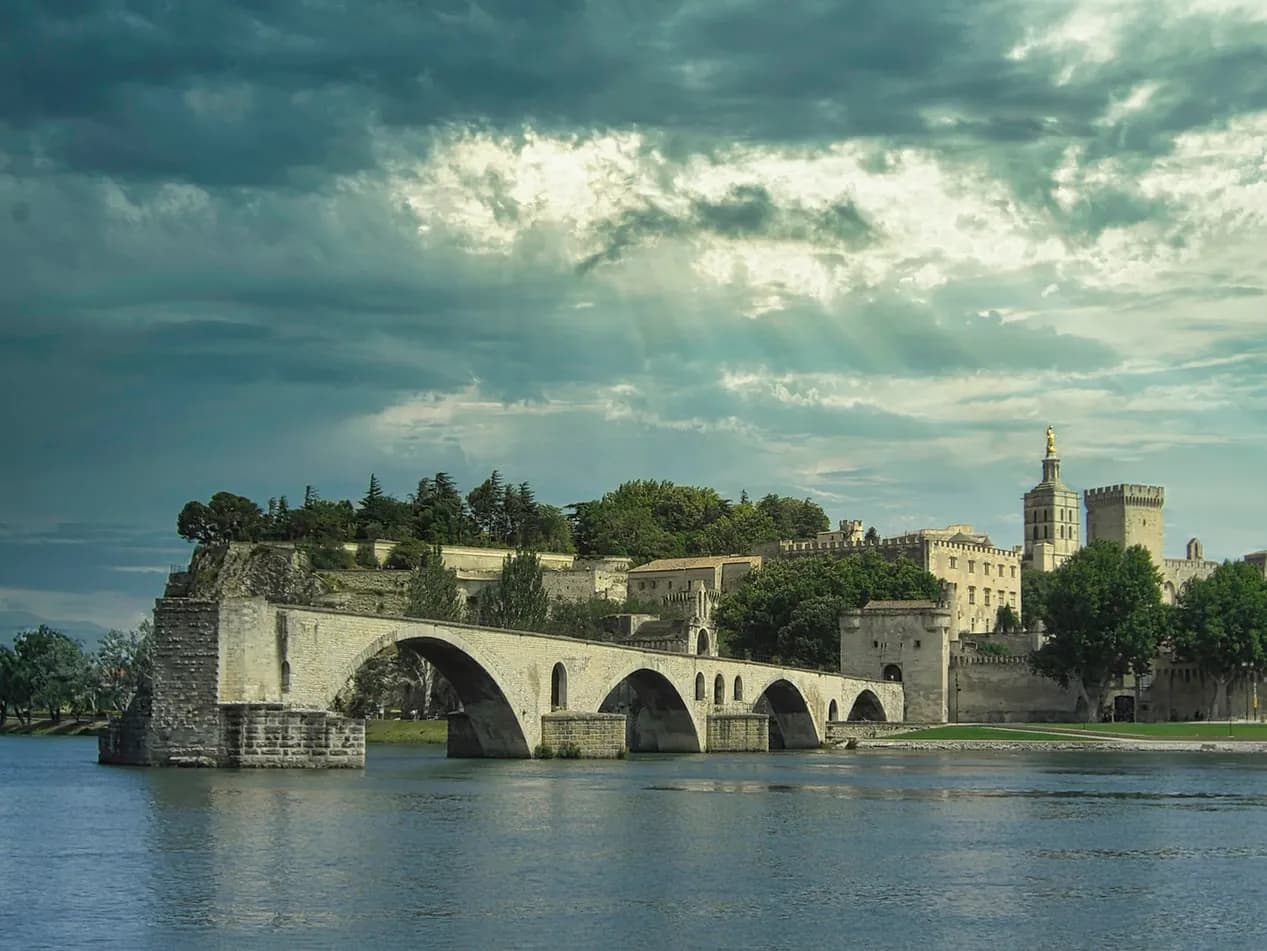
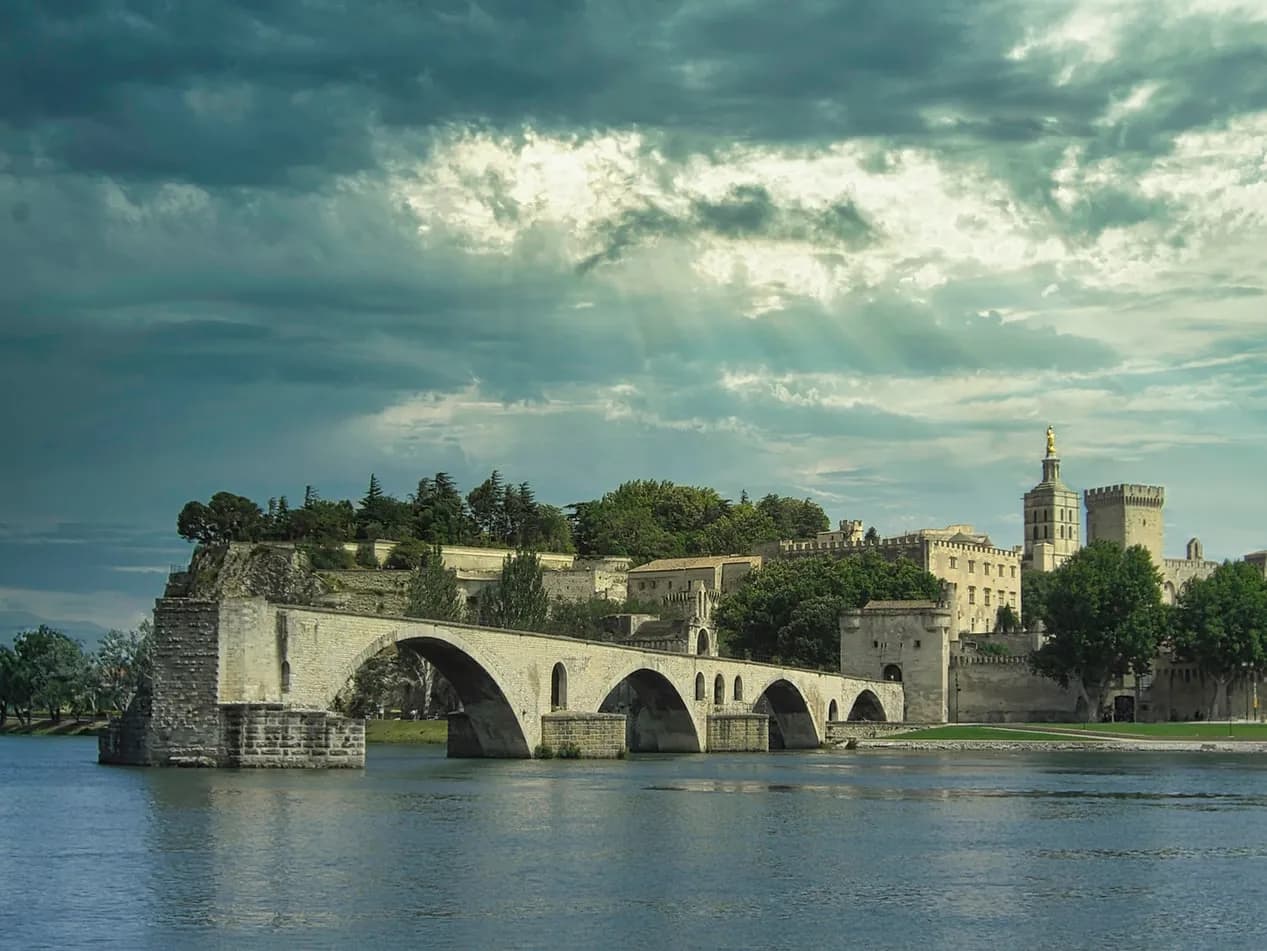
FranceAs you stroll the squares and cobbled streets of Avignon, in south-eastern France, you can’t help but be impressed by the architectural influence of 400 years of papal rule. From its 800 year old ramparts that tower majestically over the Rhône River, to the UNESCO listed Pope’s Palace and city centre, the area is steeped in cultural history. However, to contrast the spectacular ancient architecture, the city has a young energetic population. With many attending the University of Avignon, they add a dynamic energy to the many cafes and bistros dotted around the town squares and alleyways. Visit the three magnificent Gothic churches, the old papal mint, Collection Lambert, and the Renaissance artwork in the Musee du Petit. Wander through the Rochers des Doms gardens. Take in the spectacular view across the city skyline, and relax with a liqueur coffee and pastries, in one of the many pavement cafes.
Day 6
Day 6
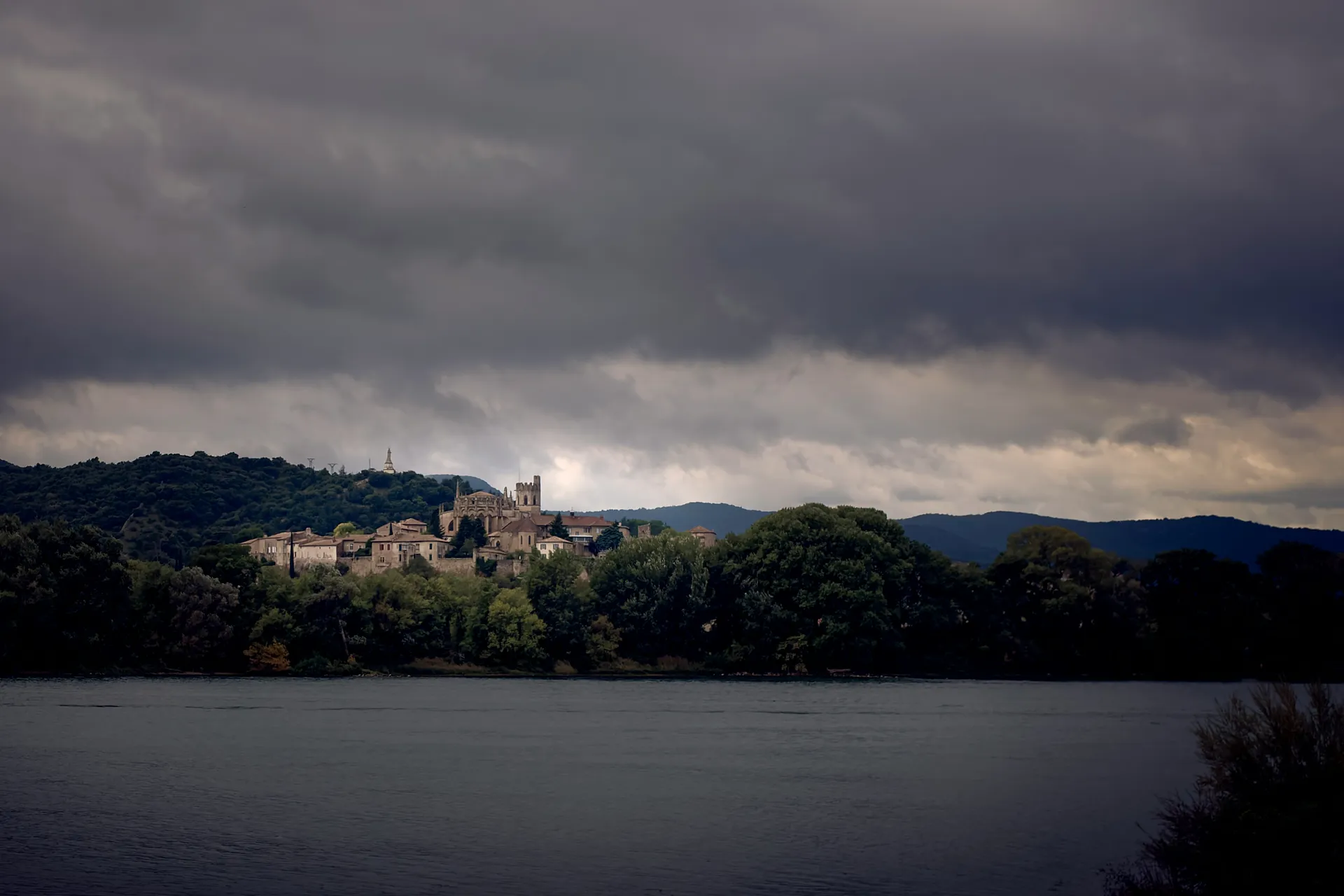
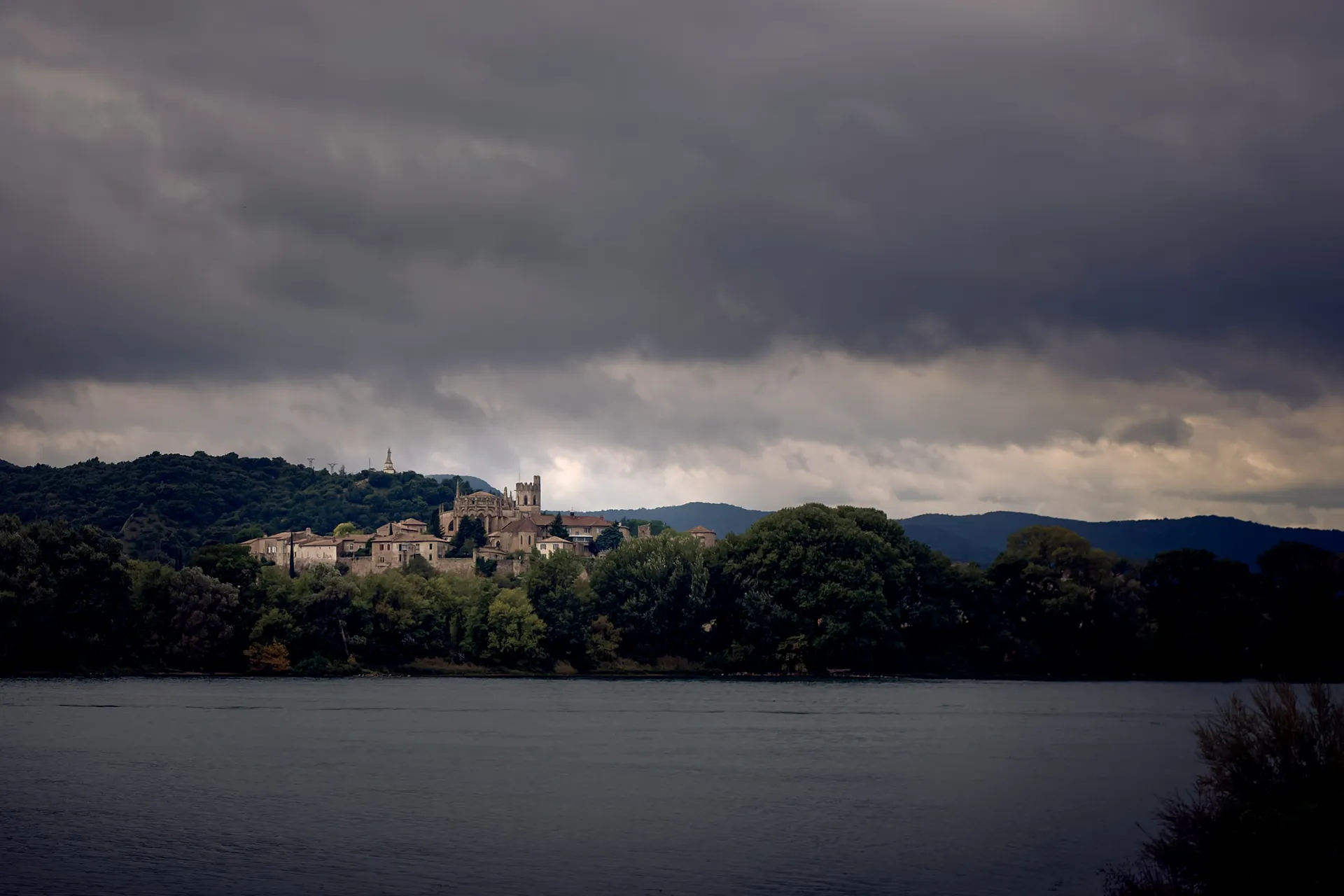
Viviers
FranceViviers is a small and sleepy town in south-central France, in the province of Ardeche. This medieval town has retained a lot of its original appeal. A cruise through the city will be significantly different compared to a walk. The cruise trip on the Rhine river will typically run through the evening and will wind through the cobblestone streets of the city. The city has Medieval stone houses which will quickly give you an idea of how life was back in the 15th and 16th centuries. You will also notice that the place is very quiet, having about 3,000 inhabitants at the time. A key attraction you will see in the city is the famous Renaissance Maison des Chevaliers or House of Knights. This Renaissance-style house has a long and interesting history, having originally been the house of a rich merchant known as Noel Alberta. You will also see the famous Cathedral of St. Vincent which is even much older than the House of Knights. The cathedral was constructed in the 12th century and is currently protected as a historical monument.
Day 7
Day 7
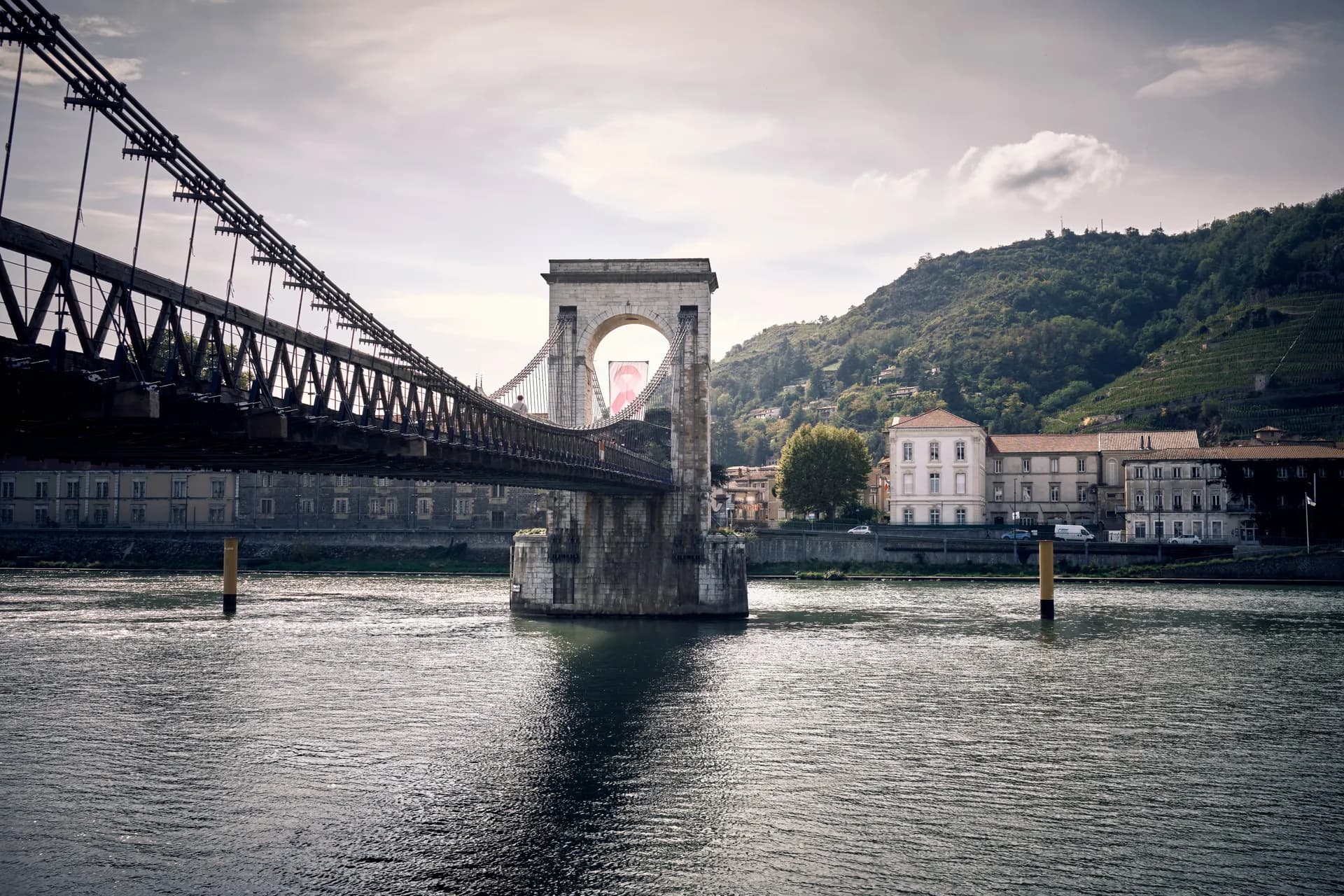
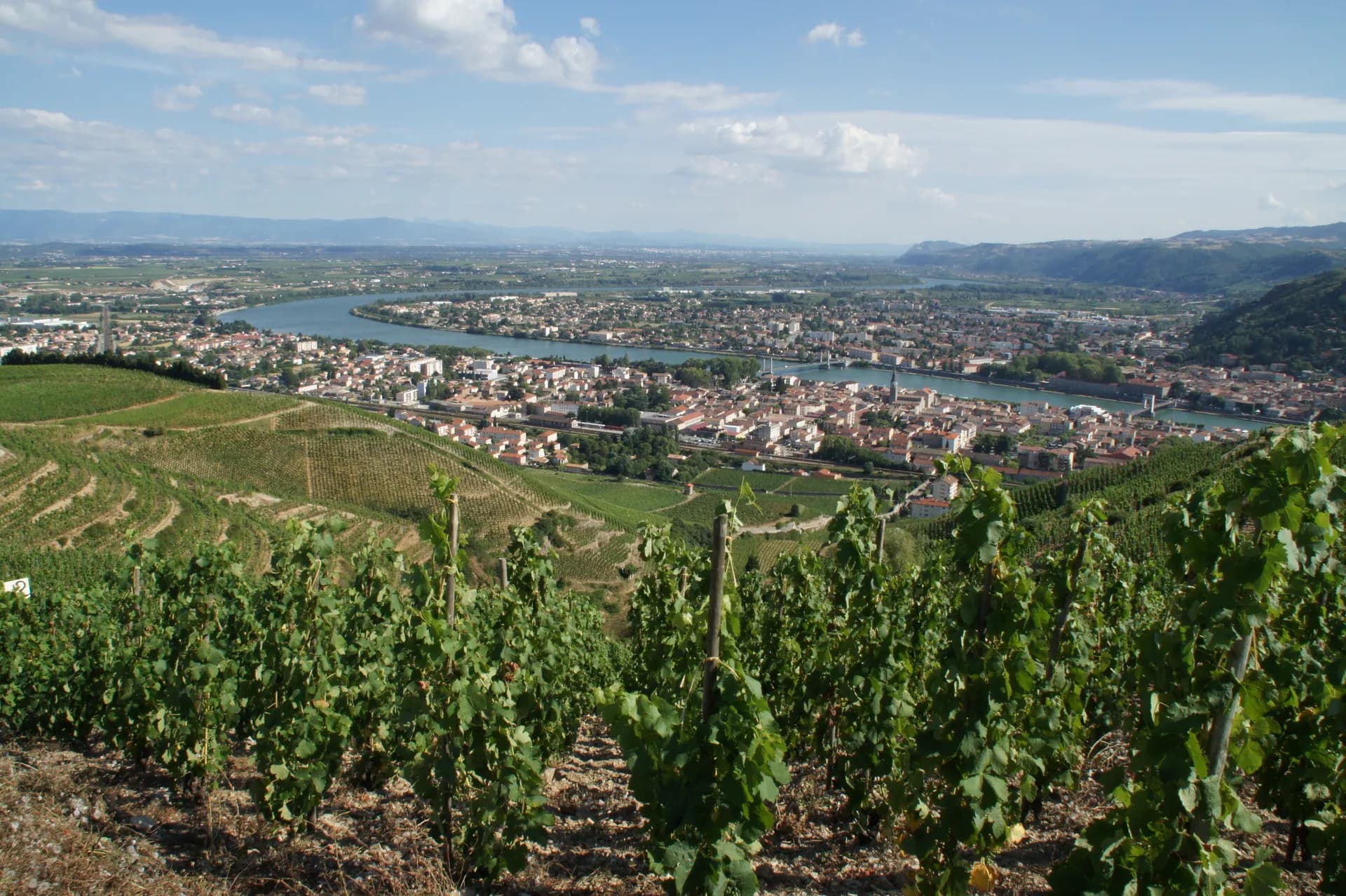
Tain L’Hermitage
FranceTain-l'Hermitage is a commune in the Drôme department in southeastern France.
Day 8
Day 8
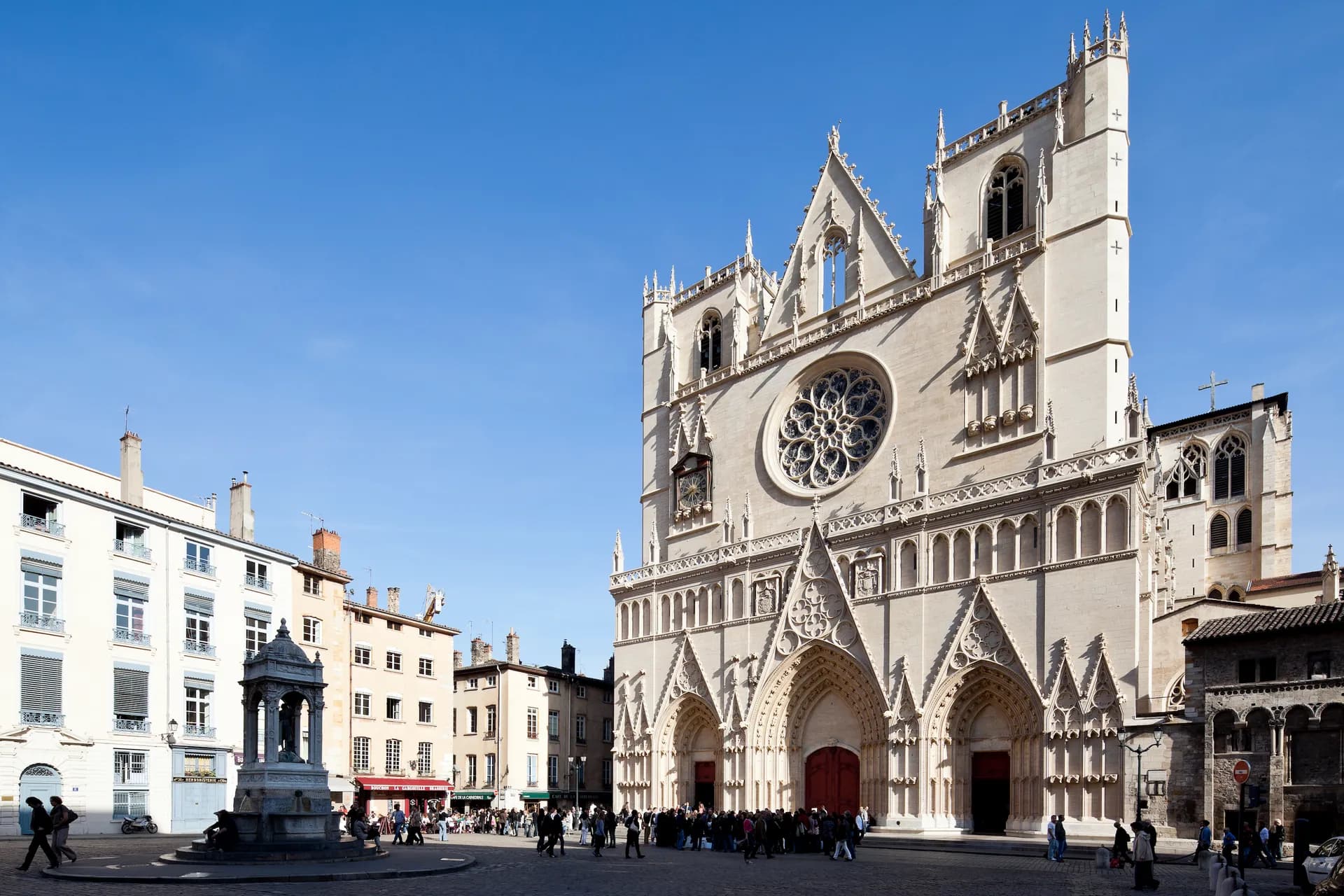
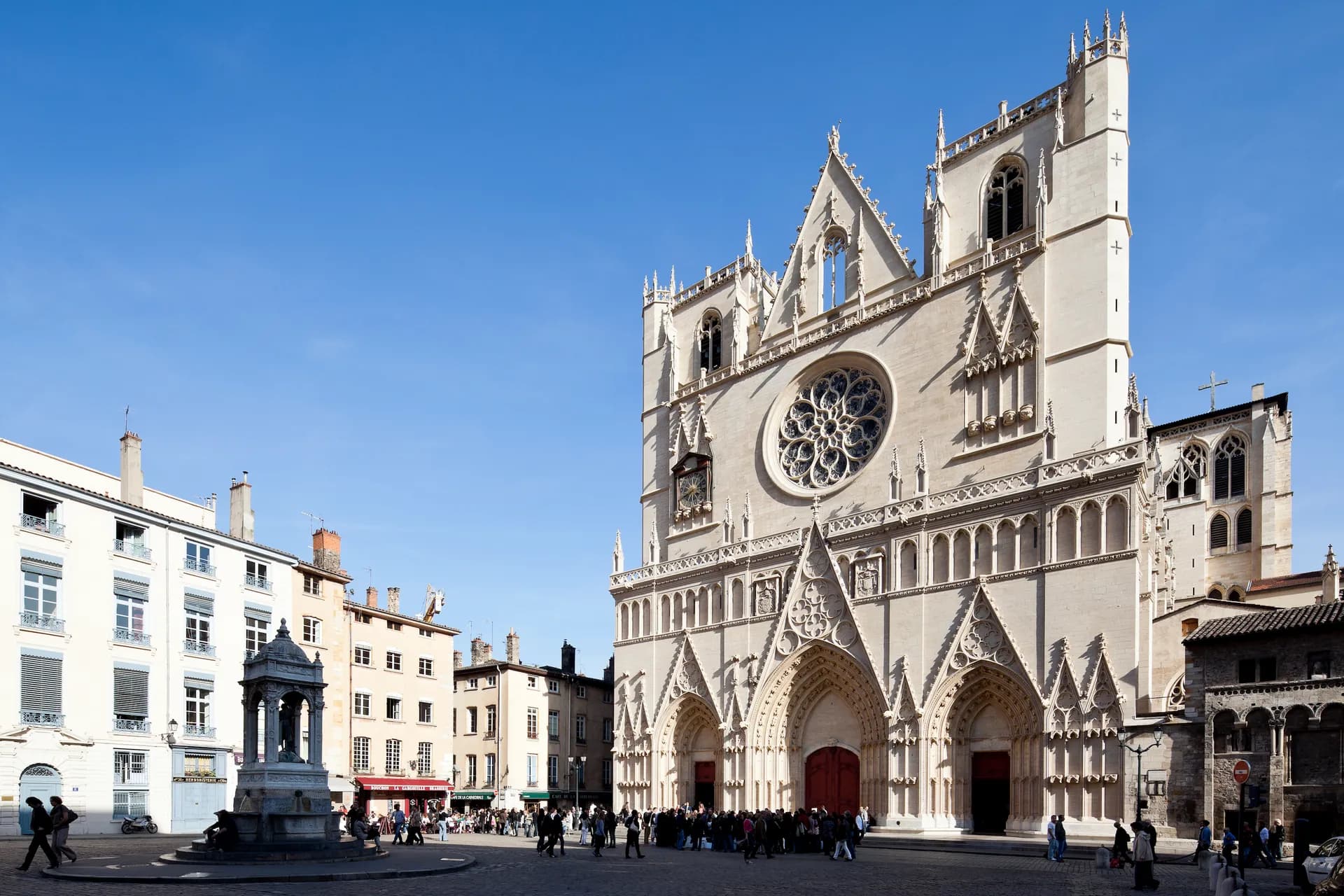
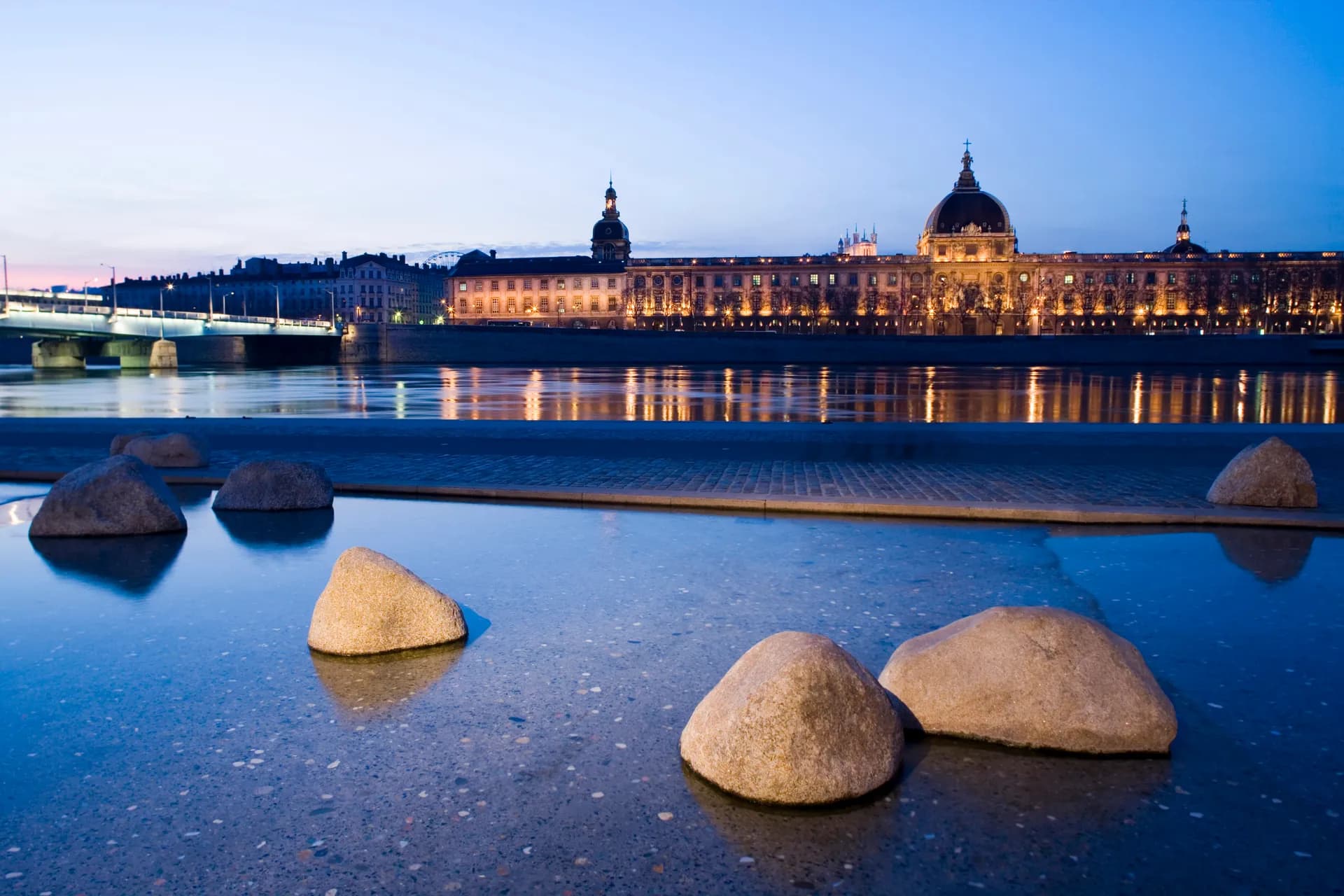
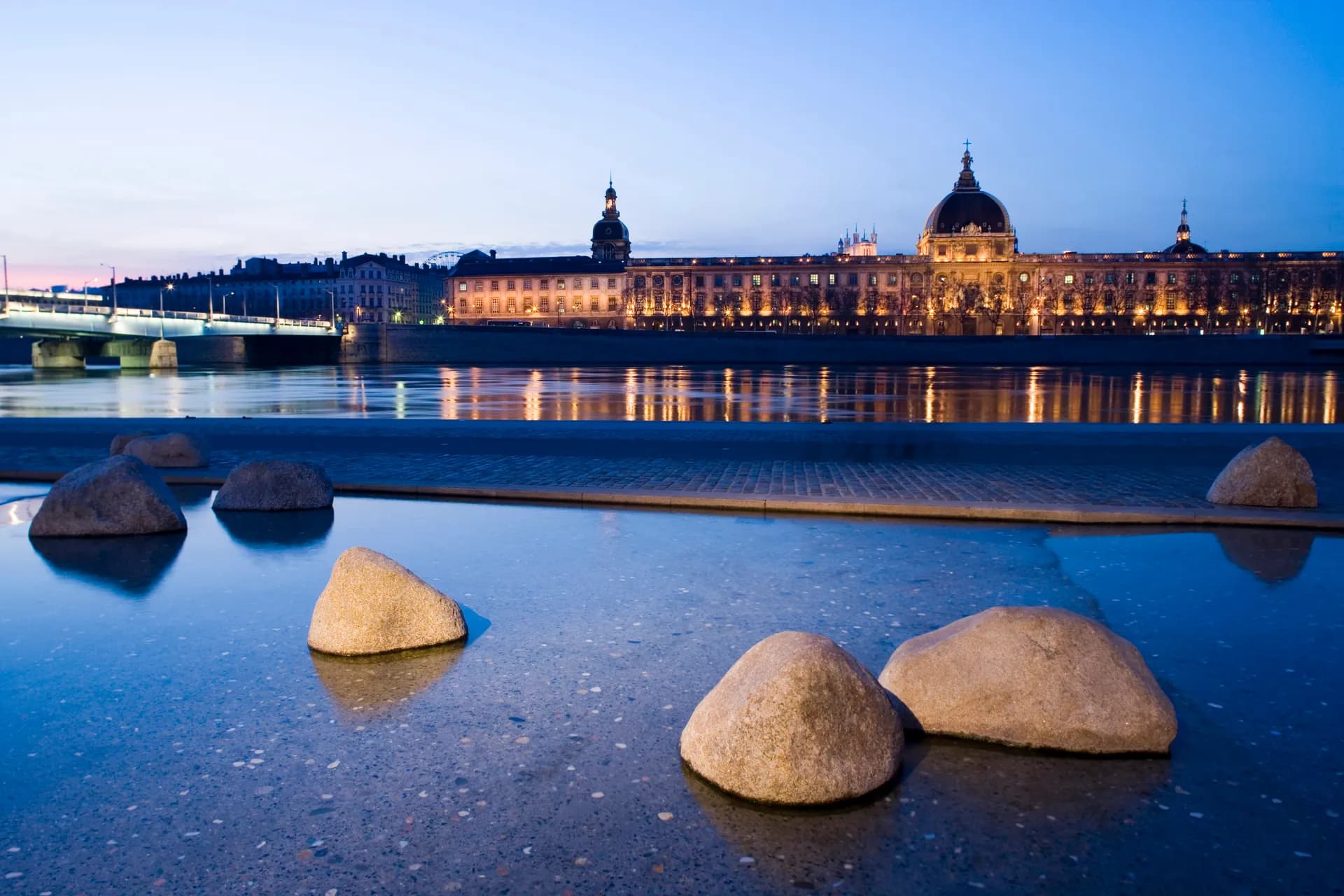
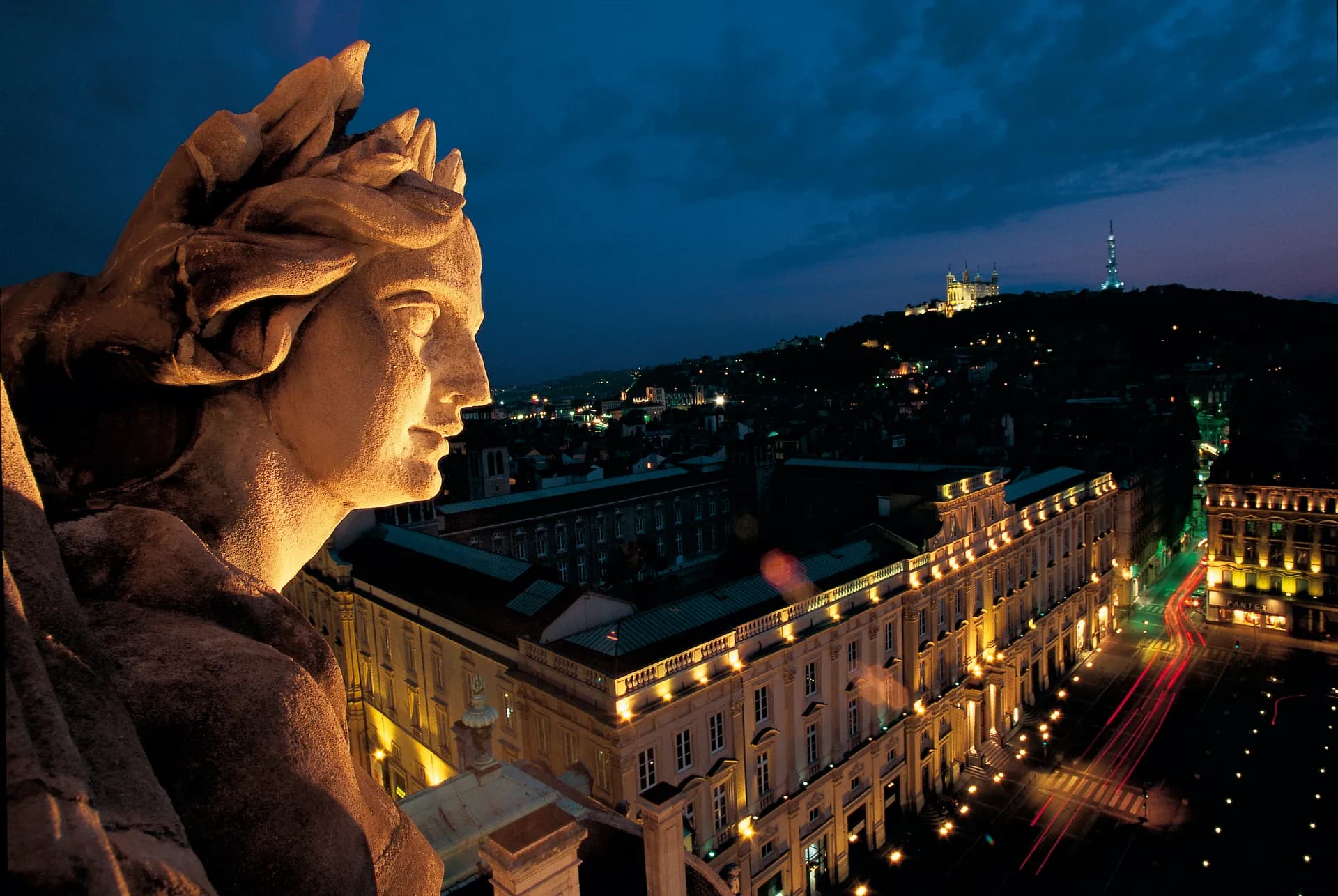
Lyon
FranceSitting in the Auvergne-Rhône-Alpes region of France, where the Rhône and Saône rivers converge, Lyon boasts a proud 2,000 year history. From its magnificent Roman Amphitheatre of Fourvière, to Renaissance architecture in Lyon’s old town, to the Presqu’ile peninsula, where impressive 19th century buildings house banks, cultural centres, and government buildings, alongside designer stores, independent retailers, restaurants, bars, cafes, and nightclubs. Check out the Vieux area of the city, and its grand houses of the 15th, 16th, and 17th centuries, built by the city’s wealthy silk merchants. Walk the Traboules, underground passageways that linked the weaving houses to the river. Visit the impressive Fourvière Basilica, and Lyon’s gothic cathedral. Seek out the Musée des Beaux-Arts, the largest fine-arts museum outside of Paris. Or choose to relax, stroll the Parc de la Tête d’Or, one of France’s largest botanical gardens, and stop off at a Bouchon, to enjoy some local Lyon cuisine.
Day 9
Day 9
Tournus
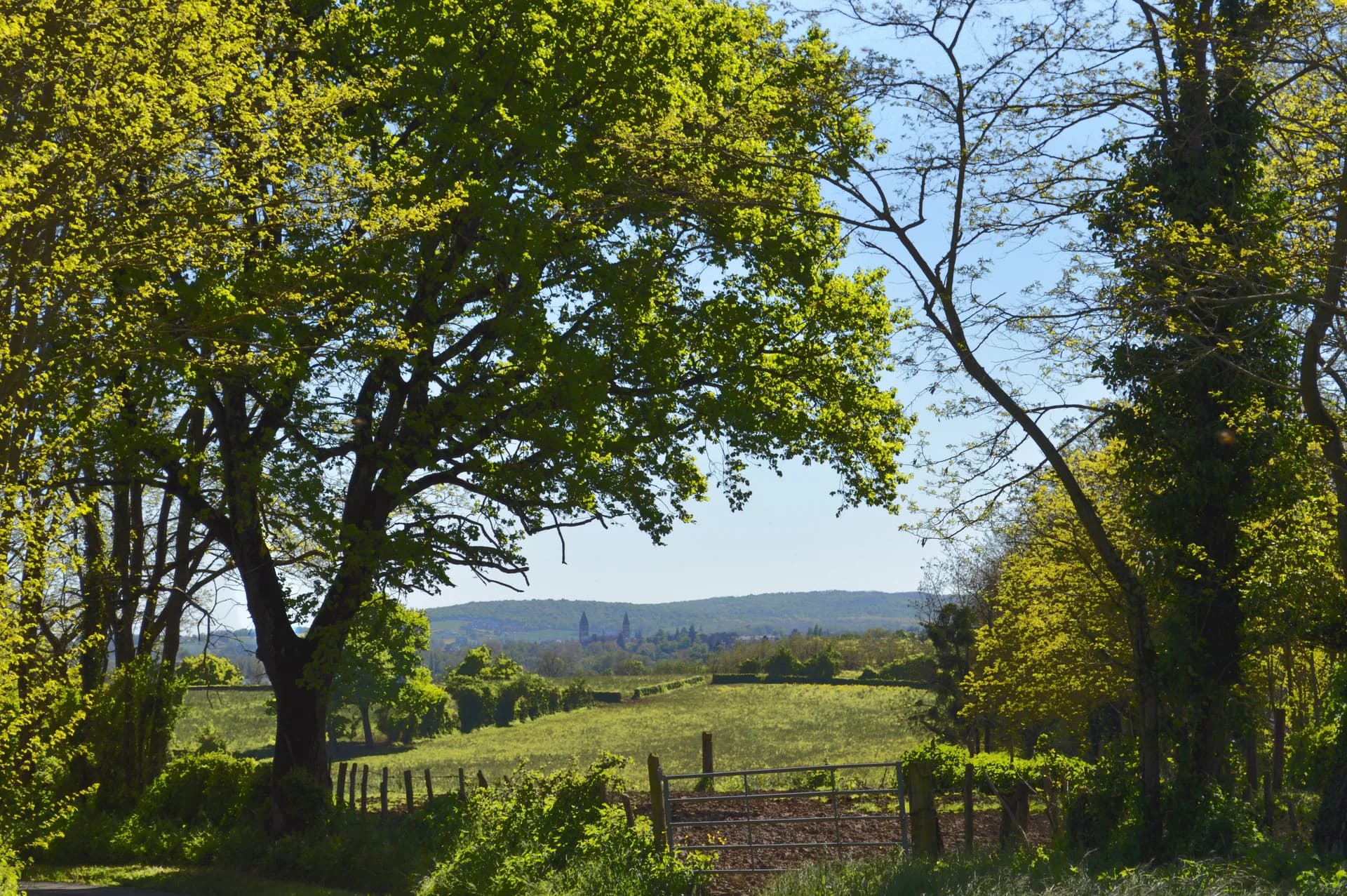
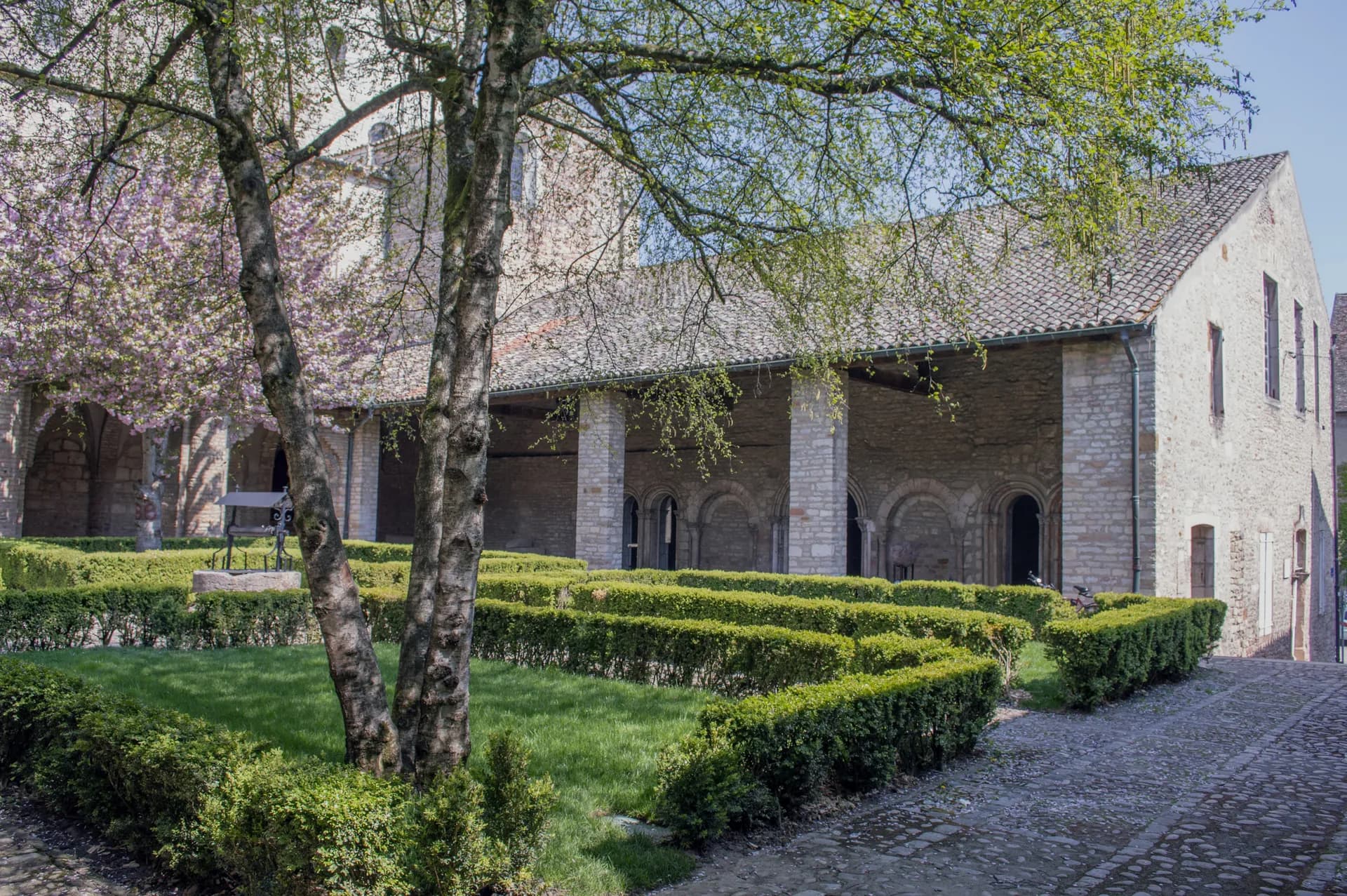
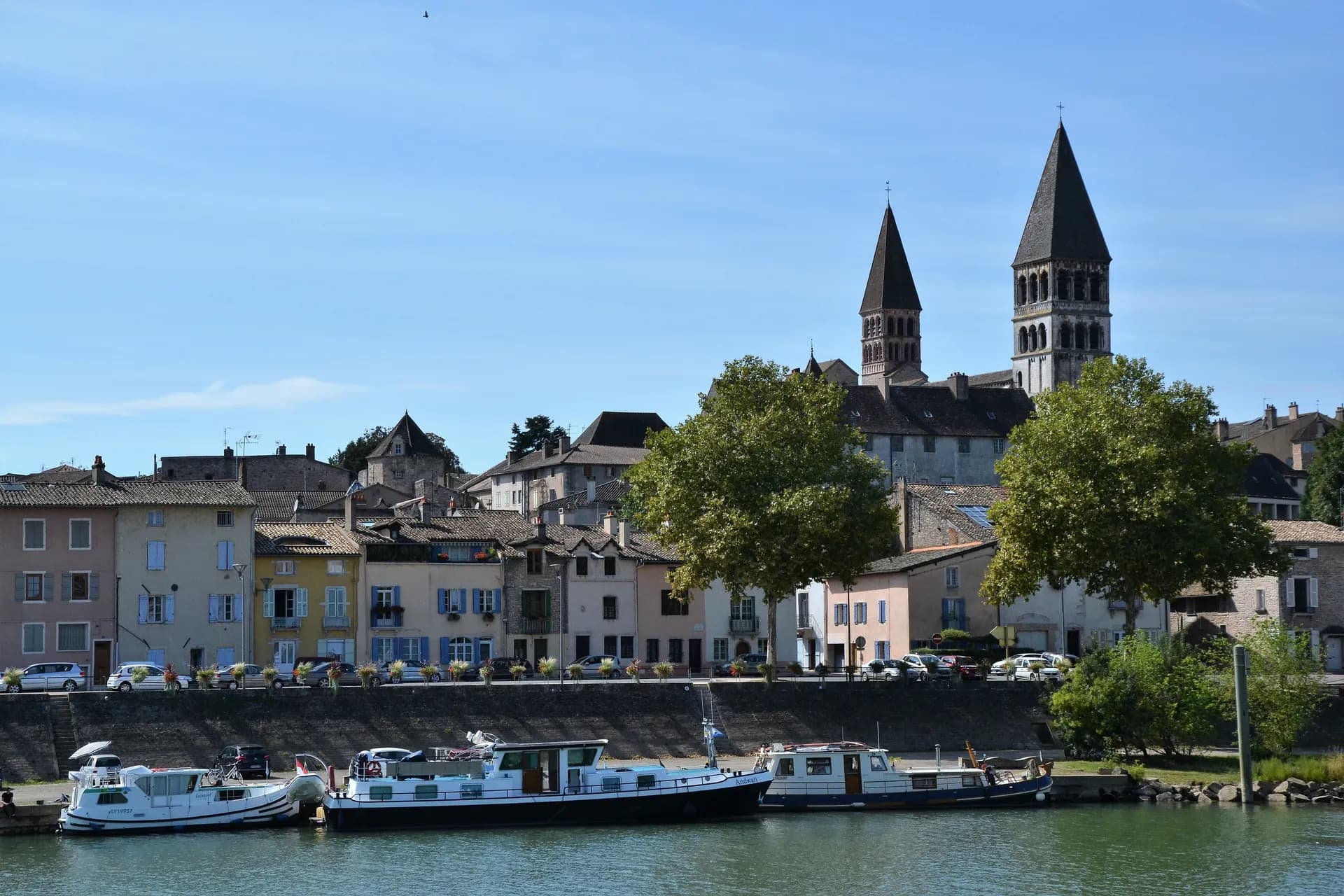
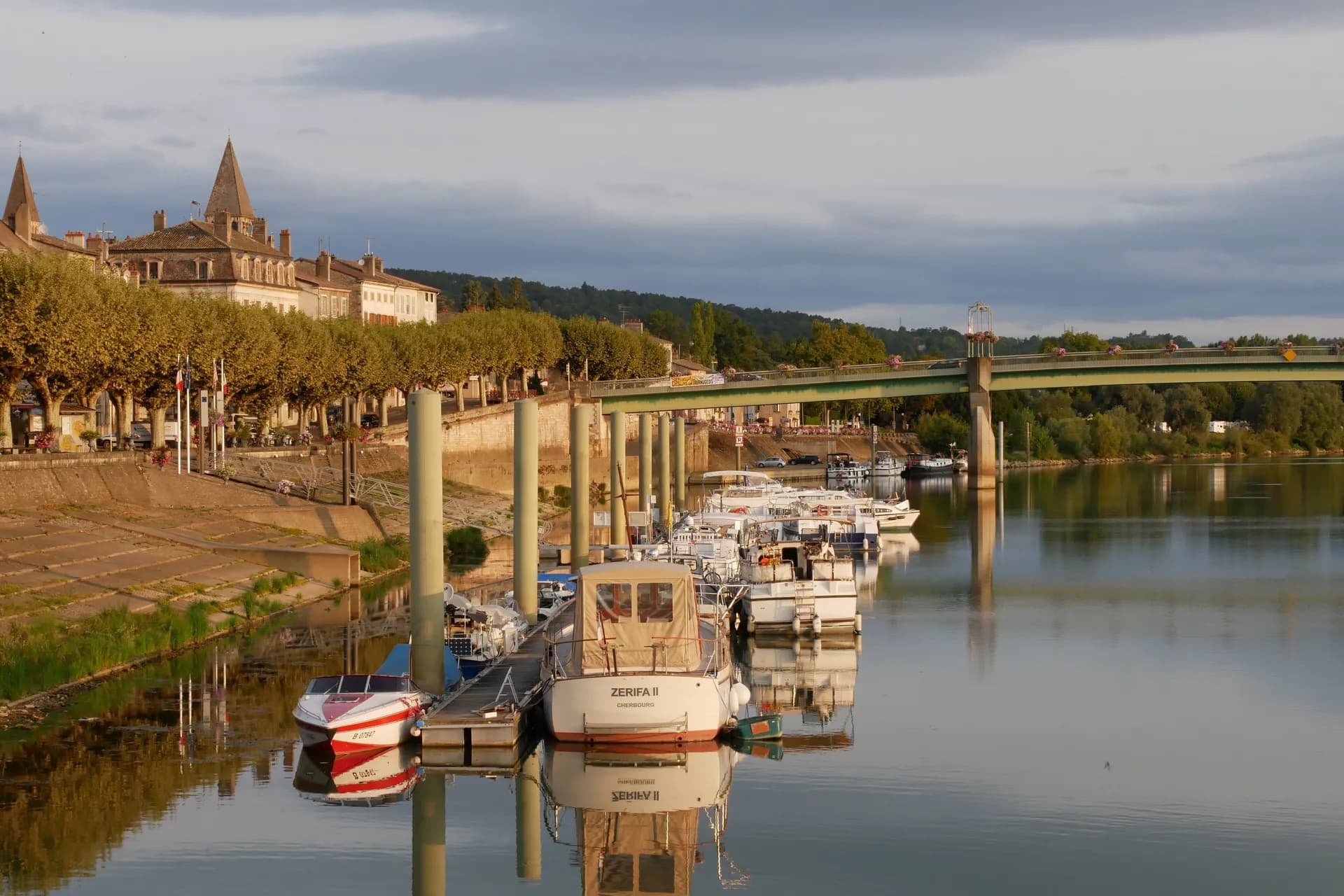
FranceTournus is a commune in the Saône-et-Loire department in the region of Bourgogne-Franche-Comté in eastern France.
Day 9
Day 9
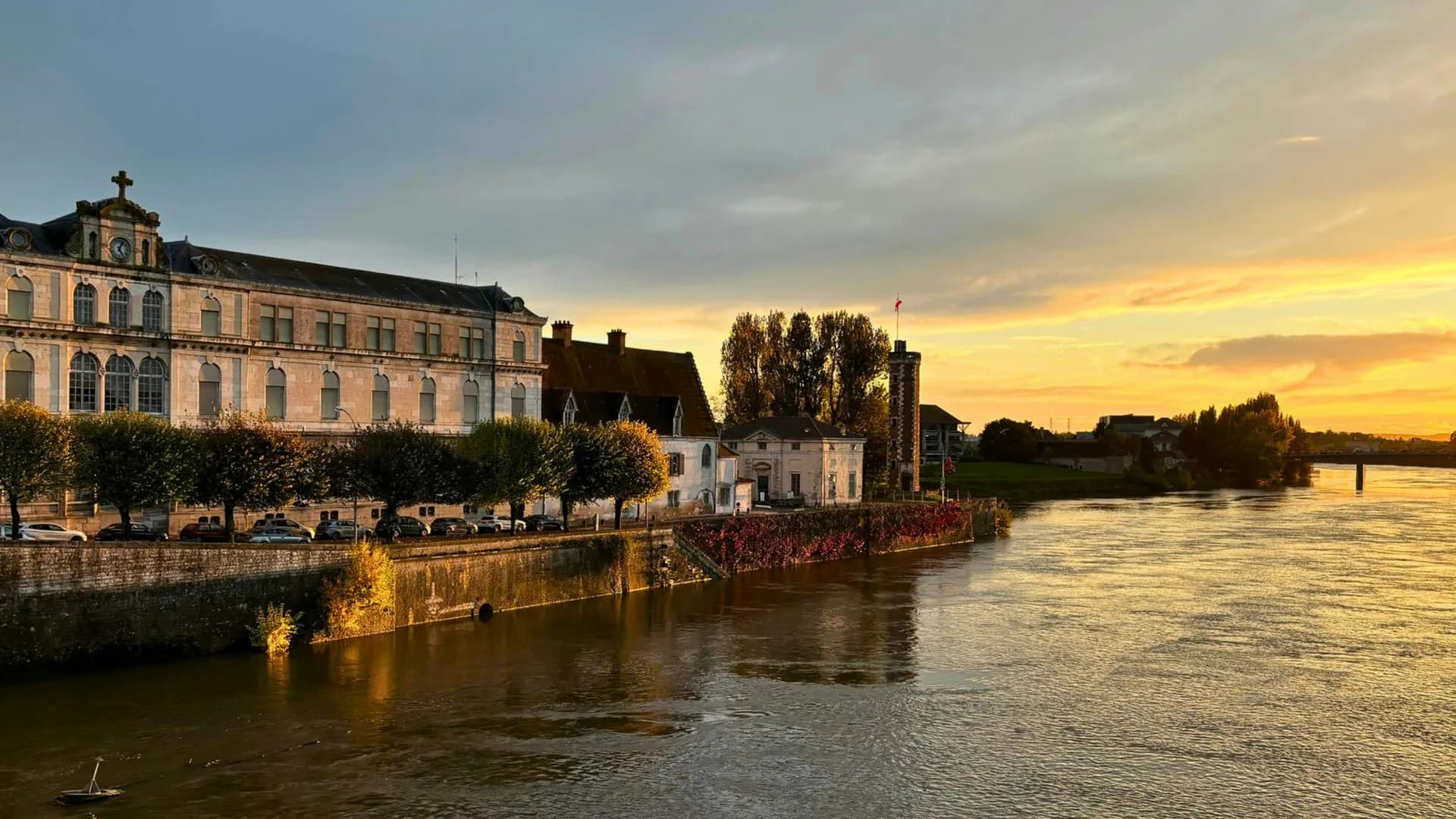
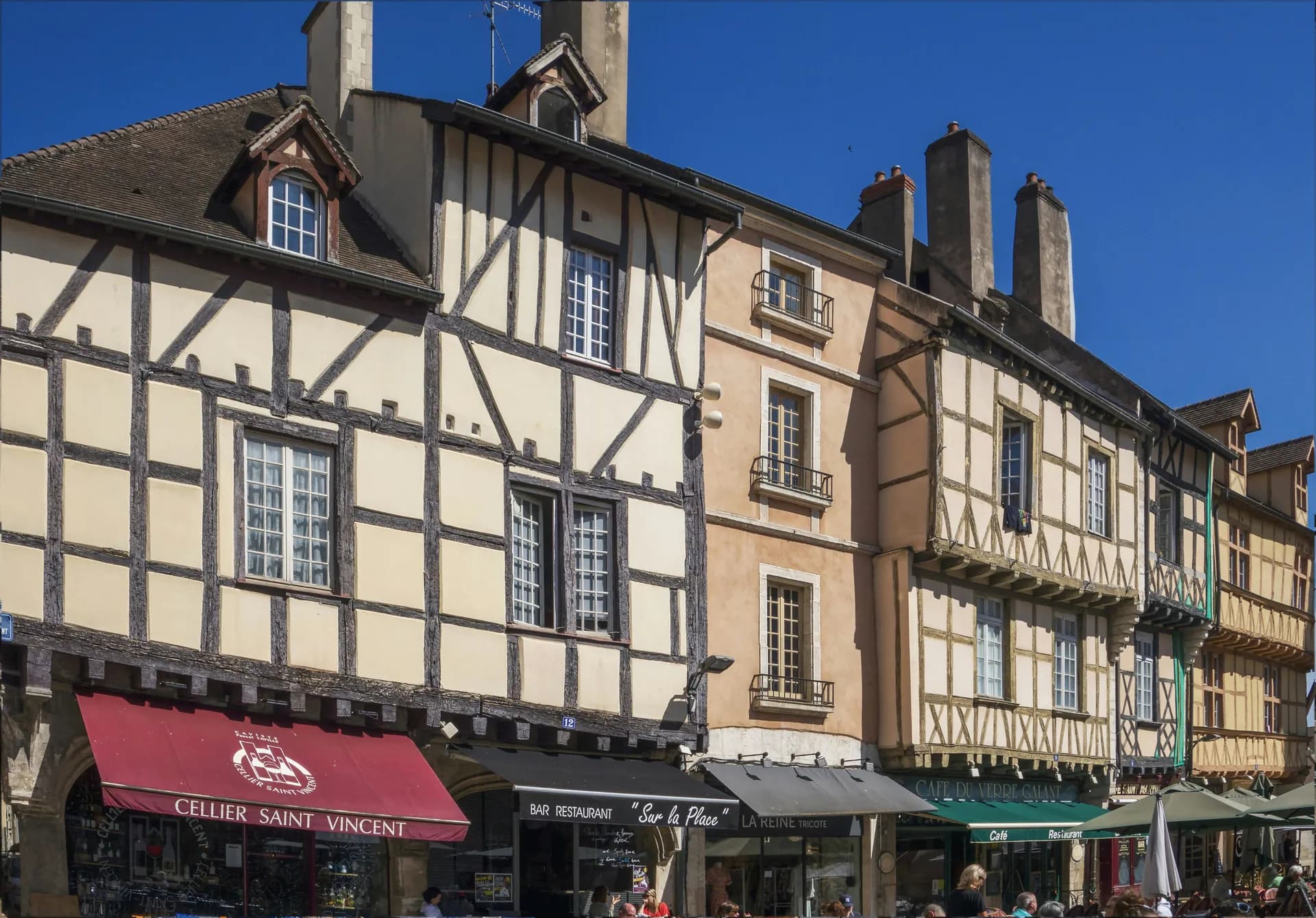
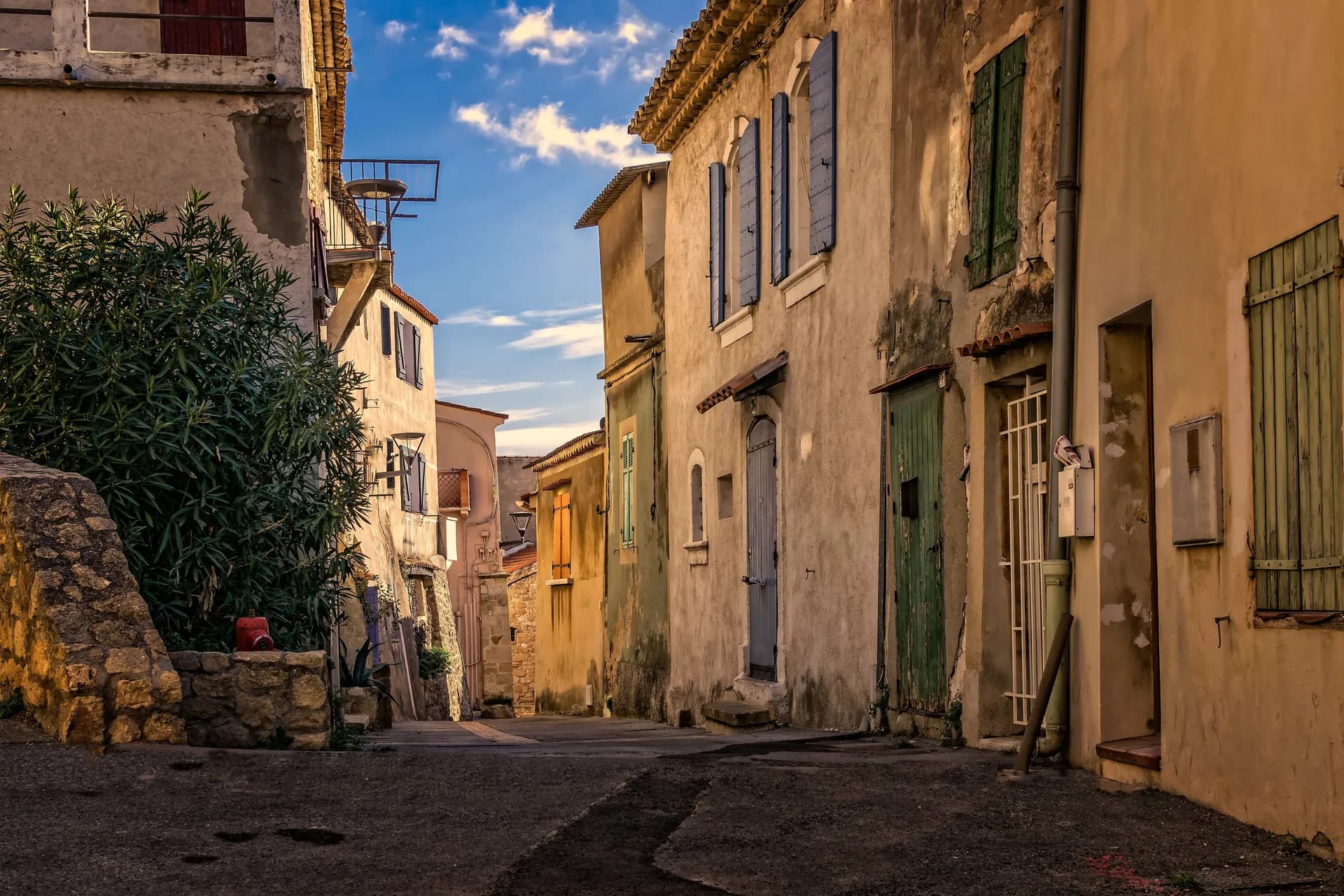
Chalon-Sur-Saone
FranceStroll through the old town, past charming half-timbered facades and right onto the square in front of the Cathédrale Saint-Vincent, which dates back to the eighth century. Then, enjoy a cool glass of local Chardonnay. In Chalon-sur-Saône, millennia-old history meets modern lifestyle and culture – as in so many other small towns and cities along this tranquil river. The city is also known as the birthplace of photography: the Musée Nicéphore Niépce, a photography museum at the Quai des Messageries, is clear evidence of this.
Day 10
Day 10
Chalon-Sur-Saone
FranceStroll through the old town, past charming half-timbered facades and right onto the square in front of the Cathédrale Saint-Vincent, which dates back to the eighth century. Then, enjoy a cool glass of local Chardonnay. In Chalon-sur-Saône, millennia-old history meets modern lifestyle and culture – as in so many other small towns and cities along this tranquil river. The city is also known as the birthplace of photography: the Musée Nicéphore Niépce, a photography museum at the Quai des Messageries, is clear evidence of this.
Day 10
Day 10
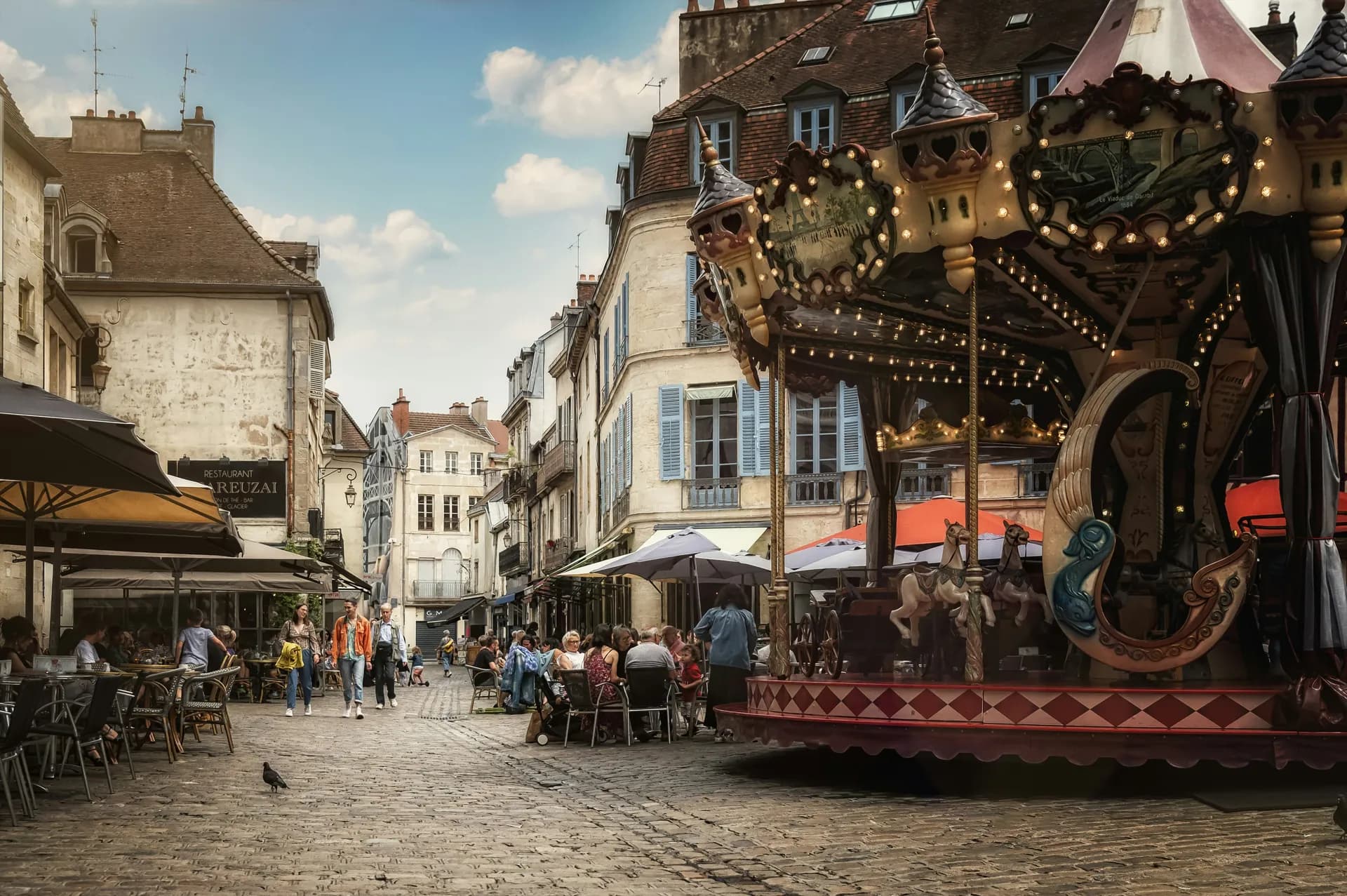
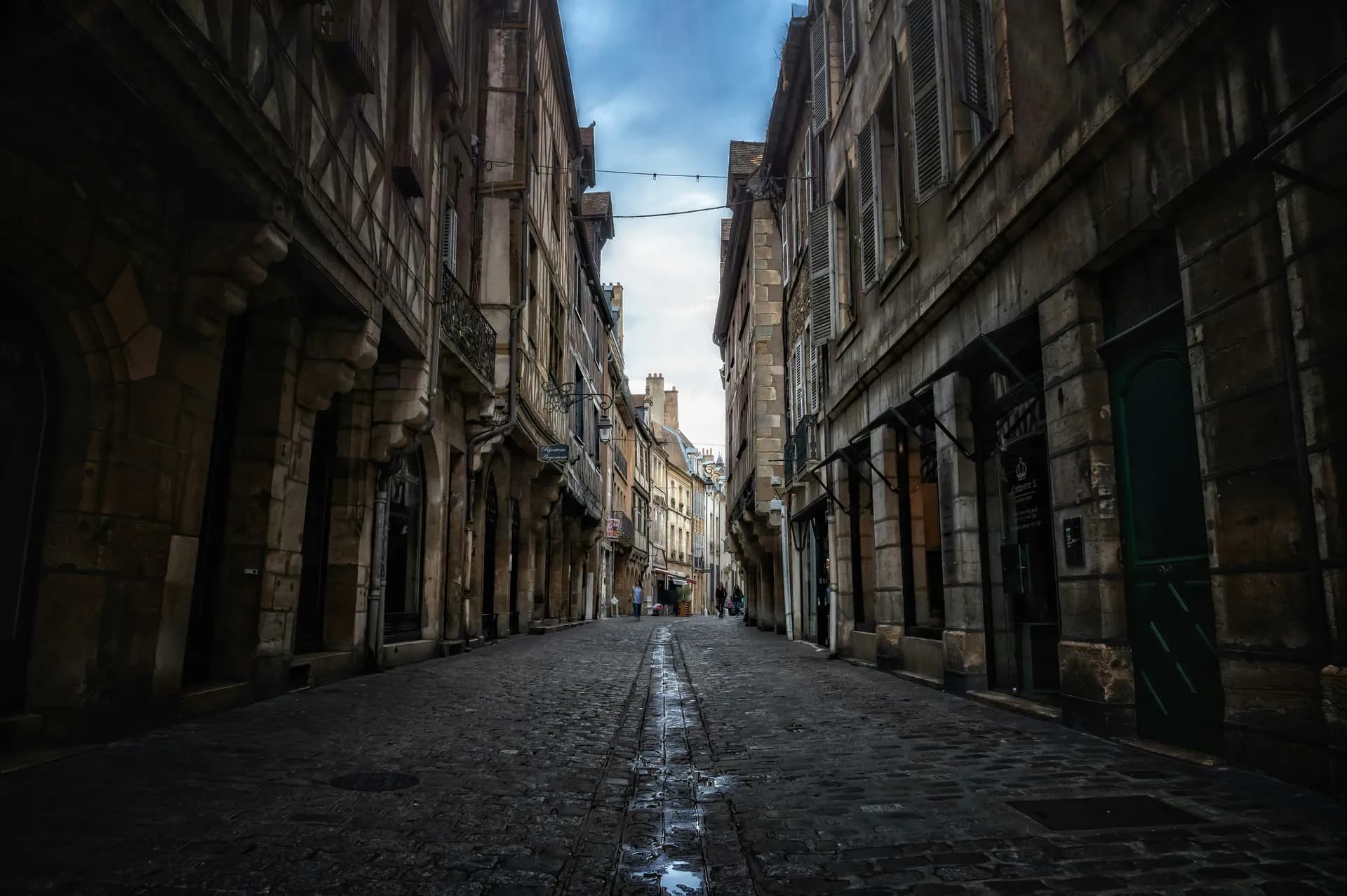
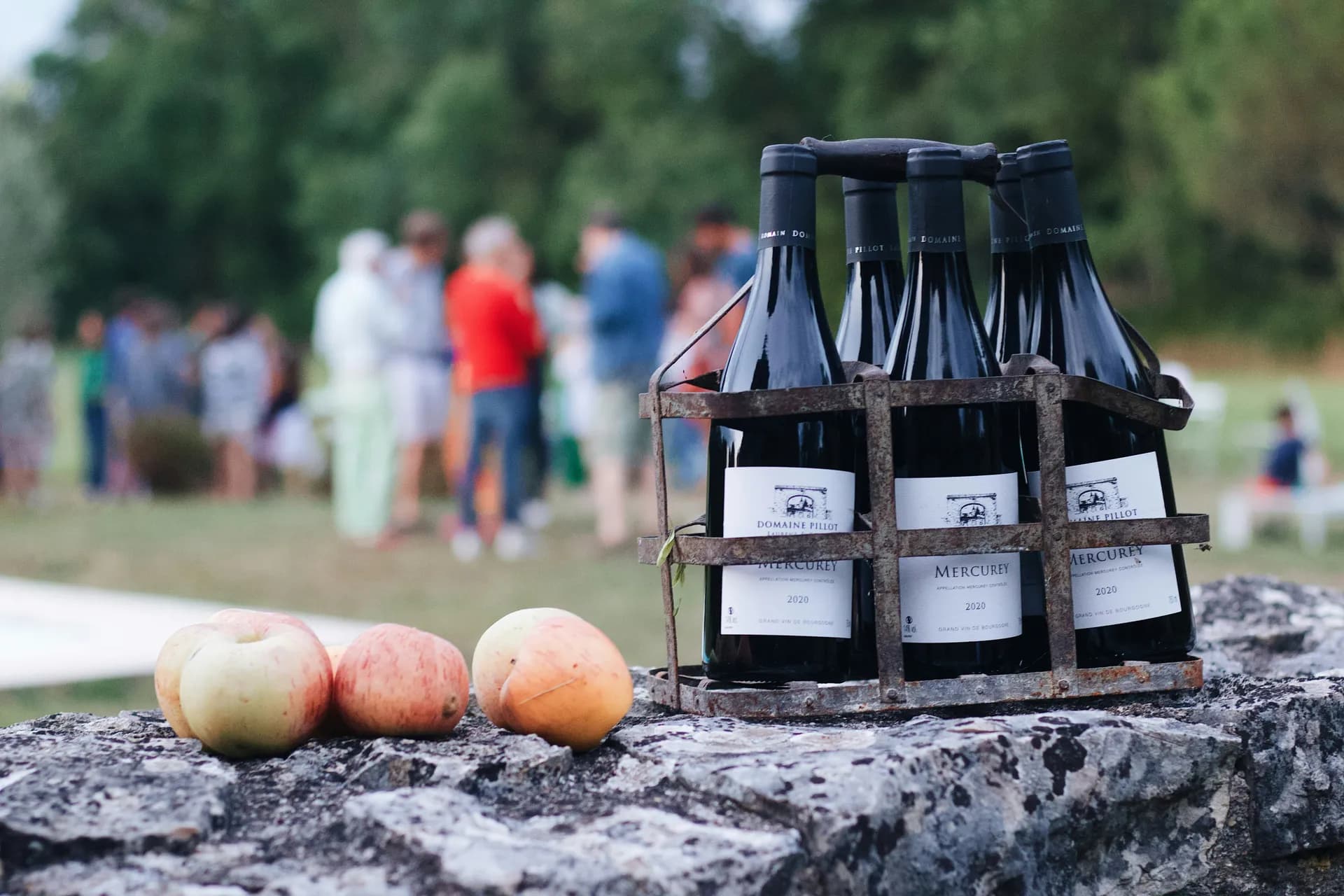
Dijon
FranceDijon is the capital city of the historical Burgundy region in eastern France, one of the country’s principal wine-making areas. It’s known for its traditional mustard, vineyard tours, autumn gastronomic fair and building styles ranging from Gothic to art deco. The distinguished 1787 Musée des Beaux-Arts, housed in the vast Palace of the Dukes, holds a rich collection of paintings, sculptures, crafts and antiquities.
Day 10
Day 10
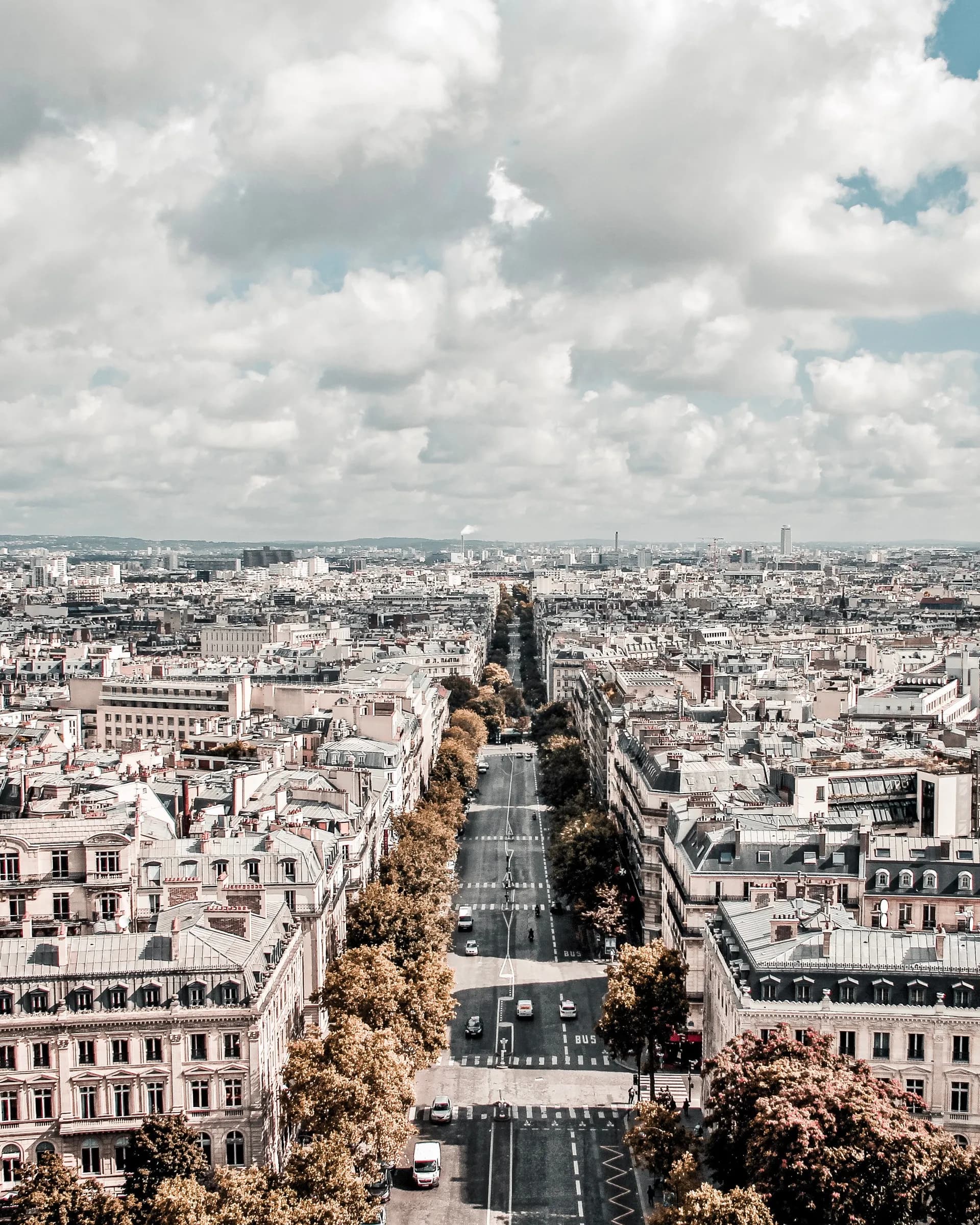
Paris
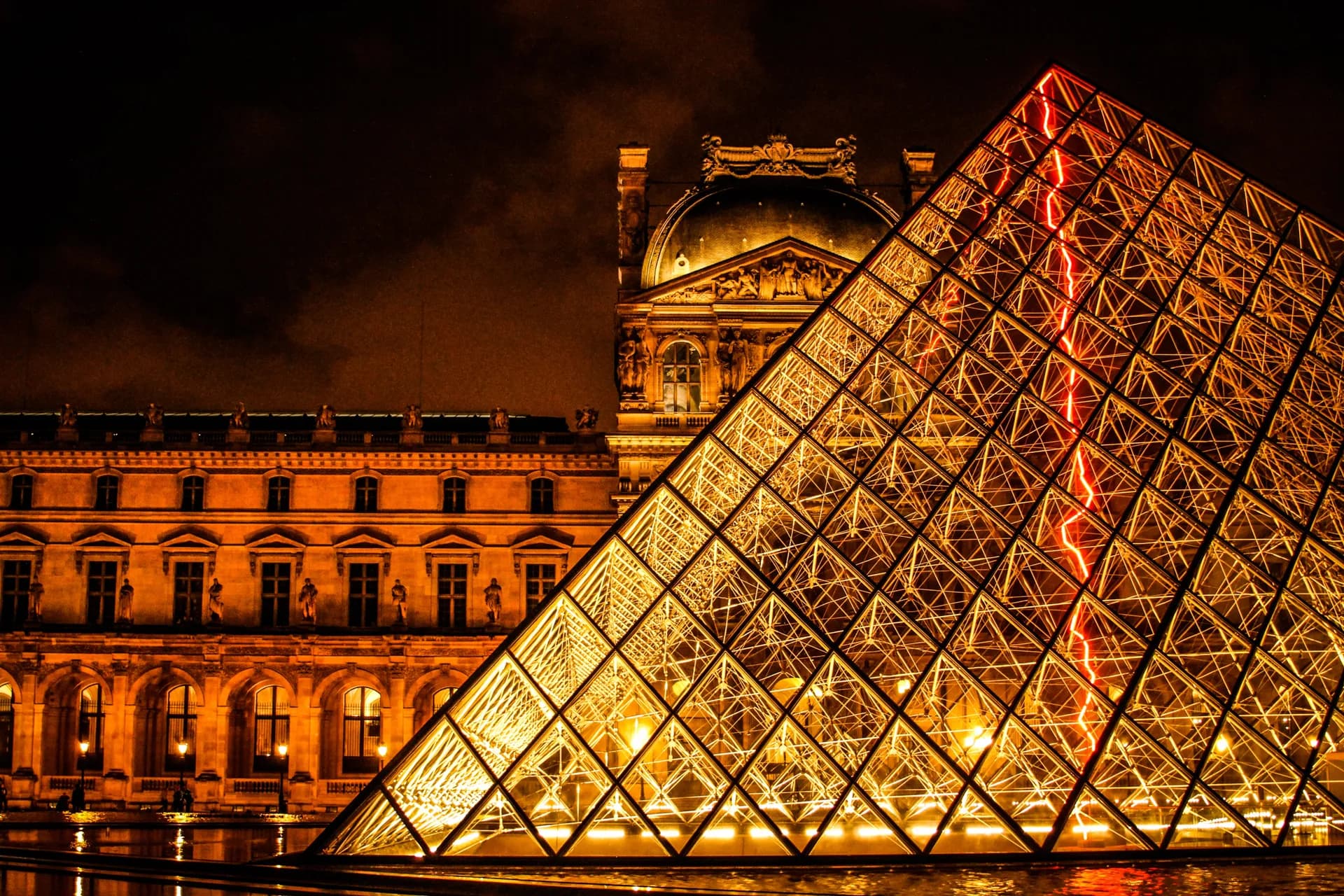
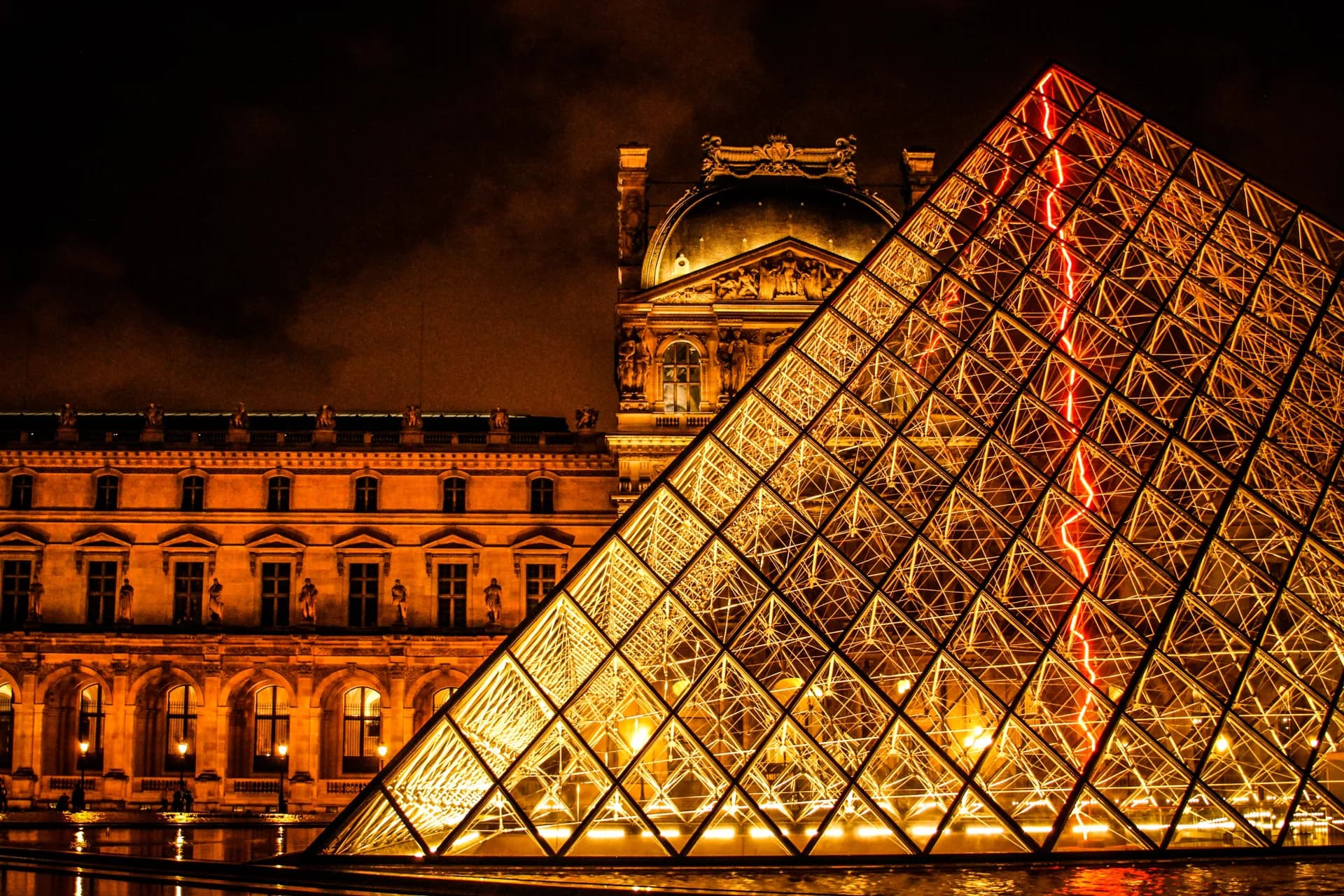
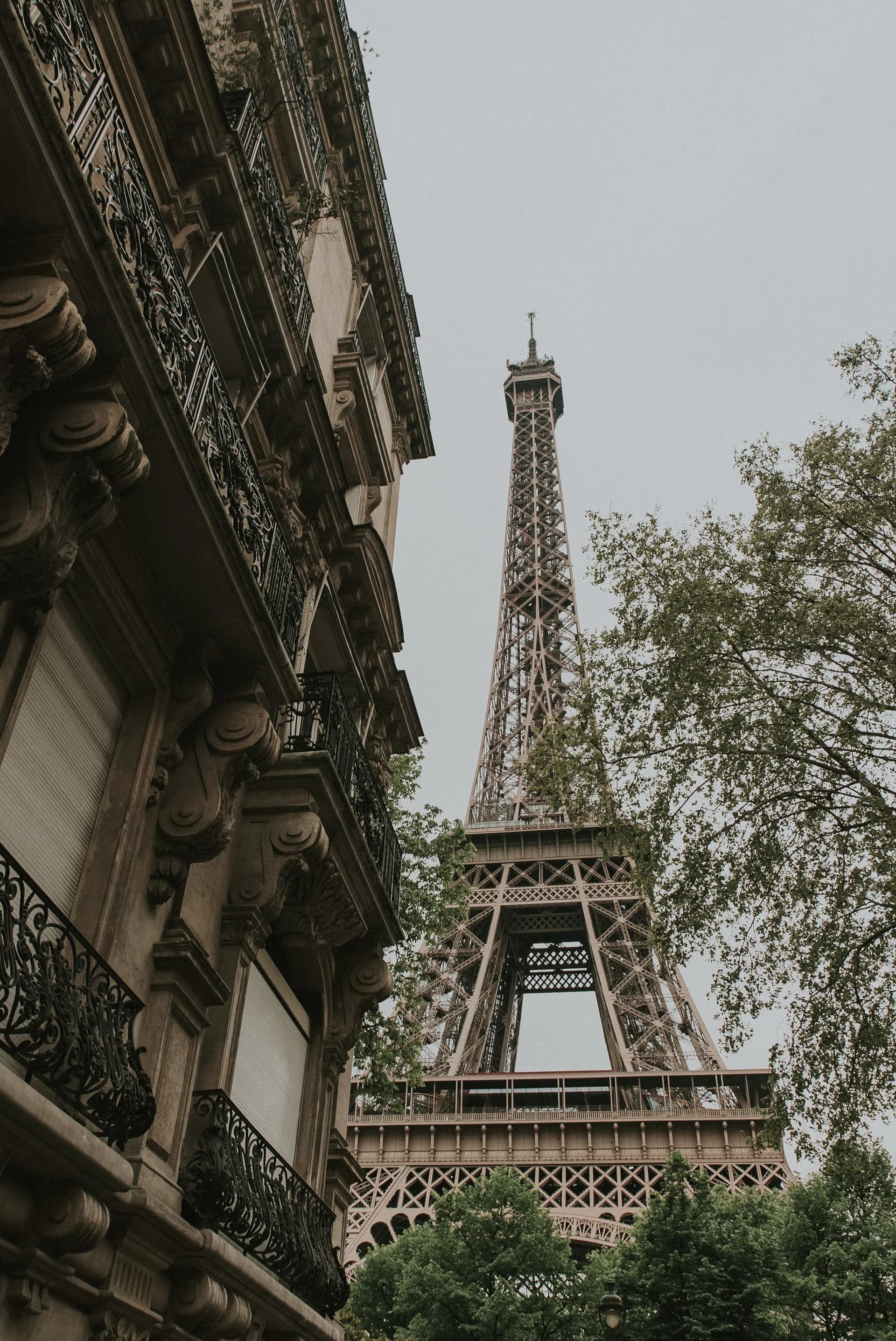
FranceEven if you’ve never been to Paris before, you’ll feel like you recognise every corner of the city. Countless films, books, paintings, poems and songs have been set in the city of love. Yet there’s always more to discover. The fashion capital of the world, a mecca of art and culture, an oasis for gourmets and a metropolis for media, education and political and economic power – Paris is all of this and more. Paris is a city whose beauty never fades. The Arc de Triomphe, Eiffel Tower, Notre Dame, Madeleine, Opéra, Louvre, Sacré-Coeur de Montmartre, Dôme des Invalides and Centre Pompidou are just some of the sights that exemplify this city’s fame and grandeur.
Day 11
Day 11
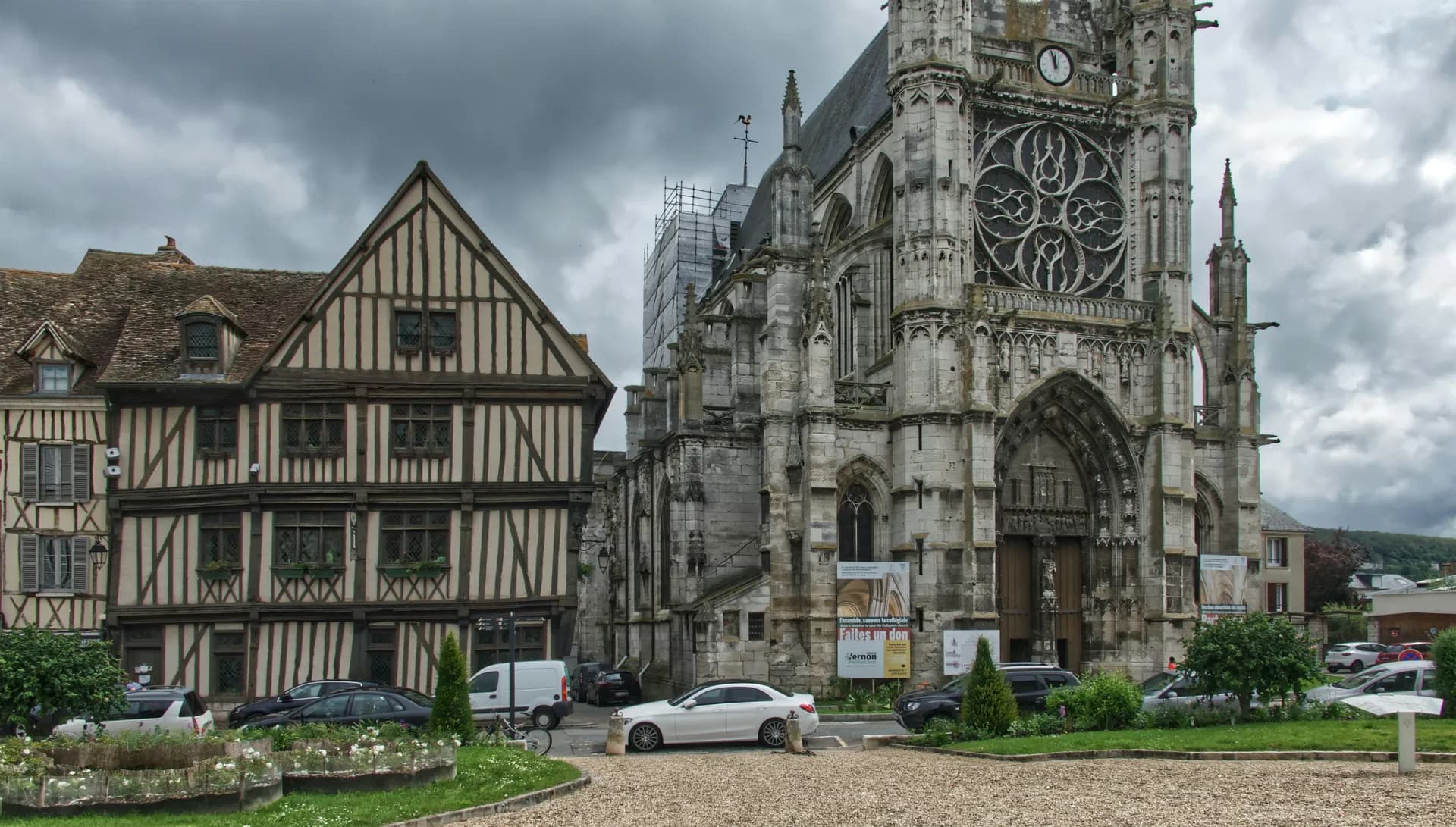
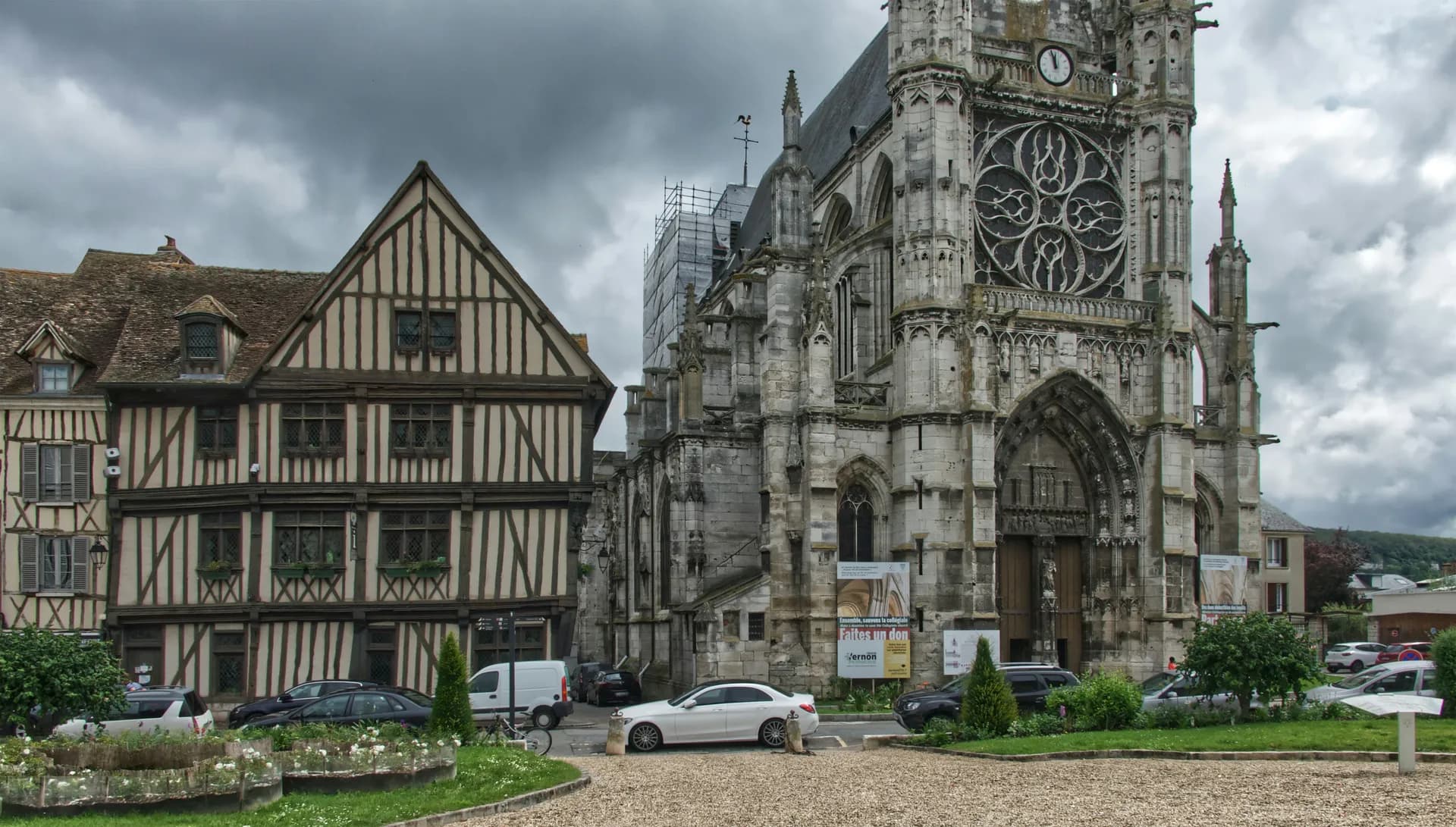
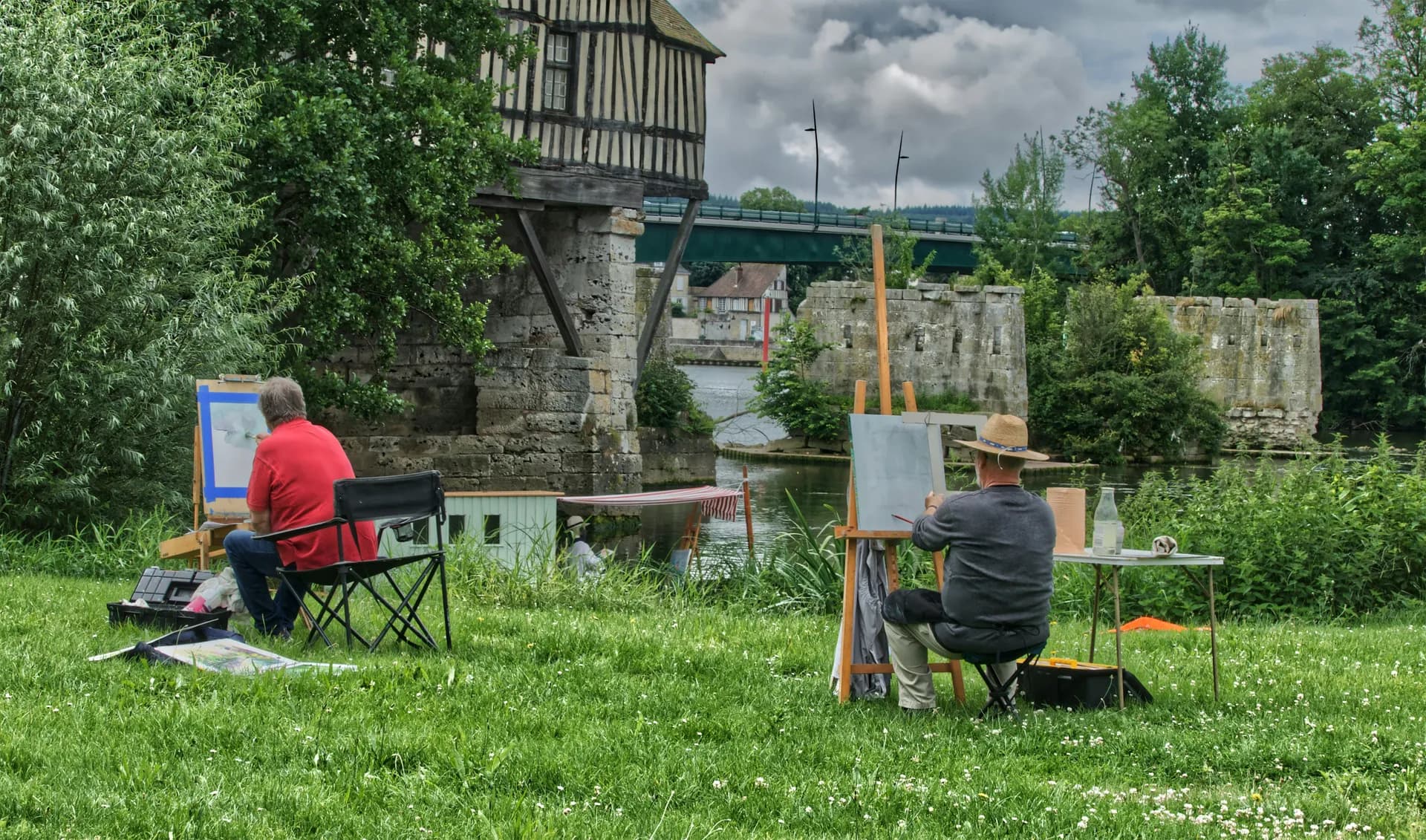
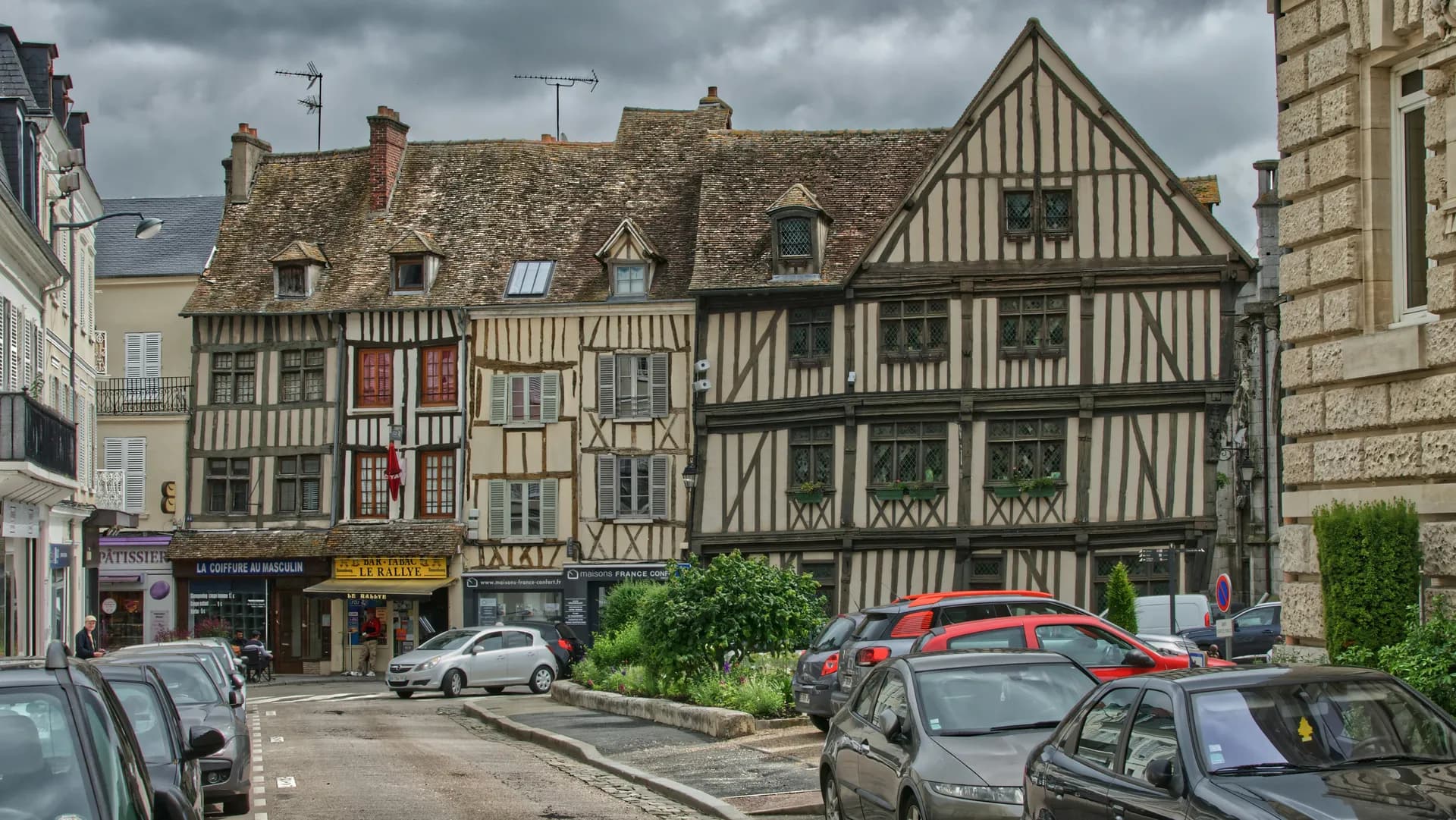
Vernon
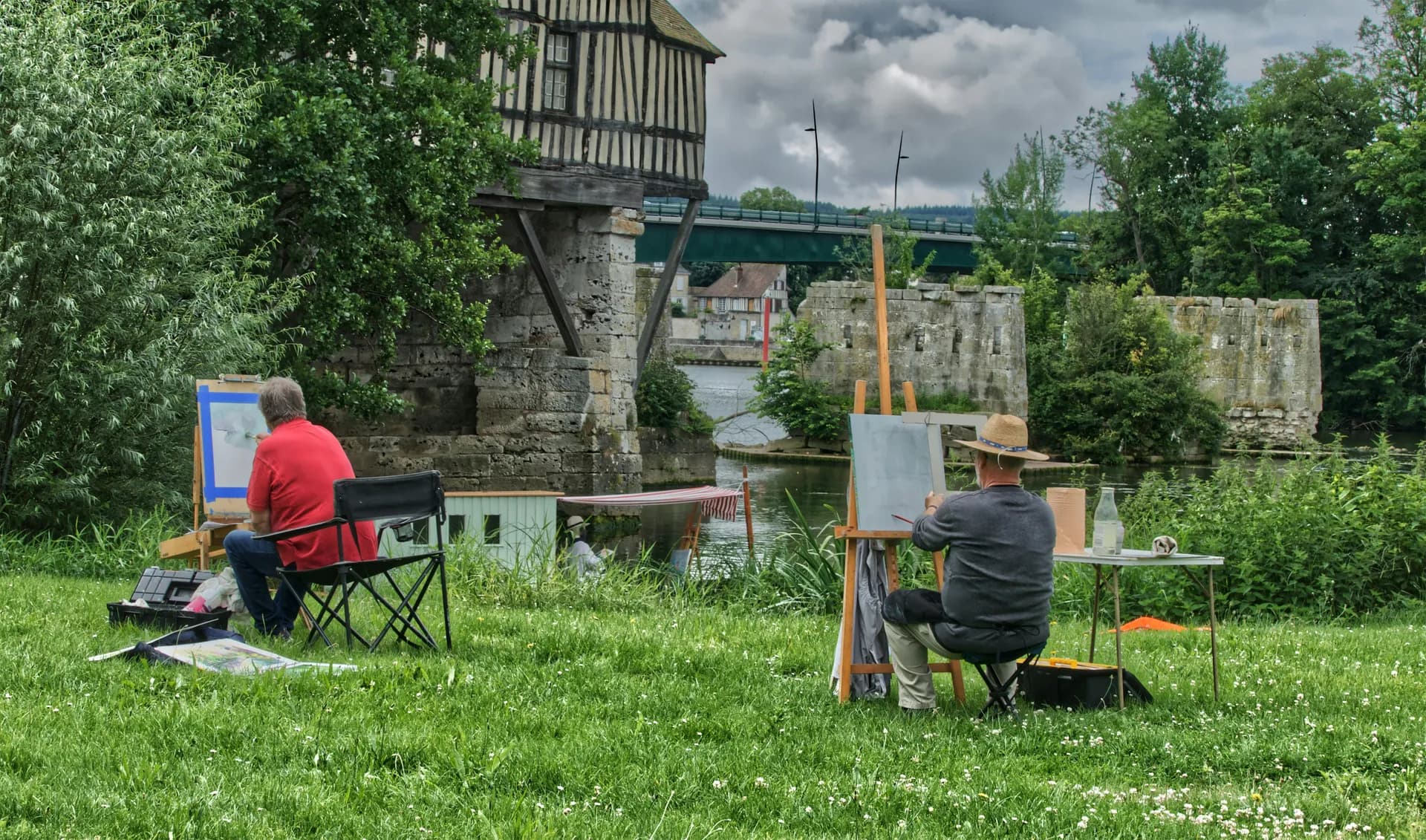
FranceIt’s said that you can hear the beams creaking like old bones when you see the Vieux Moulin de Vernon. The mill is perched on two pillars, seemingly suspended in mid-air over the Seine, while its roof sags like an old worn-out horse. Claude Monet painted the mill; reassuringly, the sag is visible in these paintings, which date back to 1883. Vernon has a few sights, such as a Gothic abbey church with stunningly colourful stained-glass windows. Nevertheless, it’s almost impossible to resist the lure of excursions to nearby destinations. In Château de Bizy (also known as ‘Little Versailles’), you can revel in luxurious Renaissance décor and go for a delightful stroll around the elegant park. Claude Monet’s house in Giverny is another magnet for culture enthusiasts and romantics – and rightly so. Unsurprisingly, the lush garden looks like a wild field of flowers from an impressionist painting. The crowning glory is the enchanting pond of water lilies – the subject of one of the most valuable paintings in the world.
Day 11
Day 11
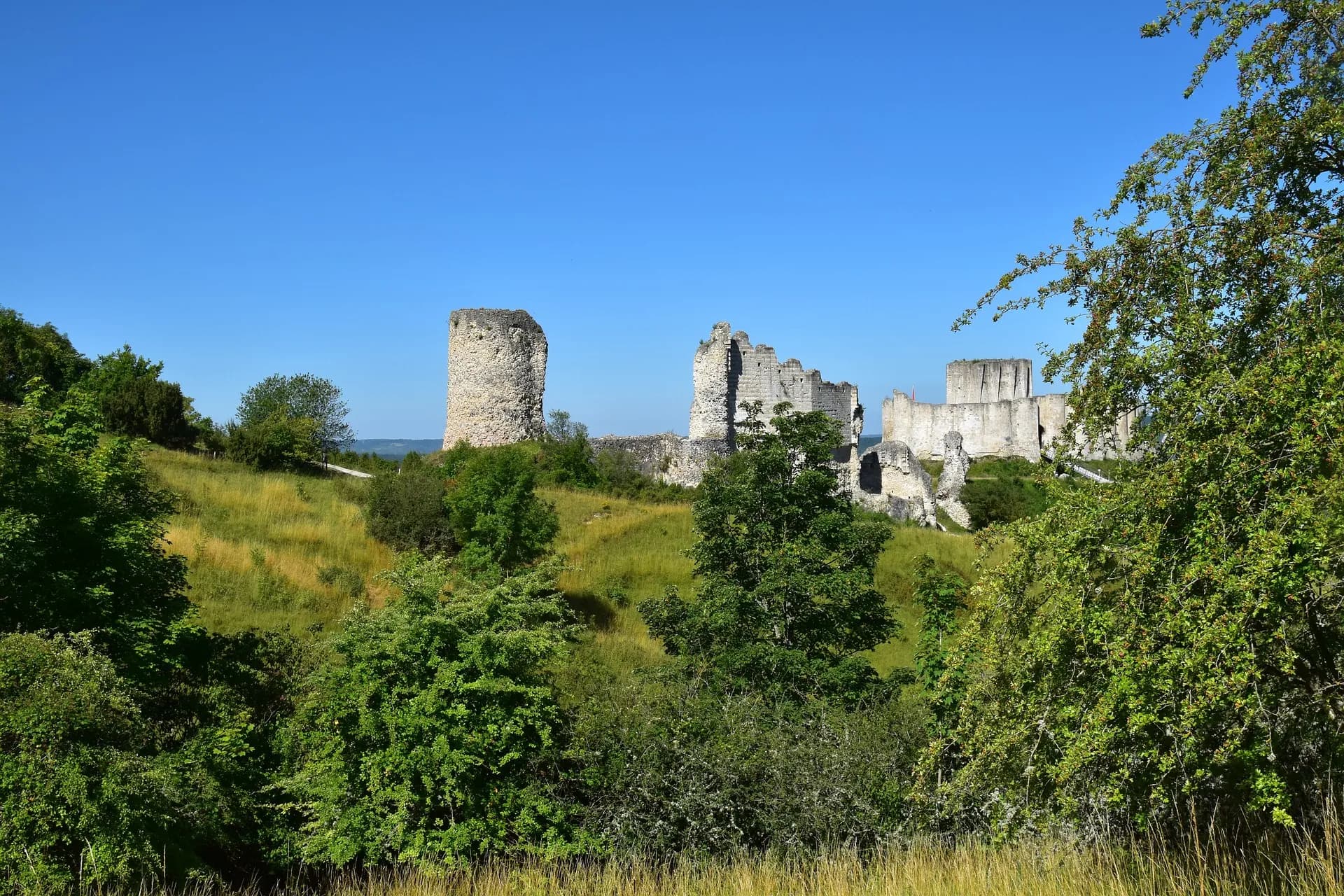
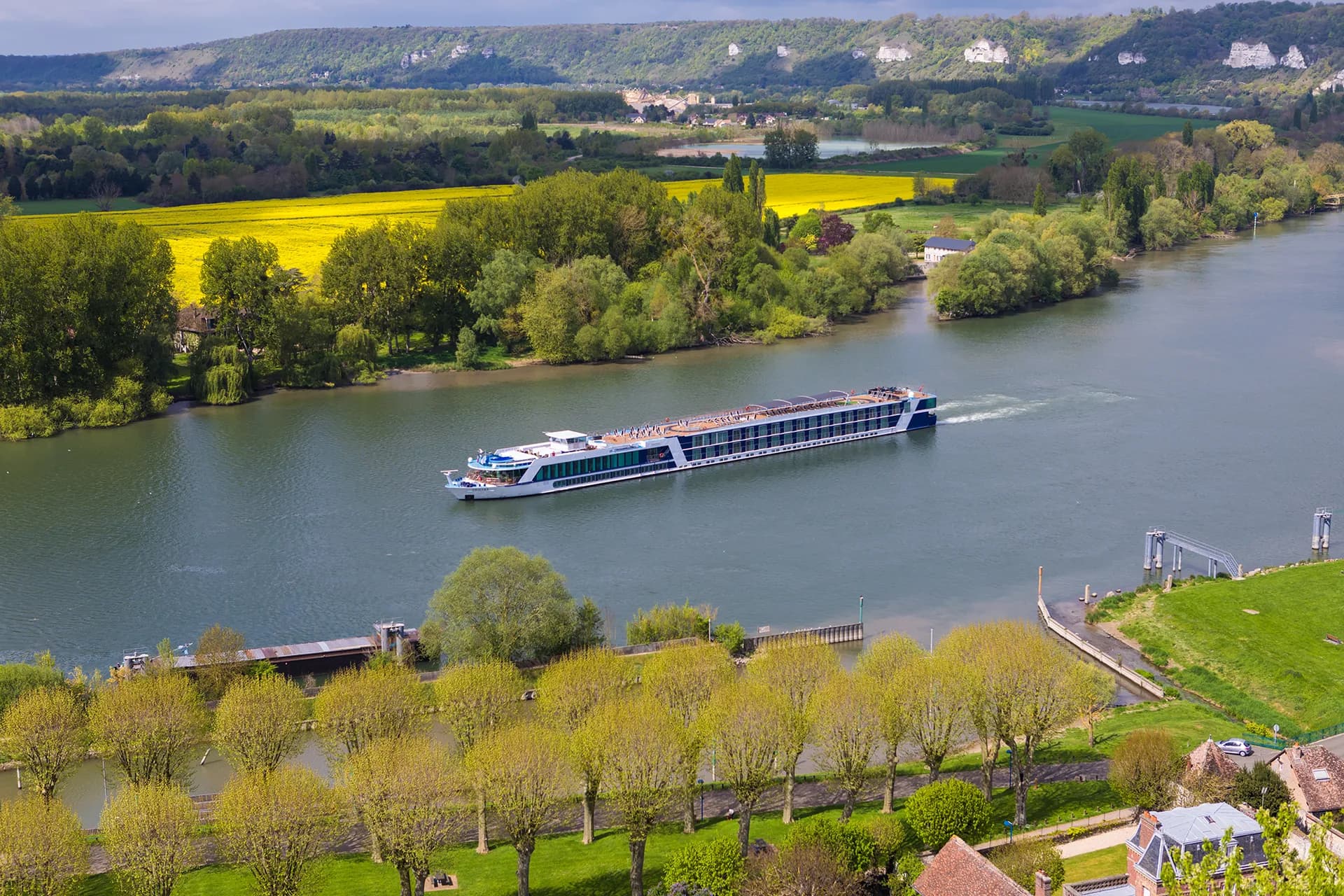
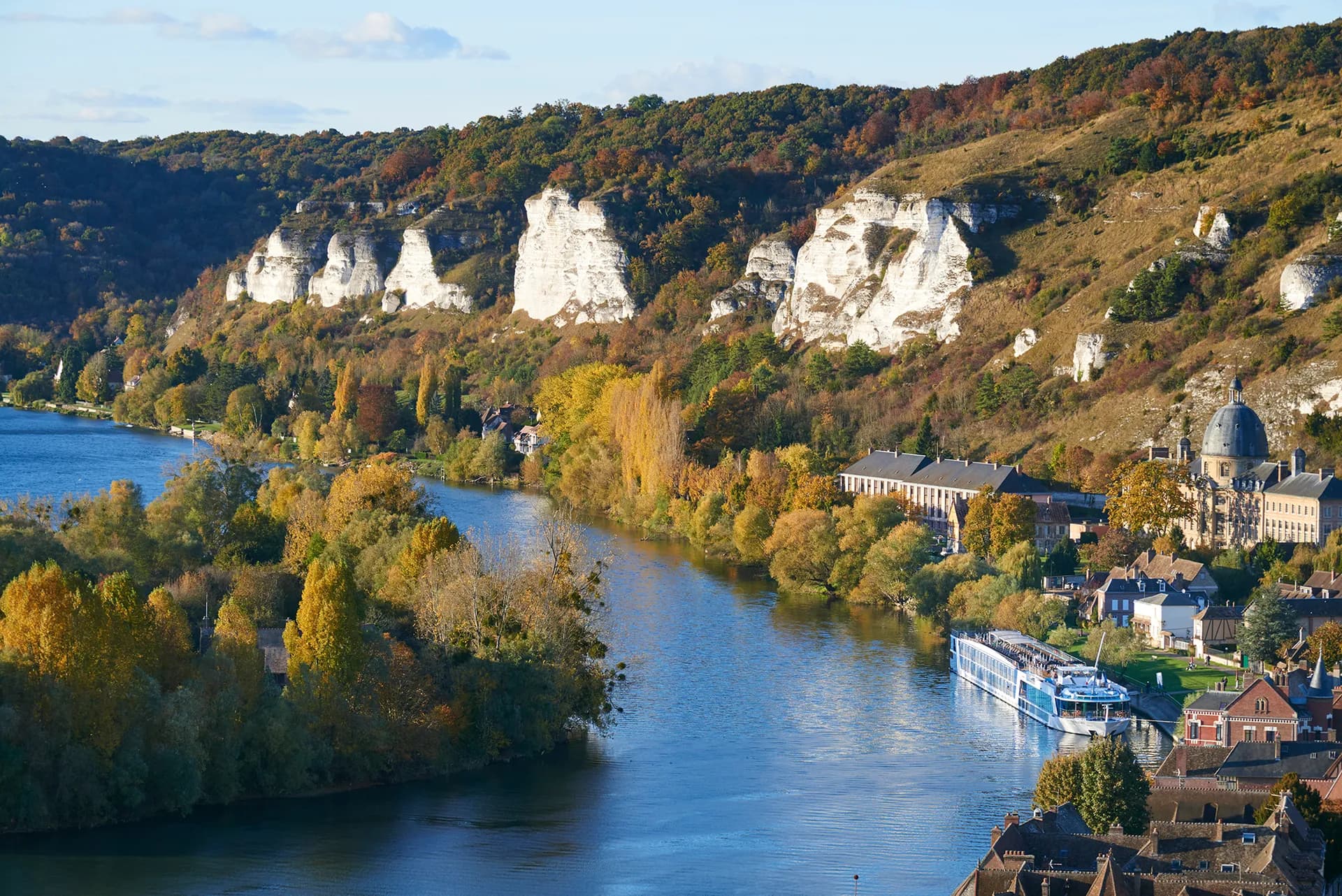
Les Andelys
FranceThe Château Gaillard is now just a mighty ruin. Nevertheless, it’s easy to imagine Richard the Lionheart keeping watch here for the advance of the enemy – the French – through the Seine valley. The fortress, which almost blocks the river, was built in just two years between 1196 and 1198. It was the centre of the defence system, which included a network of trenches and a fortified island in the river with chains stretched across it. Wooden posts were erected in the water to prevent ships from crossing. Today, Les Andelys is a peaceful, picturesque location amid rugged limestone rocks, green fields, the river island, the Hôpital Saint-Jacques and the Saint-Sauveur church tower. From the ship, you can go for wonderful walks through the small town’s blossoming lanes towards the Gothic abbey church and, of course, the castle complex.
Day 12
Day 12
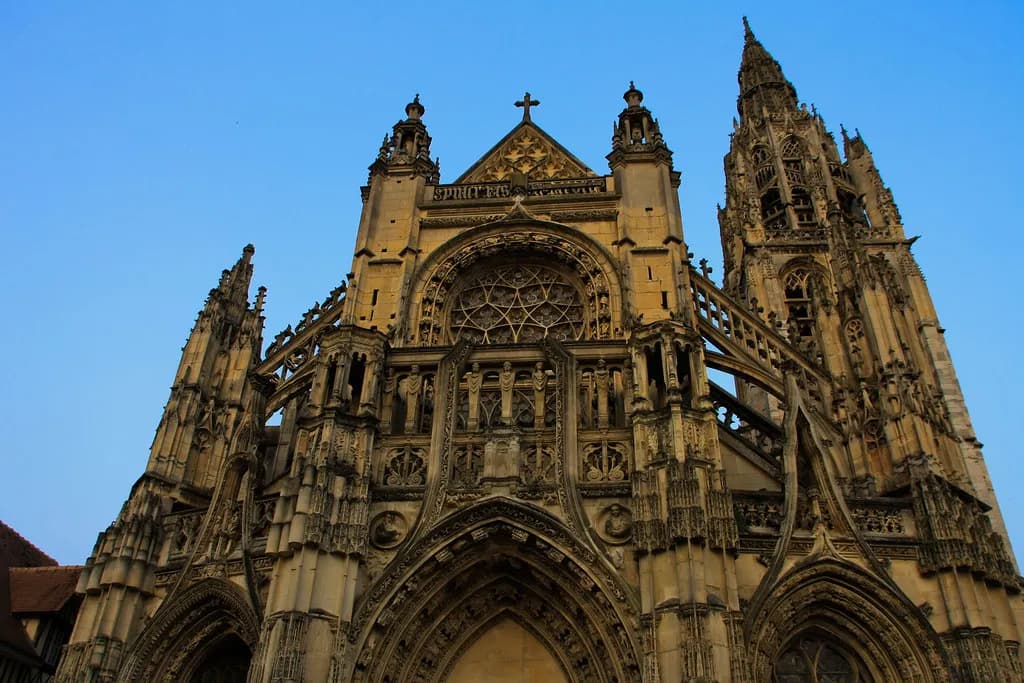
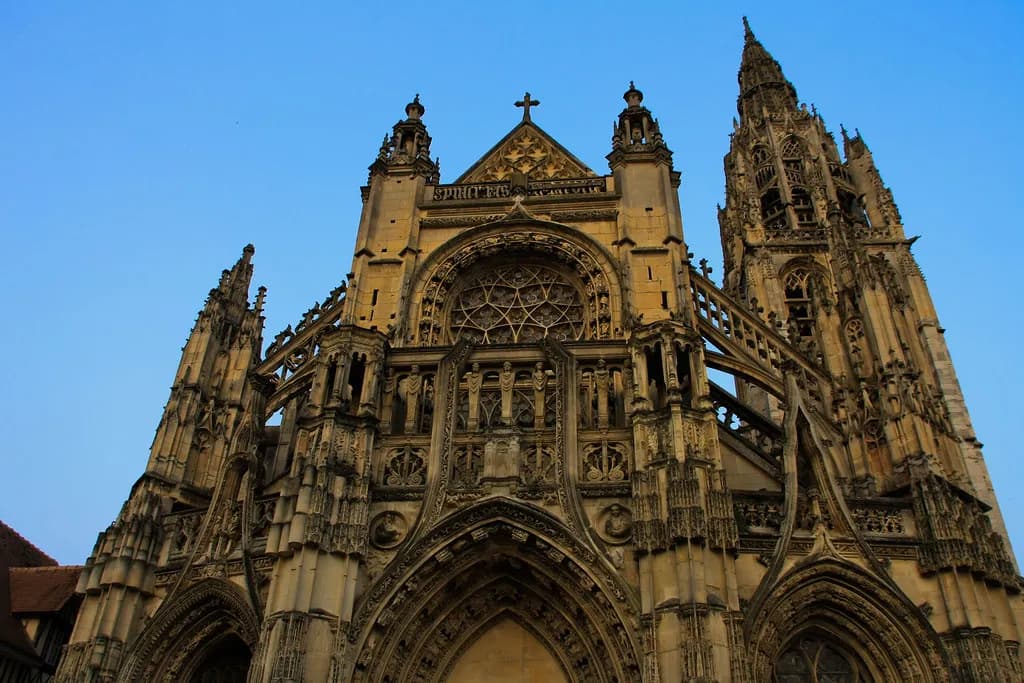
Caudebec-en-Caux
FranceThere was once a time when the Seine’s tidal bore, or mascaret, could get up to seven metres high. However, when the river was dredged and made navigable for ships, this natural spectacle ceased. Today, visitors to this small town are enchanted by the restaurants and cafes on the river’s promenade, from where you can watch the comings and goings on the Seine. There are plenty of interesting excursion options here. Honfleur, an idyllic fishing town, has gorgeous little lanes and a picturesque old port quarter that has hardly changed since the 17th century. Another tour option takes you to the region’s venerable monasteries. Some of these are still inhabited, while others – such as Jumièges Abbey – survive as spectacular ruins.
Day 13
Day 13
Caudebec-en-Caux
FranceThere was once a time when the Seine’s tidal bore, or mascaret, could get up to seven metres high. However, when the river was dredged and made navigable for ships, this natural spectacle ceased. Today, visitors to this small town are enchanted by the restaurants and cafes on the river’s promenade, from where you can watch the comings and goings on the Seine. There are plenty of interesting excursion options here. Honfleur, an idyllic fishing town, has gorgeous little lanes and a picturesque old port quarter that has hardly changed since the 17th century. Another tour option takes you to the region’s venerable monasteries. Some of these are still inhabited, while others – such as Jumièges Abbey – survive as spectacular ruins.
Day 14
Day 14
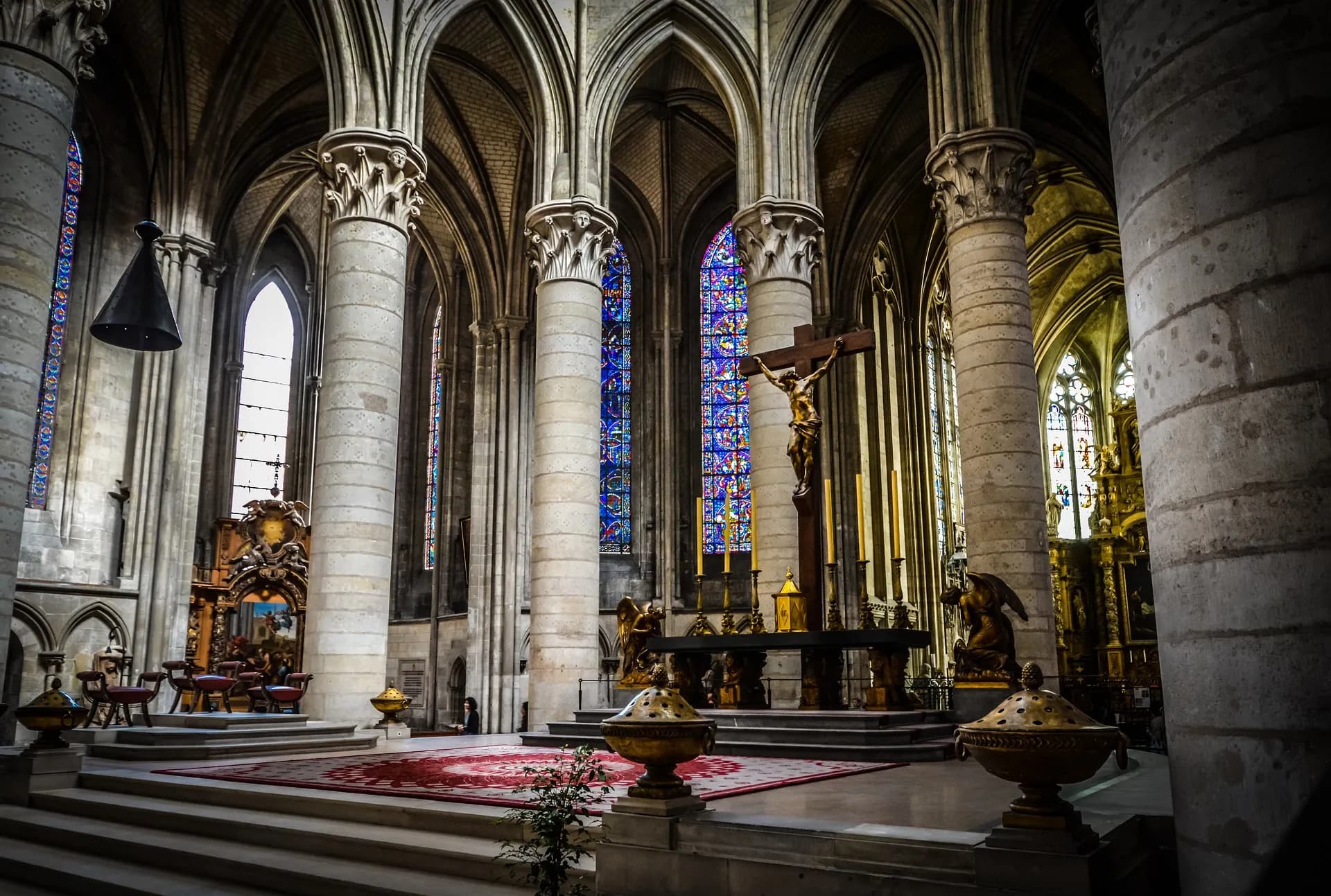
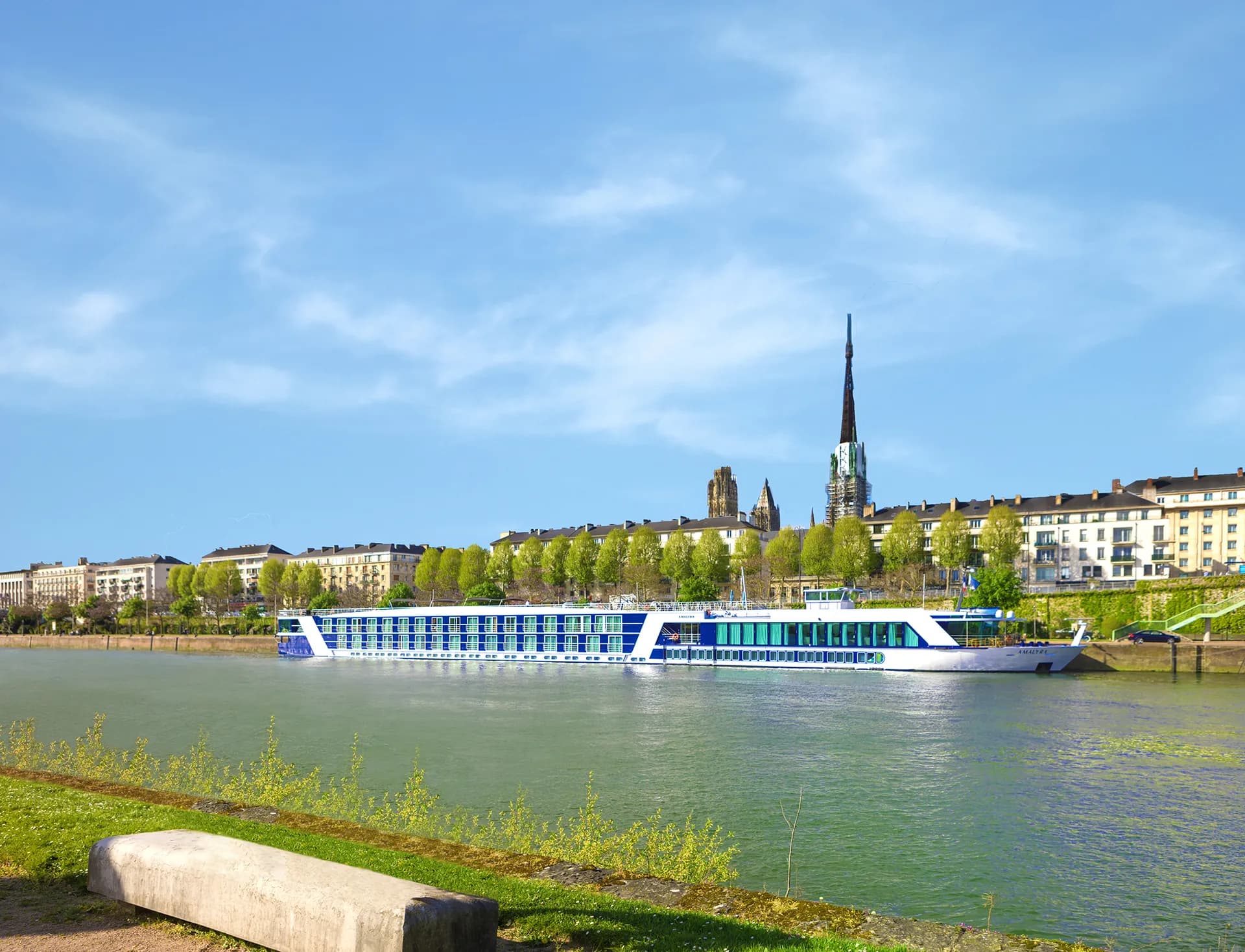
Rouen
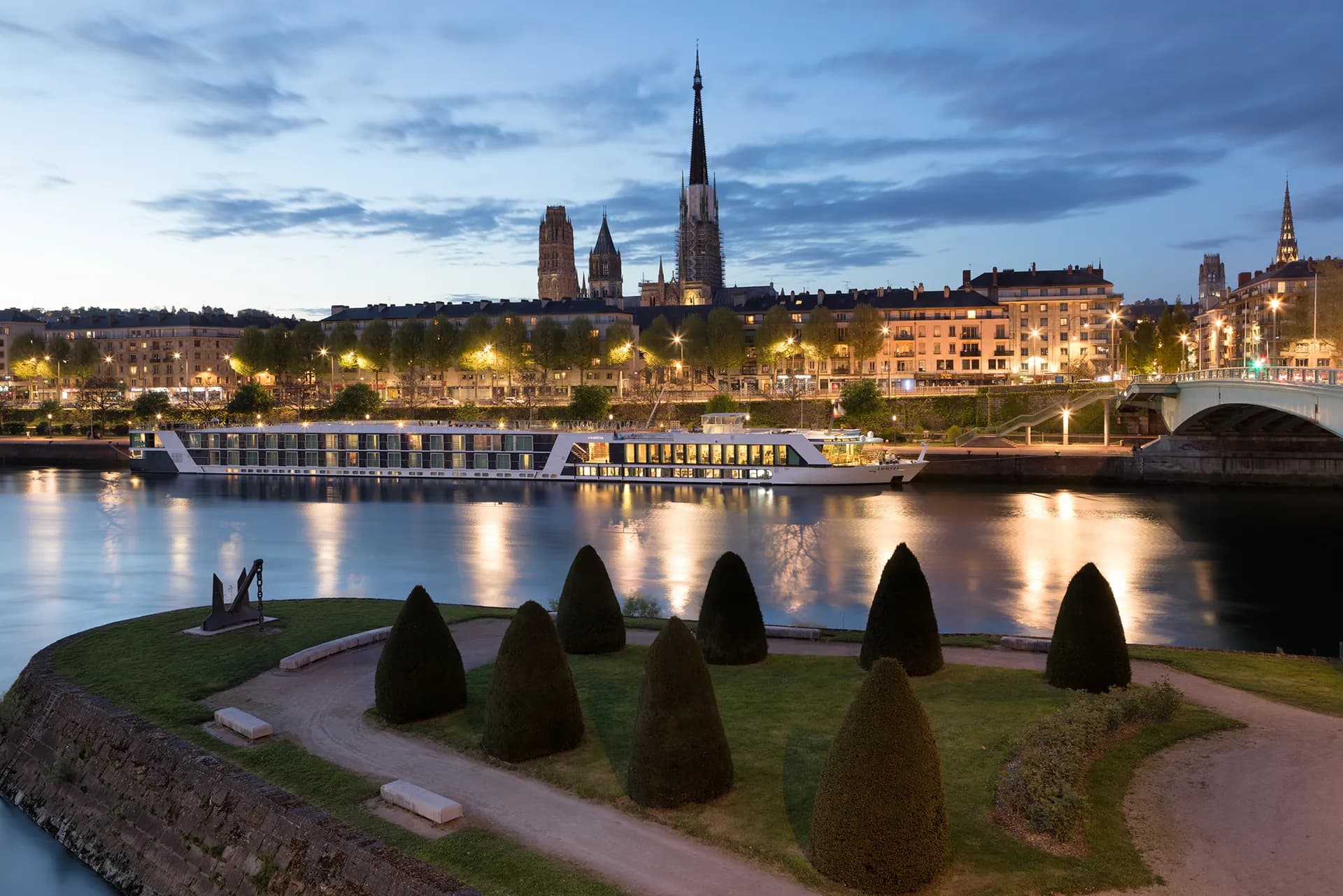
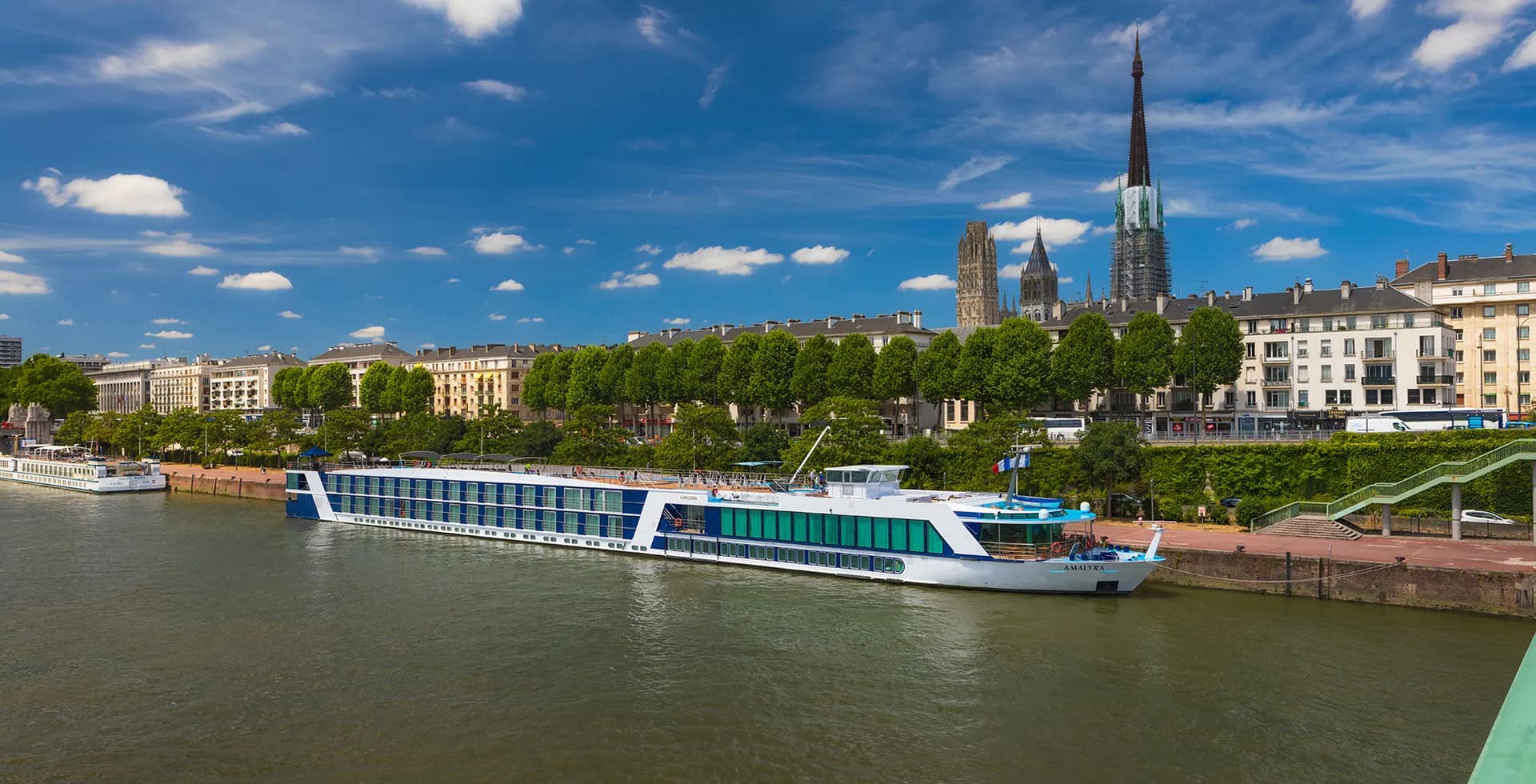
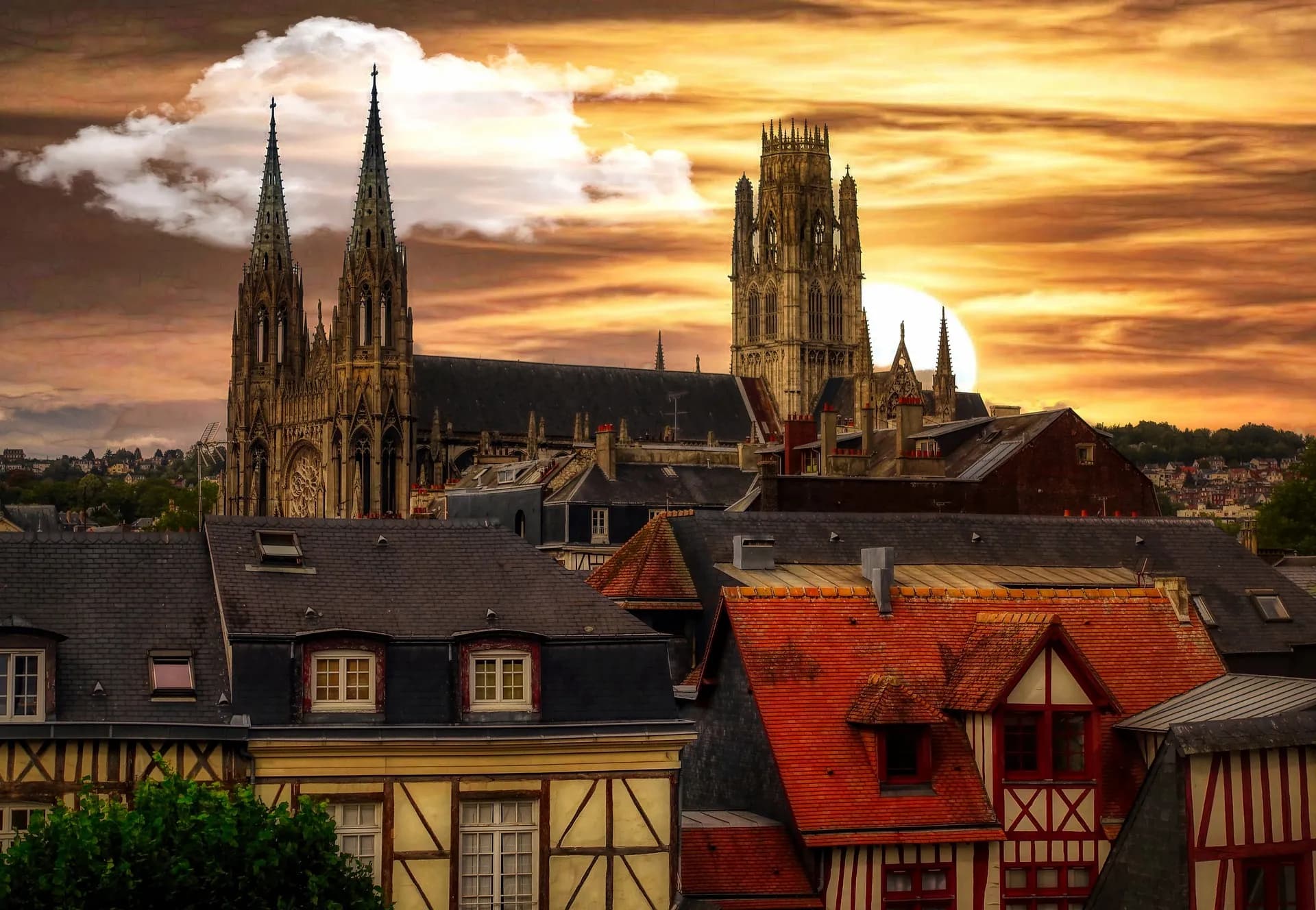
FranceSituated in a natural amphitheater on the Seine River, Rouen's status as a commercial and cultural center reaches as far back as the Middle Ages. As a result of its importance, the city was the target of many sieges. During the English occupation in the Hundred Years' War, Rouen was the site where Joan of Arc was burned at the stake in 1431. Other tragedies include the destruction of a major part of the commercial and industrial center during bombing raids in World War II. Today the city presents an interesting mix of medieval and modern architecture. Rouen expanded outward during the 20th century with the development of industries; its increasingly busy port is now the fourth largest in France. The city's greatest attraction is its historic center. Known as the “City of a Hundred Spires,” many of its important edifices are churches. Dominating the large central square is the magnificent Notre-Dame Cathedral, a masterpiece of French Gothic architecture. You may recognize the west façade of the cathedral from a series of studies by Claude Monet, which are now displayed in the Musée d'Orsay in Paris. Surrounding the square are picturesque half-timbered houses with steeply pointed roofs. The wealth of architectural treasures and the ambiance of Rouen's historic center never fail to impress visitors. Rouen also serves as a gateway to Paris. Driving distance is 2 hours by car or 1.5 hours by train. (Trains arrive in Paris at St. Lazare Station.)
Day 15
Day 15
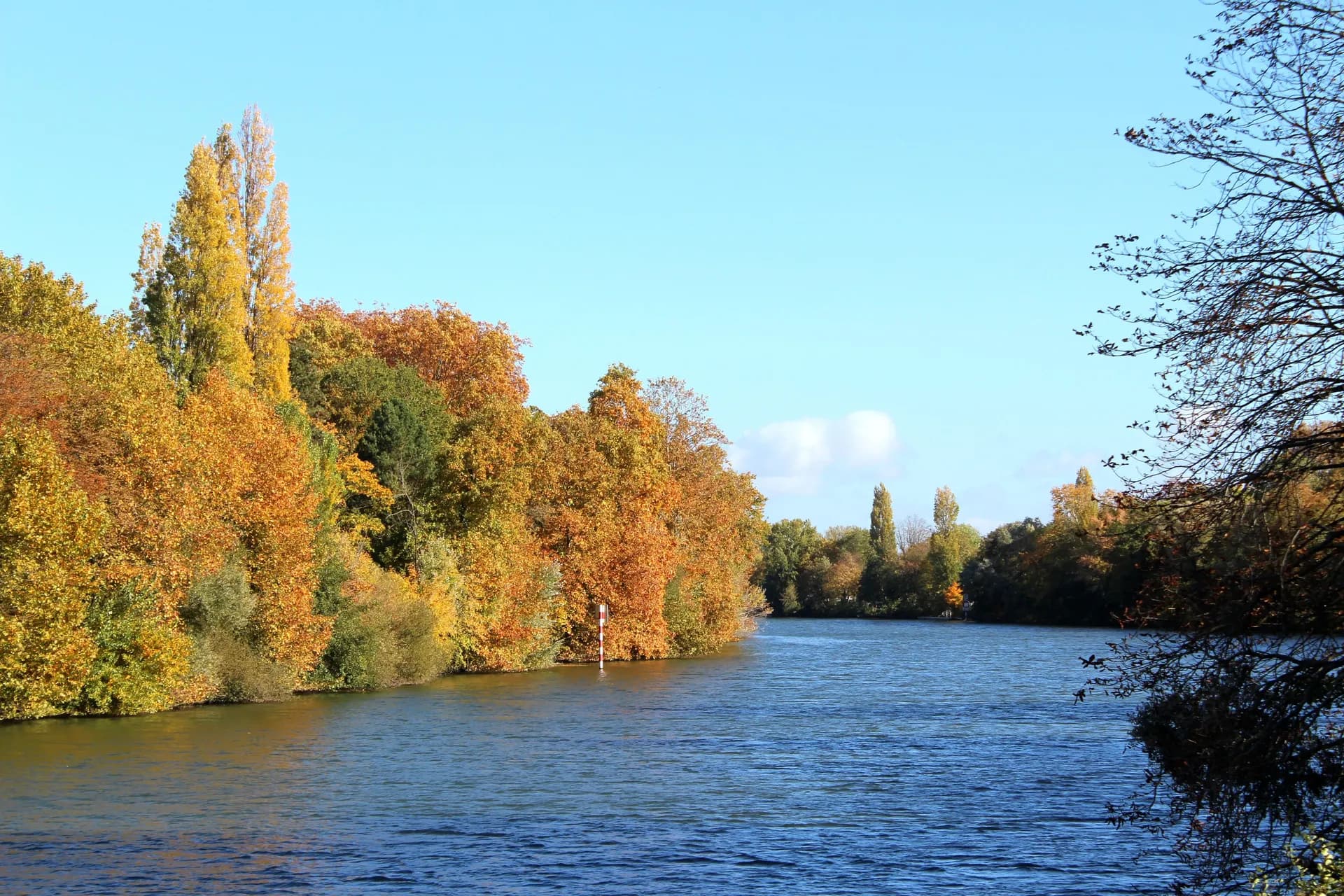
Conflans
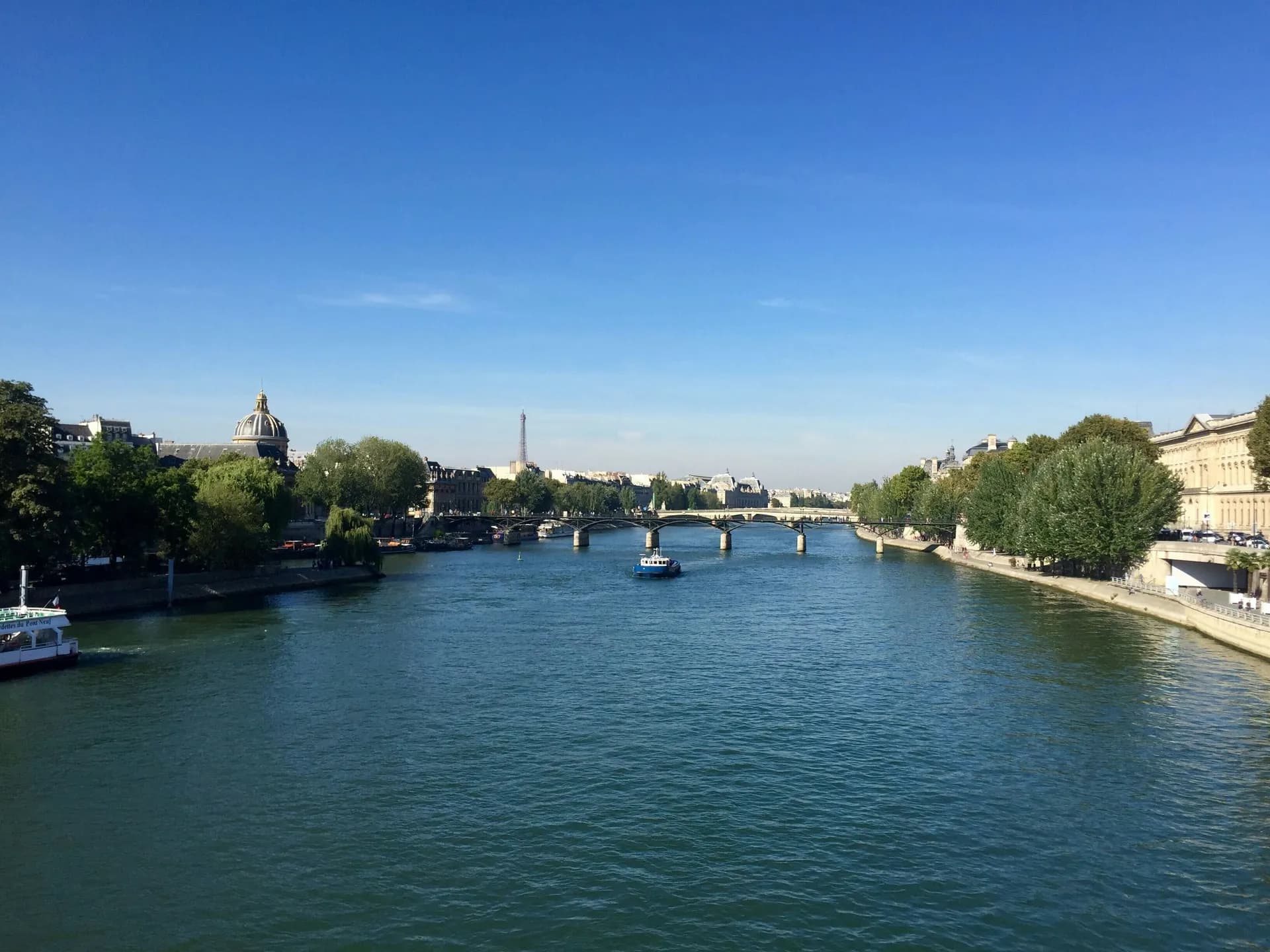
FranceConflans-Sainte-Honorine is a commune in the Yvelines department in the Île-de-France region in north-central France. It is located in the northwestern suburbs of Paris, 24.2 km from the center of Paris. The commune was originally named for its geographic position at the confluence of the Seine and Oise rivers.
Day 16
Day 16
Paris
FranceEven if you’ve never been to Paris before, you’ll feel like you recognise every corner of the city. Countless films, books, paintings, poems and songs have been set in the city of love. Yet there’s always more to discover. The fashion capital of the world, a mecca of art and culture, an oasis for gourmets and a metropolis for media, education and political and economic power – Paris is all of this and more. Paris is a city whose beauty never fades. The Arc de Triomphe, Eiffel Tower, Notre Dame, Madeleine, Opéra, Louvre, Sacré-Coeur de Montmartre, Dôme des Invalides and Centre Pompidou are just some of the sights that exemplify this city’s fame and grandeur.
Day 17
Day 17
Paris
FranceEven if you’ve never been to Paris before, you’ll feel like you recognise every corner of the city. Countless films, books, paintings, poems and songs have been set in the city of love. Yet there’s always more to discover. The fashion capital of the world, a mecca of art and culture, an oasis for gourmets and a metropolis for media, education and political and economic power – Paris is all of this and more. Paris is a city whose beauty never fades. The Arc de Triomphe, Eiffel Tower, Notre Dame, Madeleine, Opéra, Louvre, Sacré-Coeur de Montmartre, Dôme des Invalides and Centre Pompidou are just some of the sights that exemplify this city’s fame and grandeur.
Day 17
Day 17
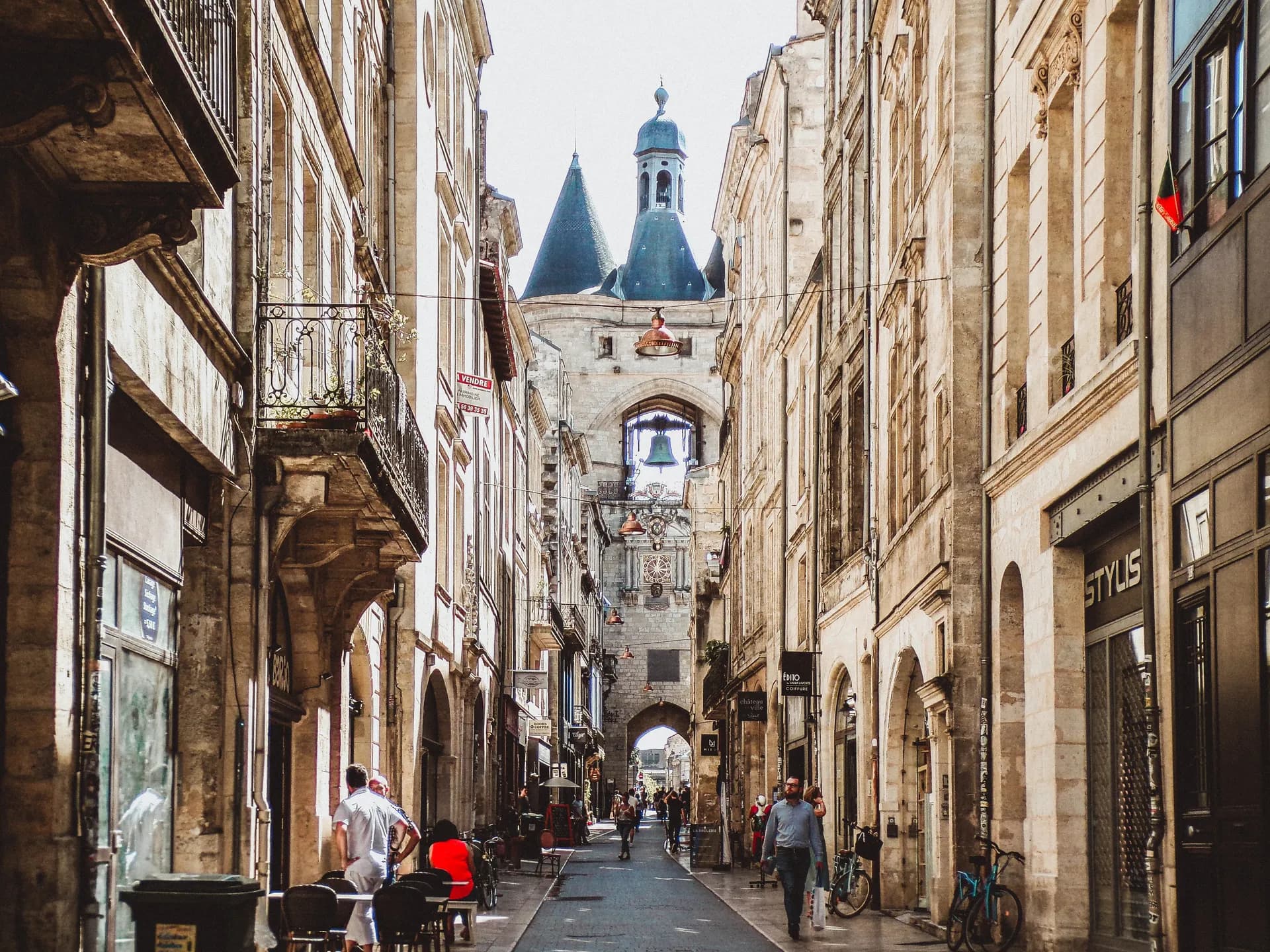
Bordeaux
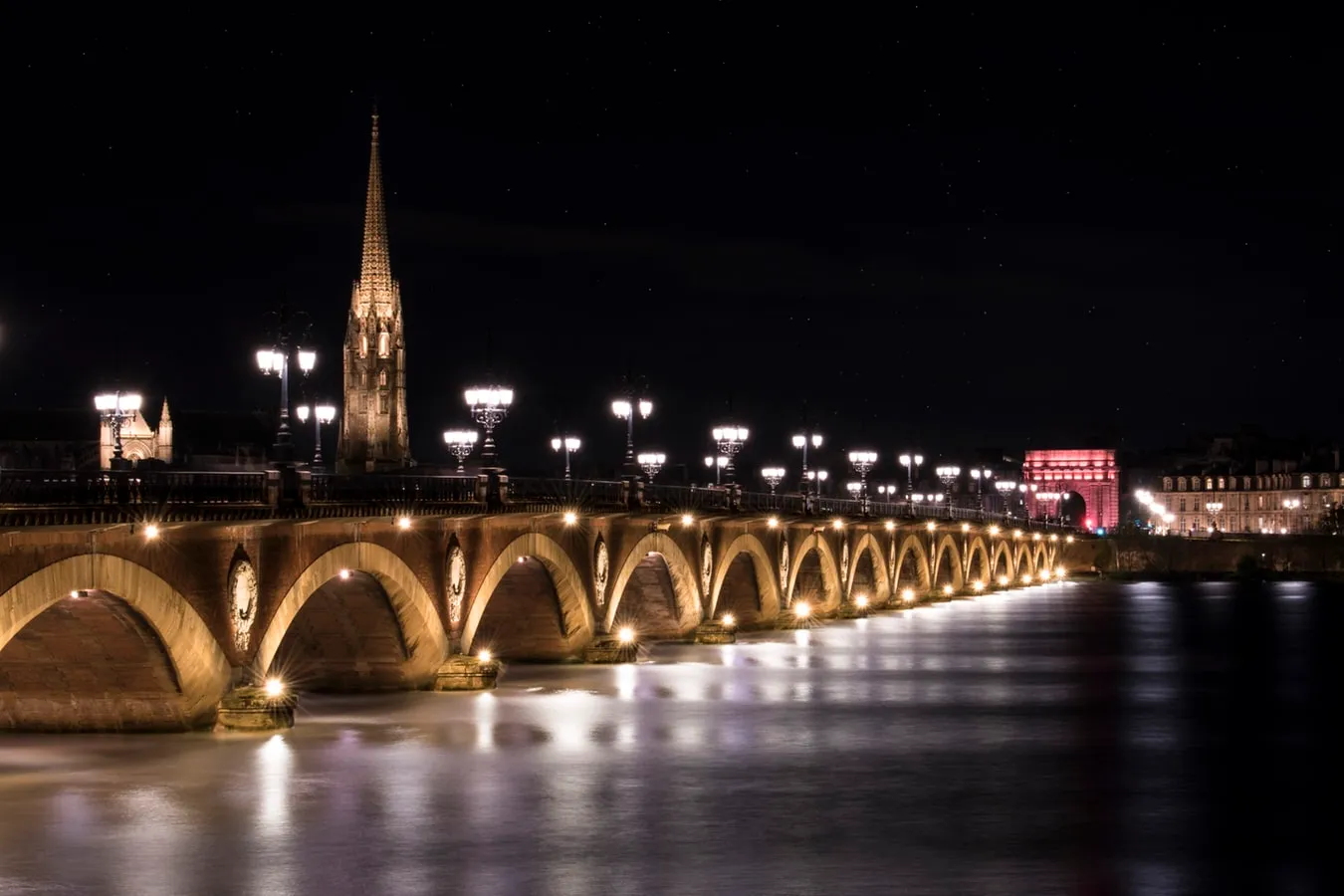
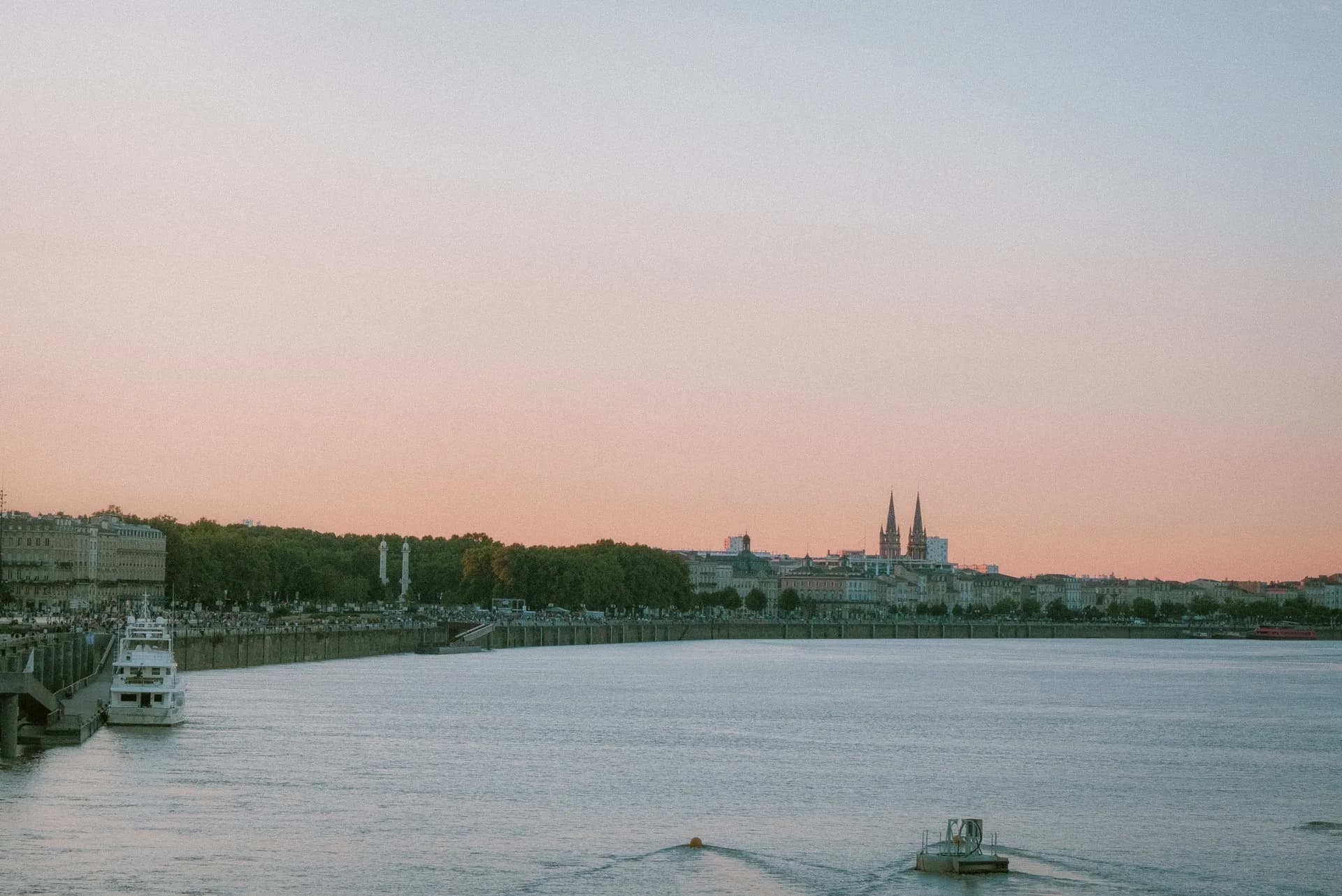
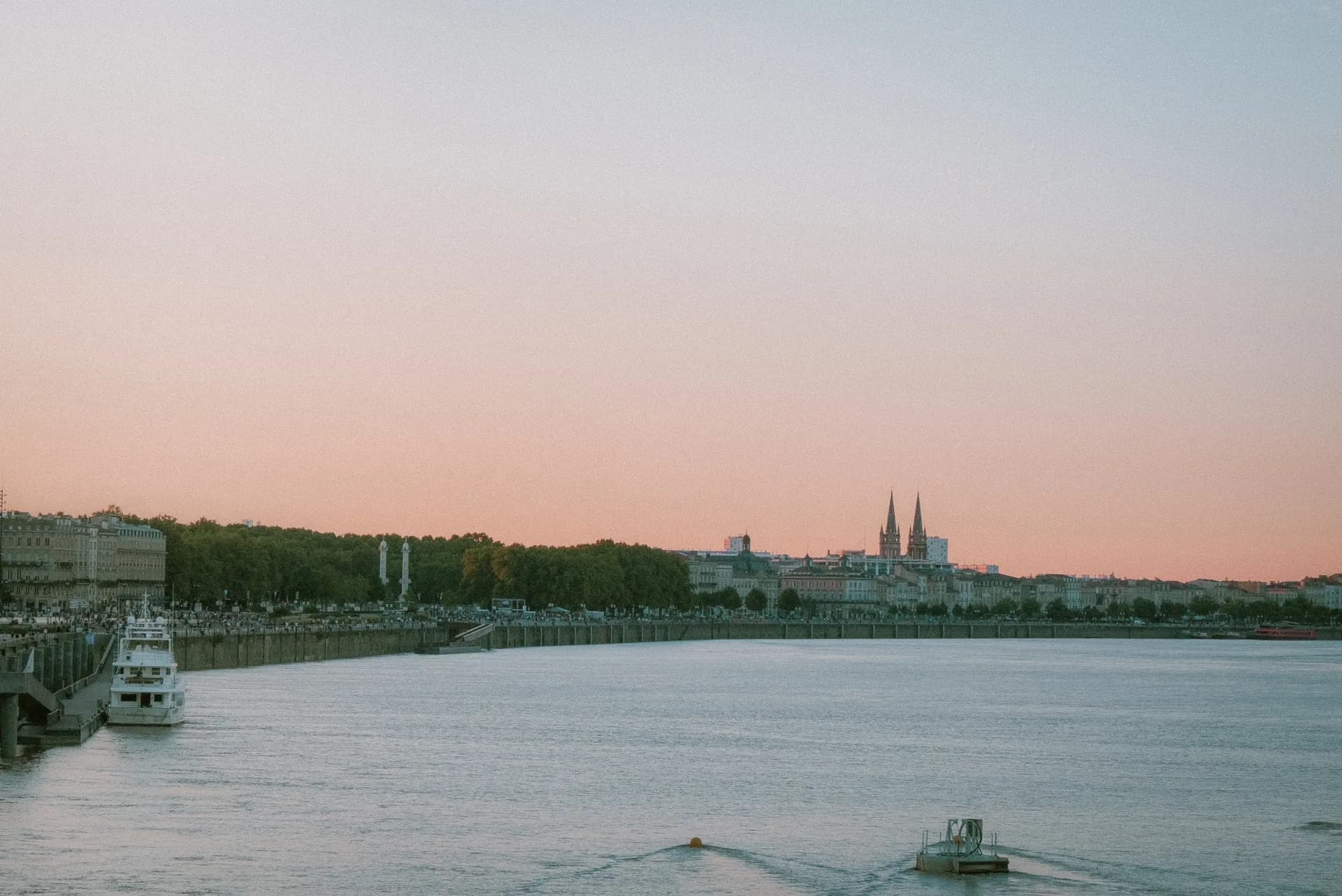
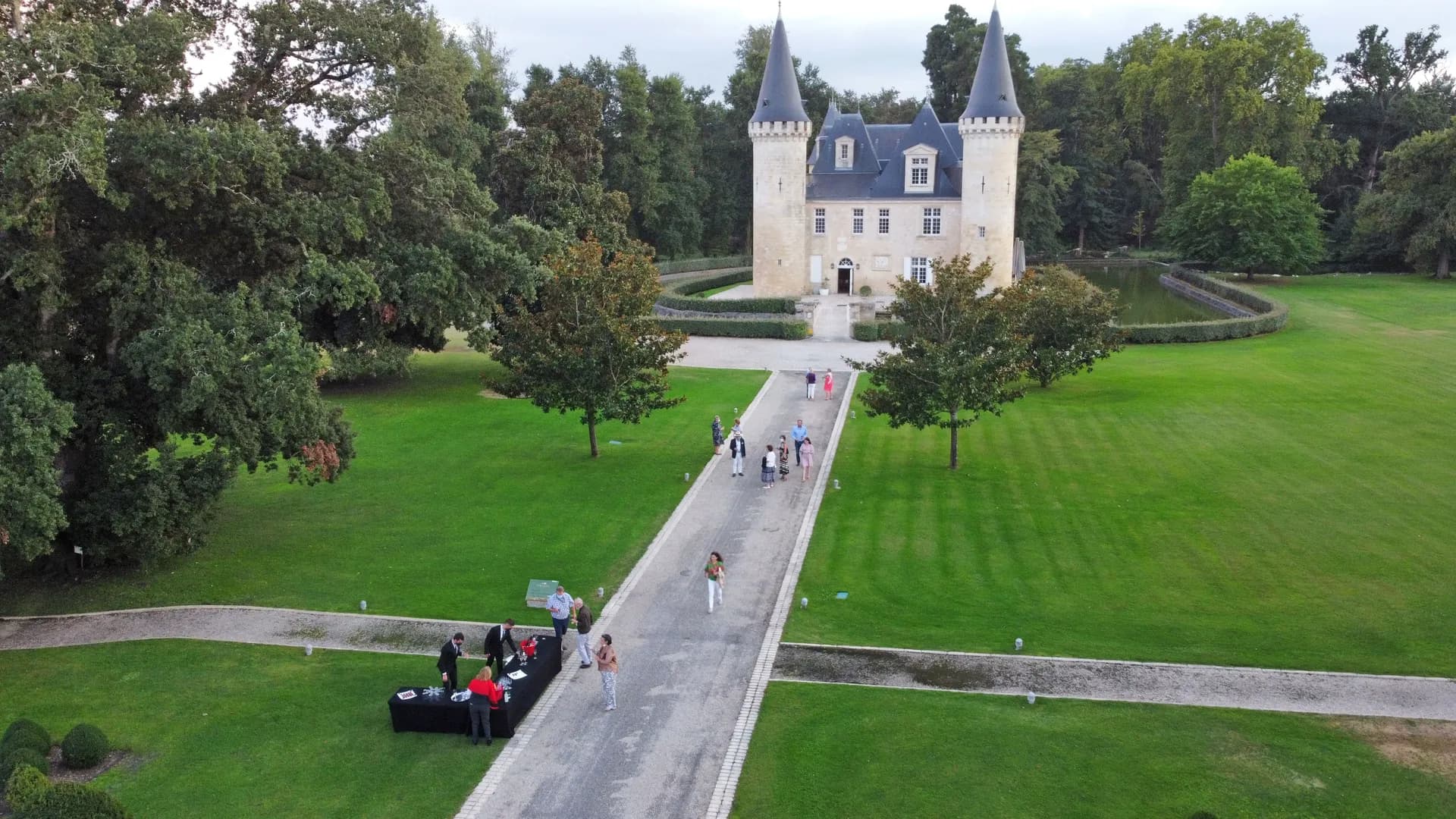
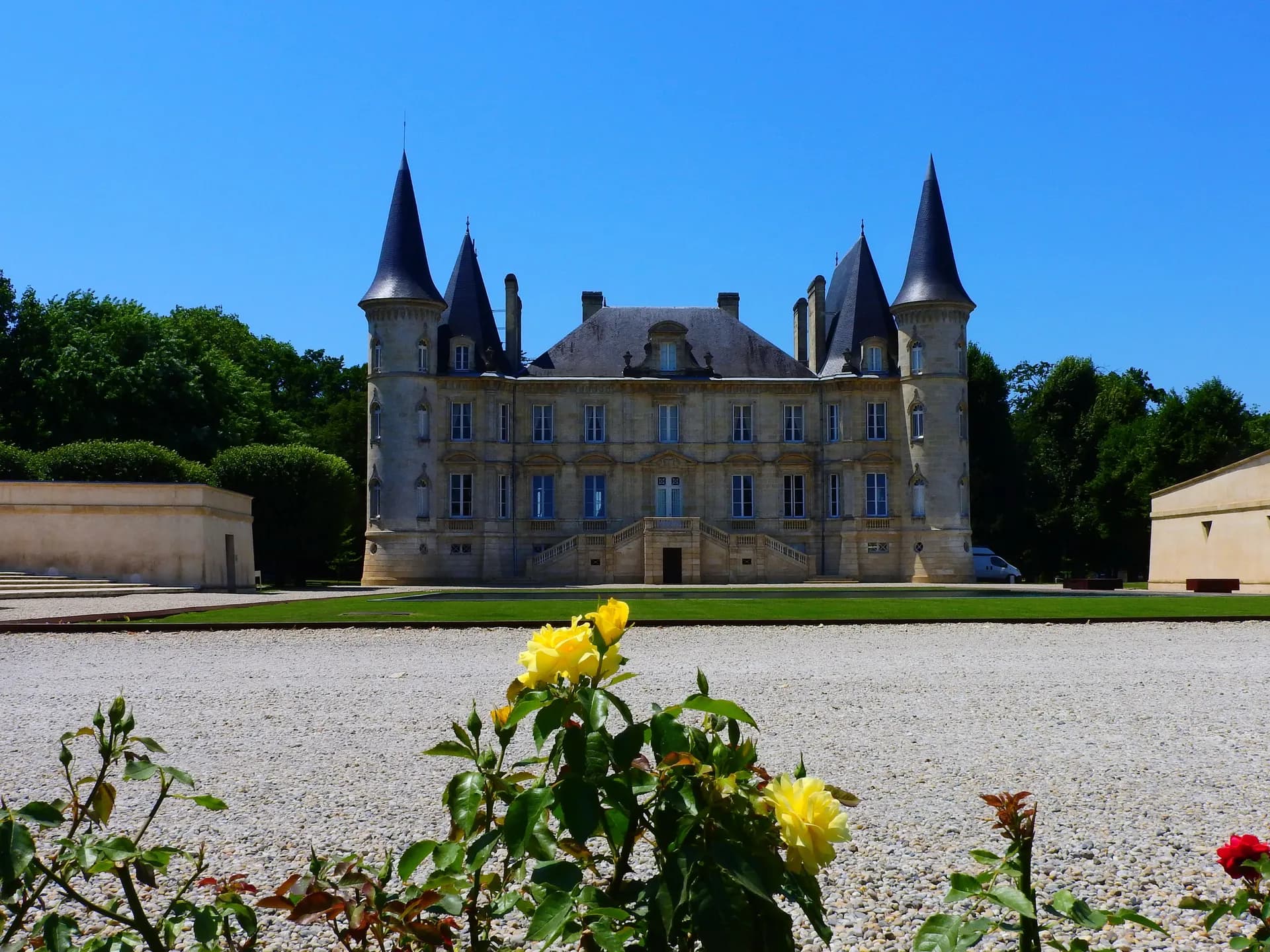
FranceThe name alone conjures images of sun-ripened grapes, splashes of refined flavour, and the joy of clinking glasses. Bordeaux is synonymous with quality and prestige, and the promise of endless opportunities to sample the city’s famous, full-bodied red wines makes a visit to this elegant French port city one to truly savour. Sprinkled with scenic, turret-adorned mansion castles, which stand above soil softened by the Atlantic and winding flow of the Garonne River, the vineyards of Bordeaux consistently produce revered wines, enjoyed right across the globe. Explore France’s largest wine region, walking through vineyards where dusty clumps of grapes hang, before descending into cellars to see the painstaking processes that make this region a global wine centre. The acclaimed, sensory experience of Cité du Vin wine museum lets you put your own nose to the test, learning more about the craft involved in producing world class vintages. Brush up on your wine knowledge, with our blog [insert You’ll Fall in Love with Wine in Bordeaux]. Bordeaux itself is an intoxicating blend of old and new – a fact perfectly illustrated by the Water Mirror. This living art installation has reinvigorated one of the city’s most important historical sites, and it feels as though you’re walking on water, as you step through the cooling mist of Place De La Bourse. The moisture generates a glorious mirrored composition of the 300-year-old elegant palatial architecture in front of you. Water also flows freely from the magnificent Monument aux Girondins statue, where horses rear up to extol the values of the Girondin revolutionaries. Marche des Quais – the city’s lively fish market – is the spot to try this wine capital’s freshest lemon-drizzled oysters and juicy prawns.
Day 18
Day 18
Cadillac
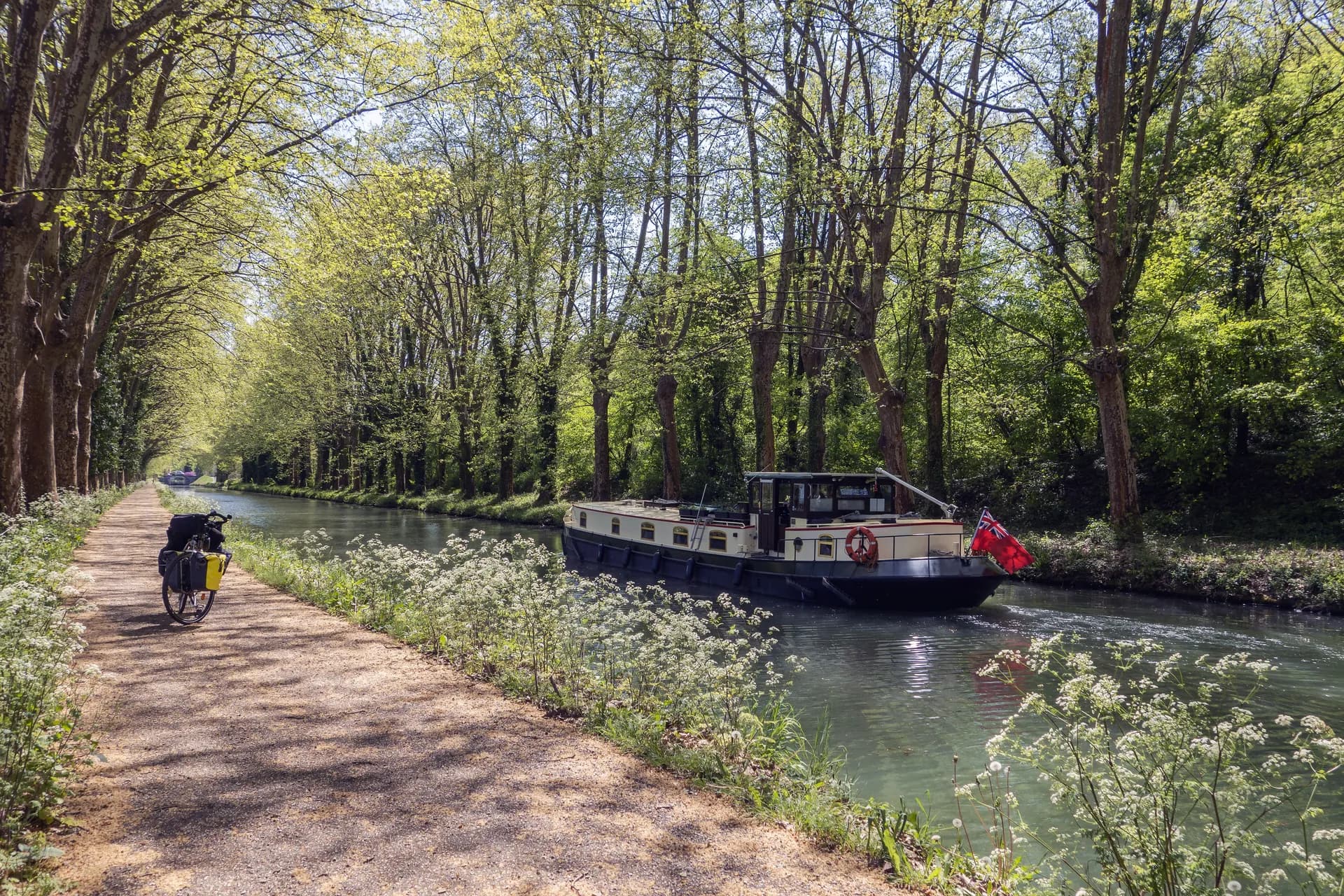
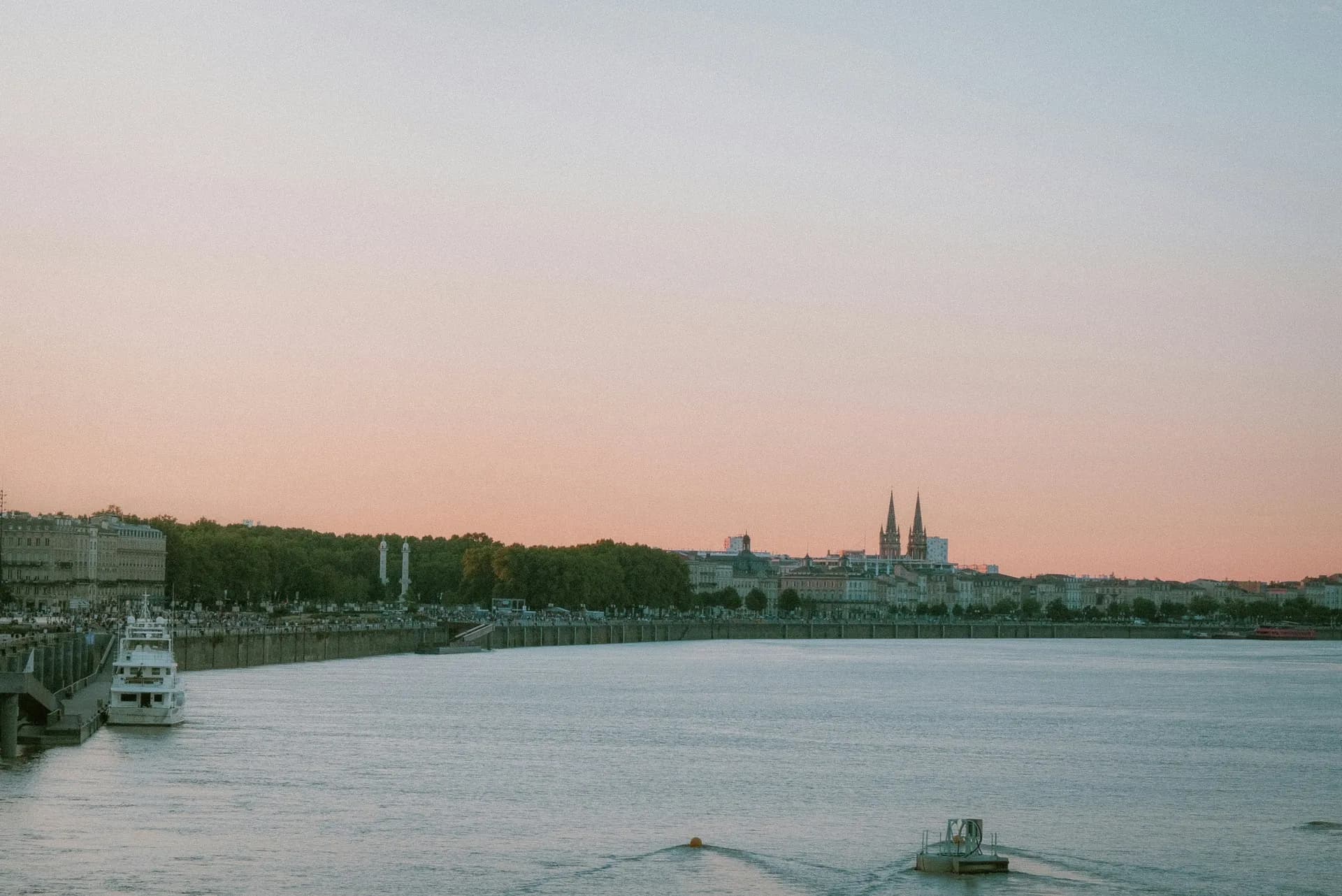
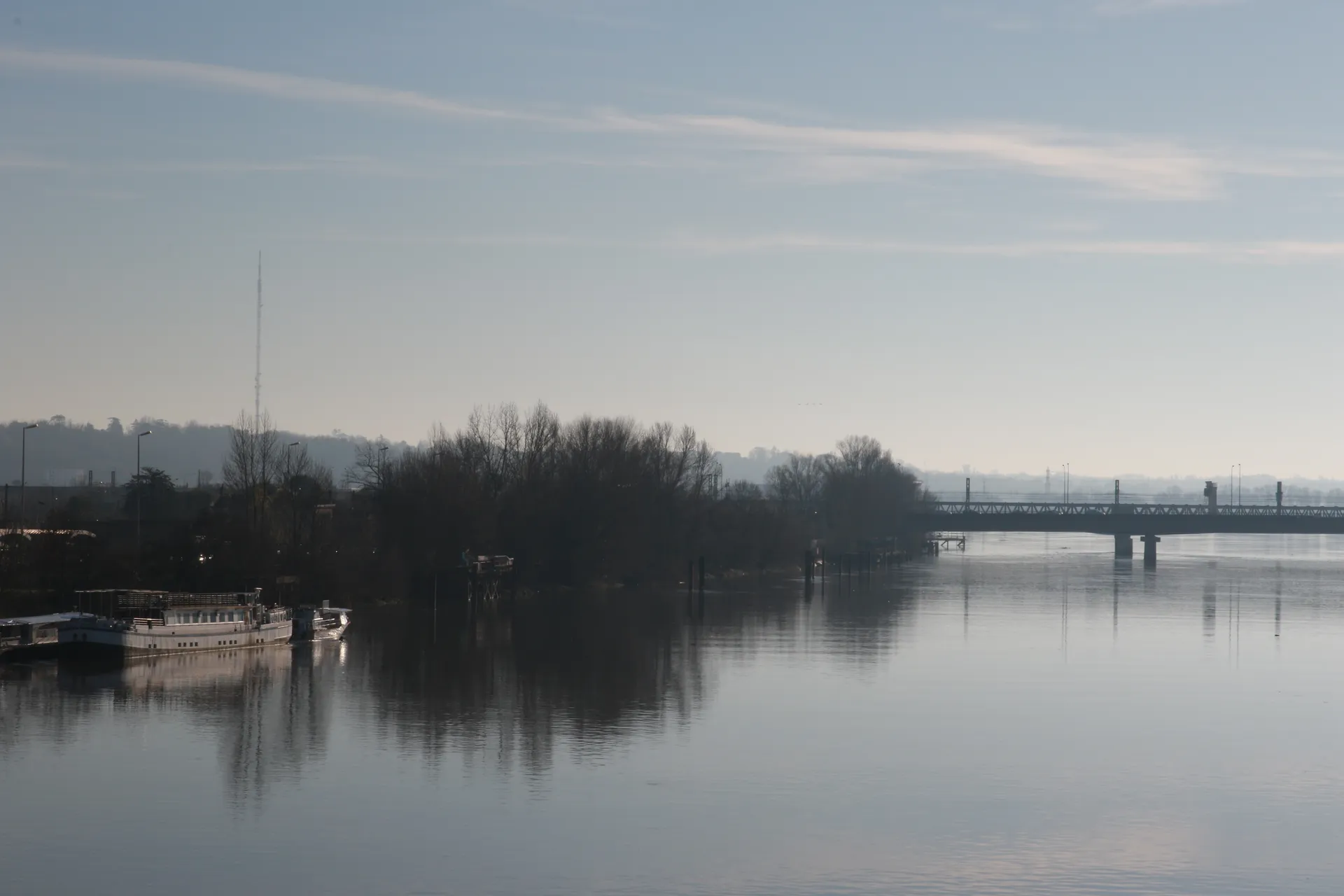
FranceCadillac is a commune in the Gironde department in Nouvelle-Aquitaine in southwestern France.
Day 19
Day 19
Cussac Fort Médoc
FranceDay 20
Day 20
Blaye
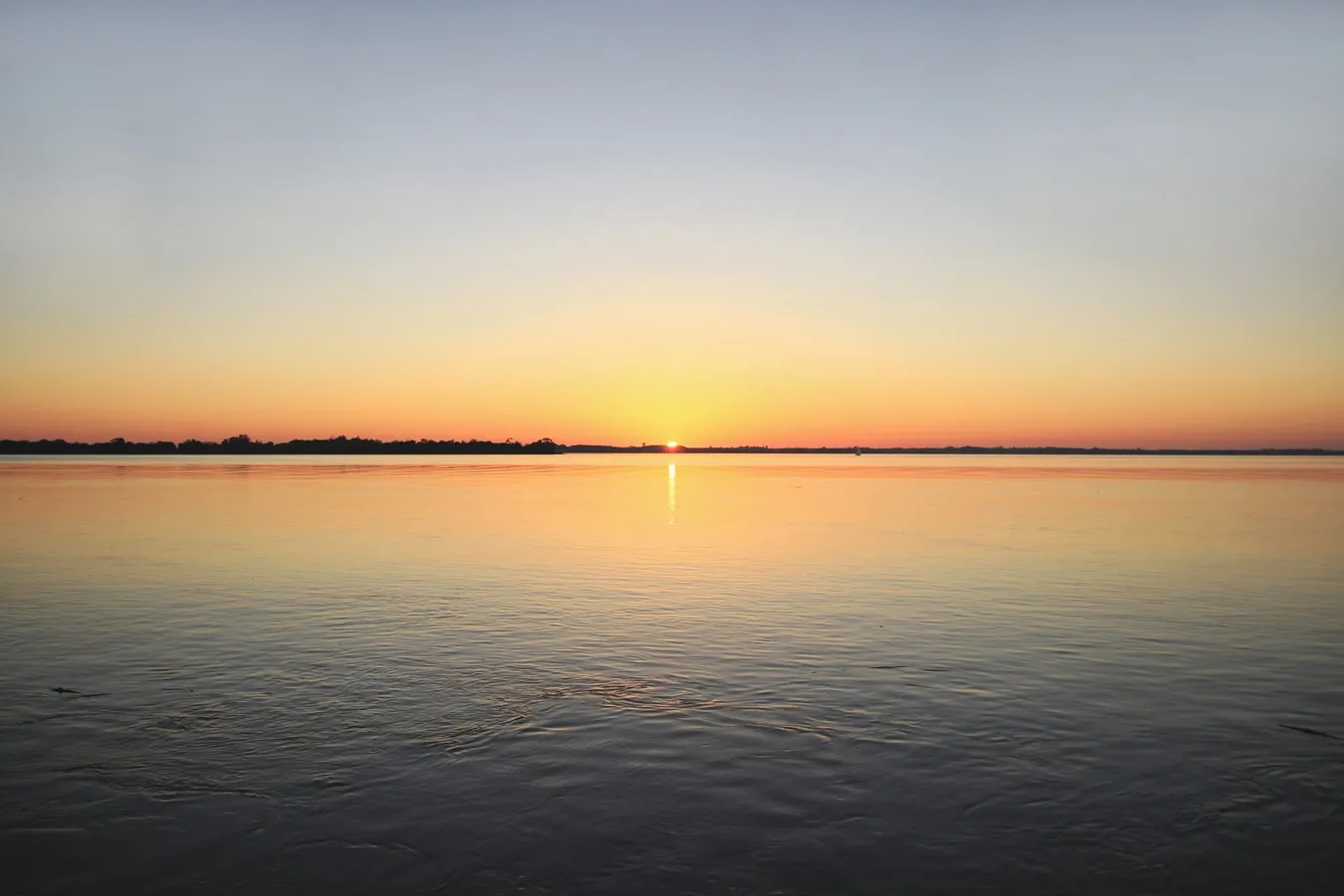
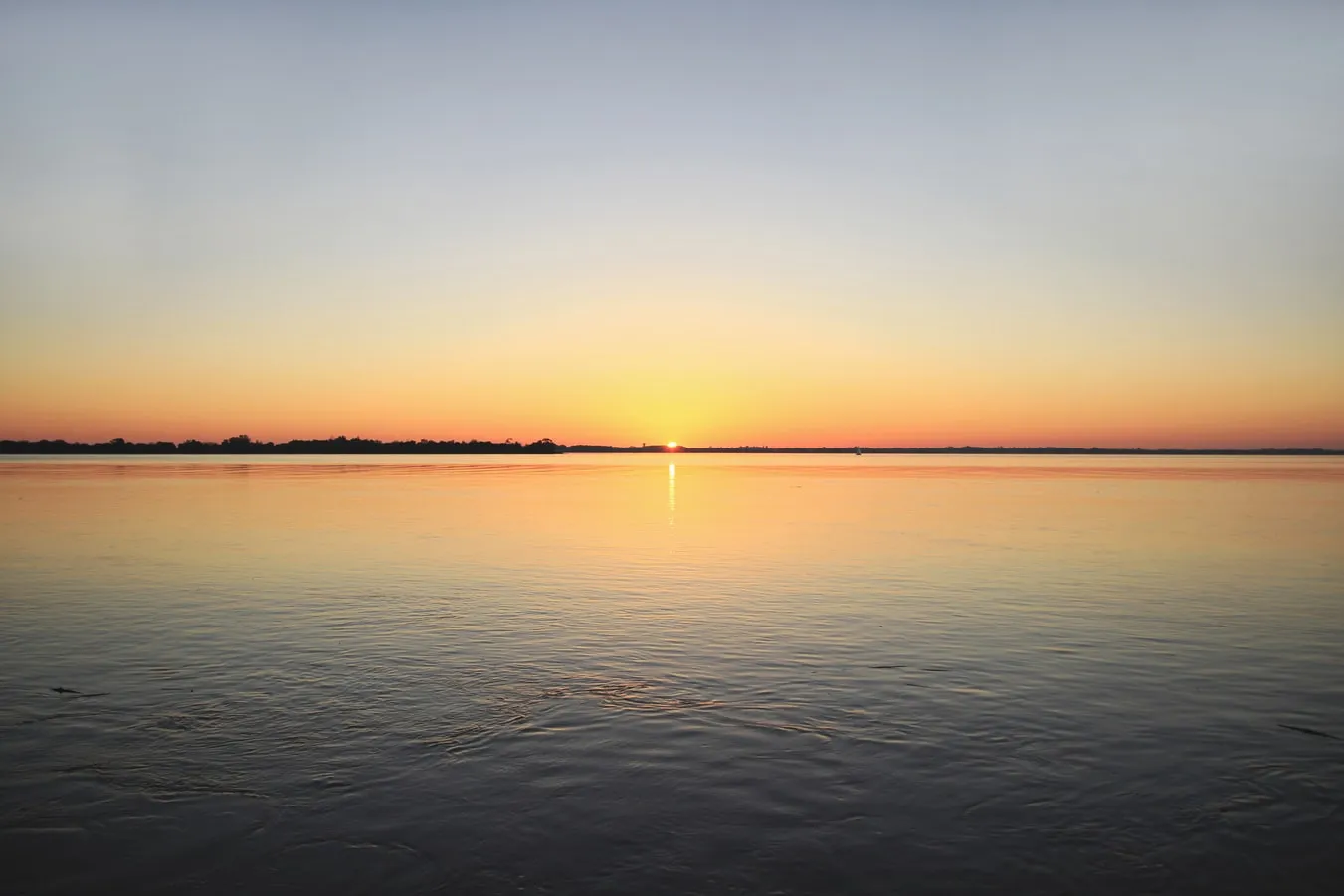
FranceBlaye is a commune and subprefecture in the Gironde department in Nouvelle-Aquitaine in southwestern France. For centuries, Blaye was a particularly convenient crossing point for those who came from the north and went to Bordeaux or further south, to Spain and Portugal.
Day 20
Day 20
Bourg
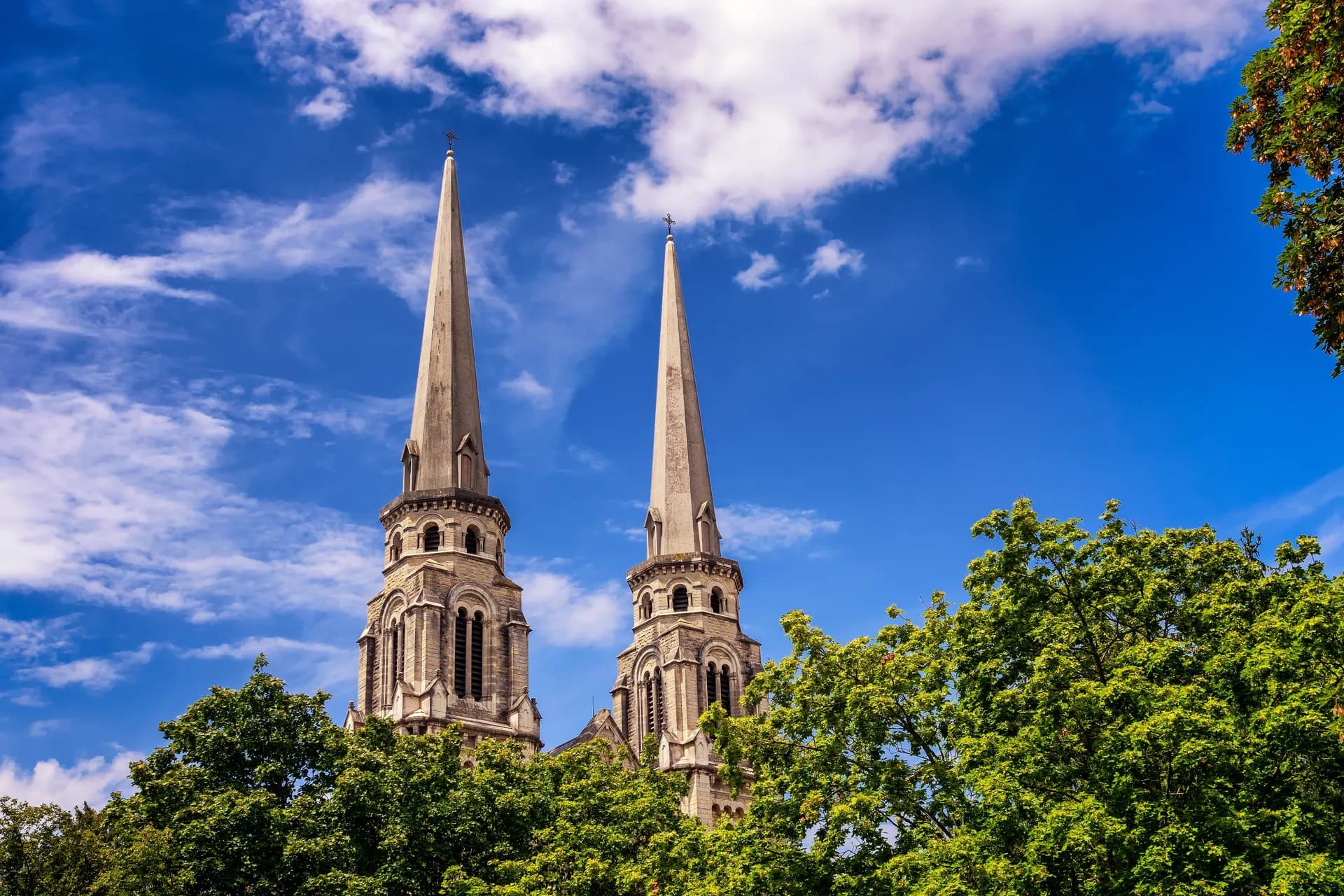
FranceA burgus or turris is a small, tower-like fort of the Late Antiquity, which was sometimes protected by an outwork and surrounding ditches. Darvill defines it as "a small fortified position or watch-tower usually controlling a main routeway."
Day 21
Day 21
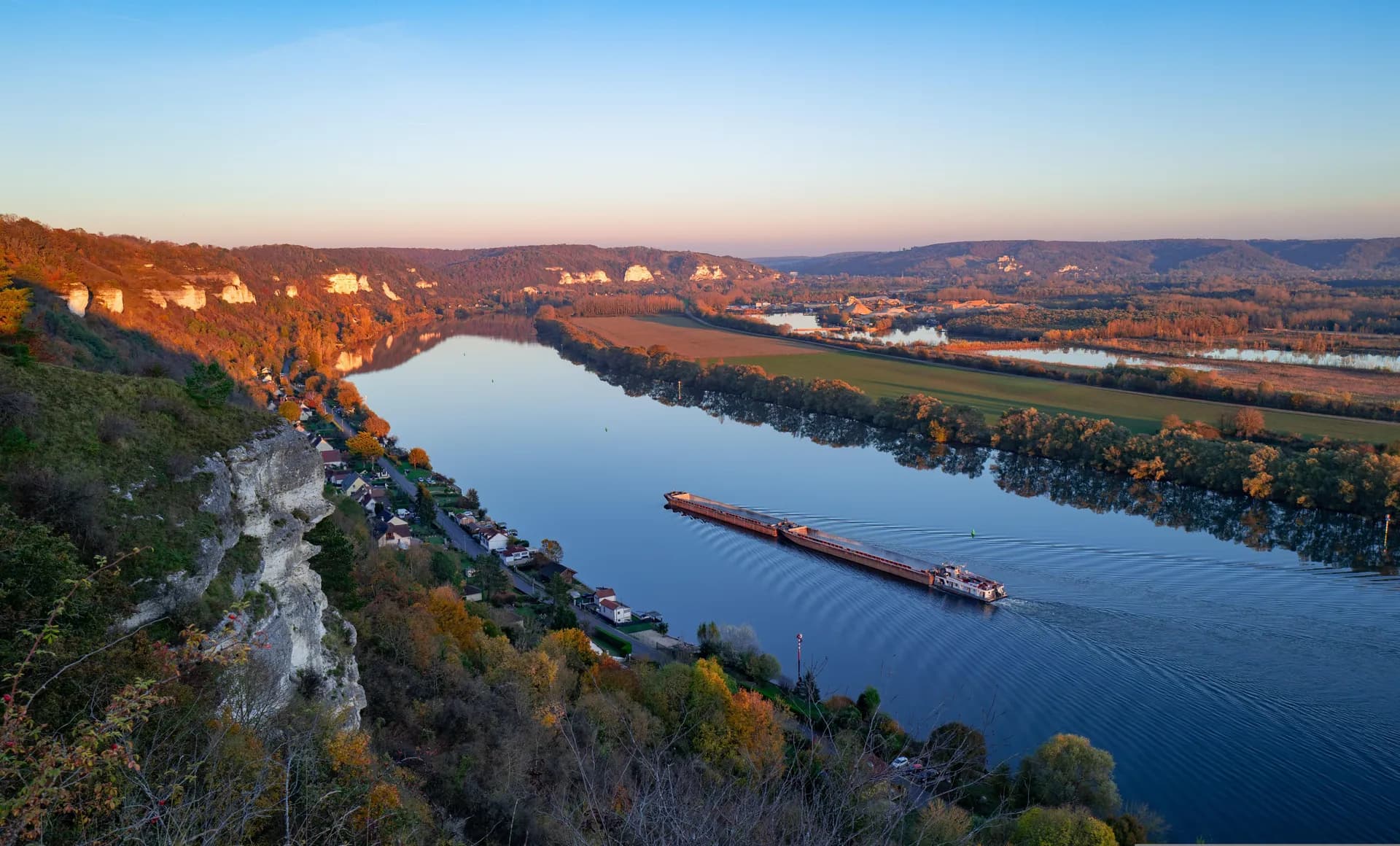
Libourne
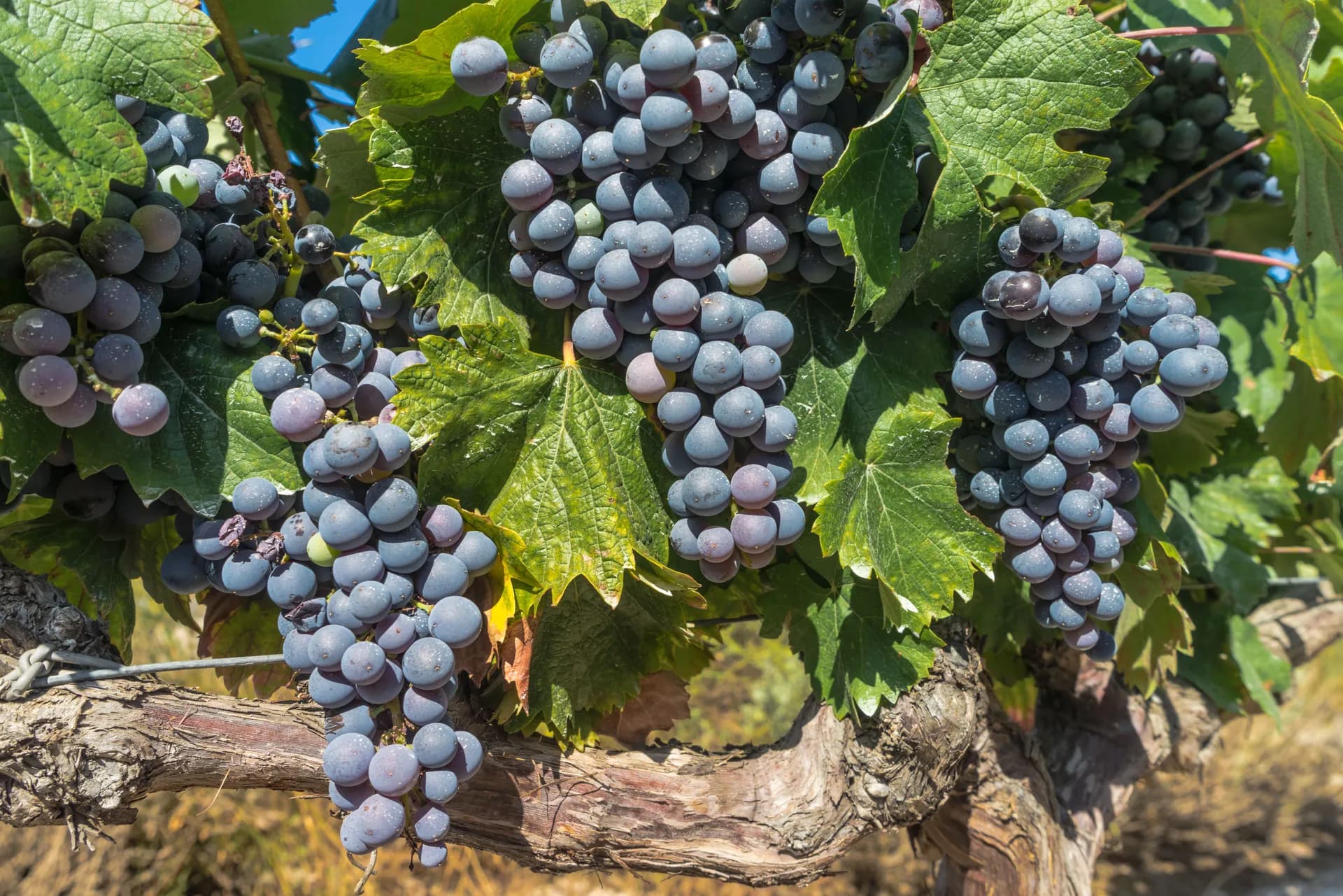
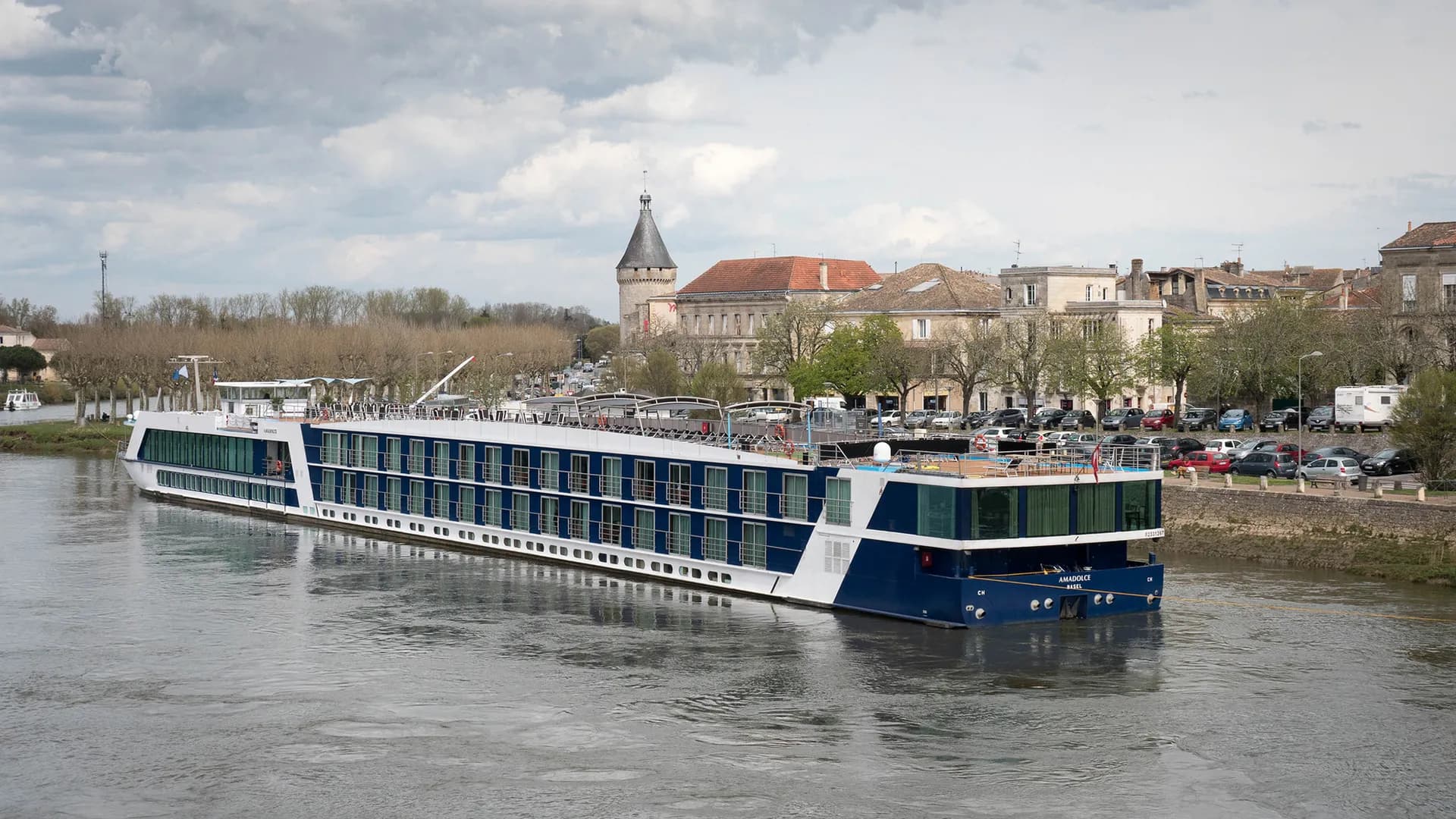
FranceLibourne is a commune in the Gironde department in Nouvelle-Aquitaine in southwestern France. It is a sub-prefecture of the department. It is the wine-making capital of northern Gironde and lies near Saint-Émilion and Pomerol.
Day 22
Day 22
Bordeaux
FranceThe name alone conjures images of sun-ripened grapes, splashes of refined flavour, and the joy of clinking glasses. Bordeaux is synonymous with quality and prestige, and the promise of endless opportunities to sample the city’s famous, full-bodied red wines makes a visit to this elegant French port city one to truly savour. Sprinkled with scenic, turret-adorned mansion castles, which stand above soil softened by the Atlantic and winding flow of the Garonne River, the vineyards of Bordeaux consistently produce revered wines, enjoyed right across the globe. Explore France’s largest wine region, walking through vineyards where dusty clumps of grapes hang, before descending into cellars to see the painstaking processes that make this region a global wine centre. The acclaimed, sensory experience of Cité du Vin wine museum lets you put your own nose to the test, learning more about the craft involved in producing world class vintages. Brush up on your wine knowledge, with our blog [insert You’ll Fall in Love with Wine in Bordeaux]. Bordeaux itself is an intoxicating blend of old and new – a fact perfectly illustrated by the Water Mirror. This living art installation has reinvigorated one of the city’s most important historical sites, and it feels as though you’re walking on water, as you step through the cooling mist of Place De La Bourse. The moisture generates a glorious mirrored composition of the 300-year-old elegant palatial architecture in front of you. Water also flows freely from the magnificent Monument aux Girondins statue, where horses rear up to extol the values of the Girondin revolutionaries. Marche des Quais – the city’s lively fish market – is the spot to try this wine capital’s freshest lemon-drizzled oysters and juicy prawns.
Day 23
Day 23
Bordeaux
FranceThe name alone conjures images of sun-ripened grapes, splashes of refined flavour, and the joy of clinking glasses. Bordeaux is synonymous with quality and prestige, and the promise of endless opportunities to sample the city’s famous, full-bodied red wines makes a visit to this elegant French port city one to truly savour. Sprinkled with scenic, turret-adorned mansion castles, which stand above soil softened by the Atlantic and winding flow of the Garonne River, the vineyards of Bordeaux consistently produce revered wines, enjoyed right across the globe. Explore France’s largest wine region, walking through vineyards where dusty clumps of grapes hang, before descending into cellars to see the painstaking processes that make this region a global wine centre. The acclaimed, sensory experience of Cité du Vin wine museum lets you put your own nose to the test, learning more about the craft involved in producing world class vintages. Brush up on your wine knowledge, with our blog [insert You’ll Fall in Love with Wine in Bordeaux]. Bordeaux itself is an intoxicating blend of old and new – a fact perfectly illustrated by the Water Mirror. This living art installation has reinvigorated one of the city’s most important historical sites, and it feels as though you’re walking on water, as you step through the cooling mist of Place De La Bourse. The moisture generates a glorious mirrored composition of the 300-year-old elegant palatial architecture in front of you. Water also flows freely from the magnificent Monument aux Girondins statue, where horses rear up to extol the values of the Girondin revolutionaries. Marche des Quais – the city’s lively fish market – is the spot to try this wine capital’s freshest lemon-drizzled oysters and juicy prawns.
Day 24
Day 24
Bordeaux
FranceThe name alone conjures images of sun-ripened grapes, splashes of refined flavour, and the joy of clinking glasses. Bordeaux is synonymous with quality and prestige, and the promise of endless opportunities to sample the city’s famous, full-bodied red wines makes a visit to this elegant French port city one to truly savour. Sprinkled with scenic, turret-adorned mansion castles, which stand above soil softened by the Atlantic and winding flow of the Garonne River, the vineyards of Bordeaux consistently produce revered wines, enjoyed right across the globe. Explore France’s largest wine region, walking through vineyards where dusty clumps of grapes hang, before descending into cellars to see the painstaking processes that make this region a global wine centre. The acclaimed, sensory experience of Cité du Vin wine museum lets you put your own nose to the test, learning more about the craft involved in producing world class vintages. Brush up on your wine knowledge, with our blog [insert You’ll Fall in Love with Wine in Bordeaux]. Bordeaux itself is an intoxicating blend of old and new – a fact perfectly illustrated by the Water Mirror. This living art installation has reinvigorated one of the city’s most important historical sites, and it feels as though you’re walking on water, as you step through the cooling mist of Place De La Bourse. The moisture generates a glorious mirrored composition of the 300-year-old elegant palatial architecture in front of you. Water also flows freely from the magnificent Monument aux Girondins statue, where horses rear up to extol the values of the Girondin revolutionaries. Marche des Quais – the city’s lively fish market – is the spot to try this wine capital’s freshest lemon-drizzled oysters and juicy prawns.
Cabin Categories
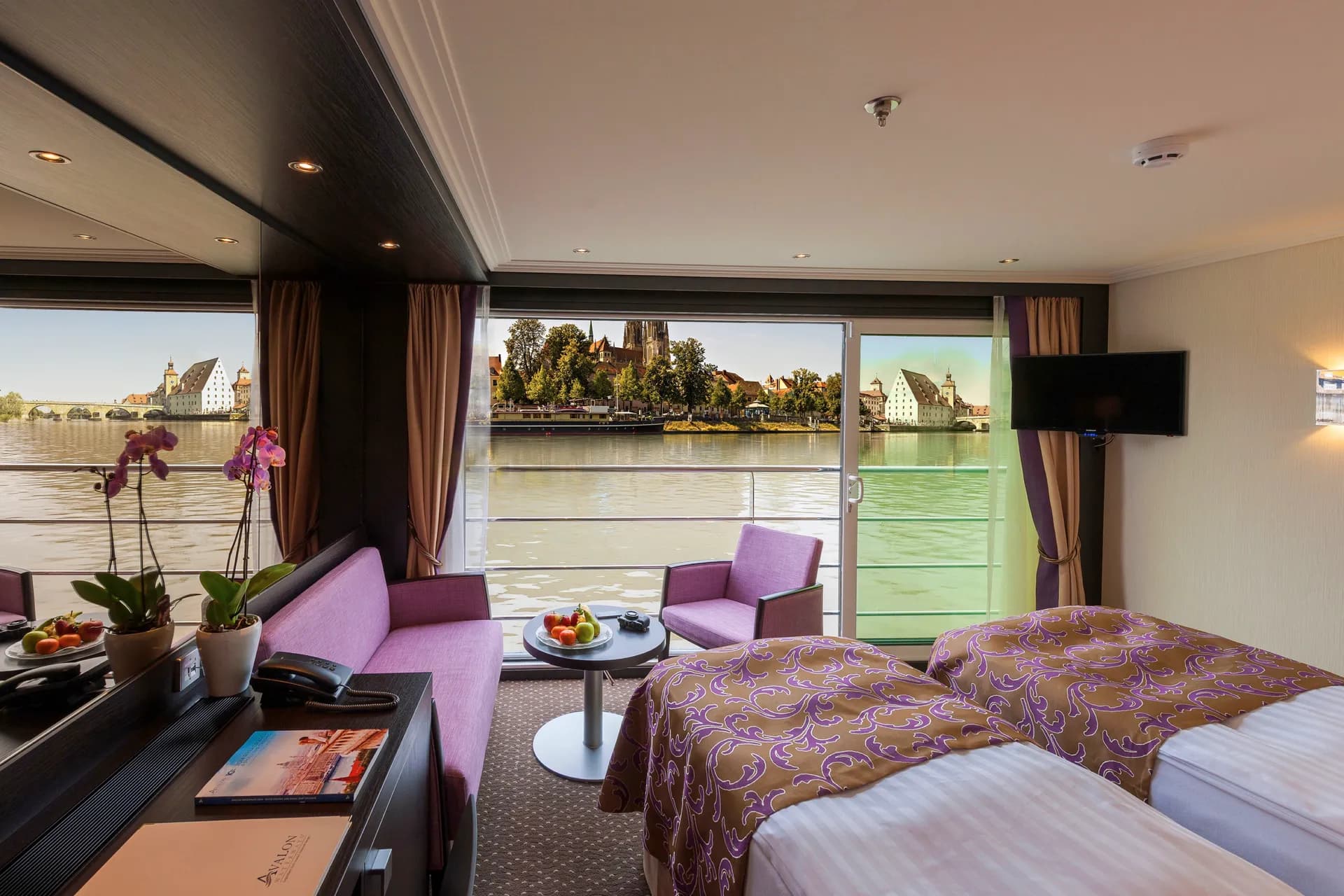
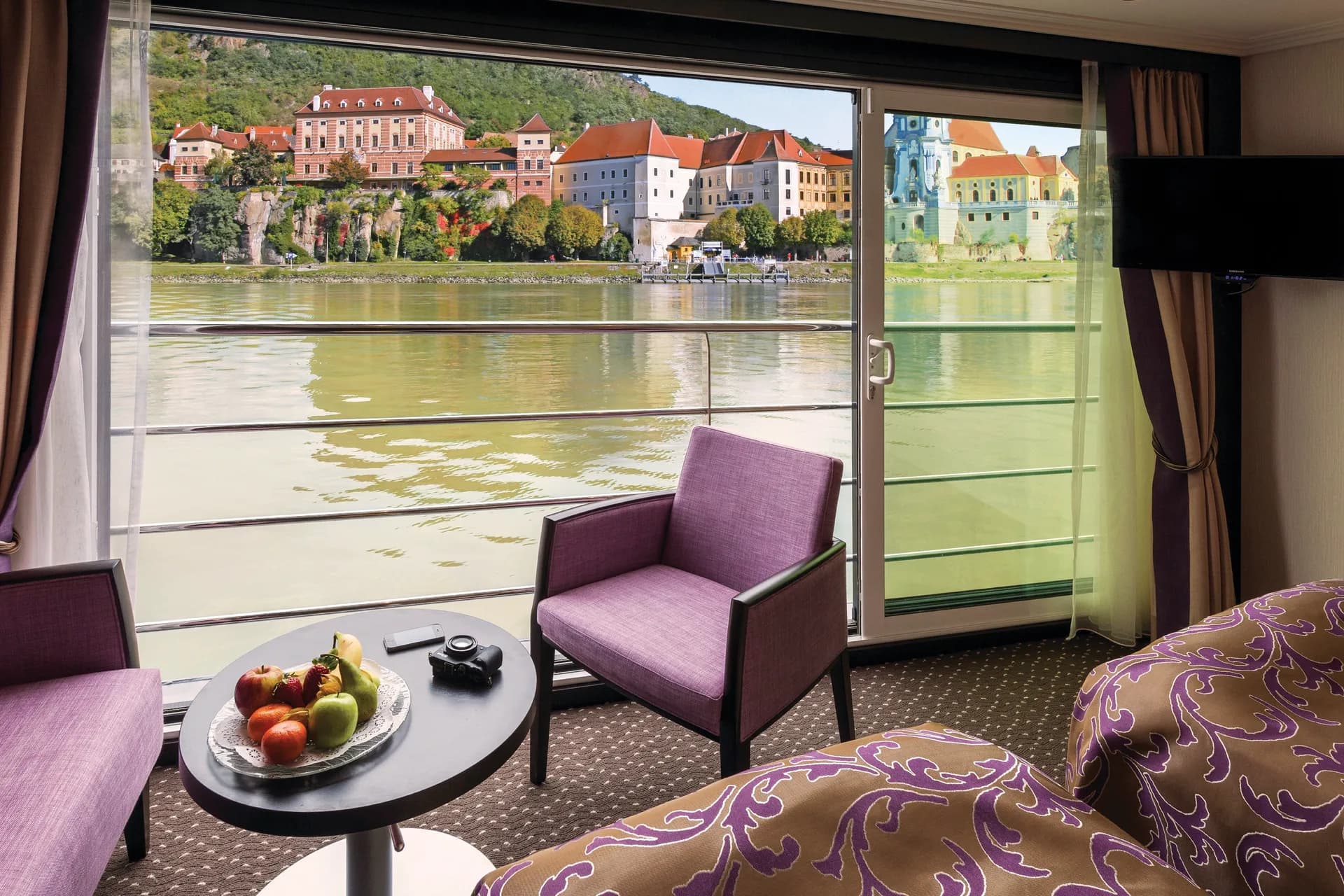
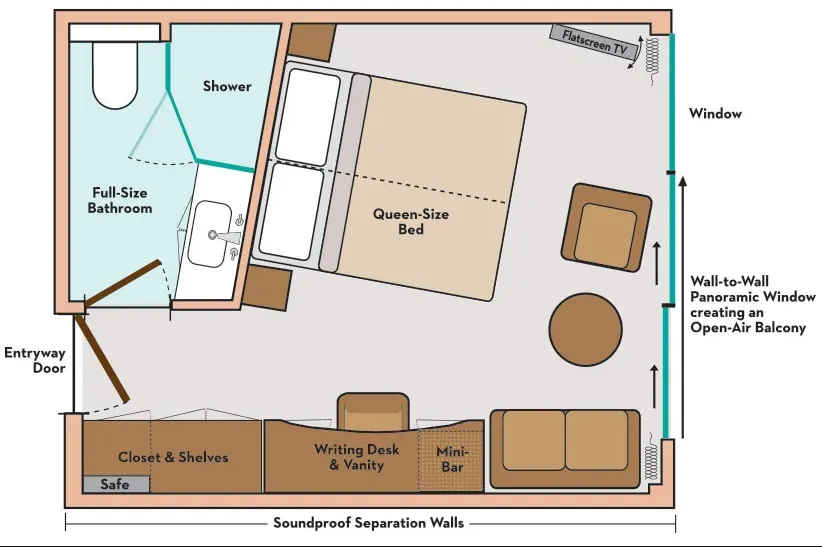
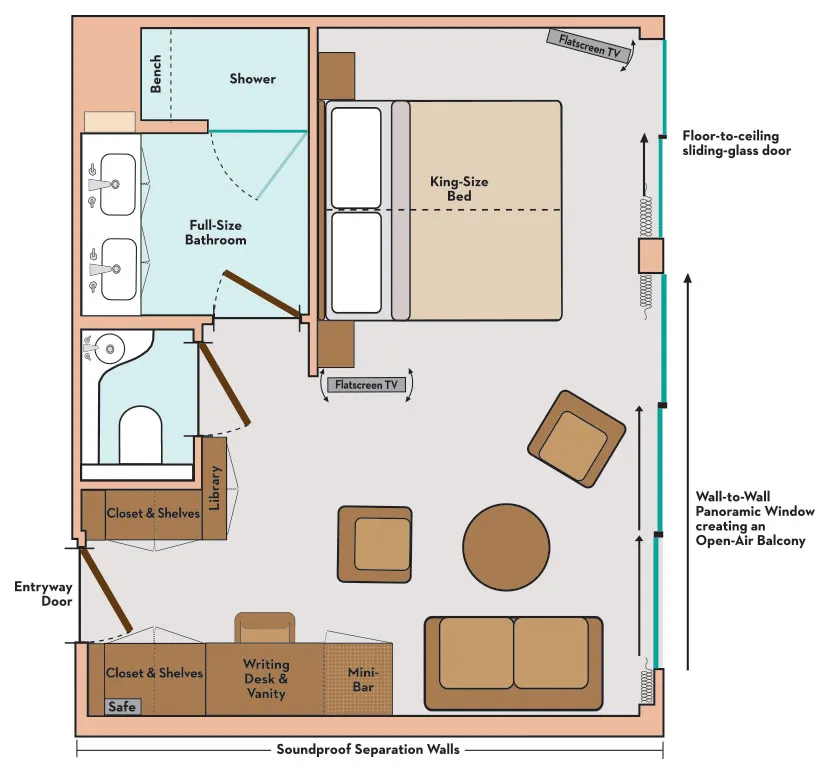
Panorama Suite
Suite
200 m²Max 2
ABP
Stateroom Features:
Comfort Collection Beds
Luxurious mattress toppers
Egyptian super-combed cotton linens
European-style duvets
Soft & firm pillows
Extra blankets
Choice of bed configuration
Nightly turn-down service
Bedside tables with reading lamps
Premium Hairdryer
L'Occitane bath products
Spacious 3-door closets with shelves for ample storage
Easy under-bed luggage storage
Flatscreen satellite TV with English-speaking channels & over 100 free movie options
Alarm clock
Make-up mirror
Direct-dial telephone
Bathrobes & slippers
Well-stocked minibar
Complimentary filtered water
In-room safe
Individual climate control
Elegant, contemporary design
Large mirror in bathroom
Marble countertops in bathroom
Wall-to-Wall Panoramic Window with Open-Air Balcony
6-person sitting area
Full shower with glass door
Writing desk and chair
Lighted makeup mirror
Sofa
Coffee table
Complimentary Wi-Fi
One Queen-Sized Bed or Two Twins
USB Ports
Queen or Twin ConfigurationShowerToiletries ProvidedRoom Service AvailableTVFree Wi-Fi+4
Sold Out
View Details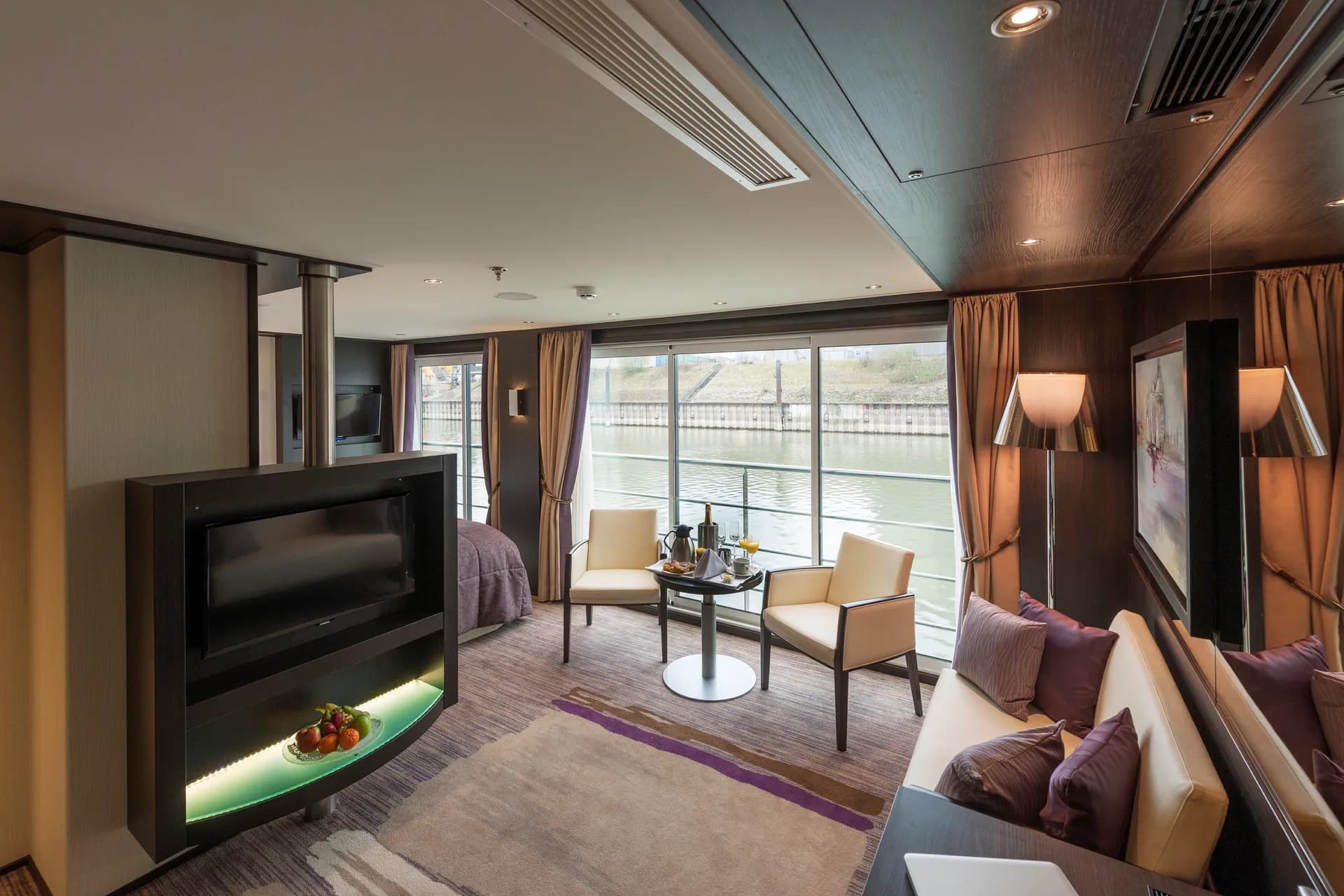
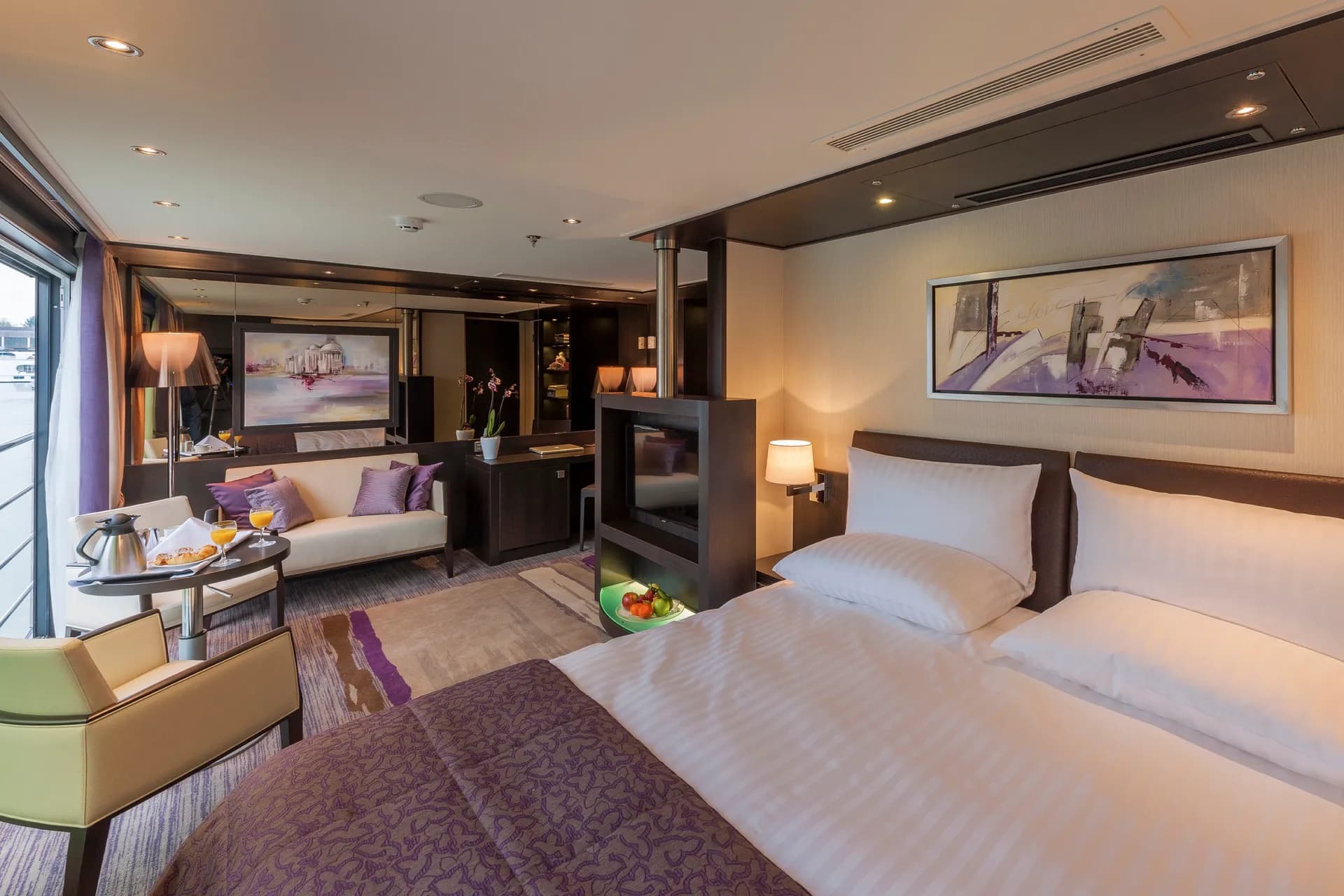
Royal Suite
Suite
300 m²Max 2
S
Stateroom Features:
Comfort Collection Beds
Luxurious mattress toppers
Egyptian super-combed cotton linens
European-style duvets
Soft & firm pillows
Extra blankets
Choice of bed configuration
Nightly turn-down service
Bedside tables with reading lamps
Premium Hairdryer
L'Occitane bath products
Spacious 3-door closets with shelves for ample storage
Easy under-bed luggage storage
Flatscreen satellite TV with English-speaking channels & over 100 free movie options
Alarm clock
Make-up mirror
Direct-dial telephone
Bathrobes & slippers
Well-stocked minibar
Complimentary filtered water
In-room safe
Individual climate control
Elegant, contemporary design
Large mirror in bathroom
Marble countertops in bathroom
Wall-to-Wall Panoramic Window with Open-Air Balcony
6-person sitting area
Full shower with glass door
Writing desk and chair
Lighted makeup mirror
Sofa
Coffee table
Complimentary Wi-Fi
One Queen-Sized Bed or Two Twins
USB Ports
King or Twin ConfigurationShowerToiletries ProvidedRoom Service AvailableTVFree Wi-Fi+3
Sold Out
View Details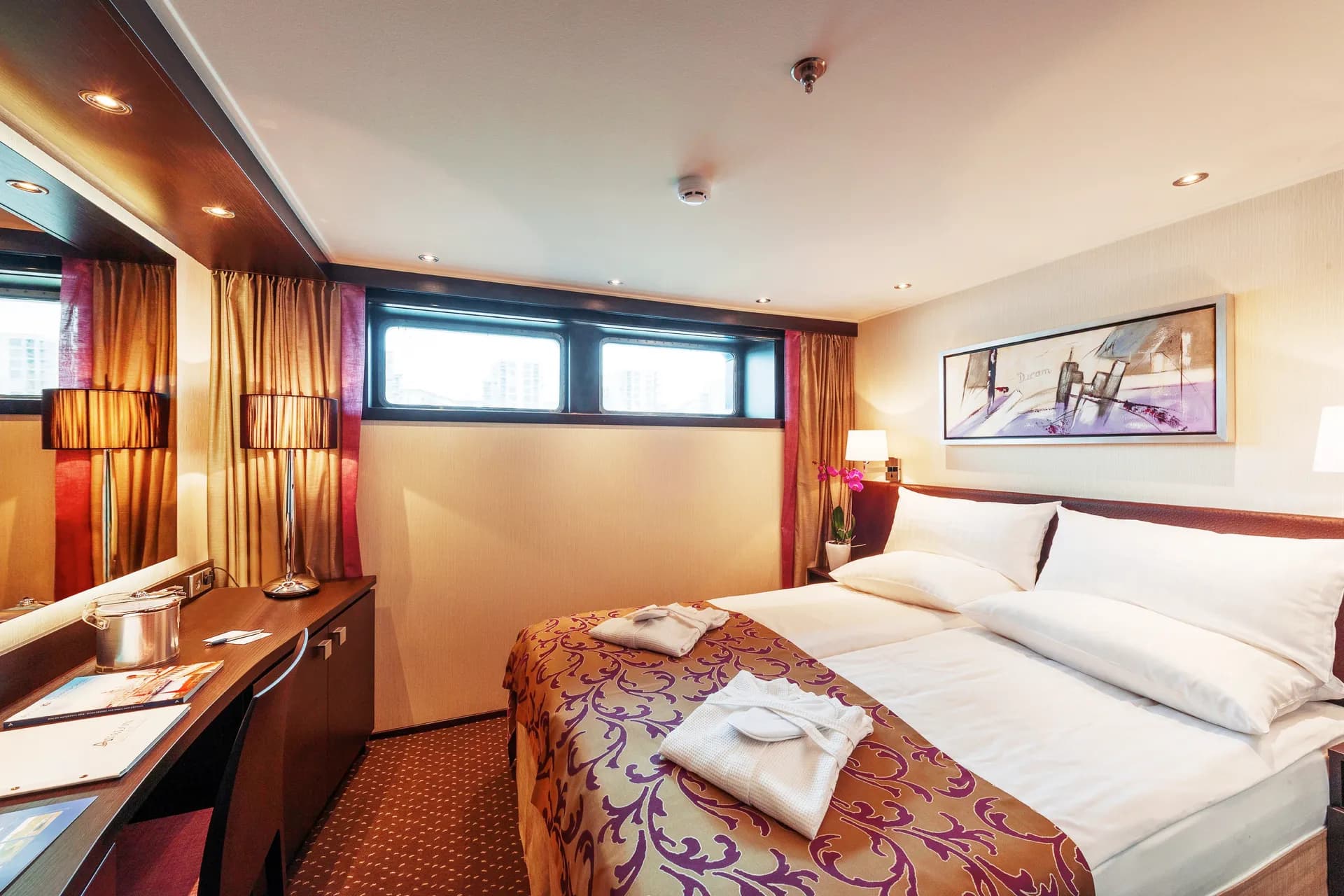
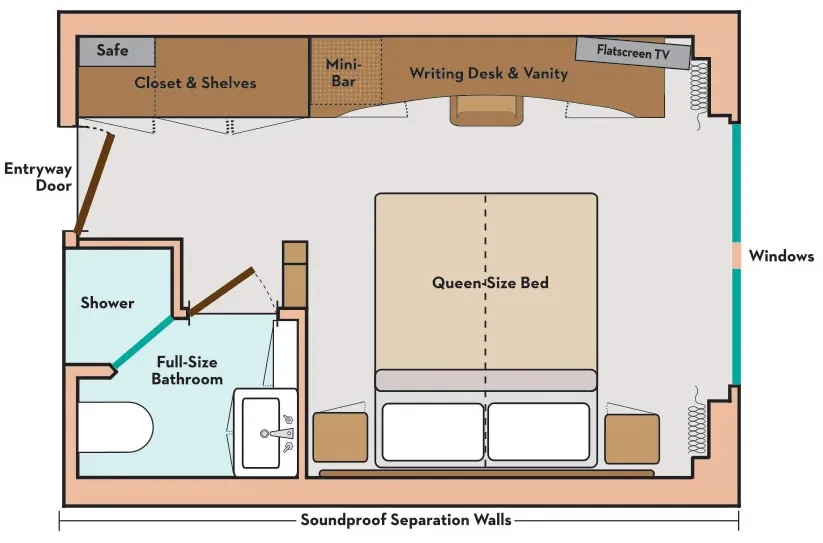
Deluxe Stateroom
Outside
172 m²Max 2
DE
Stateroom Features:
Comfort Collection Beds
Luxurious mattress toppers
Egyptian super-combed cotton linens
European-style duvets
Soft & firm pillows
Extra blankets
Choice of bed configuration
Nightly turn-down service
Bedside tables with reading lamps
Premium Hairdryer
L'Occitane bath products
Spacious 3-door closets with shelves for ample storage
Easy under-bed luggage storage
Flatscreen satellite TV with English-speaking channels & over 100 free movie options
Alarm clock
Make-up mirror
Direct-dial telephone
Bathrobes & slippers
Well-stocked minibar
Complimentary filtered water
In-room safe
Individual climate control
Elegant, contemporary design
Large mirror in bathroom
Marble countertops in bathroom
Wall-to-Wall Panoramic Window with Open-Air Balcony
6-person sitting area
Full shower with glass door
Writing desk and chair
Lighted makeup mirror
Sofa
Coffee table
Complimentary Wi-Fi
One Queen-Sized Bed or Two Twins
USB Ports
Queen or Twin ConfigurationShowerToiletries ProvidedRoom Service AvailableMini Bar (Additional Cost)TV+2
Sold Out
View DetailsInterested in This Voyage?
Our cruise specialists can help you find the perfect cabin and the best available pricing.
Contact Advisor