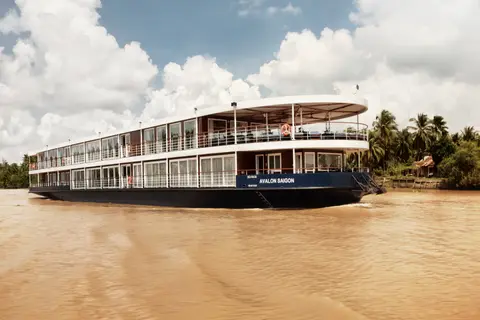
Mekong Discovery (Northbound) Ho Chi Minh City to Phnom Penh
Date
2026-08-20
Duration
7 nights
Departure Port
Ho Chi Minh City
Vietnam
Arrival Port
Phnom Penh
Cambodia
Rating
Luxury
Theme
History & Culture
Date
2026-08-20
Duration
7 nights
Departure Port
Ho Chi Minh City
Vietnam
Arrival Port
Phnom Penh
Cambodia
Rating
Luxury
Theme
History & Culture


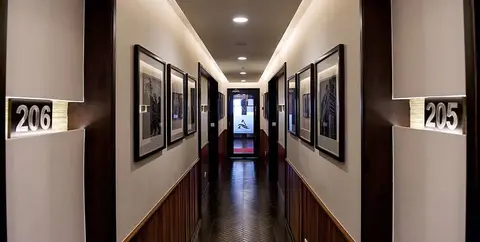
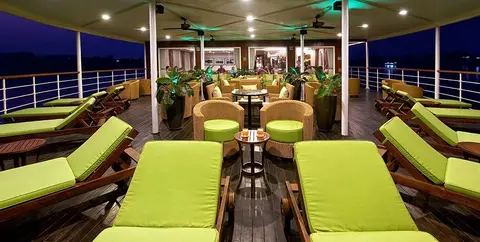
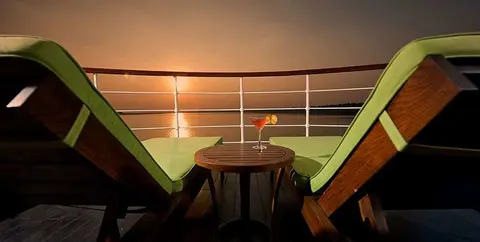
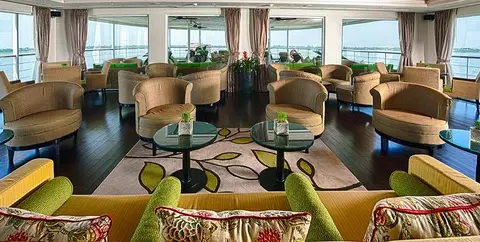

Avalon Waterways
2018
—
950 GT
36
18
24
195 m
—
9 knots
No
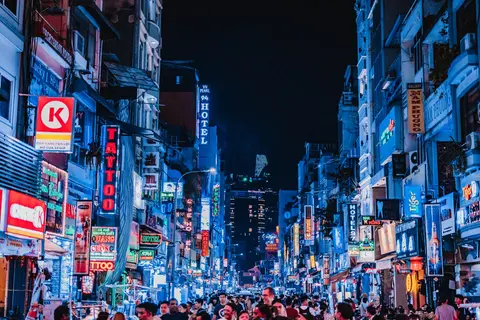
Still whispered as Saigon by its ten million residents, Ho Chi Minh City pulses with an energy that outlasted every empire and every war. The French colonial grandeur of Notre-Dame Cathedral and Gustave Eiffel's Central Post Office stands in vivid counterpoint to the city's kinetic street life — an endless river of motorbikes, fragrant with pho broth and charcoal-grilled meats. Do not miss the Reunification Palace, a time capsule of Cold War modernism, or a dawn bowl of bánh mì from a sidewalk vendor. The dry season, November through April, offers the most comfortable conditions for exploration.
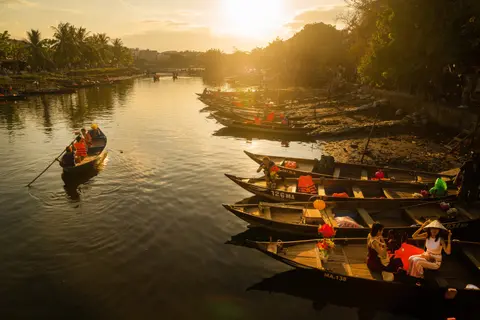
Vinh Long is a river town at the heart of Vietnam's Mekong Delta, renowned for its bustling Cai Be floating market, lush fruit orchards on river islands, and the delta's distinctive cuisine. Must-dos include a dawn sampan visit to the floating market, tasting crispy elephant ear fish wrapped in rice paper, and visiting island orchards and coconut candy workshops. November through April's dry season offers the best weather for delta exploration.
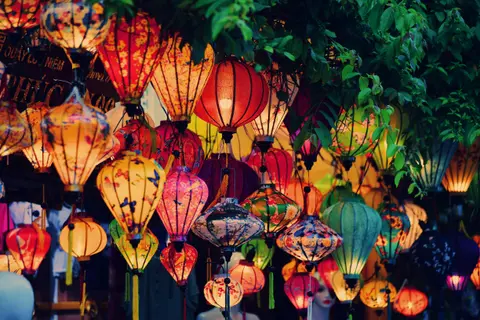
Châu Đốc is a mystical border town where the Mekong meets Cambodia, combining Vietnamese, Cham Muslim, and Khmer Buddhist cultures around the pilgrimage mountain of Sam (Núi Sam). Must-do experiences include visiting Sam Mountain's pagodas, touring floating fish farms, and tasting the town's famous bún cá turmeric fish noodle soup. November through April's dry season is most comfortable; the flood season reveals the delta's full hydraulic drama.
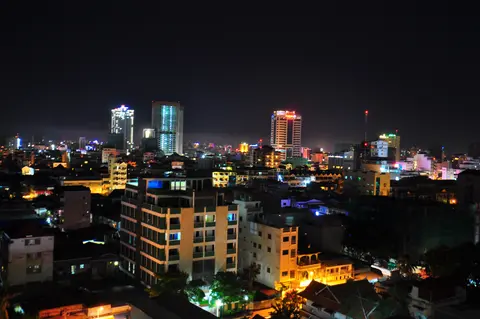
Phnom Penh rises from the confluence of the Mekong, Tonlé Sap, and Bassac rivers with a resilience that makes it one of Southeast Asia's most affecting capitals — a city that endured the Khmer Rouge's "Year Zero" and has re-emerged as a place of broad riverfront boulevards, excellent Khmer cuisine, and a cultural energy that feels earned rather than manufactured. The Royal Palace and its Silver Pagoda, housing a life-size gold Buddha studded with 9,584 diamonds, is the city's architectural centrepiece; the Tuol Sleng Genocide Museum, a former high school converted to a prison by the Khmer Rouge, is sobering but essential history. November through February offers the most comfortable climate for extended exploration.
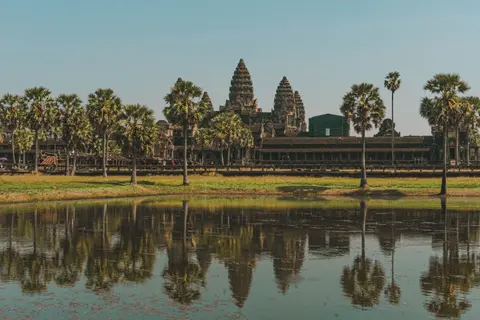
Angkor Ban is a riverside Mekong village in Cambodia's Kampong Cham Province where unvarnished authenticity awaits the discerning river cruise traveler — a world away from tourist infrastructure, offering a rare glimpse into rural Khmer life unchanged by modernity. Ancient laterite temple ruins hide among the trees, while local craftspeople practice traditional silk weaving and pottery in family compounds that welcome visitors with quiet warmth. The dry season from November through April offers the most comfortable conditions for exploring the village lanes and surrounding countryside on foot or by bicycle. Phnom Penh is a half-day's river journey downstream.
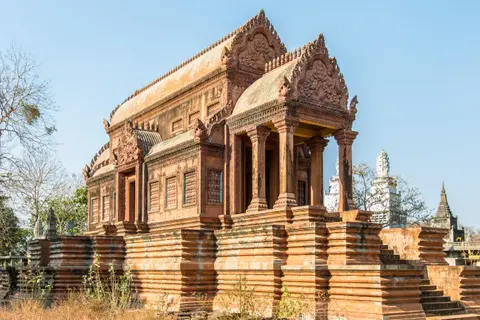
Kampong Cham unfolds along the Mekong's western bank in a languid rhythm far removed from Cambodia's tourist circuit — a provincial capital where saffron-robed monks cross bamboo bridges at dawn and French colonial villas drowse behind frangipani trees. The highlight is Wat Nokor, a twelfth-century Angkorian temple whose moss-covered sandstone galleries envelop a functioning Buddhist sanctuary in a haunting conversation between centuries. The nearby rubber plantations, a legacy of French Indochina, offer a window into the region's complex history. Kampong Cham is best visited November through February, when the dry season transforms the Mekong into a serene silver expanse.
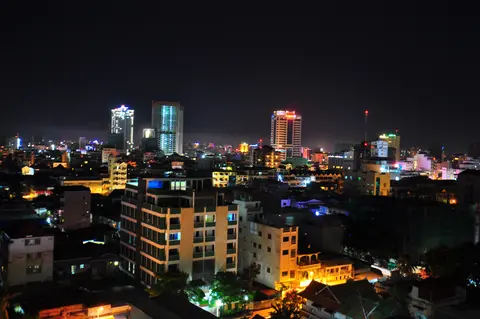
Phnom Penh rises from the confluence of the Mekong, Tonlé Sap, and Bassac rivers with a resilience that makes it one of Southeast Asia's most affecting capitals — a city that endured the Khmer Rouge's "Year Zero" and has re-emerged as a place of broad riverfront boulevards, excellent Khmer cuisine, and a cultural energy that feels earned rather than manufactured. The Royal Palace and its Silver Pagoda, housing a life-size gold Buddha studded with 9,584 diamonds, is the city's architectural centrepiece; the Tuol Sleng Genocide Museum, a former high school converted to a prison by the Khmer Rouge, is sobering but essential history. November through February offers the most comfortable climate for extended exploration.
Day 1
Still whispered as Saigon by its ten million residents, Ho Chi Minh City pulses with an energy that outlasted every empire and every war. The French colonial grandeur of Notre-Dame Cathedral and Gustave Eiffel's Central Post Office stands in vivid counterpoint to the city's kinetic street life — an endless river of motorbikes, fragrant with pho broth and charcoal-grilled meats. Do not miss the Reunification Palace, a time capsule of Cold War modernism, or a dawn bowl of bánh mì from a sidewalk vendor. The dry season, November through April, offers the most comfortable conditions for exploration.
Day 2
Vinh Long is a river town at the heart of Vietnam's Mekong Delta, renowned for its bustling Cai Be floating market, lush fruit orchards on river islands, and the delta's distinctive cuisine. Must-dos include a dawn sampan visit to the floating market, tasting crispy elephant ear fish wrapped in rice paper, and visiting island orchards and coconut candy workshops. November through April's dry season offers the best weather for delta exploration.
Day 3
Châu Đốc is a mystical border town where the Mekong meets Cambodia, combining Vietnamese, Cham Muslim, and Khmer Buddhist cultures around the pilgrimage mountain of Sam (Núi Sam). Must-do experiences include visiting Sam Mountain's pagodas, touring floating fish farms, and tasting the town's famous bún cá turmeric fish noodle soup. November through April's dry season is most comfortable; the flood season reveals the delta's full hydraulic drama.
Day 4
Phnom Penh rises from the confluence of the Mekong, Tonlé Sap, and Bassac rivers with a resilience that makes it one of Southeast Asia's most affecting capitals — a city that endured the Khmer Rouge's "Year Zero" and has re-emerged as a place of broad riverfront boulevards, excellent Khmer cuisine, and a cultural energy that feels earned rather than manufactured. The Royal Palace and its Silver Pagoda, housing a life-size gold Buddha studded with 9,584 diamonds, is the city's architectural centrepiece; the Tuol Sleng Genocide Museum, a former high school converted to a prison by the Khmer Rouge, is sobering but essential history. November through February offers the most comfortable climate for extended exploration.
Day 6
Angkor Ban is a riverside Mekong village in Cambodia's Kampong Cham Province where unvarnished authenticity awaits the discerning river cruise traveler — a world away from tourist infrastructure, offering a rare glimpse into rural Khmer life unchanged by modernity. Ancient laterite temple ruins hide among the trees, while local craftspeople practice traditional silk weaving and pottery in family compounds that welcome visitors with quiet warmth. The dry season from November through April offers the most comfortable conditions for exploring the village lanes and surrounding countryside on foot or by bicycle. Phnom Penh is a half-day's river journey downstream.
Day 7
Kampong Cham unfolds along the Mekong's western bank in a languid rhythm far removed from Cambodia's tourist circuit — a provincial capital where saffron-robed monks cross bamboo bridges at dawn and French colonial villas drowse behind frangipani trees. The highlight is Wat Nokor, a twelfth-century Angkorian temple whose moss-covered sandstone galleries envelop a functioning Buddhist sanctuary in a haunting conversation between centuries. The nearby rubber plantations, a legacy of French Indochina, offer a window into the region's complex history. Kampong Cham is best visited November through February, when the dry season transforms the Mekong into a serene silver expanse.
Day 8
Phnom Penh rises from the confluence of the Mekong, Tonlé Sap, and Bassac rivers with a resilience that makes it one of Southeast Asia's most affecting capitals — a city that endured the Khmer Rouge's "Year Zero" and has re-emerged as a place of broad riverfront boulevards, excellent Khmer cuisine, and a cultural energy that feels earned rather than manufactured. The Royal Palace and its Silver Pagoda, housing a life-size gold Buddha studded with 9,584 diamonds, is the city's architectural centrepiece; the Tuol Sleng Genocide Museum, a former high school converted to a prison by the Khmer Rouge, is sobering but essential history. November through February offers the most comfortable climate for extended exploration.
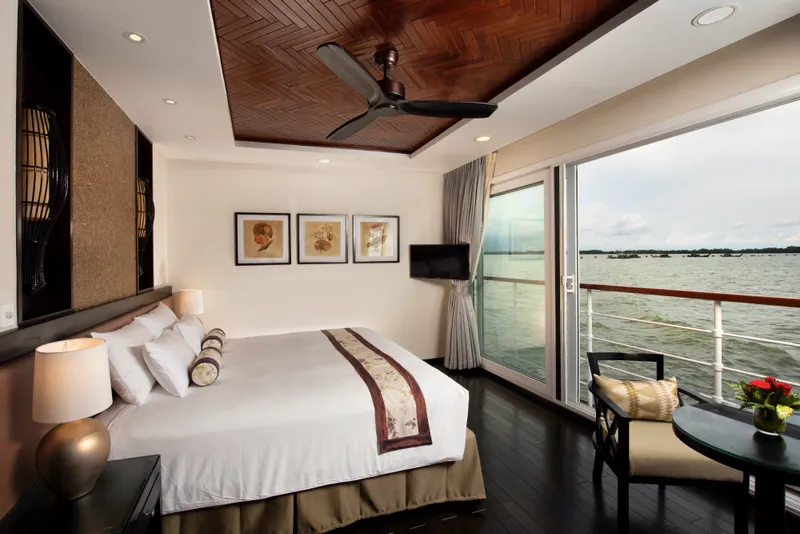
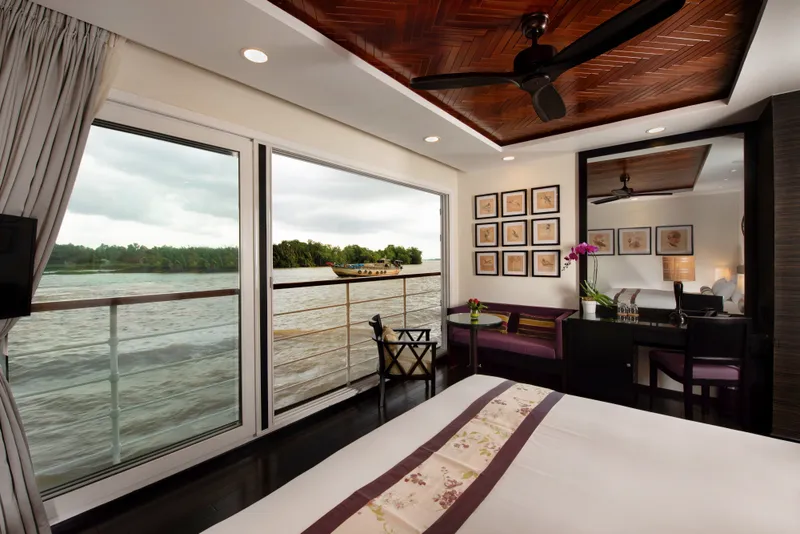
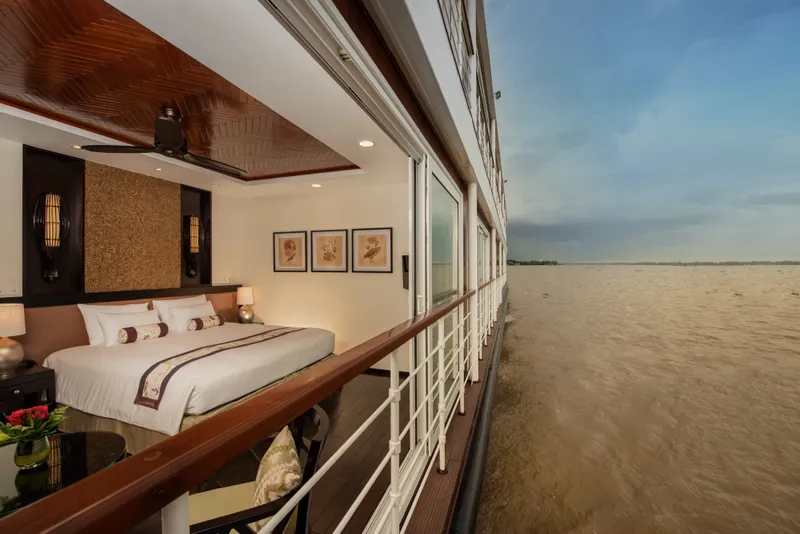
Stateroom Features:
Comfort Collection Beds
Egyptian super-combed cotton linens
Soft & firm pillows
Choice of bed configuration
Nightly turn-down service
Bedside tables with reading lamps
14' Wall-to-Wall Panoramic window measuring that opens to create a large Open-Air Balcony
Large private bathroom featuring full shower with glass door, hairdryer, and premium L'Occitane bath amenities
Spacious closets with shelves for ample storage
Easy under-bed luggage storage
Alarm clock
Writing desk/vanity with mirror & comfortable chair
In-house telephone
Bathrobes & slippers
Complimentary filtered water
In-room safe
Individual climate control
One King-Sized Bed or Two Twins
USB Ports
Our cruise specialists can help you find the perfect cabin and the best available pricing.
(+886) 02-2721-7300Contact Advisor