Date
2026-09-18
Duration
7 nights
Departure Port
Hanoi
Vietnam
Arrival Port
Bangkok
Thailand
Rating
Luxury
Theme
History & Culture
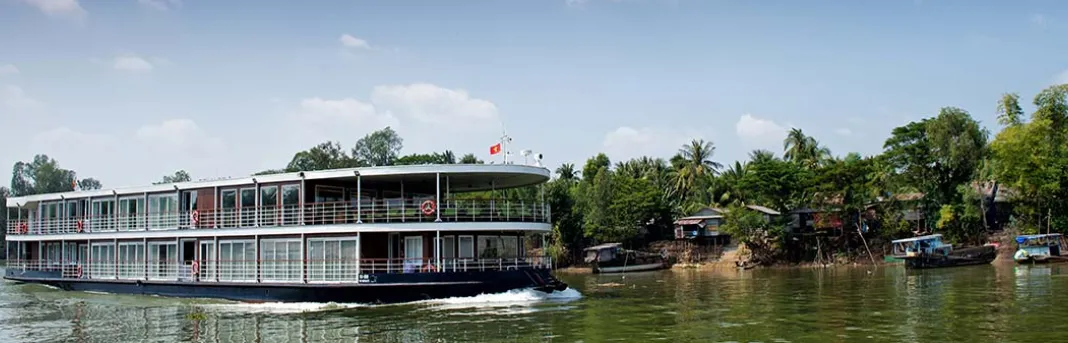


Avalon Waterways
2018
—
950 GT
36
18
24
195 m
—
9 knots
No

Cairo, where five thousand years of civilization press upon the present with relentless intensity, is anchored by the Great Pyramid of Giza — the sole survivor of the Seven Wonders of the Ancient World, already ancient when Cleopatra walked in its shadow. The Egyptian Museum's overwhelming treasure trove of pharaonic antiquities, including the golden mask of Tutankhamun, and the medieval labyrinth of Islamic Cairo, a UNESCO-listed district of a thousand mosques and medieval caravanserais, offer a lifetime of discovery in a city of twenty million souls. October through April brings the most tolerable temperatures. Luxor, with its Valley of the Kings, is a short domestic flight or overnight train journey south.

Cairo, where five thousand years of civilization press upon the present with relentless intensity, is anchored by the Great Pyramid of Giza — the sole survivor of the Seven Wonders of the Ancient World, already ancient when Cleopatra walked in its shadow. The Egyptian Museum's overwhelming treasure trove of pharaonic antiquities, including the golden mask of Tutankhamun, and the medieval labyrinth of Islamic Cairo, a UNESCO-listed district of a thousand mosques and medieval caravanserais, offer a lifetime of discovery in a city of twenty million souls. October through April brings the most tolerable temperatures. Luxor, with its Valley of the Kings, is a short domestic flight or overnight train journey south.

Siem Reap, the gateway city to the ancient Khmer empire's greatest achievement, is the essential staging post for exploring Angkor — the twelfth-century temple complex whose scale and ambition remain without parallel in human history. Angkor Wat at sunrise, its towers mirrored in the lily-covered moat, is one of the world's most transcendent spectacles; Angkor Thom's enigmatic Bayon, with its serene stone faces emerging from the jungle canopy, is another. The city's Old Market quarter offers silk workshops, street food vendors, and celebrated restaurants serving amok — fish steamed in coconut and lemongrass. November through April brings the driest, most comfortable conditions.

Luxor is the greatest open-air museum on earth — the modern city occupying the site of ancient Thebes, capital of Egypt during the New Kingdom's golden age when pharaohs such as Hatshepsut, Tutankhamun, and Ramesses II built temples of a scale and beauty that still stagger the imagination. The East Bank holds the incomparable complexes of Karnak and Luxor Temple; across the Nile, the West Bank conceals the Valley of the Kings, where sixty-three royal tombs were cut into the limestone beneath the pyramid-shaped peak of Al-Qurn. A felucca sunset sail on the Nile, with the cliffs of Thebes glowing amber, is among travel's most transcendent moments. October through April offers the ideal climate.

The Temple of Horus at Edfu is the most completely preserved pharaonic temple in Egypt — a colossus of golden sandstone rising above the Nile's western bank, its towering pylons, hypostyle halls, and sacred inner sanctum surviving almost intact after two millennia beneath the desert. Built between 237 and 57 BC under Ptolemaic rulers, it offers the clearest window into ancient Egyptian temple ritual that archaeology has preserved. The colossal granite statues of Horus at the entrance remain among the most striking sculptures of the ancient world. October through April brings ideal conditions: warm days, cool evenings, and the gentle rhythms of a Nile cruise.

Aswan, Egypt's sunniest city and its ancient southern frontier, offers the Nile at its most scenic — wide, blue, and studded with felucca-dotted islands where temples emerge from the water's edge like visions from another age. The Temple of Philae, rescued from the rising waters of Lake Nasser and reassembled on a new island, is a jewel of Egyptian antiquity; Elephantine Island harbors ruins spanning predynastic times to the Roman era. For the full pharaonic experience, a sunset felucca ride to the Aga Khan Mausoleum rivals any luxury on the Nile. October through April offers the most comfortable temperatures; Abu Simbel is a short flight south.
Day 1

Cairo, where five thousand years of civilization press upon the present with relentless intensity, is anchored by the Great Pyramid of Giza — the sole survivor of the Seven Wonders of the Ancient World, already ancient when Cleopatra walked in its shadow. The Egyptian Museum's overwhelming treasure trove of pharaonic antiquities, including the golden mask of Tutankhamun, and the medieval labyrinth of Islamic Cairo, a UNESCO-listed district of a thousand mosques and medieval caravanserais, offer a lifetime of discovery in a city of twenty million souls. October through April brings the most tolerable temperatures. Luxor, with its Valley of the Kings, is a short domestic flight or overnight train journey south.
Day 3

Cairo, where five thousand years of civilization press upon the present with relentless intensity, is anchored by the Great Pyramid of Giza — the sole survivor of the Seven Wonders of the Ancient World, already ancient when Cleopatra walked in its shadow. The Egyptian Museum's overwhelming treasure trove of pharaonic antiquities, including the golden mask of Tutankhamun, and the medieval labyrinth of Islamic Cairo, a UNESCO-listed district of a thousand mosques and medieval caravanserais, offer a lifetime of discovery in a city of twenty million souls. October through April brings the most tolerable temperatures. Luxor, with its Valley of the Kings, is a short domestic flight or overnight train journey south.
Day 4

Siem Reap, the gateway city to the ancient Khmer empire's greatest achievement, is the essential staging post for exploring Angkor — the twelfth-century temple complex whose scale and ambition remain without parallel in human history. Angkor Wat at sunrise, its towers mirrored in the lily-covered moat, is one of the world's most transcendent spectacles; Angkor Thom's enigmatic Bayon, with its serene stone faces emerging from the jungle canopy, is another. The city's Old Market quarter offers silk workshops, street food vendors, and celebrated restaurants serving amok — fish steamed in coconut and lemongrass. November through April brings the driest, most comfortable conditions.
Day 5

Luxor is the greatest open-air museum on earth — the modern city occupying the site of ancient Thebes, capital of Egypt during the New Kingdom's golden age when pharaohs such as Hatshepsut, Tutankhamun, and Ramesses II built temples of a scale and beauty that still stagger the imagination. The East Bank holds the incomparable complexes of Karnak and Luxor Temple; across the Nile, the West Bank conceals the Valley of the Kings, where sixty-three royal tombs were cut into the limestone beneath the pyramid-shaped peak of Al-Qurn. A felucca sunset sail on the Nile, with the cliffs of Thebes glowing amber, is among travel's most transcendent moments. October through April offers the ideal climate.
Day 6

The Temple of Horus at Edfu is the most completely preserved pharaonic temple in Egypt — a colossus of golden sandstone rising above the Nile's western bank, its towering pylons, hypostyle halls, and sacred inner sanctum surviving almost intact after two millennia beneath the desert. Built between 237 and 57 BC under Ptolemaic rulers, it offers the clearest window into ancient Egyptian temple ritual that archaeology has preserved. The colossal granite statues of Horus at the entrance remain among the most striking sculptures of the ancient world. October through April brings ideal conditions: warm days, cool evenings, and the gentle rhythms of a Nile cruise.
Day 7

Aswan, Egypt's sunniest city and its ancient southern frontier, offers the Nile at its most scenic — wide, blue, and studded with felucca-dotted islands where temples emerge from the water's edge like visions from another age. The Temple of Philae, rescued from the rising waters of Lake Nasser and reassembled on a new island, is a jewel of Egyptian antiquity; Elephantine Island harbors ruins spanning predynastic times to the Roman era. For the full pharaonic experience, a sunset felucca ride to the Aga Khan Mausoleum rivals any luxury on the Nile. October through April offers the most comfortable temperatures; Abu Simbel is a short flight south.


Stateroom Features:
Comfort Collection Beds
Egyptian super-combed cotton linens
Soft & firm pillows
Choice of bed configuration
Nightly turn-down service
Bedside tables with reading lamps
14' Wall-to-Wall Panoramic window measuring that opens to create a large Open-Air Balcony
Large private bathroom featuring full shower with glass door, hairdryer, and premium L'Occitane bath amenities
Spacious closets with shelves for ample storage
Easy under-bed luggage storage
Alarm clock
Writing desk/vanity with mirror & comfortable chair
In-house telephone
Bathrobes & slippers
Complimentary filtered water
In-room safe
Individual climate control
One King-Sized Bed or Two Twins
USB Ports
Our cruise specialists can help you find the perfect cabin and the best available pricing.
(+886) 02-2721-7300Contact Advisor