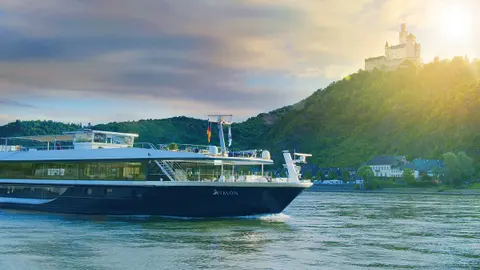
Avalon Waterways60728
European Masterpiece: The Rhine, Seine & Rhône Revealed with 2 Nights in French Riviera
Date
2026-07-28
Duration
21 nights
Departure Port
Basel
Switzerland
Arrival Port
Nice
France
Rating
Luxury
Theme
History & Culture
Date
2026-07-28
Duration
21 nights
Departure Port
Basel
Switzerland
Arrival Port
Nice
France
Rating
Luxury
Theme
History & Culture
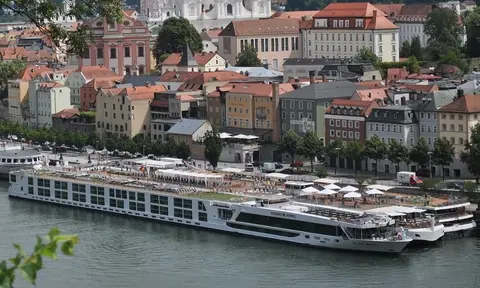
Avalon Waterways
2020
—
2,775 GT
166
83
47
443 m
12 m
12 knots
No
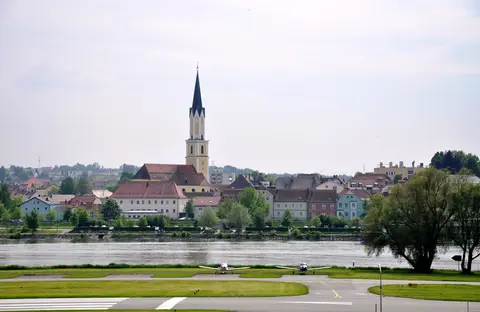
Vilshofen an der Donau is a handsome Bavarian river town where three streams converge with the Danube, its medieval market charter and Gothic Stadtturm bearing witness to eight centuries of river trade prosperity — though its most joyful claim to fame is the boisterous Vilshofen Volksfest, Bavaria's second-largest folk festival after Oktoberfest, held each June. The pastel-painted baroque townhouses and arcaded courtyards of the compact old town make for an idyllic Danube-side stroll, while the surrounding farmland and rolling hills of Lower Bavaria offer cycling routes of pastoral serenity. Summer brings the festival season; spring and autumn lend the Danube Valley its most golden and peaceful character.
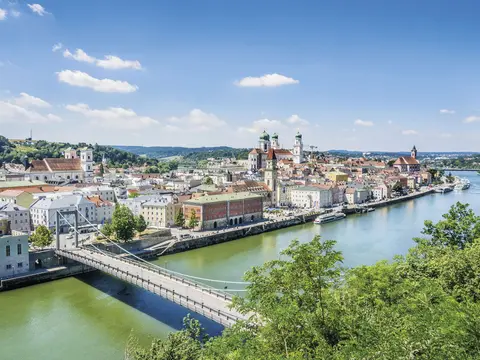
Passau occupies one of Central Europe's most dramatic natural stages — a narrow peninsula at the confluence of three rivers, the Danube, Inn, and Ilz, where the old town's baroque spires and shuttered merchants' houses crowd the very tip of the land between the waters. St. Stephen's Cathedral houses the world's largest church organ, a 17,974-pipe instrument whose daily concerts fill the nave with a sound that seems architectural in its density. The Veste Oberhaus fortress above the city commands panoramic views across three countries on clear days. Passau is a classic Danube river cruise departure point; spring and early autumn, when the river runs high and the light turns golden, are the finest seasons.
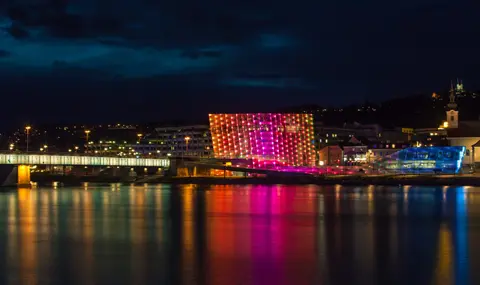
Austria's third city has accomplished one of Europe's most convincing urban transformations — reinventing itself from industrial centre to cultural powerhouse, a journey recognised in 2009 when it was named European Capital of Culture. The Ars Electronica Center, a museum of digital art and technology that glows with LED light across the Danube each evening, epitomises Linz's forward-looking identity. Yet the city's Roman roots, its baroque Hauptplatz (one of Austria's finest main squares), and its proximity to the Wachau Valley anchor it firmly in history. The Upper Austrian cuisine — particularly Linzer Torte, the world's oldest-documented cake recipe — is exceptional. Linz is most agreeable May through September.
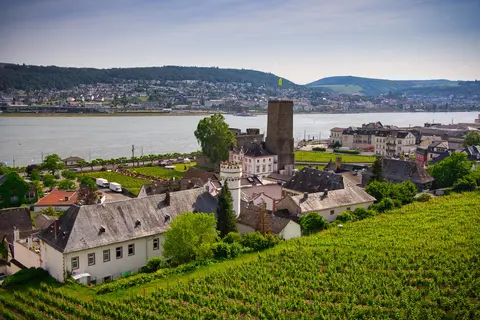
Rüdesheim am Rhein, a jewel of the UNESCO-listed Upper Middle Rhine Valley, is where Germany's most storied wine river cuts through vine-terraced slopes and medieval castle ruins. The pedestrianised Drosselgasse laneway — beloved since the Romantic era — hums with wine taverns pouring the region's celebrated Rieslings, crisp and mineral from the slate soils. The Niederwald Monument surveys the river from the heights, reached by cable car above the vineyards. Day trips by boat unlock Bacharach, Boppard, and the legendary Lorelei rock. September's harvest festivals transform the entire valley into a convivial celebration of the vintage.
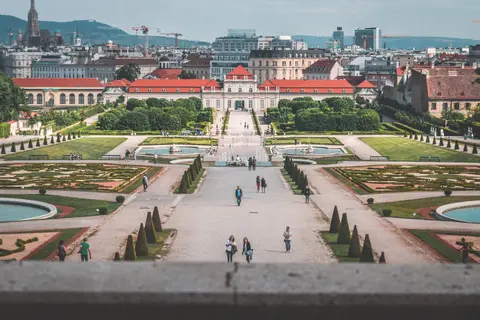
The port of Vienna is a cultural gem along the Danube River, famous for its stunning architecture, rich history, and vibrant culinary scene. Must-do experiences include sampling authentic Wiener Schnitzel and visiting the picturesque village of Dürnstein. The best season to visit is spring or early fall, when the city's gardens bloom and outdoor activities abound.
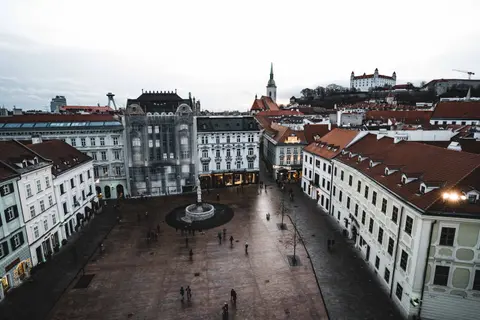
Bratislava, the only national capital bordering two sovereign states, sits sixty kilometres downstream from Vienna on the Danube — close enough for a day trip to the Austrian capital, yet possessed of its own entirely distinct character: a pastel-hued medieval old town of hidden courtyards, playful bronze statues, and hilltop castle views, where wine bars pour outstanding Slovak Riesling at prices that make the Viennese feel extravagant. The city's dramatic reinvention since 1989 has produced a dynamic, youthful culture that fills the old quarter's restaurants and concert halls with genuine warmth. Pair with Vienna or Budapest for the classic Danube river trilogy; all three cities are within two hours of each other.
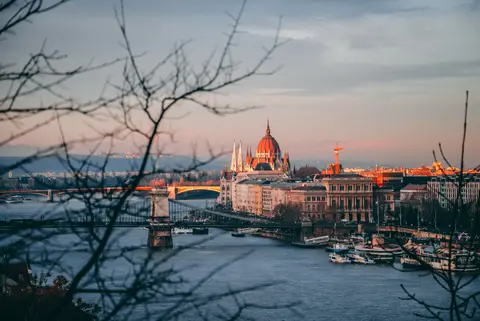
Budapest, divided by the Danube into the hilly Buda of thermal baths and medieval castle lanes on one bank and the grand Pest of coffee-house culture and Art Nouveau splendor on the other, delivers the most theatrical first impression of any European capital — whether approached by river as the neo-Gothic Parliament materializes from the water or by night from the Citadella's sweep of illuminated panorama below. The city's celebrated thermal bath culture, rooted in Ottoman-era hammams and perfected in palatial Secession-era pools like the Széchenyi, is an experience entirely unlike anything else in Europe. Visit spring and autumn for comfortable temperatures; Vienna is two and a half hours west by train.
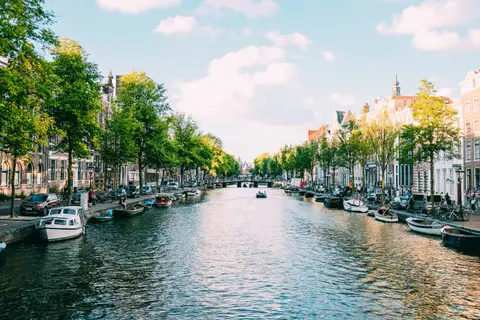
Amsterdam's UNESCO-listed canal ring — a concentric web of seventeenth-century merchant houses and arching stone bridges — remains one of the Western world's most perfectly preserved Golden Age cityscapes, best explored by bicycle or canal boat at a pace that lets the city's genius reveal itself slowly. The Rijksmuseum's collection of Rembrandt and Vermeer masterpieces is essential, while the Anne Frank House offers one of Europe's most profoundly moving historical encounters. Spring brings the iconic tulip season; summer fills the terraces of the Jordaan district. Schiphol Airport makes Amsterdam a seamless gateway to the entire European continent.
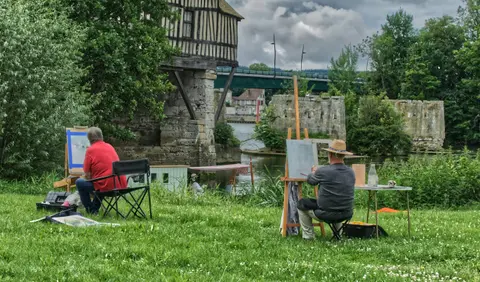
Vernon is a quietly beguiling Norman town on the Seine whose greatest treasure lies just four kilometers beyond its medieval bridge: the garden and water lily ponds at Giverny, where Claude Monet lived and painted for forty-three years, creating the luminous imagery that changed the course of modern art. The town itself retains considerable charm — a romanticly ruined twelfth-century bridge tower draped in ivy, half-timbered houses along the riverbank, and a fine museum housing several original Monet canvases. Monet's garden is open from April through October, reaching its peak splendor in May and June when his beloved water lilies are in full, painterly bloom.
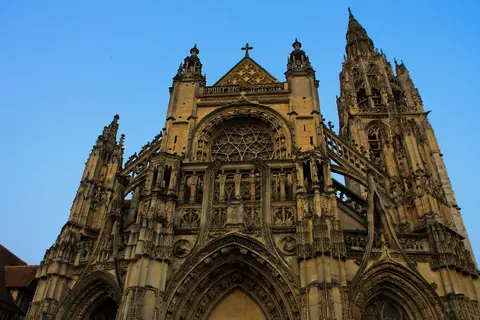
Caudebec-en-Caux nestles in a Seine meander between Rouen and the sea, famous for its Flamboyant Gothic Eglise Notre-Dame — a masterwork of late medieval stone lacework so exquisite that Henri IV called it 'the most beautiful chapel in my kingdom.' The town serves as an ideal quiet base for exploring the Seine Valley's quieter pleasures: the remarkable Abbaye de Jumiéges, its roofless nave open to the Norman sky, and the Manoir d'Ango, a Renaissance manor of extraordinary ambition, are both within easy reach. The tidal atmosphere of the Seine at this point rewards early morning walks along the embankment. Rouen, with its Gothic cathedral and Impressionist legacy, lies forty minutes east.
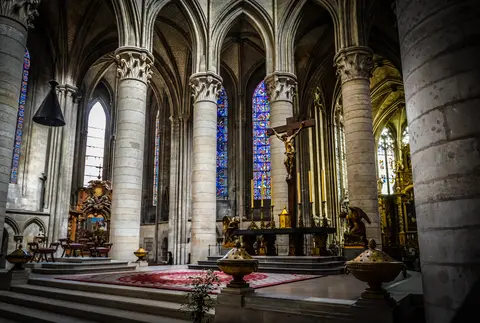
Rouen, the medieval capital of Normandy set in a wooded meander of the Seine, rewards slow exploration with one of France's richest concentrations of Gothic architecture. The vast cathedral — immortalised by Monet in his celebrated series of canvases — dominates a city where half-timbered lanes wind between Renaissance mansions and the square where Joan of Arc was burned in 1431. The covered market overflows with Normandy's great dairy bounty: camembert, livarot, and pont-l'évêque alongside cider and calvados. Paris lies just ninety minutes south by train. Spring and early autumn offer the most atmospheric conditions.
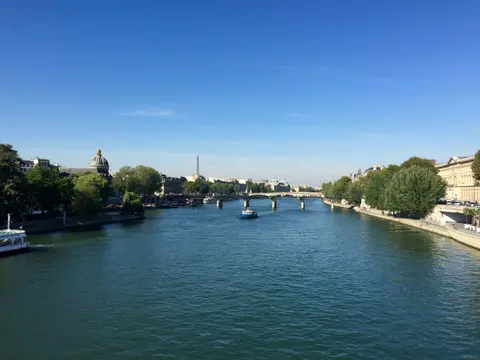
Poised at the confluence of the Oise and the Seine, Conflans-Sainte-Honorine has been France's inland waterway capital for over a century, its quays mooring more than a thousand traditional péniches whose painted hulls form a floating village of singular charm. The hilltop medieval town commands sweeping views over the meeting of rivers, while the National Inland Waterways Museum aboard a converted barge chronicles France's extraordinary network of canals and waterways. Just thirty kilometres from Paris, Conflans is best visited in summer, when barge festivals fill the riverbank with music, local produce, and the unhurried pleasures of la vie fluviale.
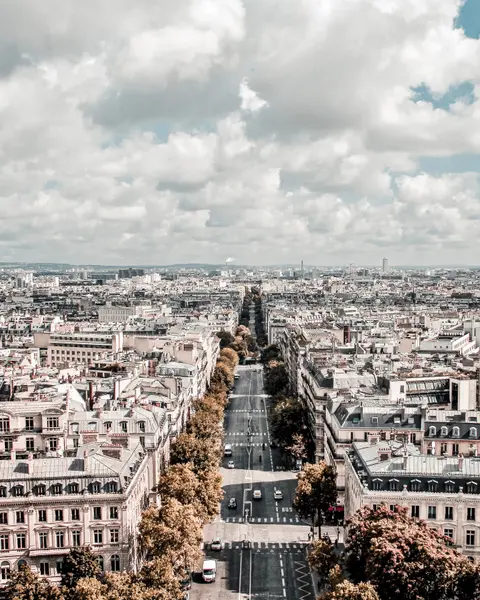
Paris rewards every arrival as though it were the first — the sweep of the Seine, the Gothic tracery of Notre-Dame rising again from its 2019 ashes, the Eiffel Tower somehow managing to astonish at each encounter, the Louvre's glass pyramid reflecting clouds in the courtyard of a palace that served French kings for four centuries. Beyond the monuments, Paris is a city of neighbourhoods: the Belle Époque brasseries of Montparnasse, the covered passages of the 2nd arrondissement, the rooftop terraces of Le Marais. The Luxembourg Gardens in April, or a late-September evening on the Canal Saint-Martin, are among the most civilised experiences in the world.
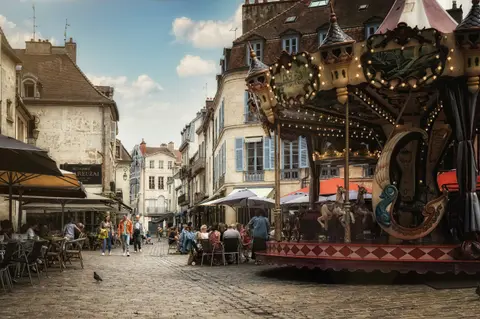
Dijon, the capital of Burgundy, is a port city rich in history, known for its stunning architecture and vibrant culinary scene. Must-do experiences include sampling the world-famous moutarde de Dijon at local markets and indulging in regional dishes like coq au vin. The best time to visit is during the autumn gastronomic fair, when the city truly comes alive with local flavors and traditions.
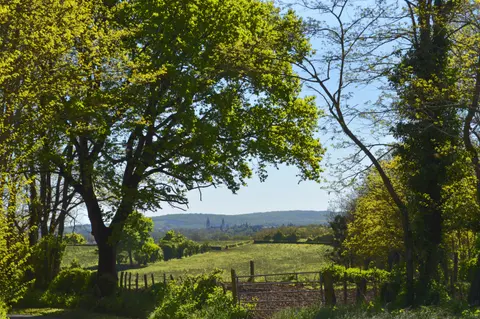
Tournus is a captivating commune in eastern France, renowned for its rich history, stunning architecture, and exceptional culinary experiences. Must-do activities include exploring the Abbey of Saint-Philibert and indulging in local dishes like coq au vin. The best season to visit is spring or early autumn when the weather is mild and the local markets are brimming with fresh produce.
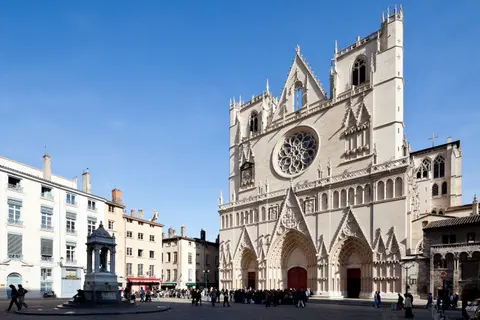
Lyon sits at the confluence of the Rhône and the Saône — a geographic destiny that made it the capital of Roman Gaul, a Renaissance silk-trading powerhouse, and, by contemporary consensus, the undisputed gastronomic capital of France. The UNESCO-listed Vieux Lyon preserves Europe's finest concentration of Renaissance architecture, its labyrinthine traboules — secret passageways threading through courtyard after courtyard — offering endless discovery. Paul Bocuse's legacy lives on in the city's constellation of bouchons, where quenelles de brochet and tablier de sapeur are served with the straightforward confidence of a city that has never needed to prove its culinary supremacy. Lyon rewards a visit in any season, with the Festival of Lights in December being particularly magical.
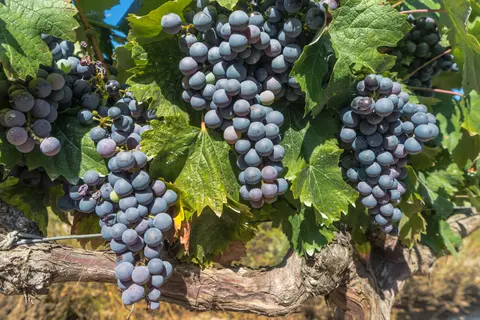
Founded in 1270 by an English lieutenant of Edward I at the confluence of the Isle and Dordogne rivers, Libourne is the fortified bastide heart of Bordeaux wine country — and the historic trading capital of some of the world's most celebrated appellations: Pomerol and Saint-Émilion both lie within minutes. The medieval market square, ringed by arcaded stone buildings, still hosts produce markets and wine négociant houses that have traded here for centuries. A half-day excursion to the UNESCO-listed hilltop village of Saint-Émilion, with its monolithic church carved from a single limestone cliff, is unmissable. Libourne is most rewarding during harvest (September–October) and spring flowering (April–May).
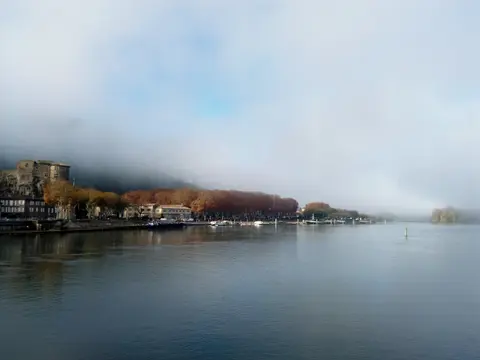
Tournon-sur-Rhône is a captivating port town steeped in history, known for its medieval architecture and vibrant culinary scene. Must-do experiences include savoring local specialties such as caillettes and exploring the bustling Saturday market. The best time to visit is in the late spring or early fall when the weather is mild and the local festivities are in full swing.
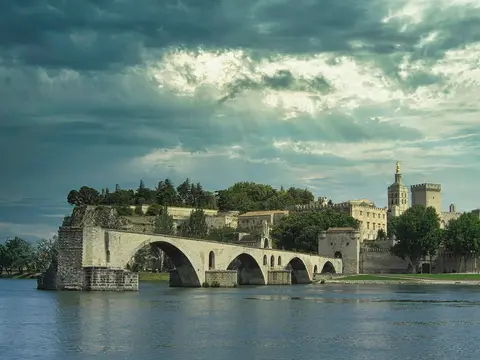
Avignon's Palais des Papes — a fortress-palace of staggering medieval ambition where seven successive popes held court for seventy years — still dominates this Provençal city's skyline, its limestone bulk enclosing frescoed chapels and vast ceremonial halls that once shaped the destiny of Christendom. In July, the city transforms for the celebrated Festival d'Avignon, Europe's premier theatre gathering, turning every courtyard and cloister into a stage. Year-round, the beautifully preserved historic centre offers world-class Rhône Valley wines, refined Provençal cuisine, and the beguiling spectacle of the Pont Saint-Bénézet stretching halfway across the river. Lyon and Marseille are each accessible in under ninety minutes by TGV.
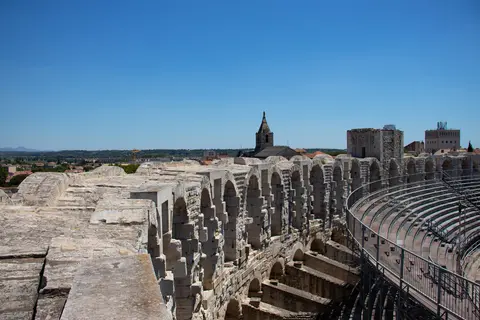
Arles, the most important city in Roman Gaul after Lyon, wears its history with casual magnificence: a first-century amphitheatre still hosts bullfights beneath open skies, and the haunting Alyscamps necropolis — once among the most prestigious burial grounds in the Western world — lines a poplar-shaded avenue with ancient sarcophagi. Yet Arles is equally celebrated as the city that intoxicated Vincent van Gogh, who produced over three hundred works here in fifteen fevered months; the Fondation Vincent van Gogh now honors his legacy in beautifully renovated rooms. Spring and autumn are ideal, with the Camargue's flamingo-filled wetlands just minutes south. Lyon is two hours north by TGV.
Day 1
Vilshofen an der Donau is a handsome Bavarian river town where three streams converge with the Danube, its medieval market charter and Gothic Stadtturm bearing witness to eight centuries of river trade prosperity — though its most joyful claim to fame is the boisterous Vilshofen Volksfest, Bavaria's second-largest folk festival after Oktoberfest, held each June. The pastel-painted baroque townhouses and arcaded courtyards of the compact old town make for an idyllic Danube-side stroll, while the surrounding farmland and rolling hills of Lower Bavaria offer cycling routes of pastoral serenity. Summer brings the festival season; spring and autumn lend the Danube Valley its most golden and peaceful character.
Day 2
Passau occupies one of Central Europe's most dramatic natural stages — a narrow peninsula at the confluence of three rivers, the Danube, Inn, and Ilz, where the old town's baroque spires and shuttered merchants' houses crowd the very tip of the land between the waters. St. Stephen's Cathedral houses the world's largest church organ, a 17,974-pipe instrument whose daily concerts fill the nave with a sound that seems architectural in its density. The Veste Oberhaus fortress above the city commands panoramic views across three countries on clear days. Passau is a classic Danube river cruise departure point; spring and early autumn, when the river runs high and the light turns golden, are the finest seasons.
Day 3
Austria's third city has accomplished one of Europe's most convincing urban transformations — reinventing itself from industrial centre to cultural powerhouse, a journey recognised in 2009 when it was named European Capital of Culture. The Ars Electronica Center, a museum of digital art and technology that glows with LED light across the Danube each evening, epitomises Linz's forward-looking identity. Yet the city's Roman roots, its baroque Hauptplatz (one of Austria's finest main squares), and its proximity to the Wachau Valley anchor it firmly in history. The Upper Austrian cuisine — particularly Linzer Torte, the world's oldest-documented cake recipe — is exceptional. Linz is most agreeable May through September.
Day 4
Day 5
Rüdesheim am Rhein, a jewel of the UNESCO-listed Upper Middle Rhine Valley, is where Germany's most storied wine river cuts through vine-terraced slopes and medieval castle ruins. The pedestrianised Drosselgasse laneway — beloved since the Romantic era — hums with wine taverns pouring the region's celebrated Rieslings, crisp and mineral from the slate soils. The Niederwald Monument surveys the river from the heights, reached by cable car above the vineyards. Day trips by boat unlock Bacharach, Boppard, and the legendary Lorelei rock. September's harvest festivals transform the entire valley into a convivial celebration of the vintage.
The port of Vienna is a cultural gem along the Danube River, famous for its stunning architecture, rich history, and vibrant culinary scene. Must-do experiences include sampling authentic Wiener Schnitzel and visiting the picturesque village of Dürnstein. The best season to visit is spring or early fall, when the city's gardens bloom and outdoor activities abound.
Day 6
Bratislava, the only national capital bordering two sovereign states, sits sixty kilometres downstream from Vienna on the Danube — close enough for a day trip to the Austrian capital, yet possessed of its own entirely distinct character: a pastel-hued medieval old town of hidden courtyards, playful bronze statues, and hilltop castle views, where wine bars pour outstanding Slovak Riesling at prices that make the Viennese feel extravagant. The city's dramatic reinvention since 1989 has produced a dynamic, youthful culture that fills the old quarter's restaurants and concert halls with genuine warmth. Pair with Vienna or Budapest for the classic Danube river trilogy; all three cities are within two hours of each other.
Day 7
Budapest, divided by the Danube into the hilly Buda of thermal baths and medieval castle lanes on one bank and the grand Pest of coffee-house culture and Art Nouveau splendor on the other, delivers the most theatrical first impression of any European capital — whether approached by river as the neo-Gothic Parliament materializes from the water or by night from the Citadella's sweep of illuminated panorama below. The city's celebrated thermal bath culture, rooted in Ottoman-era hammams and perfected in palatial Secession-era pools like the Széchenyi, is an experience entirely unlike anything else in Europe. Visit spring and autumn for comfortable temperatures; Vienna is two and a half hours west by train.
Day 8
Amsterdam's UNESCO-listed canal ring — a concentric web of seventeenth-century merchant houses and arching stone bridges — remains one of the Western world's most perfectly preserved Golden Age cityscapes, best explored by bicycle or canal boat at a pace that lets the city's genius reveal itself slowly. The Rijksmuseum's collection of Rembrandt and Vermeer masterpieces is essential, while the Anne Frank House offers one of Europe's most profoundly moving historical encounters. Spring brings the iconic tulip season; summer fills the terraces of the Jordaan district. Schiphol Airport makes Amsterdam a seamless gateway to the entire European continent.
Day 9
Vernon is a quietly beguiling Norman town on the Seine whose greatest treasure lies just four kilometers beyond its medieval bridge: the garden and water lily ponds at Giverny, where Claude Monet lived and painted for forty-three years, creating the luminous imagery that changed the course of modern art. The town itself retains considerable charm — a romanticly ruined twelfth-century bridge tower draped in ivy, half-timbered houses along the riverbank, and a fine museum housing several original Monet canvases. Monet's garden is open from April through October, reaching its peak splendor in May and June when his beloved water lilies are in full, painterly bloom.
Day 10
Caudebec-en-Caux nestles in a Seine meander between Rouen and the sea, famous for its Flamboyant Gothic Eglise Notre-Dame — a masterwork of late medieval stone lacework so exquisite that Henri IV called it 'the most beautiful chapel in my kingdom.' The town serves as an ideal quiet base for exploring the Seine Valley's quieter pleasures: the remarkable Abbaye de Jumiéges, its roofless nave open to the Norman sky, and the Manoir d'Ango, a Renaissance manor of extraordinary ambition, are both within easy reach. The tidal atmosphere of the Seine at this point rewards early morning walks along the embankment. Rouen, with its Gothic cathedral and Impressionist legacy, lies forty minutes east.
Day 12
Rouen, the medieval capital of Normandy set in a wooded meander of the Seine, rewards slow exploration with one of France's richest concentrations of Gothic architecture. The vast cathedral — immortalised by Monet in his celebrated series of canvases — dominates a city where half-timbered lanes wind between Renaissance mansions and the square where Joan of Arc was burned in 1431. The covered market overflows with Normandy's great dairy bounty: camembert, livarot, and pont-l'évêque alongside cider and calvados. Paris lies just ninety minutes south by train. Spring and early autumn offer the most atmospheric conditions.
Day 13
Poised at the confluence of the Oise and the Seine, Conflans-Sainte-Honorine has been France's inland waterway capital for over a century, its quays mooring more than a thousand traditional péniches whose painted hulls form a floating village of singular charm. The hilltop medieval town commands sweeping views over the meeting of rivers, while the National Inland Waterways Museum aboard a converted barge chronicles France's extraordinary network of canals and waterways. Just thirty kilometres from Paris, Conflans is best visited in summer, when barge festivals fill the riverbank with music, local produce, and the unhurried pleasures of la vie fluviale.
Day 14
Paris rewards every arrival as though it were the first — the sweep of the Seine, the Gothic tracery of Notre-Dame rising again from its 2019 ashes, the Eiffel Tower somehow managing to astonish at each encounter, the Louvre's glass pyramid reflecting clouds in the courtyard of a palace that served French kings for four centuries. Beyond the monuments, Paris is a city of neighbourhoods: the Belle Époque brasseries of Montparnasse, the covered passages of the 2nd arrondissement, the rooftop terraces of Le Marais. The Luxembourg Gardens in April, or a late-September evening on the Canal Saint-Martin, are among the most civilised experiences in the world.
Day 15
Dijon, the capital of Burgundy, is a port city rich in history, known for its stunning architecture and vibrant culinary scene. Must-do experiences include sampling the world-famous moutarde de Dijon at local markets and indulging in regional dishes like coq au vin. The best time to visit is during the autumn gastronomic fair, when the city truly comes alive with local flavors and traditions.
Day 16
Tournus is a captivating commune in eastern France, renowned for its rich history, stunning architecture, and exceptional culinary experiences. Must-do activities include exploring the Abbey of Saint-Philibert and indulging in local dishes like coq au vin. The best season to visit is spring or early autumn when the weather is mild and the local markets are brimming with fresh produce.
Day 17
Lyon sits at the confluence of the Rhône and the Saône — a geographic destiny that made it the capital of Roman Gaul, a Renaissance silk-trading powerhouse, and, by contemporary consensus, the undisputed gastronomic capital of France. The UNESCO-listed Vieux Lyon preserves Europe's finest concentration of Renaissance architecture, its labyrinthine traboules — secret passageways threading through courtyard after courtyard — offering endless discovery. Paul Bocuse's legacy lives on in the city's constellation of bouchons, where quenelles de brochet and tablier de sapeur are served with the straightforward confidence of a city that has never needed to prove its culinary supremacy. Lyon rewards a visit in any season, with the Festival of Lights in December being particularly magical.
Day 19
Founded in 1270 by an English lieutenant of Edward I at the confluence of the Isle and Dordogne rivers, Libourne is the fortified bastide heart of Bordeaux wine country — and the historic trading capital of some of the world's most celebrated appellations: Pomerol and Saint-Émilion both lie within minutes. The medieval market square, ringed by arcaded stone buildings, still hosts produce markets and wine négociant houses that have traded here for centuries. A half-day excursion to the UNESCO-listed hilltop village of Saint-Émilion, with its monolithic church carved from a single limestone cliff, is unmissable. Libourne is most rewarding during harvest (September–October) and spring flowering (April–May).
Tournon-sur-Rhône is a captivating port town steeped in history, known for its medieval architecture and vibrant culinary scene. Must-do experiences include savoring local specialties such as caillettes and exploring the bustling Saturday market. The best time to visit is in the late spring or early fall when the weather is mild and the local festivities are in full swing.
Day 20
Avignon's Palais des Papes — a fortress-palace of staggering medieval ambition where seven successive popes held court for seventy years — still dominates this Provençal city's skyline, its limestone bulk enclosing frescoed chapels and vast ceremonial halls that once shaped the destiny of Christendom. In July, the city transforms for the celebrated Festival d'Avignon, Europe's premier theatre gathering, turning every courtyard and cloister into a stage. Year-round, the beautifully preserved historic centre offers world-class Rhône Valley wines, refined Provençal cuisine, and the beguiling spectacle of the Pont Saint-Bénézet stretching halfway across the river. Lyon and Marseille are each accessible in under ninety minutes by TGV.
Day 21
Arles, the most important city in Roman Gaul after Lyon, wears its history with casual magnificence: a first-century amphitheatre still hosts bullfights beneath open skies, and the haunting Alyscamps necropolis — once among the most prestigious burial grounds in the Western world — lines a poplar-shaded avenue with ancient sarcophagi. Yet Arles is equally celebrated as the city that intoxicated Vincent van Gogh, who produced over three hundred works here in fifteen fevered months; the Fondation Vincent van Gogh now honors his legacy in beautifully renovated rooms. Spring and autumn are ideal, with the Camargue's flamingo-filled wetlands just minutes south. Lyon is two hours north by TGV.
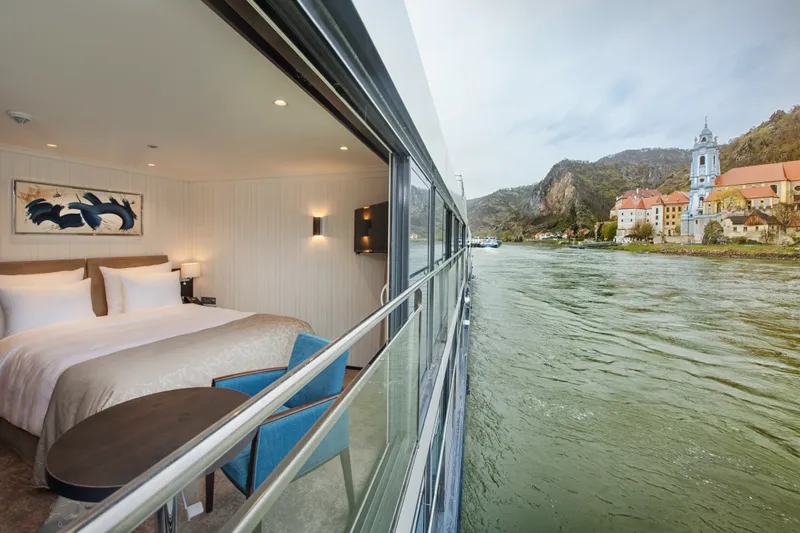
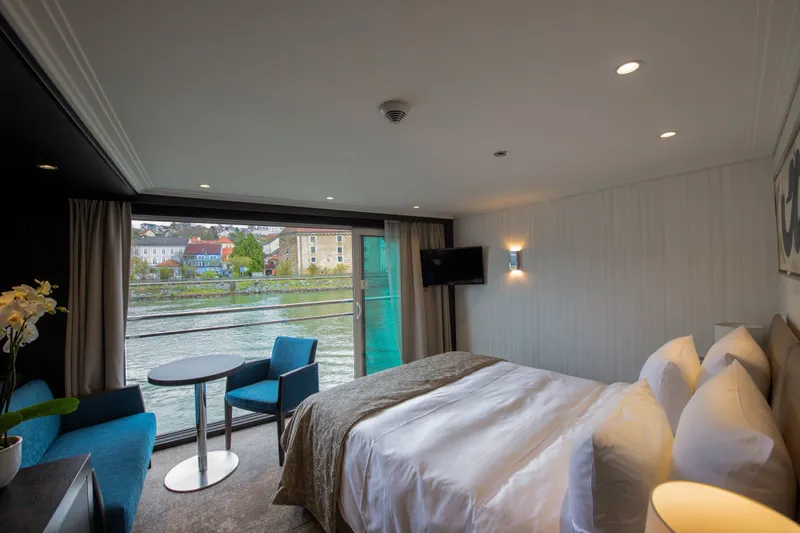
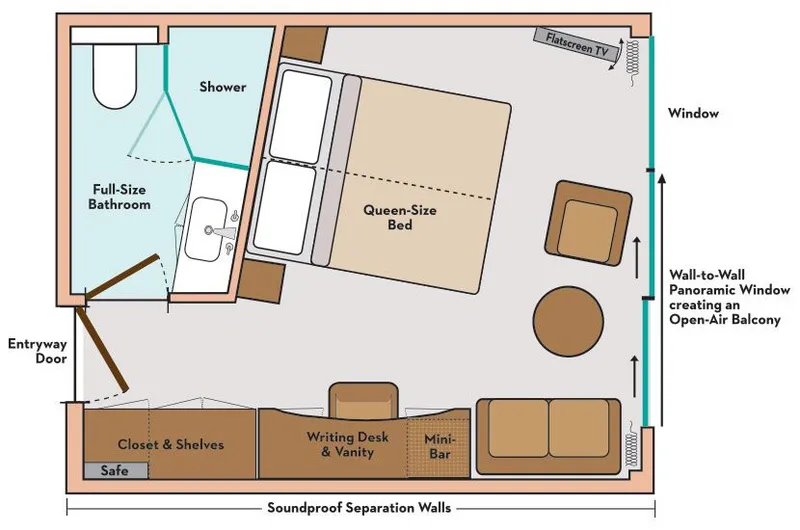
Stateroom Features:
Comfort Collection Beds
Luxurious mattress toppers
Egyptian super-combed cotton linens
European-style duvets
Soft & firm pillows
Extra blankets
Choice of bed configuration
Nightly turn-down service
Bedside tables with reading lamps
Premium Hairdryer
L'Occitane bath products
Spacious 3-door closets with shelves for ample storage
Easy under-bed luggage storage
Flatscreen satellite TV with English-speaking channels & over 100 free movie options
Alarm clock
Make-up mirror
Direct-dial telephone
Bathrobes & slippers
Well-stocked minibar
Complimentary filtered water
In-room safe
Individual climate control
Elegant, contemporary design
Large mirror in bathroom
Marble countertops in bathroom
Wall-to-Wall Panoramic Window with Open-Air Balcony
6-person sitting area
Full shower with glass door
Writing desk and chair
Lighted makeup mirror
Sofa
Coffee table
Complimentary Wi-Fi
One Queen-Sized Bed or Two Twins
USB Ports
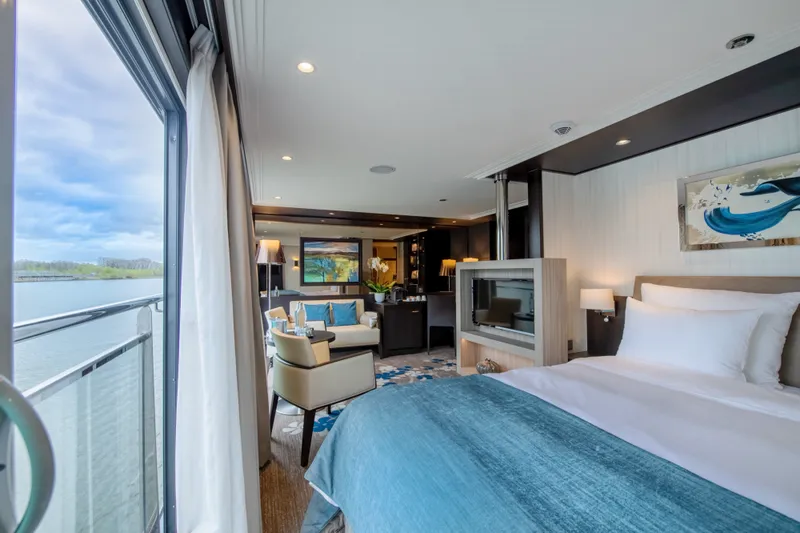
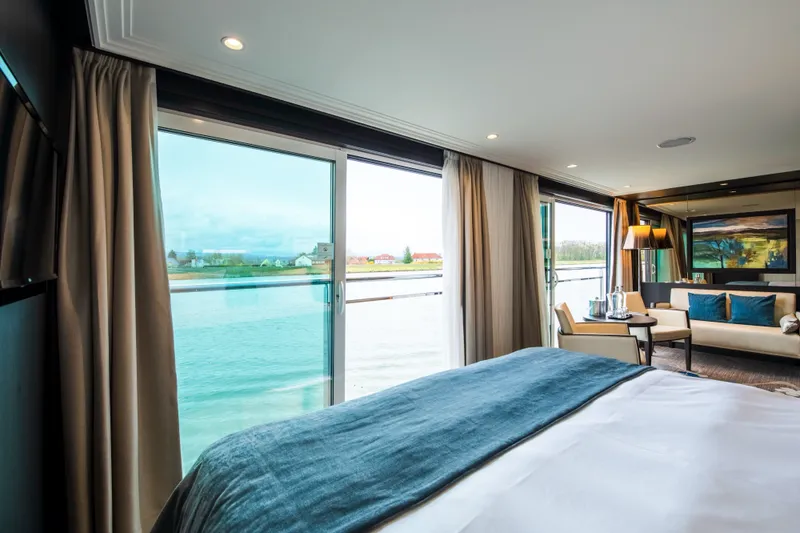
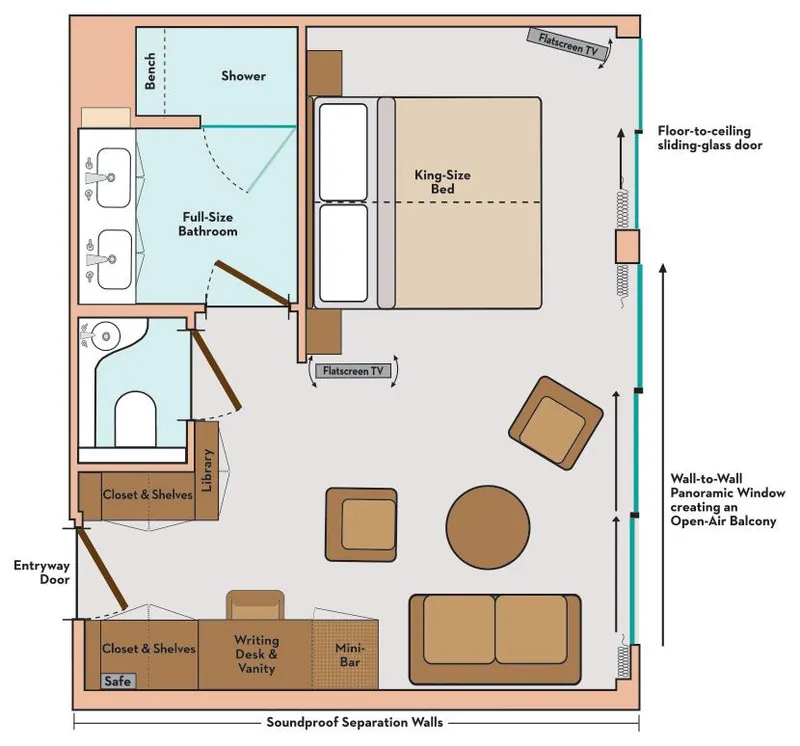
Stateroom Features:
Comfort Collection Beds
Luxurious mattress toppers
Egyptian super-combed cotton linens
European-style duvets
Soft & firm pillows
Extra blankets
Choice of bed configuration
Nightly turn-down service
Bedside tables with reading lamps
Premium Hairdryer
L'Occitane bath products
Spacious 3-door closets with shelves for ample storage
Easy under-bed luggage storage
Flatscreen satellite TV with English-speaking channels & over 100 free movie options
Alarm clock
Make-up mirror
Direct-dial telephone
Bathrobes & slippers
Well-stocked minibar
Complimentary filtered water
In-room safe
Individual climate control
Elegant, contemporary design
Large mirror in bathroom
Marble countertops in bathroom
Wall-to-Wall Panoramic Window with Open-Air Balcony
6-person sitting area
Full shower with glass door
Writing desk and chair
Lighted makeup mirror
Sofa
Coffee table
Complimentary Wi-Fi
One Queen-Sized Bed or Two Twins
USB Ports
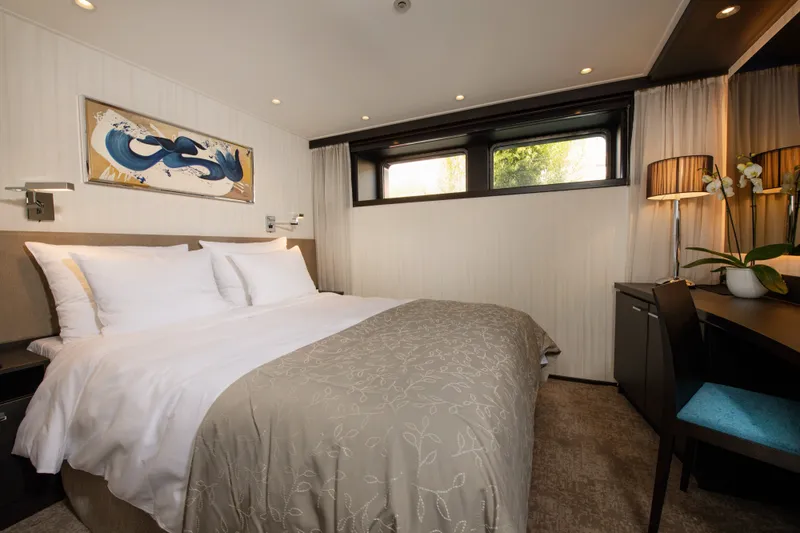
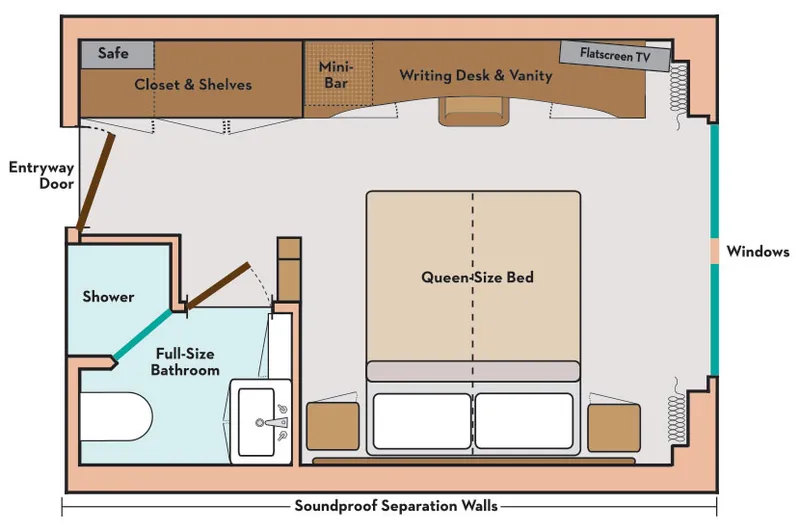
Stateroom Features:
Comfort Collection Beds
Luxurious mattress toppers
Egyptian super-combed cotton linens
European-style duvets
Soft & firm pillows
Extra blankets
Choice of bed configuration
Nightly turn-down service
Bedside tables with reading lamps
Premium Hairdryer
L'Occitane bath products
Spacious 3-door closets with shelves for ample storage
Easy under-bed luggage storage
Flatscreen satellite TV with English-speaking channels & over 100 free movie options
Alarm clock
Make-up mirror
Direct-dial telephone
Bathrobes & slippers
Well-stocked minibar
Complimentary filtered water
In-room safe
Individual climate control
Elegant, contemporary design
Large mirror in bathroom
Marble countertops in bathroom
Wall-to-Wall Panoramic Window with Open-Air Balcony
6-person sitting area
Full shower with glass door
Writing desk and chair
Lighted makeup mirror
Sofa
Coffee table
Complimentary Wi-Fi
One Queen-Sized Bed or Two Twins
USB Ports
Our cruise specialists can help you find the perfect cabin and the best available pricing.
(+886) 02-2721-7300Contact Advisor