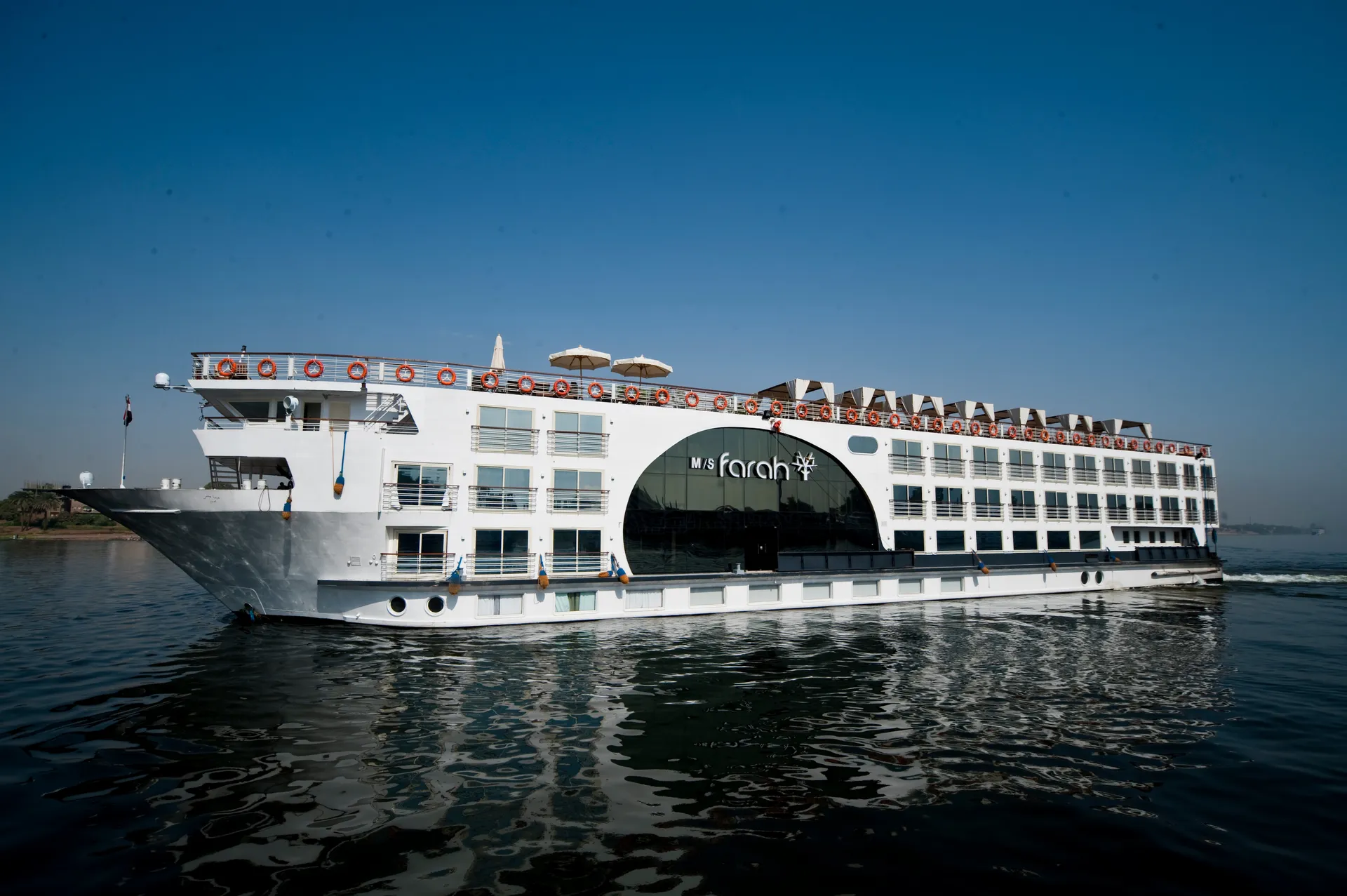
Date
2027-01-14
Duration
4 nights
Departure Port
Cairo
Egypt
Arrival Port
Amman
Jordan
Rating
Luxury
Theme
History & Culture

Avalon Waterways
2011
—
—
124
62
85
71 m
—
—
No

Phnom Penh rises from the confluence of the Mekong, Tonlé Sap, and Bassac rivers with a resilience that makes it one of Southeast Asia's most affecting capitals — a city that endured the Khmer Rouge's "Year Zero" and has re-emerged as a place of broad riverfront boulevards, excellent Khmer cuisine, and a cultural energy that feels earned rather than manufactured. The Royal Palace and its Silver Pagoda, housing a life-size gold Buddha studded with 9,584 diamonds, is the city's architectural centrepiece; the Tuol Sleng Genocide Museum, a former high school converted to a prison by the Khmer Rouge, is sobering but essential history. November through February offers the most comfortable climate for extended exploration.

Angkor Ban is a riverside Mekong village in Cambodia's Kampong Cham Province where unvarnished authenticity awaits the discerning river cruise traveler — a world away from tourist infrastructure, offering a rare glimpse into rural Khmer life unchanged by modernity. Ancient laterite temple ruins hide among the trees, while local craftspeople practice traditional silk weaving and pottery in family compounds that welcome visitors with quiet warmth. The dry season from November through April offers the most comfortable conditions for exploring the village lanes and surrounding countryside on foot or by bicycle. Phnom Penh is a half-day's river journey downstream.

Kampong Tralach, Cambodia is a distinctive port city where deep cultural heritage meets authentic local atmosphere, featured on itineraries by AmaWaterways. Must-do experiences include exploring the vibrant local markets for regional specialties and fresh seafood, and discovering the waterfront quarter where maritime heritage meets contemporary energy. The optimal time to visit is November through April, when dry season brings clear skies and calm seas.

Phnom Penh rises from the confluence of the Mekong, Tonlé Sap, and Bassac rivers with a resilience that makes it one of Southeast Asia's most affecting capitals — a city that endured the Khmer Rouge's "Year Zero" and has re-emerged as a place of broad riverfront boulevards, excellent Khmer cuisine, and a cultural energy that feels earned rather than manufactured. The Royal Palace and its Silver Pagoda, housing a life-size gold Buddha studded with 9,584 diamonds, is the city's architectural centrepiece; the Tuol Sleng Genocide Museum, a former high school converted to a prison by the Khmer Rouge, is sobering but essential history. November through February offers the most comfortable climate for extended exploration.

Luxor is the greatest open-air museum on earth — the modern city occupying the site of ancient Thebes, capital of Egypt during the New Kingdom's golden age when pharaohs such as Hatshepsut, Tutankhamun, and Ramesses II built temples of a scale and beauty that still stagger the imagination. The East Bank holds the incomparable complexes of Karnak and Luxor Temple; across the Nile, the West Bank conceals the Valley of the Kings, where sixty-three royal tombs were cut into the limestone beneath the pyramid-shaped peak of Al-Qurn. A felucca sunset sail on the Nile, with the cliffs of Thebes glowing amber, is among travel's most transcendent moments. October through April offers the ideal climate.
Day 1

Phnom Penh rises from the confluence of the Mekong, Tonlé Sap, and Bassac rivers with a resilience that makes it one of Southeast Asia's most affecting capitals — a city that endured the Khmer Rouge's "Year Zero" and has re-emerged as a place of broad riverfront boulevards, excellent Khmer cuisine, and a cultural energy that feels earned rather than manufactured. The Royal Palace and its Silver Pagoda, housing a life-size gold Buddha studded with 9,584 diamonds, is the city's architectural centrepiece; the Tuol Sleng Genocide Museum, a former high school converted to a prison by the Khmer Rouge, is sobering but essential history. November through February offers the most comfortable climate for extended exploration.
Day 2

Angkor Ban is a riverside Mekong village in Cambodia's Kampong Cham Province where unvarnished authenticity awaits the discerning river cruise traveler — a world away from tourist infrastructure, offering a rare glimpse into rural Khmer life unchanged by modernity. Ancient laterite temple ruins hide among the trees, while local craftspeople practice traditional silk weaving and pottery in family compounds that welcome visitors with quiet warmth. The dry season from November through April offers the most comfortable conditions for exploring the village lanes and surrounding countryside on foot or by bicycle. Phnom Penh is a half-day's river journey downstream.
Day 3

Kampong Tralach, Cambodia is a distinctive port city where deep cultural heritage meets authentic local atmosphere, featured on itineraries by AmaWaterways. Must-do experiences include exploring the vibrant local markets for regional specialties and fresh seafood, and discovering the waterfront quarter where maritime heritage meets contemporary energy. The optimal time to visit is November through April, when dry season brings clear skies and calm seas.
Day 4

Phnom Penh rises from the confluence of the Mekong, Tonlé Sap, and Bassac rivers with a resilience that makes it one of Southeast Asia's most affecting capitals — a city that endured the Khmer Rouge's "Year Zero" and has re-emerged as a place of broad riverfront boulevards, excellent Khmer cuisine, and a cultural energy that feels earned rather than manufactured. The Royal Palace and its Silver Pagoda, housing a life-size gold Buddha studded with 9,584 diamonds, is the city's architectural centrepiece; the Tuol Sleng Genocide Museum, a former high school converted to a prison by the Khmer Rouge, is sobering but essential history. November through February offers the most comfortable climate for extended exploration.
Day 5

Luxor is the greatest open-air museum on earth — the modern city occupying the site of ancient Thebes, capital of Egypt during the New Kingdom's golden age when pharaohs such as Hatshepsut, Tutankhamun, and Ramesses II built temples of a scale and beauty that still stagger the imagination. The East Bank holds the incomparable complexes of Karnak and Luxor Temple; across the Nile, the West Bank conceals the Valley of the Kings, where sixty-three royal tombs were cut into the limestone beneath the pyramid-shaped peak of Al-Qurn. A felucca sunset sail on the Nile, with the cliffs of Thebes glowing amber, is among travel's most transcendent moments. October through April offers the ideal climate.
Room features:
Room Features
Our cruise specialists can help you find the perfect cabin and the best available pricing.
(+886) 02-2721-7300Contact Advisor