June 15, 2026
14 nights · 2 sea days
Athens (Piraeus)
Greece
Venice
Italy


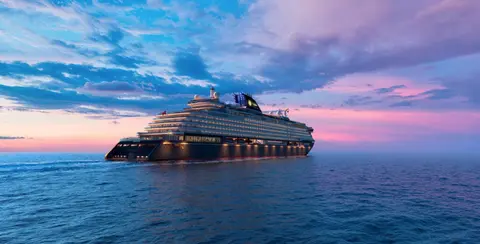
Explora Journeys
2024-12-07
63,900 GT
813 m
18 knots
461 / 922 guests
700


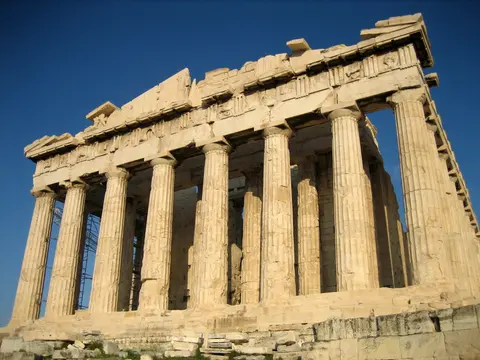
It's no wonder that all roads lead to the fascinating and maddening metropolis of Athens. Lift your eyes 200 feet above the city to the Parthenon, its honey-color marble columns rising from a massive limestone base, and you behold architectural perfection that has not been surpassed in 2,500 years. But, today, this shrine of classical form dominates a 21st-century boomtown. To experience Athens—Athína in Greek—fully is to understand the essence of Greece: ancient monuments surviving in a sea of cement, startling beauty amid the squalor, tradition juxtaposed with modernity. Locals depend on humor and flexibility to deal with the chaos; you should do the same. The rewards are immense. Although Athens covers a huge area, the major landmarks of the ancient Greek, Roman, and Byzantine periods are close to the modern city center. You can easily walk from the Acropolis to many other key sites, taking time to browse in shops and relax in cafés and tavernas along the way. From many quarters of the city you can glimpse "the glory that was Greece" in the form of the Acropolis looming above the horizon, but only by actually climbing that rocky precipice can you feel the impact of the ancient settlement. The Acropolis and Filopappou, two craggy hills sitting side by side; the ancient Agora (marketplace); and Kerameikos, the first cemetery, form the core of ancient and Roman Athens. Along the Unification of Archaeological Sites promenade, you can follow stone-paved, tree-lined walkways from site to site, undisturbed by traffic. Cars have also been banned or reduced in other streets in the historical center. In the National Archaeological Museum, vast numbers of artifacts illustrate the many millennia of Greek civilization; smaller museums such as the Goulandris Museum of Cycladic Art Museum and the Byzantine and Christian Museum illuminate the history of particular regions or periods. Athens may seem like one huge city, but it is really a conglomeration of neighborhoods with distinctive characters. The Eastern influences that prevailed during the 400-year rule of the Ottoman Empire are still evident in Monastiraki, the bazaar area near the foot of the Acropolis. On the northern slope of the Acropolis, stroll through Plaka (if possible by moonlight), an area of tranquil streets lined with renovated mansions, to get the flavor of the 19th-century's gracious lifestyle. The narrow lanes of Anafiotika, a section of Plaka, thread past tiny churches and small, color-washed houses with wooden upper stories, recalling a Cycladic island village. In this maze of winding streets, vestiges of the older city are everywhere: crumbling stairways lined with festive tavernas; dank cellars filled with wine vats; occasionally a court or diminutive garden, enclosed within high walls and filled with magnolia trees and the flaming trumpet-shaped flowers of hibiscus bushes. Formerly run-down old quarters, such as Thission, Gazi and Psirri, popular nightlife areas filled with bars and mezedopoleia (similar to tapas bars), are now in the process of gentrification, although they still retain much of their original charm, as does the colorful produce and meat market on Athinas. The area around Syntagma Square, the tourist hub, and Omonia Square, the commercial heart of the city about 1 km (½ mi) northwest, is distinctly European, having been designed by the court architects of King Otho, a Bavarian, in the 19th century. The chic shops and bistros of ritzy Kolonaki nestle at the foot of Mt. Lycabettus, Athens's highest hill (909 feet). Each of Athens's outlying suburbs has a distinctive character: in the north is wealthy, tree-lined Kifissia, once a summer resort for aristocratic Athenians, and in the south and southeast lie Glyfada, Voula, and Vouliagmeni, with their sandy beaches, seaside bars, and lively summer nightlife. Just beyond the city's southern fringes is Piraeus, a bustling port city of waterside fish tavernas and Saronic Gulf views.


A city of legend, civilisation and enduring culture, Athens is a majestic and magical urban sprawl. Extraordinary elegance and grace combine with grit and graft in Greece's capital, where highways encase ruins from antiquity, and gleaming museums and galleries stand beside concrete sprayed with edgy street art. These contrasts enhance and elevate the wonders of this 2,500-year-old city, however, which can count notable contributions to philosophy, drama and democracy, among its global legacy. Piraeus' giant port and naval base welcome you to the edge of the Athens' urban area. From there it's a simple jaunt to the centre. The majestic ancient citadel of the Acropolis dominates an elevated platform and is a constant presence as you explore the city. The wonderful remains of the columned temple of the Parthenon - which date back to the 5th century BC - stand here, representing the pinnacle of classical architecture. The nearby Acropolis Museum adds context to your visit and frames the broad views from its giant glass windows. Or rise up Mount Lycabettus, to be rewarded with perhaps Athens' best panorama of the Acropolis sitting high over the city on its grand stage. See the marble horseshoe of the Old Olympic Stadium, where the first modern Olympics were held in 1896, for more of the city's enduring legacy. Elsewhere, golden beaches and temples stretch out along the coastline, should you wish to explore a little further afield. Coffee is an art form to the Greeks, and it's an unwritten rule that coffee time must never be rushed. So prepare to settle down for a couple of hours and lose yourself in a good chat. Feeling hungry - try traditional souvlaki made with sauces handed from generation to generation.


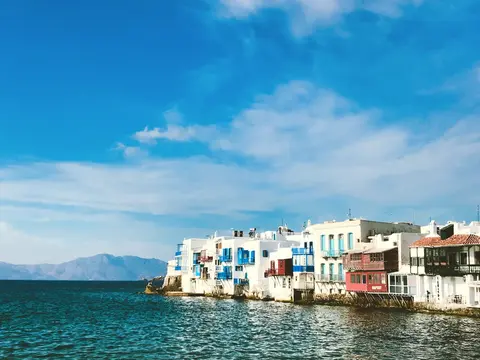
Think of a trip to Greece and you will imagine Mykonos. The port of Mykonos, or perhaps it would be more correct to say of Chora, is located on the west coast of the island. The Cyclades islands in the Aegean are wonderful and the beaches are no less marvellous, with the pleasant distinction of being among the most festive in the archipelago. After docking at the port of Mykonos, enjoy the numerous natural coves, beaches and cliffs of this beautiful island. You can enjoy the clean, azure sea of Paradise Beach, while in the evening let yourself be carried away by the rhythm of this cosmopolitan and youthful island. The harbour district, the Kastro, is known as the 'little Venice'. In its alleys, the shops and restaurants alternate with white houses with blue doors and windows. On a trip to Mykonos, take advantage of the stop to go on shore excursions, stroll through the maze of streets and alleys where you can discover the beauty of the architecture and the design of the city. The small white houses with shutters as blue as the sky, the pigeon houses and the numerous small churches of Mykonos will simply enchant you.


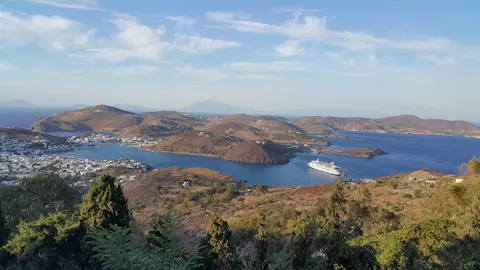
For better or worse, it can be difficult to reach Patmos—for many travelers, this lack of access is definitely for the better, since the island retains the air of an unspoiled retreat. Rocky and barren, the small, 34-square-km (21-square-mi) island lies beyond the islands of Kalymnos and Leros, northwest of Kos. Here on a hillside is the Monastery of the Apocalypse, which enshrines the cave where St. John received the Revelation in AD 95. Scattered evidence of Mycenaean presence remains on Patmos, and walls of the classical period indicate the existence of a town near Skala. Most of the island's approximately 2,800 people live in three villages: Skala, medieval Chora, and the small rural settlement of Kambos. The island is popular among the faithful making pilgrimages to the monastery as well as with vacationing Athenians and a newly growing community of international trendsetters—designers, artists, poets, and “taste gurus” (to quote Vogue’s July 2011 write-up of the island)—who have bought homes in Chora. These stylemeisters followed in the footsteps of Alexandrian John Stefanidis and the English artist Teddy Millington-Drake who, in the early ’60s, set about creating what eventually became hailed as one of the most gorgeous island homes in the world. The word soon spread thanks to their many guests (who included Jacqueline Kennedy Onassis) but, happily, administrators have carefully contained development, and as a result, Patmos retains its charm and natural beauty—even in the busy month of August.


A shore excursion on your MSC Mediterranean cruise can be the opportunity to discover İstanbul which stands astride two continents, Europe and Asia. As if its spectacular geographical location were not enough, it can also boast of being the only city to have played capital to consecutive Christian and Islamic empires, a role that has shaped the region’s history for more than 2500 years and bequeathed to İstanbul a staggering wealth of attractions. Most cruise visitors spend all their holiday time in Sultanahmet, home to İstanbul’s main sightseeing attractions: the church of Aya Sofya, the greatest legacy of the Byzantine Empire; the Topkapı Palace, heart of the Ottoman Empire; and the massive Sultanahmet Camii (Blue Mosque). Here also are the ancient Hippodrome, the Museum of Turkish and Islamic Art (housed in the former Palace of İbrahim Paşa), the eerily lit Yerebatan Sarnıcı, a fascinating Byzantine underground cistern, and the Grand Bazaar (Kapalı Çarşı), the largest covered bazaar in the world. The monumental architecture, attractive parks and gardens, street-side cafés, and the benefits of a relatively traffic-free main road combine to make this area pleasant for both sightseeing and staying on an MSC Mediterranean cruise excursion. İstanbul’s Ottoman-era Grand Bazaar gets more than its fair share of souvenir-hungry visitors. The area around it, however, is relatively little explored, which is a shame as it holds some very worthwhile attractions, from the historic Cembirlitaş Hamamı, one of the best Turkish baths in the country, to the city’s very best mosque, the hilltop Süleymaniye Camii. The best single reason to head across to the Asian shore of the city is to experience a Bosphorus cruise. The views from the Bosphorus are superb, with domes and minarets dominating the skyline of the Old City, and skyscrapers the business districts beyond Beyoğlu.


A shore excursion on your MSC Mediterranean cruise can be the opportunity to discover İstanbul which stands astride two continents, Europe and Asia. As if its spectacular geographical location were not enough, it can also boast of being the only city to have played capital to consecutive Christian and Islamic empires, a role that has shaped the region’s history for more than 2500 years and bequeathed to İstanbul a staggering wealth of attractions. Most cruise visitors spend all their holiday time in Sultanahmet, home to İstanbul’s main sightseeing attractions: the church of Aya Sofya, the greatest legacy of the Byzantine Empire; the Topkapı Palace, heart of the Ottoman Empire; and the massive Sultanahmet Camii (Blue Mosque). Here also are the ancient Hippodrome, the Museum of Turkish and Islamic Art (housed in the former Palace of İbrahim Paşa), the eerily lit Yerebatan Sarnıcı, a fascinating Byzantine underground cistern, and the Grand Bazaar (Kapalı Çarşı), the largest covered bazaar in the world. The monumental architecture, attractive parks and gardens, street-side cafés, and the benefits of a relatively traffic-free main road combine to make this area pleasant for both sightseeing and staying on an MSC Mediterranean cruise excursion. İstanbul’s Ottoman-era Grand Bazaar gets more than its fair share of souvenir-hungry visitors. The area around it, however, is relatively little explored, which is a shame as it holds some very worthwhile attractions, from the historic Cembirlitaş Hamamı, one of the best Turkish baths in the country, to the city’s very best mosque, the hilltop Süleymaniye Camii. The best single reason to head across to the Asian shore of the city is to experience a Bosphorus cruise. The views from the Bosphorus are superb, with domes and minarets dominating the skyline of the Old City, and skyscrapers the business districts beyond Beyoğlu.


A shore excursion on your MSC Mediterranean cruise can be the opportunity to discover İstanbul which stands astride two continents, Europe and Asia. As if its spectacular geographical location were not enough, it can also boast of being the only city to have played capital to consecutive Christian and Islamic empires, a role that has shaped the region’s history for more than 2500 years and bequeathed to İstanbul a staggering wealth of attractions. Most cruise visitors spend all their holiday time in Sultanahmet, home to İstanbul’s main sightseeing attractions: the church of Aya Sofya, the greatest legacy of the Byzantine Empire; the Topkapı Palace, heart of the Ottoman Empire; and the massive Sultanahmet Camii (Blue Mosque). Here also are the ancient Hippodrome, the Museum of Turkish and Islamic Art (housed in the former Palace of İbrahim Paşa), the eerily lit Yerebatan Sarnıcı, a fascinating Byzantine underground cistern, and the Grand Bazaar (Kapalı Çarşı), the largest covered bazaar in the world. The monumental architecture, attractive parks and gardens, street-side cafés, and the benefits of a relatively traffic-free main road combine to make this area pleasant for both sightseeing and staying on an MSC Mediterranean cruise excursion. İstanbul’s Ottoman-era Grand Bazaar gets more than its fair share of souvenir-hungry visitors. The area around it, however, is relatively little explored, which is a shame as it holds some very worthwhile attractions, from the historic Cembirlitaş Hamamı, one of the best Turkish baths in the country, to the city’s very best mosque, the hilltop Süleymaniye Camii. The best single reason to head across to the Asian shore of the city is to experience a Bosphorus cruise. The views from the Bosphorus are superb, with domes and minarets dominating the skyline of the Old City, and skyscrapers the business districts beyond Beyoğlu.


A shore excursion on your MSC Mediterranean cruise can be the opportunity to discover İstanbul which stands astride two continents, Europe and Asia. As if its spectacular geographical location were not enough, it can also boast of being the only city to have played capital to consecutive Christian and Islamic empires, a role that has shaped the region’s history for more than 2500 years and bequeathed to İstanbul a staggering wealth of attractions. Most cruise visitors spend all their holiday time in Sultanahmet, home to İstanbul’s main sightseeing attractions: the church of Aya Sofya, the greatest legacy of the Byzantine Empire; the Topkapı Palace, heart of the Ottoman Empire; and the massive Sultanahmet Camii (Blue Mosque). Here also are the ancient Hippodrome, the Museum of Turkish and Islamic Art (housed in the former Palace of İbrahim Paşa), the eerily lit Yerebatan Sarnıcı, a fascinating Byzantine underground cistern, and the Grand Bazaar (Kapalı Çarşı), the largest covered bazaar in the world. The monumental architecture, attractive parks and gardens, street-side cafés, and the benefits of a relatively traffic-free main road combine to make this area pleasant for both sightseeing and staying on an MSC Mediterranean cruise excursion. İstanbul’s Ottoman-era Grand Bazaar gets more than its fair share of souvenir-hungry visitors. The area around it, however, is relatively little explored, which is a shame as it holds some very worthwhile attractions, from the historic Cembirlitaş Hamamı, one of the best Turkish baths in the country, to the city’s very best mosque, the hilltop Süleymaniye Camii. The best single reason to head across to the Asian shore of the city is to experience a Bosphorus cruise. The views from the Bosphorus are superb, with domes and minarets dominating the skyline of the Old City, and skyscrapers the business districts beyond Beyoğlu.


Whilst the busy resort town of Kusadasi offers much in the way of shopping and dining – not to mention a flourishing beach life scene, the real jewel here is Ephesus and the stunning ruined city that really take centre stage. With only 20% of the classical ruins having been excavated, this archaeological wonder has already gained the status as Europe’s most complete classical metropolis. And a metropolis it really is; built in the 10th century BC this UNESCO World Heritage site is nothing short of spectacular. Although regrettably very little remains of the Temple of Artemis (one of the seven wonders of the ancient world), the superb Library of Celsus’ façade is practically intact and it is one of life’s great joys to attend an evening performance in the illuminated ruins once all the tourists have left. The history of the city is fascinating and multi-layered and it is well worth reading up on this beforehand if a visit is planned. Another point of interest for historians would be the house of the Virgin Mary, located on the romantically named Mount Nightingale and just nine kilometres away from Ephesus proper. Legend has it that Mary (along with St. John) spent her final years here, secluded from the rest of the population, spreading Christianity. An edifying experience, even for non-believers. For the less historical minded amongst you, Kusadasi offers plenty in the way of activities. After a stroll through the town, jump in a taxi to Ladies’ Beach (men are allowed), sample a Turkish kebap on one of the many beachfront restaurants and enjoy the clement weather. If you do want to venture further afield, then the crystal clear beaches of Guzelcamli (or the Millipark), the cave of Zeus and the white scalloped natural pools at Pamukkale, known as Cleopatra’s pools, are definitely worth a visit.


Whilst the busy resort town of Kusadasi offers much in the way of shopping and dining – not to mention a flourishing beach life scene, the real jewel here is Ephesus and the stunning ruined city that really take centre stage. With only 20% of the classical ruins having been excavated, this archaeological wonder has already gained the status as Europe’s most complete classical metropolis. And a metropolis it really is; built in the 10th century BC this UNESCO World Heritage site is nothing short of spectacular. Although regrettably very little remains of the Temple of Artemis (one of the seven wonders of the ancient world), the superb Library of Celsus’ façade is practically intact and it is one of life’s great joys to attend an evening performance in the illuminated ruins once all the tourists have left. The history of the city is fascinating and multi-layered and it is well worth reading up on this beforehand if a visit is planned. Another point of interest for historians would be the house of the Virgin Mary, located on the romantically named Mount Nightingale and just nine kilometres away from Ephesus proper. Legend has it that Mary (along with St. John) spent her final years here, secluded from the rest of the population, spreading Christianity. An edifying experience, even for non-believers. For the less historical minded amongst you, Kusadasi offers plenty in the way of activities. After a stroll through the town, jump in a taxi to Ladies’ Beach (men are allowed), sample a Turkish kebap on one of the many beachfront restaurants and enjoy the clement weather. If you do want to venture further afield, then the crystal clear beaches of Guzelcamli (or the Millipark), the cave of Zeus and the white scalloped natural pools at Pamukkale, known as Cleopatra’s pools, are definitely worth a visit.


For better or worse, it can be difficult to reach Patmos—for many travelers, this lack of access is definitely for the better, since the island retains the air of an unspoiled retreat. Rocky and barren, the small, 34-square-km (21-square-mi) island lies beyond the islands of Kalymnos and Leros, northwest of Kos. Here on a hillside is the Monastery of the Apocalypse, which enshrines the cave where St. John received the Revelation in AD 95. Scattered evidence of Mycenaean presence remains on Patmos, and walls of the classical period indicate the existence of a town near Skala. Most of the island's approximately 2,800 people live in three villages: Skala, medieval Chora, and the small rural settlement of Kambos. The island is popular among the faithful making pilgrimages to the monastery as well as with vacationing Athenians and a newly growing community of international trendsetters—designers, artists, poets, and “taste gurus” (to quote Vogue’s July 2011 write-up of the island)—who have bought homes in Chora. These stylemeisters followed in the footsteps of Alexandrian John Stefanidis and the English artist Teddy Millington-Drake who, in the early ’60s, set about creating what eventually became hailed as one of the most gorgeous island homes in the world. The word soon spread thanks to their many guests (who included Jacqueline Kennedy Onassis) but, happily, administrators have carefully contained development, and as a result, Patmos retains its charm and natural beauty—even in the busy month of August.


Think of a trip to Greece and you will imagine Mykonos. The port of Mykonos, or perhaps it would be more correct to say of Chora, is located on the west coast of the island. The Cyclades islands in the Aegean are wonderful and the beaches are no less marvellous, with the pleasant distinction of being among the most festive in the archipelago. After docking at the port of Mykonos, enjoy the numerous natural coves, beaches and cliffs of this beautiful island. You can enjoy the clean, azure sea of Paradise Beach, while in the evening let yourself be carried away by the rhythm of this cosmopolitan and youthful island. The harbour district, the Kastro, is known as the 'little Venice'. In its alleys, the shops and restaurants alternate with white houses with blue doors and windows. On a trip to Mykonos, take advantage of the stop to go on shore excursions, stroll through the maze of streets and alleys where you can discover the beauty of the architecture and the design of the city. The small white houses with shutters as blue as the sky, the pigeon houses and the numerous small churches of Mykonos will simply enchant you.


It's no wonder that all roads lead to the fascinating and maddening metropolis of Athens. Lift your eyes 200 feet above the city to the Parthenon, its honey-color marble columns rising from a massive limestone base, and you behold architectural perfection that has not been surpassed in 2,500 years. But, today, this shrine of classical form dominates a 21st-century boomtown. To experience Athens—Athína in Greek—fully is to understand the essence of Greece: ancient monuments surviving in a sea of cement, startling beauty amid the squalor, tradition juxtaposed with modernity. Locals depend on humor and flexibility to deal with the chaos; you should do the same. The rewards are immense. Although Athens covers a huge area, the major landmarks of the ancient Greek, Roman, and Byzantine periods are close to the modern city center. You can easily walk from the Acropolis to many other key sites, taking time to browse in shops and relax in cafés and tavernas along the way. From many quarters of the city you can glimpse "the glory that was Greece" in the form of the Acropolis looming above the horizon, but only by actually climbing that rocky precipice can you feel the impact of the ancient settlement. The Acropolis and Filopappou, two craggy hills sitting side by side; the ancient Agora (marketplace); and Kerameikos, the first cemetery, form the core of ancient and Roman Athens. Along the Unification of Archaeological Sites promenade, you can follow stone-paved, tree-lined walkways from site to site, undisturbed by traffic. Cars have also been banned or reduced in other streets in the historical center. In the National Archaeological Museum, vast numbers of artifacts illustrate the many millennia of Greek civilization; smaller museums such as the Goulandris Museum of Cycladic Art Museum and the Byzantine and Christian Museum illuminate the history of particular regions or periods. Athens may seem like one huge city, but it is really a conglomeration of neighborhoods with distinctive characters. The Eastern influences that prevailed during the 400-year rule of the Ottoman Empire are still evident in Monastiraki, the bazaar area near the foot of the Acropolis. On the northern slope of the Acropolis, stroll through Plaka (if possible by moonlight), an area of tranquil streets lined with renovated mansions, to get the flavor of the 19th-century's gracious lifestyle. The narrow lanes of Anafiotika, a section of Plaka, thread past tiny churches and small, color-washed houses with wooden upper stories, recalling a Cycladic island village. In this maze of winding streets, vestiges of the older city are everywhere: crumbling stairways lined with festive tavernas; dank cellars filled with wine vats; occasionally a court or diminutive garden, enclosed within high walls and filled with magnolia trees and the flaming trumpet-shaped flowers of hibiscus bushes. Formerly run-down old quarters, such as Thission, Gazi and Psirri, popular nightlife areas filled with bars and mezedopoleia (similar to tapas bars), are now in the process of gentrification, although they still retain much of their original charm, as does the colorful produce and meat market on Athinas. The area around Syntagma Square, the tourist hub, and Omonia Square, the commercial heart of the city about 1 km (½ mi) northwest, is distinctly European, having been designed by the court architects of King Otho, a Bavarian, in the 19th century. The chic shops and bistros of ritzy Kolonaki nestle at the foot of Mt. Lycabettus, Athens's highest hill (909 feet). Each of Athens's outlying suburbs has a distinctive character: in the north is wealthy, tree-lined Kifissia, once a summer resort for aristocratic Athenians, and in the south and southeast lie Glyfada, Voula, and Vouliagmeni, with their sandy beaches, seaside bars, and lively summer nightlife. Just beyond the city's southern fringes is Piraeus, a bustling port city of waterside fish tavernas and Saronic Gulf views.


A city of legend, civilisation and enduring culture, Athens is a majestic and magical urban sprawl. Extraordinary elegance and grace combine with grit and graft in Greece's capital, where highways encase ruins from antiquity, and gleaming museums and galleries stand beside concrete sprayed with edgy street art. These contrasts enhance and elevate the wonders of this 2,500-year-old city, however, which can count notable contributions to philosophy, drama and democracy, among its global legacy. Piraeus' giant port and naval base welcome you to the edge of the Athens' urban area. From there it's a simple jaunt to the centre. The majestic ancient citadel of the Acropolis dominates an elevated platform and is a constant presence as you explore the city. The wonderful remains of the columned temple of the Parthenon - which date back to the 5th century BC - stand here, representing the pinnacle of classical architecture. The nearby Acropolis Museum adds context to your visit and frames the broad views from its giant glass windows. Or rise up Mount Lycabettus, to be rewarded with perhaps Athens' best panorama of the Acropolis sitting high over the city on its grand stage. See the marble horseshoe of the Old Olympic Stadium, where the first modern Olympics were held in 1896, for more of the city's enduring legacy. Elsewhere, golden beaches and temples stretch out along the coastline, should you wish to explore a little further afield. Coffee is an art form to the Greeks, and it's an unwritten rule that coffee time must never be rushed. So prepare to settle down for a couple of hours and lose yourself in a good chat. Feeling hungry - try traditional souvlaki made with sauces handed from generation to generation.

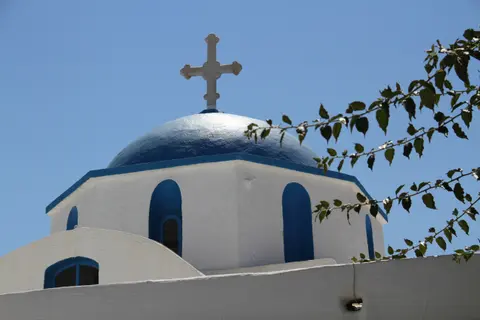
Unveil picturesque Paros' unadorned charms from ancient remains to traditional tavernas and sweet villages and blue-domed churches to a bounty of blonde-sand beaches. Head out to Parikia to find the awe-inspiring AD326 Byzantine monastery or take a ferry across to explore caves in the rugged natural beauty of Antiparos. Walk through the island's ancient archaeological history at the tiny museum and lose yourself in the labyrinth of lanes at the old Venetian port of Náoussa. Banish any tension on a sunlounger, then breeze through home-cooked mezze feasts in white-washed tavernas. Windsurf, kite-surf, dive, swim au naturel and enjoy a network of walking trails. Somehow Páros has managed to preserve more of the soft spirit than some of her Cyclade cousins.

Unveil picturesque Paros' unadorned charms from ancient remains to traditional tavernas and sweet villages and blue-domed churches to a bounty of blonde-sand beaches. Head out to Parikia to find the awe-inspiring AD326 Byzantine monastery or take a ferry across to explore caves in the rugged natural beauty of Antiparos. Walk through the island's ancient archaeological history at the tiny museum and lose yourself in the labyrinth of lanes at the old Venetian port of Náoussa. Banish any tension on a sunlounger, then breeze through home-cooked mezze feasts in white-washed tavernas. Windsurf, kite-surf, dive, swim au naturel and enjoy a network of walking trails. Somehow Páros has managed to preserve more of the soft spirit than some of her Cyclade cousins.


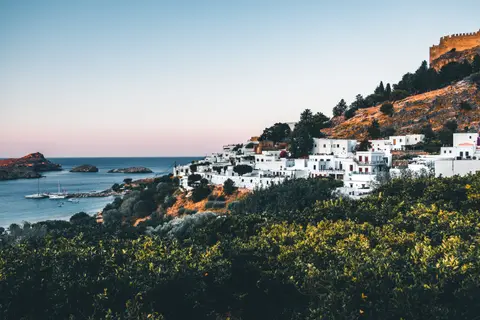
Located only seven miles from the Turkish coast, Rhodes is one of Greece's favored vacation centers. In ancient times, the entrance to its harbor featured a celebrated landmark, the Colossus of Rhodes. The 105-foot statue rose from a 35-foot stone base and was considered one of the Seven Wonders of the Ancient World. Rhodes was an important cultural center with a well-known School of Rhetoric attended by such historical figures as Cicero and Caesar. From a school for sculptors came the famous Laocoon group, which is now in the Vatican Museum. Rhodes' most famous attractions originated with the Knights of St. John, who occupied parts of the island from 1308 to 1522. As their legacy they left a medieval town, dominated by the Palace of the Grand Masters and the Knights' Hospital. The Old Town is encircled by one of the best-preserved walls in Europe. In addition to buildings that showcase the legacy of the Knights of St. John, there are plenty of shops and dining opportunities throughout the Old Town.


Located only seven miles from the Turkish coast, Rhodes is one of Greece's favored vacation centers. In ancient times, the entrance to its harbor featured a celebrated landmark, the Colossus of Rhodes. The 105-foot statue rose from a 35-foot stone base and was considered one of the Seven Wonders of the Ancient World. Rhodes was an important cultural center with a well-known School of Rhetoric attended by such historical figures as Cicero and Caesar. From a school for sculptors came the famous Laocoon group, which is now in the Vatican Museum. Rhodes' most famous attractions originated with the Knights of St. John, who occupied parts of the island from 1308 to 1522. As their legacy they left a medieval town, dominated by the Palace of the Grand Masters and the Knights' Hospital. The Old Town is encircled by one of the best-preserved walls in Europe. In addition to buildings that showcase the legacy of the Knights of St. John, there are plenty of shops and dining opportunities throughout the Old Town.


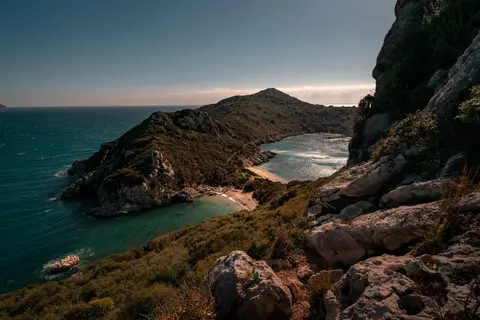
Corfu town today is a vivid tapestry of cultures—a sophisticated weave, where charm, history, and natural beauty blend. Located about midway along the island's east coast, this spectacularly lively capital is the cultural heart of Corfu and has a remarkable historic center that UNESCO designated as a World Heritage Site in 2007. All ships and planes dock or land near Corfu town, which occupies a small peninsula jutting into the Ionian Sea.Whether arriving by ferry from mainland Greece or Italy, from another island, or directly by plane, catch your breath by first relaxing with a coffee or a gelato in Corfu town's shaded Liston Arcade, then stroll the narrow lanes of its pedestrians-only quarter. For an overview of the immediate area, and a quick tour of Mon Repos palace, hop on the little tourist train that runs from May to September. Corfu town has a different feel at night, so book a table at one of its famed tavernas to savor the island's unique cuisine.The best way to get around Corfu town is on foot. The town is small enough so that you can easily walk to every sight. There are local buses, but they do not thread their way into the streets (many now car-free) of the historic center. If you are arriving by ferry or plane, it's best to take a taxi to your hotel. Expect to pay about €10 from the airport or ferry terminal to a hotel in Corfu town. If there are no taxis waiting, you can call for one.


Corfu town today is a vivid tapestry of cultures—a sophisticated weave, where charm, history, and natural beauty blend. Located about midway along the island's east coast, this spectacularly lively capital is the cultural heart of Corfu and has a remarkable historic center that UNESCO designated as a World Heritage Site in 2007. All ships and planes dock or land near Corfu town, which occupies a small peninsula jutting into the Ionian Sea.Whether arriving by ferry from mainland Greece or Italy, from another island, or directly by plane, catch your breath by first relaxing with a coffee or a gelato in Corfu town's shaded Liston Arcade, then stroll the narrow lanes of its pedestrians-only quarter. For an overview of the immediate area, and a quick tour of Mon Repos palace, hop on the little tourist train that runs from May to September. Corfu town has a different feel at night, so book a table at one of its famed tavernas to savor the island's unique cuisine.The best way to get around Corfu town is on foot. The town is small enough so that you can easily walk to every sight. There are local buses, but they do not thread their way into the streets (many now car-free) of the historic center. If you are arriving by ferry or plane, it's best to take a taxi to your hotel. Expect to pay about €10 from the airport or ferry terminal to a hotel in Corfu town. If there are no taxis waiting, you can call for one.


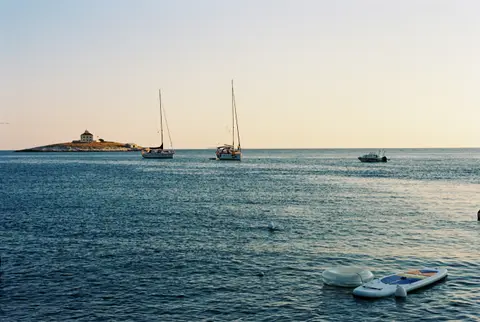
Beautifully situated on a large natural bay, the ancient town of Hvar, on the island of the same name, served as an important harbor for Venice's Adriatic fleet from the 12th through the 18th centuries. Vestiges of this momentous time are reflected in the fortifications that still stand guard over the harbor, and in the very heart of the port, a large arsenal. Hvar today is a quiet spot reminiscent of the French Riviera at the turn-of-the-last-century. Sail and fishing boats bob and sway in the harbor and a 17th-century bell tower marks off the hours. Winding limestone lanes converge onto an expansive piazza, the largest in Dalmatia, which connects the older part of town to the ""modern"" side - that built after the 15th century. Inland, Hvar's green hills are woven with vineyards and lavender fields, and offshore tiny islets are scattered like pearls in a clear cobalt sea.


Beautifully situated on a large natural bay, the ancient town of Hvar, on the island of the same name, served as an important harbor for Venice's Adriatic fleet from the 12th through the 18th centuries. Vestiges of this momentous time are reflected in the fortifications that still stand guard over the harbor, and in the very heart of the port, a large arsenal. Hvar today is a quiet spot reminiscent of the French Riviera at the turn-of-the-last-century. Sail and fishing boats bob and sway in the harbor and a 17th-century bell tower marks off the hours. Winding limestone lanes converge onto an expansive piazza, the largest in Dalmatia, which connects the older part of town to the ""modern"" side - that built after the 15th century. Inland, Hvar's green hills are woven with vineyards and lavender fields, and offshore tiny islets are scattered like pearls in a clear cobalt sea.


Tucked into Kvarner Bay off the Dalmatian Coast of the Adriatic, Rijeka is Croatia’s premier seaport and third largest city. It is a mix of modern structures and grand old buildings from the heyday of the Austro-Hungarian Empire. The city skyline is dominated by the 13th century Trsat Castle, believed to be the oldest fortification on Croatia’s coast, and now a tourist visitor center. The traditional entry to the medieval city is the round, yellow City Tower with its 18th century clock. The Our Lady of Trsat Sanctuary has been a pilgrimage site since the 14th century, when a pope gifted the church with an icon of the Virgin, which still graces the altar. It can be reached by the 16th century Petar Kruzic Stairway, and also contains an extensive collection of sacral art and artifacts. The Habsburg-era Governor’s Palace hosts a Maritime and Historic Museum, and the unique, round St. Vitus Cathedral is from the same period. Stroll the main city market, the Placa, to get a feel of the city and its people. Although the city itself does not have much to offer in the way of beaches, it is the gateway to the fabulous Dalmatian islands playgrounds just offshore.


Tucked into Kvarner Bay off the Dalmatian Coast of the Adriatic, Rijeka is Croatia’s premier seaport and third largest city. It is a mix of modern structures and grand old buildings from the heyday of the Austro-Hungarian Empire. The city skyline is dominated by the 13th century Trsat Castle, believed to be the oldest fortification on Croatia’s coast, and now a tourist visitor center. The traditional entry to the medieval city is the round, yellow City Tower with its 18th century clock. The Our Lady of Trsat Sanctuary has been a pilgrimage site since the 14th century, when a pope gifted the church with an icon of the Virgin, which still graces the altar. It can be reached by the 16th century Petar Kruzic Stairway, and also contains an extensive collection of sacral art and artifacts. The Habsburg-era Governor’s Palace hosts a Maritime and Historic Museum, and the unique, round St. Vitus Cathedral is from the same period. Stroll the main city market, the Placa, to get a feel of the city and its people. Although the city itself does not have much to offer in the way of beaches, it is the gateway to the fabulous Dalmatian islands playgrounds just offshore.


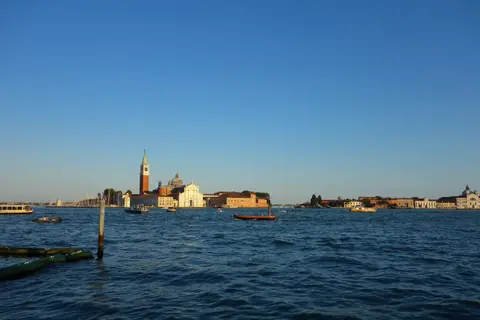
Losing none of its allure over the years, this floating city of canals, bridges and masks is a place of eternal beauty and enduring elegance. The lagoon of more than 100 islands is a heavenly sight, transporting visitors on a journey through time - from its Roman inception, through centuries of trade to the modern face we see today. Navigate Venice’s sparkling waterways by romantic gondola, or on cruises along wide canal boulevards. Span the Grand Canal over its iconic original crossing, the Rialto Bridge, which - with its parade of tiny shops - gives some of the city’s most endearing views. If the crowds unsettle you at any point, take two turns away from the main thoroughfares to find peace alone, amid the city's labyrinth of tiny streets. Hurry to Piazza San Marco to be immersed in Venice’s elegant glory. Basilica San Marco transports you back to the wealthy days of the Doges, who ruled for over 1,000 years. Initially their private chapel, it’s now decorated with beautiful Byzantine mosaics. Nearby the Campanile di San Marco bell tower offers views over the higgledy-piggledy rooftops of times gone by. Just a hop skip and a jump around the corner is the Doge’s Palace, where the levels of opulence ramp up even further. Justice was meted out in this stunning Palace, with the guilty walking to the cells across the covered Bridge of Sighs. Vaporetto trips to local islands offer even more adventures to float your boat, whether it’s Murano with its world-famous glass, Torcello with its amazing Cathedrals, or Burano with its handmade lace and delightfully colourful painted houses.


Losing none of its allure over the years, this floating city of canals, bridges and masks is a place of eternal beauty and enduring elegance. The lagoon of more than 100 islands is a heavenly sight, transporting visitors on a journey through time - from its Roman inception, through centuries of trade to the modern face we see today. Navigate Venice’s sparkling waterways by romantic gondola, or on cruises along wide canal boulevards. Span the Grand Canal over its iconic original crossing, the Rialto Bridge, which - with its parade of tiny shops - gives some of the city’s most endearing views. If the crowds unsettle you at any point, take two turns away from the main thoroughfares to find peace alone, amid the city's labyrinth of tiny streets. Hurry to Piazza San Marco to be immersed in Venice’s elegant glory. Basilica San Marco transports you back to the wealthy days of the Doges, who ruled for over 1,000 years. Initially their private chapel, it’s now decorated with beautiful Byzantine mosaics. Nearby the Campanile di San Marco bell tower offers views over the higgledy-piggledy rooftops of times gone by. Just a hop skip and a jump around the corner is the Doge’s Palace, where the levels of opulence ramp up even further. Justice was meted out in this stunning Palace, with the guilty walking to the cells across the covered Bridge of Sighs. Vaporetto trips to local islands offer even more adventures to float your boat, whether it’s Murano with its world-famous glass, Torcello with its amazing Cathedrals, or Burano with its handmade lace and delightfully colourful painted houses.


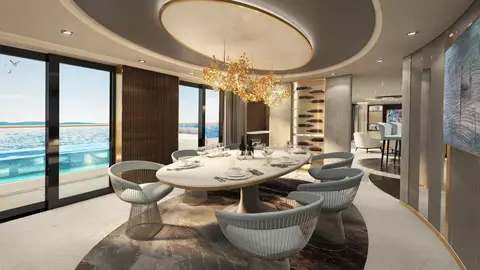
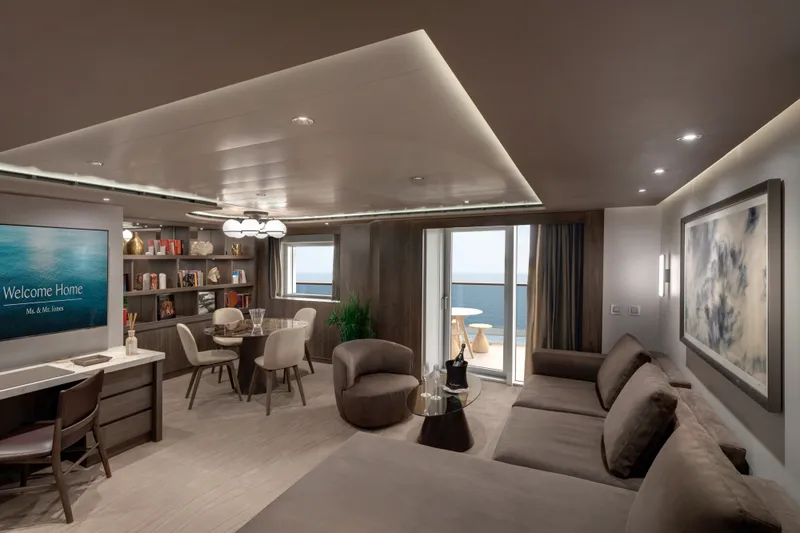
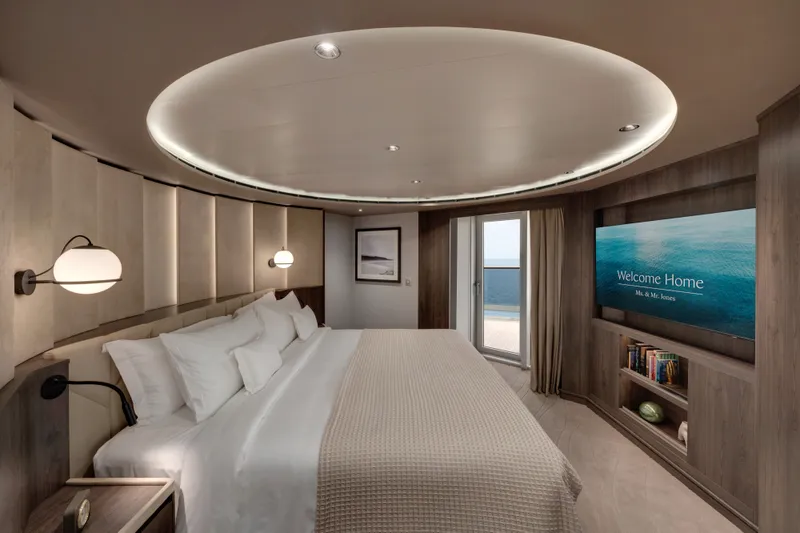
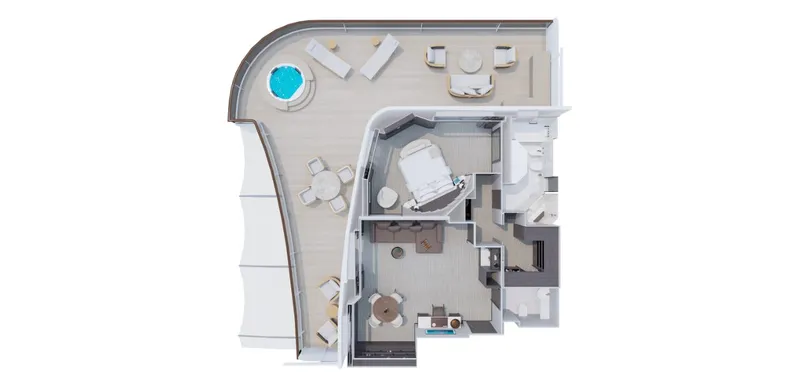
For a true sense of being at home at sea, experience the sweeping decks and effortlessly elegant spaces of our Ocean Residences. Enjoy perfect views of the oceans from your terrace’s dining area and private outdoor whirlpool, and make the most of our dedicated butler service.
FEATURES
Private butler services
Oversized windows with views of the sea
Separate living, dining and sleeping areas
Abundant lounge area
Dining table for 6 guests
Spacious work desk area
Private bar, replenished according to the guests’ preferences
Espresso machine and tea maker with a complimentary selection of coffee and teas
Laptop-size safe
OUTDOOR
Panoramic oceanfront terrace, with private outdoor whirlpool, a dining table and sun loungers
BEDROOM
Bespoke king-sized bed sleep system
Large double sofa bed
Down duvets and pillows
Extensive pillow selection
Oversized walk-in wardrobe with vanity area
BATHROOM
Luxurious marble bathroom with a bathtub and a separate walk-in shower room
Plush bathrobes and slippers
Custom bath toiletries and amenities
Hairdryer and illuminated make-up/shaving mirror
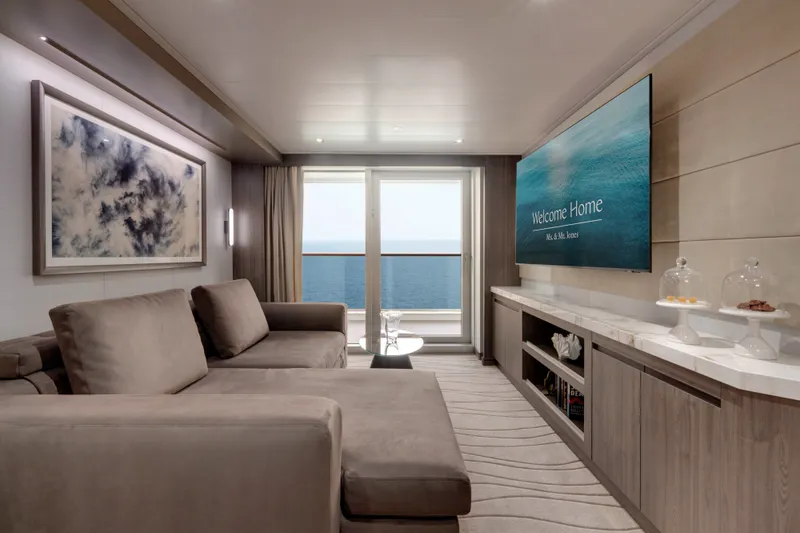
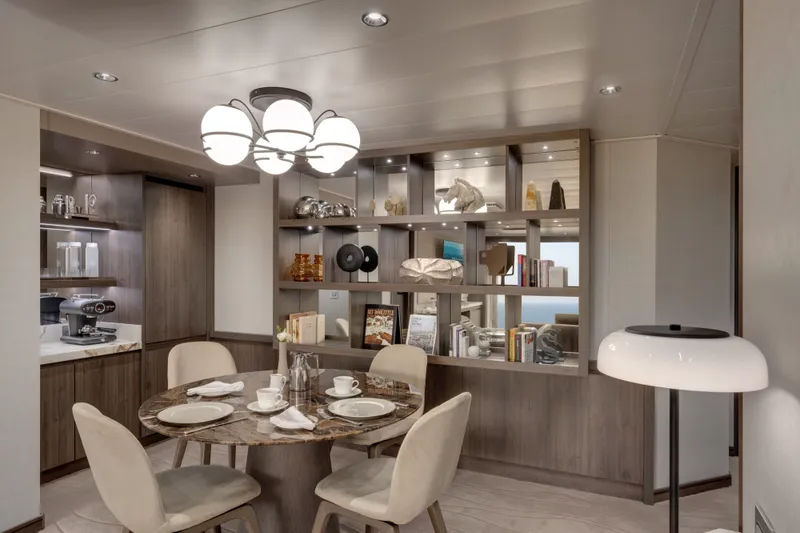
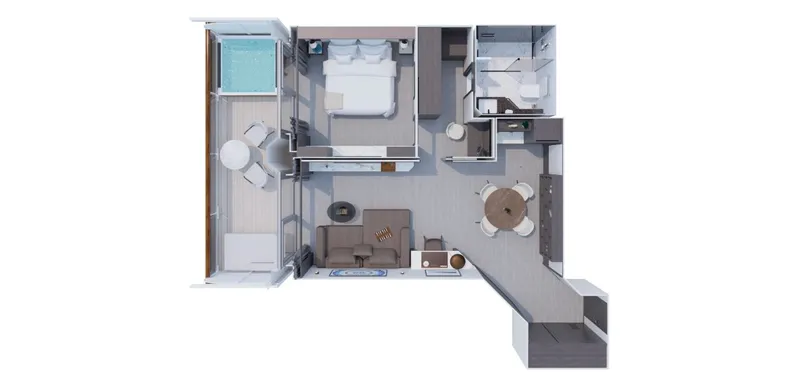


For a true sense of being at home at sea, experience the sweeping decks and effortlessly elegant spaces of our Ocean Residences. Enjoy perfect views of the oceans from your terrace’s dining area and private outdoor whirlpool, and make the most of our dedicated butler service.
FEATURES
Private butler services
Oversized windows with views of the sea
Separate living, dining and sleeping areas
Abundant lounge area
Dining table for 6 guests
Spacious work desk area
Private bar, replenished according to the guests’ preferences
Espresso machine and tea maker with a complimentary selection of coffee and teas
Laptop-size safe
OUTDOOR
Panoramic oceanfront terrace, with private outdoor whirlpool, a dining table and sun loungers
BEDROOM
Bespoke king-sized bed sleep system
Large double sofa bed
Down duvets and pillows
Extensive pillow selection
Oversized walk-in wardrobe with vanity area
BATHROOM
Luxurious marble bathroom with a bathtub and a separate walk-in shower room
Plush bathrobes and slippers
Custom bath toiletries and amenities
Hairdryer and illuminated make-up/shaving mirror
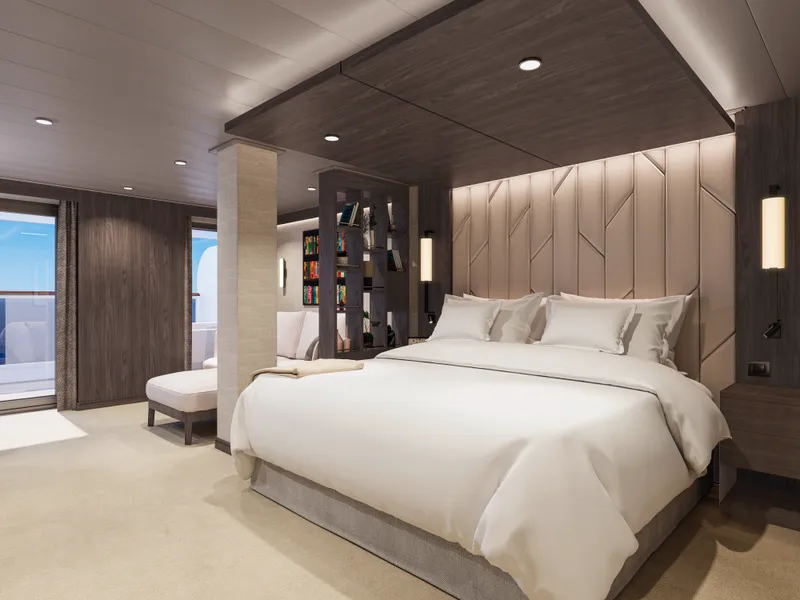
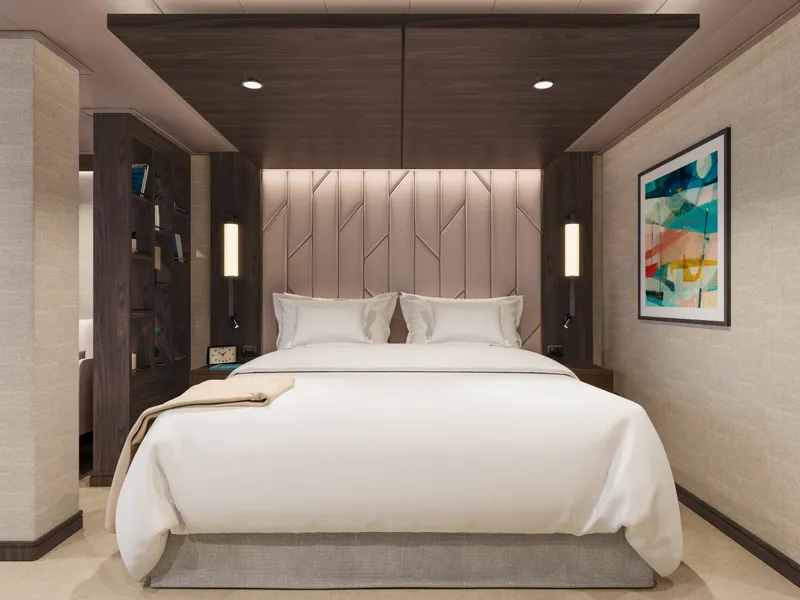
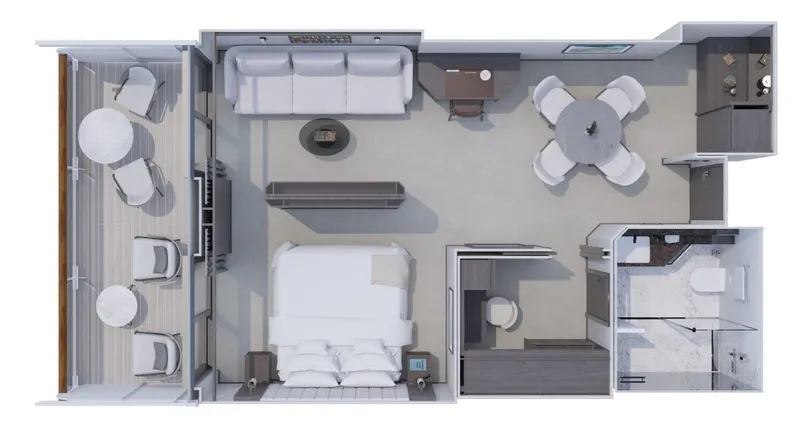


The Ocean Penthouses offer a luxurious, spacious retreat with ocean-front floor-to-ceiling windows and expansive terraces to unwind and relax. And with a characterful private dining area for four, and a calm, comfortable place to work, you can entertain with others or spend time to yourself as you see fit.
FEATURES
Oversized floor-to-ceiling windows helping you feel closer to the sea
Spacious lounge area
Dining table for 4 guests
Spacious work desk area
Private refrigerated mini-bar, replenished according to the guests’ preferences
Espresso machine and tea maker with a complimentary selection of coffee and teas
Safe accommodating most tablets and laptops
OUTDOOR
Spacious oceanfront terrace with a dining area. Comfortable daybeds or sun loungers for relaxation
BEDROOM
Bespoke queen-sized bed or twin beds sleep system
Some suites with a double sofa bed
Down duvets and pillows
Extensive pillow selection
Spacious walk-in wardrobe with vanity area
BATHROOM
Spacious bathroom with a walk-in shower
Plush bathrobes and slippers
Custom bath toiletries and amenities
Hairdryer and illuminated make-up/shaving mirror
Some suites with bathtubs and ADA facilities
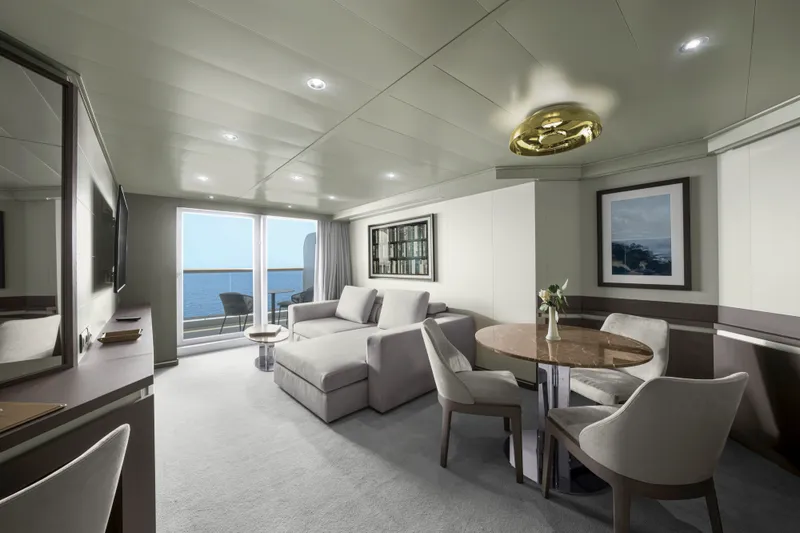
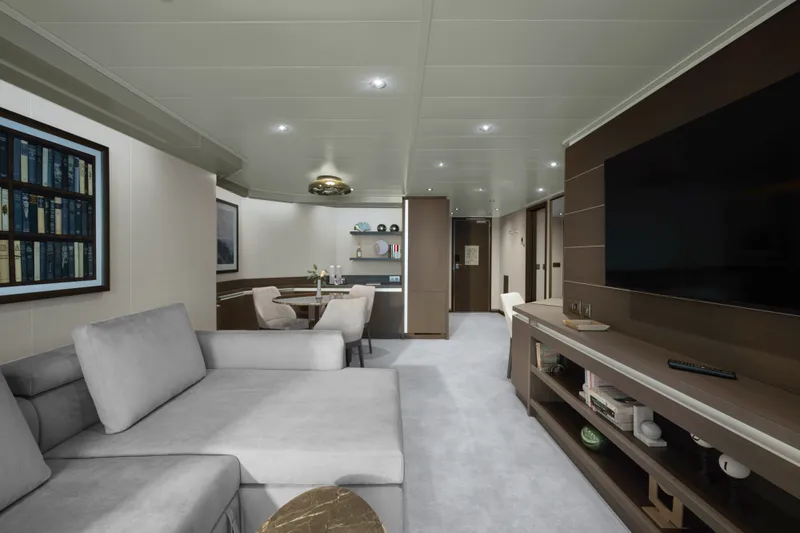
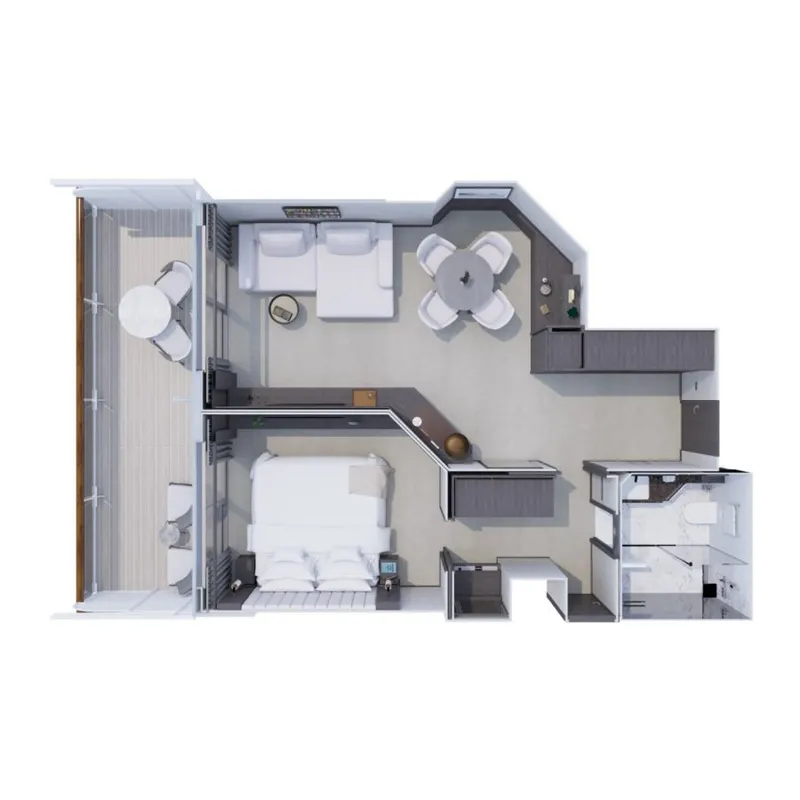


The Ocean Penthouses offer a luxurious, spacious retreat with ocean-front floor-to-ceiling windows and expansive terraces to unwind and relax. And with a characterful private dining area for four, and a calm, comfortable place to work, you can entertain with others or spend time to yourself as you see fit.
FEATURES
Oversized floor-to-ceiling windows helping you feel closer to the sea
Separate living, dining and sleeping areas
Spacious lounge area
Dining table for 4 guests
Spacious work desk area
Private refrigerated mini-bar, replenished according to the guests’ preferences
Espresso machine and tea maker with a complimentary selection of coffee and teas
Safe accommodating most tablets and laptops
OUTDOOR
Spacious oceanfront terrace with a dining area. Comfortable daybeds or sun loungers for relaxation
BEDROOM
Bespoke queen-sized bed or twin beds sleep system
Large double sofa bed
Down duvets and pillows
Extensive pillow selection
Spacious walk-in wardrobe with vanity area
BATHROOM
Spacious bathroom with a walk-in shower
Plush bathrobes and slippers
Custom bath toiletries and amenities
Hairdryer and illuminated make-up/shaving mirror
Some suites with bathtubs and accesible facilities
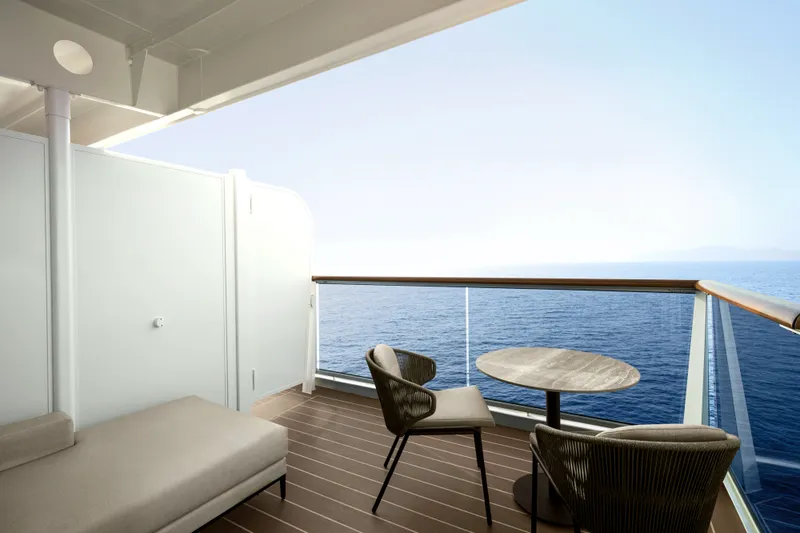
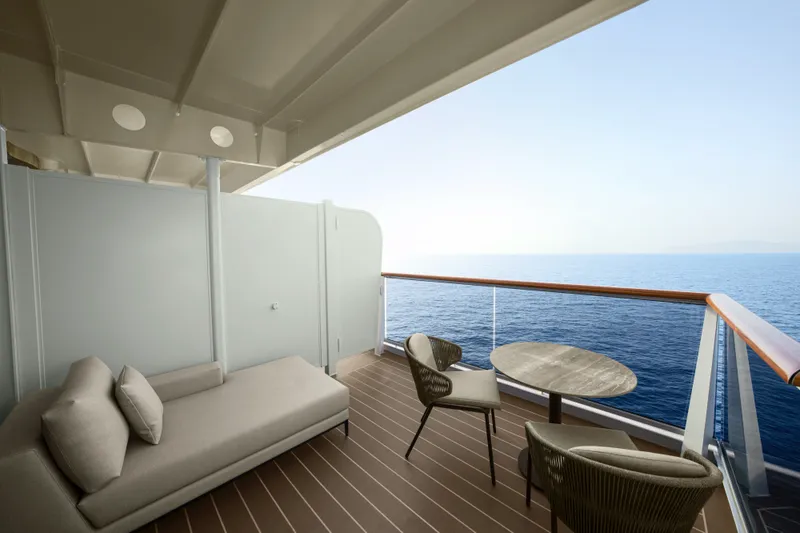
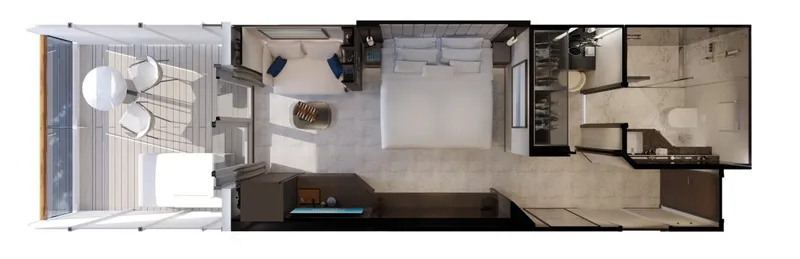


Our Ocean Grand Terrace Suites features a larger oceanfront terrace of 11 sqm, featuring an outdoor dining area and comfortable sunbeds for relaxation.
All suites include elegant lounge areas, private refrigerated mini bar – replenished according to the guests’ preferences, espresso machine and tea maker with a complimentary selection of coffee and teas. All suites feature spacious walk-in wardrobes with a seated vanity area."
FEATURES
Oversized floor-to-ceiling windows helping you feel closer to the sea. Lounge area with flexible coffee/dining table
Private refrigerated mini-bar, replenished according to the guests’ preferences
Espresso machine and tea maker with a complimentary selection of coffee and teas
Safe accommodating most tablets and laptops
OUTDOOR
Spacious oceanfront terrace with a dining area
Comfortable sunbeds for relaxation
BEDROOM
Bespoke queen-sized bed or twin beds sleep system
Down duvets and pillows
Extensive pillow selection
Spacious walk-in wardrobe with vanity area
BATHROOM
Spacious bathroom with a walk-in shower
Plush bathrobes and slippers
Custom bath toiletries and amenities
Hairdryer and illuminated make-up/shaving mirror
Some suites with bathtubs and accessible features
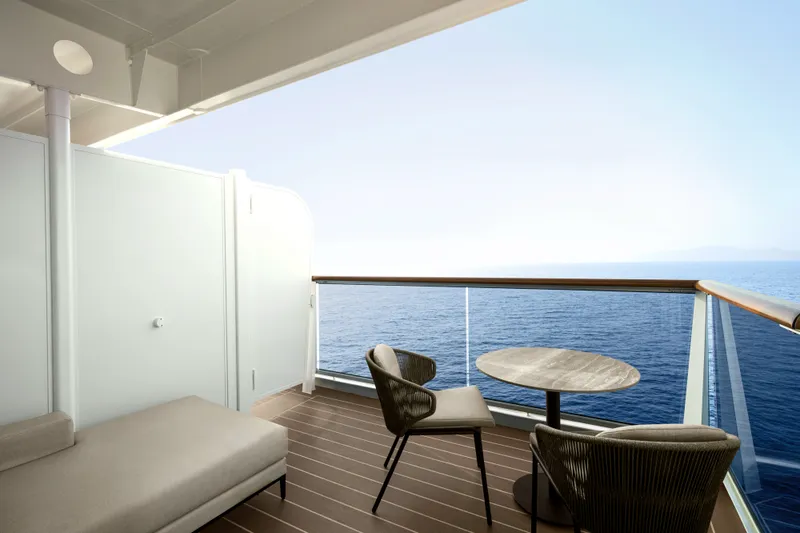
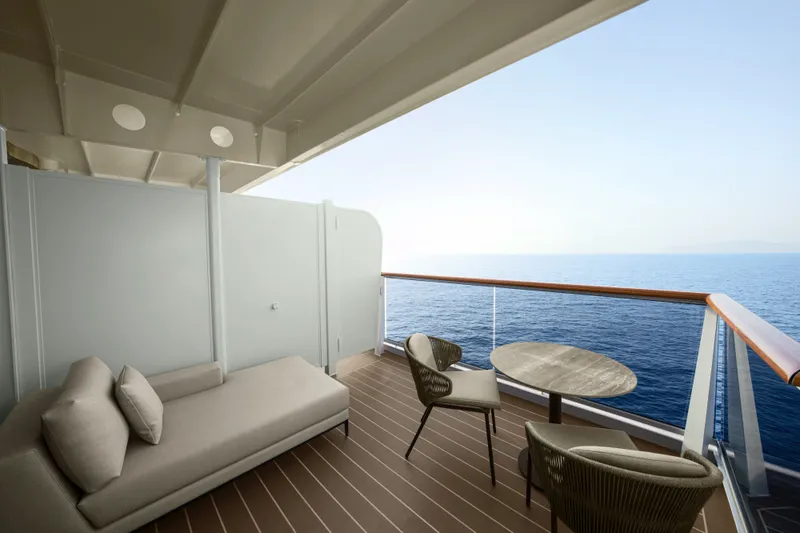
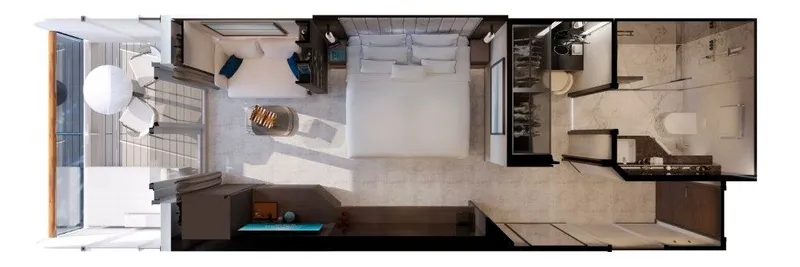


Our Ocean Terrace Suites elegantly combine space - at 35 sqm they are amongst the largest in the category - and light, as they all have floor-to-ceiling windows and private sun terraces, to help you truly relax and feel closer to the ocean that carries you on your journey.
All suites include elegant lounge areas, private refrigerated mini bar – replenished according to the guests’ preferences, espresso machine and tea maker with a complimentary selection of coffee and teas. All suites feature spacious walk-in wardrobes with a seated vanity area."
FEATURES
Oversized floor-to-ceiling windows helping you feel closer to the sea. Lounge area with flexible coffee/dining table
Private refrigerated mini-bar, replenished according to the guests’ preferences
Espresso machine and tea maker with a complimentary selection of coffee and teas
Safe accommodating most tablets and laptops
OUTDOOR
Spacious ocean-front terrace with a dining area. Comfortable daybed for relaxation
BEDROOM
Bespoke queen-sized bed or twin beds sleep system
Down duvets and pillows
Extensive pillow selection
Spacious walk-in wardrobe with vanity area
BATHROOM
Spacious bathroom with a walk-in shower
Plush bathrobes and slippers
Custom bath toiletries and amenities
Hairdryer and illuminated make-up/shaving mirror
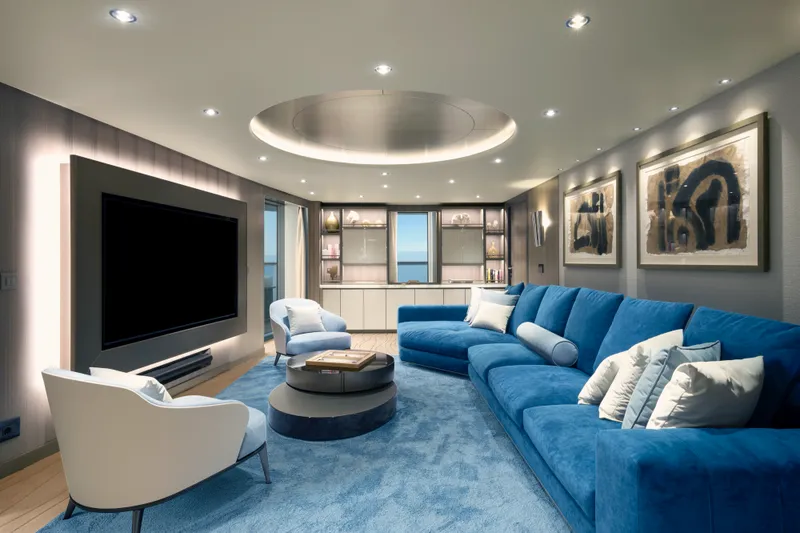
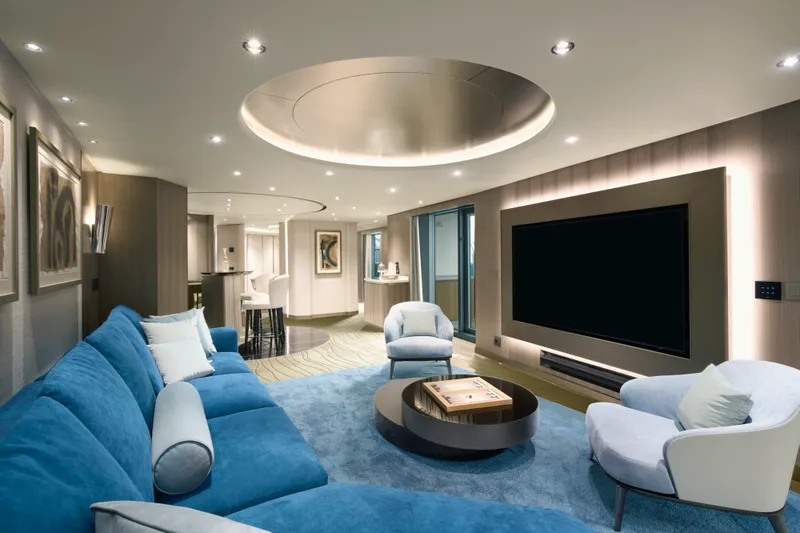
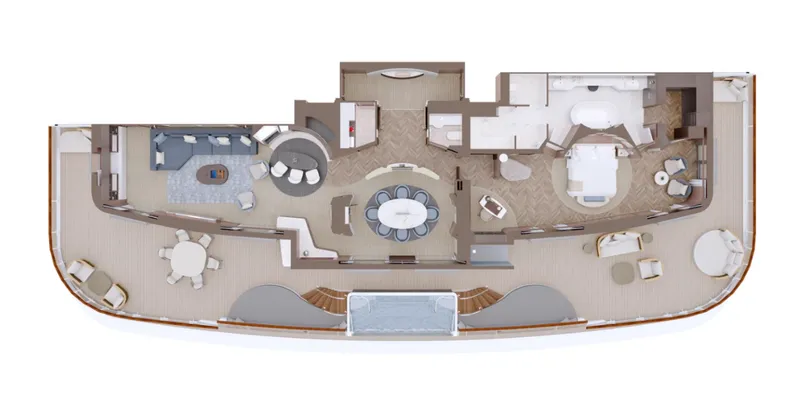


The iconic Owner’s Residence creates the largest accommodation on-board, with multiple harmonious spaces in which to relax, entertain and unwind. Stand in awe of the panoramic ocean views from your private outdoor terrace - featuring a spacious whirlpool - and enjoy intuitive, intelligent service with a dedicated private butler.
FEATURES
Dedicated private butler services
Oversized floor-to-ceiling windows with views of the sea
Separate living, dining and sleeping areas
Abundant lounge area with fireplace
Dining table for 8 guests
Spacious work desk area
Private bar, replenished according to the guests’ preferences
Espresso machine and tea maker with a complimentary selection of coffee and teas
Laptop-size safe
Guest lavatory and powder room
Butler pantry area
OUTDOOR
Panoramic oceanfront terrace covering the full ship’s width, with a private outdoor large whirlpool, day beds, a dining table, lounge area, shower and sun loungers
BEDROOM
Bespoke king-sized bed sleep system
Large double sofa bed
Down duvets and pillows
Extensive pillow selection
Oversized dressing room
BATHROOM
Luxurious marble double vanity bathroom
Spacious bathtub and separate shower room
Private steam room
Plush bathrobes and slippers
Custom bath toiletries and amenities
Hairdryer and illuminated make-up/shaving mirror
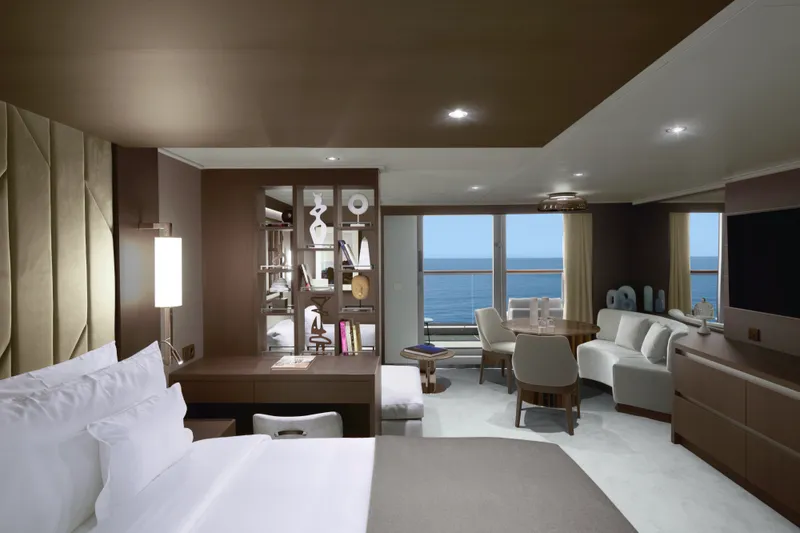
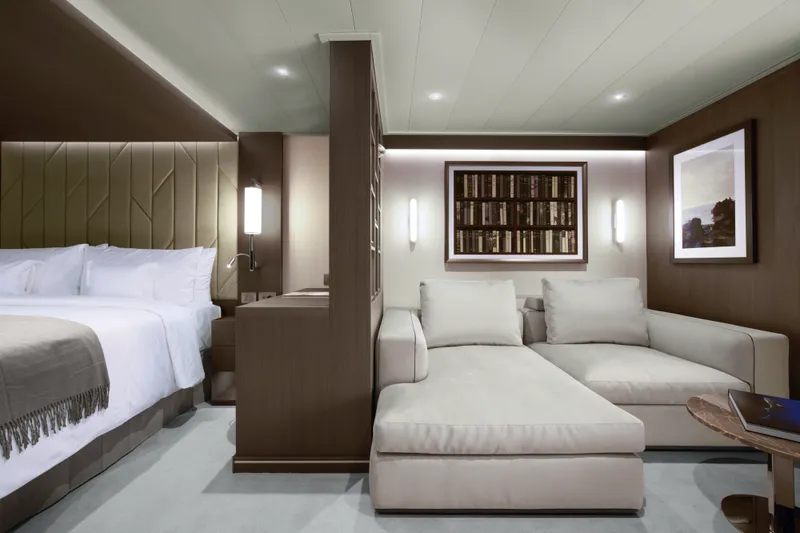
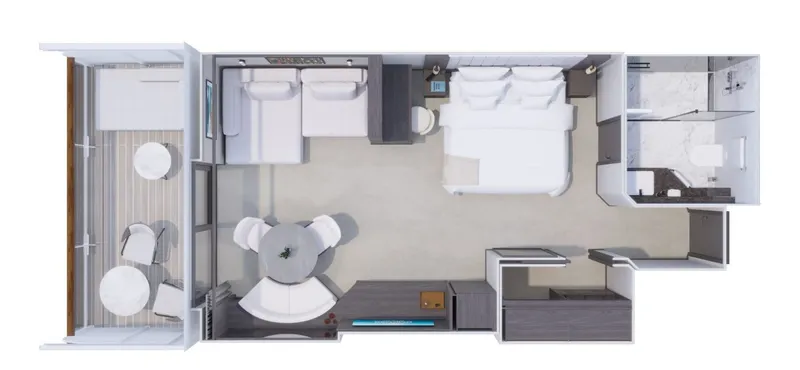


The Ocean Penthouses offer a luxurious, spacious retreat with ocean-front floor-to-ceiling windows and expansive terraces to unwind and relax. And with a characterful private dining area for four, and a calm, comfortable place to work, you can entertain with others or spend time to yourself as you see fit.
FEATURES
Oversized floor-to-ceiling windows helping you feel closer to the sea
Spacious lounge area
Dining table for 4 guests
Spacious work desk area
Private refrigerated mini-bar, replenished according to the guests’ preferences
Espresso machine and tea maker with a complimentary selection of coffee and teas
Safe accommodating most tablets and laptops
OUTDOOR
Spacious oceanfront terrace with a dining area. Comfortable daybeds or sun loungers for relaxation
BEDROOM
Bespoke queen-sized bed or twin beds sleep system
Down duvets and pillows
Extensive pillow selection
Spacious walk-in wardrobe with vanity area
BATHROOM
Spacious bathroom with a walk-in shower
Plush bathrobes and slippers
Custom bath toiletries and amenities
Hairdryer and illuminated make-up/shaving mirror
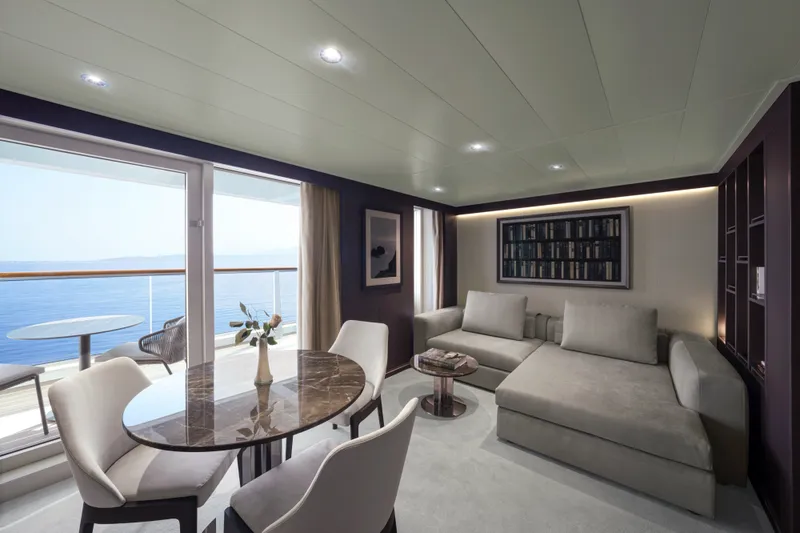
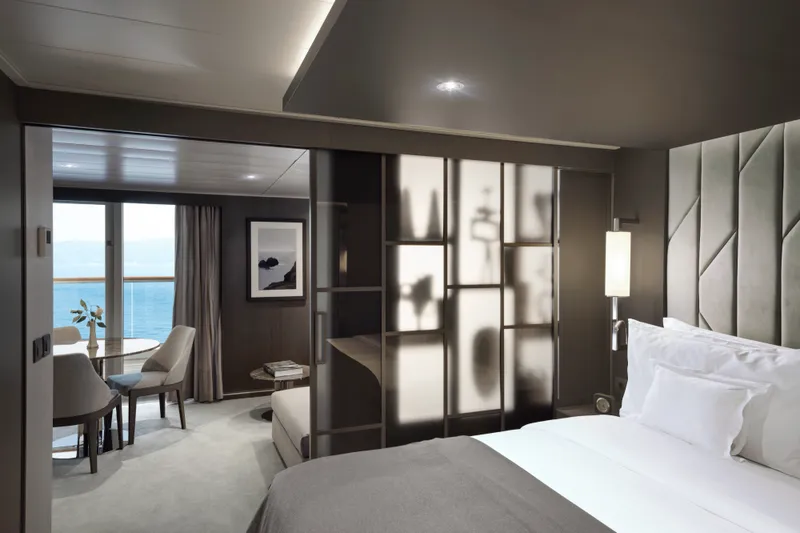
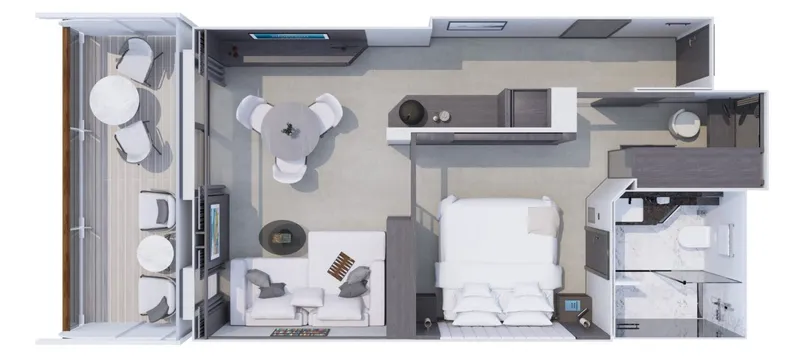


The Ocean Penthouses offer a luxurious, spacious retreat with ocean-front floor-to-ceiling windows and expansive terraces to unwind and relax. And with a characterful private dining area for four, and a calm, comfortable place to work, you can entertain with others or spend time to yourself as you see fit.
FEATURES
Oversized floor-to-ceiling windows helping you feel closer to the sea
Spacious lounge area
Dining table for 4 guests
Spacious work desk area
Private refrigerated mini-bar, replenished according to the guests’ preferences
Espresso machine and tea maker with a complimentary selection of coffee and teas
Safe accommodating most tablets and laptops
OUTDOOR
Spacious oceanfront terrace with a dining area. Comfortable daybeds or sun loungers for relaxation
BEDROOM
Bespoke queen-sized bed or twin beds sleep system
Some suites with a double sofa bed
Down duvets and pillows
Extensive pillow selection
Spacious walk-in wardrobe with vanity area
BATHROOM
Spacious bathroom with a walk-in shower
Plush bathrobes and slippers
Custom bath toiletries and amenities
Hairdryer and illuminated make-up/shaving mirror
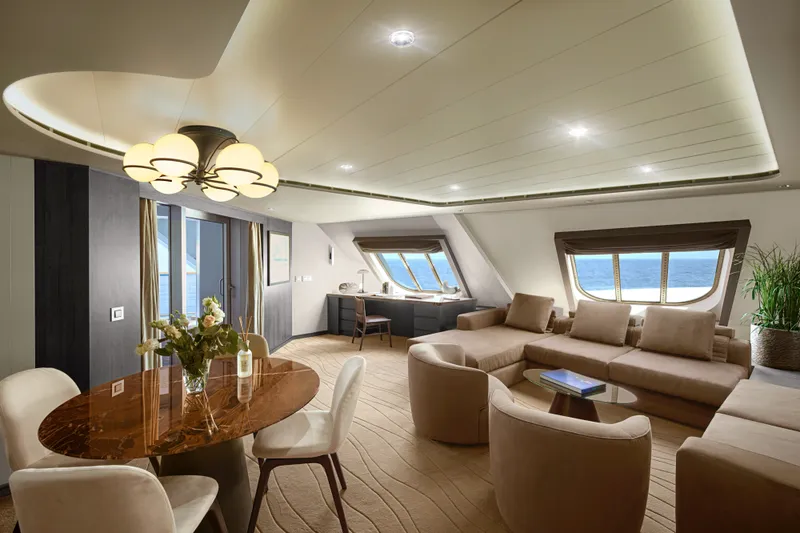
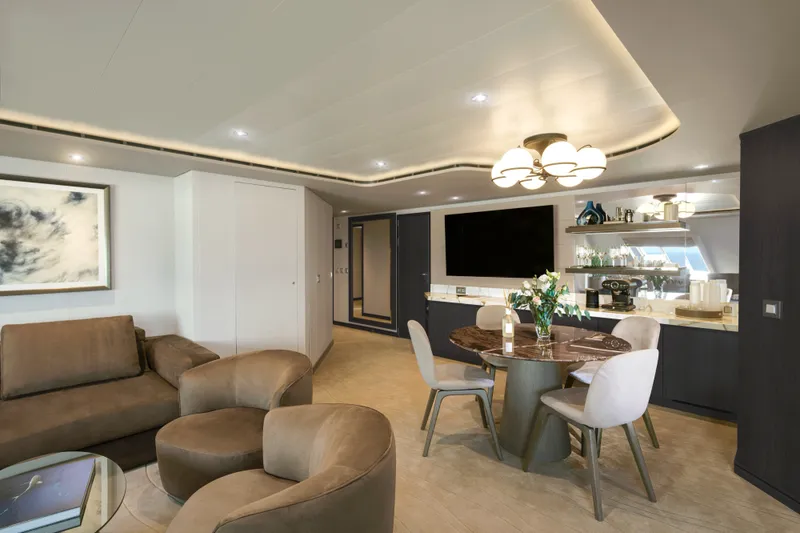
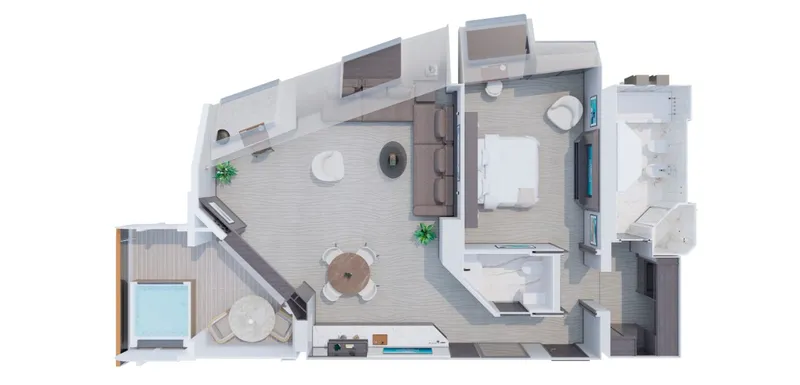


For a true sense of being at home at sea, experience the sweeping decks and effortlessly elegant spaces of our Ocean Residences. Enjoy perfect views of the oceans from your terrace’s dining area and private outdoor whirlpool, and make the most of our dedicated butler service.
FEATURES
Private butler services
Oversized floor-to-ceiling windows with views of the sea
Separate living, dining and sleeping areas
Spacious lounge area
Dining table for 4 guests
Spacious work desk area
Private refrigerated mini-bar, replenished according to the guests’ preferences
Espresso machine and tea maker with a complimentary selection of coffee and teas
Laptop-size safe
OUTDOOR
Spacious oceanfront terrace with private outdoor whirlpool, a dining table and sun loungers
BEDROOM
Bespoke king-sized bed sleep system
Large double sofa bed
Down duvets and pillows
Extensive pillow selection
Oversized walk-in wardrobe with vanity area
BATHROOM
Luxurious marble bathroom with a bathtub and a separate walk-in shower room
Plush bathrobes and slippers
Custom bath toiletries and amenities
Hairdryer and illuminated make-up/shaving mirror
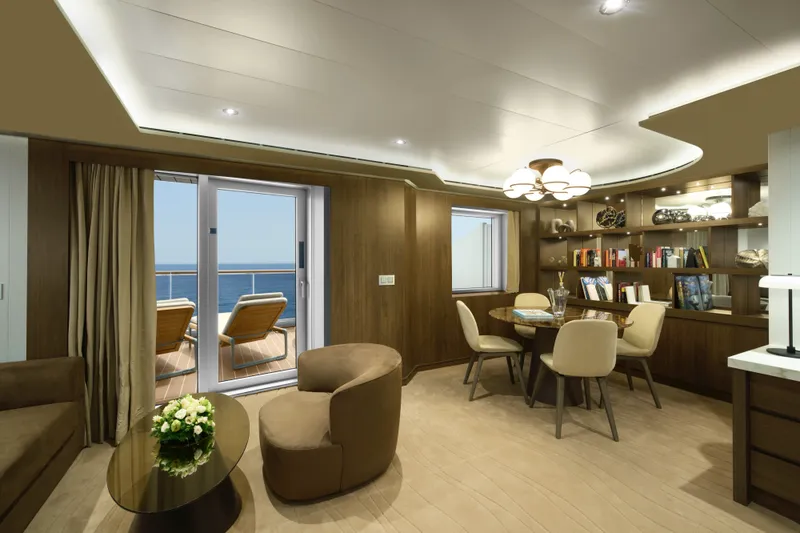
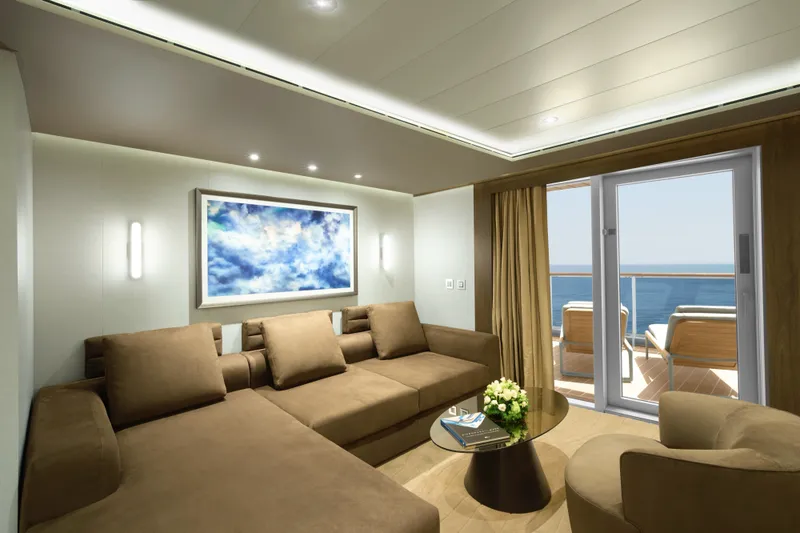
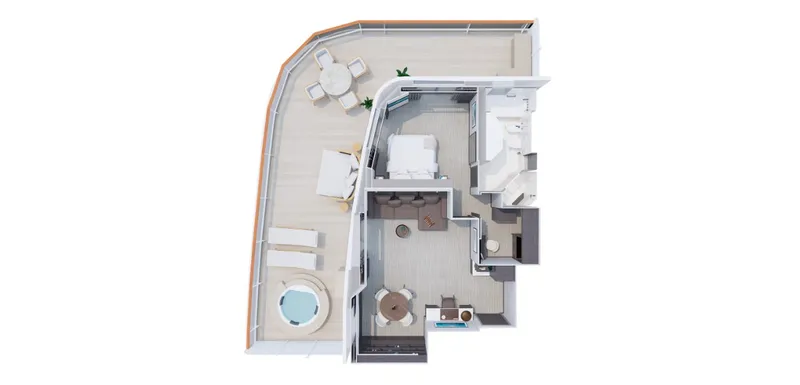


For a true sense of being at home at sea, experience the sweeping decks and effortlessly elegant spaces of our Ocean Residences. Enjoy perfect views of the oceans from your terrace’s dining area and private outdoor whirlpool, and make the most of our dedicated butler service.
FEATURES
Private butler services
Oversized floor-to-ceiling windows with views of the sea
Separate living, dining and sleeping areas
Spacious lounge area
Dining table for 6 guests
Spacious work desk area
Private refrigerated mini-bar, replenished according to the guests’ preferences
Espresso machine and tea maker with a complimentary selection of coffee and teas
Laptop-size safe
OUTDOOR
Panoramic oceanfront terrace with private outdoor whirlpool, a dining table and sun loungers
BEDROOM
Bespoke king-sized bed sleep system
Large double sofa bed
Down duvets and pillows
Extensive pillow selection
Oversized walk-in wardrobe with vanity area
BATHROOM
Luxurious marble bathroom with a bathtub and a separate walk-in shower room
Plush bathrobes and slippers
Custom bath toiletries and amenities
Hairdryer and illuminated make-up/shaving mirror
Our cruise specialists can help you find the perfect cabin and the best available pricing.
US$10,400 /person
Contact Advisor