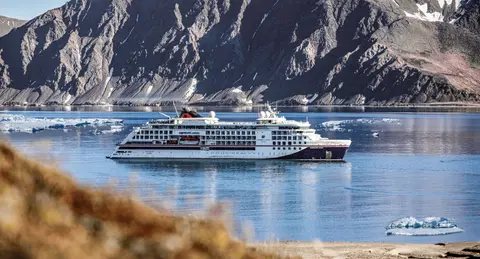
Hapag-Lloyd CruisesNAT2810
Lisbon - Mallorca
Date
2028-05-09
Duration
13 nights
Departure Port
Lisbon
Portugal
Arrival Port
Palma de Mallorca
Spain
Rating
Expedition
Theme
—
Date
2028-05-09
Duration
13 nights
Departure Port
Lisbon
Portugal
Arrival Port
Palma de Mallorca
Spain
Rating
Expedition
Theme
—
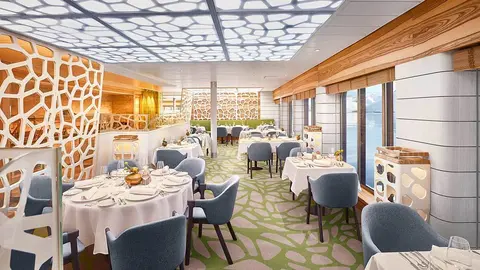
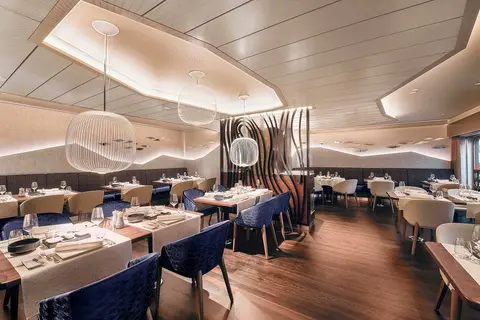
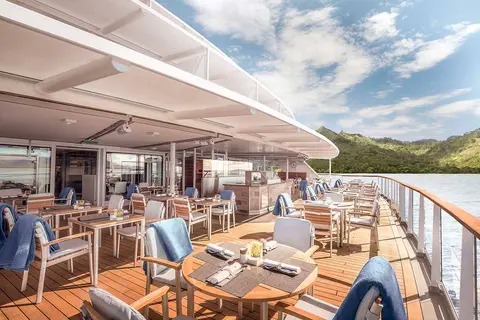
Hapag-Lloyd Cruises
Ice
2019
—
15,650 GT
230
—
175
452 m
22 m
16 knots
No
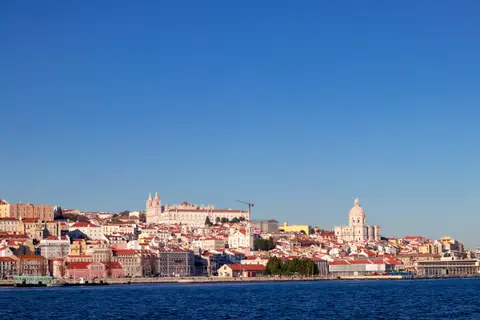
Lisbon, Portugal's enchanting capital, stands out for its rich history, stunning architecture, and vibrant culture. Must-try experiences include savoring local dishes like bacalhau à brás and pastéis de nata at Mercado da Ribeira. The best time to visit is during the spring or fall, when the weather is mild and the city is alive with festivals and events.
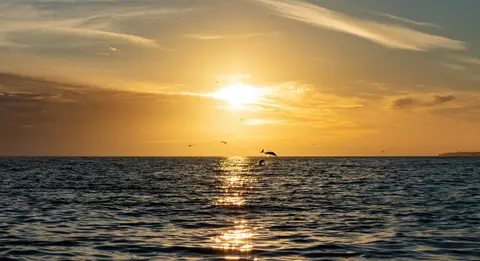
Portimão is the Algarve's most storied port city, where Phoenician trading heritage meets golden-cliff beaches and Portugal's finest grilled sardine tradition along the Arade River. Visitors should not miss the charcoal-grilled sardines at the riverside churrasqueiras and the dramatic sandstone formations of Praia da Rocha. The port is at its luminous best from May through October, when long Atlantic days bathe the coastline in honeyed light and the August Sardine Festival electrifies the waterfront.
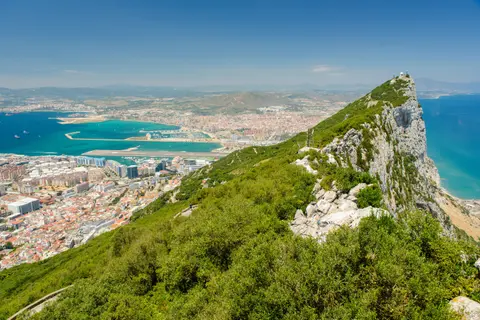
Gibraltar is a British Overseas Territory perched at the southern tip of the Iberian Peninsula, where the Mediterranean meets the Atlantic beneath an iconic limestone monolith steeped in over a millennium of contested history. No visit is complete without ascending the Rock to encounter the Barbary macaques and the panoramic views stretching to North Africa, followed by a plate of calentita — the territory's beloved Genoese-heritage chickpea bake — at a Main Street bakery. The mild Mediterranean climate makes Gibraltar a rewarding port call year-round, though spring and early autumn offer the clearest skies for spotting whales and dolphins in the Strait.
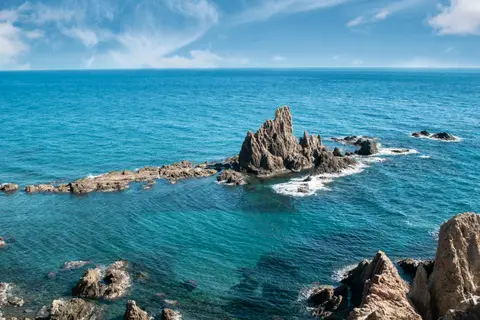
Almeria, Spain is a distinctive port city where deep cultural heritage meets authentic local atmosphere, featured on itineraries by Azamara. Must-do experiences include walking the historic center to experience the layered architectural heritage, and seeking out the regional culinary traditions at a locally favored establishment away from the port area. The optimal time to visit is May through September, when mild temperatures and long days favor unhurried exploration.
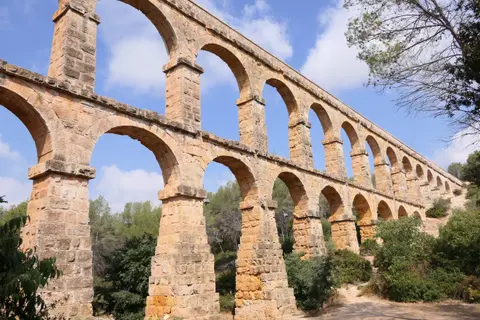
Tarragona, a historic Catalonian port city, is renowned for its Roman ruins and vibrant local life. Must-do experiences include exploring the ancient Roman amphitheater and indulging in local dishes like calçots and fideuà. The best time to visit is during the spring and early autumn, when the weather is mild and the city is alive with cultural festivities.
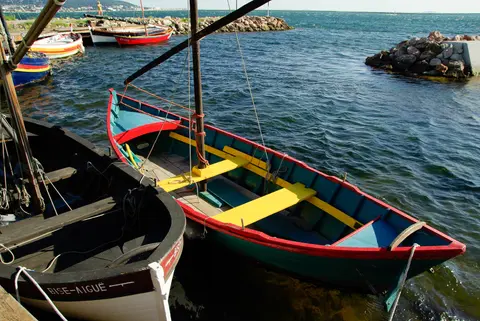
Sète is a canal-laced fishing port on France's Languedoc coast, built around the terminus of the Canal du Midi and crowned by the panoramic heights of Mont Saint-Clair. Visitors should not miss the iconic *tielle sétoise* pastry paired with Bouzigues oysters at the covered market, and the contemplative walk through the Cimetière Marin above the Mediterranean. Late spring through early autumn offers the finest conditions, with September bringing warm seas, golden light, and the spirited jousting tournaments on the canal that have defined Sète's character for over three hundred years.
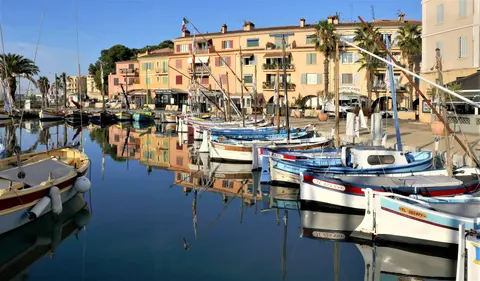
Sanary-sur-Mer is an authentically preserved Provencal fishing port on France's Var coast, where colourful pointu boats, a daily harbour fish market, and the birthplace of modern scuba diving create a Mediterranean village of genuine charm. Must-dos include the harbour fish market, bouillabaisse at a waterfront restaurant paired with Bandol wine, and the Ile des Embiez. Visit May or June for warm Provencal light and the season's first rose wines.
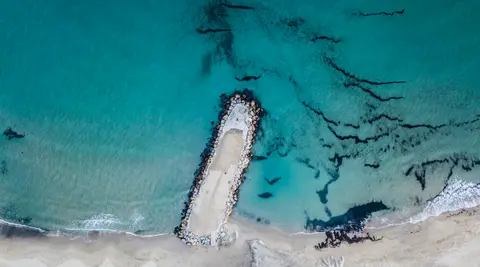
Cannes, transformed from a sleepy Provençal fishing village into the Riviera's most glamorous resort by an English lord's chance quarantine in 1834, and immortalized by the Film Festival since 1946, remains the French Riviera's most theatrical stage — where La Croisette's curved promenade of Art Deco palaces, private beach clubs, and Palme d'Or dreams meets the quiet authenticity of the Suquet hilltop quarter above the old port. For shopping, the Marché Forville bursts with Provençal produce, truffle vendors, and cut flowers each morning; for dining, the restaurants of the old port district offer bouillabaisse and socca that need no red-carpet backdrop. Visit in spring or September; Nice is twenty minutes by rail and Monaco thirty.
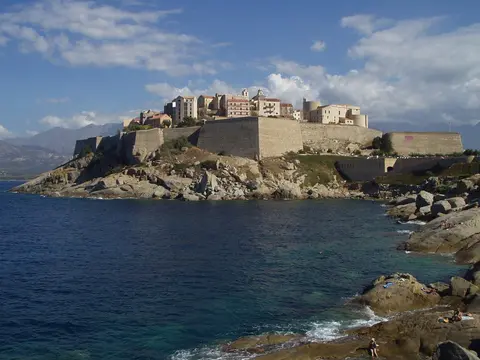
Calvi is Corsica's jewel-box port town where a commanding Genoese citadel overlooks the Mediterranean's finest urban beach — four miles of white sand lapped by Caribbean-clear water beneath snow-capped mountains. Visit June or September via Ponant or Explora Journeys for citadel walks, Corsican wild boar and brocciu cheese, and the essential paradox of an island that is French by law but entirely its own in character.
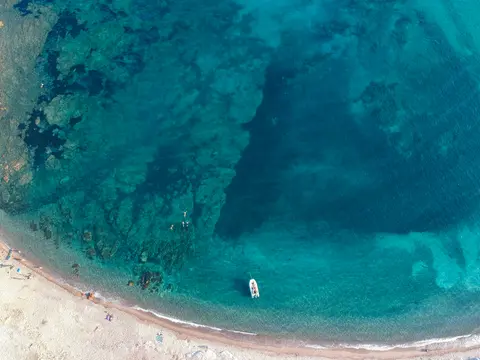
Bonifacio is a dramatically cliff-perched medieval citadel at Corsica's southern tip, where Genoese ramparts tower above a fjord-like natural harbour in the turquoise Strait of Bonifacio. Visitors should descend the vertiginous Escalier du Roi d'Aragon carved into the limestone cliffs and take a boat excursion to the pristine Lavezzi archipelago nature reserve for world-class snorkelling among sculpted granite formations. The ideal window is June or September, when the Mediterranean light is at its most luminous and the narrow streets of the haute ville remain blissfully uncrowded.
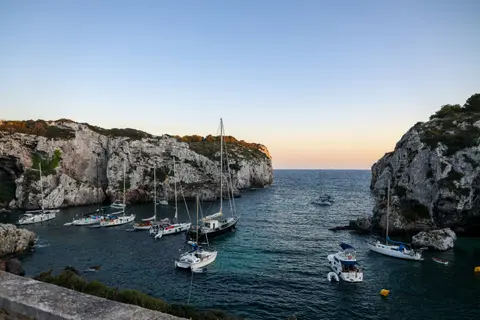
Mahón commands one of the Mediterranean's deepest natural harbours, a fjord-like inlet on Menorca that captivated British admirals, Phoenician traders, and Roman generals in turn — its Georgian townhouses and gin distilleries speaking eloquently to centuries of contested heritage. Explore the clifftop old town's baroque Santa María church with its 3,200-pipe organ, then cross the water to the imposing fortress of La Mola for sweeping harbour views. The island's prized caldereta de langosta, a slow-simmered lobster stew, is best savoured at the fishing village of Fornells. Visit between May and June or September and October for warmth without the summer crowds.
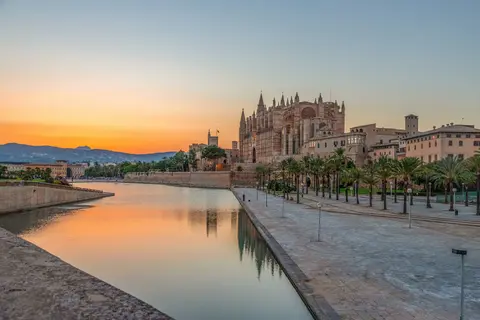
Palma de Mallorca announces itself with one of the most spectacular Gothic cathedrals in the world — La Seu, its honey-coloured sandstone buttresses rising directly from the bay, its interior modified by Antoni Gaudí and illuminated by the world's largest Gothic rose window. The old town behind it is a quarter of Arab baths, Renaissance palaces converted into boutique hotels, and the Passeig del Born — a plane-tree-shaded promenade where Balearic life conducts itself with unhurried grace. The local ensaïmada pastry and fresh sobrasada sausage from the island's black pigs are essential breakfast rituals. Visit May, June, or September: warm, brilliant, and measurably calmer than the July–August peak.
Day 1
Lisbon, Portugal's enchanting capital, stands out for its rich history, stunning architecture, and vibrant culture. Must-try experiences include savoring local dishes like bacalhau à brás and pastéis de nata at Mercado da Ribeira. The best time to visit is during the spring or fall, when the weather is mild and the city is alive with festivals and events.
Day 2
Portimão is the Algarve's most storied port city, where Phoenician trading heritage meets golden-cliff beaches and Portugal's finest grilled sardine tradition along the Arade River. Visitors should not miss the charcoal-grilled sardines at the riverside churrasqueiras and the dramatic sandstone formations of Praia da Rocha. The port is at its luminous best from May through October, when long Atlantic days bathe the coastline in honeyed light and the August Sardine Festival electrifies the waterfront.
Day 3
Gibraltar is a British Overseas Territory perched at the southern tip of the Iberian Peninsula, where the Mediterranean meets the Atlantic beneath an iconic limestone monolith steeped in over a millennium of contested history. No visit is complete without ascending the Rock to encounter the Barbary macaques and the panoramic views stretching to North Africa, followed by a plate of calentita — the territory's beloved Genoese-heritage chickpea bake — at a Main Street bakery. The mild Mediterranean climate makes Gibraltar a rewarding port call year-round, though spring and early autumn offer the clearest skies for spotting whales and dolphins in the Strait.
Day 4
Almeria, Spain is a distinctive port city where deep cultural heritage meets authentic local atmosphere, featured on itineraries by Azamara. Must-do experiences include walking the historic center to experience the layered architectural heritage, and seeking out the regional culinary traditions at a locally favored establishment away from the port area. The optimal time to visit is May through September, when mild temperatures and long days favor unhurried exploration.
Day 5
Day 6
Tarragona, a historic Catalonian port city, is renowned for its Roman ruins and vibrant local life. Must-do experiences include exploring the ancient Roman amphitheater and indulging in local dishes like calçots and fideuà. The best time to visit is during the spring and early autumn, when the weather is mild and the city is alive with cultural festivities.
Day 7
Day 8
Sète is a canal-laced fishing port on France's Languedoc coast, built around the terminus of the Canal du Midi and crowned by the panoramic heights of Mont Saint-Clair. Visitors should not miss the iconic *tielle sétoise* pastry paired with Bouzigues oysters at the covered market, and the contemplative walk through the Cimetière Marin above the Mediterranean. Late spring through early autumn offers the finest conditions, with September bringing warm seas, golden light, and the spirited jousting tournaments on the canal that have defined Sète's character for over three hundred years.
Day 9
Sanary-sur-Mer is an authentically preserved Provencal fishing port on France's Var coast, where colourful pointu boats, a daily harbour fish market, and the birthplace of modern scuba diving create a Mediterranean village of genuine charm. Must-dos include the harbour fish market, bouillabaisse at a waterfront restaurant paired with Bandol wine, and the Ile des Embiez. Visit May or June for warm Provencal light and the season's first rose wines.
Day 10
Cannes, transformed from a sleepy Provençal fishing village into the Riviera's most glamorous resort by an English lord's chance quarantine in 1834, and immortalized by the Film Festival since 1946, remains the French Riviera's most theatrical stage — where La Croisette's curved promenade of Art Deco palaces, private beach clubs, and Palme d'Or dreams meets the quiet authenticity of the Suquet hilltop quarter above the old port. For shopping, the Marché Forville bursts with Provençal produce, truffle vendors, and cut flowers each morning; for dining, the restaurants of the old port district offer bouillabaisse and socca that need no red-carpet backdrop. Visit in spring or September; Nice is twenty minutes by rail and Monaco thirty.
Day 11
Calvi is Corsica's jewel-box port town where a commanding Genoese citadel overlooks the Mediterranean's finest urban beach — four miles of white sand lapped by Caribbean-clear water beneath snow-capped mountains. Visit June or September via Ponant or Explora Journeys for citadel walks, Corsican wild boar and brocciu cheese, and the essential paradox of an island that is French by law but entirely its own in character.
Day 12
Bonifacio is a dramatically cliff-perched medieval citadel at Corsica's southern tip, where Genoese ramparts tower above a fjord-like natural harbour in the turquoise Strait of Bonifacio. Visitors should descend the vertiginous Escalier du Roi d'Aragon carved into the limestone cliffs and take a boat excursion to the pristine Lavezzi archipelago nature reserve for world-class snorkelling among sculpted granite formations. The ideal window is June or September, when the Mediterranean light is at its most luminous and the narrow streets of the haute ville remain blissfully uncrowded.
Day 13
Mahón commands one of the Mediterranean's deepest natural harbours, a fjord-like inlet on Menorca that captivated British admirals, Phoenician traders, and Roman generals in turn — its Georgian townhouses and gin distilleries speaking eloquently to centuries of contested heritage. Explore the clifftop old town's baroque Santa María church with its 3,200-pipe organ, then cross the water to the imposing fortress of La Mola for sweeping harbour views. The island's prized caldereta de langosta, a slow-simmered lobster stew, is best savoured at the fishing village of Fornells. Visit between May and June or September and October for warmth without the summer crowds.
Day 14
Palma de Mallorca announces itself with one of the most spectacular Gothic cathedrals in the world — La Seu, its honey-coloured sandstone buttresses rising directly from the bay, its interior modified by Antoni Gaudí and illuminated by the world's largest Gothic rose window. The old town behind it is a quarter of Arab baths, Renaissance palaces converted into boutique hotels, and the Passeig del Born — a plane-tree-shaded promenade where Balearic life conducts itself with unhurried grace. The local ensaïmada pastry and fresh sobrasada sausage from the island's black pigs are essential breakfast rituals. Visit May, June, or September: warm, brilliant, and measurably calmer than the July–August peak.
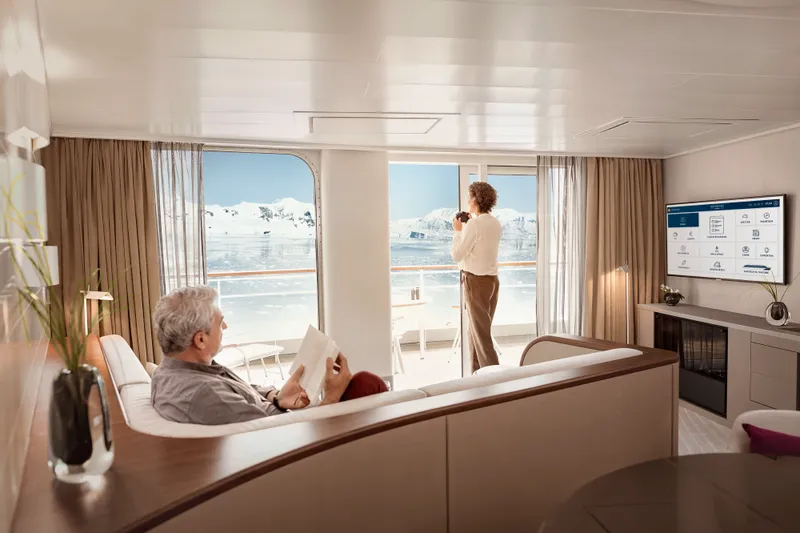
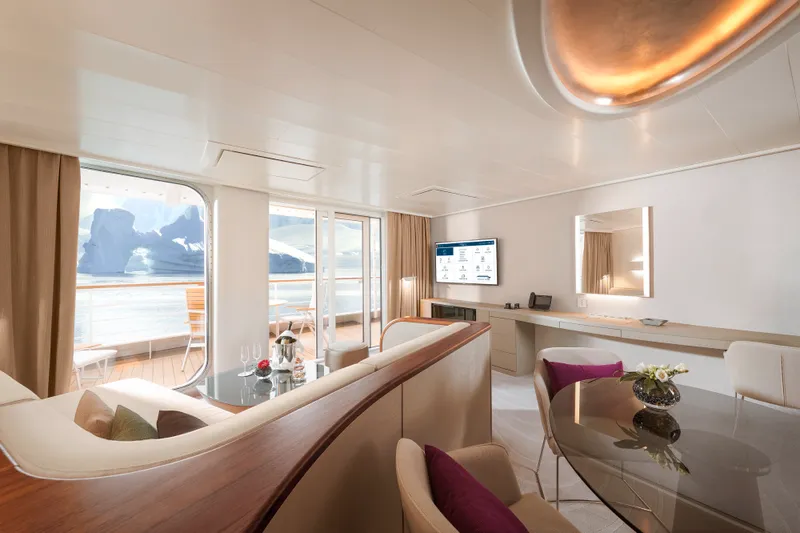
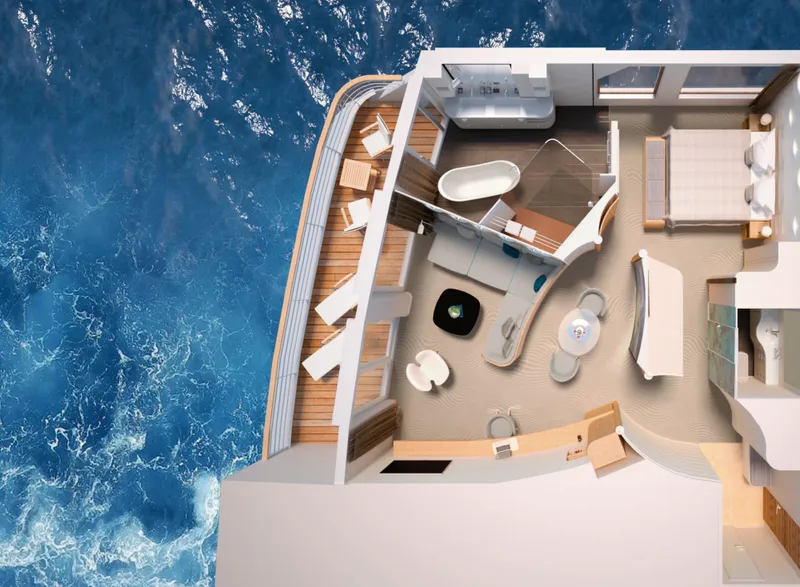
Max passengers: 2
Staterooms number: 4
Cabin size: 765 ft2 / 71 m2
Balcony size: 170 ft2 / 16 m2 (included)
Location (on decks): aft on decks 6 and 7
Type (categories): (GS) Grand Suite with Balcony
Grand Suite cabins offer the following amenities and complimentary services:
private (step-out) balcony with space heaters, 2 heated sunloungers, 2 deck chairs, 1 small table
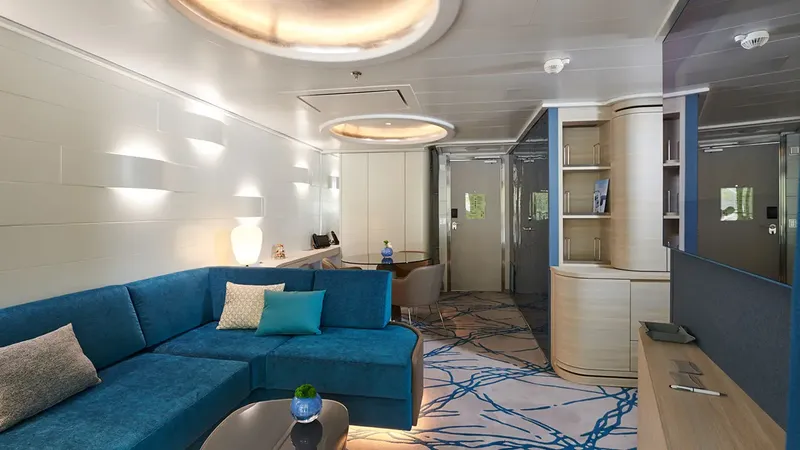
separate living / lounge area (L-shaped sofa, low table, veranda access), dining area (2-seat table / glass-topped) and sleeping area (2 twin beds) - all are with floor-ceiling window views
2x flat TVs (in the living and sleeping areas)
daylight bathroom (panoramic window, double-sink vanity, WC, free-standing bath / hottub, rain shower, heated wall for towels and wet parkas, veranda access)
separate toilet (WC, washbasin)
steam sauna (in the shower area)
binoculars (for in-cabin use only)
Nordic walking poles (for shore excursions / tours)
complimentary mini-bar (fully-stocked), coffee machine
dedicated butler service
exclusive service privileges
Interconnecting suites (Suite mit Verbindungstur): Each of the aft-located Grand Suites can be combined with an adjacent Balcony Cabin (deck 6 category 6, deck 7 category 7).
Guarantee Suite
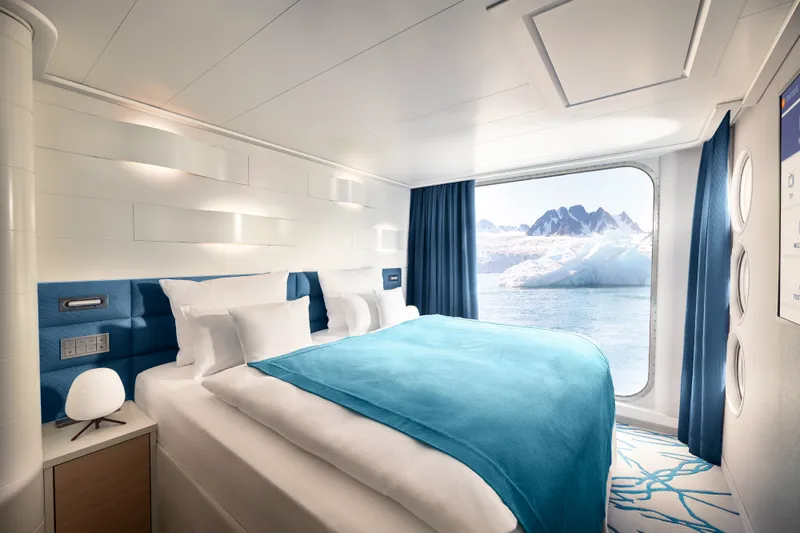
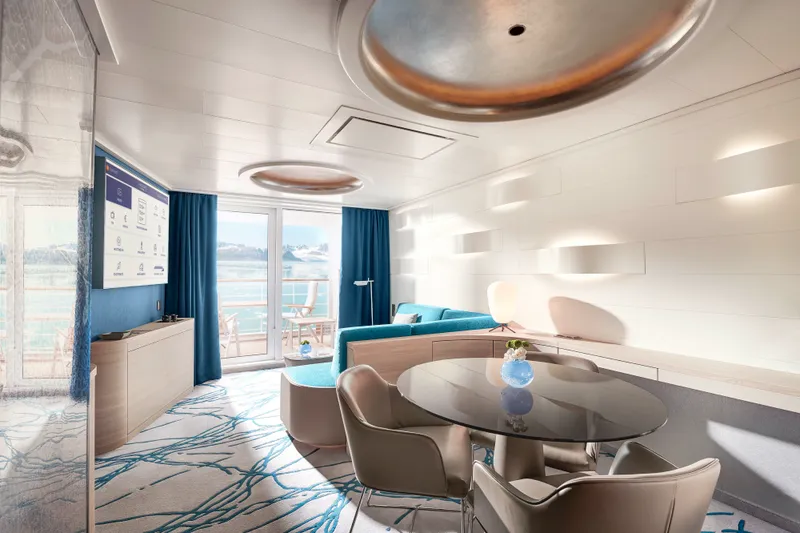
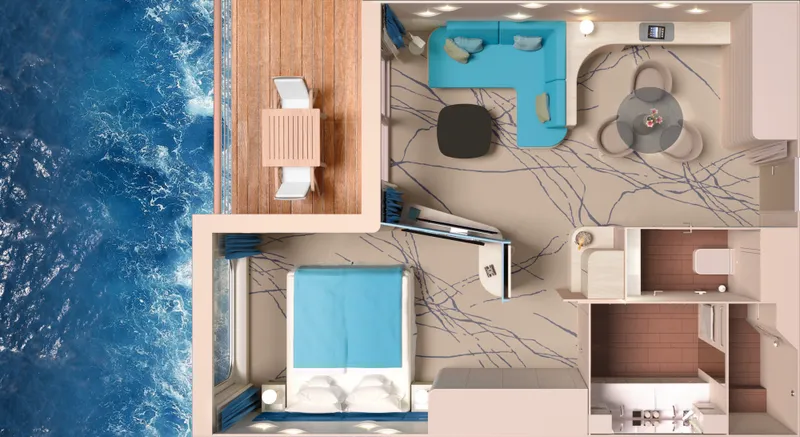
Max passengers: 2
Staterooms number: 14
Cabin size: 465 ft2 / 43 m2
Balcony size: 65 ft2 / 6 m2 (included)
Location (on decks): aft-midship on decks 6 and 7
Type (categories): (JS) Junior Suite with Balcony
Junior Suite cabins offer the following amenities and complimentary services:
private (step-out) balcony with space heaters, 2 heated sunloungers, 1 small table
separate living / lounge area (L-shaped sofa, low table, veranda access), dining area (3-seat table / glass-topped) and sleeping area (2 twin beds) - all are with floor-ceiling window views
2x flat TVs (in the living and in the sleeping areas)
bathroom (double-sink vanity, WC, rain shower, heated wall for towels and wet parkas)
separate toilet (WC, washbasin)
steam sauna (in the shower area)
binoculars (for in-cabin use only)
Nordic walking poles (for shore excursions / tours)
complimentary mini-bar (fully-stocked), coffee machine
dedicated butler service
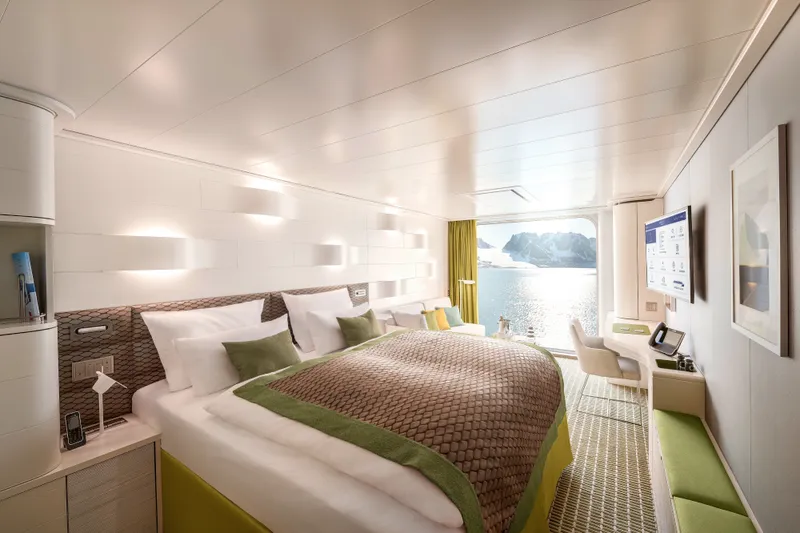
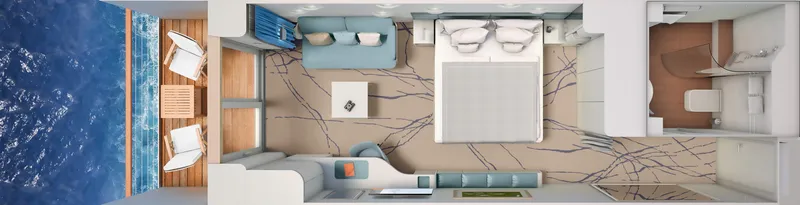
Max passengers: 2
Staterooms number: 63
Cabin size: 300 ft2 / 28 m2
Balcony size: 65 ft2 / 6 m2 (included)
Location (on decks): 5, 6, 7
Type (categories): (categories 4, 6, 7, 8) Balcony staterooms
Balcony Cabin amenities and complimentary services include:
private (step-out) balcony (furnished with 2 deck chairs, 1 small table, space heaters)
living area (double sofa, low table, writing desk with chair, veranda access)
sleeping area (2 twin beds / convertible to double, bedside cabinets with reading lamps)
flat TV, full-length mirror, spacious wardrobe (electronic safe in the closet)
bathroom (single-sink vanity, rain shower, WC, heated wall for towels and wet parkas)
binoculars (for in-cabin use only)
Nordic walking poles (for shore excursions / tours)
complimentary mini-bar (fully-stocked), coffee machine
Bookings with single occupancy and same sex occupancy ("shared cabin") are also offered.
There are two pairs of connecting Balcony Cabins (category 6) located forward-midship.
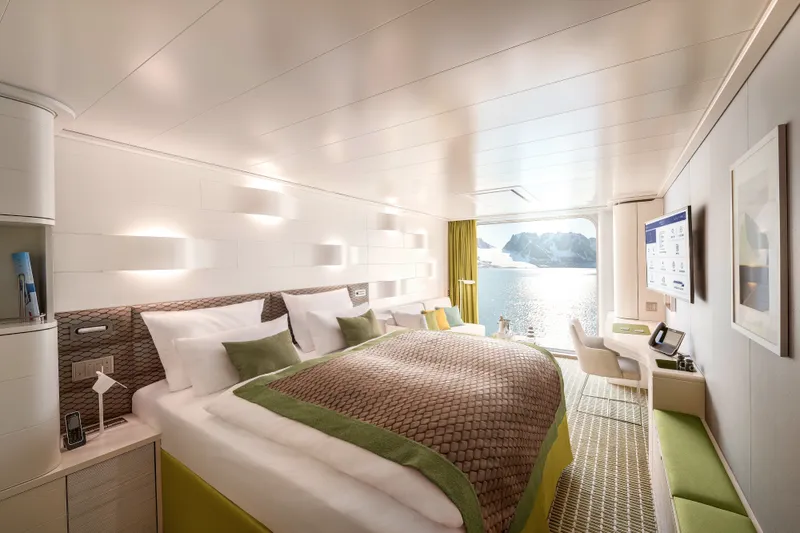
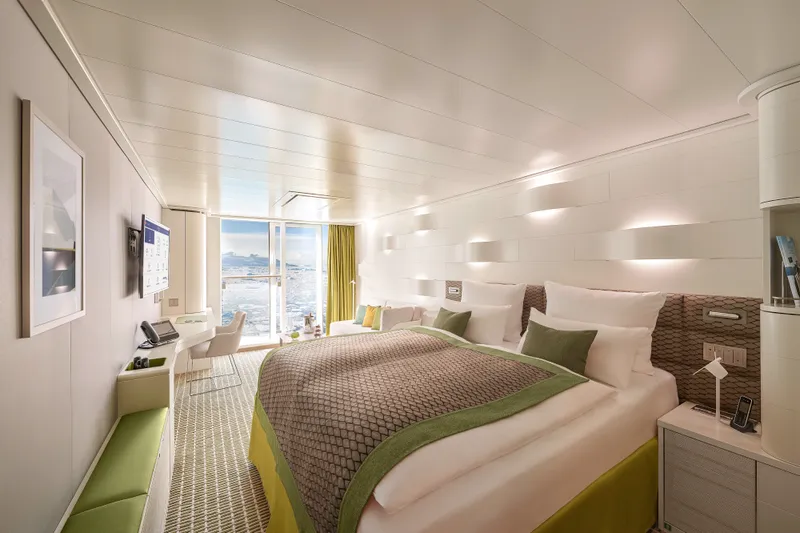
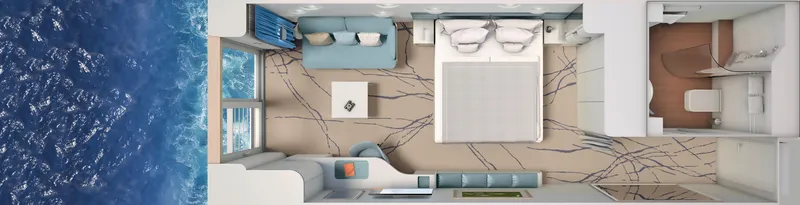
Max passengers: 2
Staterooms number: 20
Cabin size: 225-250 ft2 / 21-23 m2
Balcony size: none
Location (on decks): 6 (forward), 7 (midship)
Type (categories): (categories 3, 5) French Balcony staterooms
French Balcony Cabin amenities and complimentary services include:
French Balcony (floor-ceiling window / opening)
living area (double sofa, low table, writing desk with chair)
sleeping area (2 twin beds / convertible to double, bedside cabinets with reading lamps)
flat TV, full-length mirror, spacious wardrobe (electronic safe in the closet)
en-suite bathroom (single-sink vanity, rain shower, WC, heated wall for towels and wet parkas)
complimentary mini-bar (fully-stocked), coffee machine
binoculars (for in-cabin use only)
Nordic walking poles (for shore excursions / tours)
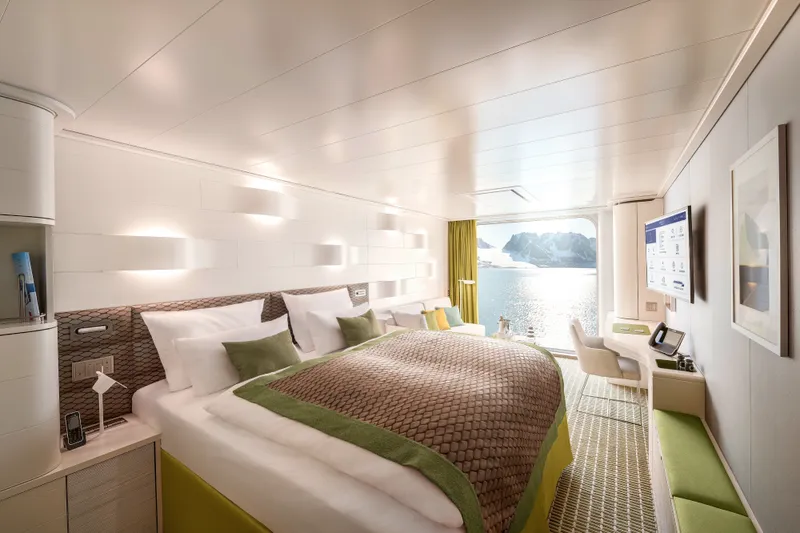
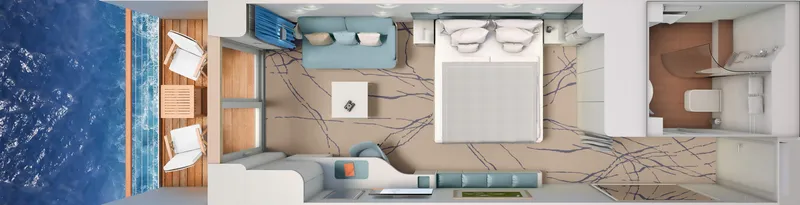
Guarantee Balcony Cabin
Guarantee Outside Cabin
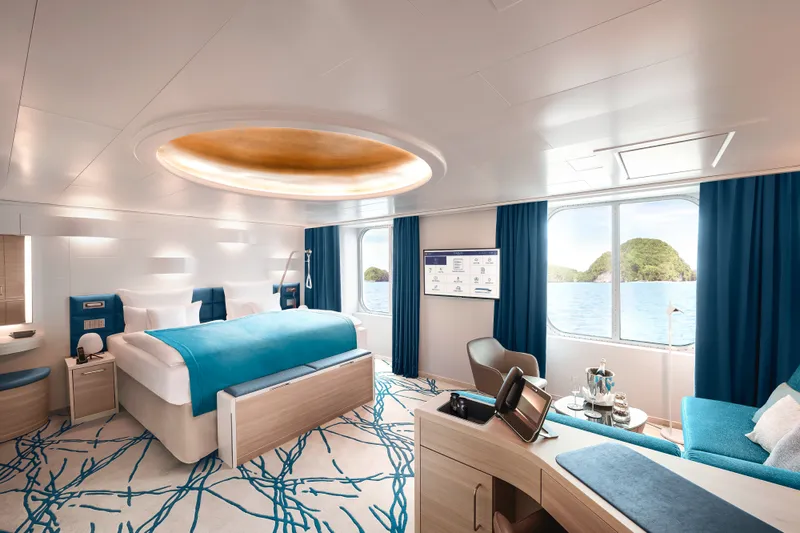
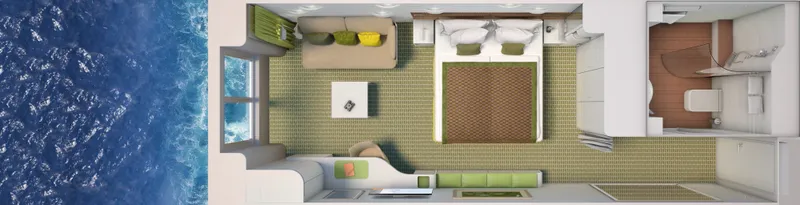
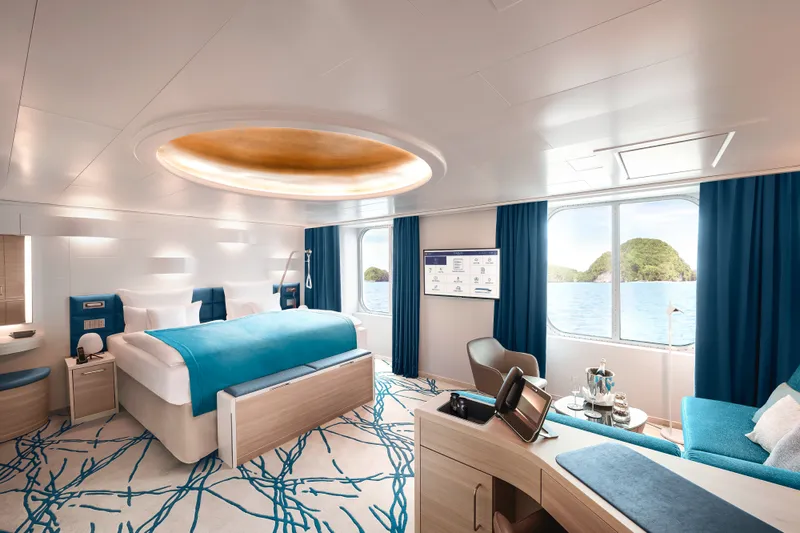
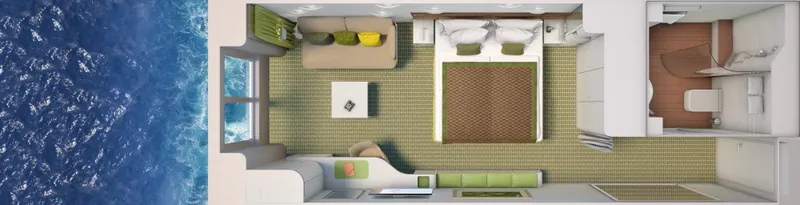
Max passengers: 2
Staterooms number: 10
Cabin size: 235 ft2 / 22 m2
Balcony size: none
Location (on decks): forward on decks 4, 5, 6
Type (categories): (category 1) Oceanview / outside stateroom with porthole window
Outside Cabin amenities and complimentary services include:
porthole window (non-opening)
living area (double sofa, low table, writing desk with chair)
sleeping area (2 twin beds / convertible to double, bedside cabinets with reading lamps)
flat TV, full-length mirror, spacious wardrobe (electronic safe in the closet)
en-suite bathroom (single-sink vanity, rain shower, WC, heated wall for towels and wet parkas)
complimentary mini-bar (fully-stocked), coffee machine
binoculars (for in-cabin use only)
Nordic walking poles (for shore excursions / tours)
Max passengers: 2
Staterooms number: 9
Cabin size: 235 ft2 / 22 m2
Balcony size: none
Location (on decks): forward on decks 4 and 5
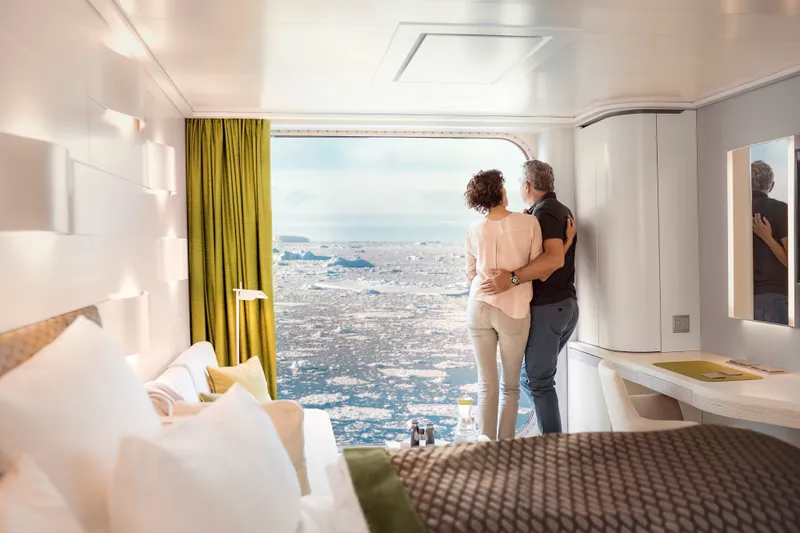
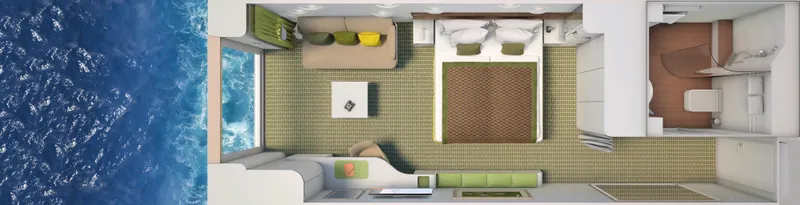
Type (categories): (category 2) Panorama Stateroom with floor-ceiling window
Panorama Cabin amenities and complimentary services include:
Note: Room #404 is a wheelchair-accessible cabin (for disabled passengers) and larger in size.
floor-ceiling window (non-opening)
living area (double sofa, low table, writing desk with chair)
sleeping area (2 twin beds / convertible to double, bedside cabinets with reading lamps)
flat TV, full-length mirror, spacious wardrobe (electronic safe in the closet)
en-suite bathroom (single-sink vanity, rain shower, WC, heated wall for towels and wet parkas)
complimentary mini-bar (fully-stocked), coffee machine
binoculars (for in-cabin use only)
Nordic walking poles (for shore excursions / tours)
Our cruise specialists can help you find the perfect cabin and the best available pricing.
(+886) 02-2721-7300Contact Advisor