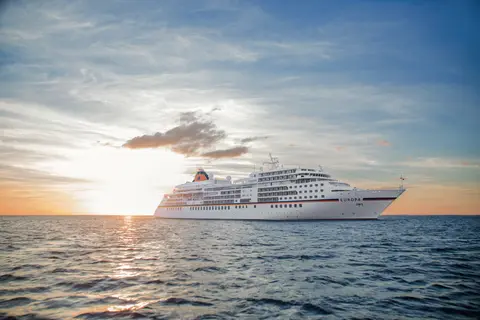
Hapag-Lloyd CruisesEUR2809
The rhythm of Africa - Mahé (Seychelles) to Cape Town
Date
2028-05-07
Duration
17 nights
Departure Port
Victoria
Canada
Arrival Port
Cape Town
South Africa
Rating
Luxury
Theme
—
Date
2028-05-07
Duration
17 nights
Departure Port
Victoria
Canada
Arrival Port
Cape Town
South Africa
Rating
Luxury
Theme
—

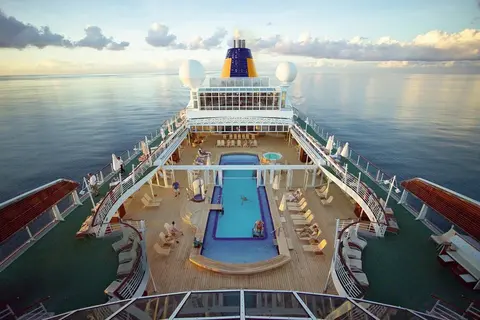
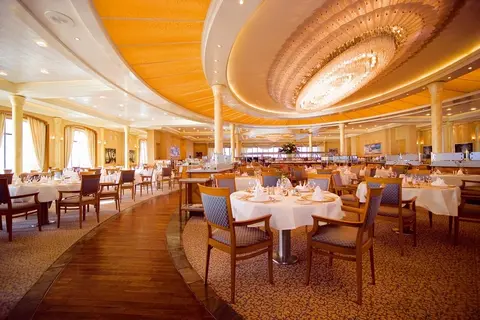
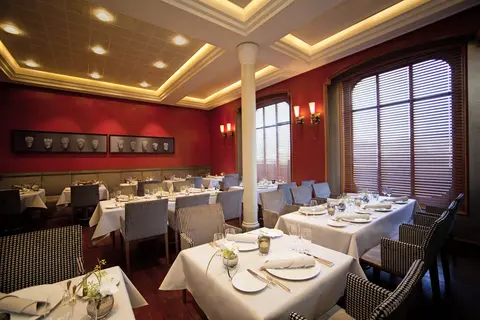
Hapag-Lloyd Cruises
1999
2013
28,437 GT
400
204
285
651 m
24 m
21 knots
No
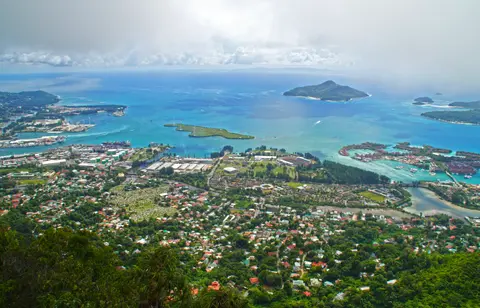
Victoria is the world's smallest capital city, heart of the Seychelles archipelago on the granite island of Mahé, where endemic coco de mer palms, spectacular beaches framed by massive boulders, and a vibrant Creole market culture converge. Must-do experiences include browsing the Sir Selwyn Selwyn-Clarke Market, hiking the Copolia Trail through endemic forests, and swimming at Anse Intendance beach. May through September offers the coolest, driest conditions for exploration.
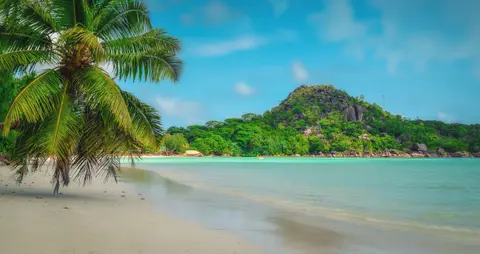
Praslin is the Seychelles' second-largest island, home to the UNESCO-listed Vallée de Mai primeval palm forest and beaches consistently ranked among the world's most beautiful. Visit during the transitional months of April-May or October-November for calm seas, the ancient coco de mer forest, and snorkeling in crystalline waters off Anse Lazio.
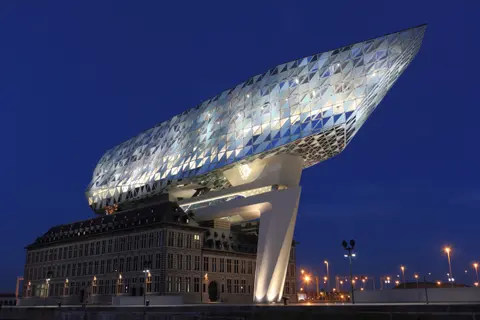
Antwerp has been one of Europe's great mercantile capitals since the fifteenth century, when it commanded the world's first commodity exchange and Peter Paul Rubens made it the artistic capital of the Baroque world — a legacy preserved in the magnificent Rubenshuis studio and the soaring Cathedral of Our Lady, whose nave houses four of the master's greatest altarpieces. Today the city leads global fashion from the acclaimed Antwerp Six design school and remains the diamond capital of the world, with 84% of the world's rough diamonds trading through its storied district. Visit in spring or autumn; Brussels and Bruges are each under an hour away by train.
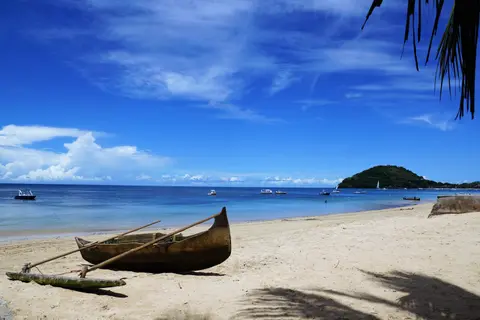
Nosy Be is Madagascar's "perfumed island" off the northwest coast, where ylang-ylang and vanilla plantations meet pristine marine reserves and humpback whales migrate through the Mozambique Channel. Must-dos include snorkelling the Nosy Tanikely reserve with sea turtles, swimming alongside whale sharks, and buying vanilla pods at the Hell-Ville market. Visit September through November for whale season and dry weather.
Bazaruto Island, Mozambique, opens a window onto Africa's extraordinary blend of natural grandeur, cultural vitality, and warm hospitality. Visitors should explore the local markets and venture into the surrounding landscapes for wildlife encounters of genuine wonder. The most favorable conditions occur May through September, when drier conditions prevail and temperatures remain pleasant. Cruise lines including Princess Cruises feature this port on their most compelling itineraries. Whether you have a few hours or a full day, the port rewards exploration at every pace and in every direction.
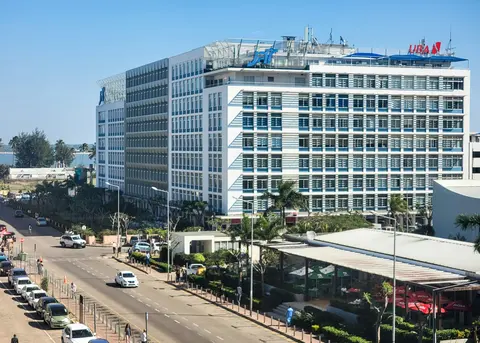
Maputo is Mozambique's vibrant Indian Ocean capital, where Portuguese colonial grandeur meets African creativity in a city of jacaranda-lined boulevards, jazz clubs, and legendary flame-grilled piri-piri prawns. Must-dos include exploring the Eiffel-associated train station, feasting on giant prawns along the Marginal, and excursions to the pristine Bazaruto Archipelago. April through November brings dry, comfortable weather ideal for city exploration and coastal diving.
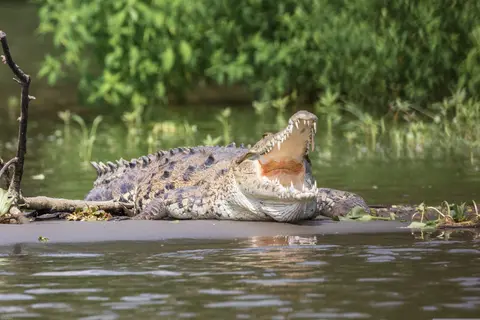
Richards Bay is a KwaZulu-Natal port city serving as the gateway to the UNESCO-listed iSimangaliso Wetland Park and Hluhluwe-iMfolozi's Big Five safari country. Must-dos include diving Sodwana Bay's coral reefs, spotting hippos on Lake St Lucia, and tasting Durban-style bunny chow curry. May through September offers the best game viewing, comfortable temperatures, and clear coastal waters.
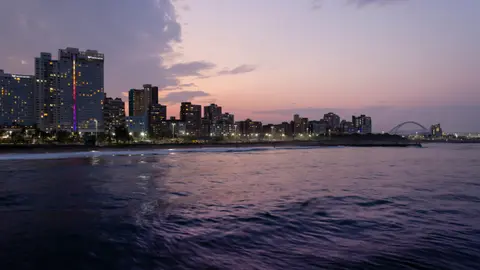
Durban is South Africa's subtropical gateway on the Indian Ocean, where Zulu, Indian, and colonial heritage converge to create one of the continent's most culturally rich port cities. Visitors should not miss savouring an authentic bunny chow in the Grey Street quarter and exploring the nearby uKhahlamba-Drakensberg mountains or iSimangaliso Wetland Park. The South African summer — November through March — delivers warm seas ideal for swimming, though the mild winters (June to August) offer comfortable touring temperatures and prime whale-watching along the KwaZulu-Natal coast.
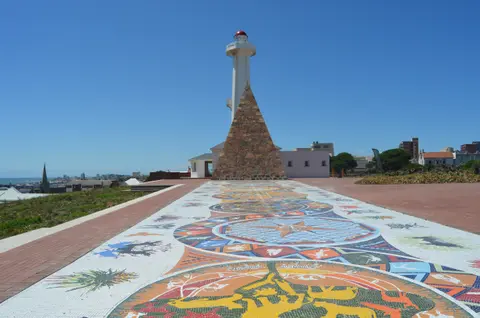
Gqeberha (Port Elizabeth) is the gateway to South Africa's Eastern Cape, where the Addo Elephant National Park—home to over 600 elephants and the rare "Big Seven"—lies just seventy-five minutes from the city's Indian Ocean beaches. Must-dos include a game drive at Addo, sampling local calamari and Eastern Cape braai, and whale watching in Algoa Bay during winter. September through April offers the best weather, while June–November brings southern right whales to the bay.
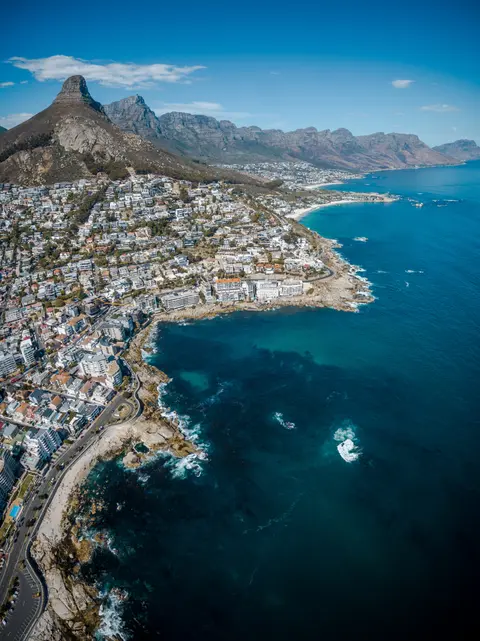
Cape Town's port is a vibrant blend of history, culture, and natural beauty, making it a premier destination for travelers. Must-do experiences include savoring local dishes like bobotie and exploring the bustling V&A Waterfront. The best season to visit is during the Southern Hemisphere summer, from December to February, when the weather is warm and perfect for outdoor adventures.
Day 1
Victoria is the world's smallest capital city, heart of the Seychelles archipelago on the granite island of Mahé, where endemic coco de mer palms, spectacular beaches framed by massive boulders, and a vibrant Creole market culture converge. Must-do experiences include browsing the Sir Selwyn Selwyn-Clarke Market, hiking the Copolia Trail through endemic forests, and swimming at Anse Intendance beach. May through September offers the coolest, driest conditions for exploration.
Day 2
Praslin is the Seychelles' second-largest island, home to the UNESCO-listed Vallée de Mai primeval palm forest and beaches consistently ranked among the world's most beautiful. Visit during the transitional months of April-May or October-November for calm seas, the ancient coco de mer forest, and snorkeling in crystalline waters off Anse Lazio.
Day 3
Day 4
Antwerp has been one of Europe's great mercantile capitals since the fifteenth century, when it commanded the world's first commodity exchange and Peter Paul Rubens made it the artistic capital of the Baroque world — a legacy preserved in the magnificent Rubenshuis studio and the soaring Cathedral of Our Lady, whose nave houses four of the master's greatest altarpieces. Today the city leads global fashion from the acclaimed Antwerp Six design school and remains the diamond capital of the world, with 84% of the world's rough diamonds trading through its storied district. Visit in spring or autumn; Brussels and Bruges are each under an hour away by train.
Day 5
Nosy Be is Madagascar's "perfumed island" off the northwest coast, where ylang-ylang and vanilla plantations meet pristine marine reserves and humpback whales migrate through the Mozambique Channel. Must-dos include snorkelling the Nosy Tanikely reserve with sea turtles, swimming alongside whale sharks, and buying vanilla pods at the Hell-Ville market. Visit September through November for whale season and dry weather.
Day 6
Day 7
Day 8
Bazaruto Island, Mozambique, opens a window onto Africa's extraordinary blend of natural grandeur, cultural vitality, and warm hospitality. Visitors should explore the local markets and venture into the surrounding landscapes for wildlife encounters of genuine wonder. The most favorable conditions occur May through September, when drier conditions prevail and temperatures remain pleasant. Cruise lines including Princess Cruises feature this port on their most compelling itineraries. Whether you have a few hours or a full day, the port rewards exploration at every pace and in every direction.
Day 9
Day 10
Maputo is Mozambique's vibrant Indian Ocean capital, where Portuguese colonial grandeur meets African creativity in a city of jacaranda-lined boulevards, jazz clubs, and legendary flame-grilled piri-piri prawns. Must-dos include exploring the Eiffel-associated train station, feasting on giant prawns along the Marginal, and excursions to the pristine Bazaruto Archipelago. April through November brings dry, comfortable weather ideal for city exploration and coastal diving.
Day 11
Day 12
Richards Bay is a KwaZulu-Natal port city serving as the gateway to the UNESCO-listed iSimangaliso Wetland Park and Hluhluwe-iMfolozi's Big Five safari country. Must-dos include diving Sodwana Bay's coral reefs, spotting hippos on Lake St Lucia, and tasting Durban-style bunny chow curry. May through September offers the best game viewing, comfortable temperatures, and clear coastal waters.
Day 13
Durban is South Africa's subtropical gateway on the Indian Ocean, where Zulu, Indian, and colonial heritage converge to create one of the continent's most culturally rich port cities. Visitors should not miss savouring an authentic bunny chow in the Grey Street quarter and exploring the nearby uKhahlamba-Drakensberg mountains or iSimangaliso Wetland Park. The South African summer — November through March — delivers warm seas ideal for swimming, though the mild winters (June to August) offer comfortable touring temperatures and prime whale-watching along the KwaZulu-Natal coast.
Day 14
Day 15
Gqeberha (Port Elizabeth) is the gateway to South Africa's Eastern Cape, where the Addo Elephant National Park—home to over 600 elephants and the rare "Big Seven"—lies just seventy-five minutes from the city's Indian Ocean beaches. Must-dos include a game drive at Addo, sampling local calamari and Eastern Cape braai, and whale watching in Algoa Bay during winter. September through April offers the best weather, while June–November brings southern right whales to the bay.
Day 16
Day 17
Cape Town's port is a vibrant blend of history, culture, and natural beauty, making it a premier destination for travelers. Must-do experiences include savoring local dishes like bobotie and exploring the bustling V&A Waterfront. The best season to visit is during the Southern Hemisphere summer, from December to February, when the weather is warm and perfect for outdoor adventures.
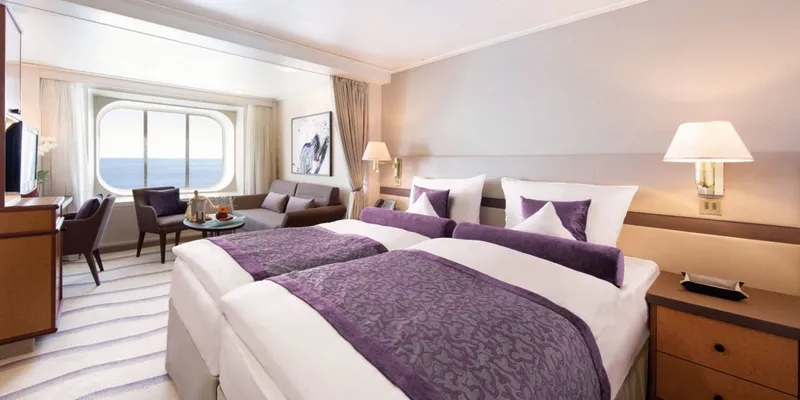
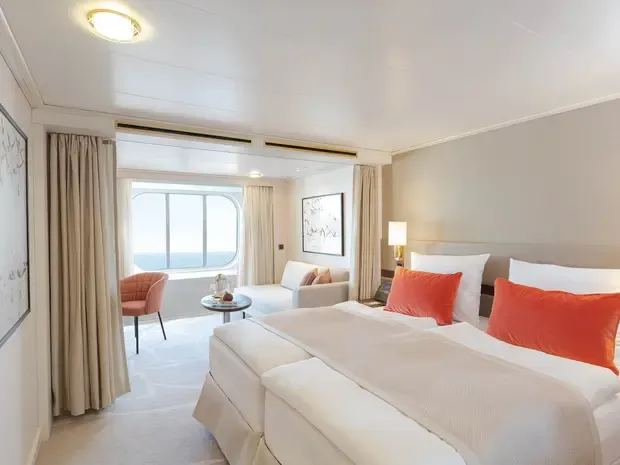
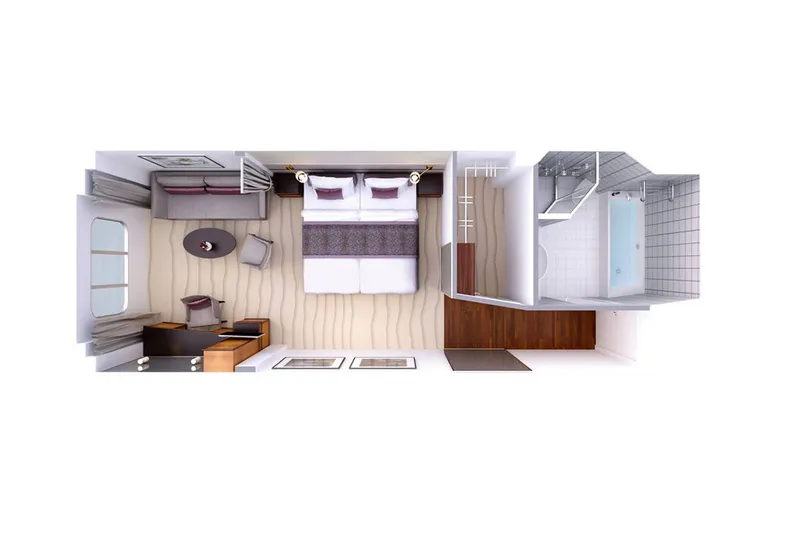
Guarantee Veranda Suite
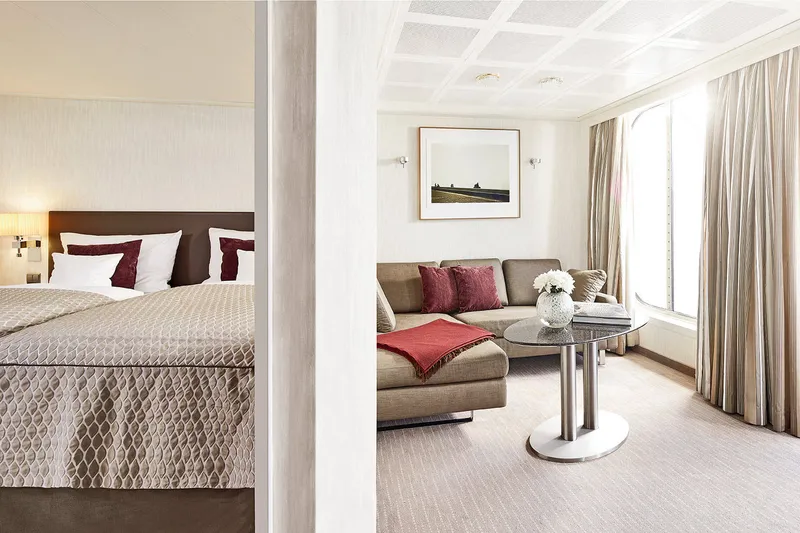
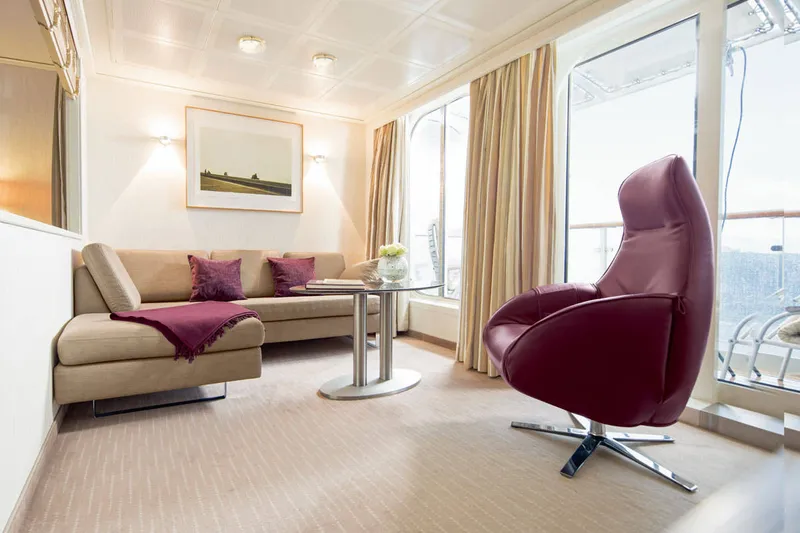
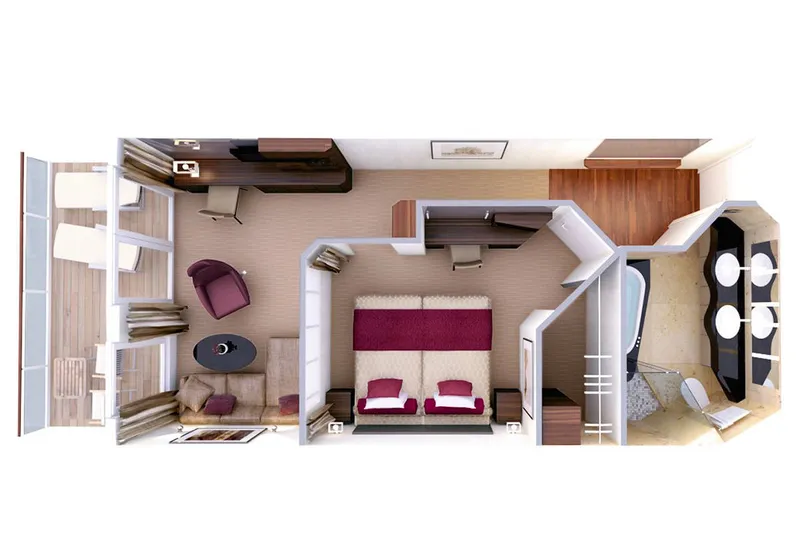
Max passengers: 4
Staterooms number:
Cabin size: 485 ft2 / 45 m2
Balcony size: included
Location (on decks): 10-Penthouse
Type (categories): (K08) Penthouse Deluxe Suite
Each Penthouse Deluxe Suite has step-out balcony (furnished with 2 padded loungers, low table, 2 deckchairs), 24-hour butler service (packing / unpacking, laundry, ironing, onboard reservations), daily in-cabin dining (fresh canapes, chocolates), Nespresso coffee maker, separate bedroom, bathroom (floor heating, 2 sinks, shower, whirlpool bath), walk-in closet, free minibar (re-stocked daily with bottled water, juices, soft drinks, beer, premium spirits).
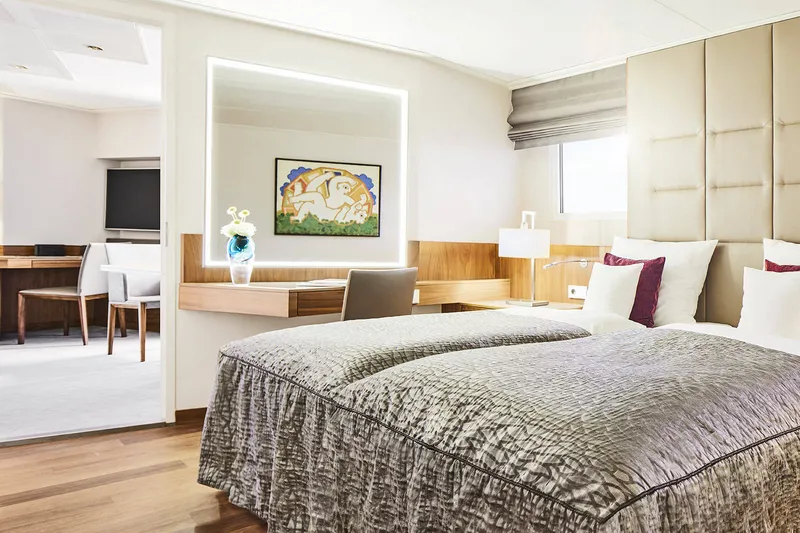
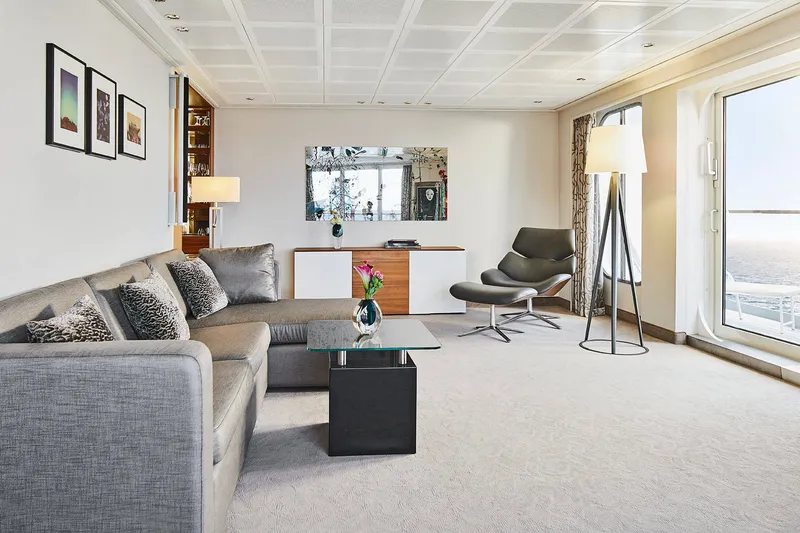
Max passengers: 4
Staterooms number: 2
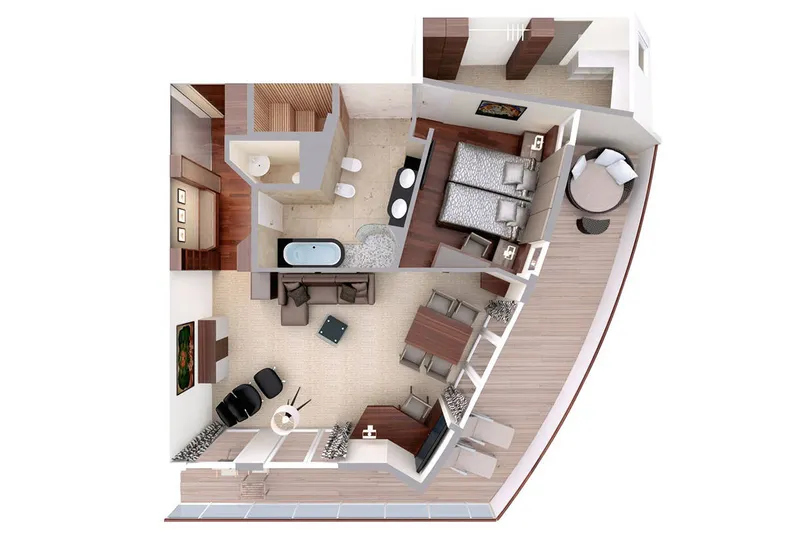
Cabin size: 915 ft2 / 85 m2
Balcony size: included
Location (on decks): forward on deck 10-Penthouse
Type (categories): (K09) Penthouse Grand Suite
Each of the fore-located Penthouse Grand Suites has wrap-around, partly covered balcony and offers as bonus perks 24-hour butler service (packing / unpacking, laundry, ironing, onboard reservations), free Internet, free ironing service, daily in-cabin dining (canapes, pralines), Nespresso coffee maker, separate bedroom, 6-seat dining table, bathroom (walk-in shower, Jacuzzi whirlpool, sauna), guest bathroom, large walk-in wardrobe, Bang und Olufsen audio system, free minibar (re-stocked daily with bottled water, juices, soft drinks, beer, premium spirits), luxury balcony furniture (DEDON daybed / sonneninsel, cushioned loungers).
Max passengers: 3
Staterooms number:
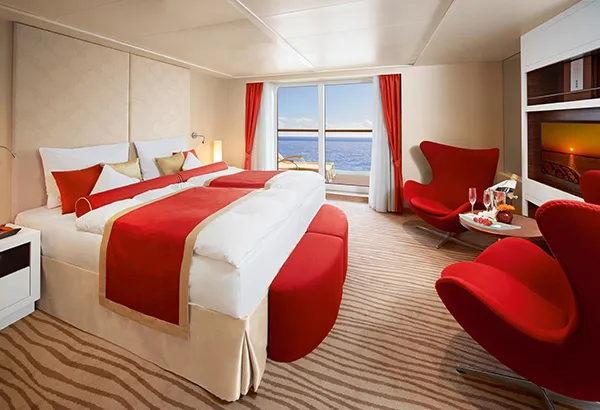
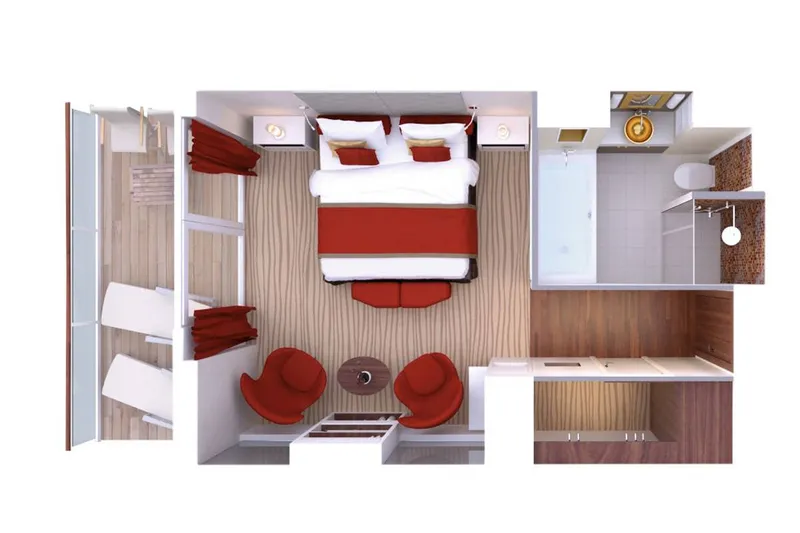
Cabin size: 290 ft2 / 27 m2
Balcony size: included
Location (on decks): 7-Sport
Type (categories): (K10) Spa Suite
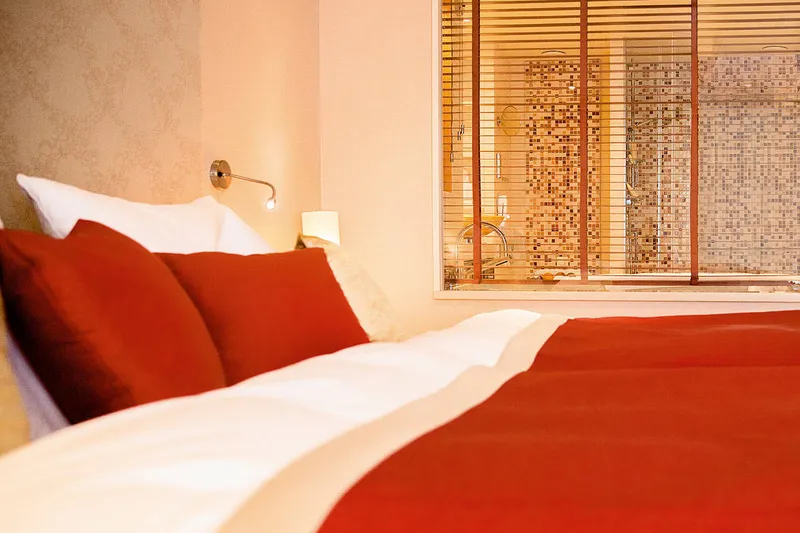
SPA Suite passengers receive 24-hour butler service (packing / unpacking, laundry, ironing, onboard reservations), SPA package, cabin balcony treatments (on request), SPA service privileges (nutritional advice), SPA drinks (smoothies, fresh fruit juices, wellness tea), daily in-cabin dining (fresh canapes, chocolates), Nespresso coffee maker, bathroom with large window (natural light and sea view, blinds between bathroom-living area), Jacuzzi whirlpool bath, emotional shower (color effects and sequences of alternating water jets), walk-in closet, free minibar (re-stocked daily with bottled water, juices, soft drinks, beer, premium spirits).
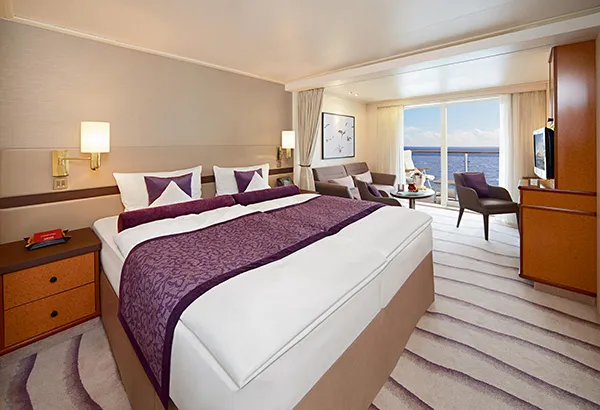
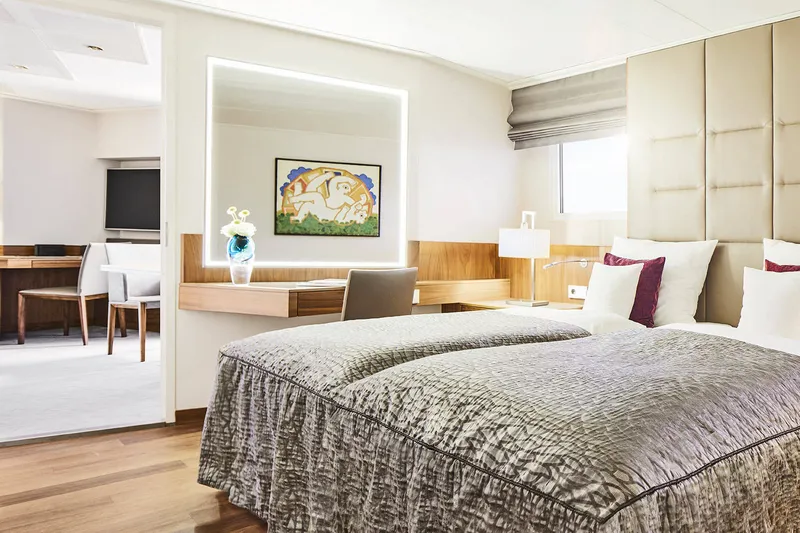
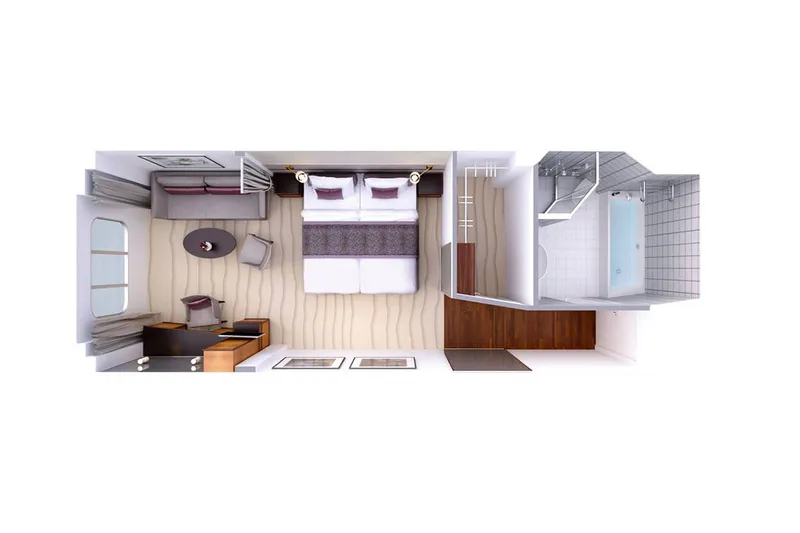
Max passengers: 2
Staterooms number:
Cabin size: 290 ft2 / 27 m2
Balcony size: none
Location (on decks): 5-Pazifik, 6-Atlantik, 7-Sport
Type (categories): (E01, E02, E03) Single Suite with Window
Veranda Suite offers 24-hour room service, curtain divider (between living-sleeping areas), en-suite bathroom (WC, shower, bathtub), walk-in closet, free minibar (re-stocked daily with bottled water, juices, soft drinks, beer). Instead of step-out balcony, Single Suites have large rounded window.
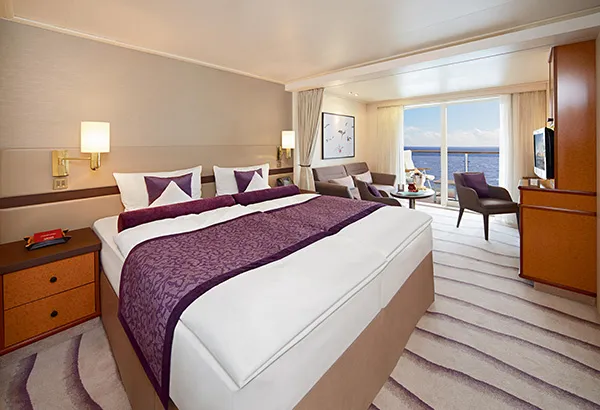
Max passengers: 4
Staterooms number:
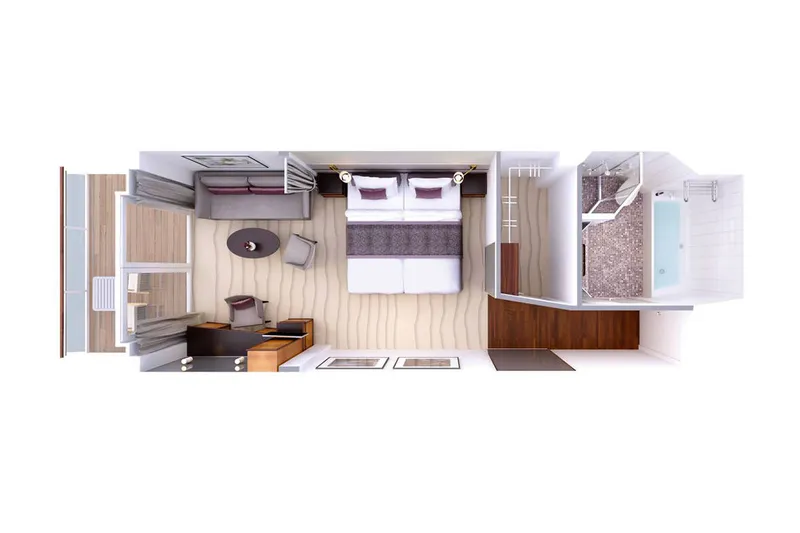
Cabin size: 290 ft2 / 27 m2
Balcony size: included
Location (on decks): 5-Pazifik, 6-Atlantik, 7-Sport, 9-Bellevue
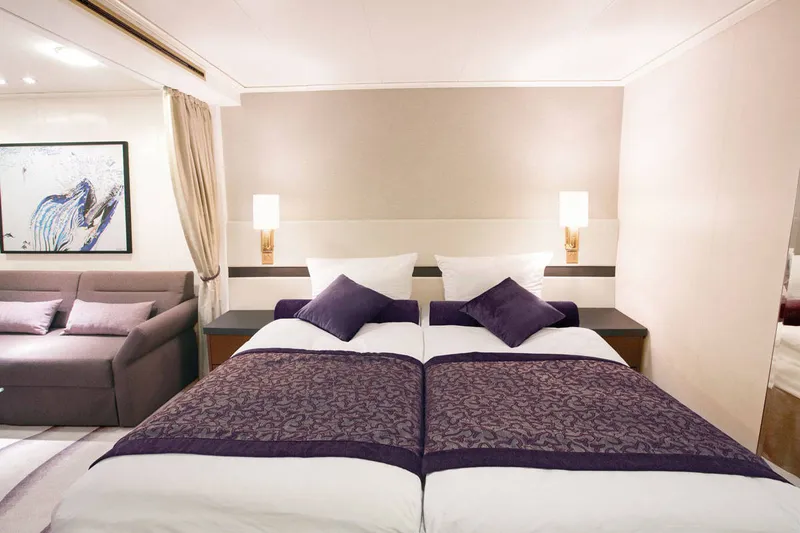
Type (categories): (E04, E05, E06, E07) Veranda Suite
Veranda Suite offers 24-hour room service, step-out balcony (furnished with 2 padded deckchairs, 1 table), curtain divider (between living-sleeping areas), en-suite bathroom (WC, shower, bathtub), walk-in closet, free minibar (re-stocked daily with bottled water, juices, soft drinks, beer). Veranda Suite category also offers wheelchair-accessible (handicapped) and connecting cabins.
Our cruise specialists can help you find the perfect cabin and the best available pricing.
(+886) 02-2721-7300Contact Advisor