October 11, 2026
34 nights · 20 sea days
Seattle
United States
Sydney
Canada


Holland America Line
2006-02-01
82,318 GT
936 m
24 knots
986 / 1,924 guests
800


Even if you think you know Seattle, we guarantee that by your next visit, the city will have changed. Because that is the nature of Seattle, always marching unashamedly towards the future. This is the city that gave us Starbucks, Nirvana and Fraser (plus numerous other celebrities from music legends to retail giants). It’s a city that knows how to surf the next wave with aplomb and grace. It is the city of the future. That is not to say that it doesn’t treat its past with respect. View less Settled by five pioneer families in 1851, the town quickly grew after the Northern Railway was extended to meet the coast in 1893. The Gold Rush of 1897 sealed the city as one of the great places on the west coast. The history of the city’s 100 Mercer girls – girls that were brought back by pioneer Asa Mercer who deemed the city had shortage of marriageable women – is just one of the quirky facts that makes the Seattle impossible not to love. Seattle is the largest city in the state of Washington, yet there is a village vibe that is uncommon in metropolises. If you truly want to enjoy the unique hybrid of tradition and progression, then take a tour of Pike Place, Seattle’s famous farmer’s market. This was where the term “locavore” was coined, and local producer-customer meetings are not only commonplace, but are encouraged. Go hungry as the huge indoor market is laden with tasty options of food options, from fresh vegetables and fruit from to prepared food that can be eaten whilst enjoying a great view of the bay.


One of the most popular exotic destinations in the United States where ocean and nature meet transforming the landscape into a breathtaking panorama. Hawaii is all of this and much more, beautiful wild islands led by the "Big Island", whose capital is the charming city of Hilo. It is here that you will fall in love with an old authentic culture. It is here that your MSC World Cruise will take you. Hilo is one of the most interesting and diverse cities of the archipelago, a special place for an unforgettable holiday that gives the gift of strong emotions both to those who are looking for peace and those who prefer adventurous excursions in a pristine habitat. Here the sea, sunny beaches, surf and magical local hospitality come together with the breathtaking beauty of rough trails, rain forests, secret bays, coffee plantations and small rural towns light years away from frenetic tourism. In this land, you will discover the magic of traveling with MSC Cruises. On Big Island, you can also find Volcanoes National Park, home of Kilauea, an active volcano for the past 30 years that continues to pour lava into the sea, gradually increasing and changing the island's outward appearance. There are two possible paths for visitors, one that goes around the Caldera and the other that descends towards the area of the lava flows. There is another marvel that awaits you during your vacation with MSC Cruises - Rainbow Falls, the waterfalls in Hilo that are 24 meters high and which offer visitors the spectacle of multiple rainbows in the morning mist. The gorge is filled with lush forest and the natural turquoise pool that the Wailuku River flows into is surrounded by wild ginger. The waterfalls flow over a natural lava cave, home to Hina, an ancient Hawaiian goddess.


Discovering Pearl Harbor Who hasn't dreamed of going to Honolulu, the capital of Hawaii on the beautiful island of Oahu, home of the most famous beaches in the world? Thanks to your MSC World Cruise, you will have the opportunity to disembark in this charming place made for relaxation and peace of mind, where you can sunbathe, enjoy typical Hawaiian food and cocktails and take a trip into the past, reliving the story of Pearl Harbor. The old military base made famous by the Japanese air force attack in 1941, during the Second World War, can be found in the county of Honolulu. A historical site filled with memories and reflections where you can round out your MSC Cruises excursion with a visit to the USS Missouri, a battleship from the time period kept in perfect condition with some of the original parts like the wooden bridge. A tour for lovers of history and events that began the Second World War in the Pacific Ocean. Exploring Honolulu also means talking a walk in the city center, which boasts not only excellent museums and the only royal palace in the United States, but also numerous restaurants and bars, all within easy reach thanks to a dense network of buses that allows you to travel to every part of the capital. With MSC Cruises, you will have the opportunity to experience a great vacation, discovering the infinite beauty of Oahu whose white sandy beaches are a symbol of unparalleled natural beauty.

Līhuʻe is an unincorporated community, census-designated place and the county seat of Kauai County, Hawaii, United States. Līhuʻe is the second-largest town on the Hawaiian island of Kauaʻi, following Kapaʻa.


Kailua-Kona is a town on the west coast of Hawaii Island (the Big Island). Hulihee Palace is a former royal vacation home dating from 1838. Mokuaikaua Church, from the 1800s, is Hawaii’s oldest Christian church. On Kailua Bay, reconstructed thatched houses at Kamakahonu National Historic Landmark mark King Kamehameha I’s residence. Colorful coral lies off Kamakahonu Beach. Kailua Pier has boat moorings.
Christmas Island is one of the Line Islands, and part of Kiritimati – the largest atoll in the world. With its miles of sand beaches, peaceful lagoons and swaying coconut palms, all resting atop an ancient reef, it is a tropical oasis awaiting your exploration. The entire island is a sanctuary for the widest variety of tropical seabirds anywhere in the world – a stunning population of between four to six million birds.


In the heart of the Pacific Ocean exists a paradise of crystal clear waters, white beaches and primitive vegetation. A place of pure beauty, where every corner hides wonderful treasures. It is French Polynesia, home of the island of Tahiti and the bustling port city of Papeete. This is where your incredibly beautiful vacation with MSC World Cruise will start on a journey to discover sensational places. It is the home of pearls; in Papeete, you can visit the first museum in the worlddedicated to the processing of these natural jewels, in particular the black pearl of Tahiti, the protagonist of the museum named after one of the largest cultivators of pearls, Robert Wan. Here each step of the delicate process of harvesting and processing pearls will be explained and you can learn how they become beautiful jewels. The museum also offers a comprehensive guide to the history and legends associated with pearls, crossing various cultures and civilizations. During your MSC Cruise into this exotic land, you will have the opportunity to visit the pulsating center of the city of Papeete, famous for its market. Activity begins at first light, with fruit, vegetables, fish, flowers and crafts. It is a place not to be missed especially early in the morning to breathe in its magical atmosphere before it is full of people. The entire island of Tahiti offers visitors a hiking dream, including walks in Bougainville Park, full of flowers and manicured plants, or a ride to Marae Arahurahu, the best place to admire the old traditional Polynesian temples and learn about their history by admiring one of the best preserved on these islands. MSC Cruises also offers a fantastic tour in the sky of Tahiti to see the whole island in one fell swoop.


In the heart of the Pacific Ocean exists a paradise of crystal clear waters, white beaches and primitive vegetation. A place of pure beauty, where every corner hides wonderful treasures. It is French Polynesia, home of the island of Tahiti and the bustling port city of Papeete. This is where your incredibly beautiful vacation with MSC World Cruise will start on a journey to discover sensational places. It is the home of pearls; in Papeete, you can visit the first museum in the worlddedicated to the processing of these natural jewels, in particular the black pearl of Tahiti, the protagonist of the museum named after one of the largest cultivators of pearls, Robert Wan. Here each step of the delicate process of harvesting and processing pearls will be explained and you can learn how they become beautiful jewels. The museum also offers a comprehensive guide to the history and legends associated with pearls, crossing various cultures and civilizations. During your MSC Cruise into this exotic land, you will have the opportunity to visit the pulsating center of the city of Papeete, famous for its market. Activity begins at first light, with fruit, vegetables, fish, flowers and crafts. It is a place not to be missed especially early in the morning to breathe in its magical atmosphere before it is full of people. The entire island of Tahiti offers visitors a hiking dream, including walks in Bougainville Park, full of flowers and manicured plants, or a ride to Marae Arahurahu, the best place to admire the old traditional Polynesian temples and learn about their history by admiring one of the best preserved on these islands. MSC Cruises also offers a fantastic tour in the sky of Tahiti to see the whole island in one fell swoop.


Green, blue, azure, white. Moorea is an explosion of colours; when viewed from above, this volcanic island in the middle of the Pacific Ocean – separated from Tahiti by the “Sea of the Moon” – is a triangle that resembles a heart. During this stop-over on the French Polynesia MSC World Cruise, you will be enchanted by Moorea’s crystal waters and extraordinary mountain peaks covered with emerald vegetation. A magical island, which over the years has been chosen by many couples from all over the world as the perfect place to get married. Seeing the beauty of Moorea up close is a privilege. During the excursion organised by MSC Cruises, you can take a guided tour of the island, arriving at the top of Mount Tohivea to enjoy a breathtaking view of Cook’s Bay; you can also visit an archaeological site, where you can see the remains of Moorea’s marae and learn about the ancient Polynesian customs and ceremonies that were practiced in these sacred places. Adventure enthusiasts can take part in a safari on board a 4x4, which will take you off the beaten track into a volcanic crater and to Moorea’s Tropical Garden, with its collection of exotic plants. Those who love the sea can put on a mask and flippers and dive into the lagoon off Opunohu Bay, Cook’s Bay’s twin, which is on the opposite side of Mount Rotui; here you can swim with stingrays and sharks and admire the corals and tropical fish. And afterwards, you can soak up the sun on the soft white sandy beach while eating Polynesian delicacies. Moorea is a fascinating destination that will enchant you; one of the destinations that will make your MSC cruise unforgettable.


The largest of the Leeward Islands, Raiatea is totally surrounded by a reef but has several navigable passes and the only navigable river in French Polynesia. Raiatea shares a protected lagoon with the island of Taha'a; legends tell how the two islands were cut apart by a mythical eel. Although it has no beaches, there are picture-postcard motus (flat reef islets) with nice beaches in the lagoon. One of the nicest things about Raiatea is that it remains "undiscovered" by most visitors to French Polynesia. Before European encroachment, Raiatea was the religious, cultural and political center of Tahiti-Polynesia. It was also Captain Cook's favorite island. The last resistance to the French takeover on the island lasted until 1897, when French troops and warships used arms to conquer the island. The native leader of the resistance, Teraupoo, was deported to New Caledonia. Raiatea is an archaeologist's delight. Scientists have unearthed artifacts linking the island with Hawaii. Local tradition says Raiatea was the great jumping-off point for ancient Polynesian mariners. There are a significant number of marae (Tahitian temples), including Taputapuatea. Considered the most important temple in the Society Islands, it is a national monument. In Uturoa, the main port, the colorful market is most crowded on Wednesday and Friday mornings when the Tahaa people arrive by motorized canoe to sell their products. Behind Uturoa, you can climb Tapioi Hill, one of the easiest and best climbs in Tahiti-Polynesia, and get a great view of four islands. Near the village of Pufau, Mount Temehani is the highest point on the island and the only home in the world of the Tiare Apetahi flower.


Even today, just as centuries ago, when you get to Avatiu Harbor, you are welcomed by the people of Rarotonga, the largest of the Cook Islands, giving you flower necklaces. As you disembark from your MSC cruise ship, Rarotonga looks like a mountainous island surrounded by a single road, the Ara Tapu, which runs along the coastline, crossing the many streams that come down from the mountains. This road runs upstream, while the other, the Ara Metua is much older and dates back to a thousand years ago. On your MSC World Cruise, you will discover what it is like to live in Avarua, the peaceful capital of the Cook Islands, strolling through its open market, the Punanga Nui, and exploring this nation’s ministerial buildings or visiting the CICC Church (Cook Islands Christian Church) that dates back to 1842. If you go on one of the MSC Cruises, you will also be able to explore the heart of the island accompanied by a local traditional healer or visit the Takitumu Conservation Area on the opposite side of the island. This reserve preserves a section of tropical rainforest that protects a rare indigenous bird, the kakerori or Rarotonga Monarch, threatened by the introduction of such predators as the cat. If you continue a further 8 km away from the reserve, you will find the dock at Ngatangiia Harbor where the Polynesian boats that colonized New Zealand in the middle of the 14th century launched from. Behind this harbor is found Muri Lagoon, a rare treasure protected by four islands covered in forests and filled with colorful tropical fish and intricate coral reefs. And if, after spending so much time at sea, you want to do some flying, the most daring visitors can take the opportunity to fly over Rarotonga island for about twenty minutes aboard a single-engine Cessna. An unforgettable guided aerial tour.

Unique in many ways, Tonga is the only country in the South Pacific that has never been colonized. The secret to this tiny kingdom's lasting autonomy lies with its monarchy - rich in culture and tradition; unafraid to modernize and move forward. You'll find Nuku'alofa on the isle of Tongatapu - the largest of the 171 island jewels in the Tongan crown. Hopefully the Tongan people, cheerful and welcoming, will treat you to a version of the lakalaka - their compelling art of storytelling manifested in a breathtaking dance.

Unique in many ways, Tonga is the only country in the South Pacific that has never been colonized. The secret to this tiny kingdom's lasting autonomy lies with its monarchy - rich in culture and tradition; unafraid to modernize and move forward. You'll find Nuku'alofa on the isle of Tongatapu - the largest of the 171 island jewels in the Tongan crown. Hopefully the Tongan people, cheerful and welcoming, will treat you to a version of the lakalaka - their compelling art of storytelling manifested in a breathtaking dance.


Auckland is called the City of Sails, and visitors flying in will see why. On the East Coast is the Waitemata Harbour—a Māori word meaning sparkling waters—which is bordered by the Hauraki Gulf, an aquatic playground peppered with small islands where many Aucklanders can be found "mucking around in boats."Not surprisingly, Auckland has some 70,000 boats. About one in four households in Auckland has a seacraft of some kind, and there are 102 beaches within an hour's drive; during the week many are quite empty. Even the airport is by the water; it borders the Manukau Harbour, which also takes its name from the Māori language and means solitary bird.According to Māori tradition, the Auckland isthmus was originally peopled by a race of giants and fairy folk. When Europeans arrived in the early 19th century, however, the Ngāti-Whātua tribe was firmly in control of the region. The British began negotiations with the Ngāti-Whātua in 1840 to purchase the isthmus and establish the colony's first capital. In September of that year the British flag was hoisted to mark the township's foundation, and Auckland remained the capital until 1865, when the seat of government was moved to Wellington. Aucklanders expected to suffer from the shift; it hurt their pride but not their pockets. As the terminal for the South Sea shipping routes, Auckland was already an established commercial center. Since then the urban sprawl has made this city of approximately 1.3 million people one of the world's largest geographically.A couple of days in the city will reveal just how developed and sophisticated Auckland is—the Mercer City Survey 2012 saw it ranked as the third-highest city for quality of life—though those seeking a New York in the South Pacific will be disappointed. Auckland is more get-up and go-outside than get-dressed-up and go-out. That said, most shops are open daily, central bars and a few nightclubs buzz well into the wee hours, especially Thursday through Saturday, and a mix of Māori, Pacific people, Asians, and Europeans contributes to the cultural milieu. Auckland has the world's largest single population of Pacific Islanders living outside their home countries, though many of them live outside the central parts of the city and in Manukau to the south. The Samoan language is the second most spoken in New Zealand. Most Pacific people came to New Zealand seeking a better life. When the plentiful, low-skilled work that attracted them dried up, the dream soured, and the population has suffered with poor health and education. Luckily, policies are now addressing that, and change is slowly coming. The Pacifica Festival in March is the region's biggest cultural event, attracting thousands to Western Springs. The annual Pacific Island Secondary Schools’ Competition, also in March, sees young Pacific Islander and Asian students compete in traditional dance, drumming, and singing. This event is open to the public.At the geographical center of Auckland city is the 1,082-foot Sky Tower, a convenient landmark for those exploring on foot and some say a visible sign of the city's naked aspiration. It has earned nicknames like the Needle and the Big Penis—a counterpoint to a poem by acclaimed New Zealand poet James K. Baxter, which refers to Rangitoto Island as a clitoris in the harbor.The Waitemata Harbour has become better known since New Zealand staged its first defense of the America's Cup in 2000 and the successful Louis Vuitton Pacific Series in early 2009. The first regatta saw major redevelopment of the waterfront. The area, where many of the city's most popular bars, cafés, and restaurants are located, is now known as Viaduct Basin or, more commonly, the Viaduct. A recent expansion has created another area, Wynyard Quarter, which is slowly adding restaurants.These days, Auckland is still considered too bold and brash for its own good by many Kiwis who live "south of the Bombay Hills," the geographical divide between Auckland and the rest of New Zealand (barring Northland). "Jafa," an acronym for "just another f—ing Aucklander," has entered the local lexicon; there's even a book out called Way of the Jafa: A Guide to Surviving Auckland and Aucklanders. A common complaint is that Auckland absorbs the wealth from the hard work of the rest of the country. Most Aucklanders, on the other hand, still try to shrug and see it as the parochial envy of those who live in small towns. But these internal identity squabbles aren't your problem. You can enjoy a well-made coffee in almost any café, or take a walk on a beach—knowing that within 30 minutes' driving time you could be cruising the spectacular harbor, playing a round at a public golf course, or even walking in subtropical forest while listening to the song of a native tûî bird.


Auckland is called the City of Sails, and visitors flying in will see why. On the East Coast is the Waitemata Harbour—a Māori word meaning sparkling waters—which is bordered by the Hauraki Gulf, an aquatic playground peppered with small islands where many Aucklanders can be found "mucking around in boats."Not surprisingly, Auckland has some 70,000 boats. About one in four households in Auckland has a seacraft of some kind, and there are 102 beaches within an hour's drive; during the week many are quite empty. Even the airport is by the water; it borders the Manukau Harbour, which also takes its name from the Māori language and means solitary bird.According to Māori tradition, the Auckland isthmus was originally peopled by a race of giants and fairy folk. When Europeans arrived in the early 19th century, however, the Ngāti-Whātua tribe was firmly in control of the region. The British began negotiations with the Ngāti-Whātua in 1840 to purchase the isthmus and establish the colony's first capital. In September of that year the British flag was hoisted to mark the township's foundation, and Auckland remained the capital until 1865, when the seat of government was moved to Wellington. Aucklanders expected to suffer from the shift; it hurt their pride but not their pockets. As the terminal for the South Sea shipping routes, Auckland was already an established commercial center. Since then the urban sprawl has made this city of approximately 1.3 million people one of the world's largest geographically.A couple of days in the city will reveal just how developed and sophisticated Auckland is—the Mercer City Survey 2012 saw it ranked as the third-highest city for quality of life—though those seeking a New York in the South Pacific will be disappointed. Auckland is more get-up and go-outside than get-dressed-up and go-out. That said, most shops are open daily, central bars and a few nightclubs buzz well into the wee hours, especially Thursday through Saturday, and a mix of Māori, Pacific people, Asians, and Europeans contributes to the cultural milieu. Auckland has the world's largest single population of Pacific Islanders living outside their home countries, though many of them live outside the central parts of the city and in Manukau to the south. The Samoan language is the second most spoken in New Zealand. Most Pacific people came to New Zealand seeking a better life. When the plentiful, low-skilled work that attracted them dried up, the dream soured, and the population has suffered with poor health and education. Luckily, policies are now addressing that, and change is slowly coming. The Pacifica Festival in March is the region's biggest cultural event, attracting thousands to Western Springs. The annual Pacific Island Secondary Schools’ Competition, also in March, sees young Pacific Islander and Asian students compete in traditional dance, drumming, and singing. This event is open to the public.At the geographical center of Auckland city is the 1,082-foot Sky Tower, a convenient landmark for those exploring on foot and some say a visible sign of the city's naked aspiration. It has earned nicknames like the Needle and the Big Penis—a counterpoint to a poem by acclaimed New Zealand poet James K. Baxter, which refers to Rangitoto Island as a clitoris in the harbor.The Waitemata Harbour has become better known since New Zealand staged its first defense of the America's Cup in 2000 and the successful Louis Vuitton Pacific Series in early 2009. The first regatta saw major redevelopment of the waterfront. The area, where many of the city's most popular bars, cafés, and restaurants are located, is now known as Viaduct Basin or, more commonly, the Viaduct. A recent expansion has created another area, Wynyard Quarter, which is slowly adding restaurants.These days, Auckland is still considered too bold and brash for its own good by many Kiwis who live "south of the Bombay Hills," the geographical divide between Auckland and the rest of New Zealand (barring Northland). "Jafa," an acronym for "just another f—ing Aucklander," has entered the local lexicon; there's even a book out called Way of the Jafa: A Guide to Surviving Auckland and Aucklanders. A common complaint is that Auckland absorbs the wealth from the hard work of the rest of the country. Most Aucklanders, on the other hand, still try to shrug and see it as the parochial envy of those who live in small towns. But these internal identity squabbles aren't your problem. You can enjoy a well-made coffee in almost any café, or take a walk on a beach—knowing that within 30 minutes' driving time you could be cruising the spectacular harbor, playing a round at a public golf course, or even walking in subtropical forest while listening to the song of a native tûî bird.


New Zealand's capital is, arguably, the country's most cosmopolitan metropolis. It's world-class Te Papa Tongarewa-Museum of New Zealand is a don't-miss attraction, and the burgeoning film industry led, of course, by the Lord of the Rings extravaganzas has injected new life into the local arts scene. Attractive and compact enough to be explored easily on foot, Wellington is a booming destination. Modern high-rise buildings gaze over Port Nicholson, surely one of the finest natural anchorages in the world. Known to local Māori as The Great Harbor of Tara, its two massive arms form the jaws of the fish of Maui from Māori legend. Sometimes referred to as the windy city, Wellington has been the seat of New Zealand's government since 1865.


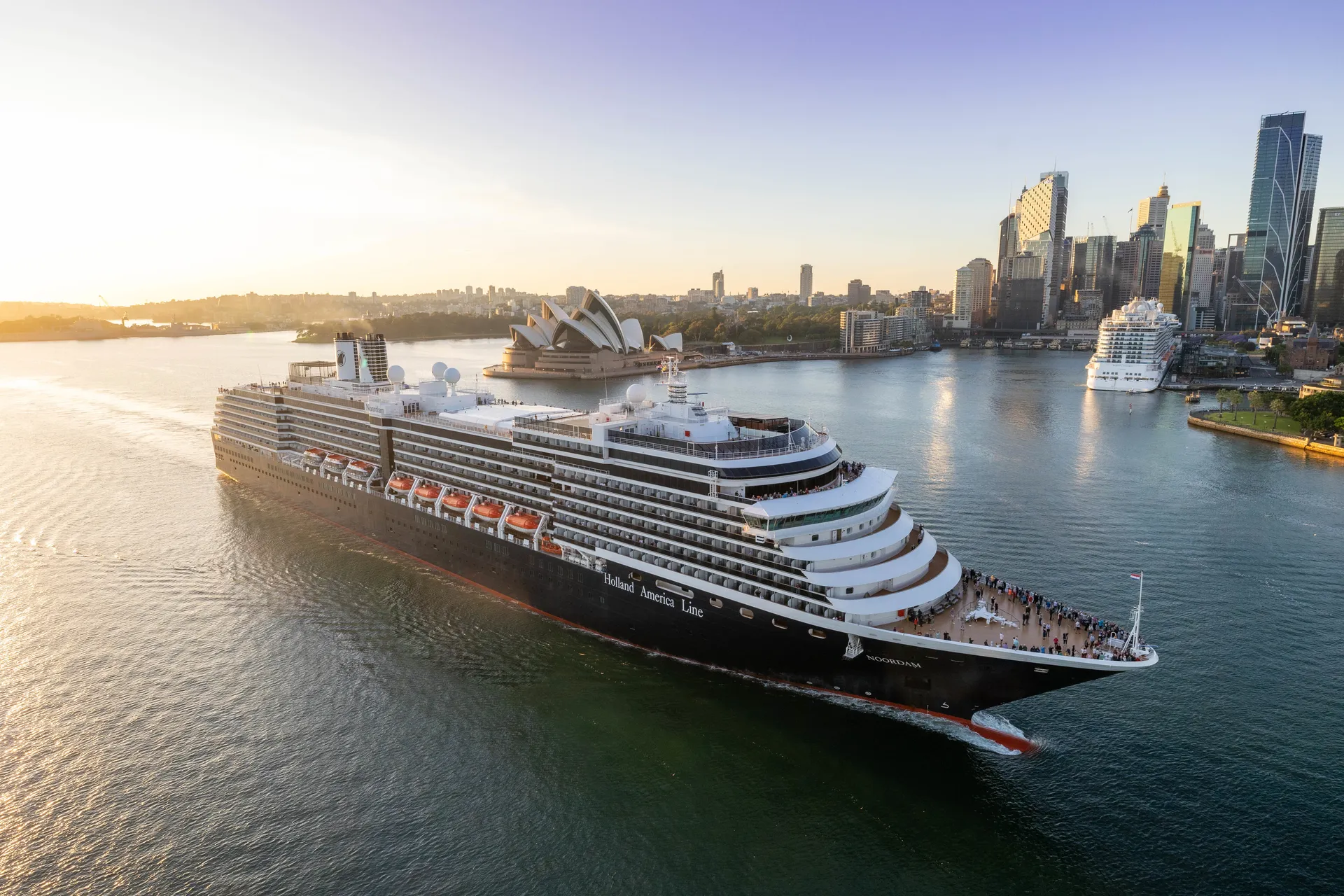
If you want a snapshot of Australia's appeal, look no further than Sydney: The idyllic lifestyle, friendly locals and drop-dead natural beauty of this approachable metropolis and its attractions explain why the country tops so many travelers' wish lists. But Sydney is more than just the embodiment of classic antipodean cool—the city is in a constant state of evolution. A list of what to do in Sydney might start with the white-hot nightlife, with its new cocktail bars and idiosyncratic mixology dens. Inventive restaurants helmed by high-caliber chefs are dishing up everything from posh pan-Asian to Argentine street food, while the famous dining temples that put Sydney on the gastronomic map are still going strong too. The famed harbor is among the top sights—home to twin icons the Sydney Opera House and the Sydney Harbour Bridge, it is the stepping-off point for some of the city's best cultural attractions and sightseeing. In one day you can sail around the harbor, get a behind-the-scenes tour of the opera house and climb the bridge, with time to spare for people-watching over a flat white at a waterfront café. Speaking of water, when you plan what to do in Sydney, you will want to include the iconic beaches, where surfers, office workers and tourists alike converge on some of the most gorgeous shoreline scenery anywhere. Bondi, Bronte and Clovelly are all within easy reach of the Central Business District, as is Manly, a charming seaside town located a short ferry ride from Circular Quay. Beyond the city you'll discover UNESCO World Heritage Sites and the chance to encounter Australia's cuddliest wildlife—a perfect way to round out your envy-inducing Sydney photo collection.


Approximately 500-712 sq. ft. including verandah
With floor-to-ceiling windows overlooking a private verandah, these spacious suites are flooded with light. They feature a large sitting area and two lower beds convertible to one king-size bed—our signature Mariner's Dream bed with plush Euro-Top mattresses plus a separate dressing room. The bathroom comes with a dual-sink vanity, full-size whirlpool bath and shower, plus additional shower stall. Amenities include use of the exclusive Neptune Lounge, a private concierge and an array of complimentary services. The configuration of staterooms may vary from the images shown.


Approximately 1150 sq. ft including verandah
Generously proportioned and filled with light, these elegant suites include a living room, dining room, pantry with microwave and refrigerator, and floor-to-ceiling windows overlooking a private verandah with whirlpool. The bedroom features a king-size bed—our Signature Mariner's Dream bed with plush Euro-Top mattresses, plus a separate dressing room and the bath includes an oversize whirlpool bath and shower as well as an additional shower stall. There's also a sofa bed, suitable for two people, and a guest toilet. Amenities include a private stereo system, use of the exclusive Neptune Lounge, private concierge and an array of complimentary services. The configuration of staterooms may vary from the images shown.


Approximately 372-384 sq. ft. including verandah
These large, comfortable suites feature a spacious sitting area with floor-to-ceiling windows overlooking a private verandah, two lower beds convertible to one queen-size bed—our signature Mariner's Dream bed with plush Euro-Top mattresses, and one sofa bed for one person. The bathroom includes a dual-sink vanity, full-size whirlpool bath and shower, and an additional shower stall. The configuration of staterooms may vary from the images shown.


Approximately 212-359 sq. ft. including verandah
Filled with light from floor-to-ceiling windows overlooking a private verandah, these staterooms include a sitting area, two lower beds convertible to one queen-size bed—our signature Mariner's Dream bed with plush Euro-Top mattresses, and bath tub with premium massage showerheads. The configuration of staterooms may vary from the images shown.


Approximately 174-180 sq. ft.
These expansive staterooms include include two lower beds convertible to one queen-size bed—our Signature Mariner's Dream bed with plush Euro-Top mattresses, premium massage shower heads, a host of amenities and an ocean view. The configuration of staterooms may vary from the images shown.


Approximately 174-180 sq. ft.
These large staterooms include two lower beds convertible to one queen-size bed—our Signature Mariner's Dream bed with plush Euro-Top mattresses, premium massage shower heads and a host of amenities. The view is fully obstructed. The configuration of staterooms may vary from the images shown.


Approximately 174-180 sq. ft.
These staterooms feature a partial sea view and include two lower beds convertible to one queen-size bed—our signature Mariner's Dream bed with plush Euro-Top mattresses, plus premium massage shower heads and a variety of amenities. The configuration of staterooms may vary from the images shown.


Approximately 151-233 sq. ft.
These spacious staterooms include two lower beds convertible to one queen-size bed—our Signature Mariner's Dream bed with plush Euro-Top mattresses, premium massage shower heads and a host of amenities. The configuration of staterooms may vary from the images shown.


Approximately 151-233 sq. ft.
These spacious staterooms include two lower beds convertible to one queen-size bed—our Signature Mariner's Dream bed with plush Euro-Top mattresses, premium massage shower heads and a host of amenities. The configuration of staterooms may vary from the images shown.


Approximately 151-233 sq. ft.
Two lower beds convertible to one queen-size bed—our signature Mariner's Dream bed with plush Euro-Top mattresses, premium massage shower heads and a host of amenities are featured in these comfortable staterooms. The configuration of staterooms may vary from the images shown.
Our cruise specialists can help you find the perfect cabin and the best available pricing.
US$7,029 /person
Contact Advisor