Date
2026-10-24
Duration
25 nights
Departure Port
Athens (Piraeus)
Greece
Arrival Port
Fort Lauderdale
United States
Rating
Premium
Theme
—


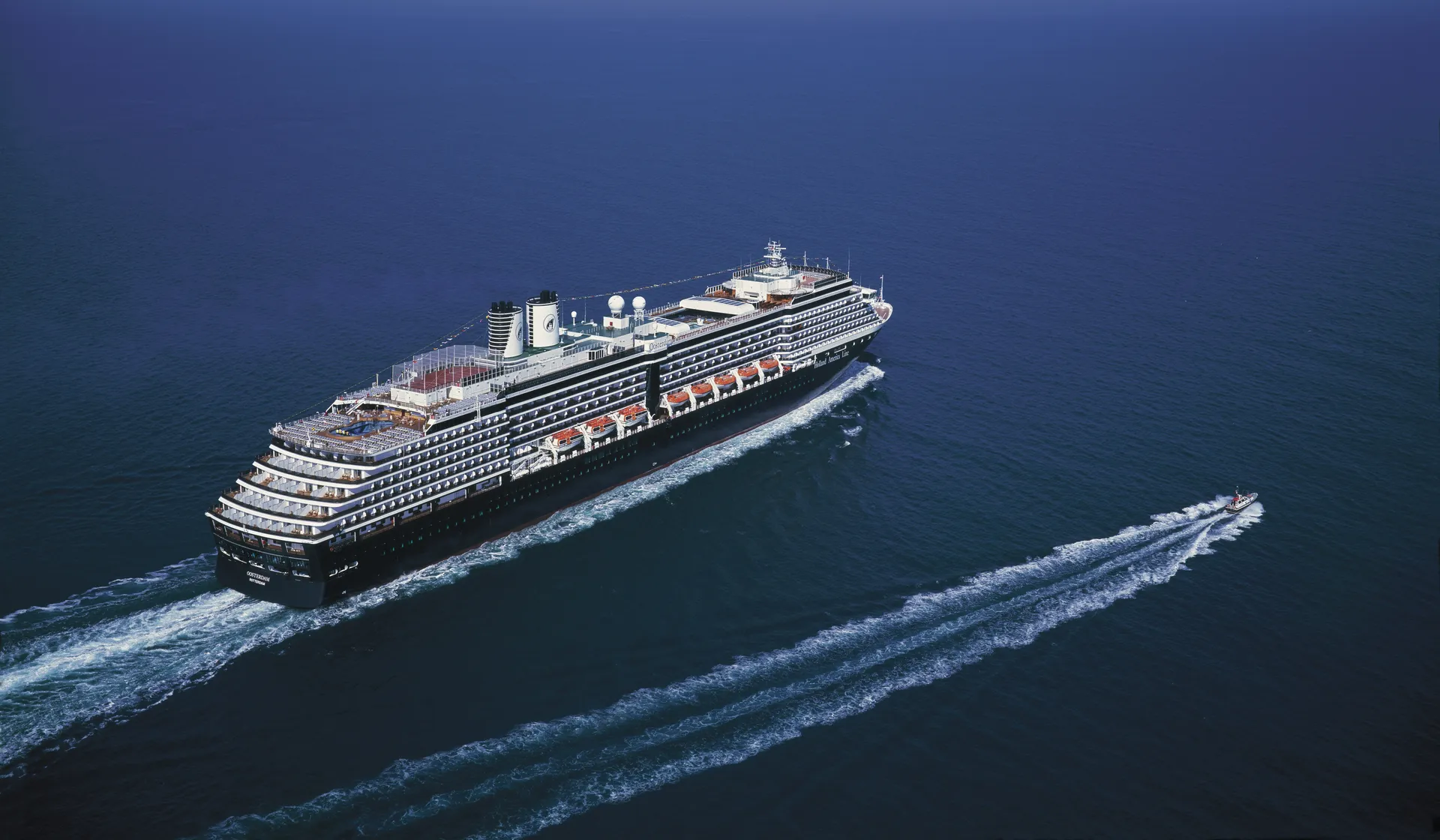
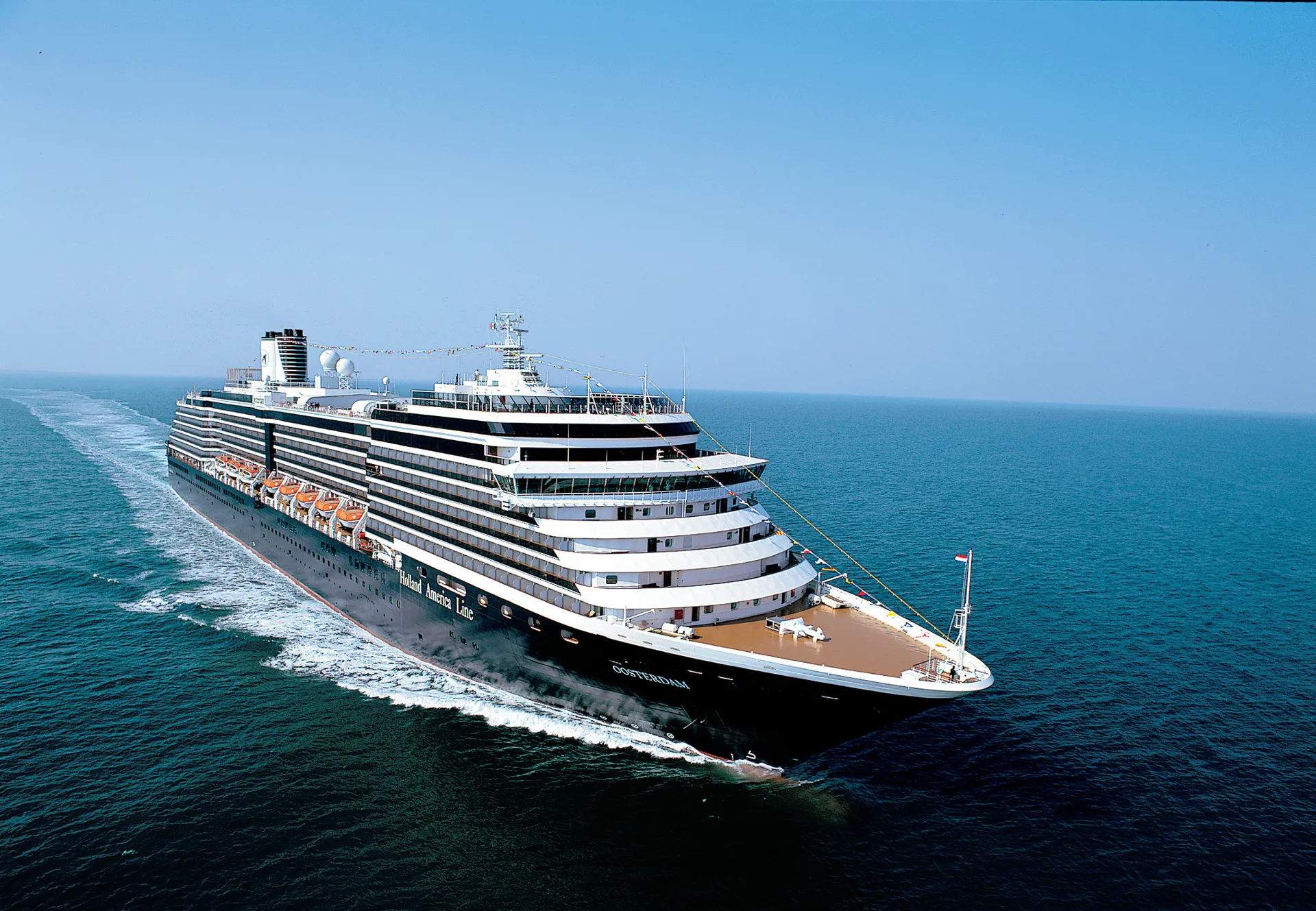
Holland America Line
2003
2018
82,305 GT
1,916
1,012
817
936 m
32 m
24 knots
No

Piraeus, the bustling port city of Athens, is a vibrant blend of ancient history and modern charm, inviting travelers to explore its rich culture. Must-do experiences include savoring traditional Greek dishes at the Varvakeios Agora and embarking on day trips to nearby islands like Symi and Nydri. The best time to visit is during the spring and fall when the weather is pleasant and the tourist crowds are fewer.

Katakolon is the unassuming port that holds an extraordinary secret: just fourteen kilometres inland lies ancient Olympia, birthplace of the Olympic Games and one of the most sacred sites in the ancient world. The Archaeological Museum of Olympia — housing the breathtaking sculptures from the Temple of Zeus — ranks among Greece's finest, while walking the original stadium still sends a current of wonder through even the most seasoned traveller. The village itself charms with whitewashed tavernas and a relaxed pace that feels authentically Greek. Katakolon is best visited April through October; late spring and early autumn offer ideal temperatures for the Olympia excursion.

Sarandë is Albania's Ionian coast jewel, where the UNESCO-listed Butrint archaeological marvel and the impossibly turquoise Blue Eye spring create a Mediterranean experience rivaling Greece at a fraction of the cost. Visit June via Emerald Yacht Cruises or Virgin Voyages for six-civilization archaeological sites and Albania's exciting Mediterranean frontier.

Thick sandstone walls fortify Valletta, holding within its stone streets and glorious architecture. It fees like a travesty, walking over the detailed inlaid marble floors of the the cathedrals, but they are there to be seen and appreciated. The Silent City is Mdina, on the far side of the island, where no cars are permitted to disrupt the serene streets. Keep an eye out for the legendary, aged yellow buses of Malta which appear to be on their last legs, but are in fact a revered and flawlessly maintained piece of Maltese heritage.

Messina guards the storied strait that separates Sicily from the Italian mainland — the passage Homer mythologised as Scylla and Charybdis — and its Norman cathedral's astronomical clock, one of the world's largest mechanical clocks, puts on a captivating automated display each noon as gilded figures enact scenes of the Resurrection. The city was catastrophically rebuilt after the 1908 earthquake, but its markets and waterfront convey the fierce energy of a Sicilian port that has witnessed two and a half millennia of Mediterranean history. Messina is the perfect gateway to Taormina, a 40-minute drive into the hills above the Ionian coast, with views of Etna at their most dramatic. Spring and autumn are ideal.

Naples — Napoli — is Europe's most operatically alive city, a sun-battered baroque metropolis where Vesuvius broods on the horizon and the streets below pulse with 2,500 years of continuous human drama. The unmissable Museo Archeologico Nazionale houses the world's finest collection of artefacts from Pompeii and Herculaneum, while the Spaccanapoli, the arrow-straight artery that has bisected the city since Greek times, delivers an unfiltered encounter with Neapolitan life. A single slice of pizza Margherita from one of the centro storico's historic pizzerias is a culinary pilgrimage in itself. Visit between April and June or September and October for warmth, manageable crowds, and the city at its golden best.

Rome's ancient maritime gateway since the Emperor Trajan commissioned its harbour in 106 AD, Civitavecchia is the natural prologue to the Eternal City — just seventy minutes southeast by express rail. The port's Renaissance fortress, designed in part by Michelangelo, anchors a working waterfront that has welcomed travellers for millennia. Beyond Rome's unmissable monuments, consider an afternoon in the Civitavecchia thermal baths, drawing on mineral waters prized since antiquity. Spring and autumn offer the ideal balance of mild weather and manageable crowds for exploring the capital's layered history.

Ajaccio, the vibrant capital of Corsica, enchants visitors with its rich history as Napoleon's birthplace and its stunning coastal views. Don't miss trying local delicacies like figatellu and brocciu, and explore the nearby picturesque villages. The best season to visit is during the mild spring or fall months, when the weather is pleasant and the crowds are fewer.

The port of Nice is a vibrant gateway to the French Riviera, offering a rich tapestry of history, stunning architecture, and delectable local cuisine. Must-do experiences include savoring local specialties at the bustling Cours Saleya Market and exploring the charming streets of Vieux Nice. The best time to visit is during the spring and early fall when the weather is mild and the city is alive with cultural festivities.

Barcelona is the city where Roman history, Gothic grandeur, and Gaudí's delirious Modernisme collide in a Mediterranean coastal capital of astonishing energy and beauty. The Sagrada Família — still under construction after 140 years — continues its audacious ascent toward completion, while the Gothic Quarter's Roman-era foundations and the Passeig de Gràcia's extraordinary concentration of Modernisme masterpieces reward days of exploration. For a complete sensory experience, lose an afternoon in the covered labyrinth of La Boqueria market before descending to the waterfront for Catalan seafood at its finest. May through June and September through October offer the most pleasant weather; the city connects directly to Paris by overnight train.

Cartagena, Spain, is a storied Mediterranean port city founded by the Carthaginians in 227 BC, where a spectacularly preserved Roman Theatre and Modernista architecture reveal layers of civilisation along a sheltered natural harbour. Visitors should not miss the caldero rice at a harbourside restaurant and a morning exploring the archaeological quarter from the Roman Forum to the Punic Wall. The mild Murcian climate makes autumn through late spring ideal, when temperatures invite leisurely wandering without the intensity of high summer.

Málaga distils three thousand years of Mediterranean civilisation into one of Andalusia's most compelling port cities, where the Moorish Alcazaba fortress surveys a modern waterfront of elegant promenades and sun-drenched café terraces. Do not leave without visiting the Museo Picasso — the artist was born here in 1881 — and ascending to the ruined Castillo de Gibralfaro for panoramic views stretching to the Rif Mountains of Morocco on clear days. Malagueta anchovies fried in olive oil and the sweet Pedro Ximénez-laced dessert wine are the city's defining pleasures. The shoulder seasons of April, May, and October offer perfect Mediterranean warmth.

Gibraltar is a British Overseas Territory perched at the southern tip of the Iberian Peninsula, where the Mediterranean meets the Atlantic beneath an iconic limestone monolith steeped in over a millennium of contested history. No visit is complete without ascending the Rock to encounter the Barbary macaques and the panoramic views stretching to North Africa, followed by a plate of calentita — the territory's beloved Genoese-heritage chickpea bake — at a Main Street bakery. The mild Mediterranean climate makes Gibraltar a rewarding port call year-round, though spring and early autumn offer the clearest skies for spotting whales and dolphins in the Strait.

King's Wharf in Bermuda is a historic port that combines rich maritime heritage with vibrant local culture. Must-do experiences include savoring the local fish chowder and visiting the Royal Naval Dockyard. The best season to visit is spring, when the island is in full bloom and the weather is pleasantly warm.

Fort Lauderdale is South Florida's reinvented waterfront city, where three hundred miles of inland waterways, the NSU Art Museum's contemporary collection, and the tree-lined Las Olas Boulevard create a cruise departure point of genuine sophistication at Port Everglades. Arrive a day early between November and April to explore the 'Venice of America' by water taxi and discover the dining scene that has replaced Spring Break with year-round culinary ambition.
Day 1

Piraeus, the bustling port city of Athens, is a vibrant blend of ancient history and modern charm, inviting travelers to explore its rich culture. Must-do experiences include savoring traditional Greek dishes at the Varvakeios Agora and embarking on day trips to nearby islands like Symi and Nydri. The best time to visit is during the spring and fall when the weather is pleasant and the tourist crowds are fewer.
Day 2

Katakolon is the unassuming port that holds an extraordinary secret: just fourteen kilometres inland lies ancient Olympia, birthplace of the Olympic Games and one of the most sacred sites in the ancient world. The Archaeological Museum of Olympia — housing the breathtaking sculptures from the Temple of Zeus — ranks among Greece's finest, while walking the original stadium still sends a current of wonder through even the most seasoned traveller. The village itself charms with whitewashed tavernas and a relaxed pace that feels authentically Greek. Katakolon is best visited April through October; late spring and early autumn offer ideal temperatures for the Olympia excursion.
Day 3

Sarandë is Albania's Ionian coast jewel, where the UNESCO-listed Butrint archaeological marvel and the impossibly turquoise Blue Eye spring create a Mediterranean experience rivaling Greece at a fraction of the cost. Visit June via Emerald Yacht Cruises or Virgin Voyages for six-civilization archaeological sites and Albania's exciting Mediterranean frontier.
Day 4
Day 5

Thick sandstone walls fortify Valletta, holding within its stone streets and glorious architecture. It fees like a travesty, walking over the detailed inlaid marble floors of the the cathedrals, but they are there to be seen and appreciated. The Silent City is Mdina, on the far side of the island, where no cars are permitted to disrupt the serene streets. Keep an eye out for the legendary, aged yellow buses of Malta which appear to be on their last legs, but are in fact a revered and flawlessly maintained piece of Maltese heritage.
Day 6

Messina guards the storied strait that separates Sicily from the Italian mainland — the passage Homer mythologised as Scylla and Charybdis — and its Norman cathedral's astronomical clock, one of the world's largest mechanical clocks, puts on a captivating automated display each noon as gilded figures enact scenes of the Resurrection. The city was catastrophically rebuilt after the 1908 earthquake, but its markets and waterfront convey the fierce energy of a Sicilian port that has witnessed two and a half millennia of Mediterranean history. Messina is the perfect gateway to Taormina, a 40-minute drive into the hills above the Ionian coast, with views of Etna at their most dramatic. Spring and autumn are ideal.
Day 7

Naples — Napoli — is Europe's most operatically alive city, a sun-battered baroque metropolis where Vesuvius broods on the horizon and the streets below pulse with 2,500 years of continuous human drama. The unmissable Museo Archeologico Nazionale houses the world's finest collection of artefacts from Pompeii and Herculaneum, while the Spaccanapoli, the arrow-straight artery that has bisected the city since Greek times, delivers an unfiltered encounter with Neapolitan life. A single slice of pizza Margherita from one of the centro storico's historic pizzerias is a culinary pilgrimage in itself. Visit between April and June or September and October for warmth, manageable crowds, and the city at its golden best.
Day 8

Rome's ancient maritime gateway since the Emperor Trajan commissioned its harbour in 106 AD, Civitavecchia is the natural prologue to the Eternal City — just seventy minutes southeast by express rail. The port's Renaissance fortress, designed in part by Michelangelo, anchors a working waterfront that has welcomed travellers for millennia. Beyond Rome's unmissable monuments, consider an afternoon in the Civitavecchia thermal baths, drawing on mineral waters prized since antiquity. Spring and autumn offer the ideal balance of mild weather and manageable crowds for exploring the capital's layered history.
Day 9

Ajaccio, the vibrant capital of Corsica, enchants visitors with its rich history as Napoleon's birthplace and its stunning coastal views. Don't miss trying local delicacies like figatellu and brocciu, and explore the nearby picturesque villages. The best season to visit is during the mild spring or fall months, when the weather is pleasant and the crowds are fewer.
Day 10

The port of Nice is a vibrant gateway to the French Riviera, offering a rich tapestry of history, stunning architecture, and delectable local cuisine. Must-do experiences include savoring local specialties at the bustling Cours Saleya Market and exploring the charming streets of Vieux Nice. The best time to visit is during the spring and early fall when the weather is mild and the city is alive with cultural festivities.
Day 11
Day 12

Barcelona is the city where Roman history, Gothic grandeur, and Gaudí's delirious Modernisme collide in a Mediterranean coastal capital of astonishing energy and beauty. The Sagrada Família — still under construction after 140 years — continues its audacious ascent toward completion, while the Gothic Quarter's Roman-era foundations and the Passeig de Gràcia's extraordinary concentration of Modernisme masterpieces reward days of exploration. For a complete sensory experience, lose an afternoon in the covered labyrinth of La Boqueria market before descending to the waterfront for Catalan seafood at its finest. May through June and September through October offer the most pleasant weather; the city connects directly to Paris by overnight train.
Day 13

Cartagena, Spain, is a storied Mediterranean port city founded by the Carthaginians in 227 BC, where a spectacularly preserved Roman Theatre and Modernista architecture reveal layers of civilisation along a sheltered natural harbour. Visitors should not miss the caldero rice at a harbourside restaurant and a morning exploring the archaeological quarter from the Roman Forum to the Punic Wall. The mild Murcian climate makes autumn through late spring ideal, when temperatures invite leisurely wandering without the intensity of high summer.
Day 14

Málaga distils three thousand years of Mediterranean civilisation into one of Andalusia's most compelling port cities, where the Moorish Alcazaba fortress surveys a modern waterfront of elegant promenades and sun-drenched café terraces. Do not leave without visiting the Museo Picasso — the artist was born here in 1881 — and ascending to the ruined Castillo de Gibralfaro for panoramic views stretching to the Rif Mountains of Morocco on clear days. Malagueta anchovies fried in olive oil and the sweet Pedro Ximénez-laced dessert wine are the city's defining pleasures. The shoulder seasons of April, May, and October offer perfect Mediterranean warmth.
Day 15

Gibraltar is a British Overseas Territory perched at the southern tip of the Iberian Peninsula, where the Mediterranean meets the Atlantic beneath an iconic limestone monolith steeped in over a millennium of contested history. No visit is complete without ascending the Rock to encounter the Barbary macaques and the panoramic views stretching to North Africa, followed by a plate of calentita — the territory's beloved Genoese-heritage chickpea bake — at a Main Street bakery. The mild Mediterranean climate makes Gibraltar a rewarding port call year-round, though spring and early autumn offer the clearest skies for spotting whales and dolphins in the Strait.
Day 16
Day 17
Day 18
Day 19
Day 20
Day 21
Day 22
Day 23

King's Wharf in Bermuda is a historic port that combines rich maritime heritage with vibrant local culture. Must-do experiences include savoring the local fish chowder and visiting the Royal Naval Dockyard. The best season to visit is spring, when the island is in full bloom and the weather is pleasantly warm.
Day 24
Day 25
Day 26

Fort Lauderdale is South Florida's reinvented waterfront city, where three hundred miles of inland waterways, the NSU Art Museum's contemporary collection, and the tree-lined Las Olas Boulevard create a cruise departure point of genuine sophistication at Port Everglades. Arrive a day early between November and April to explore the 'Venice of America' by water taxi and discover the dining scene that has replaced Spring Break with year-round culinary ambition.


Approximately 500-712 sq. ft. including verandah
With floor-to-ceiling windows overlooking a private verandah, these spacious suites are flooded with light. They feature a large sitting area and two lower beds convertible to one king-size bed—our signature Mariner's Dream bed with plush Euro-Top mattresses plus a separate dressing room. There's also a sofa bed, suitable for two people. The bathroom comes with a dual-sink vanity, full-size whirlpool bath and shower, plus additional shower stall. Amenities include use of the exclusive Neptune Lounge, a private concierge and an array of complimentary services. The configuration of staterooms may vary from the images shown.


Approximately 1,150 sq. ft. including verahdah
Generously proportioned and filled with light, these elegant suites include a living room, dining room, pantry with microwave and refrigerator, and floor-to-ceiling windows overlooking a private verandah with whirlpool. The bedroom features a king-size bed—our Signature Mariner's Dream bed with plush Euro-Top mattresses, plus a separate dressing room and the bath includes an oversize whirlpool bath and shower as well as an additional shower stall. There's also a sofa bed, suitable for two people, and a guest toilet. Amenities include a private stereo system, use of the exclusive Neptune Lounge, private concierge and an array of complimentary services. The configuration of staterooms may vary from the images shown.


Approximately 372-384 sq. ft. including verandah
These large, comfortable suites feature a spacious sitting area with floor-to-ceiling windows overlooking a private verandah, two lower beds convertible to one queen-size bed—our signature Mariner's Dream bed with plush Euro-Top mattresses, and one sofa bed for one person. The bathroom includes a dual-sink vanity, full-size whirlpool bath and shower, and an additional shower stall. The configuration of staterooms may vary from the images shown.


Approximately 212-359 sq. ft. including verandah
Filled with light from floor-to-ceiling windows overlooking a private verandah, these staterooms include a sitting area, two lower beds convertible to one queen-size bed—our signature Mariner's Dream bed with plush Euro-Top mattresses, and bath tub with premium massage showerheads. The configuration of staterooms may vary from the images shown.


Approximately 174-180 sq. ft.
These expansive staterooms include include two lower beds convertible to one queen-size bed—our Signature Mariner's Dream bed with plush Euro-Top mattresses, premium massage shower heads, a host of amenities and an ocean view. The configuration of staterooms may vary from the images


Approximately 174-180 sq. ft.
These large staterooms include two lower beds convertible to one queen-size bed—our Signature Mariner's Dream bed with plush Euro-Top mattresses, premium massage shower heads and a host of amenities. The view is fully obstructed. The configuration of staterooms may vary from the images shown.


Approximately 174-180 sq. ft.
These staterooms feature a partial sea view and include two lower beds convertible to one queen-size bed—our signature Mariner's Dream bed with plush Euro-Top mattresses, plus premium massage shower heads and a variety of amenities. The configuration of staterooms may vary from the image.


Approximately 151-233 sq. ft.
These spacious staterooms include two lower beds convertible to one queen-size bed—our Signature Mariner's Dream bed with plush Euro-Top mattresses, premium massage shower heads and a host of amenities. The configuration of staterooms may vary from the images shown.


Approximately 151-233 sq. ft.
These spacious staterooms include two lower beds convertible to one queen-size bed—our Signature Mariner's Dream bed with plush Euro-Top mattresses, premium massage shower heads and a host of amenities. The configuration of staterooms may vary from the images shown.


Approximately 151-233 sq. ft.
Two lower beds convertible to one queen-size bed—our signature Mariner's Dream bed with plush Euro-Top mattresses, premium massage shower heads and a host of amenities are featured in these comfortable staterooms. The configuration of staterooms may vary from the images shown.
Our cruise specialists can help you find the perfect cabin and the best available pricing.
(+886) 02-2721-7300Contact Advisor