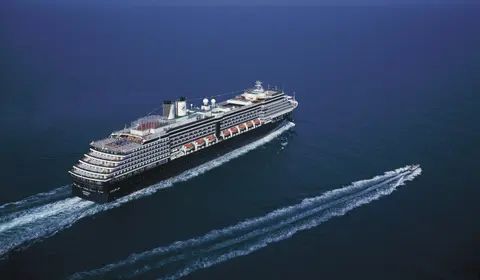
7-Day Mediterranean Splendor: Naples
Date
2027-06-12
Duration
7 nights
Departure Port
Athens (Piraeus)
Greece
Arrival Port
Civitavecchia
Italy
Rating
Premium
Theme
—
Date
2027-06-12
Duration
7 nights
Departure Port
Athens (Piraeus)
Greece
Arrival Port
Civitavecchia
Italy
Rating
Premium
Theme
—

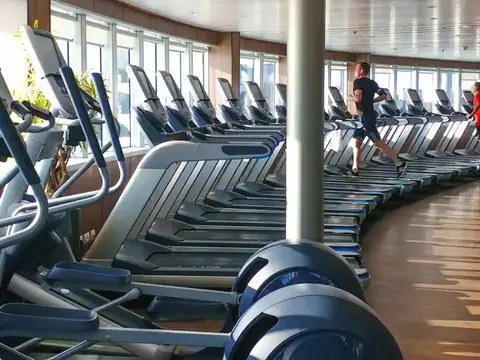





Holland America Line
2003
2018
82,305 GT
1,916
1,012
817
936 m
32 m
24 knots
No
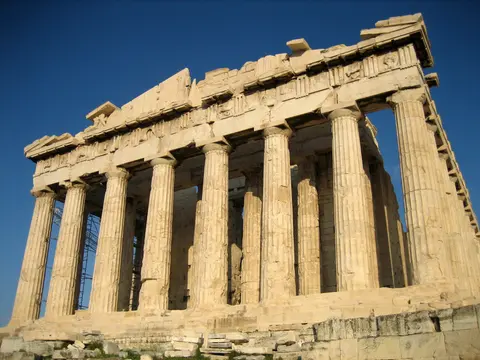
Piraeus, the bustling port city of Athens, is a vibrant blend of ancient history and modern charm, inviting travelers to explore its rich culture. Must-do experiences include savoring traditional Greek dishes at the Varvakeios Agora and embarking on day trips to nearby islands like Symi and Nydri. The best time to visit is during the spring and fall when the weather is pleasant and the tourist crowds are fewer.
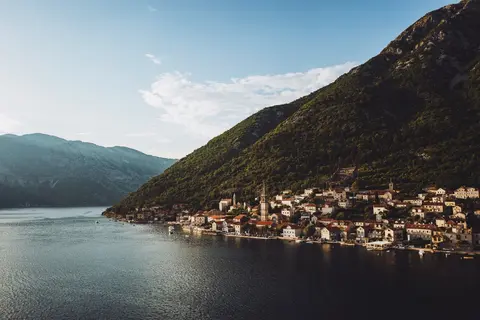
The port of Kotor, a UNESCO World Heritage site, is renowned for its stunning natural beauty and rich historical tapestry. A must-do experience includes wandering the cobblestone streets of the Old Town, where culinary delights like "kacamak" and fresh seafood await. The best time to visit is during the spring or early fall, when the weather is pleasant and the crowds are fewer.
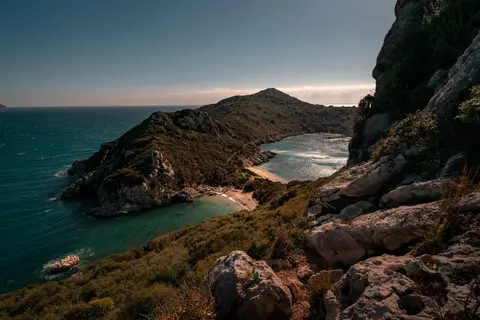
Where Homer placed the island of the Phaeacians and four centuries of Venetian rule left their most enduring Mediterranean legacy, Corfu is a singular island of extraordinary historical depth and natural beauty. The UNESCO-listed Old Town — its narrow Kantounia alleyways, the elegant Liston arcade, and twin Venetian fortresses — is the finest preserved Venetian streetscape in Greece. Beyond the town, secret coves, olive groves of immense antiquity, and mountain villages offer weeks of unhurried discovery. May through June and September offer perfect conditions: warm sea temperatures, clear skies, and the island before or after its summer crescendo.

Messina guards the storied strait that separates Sicily from the Italian mainland — the passage Homer mythologised as Scylla and Charybdis — and its Norman cathedral's astronomical clock, one of the world's largest mechanical clocks, puts on a captivating automated display each noon as gilded figures enact scenes of the Resurrection. The city was catastrophically rebuilt after the 1908 earthquake, but its markets and waterfront convey the fierce energy of a Sicilian port that has witnessed two and a half millennia of Mediterranean history. Messina is the perfect gateway to Taormina, a 40-minute drive into the hills above the Ionian coast, with views of Etna at their most dramatic. Spring and autumn are ideal.
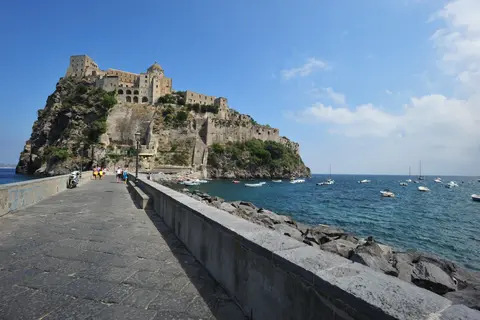
Naples — Napoli — is Europe's most operatically alive city, a sun-battered baroque metropolis where Vesuvius broods on the horizon and the streets below pulse with 2,500 years of continuous human drama. The unmissable Museo Archeologico Nazionale houses the world's finest collection of artefacts from Pompeii and Herculaneum, while the Spaccanapoli, the arrow-straight artery that has bisected the city since Greek times, delivers an unfiltered encounter with Neapolitan life. A single slice of pizza Margherita from one of the centro storico's historic pizzerias is a culinary pilgrimage in itself. Visit between April and June or September and October for warmth, manageable crowds, and the city at its golden best.
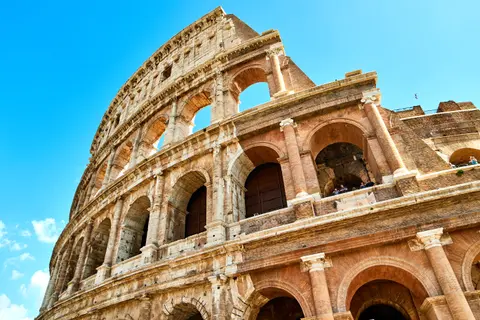
Rome's ancient maritime gateway since the Emperor Trajan commissioned its harbour in 106 AD, Civitavecchia is the natural prologue to the Eternal City — just seventy minutes southeast by express rail. The port's Renaissance fortress, designed in part by Michelangelo, anchors a working waterfront that has welcomed travellers for millennia. Beyond Rome's unmissable monuments, consider an afternoon in the Civitavecchia thermal baths, drawing on mineral waters prized since antiquity. Spring and autumn offer the ideal balance of mild weather and manageable crowds for exploring the capital's layered history.
Day 1
Piraeus, the bustling port city of Athens, is a vibrant blend of ancient history and modern charm, inviting travelers to explore its rich culture. Must-do experiences include savoring traditional Greek dishes at the Varvakeios Agora and embarking on day trips to nearby islands like Symi and Nydri. The best time to visit is during the spring and fall when the weather is pleasant and the tourist crowds are fewer.
Day 2
Day 3
The port of Kotor, a UNESCO World Heritage site, is renowned for its stunning natural beauty and rich historical tapestry. A must-do experience includes wandering the cobblestone streets of the Old Town, where culinary delights like "kacamak" and fresh seafood await. The best time to visit is during the spring or early fall, when the weather is pleasant and the crowds are fewer.
Day 4
Where Homer placed the island of the Phaeacians and four centuries of Venetian rule left their most enduring Mediterranean legacy, Corfu is a singular island of extraordinary historical depth and natural beauty. The UNESCO-listed Old Town — its narrow Kantounia alleyways, the elegant Liston arcade, and twin Venetian fortresses — is the finest preserved Venetian streetscape in Greece. Beyond the town, secret coves, olive groves of immense antiquity, and mountain villages offer weeks of unhurried discovery. May through June and September offer perfect conditions: warm sea temperatures, clear skies, and the island before or after its summer crescendo.
Day 5
Messina guards the storied strait that separates Sicily from the Italian mainland — the passage Homer mythologised as Scylla and Charybdis — and its Norman cathedral's astronomical clock, one of the world's largest mechanical clocks, puts on a captivating automated display each noon as gilded figures enact scenes of the Resurrection. The city was catastrophically rebuilt after the 1908 earthquake, but its markets and waterfront convey the fierce energy of a Sicilian port that has witnessed two and a half millennia of Mediterranean history. Messina is the perfect gateway to Taormina, a 40-minute drive into the hills above the Ionian coast, with views of Etna at their most dramatic. Spring and autumn are ideal.
Day 6
Naples — Napoli — is Europe's most operatically alive city, a sun-battered baroque metropolis where Vesuvius broods on the horizon and the streets below pulse with 2,500 years of continuous human drama. The unmissable Museo Archeologico Nazionale houses the world's finest collection of artefacts from Pompeii and Herculaneum, while the Spaccanapoli, the arrow-straight artery that has bisected the city since Greek times, delivers an unfiltered encounter with Neapolitan life. A single slice of pizza Margherita from one of the centro storico's historic pizzerias is a culinary pilgrimage in itself. Visit between April and June or September and October for warmth, manageable crowds, and the city at its golden best.
Day 8
Rome's ancient maritime gateway since the Emperor Trajan commissioned its harbour in 106 AD, Civitavecchia is the natural prologue to the Eternal City — just seventy minutes southeast by express rail. The port's Renaissance fortress, designed in part by Michelangelo, anchors a working waterfront that has welcomed travellers for millennia. Beyond Rome's unmissable monuments, consider an afternoon in the Civitavecchia thermal baths, drawing on mineral waters prized since antiquity. Spring and autumn offer the ideal balance of mild weather and manageable crowds for exploring the capital's layered history.
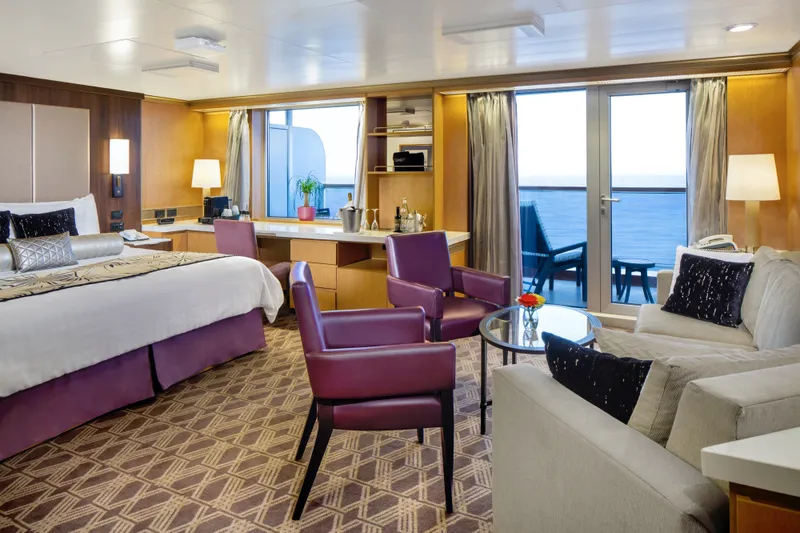
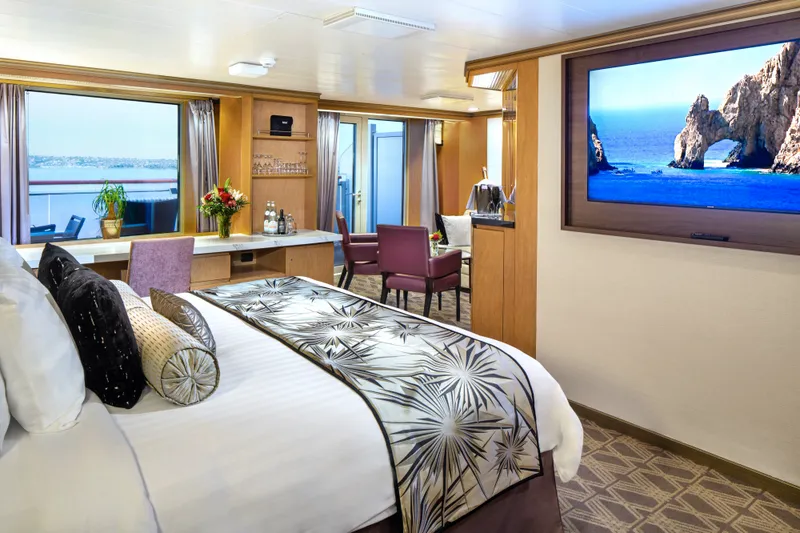
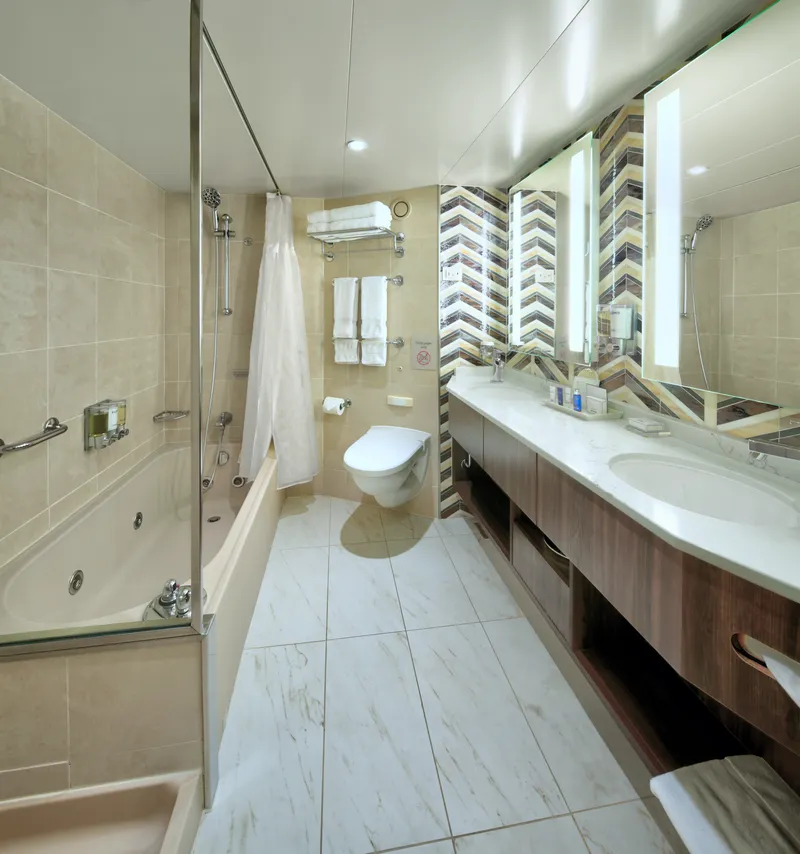
Approximately 500-712 sq. ft. including verandah
With floor-to-ceiling windows overlooking a private verandah, these spacious suites are flooded with light. They feature a large sitting area and two lower beds convertible to one king-size bed—our signature Mariner's Dream bed with plush Euro-Top mattresses plus a separate dressing room. There's also a sofa bed, suitable for two people. The bathroom comes with a dual-sink vanity, full-size whirlpool bath and shower, plus additional shower stall. Amenities include use of the exclusive Neptune Lounge, a private concierge and an array of complimentary services. The configuration of staterooms may vary from the images shown.
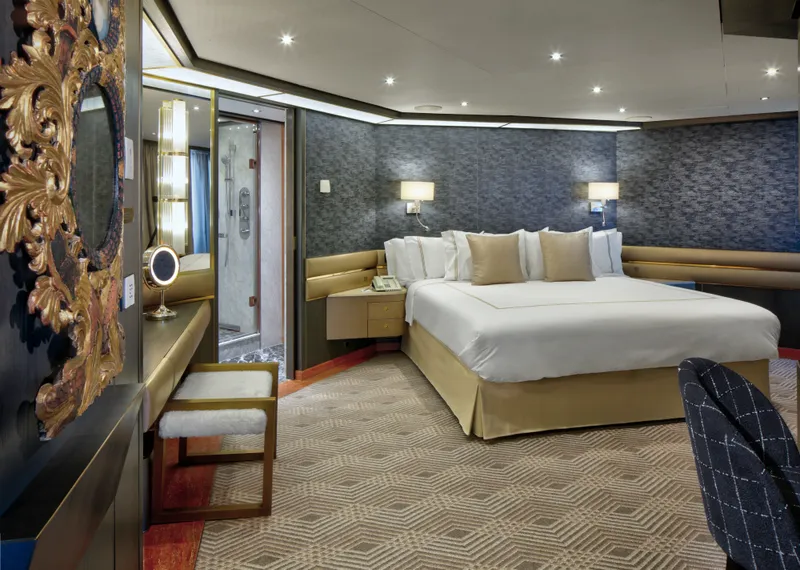
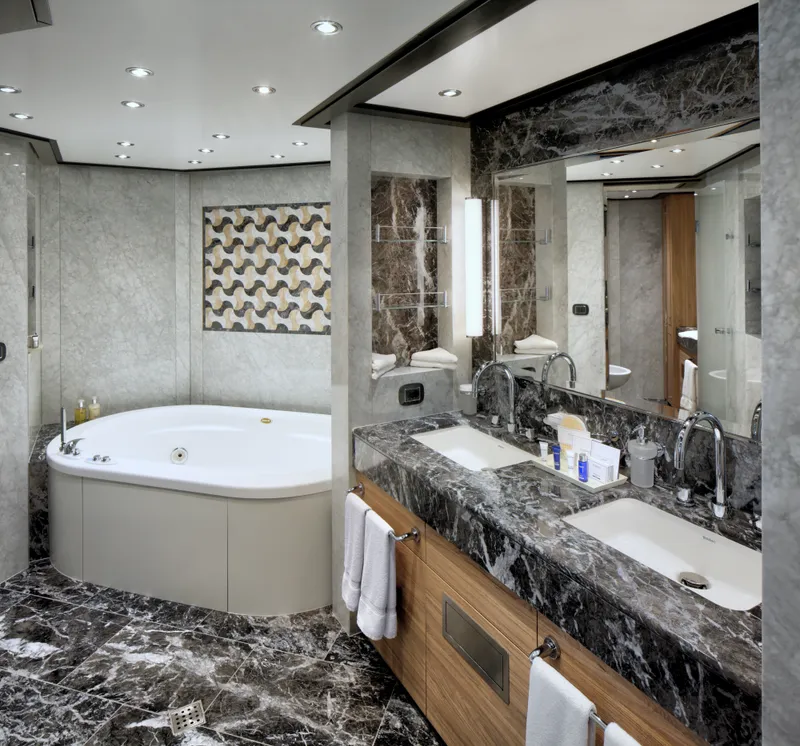
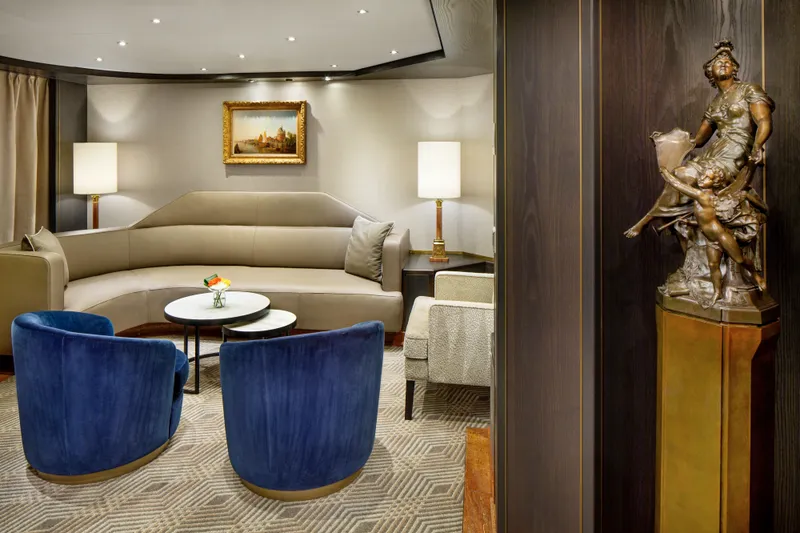
Approximately 1,150 sq. ft. including verahdah
Generously proportioned and filled with light, these elegant suites include a living room, dining room, pantry with microwave and refrigerator, and floor-to-ceiling windows overlooking a private verandah with whirlpool. The bedroom features a king-size bed—our Signature Mariner's Dream bed with plush Euro-Top mattresses, plus a separate dressing room and the bath includes an oversize whirlpool bath and shower as well as an additional shower stall. There's also a sofa bed, suitable for two people, and a guest toilet. Amenities include a private stereo system, use of the exclusive Neptune Lounge, private concierge and an array of complimentary services. The configuration of staterooms may vary from the images shown.
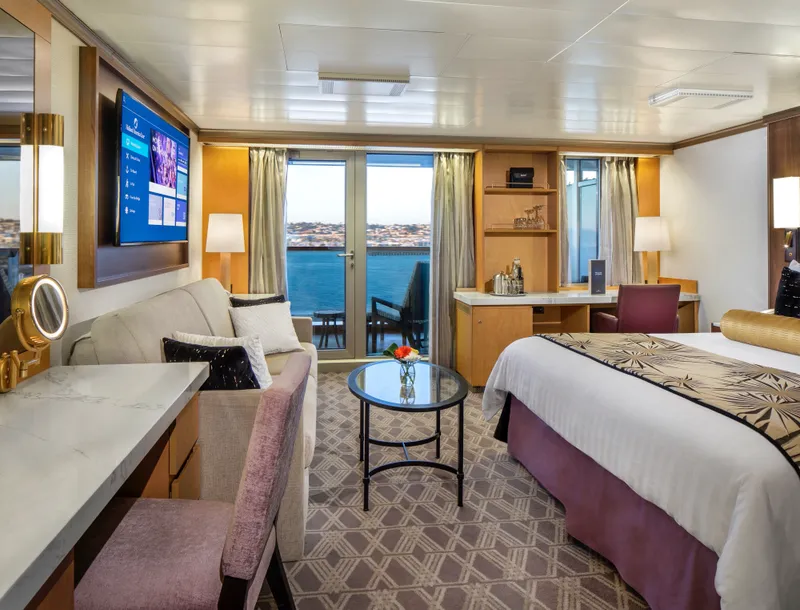
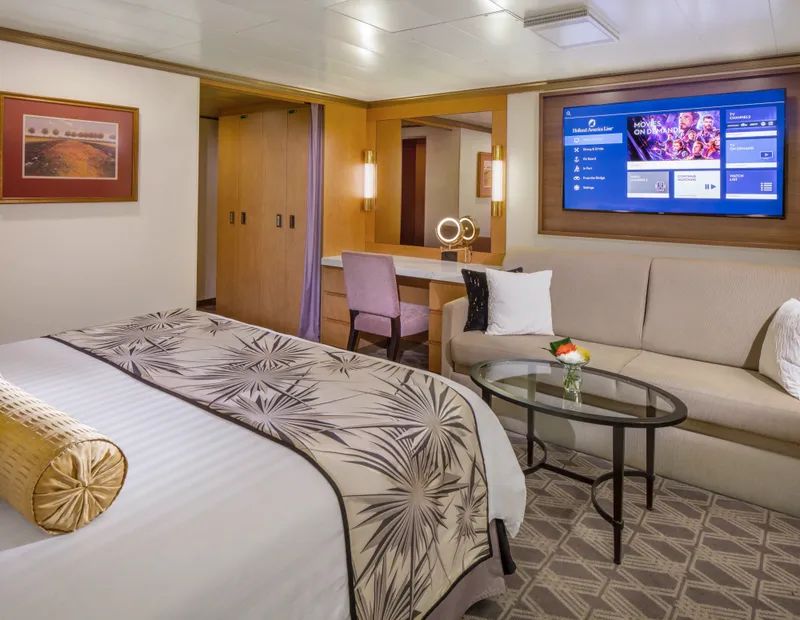
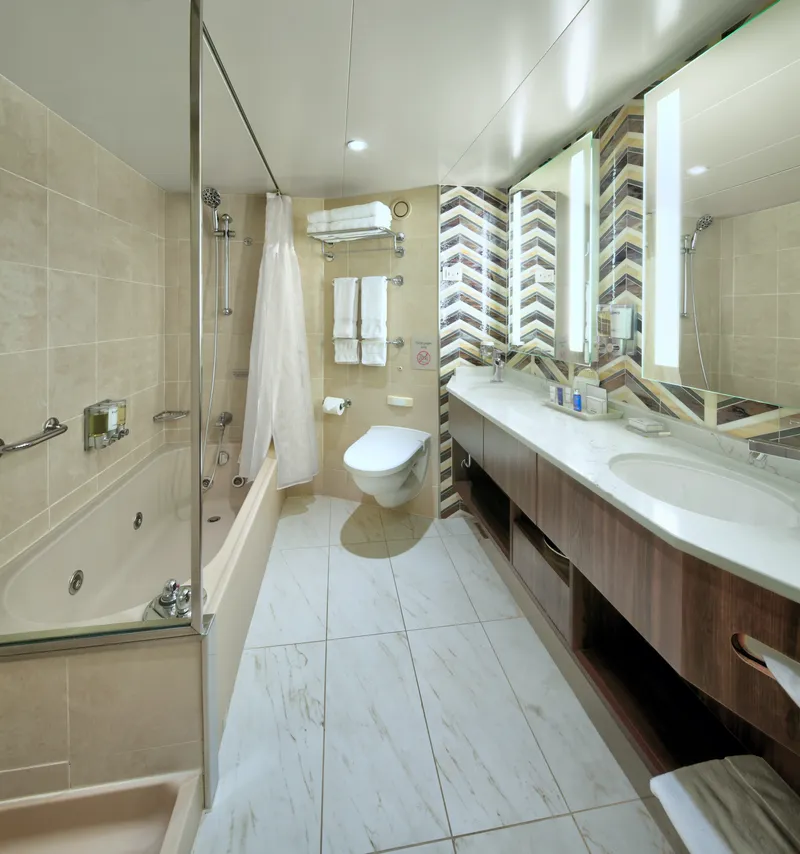
Approximately 372-384 sq. ft. including verandah
These large, comfortable suites feature a spacious sitting area with floor-to-ceiling windows overlooking a private verandah, two lower beds convertible to one queen-size bed—our signature Mariner's Dream bed with plush Euro-Top mattresses, and one sofa bed for one person. The bathroom includes a dual-sink vanity, full-size whirlpool bath and shower, and an additional shower stall. The configuration of staterooms may vary from the images shown.
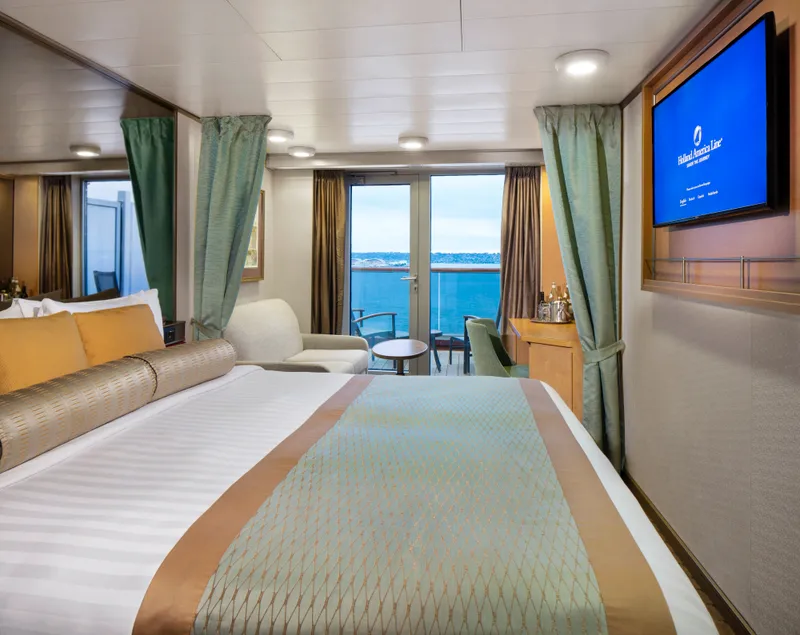
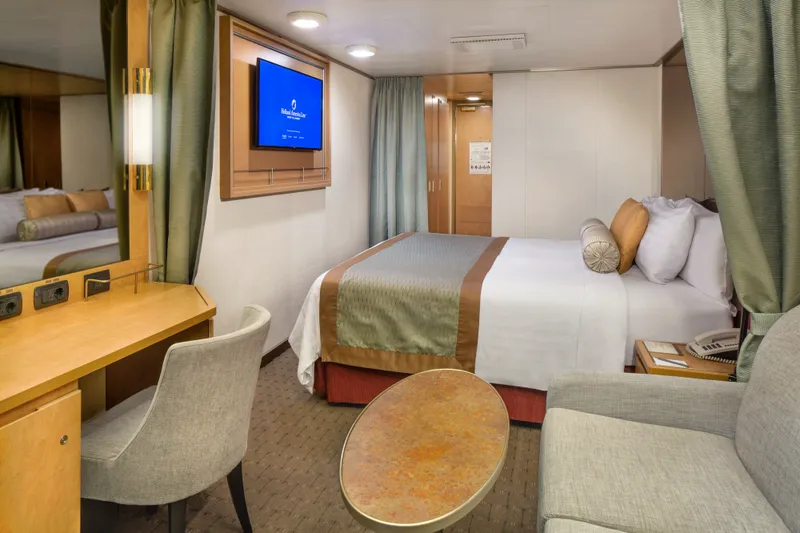
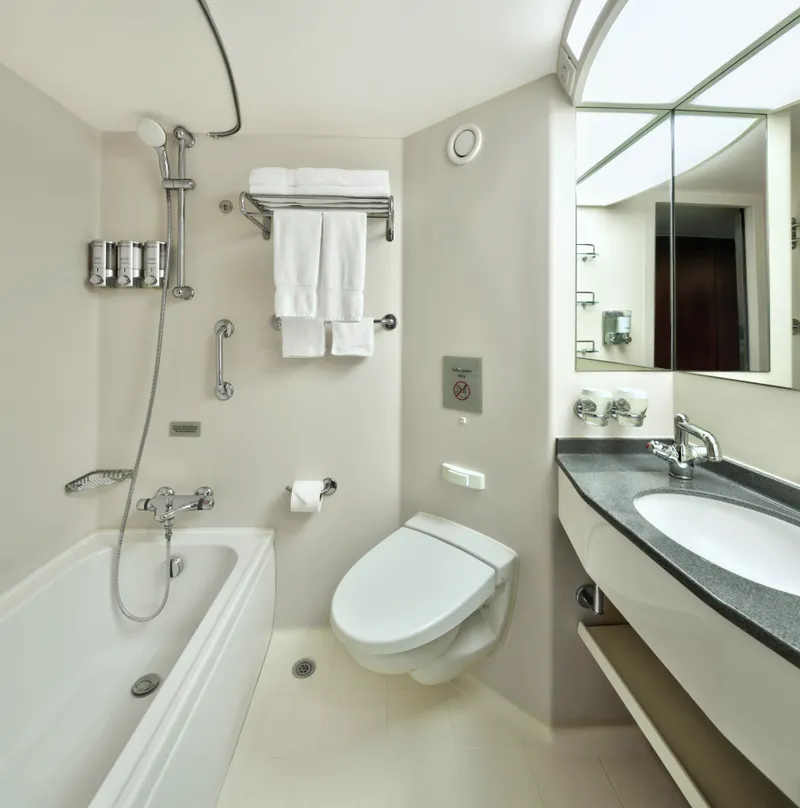
Approximately 212-359 sq. ft. including verandah
Filled with light from floor-to-ceiling windows overlooking a private verandah, these staterooms include a sitting area, two lower beds convertible to one queen-size bed—our signature Mariner's Dream bed with plush Euro-Top mattresses, and bath tub with premium massage showerheads. The configuration of staterooms may vary from the images shown.
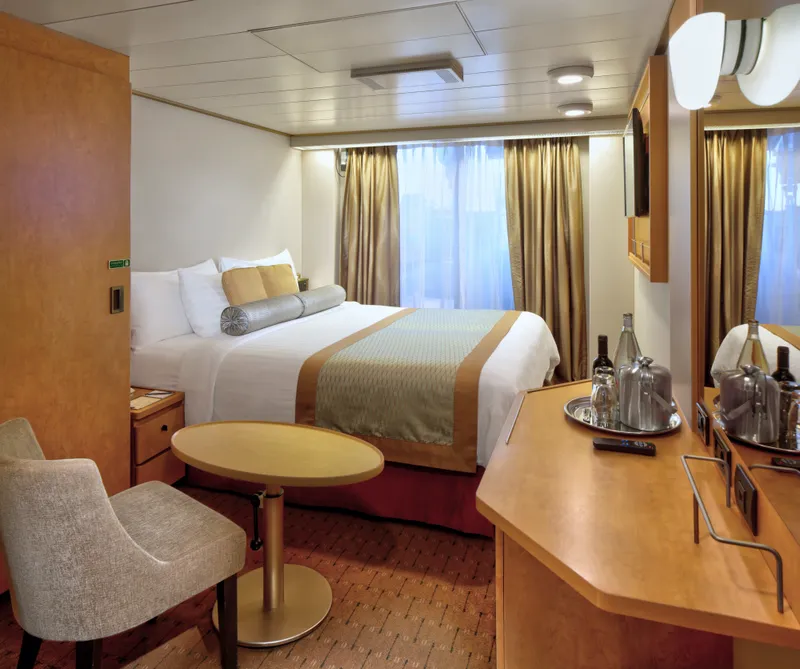
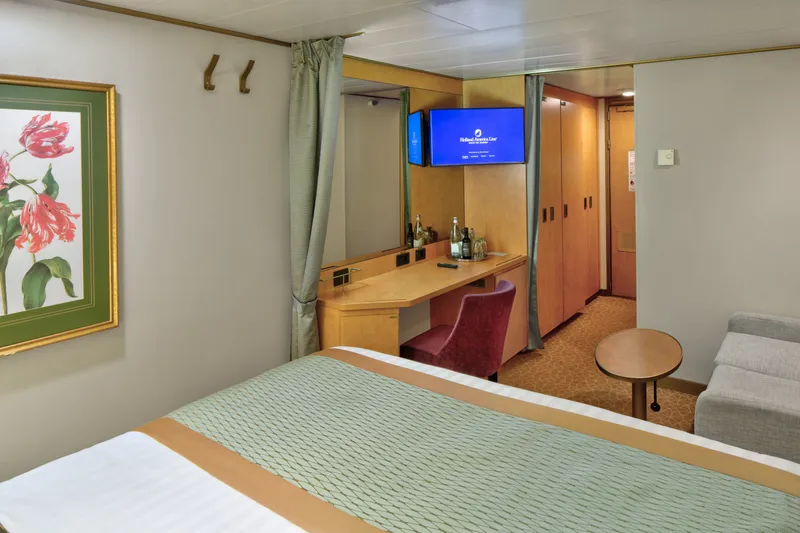
Approximately 174-180 sq. ft.
These expansive staterooms include include two lower beds convertible to one queen-size bed—our Signature Mariner's Dream bed with plush Euro-Top mattresses, premium massage shower heads, a host of amenities and an ocean view. The configuration of staterooms may vary from the images
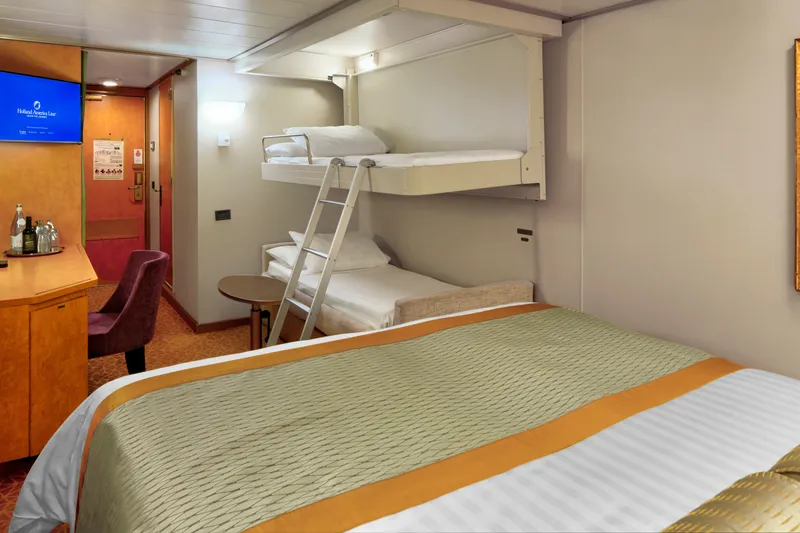
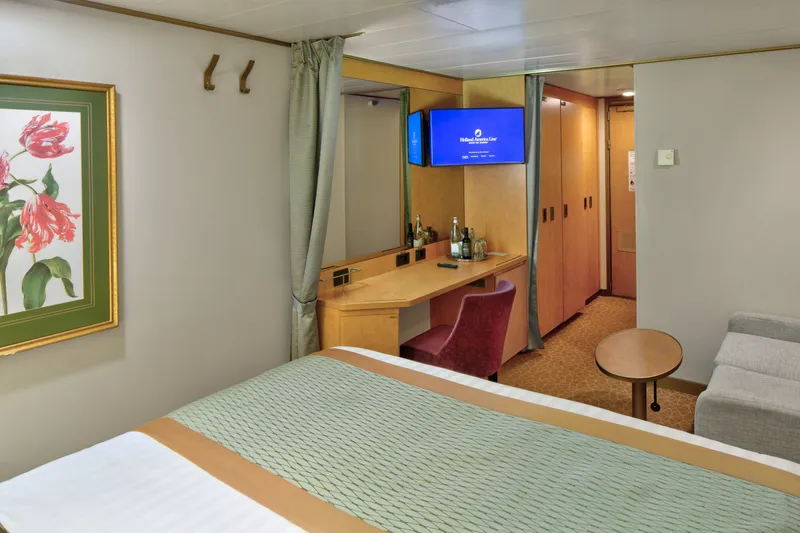
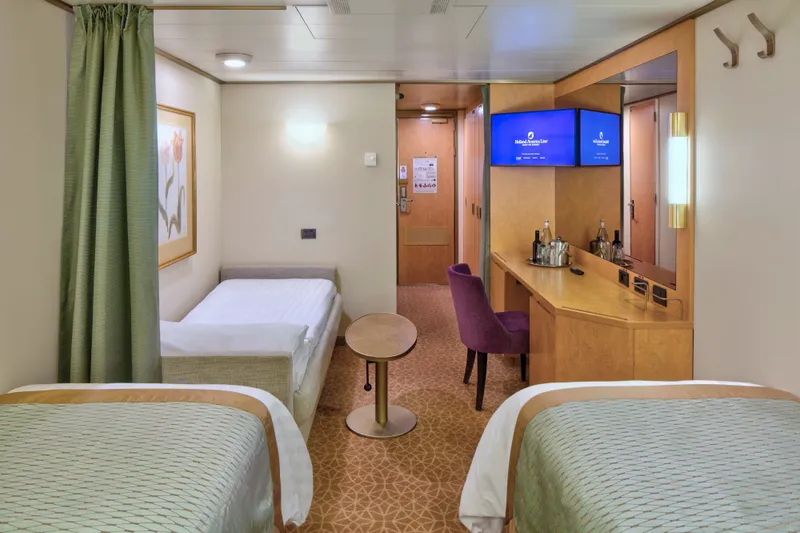
Approximately 174-180 sq. ft.
These large staterooms include two lower beds convertible to one queen-size bed—our Signature Mariner's Dream bed with plush Euro-Top mattresses, premium massage shower heads and a host of amenities. The view is fully obstructed. The configuration of staterooms may vary from the images shown.
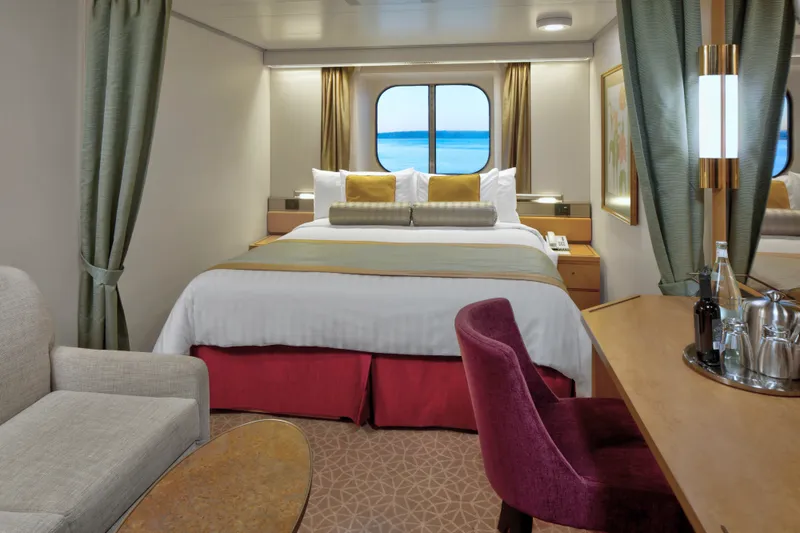
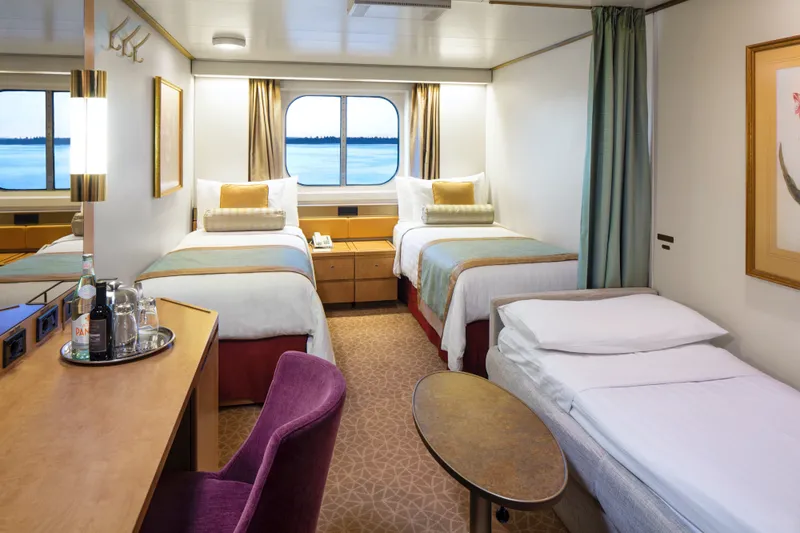
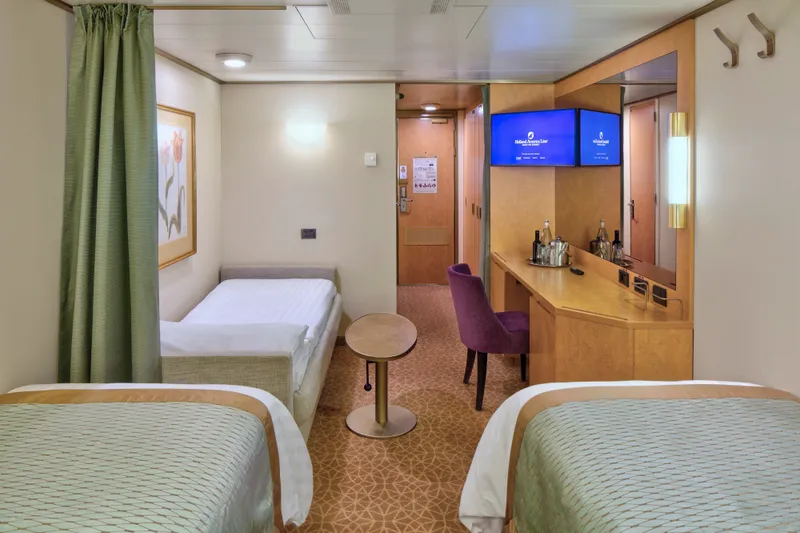
Approximately 174-180 sq. ft.
These staterooms feature a partial sea view and include two lower beds convertible to one queen-size bed—our signature Mariner's Dream bed with plush Euro-Top mattresses, plus premium massage shower heads and a variety of amenities. The configuration of staterooms may vary from the image.
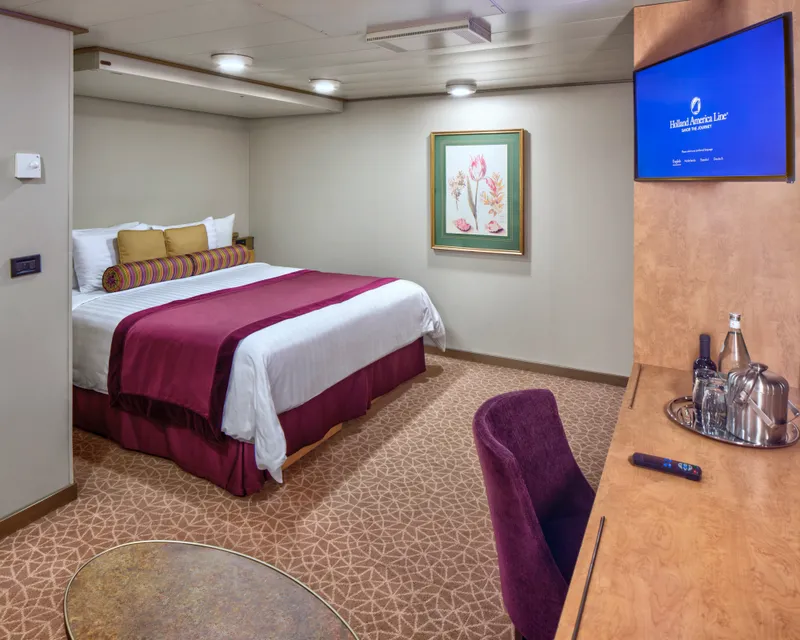
Approximately 151-233 sq. ft.
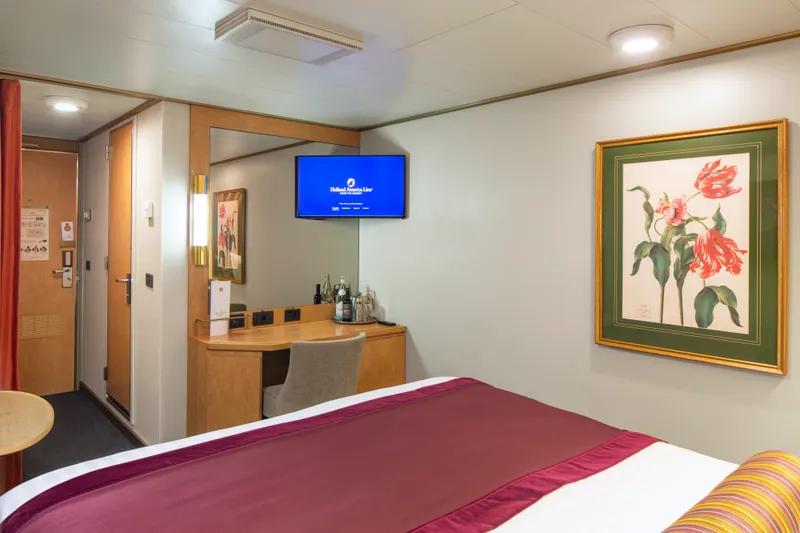
These spacious staterooms include two lower beds convertible to one queen-size bed—our Signature Mariner's Dream bed with plush Euro-Top mattresses, premium massage shower heads and a host of amenities. The configuration of staterooms may vary from the images shown.
Approximately 151-233 sq. ft.
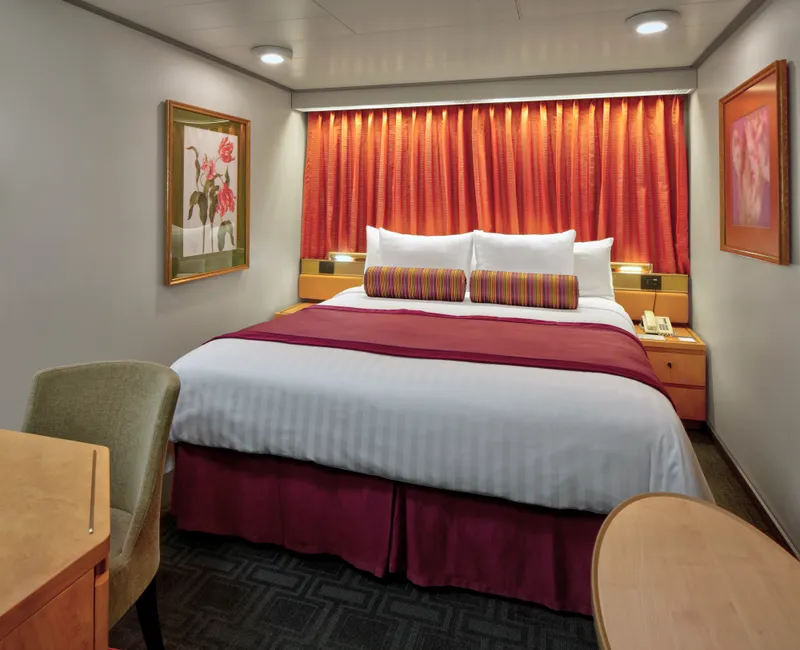
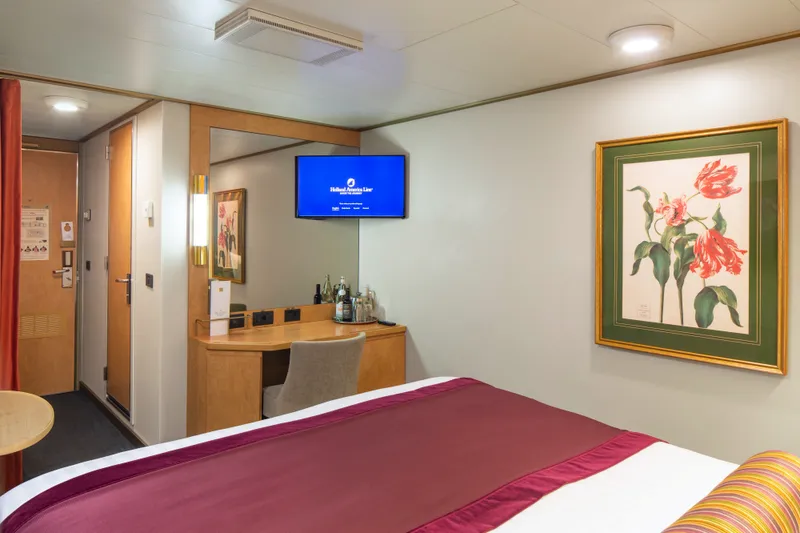
These spacious staterooms include two lower beds convertible to one queen-size bed—our Signature Mariner's Dream bed with plush Euro-Top mattresses, premium massage shower heads and a host of amenities. The configuration of staterooms may vary from the images shown.
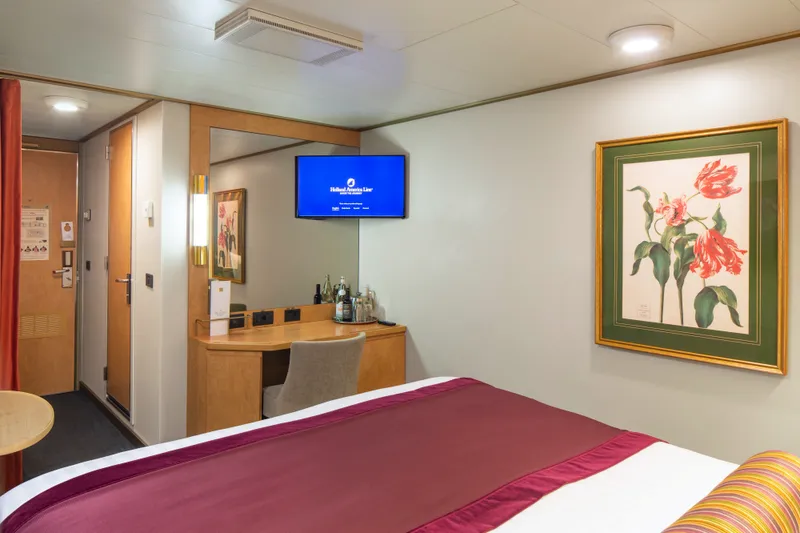
Approximately 151-233 sq. ft.
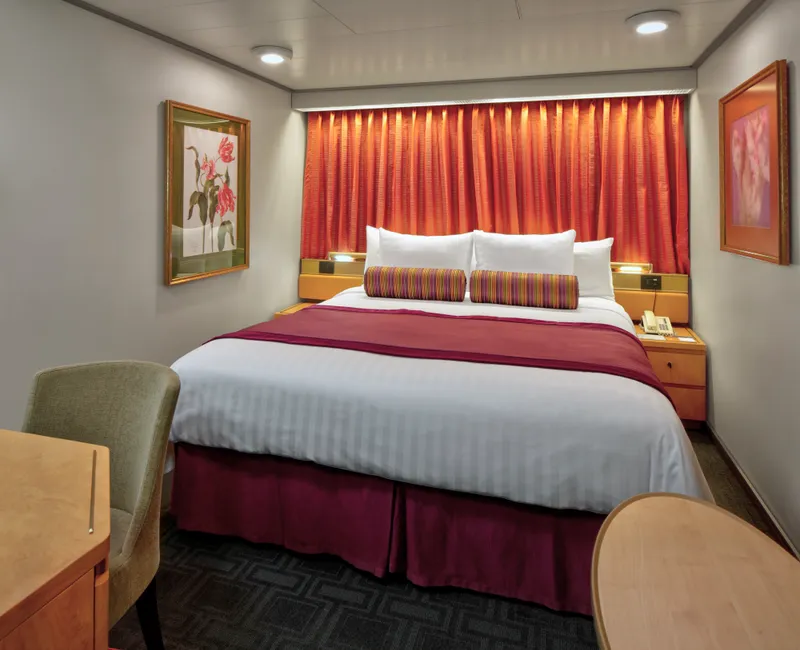
Two lower beds convertible to one queen-size bed—our signature Mariner's Dream bed with plush Euro-Top mattresses, premium massage shower heads and a host of amenities are featured in these comfortable staterooms. The configuration of staterooms may vary from the images shown.
Our cruise specialists can help you find the perfect cabin and the best available pricing.
(+886) 02-2721-7300Contact Advisor