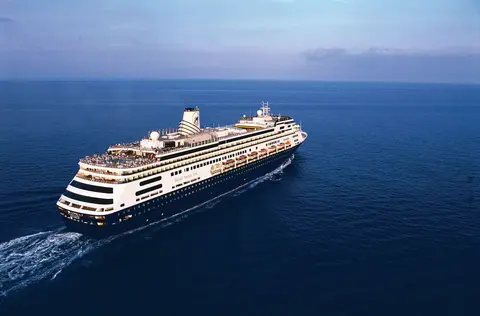
10-Day New England, New France & Newfoundland: Corner Brook
Date
2026-08-22
Duration
10 nights
Departure Port
Boston
United States
Arrival Port
Montreal
Canada
Rating
Premium
Theme
—
Date
2026-08-22
Duration
10 nights
Departure Port
Boston
United States
Arrival Port
Montreal
Canada
Rating
Premium
Theme
—







Holland America Line
1999
2019
61,214 GT
1,432
716
615
781 m
32 m
23 knots
No
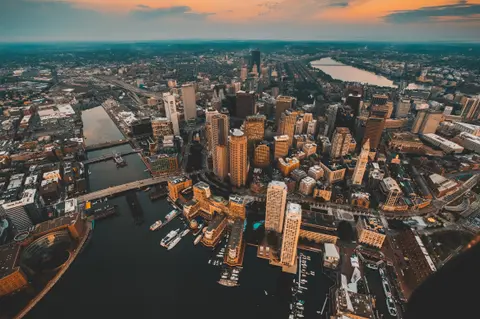
Boston is America's revolutionary birthplace and intellectual capital, a supremely walkable city where the Freedom Trail connects sixteen historic sites past Italian North End bakeries and Beacon Hill's gaslit streets. Must-do experiences include walking the Freedom Trail, eating a lobster roll at the Union Oyster House, and exploring the Isabella Stewart Gardner Museum. September and October bring peak fall foliage; spring brings the Marathon and blooming gardens.
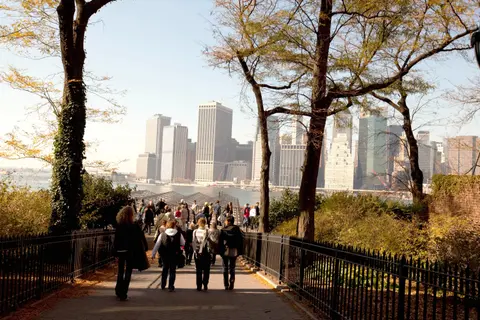
The Port of New York is a bustling maritime gateway rich in history and cultural diversity, making it a must-visit destination. Don't miss the chance to savor authentic New York pizza and explore the vibrant Chelsea Market. The best time to visit is during the spring or fall, when the weather is pleasant, and the city is alive with activity.
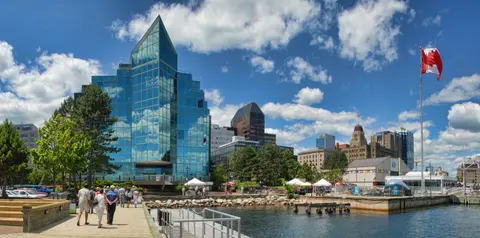
Halifax, the historic capital of Nova Scotia, is a refined Atlantic port where centuries of maritime heritage meet a flourishing culinary scene anchored by Digby scallops, donairs, and one of North America's oldest farmers' markets. Visitors should not miss the star-shaped Citadel Hill and the harbourfront boardwalk's constellation of galleries and tasting rooms. The ideal season stretches from late June through October, when autumn's blazing foliage transforms the entire province into a masterwork of colour and the cruise terminal welcomes the world's finest vessels.
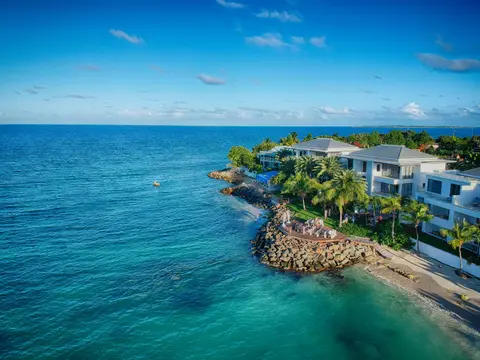
St. John's, Antigua's storied capital, anchors a natural harbor that has drawn seafarers since the seventeenth century, its Georgian cathedral and pastel-painted market hall bearing quiet witness to a complex colonial past. The crown jewel lies an hour's drive away at Nelson's Dockyard in English Harbour — the world's only still-functioning Georgian naval dockyard, set against the turquoise waters of one of the Caribbean's finest anchorages. Antigua's warm, dry climate makes it a year-round destination, though the exhilarating Sailing Week regatta in late April draws the most glamorous international crowd.
St. Anthony sits at Newfoundland's northern tip, serving as the gateway to Iceberg Alley, whale-watching waters, and the UNESCO-listed Viking settlement at L'Anse aux Meadows. Must-dos include watching thousand-year-old icebergs drift past and exploring North America's only authenticated Norse site. June and July offer peak iceberg and whale season.

Corner Brook sits on Newfoundland's west coast at the head of the Bay of Islands, framed by the Long Range Mountains and steeped in maritime history dating to Captain Cook's 1767 survey. Must-dos include visiting nearby Gros Morne National Park, tasting pan-fried cod tongues, and taking in the bay panorama from Cook's monument. July through September offers the best weather, with autumn foliage adding dramatic color.
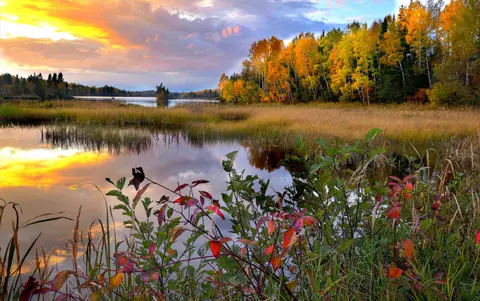
Havre-Saint-Pierre, Quebec, Canada is a distinctive port city where deep cultural heritage meets authentic local atmosphere, featured on itineraries by Silversea. Must-do experiences include walking the historic center to experience the layered architectural heritage, and seeking out the regional culinary traditions at a locally favored establishment away from the port area. The optimal time to visit is June through August, when summer months bring the warmest temperatures and longest days.
Baie-Comeau is beautifully located on the banks of the Mancouagan and Saint Lawrence Rivers. Stroll the lovely quartier Sainte-Amélie. Learn about regional wildlife at the Maison de la Faune. Or visit the new Centré Boréal, a fascinating Glacier Center where visitors can walk through a manmade glacier, experiencing its temperature, sound and movement.
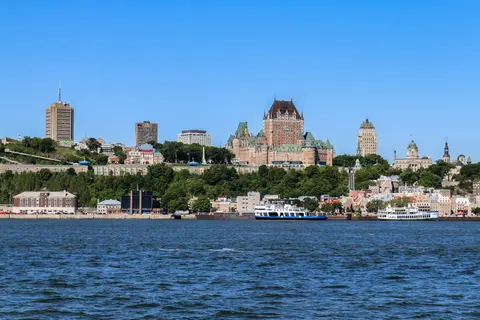
Quebec City is North America's only walled city, a UNESCO treasure where 400 years of French colonial architecture crown a St. Lawrence promontory beneath the iconic Château Frontenac. Visit September through October via Cunard or Seabourn for autumn foliage transforming stone ramparts, elevated Québécois terroir cuisine, and the singular experience of genuine Old World atmosphere on a continent that rarely provides it.

Montreal is the world's second-largest francophone city, set on an island in the St. Lawrence River where French colonial heritage meets North American energy and one of the continent's most exciting food scenes. Must-dos include visiting the stunning Basilique Notre-Dame, eating smoked meat at Schwartz's and bagels at St-Viateur, and exploring the Plateau's bohemian streets. June through September offers peak festival season, including the world's largest jazz festival.
Day 1
Boston is America's revolutionary birthplace and intellectual capital, a supremely walkable city where the Freedom Trail connects sixteen historic sites past Italian North End bakeries and Beacon Hill's gaslit streets. Must-do experiences include walking the Freedom Trail, eating a lobster roll at the Union Oyster House, and exploring the Isabella Stewart Gardner Museum. September and October bring peak fall foliage; spring brings the Marathon and blooming gardens.
Day 2
The Port of New York is a bustling maritime gateway rich in history and cultural diversity, making it a must-visit destination. Don't miss the chance to savor authentic New York pizza and explore the vibrant Chelsea Market. The best time to visit is during the spring or fall, when the weather is pleasant, and the city is alive with activity.
Day 3
Halifax, the historic capital of Nova Scotia, is a refined Atlantic port where centuries of maritime heritage meet a flourishing culinary scene anchored by Digby scallops, donairs, and one of North America's oldest farmers' markets. Visitors should not miss the star-shaped Citadel Hill and the harbourfront boardwalk's constellation of galleries and tasting rooms. The ideal season stretches from late June through October, when autumn's blazing foliage transforms the entire province into a masterwork of colour and the cruise terminal welcomes the world's finest vessels.
Day 4
Day 5
St. John's, Antigua's storied capital, anchors a natural harbor that has drawn seafarers since the seventeenth century, its Georgian cathedral and pastel-painted market hall bearing quiet witness to a complex colonial past. The crown jewel lies an hour's drive away at Nelson's Dockyard in English Harbour — the world's only still-functioning Georgian naval dockyard, set against the turquoise waters of one of the Caribbean's finest anchorages. Antigua's warm, dry climate makes it a year-round destination, though the exhilarating Sailing Week regatta in late April draws the most glamorous international crowd.
Day 6
St. Anthony sits at Newfoundland's northern tip, serving as the gateway to Iceberg Alley, whale-watching waters, and the UNESCO-listed Viking settlement at L'Anse aux Meadows. Must-dos include watching thousand-year-old icebergs drift past and exploring North America's only authenticated Norse site. June and July offer peak iceberg and whale season.
Day 7
Corner Brook sits on Newfoundland's west coast at the head of the Bay of Islands, framed by the Long Range Mountains and steeped in maritime history dating to Captain Cook's 1767 survey. Must-dos include visiting nearby Gros Morne National Park, tasting pan-fried cod tongues, and taking in the bay panorama from Cook's monument. July through September offers the best weather, with autumn foliage adding dramatic color.
Day 8
Havre-Saint-Pierre, Quebec, Canada is a distinctive port city where deep cultural heritage meets authentic local atmosphere, featured on itineraries by Silversea. Must-do experiences include walking the historic center to experience the layered architectural heritage, and seeking out the regional culinary traditions at a locally favored establishment away from the port area. The optimal time to visit is June through August, when summer months bring the warmest temperatures and longest days.
Day 9
Baie-Comeau is beautifully located on the banks of the Mancouagan and Saint Lawrence Rivers. Stroll the lovely quartier Sainte-Amélie. Learn about regional wildlife at the Maison de la Faune. Or visit the new Centré Boréal, a fascinating Glacier Center where visitors can walk through a manmade glacier, experiencing its temperature, sound and movement.
Day 10
Quebec City is North America's only walled city, a UNESCO treasure where 400 years of French colonial architecture crown a St. Lawrence promontory beneath the iconic Château Frontenac. Visit September through October via Cunard or Seabourn for autumn foliage transforming stone ramparts, elevated Québécois terroir cuisine, and the singular experience of genuine Old World atmosphere on a continent that rarely provides it.
Day 11
Montreal is the world's second-largest francophone city, set on an island in the St. Lawrence River where French colonial heritage meets North American energy and one of the continent's most exciting food scenes. Must-dos include visiting the stunning Basilique Notre-Dame, eating smoked meat at Schwartz's and bagels at St-Viateur, and exploring the Plateau's bohemian streets. June through September offers peak festival season, including the world's largest jazz festival.


Approximately 558-566 sq. ft. including verandah
With floor-to-ceiling windows overlooking a private verandah, these spacious suites are flooded with light. They feature a large sitting area with a mini-bar and refrigerator, and two lower beds convertible to one king-size bed—our signature Mariner's Dream bed with plush Euro-Top mattresses plus a separate dressing room. There's also a sofa bed, suitable for two people. The bathroom comes with a full-size whirlpool bath and shower. Amenities include use of the exclusive Neptune Lounge, a private concierge and an array of complimentary services. The configuration of staterooms may vary from the images.
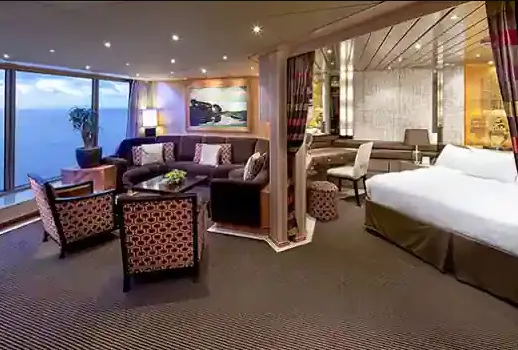

Approximately 1,296 sq. ft. including verandah
Generously proportioned and filled with light, these elegant suites include a living room, dining room, pantry with microwave and refrigerator, and floor-to-ceiling windows overlooking a private verandah. The bedroom features a king-size bed—our Signature Mariner's Dream bed with plush Euro-Top mattresses, plus a separate dressing room and the bath includes an oversize whirlpool bath and shower as well as an additional shower stall. There's also a sofa bed, suitable for two people, and a guest toilet. Amenities include a private stereo system, use of the exclusive Neptune Lounge, private concierge and an array of complimentary services. The configuration of staterooms may vary from the images shown.
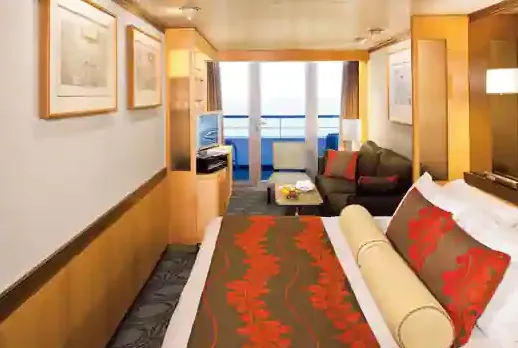

Approximately 297-379 sq. ft. including verandah
With a teak-lined verandah, floor-to-ceiling windows and comfortable sitting area, these comfortable suites are filled with light. They include two lower beds convertible to one queen-size bed—our signature Mariner's Dream bed with plush Euro-Top mattresses, plus a whirlpool bath and shower, mini-bar and refrigerator. The configuration of staterooms may vary from the images shown.
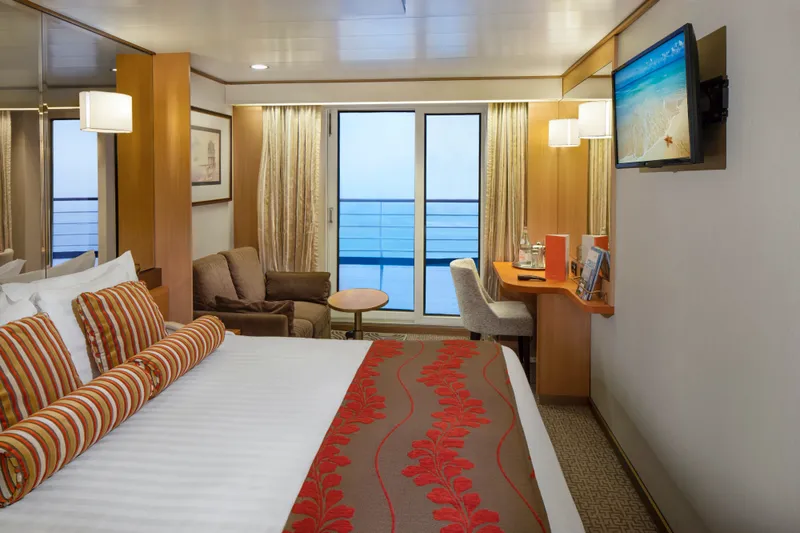
Approximately 196-240 sq. ft.
Sliding glass doors (mirrored for privacy) open onto our Promenade deck from this comfortable stateroom, which includes two lower beds convertible to one queen-size bed—our Signature Mariner's Dream bed with plush Euro-Top mattresses, premium massage shower heads and other amenities. The configuration of staterooms may vary from the images shown.
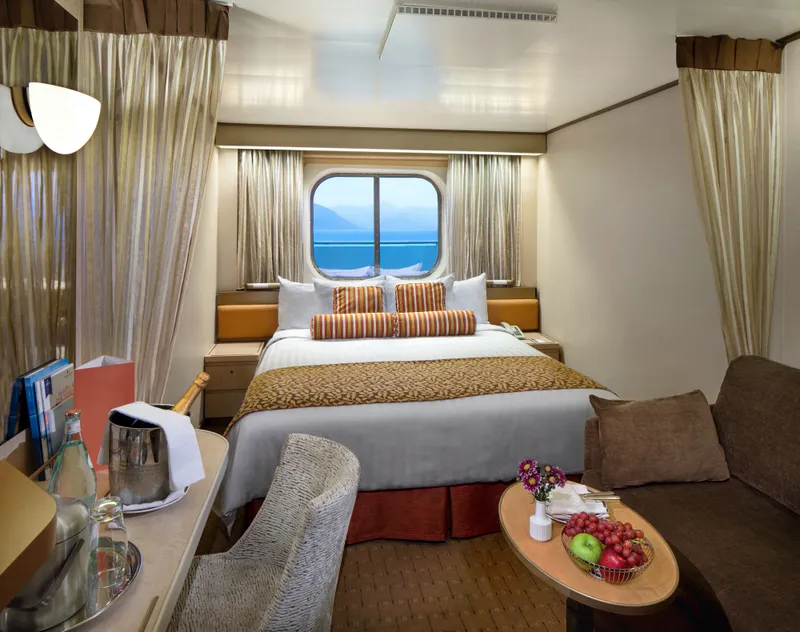
Approximately 140-319 sq. ft.
These expansive staterooms include include two lower beds convertible to one queen-size bed—our Signature Mariner's Dream bed with plush Euro-Top mattresses, premium massage shower heads, a host of amenities and an ocean view. The configuration of staterooms may vary from the images shown.
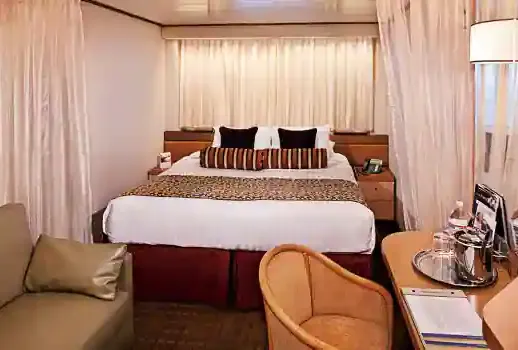

Approximately 140-319 sq. ft.
These large staterooms include two lower beds convertible to one queen-size bed—our Signature Mariner's Dream bed with plush Euro-Top mattresses, premium massage shower heads and a host of amenities. The view is fully obstructed. The configuration of staterooms may vary from the images shown.
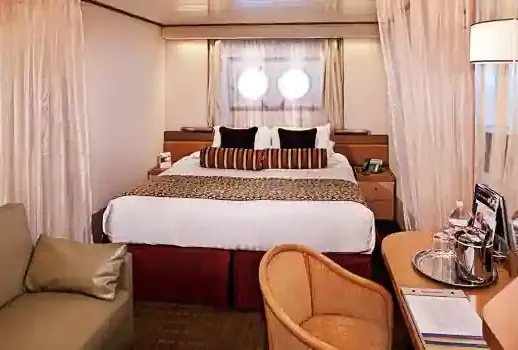

Approximately 140-319 sq. ft.
These staterooms feature a partial sea view and include two lower beds convertible to one queen-size bed—our signature Mariner's Dream bed with plush Euro-Top mattresses, plus premium massage shower heads and a variety of amenities. The configuration of staterooms may vary from the images shown.
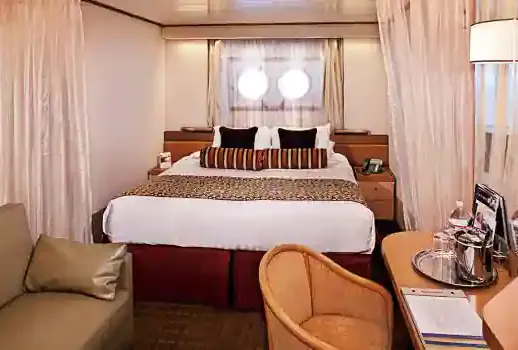

Approximately 140-319 sq. ft.
These spacious staterooms include two lower beds convertible to one queen-size bed—our Signature Mariner's Dream bed with plush Euro-Top mattresses, premium massage shower heads, an array of modern amenities and a porthole. The configuration of staterooms may vary from the images shown.
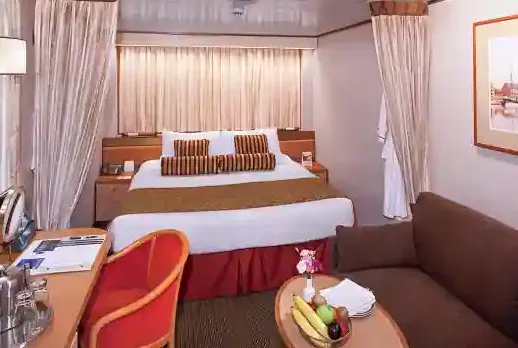

Approximately 151–233 sq. ft.
Two lower beds convertible to one queen-size bed—our signature Mariner's Dream bed with plush Euro-Top mattresses, premium massage shower heads and a host of amenities are featured in these comfortable staterooms. The configuration of staterooms may vary from the images shown.
Our cruise specialists can help you find the perfect cabin and the best available pricing.
(+886) 02-2721-7300Contact Advisor