Date
2027-03-22
Duration
54 nights
Departure Port
Cape Town
South Africa
Arrival Port
Fort Lauderdale
United States
Rating
Premium
Theme
—


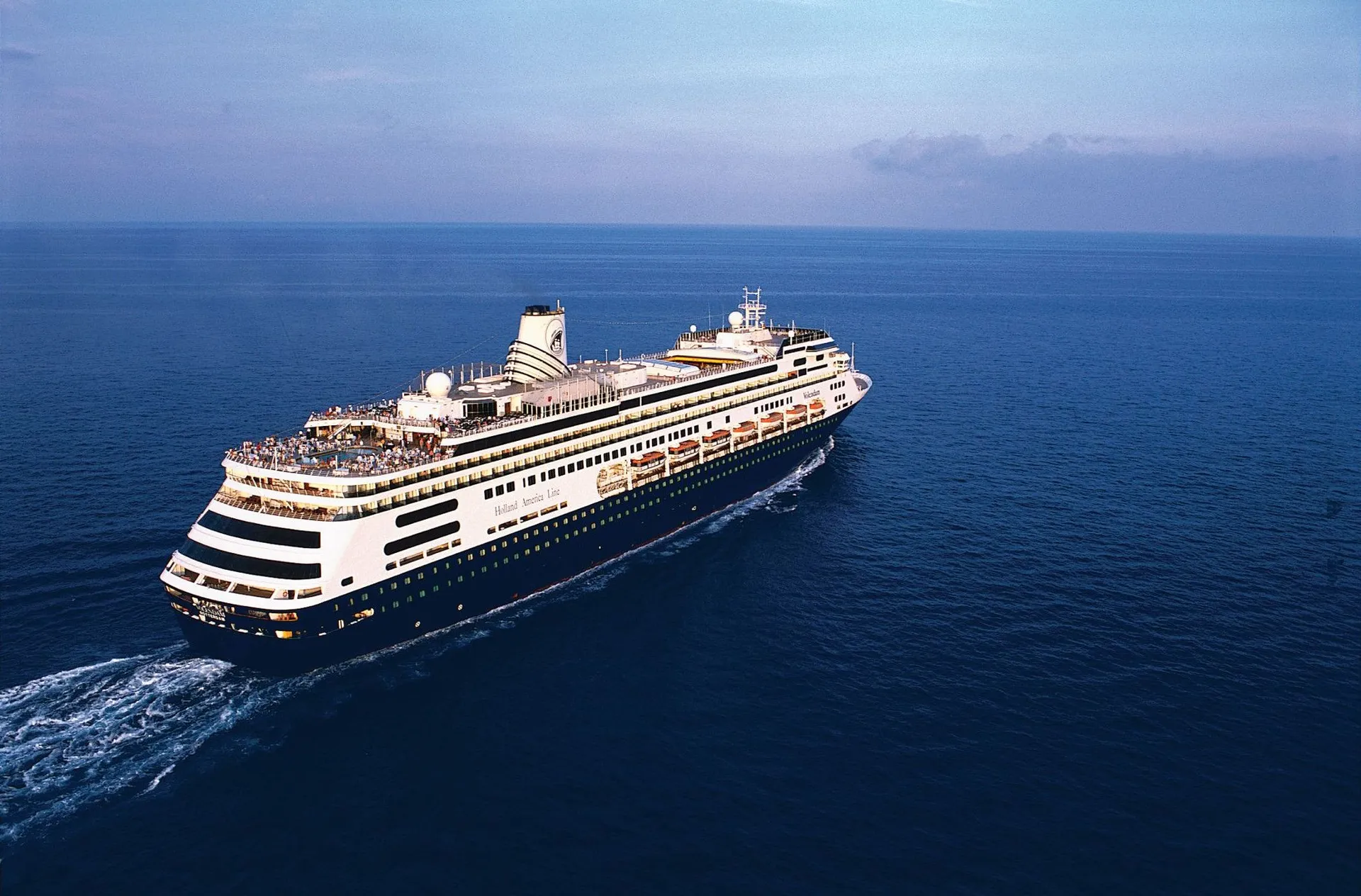
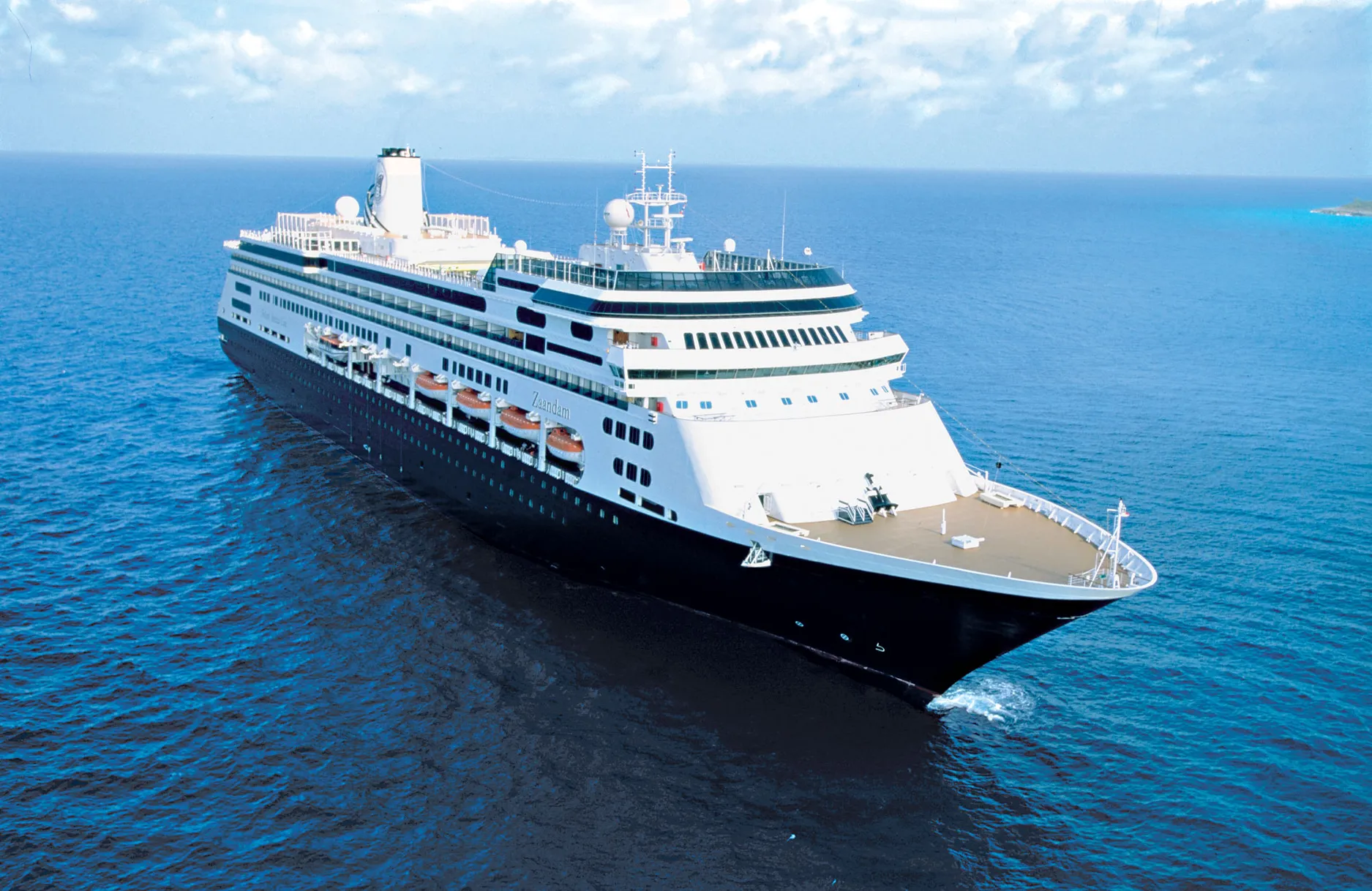
Holland America Line
1999
2019
61,214 GT
1,432
716
615
781 m
32 m
23 knots
No

Cape Town's port is a vibrant blend of history, culture, and natural beauty, making it a premier destination for travelers. Must-do experiences include savoring local dishes like bobotie and exploring the bustling V&A Waterfront. The best season to visit is during the Southern Hemisphere summer, from December to February, when the weather is warm and perfect for outdoor adventures.

Luderitz is a surreal German colonial town on Namibia's desert coast, where Art Nouveau architecture, Lutheran churches, and half-timbered houses face the cold Atlantic amid some of Earth's most desolate terrain. Must-dos include visiting the sand-swallowed ghost town of Kolmanskop, feasting on West Coast crayfish, and admiring the Jugendstil Goerke Haus. September through April offers the warmest weather for this extraordinary desert-meets-ocean destination.

Walvis Bay is Namibia's principal deep-water port, set between the ancient dunes of the Namib Desert and the wildlife-rich Atlantic lagoon famed for its vast flamingo colonies. Visitors should not miss a catamaran cruise through the lagoon for close encounters with dolphins and Cape fur seals, nor the otherworldly dune landscapes of Sossusvlei in the Namib-Naukluft National Park. The optimal season for cruising is October through April, when southern-hemisphere spring and summer bring warm, clear days and peak flamingo populations to the bay.

Saint Helena is a breathtakingly remote volcanic island in the South Atlantic, famed as Napoleon's place of exile and home to endemic cloud forests and Georgian-era Jamestown. Visitors should climb Jacob's Ladder, tour Longwood House, and swim with whale sharks (December-March). The mild climate is pleasant year-round, with the Southern Hemisphere summer offering the warmest conditions and best marine wildlife encounters.

George Town, the capital of the Cayman Islands, is a vibrant port known for its rich history and diverse culinary scene. Must-do experiences include savoring local delicacies like conch fritters and exploring nearby attractions such as Cayman Brac and Little Cayman. The best season to visit is during the winter months, when the weather is pleasantly warm and ideal for outdoor adventures.

Banjul, the sun-drenched capital of The Gambia, is a West African port city where colonial heritage, vibrant market culture, and the mighty Gambia River converge to create an experience of rare authenticity. Visitors should not miss the sensory theatre of Albert Market and a river excursion upstream toward Tendaba Camp's legendary birdwatching grounds. The dry season from November through May offers the most rewarding conditions, with cooler temperatures, abundant migratory birdlife, and calm waters ideal for estuary exploration.

Dakar, at Africa's westernmost point, is Senegal's pulsating capital where West African creativity, powerful history, and vibrant Wolof culture collide. Must-dos include the deeply moving Gorée Island slave house, the African Renaissance Monument, and feasting on thiéboudienne and yassa at local restaurants. November through May offers the most comfortable dry-season conditions.

Praia is Cape Verde's Creole capital, where UNESCO-listed Cidade Velha witnessed the first European tropical colonization and transatlantic slave trade, and Cesária Évora's melancholic morna music tradition permeates the volcanic Atlantic archipelago's unique cultural identity. Visit November through June via Ponant or Azamara for cachupa feasts, colonial Plateau walks, and the extraordinary emotional depth of a culture that is neither Portuguese nor African but something entirely its own.

Mindelo, on the island of São Vicente, is Cape Verde's cultural capital — a harbour city of pastel colonial facades, vibrant street art, and the soulful musical heritage of Cesária Évora. Visitors should savour *cachupa rica* at a waterfront restaurant and take the ferry to Santo Antão for world-class hiking through terraced volcanic valleys. The best time to call is between November and June, when the trade winds temper the tropical heat and transatlantic cruise itineraries converge on Porto Grande's magnificent natural bay.

Tenerife, the crown of the Canary Islands, rises from the Atlantic around the mighty UNESCO-listed Mount Teide — Spain's highest peak and one of earth's great stratovolcanoes — its lunar caldera and forested flanks offering scenery of extraordinary drama just minutes from the coast. The island's northern towns of La Orotava and La Laguna preserve magnificent Canarian colonial architecture, while the dramatic cliffs of Los Gigantes and black-sand beaches of the south add to an almost implausible diversity of landscapes. The Canaries' celebrated year-round sunshine makes Tenerife a superb destination in any season, though spring brings blooming tajinaste wildflowers to the Teide slopes.

Las Palmas de Gran Canaria, a historic port city founded in 1478, offers a rich tapestry of culture, architecture, and culinary delights. Must-do experiences include sampling **papas arrugadas** at the Mercado de Vegueta and exploring the charming streets of Vegueta. The best time to visit is during the mild spring months when the weather is ideal for outdoor exploration.

Arrecife, the unpretentious capital of Lanzarote in Spain's Canary Islands, serves as the gateway to one of the volcanic world's most surreal and spellbinding landscapes — shaped by César Manrique, the visionary artist who ensured there are no high-rises, no billboards, and no compromise between tourism and the island's extraordinary terrain. The Timanfaya National Park's lava fields, the underground lake of the Jameos del Agua, and Manrique's own clifftop home-turned-museum are among the most singular attractions in all of Spain. The Canary Islands enjoy a year-round temperate climate, making any month suitable for a visit. Gran Canaria lies forty minutes by ferry.

Casablanca is Morocco's largest city, a striking fusion of Berber heritage, French colonial art deco architecture, and contemporary ambition anchored by the towering Hassan II Mosque on the Atlantic shore. Visitors should not miss the Central Market's freshly grilled seafood and a half-day excursion to the imperial capital Rabat or the UNESCO-listed fortress of Aït Ben Haddou. The optimal season for cruising into Casablanca is April through June or September through November, when temperatures hover between twenty and twenty-seven degrees and the Atlantic light renders the white city at its most luminous.

Lisbon, Portugal's enchanting capital, stands out for its rich history, stunning architecture, and vibrant culture. Must-try experiences include savoring local dishes like bacalhau à brás and pastéis de nata at Mercado da Ribeira. The best time to visit is during the spring or fall, when the weather is mild and the city is alive with festivals and events.

Porto, set dramatically on the granite bluffs above the Douro River, is among Europe's most romantically dishevelled cities — a place where baroque church towers rise above terracotta rooftops and century-old azulejo tilework lines every alley. Cross the iron Dom Luís I Bridge for sweeping views and descend into Vila Nova de Gaia's atmospheric wine lodges for a tasting of aged tawny port direct from the barrel. Seafood is magnificent: salt cod prepared a hundred ways, barnacles glistening with lemon, and custard tarts still warm from the oven. Spring and early autumn offer the finest conditions.

Bilbao is the Basque Country's cultural capital, where Frank Gehry's iconic Guggenheim Museum anchors a city transformed from industrial port to world-class destination. Visitors should not miss the pintxo bars of the Casco Viejo and the extraordinary Michelin-starred dining scene, alongside the museum's titanium splendor. The ideal months to visit are May through October, when mild Atlantic weather bathes the city in soft light perfect for exploring its riverside promenades and nearby Rioja wine country.

Bordeaux, France's premier port city, is renowned for its historical significance, stunning architecture, and world-class wine. Must-do experiences include savoring local delicacies at Marché des Quais and exploring the breathtaking art installations at Place de la Bourse. The best season to visit is during the late spring and early autumn, when the weather is pleasant and the vineyards are in full bloom.

Cherbourg, a historic port city in Normandy, is renowned for its vibrant maritime heritage and rich culinary offerings. Must-do experiences include exploring the Place de Gaulle Market and savoring local dishes such as "moules marinières" and "calvados." The best season to visit is during the spring or early fall when the weather is mild and the local festivities are in full swing.

Rotterdam, Europe's largest port, is a city that rebuilt itself from wartime ruin into one of the continent's most exhilarating architectural laboratories — a skyline of Cube Houses, the pencil-thin Westerkade skyscrapers, and the breathtaking Markthal arching over an indoor food market of extraordinary abundance. The Boijmans Van Beuningen collection ranks among Europe's finest, while the art district of Witte de With pulses with galleries and design studios. Day-trip to Kinderdijk's nineteen iconic windmills, a UNESCO World Heritage site rising from the polders just south of the city. Spring and early summer offer the finest conditions.

The port of Oslo is a scenic gateway to Norway's rich history and vibrant culture, marked by stunning architecture and lush landscapes. Must-do experiences include savoring traditional dishes like **rakfisk** and exploring the nearby fjords and charming villages. The best time to visit is during the summer months, when the city comes alive with festivals and outdoor activities.

Rising from the harbour that Viking chieftain Absalon fortified in 1167, Copenhagen has evolved into one of Europe's most sophisticated capitals — a city where medieval spires and cutting-edge architecture coexist with effortless style. Savour smørrebrød at a century-old lunch counter, cycle across the harbour bridge to the revitalised Meatpacking District, and venture north to Kronborg Castle — Shakespeare's Elsinore. As one of Northern Europe's premier cruise homeports, it serves as the ideal gateway to Baltic and Scandinavian itineraries, best experienced from May to September.

Aarhus, Denmark's spirited second city, blends Viking heritage with cutting-edge Nordic design along the shores of Aarhus Bay. No visit is complete without ascending the rainbow panorama at ARoS Art Museum and savoring *stegt flæsk* or freshly prepared *smørrebrød* in the Latin Quarter. The ideal season to arrive is late May through September, when long Scandinavian daylight hours illuminate the waterfront promenades and outdoor dining flourishes along the canals.

Dover stands as Britain's iconic Channel gateway, where towering white chalk cliffs have greeted seafarers for millennia beneath one of England's mightiest medieval castles. Savour the legendary Dover sole at a harbourside table and explore the secret wartime tunnels within the cliffs where the Dunkirk evacuation was orchestrated. Late spring through early autumn offers the finest conditions, with long golden evenings illuminating the chalk face and calm seas for memorable arrivals and departures.

San Juan, Puerto Rico's radiant colonial capital, is one of the Americas' most compellingly layered cities — a place where the sixteenth-century fortresses of El Morro and San Cristóbal stand sentinel over streets of painted townhouses and flowering balconies. The cobblestoned lanes of Old San Juan pulse with world-class rum bars, ceviche stands, and rooftop restaurants serving the island's vibrant cocina criolla. La Fortaleza, the oldest executive mansion in the Western Hemisphere still in use, anchors the historic district. Florecer, the district's famed bioluminescent bay, glows emerald after dark. January through April offers the most idyllic conditions.

Fort Lauderdale is South Florida's reinvented waterfront city, where three hundred miles of inland waterways, the NSU Art Museum's contemporary collection, and the tree-lined Las Olas Boulevard create a cruise departure point of genuine sophistication at Port Everglades. Arrive a day early between November and April to explore the 'Venice of America' by water taxi and discover the dining scene that has replaced Spring Break with year-round culinary ambition.
Day 1

Cape Town's port is a vibrant blend of history, culture, and natural beauty, making it a premier destination for travelers. Must-do experiences include savoring local dishes like bobotie and exploring the bustling V&A Waterfront. The best season to visit is during the Southern Hemisphere summer, from December to February, when the weather is warm and perfect for outdoor adventures.
Day 3
Day 4

Luderitz is a surreal German colonial town on Namibia's desert coast, where Art Nouveau architecture, Lutheran churches, and half-timbered houses face the cold Atlantic amid some of Earth's most desolate terrain. Must-dos include visiting the sand-swallowed ghost town of Kolmanskop, feasting on West Coast crayfish, and admiring the Jugendstil Goerke Haus. September through April offers the warmest weather for this extraordinary desert-meets-ocean destination.
Day 5

Walvis Bay is Namibia's principal deep-water port, set between the ancient dunes of the Namib Desert and the wildlife-rich Atlantic lagoon famed for its vast flamingo colonies. Visitors should not miss a catamaran cruise through the lagoon for close encounters with dolphins and Cape fur seals, nor the otherworldly dune landscapes of Sossusvlei in the Namib-Naukluft National Park. The optimal season for cruising is October through April, when southern-hemisphere spring and summer bring warm, clear days and peak flamingo populations to the bay.
Day 6
Day 7
Day 8
Day 9

Saint Helena is a breathtakingly remote volcanic island in the South Atlantic, famed as Napoleon's place of exile and home to endemic cloud forests and Georgian-era Jamestown. Visitors should climb Jacob's Ladder, tour Longwood House, and swim with whale sharks (December-March). The mild climate is pleasant year-round, with the Southern Hemisphere summer offering the warmest conditions and best marine wildlife encounters.
Day 11

George Town, the capital of the Cayman Islands, is a vibrant port known for its rich history and diverse culinary scene. Must-do experiences include savoring local delicacies like conch fritters and exploring nearby attractions such as Cayman Brac and Little Cayman. The best season to visit is during the winter months, when the weather is pleasantly warm and ideal for outdoor adventures.
Day 12
Day 13
Day 14
Day 15

Banjul, the sun-drenched capital of The Gambia, is a West African port city where colonial heritage, vibrant market culture, and the mighty Gambia River converge to create an experience of rare authenticity. Visitors should not miss the sensory theatre of Albert Market and a river excursion upstream toward Tendaba Camp's legendary birdwatching grounds. The dry season from November through May offers the most rewarding conditions, with cooler temperatures, abundant migratory birdlife, and calm waters ideal for estuary exploration.
Day 16

Dakar, at Africa's westernmost point, is Senegal's pulsating capital where West African creativity, powerful history, and vibrant Wolof culture collide. Must-dos include the deeply moving Gorée Island slave house, the African Renaissance Monument, and feasting on thiéboudienne and yassa at local restaurants. November through May offers the most comfortable dry-season conditions.
Day 17
Day 18

Praia is Cape Verde's Creole capital, where UNESCO-listed Cidade Velha witnessed the first European tropical colonization and transatlantic slave trade, and Cesária Évora's melancholic morna music tradition permeates the volcanic Atlantic archipelago's unique cultural identity. Visit November through June via Ponant or Azamara for cachupa feasts, colonial Plateau walks, and the extraordinary emotional depth of a culture that is neither Portuguese nor African but something entirely its own.
Day 19

Mindelo, on the island of São Vicente, is Cape Verde's cultural capital — a harbour city of pastel colonial facades, vibrant street art, and the soulful musical heritage of Cesária Évora. Visitors should savour *cachupa rica* at a waterfront restaurant and take the ferry to Santo Antão for world-class hiking through terraced volcanic valleys. The best time to call is between November and June, when the trade winds temper the tropical heat and transatlantic cruise itineraries converge on Porto Grande's magnificent natural bay.
Day 20
Day 21
Day 22

Tenerife, the crown of the Canary Islands, rises from the Atlantic around the mighty UNESCO-listed Mount Teide — Spain's highest peak and one of earth's great stratovolcanoes — its lunar caldera and forested flanks offering scenery of extraordinary drama just minutes from the coast. The island's northern towns of La Orotava and La Laguna preserve magnificent Canarian colonial architecture, while the dramatic cliffs of Los Gigantes and black-sand beaches of the south add to an almost implausible diversity of landscapes. The Canaries' celebrated year-round sunshine makes Tenerife a superb destination in any season, though spring brings blooming tajinaste wildflowers to the Teide slopes.
Day 23

Las Palmas de Gran Canaria, a historic port city founded in 1478, offers a rich tapestry of culture, architecture, and culinary delights. Must-do experiences include sampling **papas arrugadas** at the Mercado de Vegueta and exploring the charming streets of Vegueta. The best time to visit is during the mild spring months when the weather is ideal for outdoor exploration.
Day 24

Arrecife, the unpretentious capital of Lanzarote in Spain's Canary Islands, serves as the gateway to one of the volcanic world's most surreal and spellbinding landscapes — shaped by César Manrique, the visionary artist who ensured there are no high-rises, no billboards, and no compromise between tourism and the island's extraordinary terrain. The Timanfaya National Park's lava fields, the underground lake of the Jameos del Agua, and Manrique's own clifftop home-turned-museum are among the most singular attractions in all of Spain. The Canary Islands enjoy a year-round temperate climate, making any month suitable for a visit. Gran Canaria lies forty minutes by ferry.
Day 25
Day 26

Casablanca is Morocco's largest city, a striking fusion of Berber heritage, French colonial art deco architecture, and contemporary ambition anchored by the towering Hassan II Mosque on the Atlantic shore. Visitors should not miss the Central Market's freshly grilled seafood and a half-day excursion to the imperial capital Rabat or the UNESCO-listed fortress of Aït Ben Haddou. The optimal season for cruising into Casablanca is April through June or September through November, when temperatures hover between twenty and twenty-seven degrees and the Atlantic light renders the white city at its most luminous.
Day 27
Day 28

Lisbon, Portugal's enchanting capital, stands out for its rich history, stunning architecture, and vibrant culture. Must-try experiences include savoring local dishes like bacalhau à brás and pastéis de nata at Mercado da Ribeira. The best time to visit is during the spring or fall, when the weather is mild and the city is alive with festivals and events.
Day 29

Porto, set dramatically on the granite bluffs above the Douro River, is among Europe's most romantically dishevelled cities — a place where baroque church towers rise above terracotta rooftops and century-old azulejo tilework lines every alley. Cross the iron Dom Luís I Bridge for sweeping views and descend into Vila Nova de Gaia's atmospheric wine lodges for a tasting of aged tawny port direct from the barrel. Seafood is magnificent: salt cod prepared a hundred ways, barnacles glistening with lemon, and custard tarts still warm from the oven. Spring and early autumn offer the finest conditions.
Day 30
Day 31

Bilbao is the Basque Country's cultural capital, where Frank Gehry's iconic Guggenheim Museum anchors a city transformed from industrial port to world-class destination. Visitors should not miss the pintxo bars of the Casco Viejo and the extraordinary Michelin-starred dining scene, alongside the museum's titanium splendor. The ideal months to visit are May through October, when mild Atlantic weather bathes the city in soft light perfect for exploring its riverside promenades and nearby Rioja wine country.
Day 32

Bordeaux, France's premier port city, is renowned for its historical significance, stunning architecture, and world-class wine. Must-do experiences include savoring local delicacies at Marché des Quais and exploring the breathtaking art installations at Place de la Bourse. The best season to visit is during the late spring and early autumn, when the weather is pleasant and the vineyards are in full bloom.
Day 34
Day 35

Cherbourg, a historic port city in Normandy, is renowned for its vibrant maritime heritage and rich culinary offerings. Must-do experiences include exploring the Place de Gaulle Market and savoring local dishes such as "moules marinières" and "calvados." The best season to visit is during the spring or early fall when the weather is mild and the local festivities are in full swing.
Day 36

Rotterdam, Europe's largest port, is a city that rebuilt itself from wartime ruin into one of the continent's most exhilarating architectural laboratories — a skyline of Cube Houses, the pencil-thin Westerkade skyscrapers, and the breathtaking Markthal arching over an indoor food market of extraordinary abundance. The Boijmans Van Beuningen collection ranks among Europe's finest, while the art district of Witte de With pulses with galleries and design studios. Day-trip to Kinderdijk's nineteen iconic windmills, a UNESCO World Heritage site rising from the polders just south of the city. Spring and early summer offer the finest conditions.
Day 37
Day 38

The port of Oslo is a scenic gateway to Norway's rich history and vibrant culture, marked by stunning architecture and lush landscapes. Must-do experiences include savoring traditional dishes like **rakfisk** and exploring the nearby fjords and charming villages. The best time to visit is during the summer months, when the city comes alive with festivals and outdoor activities.
Day 39

Rising from the harbour that Viking chieftain Absalon fortified in 1167, Copenhagen has evolved into one of Europe's most sophisticated capitals — a city where medieval spires and cutting-edge architecture coexist with effortless style. Savour smørrebrød at a century-old lunch counter, cycle across the harbour bridge to the revitalised Meatpacking District, and venture north to Kronborg Castle — Shakespeare's Elsinore. As one of Northern Europe's premier cruise homeports, it serves as the ideal gateway to Baltic and Scandinavian itineraries, best experienced from May to September.
Day 41

Aarhus, Denmark's spirited second city, blends Viking heritage with cutting-edge Nordic design along the shores of Aarhus Bay. No visit is complete without ascending the rainbow panorama at ARoS Art Museum and savoring *stegt flæsk* or freshly prepared *smørrebrød* in the Latin Quarter. The ideal season to arrive is late May through September, when long Scandinavian daylight hours illuminate the waterfront promenades and outdoor dining flourishes along the canals.
Day 42
Day 43

Dover stands as Britain's iconic Channel gateway, where towering white chalk cliffs have greeted seafarers for millennia beneath one of England's mightiest medieval castles. Savour the legendary Dover sole at a harbourside table and explore the secret wartime tunnels within the cliffs where the Dunkirk evacuation was orchestrated. Late spring through early autumn offers the finest conditions, with long golden evenings illuminating the chalk face and calm seas for memorable arrivals and departures.
Day 44
Day 45
Day 46
Day 47
Day 48
Day 49
Day 50
Day 51
Day 52

San Juan, Puerto Rico's radiant colonial capital, is one of the Americas' most compellingly layered cities — a place where the sixteenth-century fortresses of El Morro and San Cristóbal stand sentinel over streets of painted townhouses and flowering balconies. The cobblestoned lanes of Old San Juan pulse with world-class rum bars, ceviche stands, and rooftop restaurants serving the island's vibrant cocina criolla. La Fortaleza, the oldest executive mansion in the Western Hemisphere still in use, anchors the historic district. Florecer, the district's famed bioluminescent bay, glows emerald after dark. January through April offers the most idyllic conditions.
Day 53
Day 54
Day 55

Fort Lauderdale is South Florida's reinvented waterfront city, where three hundred miles of inland waterways, the NSU Art Museum's contemporary collection, and the tree-lined Las Olas Boulevard create a cruise departure point of genuine sophistication at Port Everglades. Arrive a day early between November and April to explore the 'Venice of America' by water taxi and discover the dining scene that has replaced Spring Break with year-round culinary ambition.


Approximately 558-566 sq. ft. including verandah
With floor-to-ceiling windows overlooking a private verandah, these spacious suites are flooded with light. They feature a large sitting area with a mini-bar and refrigerator, and two lower beds convertible to one king-size bed—our signature Mariner's Dream bed with plush Euro-Top mattresses plus a separate dressing room. There's also a sofa bed, suitable for two people. The bathroom comes with a full-size whirlpool bath and shower. Amenities include use of the exclusive Neptune Lounge, a private concierge and an array of complimentary services. The configuration of staterooms may vary from the images.


Approximately 1,296 sq. ft. including verandah
Generously proportioned and filled with light, these elegant suites include a living room, dining room, pantry with microwave and refrigerator, and floor-to-ceiling windows overlooking a private verandah. The bedroom features a king-size bed—our Signature Mariner's Dream bed with plush Euro-Top mattresses, plus a separate dressing room and the bath includes an oversize whirlpool bath and shower as well as an additional shower stall. There's also a sofa bed, suitable for two people, and a guest toilet. Amenities include a private stereo system, use of the exclusive Neptune Lounge, private concierge and an array of complimentary services. The configuration of staterooms may vary from the images shown.


Approximately 297-379 sq. ft. including verandah
With a teak-lined verandah, floor-to-ceiling windows and comfortable sitting area, these comfortable suites are filled with light. They include two lower beds convertible to one queen-size bed—our signature Mariner's Dream bed with plush Euro-Top mattresses, plus a whirlpool bath and shower, mini-bar and refrigerator. The configuration of staterooms may vary from the images shown.


Lanai Stateroom
Approximately 196-240 sq. ft.
Sliding glass doors (mirrored for privacy) open onto our Promenade deck from this comfortable stateroom, which includes two lower beds convertible to one queen-size bed—our Signature Mariner's Dream bed with plush Euro-Top mattresses, premium massage shower heads and other amenities. The configuration of staterooms may vary from the images shown.


Approximately 140-319 sq. ft.
These expansive staterooms include include two lower beds convertible to one queen-size bed—our Signature Mariner's Dream bed with plush Euro-Top mattresses, premium massage shower heads, a host of amenities and an ocean view. The configuration of staterooms may vary from the images shown.


Approximately 140-319 sq. ft.
These large staterooms include two lower beds convertible to one queen-size bed—our Signature Mariner's Dream bed with plush Euro-Top mattresses, premium massage shower heads and a host of amenities. The view is fully obstructed. The configuration of staterooms may vary from the images shown.


Approximately 140-319 sq. ft.
These staterooms feature a partial sea view and include two lower beds convertible to one queen-size bed—our signature Mariner's Dream bed with plush Euro-Top mattresses, plus premium massage shower heads and a variety of amenities. The configuration of staterooms may vary from the images shown.


Approximately 140-319 sq. ft.
These spacious staterooms include two lower beds convertible to one queen-size bed—our Signature Mariner's Dream bed with plush Euro-Top mattresses, premium massage shower heads, an array of modern amenities and a porthole. The configuration of staterooms may vary from the images shown.


Approximately 151–233 sq. ft.
Two lower beds convertible to one queen-size bed—our signature Mariner's Dream bed with plush Euro-Top mattresses, premium massage shower heads and a host of amenities are featured in these comfortable staterooms. The configuration of staterooms may vary from the images shown.
Our cruise specialists can help you find the perfect cabin and the best available pricing.
(+886) 02-2721-7300Contact Advisor