Date
November 13, 2026
Duration
13 nights
Departure Port
Lima · Peru
Arrival Port
Guayaquil · Ecuador
Rating
—
Theme
—


HX Expeditions
2021
2021
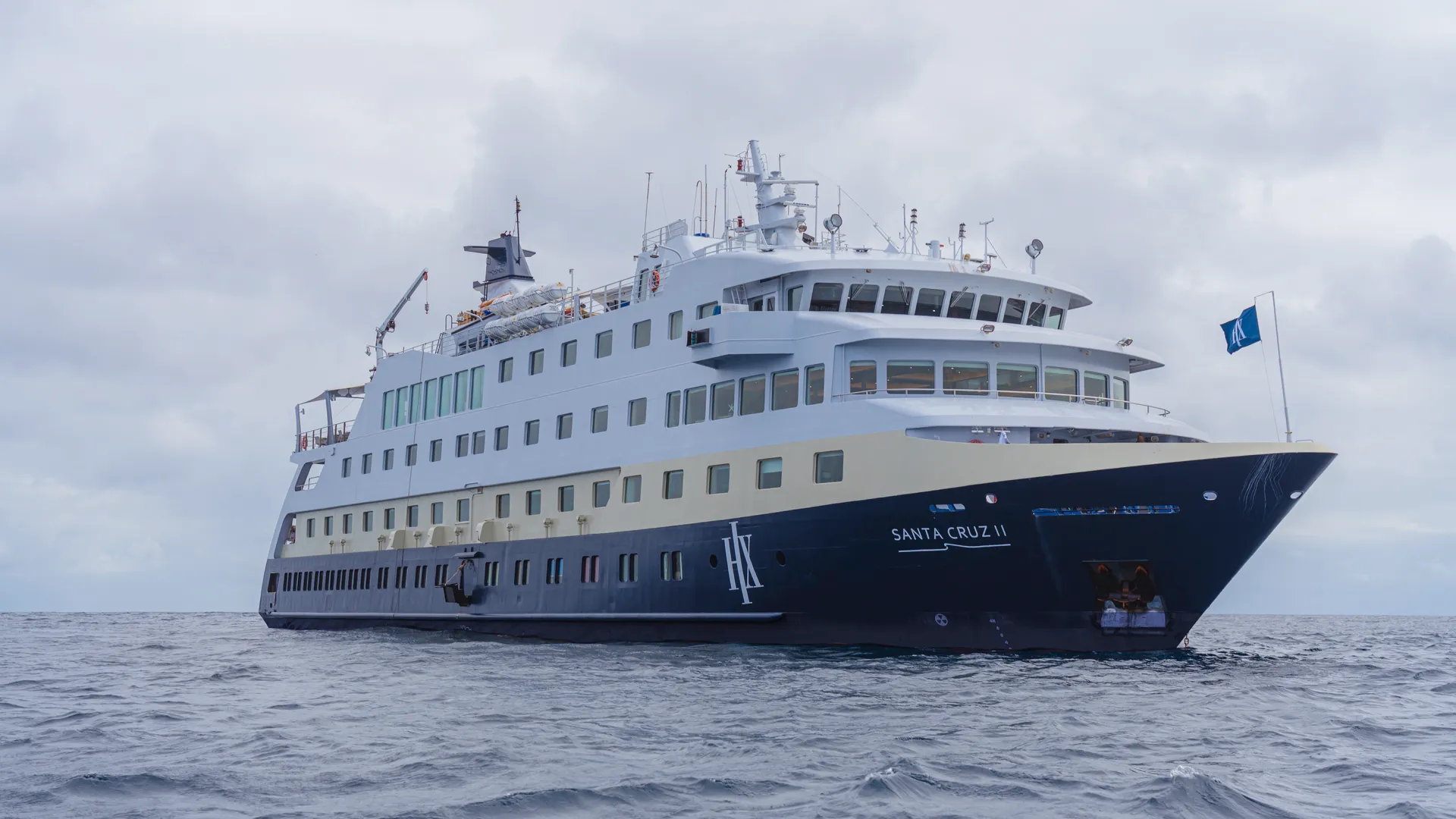
2,664 GT
90
—
—
232 m
13 m
10 knots
No


Splashing colour and culture into the arid Peruvian landscape, Lima is a city bedecked with grand colonial splendour. Founded in 1535, this sprawling capital enjoys a breezy oceanfront location and forms one of the world's largest desert cities. A place of sharp contrasts, almost 10 million people are packed into the city, occupying vastly different living conditions. Visit for an unfiltered experience of this richly layered place of ancient history, colonial relics and dazzling flavours. View less Rising from the misty blanket of the garua - a persistent fog that cloaks Lima during winter - you'll find one of South America's most culturally vibrant cities. The former capital of the Spanish colonists - head to Plaza de Armas to immerse yourself in the heart of the old city. The Basilica Cathedral of Lima watches over Plaza Mayor - listen out for the stomps of boots outside, as the pomp and ceremony of the Changing of the Guards draws crowds to the Government Palace. The history of this area runs much deeper, however, and pre-Colombian cities and temples emerge from the dusty earth nearby. Grand museums showcase unearthed treasures from the extraordinary civilisations who built vast mud adobe cities across Peru's coastline, and incredible settlements in the country's valleys and mountains. The Barranco district is Lima's artsy area, and you can walk from modern art galleries to see the local muse, the Bridge of Sighs. This wooden bridge is an artist's favourite, and one of the city's most romantic spots. Afterwards, sample some of Lima's cuisine, and the zingy flavours of spicy, lime-marinated fish ceviche. So revered in these parts, ceviche even has its own national day on June 28th. Sipping a Pisco Sour is the perfect way to round off your visit to this engrossing, multi-layered city.


Splashing colour and culture into the arid Peruvian landscape, Lima is a city bedecked with grand colonial splendour. Founded in 1535, this sprawling capital enjoys a breezy oceanfront location and forms one of the world's largest desert cities. A place of sharp contrasts, almost 10 million people are packed into the city, occupying vastly different living conditions. Visit for an unfiltered experience of this richly layered place of ancient history, colonial relics and dazzling flavours. View less Rising from the misty blanket of the garua - a persistent fog that cloaks Lima during winter - you'll find one of South America's most culturally vibrant cities. The former capital of the Spanish colonists - head to Plaza de Armas to immerse yourself in the heart of the old city. The Basilica Cathedral of Lima watches over Plaza Mayor - listen out for the stomps of boots outside, as the pomp and ceremony of the Changing of the Guards draws crowds to the Government Palace. The history of this area runs much deeper, however, and pre-Colombian cities and temples emerge from the dusty earth nearby. Grand museums showcase unearthed treasures from the extraordinary civilisations who built vast mud adobe cities across Peru's coastline, and incredible settlements in the country's valleys and mountains. The Barranco district is Lima's artsy area, and you can walk from modern art galleries to see the local muse, the Bridge of Sighs. This wooden bridge is an artist's favourite, and one of the city's most romantic spots. Afterwards, sample some of Lima's cuisine, and the zingy flavours of spicy, lime-marinated fish ceviche. So revered in these parts, ceviche even has its own national day on June 28th. Sipping a Pisco Sour is the perfect way to round off your visit to this engrossing, multi-layered city.

Cusco, a city in the Peruvian Andes, was once capital of the Inca Empire, and is now known for its archaeological remains and Spanish colonial architecture. Plaza de Armas is the central square in the old city, with arcades, carved wooden balconies and Incan wall ruins. The baroque Santo Domingo Convent was built on top of the Incan Temple of the Sun (Qoricancha), and has archaeological remains of Inca stonework.

Machu Picchu is an Incan citadel set high in the Andes Mountains in Peru, above the Urubamba River valley. Built in the 15th century and later abandoned, it’s renowned for its sophisticated dry-stone walls that fuse huge blocks without the use of mortar, intriguing buildings that play on astronomical alignments and panoramic views. Its exact former use remains a mystery.

Cusco, a city in the Peruvian Andes, was once capital of the Inca Empire, and is now known for its archaeological remains and Spanish colonial architecture. Plaza de Armas is the central square in the old city, with arcades, carved wooden balconies and Incan wall ruins. The baroque Santo Domingo Convent was built on top of the Incan Temple of the Sun (Qoricancha), and has archaeological remains of Inca stonework.


Quito, Ecuador's capital, sits high in the Andean foothills at an altitude of 2,850m. Constructed on the foundations of an ancient Incan city, it’s known for its well-preserved colonial center, rich with 16th- and 17th-century churches and other structures blending European, Moorish and indigenous styles. These include the cathedral, in the Plaza Grande square, and ultra-ornate Compañia de Jesús Jesuit church.


Quito, Ecuador's capital, sits high in the Andean foothills at an altitude of 2,850m. Constructed on the foundations of an ancient Incan city, it’s known for its well-preserved colonial center, rich with 16th- and 17th-century churches and other structures blending European, Moorish and indigenous styles. These include the cathedral, in the Plaza Grande square, and ultra-ornate Compañia de Jesús Jesuit church.


The Galápagos Islands is a volcanic archipelago in the Pacific Ocean. It's considered one of the world's foremost destinations for wildlife-viewing. A province of Ecuador, it lies about 1,000km off its coast. Its isolated terrain shelters a diversity of plant and animal species, many found nowhere else. Charles Darwin visited in 1835, and his observation of Galápagos' species later inspired his theory of evolution.


San Cristóbal Island and named previously by the English as Chatham Island, is the easternmost island in the Galápagos archipelago, as well as one of the oldest geologically. It is administratively part of San Cristóbal Canton, Ecuador.

Santa Fe Island lies to the southeast of Santa Cruz Island; located at the center of the Galapagos archipelago. It is also called Barrington Island, after British Admiral Samuel Barrington. Geologically, it one of the oldest of the volcanic islands, with rock formations beneath the surface of the water dating back almost four million years. Santa Fe Island is home to the Santa Fe land iguana and the Santa Fe rice rat, an invasive species. Large numbers of sea lions reside here as well, and can often be seen “surfing” in the waves along the coast or sunning on the beaches. The island is also home to the longest running research project on marine iguanas, begun in the late 1970’s. There is a single visitor site on the island, and three marine sites. The vegetation here is characterized by a dense forest of the giant Santa Fe cactus. Two trails can be found on Sante Fe Island. One is a short loop that provides an up-close look at the massive Santa Fe cacti. Santa Fe land iguanas and Galapagos hawks can be observed from this trail as well. The second trail climbs a steep cliff, providing a dramatic view of the inland section of the island. Underneath the surface of the waves below, sea lions are the main attraction along with sea turtles, rays and Galapagos sharks.

Santa Cruz Island is the largest of the Channel Islands, off the coast of Southern California. Its many sea caves include the vast Painted Cave, on the northwestern side. The island has many trails, including around Scorpion Canyon, with opportunities to see the island scrub jays. Scorpion Beach features kelp forests. Smugglers Cove has tide pools. Cavern Point offers Pacific Ocean views and seasonal whale sightings.


The Galápagos Islands is a volcanic archipelago in the Pacific Ocean. It's considered one of the world's foremost destinations for wildlife-viewing. A province of Ecuador, it lies about 1,000km off its coast. Its isolated terrain shelters a diversity of plant and animal species, many found nowhere else. Charles Darwin visited in 1835, and his observation of Galápagos' species later inspired his theory of evolution.


Known for the migrating whales that cruise through its waters between May and November, Eden sits in New South Wales’ scenic Twofold Bay. While the whales are now protected and cherished here, the town was initially founded as a whaling centre and has many fascinating stories to tell. Namely, a unique symbiotic relationship with the killer whales. Rewarded with the tongues from freshly caught whales, the orcas would help to round up baleen whales in the bay, making it easy for humans to land them. This mutually beneficial exchange came to be known as The Law of the Tongue. Find out more about it, and the area’s whaling past, at Eden Killer Whale Museum – where you can see the skeleton of the most famous orca accomplice, Old Tom. A yearly whale festival now celebrates the return of the magnificent whales to these waters. Head into Ben Boyd National Park for amazing bird watching, and to see the arches of soaring rock formations rising beside fire-red cliffs. View the glorious coastal scenery of frothing aqua-seas and rugged headlands, from the viewing deck on top of Boyd's Tower. Initially devised as a lighthouse, it would later be used as a lookout to spot whales breaching the bay's waters, and to see Old Tom splashing his tail to alert the whalers. Travel through more glorious scenery and tangled rainforest, to the verdant promontory of Green Cape Lighthouse. Jutting out into the South Pacific Ocean, the pearly-white lighthouse caps crumbling cliffs and offers sweeping views of the jagged cliffs and wave-thrashed rocks. The wrecks that lie offshore attest to the respect these sometimes-punishing waves demand.

The second major jumping off point for the Galapagos Islands after Quito, this is a little city with a big heart. A sea port first and foremost, the city’s personality has been founded on that, and all the better it is for it too. Almost Caribbean in feeling, the clement climate coupled with the intermingling rhythms floating from the windows and abundance of fresh seafood make this a very tropical destination. Once not even considered by the travel books as a potential destination in its own right, the city has undergone something of a resurgence in the past few years. Proud Guayaquileños will not hestitate to point out the Malecón or the exciting new riverfront promenade, once a no-go area after dark, now happily (and hippily) lined with museums, restaurants, shops, and ongoing entertainment. The new airport and urban transportation network are also lauded to the happy tourists who find themselves here. As the largest and most populous city in Ecuador as well as being the commercial centre, it would only be natural that the city would have some kind of modern architecture, but it is the colourful favelas, or to use their real name guasmos, that cling to the side of the hillside like limpets that really catch your eye. A blend of old and new, the first inhabitants can be traced back to 1948 when the government cleared the area for affordable housing, these shanty towns are witness to the social and political particularities that Guayaquil has faced in the past.


Our three Darwin suites on the Panorama deck, featuring double picture windows, will provide superb comfort and deluxe amenities for more discerning guests. Available in twin or double bed and if more space is desired, they can be interconnected with an Explorer cabin.


With comfortable spaces and large picture windows to illuminate the interior spaces and allow guests to take in the views, these cabins offer elegant relaxation areas after a day of active exploring. There are 23 Explorer cabins located as on the Horizon deck.


With comfortable spaces and large picture windows to illuminate the interior spaces and allow guests to take in the views, these cabins offer elegant relaxation areas after a day of active exploring. There are 2 Explorer family cabins located on the Horizon deck. Cabins are equipped with twin beds and a sofa bed (ideal for children under 12).

With comfortable spaces and large picture windows to illuminate the interior spaces and allow guests to take in the views, these cabins offer single bed, and plenty of space for solo travelers. There are 2 Voyager cabins located on the Horizon deck.
Our cruise specialists can help you find the perfect cabin and the best available pricing.
(+886) 02-2721-7300Contact Advisor