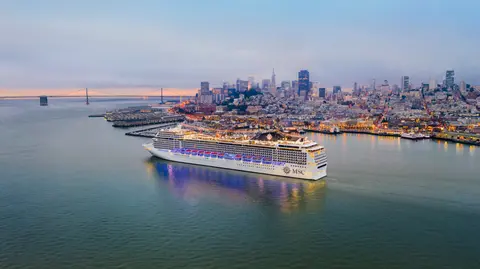
World Cruise from Genoa
Date
January 5, 2028
Duration
115 nights
Departure Port
Genoa · Italy
Arrival Port
Genoa · Italy
Rating
Resort
Theme
—
Date
January 5, 2028
Duration
115 nights
Departure Port
Genoa · Italy
Arrival Port
Genoa · Italy
Rating
Resort
Theme
—
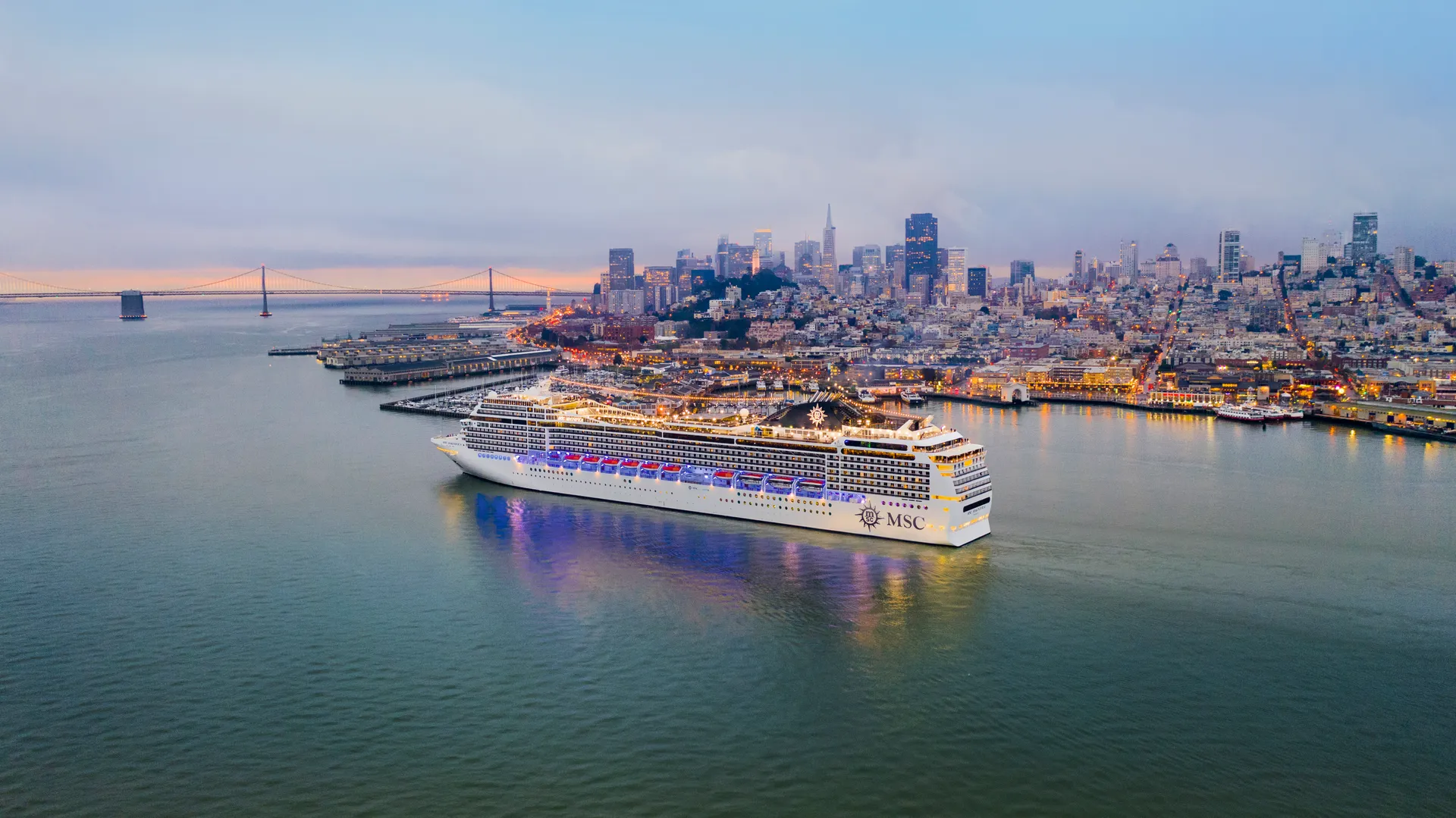
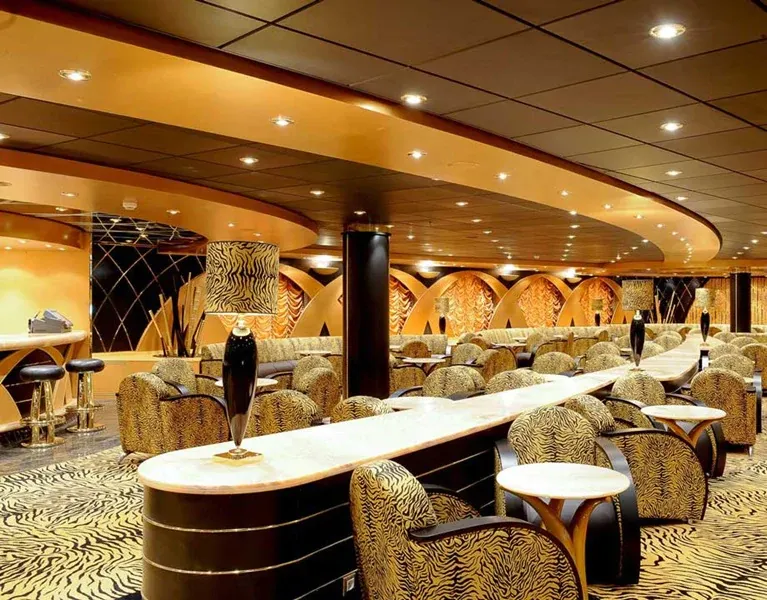
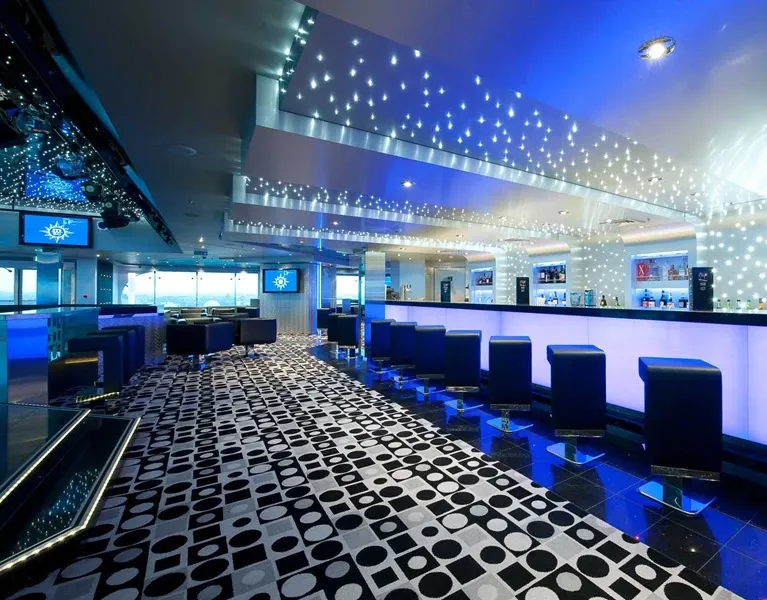
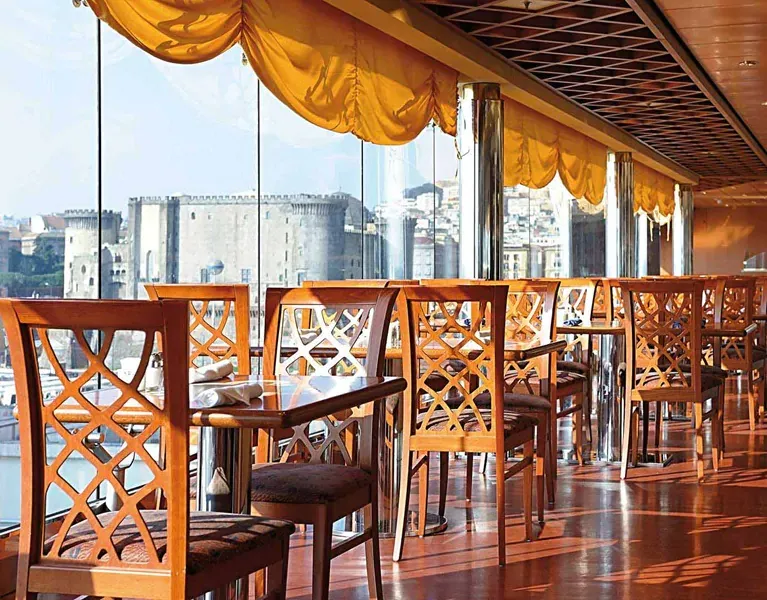
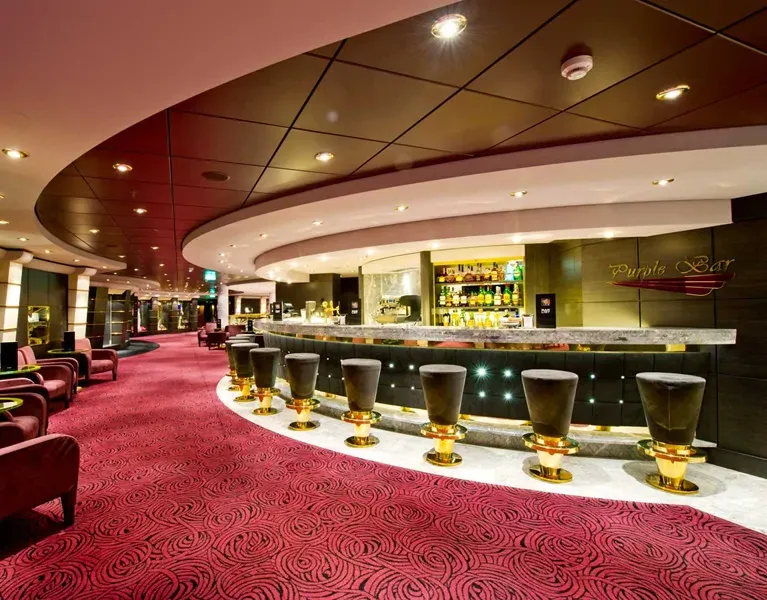
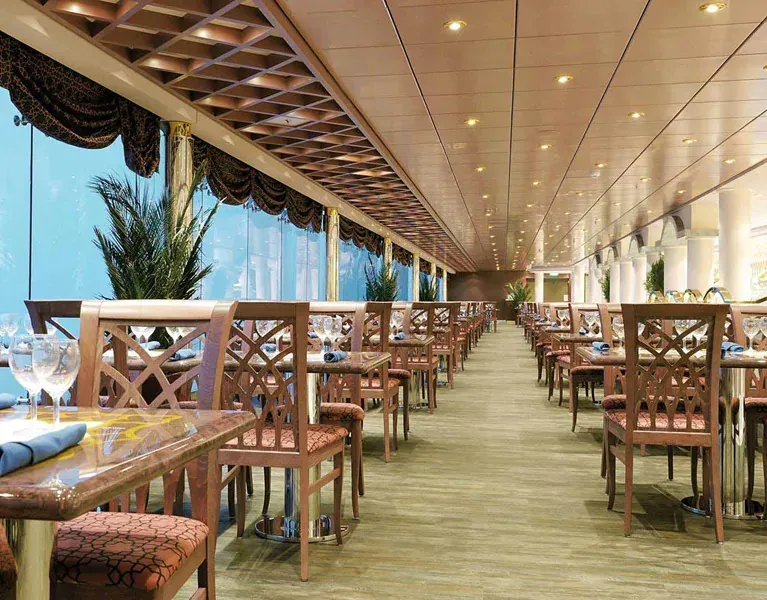
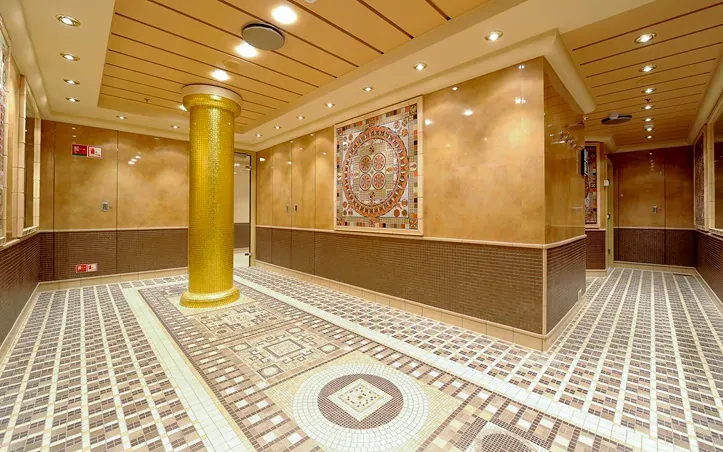
MSC Cruises
Musica
2009
—
95,128 GT
3,013
1,259
987
965 m
32.2 m
22 knots
No
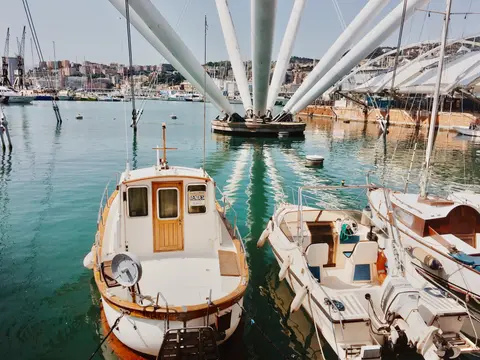
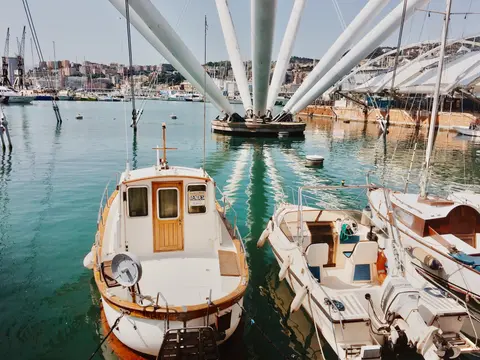
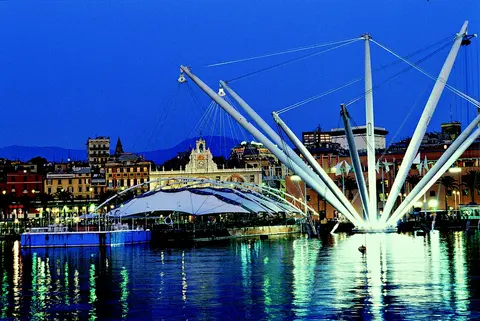
Genoa is marvellously eclectic, vibrant and full of rough-edged style; it’s a great cruise excursion. Indeed “La Superba” (The Superb), as it was known at the height of its authority as a Mediterranean superpower, boasts more zest and intrigue than all the surrounding coastal resorts put together. During a holiday to Genoa you can explore its old town: a dense and fascinating warren of medieval alleyways home to large palazzi built in the sixteenth and seventeenth centuries by Genoa’s wealthy mercantile families and now transformed into museums and art galleries. You should seek out the Cattedrale di San Lorenzo, the Palazzo Ducale, and the Renaissance palaces of Via Garibaldi which contain the cream of Genoa’s art collections, as well as furniture and decor from the grandest days of the city’s past, when its ships sailed to all corners of the Mediterranean Sea. The Acquario di Genova is the city’s pride and joy, parked like a giant ocean liner on the waterfront, with seventy tanks housing sea creatures from all the world’s major habitats, including the world’s biggest reconstruction of a Caribbean coral reef. It’s a great aquarium by any standards, the second largest in Europe by capacity, and boasts a fashionably ecology-conscious slant and excellent background information in Italian and English. Just 35 km south of Genoa, there’s no denying the appeal of Portofino, tucked into a protected inlet surrounded by lush cypress- and olive-clad slopes. It’s an A-list resort that has been attracting high-flying bankers, celebs and their hangers-on for years, as evidenced by the flotillas of giant yachts usually anchored just outside. It’s a tiny place that is attractive yet somehow off-putting at the same time, with a quota of fancy shops, bars and restaurants for a place twice its size.
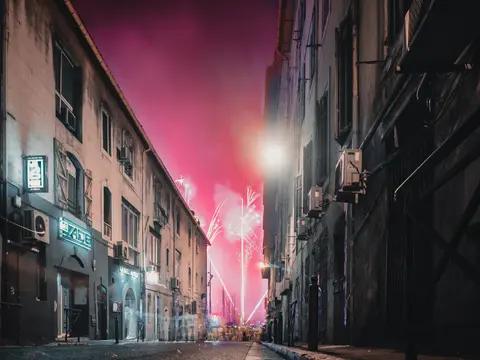
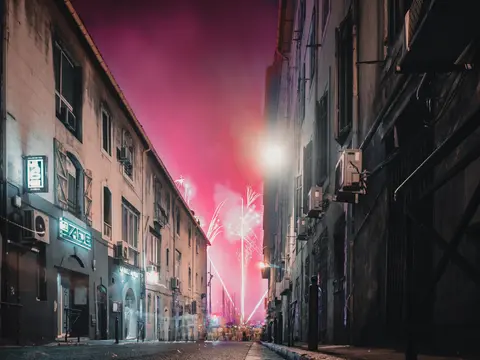
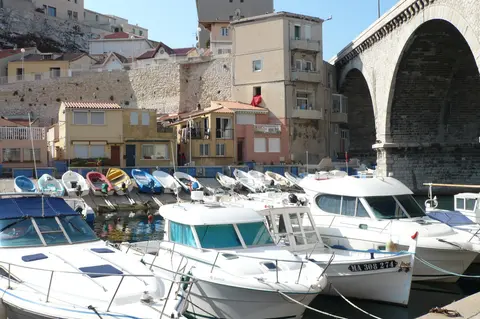
Marseille is the second largest city in France after Paris. It is also one of the oldest continuously inhabited cities in the Mediterranean. Cave paintings in the nearby Calanques are estimated to be 30,000 years old, and remains of brick habitations date from 6,000 BCE. The more recent history begins with a Hellenic port in about 600 BCE, some remains of which are on view at the city’s History Museum. It has been one of the world’s major seaports almost from its founding, and served as the main European terminus of the French colonial empire in Africa and the Far East. It is located in the Provence-Alpes-Cote d’Azur region and is the capital of the Bouches-du-Rhone department. On an island in the expansive bay of Marseille stands the prison of Chateau d’If made famous by the Alexandre Dumas novel “The Count of Monte Cristo.” The Vieux-Port with its atmospheric buildings and wharves is the area where visitors can search for the perfect example of the local specialty bouillabaisse, a rich fish stew containing at least three, and often more varieties of local fishes. Marseille’s newly renovated port at the venerable Joliette Docks is situated very close to the striking Cathédrale de la Major and the fascinating collections at the Museum of African, Oceanic and American Indian Arts.
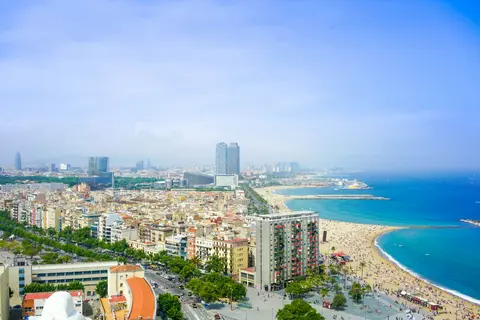
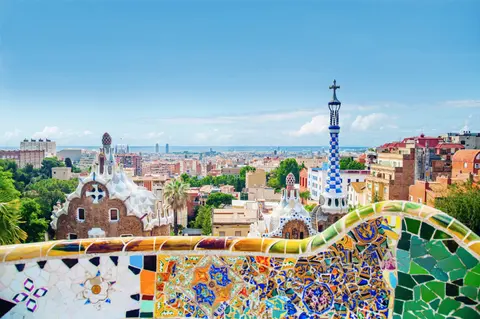
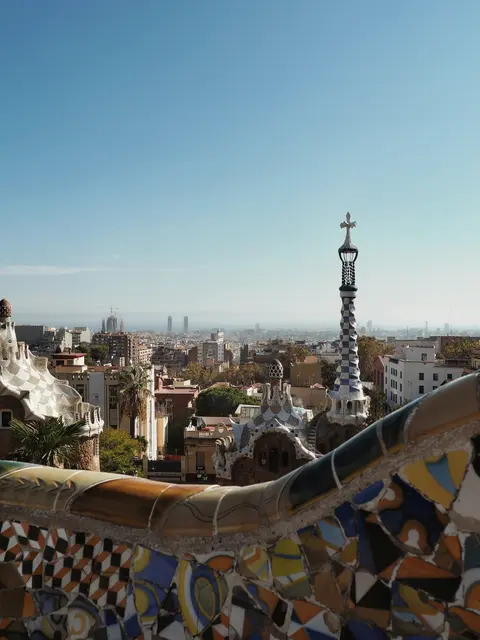
On the northeast coast of Spain, overlooking the Mediterranean, Barcelona is a vibrant port city, packed with centuries of iconic art and architecture—Gaudí and Picasso both called it home—and lined with sunny white-sand beaches. Explore the Catalan capital's tourist attractions and historic neighborhoods, Modernisme and world-renowned art museums, galleries and local crafts shops—some of which are centuries old and stock traditional Catalan wares. After you see the sights, there are lively tapas bars around every corner where you can stop for a drink, a café amb llet (Catalan for espresso with steamed milk) or a snack, no matter the hour. Green spaces for picnics, long walks and respite from the hustle and bustle are scattered throughout Barcelona's attractions: There's Gaudí's mosaic-decorated park, a neoclassical maze at the Laberint d'Horta, as well as plenty of high places (mountains, monuments and edifices) where sightseeing visitors can take in the view. A short trip from Barcelona by car or train, luxury outlets, cava wineries, a mountaintop abbey and the sandy beaches of the Mediterranean coast await.
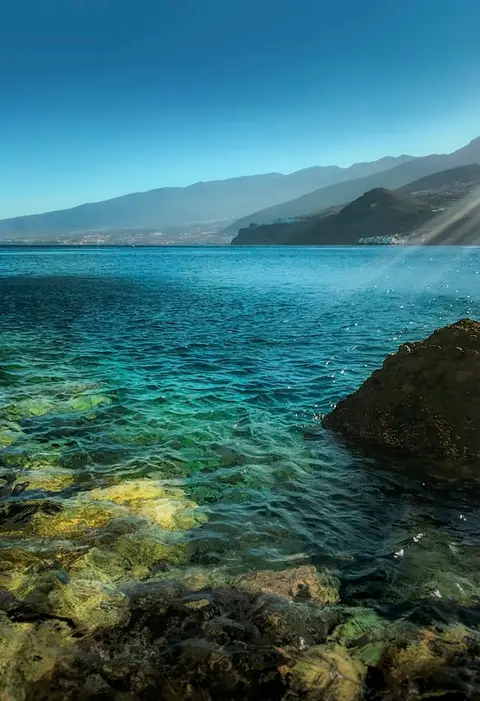
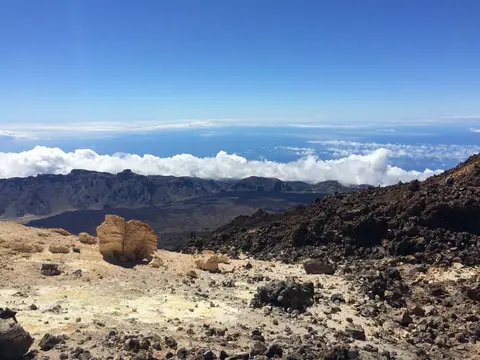
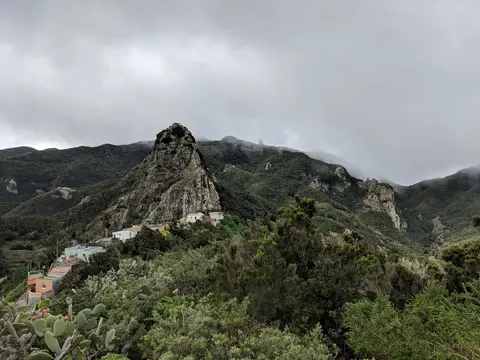
Though part of Spain, the Canary Islands sit in the open Atlantic Ocean, about 100 kilometers (60 miles) west of Morocco. The mild climate mixed with a rich volcanic landscape and beautiful sandy beaches makes the main city of Santa Cruz, on the largest island of Tenerife, a welcome stop for many cruise voyages. The isolated island is dominated by the Teide volcano, the tallest mountain in Spain and site of one of the world’s most popular national parks. A cable car carries visitors to the top, offering unrivaled views of the island. Travelers interested in learning about the history of the island, its unique wildlife and the population of indigenous people that lived here before the arrival of European settlers should visit the Museum of Nature and Man in Santa Cruz, while architecture buffs can stroll the streets of La Laguna to see colonial-era mansions. And travelers keen on food and wine should venture into the countryside to sample local dishes or make the drive to Casa del Vino, where they can learn about, and taste, local wines while shopping for a bottle or two to bring home.
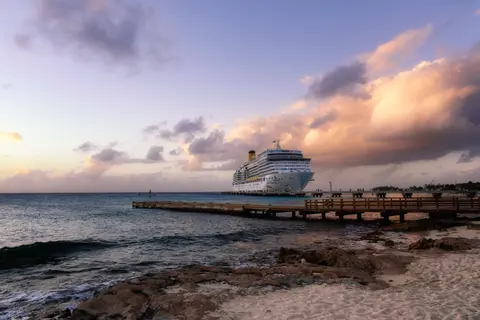
Beach masterpieces of silky white sand and sparkling water shifting from turquoise to royal blue welcome you to idyllic Grand Turk. Underwater ramparts of coral teem with vibrant marine life, while tranquil beaches reward with a haven of relaxation. Discover relentless Caribbean beauty as you taste the wonders of this tiny, tooth-shaped island paradise. Part of the Turks and Caicos islands group, an enchanting string of islands that share jaw-dropping natural beauty, Grand Turk is a truly divine Caribbean escape. View less Your first port of call is always likely to be the blissful sand beaches that roll down to that trademark intense sea. Governor's Beach is a vision of pink sand, lapped by teal waters and a perfect rendering of your most lavish imagination. Submerge into the warm waters or shelter from the sun below soaring casuarina trees. Pillory Beach is another favoured option, nestled a little further to the north. Wade out along the shelf of sand, and part clear seawater that dances with twinkling sunlit patterns. Take your pick from the islands' blessing of beaches, or strap on a snorkel to float for hours amid the bright tones and curious displays of life below the surface. Graceful stingrays slide through the waters at Gibbs Cay, and you can wander among huge queen conch shells, strewn over its sands. Later, sunset will burn and boom above, as you taste fresh barbecued snapper, mahi-mahi and lobster platters. The stunning coral reefs that attract keen divers from across the globe have been far less welcoming to ships historically, and the wrecks that rest on the seabed attest to their hull-shredding credentials. Flashing out warnings, and standing tall since 1852, Grand Turk Lighthouse is a true icon of this island. Wild donkeys and horses may join you as you roam below the rusting, cast-iron tower, which gazes out protectively over the North Reef.
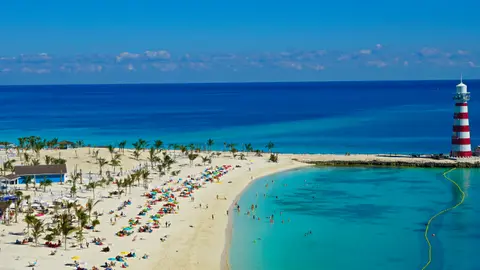
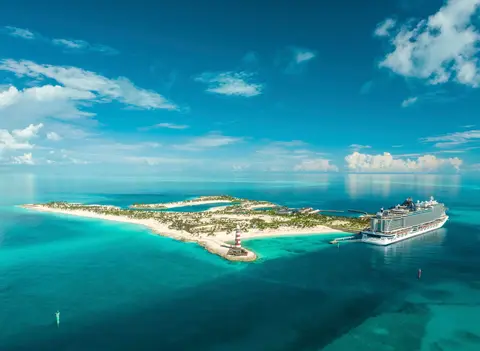
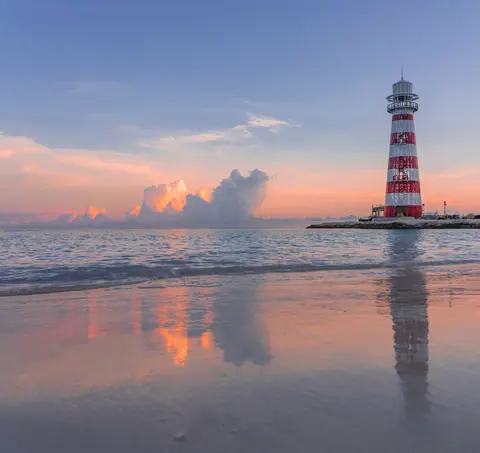
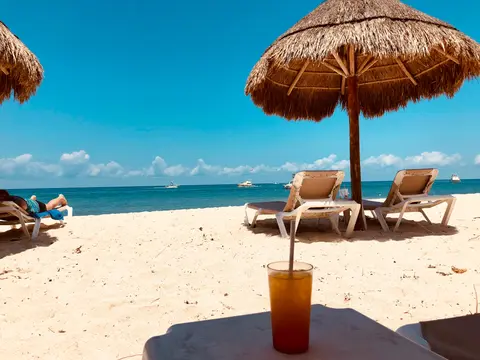
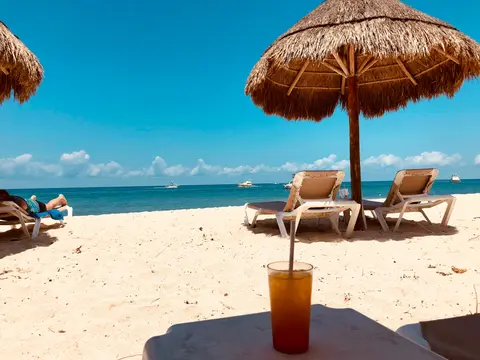
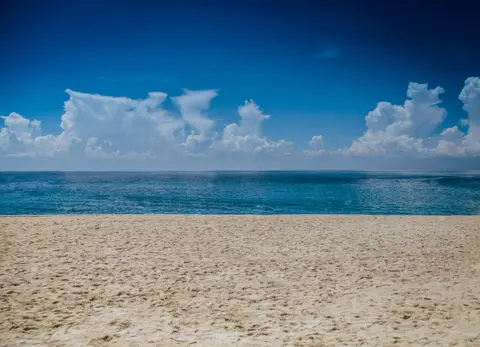
A forty-kilometre-long island directly off the coast from Playa del Carmen, Isla Cozumel is a renowned cruise-ship call: nearly every day, up to ten cruise ships dock at one of the island’s three dedicated piers, all just south of the only town, San Miguel. A holiday to Mexico with MSC Cruises will present you with restaurants, souvenir shops and jewellery stores, all along the malecón(Av Rafael Melgar) in downtown San Miguel. If you fancy a museum, the attractive Museo de la Isla de Cozumel has small displays of the flora, fauna and marine life of the island, as well as a good collection of Maya artefacts and old photos. If you’re not a diver, there’s a certain appeal in wandering the relaxed inland blocks of San Miguel, away from the piers, spotting Maya ruins and birds (the Maya called the island cuzamil – “land of the swallows”) in the dense forests and being the only person on the windswept eastern beaches. Midway across the island, San Gervasio is the only excavated Maya site on Cozumel. With several small temples connected by sacbeob, or long white roads, it was one of the many independent city-states that survived the fall of Chichén Itzá, flourishing between 1200 AD and 1650 AD. As part of a larger nature reserve the site is worth a visit for the numerous birds and butterflies you can spot early in the morning or late in the day. Another place to visit is Xcaret, a surprisingly pleasant theme park: it offers all the Yucatán’s attractions in one handy place, with a museum, a tropical aquarium, a “Maya village”, a beach, some small authentic ruins, pools and more than a kilometre of subterranean rivers down which you can swim, snorkel or float. On the other hand, neighbouring Xplor is dedicated to ziplines and other outdoor adventure.
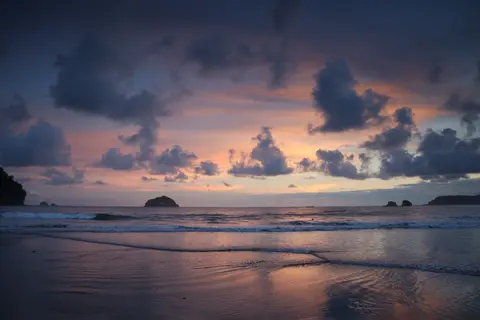
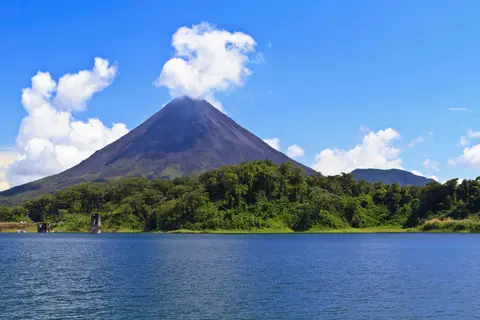
From mountainous cloud forests and volcanoes to tropical rainforests, Costa Rica in Central America is renowned for its biodiversity and environmental conservation. When you arrive on an MSC Caribbean and Antilles cruisein Puerto Limón, you’ll discover the biggest city on Costa Rica’s Caribbean coast as well as the most important port in the country. From the port, Limón is a perfect starting point for adventurous explorers on one of many MSC excursions that will let you be one with nature in what is called Costa Rica’s Amazon. Enjoy a boat adventure down the jungle-fringed Tortuguero Canal, spotting orchids, water lilies, crocodiles, spider monkeys, manatees and otters along the way. Wave to the locals busy on the banks or in dugout canoes on the water as you pass. On another MSC excursion, spend half a day meeting some of Costa Rica’s cutest creatures: sloths. The Sloth Sanctuary of Costa Rica, founded as a not-for-profit rescue centre in 1997, lets you mingle with some of the coolest dudes in the jungle with their languid movements and permanently smiling faces. Your time at the sanctuary also includes a canoe ride along the freshwater of the Estrella River, a habitat for 180 bird species, monkeys, turtles and scores of butterflies. Soar through the tree canopy on an aerial tramway at Veragua Rainforest Research & Adventure Park, walk to a beautiful waterfall and rub shoulders with myriad butterflies, including the incredible blue morpho. Then, on this thrilling MSC excursion, zip line across 11 observation plat-forms and 9 traverses on an amazing course which has you gliding over the rainforest canopy, spotting monkeys, sloths and toucans in the trees. Or explore Afro-Caribbean culture, passing through Limón’s oldest neighbourhoods with houses on stilts and banana and cassava plantations, before watching local dancers perform to Caribbean rhythms and share Costa Rican traditions.
Panama is synonymous with the Panama Canal. While Panama connects Central America to South America, the Panama Canal, which opened in 1914, connects the Caribbean Sea with the Pacific Ocean. The channel reduces shipping time and currently connects 160 countries and 1,700 ports around the world. Hailed as an engineering marvel, the artificial waterway with its elaborate lock system is one of the greatest achievements of the 20th century. Arriving on an MSC Caribbean and Antilles cruise into Colón, Panama’s gateway city, you’ll encounter the irresistible juxtaposition of the ancient and modern, the artificial and natural, as enormous computerized container ships transiting the canal slice through primeval rainforests teeming with fluorescent frogs and elusive wild cats. Book an MSC excursion to hop on a ferry that will take you along the length of the Panama Canal, through lakes and locks and past the Centennial and Americas bridges. Finally, you will arrive at Pacific port at the entrance to the Panama Canal, and then enjoy a 90-minute bus ride back to your ship.
Panama is synonymous with the Panama Canal. While Panama connects Central America to South America, the Panama Canal, which opened in 1914, connects the Caribbean Sea with the Pacific Ocean. The channel reduces shipping time and currently connects 160 countries and 1,700 ports around the world. Hailed as an engineering marvel, the artificial waterway with its elaborate lock system is one of the greatest achievements of the 20th century. Arriving on an MSC Caribbean and Antilles cruise into Colón, Panama’s gateway city, you’ll encounter the irresistible juxtaposition of the ancient and modern, the artificial and natural, as enormous computerized container ships transiting the canal slice through primeval rainforests teeming with fluorescent frogs and elusive wild cats. Book an MSC excursion to hop on a ferry that will take you along the length of the Panama Canal, through lakes and locks and past the Centennial and Americas bridges. Finally, you will arrive at Pacific port at the entrance to the Panama Canal, and then enjoy a 90-minute bus ride back to your ship.
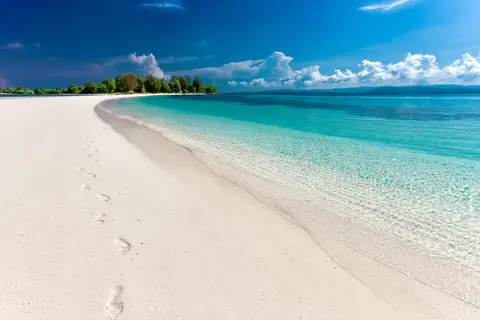
The breezy, seaside city of Manta is the second largest port in Ecuador and possesses one of the world's most varied terrains. To the west of Manta lie the Galapagos Islands. To the east rises the great rampart of the Andes. The Mantas were known for their traditional balsa rafts in the coastal waters and their ceramics and pottery. A huge tuna statue greets you on its shores, a whimsical nod to the tuna capital of the world. Fresh seafood is always on the menu, and a stroll along the promenade lets you take in the beach scene. The bustling center of town, an easy walk from port, displays a lively marketplace selling Panama hats, silver jewelry and apparel. There is lush green parkland; the nearby colonial town of Montecristi, the center of the Panama hat industry; and the Pacoche Wildlife Refuge, home to indigenous flora and fauna and cheeky howler monkeys. Explore the rich culture, heritage and people of Manta during scenic adventures that take in the Archaeological Museum, which highlights a small, well-curated collection of ceramics of the Manteño-Huancavilca culture that flourished here between 800 and 1550 A.D. Whether you explore its past or its vibrant city of today, a day in Manta is a rich and colorful experience. Note: Manta offers little in the way of tourist infrastructure. Transportation and tour guides are imported to the area. Despite the sometimes hot and humid conditions there is no guarantee of air-conditioned vehicles.
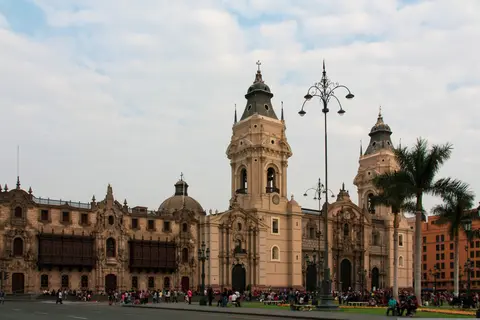
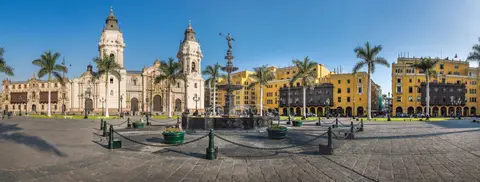
When people discuss great South American cities, Lima is often overlooked. But Peru's capital can hold its own against its neighbors. It has an oceanfront setting, colonial-era splendor, sophisticated dining, and nonstop nightlife.It's true that the city—clogged with traffic and choked with fumes—doesn't make a good first impression, especially since the airport is in an industrial neighborhood. But wander around the regal edifices surrounding the Plaza de Armas, among the gnarled olive trees of San Isidro's Parque El Olivar, or along the winding lanes in the coastal community of Barranco, and you'll find yourself charmed.In 1535 Francisco Pizarro found the perfect place for the capital of Spain's colonial empire. On a natural port, the so-called Ciudad de los Reyes (City of Kings) allowed Spain to ship home all the gold the conquistador plundered from the Inca. Lima served as the capital of Spain's South American empire for 300 years, and it's safe to say that no other colonial city enjoyed such power and prestige during this period.When Peru declared its independence from Spain in 1821, the declaration was read in the square that Pizarro had so carefully designed. Many of the colonial-era buildings around the Plaza de Armas are standing today. Walk a few blocks in any direction for churches and elegant houses that reveal just how wealthy this city once was. But the poor state of most buildings attests to the fact that the country's wealthy families have moved to neighborhoods to the south over the past century.The walls that surrounded the city were demolished in 1870, making way for unprecedented growth. A former hacienda became the graceful residential neighborhood of San Isidro. In the early 1920s the construction of tree-lined Avenida Arequipa heralded the development of neighborhoods such as bustling Miraflores and bohemian Barranco.Almost a third of the country's population of 29 million lives in the metropolitan area, many of them in relatively poor conos: newer neighborhoods on the outskirts of the city. Most residents of those neighborhoods moved there from mountain villages during the political violence and poverty that marked the 1980s and ’90s, when crime increased dramatically. During the past decade the country has enjoyed peace and steady economic growth, which have been accompanied by many improvements and refurbishment in the city. Residents who used to steer clear of the historic center now stroll along its streets. And many travelers who once would have avoided the city altogether now plan to spend a day here and end up staying two or three.
When people discuss great South American cities, Lima is often overlooked. But Peru's capital can hold its own against its neighbors. It has an oceanfront setting, colonial-era splendor, sophisticated dining, and nonstop nightlife.It's true that the city—clogged with traffic and choked with fumes—doesn't make a good first impression, especially since the airport is in an industrial neighborhood. But wander around the regal edifices surrounding the Plaza de Armas, among the gnarled olive trees of San Isidro's Parque El Olivar, or along the winding lanes in the coastal community of Barranco, and you'll find yourself charmed.In 1535 Francisco Pizarro found the perfect place for the capital of Spain's colonial empire. On a natural port, the so-called Ciudad de los Reyes (City of Kings) allowed Spain to ship home all the gold the conquistador plundered from the Inca. Lima served as the capital of Spain's South American empire for 300 years, and it's safe to say that no other colonial city enjoyed such power and prestige during this period.When Peru declared its independence from Spain in 1821, the declaration was read in the square that Pizarro had so carefully designed. Many of the colonial-era buildings around the Plaza de Armas are standing today. Walk a few blocks in any direction for churches and elegant houses that reveal just how wealthy this city once was. But the poor state of most buildings attests to the fact that the country's wealthy families have moved to neighborhoods to the south over the past century.The walls that surrounded the city were demolished in 1870, making way for unprecedented growth. A former hacienda became the graceful residential neighborhood of San Isidro. In the early 1920s the construction of tree-lined Avenida Arequipa heralded the development of neighborhoods such as bustling Miraflores and bohemian Barranco.Almost a third of the country's population of 29 million lives in the metropolitan area, many of them in relatively poor conos: newer neighborhoods on the outskirts of the city. Most residents of those neighborhoods moved there from mountain villages during the political violence and poverty that marked the 1980s and ’90s, when crime increased dramatically. During the past decade the country has enjoyed peace and steady economic growth, which have been accompanied by many improvements and refurbishment in the city. Residents who used to steer clear of the historic center now stroll along its streets. And many travelers who once would have avoided the city altogether now plan to spend a day here and end up staying two or three.
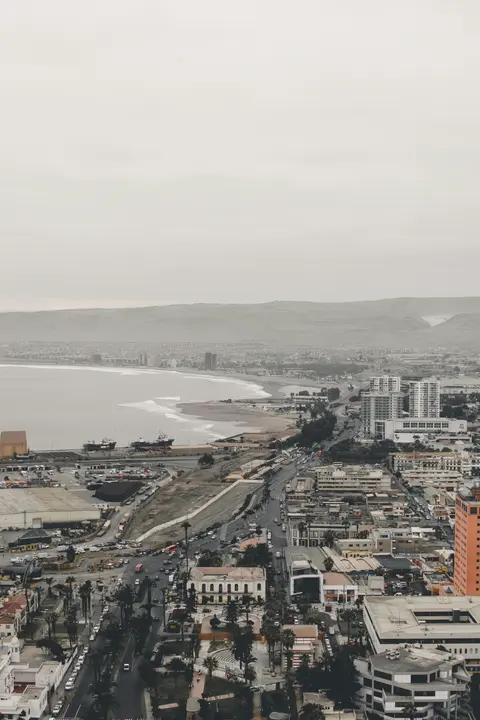
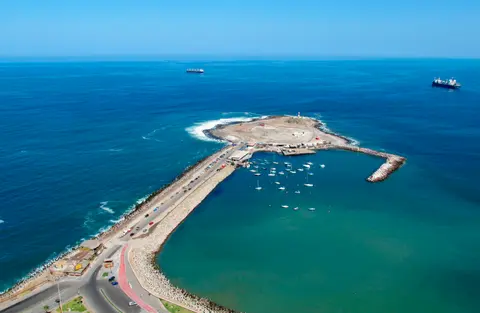
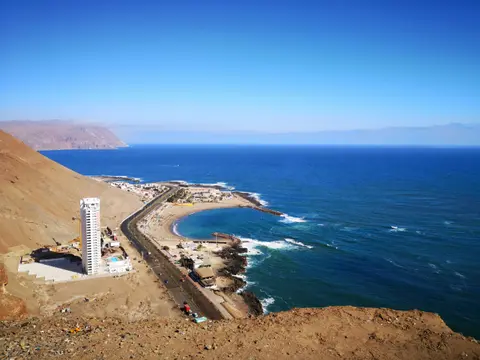
Arica, Chile’s northernmost city, 316km north of Iquique, benefits greatly from tourism, with foreign visitors flocking to its pleasant sandy beaches in the summer, and with a smattering of good museums. Aside from its own attractions, Arica makes a good base for the beautiful Parque Nacional Lauca. The compact city centre is easy to explore on foot, though a visit to Arica isn’t complete without climbing El Morro, the dramatic cliff that looms high over the city. From the clifftop, home to a number of turkey vultures and a giant Jesus statue that lights up at night, you can enjoy a magnificent panoramic view of the entire city. Also up here, with cannons stationed outside, is the Museo Histórico y de Armas, with displays of weaponry, uniforms and other artefacts from the War of the Pacific. Below El Morro is the large, palm-tree-lined Plaza Vicuña Mackenna, and alongside that lies Avenida Máximo Lira, the main coastal road. On the east side is the attractive Plaza Colón, decorated with pink flowers and ornate fountains. The plaza is home to one of Arica’s most celebrated buildings, the Gothic Iglesia de San Marcos, designed by Gustave Eiffel (of Eiffel Tower fame), made entirely out of iron and shipped over from France in 1876. The excellent Museo Arqueológico lies instead 12km from Arica in the green Azapa Valley. The museum traces the history of the valley’s inhabitants, from the earliest hunter-gatherers, via a remarkably thorough collection of regional pre-Hispanic artefacts. A twenty-minute walk south of the centre will bring you to the sandy Playa El Laucho and Playa La Lisera, both popular with sun worshippers and good for swimming, followed by the pretty Playa Brava and the dark-sand Playa Arenillas Negra, which has rougher waves.
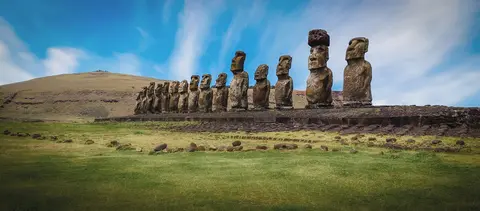
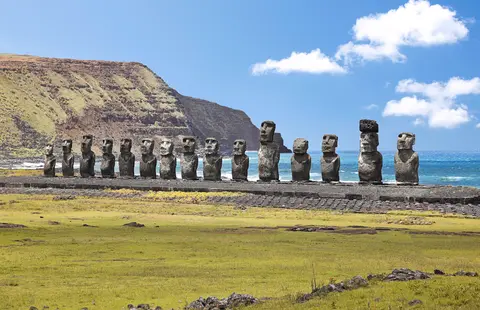
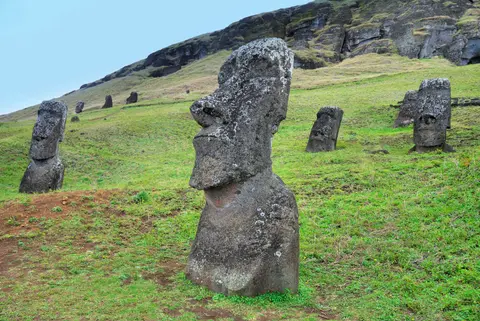
Easter Island, the easternmost settled island of Polynesia, received its European name in 1722 when the island was seen by a Dutch expedition under Roggeveen on Easter Sunday. The triangular-shaped island of 163 square kilometers is famous for the hundreds of statues known locally as moai. Rolling hills covered in grassland, eucalyptus forest and a rocky shore surround Hangaroa, the island’s only village on the southwestern coast. This is where Captain Cook landed in 1774, where missionaries built the first church and where ships find the best protection from winds and swells. Small beaches and transparent waters invite swimmers and snorkelers, but it is the cultural aspect which attracts visitors. Since 1935 the island has been a National Historic Monument and today 43.5% of the island is a national park administered by the Chilean National Forest Corporation and Mau Henua, a local community group. The island’s national park has been declared a UNESCO World Heritage Site in 1995. Found slightly more than 3,500 kilometers west of Chile, the island was annexed in 1888. Used as a sheep ranch for many decades, the island was opened in 1965 and an airstrip was built. The US Air Force set up a base to record the behavior of the earth's outer atmosphere and by 1987 NASA had the runway extended as an emergency runway for the space shuttle. This never happened, but tourism benefitted from this improvement and today the island receives more than 100,000 visitors a year.
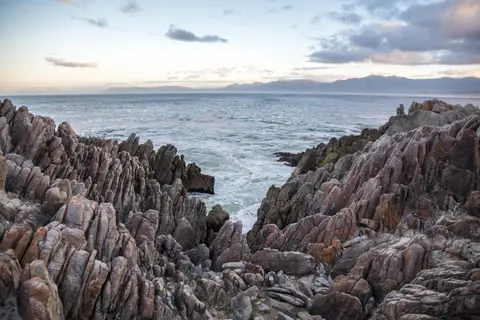
Lying below the tropic of Capricorn, halfway between New Zealand and the Americas, lonely Pitcairn Island is one of the most remote inhabited islands in the world. It was here that Fletcher Christian and eight of the mutineers of the HMS Bounty, along with their Tahitian companions, came in search of a new life. Set aflame and sunk by the infamous mutineers, parts of the legendary HMS Bounty shipwreck are still visible in the waters of Bounty Bay. Today, one of the island's most famous residents is its sole surviving Galapagos Giant Tortoise, named Turpen, who was introduced to Pitcairn sometime between 1937 and 1951. Several species of seabirds also nest here, including the flightless Henderson Crake, Fairy Terns, the Common Noddy, the Red-tailed Tropic Bird and the Pitcairn Island Warbler.
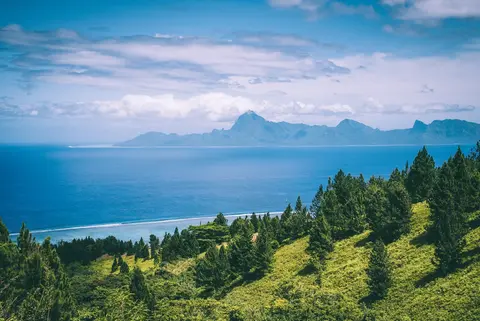
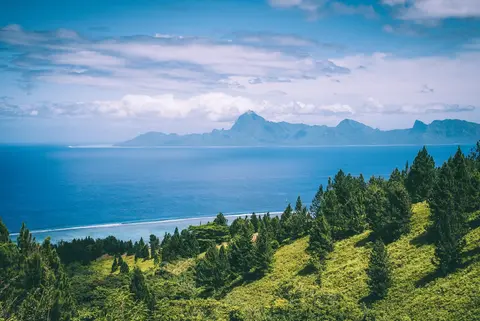
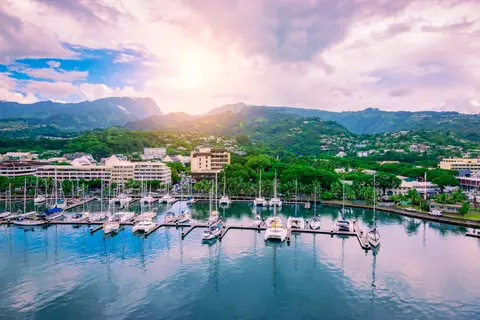
In the heart of the Pacific Ocean exists a paradise of crystal clear waters, white beaches and primitive vegetation. A place of pure beauty, where every corner hides wonderful treasures. It is French Polynesia, home of the island of Tahiti and the bustling port city of Papeete. This is where your incredibly beautiful vacation with MSC World Cruise will start on a journey to discover sensational places. It is the home of pearls; in Papeete, you can visit the first museum in the worlddedicated to the processing of these natural jewels, in particular the black pearl of Tahiti, the protagonist of the museum named after one of the largest cultivators of pearls, Robert Wan. Here each step of the delicate process of harvesting and processing pearls will be explained and you can learn how they become beautiful jewels. The museum also offers a comprehensive guide to the history and legends associated with pearls, crossing various cultures and civilizations. During your MSC Cruise into this exotic land, you will have the opportunity to visit the pulsating center of the city of Papeete, famous for its market. Activity begins at first light, with fruit, vegetables, fish, flowers and crafts. It is a place not to be missed especially early in the morning to breathe in its magical atmosphere before it is full of people. The entire island of Tahiti offers visitors a hiking dream, including walks in Bougainville Park, full of flowers and manicured plants, or a ride to Marae Arahurahu, the best place to admire the old traditional Polynesian temples and learn about their history by admiring one of the best preserved on these islands. MSC Cruises also offers a fantastic tour in the sky of Tahiti to see the whole island in one fell swoop.
In the heart of the Pacific Ocean exists a paradise of crystal clear waters, white beaches and primitive vegetation. A place of pure beauty, where every corner hides wonderful treasures. It is French Polynesia, home of the island of Tahiti and the bustling port city of Papeete. This is where your incredibly beautiful vacation with MSC World Cruise will start on a journey to discover sensational places. It is the home of pearls; in Papeete, you can visit the first museum in the worlddedicated to the processing of these natural jewels, in particular the black pearl of Tahiti, the protagonist of the museum named after one of the largest cultivators of pearls, Robert Wan. Here each step of the delicate process of harvesting and processing pearls will be explained and you can learn how they become beautiful jewels. The museum also offers a comprehensive guide to the history and legends associated with pearls, crossing various cultures and civilizations. During your MSC Cruise into this exotic land, you will have the opportunity to visit the pulsating center of the city of Papeete, famous for its market. Activity begins at first light, with fruit, vegetables, fish, flowers and crafts. It is a place not to be missed especially early in the morning to breathe in its magical atmosphere before it is full of people. The entire island of Tahiti offers visitors a hiking dream, including walks in Bougainville Park, full of flowers and manicured plants, or a ride to Marae Arahurahu, the best place to admire the old traditional Polynesian temples and learn about their history by admiring one of the best preserved on these islands. MSC Cruises also offers a fantastic tour in the sky of Tahiti to see the whole island in one fell swoop.
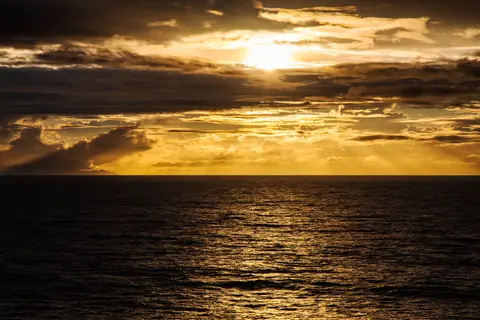
Unique in many ways, Tonga is the only country in the South Pacific that has never been colonized. The secret to this tiny kingdom's lasting autonomy lies with its monarchy - rich in culture and tradition; unafraid to modernize and move forward. You'll find Nuku'alofa on the isle of Tongatapu - the largest of the 171 island jewels in the Tongan crown. Hopefully the Tongan people, cheerful and welcoming, will treat you to a version of the lakalaka - their compelling art of storytelling manifested in a breathtaking dance.
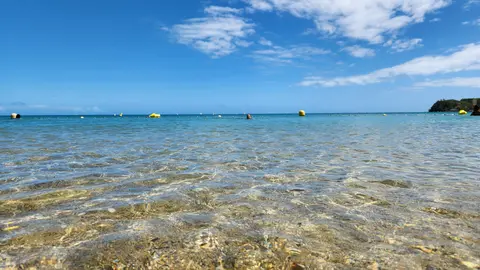
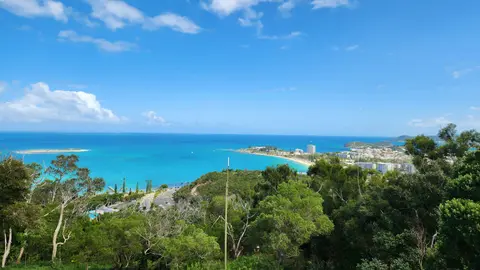
Perched overlooking the life-filled reefs of Noumea Lagoon, Noumea is the vibrant and colourful capital of New Caledonia. Catch some shade in the city’s centre, below Coconut Palm Square, and absorb the vibrant fusion of French and Kanak cultures. Or take a leisurely open-air stroll along the waterfront, where white boats bob and jostle on the lapping waters. Bring your tongs - the local word for flipflops - there will be plenty of time to swim, sunbathe and leaf through paperbacks on dazzling beaches. View less Noumea is a perfect jumping-off point for serene island adventures too. Enjoy a voyage to the island paradise of Amedee Isl - a tiny green land with a narrow historic lighthouse rocketing up from its centre. Climb 247 steps for the stunning view of the blotchy blue waters all around. Or, explore the waters to swim among turtles and orange clownfish. Set among the New Caledonian barrier reef, there are incredible diving opportunities, and glass-bottom boats offer you a dry window into the underwater world. Kick back on some of the softest sands imaginable and enjoy glorious sea views from the inviting shade of coconut palms. More island jaunts like Illot Maitre - which translates as the Master Isle – tempt, where you’ll find idyllic strings of stilted bungalows laced across the crystal-clear, shallow waters. Swim in the sparkling sea, and sprawl across the white sand beaches that are waiting. Back in the city, try soft coconut crab, following a starter of New Caledonian prawns. Bougna is the traditional Melanesian meal of choice, and a social experience where locals share a mix of vegetables and chicken in coconut milk, slow-cooked for hours in a bed of banana leaves.
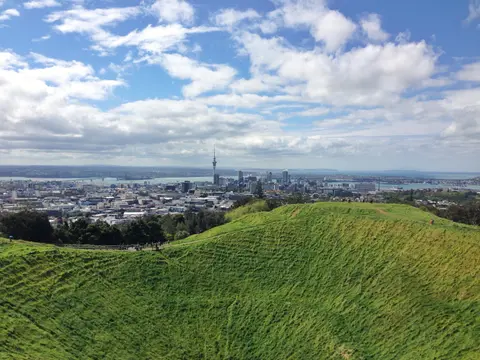
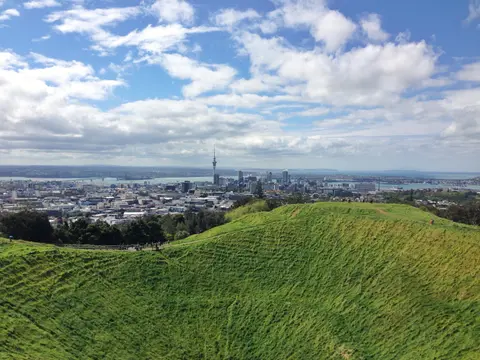
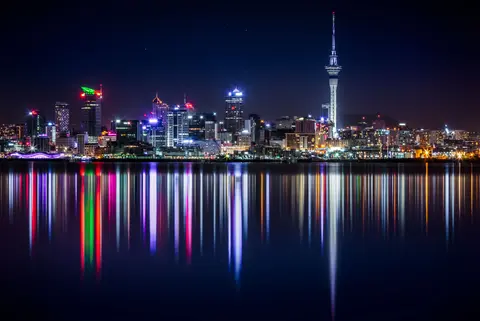
Auckland is called the City of Sails, and visitors flying in will see why. On the East Coast is the Waitemata Harbour—a Māori word meaning sparkling waters—which is bordered by the Hauraki Gulf, an aquatic playground peppered with small islands where many Aucklanders can be found "mucking around in boats."Not surprisingly, Auckland has some 70,000 boats. About one in four households in Auckland has a seacraft of some kind, and there are 102 beaches within an hour's drive; during the week many are quite empty. Even the airport is by the water; it borders the Manukau Harbour, which also takes its name from the Māori language and means solitary bird.According to Māori tradition, the Auckland isthmus was originally peopled by a race of giants and fairy folk. When Europeans arrived in the early 19th century, however, the Ngāti-Whātua tribe was firmly in control of the region. The British began negotiations with the Ngāti-Whātua in 1840 to purchase the isthmus and establish the colony's first capital. In September of that year the British flag was hoisted to mark the township's foundation, and Auckland remained the capital until 1865, when the seat of government was moved to Wellington. Aucklanders expected to suffer from the shift; it hurt their pride but not their pockets. As the terminal for the South Sea shipping routes, Auckland was already an established commercial center. Since then the urban sprawl has made this city of approximately 1.3 million people one of the world's largest geographically.A couple of days in the city will reveal just how developed and sophisticated Auckland is—the Mercer City Survey 2012 saw it ranked as the third-highest city for quality of life—though those seeking a New York in the South Pacific will be disappointed. Auckland is more get-up and go-outside than get-dressed-up and go-out. That said, most shops are open daily, central bars and a few nightclubs buzz well into the wee hours, especially Thursday through Saturday, and a mix of Māori, Pacific people, Asians, and Europeans contributes to the cultural milieu. Auckland has the world's largest single population of Pacific Islanders living outside their home countries, though many of them live outside the central parts of the city and in Manukau to the south. The Samoan language is the second most spoken in New Zealand. Most Pacific people came to New Zealand seeking a better life. When the plentiful, low-skilled work that attracted them dried up, the dream soured, and the population has suffered with poor health and education. Luckily, policies are now addressing that, and change is slowly coming. The Pacifica Festival in March is the region's biggest cultural event, attracting thousands to Western Springs. The annual Pacific Island Secondary Schools’ Competition, also in March, sees young Pacific Islander and Asian students compete in traditional dance, drumming, and singing. This event is open to the public.At the geographical center of Auckland city is the 1,082-foot Sky Tower, a convenient landmark for those exploring on foot and some say a visible sign of the city's naked aspiration. It has earned nicknames like the Needle and the Big Penis—a counterpoint to a poem by acclaimed New Zealand poet James K. Baxter, which refers to Rangitoto Island as a clitoris in the harbor.The Waitemata Harbour has become better known since New Zealand staged its first defense of the America's Cup in 2000 and the successful Louis Vuitton Pacific Series in early 2009. The first regatta saw major redevelopment of the waterfront. The area, where many of the city's most popular bars, cafés, and restaurants are located, is now known as Viaduct Basin or, more commonly, the Viaduct. A recent expansion has created another area, Wynyard Quarter, which is slowly adding restaurants.These days, Auckland is still considered too bold and brash for its own good by many Kiwis who live "south of the Bombay Hills," the geographical divide between Auckland and the rest of New Zealand (barring Northland). "Jafa," an acronym for "just another f—ing Aucklander," has entered the local lexicon; there's even a book out called Way of the Jafa: A Guide to Surviving Auckland and Aucklanders. A common complaint is that Auckland absorbs the wealth from the hard work of the rest of the country. Most Aucklanders, on the other hand, still try to shrug and see it as the parochial envy of those who live in small towns. But these internal identity squabbles aren't your problem. You can enjoy a well-made coffee in almost any café, or take a walk on a beach—knowing that within 30 minutes' driving time you could be cruising the spectacular harbor, playing a round at a public golf course, or even walking in subtropical forest while listening to the song of a native tûî bird.
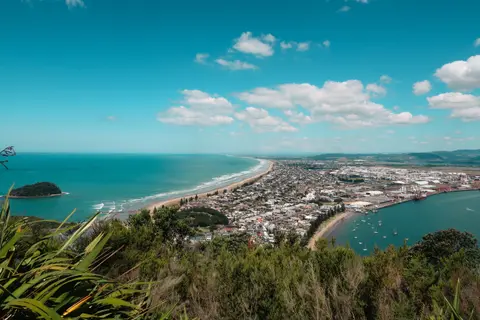
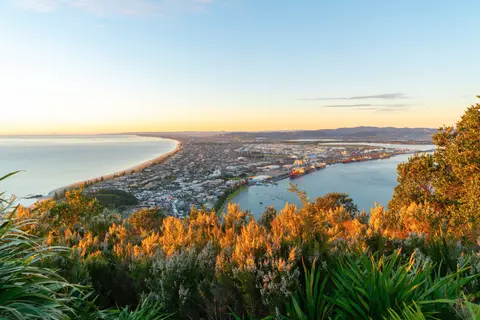
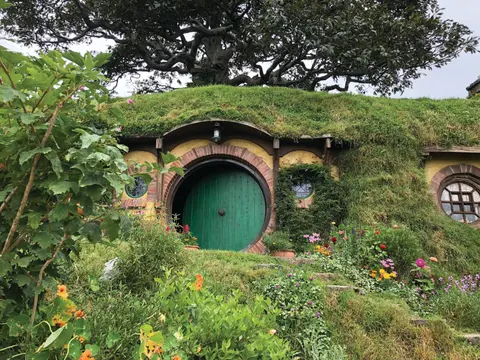
New Zealand's natural bounty is always on display at the Bay of Plenty. It was Captain James Cook who in 1769 aptly named this bay after he was able to replenish his ship's provisions, thanks to the prosperous Maori villages of the region. Tauranga, the chief city, is a bustling port, an agricultural and timber center and a popular seaside resort. Tauranga is also the gateway to Rotorua - a geothermal wonderland that is the heart of Maori culture. A 90-minute drive from Tauranga, Rotorua is New Zealand's primary tourist attraction. Your ship docks near the foot of Mt. Maunganui, which rises 761 feet above the bay. Across the harbor, Tauranga offers scenic tidal beaches at Omokoroa and Pahoia. The region boasts fine beaches, big-game fishing, thermal springs and seaside resorts.
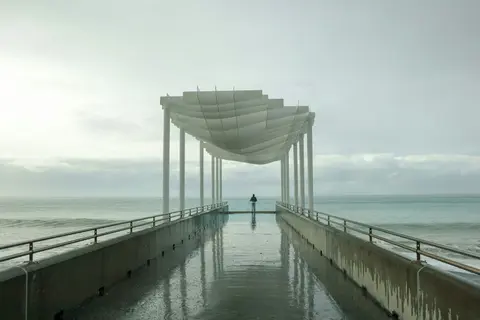
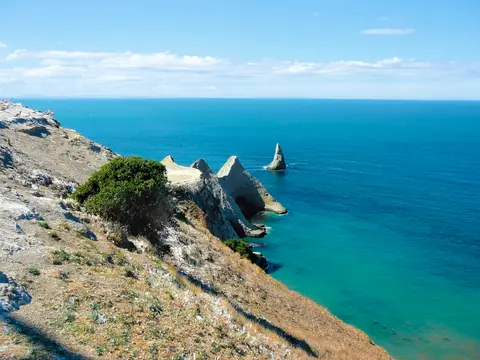
The earthquake that struck Napier at 10:46 am on February 3, 1931, was—at 7.8 on the Richter scale—the largest quake ever recorded in New Zealand. The coastline was wrenched upward several feet. Almost all the town's brick buildings collapsed; many people were killed on the footpaths as they rushed outside. The quake triggered fires throughout town, and with water mains shattered, little could be done to stop the blazes that devoured the remaining wooden structures. Only a few buildings survived (the Public Service Building with its neoclassical pillars is one), and the death toll was well over 100.The surviving townspeople set up tents and cookhouses in Nelson Park, and then tackled the city's reconstruction at a remarkable pace. In the rush to rebuild, Napier went mad for art deco, the bold, geometric style that had burst on the global design scene in 1925. Now a walk through the art deco district, concentrated between Emerson, Herschell, Dalton, and Browning streets, is a stylistic immersion. The decorative elements are often above the ground floors, so keep your eyes up.
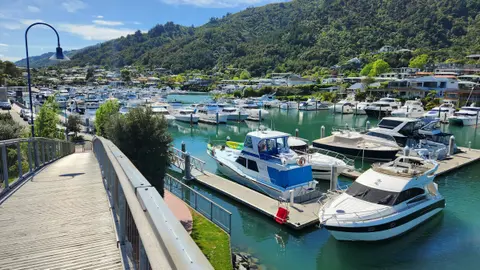
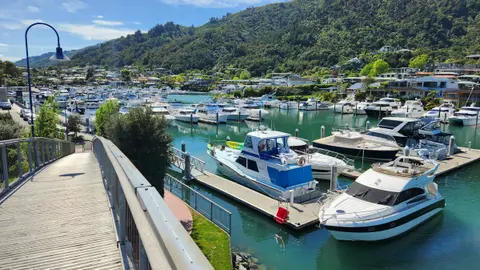
Picton has developed a reputation in recent years. It’s the doorway to New Zealand’s South Island used by locals and international travelers alike to get to the islands and resorts of the Marlborough Sounds, an interconnected stretch of beautiful landscape. The surrounding area is famous for its wineries, so you can enjoy vineyard tours and tastings while stopped on Picton cruises. Picton is a hidden gem for international travelers. Beautiful scenery in the Marlborough Sounds and views of the New Zealand countryside make the area particularly memorable for first-time visitors. On the waterfront, explore Pollard Park for a leisurely stroll, or stop at EcoWorld Aquarium to see rescued and protected species during a tour of the wildlife rehabilitation center. On your New Zealand cruise, you’ll be endlessly surprised by its foodie and café scene, outdoor adventures like hiking and kayaking, and beautiful water and mountain views.
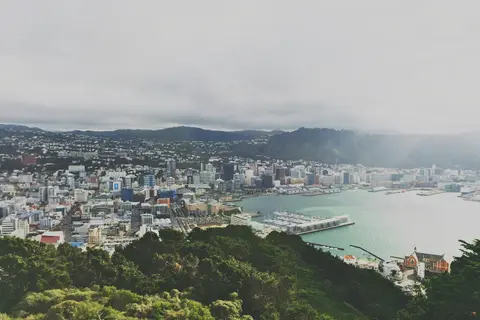
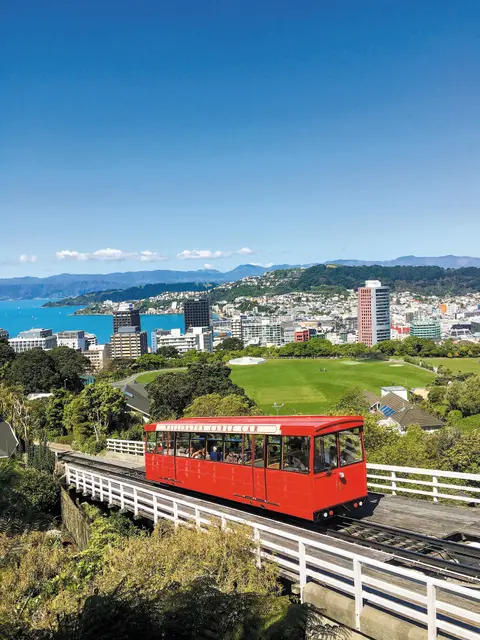
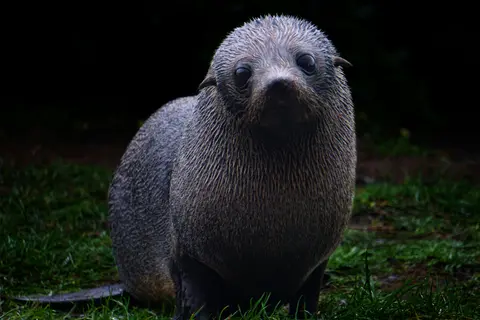
New Zealand's capital is, arguably, the country's most cosmopolitan metropolis. It's world-class Te Papa Tongarewa-Museum of New Zealand is a don't-miss attraction, and the burgeoning film industry led, of course, by the Lord of the Rings extravaganzas has injected new life into the local arts scene. Attractive and compact enough to be explored easily on foot, Wellington is a booming destination. Modern high-rise buildings gaze over Port Nicholson, surely one of the finest natural anchorages in the world. Known to local Māori as The Great Harbor of Tara, its two massive arms form the jaws of the fish of Maui from Māori legend. Sometimes referred to as the windy city, Wellington has been the seat of New Zealand's government since 1865.
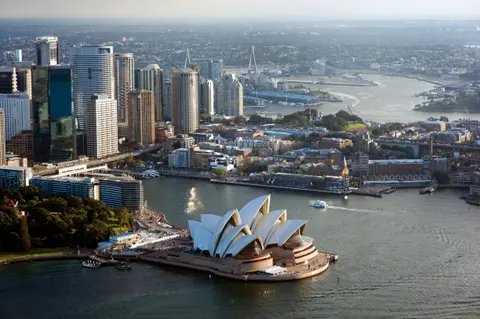
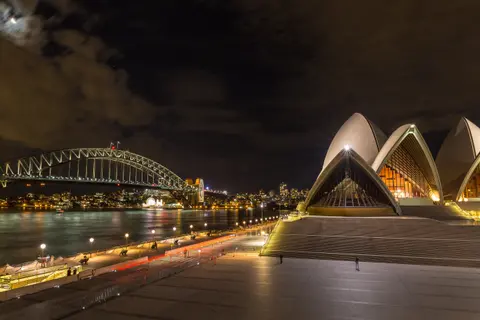
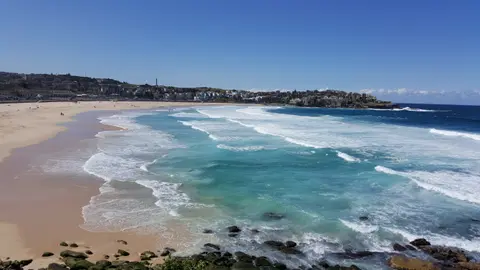
If you want a snapshot of Australia's appeal, look no further than Sydney: The idyllic lifestyle, friendly locals and drop-dead natural beauty of this approachable metropolis and its attractions explain why the country tops so many travelers' wish lists. But Sydney is more than just the embodiment of classic antipodean cool—the city is in a constant state of evolution. A list of what to do in Sydney might start with the white-hot nightlife, with its new cocktail bars and idiosyncratic mixology dens. Inventive restaurants helmed by high-caliber chefs are dishing up everything from posh pan-Asian to Argentine street food, while the famous dining temples that put Sydney on the gastronomic map are still going strong too. The famed harbor is among the top sights—home to twin icons the Sydney Opera House and the Sydney Harbour Bridge, it is the stepping-off point for some of the city's best cultural attractions and sightseeing. In one day you can sail around the harbor, get a behind-the-scenes tour of the opera house and climb the bridge, with time to spare for people-watching over a flat white at a waterfront café. Speaking of water, when you plan what to do in Sydney, you will want to include the iconic beaches, where surfers, office workers and tourists alike converge on some of the most gorgeous shoreline scenery anywhere. Bondi, Bronte and Clovelly are all within easy reach of the Central Business District, as is Manly, a charming seaside town located a short ferry ride from Circular Quay. Beyond the city you'll discover UNESCO World Heritage Sites and the chance to encounter Australia's cuddliest wildlife—a perfect way to round out your envy-inducing Sydney photo collection.
If you want a snapshot of Australia's appeal, look no further than Sydney: The idyllic lifestyle, friendly locals and drop-dead natural beauty of this approachable metropolis and its attractions explain why the country tops so many travelers' wish lists. But Sydney is more than just the embodiment of classic antipodean cool—the city is in a constant state of evolution. A list of what to do in Sydney might start with the white-hot nightlife, with its new cocktail bars and idiosyncratic mixology dens. Inventive restaurants helmed by high-caliber chefs are dishing up everything from posh pan-Asian to Argentine street food, while the famous dining temples that put Sydney on the gastronomic map are still going strong too. The famed harbor is among the top sights—home to twin icons the Sydney Opera House and the Sydney Harbour Bridge, it is the stepping-off point for some of the city's best cultural attractions and sightseeing. In one day you can sail around the harbor, get a behind-the-scenes tour of the opera house and climb the bridge, with time to spare for people-watching over a flat white at a waterfront café. Speaking of water, when you plan what to do in Sydney, you will want to include the iconic beaches, where surfers, office workers and tourists alike converge on some of the most gorgeous shoreline scenery anywhere. Bondi, Bronte and Clovelly are all within easy reach of the Central Business District, as is Manly, a charming seaside town located a short ferry ride from Circular Quay. Beyond the city you'll discover UNESCO World Heritage Sites and the chance to encounter Australia's cuddliest wildlife—a perfect way to round out your envy-inducing Sydney photo collection.
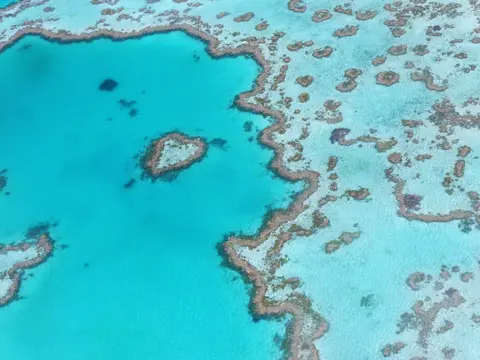
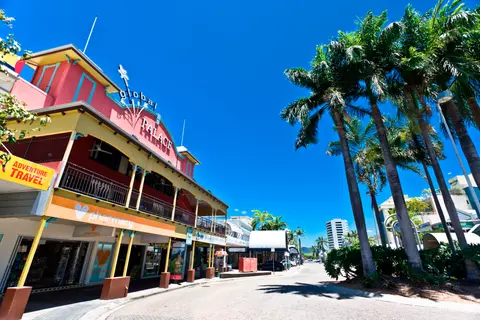
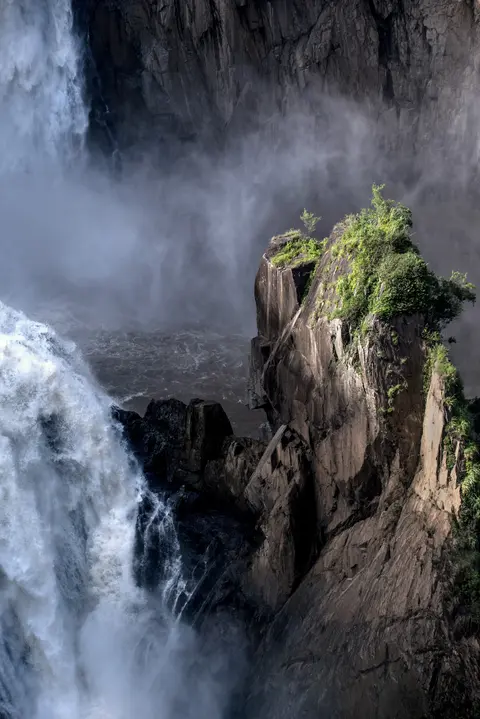
The gateway to Australia's Great Barrier Reef and the tropical north of the country, Cairns sits on the east coast of the Cape York Peninsula in northern Queensland. This laid-back city is popular with travelers who depart from here for days of sailing, diving, snorkeling and trekking through nearby parks—a celebrated launching pad especially for those who want to explore the reef, the Daintree Rain Forest and other attractions of this part of Queensland. And what better place to start one's adventure? The residents of Cairns are welcoming, the beach life fantastic and the climate consistently sunny and warm. Wend your way due east of Cairns, and you'll find yourself on the Great Barrier Reef, the world's longest coral reef and also the world's largest living organism. Famously visible from outer space, it's often been described as one of the Seven Natural Wonders of the World. The Kuranda Scenic Railway is a different sort of wonder—an engineering marvel from the 19th century that passes through rain forests on UNESCO's list of World Heritage Sites before reaching the village of Kuranda. Green Island, a 6,000-year-old coral cay, is an easy day trip from Cairns with opportunities to snorkel and swim; Port Douglas, an hour north of Cairns, is a favorite with visitors thanks to its top-notch restaurants, art galleries and boutiques. Finally, hop on a six-person cable car known as the Skyway Rainforest Cableway for a bird's-eye view of the stunning natural appeal of the region.
The gateway to Australia's Great Barrier Reef and the tropical north of the country, Cairns sits on the east coast of the Cape York Peninsula in northern Queensland. This laid-back city is popular with travelers who depart from here for days of sailing, diving, snorkeling and trekking through nearby parks—a celebrated launching pad especially for those who want to explore the reef, the Daintree Rain Forest and other attractions of this part of Queensland. And what better place to start one's adventure? The residents of Cairns are welcoming, the beach life fantastic and the climate consistently sunny and warm. Wend your way due east of Cairns, and you'll find yourself on the Great Barrier Reef, the world's longest coral reef and also the world's largest living organism. Famously visible from outer space, it's often been described as one of the Seven Natural Wonders of the World. The Kuranda Scenic Railway is a different sort of wonder—an engineering marvel from the 19th century that passes through rain forests on UNESCO's list of World Heritage Sites before reaching the village of Kuranda. Green Island, a 6,000-year-old coral cay, is an easy day trip from Cairns with opportunities to snorkel and swim; Port Douglas, an hour north of Cairns, is a favorite with visitors thanks to its top-notch restaurants, art galleries and boutiques. Finally, hop on a six-person cable car known as the Skyway Rainforest Cableway for a bird's-eye view of the stunning natural appeal of the region.
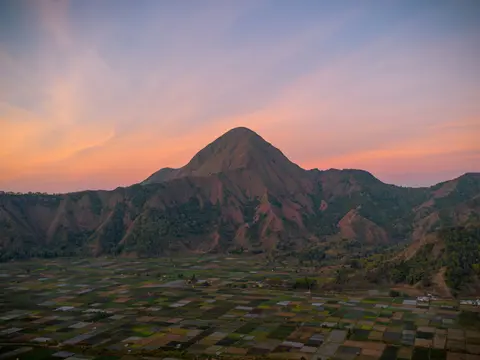
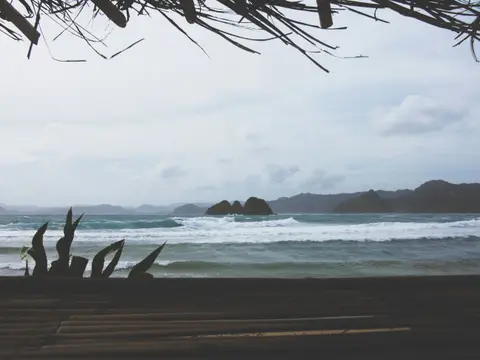
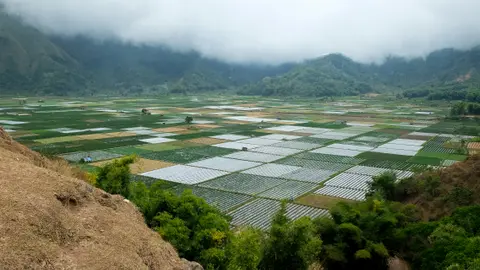
An island of startling contradictions and contrasts, Lombok exudes an aura of the staid and the rural, a genteel way of life in a quiet backwater. Located to the east and across a deep strait from its illustrious neighbor Bali, the island of Lombok offers unique culture, beautiful landscapes and a far less frenetic, pressured atmosphere than Bali. However, savvy travelers agree that Lombok’s calm existence may soon come to an end, as it is fast becoming the new "in place" after Bali. View less The island was once ruled by a series of Sasak princes who spent their time fending off successive invasions from Sumbawanese and Makassarese attackers. In 1740, the Balinese established a stronghold here and imposed their culture on the Sasaks. Later, Lombok came under Dutch rule until the country achieved independence. The western part of the almost circular island is well irrigated by mountain streams and artesian springs. Here Balinese and Sasaks have sculpted handsome rice terraces; Hindu temples vie for attention with glistening white mosques rising from picturesque rural villages. More dramatic is the southern coast with beautiful sandy bays set between rocky outcrops. Most of Lombok’s attractions are concentrated in the western district of the island, within a nine-mile radius of the capital, Mataram. Members of Lombok's polyglot population - Sasak, Balinese, Chinese and Arab - continue their laid-back, traditional ways.
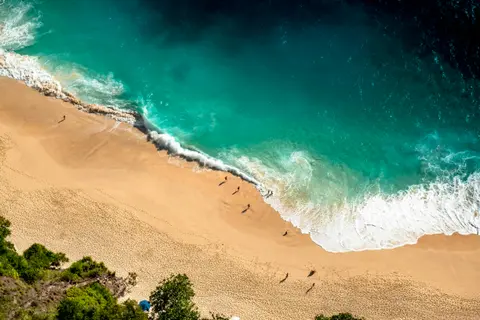
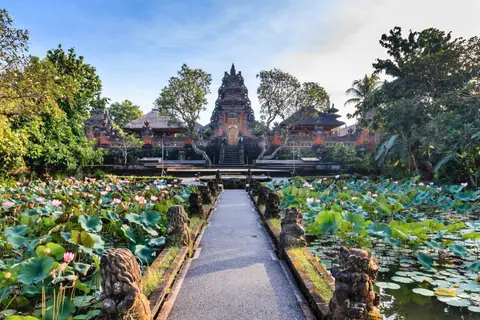
Bali really is as alluring as everyone says. This island, slightly bigger than Delaware, has it all: beaches, volcanoes, terraced rice fields, forests, renowned resorts, surfing, golf, and world-class dive sites. But what sets Bali apart from other nearby tropical destinations is Balinese tradition, and villagers dedicated to celebrating it. The hundreds of temples, dances, rituals, and crafts linked to their ancient Hindu faith aren't a show for tourists, but a living, breathing culture in which visitors are warmly received by the Balinese, who cherish their own identities.
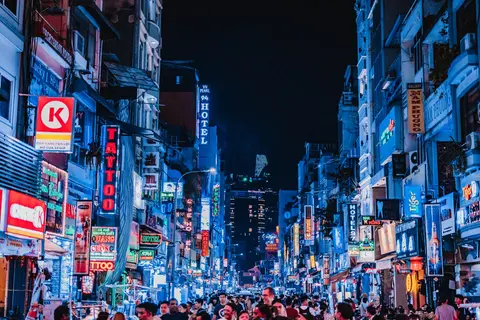
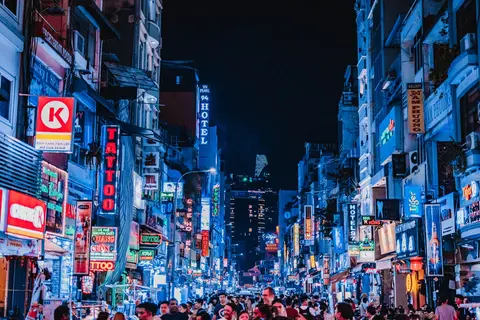
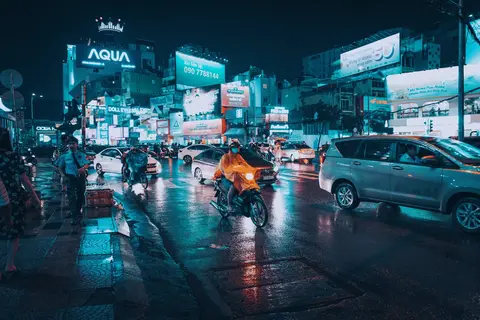
Ho Chi Minh City is a vibrant port of call for MSC cruise liners on MSC Grand Voyages cruise itineraries. It’s a fury of sights and sounds, and the crucible in which Vietnam’s rallying fortunes are boiling. Few corners of the city afford respite from the cacophony of construction work casting up new office blocks and hotels with logic-defying speed. An increasing number of cars and minibuses jostle with an organic mass of state-of-the-art Honda SUVs, choking the tree-lined streets and boulevards. Amid this melee, the local people go about their daily life: smartly dressed schoolkids wander past streetside baguette-sellers; women shoppers ride motorbikes clad in gangster-style bandanas to protect their skin from the sun and dust; while teenagers in designer jeans chirrup into mobile phones. MSC Cruises shore excursions can be a clever option to see much of Ho Chi Minh City’s fun that derives from the simple pleasure of absorbing its flurry of activity – something best done from the seat of a cyclo or a roadside café. To blink is to miss some new and singular sight, be it a motorbike stacked high with piglets bound for the market, or a boy on a bicycle rapping out a staccato tattoo on pieces of bamboo to advertise noodles for sale. For some visitors, the American war is their primary frame of reference and such historical hot spots as the Reunification Palace rank highly on their itineraries. In addition, ostentatious reminders of French rule abound, among them such memorable buildings as Notre Dame Cathedral and the grandiose Hotel de Ville – but even these look spanking-new when compared to gloriously musty edifices like Quan Am Pagoda and the Jade Emperor Pagoda, just a couple of the many captivating places of worship across the city. And don’t miss Ben Thanh Market, the teeming Vietnamese market par excellence, check the city’s pulse here on an early morning stroll.
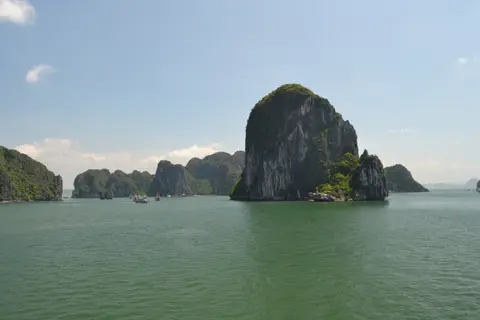
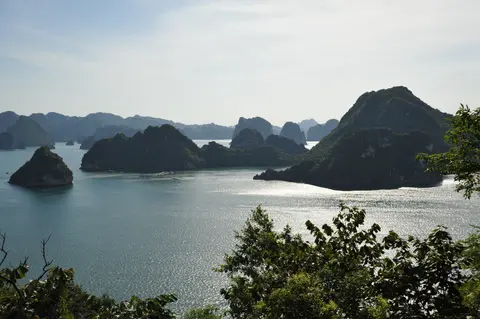
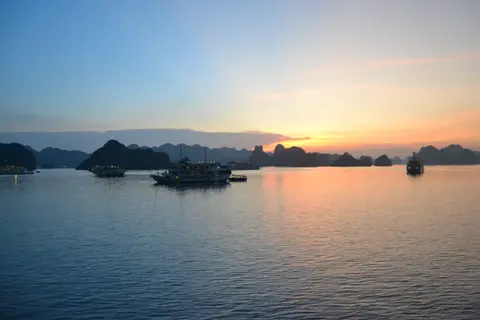
A visit to the north is not complete without a trip to Halong Bay, where placid waters give way to more than 3,000 limestone karsts and wind-sculpted limestone formations that jut from foggy lagoons. Dotting the bay are tiny islands bordered by white sandy coves and hidden caves, adding to the majestic landscape of this UNESCO World Heritage Site. Adding to this naturalist’s dream is the biodiversity of islets, grottos, and Cat Ba Island National Park. The bay, however, shows tourism’s impact: the clearing of mangrove forests to make way for jetties and piers, marine life threatened by game fishing, and garbage from passenger boats and fishing villages washed up on the shores.Beyond its geological uniqueness are activities like hiking, kayaking, rock climbing, or exploring one of the many floating villages where fishermen bring in their daily catch. The downside to all this allure is the large number of unlicensed boats it draws to the bay each day.Boat trips out onto the bay are the main tourism stock in trade farther north, but a more multifaceted side of the area can be experienced at Cat Ba Island. The largest island in Halong Bay, Cat Ba is very much its own entity. Its national park offers incredible biodiversity, with more than a thousand species of plants having been recorded here. Animal life is slightly thinner on the ground, but alert visitors may spy inhabitants such as the endangered golden-headed langur, wild boar, deer, civets, and several species of squirrel. Trekking through the wilderness is a highlight with a number of fascinating trails to follow.Cat Ba Island has also become a firm favorite with the adventure sports set. Indeed, along with Railay Beach in Thailand, it is recognized as one of the top spots in the region for rock climbing. Other outdoor pursuits include sailing and kayaking around the karsts. Although Halong Bay has arguably been tainted by over-exposure, Bai Tu Long Bay farther east toward China, retains all the majesty of Vietnam’s premier bucket-list natural attraction but sees a fraction of the traffic of its immediate neighbor to the west. Here, visitors will find islands of substantial size with deserted beaches and untamed jungle. Halong Bay's 3,000 islands of dolomite and limestone cover a 1,500-square-km (580-square-mile) area, extending across the Gulf of Tonkin nearly to the Chinese border. According to legend, this breathtaking land- and seascape was formed by a giant dragon that came barreling out of the mountains toward the ocean—hence the name (Halong translates into "descent of the dragon"). Geologists are more likely to attribute the formations to sedimentary limestone that formed here between 300 and 500 million years ago, in the Paleozoic Era. Over millions of years water receded and exposed the limestone to wind, rain, and tidal erosion.Today the limestone formations are exposed to hordes of tourists—but don't let that discourage you. Hundreds of fishing trawlers and tour boats share space on these crystal waters, yet there seems to be room for everyone. Most people use the main population center, Halong City, as a base from which to venture into the bay. Although it's now officially one municipality, Halong City was, until 1996, two separate towns: Bai Chay is now Halong City West, where Halong Road winds its way around the coast and past the lifeless central beach; Hon Gai is the grimier Halong City East, where a coal transportation depot dominates the center of town and covers nearby roads and buildings with a sooty film. Locals still refer to the towns by their old names, but they are now inexorably lassoed together by a bridge. Boat trips through Halong Bay are the main attraction. Little of the majesty of this region can be found in the city, so head out onto the water and start exploring. Countless 10- and 30-foot fishing boats have been converted into Halong Bay's formidable tourist-boat fleet. Hotels or travel agencies in Halong City or Hanoi can arrange boat trips for you (often they are part of organized tours from Hanoi). It is still possible to go down to the wharf and bargain yourself onto a boat for the day, but you are likely to be charged (sometimes significantly) more than you would pay for a prebooked tour, so this is not advised. Self-sufficient travelers have fallen victim to the old bait-and-switch: they've arranged a next-day boat tour with local fishermen, only to be told in no uncertain terms the following morning that they could not board their chosen boat, but they could take a different one for quite a bit more money. You may have no choice in the end. Usually travel agencies, however, have their tried-and-true favorites.
A visit to the north is not complete without a trip to Halong Bay, where placid waters give way to more than 3,000 limestone karsts and wind-sculpted limestone formations that jut from foggy lagoons. Dotting the bay are tiny islands bordered by white sandy coves and hidden caves, adding to the majestic landscape of this UNESCO World Heritage Site. Adding to this naturalist’s dream is the biodiversity of islets, grottos, and Cat Ba Island National Park. The bay, however, shows tourism’s impact: the clearing of mangrove forests to make way for jetties and piers, marine life threatened by game fishing, and garbage from passenger boats and fishing villages washed up on the shores.Beyond its geological uniqueness are activities like hiking, kayaking, rock climbing, or exploring one of the many floating villages where fishermen bring in their daily catch. The downside to all this allure is the large number of unlicensed boats it draws to the bay each day.Boat trips out onto the bay are the main tourism stock in trade farther north, but a more multifaceted side of the area can be experienced at Cat Ba Island. The largest island in Halong Bay, Cat Ba is very much its own entity. Its national park offers incredible biodiversity, with more than a thousand species of plants having been recorded here. Animal life is slightly thinner on the ground, but alert visitors may spy inhabitants such as the endangered golden-headed langur, wild boar, deer, civets, and several species of squirrel. Trekking through the wilderness is a highlight with a number of fascinating trails to follow.Cat Ba Island has also become a firm favorite with the adventure sports set. Indeed, along with Railay Beach in Thailand, it is recognized as one of the top spots in the region for rock climbing. Other outdoor pursuits include sailing and kayaking around the karsts. Although Halong Bay has arguably been tainted by over-exposure, Bai Tu Long Bay farther east toward China, retains all the majesty of Vietnam’s premier bucket-list natural attraction but sees a fraction of the traffic of its immediate neighbor to the west. Here, visitors will find islands of substantial size with deserted beaches and untamed jungle. Halong Bay's 3,000 islands of dolomite and limestone cover a 1,500-square-km (580-square-mile) area, extending across the Gulf of Tonkin nearly to the Chinese border. According to legend, this breathtaking land- and seascape was formed by a giant dragon that came barreling out of the mountains toward the ocean—hence the name (Halong translates into "descent of the dragon"). Geologists are more likely to attribute the formations to sedimentary limestone that formed here between 300 and 500 million years ago, in the Paleozoic Era. Over millions of years water receded and exposed the limestone to wind, rain, and tidal erosion.Today the limestone formations are exposed to hordes of tourists—but don't let that discourage you. Hundreds of fishing trawlers and tour boats share space on these crystal waters, yet there seems to be room for everyone. Most people use the main population center, Halong City, as a base from which to venture into the bay. Although it's now officially one municipality, Halong City was, until 1996, two separate towns: Bai Chay is now Halong City West, where Halong Road winds its way around the coast and past the lifeless central beach; Hon Gai is the grimier Halong City East, where a coal transportation depot dominates the center of town and covers nearby roads and buildings with a sooty film. Locals still refer to the towns by their old names, but they are now inexorably lassoed together by a bridge. Boat trips through Halong Bay are the main attraction. Little of the majesty of this region can be found in the city, so head out onto the water and start exploring. Countless 10- and 30-foot fishing boats have been converted into Halong Bay's formidable tourist-boat fleet. Hotels or travel agencies in Halong City or Hanoi can arrange boat trips for you (often they are part of organized tours from Hanoi). It is still possible to go down to the wharf and bargain yourself onto a boat for the day, but you are likely to be charged (sometimes significantly) more than you would pay for a prebooked tour, so this is not advised. Self-sufficient travelers have fallen victim to the old bait-and-switch: they've arranged a next-day boat tour with local fishermen, only to be told in no uncertain terms the following morning that they could not board their chosen boat, but they could take a different one for quite a bit more money. You may have no choice in the end. Usually travel agencies, however, have their tried-and-true favorites.
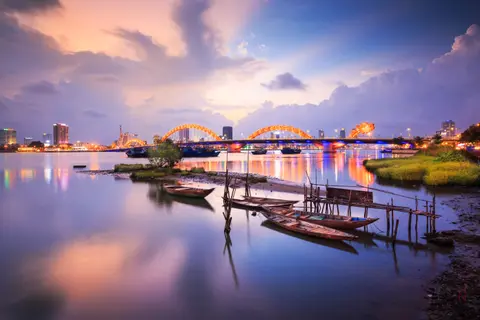
Experience the rich imperial past, stoic resilience, and blissful beaches of central Vietnam, as you delve deep into this fascinating country’s past and present. The sheer beauty and vitality of the scenery will amaze you, as you explore the stories this now tranquil land has to tell - all the while surrounded by rolling rice paddies, freely grazing water buffalo and soaring limestone scenery. Cut in half by the evocatively named Perfume River, and home to a spectacular sprawling citadel, Hue is a true experience for the senses. Vietnam's timeless beauty outshines the shadows of its past, but Hue still bears the heavy scars of war - whether it's from American bombs, or harrowing events like those of Hue Jungle Crevice - where the Viet Cong pushed 3,000 civilians to their deaths. Hue’s Old City was once the jewel of Vietnam, standing proudly as its Imperial Capital. Lotus flowers now twirl peacefully in the grand moat around its mighty walls, which encase a spectacular array of charred palaces, temples and regal residences. Danang’s Marble Mountains rise dramatically close by, and they are scattered with Buddhist shrines and plunging caves. While there is an endless treasure trove of rich cultural experiences waiting here, it’s hard to resist the call of Danang's idyllic beaches, where white sand gives way to a fringe of palm trees. The undulating humps of the city's Dragon Bridge soar across the wide River Han, and this ambitious structure comes alive at night, when strobing light shows illuminate its flowing form, and the bridge’s dragon head rasps fire into the dusk.
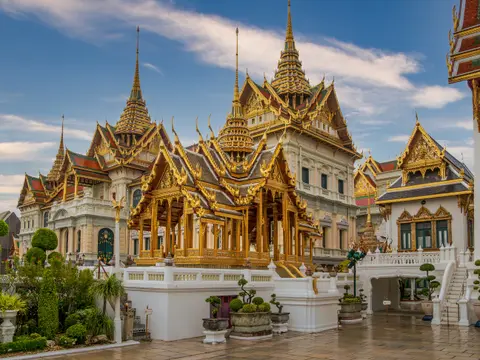
Laem Chabang is the starting point of an exploration of Bangkok with an MSC Grand Voyages Cruise. Located in Chonburi province, it is the most important industrial port of Thailand, and is the gateway to reach Bangkok from the sea. With an MSC cruise, you will visit the capital of Thailand and its main attractions. Located on the Chao Phraya River, Bangkok is rich in history and culture. There are many places and monuments to visit. These include the Royal Grand Palace, the residence of the Chakri dynasty where you can also find the temple of the Emerald Buddha, a statue of rare beauty made from a single piece of jade. At the Buddhist temple of Wat Po can be found the huge reclining Buddha, a good 46 meters long and 15 meters high. At Wat Po, the place where Thai therapeutic massage was invented, the pagodas are also not to be missed: Phrang Rabieng in white marble and Phra Maha Chedi with delicate and colorful floral patterns. The visit continues in the heart of the city: a journey on a typical boat through the canals – it is not surprising that Bangkok is called the "Venice of the East" – lined by the houses of this picturesque capital city to get to Wat Arun (Temple of Dawn) with its very high tower reminiscent of an Aztec elongated pyramid. An experience to be lived, on an MSC cruise, is to savor up-close the atmosphere of the Klongsuan market, where Buddhists and Muslims live and work together in harmony and where you can discover the traditions and customs of the people. The journey continues to Chachoengsao, the city where Sothon Wat can be found, the temple that houses the much venerated effigy of the Buddha: the Phra Phutthasothon. Finally, you arrive at the Bang Pa-In, the Summer Palace, consisting of five majestic buildings not to be missed. There is a Thai-style pavilion, built in the middle of an artificial lake, a two-story European-style pavilion, a residential pavilion, a Chinese-style pavilion and an observatory located on a small island.
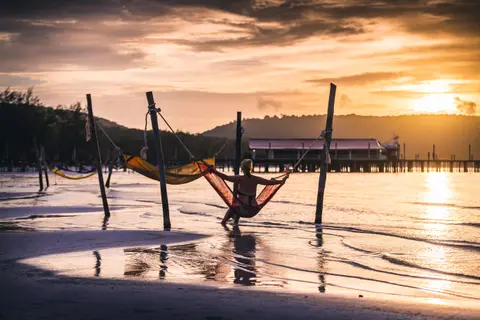
Developed as Cambodia's sole deepwater port in 1964, Sihanoukville - the former Kampong Som - has become a jealously guarded secret of savvy travelers. This still pristine resort on the Gulf of Thailand boasts beautiful beaches and crystalline waters. Offshore islands offer excellent dive sites and some of the world's finest big game fishing. Sihanoukville is also renowned for its excellent cuisine featuring superb seafood. Sihanoukville is located on a peninsula some 155 miles southwest of Phnom Penh.
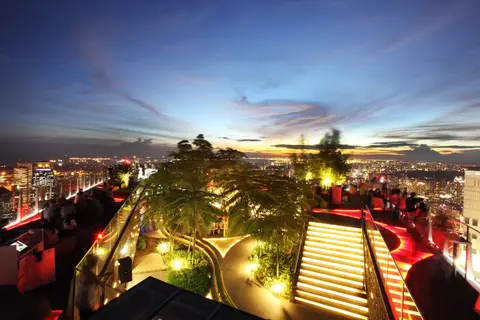
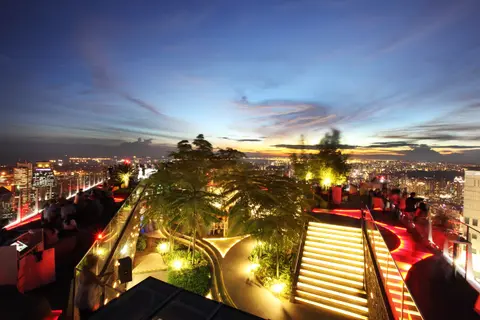
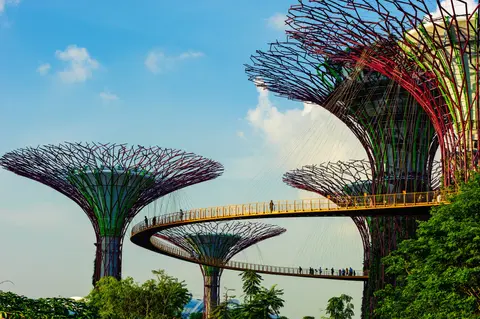
Advanced, airy and elevated, Singapore is a spectacular, futuristic vision of utopian city life. A healthy population of almost six million call it home, but this is a city designed with space to breathe, and gorgeous outdoor parks, massive indoor greenhouses and beautiful recreational spaces spread between the City of Gardens' skyscrapers and soaring structures. Once a quiet fishing village, now a glistening island city-state and an international beacon of science, education and technology. View less Singapore is almost intimidatingly clean - and the hyper-efficient public transport system whips residents and visitors across the city's neighbourhoods in a heartbeat. Glorious fountains and audacious skyscrapers loom up - nodding to traditional feng shui beliefs - and putting on dazzling illuminated displays after dark. The lush green botanical gardens are a spectacular UNESCO World Heritage Site, covering 52 hectares and decorated with impressive colourful orchids. Or breathe in more of the freshest air by heading up to wander the canopy strung bridges of MacRitchie Reservoir Park. Head for the iconic Marina Bay - a landmark of the city crowned by three interconnected towers, which watch out over island sprinkled waters. Jaunt between Little India and the atmospheric Chinatown in minutes, where beautiful temples - like the Chinese Thian Hock Keng Temple and Hindu Sri Mariamman Temple add rich cultural intrigue. Singapore's cuisine is a mouthwatering fusion of its Indian, Chinese, Indonesian, and Malay influences, taking and enhancing the best of each. Enjoy dishes in towering restaurants, or toast the glowing skyline with the city's eponymous gin-soaked cocktail - a Singapore Sling.
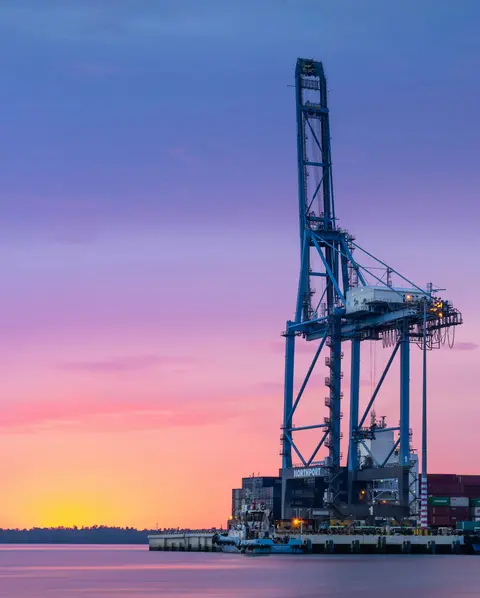
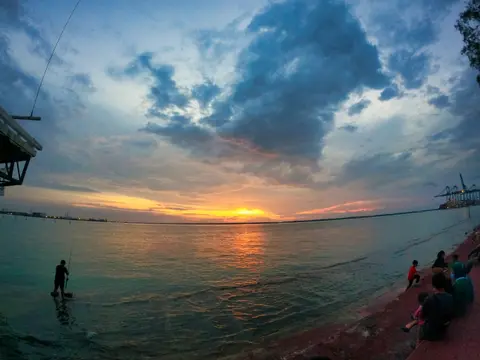
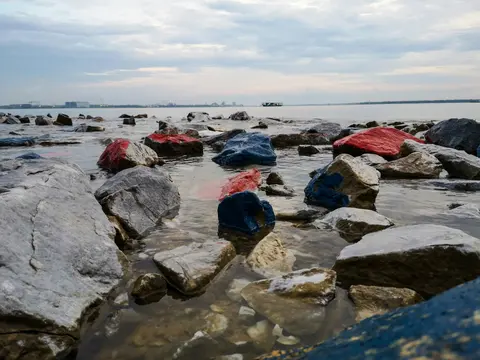
As you travel from Port Kelang to Malaysia's capital, Kuala Lumpur, 37 kilometers (23 miles) to the northeast, it can be hard to believe that the city with a skyline of soaring towers was a small mining town for much of the 19th century. That changed beginning in 1880, when the British moved the capital of Malaya here. Yap Ah Loy—a Chinese-born émigré who rose from miner to political titan—and British politician Frank Swettenham were crucial in turning KL (as it's often called) into a true city. Their program of improvements, including establishing Kuala Lumpur’s first school and building a number of roads, continues to this day. For more than a century, Kuala Lumpur has been determined to become bigger and better. For all its focus on the future, Kuala Lumpur has preserved some rich historic architecture, including the cheerful Art Deco Central Market, the Mughal-style Old Railway Station and the Tudor Revival Royal Selangor Club. These colonial-era buildings contrast nicely with newer structures, among them the gleaming Petronas Towers, whose design is based on motifs found in Islamic art, and the National Museum, inspired by Malay imperial palaces. Eating is practically a national pastime in Malaysia, and KL has some of the country's top restaurants. You shouldn't leave without enjoying a meal of delicious Southeast Asian, Chinese or Peranakan (a Malay-Chinese fusion) dishes.
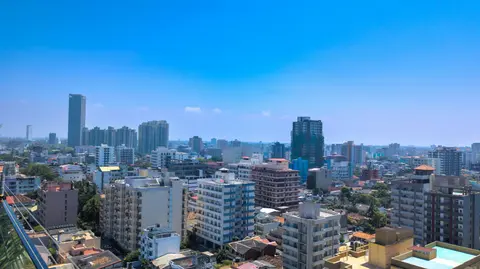
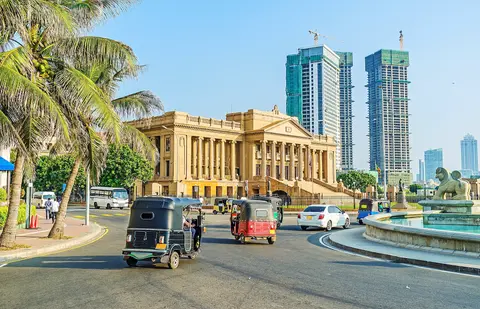
Perfumed flower garlands, colonial roots, and lavish afternoon teas welcome you to the former garden city of Colombo. Sri Lanka’s easy breezy city is certainly intoxicating, with its cinnamon dusted air, steaming cups of delicate ceylon, and sassy seaside charm. A place of full sensory immersion, explore tangled streets to sidestep frantic tuk-tuks and gaze in awe at grand colonial buildings turned heritage hotels. Cute cafes usher you inside for sweet lassi, and the walls are made for a pleasantly laxidasical pace of walking. They're perhaps most impressive on stormy days, when you can watch bruised clouds tumble and roil across the sea from this perfect vantage point. Back in the capital, stroll the ornate halls of the National Museum where gilded swords, studded masks, and rare artefacts from the ancient world and colonial times are gathered. Visit the Gangaramaya Temple, to walk among the orange-robed monks who glide between flora-strewn alters, or plunge into the chaos of Pettah - where market cries reach orchestral heights. An incredible gathering of carved Hindu gods decorate the colourful pyramid of the Captain’s Garden Kovil temple - the oldest Hindu temple in the city, which rises majestically from the surrounding railway tracks. Forever the dish of the day, crab is a must in Colombo. Sit down, tuck in your bib and use your hands to crack, scoop and suck out the soft white meat – especially delicious when smothered in lashings of garlic and fiery chilli.
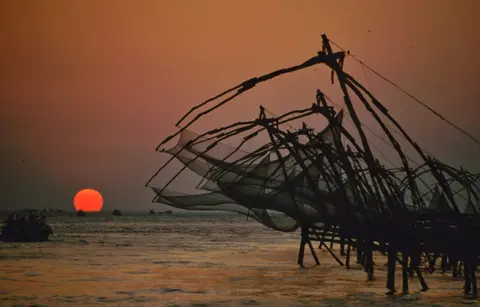
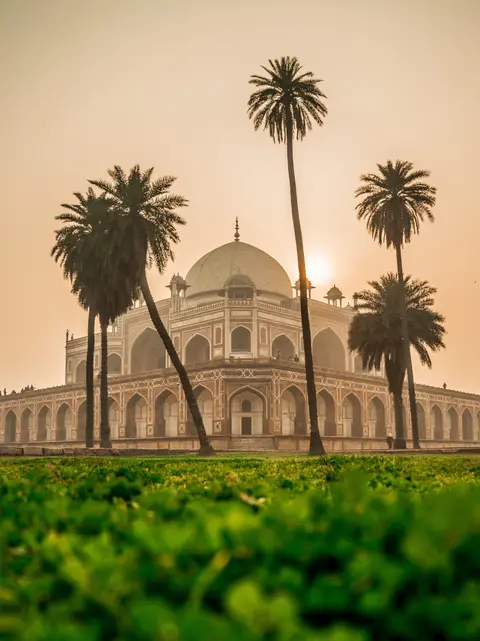
A hodgepodge of cultures collide on the banks of the estuary where Cochin carves out her home. Chinese fishing nets the size of skyscrapers, boxy Dutch architecture and pretty Portuguese palaces point to the blend of influence here, while the Raj era remnants, soaring spires of old-world mosques, and near-abandoned synagogues all add to the dense, varied tapestry of inspirations and imprints. Founded by a prince in the 15th century, Cochin immediately became a favoured anchorage for sailors and traders from every far-flung corner - even taking nearby Kerala’s crown as the world's first global port city. Now, fragrant spice markets cut the hot air with cardamom and clove, while antique stores groan beneath the weight of singing copper. Hit the backstreets of Fort Kochi for a deep and dreamy Ayurvedic massage, marvel at the Krishna murals that adorn the bedchamber walls of the Mattancherry Palace, or admire India’s one of the oldest European-built Christian churches - as you duck into the cool hues of St Francis. A day can easily meander past on a backwater cruise, spreading south from Cochin, and gliding down a lacy network of creeks, lagoons, lakes and rivers. Surrounded by swaying palms and rice paddies – you’ll experience rural India in her best dress. When daylight dwindles, taste the soft spicy kick of dal roti, followed by Firni – almonds, apricots, and sweet milk crushed with pastel green pistachios for a silky light finish.
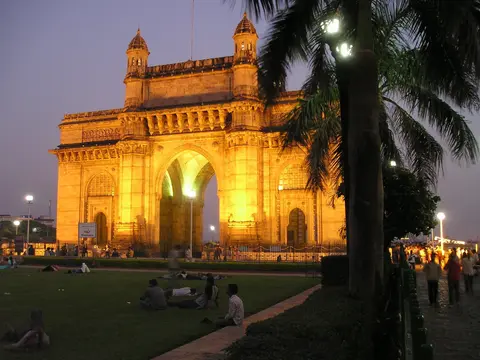
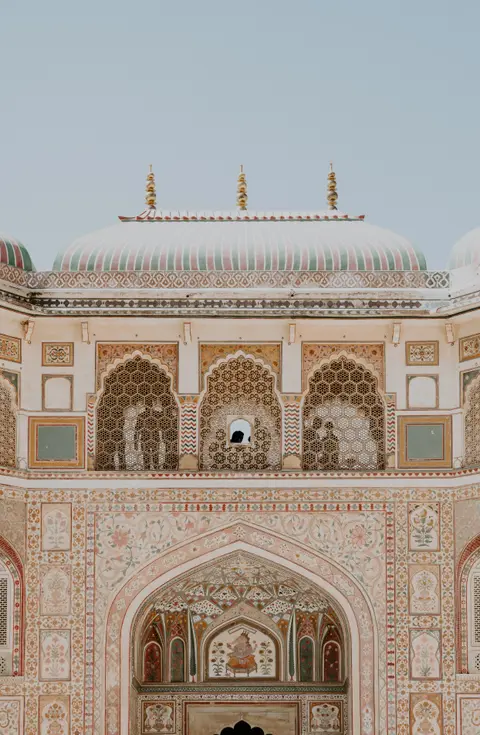
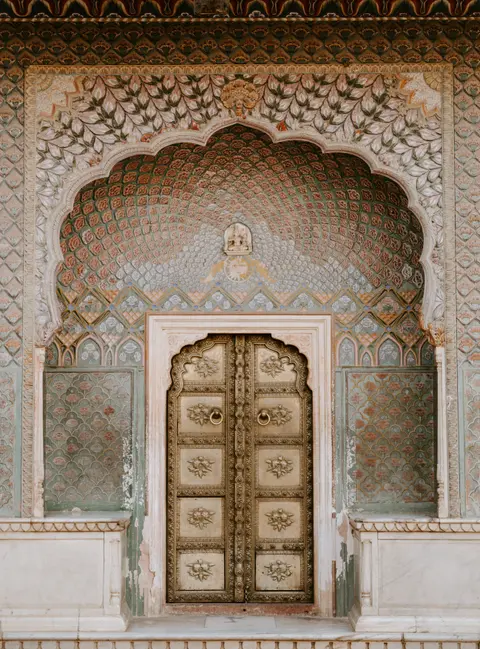
Nowhere reinforces your sense of having arrived in Mumbai, with an MSC Grand Voyages cruise ship, quite as emphatically as the Gateway of India, the city’s defining landmark. Only a five-minute walk north, the Prince of Wales Museum should be next on your list of sightseeing priorities during your cruise to Mumbai, as much for its flamboyantly eclectic architecture as for the art treasures inside. The museum provides a foretaste of what lies in store just up the road, where the cream of Bartle Frere’s Bombay – the University and High Court – line up with the open maidans on one side, and the boulevards of Fort on the other. But for the fullest sense of why the city’s founding fathers declared it Urbs Prima in Indis, you should press further north still to visit the Chhatrapati Shivaji Terminus (CST), the high-water mark of India’s Raj architecture. Beyond CST lie the crowded bazaars and Muslim neighbourhoods of central Mumbai, at their liveliest and most colourful around Crawford Market and Mohammed Ali Road. Possibilities for an MSC excursion include a trip out to Elephanta, a rock-cut cave on an island in Mumbai harbour containing a wealth of ancient art. Another great excursion is the Gateway of India. Commemorating the visit of King George V and Queen Mary in 1911, India’s own honey-coloured Arc de Triomphe, the Gateway of India, is Colaba’s principal monument and the landmark most iconic of Mumbai in the Indian imagination. The aforementioned Prince of Wales Museum of Western India ranks among the city’s most distinctive Raj-era constructions. It stands rather grandly in its own gardens off MG Road, crowned by a massive white Mughal-style dome, beneath which one of India’s finest collections of paintings and sculpture is arrayed on three floors.
Nowhere reinforces your sense of having arrived in Mumbai, with an MSC Grand Voyages cruise ship, quite as emphatically as the Gateway of India, the city’s defining landmark. Only a five-minute walk north, the Prince of Wales Museum should be next on your list of sightseeing priorities during your cruise to Mumbai, as much for its flamboyantly eclectic architecture as for the art treasures inside. The museum provides a foretaste of what lies in store just up the road, where the cream of Bartle Frere’s Bombay – the University and High Court – line up with the open maidans on one side, and the boulevards of Fort on the other. But for the fullest sense of why the city’s founding fathers declared it Urbs Prima in Indis, you should press further north still to visit the Chhatrapati Shivaji Terminus (CST), the high-water mark of India’s Raj architecture. Beyond CST lie the crowded bazaars and Muslim neighbourhoods of central Mumbai, at their liveliest and most colourful around Crawford Market and Mohammed Ali Road. Possibilities for an MSC excursion include a trip out to Elephanta, a rock-cut cave on an island in Mumbai harbour containing a wealth of ancient art. Another great excursion is the Gateway of India. Commemorating the visit of King George V and Queen Mary in 1911, India’s own honey-coloured Arc de Triomphe, the Gateway of India, is Colaba’s principal monument and the landmark most iconic of Mumbai in the Indian imagination. The aforementioned Prince of Wales Museum of Western India ranks among the city’s most distinctive Raj-era constructions. It stands rather grandly in its own gardens off MG Road, crowned by a massive white Mughal-style dome, beneath which one of India’s finest collections of paintings and sculpture is arrayed on three floors.
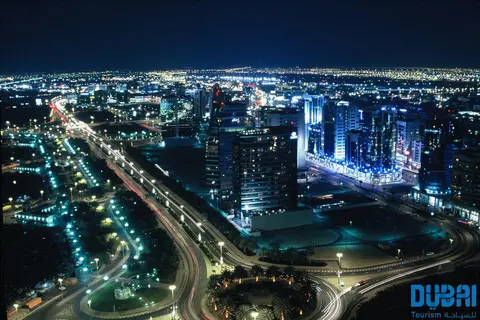
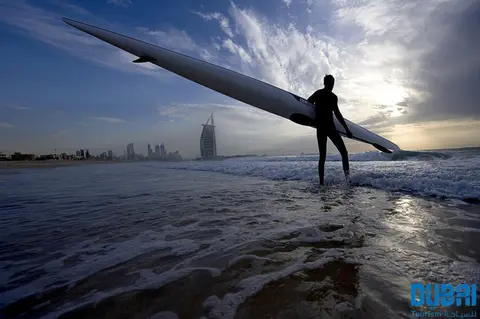
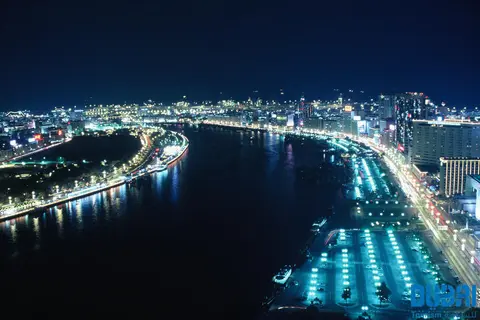
Bold, brash and brilliant, Dubai’s explosion of wealth and wonder has created a dizzying, logic-defying desert wonderland. Boundary-pushing architecture, which gently nods to the region’s past - and a relentlessly futuristic vision - makes Dubai one of the most dynamic destinations on the planet. The hyper-speed transformation, from fishing village to glitzy mega-city, has been truly astounding, and it’s hard to avoid feeling humbled, as you stand dwarfed by cloud-scraping architecture, and some of the most elaborate, audacious engineering projects ever conceived. Fuelled by abundant oil reserves, it’s an understatement to say that there is cash to splash here. Whether it’s the gleaming sports cars that purr along the streets, or the luxury shopping malls that are decked out with colossal aquariums and amusement parks, credit cards are flexed with abandon here. The sheer scale of Dubai is stupefying, and the sight of the iconic Burj Khalifa towering over its not inconsiderable neighbours is surreally spectacular. Rocketing up a staggering 830 metres, the world’s tallest building is an elegant affair, tapering up into the ever-blue sky, and headlining this record-breaking city’s list of architectural wonders. The Dubai Fountain performs here each evening - a blur of colour and haze, its waters dance before the almighty tower behind. Dubai isn’t all about the skyward scramble, however, and the Miracle Garden is a vibrant, violent explosion of multicoloured flowery landscaping. Elsewhere, white-sand beaches like Sunset Beach grant sanctuary to take it easy, and enjoy splendid views of instantly recognisable buildings like the Burj Al Arab, and the reclaimed islands that fan out across Dubai’s warm sea waters. Desert landscapes of rolling sand dunes raise the pulses of the adventurous, while fine-dining and lively nightlife makes Dubai a luxury destination that truly has it all.
Bold, brash and brilliant, Dubai’s explosion of wealth and wonder has created a dizzying, logic-defying desert wonderland. Boundary-pushing architecture, which gently nods to the region’s past - and a relentlessly futuristic vision - makes Dubai one of the most dynamic destinations on the planet. The hyper-speed transformation, from fishing village to glitzy mega-city, has been truly astounding, and it’s hard to avoid feeling humbled, as you stand dwarfed by cloud-scraping architecture, and some of the most elaborate, audacious engineering projects ever conceived. Fuelled by abundant oil reserves, it’s an understatement to say that there is cash to splash here. Whether it’s the gleaming sports cars that purr along the streets, or the luxury shopping malls that are decked out with colossal aquariums and amusement parks, credit cards are flexed with abandon here. The sheer scale of Dubai is stupefying, and the sight of the iconic Burj Khalifa towering over its not inconsiderable neighbours is surreally spectacular. Rocketing up a staggering 830 metres, the world’s tallest building is an elegant affair, tapering up into the ever-blue sky, and headlining this record-breaking city’s list of architectural wonders. The Dubai Fountain performs here each evening - a blur of colour and haze, its waters dance before the almighty tower behind. Dubai isn’t all about the skyward scramble, however, and the Miracle Garden is a vibrant, violent explosion of multicoloured flowery landscaping. Elsewhere, white-sand beaches like Sunset Beach grant sanctuary to take it easy, and enjoy splendid views of instantly recognisable buildings like the Burj Al Arab, and the reclaimed islands that fan out across Dubai’s warm sea waters. Desert landscapes of rolling sand dunes raise the pulses of the adventurous, while fine-dining and lively nightlife makes Dubai a luxury destination that truly has it all.
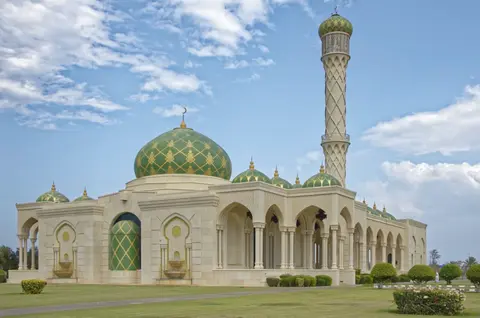
Stepping ashore in Oman’s capital Muscat, when your MSC cruise takes you to Dubai, Abu Dhabi & Qatar, means stepping into one of the oldest cities of the Middle East. This is where incense was shipped to Greece and Rome as far back as the 2nd century. Today it is still possible to find traces of its glorious past in the old centre where, until the latter part of the past century, the gates that separated the various quarters would be closed three hours after dawn. Muttrah, the historic centre of trade and activity of the capital that you will see during the cruise, is one of the most intriguing and well preserved parts of the town centre. Its commercial vocation is due to its proximity to the large port, where your MSC ship, which is named after its sovereign Qabus, will be waiting for you. Dedicate part of your vacation to Muscat to visit the sites, like the fish market, the Portuguese fort and, above all Muttrah’s Souq, one of cruisers’ favourite destinations. You can continue along the sea road to the old town of Muscat where, about 200 years ago, the predecessor of the current head of state, built the Al Alam (the Flag), the palace which was restored in the Seventies and has become the Sultan’s official residence. It is a beautiful example of contemporary Arab architecture situated at the centre of the part of Muscat which is still surrounded by its 17th century walls. Nearby, in the quarter of Bawshar, you find the Great Mosque of Sultan Qabus. About 6500 devotees gather to pray in the main prayer hall which has a single, huge carpet of about 4200 sq.m., made of one billion and 700 million knots and weighs 21 tons. All the halls, which may be visited also by non-Muslims, are decorated with motifs that celebrate Arab culture.
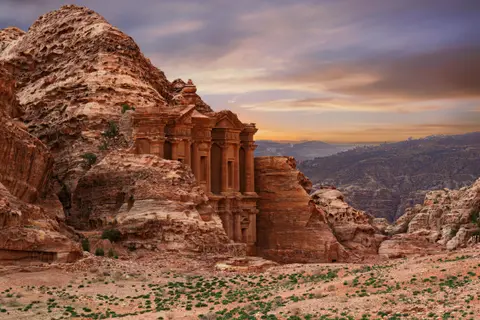
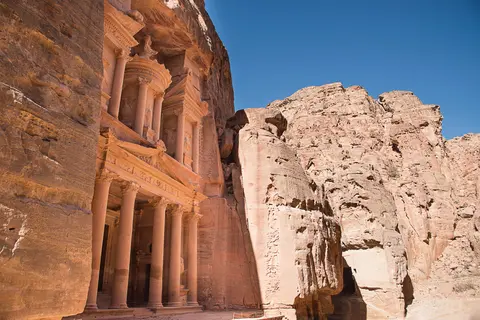
Improbably carved into the rusty-red rock of the Jordanian desert, the ancient city of Petra has been mesmerising visitors since being rediscovered by Westerners in 1812. Siq Canyon provides a suitably grandiose welcome, cutting a deep track through layers of fiery sandstone, and building up the suspense, before you first set eyes on the Lost City’s majesty. An early start is best to explore this UNESCO World Heritage Site, giving you chance to beat the crowds and avoid the brunt of the heat. The Treasury is perhaps Petra’s best-known structure, having featured in Indiana Jones and the Last Crusade as the mystical hiding place of the Holy Grail. Imprinted deep into the sheer sandstone, it’s a dramatic, spectacular achievement of human endeavour. Look closely, and you’ll see the indentations of bullet holes scarring the urn that sits atop it – fired by Bedouins fuelled by rumours of ancient treasure within. Petra developed as the capital of the Nabataean Kingdom, and the sophistication of the Rose Kingdom’s rock-hewn buildings is matched only by the elaborate and advanced water collection and transportation system that quenched its thirst and provided the means to thrive, despite its remote location and the intense burn of the sun. Look out for the delicate water channels that lace the city as you explore. High above the city - up a daunting 800-step climb - stands the Monastery. It’s lesser known, but larger and - whisper it quietly - perhaps even more impressive than the Treasury. The High Place of Sacrifice is an even tougher hike - with only occasional electric-blue lizards scattering from your footsteps as you rise - but the views of the remarkable city, embossed into the mighty sandstone cliffs below, will last a lifetime.
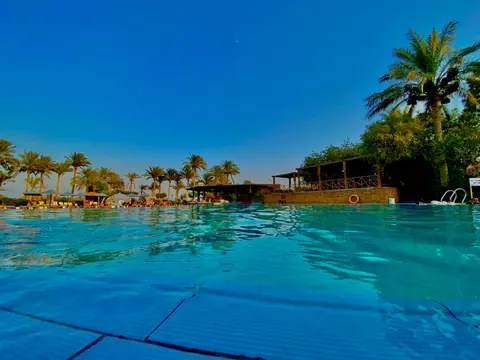

A canal linking the Red Sea and Mediterranean is an old dream. Evidence of attempts to construct such a seaway across the desert isthmus have been detected dating from Egypt’s pharaonic era and Persia under the rule of Darius. Venetian doges plotted, and Napoleon fervently wished for one, to save ships the 4,300-nautical mile diversion around Africa. When the 120-mile canal from Suez to Port Said was opened in 1869, the seafaring map underwent its most impactful change in history. The canal is at sea level, so no locks are required. Your ship will meet other ships of every sort and size from every corner of the globe around the entry at Suez, to join the single northbound convoy allowed each day. It starts from Suez at four in the morning, proceeding at a sedate 8 knots (to reduce erosion of the banks) and passing the first of two southbound convoys in the Great Bitter Lake. The second southbound convoy leaves later, passing your ship later at the Bailah Bypass. On average, about 97 ships transit the canal each day. Sights during the transit tend toward the monotonous: the ship ahead and the one behind, and an endless bank of sand on either side, ceaselessly refreshed by dredges stationed along the shore and pumping wet sand over the berm. The town of Ismailia with its tall, minareted mosque is a welcome diversion, as are the two bridges and one massive powerline crossing the canal. The transit takes between 11 and 16 hours. At Port Said, your ship passes into the Mediterranean Sea.
A canal linking the Red Sea and Mediterranean is an old dream. Evidence of attempts to construct such a seaway across the desert isthmus have been detected dating from Egypt’s pharaonic era and Persia under the rule of Darius. Venetian doges plotted, and Napoleon fervently wished for one, to save ships the 4,300-nautical mile diversion around Africa. When the 120-mile canal from Suez to Port Said was opened in 1869, the seafaring map underwent its most impactful change in history. The canal is at sea level, so no locks are required. Your ship will meet other ships of every sort and size from every corner of the globe around the entry at Suez, to join the single northbound convoy allowed each day. It starts from Suez at four in the morning, proceeding at a sedate 8 knots (to reduce erosion of the banks) and passing the first of two southbound convoys in the Great Bitter Lake. The second southbound convoy leaves later, passing your ship later at the Bailah Bypass. On average, about 97 ships transit the canal each day. Sights during the transit tend toward the monotonous: the ship ahead and the one behind, and an endless bank of sand on either side, ceaselessly refreshed by dredges stationed along the shore and pumping wet sand over the berm. The town of Ismailia with its tall, minareted mosque is a welcome diversion, as are the two bridges and one massive powerline crossing the canal. The transit takes between 11 and 16 hours. At Port Said, your ship passes into the Mediterranean Sea.
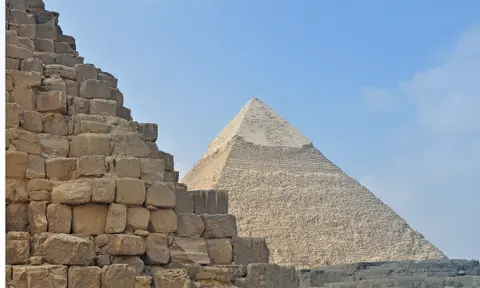
Egypt’s second largest city and chief harbor was built in 332BC by Alexander the Great. As new technology augments exploration capabilities, columns and statuary from its glorious past are still being recovered from Alexandria’s bay. Discover the city’s intriguing past at the Roman Catacombs of Kom El Shuquafa, Pompey’s Pillar, the Roman Theater, and the Citadel of Quait Bay, built on the foundation of the ancient Pharos Lighthouse, one of the Seven Wonders of the ancient world. Walk among the fragrent splendor of the Montaza Gardens, with 115 acres of lush, botanical beauty.
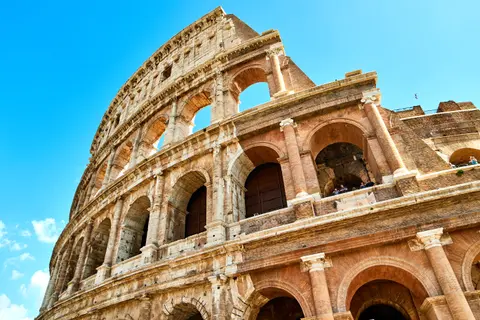
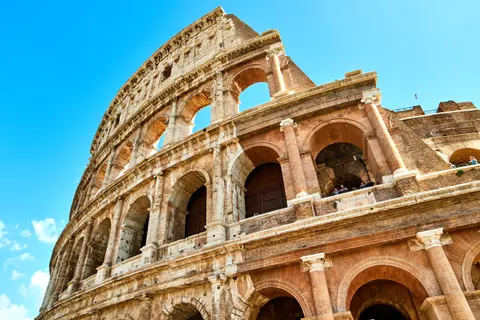
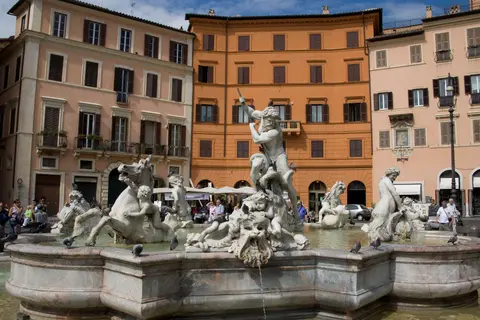
Italy's vibrant capital lives in the present, but no other city on earth evokes its past so powerfully. For over 2,500 years, emperors, popes, artists, and common citizens have left their mark here. Archaeological remains from ancient Rome, art-stuffed churches, and the treasures of Vatican City vie for your attention, but Rome is also a wonderful place to practice the Italian-perfected il dolce far niente, the sweet art of idleness. Your most memorable experiences may include sitting at a caffè in the Campo de' Fiori or strolling in a beguiling piazza.
Genoa is marvellously eclectic, vibrant and full of rough-edged style; it’s a great cruise excursion. Indeed “La Superba” (The Superb), as it was known at the height of its authority as a Mediterranean superpower, boasts more zest and intrigue than all the surrounding coastal resorts put together. During a holiday to Genoa you can explore its old town: a dense and fascinating warren of medieval alleyways home to large palazzi built in the sixteenth and seventeenth centuries by Genoa’s wealthy mercantile families and now transformed into museums and art galleries. You should seek out the Cattedrale di San Lorenzo, the Palazzo Ducale, and the Renaissance palaces of Via Garibaldi which contain the cream of Genoa’s art collections, as well as furniture and decor from the grandest days of the city’s past, when its ships sailed to all corners of the Mediterranean Sea. The Acquario di Genova is the city’s pride and joy, parked like a giant ocean liner on the waterfront, with seventy tanks housing sea creatures from all the world’s major habitats, including the world’s biggest reconstruction of a Caribbean coral reef. It’s a great aquarium by any standards, the second largest in Europe by capacity, and boasts a fashionably ecology-conscious slant and excellent background information in Italian and English. Just 35 km south of Genoa, there’s no denying the appeal of Portofino, tucked into a protected inlet surrounded by lush cypress- and olive-clad slopes. It’s an A-list resort that has been attracting high-flying bankers, celebs and their hangers-on for years, as evidenced by the flotillas of giant yachts usually anchored just outside. It’s a tiny place that is attractive yet somehow off-putting at the same time, with a quota of fancy shops, bars and restaurants for a place twice its size.
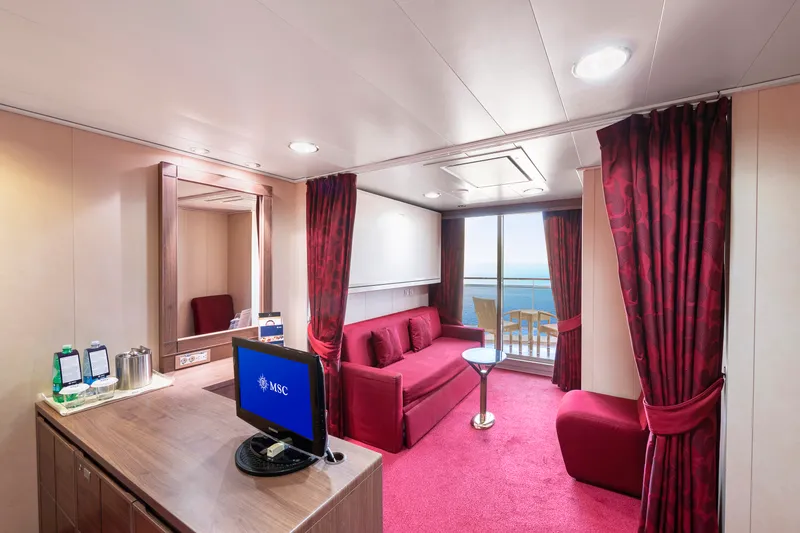
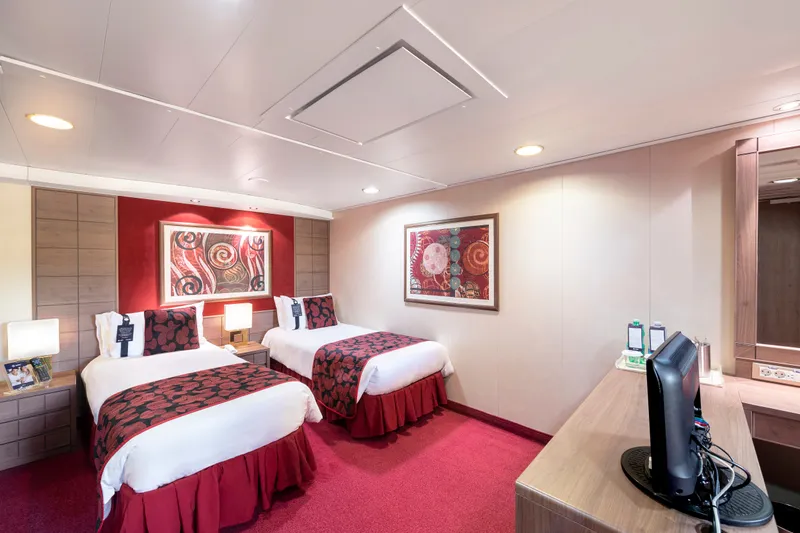
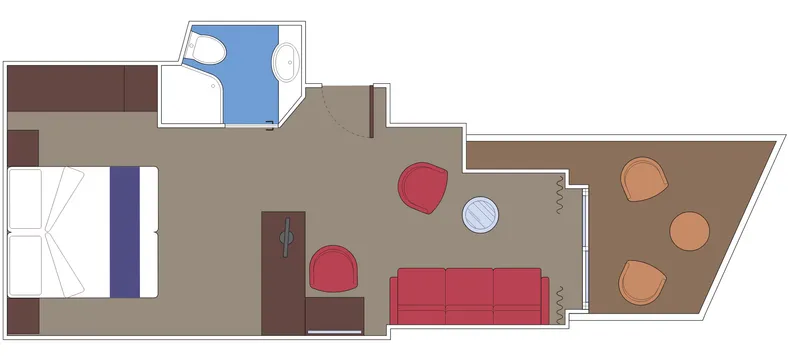
Balcony
Sitting area with sofa
Spacious closet
Bathroom with bathtub, vanity area and hairdryer
Interactive TV, telephone, safe and minibar
Wi-Fi access available
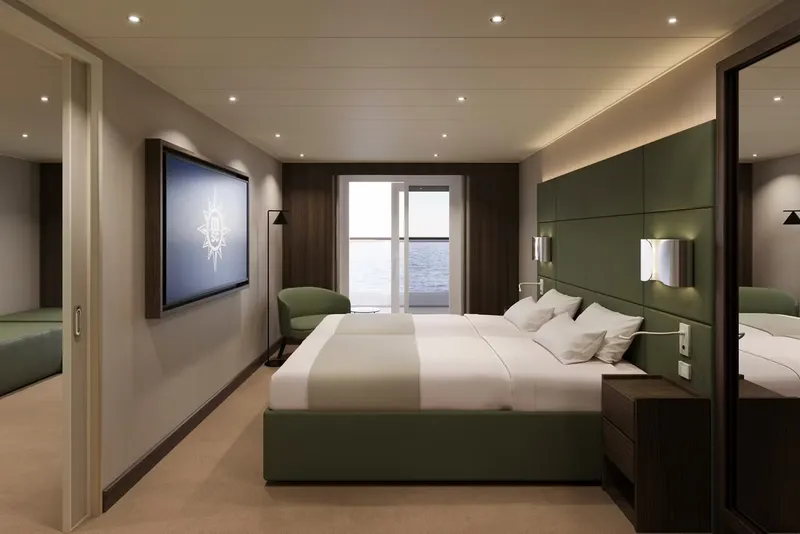
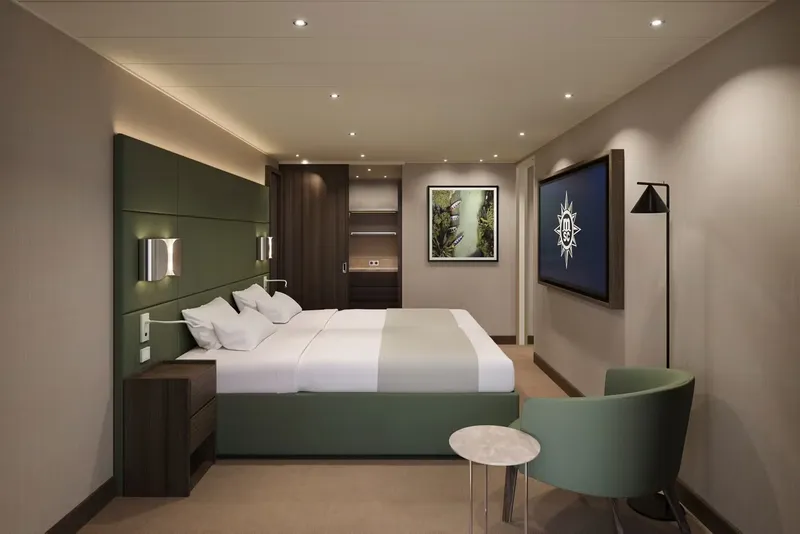
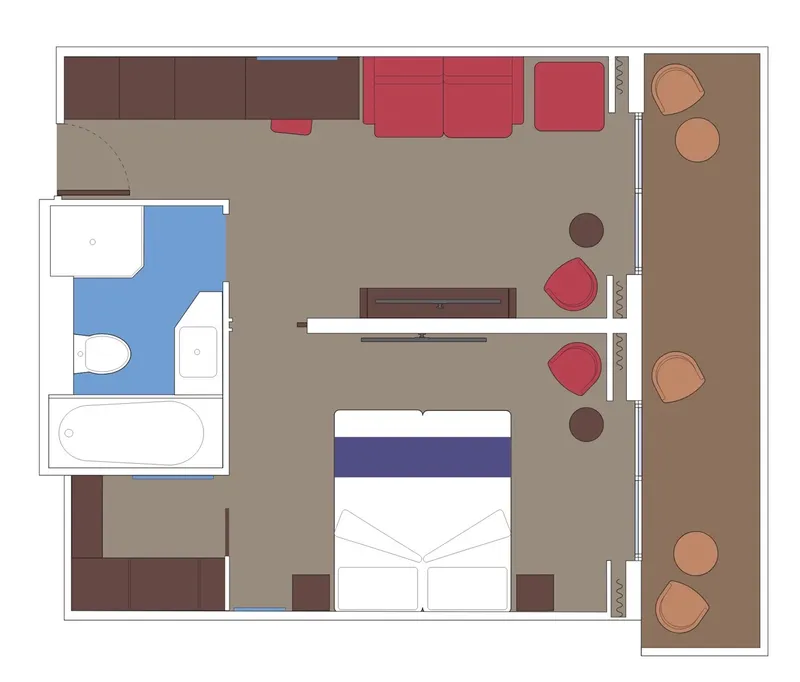
Surface: approx. 32 sqm, balcony 12 sqm, deck 14, accommodates up to 4 guests
Master bedroom with a queen size bed which can be converted into 2 single beds (on request) and a reading corner by the window
Separate living room with a sofa bed which converts into a double bed and a reading corner by the window
Walk-in wardrobe with vanity area
Spacious balcony equipped with outdoor chairs and tables
Versatile bathroom with bathtub and shower
Marble bathroom with a bathtub and walk-in shower and “Med” organic amenities
Premium bespoke embroidered towels & bed linens100% cotton
Plush slippers and 100% cotton bathrobes for onboard use
Minibar, Nespresso machine and Fresh fruit Welcome amenity
Venchi daily turndown chocolates
Interactive TV, telephone, safe and air conditioning
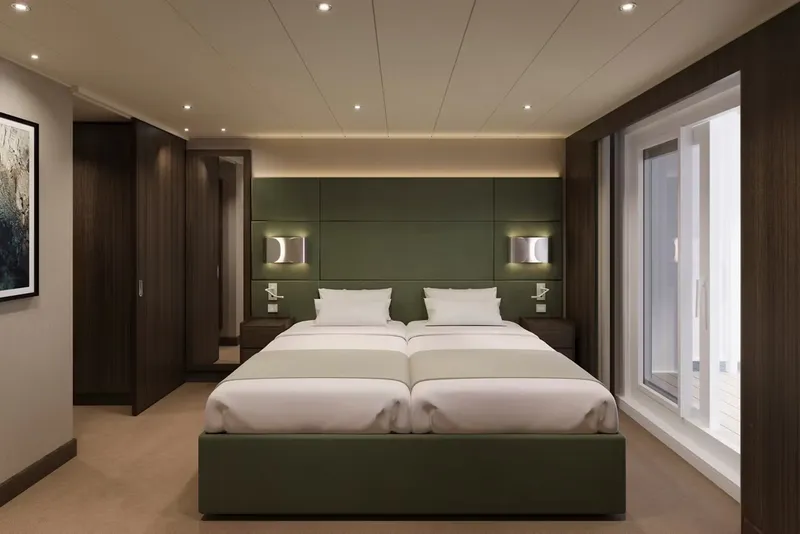
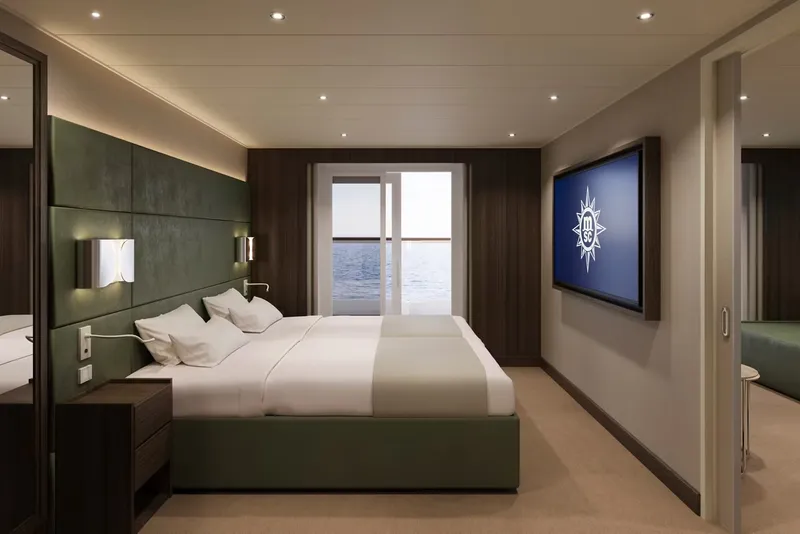
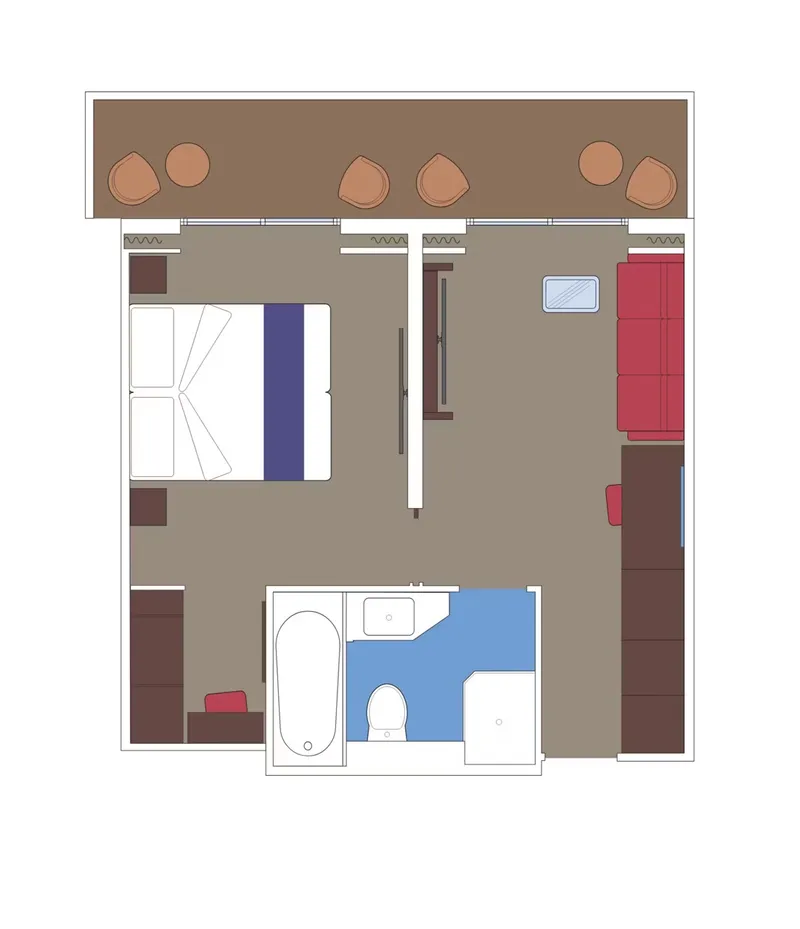
Surface: approx. 28 sqm, balcony 9 sqm, deck 12-15, accommodates up to 4 guests
Master bedroom with a queen size bed which can be converted into 2 single beds (on request)
Separate living room with a sofa bed which converts into a double bed
Walk-in wardrobe with vanity area
Spacious balcony equipped with outdoor chairs and tables
Versatile bathroom with bathtub and shower
Marble bathroom with a bathtub and a walk-in shower and “Med” organic amenities
Premium bespoke embroidered towels & bed linens100% cotton
Plush slippers and 100% cotton bathrobes for onboard use
Minibar, Nespresso machine and Fresh fruit Welcome amenity
Venchi daily turndown chocolates
Interactive TV, telephone, safe and air conditioning
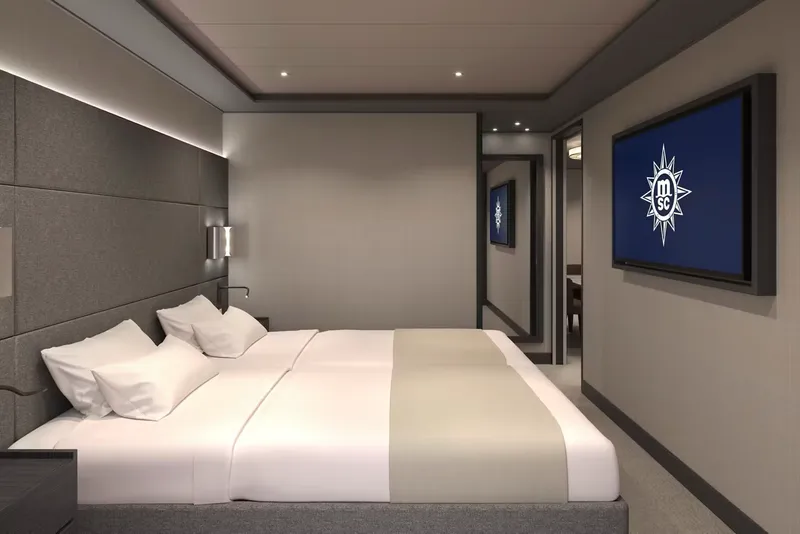
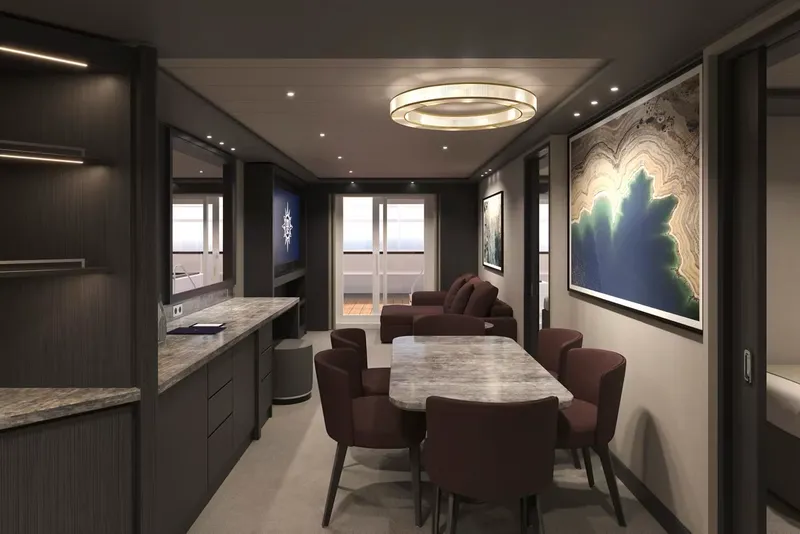
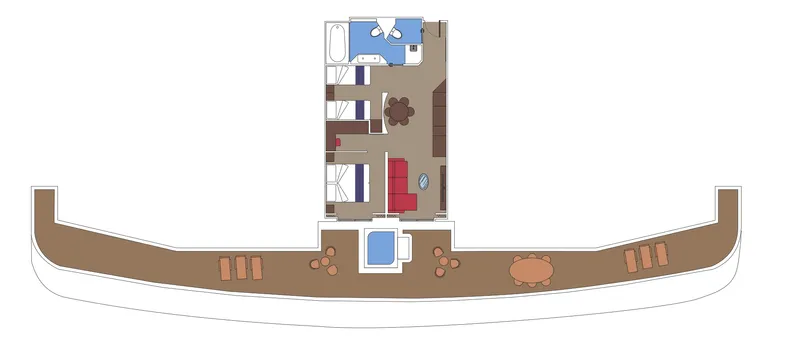
Surface: approx. 50 sqm, terrace 78 sqm, deck 15, accommodates up to 6 guests
Master bedroom with a queen size bed which can be converted into 2 single beds (on request)
Separate bedroom with two single beds and wardrobe
Separate living room with a sofa bed which converts into a double bed and a dining table
Walk-in wardrobe with vanity area
Spacious panoramic private terrace with a whirlpool bath, dining table and chairs, sunbeds
Versatile bathroom with bathtub and shower
Marble bathroom with a bathtub and a walk-in shower and “Med” organic amenities
Separate toilet room
Premium bespoke embroidered towels & bed linens100% cotton
Plush slippers and 100% cotton bathrobes for onboard use
Minibar, Nespresso machine and Fresh fruit Welcome amenity
Venchi daily turndown chocolates
MSC Yacht Club Two-Room Grand Suite
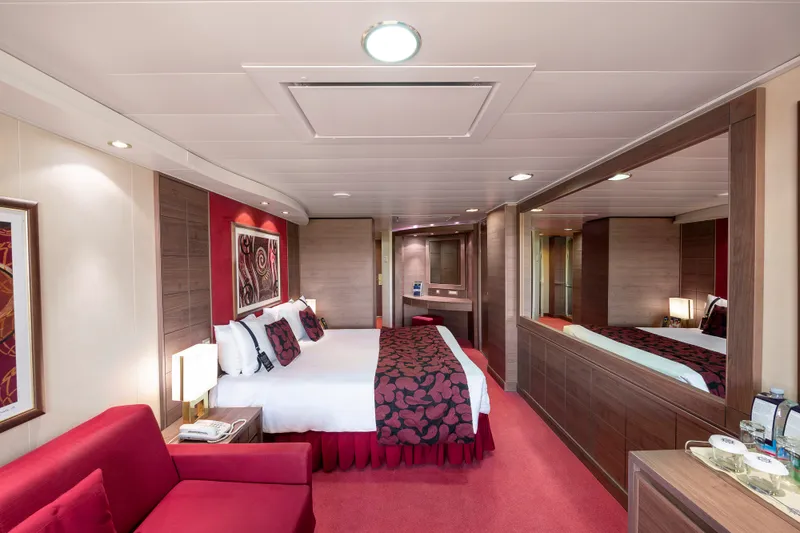
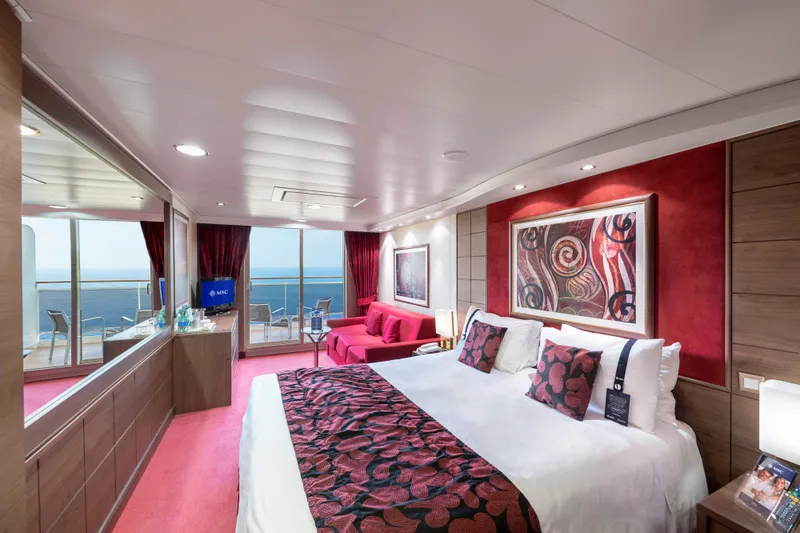
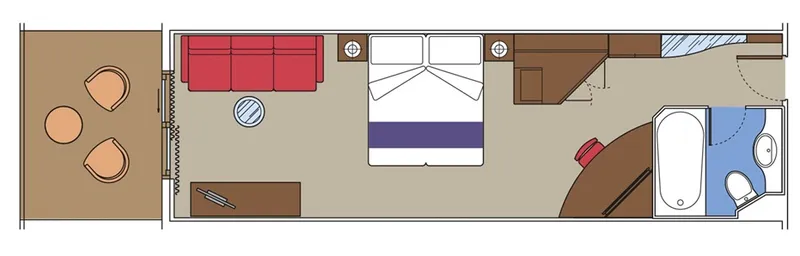
Balcony
Sitting area with sofa
Spacious closet
Bathroom with bathtub, vanity area and hairdryer
Interactive TV, telephone, safe and minibar
Wi-Fi access available
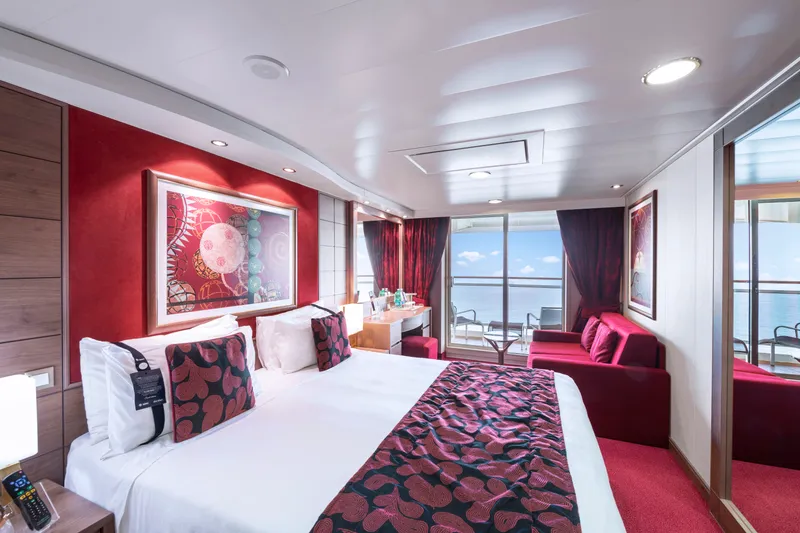
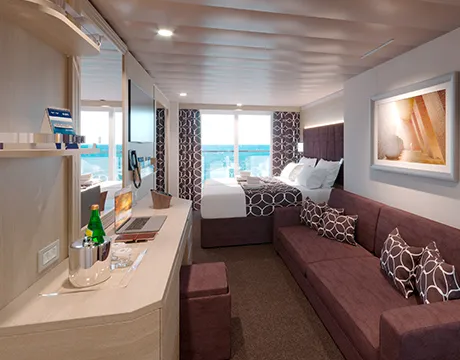
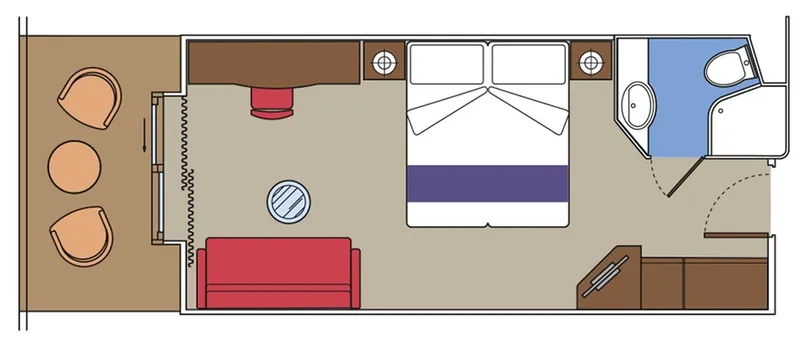
Wardrobe
Bathroom with shower and hairdryer
Comfortable double bed which can be converted in two single beds (on request)
Interactive TV, Wi-Fi connection (for a fee), telephone and safe
Mini bar and Air conditioning
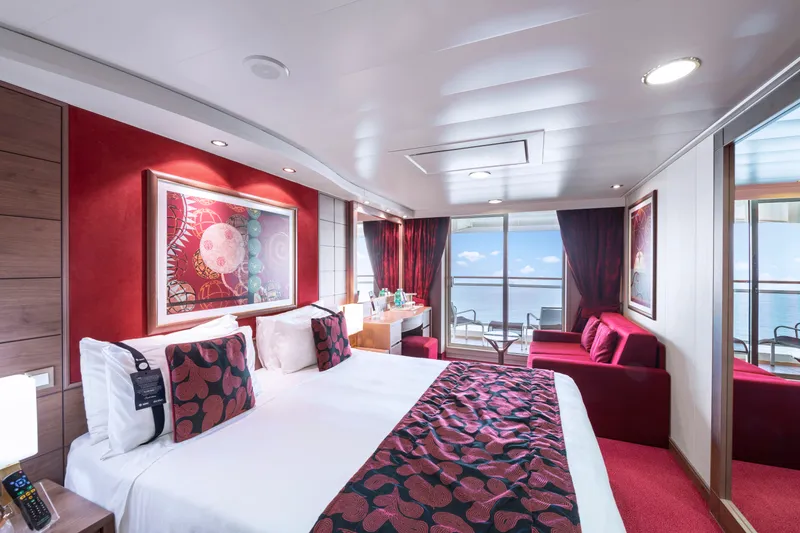
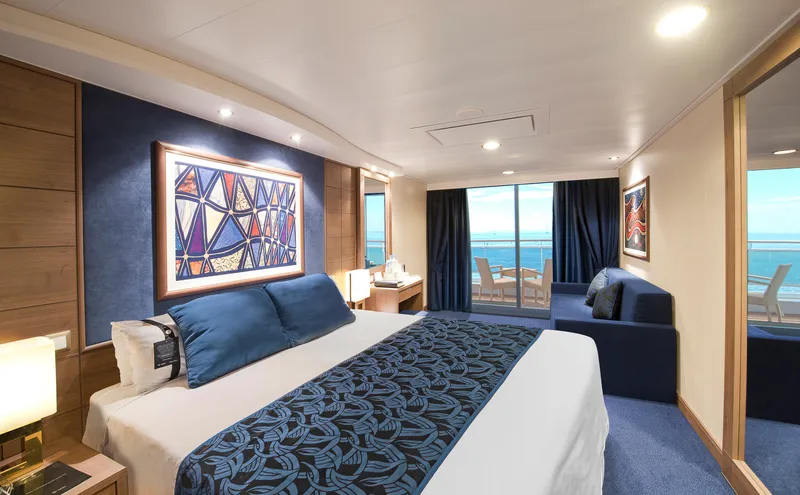
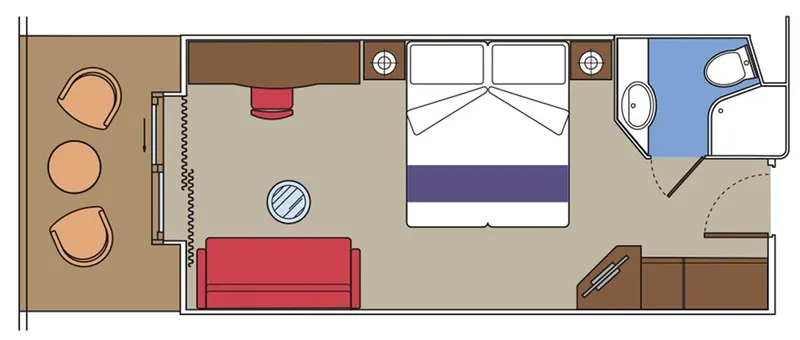
Balcony
Sitting area with sofa
Comfortable double or single beds (on request)
Interactive TV, telephone, Wifi connection available (for a fee), safe and minibar
Bathroom with shower or bathtub , vanity area with hairdryer
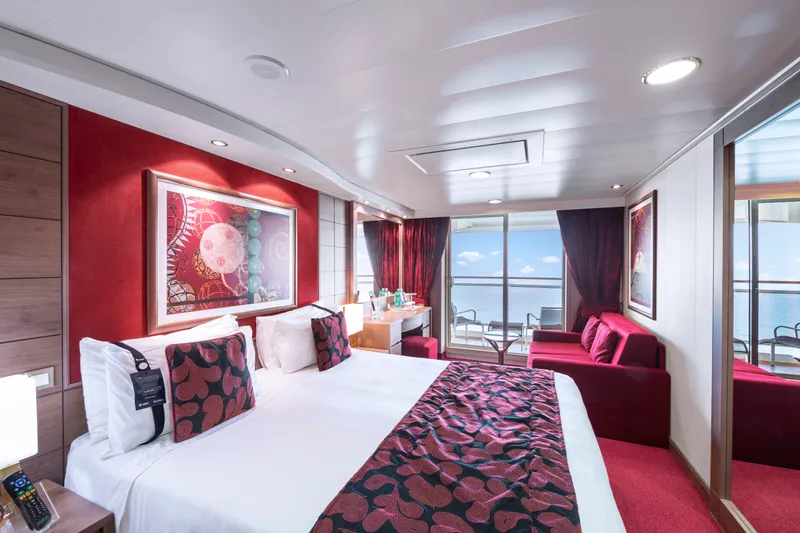
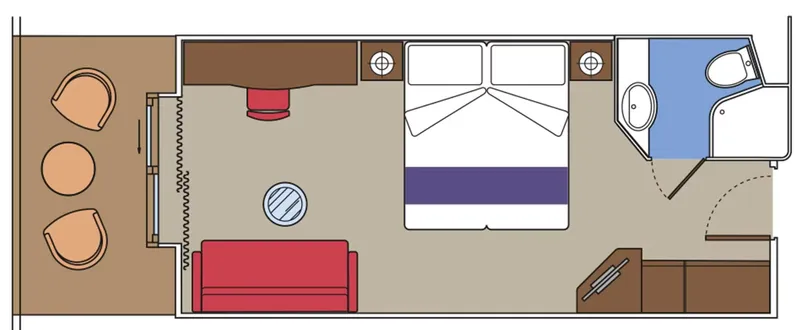
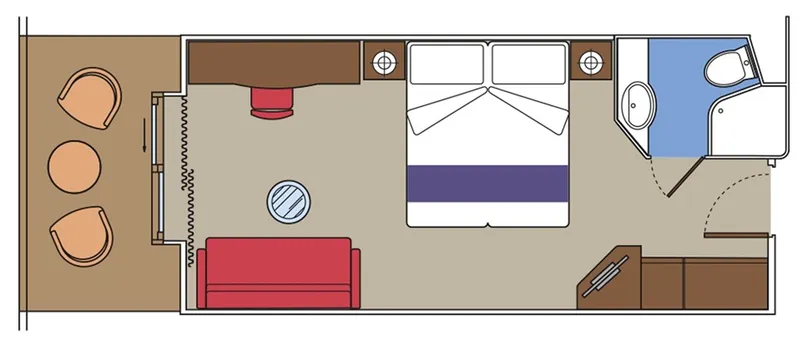
Balcony
Sitting area with sofa
Bathroom with shower or bathtub, vanity area and hairdryer
Interactive TV, telephone, safe and minibar
Wi-Fi access available
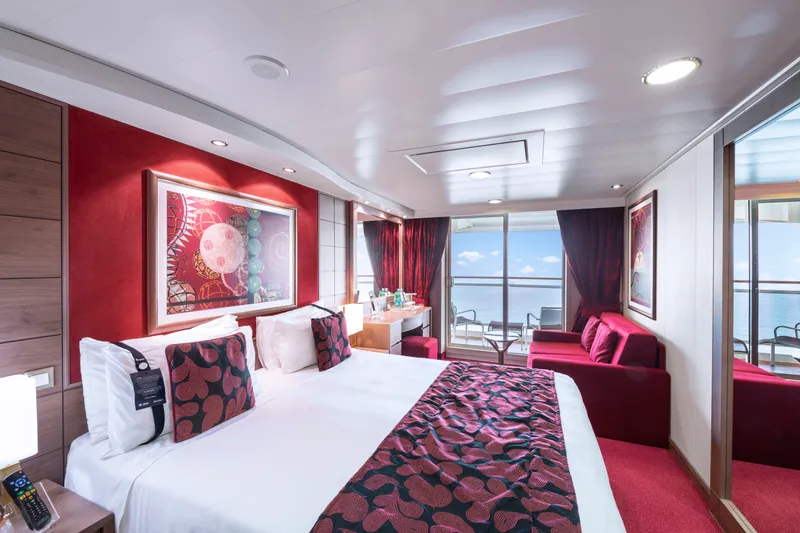
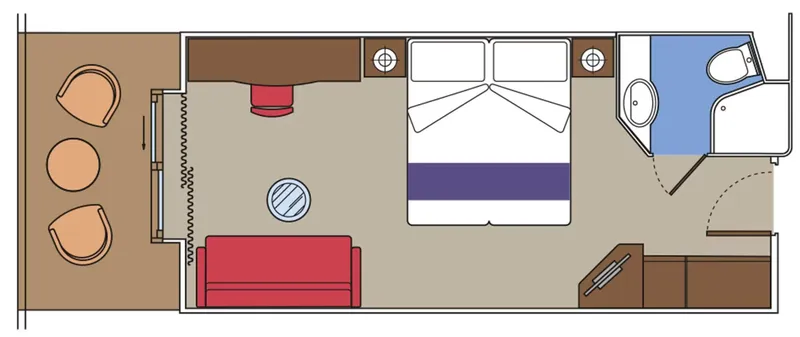
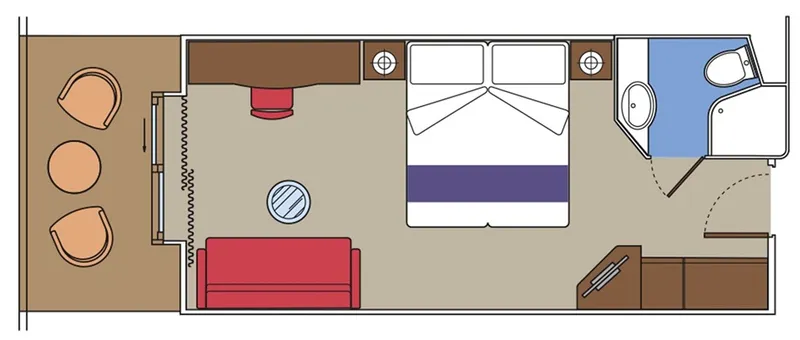
Surface 16 sqm, balcony 5 sqm, deck 12.
Sitting area with sofa.
Bathroom with shower or bathtub, vanity area with hairdryer.
Comfortable double or single beds.
Interactive TV, telephone, Wifi connection available (for a fee), safe and minibar.
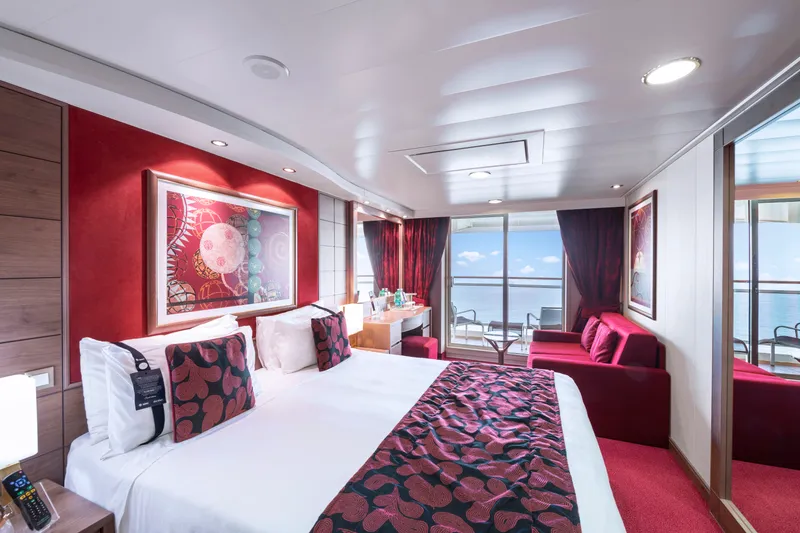
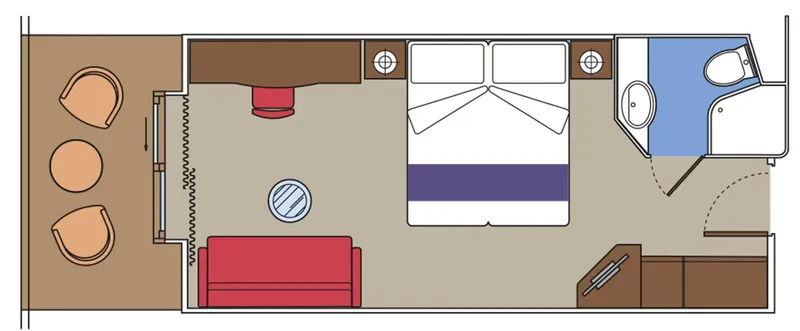
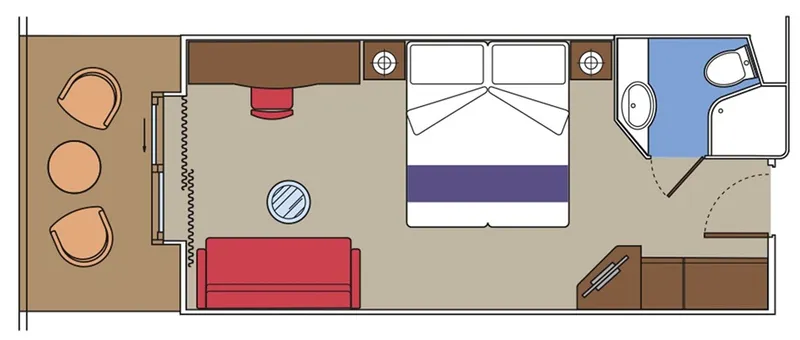
Balcony
Sitting area with sofa
Bathroom with shower or bathtub, vanity area and hairdryer
Interactive TV, telephone, safe and minibar
Wi-Fi access available
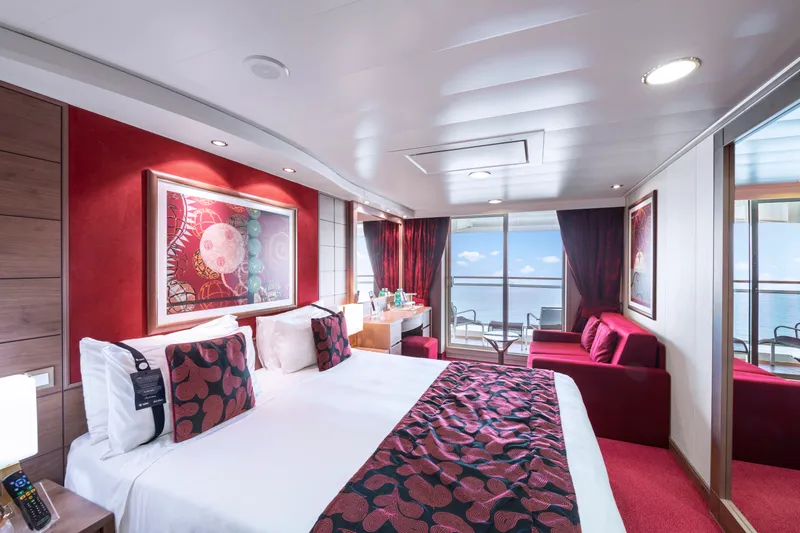
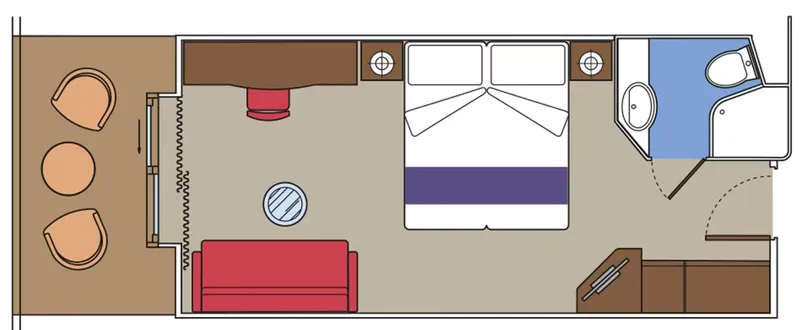
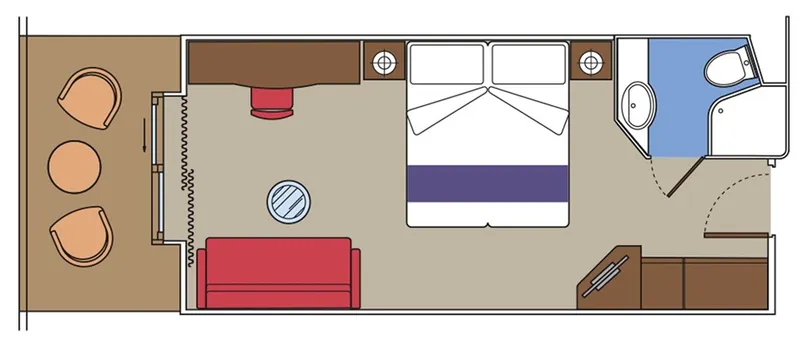
Balcony
Sitting area with sofa
Bathroom with shower or bathtub, vanity area and hairdryer
Interactive TV, telephone, safe and minibar
Wi-Fi access available
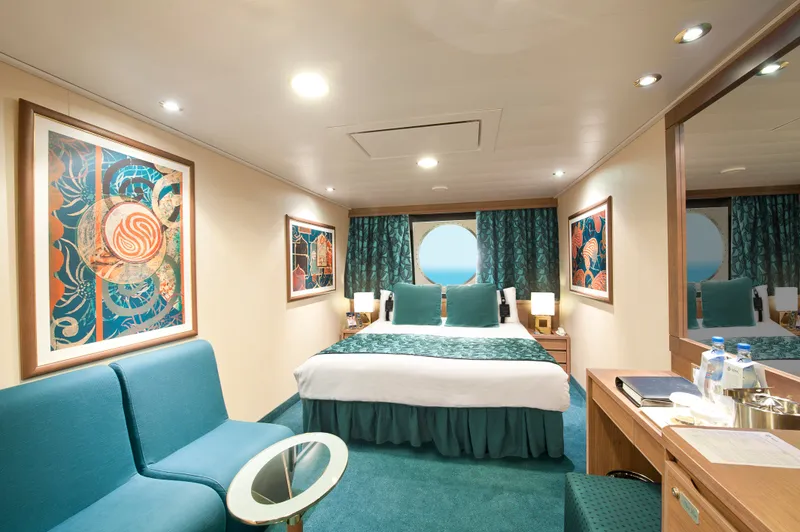
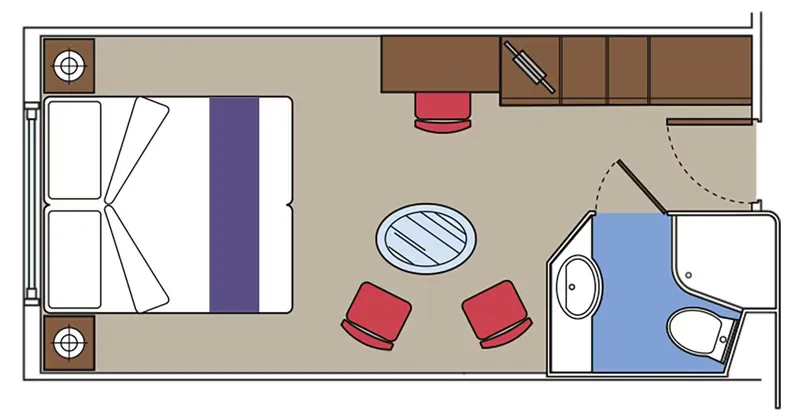
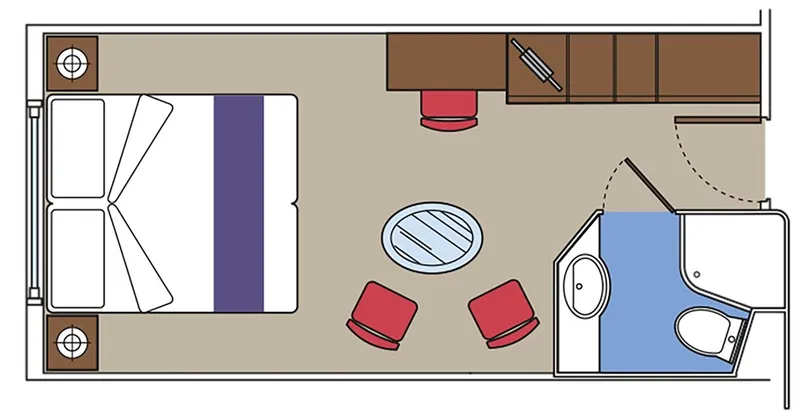
Window with sea view
Relaxing armchair
Bathroom with shower, vanity area and hairdryer
Interactive TV, telephone, safe and minibar
Wi-Fi access available
Deluxe Ocean View ( Module 16 sqm - Decks 5-12 )
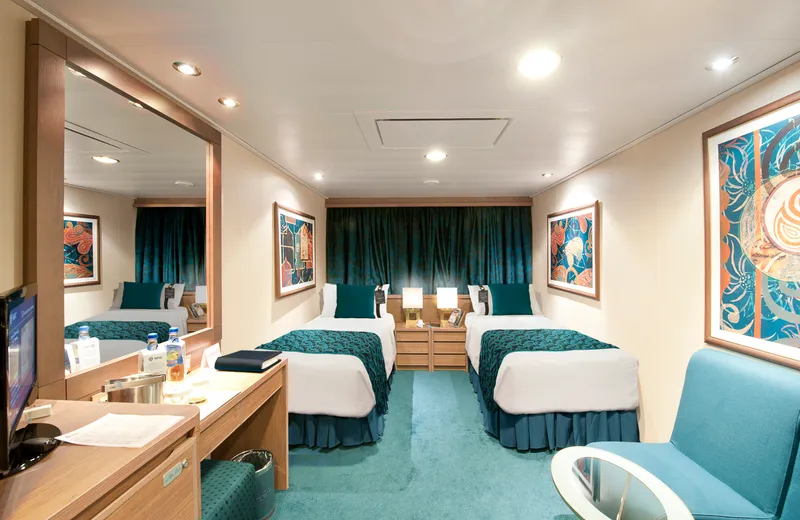
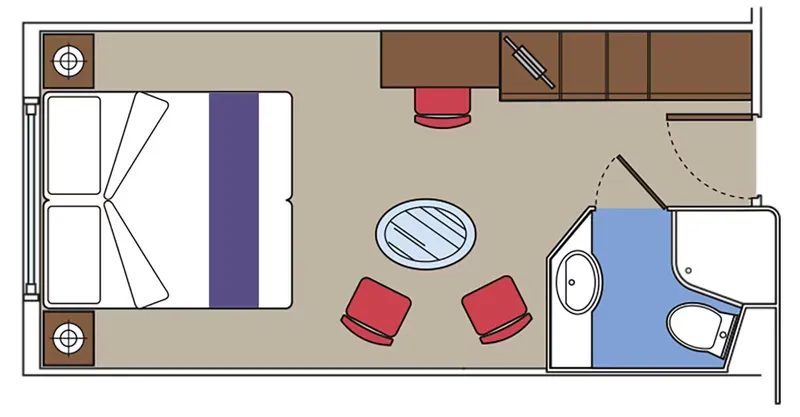
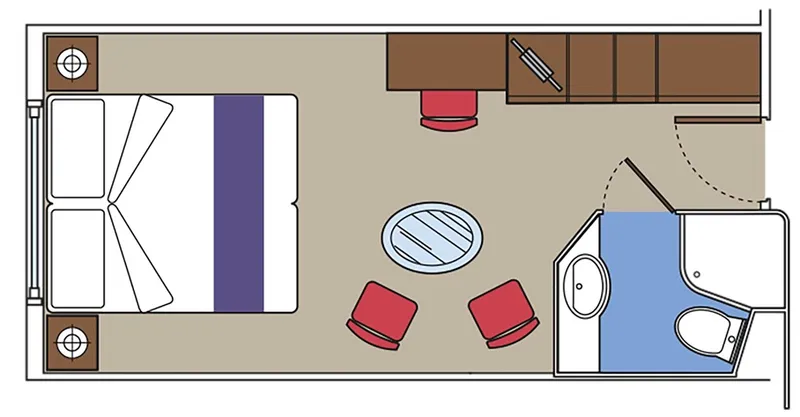
Window with sea view
Relaxing armchair
Bathroom with shower, vanity area and hairdryer
Interactive TV, telephone, safe and minibar
Wi-Fi access available
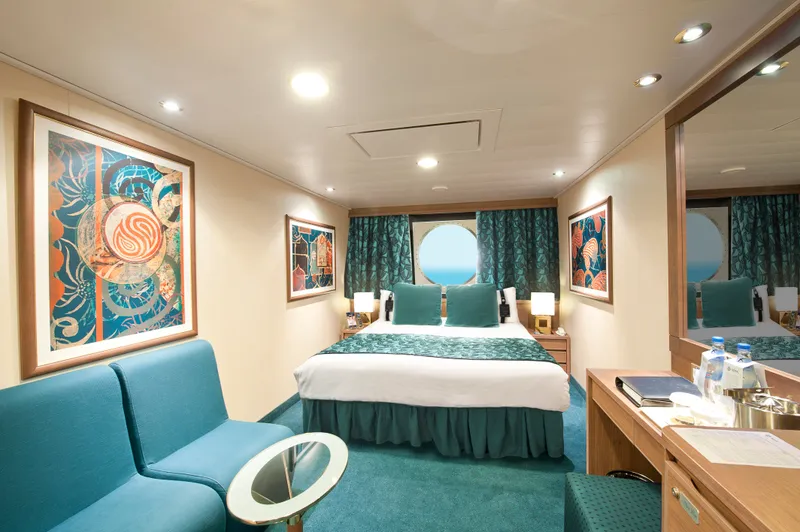
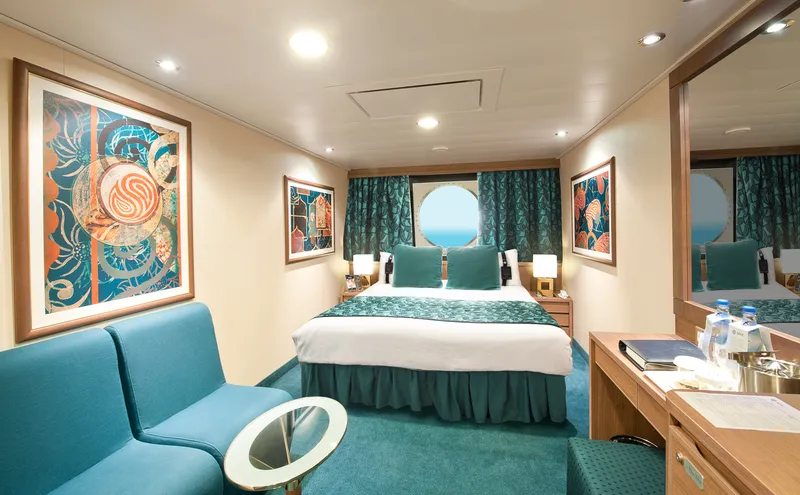
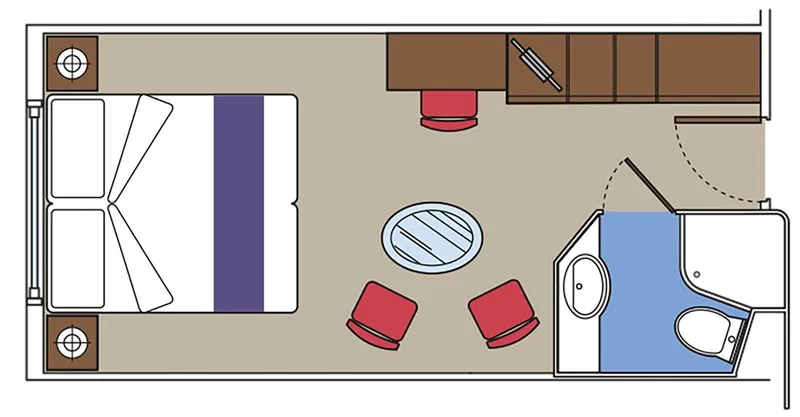
Bathroom with shower, vanity area and hairdryer
TV, telephone, safe and minibar
Wi-Fi access available
Inside Cabin
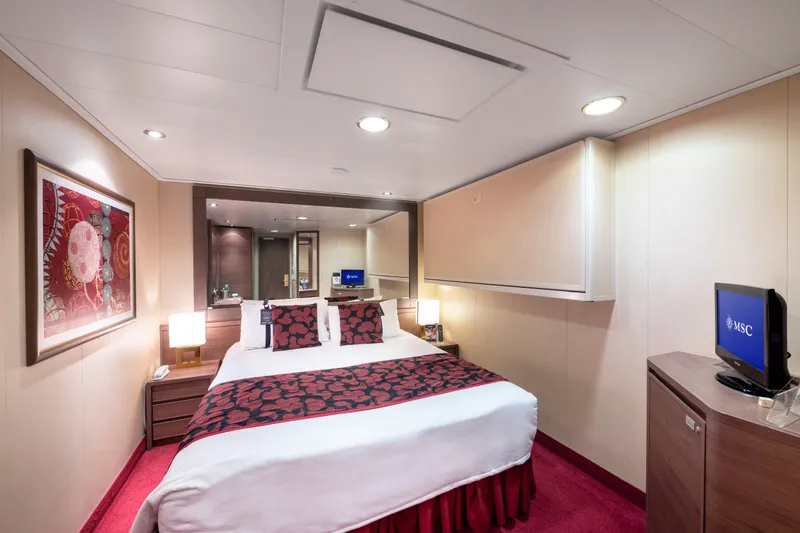
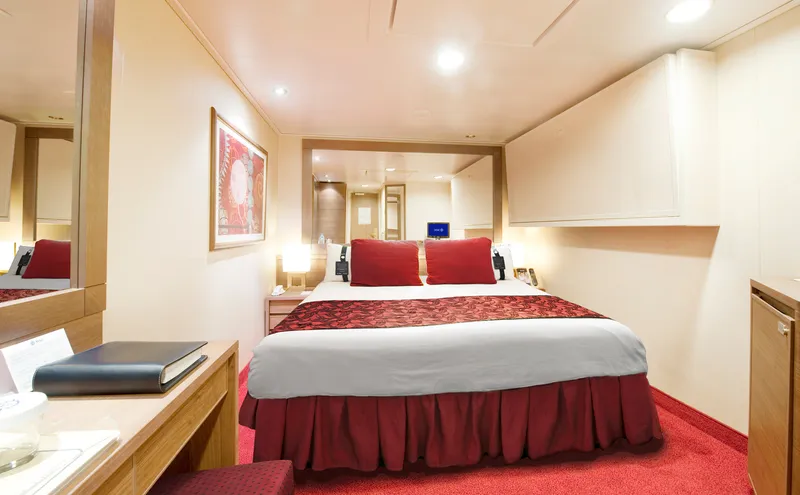
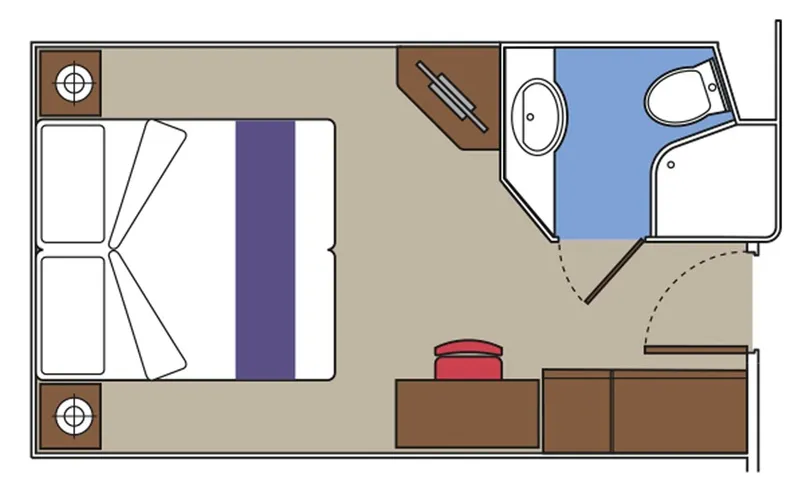
Bathroom with shower, vanity area and hairdryer
TV, telephone, safe and minibar
Wi-Fi access available
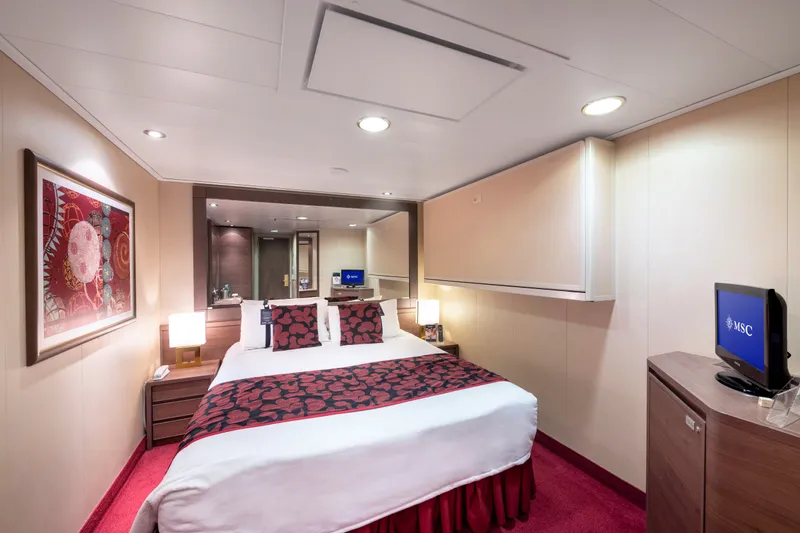

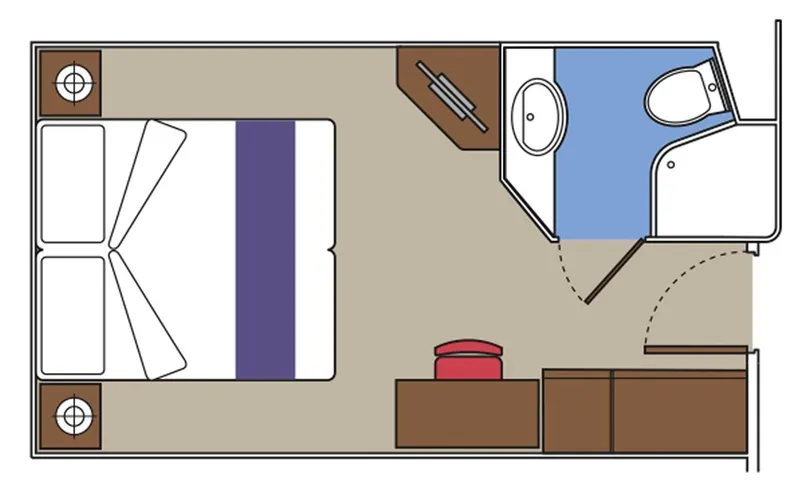
Relaxing armchair
Bathroom with shower, vanity area and hairdryer
TV, telephone, safe and minibar
Wi-Fi access available
Junior Interior ( Module 13sqm - Decks 11-12 )
Our cruise specialists can help you find the perfect cabin and the best available pricing.
(+886) 02-2721-7300Contact Advisor