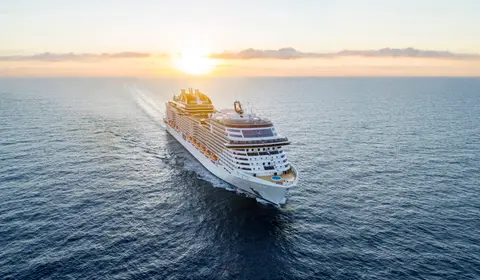
MSC Grand Voyages from Santos
Date
April 3, 2027
Duration
20 nights
Departure Port
Santos · Brazil
Arrival Port
Palermo · Italy
Rating
—
Theme
—
Date
April 3, 2027
Duration
20 nights
Departure Port
Santos · Brazil
Arrival Port
Palermo · Italy
Rating
—
Theme
—
MSC Cruises
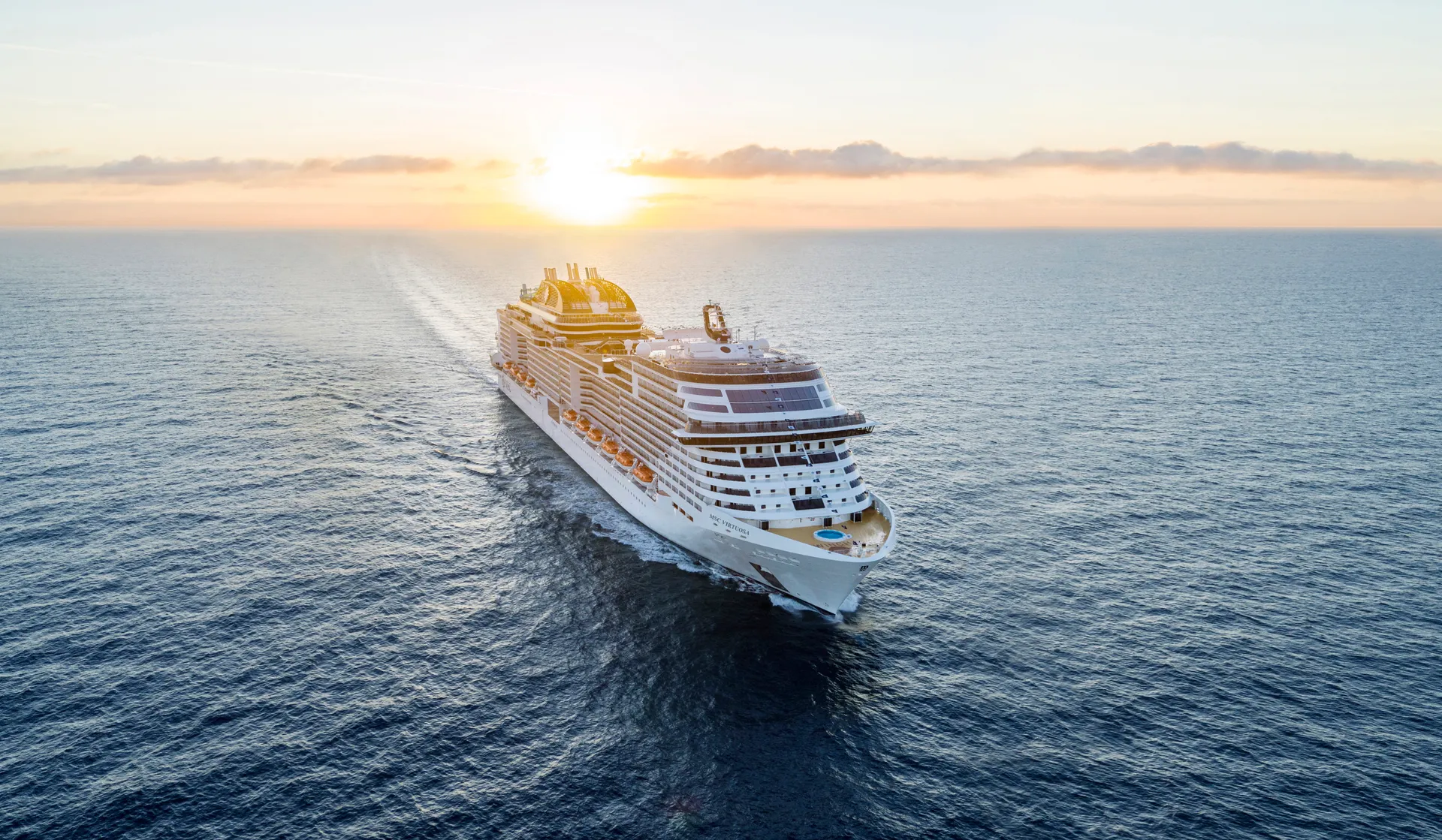
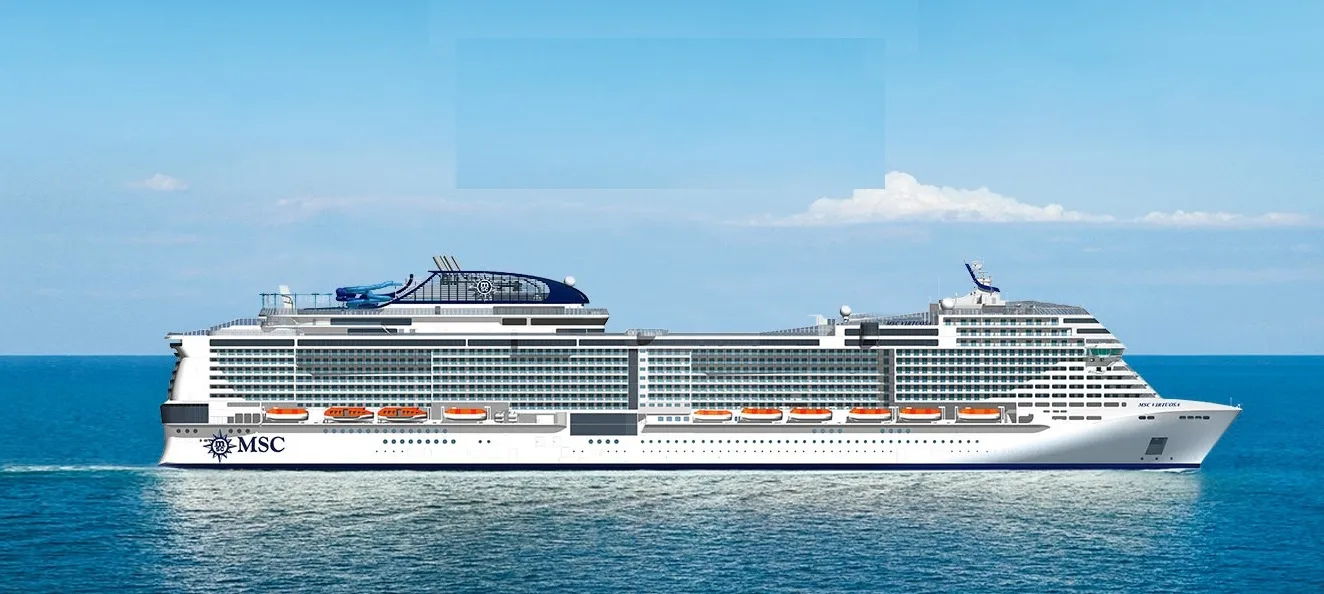
Meraviglia Plus
2019
—
181,541 GT
6,334
2,421
1,704
1092 m
43 m
22 knots
No
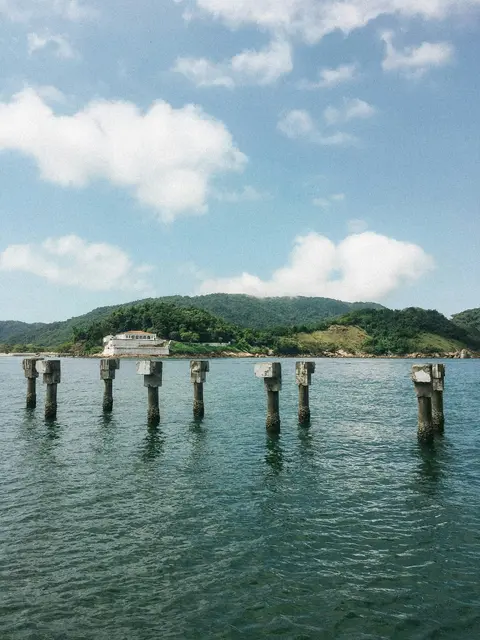
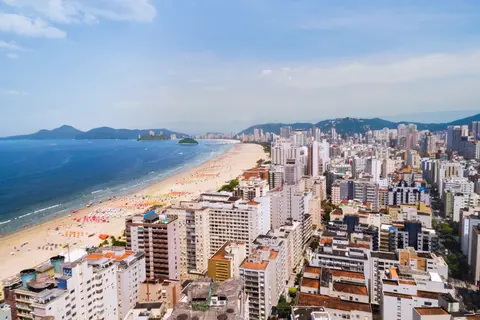
Santos, one of Portugal’s first New World settlements, was founded in 1535. Today your MSC ship will be docking in Latin America’s largest port, through which passes a large proportion of the world’s coffee, sugar and oranges. The city stands partly on São Vicente island, its docking facilities and old town facing landwards, with ships approaching by a narrow, but deep, channel. Its compact centre retains a certain charm that’s massively popular with local tourists, and there is a good deal of historical and maritime interest around the city. On an MSC South America cruise excursion to the city centre you’ll find the ruins of some of Santos’s most distinguished buildings along Rua do Comércio. Although sometimes only the facades remain, some of the nineteenth-century former merchants’ houses that line the street are gradually being restored, the elaborate tiling and wrought-iron balconies offering a hint of the old town’s lost grandeur. MSC South America cruises also offer excursions to the local Santos Futebol Clube. It’s best known as the club for which the great Pelé played for most of his professional life (from 1956 to 1974); their stadium, the Vila Belmiro, is open to the public when there’s no game on. In addition to honouring Pelé at the club’s small museum, you can take an hour-long guided tour including the players’ bar and dressing rooms. Santos’s beaches are across town from Centro on the south side of the island. The beaches are huge, stretching around the Atlantic-facing Baía de Santos, and popular in summer.
As you’ll be able to appreciate when you cruise the Atlantic Ocean with MSC Cruises, in its position on the southern shore of the magnificent Guanabara Bay, Rio de Janeiro has, without a shadow of a doubt, one of the most stunning settings in the world. Extending for 20km along an alluvial strip, between an azure sea and forest-clad mountains, the city’s streets and buildings have been moulded around the foothills of the mountain range that provides its backdrop, while out in the bay there are many rocky islands fringed with white sand. The aerial views over Rio are breathtaking, and even the concrete skyscrapers that dominate the city’s skyline add to the attraction. As the former capital of Brazil and now its second-largest city, Rio has a remarkable architectural heritage, some of the country’s best museums and galleries, superb restaurants and a vibrant nightlife – in addition to its legendary beaches. A shore excursion on your MSC South America cruise can be the opportunity to visit the Pão de Açúcar. The Sugar Loaf Mountain rises where Guanabara Bay meets the Atlantic Ocean. Its name may simply reflect a resemblance to the moulded loaves in which sugar was once commonly sold. Alternatively, it may be a corruption of the indigenous Tamoya word Pau-nh-Açuquá, meaning “high, pointed or isolated hill”. On the top of Corcoavado Mountain instead the Art Deco statue of Cristo Redentor (Christ the Redeemer), arms outstretched in welcome, stands 30m high and weighs over 1000 tonnes. It was supposed to be completed for Brazil’s centenary independence celebrations in 1922, but wasn’t actually finished until 1931. In clear weather, fear no anticlimax: climbing to the statue is a stunning experience, with the whole of Rio and Guanabara Bay laid out before you.
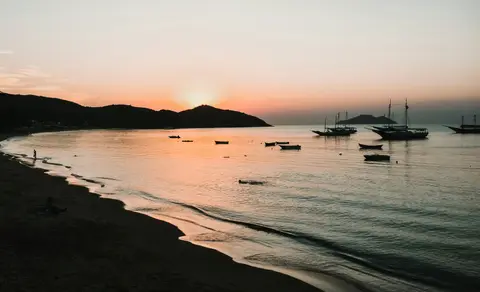
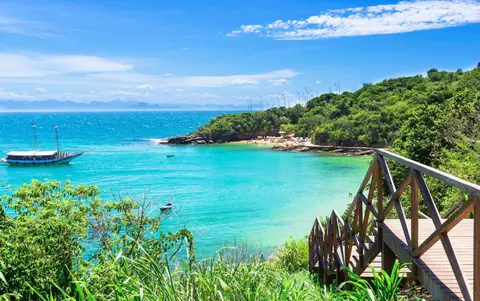
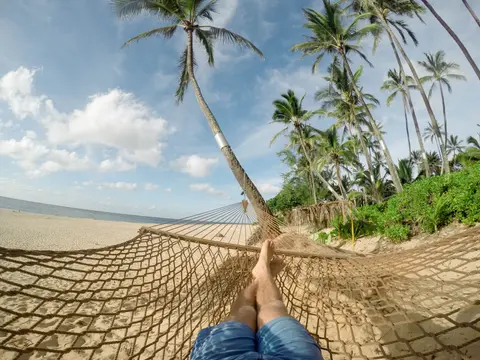
On a peninsula north of Cabo Frio, Armação dos Búzios, or just Búzios, is an immensely scenic resort full of high-spending beautiful people, and a very popular port of call on holidays to Brazil with MSC Cruises. Armação, the main settlement, is built in a vaguely colonial style, its streets lined with restaurants, bars and chic boutiques, and has been nicknamed “Brazil’s St Tropez”. It comes then as little surprise to find that it was “discovered” by none other than Brigitte Bardot, who stumbled upon it while touring the area in 1964. Búzios consists of three main settlements, Manguinos, Armação and Ossos, each with its own distinct character. Manguinos, on the isthmus, is the main service centre, with a tourist office, a medical centre and banks. Midway along the peninsula, linked to Manguinos by a road lined with brash hotels, is Armação, an attractive village where cars are banned from some of the cobbled roads. Most of Búzio’s best restaurants and boutiques are concentrated here, along with some of the resort’s nicest pousadas, or inns, and there’s also a helpful tourist office on the main square, Praça Santos Dumont. When you step ashore from your MSC cruise, a fifteen-minute walk along the Orla Bardot – which follows the coast from Armação, passing the lovely seventeenth-century Igreja de NossaSenhora de Sant’Ana on the way –, brings you to Ossos, the oldest settlement, comprising a pretty harbour, a quiet beach and a few bars, restaurants and pousadas. Within walking distance of all Búzios’ settlements are beautiful white-sand beaches – 27 in total – cradled between rocky cliffs and promontories, and lapped by crystal-clear waters. The beaches are varied, with the north-facing ones having the calmest and warmest seas, while those facing the south and east have the most surf.
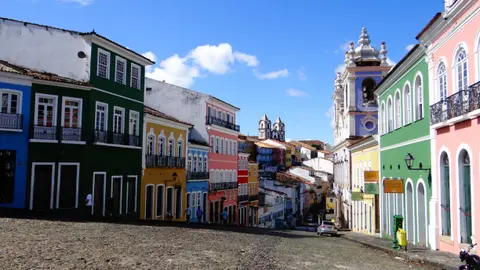
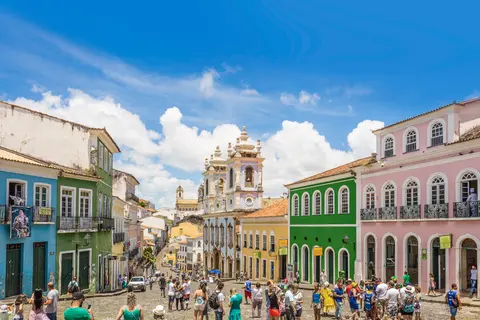
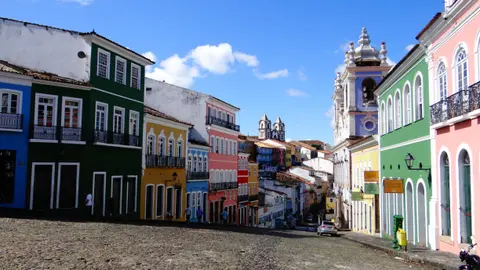
High above the enormous bay of Todos os Santos (All Saints), where your MSC cruise ship awaits your return, Salvador de Bahia has an electric feel from the moment you arrive. This is the great cultural and historical centre of Brazil, where Afro-Brazilian heritage is strongest and where capoeira, candomblé and samba de roda were created. MSC South America cruises offer excursions to the centro histórico of this magical place, a melange of narrow cobbled streets, peeling purple walls, grand Baroque churches, kids kicking footballs, rastas, locals sipping bottled beer on plastic chairs, the wafting aroma of herbs and the almost constant beating of drums, especially as the sun sets. Beyond the old town Salvador is a vast, sprawling city, with a vibrant beach life, modern skyscrapers and plenty of favelas. The centro histórico is the traditional heart of Salvador; it’s built around the craggy, 70m-high bluff that dominates the eastern side of the bay, and is split into upper and lower sections. Cidade Alta (or simply “Centro”) is strung along its top, linked to the less interesting Cidade Baixa (the old commercial centre, aka “Comércio”) by precipitous streets and the towering Art Deco lift-shaft of the Elevador Lacerda. Cidade Alta is the cultural centre of the city, and the section known as the Pelourinho is the groovy old district with colourful and hilly winding streets, its most vibrant and beguiling neighbourhood. The best spot to begin a walking tour of the city is at the Praça Municipal, the square dominated by the impressive Palácio do Rio Branco, the old governor’s palace which was in use until 1979. The fine interior is a blend of Rococo plasterwork, polished wooden floors and painted walls and ceilings.
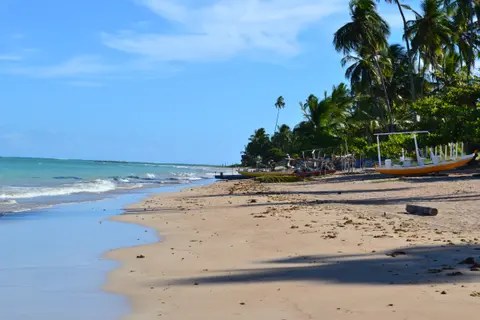
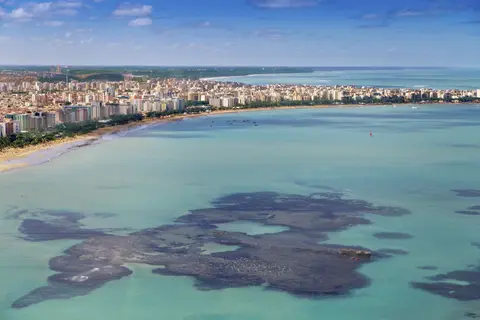
Maceió, city, capital of Alagoas estado (state), northeastern Brazil. It is situated below low bluffs on a level strip of land between the Atlantic Ocean and the Norte (or Mundaú) Lagoon, a shallow body of water extending inward for several miles. Formerly called Macayo, the city dates from 1815, when a small settlement there was made a villa. In 1839 it became capital of Alagoas (then a provincia) and was given city status.
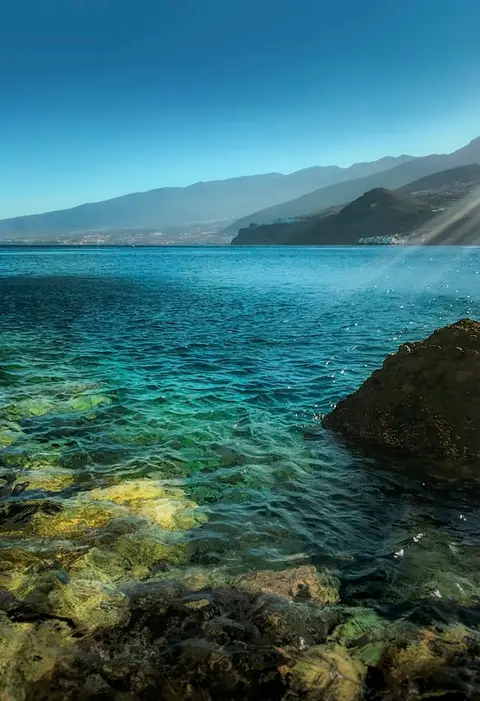
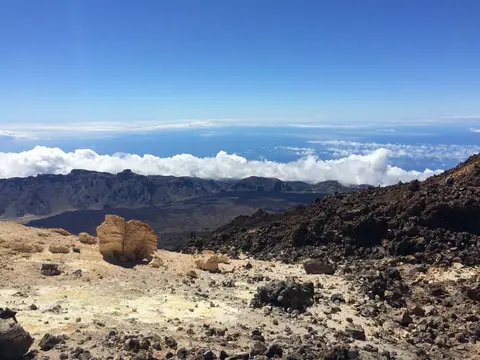
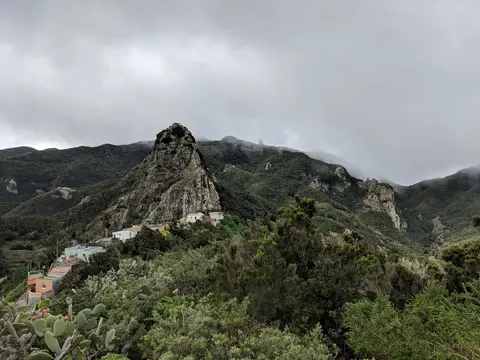
Though part of Spain, the Canary Islands sit in the open Atlantic Ocean, about 100 kilometers (60 miles) west of Morocco. The mild climate mixed with a rich volcanic landscape and beautiful sandy beaches makes the main city of Santa Cruz, on the largest island of Tenerife, a welcome stop for many cruise voyages. The isolated island is dominated by the Teide volcano, the tallest mountain in Spain and site of one of the world’s most popular national parks. A cable car carries visitors to the top, offering unrivaled views of the island. Travelers interested in learning about the history of the island, its unique wildlife and the population of indigenous people that lived here before the arrival of European settlers should visit the Museum of Nature and Man in Santa Cruz, while architecture buffs can stroll the streets of La Laguna to see colonial-era mansions. And travelers keen on food and wine should venture into the countryside to sample local dishes or make the drive to Casa del Vino, where they can learn about, and taste, local wines while shopping for a bottle or two to bring home.
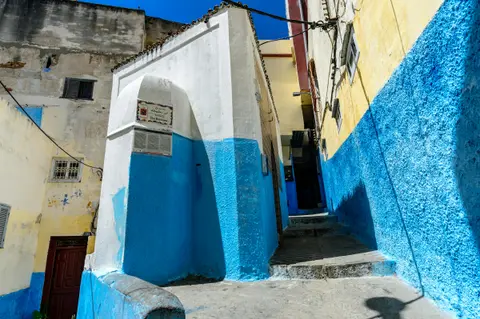
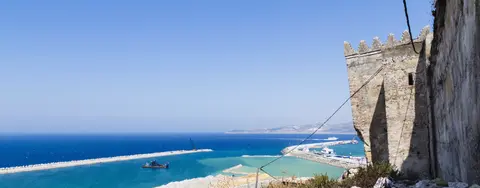
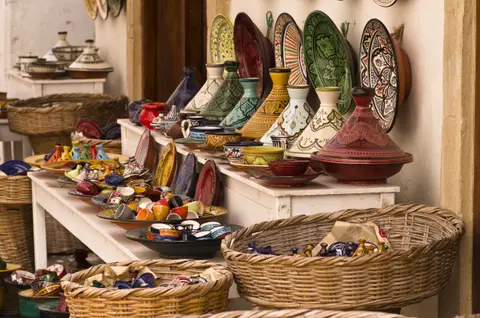
Set on the Maghreb coast, Tangier is Africa’s outstretched hand to Europe. With its bustling markets and lively waterfront, this city on Morroco's north is an energetic and invigorating place and an exciting immersion into an incredible continent. The location, on the highly strategic narrowing of the Strait of Gibraltar, made Tangier a vital Phoenician trading town - and the resulting city is an invigorating mesh of cultures and curiosities. View less Part of the fun of Tangier is the well-rehearsed dance, as you dodge good-natured hawkers, and this is certainly a place to stroll with confidence and purpose. Delve into the mayhem of the walled Medina of Tangier for a rush of stimulation, as bartering and bantering echoes along the tight alleys. Crowded, noisy and busy, you’ll be sold to with a smile as you wander between stands of colourful spices, dried fruits and fabrics in this authentic Moroccan marketplace. Refresh and escape the sun with a fresh orange juice - or a sip of mint tea. Close to the city, you can find the Caves of Hercules, a coastal hollow that opens at both ends. The Phoenicians cut a window in the shape of the African continent, which reveals views of the Atlantic's waves, and legend says Hercules rested within its confines. From Tangier, you can also venture inland to the Rif Mountains, where gorgeous Chefchaouen - a village of bright blue alleyways - waits. Punctuated by blooming flowers, the entire town is a beautiful, moulded artwork of colour, spilling down the mountain like a waterfall.
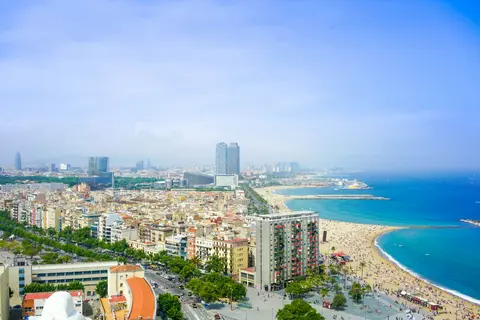
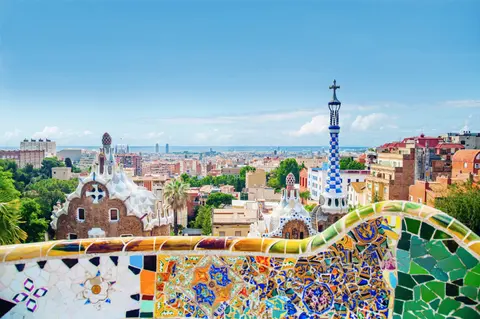
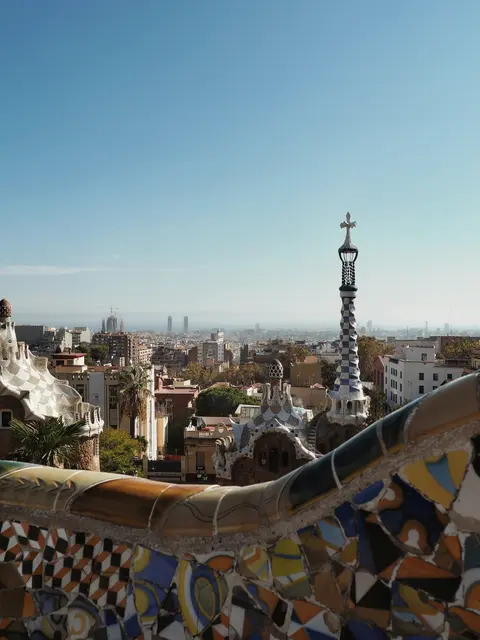
On the northeast coast of Spain, overlooking the Mediterranean, Barcelona is a vibrant port city, packed with centuries of iconic art and architecture—Gaudí and Picasso both called it home—and lined with sunny white-sand beaches. Explore the Catalan capital's tourist attractions and historic neighborhoods, Modernisme and world-renowned art museums, galleries and local crafts shops—some of which are centuries old and stock traditional Catalan wares. After you see the sights, there are lively tapas bars around every corner where you can stop for a drink, a café amb llet (Catalan for espresso with steamed milk) or a snack, no matter the hour. Green spaces for picnics, long walks and respite from the hustle and bustle are scattered throughout Barcelona's attractions: There's Gaudí's mosaic-decorated park, a neoclassical maze at the Laberint d'Horta, as well as plenty of high places (mountains, monuments and edifices) where sightseeing visitors can take in the view. A short trip from Barcelona by car or train, luxury outlets, cava wineries, a mountaintop abbey and the sandy beaches of the Mediterranean coast await.
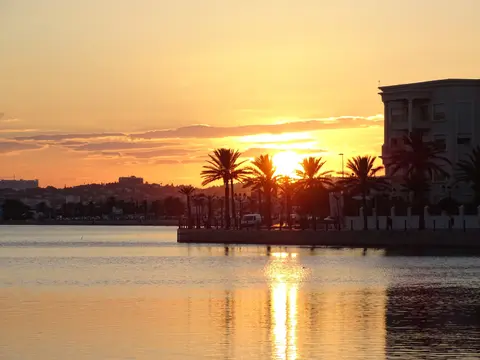
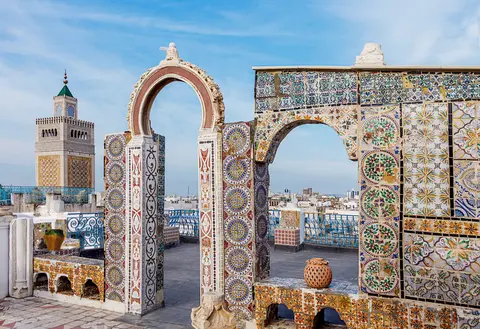
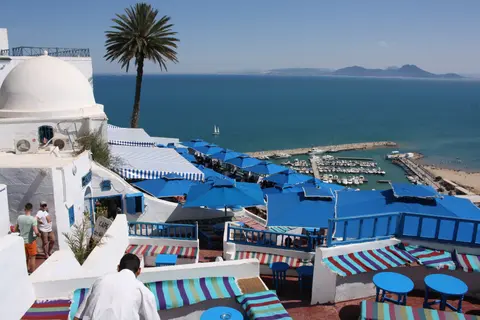
Until the time of the French protectorate, the medina was very much the center of things. Then, under the French influence, the ville nouvelle (new city) emerged with its major banks, department stores and administrative services. The main focus of ville nouvelle is the wide, tree-lined Avenue Habib Bourguiba. At its western end, this major thoroughfare becomes the Avenue de France, terminating in the Place de la Victoire and the entrance to the medina. Although today the medina has lost some of its importance, it is still a place where traditions can be readily observed and where visitors can get a feel for the local way of life. It features many of the city's points of interest and countless shops.
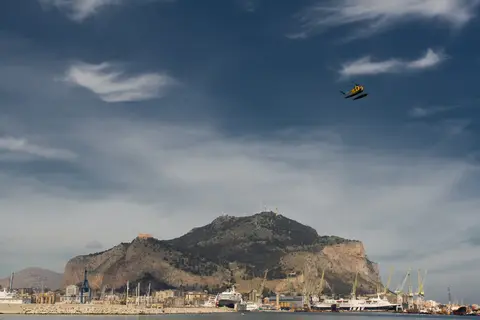
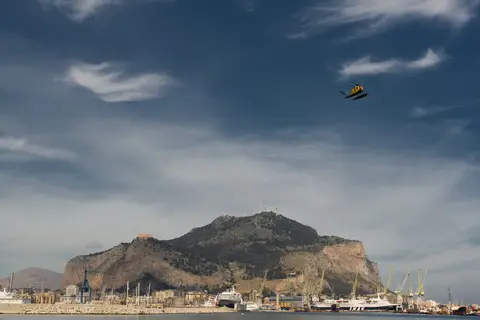
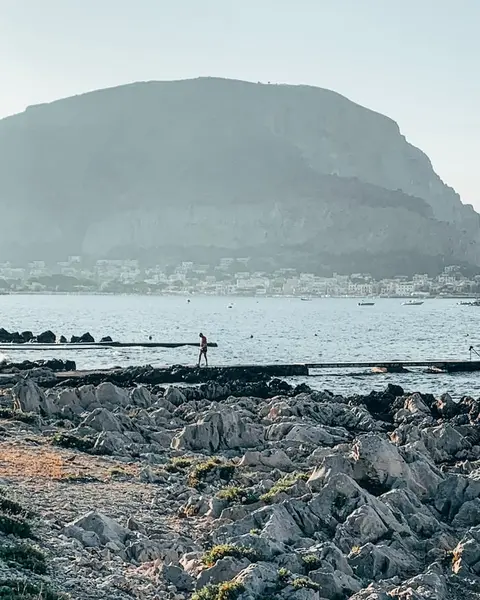
The capital of Sicily is situated on a crescent-shaped bay on the island's north coast. Once the intellectual capital of southern Europe, Palermo has always been at the crossroads of civilization. Due to its favourable location, Sicily's most interesting city has attracted almost every people and culture touching the Mediterranean world. Its most unique characteristic is a harmonious blend of Arab-Norman cultures mixed with Byzantine and Jewish elements, which created some unforgettable and resplendent works of art. Phoenician traders first colonized Palermo in the 6th-century BC, but it was the Carthaginians, who built the important fortress here that caught the covetous eye of the Romans. After the first Punic War, the Romans took control of the city in the 3rd-century BC. Following several invasions by the Vandals, Sicily was settled by Arabs, who made the country an emirate and Palermo a showpiece capital that rivalled in splendour both Cordoba and Cairo. The city became a magical place of palaces and mosques, minarets and palm trees. In the 11th-century Palermo was conquered by the Norman ruler, Roger de Hauteville. During the Normans' hundred-year occupation, the city experienced a remarkable period of enlightenment and a flourishing of the arts. Counting a population of more than 300,000, Palermo became the centre of Norman rule and one of the most important trading centres between East and West. Eventually, Palermo was incorporated into the “Kingdom of the Two Sicilies” under the Swabian ruler Frederick II, known as the Holy Roman Emperor. After the bloody Sicilian Vespers uprising in 1282, the Spanish took control and brought the Inquisition to Palermo. Some historians believe that the nature of the Inquisition helped foster the protective secret societies that eventually evolved into the Mafia. Today, visitors can still experience the legacy of Palermo's rich past. Great Arab-Norman buildings include the Cappella Palatina, La Martorana, San Giovanni degli Eremiti and, a few miles outside the city, the Cathedral of Monreale. Palermo's bustling streets and animated markets give the town an Oriental feel. The Quattro Canti, or Four Corners, is the monumental crossroads laid out in 1608-1620 at the central intersection of the four longest and straightest streets of the city. North of Piazza Castelnuovo lie the avenues of the new city. Most sights are scattered along three major streets: Corso Vittorio Emanuele, Via Maqueda and Via Roma. A vigorous metropolis with a strong historical profile, Palermo is packed with interesting sights, which make it an enriching and enjoyable place to explore.
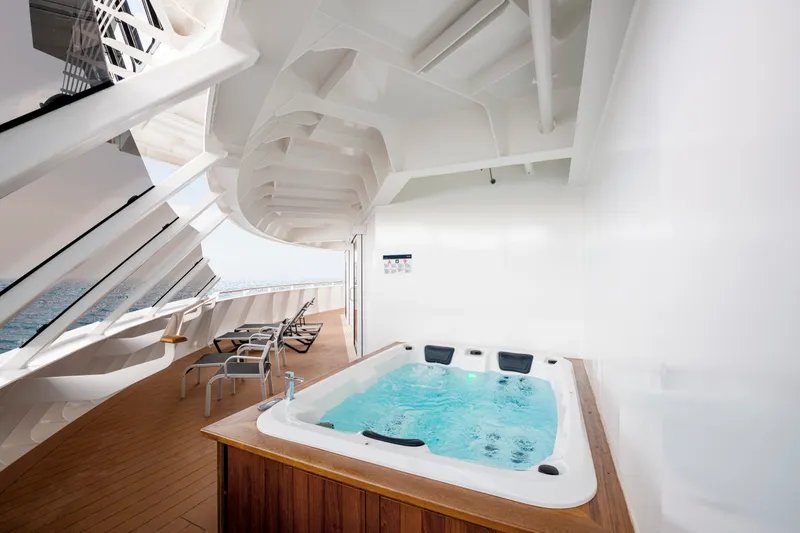
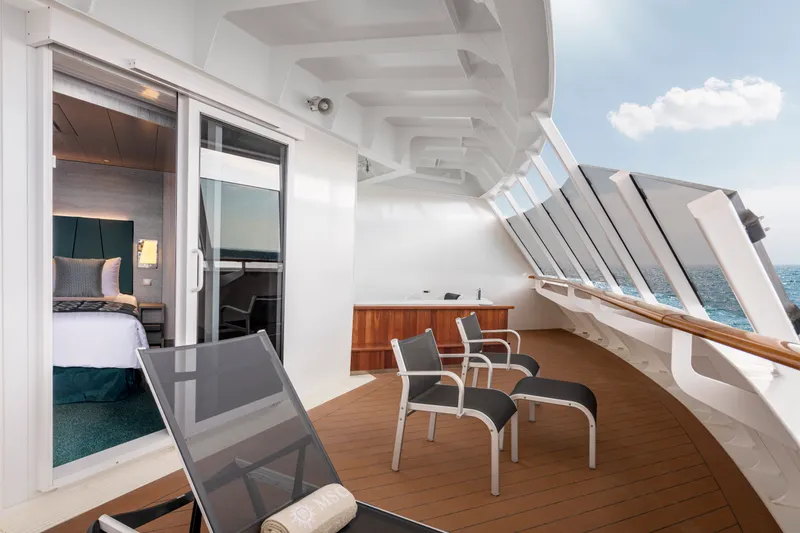
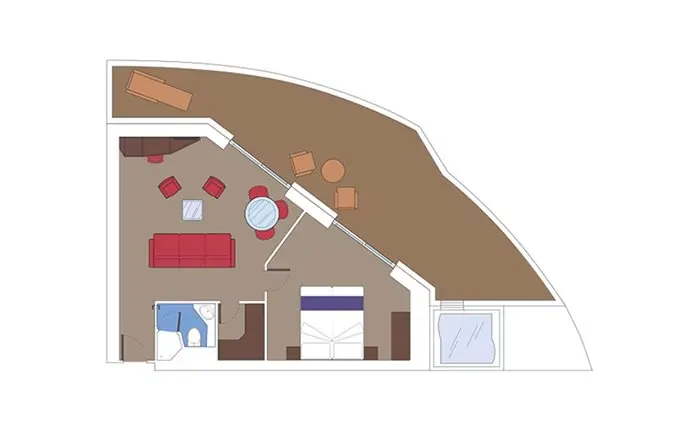
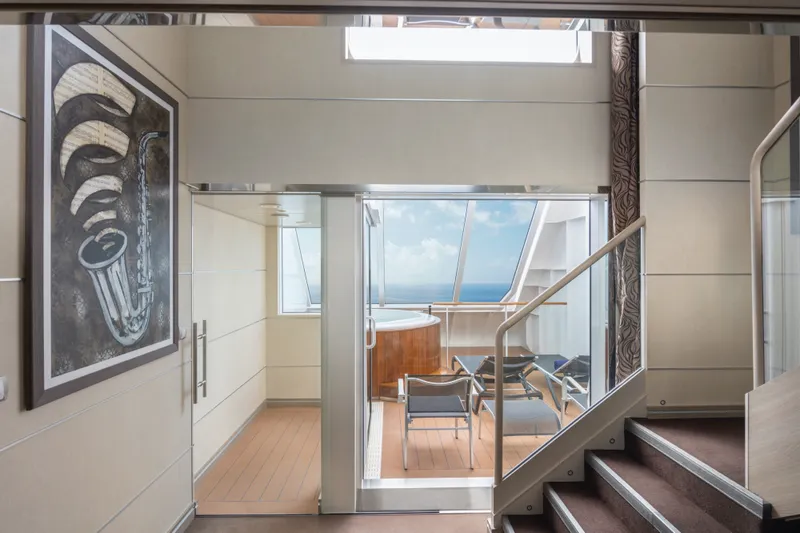
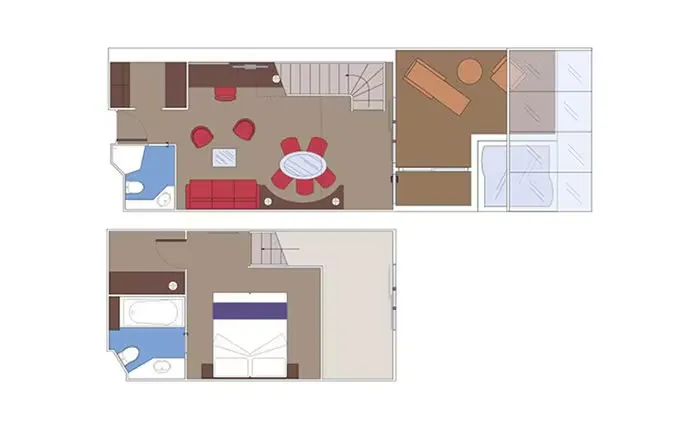
Large balcony with a private whirlpool bath
Walk-in closet
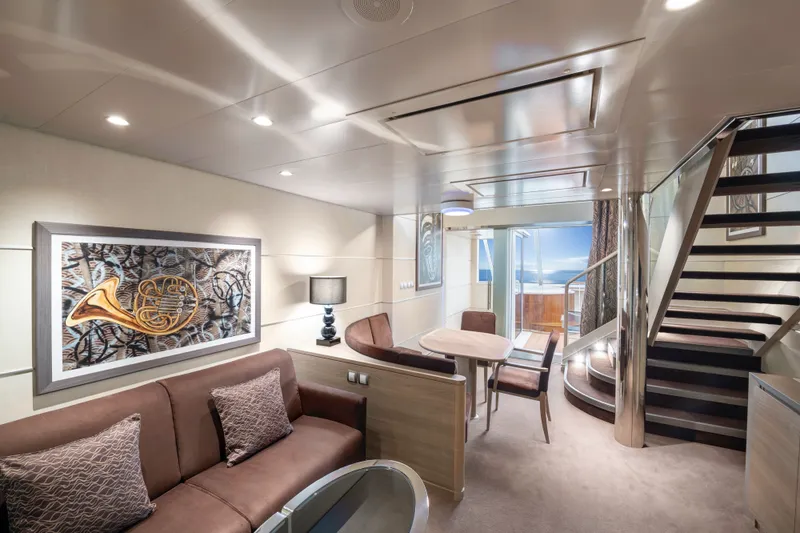
Sitting area with double sofa bed
Bathroom with shower, vanity area and hairdryer
Interactive TV, telephone, safe and minibar
Wi-Fi access available
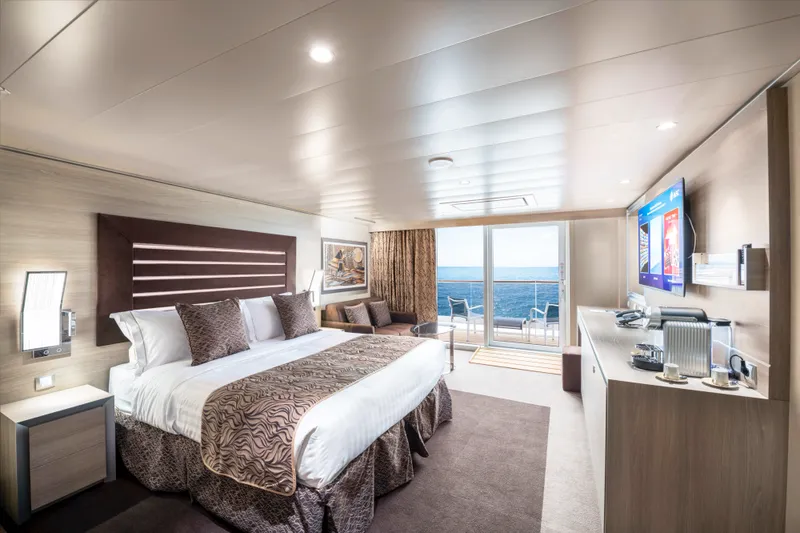
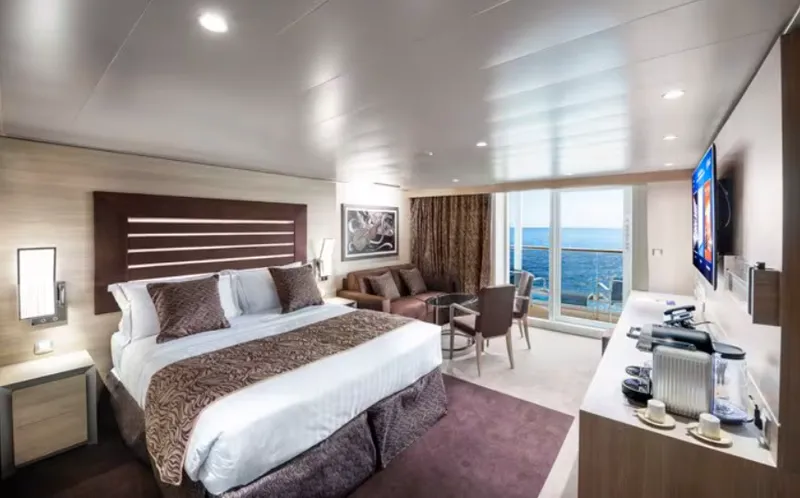
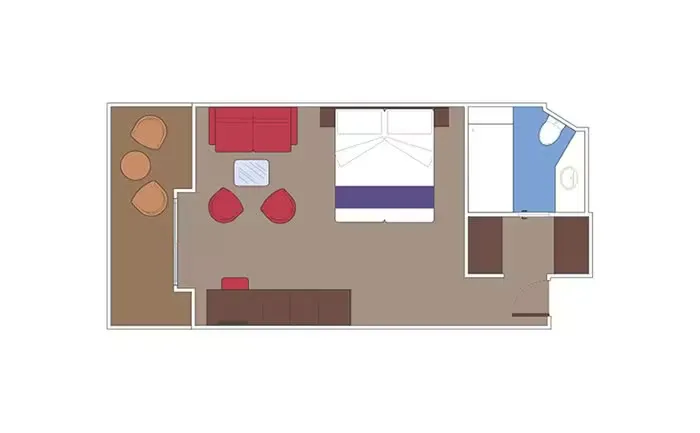
Balcony
Sitting area with sofa
Comfortable double or single beds (on request)
Spacious wardrobe
Bathroom with shower or bathtub , vanity area with hairdryer
Interactive TV, telephone, Wifi connection included, safe and minibar
Surface approx. 28 sq.m.
Balcony
Sitting area with sofa
Spacious closet
Bathroom with shower or bathtub, vanity area and hairdryer
Interactive TV, telephone, safe and minibar
Complimentary Wi-Fi
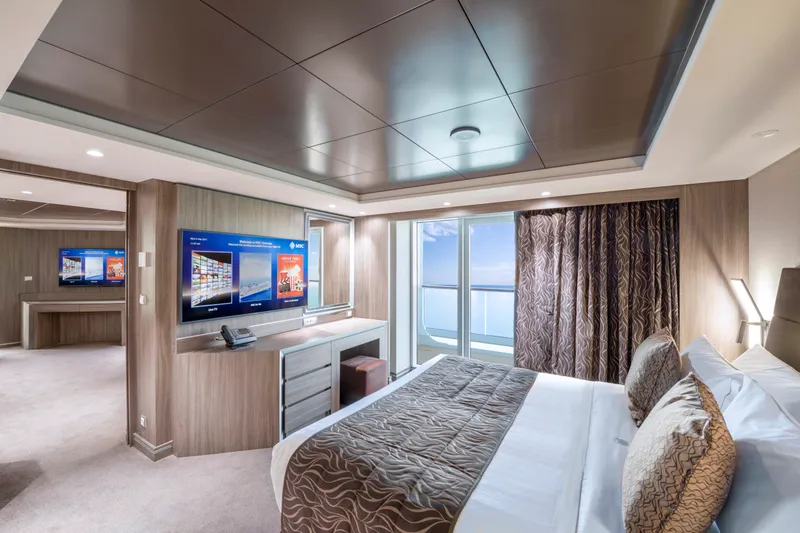
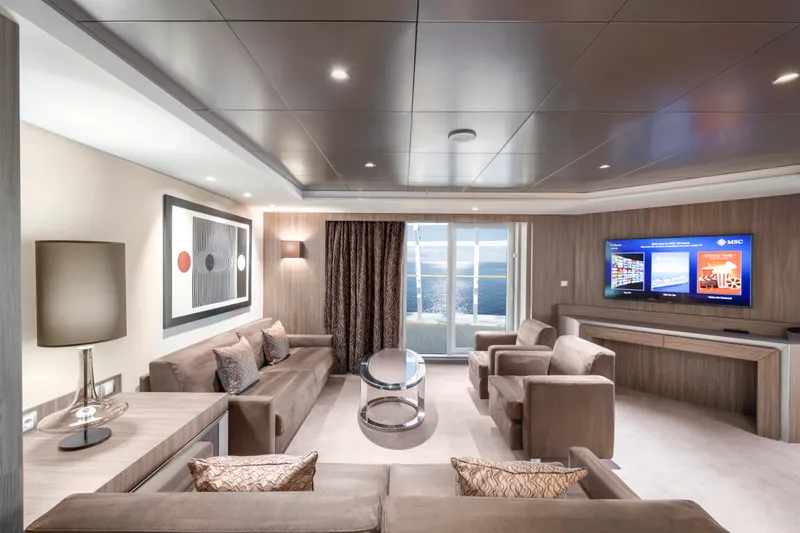
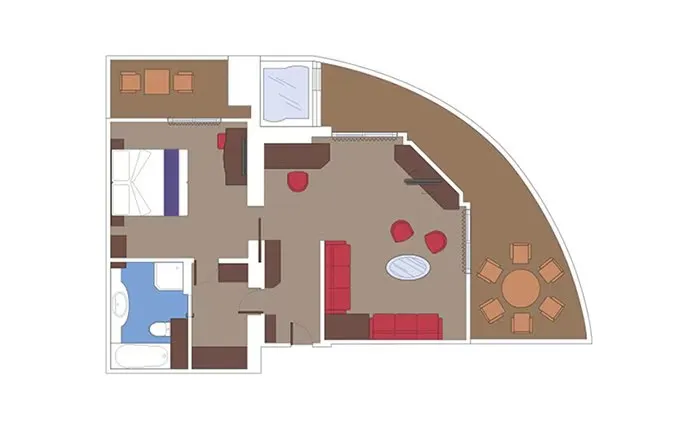
MSC Yacht Club Royal Suite with Whirlpool Bath
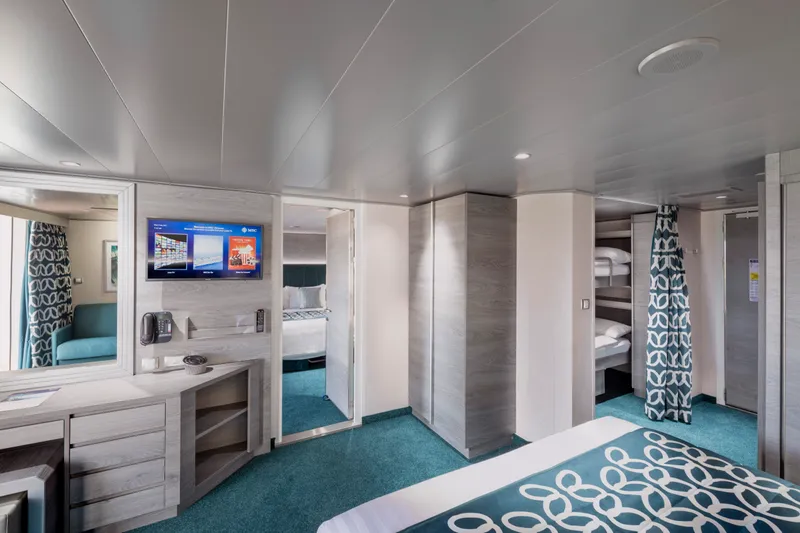
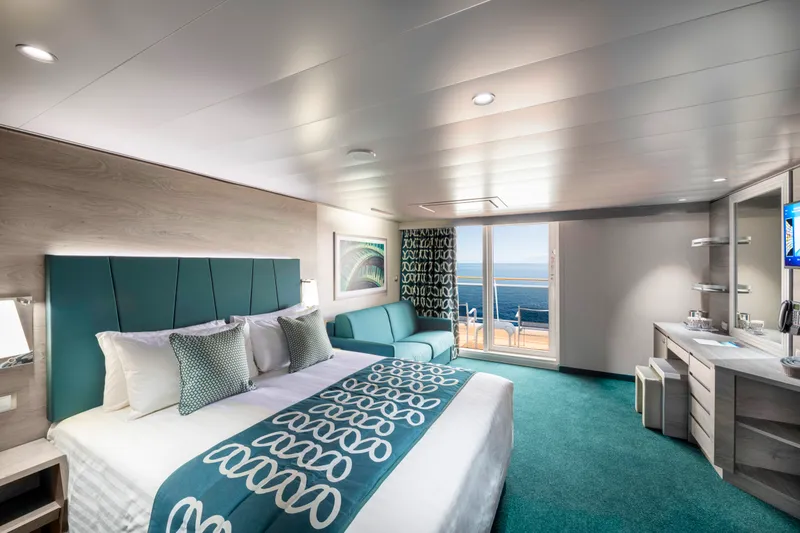
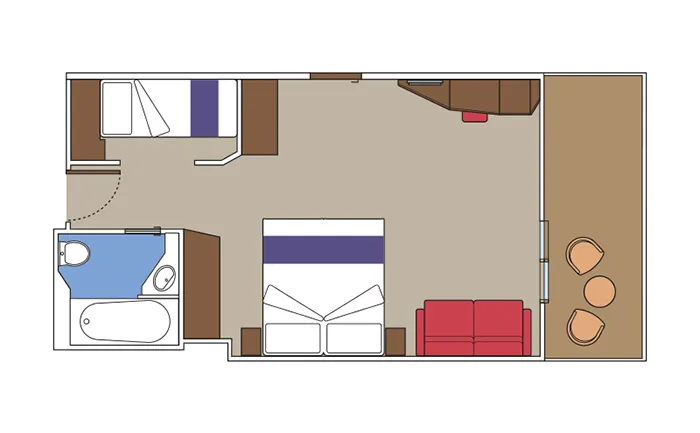
Balcony
Spacious closet
Bathroom with bathtub, vanity area and hairdryer
Interactive TV, telephone, safe and minibar
Wi-Fi access available
Accommodates up to 6 guests
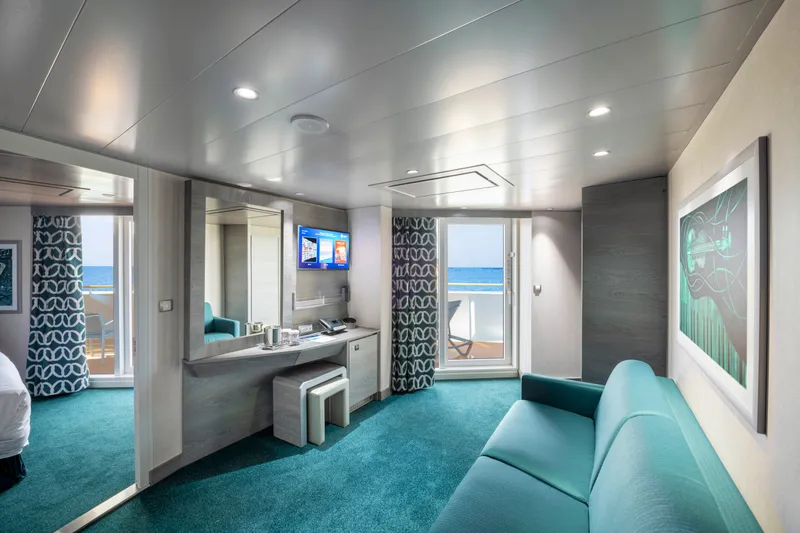
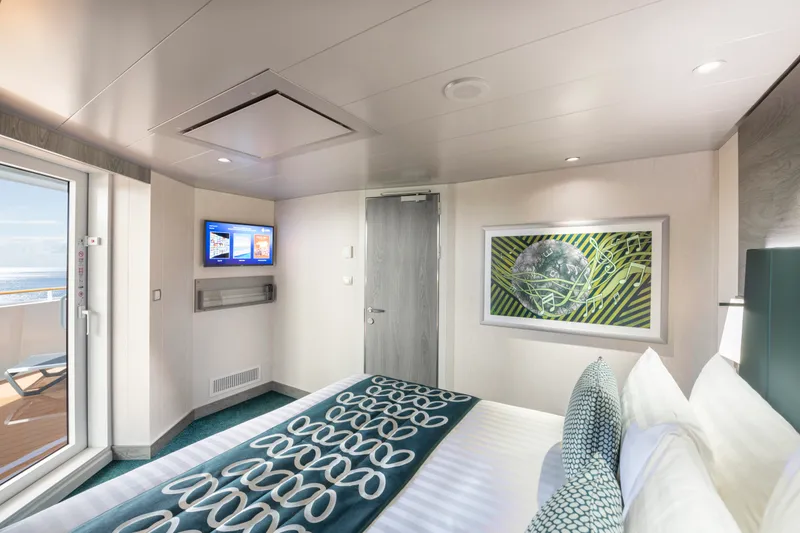
Large balcony with a private whirlpool bath
Walk-in closet
Sitting area with double sofa bed
Bathroom with shower, vanity area and hairdryer
Interactive TV, telephone, safe and minibar
Wi-Fi access available
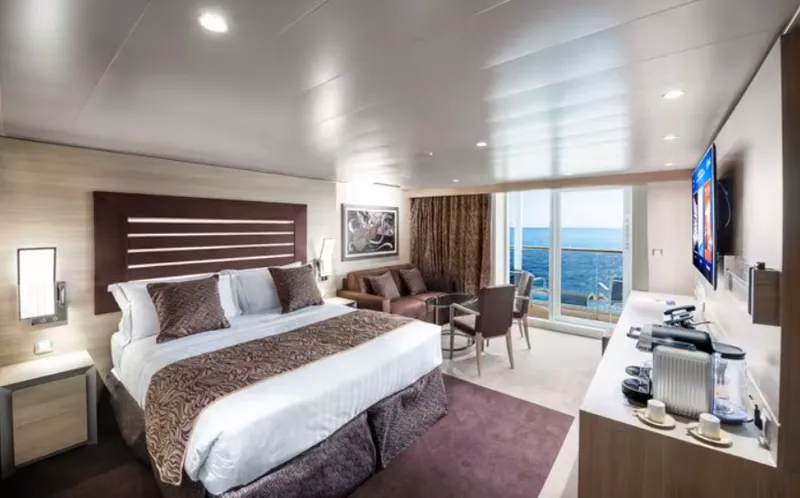
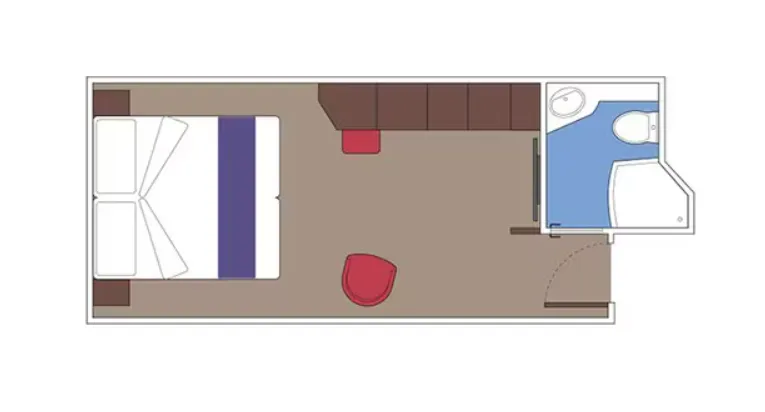
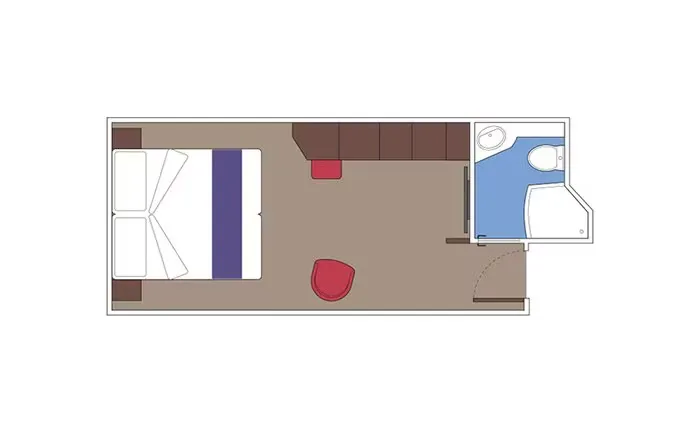
Sitting area with sofa
Comfortable double or single beds (on request)
Spacious wardrobe
Bathroom with shower or bathtub , vanity area with hairdryer
Interactive TV, telephone, Wifi connection available (for a fee), safe and minibar
Surface approx. 21 sq. m.*
Discover a world of privileges with MSC Yacht Club
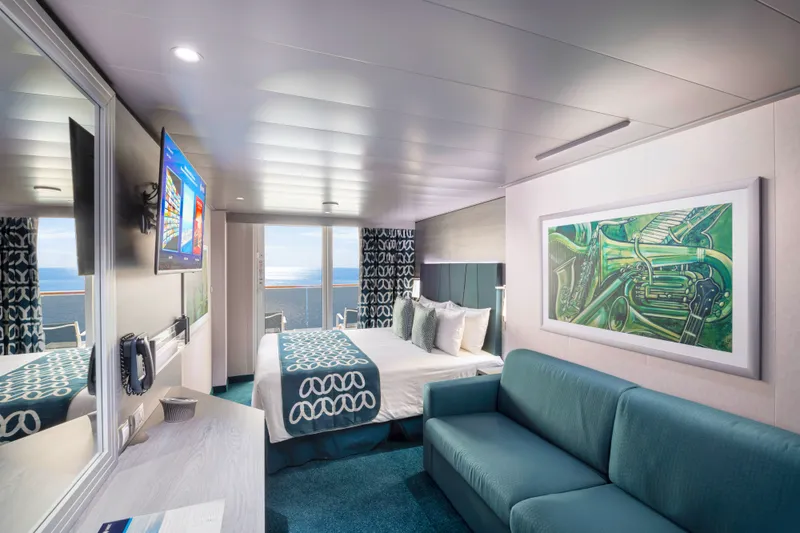
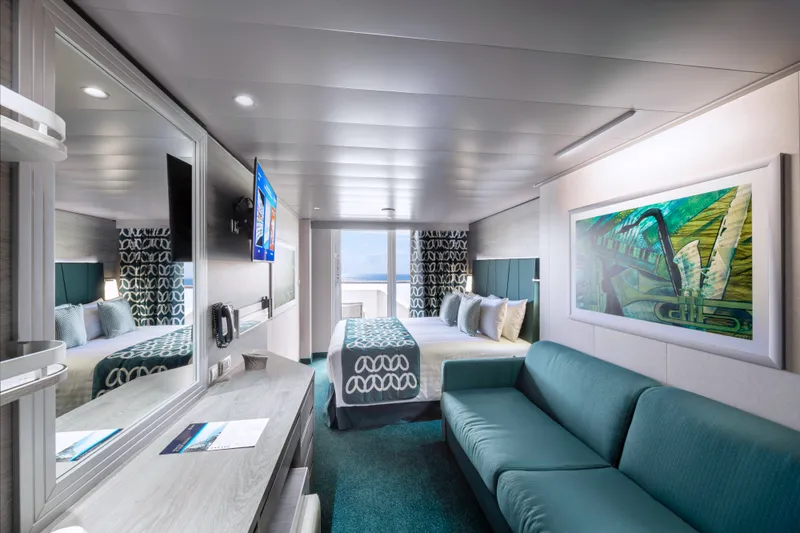
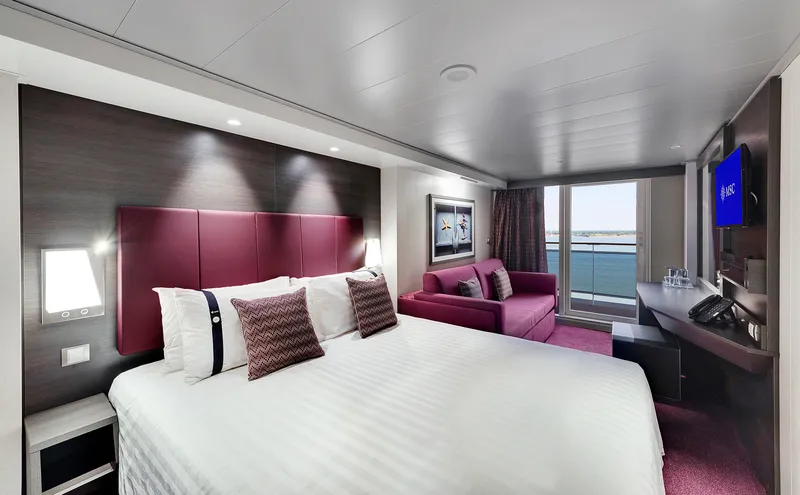
Balcony
Sitting area with sofa
Bathroom with shower or bathtub, vanity area and hairdryer
Interactive TV, telephone, safe and minibar
Wi-Fi access available
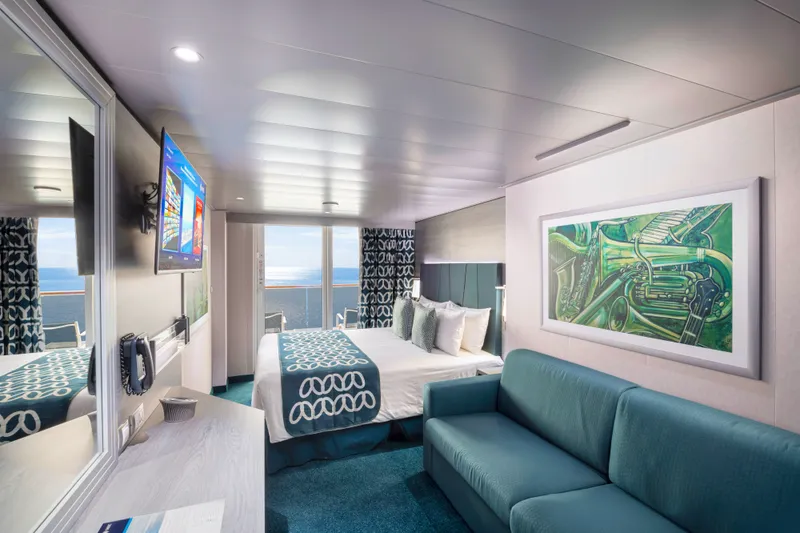
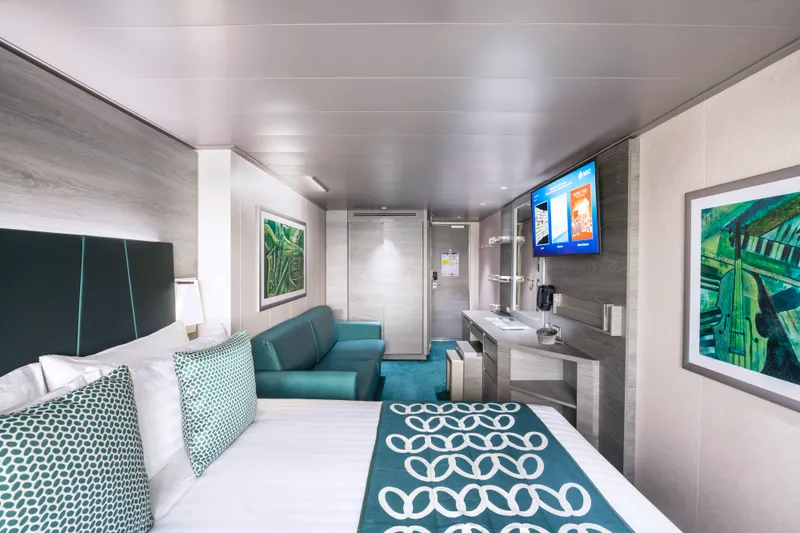
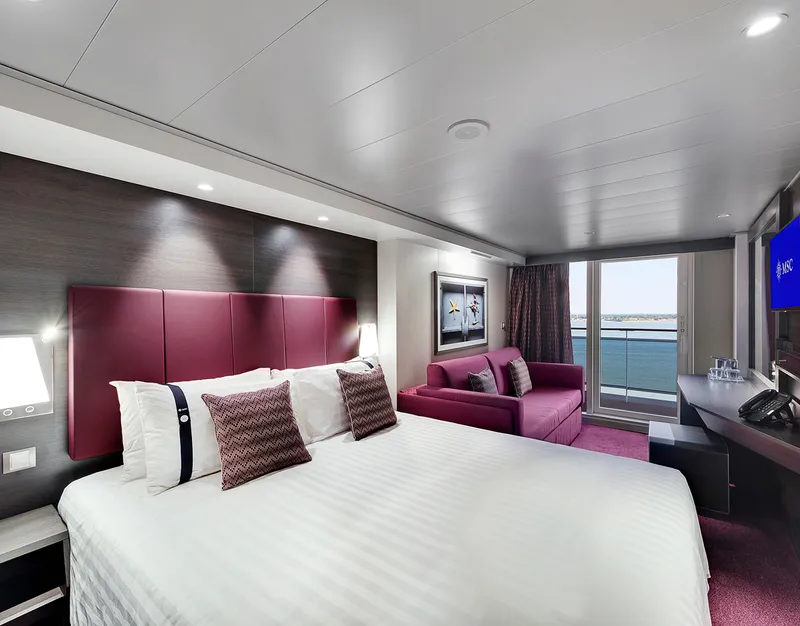
Balcony Bella
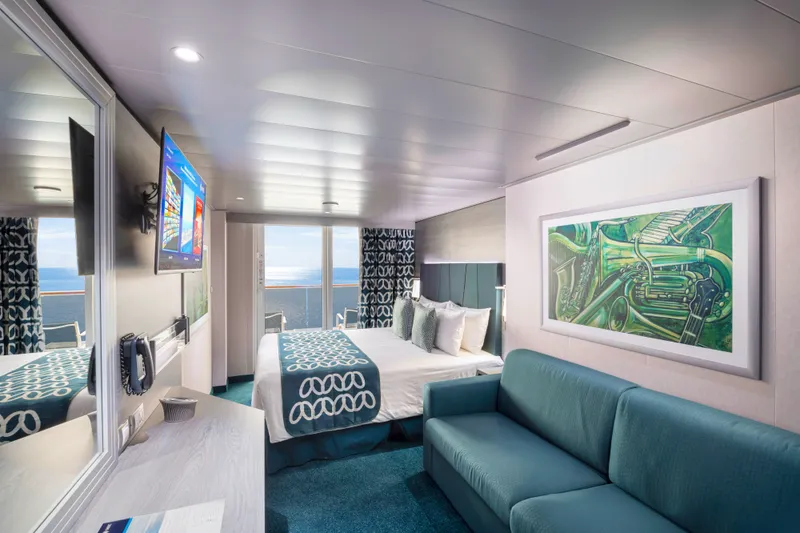
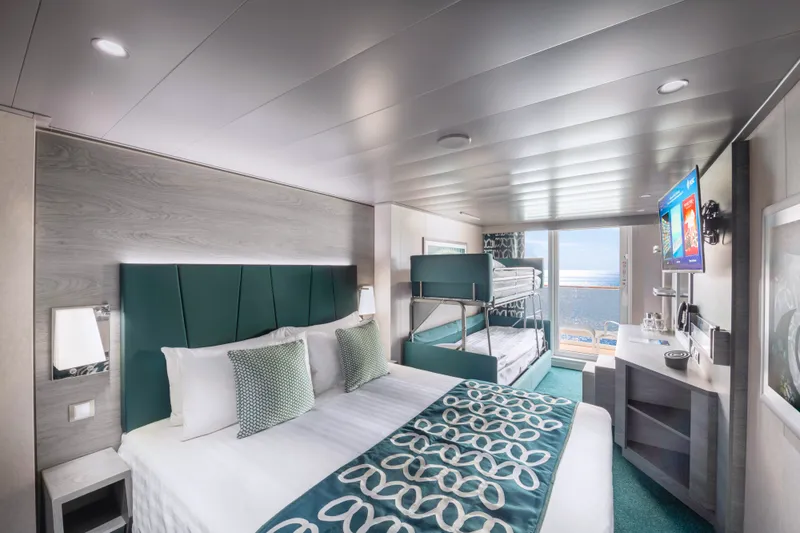
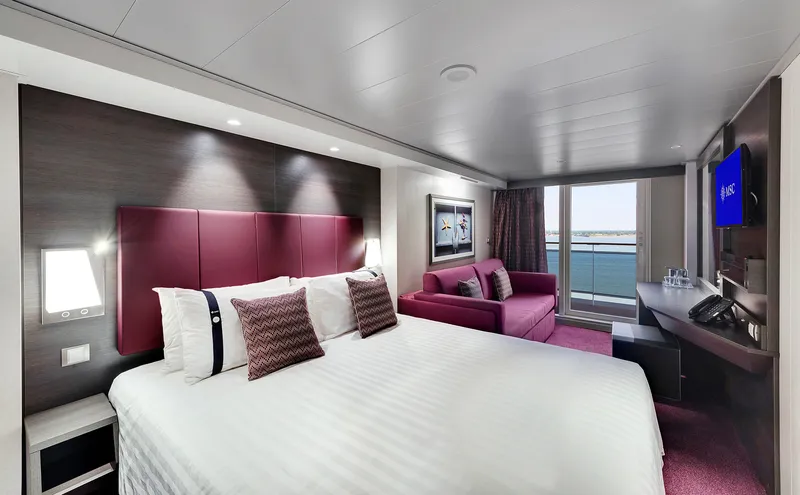
Balcony
Sitting area with sofa
Bathroom with shower or bathtub, vanity area and hairdryer
Interactive TV, telephone, safe and minibar
Wi-Fi access available
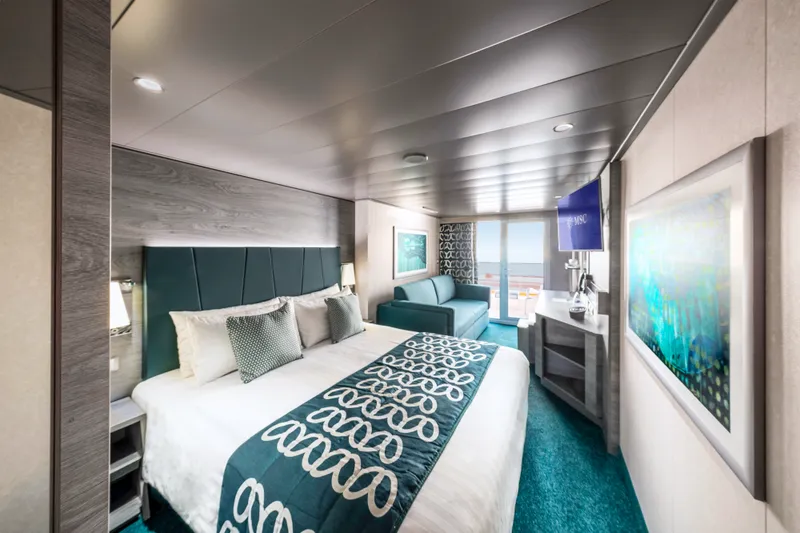
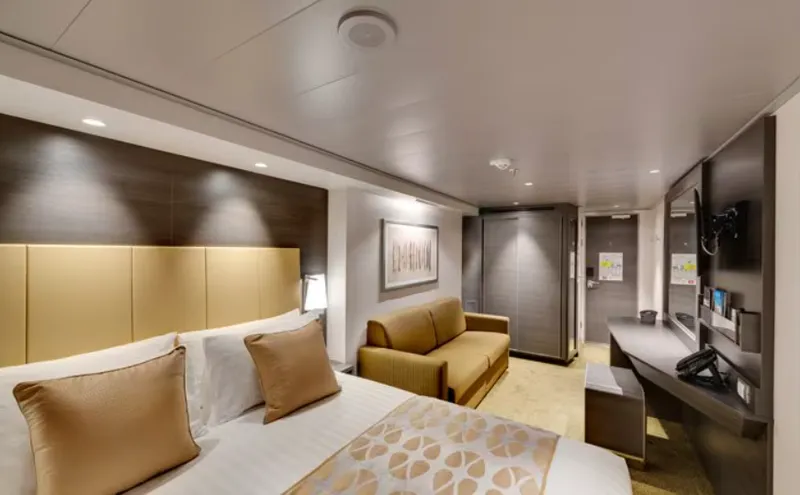
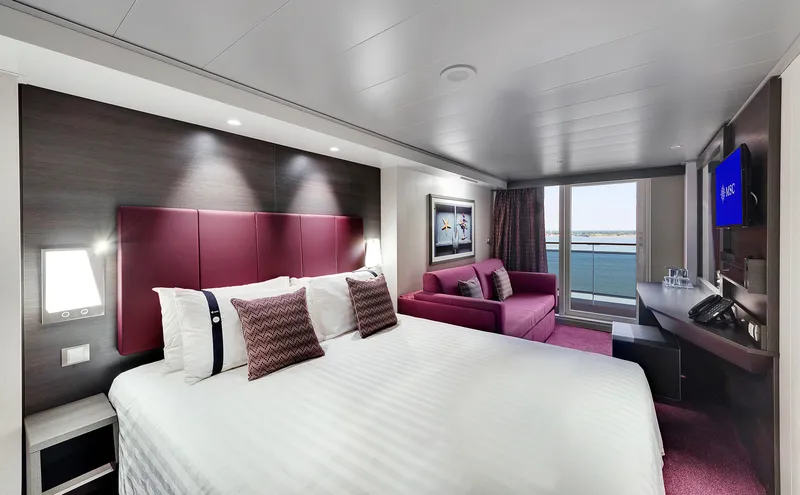
Surface 17 sqm, balcony 6 sqm, deck 8-14.
Sitting area with sofa.
Bathroom with shower or bathtub, vanity area with hairdryer.
Comfortable double or single beds (on request).
Interactive TV, telephone, Wifi connection available (for a fee), safe and minibar.
ZOE - in-cabin Bluetooth speaker.
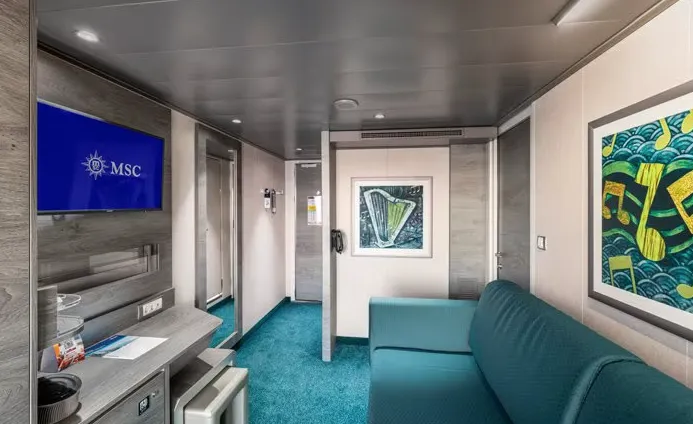
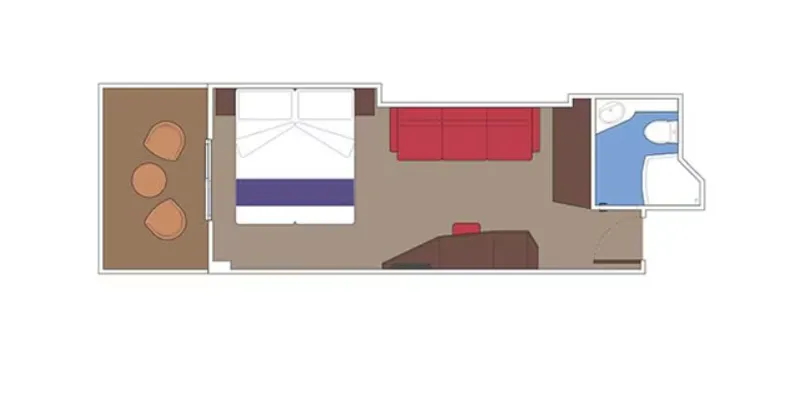
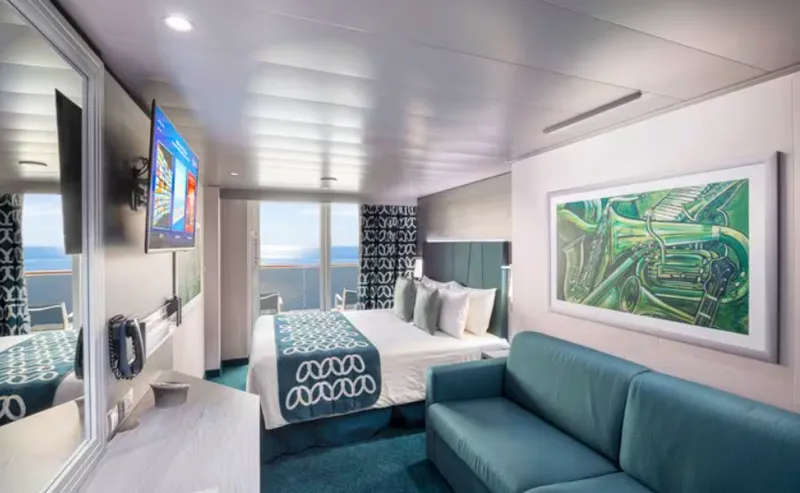
Balcony
Sitting area with sofa
Bathroom with shower or bathtub, vanity area and hairdryer
Interactive TV, telephone, safe and minibar
Wi-Fi access available
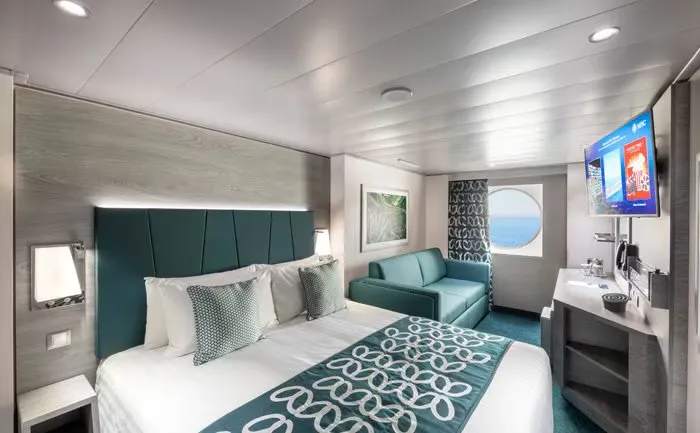
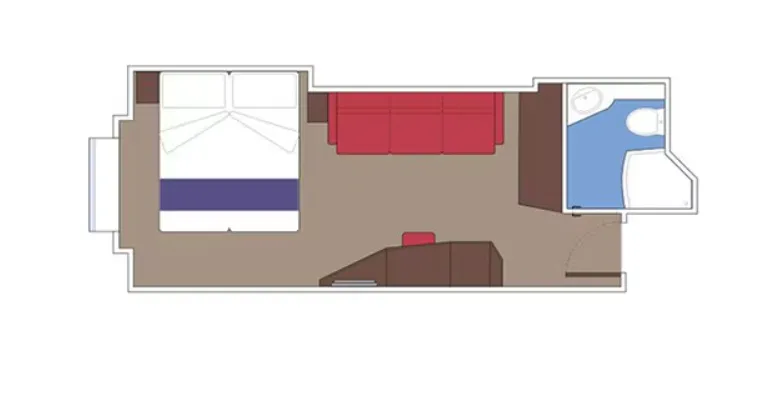
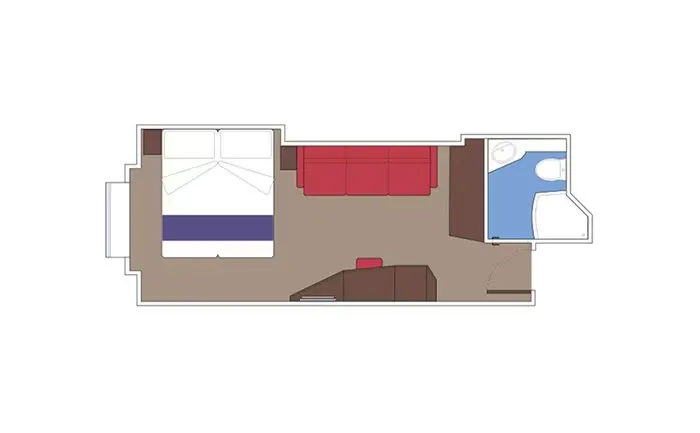
Window with sea view
Relaxing armchair
Bathroom with shower, vanity area and hairdryer
Interactive TV, telephone, safe and minibar
Wi-Fi access available
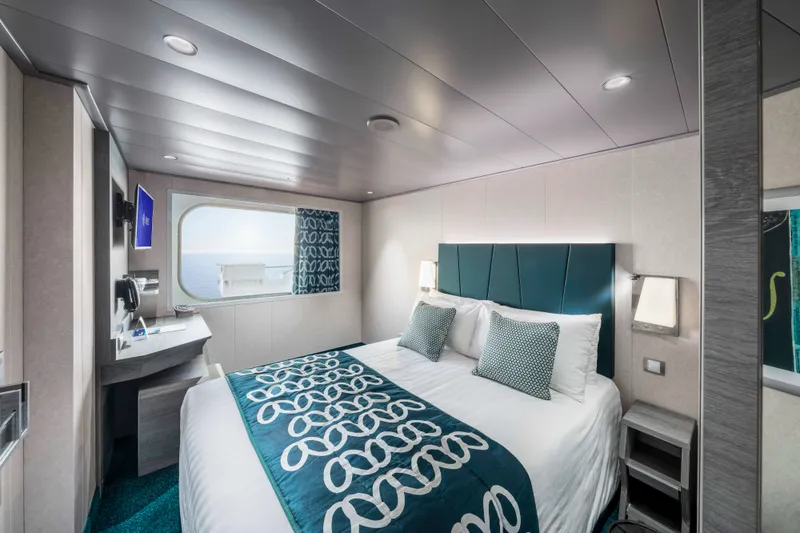
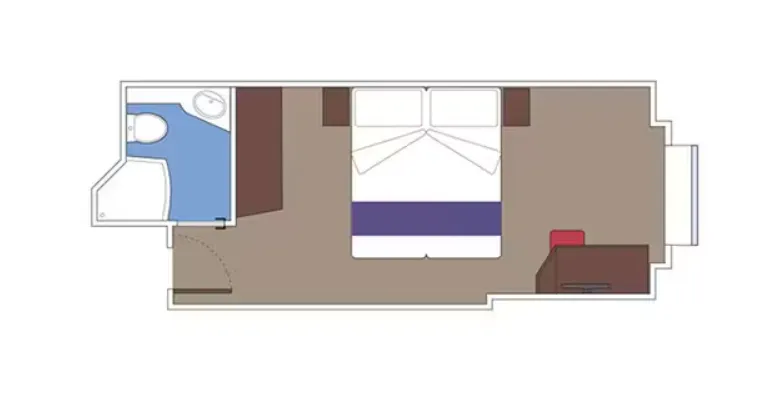
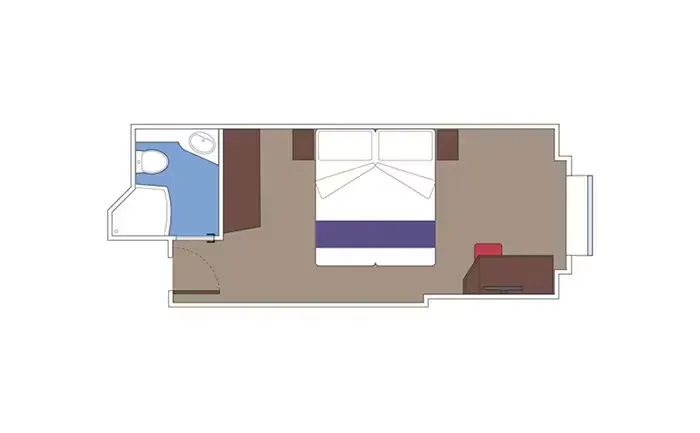
Window with sea view
Relaxing armchair
Bathroom with shower, vanity area and hairdryer
Interactive TV, telephone, safe and minibar
Wi-Fi access available
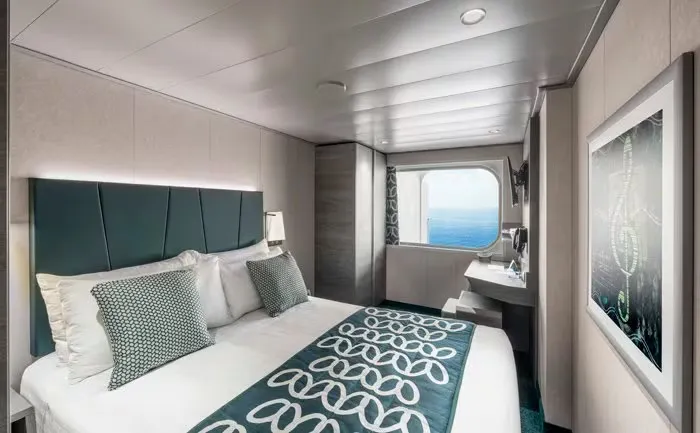
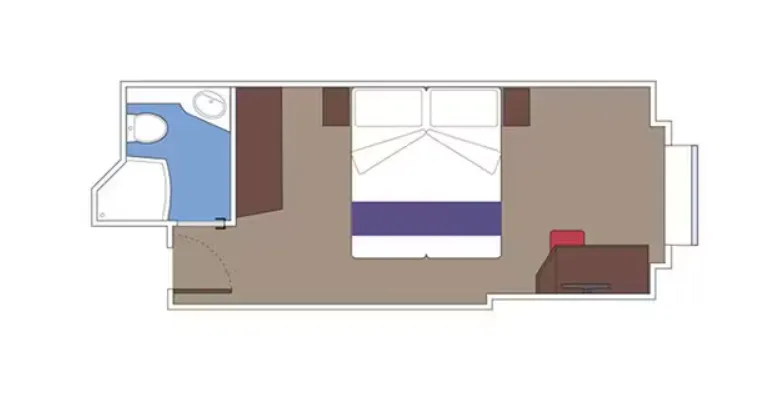
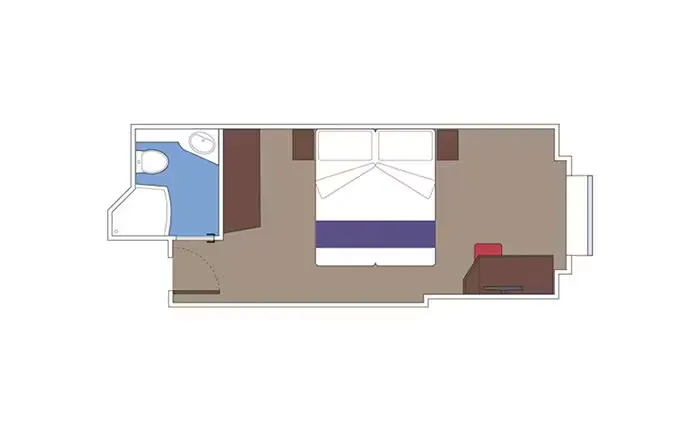
Window with sea view
Relaxing armchair
Bathroom with shower, vanity area and hairdryer
Interactive TV, telephone, safe and minibar
Wi-Fi access available
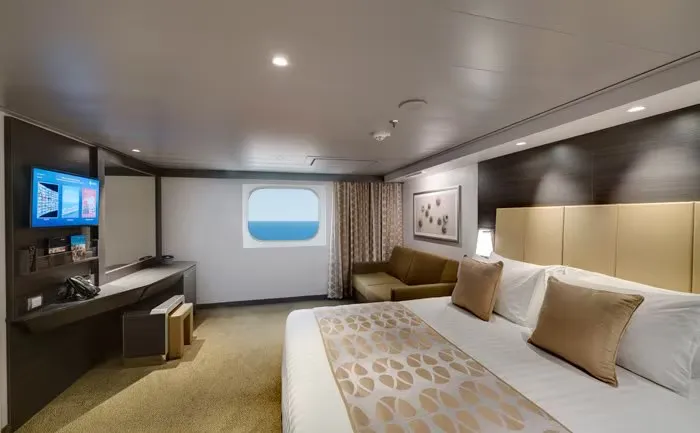
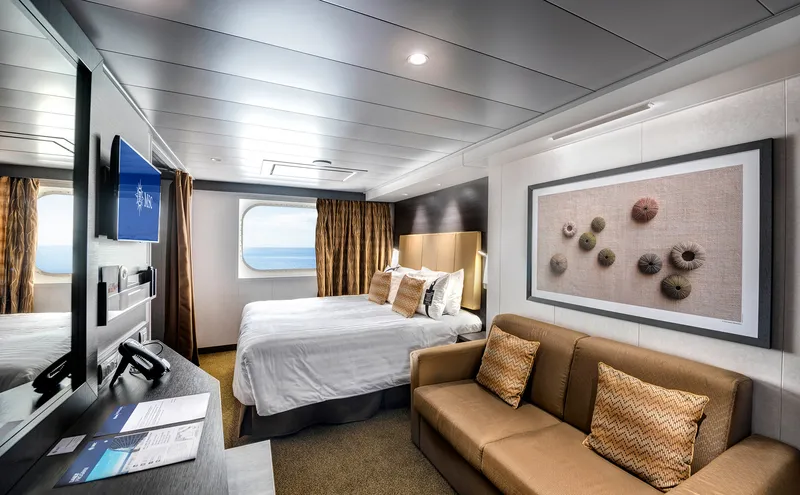
Ocean View Bella
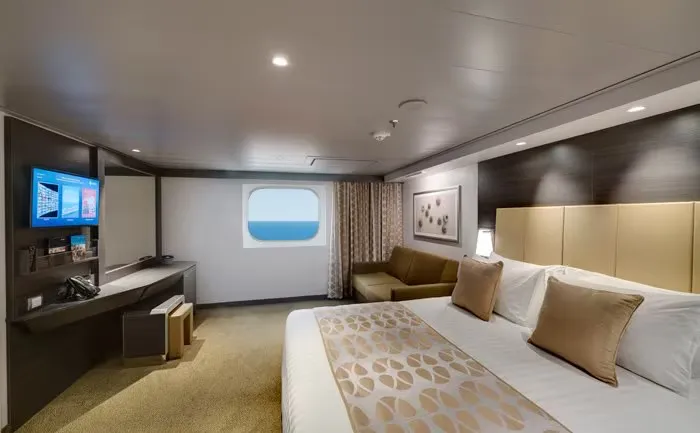
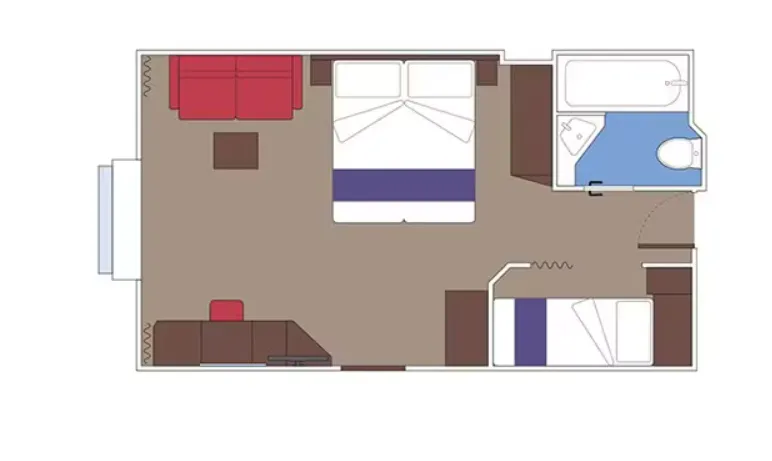
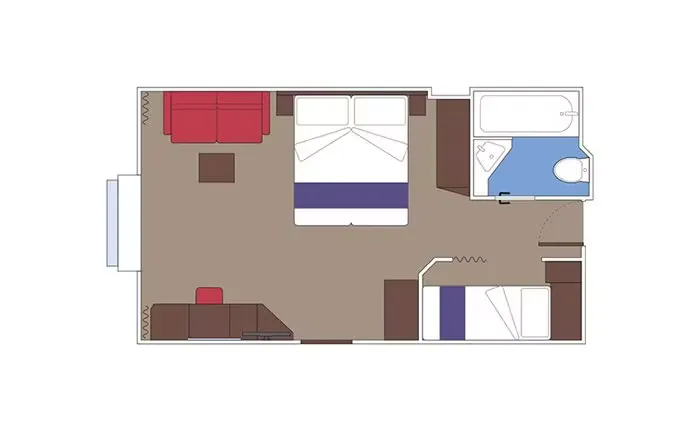
Window with sea view
Relaxing armchair
Bathroom with shower, vanity area and hairdryer
Interactive TV, telephone, safe and minibar
Wi-Fi access available
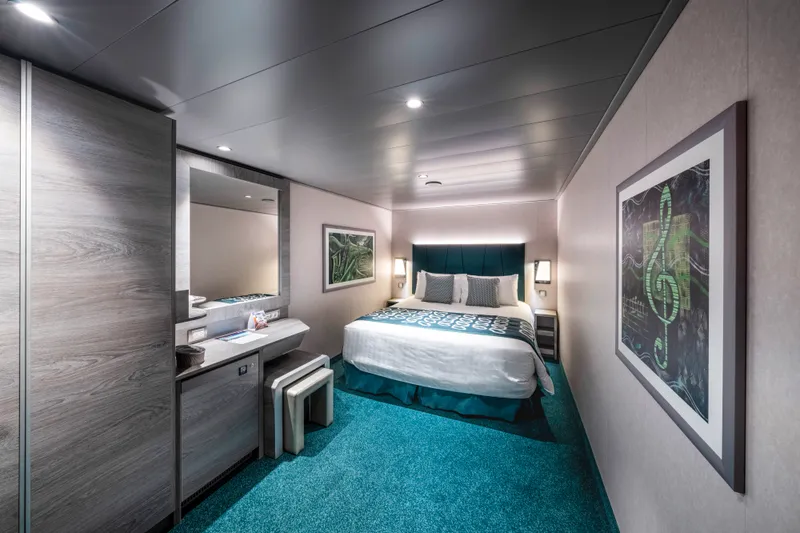
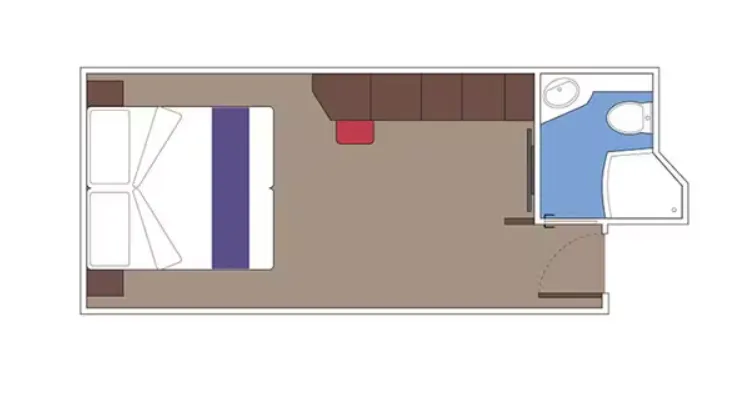
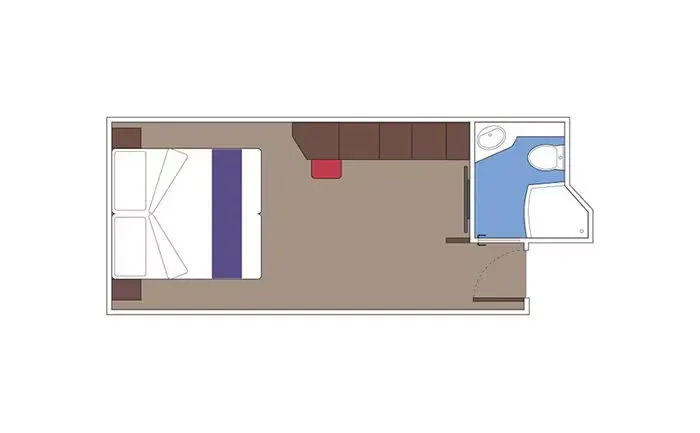
Relaxing armchair
Bathroom with shower, vanity area and hairdryer
Interactive TV, telephone, safe and minibar
Wi-Fi access available
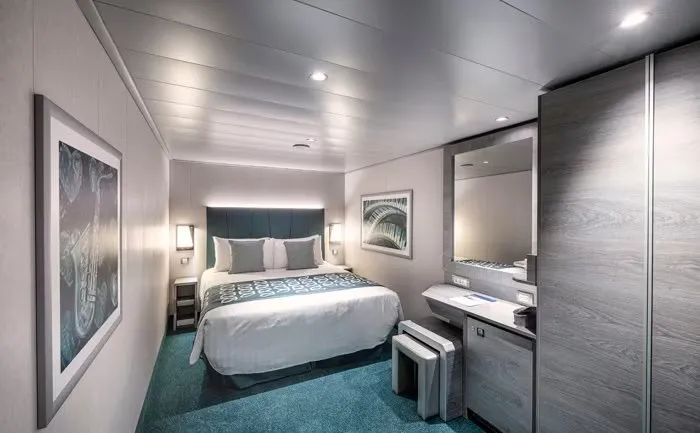
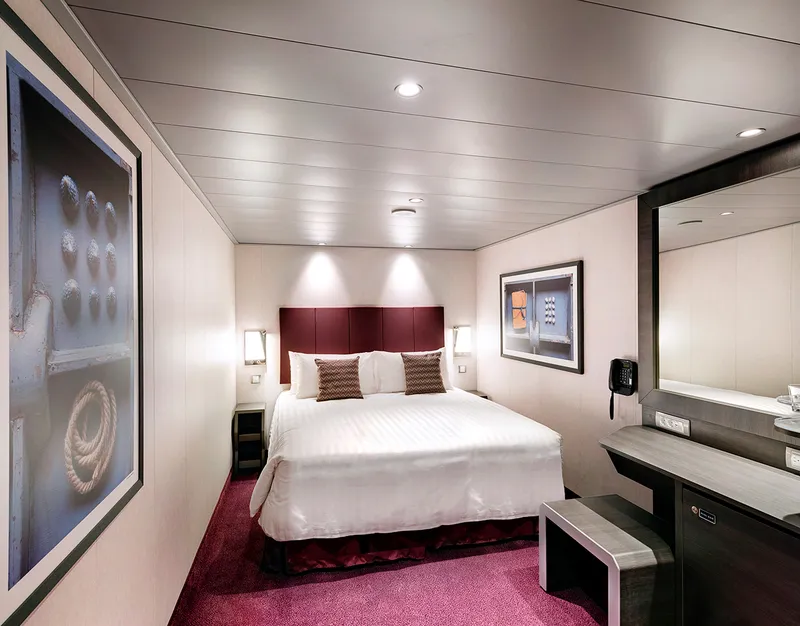
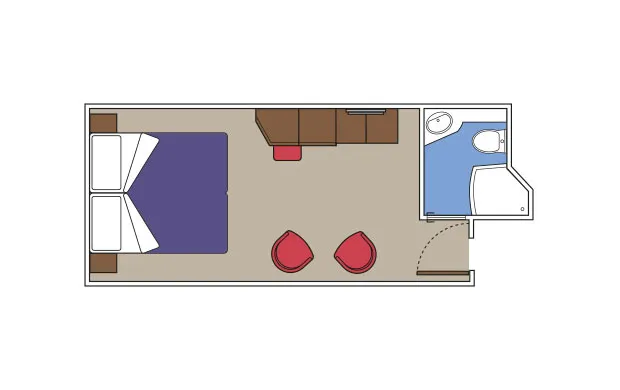
Bathroom with shower, vanity area and hairdryer
TV, telephone, safe and minibar
Wi-Fi access available
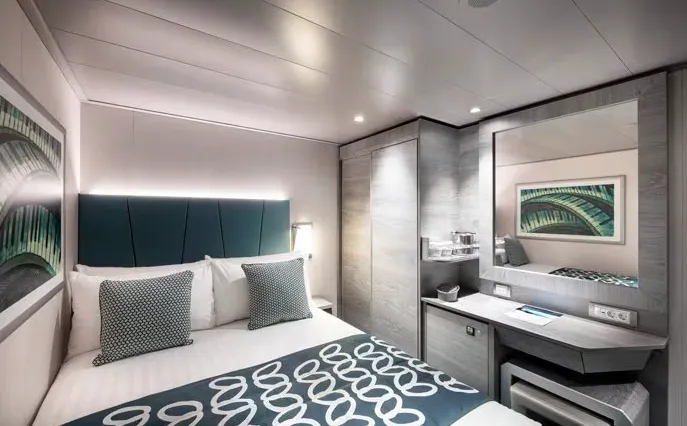
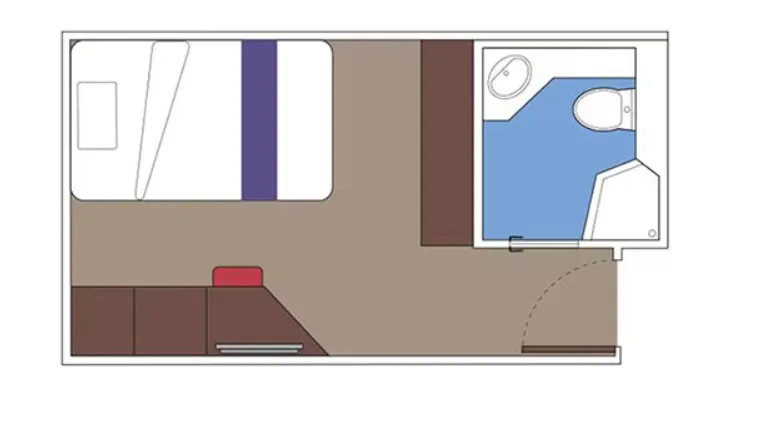
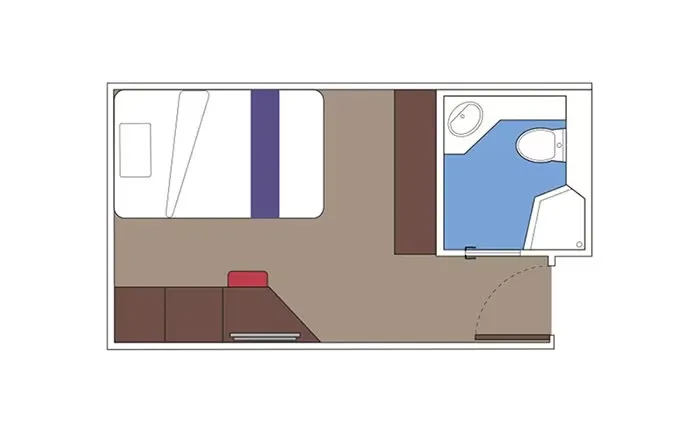
Relaxing armchair
Bathroom with shower, vanity area and hairdryer
Interactive TV, telephone, safe and minibar
Wi-Fi access available
Our cruise specialists can help you find the perfect cabin and the best available pricing.
(+886) 02-2721-7300Contact Advisor