Oceania CruisesALU271220
Barcelona to Rome
Date
December 20, 2027
Duration
14 nights
Departure Port
Barcelona · Spain
Arrival Port
Civitavecchia · Italy
Rating
Luxury
Theme
—
Date
December 20, 2027
Duration
14 nights
Departure Port
Barcelona · Spain
Arrival Port
Civitavecchia · Italy
Rating
Luxury
Theme
—

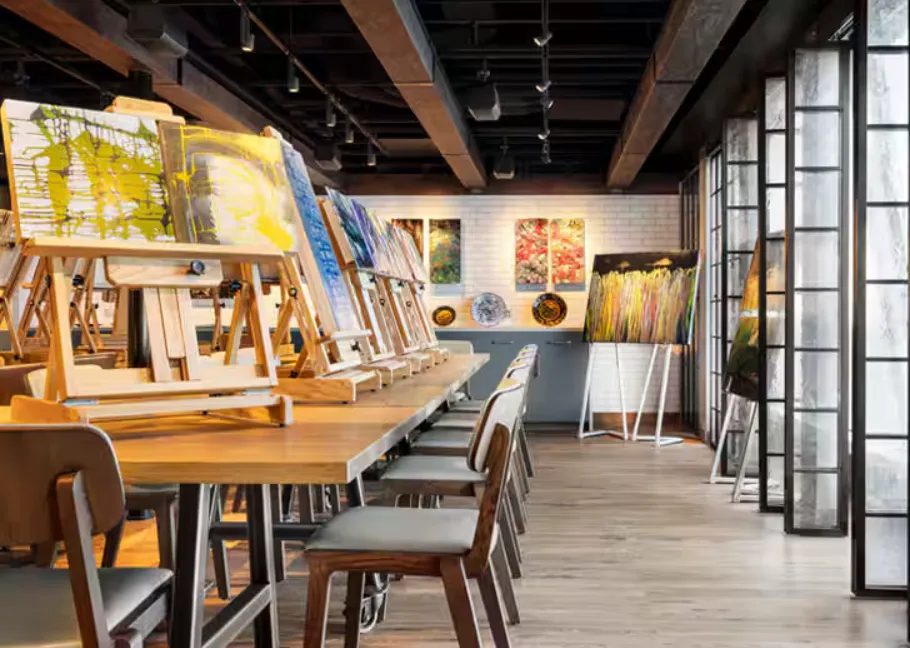
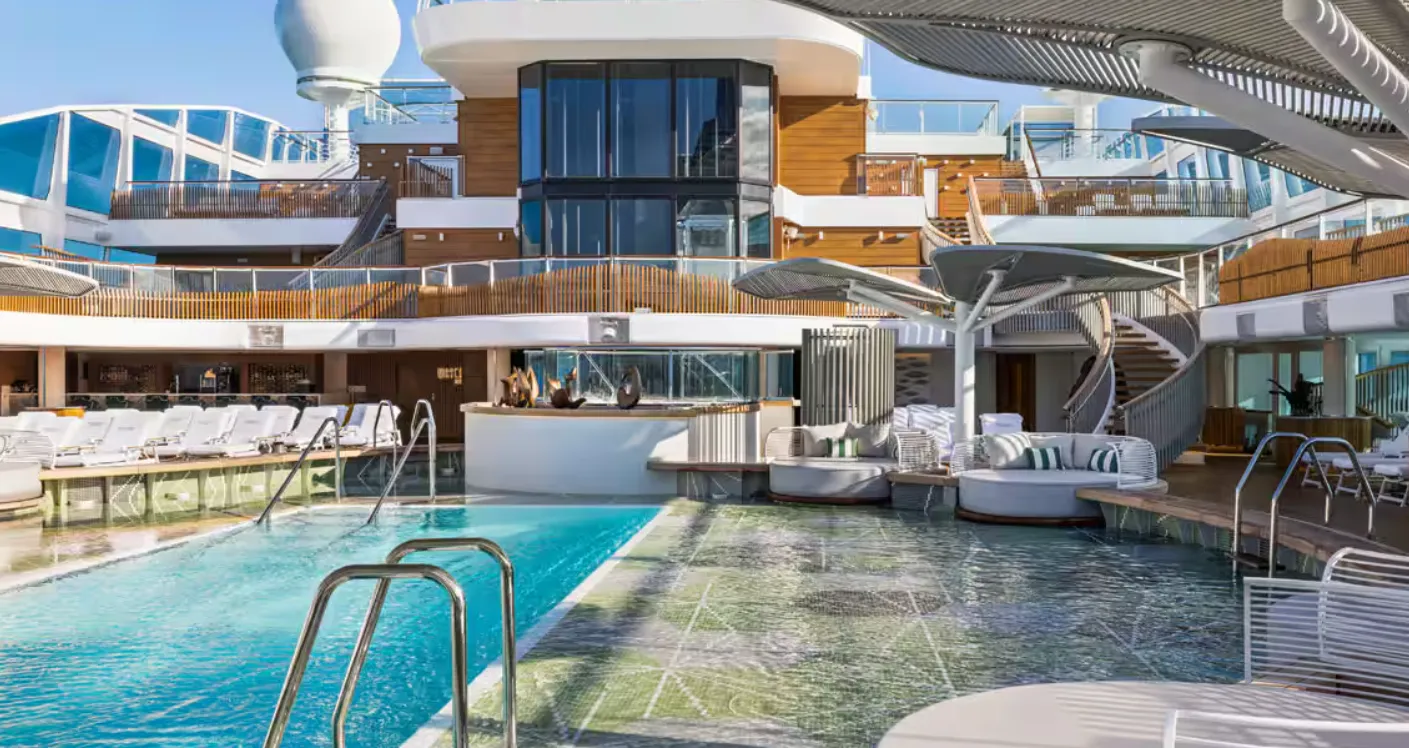
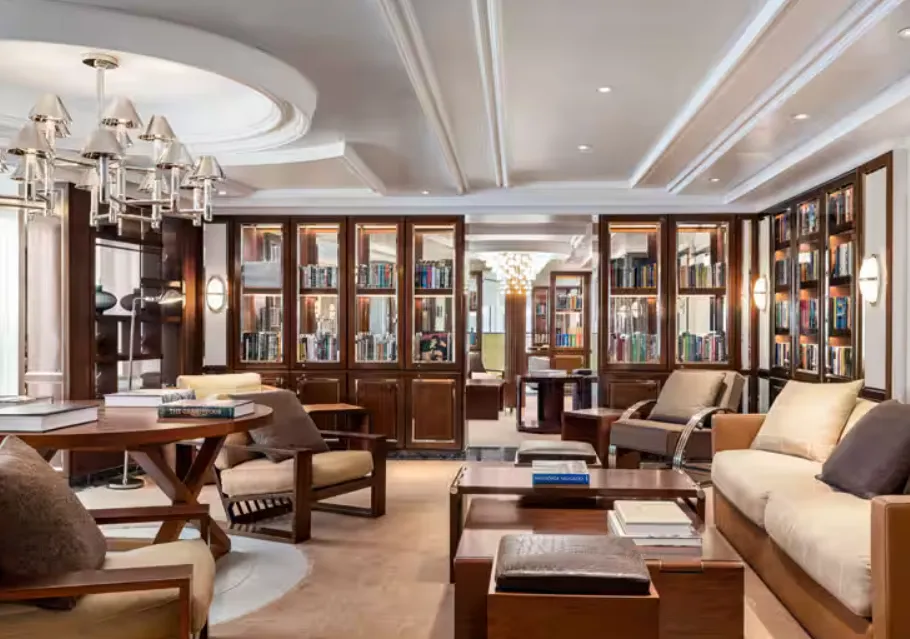
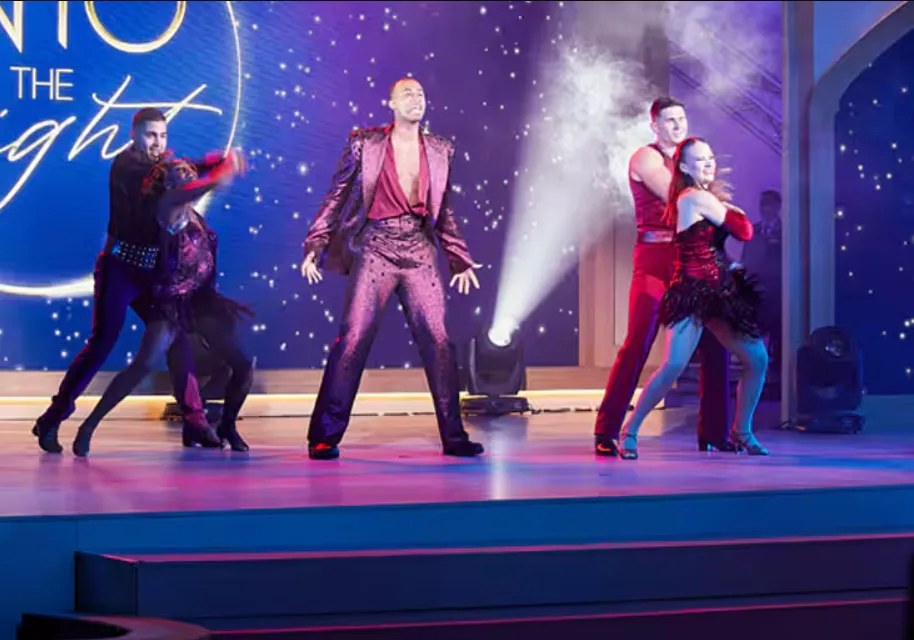
Oceania Cruises
Allura
2023
—
67,000 GT
1,200
612
800
785 m
32 m
20 knots
No
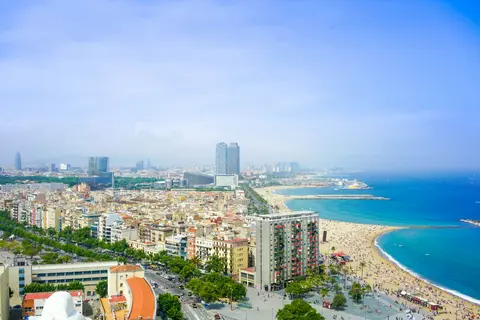
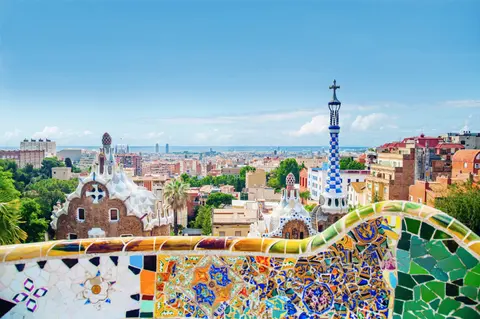
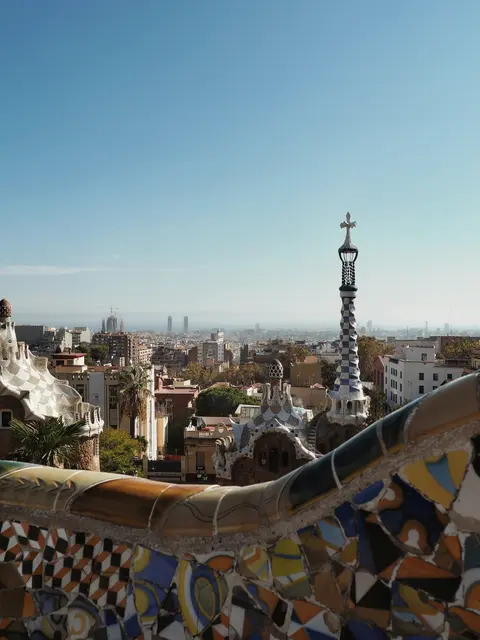
On the northeast coast of Spain, overlooking the Mediterranean, Barcelona is a vibrant port city, packed with centuries of iconic art and architecture—Gaudí and Picasso both called it home—and lined with sunny white-sand beaches. Explore the Catalan capital's tourist attractions and historic neighborhoods, Modernisme and world-renowned art museums, galleries and local crafts shops—some of which are centuries old and stock traditional Catalan wares. After you see the sights, there are lively tapas bars around every corner where you can stop for a drink, a café amb llet (Catalan for espresso with steamed milk) or a snack, no matter the hour. Green spaces for picnics, long walks and respite from the hustle and bustle are scattered throughout Barcelona's attractions: There's Gaudí's mosaic-decorated park, a neoclassical maze at the Laberint d'Horta, as well as plenty of high places (mountains, monuments and edifices) where sightseeing visitors can take in the view. A short trip from Barcelona by car or train, luxury outlets, cava wineries, a mountaintop abbey and the sandy beaches of the Mediterranean coast await.
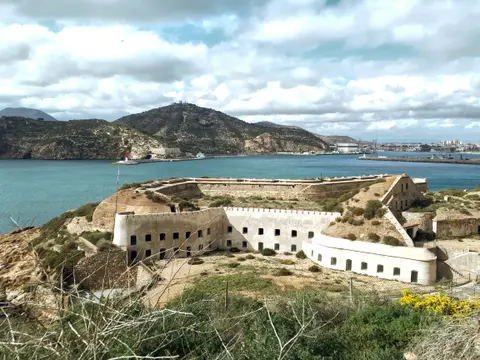
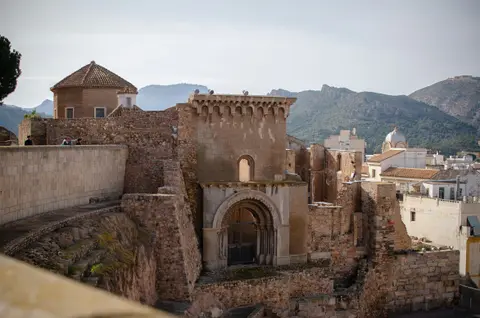
On the crossroads of mighty cultures, this Murcian port has endless ancient stories to share. A valuable natural harbour attracted many civilisations to this sun-bathed, southeasterly setting - following its foundation by the Carthaginians in 227 BC. Blending the imprints left by countless cultures on this global junction, the presence of everyone from the Vandals to the Phoenicians and Moors can be felt as you explore, walking between ruins and celebrated modernist architecture along Calle Mayor. Cartagena is crowned by the soaring Castillo de la Concepcion - rise to the stout castle aboard a panoramic lift. Inside, look through reams of archaeological treasures, or admire the rolling views down over the port and across the waters. Watch out for the electric blue peacocks who strut flamboyantly. Cartagena's emergence as a visitor destination coincided with a stunning discovery in 1988 - the bowl of a gloriously preserved Roman Theatre. Enter to sit among the grandiose ancient venue, so evocative, you can't help but imagine the historic performances that have graced its stage. Wander the breezy waterfront, looking across the narrow strait towards Africa's distant haze, and spotting gleaming warships. Cartagena's perfect harbour means it has been one of Spain's oldest strategic navy positions since the 16th century. Settle to enjoy the joys of tapas in lively bars - sampling crisped paella, squid and honeyed-aubergine. Easter's Semana Santa festivities are typically lively here, as hooded processions, lavish floats and sombre fiery displays roll through the streets.
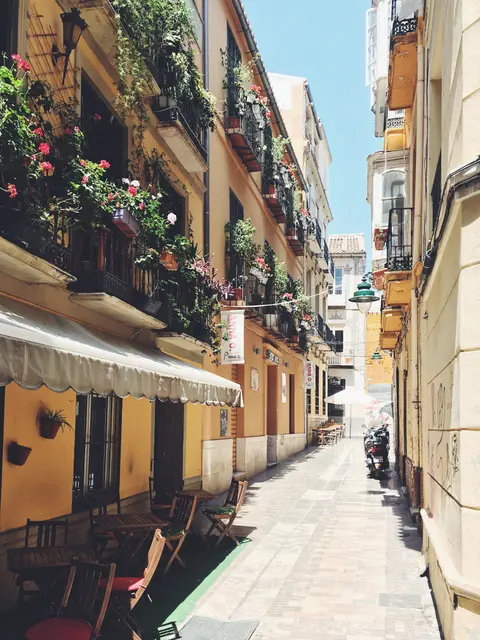
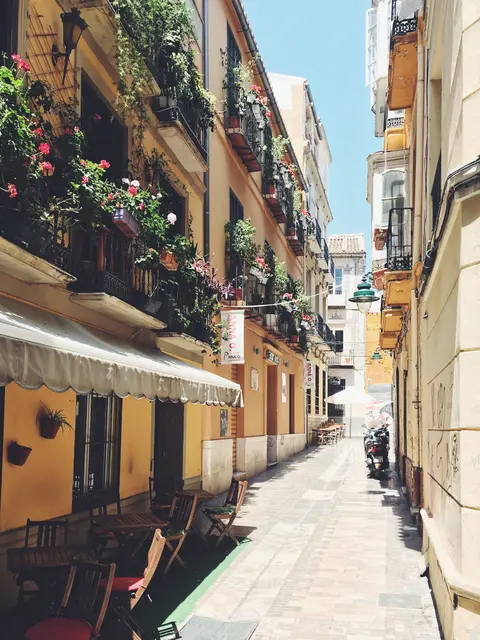
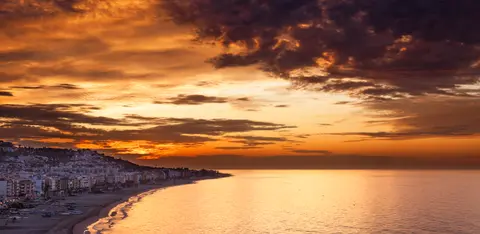
As you sail into Malaga you will notice what an idyllic setting the city enjoys on the famous Costa del Sol. To the east of this provincial capital, the coast along the region of La Axarqua is scattered with villages, farmland and sleepy fishing hamlets - the epitome of traditional rural Spain. To the west stretches a continuous city where the razzmatazz and bustle creates a colourful contrast that is easily recognisable as the Costa del Sol. Surrounding the region, the Penibéetica Mountains provide an attractive backdrop overlooking the lower terraced slopes which yield olives and almonds. This spectacular mountain chain shelters the province from cold northerly winds, giving it a reputation as a therapeutic and exotic place in which to escape from cold northern climes. Malaga is also the gateway to many of Andalusia's enchanting historic villages, towns and cities.
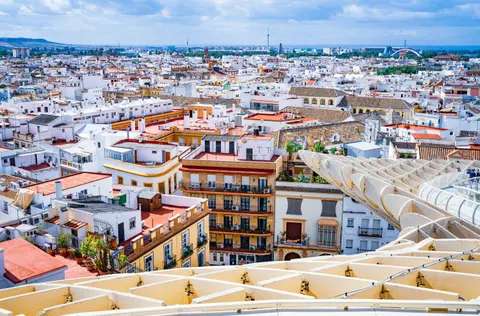
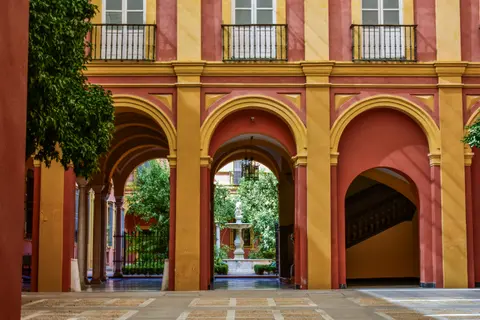
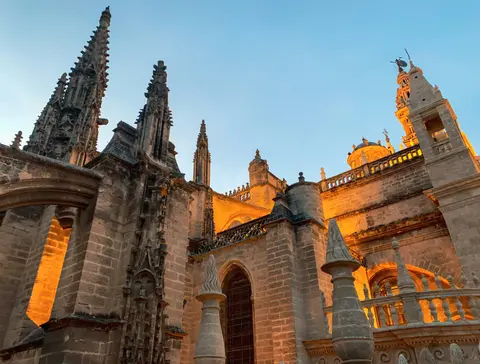
Hanging off the southwestern edge of Spain, Cádiz is one of Andalucía’s regional capitals and a place bursting with personality. Europe’s oldest continually inhabited city, with a history stretching back 3,000 years, has fallen on hard times in recent years, but a combination of pride, good humor and stoicism keeps it on an even keel. The famous Carnival, one of Spain’s most important in the genre, is a thrilling fiesta into which Cádiz pours all its energy and ingenuity. The city’s fond nickname, la tacita de plata ("little silver cup"), alludes to its curious geography—it juts out on a long peninsula into a sheltered bay. Old town Cádiz is a warren of cobbled streets where the houses, painted white or dusty ochre, have the weather-beaten look of a place subjected to centuries of wind and salt. This ancient city has one good example of everything that matters: a great food market, a theater (the Teatro Falla, a grand Art Nouveau Moorish gem), a gorgeous cathedral, impressive fortifications and a beach—the picturesque and famous La Caleta.
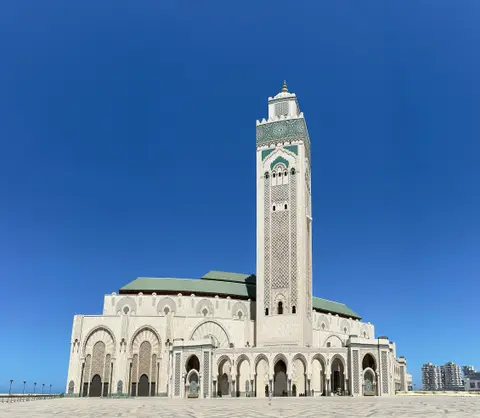
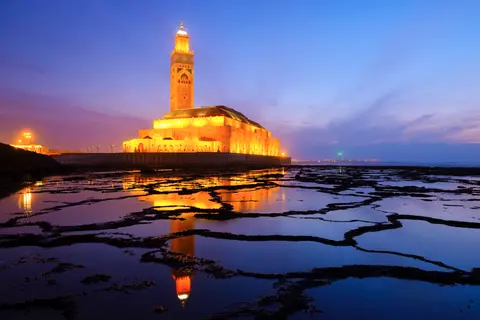
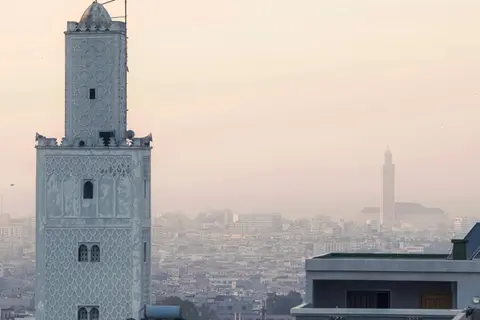
Immortal lines from the silver screen may have imprinted a warm, fuzzy visage of old Casablanca into our minds, but this thriving city is a curious example of what Morocco’s modernity looks like. Glistening white art deco buildings line the wide pathways that sweep through Casablanca, as the sea sparkles like a thin mirage on the horizon. There’s an aura of creativity amid Casablanca’s culture and chaos, helping to make the city one of Morocco’s most curious and compelling. The Hassan II Mosque took a staggering seven years and 10,000 artists to craft its legacy as the country's largest mosque, and to bring the world's tallest minaret to sky-high reality. A vision of cool to the touch marble, cavernous prayer rooms and intricate inlays, the mosque is extraordinary in scale and ambition. Retractable roofs let the sun flood in, while dizzying glass floors dazzle, and the blue Atlantic waves surge below your feet. After that humbling visit, stroll along La Corniche - where surfers glide across rough and tumble waves, and chic cafes offer front-row seats for sweet peppermint teas with a side of people-watching. Casablanca is a diner's city - boulevards laced with French-fusion restaurants, buzzy beachfront joints, and raw seafood bars provide gem-like offerings fresh from the boat. Those seeking a slice of that golden-age Hollywood romance can wander through the medina, with its unabashed ramshackle feel, and maze of alleyways punctuated with busy barber shops and butchers.
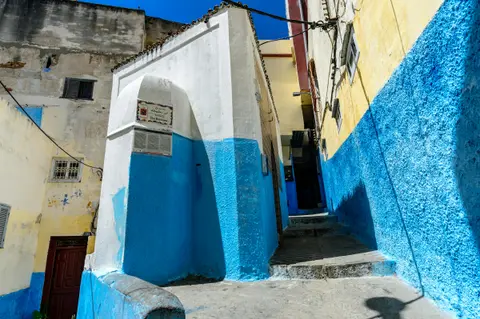
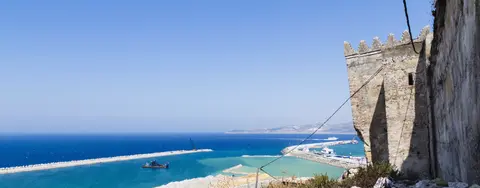
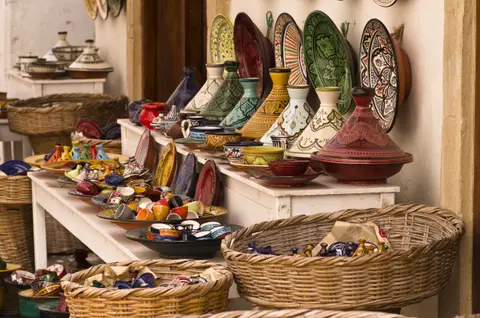
Set on the Maghreb coast, Tangier is Africa’s outstretched hand to Europe. With its bustling markets and lively waterfront, this city on Morroco's north is an energetic and invigorating place and an exciting immersion into an incredible continent. The location, on the highly strategic narrowing of the Strait of Gibraltar, made Tangier a vital Phoenician trading town - and the resulting city is an invigorating mesh of cultures and curiosities. View less Part of the fun of Tangier is the well-rehearsed dance, as you dodge good-natured hawkers, and this is certainly a place to stroll with confidence and purpose. Delve into the mayhem of the walled Medina of Tangier for a rush of stimulation, as bartering and bantering echoes along the tight alleys. Crowded, noisy and busy, you’ll be sold to with a smile as you wander between stands of colourful spices, dried fruits and fabrics in this authentic Moroccan marketplace. Refresh and escape the sun with a fresh orange juice - or a sip of mint tea. Close to the city, you can find the Caves of Hercules, a coastal hollow that opens at both ends. The Phoenicians cut a window in the shape of the African continent, which reveals views of the Atlantic's waves, and legend says Hercules rested within its confines. From Tangier, you can also venture inland to the Rif Mountains, where gorgeous Chefchaouen - a village of bright blue alleyways - waits. Punctuated by blooming flowers, the entire town is a beautiful, moulded artwork of colour, spilling down the mountain like a waterfall.
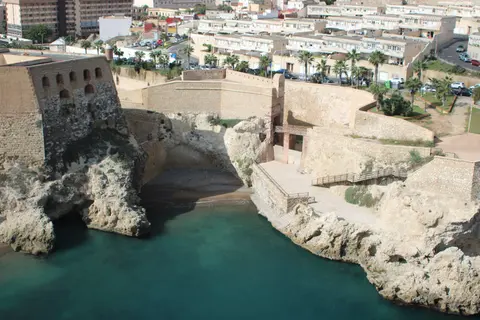
The autonomous city of Melilla is a Spanish enclave located on the Mediterranean Rif coast of North Africa, bordering Morocco. Its chequered past embraced periods of Phoenician, Punic, Roman and Byzantine rule before it was conquered by Spain in 1497. The latter part of the 19th century and the first quarter of the 20th century saw hostilities between Rif berbers and the Spanish, with the latter finally reinstating their control in 1927. The city was used by General Franco as one of the staging points for the rebellion of 1936. As part of the Spanish protectorate, Melilla developed the architectural style of 'Modernisme', the Catalan version of Art Nouveau, and boasts the second most important concentration of Modernist works in Spain, after Barcelona.
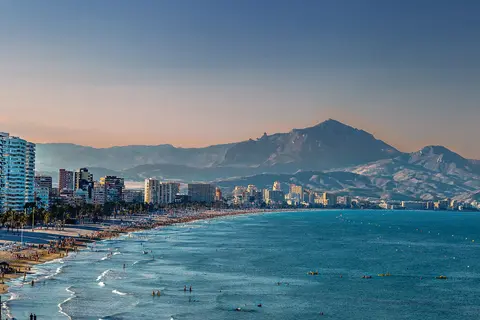
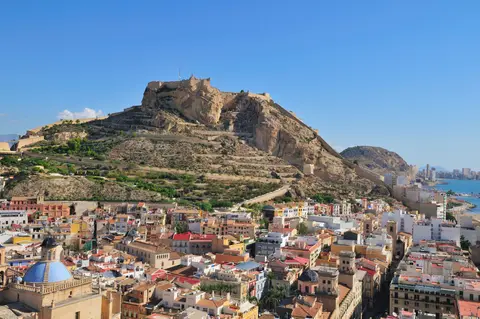
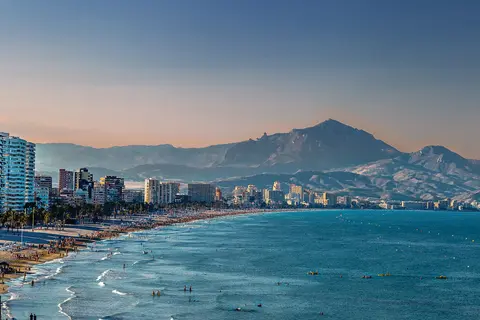
Fresh sea breezes, mountain backdrops and vibrant locals have made this magical city a must-see for both international tourists and residents of Spain alike. It's easy to slip into the local rhythm. Spend your day exploring everything from the Old Town and Santa Bárbara Castle to the trendiest of Spanish stores. Promenade down the marble Explanada de España, an iconic and bustling boulevard dotted with palm trees. Enjoy a proper Spanish lunch that spans several courses and hours, prepared by some of the best chefs in the country. Take advantage of the proximity to the sea to dine on the freshest seafood, or try one of Alicante's many traditional rice dishes. And don’t forget to sample the outstanding regional wines, which are also very tasty souvenirs. Even just a day here will open your eyes to the natural beauty and subtle charms that make proud and elegant Alicante a gem of the Costa Blanca.
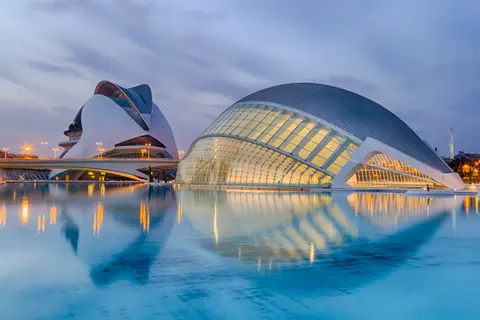
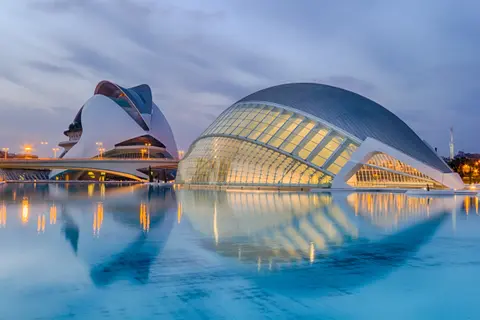
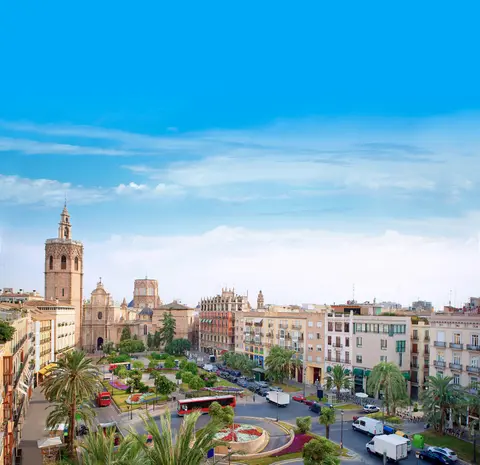
Packed with plenty to see, do and explore, there is a never a dull day in this charming Spanish city. Wander through the beautiful city centre admiring the array of beautiful historic monuments; visit the myriad of museums and art galleries such as the Institute of Modern Art and Museum of Fine Arts or simply head to one of the city’s beaches to enjoy the Mediterranean sunshine and sample local cuisine in the many restaurants that line the promenades. The Old Town district - like similar districts in other major European cities - is where you will find some of the oldest, most beautiful and most interesting sites in the city, including the UNESCO-Listed Lonja de la Seda, 13th century Santo Domingo Convent and Torres de Serranos - a 14th century gothic gateway that’s considered the oldest in Europe.
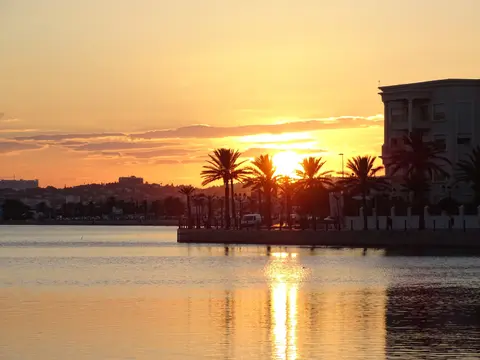
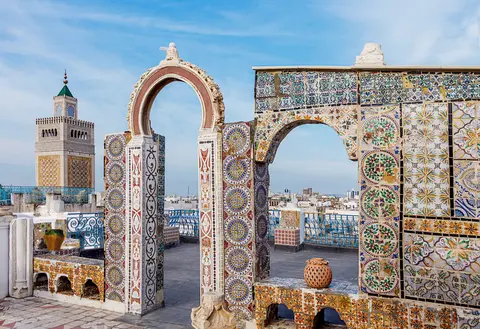
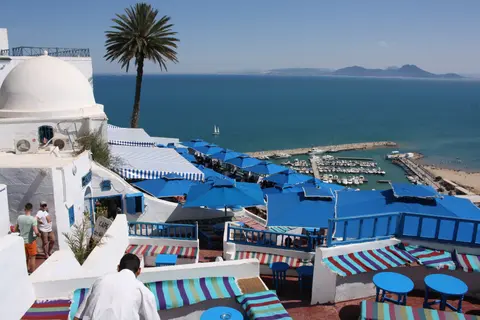
Until the time of the French protectorate, the medina was very much the center of things. Then, under the French influence, the ville nouvelle (new city) emerged with its major banks, department stores and administrative services. The main focus of ville nouvelle is the wide, tree-lined Avenue Habib Bourguiba. At its western end, this major thoroughfare becomes the Avenue de France, terminating in the Place de la Victoire and the entrance to the medina. Although today the medina has lost some of its importance, it is still a place where traditions can be readily observed and where visitors can get a feel for the local way of life. It features many of the city's points of interest and countless shops.
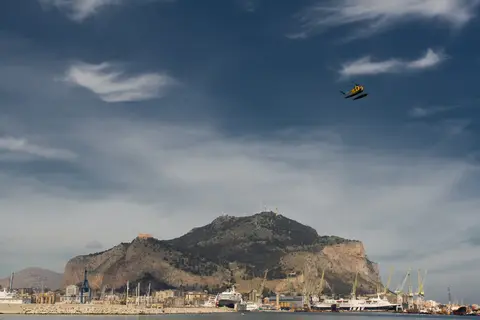
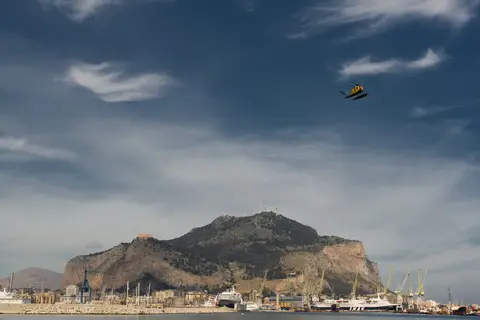
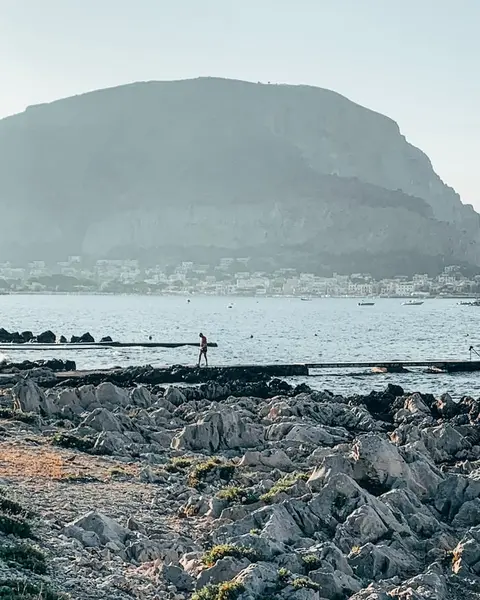
The capital of Sicily is situated on a crescent-shaped bay on the island's north coast. Once the intellectual capital of southern Europe, Palermo has always been at the crossroads of civilization. Due to its favourable location, Sicily's most interesting city has attracted almost every people and culture touching the Mediterranean world. Its most unique characteristic is a harmonious blend of Arab-Norman cultures mixed with Byzantine and Jewish elements, which created some unforgettable and resplendent works of art. Phoenician traders first colonized Palermo in the 6th-century BC, but it was the Carthaginians, who built the important fortress here that caught the covetous eye of the Romans. After the first Punic War, the Romans took control of the city in the 3rd-century BC. Following several invasions by the Vandals, Sicily was settled by Arabs, who made the country an emirate and Palermo a showpiece capital that rivalled in splendour both Cordoba and Cairo. The city became a magical place of palaces and mosques, minarets and palm trees. In the 11th-century Palermo was conquered by the Norman ruler, Roger de Hauteville. During the Normans' hundred-year occupation, the city experienced a remarkable period of enlightenment and a flourishing of the arts. Counting a population of more than 300,000, Palermo became the centre of Norman rule and one of the most important trading centres between East and West. Eventually, Palermo was incorporated into the “Kingdom of the Two Sicilies” under the Swabian ruler Frederick II, known as the Holy Roman Emperor. After the bloody Sicilian Vespers uprising in 1282, the Spanish took control and brought the Inquisition to Palermo. Some historians believe that the nature of the Inquisition helped foster the protective secret societies that eventually evolved into the Mafia. Today, visitors can still experience the legacy of Palermo's rich past. Great Arab-Norman buildings include the Cappella Palatina, La Martorana, San Giovanni degli Eremiti and, a few miles outside the city, the Cathedral of Monreale. Palermo's bustling streets and animated markets give the town an Oriental feel. The Quattro Canti, or Four Corners, is the monumental crossroads laid out in 1608-1620 at the central intersection of the four longest and straightest streets of the city. North of Piazza Castelnuovo lie the avenues of the new city. Most sights are scattered along three major streets: Corso Vittorio Emanuele, Via Maqueda and Via Roma. A vigorous metropolis with a strong historical profile, Palermo is packed with interesting sights, which make it an enriching and enjoyable place to explore.
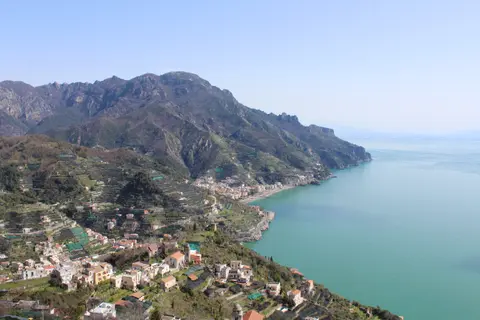
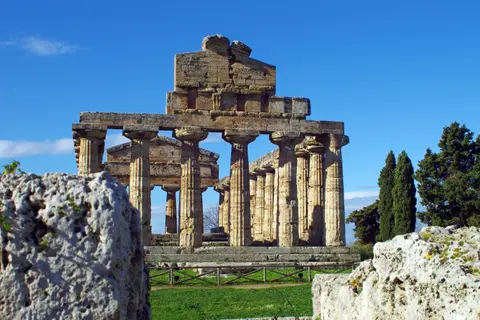
Situated between two of Italy’s most beautiful and best-known destinations, the Amalfi Coast and Cilento National Park, the lively city of Salerno is – perhaps unsurprisingly, but not justifiably – overlooked by many visitors to, and explorers of, the gorgeous Campania region. However, the loss of the ‘over lookers’ is certainly the gain of those who do take the time to visit and explore Salerno; there are centuries of rich history – influenced by the Romans, Goths and Byzantines – to delve into here, landmarks, monuments and museums and aplenty awaiting discovery, and authentic local life to immerse yourself in. Whether you choose to see the medieval churches and capture the gritty elegance of the neighbourhood trattorias; sample traditional cuisine at the finest restaurants, or people watch at one of the cafés over a proper Italian espresso; or take a stroll along the picturesque, tree-lined promenade, Salerno is sure to get under your skin.
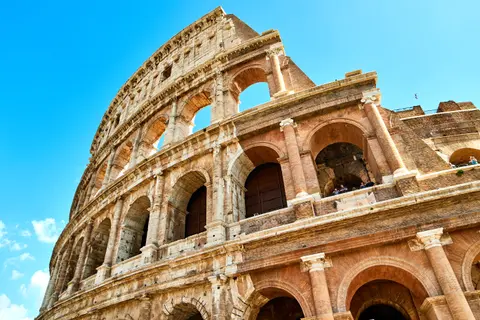
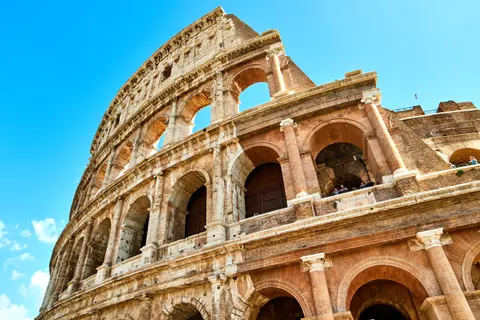
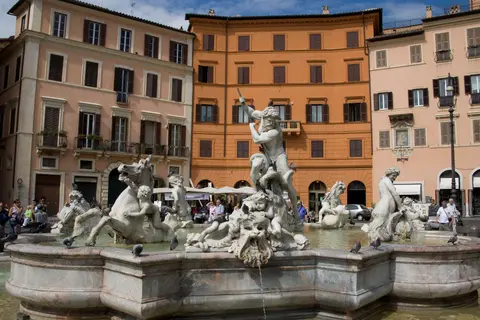
Italy's vibrant capital lives in the present, but no other city on earth evokes its past so powerfully. For over 2,500 years, emperors, popes, artists, and common citizens have left their mark here. Archaeological remains from ancient Rome, art-stuffed churches, and the treasures of Vatican City vie for your attention, but Rome is also a wonderful place to practice the Italian-perfected il dolce far niente, the sweet art of idleness. Your most memorable experiences may include sitting at a caffè in the Campo de' Fiori or strolling in a beguiling piazza.
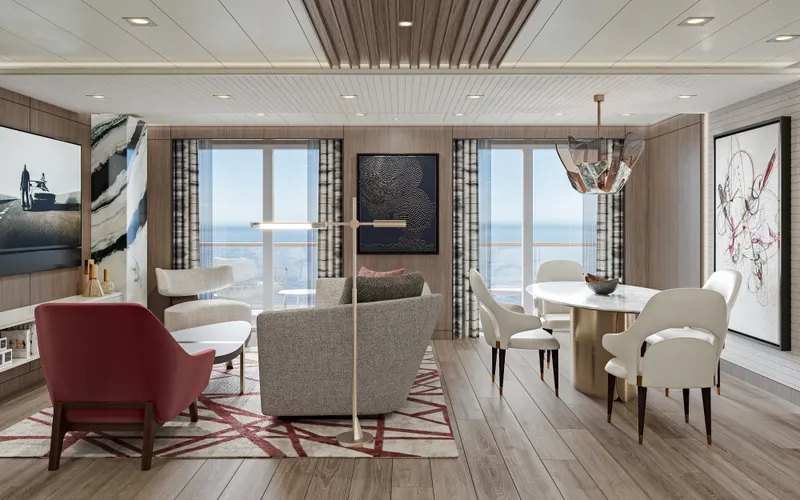
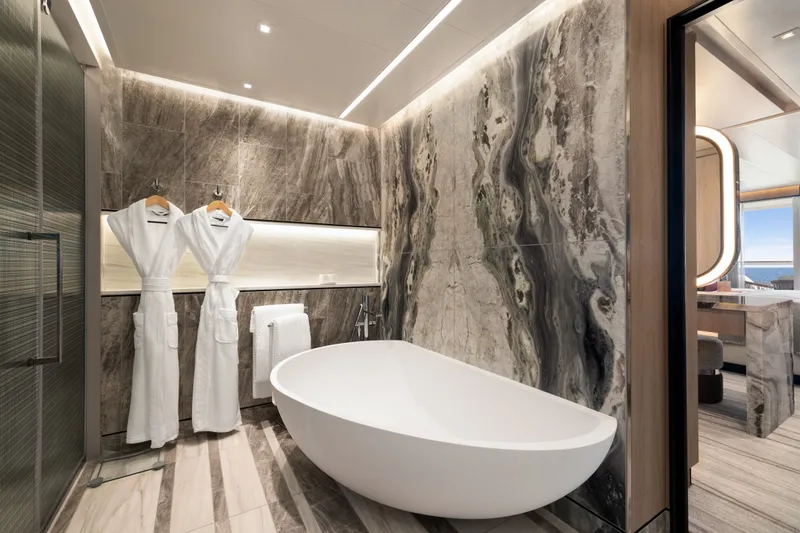
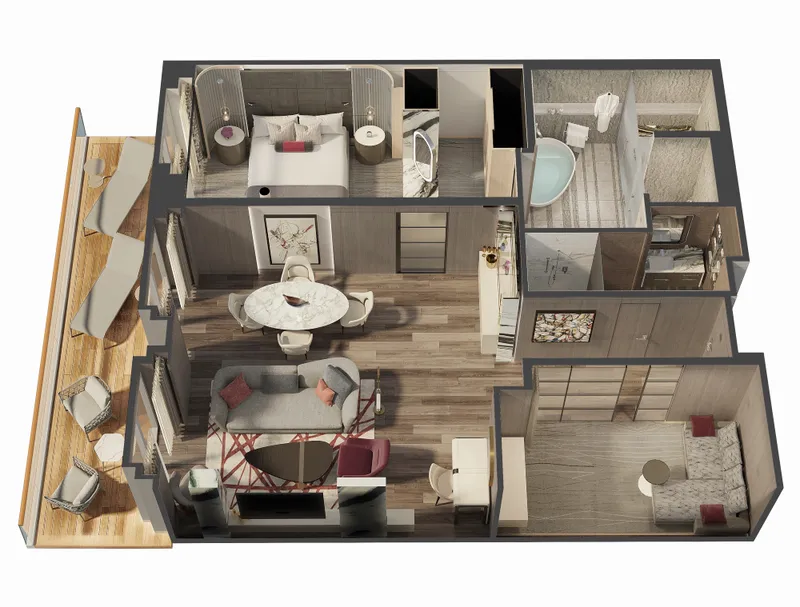
Complimentary laundry service - up to 3 bags per stateroom (some restrictions apply)
Priority Noon ship embarkation with priority luggage delivery
Exclusive card-only access to private Executive Lounge staffed by a dedicated Concierge featuring complimentary soft drinks, coffees and snacks throughout the day
24-hour Butler service
Complimentary in-suite bar setup with 6 full-size bottles of premium spirits and wines from our suite beverage menu
Complimentary welcome bottle of Champagne
Fresh fruit basket replenished daily
Priority online specialty restaurant reservations
Unlimited access to Aquamar Spa Terrace
iPad upon request for your enjoyment on board
Optional private in-suite embarkation day lunch from noon to 2 pm in Owner’s Suites
Customized entertainment system
Bulgari gift set and variety of amenities
Choice of daily printed newspaper
Complimentary Oceania Cruises logo tote bag and personalized stationery
Cashmere lap blankets
Choice of pillow from a luxurious selection
Complimentary shoe shine service
Complimentary pressing of garments upon embarkation (certain limitations apply)
Smoking in suites, staterooms and on verandas is strictly prohibited
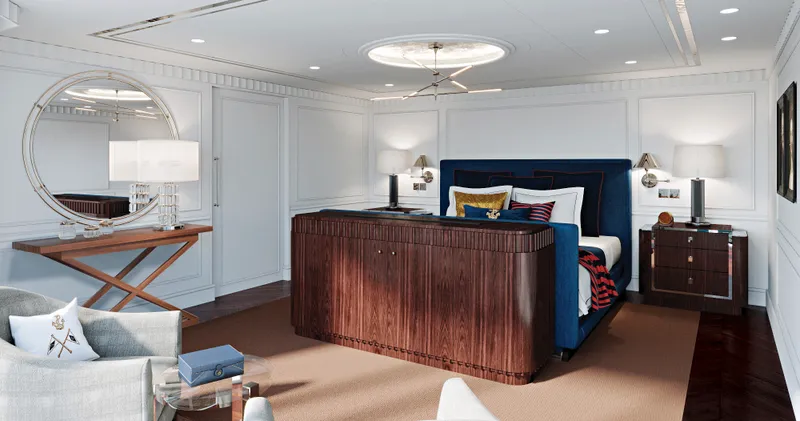
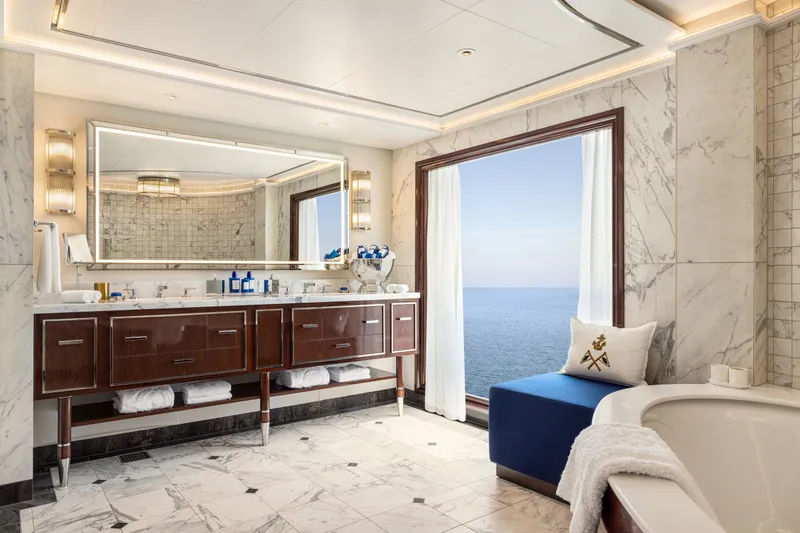
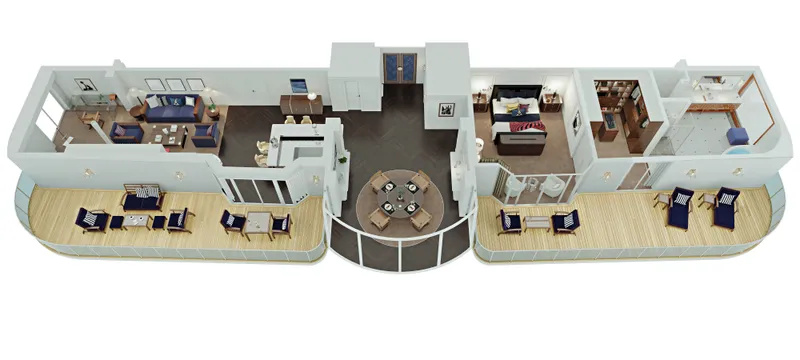
Complimentary laundry service - up to 3 bags per stateroom (some restrictions apply)
Priority Noon ship embarkation with priority luggage delivery
Exclusive card-only access to private Executive Lounge staffed by a dedicated Concierge featuring complimentary soft drinks, coffees and snacks throughout the day
24-hour Butler service
Complimentary in-suite bar setup with 6 full-size bottles of premium spirits and wines from our suite beverage menu
Complimentary welcome bottle of Champagne
Fresh fruit basket replenished daily
Priority online specialty restaurant reservations
Unlimited access to Aquamar Spa Terrace
iPad upon request for your enjoyment on board
Optional private in-suite embarkation day lunch from noon to 2 pm in Owner’s Suites
Customized entertainment system
Bulgari gift set and variety of amenities
Choice of daily printed newspaper
Complimentary Oceania Cruises logo tote bag and personalized stationery
Cashmere lap blankets
Choice of pillow from a luxurious selection
Complimentary shoe shine service
Complimentary pressing of garments upon embarkation (certain limitations apply)
Smoking in suites, staterooms and on verandas is strictly prohibited
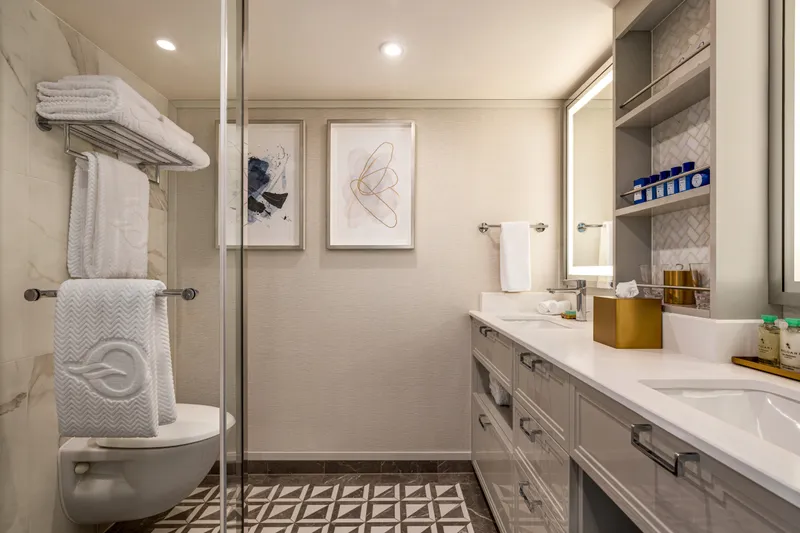
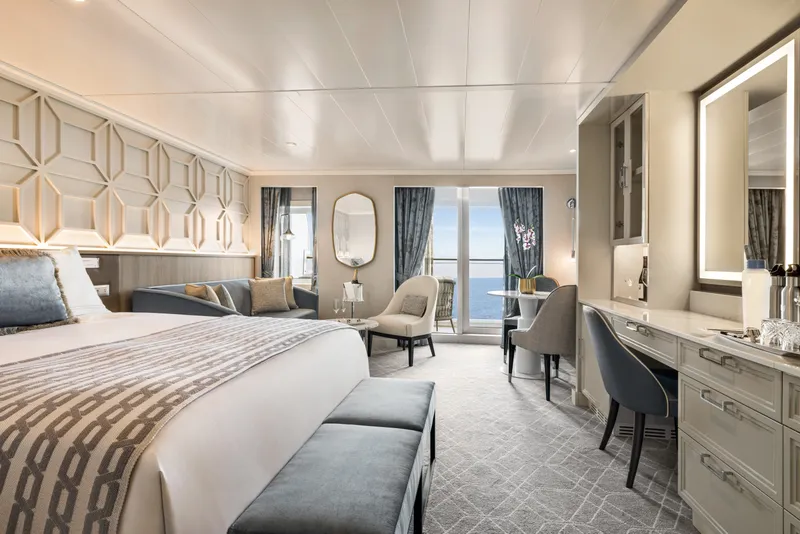
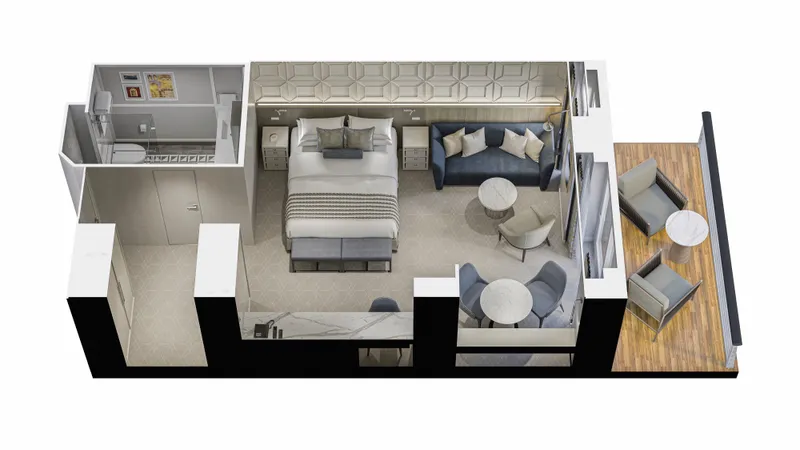
In addition to Stateroom Amenities:
Complimentary laundry service – up to 3 bags per stateroom (certain limitations apply)
Priority 11 am ship embarkation with priority luggage delivery
Exclusive card-only access to private Executive Lounge staffed by a dedicated Concierge featuring complimentary soft drinks, coffees and snacks throughout the day
24-hour Butler service
Complimentary welcome bottle of Champagne
Priority online specialty restaurant reservations
Unlimited access to Aquamar Spa Terrace
iPad upon request for your enjoyment on board
Cashmere lap blankets
Complimentary shoeshine service
Complimentary pressing of garments upon embarkation (certain limitations apply)
Smoking in suites, staterooms and on verandas is strictly prohibited
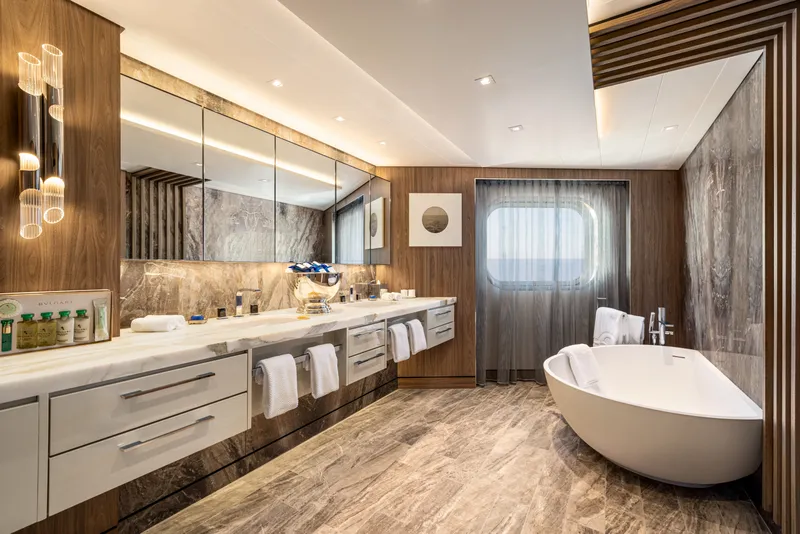
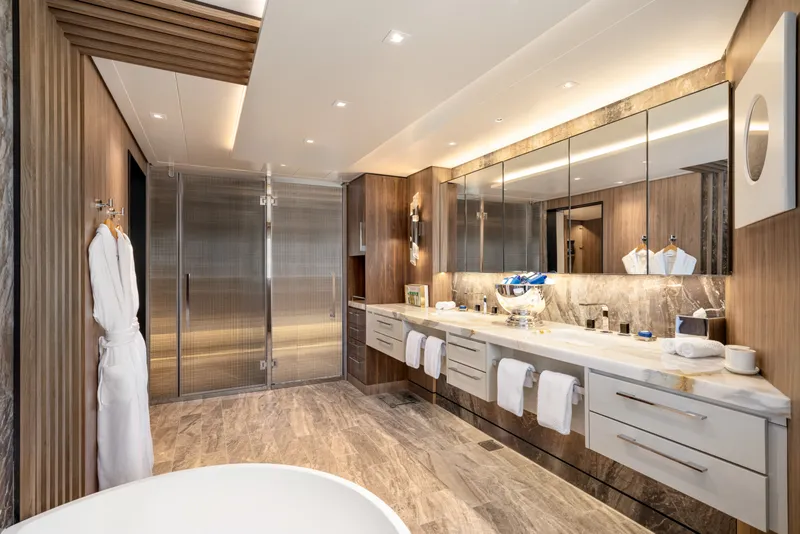
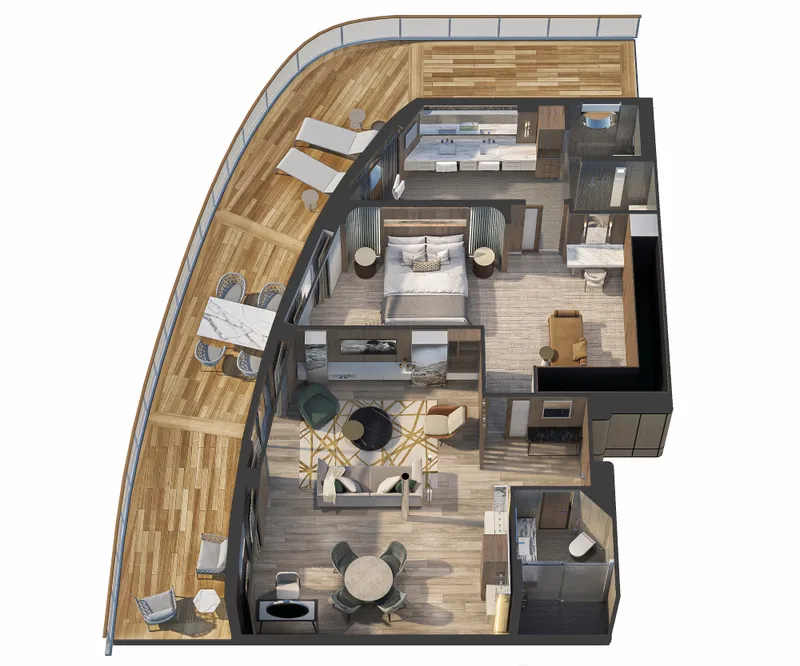
Complimentary laundry service - up to 3 bags per stateroom (some restrictions apply)
Priority Noon ship embarkation with priority luggage delivery
Exclusive card-only access to private Executive Lounge staffed by a dedicated Concierge featuring complimentary soft drinks, coffees and snacks throughout the day
24-hour Butler service
Complimentary in-suite bar setup with 6 full-size bottles of premium spirits and wines from our suite beverage menu
Complimentary welcome bottle of Champagne
Fresh fruit basket replenished daily
Priority online specialty restaurant reservations
Unlimited access to Aquamar Spa Terrace
iPad upon request for your enjoyment on board
Optional private in-suite embarkation day lunch from noon to 2 pm in Owner’s Suites
Customized entertainment system
Bulgari gift set and variety of amenities
Choice of daily printed newspaper
Complimentary Oceania Cruises logo tote bag and personalized stationery
Cashmere lap blankets
Choice of pillow from a luxurious selection
Complimentary shoe shine service
Complimentary pressing of garments upon embarkation (certain limitations apply)
Smoking in suites, staterooms and on verandas is strictly prohibited
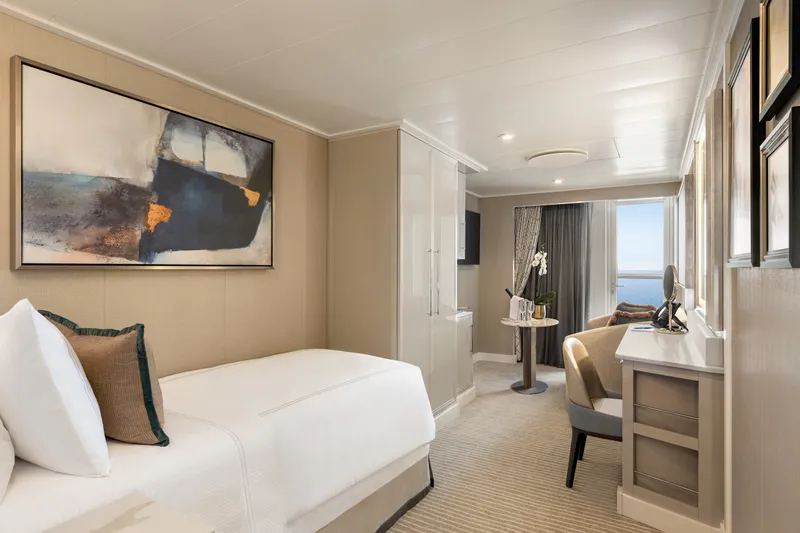
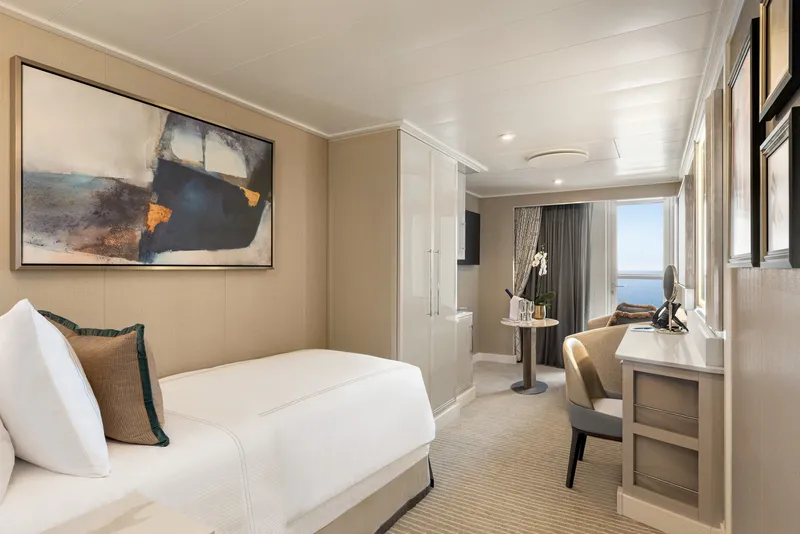
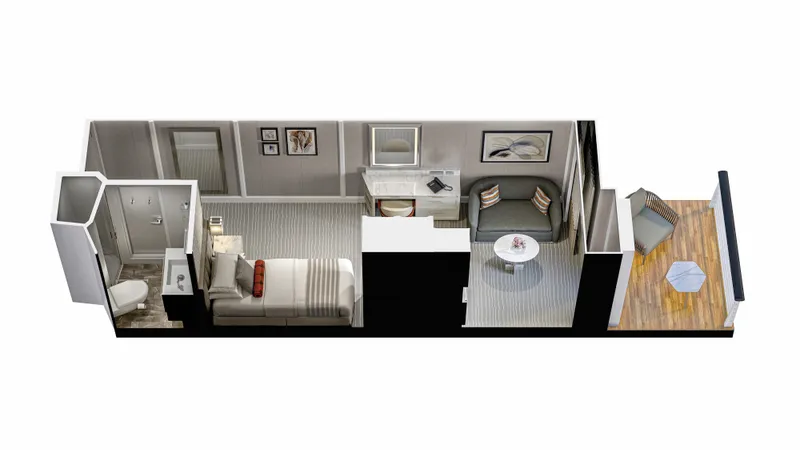
Concierge Level Solo Veranda
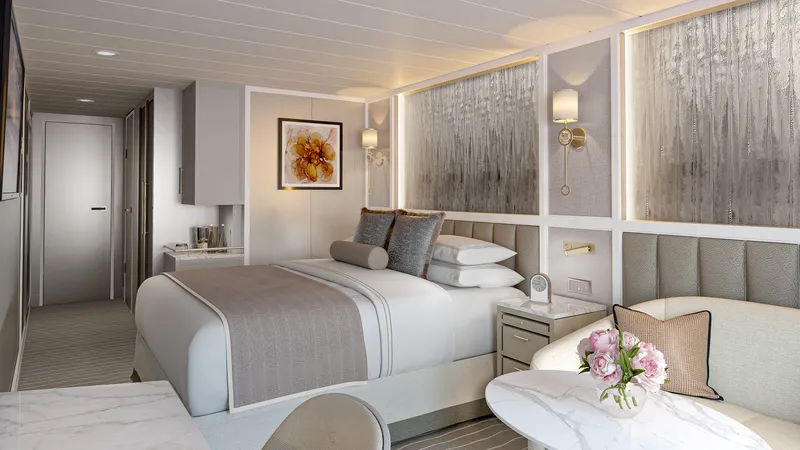
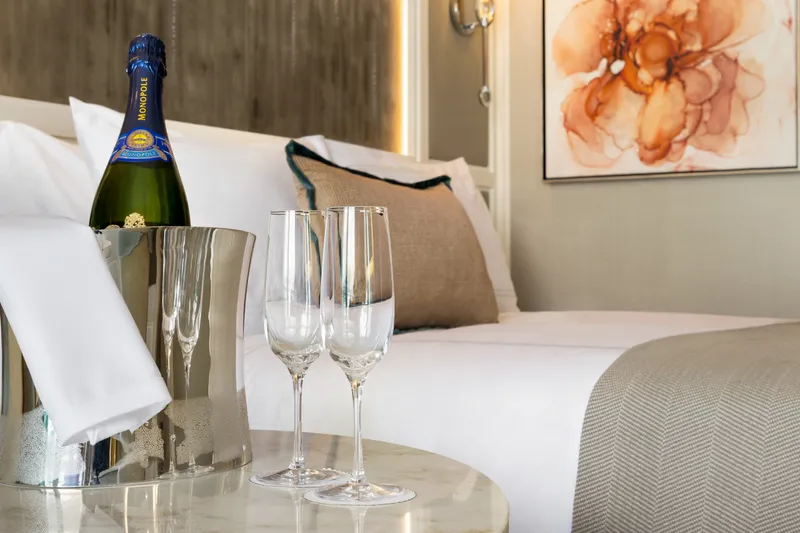
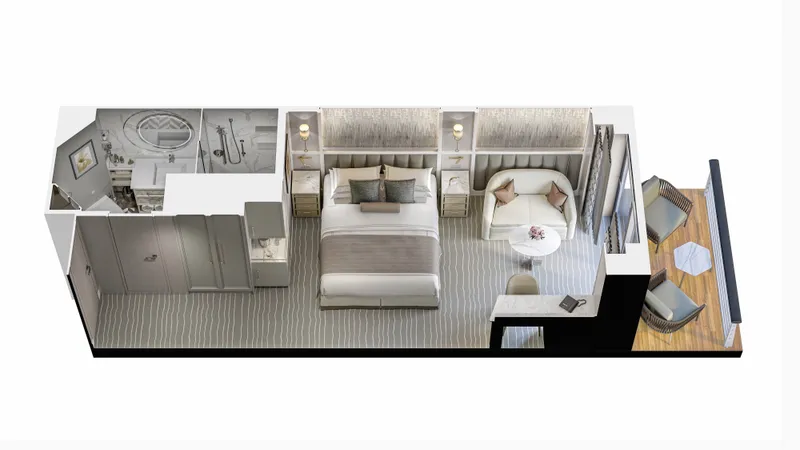
In addition to Stateroom Amenities:
Expanded lunch and dinner room service menu from The Grand Dining Room
Complimentary laundry service – up to 3 bags per stateroom (certain limitations apply)
Priority noon ship embarkation
Exclusive card-only access to private Concierge Lounge staffed by a dedicated Concierge featuring complimentary soft drinks, coffees and snacks throughout the day
Complimentary welcome bottle of Champagne
Priority online specialty restaurant reservations
Unlimited access to the Aquamar Spa Terrace
iPad upon request for your enjoyment on board (certain limitations apply)
Complimentary Oceania Cruises logo tote bag
Cashmere lap blankets, perfect for relaxing on your veranda
Complimentary pressing of garmets upon embarkation (certain limitations apply)
Complimentary shoeshine service
Smoking in suites, staterooms and on verandas is strictly prohibited
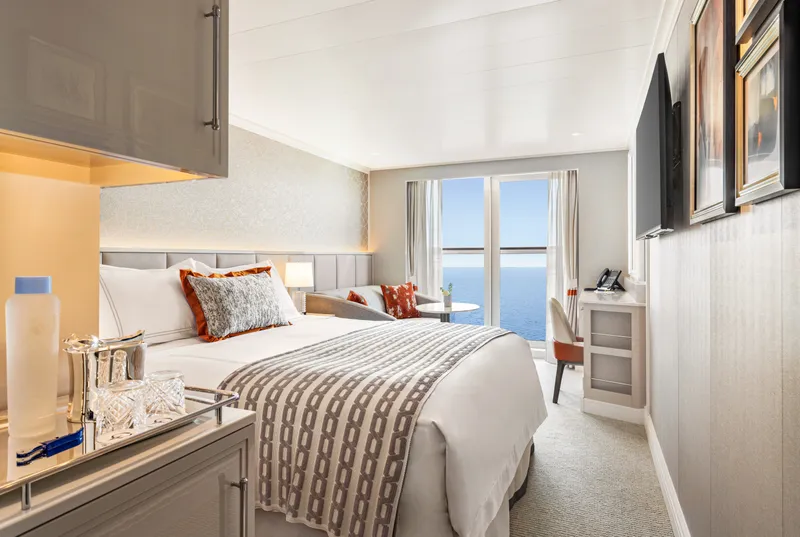
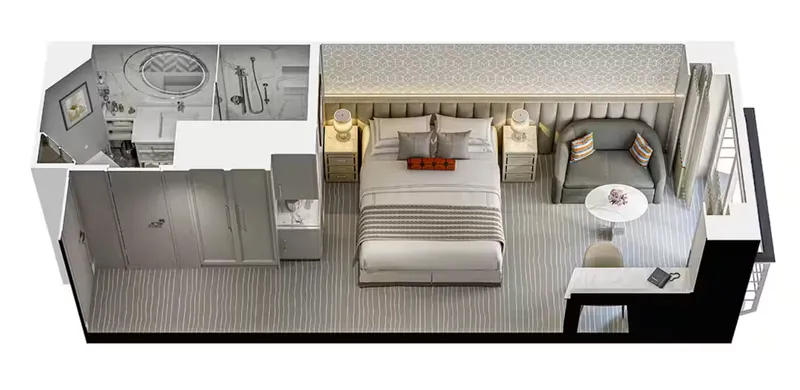
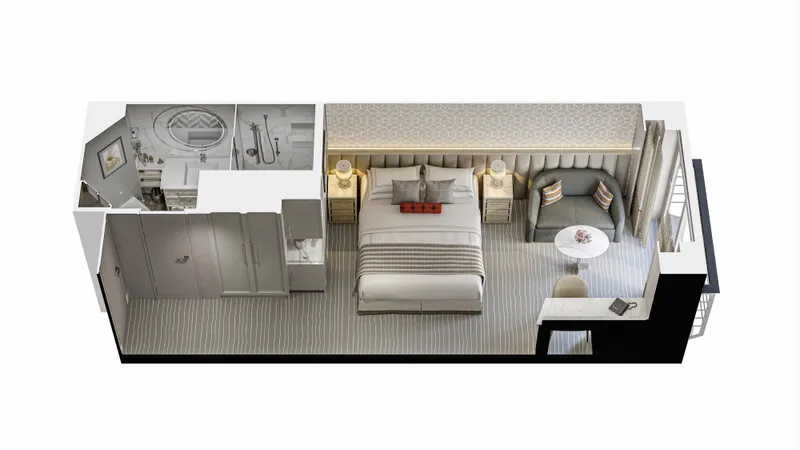
Tranquility Bed, an Oceania Cruises exclusive, with 1,000-thread-count linens
Complimentary soft drinks replenished daily in your refrigerated mini-bar
Complimentary still & sparkling Vero Water
Private teak veranda
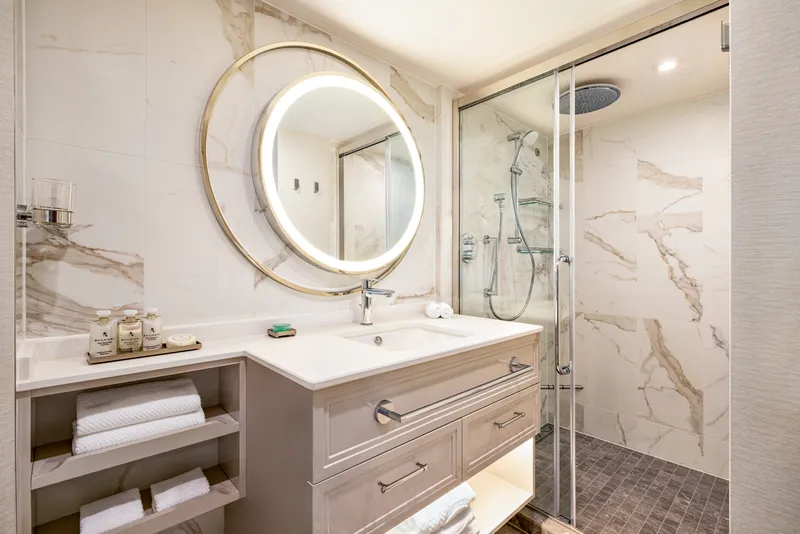
Bulgari amenities
Room service menu 24 hours a day
Twice-daily maid service
Oversized rainforest shower
Belgian chocolates with turndown service
Interactive television system with on-demand movies, weather and more
Wireless Internet access and cellular service
Writing desk and stationery
Plush cotton towels
Thick cotton robes and slippers
Handheld hair dryer
Security safe
Smoking in suites, staterooms and on verandas is strictly prohibited
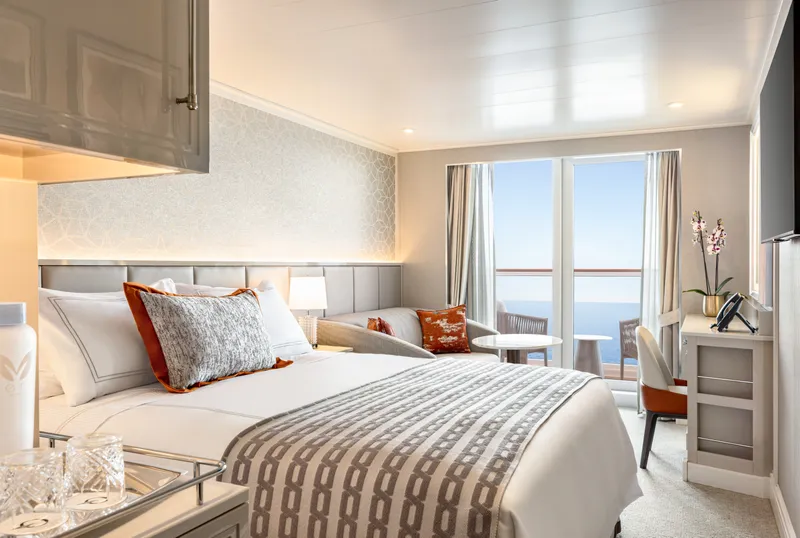
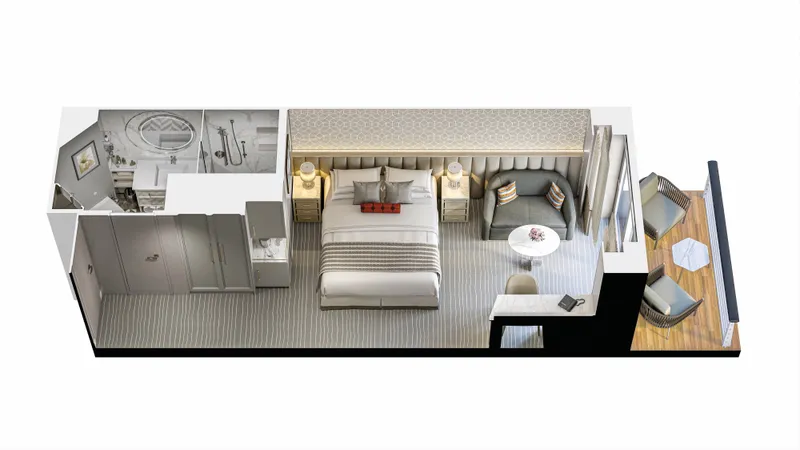
Tranquility Bed, an Oceania Cruises exclusive, with 1,000-thread-count linens
Complimentary soft drinks replenished daily in your refrigerated mini-bar
Complimentary still & sparkling Vero Water
Private teak veranda
Bulgari amenities
Room service menu 24 hours a day
Twice-daily maid service
Oversized rainforest shower
Belgian chocolates with turndown service
Interactive television system with on-demand movies, weather and more
Wireless Internet access and cellular service
Writing desk and stationery
Plush cotton towels
Thick cotton robes and slippers
Handheld hair dryer
Security safe
Smoking in suites, staterooms and on verandas is strictly prohibited
Our cruise specialists can help you find the perfect cabin and the best available pricing.
(+886) 02-2721-7300Contact Advisor