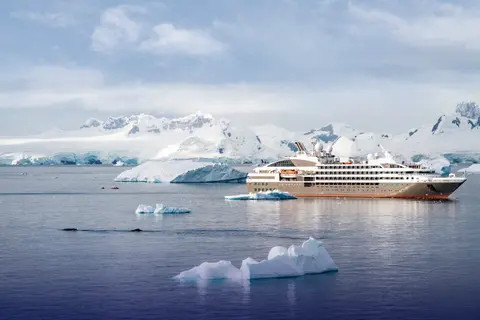
PonantBO150827
Bordeaux to Lisbon
Date
2027-08-15
Duration
9 nights
Departure Port
Bordeaux
France
Arrival Port
Lisbon
Portugal
Rating
Luxury
Theme
—
Date
2027-08-15
Duration
9 nights
Departure Port
Bordeaux
France
Arrival Port
Lisbon
Portugal
Rating
Luxury
Theme
—
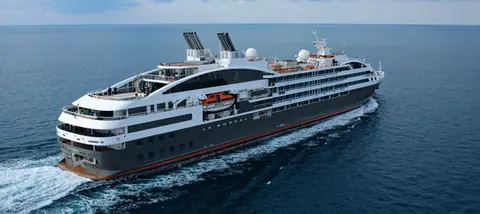
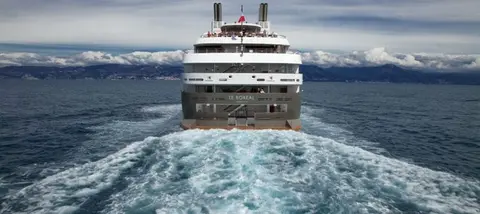
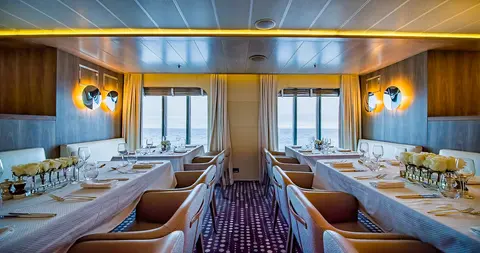
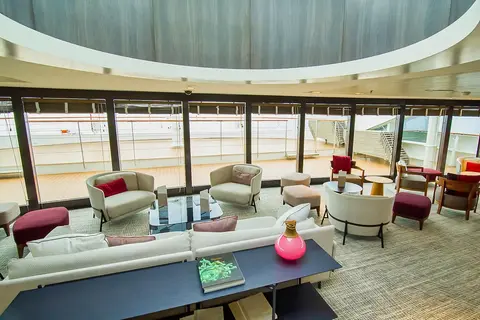
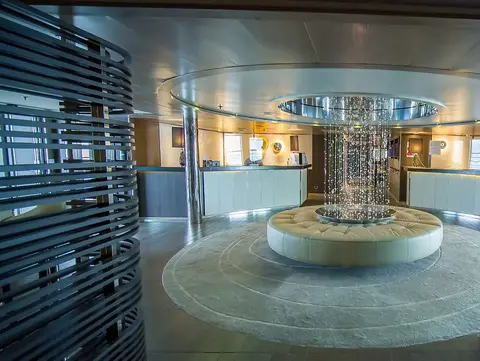
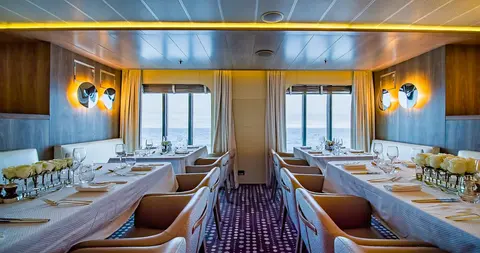
Ponant
2010
—
10,944 GT
264
132
139
466 m
18 m
14 knots
No
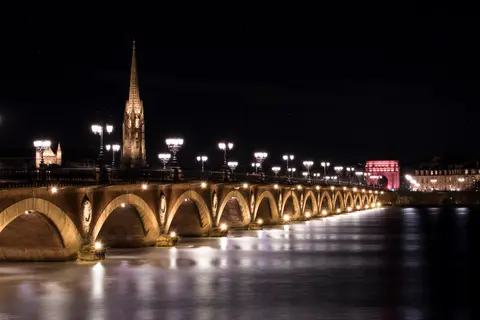
Bordeaux, France's premier port city, is renowned for its historical significance, stunning architecture, and world-class wine. Must-do experiences include savoring local delicacies at Marché des Quais and exploring the breathtaking art installations at Place de la Bourse. The best season to visit is during the late spring and early autumn, when the weather is pleasant and the vineyards are in full bloom.

Saint Jean De Luz, France is a distinctive port city where deep cultural heritage meets authentic local atmosphere, featured on itineraries by Hapag-Lloyd Cruises. Must-do experiences include walking the historic center to experience the layered architectural heritage, and seeking out the regional culinary traditions at a locally favored establishment away from the port area. The optimal time to visit is May through September, when mild temperatures and long days favor unhurried exploration.
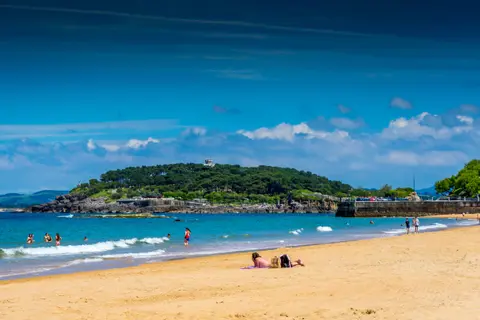
Santander, capital of Spain’s green Cantabrian coast, pairs elegant Atlantic beaches and the luminous Centro Botín arts center with proximity to Altamira’s prehistoric cave art and the Picos de Europa mountains. Must-dos include the Renzo Piano–designed Centro Botín, tasting Santoña anchovies and rabas at the harbor, and visiting Altamira’s replica cave. Visit June through September for the warmest weather on this refreshingly uncrowded stretch of northern Spain.
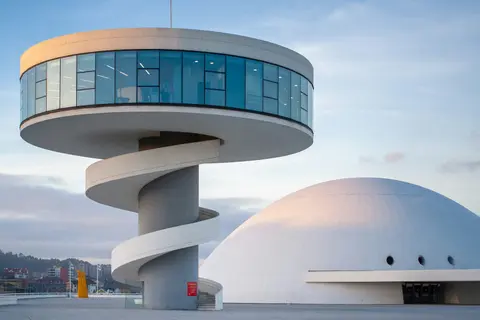
Aviles is Asturias' oldest documented town, where a medieval arcaded old quarter coexists with Oscar Niemeyer's striking modern cultural centre on the reinvented waterfront of this former industrial port. Must-dos include the Centro Niemeyer, tasting fabada asturiana and traditionally poured sidra, and walking the golden beach at Salinas. Visit June through September for the mildest weather on Spain's green northern coast.
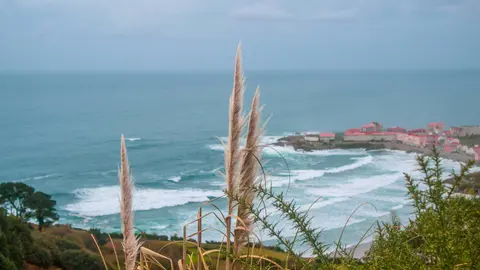
La Coruña, the Atlantic gateway to Spain's verdant Galicia region, is home to the Tower of Hercules — the world's oldest functioning Roman lighthouse and a UNESCO World Heritage Site — and a waterfront of luminous glass galleries unlike anything else in Europe. Visitors should not miss savouring pulpo á feira and wild percebes at the local markets, nor the short journey to Santiago de Compostela along the Camino. Late spring through early autumn offers the mildest weather, with September providing warm days, golden light, and fewer crowds along the granite streets of the Ciudad Vieja.
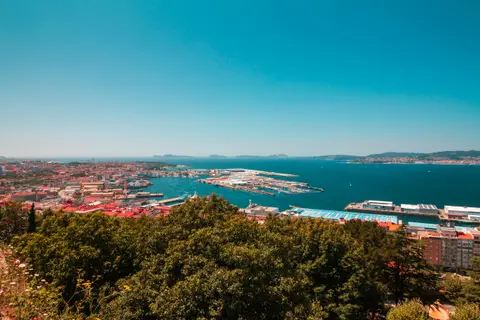
Vigo is Galicia's vibrant Atlantic port city, set along a dramatic ría with Celtic ruins, a storied naval past, and what may be Spain's finest seafood culture — from freshly shucked Arcade oysters at the Mercado da Pedra to smoky pulpo á feira in the old quarter. Visit between May and October, when long golden evenings illuminate the bay and the Cíes Islands beckon for a day trip to some of Europe's most pristine beaches.

Leixões is the cruise port for Porto — UNESCO's dramatic river city where 20,000 azulejo tiles line a railway station, port wine lodges offer centuries of vintage tastings, and the Ribeira district cascades to the Douro in granite-and-tile splendor. Visit June via Celebrity or Ambassador Cruise Line for the São João festival and authentic Porto character.
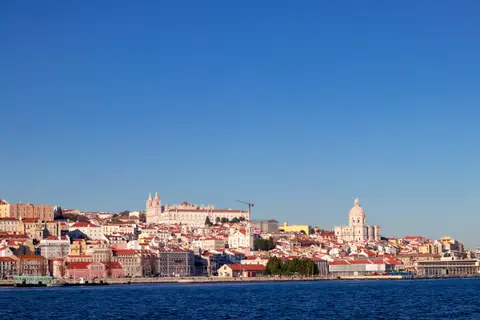
Lisbon, Portugal's enchanting capital, stands out for its rich history, stunning architecture, and vibrant culture. Must-try experiences include savoring local dishes like bacalhau à brás and pastéis de nata at Mercado da Ribeira. The best time to visit is during the spring or fall, when the weather is mild and the city is alive with festivals and events.
Day 1
Bordeaux, France's premier port city, is renowned for its historical significance, stunning architecture, and world-class wine. Must-do experiences include savoring local delicacies at Marché des Quais and exploring the breathtaking art installations at Place de la Bourse. The best season to visit is during the late spring and early autumn, when the weather is pleasant and the vineyards are in full bloom.
Day 2
Day 3
Saint Jean De Luz, France is a distinctive port city where deep cultural heritage meets authentic local atmosphere, featured on itineraries by Hapag-Lloyd Cruises. Must-do experiences include walking the historic center to experience the layered architectural heritage, and seeking out the regional culinary traditions at a locally favored establishment away from the port area. The optimal time to visit is May through September, when mild temperatures and long days favor unhurried exploration.
Day 4
Santander, capital of Spain’s green Cantabrian coast, pairs elegant Atlantic beaches and the luminous Centro Botín arts center with proximity to Altamira’s prehistoric cave art and the Picos de Europa mountains. Must-dos include the Renzo Piano–designed Centro Botín, tasting Santoña anchovies and rabas at the harbor, and visiting Altamira’s replica cave. Visit June through September for the warmest weather on this refreshingly uncrowded stretch of northern Spain.
Day 5
Aviles is Asturias' oldest documented town, where a medieval arcaded old quarter coexists with Oscar Niemeyer's striking modern cultural centre on the reinvented waterfront of this former industrial port. Must-dos include the Centro Niemeyer, tasting fabada asturiana and traditionally poured sidra, and walking the golden beach at Salinas. Visit June through September for the mildest weather on Spain's green northern coast.
Day 6
La Coruña, the Atlantic gateway to Spain's verdant Galicia region, is home to the Tower of Hercules — the world's oldest functioning Roman lighthouse and a UNESCO World Heritage Site — and a waterfront of luminous glass galleries unlike anything else in Europe. Visitors should not miss savouring pulpo á feira and wild percebes at the local markets, nor the short journey to Santiago de Compostela along the Camino. Late spring through early autumn offers the mildest weather, with September providing warm days, golden light, and fewer crowds along the granite streets of the Ciudad Vieja.
Day 8
Vigo is Galicia's vibrant Atlantic port city, set along a dramatic ría with Celtic ruins, a storied naval past, and what may be Spain's finest seafood culture — from freshly shucked Arcade oysters at the Mercado da Pedra to smoky pulpo á feira in the old quarter. Visit between May and October, when long golden evenings illuminate the bay and the Cíes Islands beckon for a day trip to some of Europe's most pristine beaches.
Day 9
Leixões is the cruise port for Porto — UNESCO's dramatic river city where 20,000 azulejo tiles line a railway station, port wine lodges offer centuries of vintage tastings, and the Ribeira district cascades to the Douro in granite-and-tile splendor. Visit June via Celebrity or Ambassador Cruise Line for the São João festival and authentic Porto character.
Day 10
Lisbon, Portugal's enchanting capital, stands out for its rich history, stunning architecture, and vibrant culture. Must-try experiences include savoring local dishes like bacalhau à brás and pastéis de nata at Mercado da Ribeira. The best time to visit is during the spring or fall, when the weather is mild and the city is alive with festivals and events.
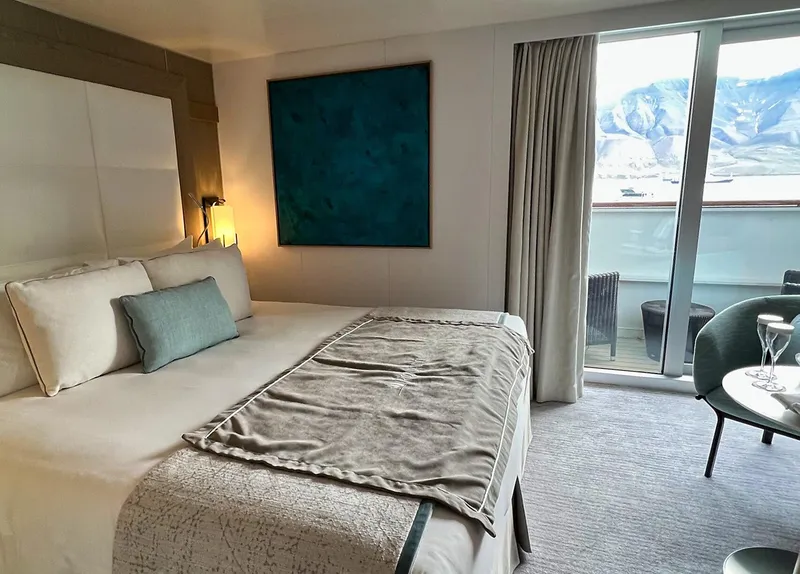
In addition to the common services provided to all our suites and staterooms:
Priority boarding (depending on port of embarkation)
Champagne and fruit basket upon arrival
Butler service
An assortment of sweet or savoury canapés and fruit basket every day
One king-size bed (180 x 200 cm) or two single beds (90 x 200 cm)
An armchair and sofa (167 x 70 cm)
A bathroom with shower and small bathtub
A private 5 m² balcony
A panoramic sliding bay window
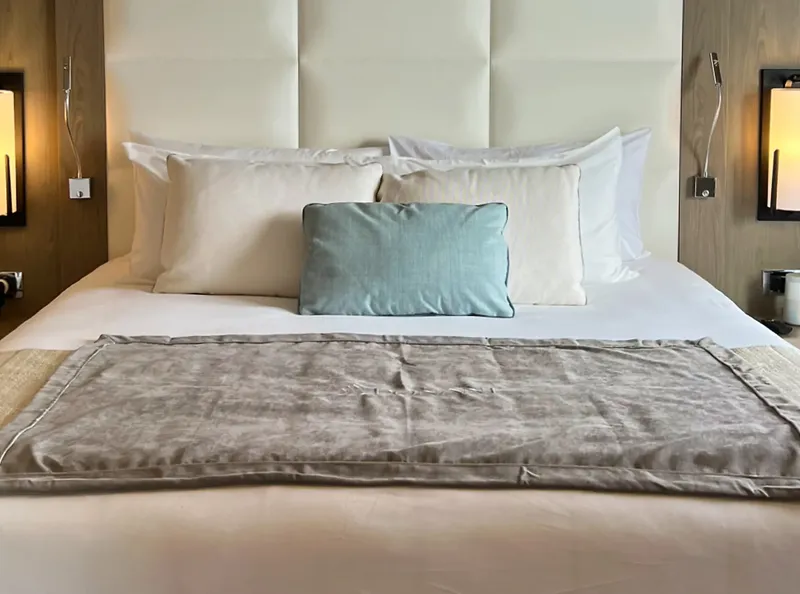
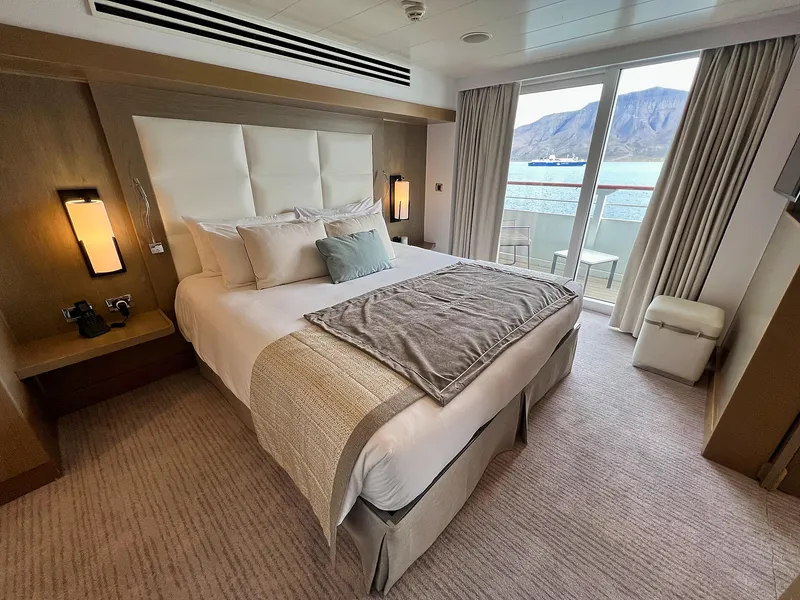
In addition to the common services provided to all our suites and staterooms:
Private return transfer
Priority boarding (depending on port of embarkation)
Champagne and fruit basket upon arrival
Butler service
An assortment of sweet or savoury canapés and fruit basket every day
A bedroom with one king-size bed (180 x 200 cm) or two single beds (90 x 200 cm)
A living/dining room with a sofa, armchair, second TV, 4-seater table, and sliding courtesy door
A bathroom with shower and Balneo bathtub
A one-hour spa treatments per person (for 2 people) in the well-being space, chosen from the facial and body treatments on offer
Included premium pass: access to a selection of premium spirits at the bar
A private 9 m² balcony
Two panoramic sliding bay windows
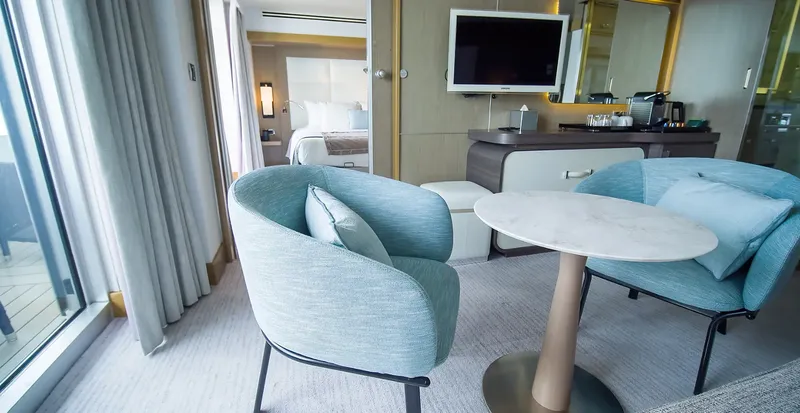
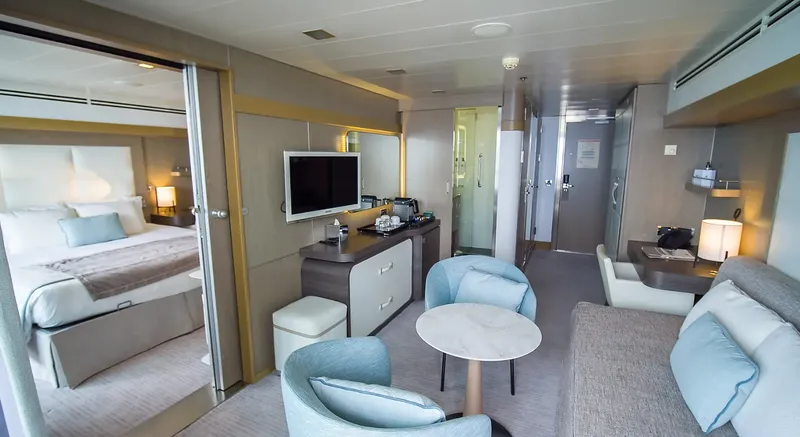
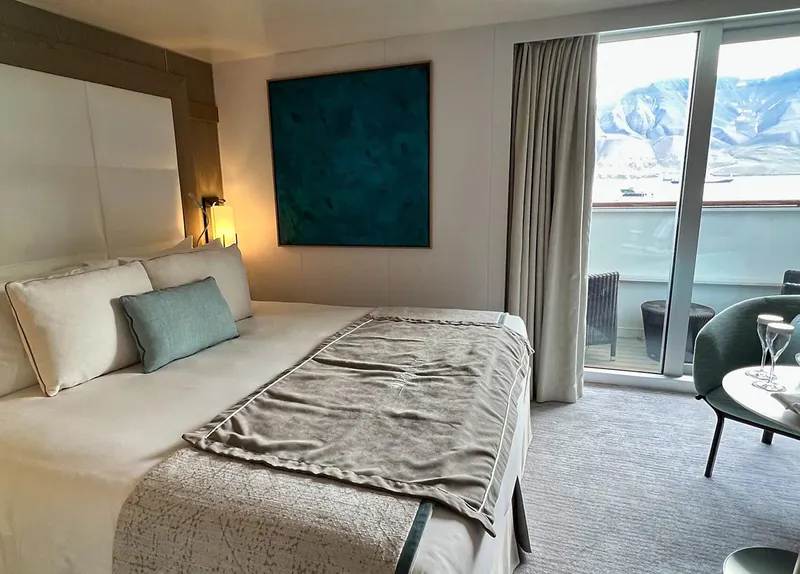
In addition to the common services provided to all our suites and staterooms:
Champagne and fruit basket upon arrival
An assortment of sweet or savoury canapés and fruit basket every day
A bedroom with king-size bed (180 x 200 cm) or two single beds (90 x 200 cm)
A lounge with convertible sofa to a king-size bed (180 x 200 cm) or two single beds (90 x 200 cm), armchairs, second TV, and sliding courtesy door
Two bathrooms with showers
A private 8 m² balcony
Two panoramic sliding bay windows
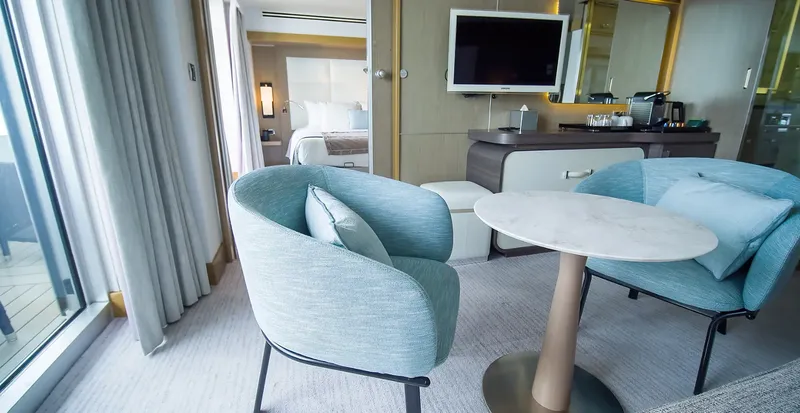
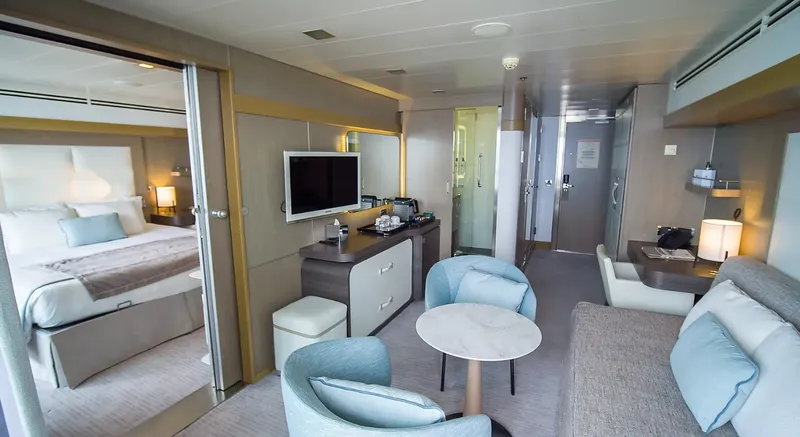
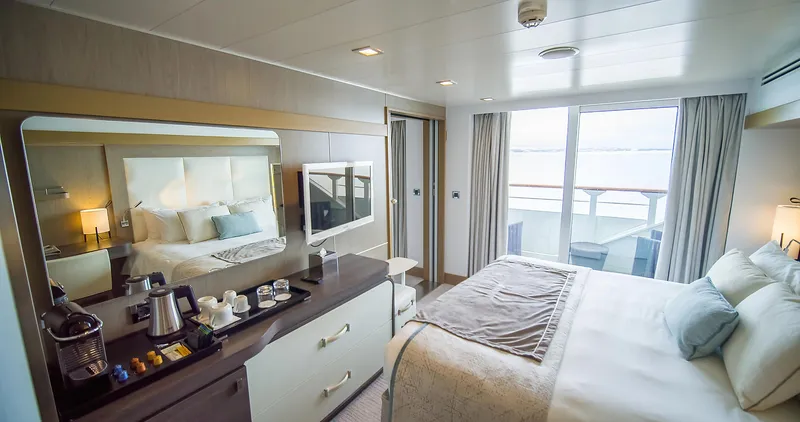
In addition to the common services provided to all our suites and staterooms:
Priority boarding (depending on port of embarkation)
Champagne and fruit basket upon arrival
Butler service
An assortment of sweet or savoury canapés and fruit basket every day
A bedroom with king-size bed (180 x 200 cm) or two single beds (90 x 200 cm)
A lounge with convertible sofa to a king-size bed (180 x 200 cm) or two single beds (90 x 200 cm), armchairs, second TV, and sliding courtesy door
Two bathrooms with showers
A private 8 m² balcony
Two panoramic sliding bay windows
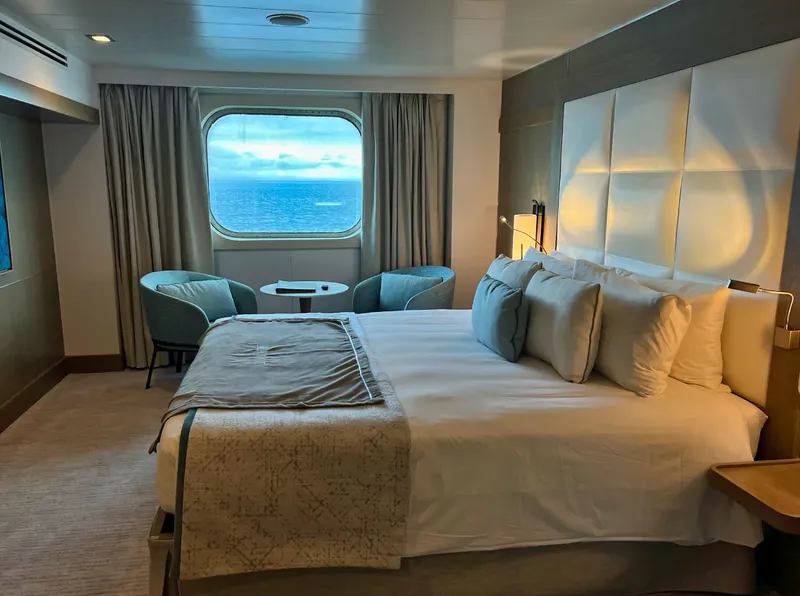
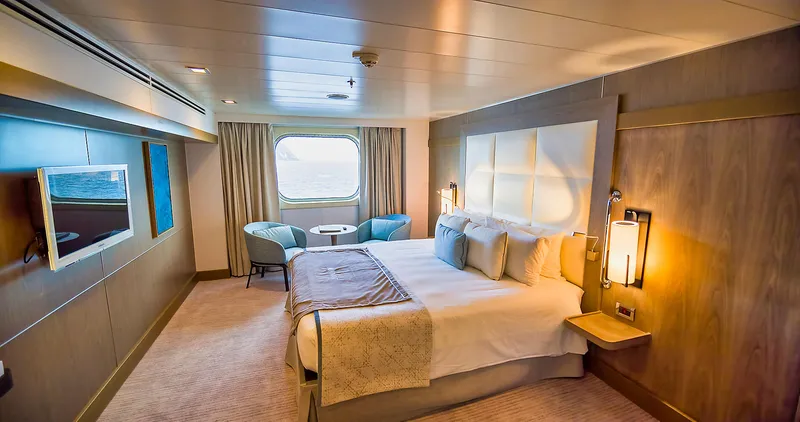
In addition to the common services provided to all our suites and staterooms:
One king-size bed or two single beds (180 x 200 cm)
A bathroom with shower
A window (except for stateroom 300: a round porthole only)
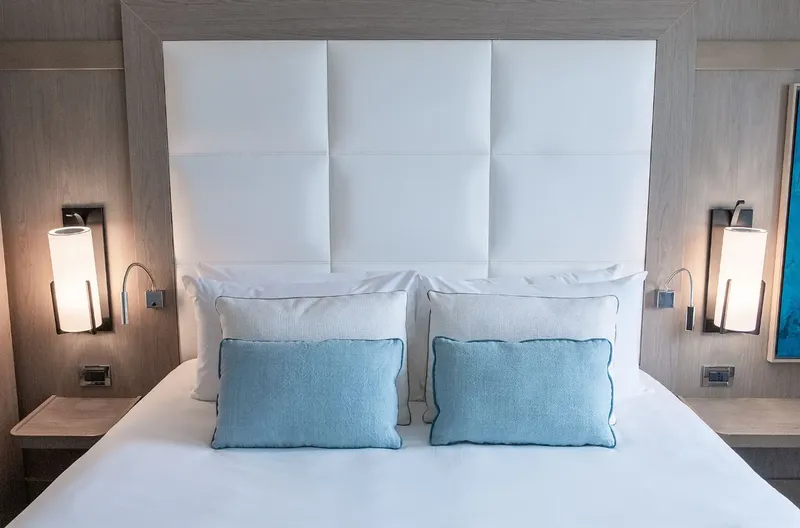
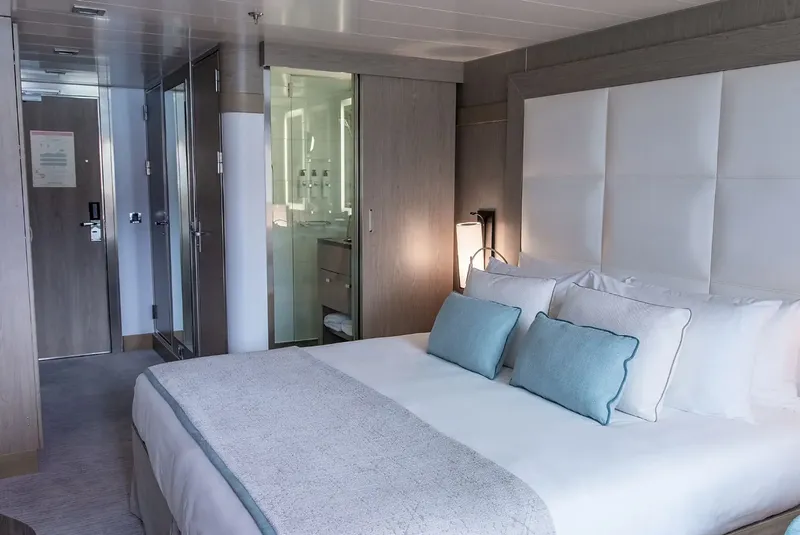
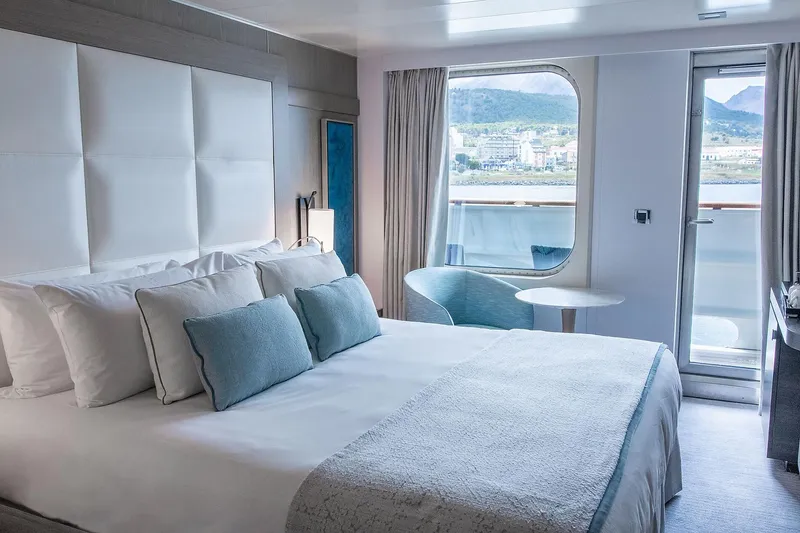
In addition to the common services provided to all our suites and staterooms:
One king-size bed (180 x 200 cm) or two single beds (90 x 200 cm)
A bathroom with shower
A private 4 m² balcony
A window and panoramic glazed swing door
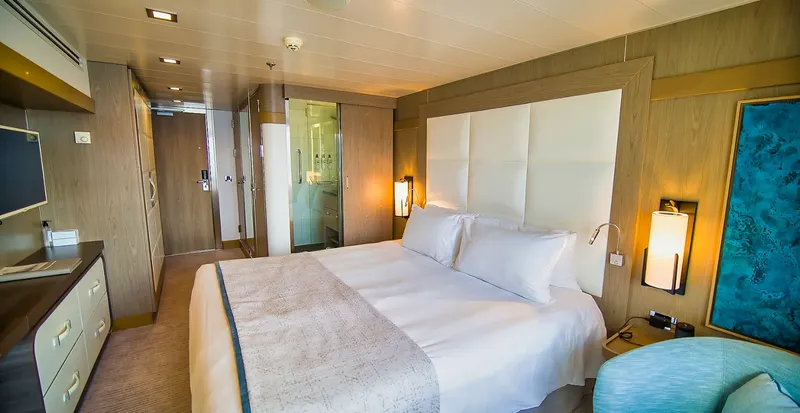
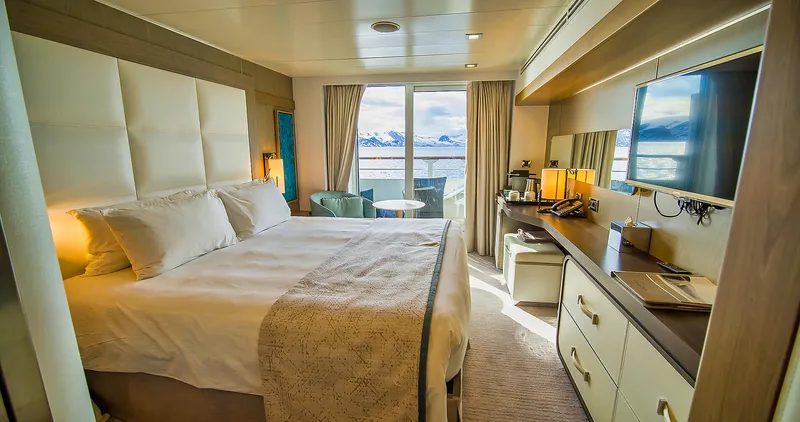
In addition to the common services provided to all our suites and staterooms:
One king-size bed (180 x 200 cm) or two single beds (90 x 200 cm)
A bathroom with shower
A private 4 m² balcony
A panoramic sliding bay window
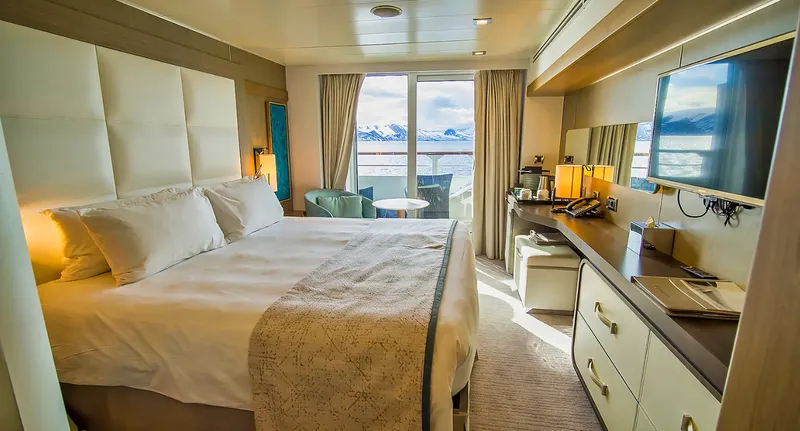
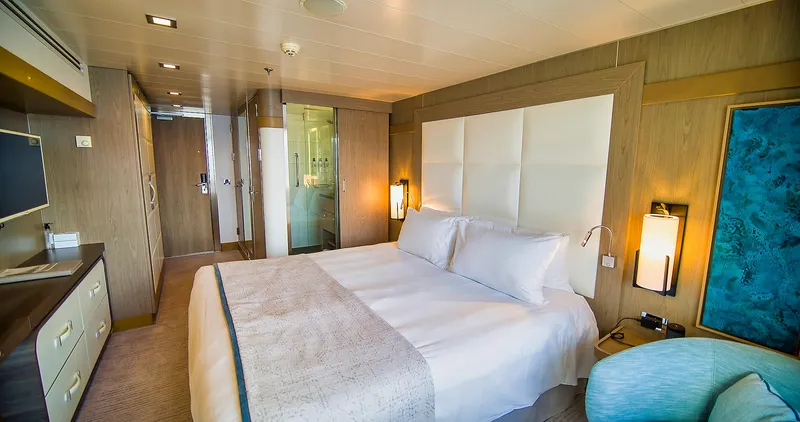
In addition to the common services provided to all our suites and staterooms:
One king-size bed (180 x 200 cm) or two single beds (90 x 200 cm)
A bathroom with shower
A private 4 m² balcony
A panoramic sliding bay window
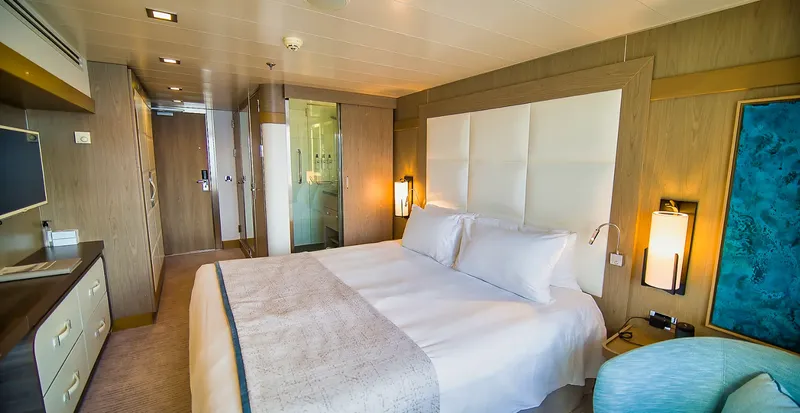
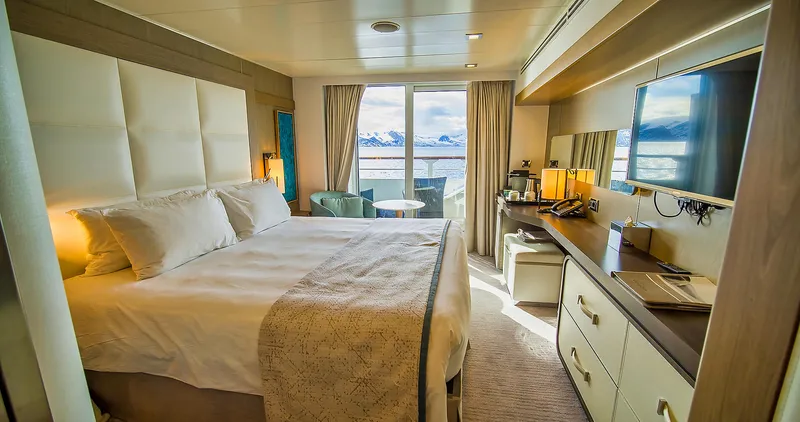
In addition to the common services provided to all our suites and staterooms:
One king-size bed (180 x 200 cm) or two single beds (90 x 200 cm)
A bathroom with shower
A private 4 m² balcony
A panoramic sliding bay window
Our cruise specialists can help you find the perfect cabin and the best available pricing.
(+886) 02-2721-7300Contact Advisor