November 3, 2026
14 nights · 6 sea days
Valparaiso
Chile
Ushuaia
Argentina


Ponant
2015-04-01
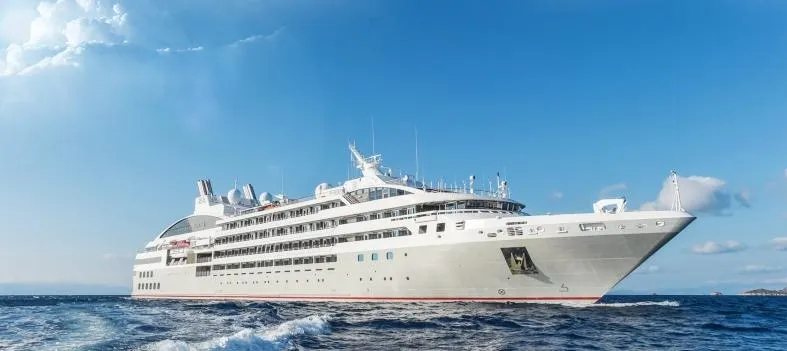
10,700 GT
466 m
14 knots
122 / 264 guests
139


Of Chile’s 4000km-plus coastline, the brief central strip between Rocas de Santo Domingo and Los Vilos is the most visited and developed. Known as the Litoral Central, this 250km stretch boasts bay after bay lined with gorgeous, white-sand beaches, and a string of coastal resort towns. Valparaíso and Viña del Mar sit next to each other near the middle of the strip. They are geographical neighbours, but poles apart in appearance and atmosphere. Viña is Chile’s largest beach resort and one of its ritziest. With its high-rises, casino, and seafront restaurants, as well as the beaches and clubs in nearby Reñaca, Viña typifies modern hedonism. The UNESCO World Heritage-listed city of Valparaíso, on the other hand, has far more personality, with ramshackle, colourfulhouses spilling chaotically down the hills to the sea (but no decent beaches). “Valpo” is Chile’s principal port and naval base, and also perhaps the country’s liveliest and most vibrant city. The nightlife and excellent seafood attract much of Santiago to its bars and restaurants at the weekend, as does the nearby beach resort of Viña del Mar. For stretches of sand, you’ll need to head south or north. Closest to Santiago, via the “Autopista del Sol” (Ruta 78), are the resorts south of Valparaíso, which are busier and more developed. The one spot besides the beaches where you might want to spend some time in Viña del Mar is the lovely Quinta Vergara park, where the manicured grounds are home to a vast array of exotic imported plants. It is located a couple of blocks south of Plaza Vergara behind the Metrotrén Estación Viña, with the futuristic-looking Anfiteatro, home to the annual music festival, as its centrepiece.


Tortel is a commune located in Southern Patagonia, a spectacular wilderness region of rugged mountains, glaciers, rivers and forests of infinite beauty. The uneven geography of Tortel shapes a unique landscape, characterized by an archipelagic area with numerous islands and channels. Tortel is known as the “footbridge city” for the unique beauty of its wooden walkways that connect the piers and houses of this quaint place through bridges and stairs, built from cypress wood, that run for four and a half miles around the cove and that respect the rich vegetation that grows under them. Even though it is the sixth largest commune in Chile, it has the lowest population of all with roughly 531 people. The history of the town dates back to 1520 when it was inhabited by nomadic Kawesqar, now extinct. Its definitive foundation was in 1955, after numerous attempts to populate the area. In 2001, it was declared by the Chilean government as a Picturesque Zone of National Heritage.


Alberto de Agostini National Park was created in 1965 and takes its name from an Italian explorer, photographer, writer and missionary of the Salesians of Don Bosco order that lived and explored Patagonia as a missionary around 1930. De Agostini was known for his discoveries, photographs and maps of the region. The park is located in the Region of Magallanes and Chilean Antarctica, the southernmost, largest, and second least populated region of Chile. The park covers 5,637 square miles and touches Magallanes, Tierra del Fuego and Antarctica provinces. It is the third largest protected area of the country. The park was declared a World Biosphere Reserve by UNESCO in 2005 and protects many species of animals and sea birds. Its rich fauna includes species like the Andean fox, the South American grey fox (also known as the Patagonian fox), the southern elephant seal, the leopard seal, the Chilean dolphin (also known as the black dolphin or tonina), and the humpback whale.
A prime specimen of the region, Garibaldi Fjord is known for its beautiful glaciers, which rise as tall as New York skyscrapers. The glaciers extend across a series of steep mountains and valleys, but they still harbor a rich ecosystem of plants and wildlife.

It may be the most notorious ocean passage in the world, and for centuries it evoked dread in the hearts of sailors. But those who survived a trip around Cape Horn, where the Atlantic and Pacific slosh violently into each other, had bragging rights for life. Along this passage, the Tierra del Fuego, or "land of fire," where Chile and Argentina converge at the bottom of the world, got its name from early sailors who saw the fires of the people who lived here burning on shore. For some 8,000 years, until as recently as the end of the 19th century, this was the home of the Yaghan and other indigenous groups. Magellan and Drake left their mark and names here, as did Darwin, who sailed through here on the HMS Beagle. The great clipper ships of '49er lore later fought their way through fierce waves carrying gold between California and the East Coast in that era before the Panama Canal. Just as Richard Henry Dana, Jr., described in his masterful Two Years Before the Mast, published in 1840, a journey today around the Cape at the very bottom of the Tierra is shaped by capricious weather, as powerful winds and shallow waters can produce waves that reach as high as 30 meters (100 feet).

Puerto Williams is a town on Navarino Island in the Beagle Channel in Chile’s far south. Part of the Tierra del Fuego archipelago, it’s known as a starting point for trips around Cape Horn. It’s also a gateway to trails around the jagged peaks of the nearby Dientes de Navarino. In town, the Martin Gusinde Anthropological Museum traces the history of the region’s former inhabitants, the indigenous Yaghan people.


Ushuaia, capital of Tierra del Fuego and the province’s main tourist hub, is located at the southern end of Isla Grande. Boasting a spectacular location, sandwiched between the mountains – including Cerro Martial and Mount Olivia – and the sea, Ushuaia extends down the hill towards the arm of land that surrounds the Bay, where the ship will stop during your MSC WorldCruise. The city is protected from the icy Southwest winds and occasional storms that occur in the Beagle Channel. Interesting excursions include the small islands in the middle of the channel in front of the city, with their colonies of seabirds, and the nearby Parque Nacional Tierra del Fuego. Ushuaia is the most populous and popular city in Tierra del Fuego, and depends largely on the thriving tourism industry, which capitalises on the beauty of the area’s natural landscapes. Overlooking the sea is the Antigua Casa de Gobierno, a late-20th century building that was originally the Governor's mansion before being used by the local government and then as a police station. It has been restored so as to return it to its original use, so you can get an idea of how the rich lived in Ushuaia at the dawn of the city. The Fin del Mundo Museum houses exhibitions that focus on the region’s history and wildlife, as well as the polychrome figurehead of the Duchess of Albany, an English ship wrecked on the eastern end of the island in 1883. The Parque Nacional Tierra del Fuego, 12 km west of Ushuaia, is 630 sq. km of rugged mountains, sinuous lakes, southern beech forests, marshy bogs, sub-Antarctic tundra and lush coasts. It extends along the border with Chile, from the Beagle Channel to Sierra Inju-Goiyin, north of the huge Lake Fagnano, which you can also visit on an MSC Cruise day trip, combined with Lake Escondido. This is just one of the fantastic destinations of our cruise around the world: MSC World Cruise 2020!


In addition to the common services provided to all our suites and staterooms:
Priority boarding (depending on port of embarkation)
Champagne and fruit basket on arrival
Butler service
An assortment of sweet or savoury canapés and fruit basket every day
One king-size bed (180 x 190 cm) or two single beds (90 x 190 cm)
A lounge area with sofa (167 x 70 cm) and armchair
A bathroom with shower
A private 5 m² balcony
A panoramic sliding bay window


In addition to the common services provided to all our suites and staterooms:
Priority boarding (depending on port of embarkation)
Champagne and fruit basket on arrival
Butler service
An assortment of sweet or savoury canapés and fruit basket every day
A bedroom with a king-size bed (180 x 190 cm) or two single beds (90 x 190 cm)
A lounge with sofa, second TV, and sliding courtesy door
A bathroom with shower and a Balneo bathtub
A private 12 m² balcony
Two panoramic sliding bay windows


In addition to the common services provided to all our suites and staterooms:
Priority boarding (depending on port of embarkation)
Champagne and fruit basket on arrival
Butler service
An assortment of sweet or savoury canapés and fruit basket every day
A bedroom with a king-size bed (180 x 190 cm) or two single beds (90 x 190 cm) and TV
A second bedroom with a king-size bed (180 x 190 cm) or two single beds (90 x 190 cm) and a second TV
A lounge with sofa, third TV, two armchairs, and two sliding courtesy doors
A bathroom with shower and bath
A private 12 m² balcony
Three panoramic sliding bay windows


In addition to the common services provided to all our suites and staterooms:
Priority boarding (depending on port of embarkation)
Champagne and fruit basket upon arrival
Butler service
An assortment of sweet or savoury canapés and fruit basket every day
A bedroom with king-size bed (180 x 190 cm) or two single beds (90 x 190 cm)
A living/dining room with convertible sofa (160 x 190 cm), second TV, 4-seater table and sliding courtesy door
A bathroom with shower and Balneo bathtub
A one-hour spa treatments per person (for 2 people) in the well-being space, chosen from the facial and body treatments on offer
Included premium pass: access to a selection of premium spirits at the bar
A private 12 m² balcony
Three panoramic sliding bay windows


In addition to the common services provided to all our suites and staterooms:
Champagne and fruit basket upon arrival
An assortment of sweet or savoury canapés and fruit basket every day
A bedroom with king-size bed (180 x 190 cm)
A lounge with two armchairs, second TV, sliding courtesy door, and convertible sofa to a king-size bed (180 x 190 cm)
Two bathrooms with shower
A private 8 m² balcony
Two panoramic sliding bay windows


In addition to the common services provided to all our suites and staterooms:
Priority boarding (depending on port of embarkation)
Champagne and fruit basket upon arrival
Butler service
An assortment of sweet or savoury canapés and fruit basket every day
A bedroom with a king-size bed (180 x 190 cm) or two single beds (90 x 190 cm) and TV
A living/dining room with sofa, second TV, 4-seater table, and sliding courtesy door
A bathroom with shower and bath
A private 12 m² balcony
Three panoramic sliding bay windows


In addition to the common services provided to all our suites and staterooms:
One king-size bed (180 x 190 cm) or two single beds (90 x 190 cm)
A bathroom with shower
A private 4 m² balcony
A window and panoramic glazed swing door


In addition to the common services provided to all our suites and staterooms:
One king-size bed (180 x 190 cm) or two single beds (90 x 190 cm)
A bathroom with shower
A private 4 m² balcony
A panoramic sliding bay window


In addition to the common services provided to all our suites and staterooms:
One king-size bed (180 x 190 cm) or two single beds (90 x 190 cm)
A bathroom with shower
A private 4 m² balcony
A panoramic sliding bay window


In addition to the common services provided to all our suites and staterooms:
One king-size bed (180 x 190 cm) or two single beds (90 x 190 cm)
A bathroom with shower
A private 4 m² balcony
A panoramic sliding bay window


In addition to the common services provided to all our suites and staterooms:
A king-size bed (180 x 190 cm)
A bathroom with shower
A window or round porthole
Our cruise specialists can help you find the perfect cabin and the best available pricing.
Contact Advisor