Date
2027-02-01
Duration
61 nights
Departure Port
Cape Town
South Africa
Arrival Port
Barcelona
Spain
Rating
Ultra Luxury
Theme
—


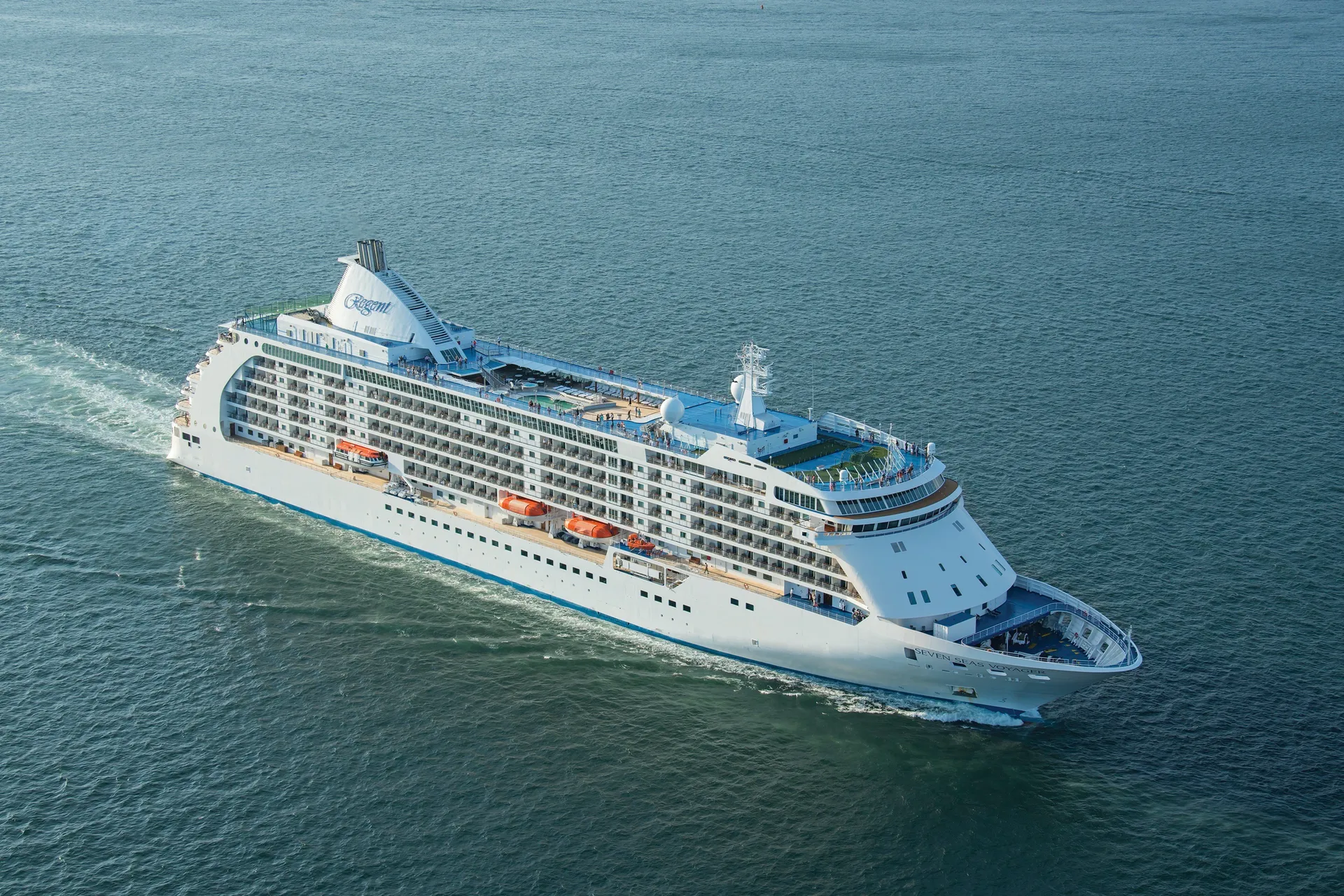
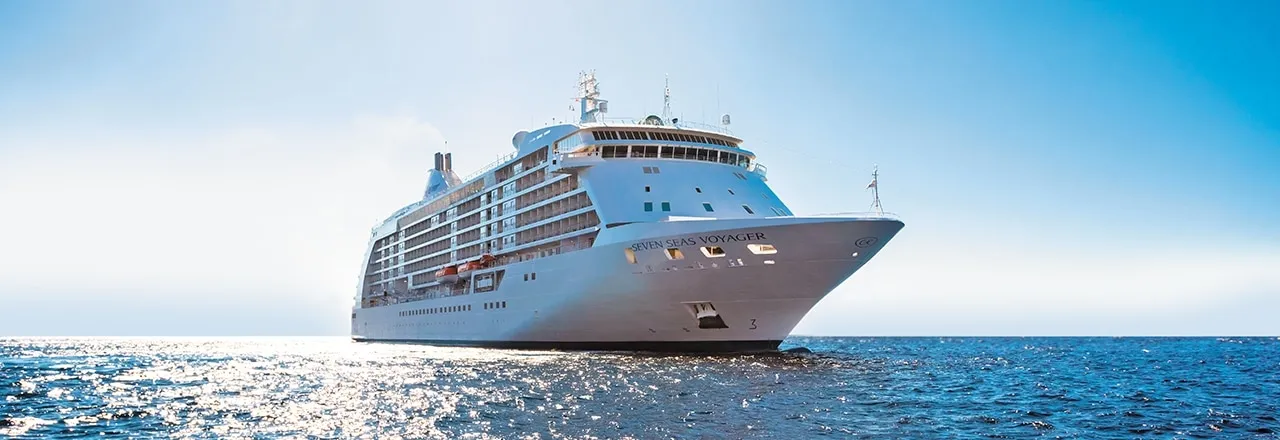
Regent Seven Seas Cruises
2004
2016
42,363 GT
698
349
455
204 m
29 m
20 knots
No

Cape Town's port is a vibrant blend of history, culture, and natural beauty, making it a premier destination for travelers. Must-do experiences include savoring local dishes like bobotie and exploring the bustling V&A Waterfront. The best season to visit is during the Southern Hemisphere summer, from December to February, when the weather is warm and perfect for outdoor adventures.

Gqeberha (Port Elizabeth) is the gateway to South Africa's Eastern Cape, where the Addo Elephant National Park—home to over 600 elephants and the rare "Big Seven"—lies just seventy-five minutes from the city's Indian Ocean beaches. Must-dos include a game drive at Addo, sampling local calamari and Eastern Cape braai, and whale watching in Algoa Bay during winter. September through April offers the best weather, while June–November brings southern right whales to the bay.

Durban is South Africa's subtropical gateway on the Indian Ocean, where Zulu, Indian, and colonial heritage converge to create one of the continent's most culturally rich port cities. Visitors should not miss savouring an authentic bunny chow in the Grey Street quarter and exploring the nearby uKhahlamba-Drakensberg mountains or iSimangaliso Wetland Park. The South African summer — November through March — delivers warm seas ideal for swimming, though the mild winters (June to August) offer comfortable touring temperatures and prime whale-watching along the KwaZulu-Natal coast.

Mayotte, opens a window onto Africa's extraordinary blend of natural grandeur, cultural vitality, and warm hospitality. Visitors should explore the local markets and venture into the surrounding landscapes for wildlife encounters of genuine wonder. The most favorable conditions occur May through September, when drier conditions prevail and temperatures remain pleasant. Cruise lines including Regent Seven Seas Cruises feature this port on their most compelling itineraries. Whether you have a few hours or a full day, the port rewards exploration at every pace and in every direction.

Nosy Be is Madagascar's "perfumed island" off the northwest coast, where ylang-ylang and vanilla plantations meet pristine marine reserves and humpback whales migrate through the Mozambique Channel. Must-dos include snorkelling the Nosy Tanikely reserve with sea turtles, swimming alongside whale sharks, and buying vanilla pods at the Hell-Ville market. Visit September through November for whale season and dry weather.

Antsiranana, Madagascar is a distinctive port city where deep cultural heritage meets authentic local atmosphere, featured on itineraries by AIDA. Must-do experiences include exploring the vibrant local markets for regional specialties and fresh seafood, and discovering the waterfront quarter where maritime heritage meets contemporary energy. The optimal time to visit is November through April, when dry season brings clear skies and calm seas.

Port Louis, the cosmopolitan capital of Mauritius, is a captivating blend of French colonial architecture, UNESCO heritage sites, and one of the Indian Ocean's most vibrant food cultures — the Central Market's dholl puri and vindaye de poisson alone justify the port call. Beyond the city, the island offers Black River Gorges, the surreal seven-coloured earth of Chamarel, and the lagoons of Le Morne. The ideal cruising season runs from May through November, when the Southern Hemisphere winter delivers warm, dry days with comfortable temperatures and calm seas.

Praslin is the Seychelles' second-largest island, home to the UNESCO-listed Vallée de Mai primeval palm forest and beaches consistently ranked among the world's most beautiful. Visit during the transitional months of April-May or October-November for calm seas, the ancient coco de mer forest, and snorkeling in crystalline waters off Anse Lazio.

Malé, the compact island capital of the Maldives, is the gateway to one of Earth's most extraordinary coral archipelagos, spanning twenty-six atolls of luminous lagoons and pristine reefs. Must-dos include snorkeling with manta rays in Ari Atoll, exploring the coral-stone Friday Mosque, and savoring garudhiya tuna broth and mas huni. December through April offers the driest weather and clearest underwater visibility for reef exploration.

Muscat, Oman's mountain-framed capital on the Gulf of Oman, is a refined Arabian port city where ancient souqs, frankincense heritage, and world-class architecture converge. Must-dos include the Sultan Qaboos Grand Mosque, Muttrah Souq, and excursions to the Ras Al Jinz turtle reserve or Wahiba Sands desert. October through March offers ideal temperatures for exploration.

Dubai's audacity — a city that conjured itself from desert and sea within a single lifetime — is both its spectacle and its soul. The Dubai Creek's wind-tower houses and fragrant gold and spice souqs anchor an older identity, while the Burj Khalifa, the palm-shaped islands, and the vast Dubai Mall represent an ambition that continues to astonish. At its best, Dubai rewards those who explore beyond the superlatives: desert safaris at dawn, dhow dinner cruises on the Creek, and the extraordinary cultural collections of the Al Quoz arts district. October through April delivers reliably sunny weather without summer's overwhelming heat.

Once a modest pearl-diving village on the Arabian Gulf, Doha has transformed into one of the world's most architecturally audacious capitals — a skyline of Pritzker-winning towers rising above a restored waterfront where traditional dhows still sail at dusk. The Museum of Islamic Art, Pei Cobb Freed's masterpiece on a purpose-built peninsula, houses one of the finest collections of Islamic art and design on Earth, while the restored Souq Waqif offers an immersive encounter with Qatari heritage. October through March brings pleasantly warm days — the ideal window before the Gulf summer's intensity arrives.

Abu Dhabi, the gleaming capital of the United Arab Emirates, has transformed from a pearl-diving village into a city where Bedouin heritage and futuristic ambition coexist in breathtaking tension. The Sheikh Zayed Grand Mosque — with its eighty-two domes, thousand marble-clad columns, and the world's largest hand-knotted carpet — stands as a pinnacle of Islamic artistry, while Saadiyat Island's cultural district houses world-class museums including the Louvre Abu Dhabi. Visit October through April for cooler temperatures, with Dubai just ninety minutes away. This is a city that rewards the curious traveler with layers of splendor at every turn.
Muscat, Oman's mountain-framed capital on the Gulf of Oman, is a refined Arabian port city where ancient souqs, frankincense heritage, and world-class architecture converge. Must-dos include the Sultan Qaboos Grand Mosque, Muttrah Souq, and excursions to the Ras Al Jinz turtle reserve or Wahiba Sands desert. October through March offers ideal temperatures for exploration.

Jeddah, Saudi Arabia, offers a portal into one of the world's most historically significant regions, where archaeological wonders, legendary cuisine, and dramatic desert landscapes converge. Essential experiences include exploring the souks and sampling the extraordinary local food culture. Best visited December through April, during the dry season when skies are clearest and seas are calmest. Cruise lines including Emerald Yacht Cruises feature this port on their most compelling itineraries. Whether you have a few hours or a full day, the port rewards exploration at every pace and in every direction.

Aqaba, Jordan, offers a portal into one of the world's most historically significant regions, where archaeological wonders, legendary cuisine, and dramatic desert landscapes converge. Essential experiences include exploring the souks and sampling the extraordinary local food culture. Best visited October through April, when cooler temperatures and lower humidity create ideal conditions. Cruise lines including Emerald Yacht Cruises feature this port on their most compelling itineraries. Whether you have a few hours or a full day, the port rewards exploration at every pace and in every direction.

Safaga is a Red Sea port that combines world-class diving on pristine coral reefs with access to Luxor's ancient Egyptian monuments—the Valley of the Kings, Karnak Temple, and the tomb of Tutankhamun—just three hours inland. Must-dos include diving at Panorama Reef and Abu Kafan, a day trip to Luxor's pharaonic temples, and snorkeling in the warm, crystal-clear Red Sea waters. October through April offers the most comfortable temperatures for combining underwater and desert exploration.
One of the great engineering marvels of the world. The canal stretches over 100 miles from Port Said and the Mediterranean Sea to Suez and the Red Sea. Excavation of the canal began on April 25th, 1859, and on November 17, 1869 the barrage of the Suez plains reservoir was breached and waters of the Mediterranean flowed into the Red Sea. Unlike the Panama Canal, the Suez Canal has no locks, because the Mediterranean Sea and the Gulf of Suez have roughly the same water level. The passage takes between 11 and 16 hours at a speed of around 8 knots. The low speed helps prevent erosion of the canal banks by ship's wakes. Please be advised that due to the under-developed nature of this destination, organized tours are not available.

Haifa, Israel is a distinctive port city where deep cultural heritage meets authentic local atmosphere, featured on itineraries by Viking. Must-do experiences include walking the historic center to experience the layered architectural heritage, and seeking out the regional culinary traditions at a locally favored establishment away from the port area. The optimal time to visit is April through October, when warm weather and extended daylight create ideal conditions.

The port that launched Athenian democracy's naval supremacy at the Battle of Salamis, Piraeus remains Greece's maritime heartbeat — and the most convenient gateway to both the Acropolis and the Aegean island chains. Dine on grilled sea bream at a Mikrolimano harbourside taverna, visit the extraordinary bronze Piraeus Apollo, and set sail for Hydra or Santorini by afternoon. Late April through June and September offer the Aegean at its most golden and uncrowded.
Sorrento is a clifftop jewel on southern Italy's Sorrentine Peninsula, perched sixty meters above the Bay of Naples with sweeping views of Vesuvius and Capri. Visitors should not miss the gnocchi alla sorrentina at a family-run trattoria in the old quarter, nor the short excursion along the Amalfi Coast to Positano and Ravello. The ideal season stretches from late April through mid-October, when warm Mediterranean light illuminates the tufa cliffs and the famed local lemons reach their most fragrant peak.

Rome's ancient maritime gateway since the Emperor Trajan commissioned its harbour in 106 AD, Civitavecchia is the natural prologue to the Eternal City — just seventy minutes southeast by express rail. The port's Renaissance fortress, designed in part by Michelangelo, anchors a working waterfront that has welcomed travellers for millennia. Beyond Rome's unmissable monuments, consider an afternoon in the Civitavecchia thermal baths, drawing on mineral waters prized since antiquity. Spring and autumn offer the ideal balance of mild weather and manageable crowds for exploring the capital's layered history.

Tucked at the head of a deep Ligurian harbour that Byron and Shelley named the Gulf of Poets, La Spezia serves as the ideal base for exploring the Cinque Terre — five cliff-hanging fishing villages threaded by ancient paths above a turquoise sea. The town itself rewards exploration: the Museo Amedeo Lia houses one of Italy's finest private collections of medieval and Renaissance art, and the naval museum reflects La Spezia's long maritime history. A boat excursion to Portovenere and the island of Palmaria, or a trail walk between Vernazza and Corniglia, constitutes a perfect day from port. Best visited April through June and September through October, avoiding the summer heat and peak crowds.

Portofino is a jewel-box fishing village on Italy's Ligurian coast, renowned for its pastel harbour, Castello Brown fortress views, and exquisite pesto-dressed trofie pasta at waterside trattorias. Visitors should walk the coastal trail to the Cristo degli Abissi underwater statue at San Fruttuoso and savour focaccia di Recco with a glass of local Vermentino. The ideal season stretches from late April through October, with September offering the perfect balance of warm Mediterranean light and the intimate calm that returns after summer's peak.

Cannes, transformed from a sleepy Provençal fishing village into the Riviera's most glamorous resort by an English lord's chance quarantine in 1834, and immortalized by the Film Festival since 1946, remains the French Riviera's most theatrical stage — where La Croisette's curved promenade of Art Deco palaces, private beach clubs, and Palme d'Or dreams meets the quiet authenticity of the Suquet hilltop quarter above the old port. For shopping, the Marché Forville bursts with Provençal produce, truffle vendors, and cut flowers each morning; for dining, the restaurants of the old port district offer bouillabaisse and socca that need no red-carpet backdrop. Visit in spring or September; Nice is twenty minutes by rail and Monaco thirty.

Mahón commands one of the Mediterranean's deepest natural harbours, a fjord-like inlet on Menorca that captivated British admirals, Phoenician traders, and Roman generals in turn — its Georgian townhouses and gin distilleries speaking eloquently to centuries of contested heritage. Explore the clifftop old town's baroque Santa María church with its 3,200-pipe organ, then cross the water to the imposing fortress of La Mola for sweeping harbour views. The island's prized caldereta de langosta, a slow-simmered lobster stew, is best savoured at the fishing village of Fornells. Visit between May and June or September and October for warmth without the summer crowds.

Palma de Mallorca announces itself with one of the most spectacular Gothic cathedrals in the world — La Seu, its honey-coloured sandstone buttresses rising directly from the bay, its interior modified by Antoni Gaudí and illuminated by the world's largest Gothic rose window. The old town behind it is a quarter of Arab baths, Renaissance palaces converted into boutique hotels, and the Passeig del Born — a plane-tree-shaded promenade where Balearic life conducts itself with unhurried grace. The local ensaïmada pastry and fresh sobrasada sausage from the island's black pigs are essential breakfast rituals. Visit May, June, or September: warm, brilliant, and measurably calmer than the July–August peak.

Beneath Ibiza's sun-drenched reputation as the world's clubbing capital lies a layered history stretching back to Phoenician traders who settled this Balearic island in 654 BC. The UNESCO-listed Dalt Vila — the walled hilltop citadel above Eivissa town — rewards exploration with Carthaginian burial grounds, Renaissance ramparts, and sweeping Mediterranean panoramas. For quieter pleasures, the crystalline coves of the island's north, such as Cala d'en Serra and Es Portitxol, rival any beach in Europe. The Phoenician necropolis of Puig des Molins is unmissable for history devotees. The season runs May through October, with June and September offering ideal weather without peak-summer crowds.

Valencia, Spain's luminous third city, dazzles with a creative energy anchored by two thousand years of layered civilization — Roman foundations, Moorish irrigation gardens, a Gothic cathedral housing what many believe to be the Holy Grail, and Santiago Calatrava's futuristic City of Arts and Sciences gleaming beside a park-filled riverbed. The city invented paella over an open fire of orange-wood in the surrounding huerta, and the Las Fallas festival each March — when neighborhoods compete to erect and then ceremonially burn towering satirical sculptures — is one of Europe's most spectacular celebrations. Valencia's Mediterranean climate makes it exceptional year-round.

Barcelona is the city where Roman history, Gothic grandeur, and Gaudí's delirious Modernisme collide in a Mediterranean coastal capital of astonishing energy and beauty. The Sagrada Família — still under construction after 140 years — continues its audacious ascent toward completion, while the Gothic Quarter's Roman-era foundations and the Passeig de Gràcia's extraordinary concentration of Modernisme masterpieces reward days of exploration. For a complete sensory experience, lose an afternoon in the covered labyrinth of La Boqueria market before descending to the waterfront for Catalan seafood at its finest. May through June and September through October offer the most pleasant weather; the city connects directly to Paris by overnight train.
Day 1

Cape Town's port is a vibrant blend of history, culture, and natural beauty, making it a premier destination for travelers. Must-do experiences include savoring local dishes like bobotie and exploring the bustling V&A Waterfront. The best season to visit is during the Southern Hemisphere summer, from December to February, when the weather is warm and perfect for outdoor adventures.
Day 2
Day 3

Gqeberha (Port Elizabeth) is the gateway to South Africa's Eastern Cape, where the Addo Elephant National Park—home to over 600 elephants and the rare "Big Seven"—lies just seventy-five minutes from the city's Indian Ocean beaches. Must-dos include a game drive at Addo, sampling local calamari and Eastern Cape braai, and whale watching in Algoa Bay during winter. September through April offers the best weather, while June–November brings southern right whales to the bay.
Day 5
Day 6

Durban is South Africa's subtropical gateway on the Indian Ocean, where Zulu, Indian, and colonial heritage converge to create one of the continent's most culturally rich port cities. Visitors should not miss savouring an authentic bunny chow in the Grey Street quarter and exploring the nearby uKhahlamba-Drakensberg mountains or iSimangaliso Wetland Park. The South African summer — November through March — delivers warm seas ideal for swimming, though the mild winters (June to August) offer comfortable touring temperatures and prime whale-watching along the KwaZulu-Natal coast.
Day 8
Day 10
Day 11

Mayotte, opens a window onto Africa's extraordinary blend of natural grandeur, cultural vitality, and warm hospitality. Visitors should explore the local markets and venture into the surrounding landscapes for wildlife encounters of genuine wonder. The most favorable conditions occur May through September, when drier conditions prevail and temperatures remain pleasant. Cruise lines including Regent Seven Seas Cruises feature this port on their most compelling itineraries. Whether you have a few hours or a full day, the port rewards exploration at every pace and in every direction.
Day 12

Nosy Be is Madagascar's "perfumed island" off the northwest coast, where ylang-ylang and vanilla plantations meet pristine marine reserves and humpback whales migrate through the Mozambique Channel. Must-dos include snorkelling the Nosy Tanikely reserve with sea turtles, swimming alongside whale sharks, and buying vanilla pods at the Hell-Ville market. Visit September through November for whale season and dry weather.
Day 13

Antsiranana, Madagascar is a distinctive port city where deep cultural heritage meets authentic local atmosphere, featured on itineraries by AIDA. Must-do experiences include exploring the vibrant local markets for regional specialties and fresh seafood, and discovering the waterfront quarter where maritime heritage meets contemporary energy. The optimal time to visit is November through April, when dry season brings clear skies and calm seas.
Day 14
Day 15

Port Louis, the cosmopolitan capital of Mauritius, is a captivating blend of French colonial architecture, UNESCO heritage sites, and one of the Indian Ocean's most vibrant food cultures — the Central Market's dholl puri and vindaye de poisson alone justify the port call. Beyond the city, the island offers Black River Gorges, the surreal seven-coloured earth of Chamarel, and the lagoons of Le Morne. The ideal cruising season runs from May through November, when the Southern Hemisphere winter delivers warm, dry days with comfortable temperatures and calm seas.
Day 17
Day 19

Praslin is the Seychelles' second-largest island, home to the UNESCO-listed Vallée de Mai primeval palm forest and beaches consistently ranked among the world's most beautiful. Visit during the transitional months of April-May or October-November for calm seas, the ancient coco de mer forest, and snorkeling in crystalline waters off Anse Lazio.
Day 20
Day 22
Day 23

Malé, the compact island capital of the Maldives, is the gateway to one of Earth's most extraordinary coral archipelagos, spanning twenty-six atolls of luminous lagoons and pristine reefs. Must-dos include snorkeling with manta rays in Ari Atoll, exploring the coral-stone Friday Mosque, and savoring garudhiya tuna broth and mas huni. December through April offers the driest weather and clearest underwater visibility for reef exploration.
Day 25
Day 27
Day 28

Muscat, Oman's mountain-framed capital on the Gulf of Oman, is a refined Arabian port city where ancient souqs, frankincense heritage, and world-class architecture converge. Must-dos include the Sultan Qaboos Grand Mosque, Muttrah Souq, and excursions to the Ras Al Jinz turtle reserve or Wahiba Sands desert. October through March offers ideal temperatures for exploration.
Day 29
Day 30

Dubai's audacity — a city that conjured itself from desert and sea within a single lifetime — is both its spectacle and its soul. The Dubai Creek's wind-tower houses and fragrant gold and spice souqs anchor an older identity, while the Burj Khalifa, the palm-shaped islands, and the vast Dubai Mall represent an ambition that continues to astonish. At its best, Dubai rewards those who explore beyond the superlatives: desert safaris at dawn, dhow dinner cruises on the Creek, and the extraordinary cultural collections of the Al Quoz arts district. October through April delivers reliably sunny weather without summer's overwhelming heat.
Day 31

Once a modest pearl-diving village on the Arabian Gulf, Doha has transformed into one of the world's most architecturally audacious capitals — a skyline of Pritzker-winning towers rising above a restored waterfront where traditional dhows still sail at dusk. The Museum of Islamic Art, Pei Cobb Freed's masterpiece on a purpose-built peninsula, houses one of the finest collections of Islamic art and design on Earth, while the restored Souq Waqif offers an immersive encounter with Qatari heritage. October through March brings pleasantly warm days — the ideal window before the Gulf summer's intensity arrives.
Day 32

Abu Dhabi, the gleaming capital of the United Arab Emirates, has transformed from a pearl-diving village into a city where Bedouin heritage and futuristic ambition coexist in breathtaking tension. The Sheikh Zayed Grand Mosque — with its eighty-two domes, thousand marble-clad columns, and the world's largest hand-knotted carpet — stands as a pinnacle of Islamic artistry, while Saadiyat Island's cultural district houses world-class museums including the Louvre Abu Dhabi. Visit October through April for cooler temperatures, with Dubai just ninety minutes away. This is a city that rewards the curious traveler with layers of splendor at every turn.
Day 33
Day 34

Muscat, Oman's mountain-framed capital on the Gulf of Oman, is a refined Arabian port city where ancient souqs, frankincense heritage, and world-class architecture converge. Must-dos include the Sultan Qaboos Grand Mosque, Muttrah Souq, and excursions to the Ras Al Jinz turtle reserve or Wahiba Sands desert. October through March offers ideal temperatures for exploration.
Day 35
Day 36
Day 37
Day 38
Day 39

Jeddah, Saudi Arabia, offers a portal into one of the world's most historically significant regions, where archaeological wonders, legendary cuisine, and dramatic desert landscapes converge. Essential experiences include exploring the souks and sampling the extraordinary local food culture. Best visited December through April, during the dry season when skies are clearest and seas are calmest. Cruise lines including Emerald Yacht Cruises feature this port on their most compelling itineraries. Whether you have a few hours or a full day, the port rewards exploration at every pace and in every direction.
Day 40
Day 41

Aqaba, Jordan, offers a portal into one of the world's most historically significant regions, where archaeological wonders, legendary cuisine, and dramatic desert landscapes converge. Essential experiences include exploring the souks and sampling the extraordinary local food culture. Best visited October through April, when cooler temperatures and lower humidity create ideal conditions. Cruise lines including Emerald Yacht Cruises feature this port on their most compelling itineraries. Whether you have a few hours or a full day, the port rewards exploration at every pace and in every direction.
Day 42

Safaga is a Red Sea port that combines world-class diving on pristine coral reefs with access to Luxor's ancient Egyptian monuments—the Valley of the Kings, Karnak Temple, and the tomb of Tutankhamun—just three hours inland. Must-dos include diving at Panorama Reef and Abu Kafan, a day trip to Luxor's pharaonic temples, and snorkeling in the warm, crystal-clear Red Sea waters. October through April offers the most comfortable temperatures for combining underwater and desert exploration.
Day 44
One of the great engineering marvels of the world. The canal stretches over 100 miles from Port Said and the Mediterranean Sea to Suez and the Red Sea. Excavation of the canal began on April 25th, 1859, and on November 17, 1869 the barrage of the Suez plains reservoir was breached and waters of the Mediterranean flowed into the Red Sea. Unlike the Panama Canal, the Suez Canal has no locks, because the Mediterranean Sea and the Gulf of Suez have roughly the same water level. The passage takes between 11 and 16 hours at a speed of around 8 knots. The low speed helps prevent erosion of the canal banks by ship's wakes. Please be advised that due to the under-developed nature of this destination, organized tours are not available.
Day 46

Haifa, Israel is a distinctive port city where deep cultural heritage meets authentic local atmosphere, featured on itineraries by Viking. Must-do experiences include walking the historic center to experience the layered architectural heritage, and seeking out the regional culinary traditions at a locally favored establishment away from the port area. The optimal time to visit is April through October, when warm weather and extended daylight create ideal conditions.
Day 48
Day 49

The port that launched Athenian democracy's naval supremacy at the Battle of Salamis, Piraeus remains Greece's maritime heartbeat — and the most convenient gateway to both the Acropolis and the Aegean island chains. Dine on grilled sea bream at a Mikrolimano harbourside taverna, visit the extraordinary bronze Piraeus Apollo, and set sail for Hydra or Santorini by afternoon. Late April through June and September offer the Aegean at its most golden and uncrowded.
Day 50
Day 51

Sorrento is a clifftop jewel on southern Italy's Sorrentine Peninsula, perched sixty meters above the Bay of Naples with sweeping views of Vesuvius and Capri. Visitors should not miss the gnocchi alla sorrentina at a family-run trattoria in the old quarter, nor the short excursion along the Amalfi Coast to Positano and Ravello. The ideal season stretches from late April through mid-October, when warm Mediterranean light illuminates the tufa cliffs and the famed local lemons reach their most fragrant peak.
Day 52

Rome's ancient maritime gateway since the Emperor Trajan commissioned its harbour in 106 AD, Civitavecchia is the natural prologue to the Eternal City — just seventy minutes southeast by express rail. The port's Renaissance fortress, designed in part by Michelangelo, anchors a working waterfront that has welcomed travellers for millennia. Beyond Rome's unmissable monuments, consider an afternoon in the Civitavecchia thermal baths, drawing on mineral waters prized since antiquity. Spring and autumn offer the ideal balance of mild weather and manageable crowds for exploring the capital's layered history.
Day 53

Tucked at the head of a deep Ligurian harbour that Byron and Shelley named the Gulf of Poets, La Spezia serves as the ideal base for exploring the Cinque Terre — five cliff-hanging fishing villages threaded by ancient paths above a turquoise sea. The town itself rewards exploration: the Museo Amedeo Lia houses one of Italy's finest private collections of medieval and Renaissance art, and the naval museum reflects La Spezia's long maritime history. A boat excursion to Portovenere and the island of Palmaria, or a trail walk between Vernazza and Corniglia, constitutes a perfect day from port. Best visited April through June and September through October, avoiding the summer heat and peak crowds.
Day 54

Portofino is a jewel-box fishing village on Italy's Ligurian coast, renowned for its pastel harbour, Castello Brown fortress views, and exquisite pesto-dressed trofie pasta at waterside trattorias. Visitors should walk the coastal trail to the Cristo degli Abissi underwater statue at San Fruttuoso and savour focaccia di Recco with a glass of local Vermentino. The ideal season stretches from late April through October, with September offering the perfect balance of warm Mediterranean light and the intimate calm that returns after summer's peak.
Day 55

Cannes, transformed from a sleepy Provençal fishing village into the Riviera's most glamorous resort by an English lord's chance quarantine in 1834, and immortalized by the Film Festival since 1946, remains the French Riviera's most theatrical stage — where La Croisette's curved promenade of Art Deco palaces, private beach clubs, and Palme d'Or dreams meets the quiet authenticity of the Suquet hilltop quarter above the old port. For shopping, the Marché Forville bursts with Provençal produce, truffle vendors, and cut flowers each morning; for dining, the restaurants of the old port district offer bouillabaisse and socca that need no red-carpet backdrop. Visit in spring or September; Nice is twenty minutes by rail and Monaco thirty.
Day 56
Day 57

Mahón commands one of the Mediterranean's deepest natural harbours, a fjord-like inlet on Menorca that captivated British admirals, Phoenician traders, and Roman generals in turn — its Georgian townhouses and gin distilleries speaking eloquently to centuries of contested heritage. Explore the clifftop old town's baroque Santa María church with its 3,200-pipe organ, then cross the water to the imposing fortress of La Mola for sweeping harbour views. The island's prized caldereta de langosta, a slow-simmered lobster stew, is best savoured at the fishing village of Fornells. Visit between May and June or September and October for warmth without the summer crowds.
Day 58

Palma de Mallorca announces itself with one of the most spectacular Gothic cathedrals in the world — La Seu, its honey-coloured sandstone buttresses rising directly from the bay, its interior modified by Antoni Gaudí and illuminated by the world's largest Gothic rose window. The old town behind it is a quarter of Arab baths, Renaissance palaces converted into boutique hotels, and the Passeig del Born — a plane-tree-shaded promenade where Balearic life conducts itself with unhurried grace. The local ensaïmada pastry and fresh sobrasada sausage from the island's black pigs are essential breakfast rituals. Visit May, June, or September: warm, brilliant, and measurably calmer than the July–August peak.
Day 59

Beneath Ibiza's sun-drenched reputation as the world's clubbing capital lies a layered history stretching back to Phoenician traders who settled this Balearic island in 654 BC. The UNESCO-listed Dalt Vila — the walled hilltop citadel above Eivissa town — rewards exploration with Carthaginian burial grounds, Renaissance ramparts, and sweeping Mediterranean panoramas. For quieter pleasures, the crystalline coves of the island's north, such as Cala d'en Serra and Es Portitxol, rival any beach in Europe. The Phoenician necropolis of Puig des Molins is unmissable for history devotees. The season runs May through October, with June and September offering ideal weather without peak-summer crowds.
Day 60
Day 61

Valencia, Spain's luminous third city, dazzles with a creative energy anchored by two thousand years of layered civilization — Roman foundations, Moorish irrigation gardens, a Gothic cathedral housing what many believe to be the Holy Grail, and Santiago Calatrava's futuristic City of Arts and Sciences gleaming beside a park-filled riverbed. The city invented paella over an open fire of orange-wood in the surrounding huerta, and the Las Fallas festival each March — when neighborhoods compete to erect and then ceremonially burn towering satirical sculptures — is one of Europe's most spectacular celebrations. Valencia's Mediterranean climate makes it exceptional year-round.
Day 62

Barcelona is the city where Roman history, Gothic grandeur, and Gaudí's delirious Modernisme collide in a Mediterranean coastal capital of astonishing energy and beauty. The Sagrada Família — still under construction after 140 years — continues its audacious ascent toward completion, while the Gothic Quarter's Roman-era foundations and the Passeig de Gràcia's extraordinary concentration of Modernisme masterpieces reward days of exploration. For a complete sensory experience, lose an afternoon in the covered labyrinth of La Boqueria market before descending to the waterfront for Catalan seafood at its finest. May through June and September through October offer the most pleasant weather; the city connects directly to Paris by overnight train.


In this superbly designed suite, you enjoy the comfort of richly furnished accommodations as well as exclusive luxuries available only in suites at the Concierge level and higher. Your suite includes amenities such as an illy espresso maker and cashmere blankets, perfect for use in the morning when you wish to sip coffee and enjoy an in-suite breakfast on your private balcony. Take advantage of 24-hour room service when the mood strikes.
SUITE SIZE
28
M2
BALCONY SIZE
5
M2
LAYOUT
European King-Sized Suite Slumber Bed
1 Marble Bathroom
Intimate Sitting Area
Private Balcony
Walk-in Closet With Safe
Accommodates Up To 3 Guests


Every inch of this suite has been thoughtfully designed to maximize interior space and embrace the magnificent scenery outdoors. From the sitting area, admire the ocean views through the floor-to-ceiling windows, or better yet, take a seat outside on your private balcony to watch the world go by. Elegant finishes such as luxurious bedding and beautiful marble detailing in the bath further enhance your comfort.
SUITE SIZE
28
M2
BALCONY SIZE
5
M2
LAYOUT
European King-Sized Suite Slumber Bed
1 Marble Bathroom
Intimate Sitting Area
Private Balcony
Walk-in Closet With Safe
Accommodates Up To 3 Guests


A suite so large it has two entrances, this suite delights the senses with rich mosaics, exotic woods and luxurious touches. A living area with a couch and two comfortable chairs, a full dining table and large writing table make you feel right at home, while a leather chaise lounge beside a jacuzzi feel like holiday indulgences. A large private balcony lets you welcome friends for a quiet dinner, and a personal butler helps make life at sea a breeze.
SUITE SIZE
70
M2
BALCONY SIZE
11
M2
LAYOUT
1 Spacious Bedroom With European King-Sized Suite Slumber Bed
1 1/2 Marble Bathrooms
Spacious Living Room
Private Balcony
Walk-in Closet With Safe
Accommodates Up To 4 Guests


The luxurious suite has been carefully designed to maximize space and comfort. Relax on your private balcony and indulge in your lavish bath amenities as you recharge and ready yourself for new adventures in the next port of call. This suite also includes priority online reservations for shore excursions and dining, and you’re encouraged to call on the services of a personal butler for special requests.
SUITE SIZE
30
M2
BALCONY SIZE
5
M2
LAYOUT
European King-Sized Suite Slumber Bed
1 Marble Bathroom
Intimate Sitting Area
Private Balcony
Walk-in Closet With Safe
Accommodates Up To 3 Guests

This suite is decorated with soothing colors, pleasing artwork and comfortable furnishings. Relax in the sitting area after an exciting day ashore and enjoy the selection of fresh canapés delivered by your personal butler. Then retreat to your private balcony to watch the ever-changing vistas. In your glistening bathroom, marvel at the assortment of luxury bath soaps and shampoos as you ponder whether to use your tub or walk-in shower.
SUITE SIZE
41
M2
BALCONY SIZE
15.4 – 27.2
M2
LAYOUT
1 Marble Bathroom
Living Area
Private Balcony
Walk-in Closet With Safe
Accommodates Up To 3 Guests


This suite is decorated with soothing colors, pleasing artwork and comfortable furnishings. Relax in the sitting area after an exciting day ashore and enjoy the selection of fresh canapés delivered by your personal butler. Then retreat to your private balcony to watch the ever-changing vistas. In your glistening bathroom, marvel at the assortment of luxury bath soaps and shampoos as you ponder whether to use your tub or walk-in shower.
SUITE SIZE
46
M2
BALCONY SIZE
5
M2
LAYOUT
1 Spacious Bedroom With European King-Sized Suite Slumber Bed
1 1/2 Marble Bathrooms
Spacious Living Room
Private Balcony
Walk-in Closet With Safe
Accommodates Up To 3 Guests


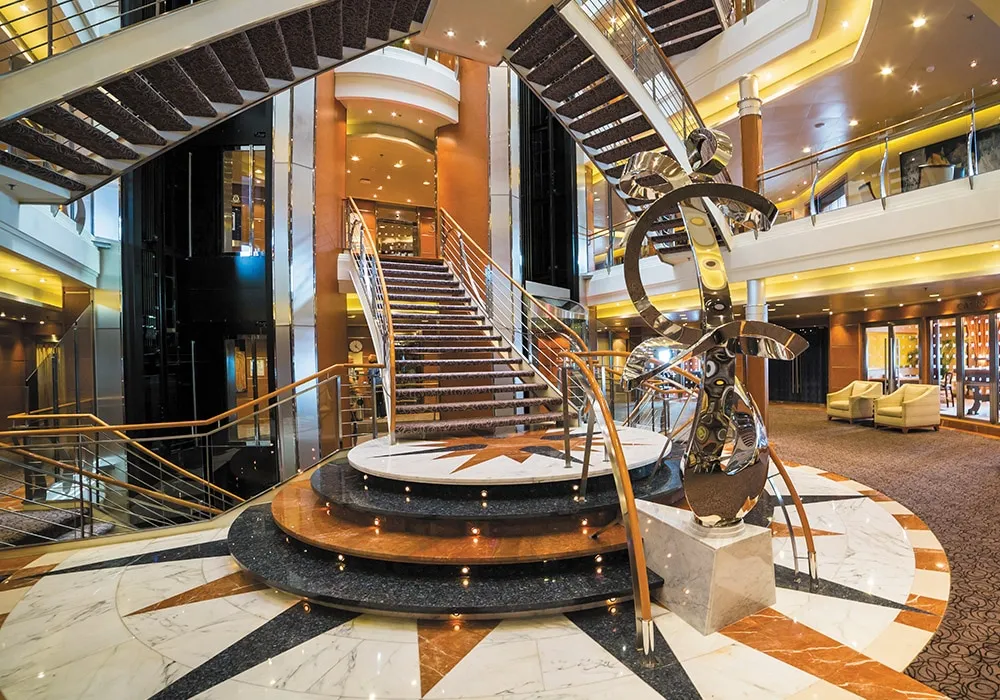
You’ll find Park Avenue chic onboard Seven Seas Voyager in this spectacular suite. Elegant rosewood furniture, luxe fabrics and a crystal chandelier create sophisticated comfort, while a personal butler is available to fulfil whatever requests you may have. With two bedrooms, two-and-a-half baths, a large living room and two private balconies, this sublime suite is perfect for hosting new friends in luxury.
SUITE SIZE
113
M2
BALCONY SIZE
17
M2
LAYOUT
2 Spacious Bedrooms with European King-Sized Elite Slumber™ Bed
2 1/2 Marble Bathrooms
Spacious Living Room
2 Private Balconies
Walk-in Closet With Safe
Accommodates Up To 6 Guests


Treat yourself to the welcoming luxury of a suite where elegance and comfort beckon in every nook. Open the sliding doors to your private balcony and inhale the fresh sea air. Enjoy your morning coffee at a cozy dining table or put your feet up in a soothing living room. Call on the services of a personal butler to assist with any needs and ensure that each moment of your journey exceeds your expectations.
SUITE SIZE
52
M2
BALCONY SIZE
5
M2
LAYOUT
1 Spacious Bedroom With European King-Sized Suite Slumber Bed
1 1/2 Marble Bathrooms
Spacious Living Room
Private Balcony
Walk-in Closet With Safe
Accommodates Up To 4 Guests
Our cruise specialists can help you find the perfect cabin and the best available pricing.
(+886) 02-2721-7300Contact Advisor