Date
April 9, 2027
Duration
14 nights
Departure Port
Bucharest · Romania
Arrival Port
Budapest · Hungary
Rating
Luxury
Theme
—


Scenic River Cruises
Space-Ship
2012
—
2,721 GT
169
—
53
442 m
—
—
No


Bucharest, in southern Romania, is the country's capital and commercial center. Its iconic landmark is the massive, communist-era Palatul Parlamentului government building, which has 1,100 rooms. Nearby, the historic Lipscani district is home to an energetic nightlife scene as well as tiny Eastern Orthodox Stavropoleos Church and 15th-century Curtea Veche Palace, where Prince Vlad III (“The Impaler”) once ruled.


Bucharest, in southern Romania, is the country's capital and commercial center. Its iconic landmark is the massive, communist-era Palatul Parlamentului government building, which has 1,100 rooms. Nearby, the historic Lipscani district is home to an energetic nightlife scene as well as tiny Eastern Orthodox Stavropoleos Church and 15th-century Curtea Veche Palace, where Prince Vlad III (“The Impaler”) once ruled.

Constanța is a city on the shores of the Black Sea, in southeastern Romania. Its long history, which goes back over 2,000 years, is documented at the National History and Archaeology Museum, near the port. The adjacent Roman Mosaics complex displays tiled floors dating back to the 4th century A.D. Nearby, the Great Mahmudiye Mosque is furnished with a vast Persian rug, while its towering minaret overlooks the city.

Constanța is a city on the shores of the Black Sea, in southeastern Romania. Its long history, which goes back over 2,000 years, is documented at the National History and Archaeology Museum, near the port. The adjacent Roman Mosaics complex displays tiled floors dating back to the 4th century A.D. Nearby, the Great Mahmudiye Mosque is furnished with a vast Persian rug, while its towering minaret overlooks the city.

Silistra is a town in Northeastern Bulgaria. The town lies on the southern bank of the lower Danube river, and is also the part of the Romanian border where it stops following the Danube.


Ruse, is the fifth largest city in Bulgaria. Ruse is in the northeastern part of the country, on the right bank of the Danube, opposite the Romanian city of Giurgiu, approximately 75 km south of Bucharest, Romania's capital, 200 km from the Bulgarian Black Sea Coast and 300 km from the capital Sofia.


Vidin is a port town on the southern bank of the Danube in north-western Bulgaria. It is close to the borders with Romania and Serbia, and is also the administrative centre of Vidin Province, as well as of the Metropolitan of Vidin.


The Iron Gates is a gorge on the river Danube. It forms part of the boundary between Serbia and Romania.

Golubac is a village and municipality located in the Braničevo District of the eastern Serbia. Situated on the right side of the Danube river, it is bordered by Romania to the east, Veliko Gradište to the west and Kučevo to the south.


The meeting point of Central Europe and the Middle East is situated where the Sava flows into the Danube. This gateway to the Balkans is open, cosmopolitan and full of fun. By simply strolling through the city, you can travel back through the history of Belgrade, admire its architecture and encounter European modernism. And while you discover culinary specialties on every corner, your eye will be drawn to the magnificent influences of the Ottoman Empire, which gives way to socialist classicism on the next corner. Every visitor ends up in Belgrade’s medieval fortress sooner or later, which features moats and a beautiful park. It’s time for a little break.


Novi Sad is a city in northern Serbia on the banks of the Danube River. Standing atop a riverside bluff, much of Petrovaradin Fortress dates to the 17th and 18th centuries, with an iconic clock tower and a network of tunnels. Across the river is the old quarter, Stari Grad, site of the Gothic Revival Name of Mary Church and the neo-Renaissance City Hall. ―


Osijek is the fourth largest city in Croatia with a population of 108,048 in 2011. It is the largest city and the economic and cultural centre of the eastern Croatian region of Slavonia, as well as the administrative centre of Osijek-Baranja County.


Mohács is a town in Baranya county, Hungary on the right bank of the Danube.
Kalocsa is a town in Bács-Kiskun county, Hungary. It lies 142 km south of Budapest. It is situated in a marshy but highly productive district, near the left bank of the Danube River. Historically it had greater political and economic importance than at present.


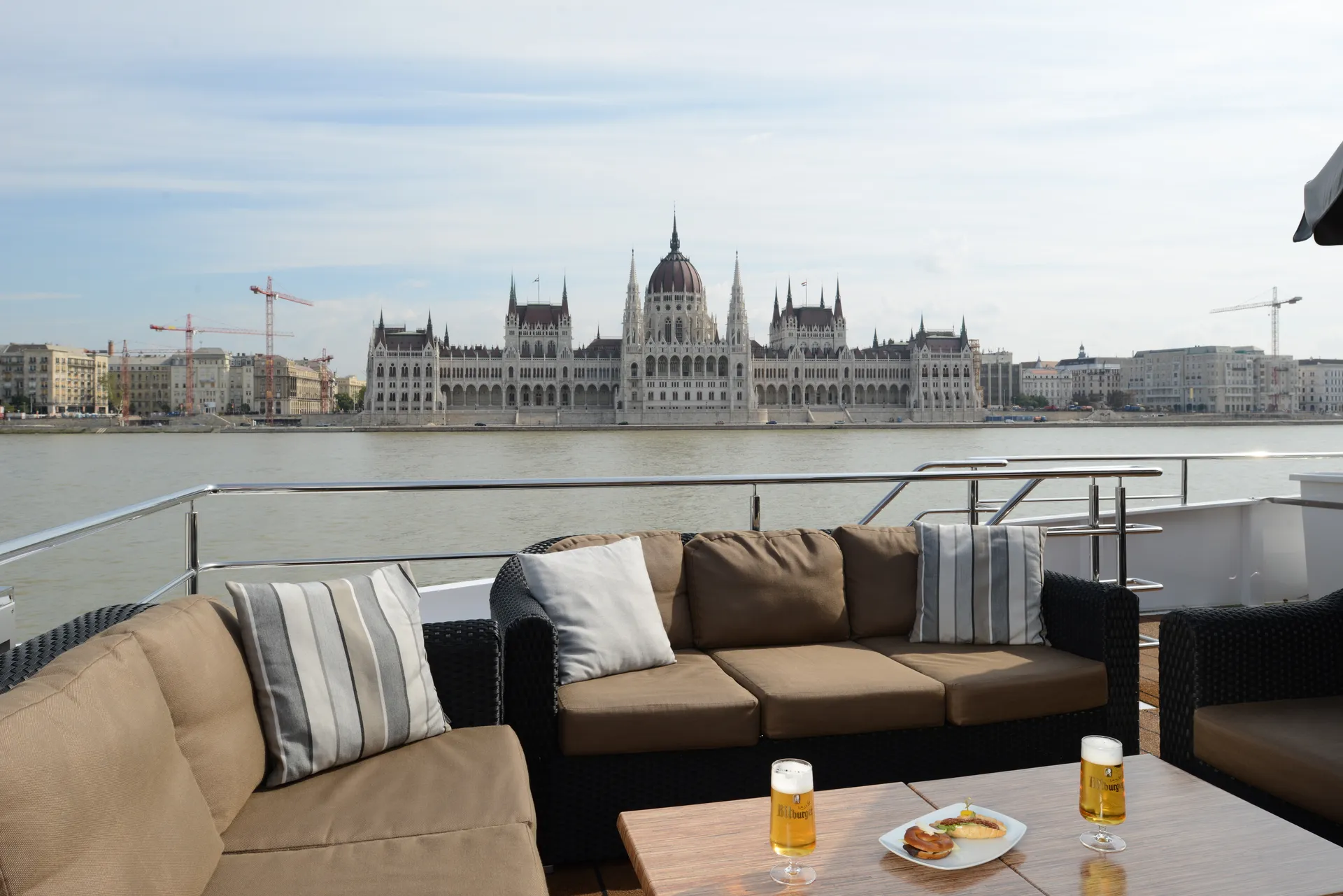
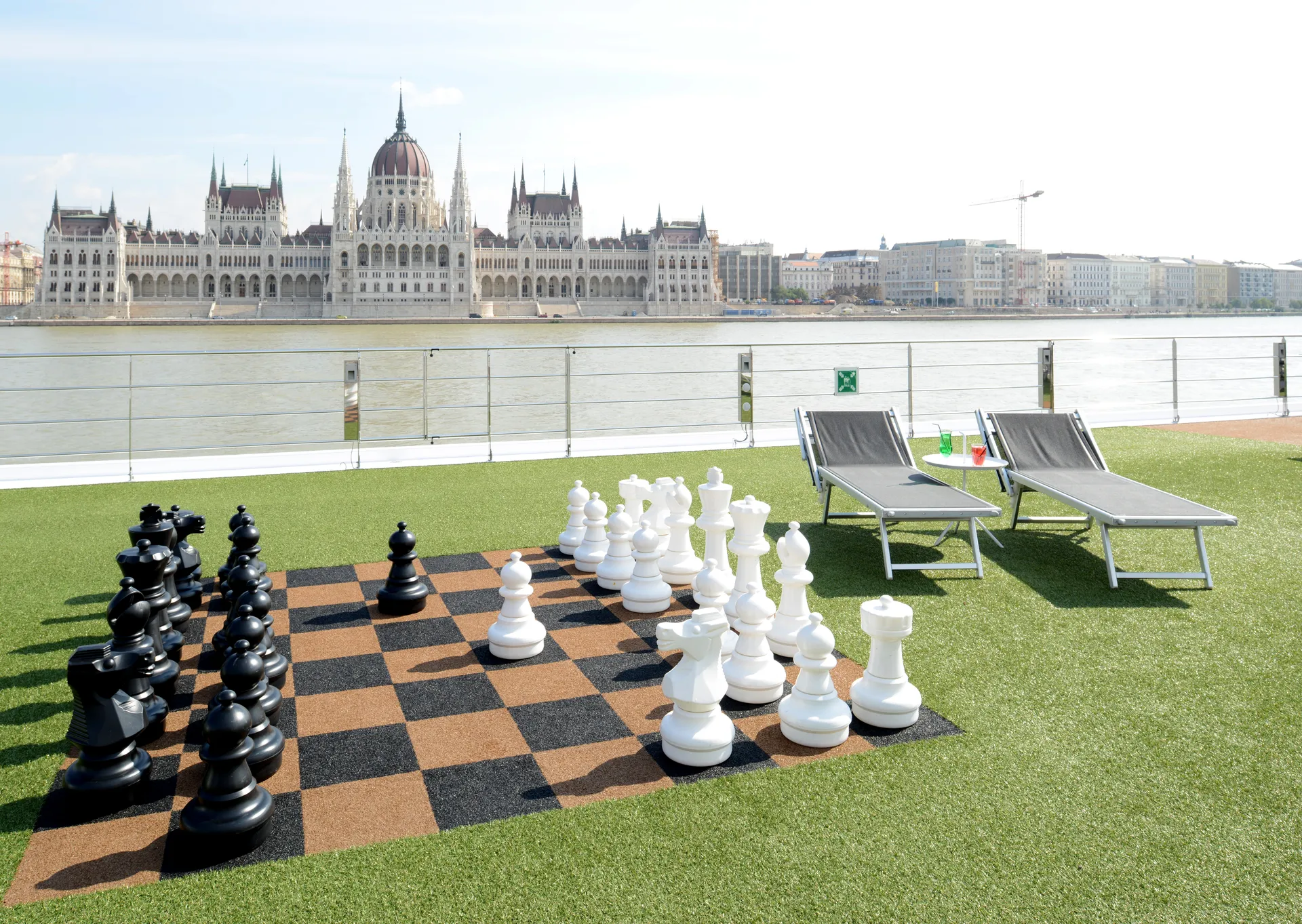
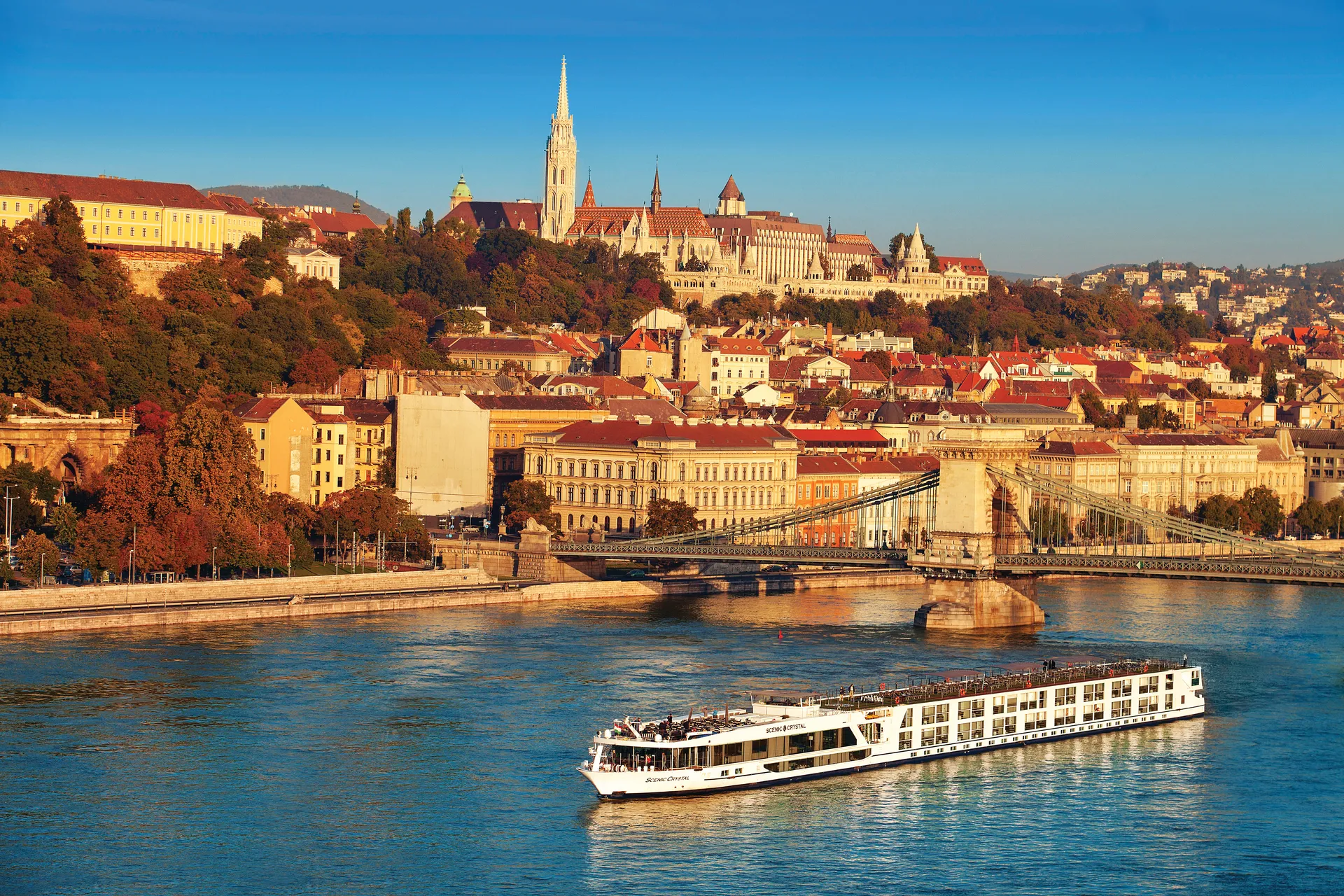
On one bank of the Danube is hilly Buda with its Fisherman’s Bastion and Castle Hill; on the other, there’s flat Pest with its House of Parliament. These two beautiful districts couldn’t be more different. Perhaps that’s why it took until 1873 for the two cities on opposite sides of the river to merge and form Budapest. Right from the start, the landmark of this new metropolis was Buda Castle, a monumental structure that rises high above Budapest and provides mesmerising views across the city. In terms of monumental grandeur, the House of Parliament is certainly on a par with Buda Castle. Erected to mark the millennium celebrations of 1896, this gigantic building was completed in just 22 years. Considering it is 96 metres high, 268 metres long and 118 meters wide, with a total of 691 rooms, that’s an incredible achievement. Budapest is a place where you keep coming across echoes from days gone by. There are traces of Ottoman rule, the extravagant Habsburg era and Soviet socialism – different cultural influences that have combined to create a vibrant, lively city that’s a must-see destination.


Slovakia’s capital is situated exactly at the point where the country meets Austria and Hungary. This makes it the only capital city in the world that borders more than one neighbouring country. Due to its location, Bratislava has been an ethnic melting pot since ancient times. This influence can be seen in every corner of the city. Cultures meet and merge together. The streets of the old town – lined with well-preserved baroque and rococo city palaces – are filled with the sound of people speaking different languages. And it almost seems as though the music of the Habsburg era still echoes through the city.


On one bank of the Danube is hilly Buda with its Fisherman’s Bastion and Castle Hill; on the other, there’s flat Pest with its House of Parliament. These two beautiful districts couldn’t be more different. Perhaps that’s why it took until 1873 for the two cities on opposite sides of the river to merge and form Budapest. Right from the start, the landmark of this new metropolis was Buda Castle, a monumental structure that rises high above Budapest and provides mesmerising views across the city. In terms of monumental grandeur, the House of Parliament is certainly on a par with Buda Castle. Erected to mark the millennium celebrations of 1896, this gigantic building was completed in just 22 years. Considering it is 96 metres high, 268 metres long and 118 meters wide, with a total of 691 rooms, that’s an incredible achievement. Budapest is a place where you keep coming across echoes from days gone by. There are traces of Ottoman rule, the extravagant Habsburg era and Soviet socialism – different cultural influences that have combined to create a vibrant, lively city that’s a must-see destination.


On one bank of the Danube is hilly Buda with its Fisherman’s Bastion and Castle Hill; on the other, there’s flat Pest with its House of Parliament. These two beautiful districts couldn’t be more different. Perhaps that’s why it took until 1873 for the two cities on opposite sides of the river to merge and form Budapest. Right from the start, the landmark of this new metropolis was Buda Castle, a monumental structure that rises high above Budapest and provides mesmerising views across the city. In terms of monumental grandeur, the House of Parliament is certainly on a par with Buda Castle. Erected to mark the millennium celebrations of 1896, this gigantic building was completed in just 22 years. Considering it is 96 metres high, 268 metres long and 118 meters wide, with a total of 691 rooms, that’s an incredible achievement. Budapest is a place where you keep coming across echoes from days gone by. There are traces of Ottoman rule, the extravagant Habsburg era and Soviet socialism – different cultural influences that have combined to create a vibrant, lively city that’s a must-see destination.


These spacious Suites, located on the Sapphire and Diamond Decks, have a private full-length balcony complete with a Scenic Sun Lounge and elegant en-suite bathrooms featuring a large vanity basin and shower.


These Suites located on the Diamond Deck are the ultimate in luxury with more space, impeccable service, thoughtful touches, an outdoor balcony, lounge area and an oversized bathroom.


These Suites on the Diamond Deck are the ultimate in luxury with more space (315ft²), impeccable service, thoughtful touches, an outdoor balcony, lounge area and an oversized bathroom.


At 325ft², these are the largest suites on the ship. Located on the Diamond Deck, both suites enjoy fantastic views of the passing scenery from your private balcony complete with Scenic Sun Lounge. Each Suite has a lounge area and a luxurious bathroom.


Located on the Sapphire and Diamond Decks these stylishly decorated suites feature a full-length outdoor balcony with the exclusive Scenic Sun Lounge and offer private bathrooms with a luxurious vanity basin and shower.


Located in prime locations at the front of the ship on both the Sapphire and Diamond Decks, they offer all the features of our private Balcony Suites with our ingenious Scenic Sun Lounge, but with even more space to relax.


Single Balcony Suite


Standard Suites are located on the Jewel Deck with large picture windows to ensure a great view. They have a spacious design and clever layout alongside all the usual luxurious amenities and furnishings.
Our cruise specialists can help you find the perfect cabin and the best available pricing.
(+886) 02-2721-7300Contact Advisor