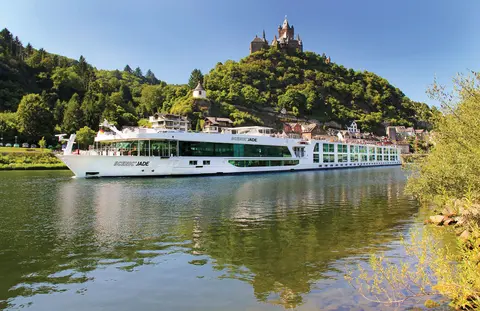
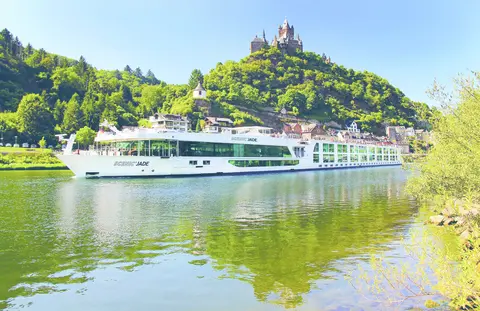
Scenic River CruisesABBT110427.2
Iconic Europe, from Bucharest to Amsterdam with Transylvania
Date
2027-04-11
Duration
21 nights
Departure Port
Bucharest
Romania
Arrival Port
Amsterdam
Netherlands
Rating
Luxury
Theme
—
Date
2027-04-11
Duration
21 nights
Departure Port
Bucharest
Romania
Arrival Port
Amsterdam
Netherlands
Rating
Luxury
Theme
—

Scenic River Cruises
2012
—
2,721 GT
169
—
53
—
—
—
No
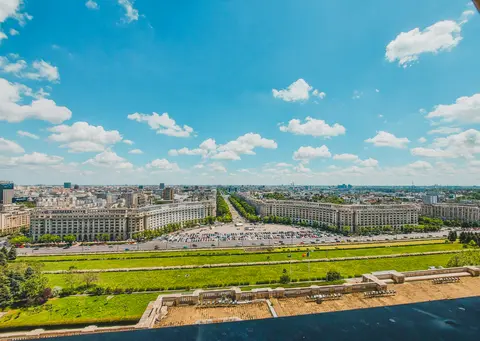
Bucharest, Romania's sprawling and magnificently contradictory capital, layers Belle Époque mansions, communist-era boulevards, and a furiously creative twenty-first-century scene into a city that rewards the curious traveler who looks beyond the obvious. Ceaușescu's colossal Palace of the Parliament — the world's heaviest building and a monument to totalitarian hubris — is unmissable; equally essential is the neighborhood of Floreasca, where design studios, natural wine bars, and acclaimed restaurants have made Bucharest one of Europe's most exciting emerging food capitals. Visit April through June for the most pleasant weather. Transylvania, with Bran Castle and the medieval city of Brașov, lies two hours north through dramatic Carpathian scenery.
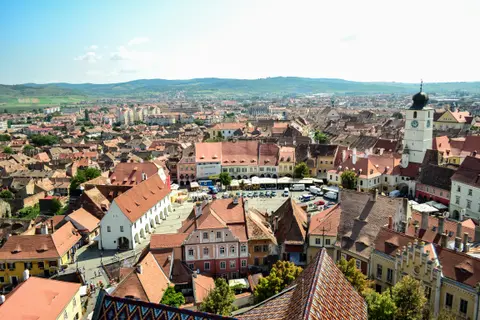
Sibiu is a magnificently preserved medieval Saxon city in Transylvania, where Gothic churches, Baroque palaces, and the famous "roof eyes" create one of Central Europe's most atmospheric cityscapes. Must-dos include exploring the Grand Square and Brukenthal Museum, visiting the fortified Saxon churches of the surrounding countryside, and tasting sarmale and kürtőskalács. Visit May to October, or December for the atmospheric Christmas market.
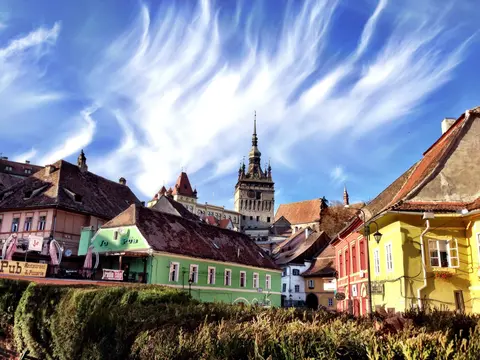
Sighișoara is Europe's best-preserved inhabited medieval citadel, a fortified Saxon hilltop town in Transylvania with guild towers, a clockwork-animated Clock Tower, and the birthplace of Vlad the Impaler. Must-dos include climbing the Clock Tower, walking the Covered Stairway to the Church on the Hill, and attending the Medieval Festival in late July. Visit May to October, or winter for atmospheric snow-covered streets.
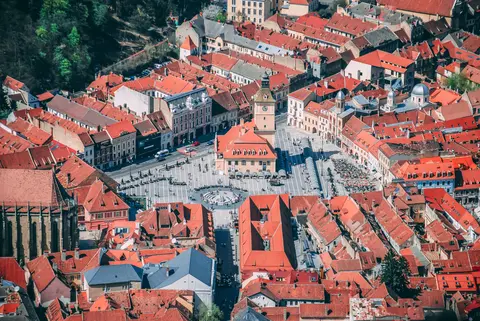
Brasov is a magnificently preserved medieval Saxon city at the foot of the Carpathian Mountains in Transylvania, home to the Gothic Black Church, fortified walls, and proximity to the legendary Bran Castle. Must-dos include exploring the Council Square, tasting sarmale and mici in the old town, and hiking in Piatra Craiului National Park. May through October offers the best weather, with autumn bringing spectacular mountain foliage.
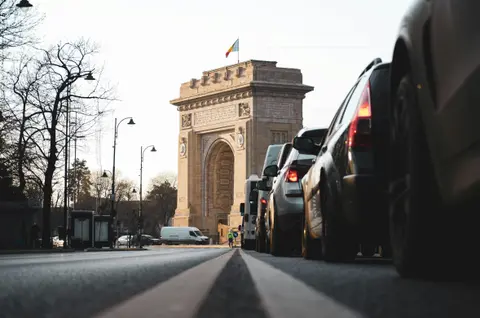
Bucharest, Romania's sprawling and magnificently contradictory capital, layers Belle Époque mansions, communist-era boulevards, and a furiously creative twenty-first-century scene into a city that rewards the curious traveler who looks beyond the obvious. Ceaușescu's colossal Palace of the Parliament — the world's heaviest building and a monument to totalitarian hubris — is unmissable; equally essential is the neighborhood of Floreasca, where design studios, natural wine bars, and acclaimed restaurants have made Bucharest one of Europe's most exciting emerging food capitals. Visit April through June for the most pleasant weather. Transylvania, with Bran Castle and the medieval city of Brașov, lies two hours north through dramatic Carpathian scenery.
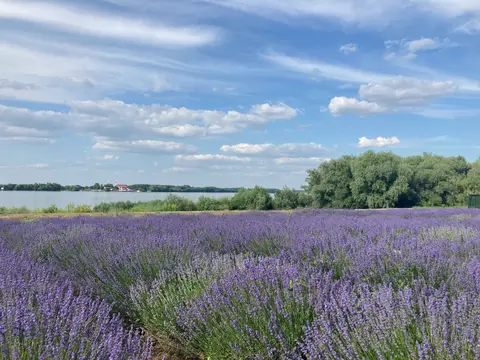
Silistra is an ancient Danube river port in northeastern Bulgaria, founded as the Roman garrison of Durostorum over two thousand years ago. Visitors should explore the remarkably preserved Roman tomb frescoes, climb to the Ottoman Medjidi Tabia fortress for river panoramas, and taste Danubian fish alongside robust local wines. May through September offers the warmest weather and most pleasant conditions for riverside exploration.
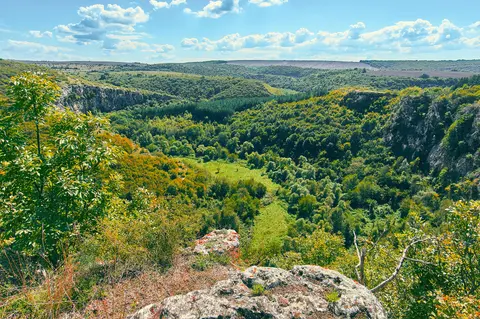
Ruse, Bulgaria's elegant Danube gateway, surprises with a Belle Époque city centre of Austro-Hungarian grandeur — neoclassical facades, ornate fountains, and a Liberty Monument that would not look out of place in Vienna. The city serves as the gateway to the spectacular Rusenski Lom Nature Park, whose limestone canyon shelters medieval rock-carved monasteries of eerie beauty. The remarkable Basarbovo Monastery, still inhabited by monks, clings to cliffs above the turquoise river. Local wineries produce distinguished Mavrud and Cabernet from the nearby Danube plains. May through September offers the most pleasant temperatures for exploration.
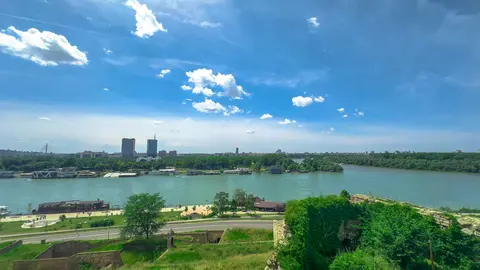
Belgrade, the 'White City' rebuilt at least forty times at the confluence of the Danube and Sava rivers, surprises every visitor with its raw, uncurated vitality — a capital that wears its turbulent history lightly while embracing the present with irresistible energy. The Kalemegdan Fortress, fortified for over two thousand years, offers the most dramatic river panorama on the entire Danube; below it, the Skadarlija cobblestone quarter fills nightly with kafana musicians and the aromas of Serbian rakija and roasted meats. Belgrade's nightlife — centered on the floating river clubs called splavovi — is genuinely legendary in Europe. Spring and early autumn offer the most comfortable conditions; the Iron Gate gorge is two hours downstream by river.
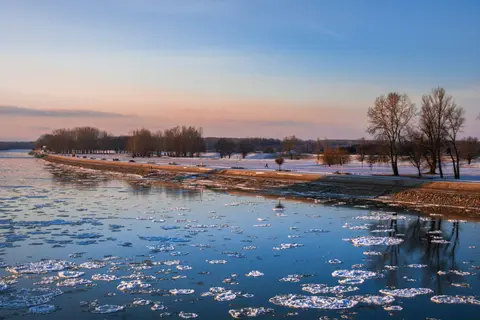
Osijek, Croatia's elegant Slavonian capital on the Drava River, enchants with its superbly preserved eighteenth-century baroque fortress quarter, rich Habsburg heritage, and a culinary tradition centred on paprika-cured kulen sausage and the iconic fiš paprikaš river stew. Visitors should not miss an evening promenade along the Drava waterfront and a wine tasting in the nearby Baranja region, where Graševina whites achieve remarkable depth. The ideal season to visit is late spring through early autumn, when the river light is at its most luminous and the fortress courtyards come alive with open-air concerts and festivals.
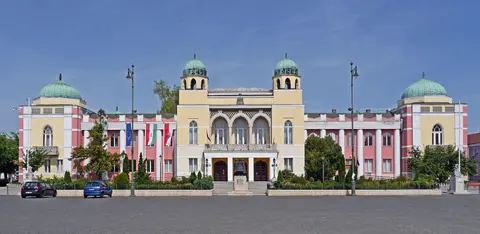
Mohács is a historically significant Hungarian town on the Danube, renowned for the pivotal 1526 battle and the UNESCO-listed Busójárás winter festival featuring dramatic masked processions. Visitors should not miss the fiery halászlé fisherman's soup prepared with fresh Danube catch, and a wine excursion to the nearby Villány appellation for world-class reds. The ideal season to visit is late spring through early autumn for warm riverside days, though February offers the unforgettable spectacle of Busójárás.
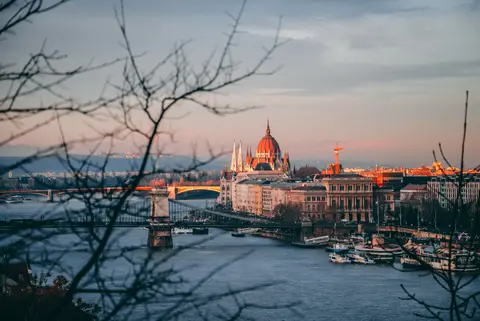
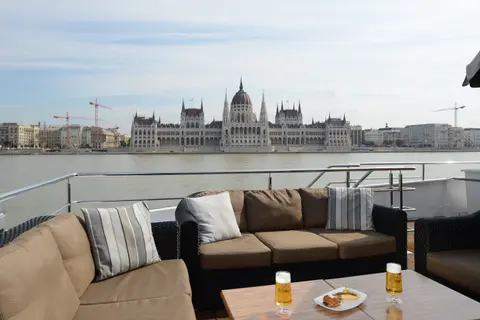
Budapest, divided by the Danube into the hilly Buda of thermal baths and medieval castle lanes on one bank and the grand Pest of coffee-house culture and Art Nouveau splendor on the other, delivers the most theatrical first impression of any European capital — whether approached by river as the neo-Gothic Parliament materializes from the water or by night from the Citadella's sweep of illuminated panorama below. The city's celebrated thermal bath culture, rooted in Ottoman-era hammams and perfected in palatial Secession-era pools like the Széchenyi, is an experience entirely unlike anything else in Europe. Visit spring and autumn for comfortable temperatures; Vienna is two and a half hours west by train.
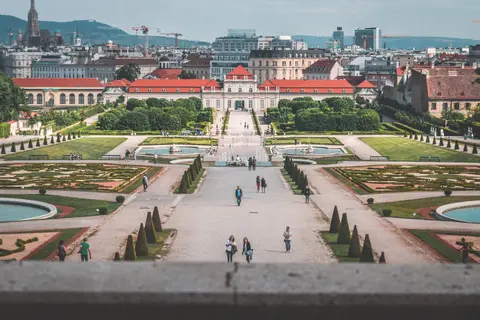
The port of Vienna is a cultural gem along the Danube River, famous for its stunning architecture, rich history, and vibrant culinary scene. Must-do experiences include sampling authentic Wiener Schnitzel and visiting the picturesque village of Dürnstein. The best season to visit is spring or early fall, when the city's gardens bloom and outdoor activities abound.
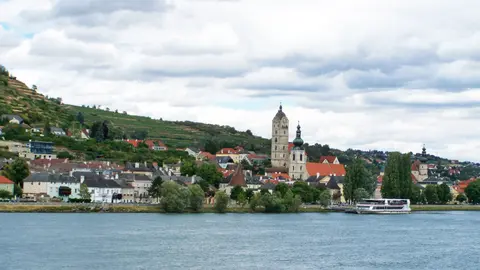
Krems an der Donau has stood at the eastern gateway of the Wachau Valley — Austria's most beautiful stretch of the Danube — since Emperor Otto III granted it market rights in 995 AD, making it one of the country's oldest documented towns. The UNESCO-listed Wachau landscape surrounding the city is a masterpiece of vineyard terraces, Baroque abbeys, and medieval castles reflected in the river; the Grüner Veltliner and Riesling wines produced here are among Austria's finest. Must-dos include visiting the monumental Melk Abbey and cycling the Danube Cycle Path through the valley. Krems is most enchanting April through October, with the harvest season in September offering wine cellar tastings of exceptional depth.
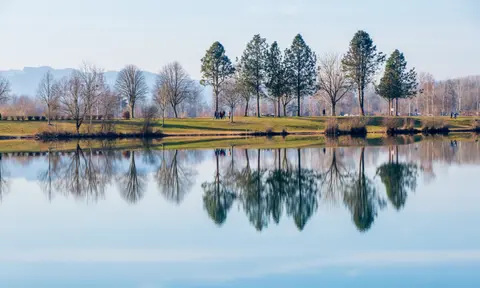
Brandstatt, Austria, is a charming port on the Danube River, rich in history and culture. Visitors must try the traditional Wiener Schnitzel and Apfelstrudel while exploring local markets. The best time to visit is during the spring and summer months, when the region's natural beauty and vibrant atmosphere are at their peak.
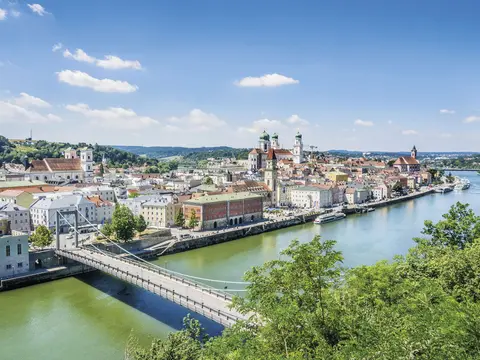
Passau occupies one of Central Europe's most dramatic natural stages — a narrow peninsula at the confluence of three rivers, the Danube, Inn, and Ilz, where the old town's baroque spires and shuttered merchants' houses crowd the very tip of the land between the waters. St. Stephen's Cathedral houses the world's largest church organ, a 17,974-pipe instrument whose daily concerts fill the nave with a sound that seems architectural in its density. The Veste Oberhaus fortress above the city commands panoramic views across three countries on clear days. Passau is a classic Danube river cruise departure point; spring and early autumn, when the river runs high and the light turns golden, are the finest seasons.
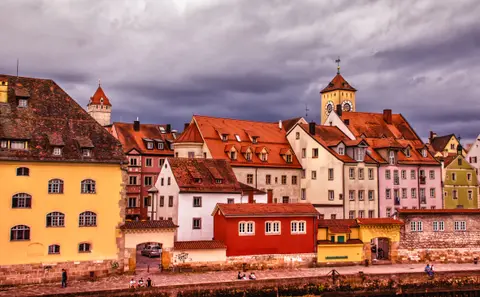
Regensburg, Bavaria's medieval masterpiece on the Danube, is one of Central Europe's most intact ancient cities — its Roman origins visible in the Porta Praetoria stone gate, its medieval prosperity celebrated in the soaring twin towers of St. Peter's Cathedral and the twelfth-century Stone Bridge. UNESCO World Heritage status acknowledges a skyline dotted with patrician towers, while the famous Historische Wurstküchl, Germany's oldest operating sausage kitchen, has been serving spit-grilled bratwurst since the 1140s. The surrounding hills produce excellent Bavarian whites. May through September offers the most convivial riverbank atmosphere.
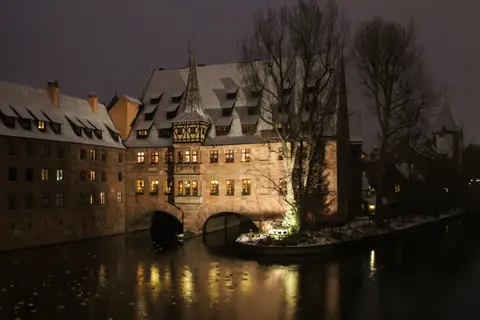
Nuremberg commands the imagination on two levels: as the glittering medieval city where Holy Roman Emperors held court, Albrecht Dürer was born, and craftsmen produced the first pocket watch — and as the site of the 20th century's darkest chapter, where Nazi rallies and subsequent war crimes trials left permanent marks on European history and conscience. The Kaiserburg castle crowning the hill above the perfectly preserved old town offers sweeping views of a cityscape that, despite wartime bombing, remains one of Germany's most beautiful. The Documentation Centre on the former Nazi Rally Grounds is essential, sobering history; the Christmas Market on the Hauptmarkt, held since 1628, is among Europe's finest. Visit May through October or December.
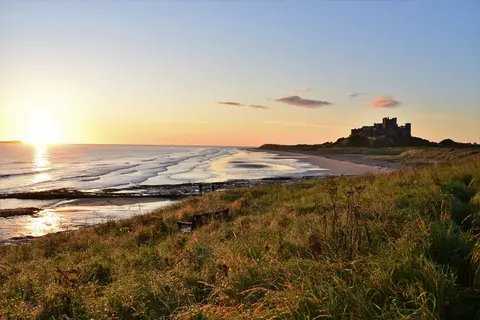
Bamberg, the 'Franconian Rome,' is a UNESCO World Heritage city whose medieval old town — seven hills, four Romanesque-Gothic cathedral towers, and an Old Town Hall balanced impossibly on an island in the Regnitz River — survived World War II entirely intact, a miracle of preservation unique in Germany. The city is equally celebrated for its extraordinary smoked beer, Rauchbier, a speciality brewed in family-owned breweries for centuries and best tasted in the old quarter's atmospheric taverns beside a plate of smoked meats. Spring and early summer are ideal for the surrounding Franconian countryside in bloom. Nuremberg is forty minutes by rail.
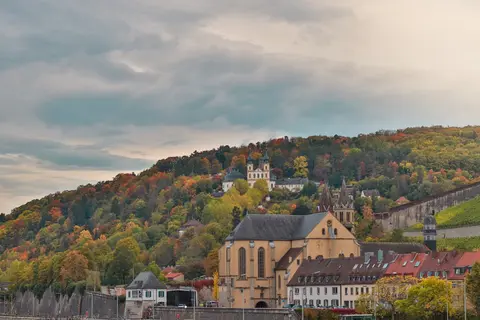
Würzburg, presiding over the Main River at the northern gateway of the Romantic Road, is Bavaria's most elegantly baroque city — its skyline commanded by the medieval Marienberg Fortress and its streets presided over by the magnificent Residenz, a UNESCO-listed princely palace whose frescoed Treppenhaus ceiling by Tiepolo is considered the largest fresco in the world. The surrounding Franconian wine country produces some of Germany's most distinctive Silvaner and Riesling, sold in the iconic bocksbeutel flask from cellars carved directly beneath the old city. Spring through autumn reveals the vine-clad hillsides in their most photogenic splendor; the historic Weinfest am Stein wine festival each September is a highlight of the Franconian calendar.
Day 1
Bucharest, Romania's sprawling and magnificently contradictory capital, layers Belle Époque mansions, communist-era boulevards, and a furiously creative twenty-first-century scene into a city that rewards the curious traveler who looks beyond the obvious. Ceaușescu's colossal Palace of the Parliament — the world's heaviest building and a monument to totalitarian hubris — is unmissable; equally essential is the neighborhood of Floreasca, where design studios, natural wine bars, and acclaimed restaurants have made Bucharest one of Europe's most exciting emerging food capitals. Visit April through June for the most pleasant weather. Transylvania, with Bran Castle and the medieval city of Brașov, lies two hours north through dramatic Carpathian scenery.
Day 3
Sibiu is a magnificently preserved medieval Saxon city in Transylvania, where Gothic churches, Baroque palaces, and the famous "roof eyes" create one of Central Europe's most atmospheric cityscapes. Must-dos include exploring the Grand Square and Brukenthal Museum, visiting the fortified Saxon churches of the surrounding countryside, and tasting sarmale and kürtőskalács. Visit May to October, or December for the atmospheric Christmas market.
Sighișoara is Europe's best-preserved inhabited medieval citadel, a fortified Saxon hilltop town in Transylvania with guild towers, a clockwork-animated Clock Tower, and the birthplace of Vlad the Impaler. Must-dos include climbing the Clock Tower, walking the Covered Stairway to the Church on the Hill, and attending the Medieval Festival in late July. Visit May to October, or winter for atmospheric snow-covered streets.
Day 4
Brasov is a magnificently preserved medieval Saxon city at the foot of the Carpathian Mountains in Transylvania, home to the Gothic Black Church, fortified walls, and proximity to the legendary Bran Castle. Must-dos include exploring the Council Square, tasting sarmale and mici in the old town, and hiking in Piatra Craiului National Park. May through October offers the best weather, with autumn bringing spectacular mountain foliage.
Day 5
Bucharest, Romania's sprawling and magnificently contradictory capital, layers Belle Époque mansions, communist-era boulevards, and a furiously creative twenty-first-century scene into a city that rewards the curious traveler who looks beyond the obvious. Ceaușescu's colossal Palace of the Parliament — the world's heaviest building and a monument to totalitarian hubris — is unmissable; equally essential is the neighborhood of Floreasca, where design studios, natural wine bars, and acclaimed restaurants have made Bucharest one of Europe's most exciting emerging food capitals. Visit April through June for the most pleasant weather. Transylvania, with Bran Castle and the medieval city of Brașov, lies two hours north through dramatic Carpathian scenery.
Day 7
Silistra is an ancient Danube river port in northeastern Bulgaria, founded as the Roman garrison of Durostorum over two thousand years ago. Visitors should explore the remarkably preserved Roman tomb frescoes, climb to the Ottoman Medjidi Tabia fortress for river panoramas, and taste Danubian fish alongside robust local wines. May through September offers the warmest weather and most pleasant conditions for riverside exploration.
Day 8
Ruse, Bulgaria's elegant Danube gateway, surprises with a Belle Époque city centre of Austro-Hungarian grandeur — neoclassical facades, ornate fountains, and a Liberty Monument that would not look out of place in Vienna. The city serves as the gateway to the spectacular Rusenski Lom Nature Park, whose limestone canyon shelters medieval rock-carved monasteries of eerie beauty. The remarkable Basarbovo Monastery, still inhabited by monks, clings to cliffs above the turquoise river. Local wineries produce distinguished Mavrud and Cabernet from the nearby Danube plains. May through September offers the most pleasant temperatures for exploration.
Day 9
Day 10
Belgrade, the 'White City' rebuilt at least forty times at the confluence of the Danube and Sava rivers, surprises every visitor with its raw, uncurated vitality — a capital that wears its turbulent history lightly while embracing the present with irresistible energy. The Kalemegdan Fortress, fortified for over two thousand years, offers the most dramatic river panorama on the entire Danube; below it, the Skadarlija cobblestone quarter fills nightly with kafana musicians and the aromas of Serbian rakija and roasted meats. Belgrade's nightlife — centered on the floating river clubs called splavovi — is genuinely legendary in Europe. Spring and early autumn offer the most comfortable conditions; the Iron Gate gorge is two hours downstream by river.
Day 11
Osijek, Croatia's elegant Slavonian capital on the Drava River, enchants with its superbly preserved eighteenth-century baroque fortress quarter, rich Habsburg heritage, and a culinary tradition centred on paprika-cured kulen sausage and the iconic fiš paprikaš river stew. Visitors should not miss an evening promenade along the Drava waterfront and a wine tasting in the nearby Baranja region, where Graševina whites achieve remarkable depth. The ideal season to visit is late spring through early autumn, when the river light is at its most luminous and the fortress courtyards come alive with open-air concerts and festivals.
Day 12
Mohács is a historically significant Hungarian town on the Danube, renowned for the pivotal 1526 battle and the UNESCO-listed Busójárás winter festival featuring dramatic masked processions. Visitors should not miss the fiery halászlé fisherman's soup prepared with fresh Danube catch, and a wine excursion to the nearby Villány appellation for world-class reds. The ideal season to visit is late spring through early autumn for warm riverside days, though February offers the unforgettable spectacle of Busójárás.
Day 13
Budapest, divided by the Danube into the hilly Buda of thermal baths and medieval castle lanes on one bank and the grand Pest of coffee-house culture and Art Nouveau splendor on the other, delivers the most theatrical first impression of any European capital — whether approached by river as the neo-Gothic Parliament materializes from the water or by night from the Citadella's sweep of illuminated panorama below. The city's celebrated thermal bath culture, rooted in Ottoman-era hammams and perfected in palatial Secession-era pools like the Széchenyi, is an experience entirely unlike anything else in Europe. Visit spring and autumn for comfortable temperatures; Vienna is two and a half hours west by train.
Day 15
The port of Vienna is a cultural gem along the Danube River, famous for its stunning architecture, rich history, and vibrant culinary scene. Must-do experiences include sampling authentic Wiener Schnitzel and visiting the picturesque village of Dürnstein. The best season to visit is spring or early fall, when the city's gardens bloom and outdoor activities abound.
Day 17
Krems an der Donau has stood at the eastern gateway of the Wachau Valley — Austria's most beautiful stretch of the Danube — since Emperor Otto III granted it market rights in 995 AD, making it one of the country's oldest documented towns. The UNESCO-listed Wachau landscape surrounding the city is a masterpiece of vineyard terraces, Baroque abbeys, and medieval castles reflected in the river; the Grüner Veltliner and Riesling wines produced here are among Austria's finest. Must-dos include visiting the monumental Melk Abbey and cycling the Danube Cycle Path through the valley. Krems is most enchanting April through October, with the harvest season in September offering wine cellar tastings of exceptional depth.
Day 18
Brandstatt, Austria, is a charming port on the Danube River, rich in history and culture. Visitors must try the traditional Wiener Schnitzel and Apfelstrudel while exploring local markets. The best time to visit is during the spring and summer months, when the region's natural beauty and vibrant atmosphere are at their peak.
Passau occupies one of Central Europe's most dramatic natural stages — a narrow peninsula at the confluence of three rivers, the Danube, Inn, and Ilz, where the old town's baroque spires and shuttered merchants' houses crowd the very tip of the land between the waters. St. Stephen's Cathedral houses the world's largest church organ, a 17,974-pipe instrument whose daily concerts fill the nave with a sound that seems architectural in its density. The Veste Oberhaus fortress above the city commands panoramic views across three countries on clear days. Passau is a classic Danube river cruise departure point; spring and early autumn, when the river runs high and the light turns golden, are the finest seasons.
Day 19
Regensburg, Bavaria's medieval masterpiece on the Danube, is one of Central Europe's most intact ancient cities — its Roman origins visible in the Porta Praetoria stone gate, its medieval prosperity celebrated in the soaring twin towers of St. Peter's Cathedral and the twelfth-century Stone Bridge. UNESCO World Heritage status acknowledges a skyline dotted with patrician towers, while the famous Historische Wurstküchl, Germany's oldest operating sausage kitchen, has been serving spit-grilled bratwurst since the 1140s. The surrounding hills produce excellent Bavarian whites. May through September offers the most convivial riverbank atmosphere.
Day 20
Nuremberg commands the imagination on two levels: as the glittering medieval city where Holy Roman Emperors held court, Albrecht Dürer was born, and craftsmen produced the first pocket watch — and as the site of the 20th century's darkest chapter, where Nazi rallies and subsequent war crimes trials left permanent marks on European history and conscience. The Kaiserburg castle crowning the hill above the perfectly preserved old town offers sweeping views of a cityscape that, despite wartime bombing, remains one of Germany's most beautiful. The Documentation Centre on the former Nazi Rally Grounds is essential, sobering history; the Christmas Market on the Hauptmarkt, held since 1628, is among Europe's finest. Visit May through October or December.
Day 21
Bamberg, the 'Franconian Rome,' is a UNESCO World Heritage city whose medieval old town — seven hills, four Romanesque-Gothic cathedral towers, and an Old Town Hall balanced impossibly on an island in the Regnitz River — survived World War II entirely intact, a miracle of preservation unique in Germany. The city is equally celebrated for its extraordinary smoked beer, Rauchbier, a speciality brewed in family-owned breweries for centuries and best tasted in the old quarter's atmospheric taverns beside a plate of smoked meats. Spring and early summer are ideal for the surrounding Franconian countryside in bloom. Nuremberg is forty minutes by rail.
Day 22
Würzburg, presiding over the Main River at the northern gateway of the Romantic Road, is Bavaria's most elegantly baroque city — its skyline commanded by the medieval Marienberg Fortress and its streets presided over by the magnificent Residenz, a UNESCO-listed princely palace whose frescoed Treppenhaus ceiling by Tiepolo is considered the largest fresco in the world. The surrounding Franconian wine country produces some of Germany's most distinctive Silvaner and Riesling, sold in the iconic bocksbeutel flask from cellars carved directly beneath the old city. Spring through autumn reveals the vine-clad hillsides in their most photogenic splendor; the historic Weinfest am Stein wine festival each September is a highlight of the Franconian calendar.


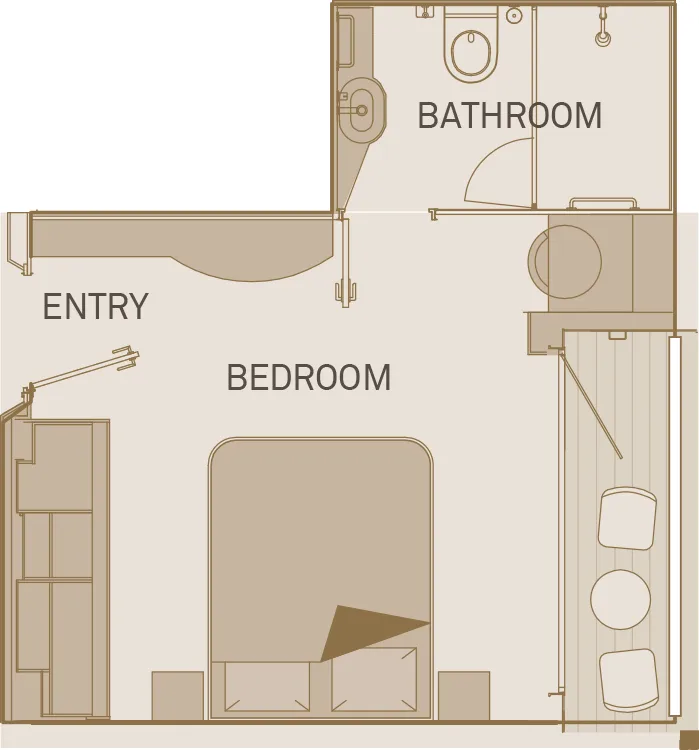
These spacious Suites, located on the Sapphire and Diamond Decks, have a private full-length balcony complete with a Scenic Sun Lounge and elegant en-suite bathrooms featuring a large vanity basin and shower.
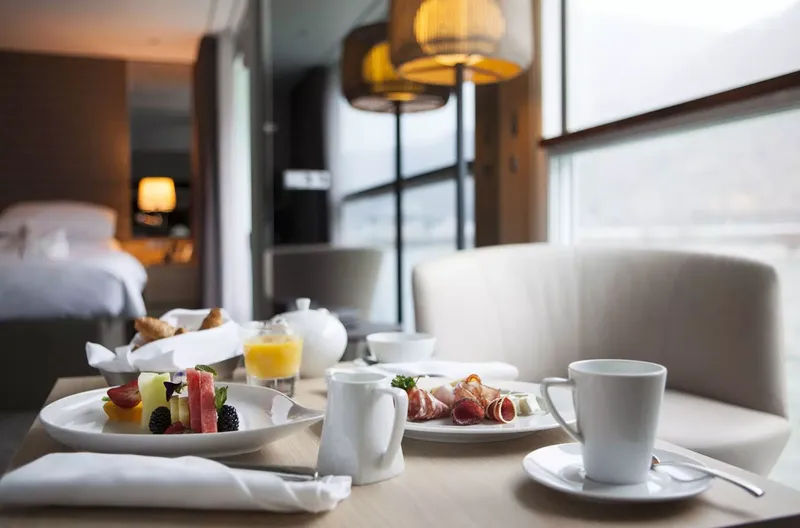
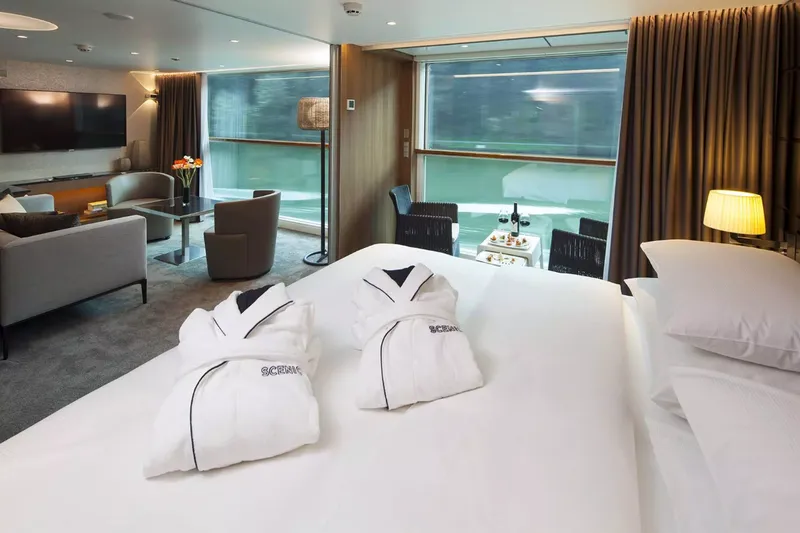
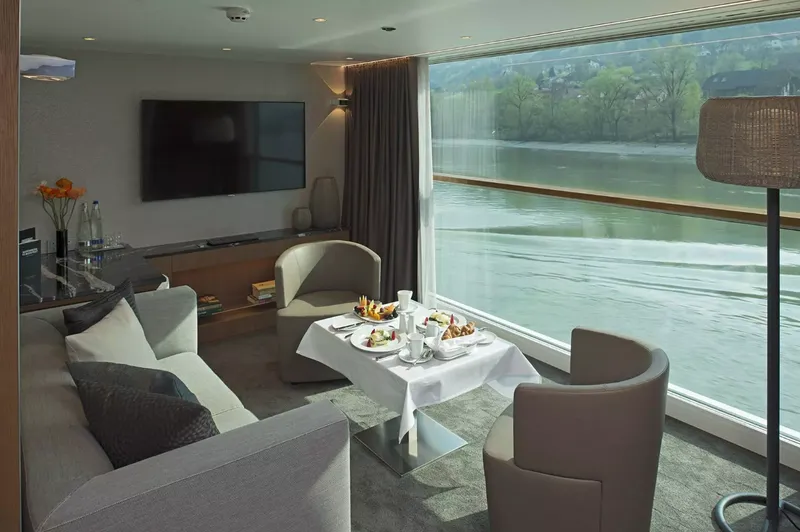
These Suites located on the Diamond Deck are the ultimate in luxury with more space, impeccable service, thoughtful touches, an outdoor balcony, lounge area and an oversized bathroom.
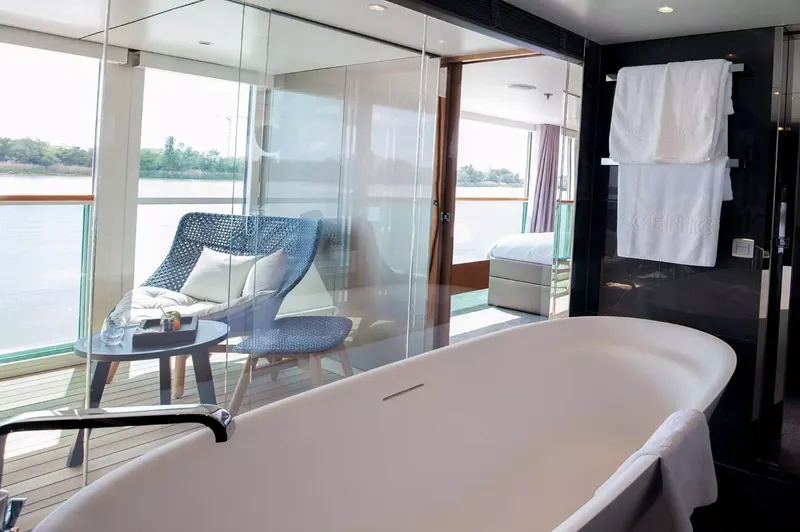
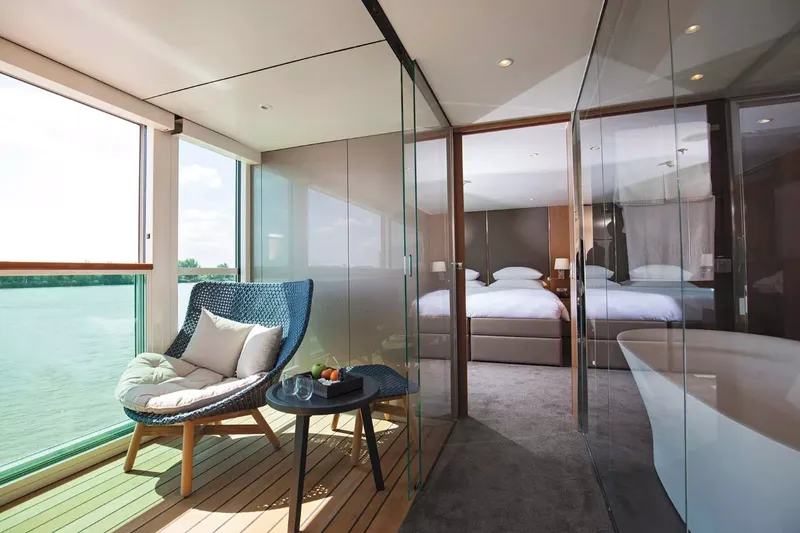
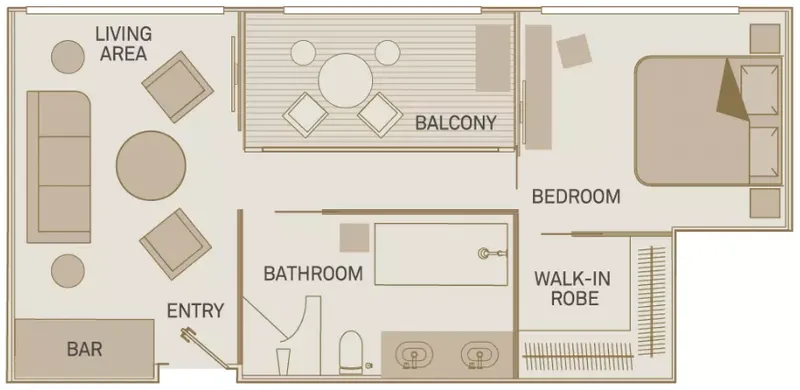
These Suites on the Diamond Deck are the ultimate in luxury with more space (315ft²), impeccable service, thoughtful touches, an outdoor balcony, lounge area and an oversized bathroom.
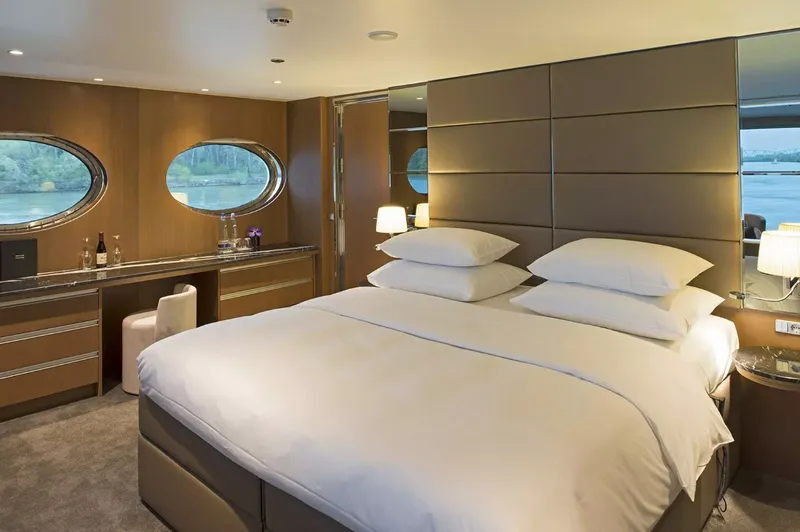
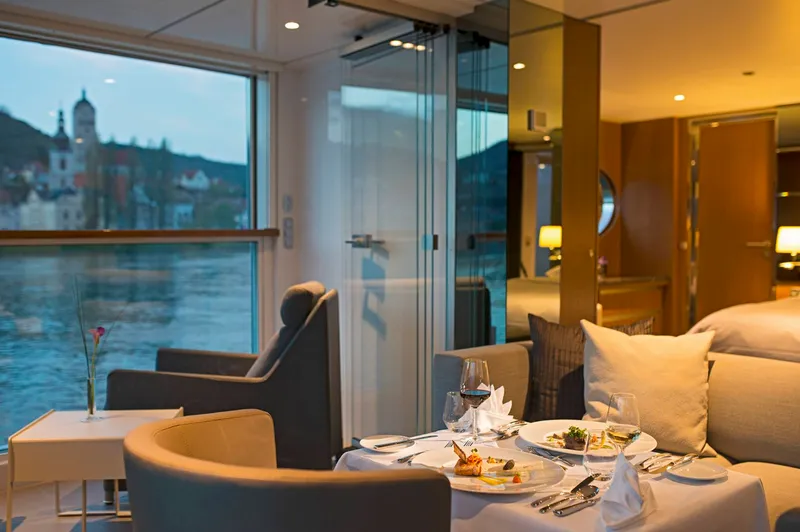
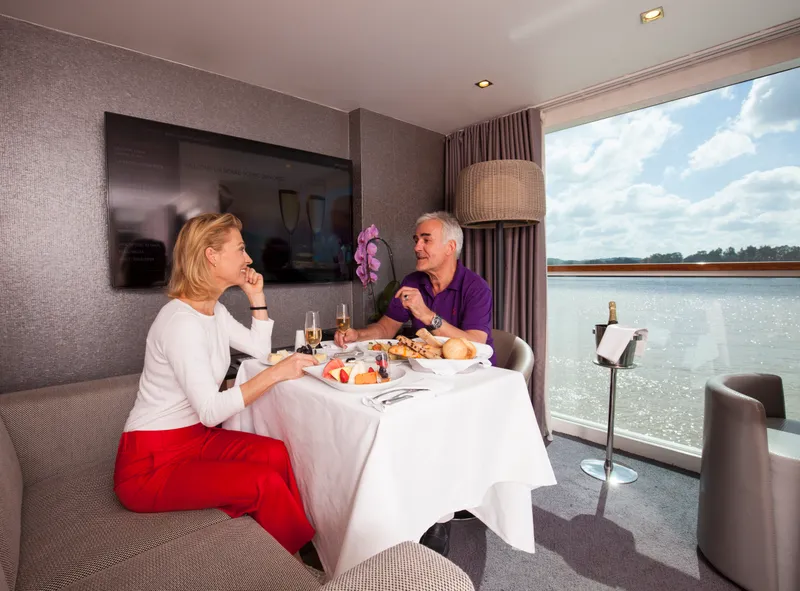
At 325ft², these are the largest suites on the ship. Located on the Diamond Deck, both suites enjoy fantastic views of the passing scenery from your private balcony complete with Scenic Sun Lounge. Each Suite has a lounge area and a luxurious bathroom.
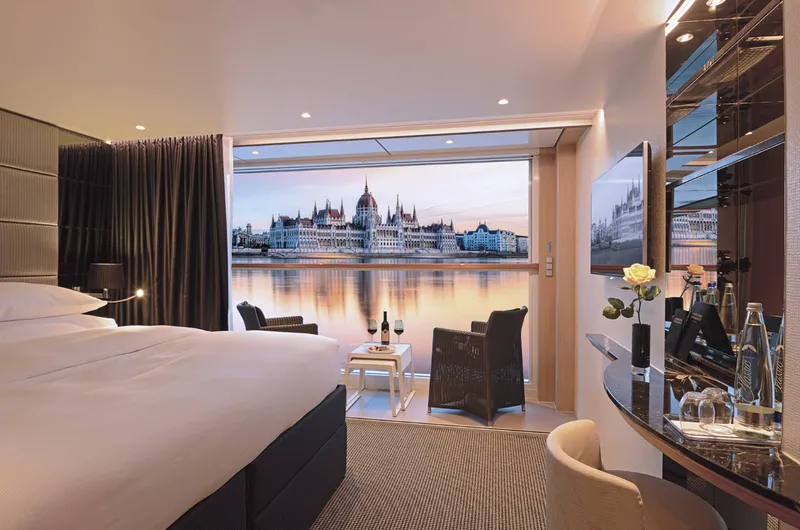
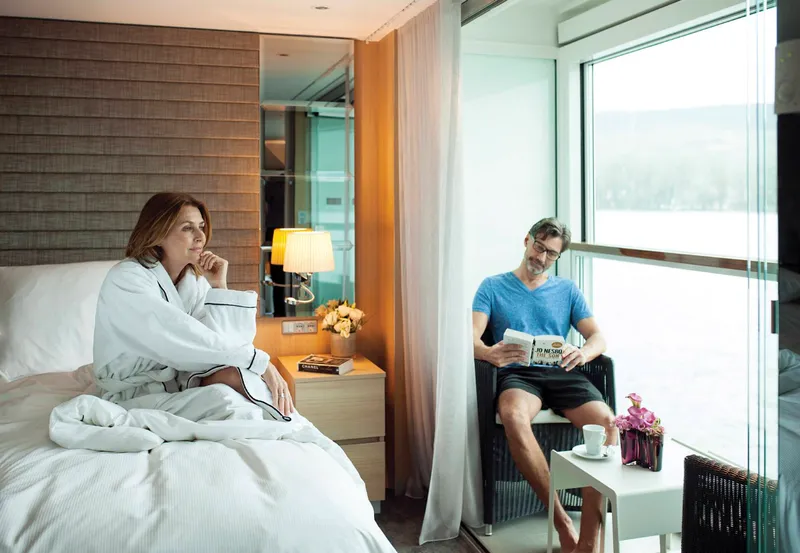
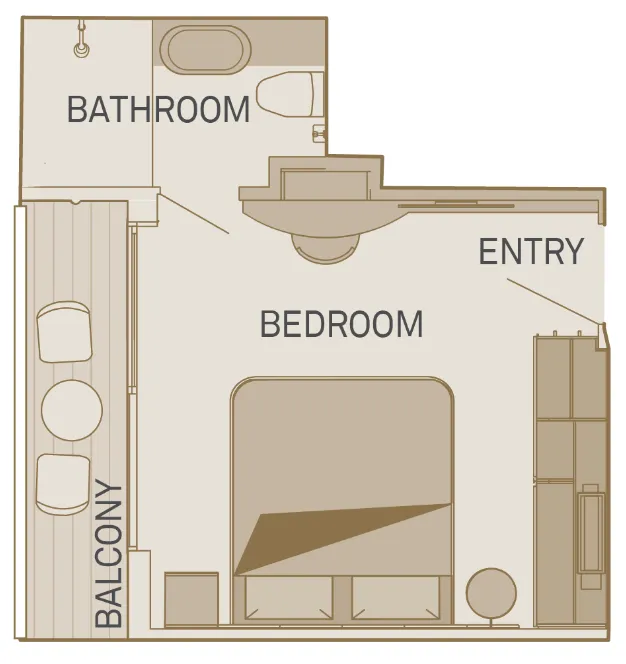
Located on the Sapphire and Diamond Decks these stylishly decorated suites feature a full-length outdoor balcony with the exclusive Scenic Sun Lounge and offer private bathrooms with a luxurious vanity basin and shower.
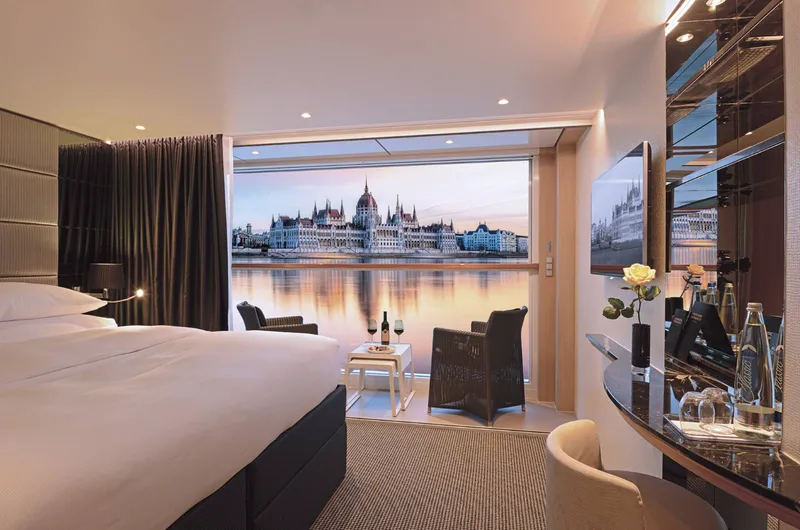
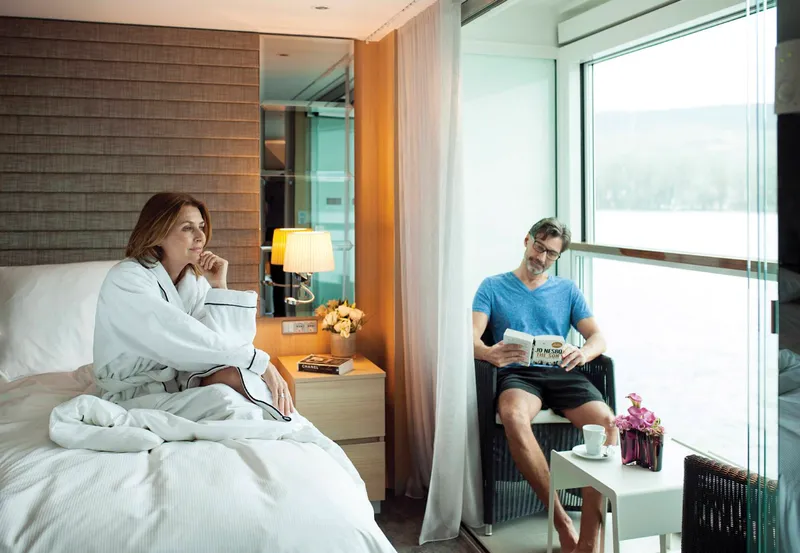
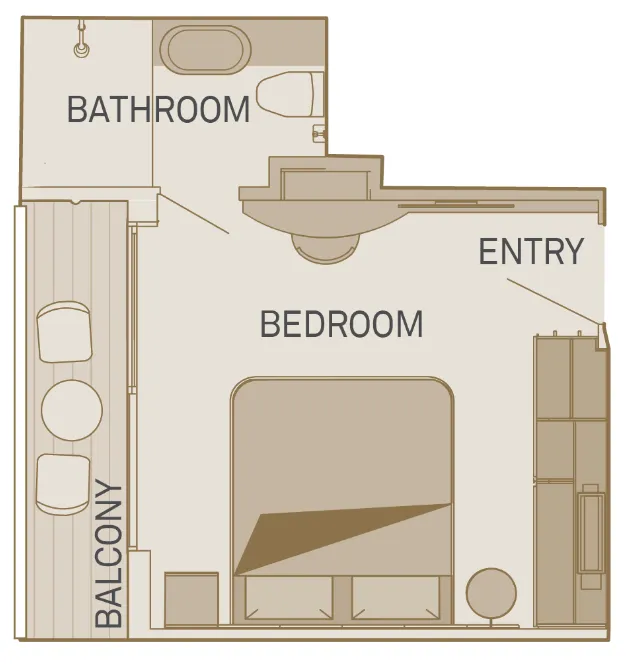
Located in prime locations at the front of the ship on both the Sapphire and Diamond Decks, they offer all the features of our private Balcony Suites with our ingenious Scenic Sun Lounge, but with even more space to relax.
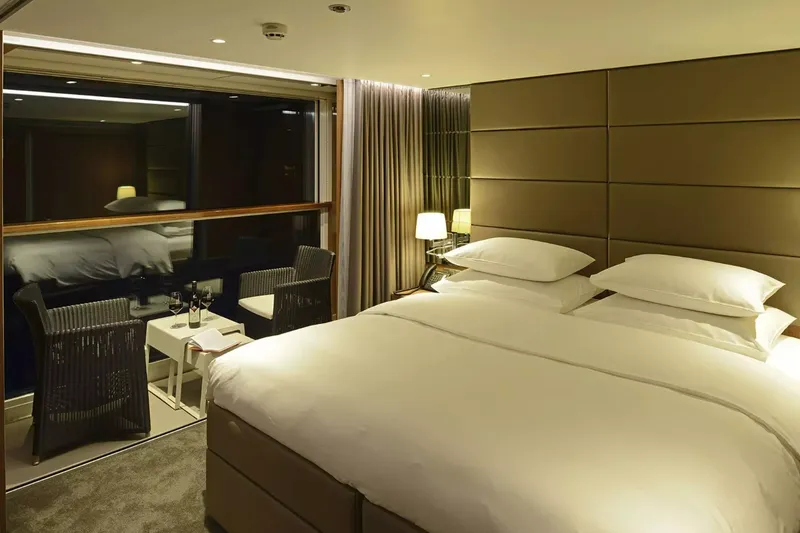
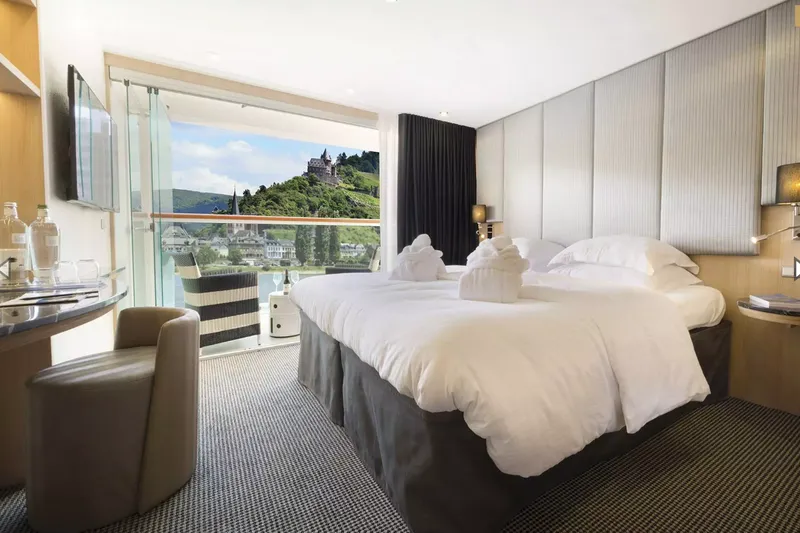
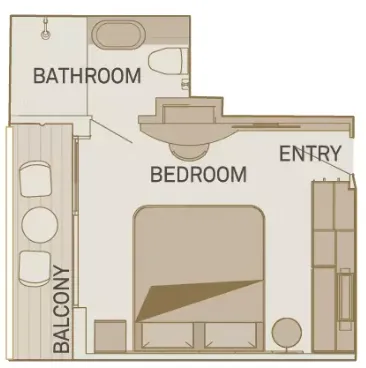
The Scenic Jade Single Balcony Suite (Category BS) on the Sapphire Deck is a dedicated 205 sq ft (19m²) cabin for solo travelers featuring a private Scenic Sun Lounge, 24/7 all-weather balcony access, and personalized butler service. It includes a queen-size Slumber Bed with Egyptian cotton, marble bathroom, daily-restocked mini-bar, and full butler service.
Key Cabin Features & Amenities:
Scenic Sun Lounge: An enclosed balcony system with floor-to-ceiling tinted windows that converts into an open-air balcony at the push of a button.
Butler Service: Includes valet service, shoeshine, daily cocktail/tea service, and complimentary laundry concierge.
Sleeping & Comfort: Queen-size Slumber Bed with Egyptian cotton linen, a pillow menu, and individual climate control.
Bathroom: Spacious, with L'Occitane toiletries, hair dryer, bathrobes, and slippers.
Technology: Samsung HDTV linked to a Mac mini system (infotainment) and complimentary WiFi.
Location: Located on the Sapphire Deck, designed specifically to accommodate one guest.
Added Perks: Complimentary mini-bar restocked daily and twice-daily cabin service.
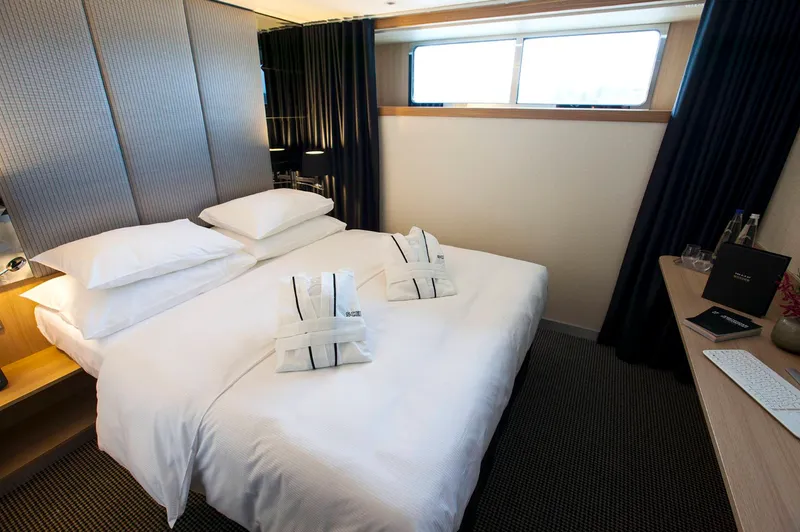
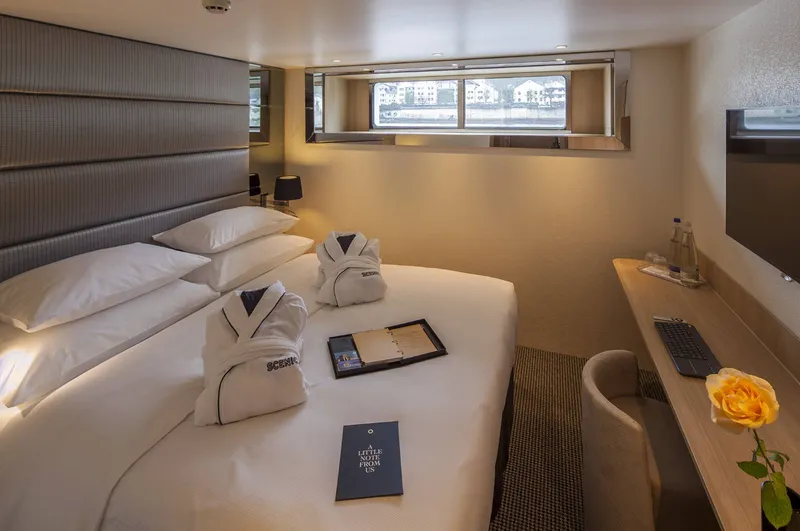
Standard Suites are located on the Jewel Deck with large picture windows to ensure a great view. They have a spacious design and clever layout alongside all the usual luxurious amenities and furnishings.
Our cruise specialists can help you find the perfect cabin and the best available pricing.
(+886) 02-2721-7300Contact Advisor