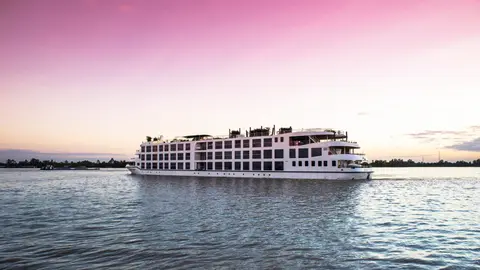
Scenic River CruisesVIML101027.1
Journey along the Mekong
Date
October 10, 2027
Duration
7 nights
Departure Port
Ho Chi Minh City · Vietnam
Arrival Port
Bangkok · Thailand
Rating
Luxury
Theme
—
Date
October 10, 2027
Duration
7 nights
Departure Port
Ho Chi Minh City · Vietnam
Arrival Port
Bangkok · Thailand
Rating
Luxury
Theme
—
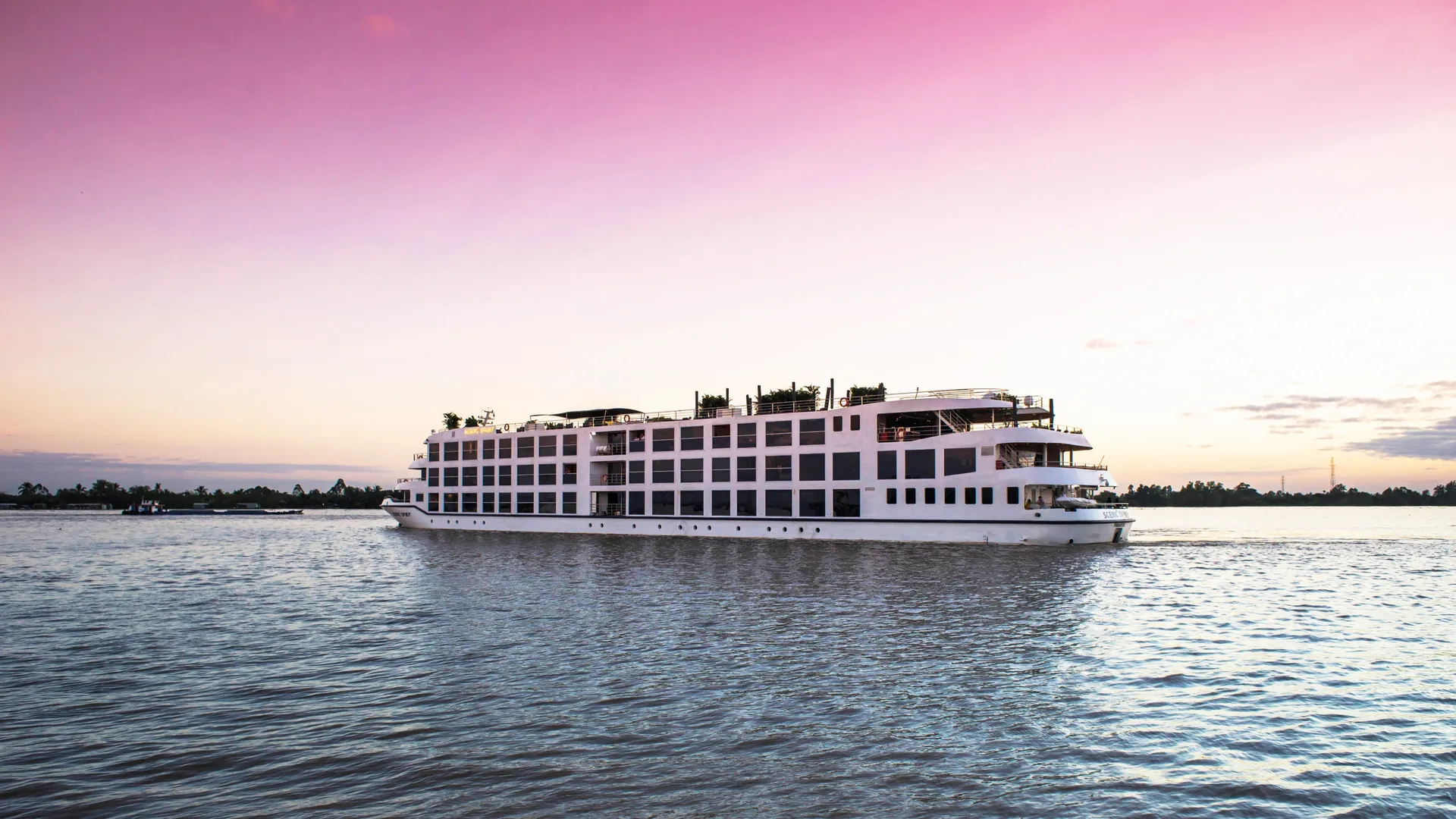
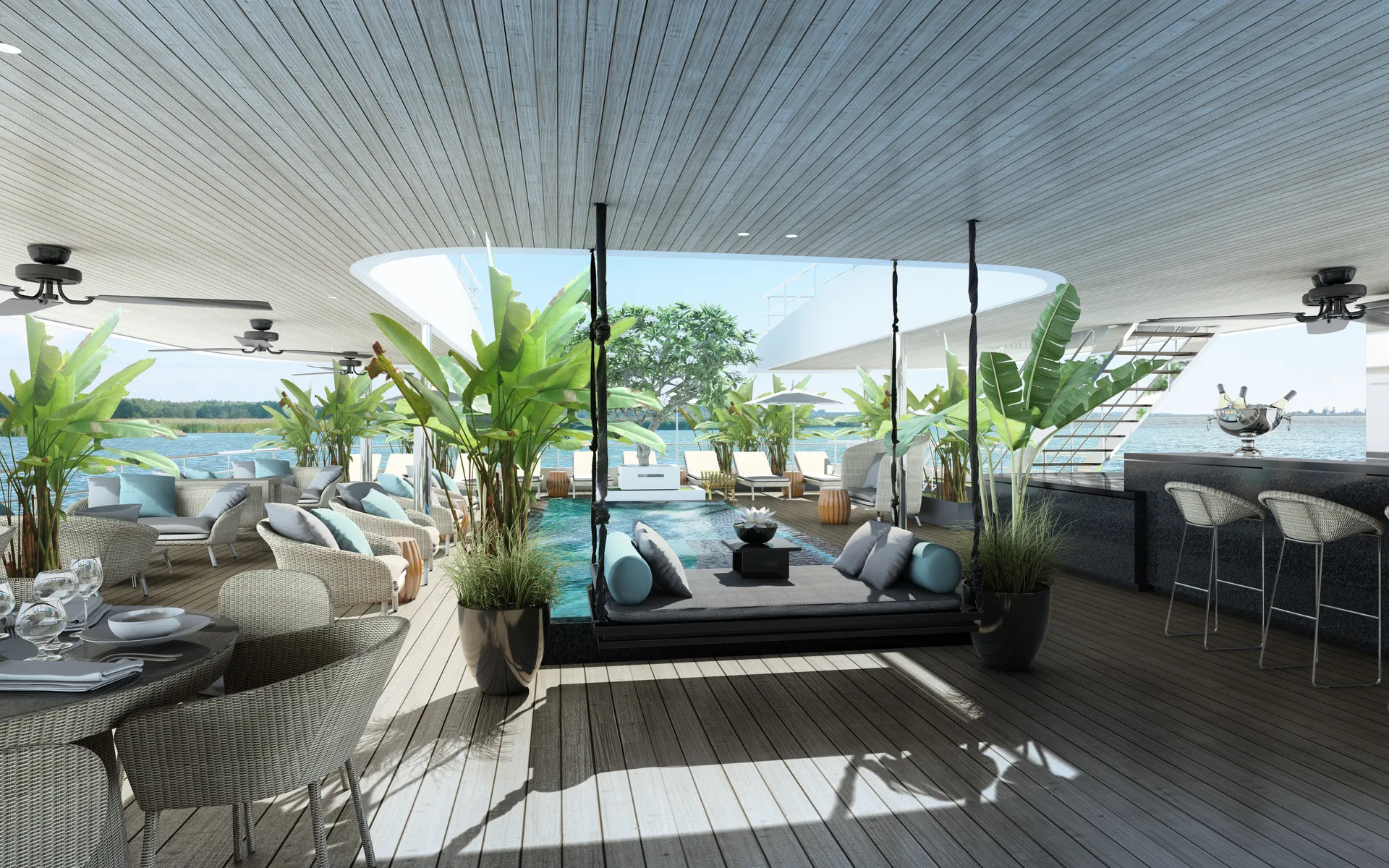
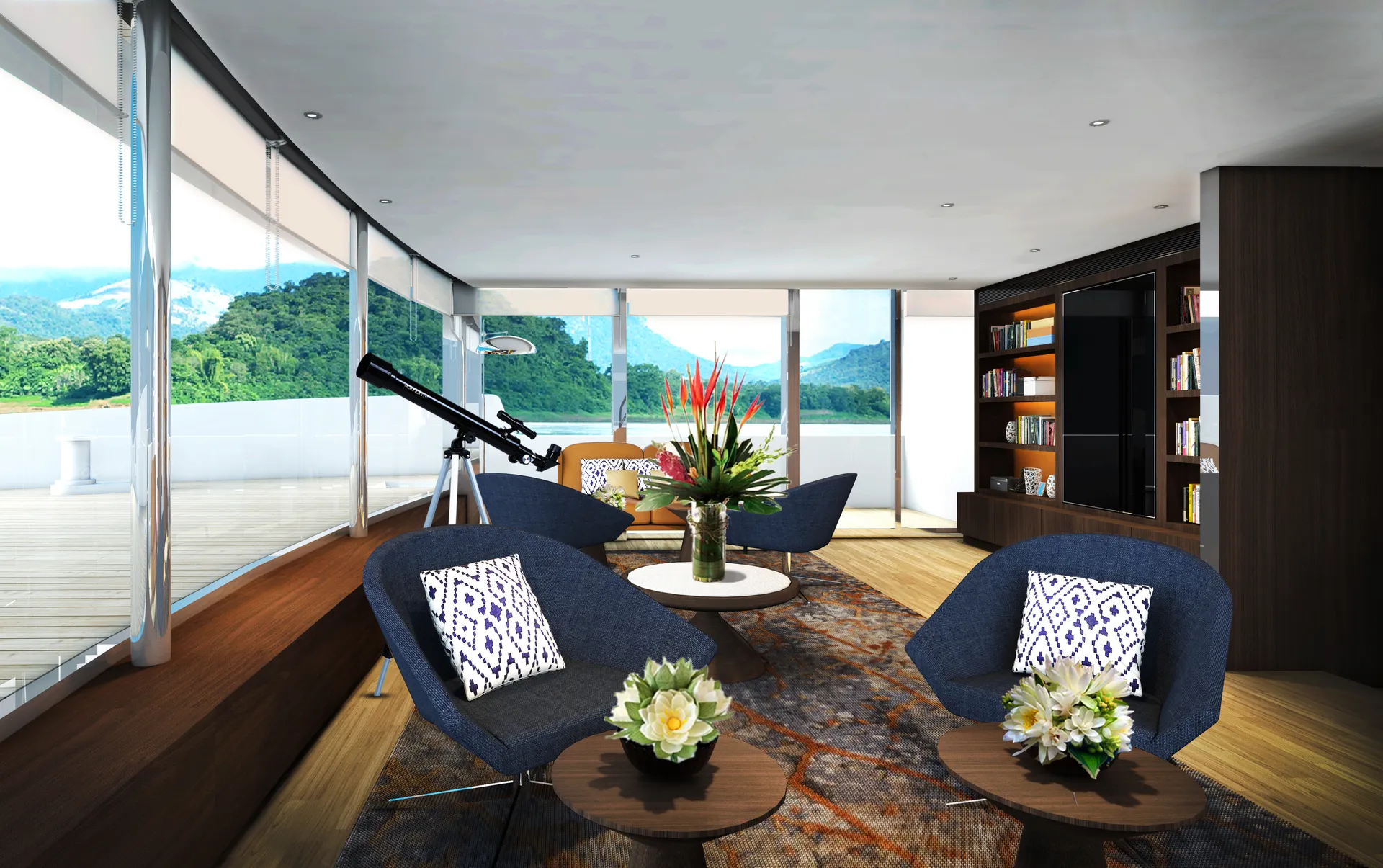
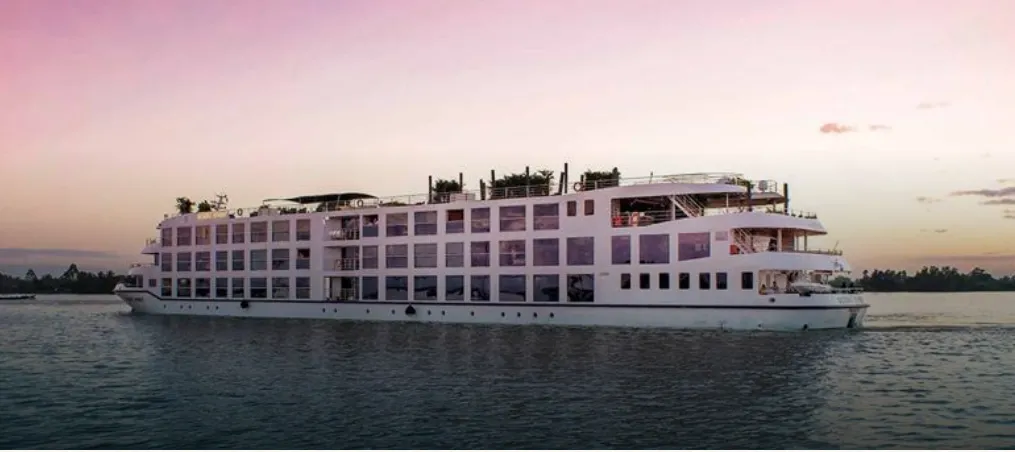
Scenic River Cruises
Space-Ship
2016
—
—
68
—
56
279 m
—
—
No
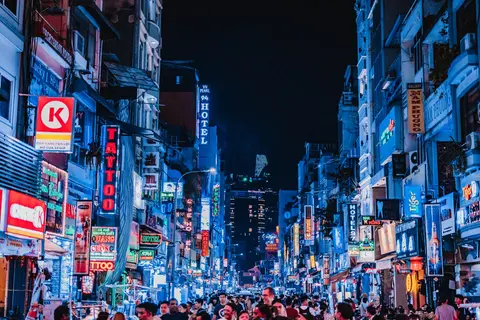
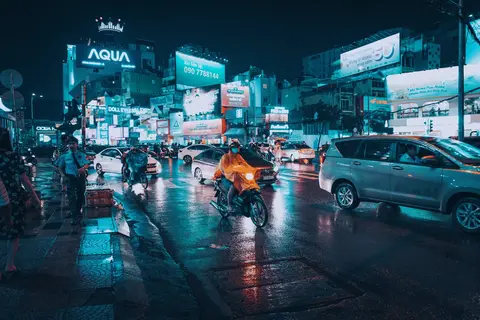
Ho Chi Minh City is a vibrant port of call for MSC cruise liners on MSC Grand Voyages cruise itineraries. It’s a fury of sights and sounds, and the crucible in which Vietnam’s rallying fortunes are boiling. Few corners of the city afford respite from the cacophony of construction work casting up new office blocks and hotels with logic-defying speed. An increasing number of cars and minibuses jostle with an organic mass of state-of-the-art Honda SUVs, choking the tree-lined streets and boulevards. Amid this melee, the local people go about their daily life: smartly dressed schoolkids wander past streetside baguette-sellers; women shoppers ride motorbikes clad in gangster-style bandanas to protect their skin from the sun and dust; while teenagers in designer jeans chirrup into mobile phones. MSC Cruises shore excursions can be a clever option to see much of Ho Chi Minh City’s fun that derives from the simple pleasure of absorbing its flurry of activity – something best done from the seat of a cyclo or a roadside café. To blink is to miss some new and singular sight, be it a motorbike stacked high with piglets bound for the market, or a boy on a bicycle rapping out a staccato tattoo on pieces of bamboo to advertise noodles for sale. For some visitors, the American war is their primary frame of reference and such historical hot spots as the Reunification Palace rank highly on their itineraries. In addition, ostentatious reminders of French rule abound, among them such memorable buildings as Notre Dame Cathedral and the grandiose Hotel de Ville – but even these look spanking-new when compared to gloriously musty edifices like Quan Am Pagoda and the Jade Emperor Pagoda, just a couple of the many captivating places of worship across the city. And don’t miss Ben Thanh Market, the teeming Vietnamese market par excellence, check the city’s pulse here on an early morning stroll.
Ho Chi Minh City is a vibrant port of call for MSC cruise liners on MSC Grand Voyages cruise itineraries. It’s a fury of sights and sounds, and the crucible in which Vietnam’s rallying fortunes are boiling. Few corners of the city afford respite from the cacophony of construction work casting up new office blocks and hotels with logic-defying speed. An increasing number of cars and minibuses jostle with an organic mass of state-of-the-art Honda SUVs, choking the tree-lined streets and boulevards. Amid this melee, the local people go about their daily life: smartly dressed schoolkids wander past streetside baguette-sellers; women shoppers ride motorbikes clad in gangster-style bandanas to protect their skin from the sun and dust; while teenagers in designer jeans chirrup into mobile phones. MSC Cruises shore excursions can be a clever option to see much of Ho Chi Minh City’s fun that derives from the simple pleasure of absorbing its flurry of activity – something best done from the seat of a cyclo or a roadside café. To blink is to miss some new and singular sight, be it a motorbike stacked high with piglets bound for the market, or a boy on a bicycle rapping out a staccato tattoo on pieces of bamboo to advertise noodles for sale. For some visitors, the American war is their primary frame of reference and such historical hot spots as the Reunification Palace rank highly on their itineraries. In addition, ostentatious reminders of French rule abound, among them such memorable buildings as Notre Dame Cathedral and the grandiose Hotel de Ville – but even these look spanking-new when compared to gloriously musty edifices like Quan Am Pagoda and the Jade Emperor Pagoda, just a couple of the many captivating places of worship across the city. And don’t miss Ben Thanh Market, the teeming Vietnamese market par excellence, check the city’s pulse here on an early morning stroll.
Ho Chi Minh City is a vibrant port of call for MSC cruise liners on MSC Grand Voyages cruise itineraries. It’s a fury of sights and sounds, and the crucible in which Vietnam’s rallying fortunes are boiling. Few corners of the city afford respite from the cacophony of construction work casting up new office blocks and hotels with logic-defying speed. An increasing number of cars and minibuses jostle with an organic mass of state-of-the-art Honda SUVs, choking the tree-lined streets and boulevards. Amid this melee, the local people go about their daily life: smartly dressed schoolkids wander past streetside baguette-sellers; women shoppers ride motorbikes clad in gangster-style bandanas to protect their skin from the sun and dust; while teenagers in designer jeans chirrup into mobile phones. MSC Cruises shore excursions can be a clever option to see much of Ho Chi Minh City’s fun that derives from the simple pleasure of absorbing its flurry of activity – something best done from the seat of a cyclo or a roadside café. To blink is to miss some new and singular sight, be it a motorbike stacked high with piglets bound for the market, or a boy on a bicycle rapping out a staccato tattoo on pieces of bamboo to advertise noodles for sale. For some visitors, the American war is their primary frame of reference and such historical hot spots as the Reunification Palace rank highly on their itineraries. In addition, ostentatious reminders of French rule abound, among them such memorable buildings as Notre Dame Cathedral and the grandiose Hotel de Ville – but even these look spanking-new when compared to gloriously musty edifices like Quan Am Pagoda and the Jade Emperor Pagoda, just a couple of the many captivating places of worship across the city. And don’t miss Ben Thanh Market, the teeming Vietnamese market par excellence, check the city’s pulse here on an early morning stroll.
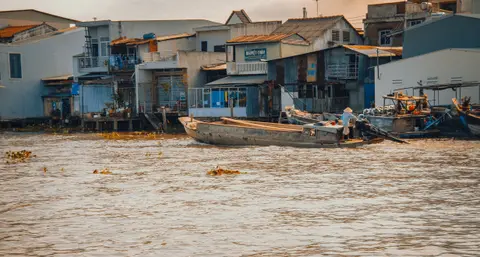
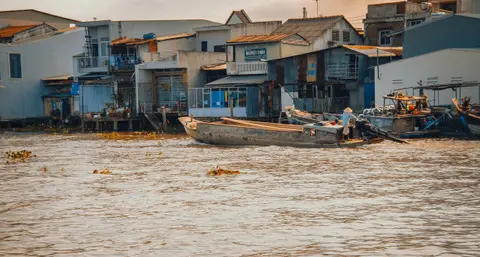
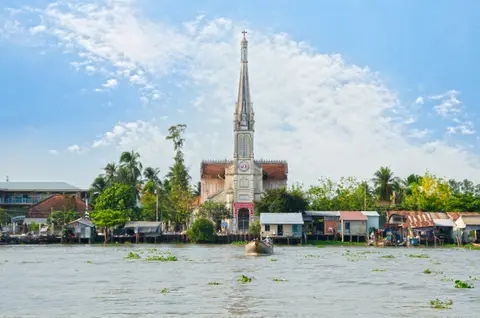
Cái Bè is a river-land mixed town in Vietnam. It is a rural district of Tiền Giang Province in the Mekong Delta region of Vietnam. Along the river, there are docks that handle passengers and goods, and the floating market.


Sa Đéc is a Provincial city in Đồng Tháp Province in the Mekong Delta of southern Vietnam. It is a river port and agricultural and industrial trading center. The Sa Đéc economic zone consists of Châu Thành, Lai Vung and Lấp Vò districts. As of January 2018, the city has a population of approximately 202,046.
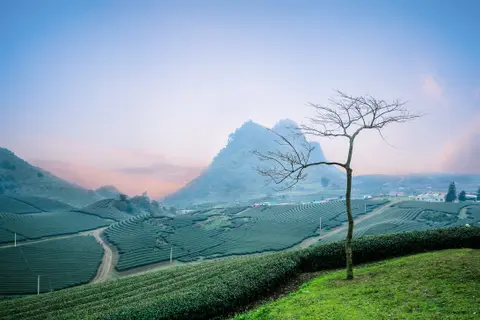
Tân Châu is a town of An Giang Province in the Mekong Delta region of Vietnam. As of 2009 the town had a population of 184,129. The town covers an area of 175.68 km². It is famous for Tân Châu silk with the famous product Lãnh Mỹ A, whose black colour comes from the Diospyros mollis's fruit.
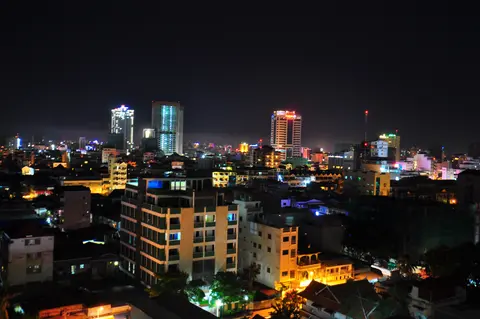
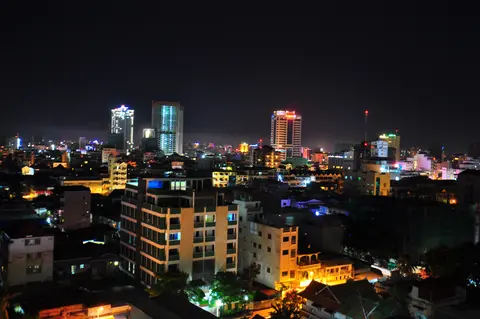
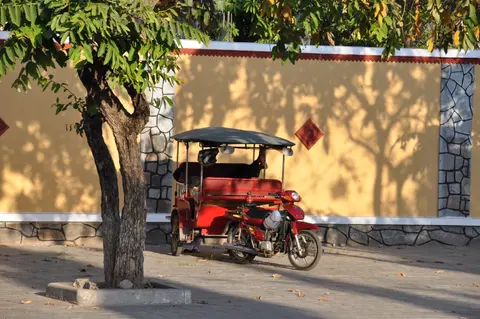
Phnom Penh, Cambodia’s busy capital, sits at the junction of the Mekong and Tonlé Sap rivers. It was a hub for both the Khmer Empire and French colonialists. On its walkable riverfront, lined with parks, restaurants and bars, are the ornate Royal Palace, Silver Pagoda and the National Museum, displaying artifacts from around the country. At the city’s heart is the massive, art deco Central Market.
Phnom Penh, Cambodia’s busy capital, sits at the junction of the Mekong and Tonlé Sap rivers. It was a hub for both the Khmer Empire and French colonialists. On its walkable riverfront, lined with parks, restaurants and bars, are the ornate Royal Palace, Silver Pagoda and the National Museum, displaying artifacts from around the country. At the city’s heart is the massive, art deco Central Market.
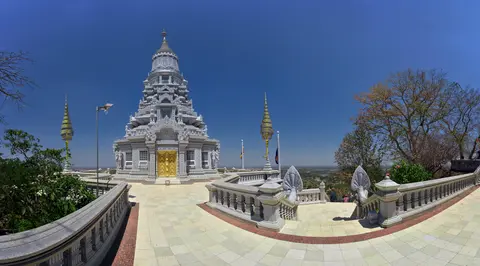
Oudong is a town in Cambodia, at the base of Phnom Udong Mountain, northwest of Phnom Penh. It was the site of the royal capital from the 17th to the 19th centuries. The mountain’s 2 mounds are connected by a ridge and dotted with stupas and shrines dedicated to former kings. Chedi Mouk Pruhm is the burial site of King Monivong. The ruins of Arthross Temple house a large golden Buddha.
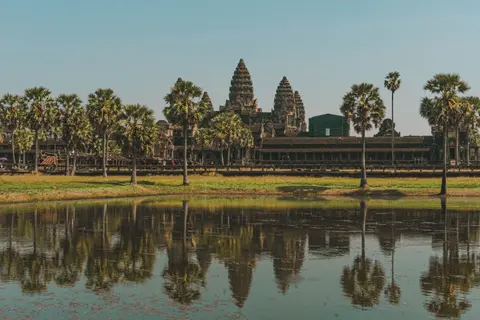
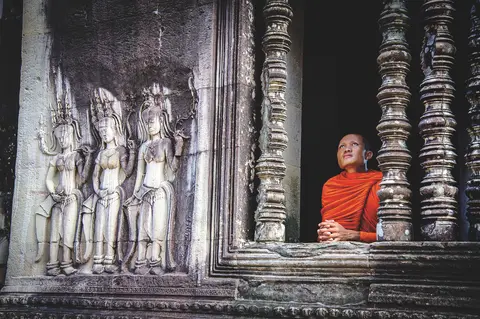
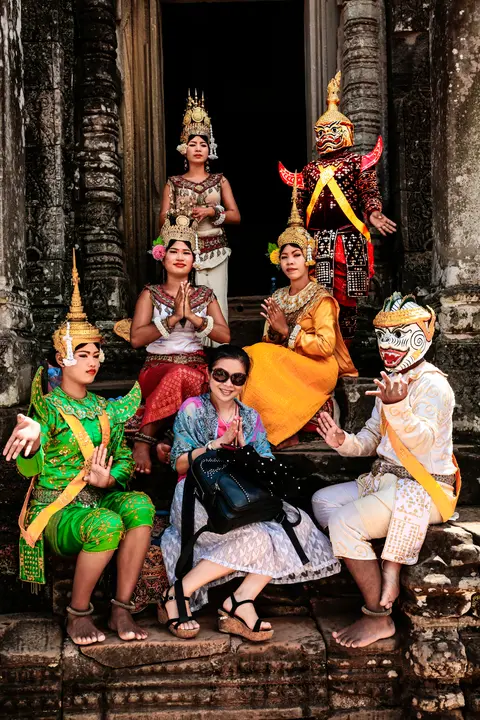
Angkor Ban is a khum of Sampov Loun District in Battambang Province in north-western Cambodia.
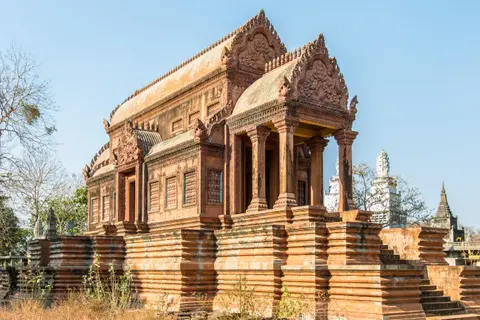
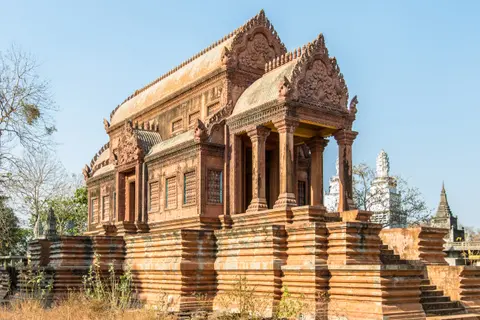
Kampong Cham is a city on the Mekong River in southeastern Cambodia. It's known for its French colonial buildings. To the south, Koh Pen Island is reached via a long bamboo bridge. Just beyond town is Wat Nokor Bachey, where a modern pagoda is built on the site of an Angkorian temple. The hills of Phnom Pros and Phnom Srei have temples at the top. Farther north, Prasat Hanchey has pagodas and Mekong River views.
Kampong Cham is a city on the Mekong River in southeastern Cambodia. It's known for its French colonial buildings. To the south, Koh Pen Island is reached via a long bamboo bridge. Just beyond town is Wat Nokor Bachey, where a modern pagoda is built on the site of an Angkorian temple. The hills of Phnom Pros and Phnom Srei have temples at the top. Farther north, Prasat Hanchey has pagodas and Mekong River views.
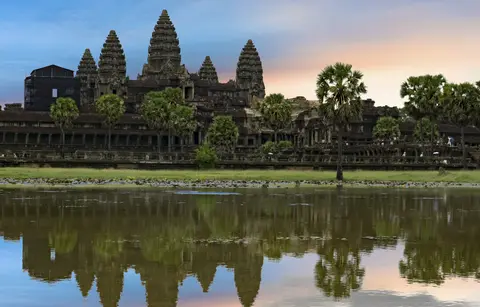
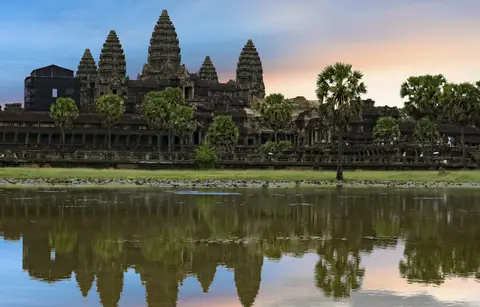
Siem Reap, a resort town in northwestern Cambodia, is the gateway to the ruins of Angkor, the seat of the Khmer kingdom from the 9th–15th centuries. Angkor’s vast complex of intricate stone buildings includes preserved Angkor Wat, the main temple, which is pictured on Cambodia’s flag. Giant, mysterious faces are carved into the Bayon Temple at Angkor Thom.
Siem Reap, a resort town in northwestern Cambodia, is the gateway to the ruins of Angkor, the seat of the Khmer kingdom from the 9th–15th centuries. Angkor’s vast complex of intricate stone buildings includes preserved Angkor Wat, the main temple, which is pictured on Cambodia’s flag. Giant, mysterious faces are carved into the Bayon Temple at Angkor Thom.
Siem Reap, a resort town in northwestern Cambodia, is the gateway to the ruins of Angkor, the seat of the Khmer kingdom from the 9th–15th centuries. Angkor’s vast complex of intricate stone buildings includes preserved Angkor Wat, the main temple, which is pictured on Cambodia’s flag. Giant, mysterious faces are carved into the Bayon Temple at Angkor Thom.
Siem Reap, a resort town in northwestern Cambodia, is the gateway to the ruins of Angkor, the seat of the Khmer kingdom from the 9th–15th centuries. Angkor’s vast complex of intricate stone buildings includes preserved Angkor Wat, the main temple, which is pictured on Cambodia’s flag. Giant, mysterious faces are carved into the Bayon Temple at Angkor Thom.
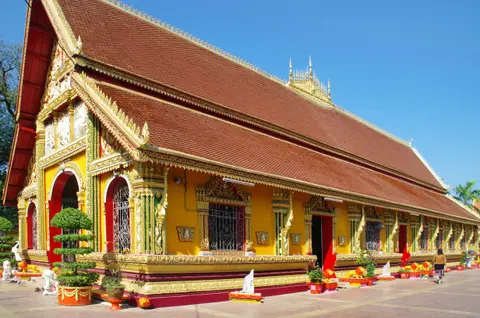
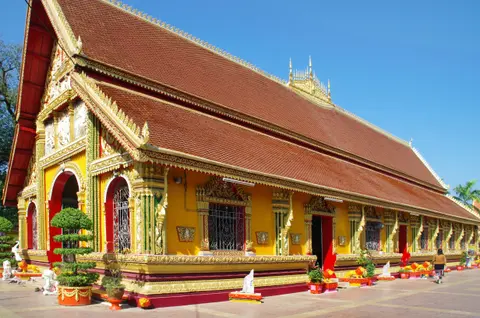
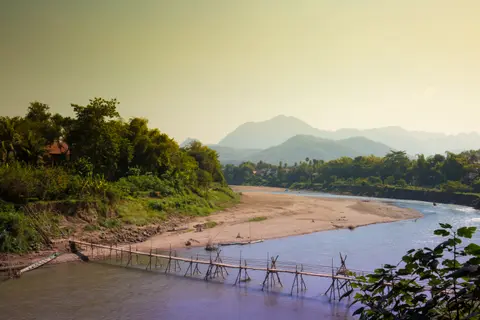
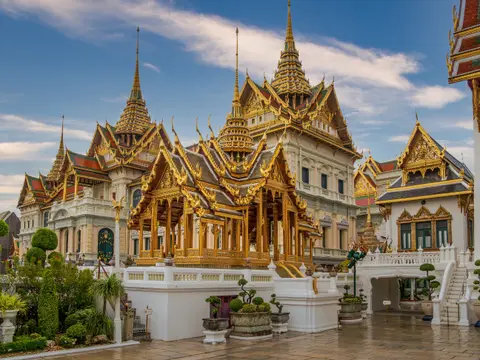
Bangkok, also known as the City of Angels and Venice of the East thrills with energy. There's such a vast array of sightseeing, shopping, and eating possibilities that you'll have little time to rest. When you do find a moment, pamper yourself with spa treatments, skyline-view bars, luxurious hotels, and excellent restaurants. The city is a mesmerizing blend of old and new, East and West, and dizzying contradictions. Temples and red-light districts, languid canals and permanent gridlock, streetside vendors and chic upscale eateries, all make their home together, all at the same time. Bangkok rarely fails to make an impression, and yes, you might need to go spend a few days on the beach to recover from it all. Although Bangkok is not known for jaw-dropping tourist attractions, it does have an endless supply of worthwhile pilgrimages. The Grand Palace, Wat Phra Kaew, and the Emerald Buddha are tops on every visitor's itinerary, and lesser-known temples, such as Wat Benjamabophit, the golden stupa of Wat Sakhet, and Wat Suthat, are all worthy of a stop. Besides temples, there are plenty of other interesting niches and touring possibilities to fit just about every interest. Take in a venom extraction and python feeding show at the Queen Saowapha Snake Farm, or go to the nearby Jim Thompson House to learn all about the famed Thai silk industry. If architecture is your forte, there is the Suan Pakkard Palace with its antique teak house collection, and the even more astounding Vimanmek Palace, which contains the world's largest golden teak building. Bangkok's Chinatown merits at least a day on every travel itinerary—be sure to check out the sprawling labyrinthine Flower and Thieves markets. Thai food is unrivaled for spice, taste, and variation. From multicourse meals to small street vendors, the one constant here is fresh and delicious at every level. You can have superlative roast duck or wonton noodles on a street corner for lunch and then be dining on world-class chef creations in the Oriental or Shangri-La hotels for supper. It doesn't have to be all spicy Thai either, as Bangkok is home to excellent French, Italian, and other world cuisines, and you need a few years just to make a dent in all the options that are available. The Old City is a major destination for travelers, as it's home to opulent temples like Wat Po and Wat Phra Kaew. Across the river is Thonburi, a mostly residential neighborhood, where you can find Wat Arun. At the northern tip of the Old City is Banglamphu, one of Bangkok's older residential neighborhoods. It's best known now for Khao San Road, a backpacker hangout, though the neighborhood has much more to offer, especially when it comes to street food. North of Banglamphu is Dusit, the royal district since the days of Rama V. East of the Old City is Chinatown, a labyrinth of streets with restaurants, shops, and warehouses. Farther down the Chao Phraya River is bustling Silom Road, one of the city's major commercial districts. Patpong, the city's most famous of several red-light districts, is also here. Bang Rak is home to some of the city's leading hotels: the Mandarin Oriental, the Peninsula, the Royal Orchid Sheraton, and the Shangri-La. To the north of Rama IV Road is Bangkok's largest green area, Lumphini Park. Continue north and you reach Sukhumvit Road, once a residential area. More recently, Thong Lor, farther east along Sukhumvit, has become the "in" neighborhood for those want to see and be seen. The Nana and Asok areas of Sukhumvit are now home to the even busier red-light entertainment districts (Nana and Soi Cowboy) than Patpong.
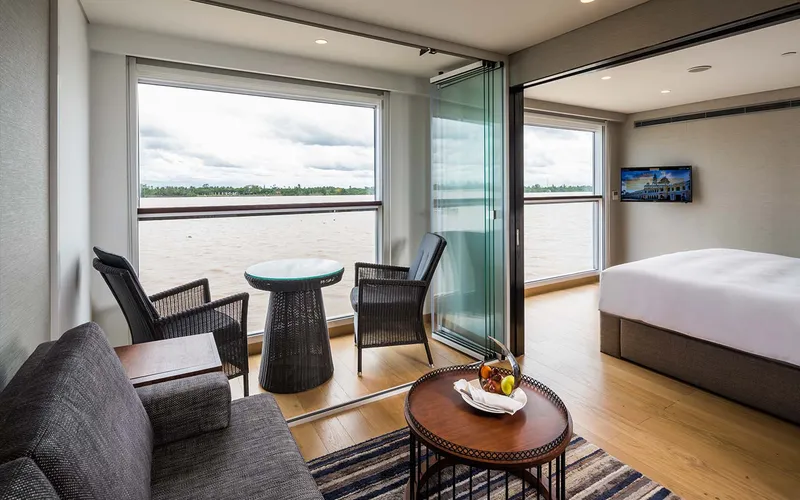
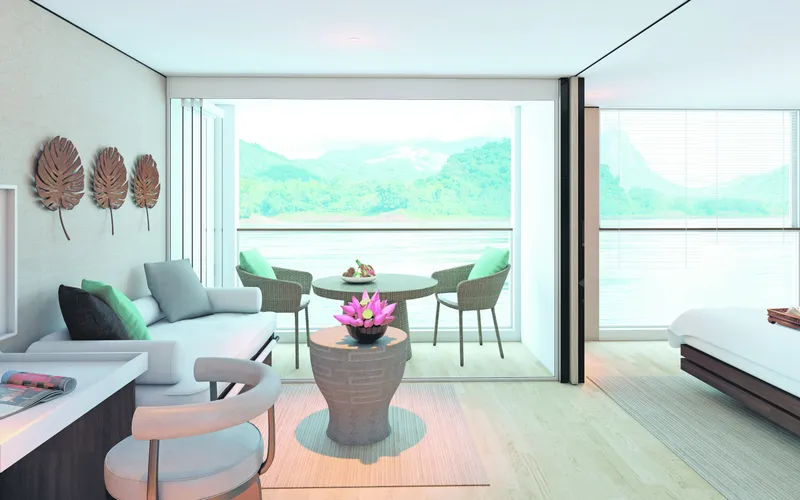
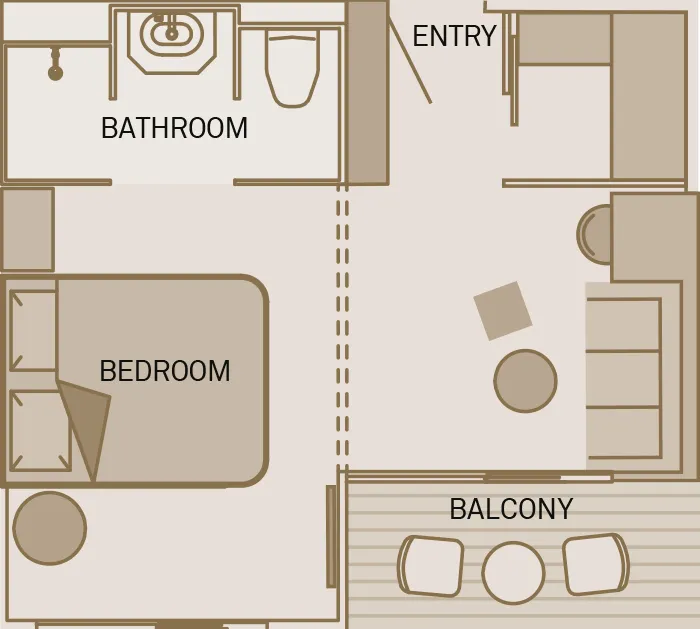
These spacious Suites at 32m²/344ft² are located on the Jewel, Sapphire and Diamond Decks. Each have a private full-length balcony, walk in wardrobe and elegant en-suite bathrooms featuring a large vanity basin with a separate toilet and shower.
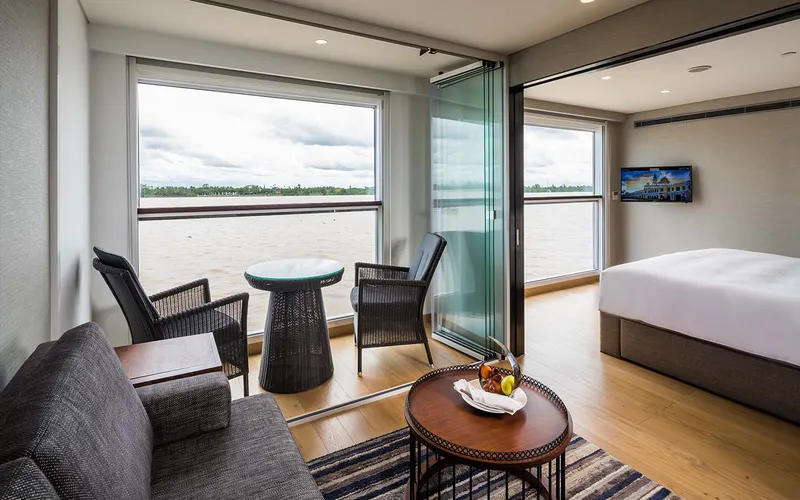
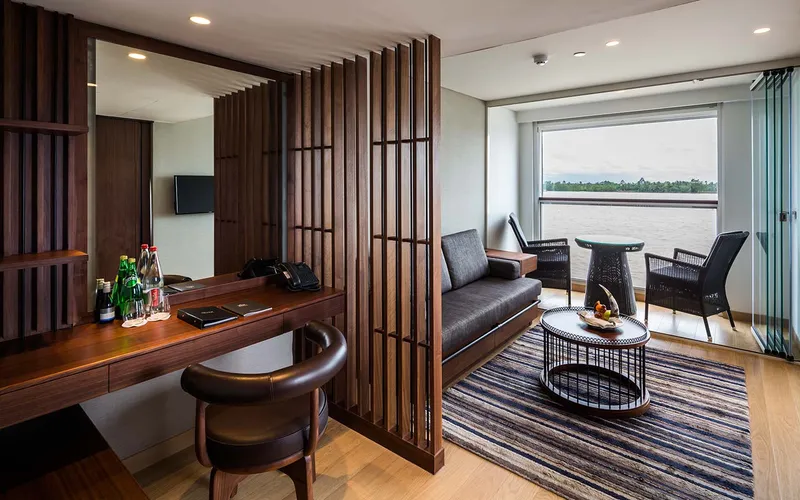
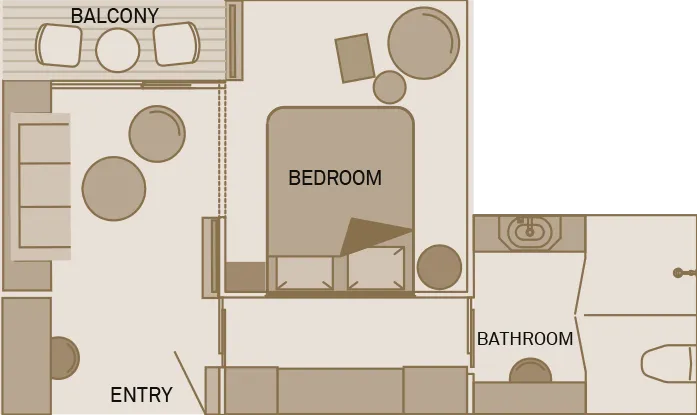
These eight suites on the Diamond Deck are the ultimate in luxury at 40m²/430ft² with more space, impeccable service and thoughtful touches. Enjoy an outdoor balcony, separate lounge and dining area, extra-large walk in wardrobe and a luxurious oversized bathroom.
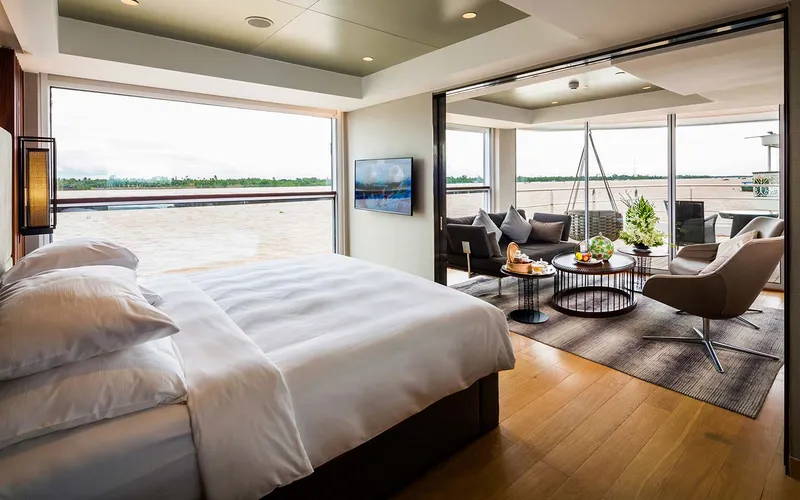
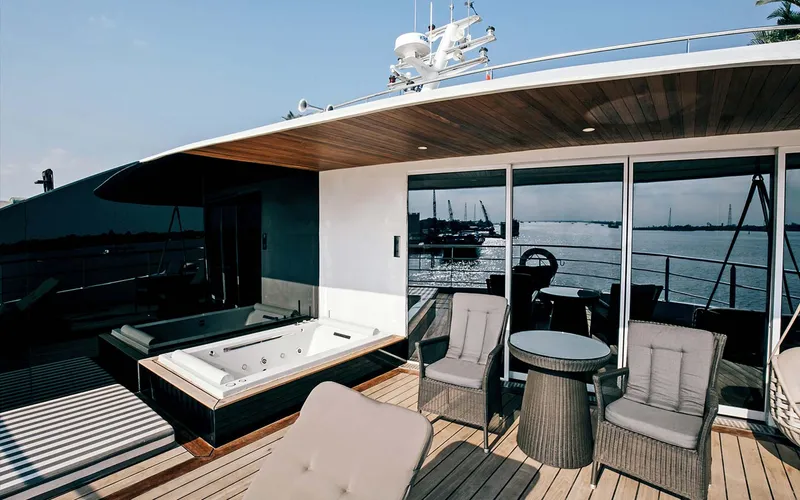
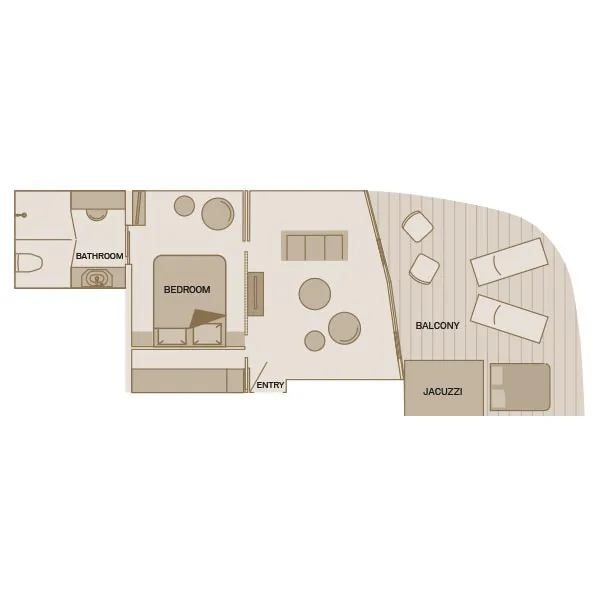
At 80m²/861ft², this is the largest suite on the Mekong river. Being up forward on the Diamond Deck, enjoy fantastic views of the passing scenery from your private terrace with outdoor Jacuzzi and day bed. Both Suites have a separate lounge and dining area, walk-in dressing room and a luxurious oversized bathroom offering a separate bathtub, toilet and shower.
Our cruise specialists can help you find the perfect cabin and the best available pricing.
(+886) 02-2721-7300Contact Advisor