Date
2026-10-22
Duration
24 nights
Departure Port
Osaka
Japan
Arrival Port
Osaka
Japan
Rating
Luxury
Theme
—


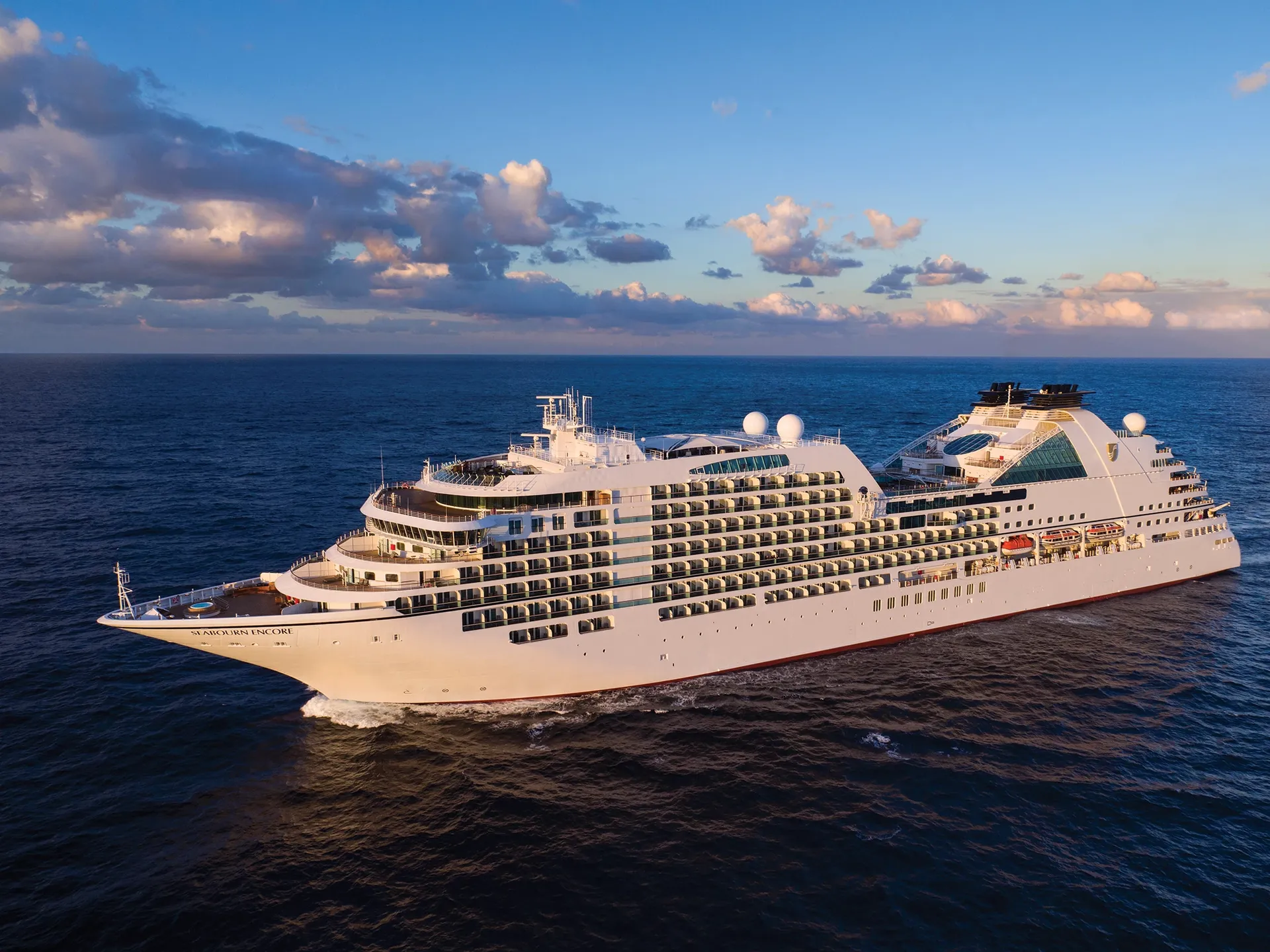
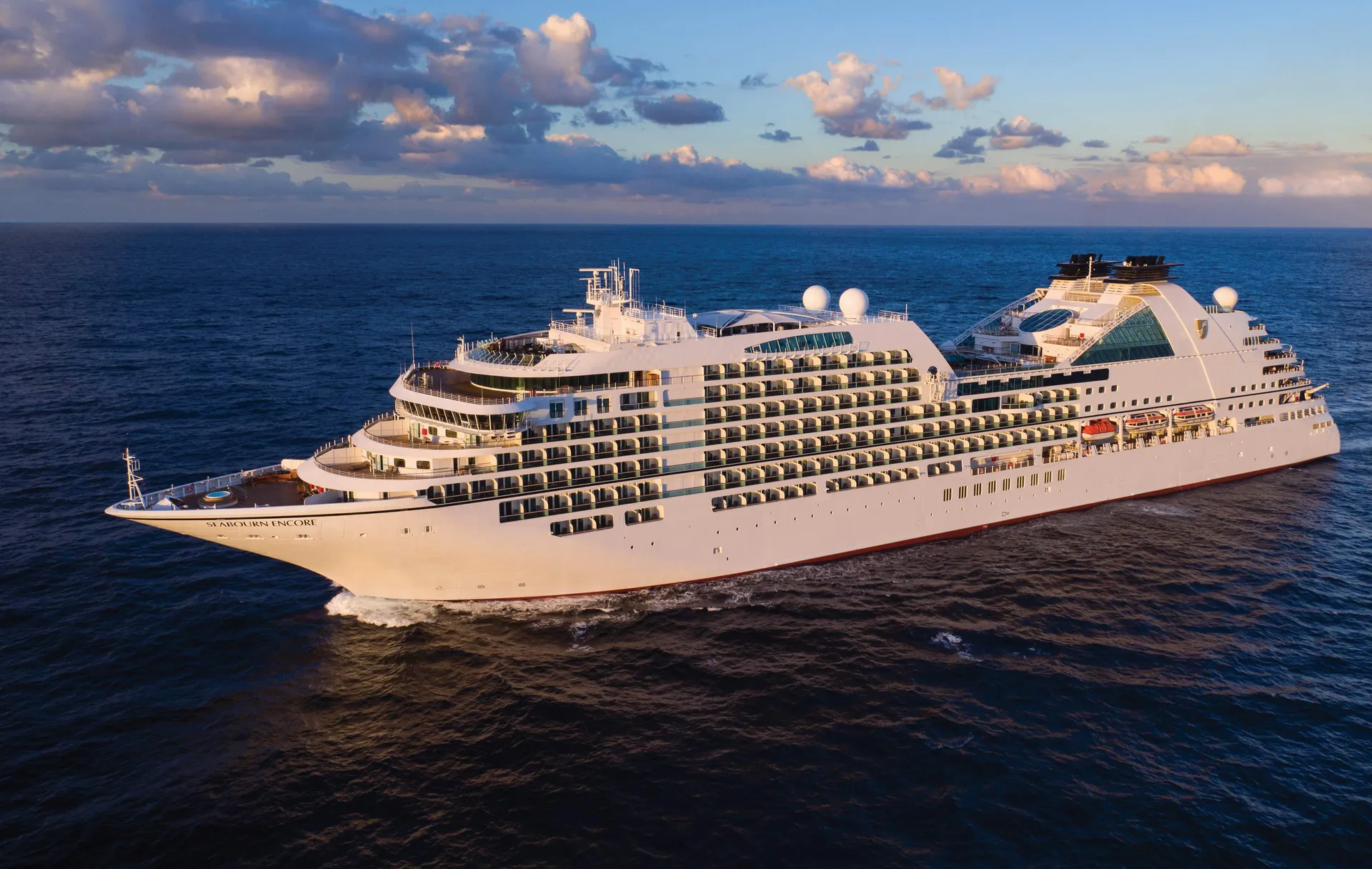
Seabourn
2016
—
40,350 GT
600
266
330
690 m
28 m
19 knots
No

Osaka is Japan's exuberant culinary capital, a neon-drenched metropolis where Edo-period merchant culture lives on in vibrant street food markets and Michelin-starred kaiseki restaurants alike. No visit is complete without savouring *takoyaki* and *kushikatsu* along the Dōtonbori Canal, or venturing north to witness Hirosaki's legendary cherry blossoms. The ideal window is late March through May for spring blooms and mild weather, or October through November when autumn foliage transforms the surrounding Kansai region into a tapestry of amber and gold.

Kochi, on Japan's island of Shikoku, is a Pacific coast port city renowned for its remarkably preserved 17th-century castle, vibrant Hirome Market food hall, and the iconic katsuo no tataki — straw-seared skipjack tuna that defines the region's bold culinary identity. Visitors should not miss exploring the castle grounds and savouring sawachi communal platters paired with crisp Tosa sake. The best time to visit is spring for mild weather and cherry blossoms, or autumn when typhoon season has passed and the yuzu harvest perfumes the countryside.

Sokcho is a coastal city in northeastern South Korea where the granite peaks of Seoraksan National Park — a UNESCO Biosphere Reserve — meet the East Sea, creating a landscape of extraordinary beauty. Must-do experiences include riding the cable car to Gwongeumseong Fortress, sampling live seafood at Jungang Market, and hiking to Ulsanbawi Rock. Autumn (late September-October) brings legendary foliage color that transforms the mountains into a spectacle of crimson and gold.

Kanazawa is a Sea of Japan coast city of extraordinary cultural refinement, home to Kenrokuen — one of Japan's three greatest gardens — alongside perfectly preserved samurai and geisha quarters, and craft traditions including gold leaf, Kutani porcelain, and Kaga silk dyeing. Essential experiences include strolling Kenrokuen's seasonal landscapes, exploring the wooden tea houses of Higashi Chaya, and feasting on fresh crab and nodoguro at the historic Omicho Market. Each season offers distinct beauty, from winter snow to autumn foliage.

Niigata, Japan, Japan is a distinctive port city where deep cultural heritage meets authentic local atmosphere, featured on itineraries by Princess Cruises. Must-do experiences include walking the historic center to experience the layered architectural heritage, and seeking out the regional culinary traditions at a locally favored establishment away from the port area. The optimal time to visit is May through September, when mild temperatures and long days favor unhurried exploration.

Akita is a rice-growing prefecture on Japan's Sea of Japan coast, renowned for the spectacular Kanto Festival of illuminated bamboo poles, UNESCO-listed Shirakami beech forests, and a cuisine of kiritanpo rice sticks and Inaniwa udon that ranks among Japan's finest. Must-dos include the August Kanto Festival, bathing at the rustic Nyuto Onsen hot springs, and tasting Akita's prized local sake. Visit August for the festival or October for the magnificent autumn colours.

Aomori, at Honshu’s northern tip, produces 60% of Japan’s apples and stages the Nebuta Matsuri—one of the country’s most spectacular festivals, with giant illuminated warrior floats parading through August nights. Must-dos include the Nebuta Museum Wa Rasse, building a custom rice bowl at Furukawa Market, and autumn walks through Oirase Gorge. Visit August for the electrifying Nebuta festival, or October for Tohoku’s legendary autumn foliage at Lake Towada.

Hakodate, Japan, offers an immersion in a culture where aesthetic refinement and daily life are inseparable. Essential experiences include exploring local food markets, tasting regional specialties at intimate eateries, and visiting the surrounding temples and gardens. The port is most rewarding May through October, when the climate is at its most welcoming for outdoor exploration. Cruise lines including Hapag-Lloyd Cruises feature this port on their most compelling itineraries. Whether you have a few hours or a full day, the port rewards exploration at every pace and in every direction.

Miyako is a resilient Pacific coast city in Japan's Tōhoku region, gateway to the dramatic Sanriku ria coastline and the ethereal Jōdogahama "Pure Land Beach" of white rock formations and turquoise water. Must-dos include boat tours through Jōdogahama's volcanic rock formations, visiting the 2011 tsunami memorial, and tasting the region's exceptional seafood including fresh uni and wakame. April through November offers varied seasonal beauty from cherry blossoms to autumn foliage.

Tokyo's port is a vibrant gateway to both cultural and culinary experiences, uniquely blending traditional Japanese heritage with modern innovation. Must-do experiences include savoring fresh sushi at Tsukiji Outer Market and exploring the natural beauty of Fuji Hakone Izu National Park. The best season to visit is spring, when cherry blossoms bloom, transforming the city into a picturesque landscape.

Shimizu is Japan's premier Mount Fuji gateway port on Suruga Bay, where a storied tea-trading heritage meets exceptional coastal cuisine — most notably the prized sakura ebi cherry blossom shrimp found nowhere else. Visitors should not miss the UNESCO-listed Miho no Matsubara pine grove for iconic Fuji views and the vibrant Kashi no Ichi fish market for the freshest tuna and whitebait in Japan. The ideal window stretches from late March through May, when cherry blossoms frame the snowcapped volcano and spring's first tea harvest perfumes the hillsides.

Toba, on Japan's Shima Peninsula, is the birthplace of cultured pearl farming and home to the ancient Ama free-diving tradition, where women have harvested the sea for over two thousand years. Must-dos include meeting Ama divers at seaside huts, visiting Mikimoto Pearl Island, and feasting on Ise-ebi lobster and fresh abalone. Spring and autumn offer the best weather and prime seafood seasons.

Kochi, on Japan's island of Shikoku, is a Pacific coast port city renowned for its remarkably preserved 17th-century castle, vibrant Hirome Market food hall, and the iconic katsuo no tataki — straw-seared skipjack tuna that defines the region's bold culinary identity. Visitors should not miss exploring the castle grounds and savouring sawachi communal platters paired with crisp Tosa sake. The best time to visit is spring for mild weather and cherry blossoms, or autumn when typhoon season has passed and the yuzu harvest perfumes the countryside.

Beppu is Japan's ultimate hot spring city on Kyushu's coast, producing more geothermal water than anywhere else on Earth, with 2,800 vents, spectacular boiling "Hells," and volcanic sand baths on the beach. Must-dos include the Jigoku Hells circuit, hell-steaming your own meal at Kannawa, and soaking in a variety of mineral-rich onsen. Spring and autumn offer the most comfortable temperatures for combining bathing with sightseeing.

Hiroshima is a deeply moving yet vibrantly reborn Japanese city, home to the UNESCO-listed Peace Memorial Park and the iconic A-Bomb Dome. Must-dos include savouring the city's famous layered okonomiyaki, tasting fresh Inland Sea oysters, and taking the ferry to Miyajima to see the floating vermilion torii gate. Spring cherry-blossom season and autumn foliage (March–May and October–November) offer the most spectacular visits.

Fukuoka is widely regarded as Japan's greatest food city, where legendary tonkotsu ramen, evening yatai street stalls, and mentaiko spicy cod roe define a culinary culture without rival. Must-dos include slurping ramen at a Nakasu yatai, visiting Dazaifu Tenmangu shrine, and exploring the Hakata old quarter. Spring and autumn offer the best weather, with the spectacular Yamakasa festival heating up early July.

Busan, a bustling port city in South Korea, is known for its stunning coastal scenery, rich history, and vibrant culinary scene. Must-do experiences include visiting the iconic Jagalchi Fish Market for fresh seafood and exploring the ancient sites of Gyeongju. The best time to visit is during the mild spring or autumn months when the weather is pleasant and local festivals abound.

Nagasaki is a historically rich port city on Japan's Kyushu island, shaped by centuries of Portuguese, Dutch, and Chinese influence — offering visitors the Glover Garden heritage district, the moving Peace Park, and the spectacular Mount Inasa night panorama. Must-do experiences include tasting the city's signature champon noodle soup and exploring the atmospheric hillside lanes lined with stone churches and Chinese temples. The best months to visit are March through May for mild weather and cherry blossoms, or October through November when autumn colours set the surrounding hills ablaze.

Kagoshima, the "Naples of the East," is a dramatic port city on Japan's southern coast defined by the active Sakurajima volcano and a rich samurai heritage dating to the powerful Shimazu clan. Visitors should not miss the fifteen-minute ferry crossing to Sakurajima's lava fields and a tasting of legendary Kurobuta black pork paired with local sweet-potato shōchū. Spring (March–May) offers mild temperatures and cherry blossoms, while autumn (October–November) brings clear skies ideal for volcano views.

Osaka is Japan's exuberant culinary capital, a neon-drenched metropolis where Edo-period merchant culture lives on in vibrant street food markets and Michelin-starred kaiseki restaurants alike. No visit is complete without savouring *takoyaki* and *kushikatsu* along the Dōtonbori Canal, or venturing north to witness Hirosaki's legendary cherry blossoms. The ideal window is late March through May for spring blooms and mild weather, or October through November when autumn foliage transforms the surrounding Kansai region into a tapestry of amber and gold.
Day 1

Osaka is Japan's exuberant culinary capital, a neon-drenched metropolis where Edo-period merchant culture lives on in vibrant street food markets and Michelin-starred kaiseki restaurants alike. No visit is complete without savouring *takoyaki* and *kushikatsu* along the Dōtonbori Canal, or venturing north to witness Hirosaki's legendary cherry blossoms. The ideal window is late March through May for spring blooms and mild weather, or October through November when autumn foliage transforms the surrounding Kansai region into a tapestry of amber and gold.
Day 2

Kochi, on Japan's island of Shikoku, is a Pacific coast port city renowned for its remarkably preserved 17th-century castle, vibrant Hirome Market food hall, and the iconic katsuo no tataki — straw-seared skipjack tuna that defines the region's bold culinary identity. Visitors should not miss exploring the castle grounds and savouring sawachi communal platters paired with crisp Tosa sake. The best time to visit is spring for mild weather and cherry blossoms, or autumn when typhoon season has passed and the yuzu harvest perfumes the countryside.
Day 3
Day 4

Sokcho is a coastal city in northeastern South Korea where the granite peaks of Seoraksan National Park — a UNESCO Biosphere Reserve — meet the East Sea, creating a landscape of extraordinary beauty. Must-do experiences include riding the cable car to Gwongeumseong Fortress, sampling live seafood at Jungang Market, and hiking to Ulsanbawi Rock. Autumn (late September-October) brings legendary foliage color that transforms the mountains into a spectacle of crimson and gold.
Day 5
Day 6

Kanazawa is a Sea of Japan coast city of extraordinary cultural refinement, home to Kenrokuen — one of Japan's three greatest gardens — alongside perfectly preserved samurai and geisha quarters, and craft traditions including gold leaf, Kutani porcelain, and Kaga silk dyeing. Essential experiences include strolling Kenrokuen's seasonal landscapes, exploring the wooden tea houses of Higashi Chaya, and feasting on fresh crab and nodoguro at the historic Omicho Market. Each season offers distinct beauty, from winter snow to autumn foliage.
Day 7

Niigata, Japan, Japan is a distinctive port city where deep cultural heritage meets authentic local atmosphere, featured on itineraries by Princess Cruises. Must-do experiences include walking the historic center to experience the layered architectural heritage, and seeking out the regional culinary traditions at a locally favored establishment away from the port area. The optimal time to visit is May through September, when mild temperatures and long days favor unhurried exploration.
Day 8

Akita is a rice-growing prefecture on Japan's Sea of Japan coast, renowned for the spectacular Kanto Festival of illuminated bamboo poles, UNESCO-listed Shirakami beech forests, and a cuisine of kiritanpo rice sticks and Inaniwa udon that ranks among Japan's finest. Must-dos include the August Kanto Festival, bathing at the rustic Nyuto Onsen hot springs, and tasting Akita's prized local sake. Visit August for the festival or October for the magnificent autumn colours.
Day 9

Aomori, at Honshu’s northern tip, produces 60% of Japan’s apples and stages the Nebuta Matsuri—one of the country’s most spectacular festivals, with giant illuminated warrior floats parading through August nights. Must-dos include the Nebuta Museum Wa Rasse, building a custom rice bowl at Furukawa Market, and autumn walks through Oirase Gorge. Visit August for the electrifying Nebuta festival, or October for Tohoku’s legendary autumn foliage at Lake Towada.
Day 10

Hakodate, Japan, offers an immersion in a culture where aesthetic refinement and daily life are inseparable. Essential experiences include exploring local food markets, tasting regional specialties at intimate eateries, and visiting the surrounding temples and gardens. The port is most rewarding May through October, when the climate is at its most welcoming for outdoor exploration. Cruise lines including Hapag-Lloyd Cruises feature this port on their most compelling itineraries. Whether you have a few hours or a full day, the port rewards exploration at every pace and in every direction.
Day 11

Miyako is a resilient Pacific coast city in Japan's Tōhoku region, gateway to the dramatic Sanriku ria coastline and the ethereal Jōdogahama "Pure Land Beach" of white rock formations and turquoise water. Must-dos include boat tours through Jōdogahama's volcanic rock formations, visiting the 2011 tsunami memorial, and tasting the region's exceptional seafood including fresh uni and wakame. April through November offers varied seasonal beauty from cherry blossoms to autumn foliage.
Day 12
Day 13

Tokyo's port is a vibrant gateway to both cultural and culinary experiences, uniquely blending traditional Japanese heritage with modern innovation. Must-do experiences include savoring fresh sushi at Tsukiji Outer Market and exploring the natural beauty of Fuji Hakone Izu National Park. The best season to visit is spring, when cherry blossoms bloom, transforming the city into a picturesque landscape.
Day 14

Shimizu is Japan's premier Mount Fuji gateway port on Suruga Bay, where a storied tea-trading heritage meets exceptional coastal cuisine — most notably the prized sakura ebi cherry blossom shrimp found nowhere else. Visitors should not miss the UNESCO-listed Miho no Matsubara pine grove for iconic Fuji views and the vibrant Kashi no Ichi fish market for the freshest tuna and whitebait in Japan. The ideal window stretches from late March through May, when cherry blossoms frame the snowcapped volcano and spring's first tea harvest perfumes the hillsides.
Day 15

Toba, on Japan's Shima Peninsula, is the birthplace of cultured pearl farming and home to the ancient Ama free-diving tradition, where women have harvested the sea for over two thousand years. Must-dos include meeting Ama divers at seaside huts, visiting Mikimoto Pearl Island, and feasting on Ise-ebi lobster and fresh abalone. Spring and autumn offer the best weather and prime seafood seasons.
Day 16
Day 17

Kochi, on Japan's island of Shikoku, is a Pacific coast port city renowned for its remarkably preserved 17th-century castle, vibrant Hirome Market food hall, and the iconic katsuo no tataki — straw-seared skipjack tuna that defines the region's bold culinary identity. Visitors should not miss exploring the castle grounds and savouring sawachi communal platters paired with crisp Tosa sake. The best time to visit is spring for mild weather and cherry blossoms, or autumn when typhoon season has passed and the yuzu harvest perfumes the countryside.
Day 18

Beppu is Japan's ultimate hot spring city on Kyushu's coast, producing more geothermal water than anywhere else on Earth, with 2,800 vents, spectacular boiling "Hells," and volcanic sand baths on the beach. Must-dos include the Jigoku Hells circuit, hell-steaming your own meal at Kannawa, and soaking in a variety of mineral-rich onsen. Spring and autumn offer the most comfortable temperatures for combining bathing with sightseeing.
Day 19

Hiroshima is a deeply moving yet vibrantly reborn Japanese city, home to the UNESCO-listed Peace Memorial Park and the iconic A-Bomb Dome. Must-dos include savouring the city's famous layered okonomiyaki, tasting fresh Inland Sea oysters, and taking the ferry to Miyajima to see the floating vermilion torii gate. Spring cherry-blossom season and autumn foliage (March–May and October–November) offer the most spectacular visits.
Day 20

Fukuoka is widely regarded as Japan's greatest food city, where legendary tonkotsu ramen, evening yatai street stalls, and mentaiko spicy cod roe define a culinary culture without rival. Must-dos include slurping ramen at a Nakasu yatai, visiting Dazaifu Tenmangu shrine, and exploring the Hakata old quarter. Spring and autumn offer the best weather, with the spectacular Yamakasa festival heating up early July.
Day 21

Busan, a bustling port city in South Korea, is known for its stunning coastal scenery, rich history, and vibrant culinary scene. Must-do experiences include visiting the iconic Jagalchi Fish Market for fresh seafood and exploring the ancient sites of Gyeongju. The best time to visit is during the mild spring or autumn months when the weather is pleasant and local festivals abound.
Day 22

Nagasaki is a historically rich port city on Japan's Kyushu island, shaped by centuries of Portuguese, Dutch, and Chinese influence — offering visitors the Glover Garden heritage district, the moving Peace Park, and the spectacular Mount Inasa night panorama. Must-do experiences include tasting the city's signature champon noodle soup and exploring the atmospheric hillside lanes lined with stone churches and Chinese temples. The best months to visit are March through May for mild weather and cherry blossoms, or October through November when autumn colours set the surrounding hills ablaze.
Day 23

Kagoshima, the "Naples of the East," is a dramatic port city on Japan's southern coast defined by the active Sakurajima volcano and a rich samurai heritage dating to the powerful Shimazu clan. Visitors should not miss the fifteen-minute ferry crossing to Sakurajima's lava fields and a tasting of legendary Kurobuta black pork paired with local sweet-potato shōchū. Spring (March–May) offers mild temperatures and cherry blossoms, while autumn (October–November) brings clear skies ideal for volcano views.
Day 24
Day 25

Osaka is Japan's exuberant culinary capital, a neon-drenched metropolis where Edo-period merchant culture lives on in vibrant street food markets and Michelin-starred kaiseki restaurants alike. No visit is complete without savouring *takoyaki* and *kushikatsu* along the Dōtonbori Canal, or venturing north to witness Hirosaki's legendary cherry blossoms. The ideal window is late March through May for spring blooms and mild weather, or October through November when autumn foliage transforms the surrounding Kansai region into a tapestry of amber and gold.


Located on Deck 8; Combine mid-ship suites 849 and 851 for suite 8491 or suites 846 and 848 for suite 8468 for a total inside space of 1,292 square feet (120 square meters) plus two verandas totaling 244 square feet (23 square meters)
Grand Wintergarden Suites feature
Large windows
Dining for six
Glass-enclosed solarium with tub and day bed
Two bedrooms
Two bathrooms (one whirlpool)
Convertible sofa bed for one
Pantry with wet bar
Two flat-screen TVs
Complimentary Internet/Wi-Fi service


Located on Deck 7, 8, 9 and 10; total inside space of between 576 and 597 square feet (54 and 55 square meters) plus veranda of between 142 and 778 square feet (13 and 72 square meters).
Owner's Suites feature:
Expansive ocean views
Forward-facing windows
Dining for four to six
Bathroom with whirlpool bathtub
Guest bath
Pantry with wet bar
Two flat-screen TVs
Complimentary Internet/Wi-Fi service.


Penthouse Spa Suite
Located on Deck 11; total inside space of between 639 and 677 square feet (59 and 63 square meters) plus veranda of between 254 and 288 square feet (24 and 27 square meters)
All Penthouse Spa Suites feature
Dining table for two to four
Separate bedroom
Glass door to veranda
Two flat-screen TVs
Fully stocked bar
Spacious bathroom with tub, shower and large vanity


Located on Deck 10 and 11; total inside space of between 449 and 450 square feet (42 square meters) plus one veranda of between 93 and 103 square feet (9 and 10 square meters)
All Penthouse Suites feature:
Dining table for two to four
Separate bedroom
Glass door to veranda
Two flat-screen TVs
Fully stocked bar
Spacious bathroom with tub, shower and large vanity


Located on Deck 8; forward suites 800 and 801 inside space of approximately 977 square feet of inside space (90 square meters), plus one veranda of 960 square feet (89 square meters).
Signature Suites feature
Expansive ocean views
Forward-facing windows
Dining for four to six
Bathroom with whirlpool bathtub
Guest bath
Pantry with wet bar
Two flat-screen TVs
Complimentary Internet/Wi-Fi service


Located on Deck 8; mid-ship suites 846 and 849 inside space of 989 square feet (92 square meters) plus one veranda of 197 square feet (18 square meters)
Wintergarden Suites feature:
Large windows
Dining for six
Whirlpool bathtub
Guest bath
Convertible sofa bed for one
Pantry with wet bar
Glass-enclosed solarium with tub and day bed
Two closets
Two flat-screen TVs
Complimentary Internet/Wi-Fi service.


Single Veranda Suite Guarantee


Located on Deck 5; total inside space of between 246 and 302 square feet (23 and 28 square meters) plus one veranda of between 68 and 83 square feet (6 and 7 square meters)
All Veranda Suites feature
A full-length window
Glass door to private veranda
Comfortable living area
Queen-size bed or two twin beds
Dining table for two
Walk-in closet
Interactive flat-screen television with music and movies
Fully stocked bar and refrigerator
Makeup vanity
Spacious bathroom with separate tub and shower


VERANDA SUITE GUARANTEE
Our cruise specialists can help you find the perfect cabin and the best available pricing.
(+886) 02-2721-7300Contact Advisor