Date
2027-02-01
Duration
26 nights
Departure Port
Singapore
Singapore
Arrival Port
Tokyo
Japan
Rating
Luxury
Theme
—


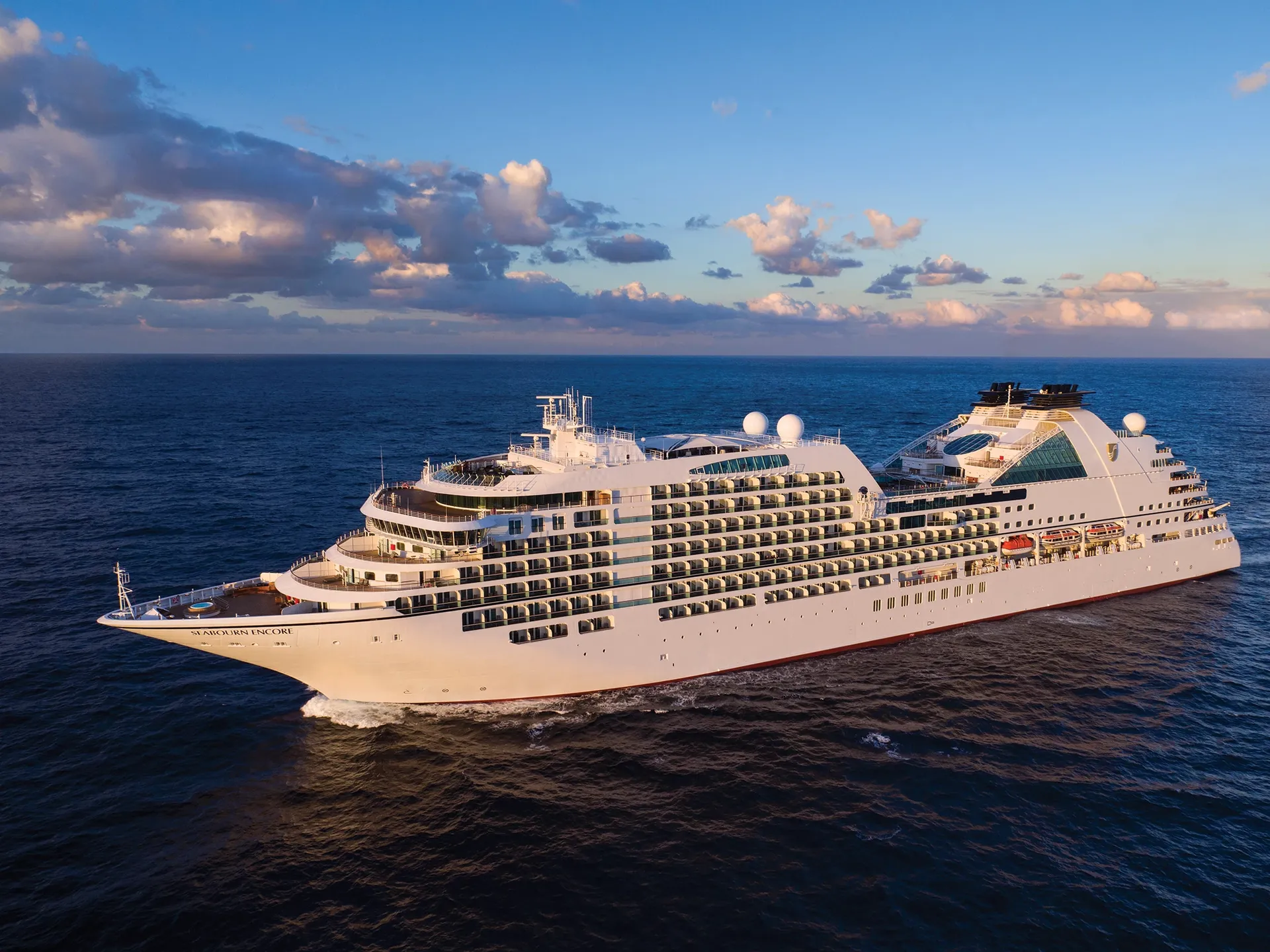
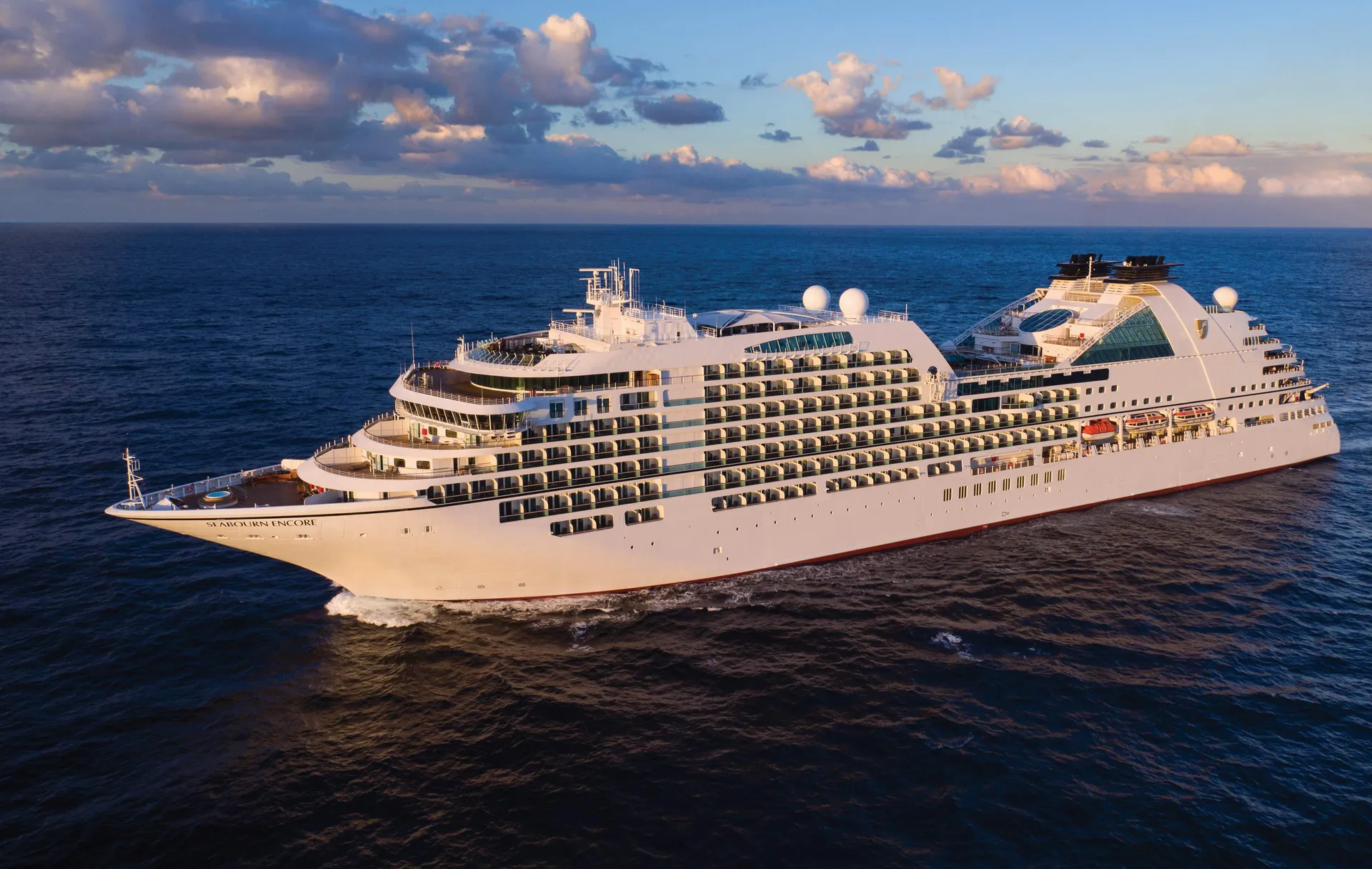
Seabourn
2016
—
40,350 GT
600
266
330
690 m
28 m
19 knots
No

From Raffles's 1819 trading post to the world's second-busiest port, Singapore has always been where the world's trade routes converge — and its Supertree Groves, UNESCO-listed hawker culture, and the bowl of Hainanese chicken rice at Maxwell Food Centre confirm that its ambition has never dimmed. As Southeast Asia's definitive cruise hub, it serves as the ideal starting point for voyages across the Indian Ocean, the Indonesian archipelago, and beyond. February through April offers the most settled weather for exploring this extraordinary island city-state.

Laem Chabang, Thailand's principal deep-water port in Chonburi province, serves as the maritime gateway to Bangkok and the cultural riches of central Thailand, with the charming town of Si Racha offering outstanding seafood and authentic Thai market culture just minutes away. Visitors should not miss an overland excursion to Bangkok's Grand Palace and an evening exploring Si Racha's waterfront night markets. The optimal season is November through February, when cool, dry northeast monsoon winds bring comfortable temperatures and calm seas to the Gulf of Thailand.

Ko Kood, Thailand's fourth-largest yet least developed island, preserves pristine rain forests, crystal-clear waters, and authentic fishing village life near the Cambodian border. Hidden waterfalls, mangrove kayaking, and exceptional seafood served on sand-floor restaurants define an island that feels like Thailand before the crowds arrived. Seabourn tenders its ultra-luxury guests to beaches where genuine unspoiled beauty, not commercial infrastructure, is the destination's greatest asset.

Sihanoukville is Cambodia's coastal gateway to extraordinary offshore islands including Koh Rong Sanloem, where bioluminescent plankton and crescent-moon beaches offer Southeast Asia's most unspoiled tropical experiences. Visit November through April via Regent Seven Seas or Seabourn for island-hopping, Ream National Park's mangrove ecosystems, and some of the region's most flavorful beachside seafood.

Still whispered as Saigon by its ten million residents, Ho Chi Minh City pulses with an energy that outlasted every empire and every war. The French colonial grandeur of Notre-Dame Cathedral and Gustave Eiffel's Central Post Office stands in vivid counterpoint to the city's kinetic street life — an endless river of motorbikes, fragrant with pho broth and charcoal-grilled meats. Do not miss the Reunification Palace, a time capsule of Cold War modernism, or a dawn bowl of bánh mì from a sidewalk vendor. The dry season, November through April, offers the most comfortable conditions for exploration.

Da Nang is a dynamic Vietnamese coastal city where pristine My Khe Beach, the cave-studded Marble Mountains, and bold central Vietnamese cuisine create one of Southeast Asia's most exciting destinations. Must-dos include climbing the Marble Mountains' Buddha-filled grottoes, savouring turmeric-tinted mi Quang noodles, and taking a day trip to UNESCO-listed Hoi An. February through August offers the driest, most pleasant weather.

Ha Long Bay is a UNESCO World Heritage landscape of nearly two thousand limestone karst islands rising from emerald waters in Vietnam's Gulf of Tonkin. Must-dos include an overnight junk cruise through the karst formations, kayaking into hidden lagoons, and exploring the cathedral-scale Sung Sot Cave. October through April offers the best weather, with spring mist adding an ethereal quality to the already otherworldly scenery.

Hong Kong's port is a vibrant gateway to a unique blend of Eastern and Western cultures, characterized by its stunning skyline and bustling atmosphere. Must-do experiences include savoring local dim sum and exploring the lively markets. The best season to visit is during the autumn months, when the weather is mild and ideal for outdoor adventures.

Keelung, a historic port city in northern Taiwan, is known for its vibrant atmosphere and culinary treasures, including the famous Oyster Omelette and Braised Pork Rice. A must-do experience is exploring the bustling Keelung Night Market and venturing to nearby attractions like Sun Moon Lake and Taroko Gorge. The best season to visit is during the fall, when the weather is mild and pleasant for outdoor exploration.

Ishigaki is Japan's subtropical gateway to the Yaeyama Islands, where the world's largest blue coral colony, Kabira Bay's emerald waters, and Ryukyuan cultural traditions create an experience closer to Taiwan than Tokyo. Visit March through October via Holland America Line or Oceania Cruises for world-class reef snorkeling, traditional sanshin music, and the tropical Japan that challenges every assumption about the Land of the Rising Sun.

Kagoshima, the "Naples of the East," is a dramatic port city on Japan's southern coast defined by the active Sakurajima volcano and a rich samurai heritage dating to the powerful Shimazu clan. Visitors should not miss the fifteen-minute ferry crossing to Sakurajima's lava fields and a tasting of legendary Kurobuta black pork paired with local sweet-potato shōchū. Spring (March–May) offers mild temperatures and cherry blossoms, while autumn (October–November) brings clear skies ideal for volcano views.

Aburatsu is a traditional fishing port on Kyushu's Pacific coast, gateway to the dramatic Nichinan coastline and the beautifully preserved samurai town of Obi, known as "Little Kyoto of Kyushu." Visitors should explore Aoshima Shrine surrounded by subtropical jungle, walk Obi's Edo-period streets, and savor Miyazaki's famous charcoal-grilled chicken and ultra-fresh bonito sashimi. Spring and autumn provide the most comfortable temperatures for exploring.

Kochi, on Japan's island of Shikoku, is a Pacific coast port city renowned for its remarkably preserved 17th-century castle, vibrant Hirome Market food hall, and the iconic katsuo no tataki — straw-seared skipjack tuna that defines the region's bold culinary identity. Visitors should not miss exploring the castle grounds and savouring sawachi communal platters paired with crisp Tosa sake. The best time to visit is spring for mild weather and cherry blossoms, or autumn when typhoon season has passed and the yuzu harvest perfumes the countryside.

Osaka is Japan's exuberant culinary capital, a neon-drenched metropolis where Edo-period merchant culture lives on in vibrant street food markets and Michelin-starred kaiseki restaurants alike. No visit is complete without savouring *takoyaki* and *kushikatsu* along the Dōtonbori Canal, or venturing north to witness Hirosaki's legendary cherry blossoms. The ideal window is late March through May for spring blooms and mild weather, or October through November when autumn foliage transforms the surrounding Kansai region into a tapestry of amber and gold.

Toba, on Japan's Shima Peninsula, is the birthplace of cultured pearl farming and home to the ancient Ama free-diving tradition, where women have harvested the sea for over two thousand years. Must-dos include meeting Ama divers at seaside huts, visiting Mikimoto Pearl Island, and feasting on Ise-ebi lobster and fresh abalone. Spring and autumn offer the best weather and prime seafood seasons.

Shimizu is Japan's premier Mount Fuji gateway port on Suruga Bay, where a storied tea-trading heritage meets exceptional coastal cuisine — most notably the prized sakura ebi cherry blossom shrimp found nowhere else. Visitors should not miss the UNESCO-listed Miho no Matsubara pine grove for iconic Fuji views and the vibrant Kashi no Ichi fish market for the freshest tuna and whitebait in Japan. The ideal window stretches from late March through May, when cherry blossoms frame the snowcapped volcano and spring's first tea harvest perfumes the hillsides.

Tokyo's port is a vibrant gateway to both cultural and culinary experiences, uniquely blending traditional Japanese heritage with modern innovation. Must-do experiences include savoring fresh sushi at Tsukiji Outer Market and exploring the natural beauty of Fuji Hakone Izu National Park. The best season to visit is spring, when cherry blossoms bloom, transforming the city into a picturesque landscape.
Day 1

From Raffles's 1819 trading post to the world's second-busiest port, Singapore has always been where the world's trade routes converge — and its Supertree Groves, UNESCO-listed hawker culture, and the bowl of Hainanese chicken rice at Maxwell Food Centre confirm that its ambition has never dimmed. As Southeast Asia's definitive cruise hub, it serves as the ideal starting point for voyages across the Indian Ocean, the Indonesian archipelago, and beyond. February through April offers the most settled weather for exploring this extraordinary island city-state.
Day 2
Day 3
Day 4

Laem Chabang, Thailand's principal deep-water port in Chonburi province, serves as the maritime gateway to Bangkok and the cultural riches of central Thailand, with the charming town of Si Racha offering outstanding seafood and authentic Thai market culture just minutes away. Visitors should not miss an overland excursion to Bangkok's Grand Palace and an evening exploring Si Racha's waterfront night markets. The optimal season is November through February, when cool, dry northeast monsoon winds bring comfortable temperatures and calm seas to the Gulf of Thailand.
Day 5

Ko Kood, Thailand's fourth-largest yet least developed island, preserves pristine rain forests, crystal-clear waters, and authentic fishing village life near the Cambodian border. Hidden waterfalls, mangrove kayaking, and exceptional seafood served on sand-floor restaurants define an island that feels like Thailand before the crowds arrived. Seabourn tenders its ultra-luxury guests to beaches where genuine unspoiled beauty, not commercial infrastructure, is the destination's greatest asset.
Day 6

Sihanoukville is Cambodia's coastal gateway to extraordinary offshore islands including Koh Rong Sanloem, where bioluminescent plankton and crescent-moon beaches offer Southeast Asia's most unspoiled tropical experiences. Visit November through April via Regent Seven Seas or Seabourn for island-hopping, Ream National Park's mangrove ecosystems, and some of the region's most flavorful beachside seafood.
Day 7
Day 8

Still whispered as Saigon by its ten million residents, Ho Chi Minh City pulses with an energy that outlasted every empire and every war. The French colonial grandeur of Notre-Dame Cathedral and Gustave Eiffel's Central Post Office stands in vivid counterpoint to the city's kinetic street life — an endless river of motorbikes, fragrant with pho broth and charcoal-grilled meats. Do not miss the Reunification Palace, a time capsule of Cold War modernism, or a dawn bowl of bánh mì from a sidewalk vendor. The dry season, November through April, offers the most comfortable conditions for exploration.
Day 10
Day 11

Da Nang is a dynamic Vietnamese coastal city where pristine My Khe Beach, the cave-studded Marble Mountains, and bold central Vietnamese cuisine create one of Southeast Asia's most exciting destinations. Must-dos include climbing the Marble Mountains' Buddha-filled grottoes, savouring turmeric-tinted mi Quang noodles, and taking a day trip to UNESCO-listed Hoi An. February through August offers the driest, most pleasant weather.
Day 12
Day 13

Ha Long Bay is a UNESCO World Heritage landscape of nearly two thousand limestone karst islands rising from emerald waters in Vietnam's Gulf of Tonkin. Must-dos include an overnight junk cruise through the karst formations, kayaking into hidden lagoons, and exploring the cathedral-scale Sung Sot Cave. October through April offers the best weather, with spring mist adding an ethereal quality to the already otherworldly scenery.
Day 14
Day 15

Hong Kong's port is a vibrant gateway to a unique blend of Eastern and Western cultures, characterized by its stunning skyline and bustling atmosphere. Must-do experiences include savoring local dim sum and exploring the lively markets. The best season to visit is during the autumn months, when the weather is mild and ideal for outdoor adventures.
Day 16
Day 17

Keelung, a historic port city in northern Taiwan, is known for its vibrant atmosphere and culinary treasures, including the famous Oyster Omelette and Braised Pork Rice. A must-do experience is exploring the bustling Keelung Night Market and venturing to nearby attractions like Sun Moon Lake and Taroko Gorge. The best season to visit is during the fall, when the weather is mild and pleasant for outdoor exploration.
Day 18

Ishigaki is Japan's subtropical gateway to the Yaeyama Islands, where the world's largest blue coral colony, Kabira Bay's emerald waters, and Ryukyuan cultural traditions create an experience closer to Taiwan than Tokyo. Visit March through October via Holland America Line or Oceania Cruises for world-class reef snorkeling, traditional sanshin music, and the tropical Japan that challenges every assumption about the Land of the Rising Sun.
Day 19
Day 20

Kagoshima, the "Naples of the East," is a dramatic port city on Japan's southern coast defined by the active Sakurajima volcano and a rich samurai heritage dating to the powerful Shimazu clan. Visitors should not miss the fifteen-minute ferry crossing to Sakurajima's lava fields and a tasting of legendary Kurobuta black pork paired with local sweet-potato shōchū. Spring (March–May) offers mild temperatures and cherry blossoms, while autumn (October–November) brings clear skies ideal for volcano views.
Day 21

Aburatsu is a traditional fishing port on Kyushu's Pacific coast, gateway to the dramatic Nichinan coastline and the beautifully preserved samurai town of Obi, known as "Little Kyoto of Kyushu." Visitors should explore Aoshima Shrine surrounded by subtropical jungle, walk Obi's Edo-period streets, and savor Miyazaki's famous charcoal-grilled chicken and ultra-fresh bonito sashimi. Spring and autumn provide the most comfortable temperatures for exploring.
Day 22

Kochi, on Japan's island of Shikoku, is a Pacific coast port city renowned for its remarkably preserved 17th-century castle, vibrant Hirome Market food hall, and the iconic katsuo no tataki — straw-seared skipjack tuna that defines the region's bold culinary identity. Visitors should not miss exploring the castle grounds and savouring sawachi communal platters paired with crisp Tosa sake. The best time to visit is spring for mild weather and cherry blossoms, or autumn when typhoon season has passed and the yuzu harvest perfumes the countryside.
Day 23

Osaka is Japan's exuberant culinary capital, a neon-drenched metropolis where Edo-period merchant culture lives on in vibrant street food markets and Michelin-starred kaiseki restaurants alike. No visit is complete without savouring *takoyaki* and *kushikatsu* along the Dōtonbori Canal, or venturing north to witness Hirosaki's legendary cherry blossoms. The ideal window is late March through May for spring blooms and mild weather, or October through November when autumn foliage transforms the surrounding Kansai region into a tapestry of amber and gold.
Day 25

Toba, on Japan's Shima Peninsula, is the birthplace of cultured pearl farming and home to the ancient Ama free-diving tradition, where women have harvested the sea for over two thousand years. Must-dos include meeting Ama divers at seaside huts, visiting Mikimoto Pearl Island, and feasting on Ise-ebi lobster and fresh abalone. Spring and autumn offer the best weather and prime seafood seasons.
Day 26

Shimizu is Japan's premier Mount Fuji gateway port on Suruga Bay, where a storied tea-trading heritage meets exceptional coastal cuisine — most notably the prized sakura ebi cherry blossom shrimp found nowhere else. Visitors should not miss the UNESCO-listed Miho no Matsubara pine grove for iconic Fuji views and the vibrant Kashi no Ichi fish market for the freshest tuna and whitebait in Japan. The ideal window stretches from late March through May, when cherry blossoms frame the snowcapped volcano and spring's first tea harvest perfumes the hillsides.
Day 27

Tokyo's port is a vibrant gateway to both cultural and culinary experiences, uniquely blending traditional Japanese heritage with modern innovation. Must-do experiences include savoring fresh sushi at Tsukiji Outer Market and exploring the natural beauty of Fuji Hakone Izu National Park. The best season to visit is spring, when cherry blossoms bloom, transforming the city into a picturesque landscape.


Located on Deck 8; Combine mid-ship suites 849 and 851 for suite 8491 or suites 846 and 848 for suite 8468 for a total inside space of 1,292 square feet (120 square meters) plus two verandas totaling 244 square feet (23 square meters)
Grand Wintergarden Suites feature
Large windows
Dining for six
Glass-enclosed solarium with tub and day bed
Two bedrooms
Two bathrooms (one whirlpool)
Convertible sofa bed for one
Pantry with wet bar
Two flat-screen TVs
Complimentary Internet/Wi-Fi service


Located on Deck 7, 8, 9 and 10; total inside space of between 576 and 597 square feet (54 and 55 square meters) plus veranda of between 142 and 778 square feet (13 and 72 square meters).
Owner's Suites feature:
Expansive ocean views
Forward-facing windows
Dining for four to six
Bathroom with whirlpool bathtub
Guest bath
Pantry with wet bar
Two flat-screen TVs
Complimentary Internet/Wi-Fi service.


Penthouse Spa Suite
Located on Deck 11; total inside space of between 639 and 677 square feet (59 and 63 square meters) plus veranda of between 254 and 288 square feet (24 and 27 square meters)
All Penthouse Spa Suites feature
Dining table for two to four
Separate bedroom
Glass door to veranda
Two flat-screen TVs
Fully stocked bar
Spacious bathroom with tub, shower and large vanity


Located on Deck 10 and 11; total inside space of between 449 and 450 square feet (42 square meters) plus one veranda of between 93 and 103 square feet (9 and 10 square meters)
All Penthouse Suites feature:
Dining table for two to four
Separate bedroom
Glass door to veranda
Two flat-screen TVs
Fully stocked bar
Spacious bathroom with tub, shower and large vanity


Located on Deck 8; forward suites 800 and 801 inside space of approximately 977 square feet of inside space (90 square meters), plus one veranda of 960 square feet (89 square meters).
Signature Suites feature
Expansive ocean views
Forward-facing windows
Dining for four to six
Bathroom with whirlpool bathtub
Guest bath
Pantry with wet bar
Two flat-screen TVs
Complimentary Internet/Wi-Fi service


Located on Deck 8; mid-ship suites 846 and 849 inside space of 989 square feet (92 square meters) plus one veranda of 197 square feet (18 square meters)
Wintergarden Suites feature:
Large windows
Dining for six
Whirlpool bathtub
Guest bath
Convertible sofa bed for one
Pantry with wet bar
Glass-enclosed solarium with tub and day bed
Two closets
Two flat-screen TVs
Complimentary Internet/Wi-Fi service.


Single Veranda Suite Guarantee


Located on Deck 6, Deck 7; total inside space of between 246 and 302 square feet (23 and 28 square meters) plus one veranda of between 68 and 83 square feet (6 and 7 square meters)
All Veranda Suites feature
A full-length window
Glass door to private veranda
Comfortable living area
Queen-size bed or two twin beds
Dining table for two
Walk-in closet
Interactive flat-screen television with music and movies
Fully stocked bar and refrigerator
Makeup vanity
Spacious bathroom with separate tub and shower


VERANDA SUITE GUARANTEE
Our cruise specialists can help you find the perfect cabin and the best available pricing.
(+886) 02-2721-7300Contact Advisor