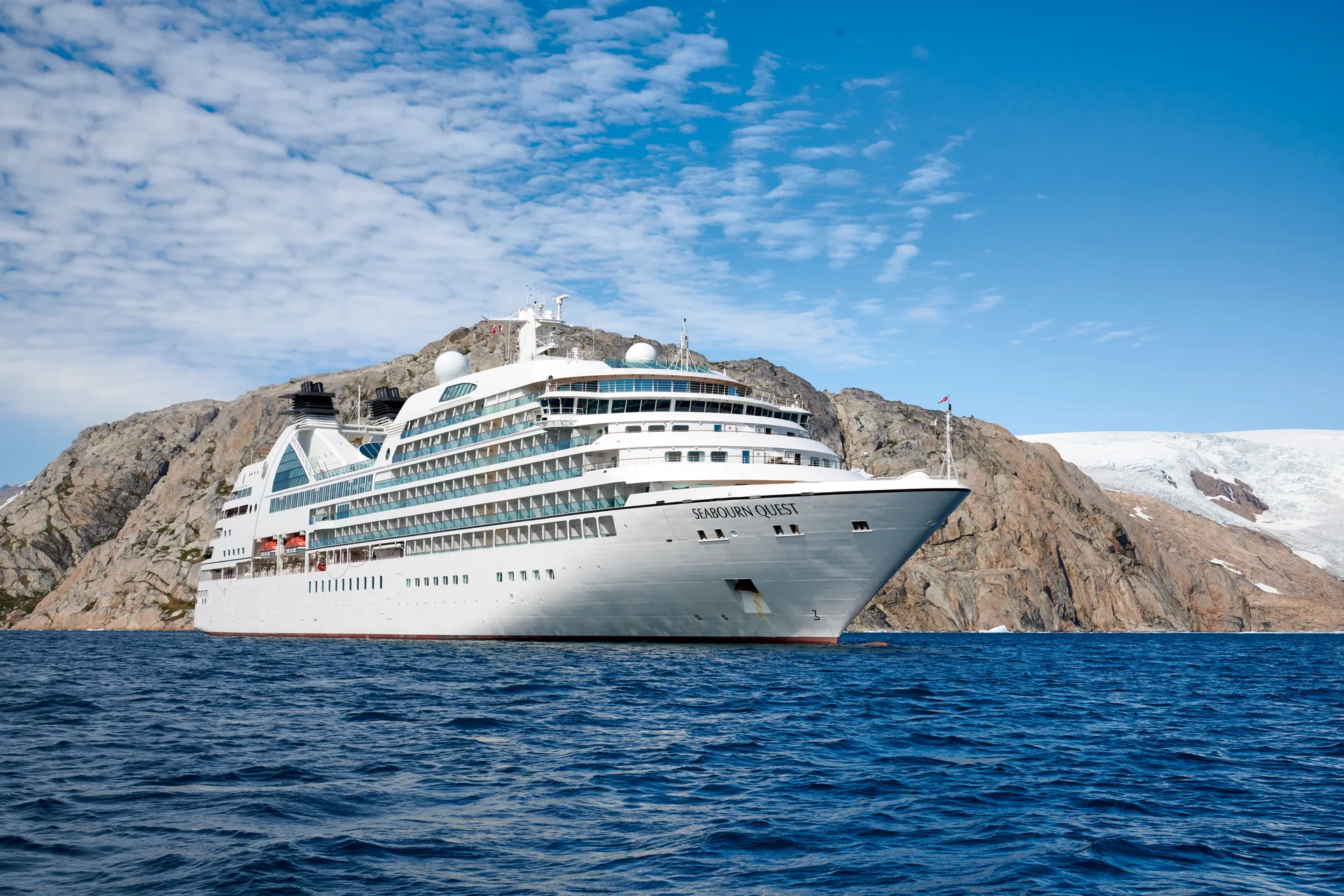
Date
October 25, 2026
Duration
28 nights
Departure Port
Athens (Piraeus) · Greece
Arrival Port
Miami · United States
Rating
Luxury
Theme
—



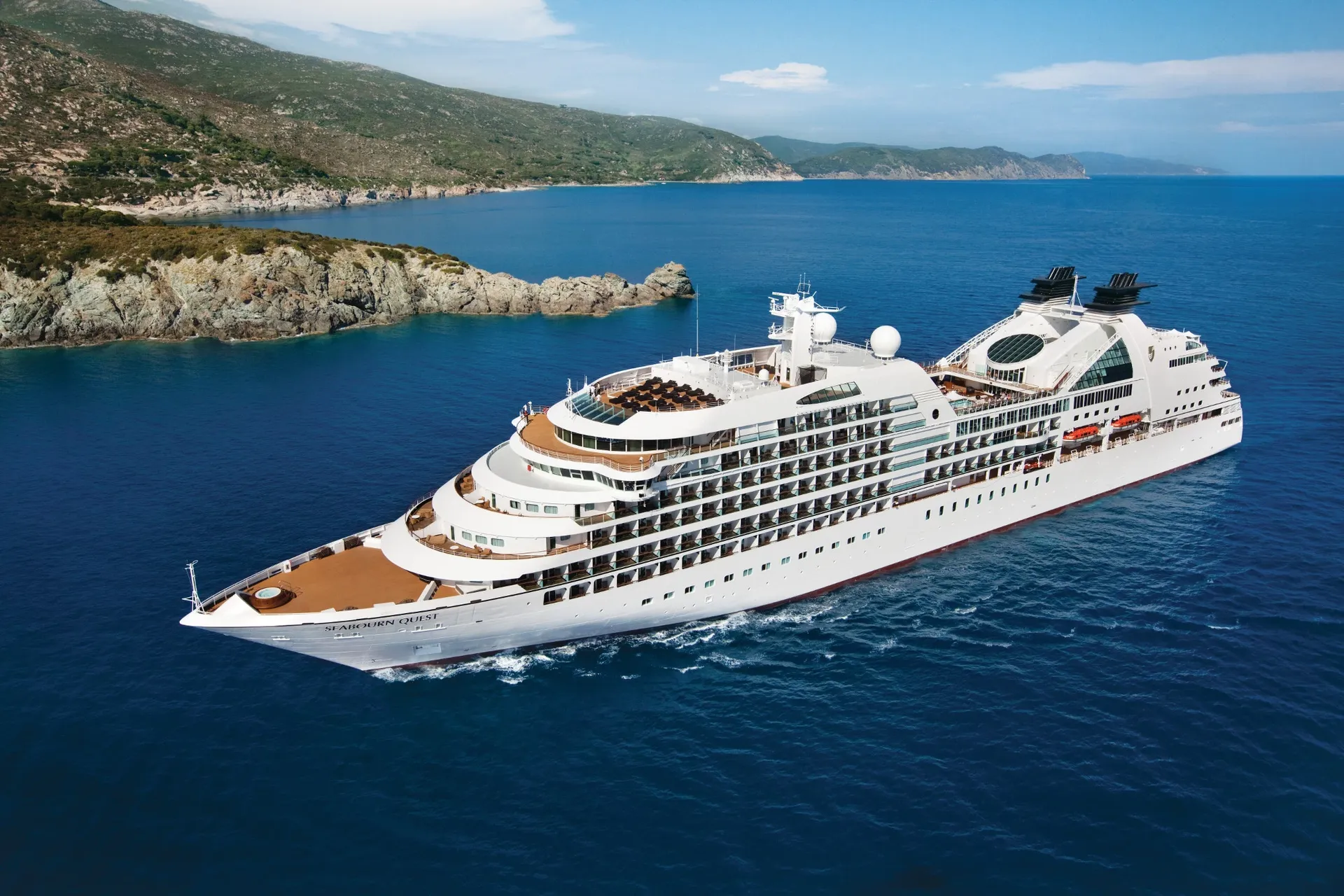
Seabourn
Odyssey
2011
—
32,000 GT
450
225
330
650 m
26 m
19 knots
No


It's no wonder that all roads lead to the fascinating and maddening metropolis of Athens. Lift your eyes 200 feet above the city to the Parthenon, its honey-color marble columns rising from a massive limestone base, and you behold architectural perfection that has not been surpassed in 2,500 years. But, today, this shrine of classical form dominates a 21st-century boomtown. To experience Athens—Athína in Greek—fully is to understand the essence of Greece: ancient monuments surviving in a sea of cement, startling beauty amid the squalor, tradition juxtaposed with modernity. Locals depend on humor and flexibility to deal with the chaos; you should do the same. The rewards are immense. Although Athens covers a huge area, the major landmarks of the ancient Greek, Roman, and Byzantine periods are close to the modern city center. You can easily walk from the Acropolis to many other key sites, taking time to browse in shops and relax in cafés and tavernas along the way. From many quarters of the city you can glimpse "the glory that was Greece" in the form of the Acropolis looming above the horizon, but only by actually climbing that rocky precipice can you feel the impact of the ancient settlement. The Acropolis and Filopappou, two craggy hills sitting side by side; the ancient Agora (marketplace); and Kerameikos, the first cemetery, form the core of ancient and Roman Athens. Along the Unification of Archaeological Sites promenade, you can follow stone-paved, tree-lined walkways from site to site, undisturbed by traffic. Cars have also been banned or reduced in other streets in the historical center. In the National Archaeological Museum, vast numbers of artifacts illustrate the many millennia of Greek civilization; smaller museums such as the Goulandris Museum of Cycladic Art Museum and the Byzantine and Christian Museum illuminate the history of particular regions or periods. Athens may seem like one huge city, but it is really a conglomeration of neighborhoods with distinctive characters. The Eastern influences that prevailed during the 400-year rule of the Ottoman Empire are still evident in Monastiraki, the bazaar area near the foot of the Acropolis. On the northern slope of the Acropolis, stroll through Plaka (if possible by moonlight), an area of tranquil streets lined with renovated mansions, to get the flavor of the 19th-century's gracious lifestyle. The narrow lanes of Anafiotika, a section of Plaka, thread past tiny churches and small, color-washed houses with wooden upper stories, recalling a Cycladic island village. In this maze of winding streets, vestiges of the older city are everywhere: crumbling stairways lined with festive tavernas; dank cellars filled with wine vats; occasionally a court or diminutive garden, enclosed within high walls and filled with magnolia trees and the flaming trumpet-shaped flowers of hibiscus bushes. Formerly run-down old quarters, such as Thission, Gazi and Psirri, popular nightlife areas filled with bars and mezedopoleia (similar to tapas bars), are now in the process of gentrification, although they still retain much of their original charm, as does the colorful produce and meat market on Athinas. The area around Syntagma Square, the tourist hub, and Omonia Square, the commercial heart of the city about 1 km (½ mi) northwest, is distinctly European, having been designed by the court architects of King Otho, a Bavarian, in the 19th century. The chic shops and bistros of ritzy Kolonaki nestle at the foot of Mt. Lycabettus, Athens's highest hill (909 feet). Each of Athens's outlying suburbs has a distinctive character: in the north is wealthy, tree-lined Kifissia, once a summer resort for aristocratic Athenians, and in the south and southeast lie Glyfada, Voula, and Vouliagmeni, with their sandy beaches, seaside bars, and lively summer nightlife. Just beyond the city's southern fringes is Piraeus, a bustling port city of waterside fish tavernas and Saronic Gulf views.


The former capital of Greece is a popular town on the eastern coast of the Peloponnese. Stately, medieval architecture recalls its Venetian occupation in the 15th century. The most dominant structure from this time is the crenellated Palamidi Fortress towering high above the town. The lively port and resort town spreads around a scenic harbor. Its center is crisscrossed by narrow streets, which are best negotiated on foot. Several monuments remain from the towns' Turkish past, including a mosque and the parliament building. Relics from ancient sites are on display in the Archaeological Museum. Those who are interested in handicrafts and traditional costumes may enjoy a visit to the Folk Art Museum. Enjoy exploring along the waterfront and around the main square of the Old Town. Open-air cafés and restaurants invite you for a break to enjoy a light snack or a seafood lunch while taking in the local atmosphere.


The small Greek port of Katakolon was developed in the 19th century to serve the thriving local trade in currants. Today it is your starting block for Olympia - birthplace of the Olympic Games. A pretty town on the banks of the River Alpheios, Olympia lies only a short drive away from the port and its historic stadium - where the first Olympic torch was lit in 776 BC and is a fascinating site to explore. You can still see the marble starting blocks used by early athletes in the 45,000-seat arena, as well as the ruins of the Temple of Hera and the gigantic Temple of Zeus - its gold and ivory statue of Zeus was one of the Seven Wonders of the ancient world. If you have already visited Olympia, you could spend your day exploring the lush wine country north of Katakolon and sampling the local vintages.


Corfu town today is a vivid tapestry of cultures—a sophisticated weave, where charm, history, and natural beauty blend. Located about midway along the island's east coast, this spectacularly lively capital is the cultural heart of Corfu and has a remarkable historic center that UNESCO designated as a World Heritage Site in 2007. All ships and planes dock or land near Corfu town, which occupies a small peninsula jutting into the Ionian Sea.Whether arriving by ferry from mainland Greece or Italy, from another island, or directly by plane, catch your breath by first relaxing with a coffee or a gelato in Corfu town's shaded Liston Arcade, then stroll the narrow lanes of its pedestrians-only quarter. For an overview of the immediate area, and a quick tour of Mon Repos palace, hop on the little tourist train that runs from May to September. Corfu town has a different feel at night, so book a table at one of its famed tavernas to savor the island's unique cuisine.The best way to get around Corfu town is on foot. The town is small enough so that you can easily walk to every sight. There are local buses, but they do not thread their way into the streets (many now car-free) of the historic center. If you are arriving by ferry or plane, it's best to take a taxi to your hotel. Expect to pay about €10 from the airport or ferry terminal to a hotel in Corfu town. If there are no taxis waiting, you can call for one.

While travelers have been visiting the Albanian Riviera since antiquity, the region is, with reason, often described as up-and-coming. Long overlooked because of Albania's political isolation from the rest of Europe, this 80-kilometer (50-mile) stretch of the northern Ionian Sea has seaside towns and stunning blue waters that visitors are now rediscovering. Strange concrete pillboxes are still visible, but other vestiges of the Communist era are thankfully fading away. The southern anchor of this coast is Sarandë, whose ancient inhabitants were said to be the descendants of the ancient Greek hero Achilles. Today, the city has become a proverbial boomtown, with the population tripling in summer. Less than 10 miles from the popular Greek tourist island of Corfu, Sarandë now sees plenty of day-trippers coming over on the short ferry ride. With a smooth horseshoe curve to its waterfront, and with fine palm-lined promenades upon which young honeymooners stroll, one wonders: What took so long? Like a mini San Francisco, the city is built around a series of stairs that lead from the top of the hill, dominated by a castle, down to the seafront. Its easy access to the sea helps explain the city’s reputation for serving excellent, fresh seafood. Sarandë is also a convenient base from which to visit a plethora of ancient ruins and UNESCO World Heritage Sites.


Naples, in the Campania region, is Italy's third largest city. Its claim to fame is the spectacular location along one of the world's most splendid bays, backed by the perfect cone of Mount Vesuvius. In addition to its beautiful setting, Naples' surprises with other outstanding attractions such as the Royal Palace, San Carlos Opera House, the impressive National Archaeological Museum and the Castel Nuovo, dating from the 13th-century. The city's central area is best explored on foot. Chaotic traffic conditions make driving around the city a very frustrating experience. Naples provides a convenient starting point for trips to such favored destinations as Pompeii, Herculaneum and Mount Vesuvius. The Isle of Capri can be reached via a 45-minute hydrofoil service. The region of Campania was home to Greeks settlers some 300 years before Rome was founded. Pompeii, too, was a Greek town before being conquered by the Romans during the 5th century BC. It was under the Romans that Pompeii flourished and grew prosperous. When Mount Vesuvius erupted in 79 AD, the population of 20,000 was wiped out, but dozens of buildings were preserved under layers of cinder more than 20 feet deep. The most important finds from Pompeii are displayed in Naples' National Archaeological Museum. A visit here will no doubt enhance a visit to ancient Pompeii.


Italy's vibrant capital lives in the present, but no other city on earth evokes its past so powerfully. For over 2,500 years, emperors, popes, artists, and common citizens have left their mark here. Archaeological remains from ancient Rome, art-stuffed churches, and the treasures of Vatican City vie for your attention, but Rome is also a wonderful place to practice the Italian-perfected il dolce far niente, the sweet art of idleness. Your most memorable experiences may include sitting at a caffè in the Campo de' Fiori or strolling in a beguiling piazza.


The French island of Corsica, with a rich and sometimes turbulent history, is a land of enchanting landscapes and stunning beauty. A mild climate, with temperatures averaging 20°C, plus more than 2,700 hours of sunshine per year and an excellent cuisine, combine to make Corsica an increasingly popular tourist destination. Perhaps because of its harsh aspect, Corsica did not attract the attentions of some of the Mediterranean's ancient powers. Its location was removed from the routes of Spanish commerce and Saracen raids. It did gain the attention of the Genoese, however, who in the 1600s built a military outpost on the island, which was suitably situated for trade with Sardinia, the Middle East, Spain and North Africa. In some areas of Ajaccio, the ancient dialect used by Ligurian sailors can still be heard. Since its establishment Ajaccio, between Punta dell Parata in the north and Capo di Muro in the south, has developed into a busy commercial and passenger port. It is also renowned as the birthplace of Napoleon Bonaparte, a major influence on the island's culture.

Encircled by dramatic medieval walls, which rise abruptly from deep-blue waters, Alghero’s defences shelter one of Sardinia’s largest and most spectacular old towns. Uneven cobbled streets, rich history and a fiery Catalan flare provide a real depth of character, and the Coral Riviera’s pristine beaches, which stretch out nearby, help to make Alghero a real highlight of Sardinia. Alghero has changed hands numerous times over its tempestuous history, but it’s the Catalan influence that you’ll feel most acutely, as you explore. It was the Catalans who upgraded the defensive ramparts of the ‘Sardinian Barcelonetta’ into the spectacular, imposing fortress we see today, enclosing the old town’s evocative knot of narrow streets and rose-gold-coloured masonry. Wander the streets at your leisure, enjoying the cooling shade of the tight, cobblestone streets with lemon-gelato in hand, or enjoying fresh tuna steak at the bustling La Boqueria market. Alghero Cathedral is hidden amid the labyrinth of narrow streets, but it’s the distinctive Baroque-dome of Chiesa di San Michele that you’ll immediately notice peeking ostentatiously over the terracotta roofs of the old town, flaunting its rainbow-coloured patterning. Plush restaurants revel in Alghero’s historical collision of cultures and produce delicious fare like plump clams tangled in tagliatelle, and succulent porcetto pork – slowly roasted to perfection in smoky wood ovens. Wash it down with mirto, a crushed berry liqueur, or sample the fruits of local vineyards, with a platter of Sardinia’s renowned pecorino sheep’s cheese. The city dominates Sardinia’s Coral Riviera – so named because of the red coral found here that’s been used for jewellery since Roman times. Lie back and listen to the waves washing ashore at Spiaggia di Maria Pia beach, breathing in the smell of pine-needles on the breeze.


Mahon is the capital of Menorca, second largest of the Balearic Islands. It stands out from the others because of the abundance of prehistoric structures, and because its culture was influenced by British occupation in the 18th century. The people who built the prehistoric constructions are believed to have been responsible for similar works in Sardinia, and for Stonehenge in England. Believed to have been founded by the Carthaginian General Mago, Mahon was held by the Moors from the 8th to the 13th century and in turn occupied by the English, the French and the Spanish. Mahon was finally ceded to Spain by the Treaty of Amiens in 1802.


A mystical island of rustic beauty, featuring long stretches of sandy beaches, hidden coves and sunsets that ladle flourishes of reds and pinks across the skies. The White Isle is so much more than just its thudding summer party scene - and an island of culture, fine dining and sophisticated elegance awaits. Ibiza has always called out to those seeking escape and sanctuary, and you'll soon feel the island's magic as you dive with dolphins, dine on calamari and octopus platters, and revel in Ibiza's rejuvenating, artistic ambience. View less Ibiza Town's 16th-century old town is a maze of wide cobbled streets, lined with a crowd of outdoor bars and energetic restaurants serving up heavy platters of fresh seafood. The steep walls of the rustic citadel, Dalt Vila fortress, tower over the town and the area is peppered with museums and historical quirks, as well as the crowning Catedral de Eivissa. Wind up along pathways of uneven cobbles for unrivalled views out over the city and waves below. Play golf on peaceful courses, which unspool along the coastline, lounge on a beach or sail with the yachting crowd on the calm waves, as you rejuvenate in Ibiza's heavenly glow. Beaches are long and sandy - choose between humming options where water sports and casual beach volleyball matches take place, or seek out quieter scenic coves to enjoy the shade of pine trees and swim in shallow waters. You may find that you're mysteriously drawn to the 400-metre-high protrusion of Es Vedra - a rocky, uninhabited island, which rears from the waves opposite Cala d'Hort beach. Island whispers proclaim it to be the earth's third magnetic point, and home to the sirens of Ancient Greece.


On the crossroads of mighty cultures, this Murcian port has endless ancient stories to share. A valuable natural harbour attracted many civilisations to this sun-bathed, southeasterly setting - following its foundation by the Carthaginians in 227 BC. Blending the imprints left by countless cultures on this global junction, the presence of everyone from the Vandals to the Phoenicians and Moors can be felt as you explore, walking between ruins and celebrated modernist architecture along Calle Mayor. Cartagena is crowned by the soaring Castillo de la Concepcion - rise to the stout castle aboard a panoramic lift. Inside, look through reams of archaeological treasures, or admire the rolling views down over the port and across the waters. Watch out for the electric blue peacocks who strut flamboyantly. Cartagena's emergence as a visitor destination coincided with a stunning discovery in 1988 - the bowl of a gloriously preserved Roman Theatre. Enter to sit among the grandiose ancient venue, so evocative, you can't help but imagine the historic performances that have graced its stage. Wander the breezy waterfront, looking across the narrow strait towards Africa's distant haze, and spotting gleaming warships. Cartagena's perfect harbour means it has been one of Spain's oldest strategic navy positions since the 16th century. Settle to enjoy the joys of tapas in lively bars - sampling crisped paella, squid and honeyed-aubergine. Easter's Semana Santa festivities are typically lively here, as hooded processions, lavish floats and sombre fiery displays roll through the streets.

At the heart of the Costa Tropical, situated in the foothills of the imposing Sierra Lujar Mountains, Motril is a true Andalusian gem. Surrounded by beautiful landscapes, fronted by glorious coastal scenes and inviting beaches, and benefitting from a mild, sub-tropical climate all year round, it is the perfect location for some soothing rest, relaxation and sunshine. But it’s not all sun, sea and sand in Motril, there is plenty for those looking for a taste of authentic local culture too. While the city is not quite as well known, or as well trodden as others on the Andalusian coast, such as Malaga and Almeria, Motril boasts artistic, historical and architectural treasures that are well worth taking the time to discover. Highlights include the 16th century cultural hub of Casa de la Palmas, 17th century Town Hall – a fine example of mudéjar architecture, and the baroque-style Sanctuary of Ntra Sra de la Cabeza. Meanwhile, as one might expect from an Andalusian city, Motril offers an array of tempting traditional cuisine and locally produced drinks, from authentic tapas – served in restaurants around the city – to ‘ron de Motril’ rum.


A tiny Spanish city-enclave of just 19 square kilometres on the Moroccan side of the Straits of Gibraltar, ceded to Madrid by the Portuguese over 400 years ago. Ringed by the, the hilly streets of duty-free Ceuta have a unique atmosphere and heritage. European yet African, with sights that include the massive 14th century city walls, a pirate's castle, lakes, waterfalls and landscaped gardens.


Lisbon, the capital of Portugal, is a city open to the sea and carefully planned with 18th-century elegance. Its founder is said to be the legendary Ulysses, but the theory of an original Phoenician settlement is probably more realistic. Known in Portugal as Lisboa, the city was inhabited by the Romans, Visigoths and, beginning in the 8th century, the Moors. Much of the 16th century was a period of great prosperity and overseas expansion for Portugal. Tragedy struck on All Saints' Day in 1755 with a devastating earthquake that killed about 40,000 people. The destruction of Lisbon shocked the continent. As a result, the Baixa (lower city) emerged in a single phase of building, carried out in less than a decade by the royal minister, the Marques de Pombal. His carefully planned layout of a perfect neo-classical grid survived to this day and remains the heart of the city. Evidence of pre-quake Lisbon can still be seen in the Belém suburb and the old Moorish section of the Alfama that sprawls below the Castle of St. George. Lisbon is a compact city on the banks of the Tagus River. Visitors find it easy to get around as many places of interest are in the vicinity of the central downtown area. There is a convenient bus and tram system and taxis are plentiful. Rossio Square, the heart of Lisbon since medieval times, is an ideal place to start exploring. After a fire destroyed parts of the historic neighborhood behind Rossio in 1988, many of the restored buildings emerged with modern interiors behind the original façades. The city boasts a good many monuments and museums, such as the Jeronimos Monastery, Tower of Belém, the Royal Coach Museum and the Gulbenkian Museum. High above the Baixa is the Bairro Alto (upper city) with its teeming nightlife. The easiest way to connect between the two areas is via the public elevator designed by Gustave Eiffel. Cruising up the Tagus River to the ship's berth, you can already spot three of Lisbon's famous landmarks: the Monument to the Discoveries, the Tower of Belém and the Statue of Christ, which welcomes visitors from its hilltop location high above Europe's longest suspension bridge.


As you arrive in Funchal on an MSC cruise, your ship will cast anchor in a bay protected by mountains rising straight up behind the port. The name, Funchal, derives from that of the fennel plant, the funcho still used today in the traditional sweets known as rebuçados de funcho, that one can find anywhere on the island of Madeira. An excursion will take you around the town centre, to visit historic churches, from the A Sé Cathedral, with its inlaid ceiling, to the majestic Church of the Incarnation, to the church of Carmo without a vault. Another MSC excursion will take you up to the village of Monte, from where one can admire a spectacular view of the Funchal bay. You can visit its 18th century church and the tomb of the last Austrian emperor, Charles I, and stroll around the magnificent botanic gardens. But if you like heights, there’s nothing more impressive than the Cabo Girão and its 589 metre tall cliffs, amongst the highest in the world, at the foot of which lie the cultivated lands known as Fajãs do Cabo Girão. If you’re looking for an equipped beach during your MSC cruise, another excursion will take you to Machico. Founded in the 15th century, it hosts the oldest religious building on the island, the Capela dos Milagres, and the fortresses of São João Baptista and Nossa Senhora do Amparo built in the beginning of the 16th century. The more lively tourist attraction is instead in Calheta, on the south-west coast. Splendid yachts cruising across the Atlantic are moored in the port and if you want to go for a swim there are two beautiful beaches of golden sand; in spite of the modern structures Calheta dates back to the mid-15th century. This is where they make the “Aguardente”, the best white rhum, and fundamental ingredient of Madeira’s typical drink, the “Poncha” .


Miami is one of the world’s most popular holiday spots. It has so much to offer; from its countless beach areas, to culture and museums, from spa and shopping days out, to endless cuban restaurants and cafes. Miami is a multicultural city that has something to offer to everyone.


Approximately 1189 square feet (110 square meters) of inside space, plus two verandas totaling 214 square feet (20 square meters)
Grand Wintergarden Suites feature
Large windows
Dining for six
Glass-enclosed solarium with tub and day bed
Two bedrooms
Two bathrooms (one whirlpool)
Guest bath
Convertible sofa bed for one
Pantry with wet bar
Three flat-screen TVs
Complimentary internet/Wi-Fi service


Approximately 526 & 593 square feet (49 to 55 square meters) of inside space, plus one veranda of 133 & 354 square feet (12 to 33 square meters)
Owner's Suites feature:
Expansive ocean views
Forward-facing windows
Dining for four to six
Bathroom with whirlpool bathtub
Guest bath
Pantry with wet bar
Two flat-screen TVs
Complimentary Internet/Wi-Fi service


Penthouse Spa Suite
Approximately 536 to 539 square feet (50 square meters) of inside space, plus one veranda of 167 to 200 square feet (16 to 19 square meters)
All Penthouse Spa Suite feature:
Dining table for two to four
Separate bedroom
Glass door to veranda
Two flat-screen TVs
Fully stocked bar
Spacious bathroom with tub, shower and large vanity.


Penthouse Suite
Approximately 436 square feet (41 square meters) of inside space, plus one veranda of 98 square feet (9 square meters)
All Penthouse Suite feature:
Dining table for two to four
Separate bedroom
Glass door to veranda
Two flat-screen TVs
Fully stocked bar
Spacious bathroom with tub, shower and large vanity.


Signature Suite
Approximately 859 square feet (80 square meters) of inside space, plus one veranda of 493 square feet (46 square meters)
Signature Suites feature:
Expansive ocean views
Forward-facing windows
Dining for four to six
Bathroom with whirlpool bathtub
Guest bath
Pantry with wet bar
Two flat-screen TVs
Complimentary Internet/Wi-Fi service


Approximately 914 square feet (85 square meters) of inside space, one veranda of 183 sq. ft. (17 square meters.).
Wintergarden Suites feature
Large windows
Dining for six
Whirlpool bathtub
Guest bath
Convertible sofa bed for one
Pantry with wet bar
Glass-enclosed solarium with tub and day bed
Two closets
Two flat-screen TVs
Complimentary Internet/Wi-Fi service


Located on Deck 5; Approximately 300 square feet (28 square meters) of inside space, plus one veranda of 65 square feet (6 square meters)
All Veranda Suites feature:
A full-length window and glass door to private veranda
Comfortable living area
Queen-size bed or two twin beds
Dining table for two
Walk-in closet
Interactive flat-screen television with music and movies
Fully stocked bar and refrigerator
Makeup vanity
Spacious bathroom with separate tub and shower.

Veranda Suite Guarantee


Approximately 295 square feet (28 square meters) of inside space
For this option we select the location and specific suite for you, and notify you prior to departure. Guests are guaranteed to be assigned a suite in the category selected or higher.
All Ocean View Suites feature a large picture window, comfortable living area, queen-size bed or two twin beds, dining table for two, walk-in closet, interactive flat-screen television with music and movies, fully stocked bar and refrigerator, makeup vanity, spacious bathroom with separate tub and shower.
Our cruise specialists can help you find the perfect cabin and the best available pricing.
(+886) 02-2721-7300Contact Advisor