Date
2027-01-05
Duration
145 nights
Departure Port
Miami
United States
Arrival Port
Miami
United States
Rating
Luxury
Theme
—



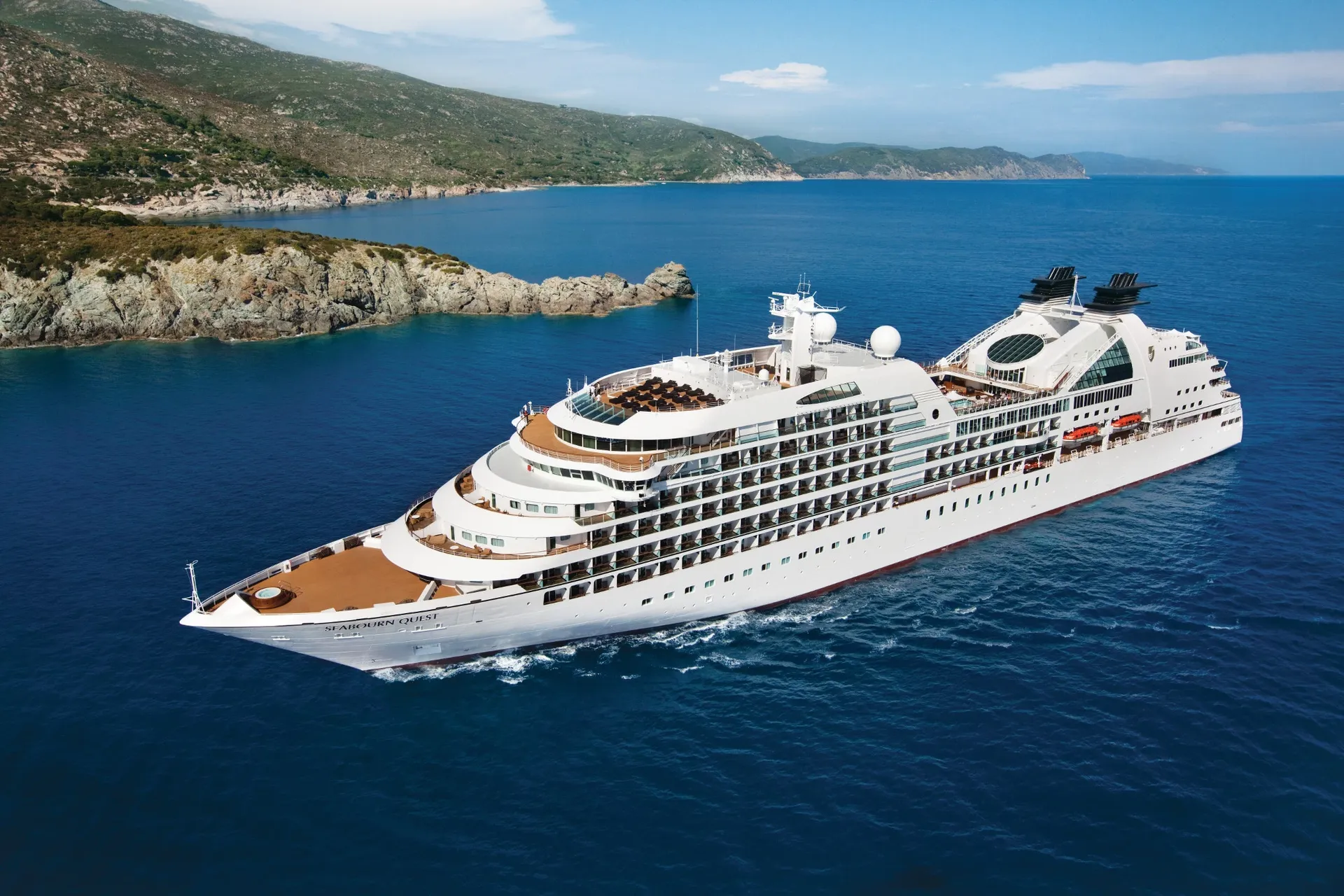
Seabourn
2011
—
32,000 GT
450
225
330
650 m
26 m
19 knots
No

Miami is a city of perpetual reinvention — the Art Deco jewel of South Beach giving way to the street-art murals of Wynwood, the Cuban rhythms of Calle Ocho, and the glass-and-steel towers of a skyline that has redrawn itself every decade since Julia Tuttle convinced Henry Flagler to extend his railroad south in 1896. Must-dos include strolling the pastel-fronted Ocean Drive at dusk and exploring the world-class collections at the Pérez Art Museum Miami overlooking Biscayne Bay. November through April delivers idyllic weather — warm and dry — while summer brings heat, humidity, and hurricane risk. Miami handles cruise departures elegantly, with the Port of Miami a short taxi ride from the best neighbourhoods.
In the early morning, your ship joins the flotilla of hulls of every shape and purpose from the far corners of the globe. They gather in Limon Bay off the shoreline of Cristobal in the Caribbean Sea to form the day’s convoy. Soon you will parade in file into the mighty Gatun Locks, there to be lifted patiently by inrushing water through three steps and exit into Gatun Lake to begin your transit of the canal. In truth, your ship sails from west to east, threading the jungled Gaillard Cut and before arriving at the Pedro Miguel Locks to begin your descent to the Pacific Ocean. At the Miraflores Locks, your ship files through the three descending steps, lowered gracefully by the outrushing waters into the mouth of the canal, bidding farewell to your convoy, and sailing on into the largest ocean on earth.
After a thrilling day passing through the mighty, water-powered locks and jungled channels of the Panama Canal, reflect on the engineering marvel that you have experienced, as your ship glides majestically out of the canal and into your first night in the Pacific Ocean. As the first stars sparkle in the horizon, lift your glass to the bold visionaries who dreamt of such an accomplishment so long ago, and to the untold thousands who toiled to make it real. VIEW CRUISES
If you are a “pollywog,” who has never crossed the line at sea, you will be expected to undergo a mock trial by King Neptune and his court for the entertainment of the “shellbacks” who have already done so. Mild but hilarious indignities will be conjured, and in the end a good time will be had by most, if not all.

Ecuador's largest city and Pacific gateway, Guayaquil has reinvented its historic waterfront with the celebrated Malecón 2000, a sweeping riverside promenade where museums, gardens, and spectacular views of the Guayas River coexist with the energy of a genuinely ambitious city. The historic Las Peñas neighbourhood, its painted wooden houses climbing a hillside crowned by the Cerro Santa Ana lighthouse, offers the most atmospheric corner of the old city. As the embarkation point for most Galápagos expeditions, Guayaquil rewards a day or two of exploration before the archipelago's more famous wonders. The dry season — May through December — is the preferred window for visiting the coast.

Machala is Ecuador's "Banana Capital of the World," a working port city on the Pacific coast surrounded by vast plantations and mangrove-fringed islands of ecological richness. Must-dos include visiting a banana plantation, taking a boat through the Jambelí Archipelago mangroves, and tasting black clam ceviche. June through November offers the most comfortable weather, with excursions available to colonial Cuenca and the Puyango Petrified Forest.

Callao, Peru, delivers South America's irresistible combination of dramatic landscapes, vibrant culture, and extraordinary biodiversity. Essential experiences include exploring local markets, tasting the distinctive regional cuisine, and venturing into the surrounding natural environments. Best visited May through September, when drier conditions prevail and temperatures remain pleasant. Cruise lines including Cunard feature this port on their most compelling itineraries. Whether you have a few hours or a full day, the port rewards exploration at every pace and in every direction.

Pisco, Peru is a distinctive port city where deep cultural heritage meets authentic local atmosphere, featured on itineraries by Oceania Cruises. Must-do experiences include exploring the vibrant local markets for regional specialties and fresh seafood, and discovering the waterfront quarter where maritime heritage meets contemporary energy. The optimal time to visit is November through April, when dry season brings clear skies and calm seas.

Iquique, Chile, delivers South America's irresistible combination of dramatic landscapes, vibrant culture, and extraordinary biodiversity. Essential experiences include exploring local markets, tasting the distinctive regional cuisine, and venturing into the surrounding natural environments. Best visited May through September, when drier conditions prevail and temperatures remain pleasant. Cruise lines including Azamara feature this port on their most compelling itineraries. Whether you have a few hours or a full day, the port rewards exploration at every pace and in every direction.
The southeastern-most point in the Polynesian Triangle, tiny Easter Island in the South Pacific is one of the most remote places on earth. Even more oddly, it belongs to Chile, which lies 3,700 miles away over the eastern horizon. In fact, a large slice of the island is Chile’s Rapa Nui National Park, preserving the sculptural heritage of the indigenous Rapa Nui people, whose ancestors carved the huge human effigies called moai that give the island its renown and earned it UNESCO World Heritage Site status. These stylized sculptures stand on the slopes of the island, gazing implacably out to sea, often on stone platforms called ahu. They were apparently carved between the 13th and 16th centuries, for reasons that are debated. But the enigmatic effigies, the dramatic volcanic landscape, the Rapa Nui people themselves and the sheer isolation of the island combine to draw visitors from every corner of the globe to this speck in the world’s largest ocean.
Hiva Oa in the Marquesas Islands is the remote Pacific island where Gauguin and Jacques Brel chose to spend their final years, drawn by volcanic landscapes of razor ridges and black-sand bays that remain among the most dramatic in Polynesia. Must-dos include the Calvaire Cemetery, the Puamau archaeological tiki, and tasting Marquesan goat stew with breadfruit. May through October's dry season offers the best conditions for exploring this extraordinarily isolated paradise.

Fakarava is a UNESCO Biosphere Reserve atoll in French Polynesia's Tuamotu Archipelago, offering some of the world's most spectacular diving — including drift dives through shark-filled passes — and pristine pink-sand beaches. Must-dos include diving the Garuae "wall of sharks," visiting a black pearl farm, and stargazing from an uninhabited motu. April through November brings the driest weather, with June and July featuring the legendary grouper spawning.

Rangiroa is the world's second-largest coral atoll, a ring of palm-fringed islets in French Polynesia's Tuamotus encircling a lagoon vast enough to contain Tahiti. Visitors must drift-dive or snorkel Tiputa Pass for sharks and dolphins, visit the surreal Blue Lagoon and Pink Sands beach, and savour poisson cru in a Polynesian pension. May through October offers calm diving conditions, while January-March brings hammerhead sharks.

Papeete is the spirited, slightly ragged capital of French Polynesia — not the languorous paradise of travel-poster imagination, but a working harbour city of fresh produce markets, baguette bakeries, and Tahitian outrigger canoe clubs that provides an authentic counterpoint to the pearl-still lagoons of Bora Bora and Moorea nearby. The daily Marché de Papeete is the city's essential experience, its stalls piling high with vanilla pods, monoi-scented oils, black pearls, and the most exuberant floral arrangements in the Pacific. Moorea, visible across the Sea of the Moon and just 30 minutes by fast ferry, offers a dramatically quieter alternative. The dry season, May through October, brings the finest weather.


Bora Bora rises from the South Pacific like the platonic ideal of a tropical island — a volcanic peak ringed by a lagoon of impossible turquoise clarity whose beauty has made it the benchmark against which all other island destinations are measured. The overwater bungalow was effectively invented here, and the island's luxury resorts remain the definitive expression of that sublime form of hospitality. Snorkel or dive the outer reef's extraordinary coral gardens, or simply watch the shifting light transform Mount Otemanu's basalt silhouette through the long Pacific afternoon. Visit April through October for the calmest, driest conditions. Tahiti's Faa'a International Airport is a forty-five-minute flight away.

Aitutaki is the Cook Islands atoll whose lagoon — arguably the world's most beautiful — shimmers in impossible blues around palm-fringed motus including One Foot Island's legendary beach and remote post office. Visit May through October via Paul Gauguin or Silversea for crystal-clear snorkeling, traditional Polynesian umukai feasts, and the rare Pacific island experience that silences even the most jaded traveler.
The capital of Tonga is on Tongatapu, its largest island. Learn about the history and heritage of the Tongans at the Tonga Cultural Centre, a complex of traditional buildings holding museums and artisans workshops where traditional crafts are made. In the nearby village of Mu’a, see the marvelously crafted stone tombs of Tongan kings from the past.

Auckland, New Zealand's largest city, straddles a volcanic isthmus between two harbours, offering a rare blend of Pacific Rim sophistication, Māori heritage, and dramatic natural beauty. Must-do experiences include a wine-and-oyster afternoon on Waiheke Island and the panoramic ascent of Maungawhau (Mount Eden) overlooking the harbour and Rangitoto Island. The ideal cruising season runs from November through March, when long summer days, calm seas, and pohutukawa trees in scarlet bloom make the Waitematā Harbour approach truly unforgettable.

Tauranga is the gateway to New Zealand's Bay of Plenty, where the perfect beach at Mount Maunganui, Rotorua's erupting geysers, and Māori cultural experiences at Te Puia create one of the North Island's most diverse destination areas. Visit November through March via Celebrity or Princess Cruises for summit walks, geothermal wonderlands, and the authentic Māori encounters that give this sun-drenched coast cultural depth to match its natural beauty.

Napier is a New Zealand coastal city renowned for the world's most complete collection of Art Deco architecture, rebuilt after a devastating 1931 earthquake. Must-dos include a guided Art Deco walking tour, wine tasting across Hawke's Bay's celebrated vineyards, and visiting the gannet colony at Cape Kidnappers. November through April offers the warmest weather, with February's Art Deco Weekend providing the ultimate vintage-style celebration.

Wellington is New Zealand's compact, creative capital, home to the world-class Te Papa museum, the Peter Jackson filmmaking empire, and a café-and-craft-beer culture rivalling cities many times its size. Must-do experiences include Te Papa's Gallipoli exhibition, Cuba Street's bohemian dining scene, and the cable car ride to the Botanic Garden. November through March is warmest, though Wellington's four-seasons-in-a-day climate adds character year-round.

Picton is the gateway to the Marlborough Sounds' 1,500 kilometers of scenic coastline and New Zealand's premier Sauvignon Blanc wine region. Must-dos include walking sections of the Queen Charlotte Track, wine tasting in the Wairau Valley, and dolphin watching in the sheltered sounds. November through March offers the warmest weather and longest days for both sound exploration and cellar-door visits.

Kaikoura is a marine wildlife capital on New Zealand's South Island coast, where deep submarine canyons create conditions for year-round sperm whale watching, dolphin swimming, and albatross encounters against a backdrop of snow-capped mountains. Must-dos include whale watching with its 95% sighting rate, eating crayfish at the legendary Nin's Bin roadside stand, and swimming with dusky dolphins. Visit year-round — whales are always present, with different seasons favouring different species.

Akaroa is a French-heritage village nestled in an ancient volcanic crater on New Zealand's Banks Peninsula, home to the rare Hector's dolphin and a sophisticated food scene featuring harbour-fresh salmon and cool-climate wines. Must-dos include swimming with Hector's dolphins, exploring the French colonial heritage along Rue Lavaud, and dining on local green-lipped mussels. Visit December through March for the warmest weather and best dolphin-watching conditions.

Timaru, New Zealand is a distinctive port city where deep cultural heritage meets authentic local atmosphere, featured on itineraries by Holland America Line. Must-do experiences include walking the historic center to experience the layered architectural heritage, and seeking out the regional culinary traditions at a locally favored establishment away from the port area. The optimal time to visit is November through March, when mild temperatures and long days favor unhurried exploration.

Dunedin is New Zealand's Scottish-founded southern city, home to the Southern Hemisphere's most beautiful railway station, the world's only mainland royal albatross colony, and rare yellow-eyed penguin nesting sites on the Otago Peninsula. Visit November through March via Seabourn or Oceania Cruises for wildlife encounters, Victorian architectural grandeur, and a university-town culture that punches far above its weight.

Oban, Scotland’s Gateway to the Isles, is a charming harbor town on the west coast where world-class seafood meets Hebridean island adventures. Must-dos include tasting langoustines at the famous Seafood Hut, visiting sacred Iona and Fingal’s Cave on Staffa, and sampling Oban Distillery’s maritime single malt. Visit May through September for the best weather and longest days to explore the Inner Hebrides.

Sydney, on Cape Breton Island in Nova Scotia, is a charming harbour city where Scottish-Acadian heritage meets raw Atlantic beauty, serving as the gateway to the legendary Cabot Trail — one of the world's most spectacular coastal drives. Visitors should savour the island's renowned seafood chowder and traditional oatcakes while exploring the colourful waterfront boardwalk. The peak season stretches from late June through October, when autumn's fiery foliage transforms the highlands into a tapestry of crimson and gold.

Hobart is Tasmania's cultured harbour capital, home to the boundary-pushing MONA museum, the legendary Salamanca Market, and world-class produce from pristine Tasmanian waters and farmland. Must-do experiences include MONA's subterranean galleries, the summit of kunanyi/Mount Wellington, and tasting Tasmanian oysters and Pinot Noir on the waterfront. December through March is warmest; June's Dark Mofo festival transforms the city.

Burnie is a friendly port city on Tasmania's north coast, serving as the gateway to Cradle Mountain's wilderness, the Tarkine rainforest, and the island's celebrated artisan food culture. Must-dos include watching little penguins at dusk, tasting Tasmanian craft whisky and farmhouse cheeses, and visiting Cradle Mountain-Lake St Clair National Park. October through April offers the best weather and penguin-viewing conditions.

Melbourne is Australia's cultural capital, a city of labyrinthine laneways, world-class coffee, street art, and one of the most diverse food scenes on earth. Must-dos include exploring Hosier Lane's street art, eating your way through the Queen Victoria Market, and driving the Great Ocean Road to the Twelve Apostles. October through April offers the warmest weather, though Melbourne's famous changeability keeps visitors on their toes.

Adelaide is South Australia's elegant, parkland-ringed capital, uniquely positioned within an hour's drive of three world-class wine regions — the Barossa Valley, McLaren Vale, and the Adelaide Hills. Must-dos include the Central Market's 80-plus food stalls, Barossa Valley Shiraz tasting, and North Terrace's museum precinct. Visit March for the Adelaide Festival and Fringe, or October through April for warm Mediterranean-climate weather.

Penneshaw, Kangaroo Island, Australia is a distinctive port city where deep cultural heritage meets authentic local atmosphere, featured on itineraries by Seabourn. Must-do experiences include walking the historic center to experience the layered architectural heritage, and seeking out the regional culinary traditions at a locally favored establishment away from the port area. The optimal time to visit is November through March, when mild temperatures and long days favor unhurried exploration.

Port Lincoln, Australia, showcases the Southern Hemisphere's remarkable natural heritage—pristine coastlines, unique wildlife, and landscapes of ancient geological drama. Must-do experiences include sampling the exceptional local seafood and exploring the surrounding national parks. The most rewarding visiting window is November through March, during the southern hemisphere summer. Cruise lines including Princess Cruises feature this port on their most compelling itineraries. Whether you have a few hours or a full day, the port rewards exploration at every pace and in every direction.

Albany, Western Australia’s oldest settlement, commands King George Sound—the departure point for the first ANZAC convoy—with dramatic Southern Ocean coastline and the National ANZAC Centre. Must-dos include the ANZAC memorial overlooking the harbor, the Gap’s explosive wave formations at Torndirrup National Park, and wine tasting in the Porongurup Range. Visit June through October for whale watching, or September through November for the Stirling Range’s spectacular wildflower bloom.

Busselton, Australia is a distinctive port city where deep cultural heritage meets authentic local atmosphere, featured on itineraries by Silversea. Must-do experiences include walking the historic center to experience the layered architectural heritage, and seeking out the regional culinary traditions at a locally favored establishment away from the port area. The optimal time to visit is October through April, when warm weather and extended daylight create ideal conditions.

Fremantle is a charismatic port city at the mouth of Western Australia's Swan River, where Victorian heritage architecture, bohemian arts culture, and multicultural dining create one of Australia's most engaging small-city experiences. Must-do experiences include browsing the historic Fremantle Markets, touring the UNESCO-listed Fremantle Prison, and taking the ferry to Rottnest Island for quokka encounters and pristine snorkeling. The Mediterranean climate makes Fremantle a year-round destination, with spring wildflower season (August-October) and the warm summer months offering the most vibrant outdoor atmosphere.

Geraldton is a sun-drenched port city on Western Australia's Coral Coast, gateway to the extraordinary Abrolhos Islands and keeper of the dramatic Batavia shipwreck story. Visitors should explore the HMAS Sydney Memorial and Batavia Museum, taste fresh rock lobster, and snorkel the pristine Abrolhos coral reefs. Year-round Mediterranean climate makes any season pleasant, with the wildflower season (August-October) adding spectacular inland color.

Exmouth is the gateway to Ningaloo Reef in Western Australia — the world's largest fringing reef, where coral begins just meters from shore and whale sharks, manta rays, and humpback whales gather in extraordinary concentrations. Must-do experiences include swimming with whale sharks, snorkeling the pristine coral gardens, and hiking the red-rock gorges of Cape Range National Park. March through July is whale shark season, while November through March brings turtle nesting — each period offering world-class wildlife encounters.

Castries, the capital of St. Lucia, is a vibrant port steeped in history and culture, offering stunning architecture and a lively market atmosphere. Must-do experiences include savoring the national dish, green fig and saltfish, and exploring the picturesque Marigot Bay. The best time to visit is during the dry season from December to April, when the weather is perfect for exploring this Caribbean gem.

Darwin is Australia's tropical Top End capital, where sixty-five thousand years of Indigenous heritage meets extraordinary multiculturalism, saltwater crocodiles, and gateway access to Kakadu's ancient rock art. Must-do experiences include the Mindil Beach Sunset Market, swimming beneath Litchfield's waterfalls, and viewing twenty-thousand-year-old Aboriginal paintings at Ubirr. May through October's Dry season offers clear skies and outdoor market culture.

Alotau is the gateway to Papua New Guinea's Milne Bay, one of Earth's most biodiverse marine regions with over 1,400 islands harboring extraordinary coral reefs, manta rays, and the living Kula Ring ceremonial exchange. Must-dos include snorkeling the world-class reefs, visiting the waterfront market by outrigger canoe, and experiencing a traditional mumu feast. Visit May to October for the best diving conditions.

Cairns is the only city on Earth positioned between two UNESCO World Heritage Sites — the Great Barrier Reef and the ancient Daintree Rainforest. Visit June through October via Celebrity Cruises or Viking for outer reef snorkeling, Daintree River crocodile cruises, cassowary encounters, and the unique privilege of experiencing 180 million years of rainforest evolution alongside the planet's largest living structure.

Townsville is North Queensland's gateway to the central Great Barrier Reef, where Magnetic Island's wild koalas and granite beaches lie twenty minutes by ferry and the legendary SS Yongala shipwreck offers one of the world's top ten dives. Visit June through October via Cunard or Holland America Line for pristine reef sections, the world's largest living coral reef aquarium, and the quieter alternative to Cairns that delivers equal natural wonder with fewer crowds.

Airlie Beach is the tropical gateway to the Whitsunday Islands and the Great Barrier Reef, where seventy-four islands float in turquoise Coral Sea waters above one of earth's greatest marine ecosystems. Must-do experiences include Whitehaven Beach's pure silica sands, snorkelling the outer reef with reef sharks and giant clams, and the Hill Inlet aerial view. April through November's dry season offers the best visibility and calmest seas.

Brisbane, Australia's sun-drenched Queensland capital, is a sophisticated river city where subtropical warmth meets world-class dining, striking modern architecture, and lush parklands — all framed by proximity to the Great Barrier Reef and ancient rainforests. Visitors should not miss the Moreton Bay bug at a waterfront restaurant and the panoramic twilight views from Kangaroo Point cliffs. With over 280 days of sunshine annually, Brisbane shines brightest from April through October, when mild winters and cobalt skies create ideal conditions for exploring both the city and its remarkable coastal surroundings.

Norfolk Island is a volcanic South Pacific territory whose extraordinary natural beauty — towering Norfolk pines, emerald lagoons, and dramatic basalt cliffs — contrasts poignantly with its UNESCO-listed convict settlement ruins at Kingston. Visitors should explore the Georgian buildings of Quality Row, swim in the pristine lagoon of Emily Bay, and discover the fascinating Bounty mutineer heritage of its residents. October through April offers the warmest, most reliable weather for this remote island destination.

Nouméa, capital of New Caledonia, is a uniquely French-Melanesian city set within a UNESCO World Heritage lagoon — the largest enclosed reef system on Earth. Visitors should explore the Renzo Piano-designed Tjibaou Cultural Centre, snorkel pristine coral gardens at Amédée Lighthouse, and savour the fusion of French cuisine with Pacific ingredients at the Moselle Market. April through November offers the most pleasant tropical climate.

Mystery Island (Inyeug) is an uninhabited coral islet in southern Vanuatu, offering pristine white-sand beaches, exceptional snorkelling over vibrant coral reefs, and a warm welcome from the neighbouring Aneityum islanders. Must-dos include snorkelling the crystal-clear reef, enjoying string-band performances by local musicians, and kayaking the turquoise lagoon. April through October's dry season brings the clearest skies and most comfortable conditions.

Lautoka, Fiji's "Sugar City," is a characterful western Viti Levu port where a century-old sugar mill, a vibrant municipal market, and lush botanical gardens reveal an unhurried South Pacific authenticity. Visitors should taste kokoda and lovo-smoked pork at the waterfront market and explore the nearby Yasawa Islands or Taveuni's rainforest waterfalls. The dry season from May through October offers the most comfortable cruising conditions, with warm days, low humidity, and calm seas ideal for shore excursions.

Suva is the South Pacific's largest and most cosmopolitan capital, where the restored Edwardian Grand Pacific Hotel, a world-class Pacific artifacts museum, and a riotous municipal market reveal a Fiji far deeper than its resort-island image suggests. Visit May through October via Cunard or Oceania Cruises for Indo-Fijian fusion cuisine, traditional kava ceremonies, and a multicultural city experience unique in the Pacific.

Savusavu is Fiji's "hidden paradise" on Vanua Levu, a volcanic harbor town with hot springs, world-class diving at the Namena Marine Reserve, and the laid-back warmth of authentic Fijian culture. Must-dos include tasting kokoda (Fijian ceviche), diving the Namena Reserve's spectacular soft coral gardens, and participating in a traditional kava ceremony. The dry season (May–October) offers the best diving visibility and most comfortable weather.

Apia is the capital of Samoa and the cultural heart of one of Polynesia's most traditional nations, where the three-thousand-year-old fa'a Samoa way of life governs daily rhythms around the umu earth oven and Sunday feast. Must-do experiences include the To Sua Ocean Trench, tasting oka raw fish in coconut cream, and visiting Robert Louis Stevenson's hilltop grave. May through October's dry season offers the most comfortable tropical weather.
If you are a “pollywog,” who has never crossed the line at sea, you will be expected to undergo a mock trial by King Neptune and his court for the entertainment of the “shellbacks” who have already done so. Mild but hilarious indignities will be conjured, and in the end a good time will be had by most, if not all.

Honolulu, the vibrant capital of Hawaii, is a unique port known for its rich history, beautiful beaches, and diverse culinary scene. Must-do experiences include visiting the historic Pearl Harbor and savoring local delicacies like poke and loco moco. The best time to visit is during the dry season, from April to October, when the weather is perfect for exploring this tropical paradise.
The island of Hawaii, called the Big Island, is the largest, youngest and most changeable of the Hawaiian Islands. It was the last in the chain to be formed and is still creating and re-creating itself. Lava flowing to the ocean in a sustained, years-long eruption of Kilauea, the world's most continuously active volcano, has added 300 new acres of topography, while it has demolished some of the island's most treasured landmarks, including a 200 year old black sand beach. It was on this island that the Polynesian voyagers are believed to have first set foot in Hawaii about 500-750 CE, and it was here that Kamehameha the Great was born and died, and Captain James Cook was killed.

Long Beach is a vibrant Southern California port city where maritime heritage meets contemporary coastal culture, anchored by the iconic RMS Queen Mary and a richly diverse culinary scene spanning Cambodian, Mexican, and Pacific seafood traditions. Visitors should not miss exploring the Aquarium of the Pacific and savoring authentic *kuy teav* in the celebrated Cambodia Town district. The mild Mediterranean climate makes Long Beach inviting year-round, though late spring through early autumn offers the warmest seas and clearest skies for waterfront exploration and cruise departures.

Puerto Vallarta, a picturesque port on Mexico's Pacific coast, is celebrated for its charming cobblestone streets, stunning architecture, and vibrant cultural scene. Must-do experiences include savoring local dishes like tacos al pastor and exploring the lively Malecon. The best time to visit is during the dry season from November to April, when warm weather and clear skies create perfect conditions for beachside relaxation and exploration.

Black Turtle Cove is a pristine mangrove lagoon on Santa Cruz Island in the Galapagos, where silent panga rides reveal mating sea turtles, juvenile reef sharks, golden rays, and nesting pelicans in crystal-clear waters. This water-based experience, regulated by the National Park, is one of the archipelago's most intimate wildlife encounters. The warm season (January-June) offers the clearest water and peak turtle activity, while the cooler season (July-December) excels for birdwatching.

Puerto Chiapas, Mexico, showcases Central America's remarkable fusion of pre-Columbian heritage, colonial architecture, and exuberant tropical nature. Must-do experiences include exploring the surrounding rainforests and sampling the vibrant local cuisine. The most pleasant conditions arrive December through April, during the dry season when skies are clearest and seas are calmest. Cruise lines including Holland America Line feature this port on their most compelling itineraries. Whether you have a few hours or a full day, the port rewards exploration at every pace and in every direction.

Puerto Quetzal is Guatemala's main Pacific port, serving as the gateway to the UNESCO-listed colonial city of Antigua and the volcanic splendor of Lake Atitlán. Must-dos include exploring Antigua's earthquake-preserved ruins, tasting highland-grown coffee and traditional pepián stew, and visiting lakeside Maya villages. The dry season from November through April offers the clearest skies and most comfortable conditions for highland exploration.

Puntarenas is Costa Rica's historic Pacific port, a narrow peninsula reaching into the Gulf of Nicoya where nineteenth-century maritime heritage meets vibrant marine life, signature street food like the iconic *churchill* shaved ice, and easy access to Tortuga Island, cloud forests, and world-class whitewater rafting on the Pacuare River. The dry season from December through April offers the most reliable sunshine and calmest seas for both shore excursions and gulf crossings, making it the ideal window for cruise itineraries calling at this authentically Costa Rican gateway.

Cartagena, Spain, is a storied Mediterranean port city founded by the Carthaginians in 227 BC, where a spectacularly preserved Roman Theatre and Modernista architecture reveal layers of civilisation along a sheltered natural harbour. Visitors should not miss the caldero rice at a harbourside restaurant and a morning exploring the archaeological quarter from the Roman Forum to the Punic Wall. The mild Murcian climate makes autumn through late spring ideal, when temperatures invite leisurely wandering without the intensity of high summer.

Miami is a city of perpetual reinvention — the Art Deco jewel of South Beach giving way to the street-art murals of Wynwood, the Cuban rhythms of Calle Ocho, and the glass-and-steel towers of a skyline that has redrawn itself every decade since Julia Tuttle convinced Henry Flagler to extend his railroad south in 1896. Must-dos include strolling the pastel-fronted Ocean Drive at dusk and exploring the world-class collections at the Pérez Art Museum Miami overlooking Biscayne Bay. November through April delivers idyllic weather — warm and dry — while summer brings heat, humidity, and hurricane risk. Miami handles cruise departures elegantly, with the Port of Miami a short taxi ride from the best neighbourhoods.
Day 1

Miami is a city of perpetual reinvention — the Art Deco jewel of South Beach giving way to the street-art murals of Wynwood, the Cuban rhythms of Calle Ocho, and the glass-and-steel towers of a skyline that has redrawn itself every decade since Julia Tuttle convinced Henry Flagler to extend his railroad south in 1896. Must-dos include strolling the pastel-fronted Ocean Drive at dusk and exploring the world-class collections at the Pérez Art Museum Miami overlooking Biscayne Bay. November through April delivers idyllic weather — warm and dry — while summer brings heat, humidity, and hurricane risk. Miami handles cruise departures elegantly, with the Port of Miami a short taxi ride from the best neighbourhoods.
Day 2
Day 3
Day 4
Day 5
In the early morning, your ship joins the flotilla of hulls of every shape and purpose from the far corners of the globe. They gather in Limon Bay off the shoreline of Cristobal in the Caribbean Sea to form the day’s convoy. Soon you will parade in file into the mighty Gatun Locks, there to be lifted patiently by inrushing water through three steps and exit into Gatun Lake to begin your transit of the canal. In truth, your ship sails from west to east, threading the jungled Gaillard Cut and before arriving at the Pedro Miguel Locks to begin your descent to the Pacific Ocean. At the Miraflores Locks, your ship files through the three descending steps, lowered gracefully by the outrushing waters into the mouth of the canal, bidding farewell to your convoy, and sailing on into the largest ocean on earth.
After a thrilling day passing through the mighty, water-powered locks and jungled channels of the Panama Canal, reflect on the engineering marvel that you have experienced, as your ship glides majestically out of the canal and into your first night in the Pacific Ocean. As the first stars sparkle in the horizon, lift your glass to the bold visionaries who dreamt of such an accomplishment so long ago, and to the untold thousands who toiled to make it real. VIEW CRUISES
Day 6
Day 7
If you are a “pollywog,” who has never crossed the line at sea, you will be expected to undergo a mock trial by King Neptune and his court for the entertainment of the “shellbacks” who have already done so. Mild but hilarious indignities will be conjured, and in the end a good time will be had by most, if not all.
Day 8

Ecuador's largest city and Pacific gateway, Guayaquil has reinvented its historic waterfront with the celebrated Malecón 2000, a sweeping riverside promenade where museums, gardens, and spectacular views of the Guayas River coexist with the energy of a genuinely ambitious city. The historic Las Peñas neighbourhood, its painted wooden houses climbing a hillside crowned by the Cerro Santa Ana lighthouse, offers the most atmospheric corner of the old city. As the embarkation point for most Galápagos expeditions, Guayaquil rewards a day or two of exploration before the archipelago's more famous wonders. The dry season — May through December — is the preferred window for visiting the coast.
Day 9

Machala is Ecuador's "Banana Capital of the World," a working port city on the Pacific coast surrounded by vast plantations and mangrove-fringed islands of ecological richness. Must-dos include visiting a banana plantation, taking a boat through the Jambelí Archipelago mangroves, and tasting black clam ceviche. June through November offers the most comfortable weather, with excursions available to colonial Cuenca and the Puyango Petrified Forest.
Day 10
Day 11
Day 12

Callao, Peru, delivers South America's irresistible combination of dramatic landscapes, vibrant culture, and extraordinary biodiversity. Essential experiences include exploring local markets, tasting the distinctive regional cuisine, and venturing into the surrounding natural environments. Best visited May through September, when drier conditions prevail and temperatures remain pleasant. Cruise lines including Cunard feature this port on their most compelling itineraries. Whether you have a few hours or a full day, the port rewards exploration at every pace and in every direction.
Day 14

Pisco, Peru is a distinctive port city where deep cultural heritage meets authentic local atmosphere, featured on itineraries by Oceania Cruises. Must-do experiences include exploring the vibrant local markets for regional specialties and fresh seafood, and discovering the waterfront quarter where maritime heritage meets contemporary energy. The optimal time to visit is November through April, when dry season brings clear skies and calm seas.
Day 15
Day 16

Iquique, Chile, delivers South America's irresistible combination of dramatic landscapes, vibrant culture, and extraordinary biodiversity. Essential experiences include exploring local markets, tasting the distinctive regional cuisine, and venturing into the surrounding natural environments. Best visited May through September, when drier conditions prevail and temperatures remain pleasant. Cruise lines including Azamara feature this port on their most compelling itineraries. Whether you have a few hours or a full day, the port rewards exploration at every pace and in every direction.
Day 17
Day 18
Day 19
Day 20
Day 21
Day 22
Day 23
The southeastern-most point in the Polynesian Triangle, tiny Easter Island in the South Pacific is one of the most remote places on earth. Even more oddly, it belongs to Chile, which lies 3,700 miles away over the eastern horizon. In fact, a large slice of the island is Chile’s Rapa Nui National Park, preserving the sculptural heritage of the indigenous Rapa Nui people, whose ancestors carved the huge human effigies called moai that give the island its renown and earned it UNESCO World Heritage Site status. These stylized sculptures stand on the slopes of the island, gazing implacably out to sea, often on stone platforms called ahu. They were apparently carved between the 13th and 16th centuries, for reasons that are debated. But the enigmatic effigies, the dramatic volcanic landscape, the Rapa Nui people themselves and the sheer isolation of the island combine to draw visitors from every corner of the globe to this speck in the world’s largest ocean.
Day 25
Day 26
Day 27
Day 28
Day 29
Day 30
Day 31
Hiva Oa in the Marquesas Islands is the remote Pacific island where Gauguin and Jacques Brel chose to spend their final years, drawn by volcanic landscapes of razor ridges and black-sand bays that remain among the most dramatic in Polynesia. Must-dos include the Calvaire Cemetery, the Puamau archaeological tiki, and tasting Marquesan goat stew with breadfruit. May through October's dry season offers the best conditions for exploring this extraordinarily isolated paradise.
Day 32
Day 33

Fakarava is a UNESCO Biosphere Reserve atoll in French Polynesia's Tuamotu Archipelago, offering some of the world's most spectacular diving — including drift dives through shark-filled passes — and pristine pink-sand beaches. Must-dos include diving the Garuae "wall of sharks," visiting a black pearl farm, and stargazing from an uninhabited motu. April through November brings the driest weather, with June and July featuring the legendary grouper spawning.
Day 34

Rangiroa is the world's second-largest coral atoll, a ring of palm-fringed islets in French Polynesia's Tuamotus encircling a lagoon vast enough to contain Tahiti. Visitors must drift-dive or snorkel Tiputa Pass for sharks and dolphins, visit the surreal Blue Lagoon and Pink Sands beach, and savour poisson cru in a Polynesian pension. May through October offers calm diving conditions, while January-March brings hammerhead sharks.
Day 35

Papeete is the spirited, slightly ragged capital of French Polynesia — not the languorous paradise of travel-poster imagination, but a working harbour city of fresh produce markets, baguette bakeries, and Tahitian outrigger canoe clubs that provides an authentic counterpoint to the pearl-still lagoons of Bora Bora and Moorea nearby. The daily Marché de Papeete is the city's essential experience, its stalls piling high with vanilla pods, monoi-scented oils, black pearls, and the most exuberant floral arrangements in the Pacific. Moorea, visible across the Sea of the Moon and just 30 minutes by fast ferry, offers a dramatically quieter alternative. The dry season, May through October, brings the finest weather.
Day 37

Day 38

Bora Bora rises from the South Pacific like the platonic ideal of a tropical island — a volcanic peak ringed by a lagoon of impossible turquoise clarity whose beauty has made it the benchmark against which all other island destinations are measured. The overwater bungalow was effectively invented here, and the island's luxury resorts remain the definitive expression of that sublime form of hospitality. Snorkel or dive the outer reef's extraordinary coral gardens, or simply watch the shifting light transform Mount Otemanu's basalt silhouette through the long Pacific afternoon. Visit April through October for the calmest, driest conditions. Tahiti's Faa'a International Airport is a forty-five-minute flight away.
Day 39
Day 40

Aitutaki is the Cook Islands atoll whose lagoon — arguably the world's most beautiful — shimmers in impossible blues around palm-fringed motus including One Foot Island's legendary beach and remote post office. Visit May through October via Paul Gauguin or Silversea for crystal-clear snorkeling, traditional Polynesian umukai feasts, and the rare Pacific island experience that silences even the most jaded traveler.
Day 41
Day 42
Day 43
The capital of Tonga is on Tongatapu, its largest island. Learn about the history and heritage of the Tongans at the Tonga Cultural Centre, a complex of traditional buildings holding museums and artisans workshops where traditional crafts are made. In the nearby village of Mu’a, see the marvelously crafted stone tombs of Tongan kings from the past.
Day 44
Day 45
Day 46
Day 47
Day 48

Auckland, New Zealand's largest city, straddles a volcanic isthmus between two harbours, offering a rare blend of Pacific Rim sophistication, Māori heritage, and dramatic natural beauty. Must-do experiences include a wine-and-oyster afternoon on Waiheke Island and the panoramic ascent of Maungawhau (Mount Eden) overlooking the harbour and Rangitoto Island. The ideal cruising season runs from November through March, when long summer days, calm seas, and pohutukawa trees in scarlet bloom make the Waitematā Harbour approach truly unforgettable.
Day 49

Tauranga is the gateway to New Zealand's Bay of Plenty, where the perfect beach at Mount Maunganui, Rotorua's erupting geysers, and Māori cultural experiences at Te Puia create one of the North Island's most diverse destination areas. Visit November through March via Celebrity or Princess Cruises for summit walks, geothermal wonderlands, and the authentic Māori encounters that give this sun-drenched coast cultural depth to match its natural beauty.
Day 50
Day 51

Napier is a New Zealand coastal city renowned for the world's most complete collection of Art Deco architecture, rebuilt after a devastating 1931 earthquake. Must-dos include a guided Art Deco walking tour, wine tasting across Hawke's Bay's celebrated vineyards, and visiting the gannet colony at Cape Kidnappers. November through April offers the warmest weather, with February's Art Deco Weekend providing the ultimate vintage-style celebration.
Day 52

Wellington is New Zealand's compact, creative capital, home to the world-class Te Papa museum, the Peter Jackson filmmaking empire, and a café-and-craft-beer culture rivalling cities many times its size. Must-do experiences include Te Papa's Gallipoli exhibition, Cuba Street's bohemian dining scene, and the cable car ride to the Botanic Garden. November through March is warmest, though Wellington's four-seasons-in-a-day climate adds character year-round.
Day 53

Picton is the gateway to the Marlborough Sounds' 1,500 kilometers of scenic coastline and New Zealand's premier Sauvignon Blanc wine region. Must-dos include walking sections of the Queen Charlotte Track, wine tasting in the Wairau Valley, and dolphin watching in the sheltered sounds. November through March offers the warmest weather and longest days for both sound exploration and cellar-door visits.
Day 54

Kaikoura is a marine wildlife capital on New Zealand's South Island coast, where deep submarine canyons create conditions for year-round sperm whale watching, dolphin swimming, and albatross encounters against a backdrop of snow-capped mountains. Must-dos include whale watching with its 95% sighting rate, eating crayfish at the legendary Nin's Bin roadside stand, and swimming with dusky dolphins. Visit year-round — whales are always present, with different seasons favouring different species.
Day 55

Akaroa is a French-heritage village nestled in an ancient volcanic crater on New Zealand's Banks Peninsula, home to the rare Hector's dolphin and a sophisticated food scene featuring harbour-fresh salmon and cool-climate wines. Must-dos include swimming with Hector's dolphins, exploring the French colonial heritage along Rue Lavaud, and dining on local green-lipped mussels. Visit December through March for the warmest weather and best dolphin-watching conditions.
Day 56

Timaru, New Zealand is a distinctive port city where deep cultural heritage meets authentic local atmosphere, featured on itineraries by Holland America Line. Must-do experiences include walking the historic center to experience the layered architectural heritage, and seeking out the regional culinary traditions at a locally favored establishment away from the port area. The optimal time to visit is November through March, when mild temperatures and long days favor unhurried exploration.
Day 57

Dunedin is New Zealand's Scottish-founded southern city, home to the Southern Hemisphere's most beautiful railway station, the world's only mainland royal albatross colony, and rare yellow-eyed penguin nesting sites on the Otago Peninsula. Visit November through March via Seabourn or Oceania Cruises for wildlife encounters, Victorian architectural grandeur, and a university-town culture that punches far above its weight.
Day 58

Oban, Scotland’s Gateway to the Isles, is a charming harbor town on the west coast where world-class seafood meets Hebridean island adventures. Must-dos include tasting langoustines at the famous Seafood Hut, visiting sacred Iona and Fingal’s Cave on Staffa, and sampling Oban Distillery’s maritime single malt. Visit May through September for the best weather and longest days to explore the Inner Hebrides.
Day 59
Day 60
Day 61
Day 62
Day 63

Sydney, on Cape Breton Island in Nova Scotia, is a charming harbour city where Scottish-Acadian heritage meets raw Atlantic beauty, serving as the gateway to the legendary Cabot Trail — one of the world's most spectacular coastal drives. Visitors should savour the island's renowned seafood chowder and traditional oatcakes while exploring the colourful waterfront boardwalk. The peak season stretches from late June through October, when autumn's fiery foliage transforms the highlands into a tapestry of crimson and gold.
Day 65
Day 66

Hobart is Tasmania's cultured harbour capital, home to the boundary-pushing MONA museum, the legendary Salamanca Market, and world-class produce from pristine Tasmanian waters and farmland. Must-do experiences include MONA's subterranean galleries, the summit of kunanyi/Mount Wellington, and tasting Tasmanian oysters and Pinot Noir on the waterfront. December through March is warmest; June's Dark Mofo festival transforms the city.
Day 68
Day 69

Burnie is a friendly port city on Tasmania's north coast, serving as the gateway to Cradle Mountain's wilderness, the Tarkine rainforest, and the island's celebrated artisan food culture. Must-dos include watching little penguins at dusk, tasting Tasmanian craft whisky and farmhouse cheeses, and visiting Cradle Mountain-Lake St Clair National Park. October through April offers the best weather and penguin-viewing conditions.
Day 70

Melbourne is Australia's cultural capital, a city of labyrinthine laneways, world-class coffee, street art, and one of the most diverse food scenes on earth. Must-dos include exploring Hosier Lane's street art, eating your way through the Queen Victoria Market, and driving the Great Ocean Road to the Twelve Apostles. October through April offers the warmest weather, though Melbourne's famous changeability keeps visitors on their toes.
Day 71
Day 72

Adelaide is South Australia's elegant, parkland-ringed capital, uniquely positioned within an hour's drive of three world-class wine regions — the Barossa Valley, McLaren Vale, and the Adelaide Hills. Must-dos include the Central Market's 80-plus food stalls, Barossa Valley Shiraz tasting, and North Terrace's museum precinct. Visit March for the Adelaide Festival and Fringe, or October through April for warm Mediterranean-climate weather.
Day 73

Penneshaw, Kangaroo Island, Australia is a distinctive port city where deep cultural heritage meets authentic local atmosphere, featured on itineraries by Seabourn. Must-do experiences include walking the historic center to experience the layered architectural heritage, and seeking out the regional culinary traditions at a locally favored establishment away from the port area. The optimal time to visit is November through March, when mild temperatures and long days favor unhurried exploration.
Day 74
Day 75

Port Lincoln, Australia, showcases the Southern Hemisphere's remarkable natural heritage—pristine coastlines, unique wildlife, and landscapes of ancient geological drama. Must-do experiences include sampling the exceptional local seafood and exploring the surrounding national parks. The most rewarding visiting window is November through March, during the southern hemisphere summer. Cruise lines including Princess Cruises feature this port on their most compelling itineraries. Whether you have a few hours or a full day, the port rewards exploration at every pace and in every direction.
Day 76
Day 77
Day 78

Albany, Western Australia’s oldest settlement, commands King George Sound—the departure point for the first ANZAC convoy—with dramatic Southern Ocean coastline and the National ANZAC Centre. Must-dos include the ANZAC memorial overlooking the harbor, the Gap’s explosive wave formations at Torndirrup National Park, and wine tasting in the Porongurup Range. Visit June through October for whale watching, or September through November for the Stirling Range’s spectacular wildflower bloom.
Day 79

Busselton, Australia is a distinctive port city where deep cultural heritage meets authentic local atmosphere, featured on itineraries by Silversea. Must-do experiences include walking the historic center to experience the layered architectural heritage, and seeking out the regional culinary traditions at a locally favored establishment away from the port area. The optimal time to visit is October through April, when warm weather and extended daylight create ideal conditions.
Day 80

Fremantle is a charismatic port city at the mouth of Western Australia's Swan River, where Victorian heritage architecture, bohemian arts culture, and multicultural dining create one of Australia's most engaging small-city experiences. Must-do experiences include browsing the historic Fremantle Markets, touring the UNESCO-listed Fremantle Prison, and taking the ferry to Rottnest Island for quokka encounters and pristine snorkeling. The Mediterranean climate makes Fremantle a year-round destination, with spring wildflower season (August-October) and the warm summer months offering the most vibrant outdoor atmosphere.
Day 81

Geraldton is a sun-drenched port city on Western Australia's Coral Coast, gateway to the extraordinary Abrolhos Islands and keeper of the dramatic Batavia shipwreck story. Visitors should explore the HMAS Sydney Memorial and Batavia Museum, taste fresh rock lobster, and snorkel the pristine Abrolhos coral reefs. Year-round Mediterranean climate makes any season pleasant, with the wildflower season (August-October) adding spectacular inland color.
Day 82
Day 83

Exmouth is the gateway to Ningaloo Reef in Western Australia — the world's largest fringing reef, where coral begins just meters from shore and whale sharks, manta rays, and humpback whales gather in extraordinary concentrations. Must-do experiences include swimming with whale sharks, snorkeling the pristine coral gardens, and hiking the red-rock gorges of Cape Range National Park. March through July is whale shark season, while November through March brings turtle nesting — each period offering world-class wildlife encounters.
Day 84
Day 85

Castries, the capital of St. Lucia, is a vibrant port steeped in history and culture, offering stunning architecture and a lively market atmosphere. Must-do experiences include savoring the national dish, green fig and saltfish, and exploring the picturesque Marigot Bay. The best time to visit is during the dry season from December to April, when the weather is perfect for exploring this Caribbean gem.
Day 86
Day 87
Day 88

Darwin is Australia's tropical Top End capital, where sixty-five thousand years of Indigenous heritage meets extraordinary multiculturalism, saltwater crocodiles, and gateway access to Kakadu's ancient rock art. Must-do experiences include the Mindil Beach Sunset Market, swimming beneath Litchfield's waterfalls, and viewing twenty-thousand-year-old Aboriginal paintings at Ubirr. May through October's Dry season offers clear skies and outdoor market culture.
Day 90
Day 91
Day 92
Day 93

Alotau is the gateway to Papua New Guinea's Milne Bay, one of Earth's most biodiverse marine regions with over 1,400 islands harboring extraordinary coral reefs, manta rays, and the living Kula Ring ceremonial exchange. Must-dos include snorkeling the world-class reefs, visiting the waterfront market by outrigger canoe, and experiencing a traditional mumu feast. Visit May to October for the best diving conditions.
Day 94
Day 95

Cairns is the only city on Earth positioned between two UNESCO World Heritage Sites — the Great Barrier Reef and the ancient Daintree Rainforest. Visit June through October via Celebrity Cruises or Viking for outer reef snorkeling, Daintree River crocodile cruises, cassowary encounters, and the unique privilege of experiencing 180 million years of rainforest evolution alongside the planet's largest living structure.
Day 97

Townsville is North Queensland's gateway to the central Great Barrier Reef, where Magnetic Island's wild koalas and granite beaches lie twenty minutes by ferry and the legendary SS Yongala shipwreck offers one of the world's top ten dives. Visit June through October via Cunard or Holland America Line for pristine reef sections, the world's largest living coral reef aquarium, and the quieter alternative to Cairns that delivers equal natural wonder with fewer crowds.
Day 98

Airlie Beach is the tropical gateway to the Whitsunday Islands and the Great Barrier Reef, where seventy-four islands float in turquoise Coral Sea waters above one of earth's greatest marine ecosystems. Must-do experiences include Whitehaven Beach's pure silica sands, snorkelling the outer reef with reef sharks and giant clams, and the Hill Inlet aerial view. April through November's dry season offers the best visibility and calmest seas.
Day 99
Day 100

Brisbane, Australia's sun-drenched Queensland capital, is a sophisticated river city where subtropical warmth meets world-class dining, striking modern architecture, and lush parklands — all framed by proximity to the Great Barrier Reef and ancient rainforests. Visitors should not miss the Moreton Bay bug at a waterfront restaurant and the panoramic twilight views from Kangaroo Point cliffs. With over 280 days of sunshine annually, Brisbane shines brightest from April through October, when mild winters and cobalt skies create ideal conditions for exploring both the city and its remarkable coastal surroundings.
Day 101
Day 102
Day 103

Norfolk Island is a volcanic South Pacific territory whose extraordinary natural beauty — towering Norfolk pines, emerald lagoons, and dramatic basalt cliffs — contrasts poignantly with its UNESCO-listed convict settlement ruins at Kingston. Visitors should explore the Georgian buildings of Quality Row, swim in the pristine lagoon of Emily Bay, and discover the fascinating Bounty mutineer heritage of its residents. October through April offers the warmest, most reliable weather for this remote island destination.
Day 104
Day 105

Nouméa, capital of New Caledonia, is a uniquely French-Melanesian city set within a UNESCO World Heritage lagoon — the largest enclosed reef system on Earth. Visitors should explore the Renzo Piano-designed Tjibaou Cultural Centre, snorkel pristine coral gardens at Amédée Lighthouse, and savour the fusion of French cuisine with Pacific ingredients at the Moselle Market. April through November offers the most pleasant tropical climate.
Day 106

Mystery Island (Inyeug) is an uninhabited coral islet in southern Vanuatu, offering pristine white-sand beaches, exceptional snorkelling over vibrant coral reefs, and a warm welcome from the neighbouring Aneityum islanders. Must-dos include snorkelling the crystal-clear reef, enjoying string-band performances by local musicians, and kayaking the turquoise lagoon. April through October's dry season brings the clearest skies and most comfortable conditions.
Day 107
Day 108

Lautoka, Fiji's "Sugar City," is a characterful western Viti Levu port where a century-old sugar mill, a vibrant municipal market, and lush botanical gardens reveal an unhurried South Pacific authenticity. Visitors should taste kokoda and lovo-smoked pork at the waterfront market and explore the nearby Yasawa Islands or Taveuni's rainforest waterfalls. The dry season from May through October offers the most comfortable cruising conditions, with warm days, low humidity, and calm seas ideal for shore excursions.
Day 109

Suva is the South Pacific's largest and most cosmopolitan capital, where the restored Edwardian Grand Pacific Hotel, a world-class Pacific artifacts museum, and a riotous municipal market reveal a Fiji far deeper than its resort-island image suggests. Visit May through October via Cunard or Oceania Cruises for Indo-Fijian fusion cuisine, traditional kava ceremonies, and a multicultural city experience unique in the Pacific.
Day 110

Savusavu is Fiji's "hidden paradise" on Vanua Levu, a volcanic harbor town with hot springs, world-class diving at the Namena Marine Reserve, and the laid-back warmth of authentic Fijian culture. Must-dos include tasting kokoda (Fijian ceviche), diving the Namena Reserve's spectacular soft coral gardens, and participating in a traditional kava ceremony. The dry season (May–October) offers the best diving visibility and most comfortable weather.
Day 111
Day 112

Apia is the capital of Samoa and the cultural heart of one of Polynesia's most traditional nations, where the three-thousand-year-old fa'a Samoa way of life governs daily rhythms around the umu earth oven and Sunday feast. Must-do experiences include the To Sua Ocean Trench, tasting oka raw fish in coconut cream, and visiting Robert Louis Stevenson's hilltop grave. May through October's dry season offers the most comfortable tropical weather.
Day 113
Day 114
Day 115
Day 116
If you are a “pollywog,” who has never crossed the line at sea, you will be expected to undergo a mock trial by King Neptune and his court for the entertainment of the “shellbacks” who have already done so. Mild but hilarious indignities will be conjured, and in the end a good time will be had by most, if not all.
Day 117
Day 118
Day 119

Honolulu, the vibrant capital of Hawaii, is a unique port known for its rich history, beautiful beaches, and diverse culinary scene. Must-do experiences include visiting the historic Pearl Harbor and savoring local delicacies like poke and loco moco. The best time to visit is during the dry season, from April to October, when the weather is perfect for exploring this tropical paradise.
Day 120
The island of Hawaii, called the Big Island, is the largest, youngest and most changeable of the Hawaiian Islands. It was the last in the chain to be formed and is still creating and re-creating itself. Lava flowing to the ocean in a sustained, years-long eruption of Kilauea, the world's most continuously active volcano, has added 300 new acres of topography, while it has demolished some of the island's most treasured landmarks, including a 200 year old black sand beach. It was on this island that the Polynesian voyagers are believed to have first set foot in Hawaii about 500-750 CE, and it was here that Kamehameha the Great was born and died, and Captain James Cook was killed.
Day 121
Day 122
Day 123
Day 124
Day 125
Day 126
Day 127

Long Beach is a vibrant Southern California port city where maritime heritage meets contemporary coastal culture, anchored by the iconic RMS Queen Mary and a richly diverse culinary scene spanning Cambodian, Mexican, and Pacific seafood traditions. Visitors should not miss exploring the Aquarium of the Pacific and savoring authentic *kuy teav* in the celebrated Cambodia Town district. The mild Mediterranean climate makes Long Beach inviting year-round, though late spring through early autumn offers the warmest seas and clearest skies for waterfront exploration and cruise departures.
Day 128
Day 129
Day 130
Day 131

Puerto Vallarta, a picturesque port on Mexico's Pacific coast, is celebrated for its charming cobblestone streets, stunning architecture, and vibrant cultural scene. Must-do experiences include savoring local dishes like tacos al pastor and exploring the lively Malecon. The best time to visit is during the dry season from November to April, when warm weather and clear skies create perfect conditions for beachside relaxation and exploration.
Day 132
Day 133
Day 134

Black Turtle Cove is a pristine mangrove lagoon on Santa Cruz Island in the Galapagos, where silent panga rides reveal mating sea turtles, juvenile reef sharks, golden rays, and nesting pelicans in crystal-clear waters. This water-based experience, regulated by the National Park, is one of the archipelago's most intimate wildlife encounters. The warm season (January-June) offers the clearest water and peak turtle activity, while the cooler season (July-December) excels for birdwatching.
Day 135

Puerto Chiapas, Mexico, showcases Central America's remarkable fusion of pre-Columbian heritage, colonial architecture, and exuberant tropical nature. Must-do experiences include exploring the surrounding rainforests and sampling the vibrant local cuisine. The most pleasant conditions arrive December through April, during the dry season when skies are clearest and seas are calmest. Cruise lines including Holland America Line feature this port on their most compelling itineraries. Whether you have a few hours or a full day, the port rewards exploration at every pace and in every direction.
Day 136

Puerto Quetzal is Guatemala's main Pacific port, serving as the gateway to the UNESCO-listed colonial city of Antigua and the volcanic splendor of Lake Atitlán. Must-dos include exploring Antigua's earthquake-preserved ruins, tasting highland-grown coffee and traditional pepián stew, and visiting lakeside Maya villages. The dry season from November through April offers the clearest skies and most comfortable conditions for highland exploration.
Day 137
Day 138

Puntarenas is Costa Rica's historic Pacific port, a narrow peninsula reaching into the Gulf of Nicoya where nineteenth-century maritime heritage meets vibrant marine life, signature street food like the iconic *churchill* shaved ice, and easy access to Tortuga Island, cloud forests, and world-class whitewater rafting on the Pacuare River. The dry season from December through April offers the most reliable sunshine and calmest seas for both shore excursions and gulf crossings, making it the ideal window for cruise itineraries calling at this authentically Costa Rican gateway.
Day 139
Day 140
Day 141
Day 142

Cartagena, Spain, is a storied Mediterranean port city founded by the Carthaginians in 227 BC, where a spectacularly preserved Roman Theatre and Modernista architecture reveal layers of civilisation along a sheltered natural harbour. Visitors should not miss the caldero rice at a harbourside restaurant and a morning exploring the archaeological quarter from the Roman Forum to the Punic Wall. The mild Murcian climate makes autumn through late spring ideal, when temperatures invite leisurely wandering without the intensity of high summer.
Day 143
Day 144
Day 145
Day 146

Miami is a city of perpetual reinvention — the Art Deco jewel of South Beach giving way to the street-art murals of Wynwood, the Cuban rhythms of Calle Ocho, and the glass-and-steel towers of a skyline that has redrawn itself every decade since Julia Tuttle convinced Henry Flagler to extend his railroad south in 1896. Must-dos include strolling the pastel-fronted Ocean Drive at dusk and exploring the world-class collections at the Pérez Art Museum Miami overlooking Biscayne Bay. November through April delivers idyllic weather — warm and dry — while summer brings heat, humidity, and hurricane risk. Miami handles cruise departures elegantly, with the Port of Miami a short taxi ride from the best neighbourhoods.


Approximately 1189 square feet (110 square meters) of inside space, plus two verandas totaling 214 square feet (20 square meters)
Grand Wintergarden Suites feature
Large windows
Dining for six
Glass-enclosed solarium with tub and day bed
Two bedrooms
Two bathrooms (one whirlpool)
Guest bath
Convertible sofa bed for one
Pantry with wet bar
Three flat-screen TVs
Complimentary internet/Wi-Fi service


Approximately 526 & 593 square feet (49 to 55 square meters) of inside space, plus one veranda of 133 & 354 square feet (12 to 33 square meters)
Owner's Suites feature:
Expansive ocean views
Forward-facing windows
Dining for four to six
Bathroom with whirlpool bathtub
Guest bath
Pantry with wet bar
Two flat-screen TVs
Complimentary Internet/Wi-Fi service

Penthouse Spa Suite
Approximately 536 to 539 square feet (50 square meters) of inside space, plus one veranda of 167 to 200 square feet (16 to 19 square meters)
All Penthouse Spa Suite feature:
Dining table for two to four
Separate bedroom
Glass door to veranda
Two flat-screen TVs
Fully stocked bar
Spacious bathroom with tub, shower and large vanity.


Penthouse Suite
Approximately 436 square feet (41 square meters) of inside space, plus one veranda of 98 square feet (9 square meters)
All Penthouse Suite feature:
Dining table for two to four
Separate bedroom
Glass door to veranda
Two flat-screen TVs
Fully stocked bar
Spacious bathroom with tub, shower and large vanity.

Signature Suite
Approximately 859 square feet (80 square meters) of inside space, plus one veranda of 493 square feet (46 square meters)
Signature Suites feature:
Expansive ocean views
Forward-facing windows
Dining for four to six
Bathroom with whirlpool bathtub
Guest bath
Pantry with wet bar
Two flat-screen TVs
Complimentary Internet/Wi-Fi service


Approximately 914 square feet (85 square meters) of inside space, one veranda of 183 sq. ft. (17 square meters.).
Wintergarden Suites feature
Large windows
Dining for six
Whirlpool bathtub
Guest bath
Convertible sofa bed for one
Pantry with wet bar
Glass-enclosed solarium with tub and day bed
Two closets
Two flat-screen TVs
Complimentary Internet/Wi-Fi service

Located on Deck 7; Approximately 300 square feet (28 square meters) of inside space, plus one veranda of 65 square feet (6 square meters)
All Veranda Suites feature:
A full-length window and glass door to private veranda
Comfortable living area
Queen-size bed or two twin beds
Dining table for two
Walk-in closet
Interactive flat-screen television with music and movies
Fully stocked bar and refrigerator
Makeup vanity
Spacious bathroom with separate tub and shower

Veranda Suite Guarantee

Approximately 295 square feet (28 square meters) of inside space
For this option we select the location and specific suite for you, and notify you prior to departure. Guests are guaranteed to be assigned a suite in the category selected or higher.
All Ocean View Suites feature a large picture window, comfortable living area, queen-size bed or two twin beds, dining table for two, walk-in closet, interactive flat-screen television with music and movies, fully stocked bar and refrigerator, makeup vanity, spacious bathroom with separate tub and shower.
Our cruise specialists can help you find the perfect cabin and the best available pricing.
(+886) 02-2721-7300Contact Advisor