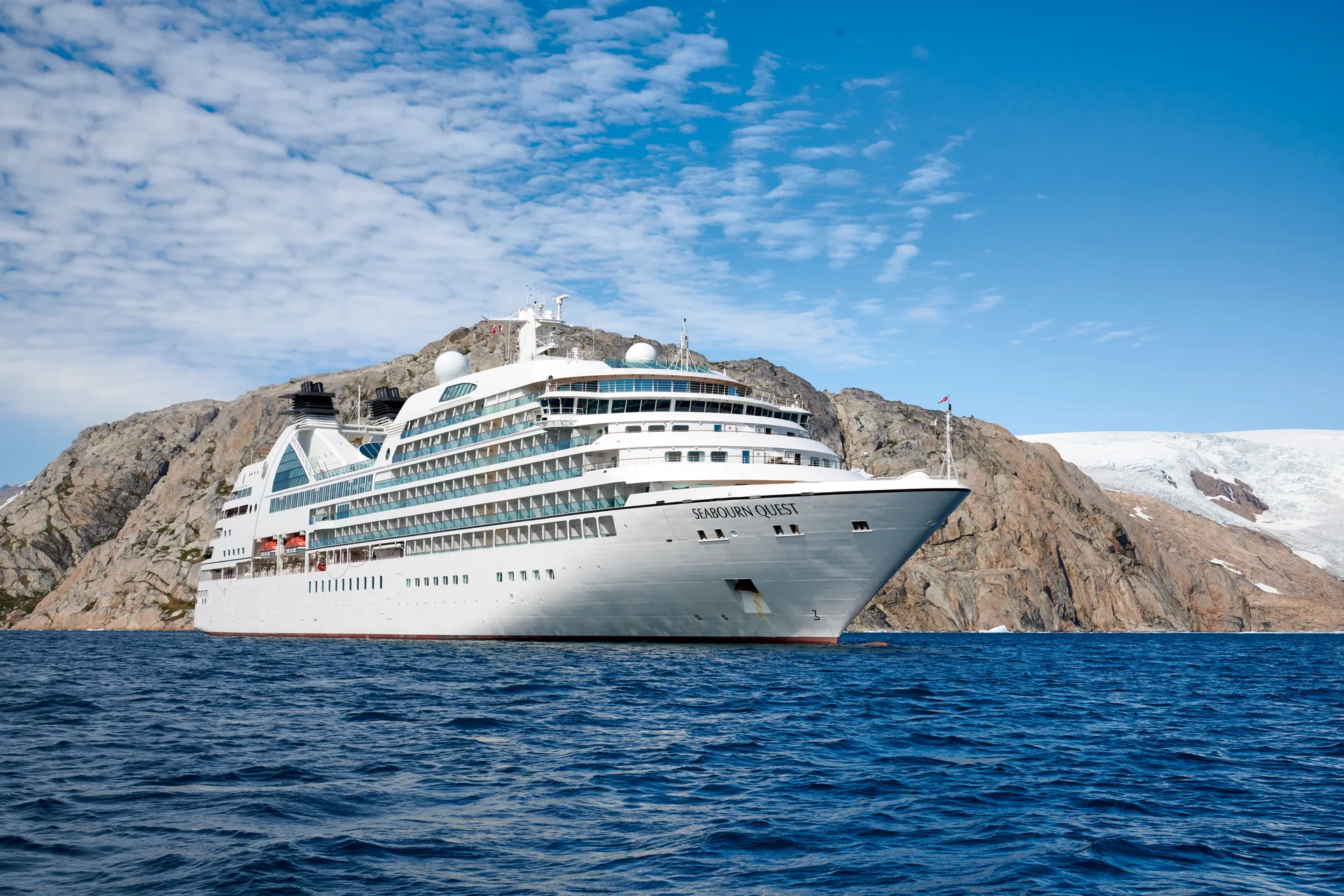
Date
February 9, 2027
Duration
27 nights
Departure Port
Papeete · French Polynesia
Arrival Port
Sydney · Canada
Rating
Luxury
Theme
—



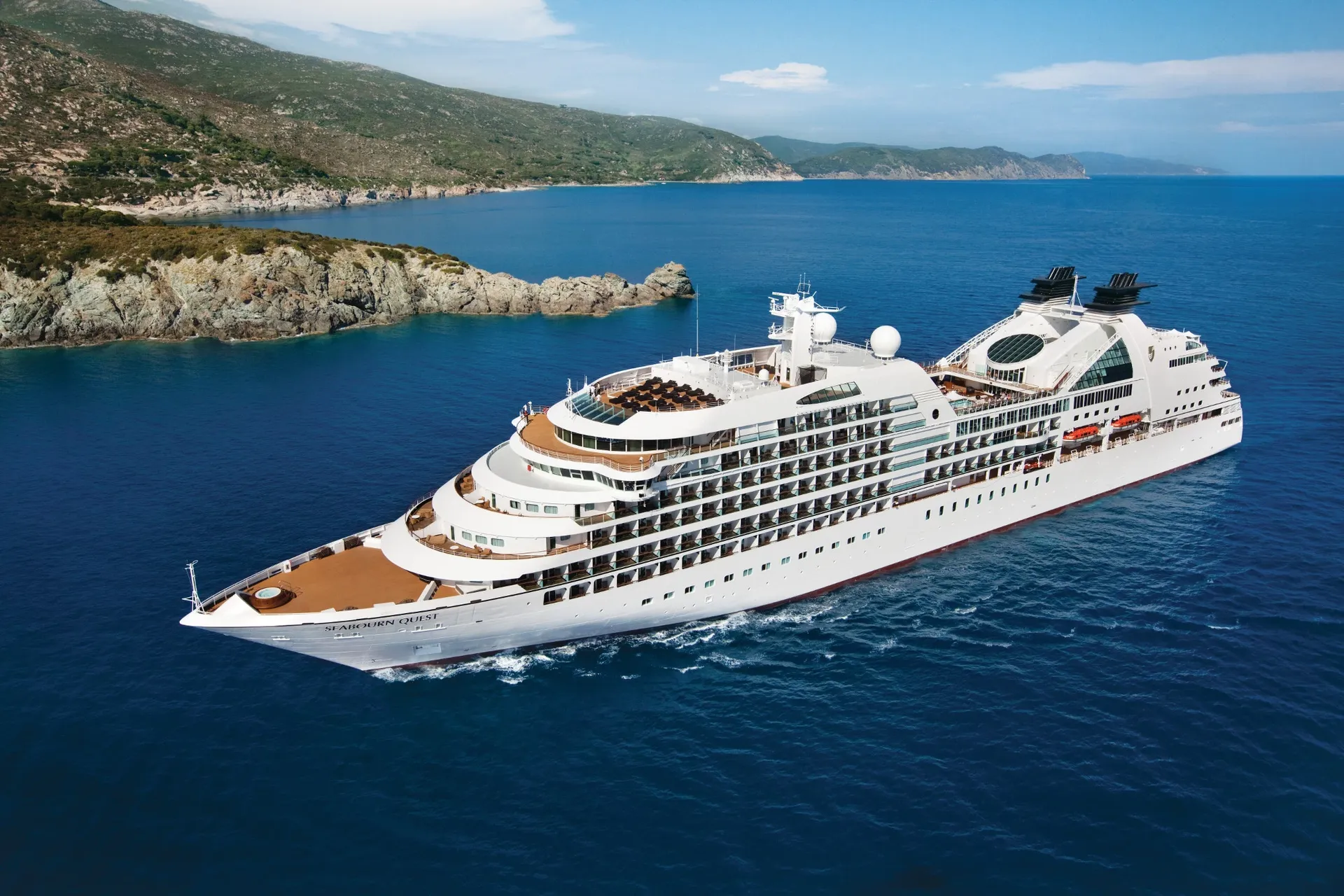
Seabourn
Odyssey
2011
—
32,000 GT
450
225
330
650 m
26 m
19 knots
No


In the heart of the Pacific Ocean exists a paradise of crystal clear waters, white beaches and primitive vegetation. A place of pure beauty, where every corner hides wonderful treasures. It is French Polynesia, home of the island of Tahiti and the bustling port city of Papeete. This is where your incredibly beautiful vacation with MSC World Cruise will start on a journey to discover sensational places. It is the home of pearls; in Papeete, you can visit the first museum in the worlddedicated to the processing of these natural jewels, in particular the black pearl of Tahiti, the protagonist of the museum named after one of the largest cultivators of pearls, Robert Wan. Here each step of the delicate process of harvesting and processing pearls will be explained and you can learn how they become beautiful jewels. The museum also offers a comprehensive guide to the history and legends associated with pearls, crossing various cultures and civilizations. During your MSC Cruise into this exotic land, you will have the opportunity to visit the pulsating center of the city of Papeete, famous for its market. Activity begins at first light, with fruit, vegetables, fish, flowers and crafts. It is a place not to be missed especially early in the morning to breathe in its magical atmosphere before it is full of people. The entire island of Tahiti offers visitors a hiking dream, including walks in Bougainville Park, full of flowers and manicured plants, or a ride to Marae Arahurahu, the best place to admire the old traditional Polynesian temples and learn about their history by admiring one of the best preserved on these islands. MSC Cruises also offers a fantastic tour in the sky of Tahiti to see the whole island in one fell swoop.


Green, blue, azure, white. Moorea is an explosion of colours; when viewed from above, this volcanic island in the middle of the Pacific Ocean – separated from Tahiti by the “Sea of the Moon” – is a triangle that resembles a heart. During this stop-over on the French Polynesia MSC World Cruise, you will be enchanted by Moorea’s crystal waters and extraordinary mountain peaks covered with emerald vegetation. A magical island, which over the years has been chosen by many couples from all over the world as the perfect place to get married. Seeing the beauty of Moorea up close is a privilege. During the excursion organised by MSC Cruises, you can take a guided tour of the island, arriving at the top of Mount Tohivea to enjoy a breathtaking view of Cook’s Bay; you can also visit an archaeological site, where you can see the remains of Moorea’s marae and learn about the ancient Polynesian customs and ceremonies that were practiced in these sacred places. Adventure enthusiasts can take part in a safari on board a 4x4, which will take you off the beaten track into a volcanic crater and to Moorea’s Tropical Garden, with its collection of exotic plants. Those who love the sea can put on a mask and flippers and dive into the lagoon off Opunohu Bay, Cook’s Bay’s twin, which is on the opposite side of Mount Rotui; here you can swim with stingrays and sharks and admire the corals and tropical fish. And afterwards, you can soak up the sun on the soft white sandy beach while eating Polynesian delicacies. Moorea is a fascinating destination that will enchant you; one of the destinations that will make your MSC cruise unforgettable.


If you have ever dreamt up your ideal island holiday, we suspect it goes something like this: Soapy blue seas? Check. Sparkling white beaches? Check. Thatched wooden huts, gently sloping palm trees and kaleidoscopic marine life? Check, check and check. And yet, even by ticking every box, first time viewing of Bora Bora still beggars belief. This tropical hideaway less than 12 m2 in the heart of the South Pacific has been toping travel wish lists for years. Long considered the realm of honeymooners – spectacularly romantic sunsets are a speciality – Bora Bora is not just for wandering with your love. If the prismatic shades of blue of the world’s most beautiful lagoon do not fill you up, then perhaps underwater scooters and aqua Safaris will charge your batteries. If exploring Bora Bora’s lush hinterland is more your glass of tequila sunrise, then trips around the island (often stopping off at the celebrity haunt Bloody Mary Restaurant & Bar) are a must. Bora Bora’s peaceful ambience has not always been the case. The island was a US supply base, known as “Operation Bobcat” during WWII. During this time, Bora Bora was home to nine ships, 20,000 tons of equipment and nearly 7,000 men. Eight massive 7-inch naval cannons were installed around the island, all but one of which is still in place. Although little is known of the history of the island, it is known that Bora Bora was called Vava’u in ancient times. This supports belief that the island was colonised by Tongans prior to French annex in 1888.

As soon as you arrive at Arutanga on an MSC cruise, you can’t help but notice that the Aiutaki atoll has the shape of a triangle that seems to have been drawn by a child. The small settlement area — the entire island is home to only a couple of thousand people — is located on the west coast, south of the landing strips made for American airplanes during World War II. An MSC World Cruise is a great way to leisurely discover the riches found on the second largest of the Cook Islands: Aiutaki Lagoon. Right after you go ashore at Arutanga, you run into the rugby field and two white churches (the Cook Islands Christian Church is more than a hundred years old and is one of the oldest masonry structures on the island) on the main road, where the post office can also be found. This road circles the entire island whose eastern side also boasts a crystal-clear, calm lagoon, justifiably considered one of the most beautiful in the world. Out of the selection of interesting MSC excursions available, you can choose to go on guided tours of two of the smaller islands: Honeymoon Island and One Foot Island. They are located at opposite ends of the lagoon; Honeymoon Island is 2 miles west of the coast, and One Foot Island (Tapueta) 2.5 miles to the east. Honeymoon Island is actually a sandbank located in front of the island of Maina where the red-tailed tropicbird with plumage as white as the sand of this atoll nests. One Foot Island takes its name from its shape that is reminiscent of the footprint of a bare right foot. Also hidden amongst the vegetation of Aiutaki can be found the marae (courtyards), sacred ceremonial places used by the ancient populations that colonized the Cook Islands before the arrival of European explorers.

If tiny islands that resonate with peace and tranquillity are your idea of travel heaven, then welcome to Iona. Almost 200 miles east of Edinburgh, set in Scotland’s Inner Hebrides, this magical island has a spiritual reputation that precedes it. And luckily, more than lives up to. The island is miniscule. Just three miles long and only one and a half miles wide, this is not a place that hums with urban attractions. View less 120 people call Iona home (this number rises significantly if the gull, tern and Kittiwake population is added), although residential numbers do go up (to a whopping 175) in summer. The beautiful coastline is lapped by the gulf stream and gives the island a warm climate with sandy beaches that look more Mediterranean than Scottish! Add to that a green field landscape that is just beautiful, and you’ll find that Iona is a place that stays with you long after you leave. Iona’s main attraction is of course its abbey. Built in 563 by Saint Columbia and his monks, the abbey is the reason why Iona is called the cradle of Christianity. Not only is the abbey (today an ecumenical church) one of the best – if not the best – example of ecclesiastical architecture dating from the Middle Ages, but it also serves as an important site of spiritual pilgrimage. St. Martin’s Cross, a 9th century Celtic cross that stands outside the abbey, is considered as the finest example of Celtic crosses in the British Isles. Rèilig Odhrain, or the cemetery, allegedly contains the remains of many Scottish kings.

Unique in many ways, Tonga is the only country in the South Pacific that has never been colonized. The secret to this tiny kingdom's lasting autonomy lies with its monarchy - rich in culture and tradition; unafraid to modernize and move forward. You'll find Nuku'alofa on the isle of Tongatapu - the largest of the 171 island jewels in the Tongan crown. Hopefully the Tongan people, cheerful and welcoming, will treat you to a version of the lakalaka - their compelling art of storytelling manifested in a breathtaking dance.


Auckland is called the City of Sails, and visitors flying in will see why. On the East Coast is the Waitemata Harbour—a Māori word meaning sparkling waters—which is bordered by the Hauraki Gulf, an aquatic playground peppered with small islands where many Aucklanders can be found "mucking around in boats."Not surprisingly, Auckland has some 70,000 boats. About one in four households in Auckland has a seacraft of some kind, and there are 102 beaches within an hour's drive; during the week many are quite empty. Even the airport is by the water; it borders the Manukau Harbour, which also takes its name from the Māori language and means solitary bird.According to Māori tradition, the Auckland isthmus was originally peopled by a race of giants and fairy folk. When Europeans arrived in the early 19th century, however, the Ngāti-Whātua tribe was firmly in control of the region. The British began negotiations with the Ngāti-Whātua in 1840 to purchase the isthmus and establish the colony's first capital. In September of that year the British flag was hoisted to mark the township's foundation, and Auckland remained the capital until 1865, when the seat of government was moved to Wellington. Aucklanders expected to suffer from the shift; it hurt their pride but not their pockets. As the terminal for the South Sea shipping routes, Auckland was already an established commercial center. Since then the urban sprawl has made this city of approximately 1.3 million people one of the world's largest geographically.A couple of days in the city will reveal just how developed and sophisticated Auckland is—the Mercer City Survey 2012 saw it ranked as the third-highest city for quality of life—though those seeking a New York in the South Pacific will be disappointed. Auckland is more get-up and go-outside than get-dressed-up and go-out. That said, most shops are open daily, central bars and a few nightclubs buzz well into the wee hours, especially Thursday through Saturday, and a mix of Māori, Pacific people, Asians, and Europeans contributes to the cultural milieu. Auckland has the world's largest single population of Pacific Islanders living outside their home countries, though many of them live outside the central parts of the city and in Manukau to the south. The Samoan language is the second most spoken in New Zealand. Most Pacific people came to New Zealand seeking a better life. When the plentiful, low-skilled work that attracted them dried up, the dream soured, and the population has suffered with poor health and education. Luckily, policies are now addressing that, and change is slowly coming. The Pacifica Festival in March is the region's biggest cultural event, attracting thousands to Western Springs. The annual Pacific Island Secondary Schools’ Competition, also in March, sees young Pacific Islander and Asian students compete in traditional dance, drumming, and singing. This event is open to the public.At the geographical center of Auckland city is the 1,082-foot Sky Tower, a convenient landmark for those exploring on foot and some say a visible sign of the city's naked aspiration. It has earned nicknames like the Needle and the Big Penis—a counterpoint to a poem by acclaimed New Zealand poet James K. Baxter, which refers to Rangitoto Island as a clitoris in the harbor.The Waitemata Harbour has become better known since New Zealand staged its first defense of the America's Cup in 2000 and the successful Louis Vuitton Pacific Series in early 2009. The first regatta saw major redevelopment of the waterfront. The area, where many of the city's most popular bars, cafés, and restaurants are located, is now known as Viaduct Basin or, more commonly, the Viaduct. A recent expansion has created another area, Wynyard Quarter, which is slowly adding restaurants.These days, Auckland is still considered too bold and brash for its own good by many Kiwis who live "south of the Bombay Hills," the geographical divide between Auckland and the rest of New Zealand (barring Northland). "Jafa," an acronym for "just another f—ing Aucklander," has entered the local lexicon; there's even a book out called Way of the Jafa: A Guide to Surviving Auckland and Aucklanders. A common complaint is that Auckland absorbs the wealth from the hard work of the rest of the country. Most Aucklanders, on the other hand, still try to shrug and see it as the parochial envy of those who live in small towns. But these internal identity squabbles aren't your problem. You can enjoy a well-made coffee in almost any café, or take a walk on a beach—knowing that within 30 minutes' driving time you could be cruising the spectacular harbor, playing a round at a public golf course, or even walking in subtropical forest while listening to the song of a native tûî bird.


New Zealand's natural bounty is always on display at the Bay of Plenty. It was Captain James Cook who in 1769 aptly named this bay after he was able to replenish his ship's provisions, thanks to the prosperous Maori villages of the region. Tauranga, the chief city, is a bustling port, an agricultural and timber center and a popular seaside resort. Tauranga is also the gateway to Rotorua - a geothermal wonderland that is the heart of Maori culture. A 90-minute drive from Tauranga, Rotorua is New Zealand's primary tourist attraction. Your ship docks near the foot of Mt. Maunganui, which rises 761 feet above the bay. Across the harbor, Tauranga offers scenic tidal beaches at Omokoroa and Pahoia. The region boasts fine beaches, big-game fishing, thermal springs and seaside resorts.


New Zealand's natural bounty is always on display at the Bay of Plenty. It was Captain James Cook who in 1769 aptly named this bay after he was able to replenish his ship's provisions, thanks to the prosperous Maori villages of the region. Tauranga, the chief city, is a bustling port, an agricultural and timber center and a popular seaside resort. Tauranga is also the gateway to Rotorua - a geothermal wonderland that is the heart of Maori culture. A 90-minute drive from Tauranga, Rotorua is New Zealand's primary tourist attraction. Your ship docks near the foot of Mt. Maunganui, which rises 761 feet above the bay. Across the harbor, Tauranga offers scenic tidal beaches at Omokoroa and Pahoia. The region boasts fine beaches, big-game fishing, thermal springs and seaside resorts.


New Zealand's capital is, arguably, the country's most cosmopolitan metropolis. It's world-class Te Papa Tongarewa-Museum of New Zealand is a don't-miss attraction, and the burgeoning film industry led, of course, by the Lord of the Rings extravaganzas has injected new life into the local arts scene. Attractive and compact enough to be explored easily on foot, Wellington is a booming destination. Modern high-rise buildings gaze over Port Nicholson, surely one of the finest natural anchorages in the world. Known to local Māori as The Great Harbor of Tara, its two massive arms form the jaws of the fish of Maui from Māori legend. Sometimes referred to as the windy city, Wellington has been the seat of New Zealand's government since 1865.


Picton has developed a reputation in recent years. It’s the doorway to New Zealand’s South Island used by locals and international travelers alike to get to the islands and resorts of the Marlborough Sounds, an interconnected stretch of beautiful landscape. The surrounding area is famous for its wineries, so you can enjoy vineyard tours and tastings while stopped on Picton cruises. Picton is a hidden gem for international travelers. Beautiful scenery in the Marlborough Sounds and views of the New Zealand countryside make the area particularly memorable for first-time visitors. On the waterfront, explore Pollard Park for a leisurely stroll, or stop at EcoWorld Aquarium to see rescued and protected species during a tour of the wildlife rehabilitation center. On your New Zealand cruise, you’ll be endlessly surprised by its foodie and café scene, outdoor adventures like hiking and kayaking, and beautiful water and mountain views.

Two hours north of Christchurch is the “we can’t believe how beautiful this is” town of Kaikoura, situated on a rocky peninsula with a backdrop of snow-capped mountains. The Māori name of Kaikoura translates to “meal of crayfish” (kai = food, koura = crayfish) for which the region is famous. And it’s this abundance of crayfish, combined with a complex marine system and rich habitat, which draws so many visitors here—humans and animals alike. In fact, you could call Kaikoura a marine mammal mecca, where sperm whales, fur seals, and dolphins live permanently, while migrating species like the rare Hector’s dolphins, humpback whales, and orca pop by for visits.

Lyttelton, South Island's leading port, is connected to Christchurch by road and rail tunnels. Wooden houses cling to steep streets above the harbor, bustling with cargo vessels, freighters, sailing yachts and sightseeing launches. Several 19th-century churches add to the town's historic attractions. The Canterbury pilgrims, who arrived in four shiploads at Lyttelton in 1850, made a historic trek across the Port Hills to establish Christchurch. Today, walkers still enjoy the old Bridle Path trail. Hundreds of modern-day pilgrims make the nostalgic hike between Lyttelton and Christchurch annually on the Sunday nearest December 16.


Strolling along the city’s hilly streets and past its Edwardian and Victorian buildings and green spaces, you might not guess that Timaru was built on the lava flows of a now-extinct but vividly named volcano, Mount Horrible. Timaru’s own name comes from the Maori Te Maru, which means \"place of shelter.\" Chief among Timaru’s charms are its parks and gardens. As if the backdrop of the Southern Alps wasn't enough, a rose garden, boardwalk and beach also enliven the already beautiful waterfront of Caroline Bay, named for a 19th-century whaling ship. Up the hill, the scenic reserve of Centennial Park offers picturesque picnic spots and walking and biking trails. Timaru showcases New Zealand and Maori culture at the stellar Aigantighe Art Gallery and South Canterbury Museum. (If you have time to venture beyond Timaru and are interested in learning about the area's truly ancient history, the fascinating Te Ana Maori Rock Art Centre, about half an hour outside the city, exhibits rock art made by early Maori settlers more than 700 years ago.)

Much of New Zealand feels like England, by way of Polynesia. There are a few exceptions, though, such as the town of Akaroa, a former French settlement, and the distinctly Scottish city of Dunedin, named after the Scottish Gaelic name for Edinburgh. After Dunedin was founded in 1848, city surveyor Charles Kettle attempted to impose Edinburgh's New Town grid plan on the growing city. But the Otago Peninsula's hilly landscape proved challenging—for evidence, note that Dunedin has one of the world's steepest streets (Baldwin Street). The volcanic remnants around the harbor make for a dramatic backdrop. Dunedin's prominence during the gold rush in the late 19th century resulted in many grand Victorian and Edwardian buildings. Thanks to the beautiful University of Otago (the country's oldest), there's a large student population to keep the city vibrant and modern. But Dunedin's heritage is always proudly on display: The magnificent Dunedin Railway Station and Larnach Castle have been restored to their full glory, and the fascinating Toitu Otago Settlers Museum provides a glimpse into the lives of early residents. Outside the city, the Otago Peninsula is lined with scenic beaches and home to rare birdlife like the royal albatross and yellow-eyed penguin.

Stewart Island is home to New Zealand's newest national park, Rakiura National Park. The third and most southerly of New Zealand's main islands, Stewart Island is separated from the South Island by the 24-km (15-miles) Foveaux Strait. Its original Māori name, Te Punga O Te Waka a Maui, means "the anchor stone of Maui's canoe." Māori mythology says the island's landmass held the god Maui's canoe secure while he and his crew raised the great fish—the North Island. Today the island is more commonly referred to by its other Māori name, Rakiura, which means "the land of the glowing skies." This refers to the spectacular sunrises and sunsets and to the southern lights, or aurora australis. The European name of Stewart Island dates back to 1809. It memorializes an officer William W. Stewart on an early sealing vessel, the Pegasus, who was the first to chart the island. The island covers some 1,700 square km (650 square miles). It measures about 75 km (46 miles) from north to south and about the same distance across at its widest point. On the coastline, sharp cliffs rise from a succession of sheltered bays and beaches. In the interior, forested hills rise gradually toward the west side of the island. Seals and penguins frequent the coast, and the island's prolific birdlife includes a number of species rarely seen in any other part of the country. In fact, this is the surest place to see a kiwi. The Stewart Island brown kiwi, or tokoeka, is the largest species of this kind of bird. Unlike their mainland cousins, these kiwis can be seen during the day as well as at night. It's a rare and amusing experience to watch these pear-shape birds scampering on a remote beach as they feed on sand hoppers and grubs. Māori have visited Stewart Island for centuries. Archaeologists' studies of 13th-century Māori middens (refuse heaps) indicate that the island was once a rich, seasonal resource for hunting, fishing, and gathering seafood. A commonly eaten delicacy at that time, the titi, also known as the muttonbird, still occasionally appears on menus. In the early 19th century, explorers, sealers, missionaries, and miners settled the island. They were followed by fishermen and sawmillers who established settlements around the edges of Paterson Inlet and Halfmoon and Horseshoe bays. In the 1920s Norwegians set up a whaling enterprise, and many descendants of these seafaring people remain. Fishing, aquaculture, and tourism are now the mainstays of the island's economy. Even by New Zealand standards, Stewart Island is remote, raw, and untouched. The appeal is its seclusion, its relaxed way of life, and its untouched quality. Stewart Island is not for everyone: if you must have shopping malls, casinos, or umbrella drinks on the beach, don't come here. Visitors should be prepared for the fact that Stewart Island can be chilly, windy, and rainy, even in the middle of summer.


Oban is a small town on the west coast of Scotland. The site began as a small fishing outpost and has been occupied as such for literally thousands of years. Rural in its roots, the modern-day village of Oban grew around the famed whisky distillery founded in 1794. Renowned for its 14-year-old malt whisky, the Oban distillery has become a tourist attraction, drawing many visitors to the area. The quiet, rural feel of Oban is responsible for the abundance of wildlife within the town boundaries. Here grey seals can be spotted swimming in the harbor or resting along the shore. A wide variety of land and seabirds are found throughout the area. On occasion dolphins and river otters also visit. A beautiful balance exists between this small town and the natural environment surrounding it, where the sounds of nature mingle with the melody of the streets.

New Zealand’s Fiordland National Park is the largest of the country’s 14 national parks, at 4,868 sq. mi./12,607 sq. km. Located on the southwest corner of the South Island, it was founded in 1904, to protect the natural environment for nature lovers and trekkers. It comprises a large portion of the Te Wahipounamu UNESCO World Heritage Site. The key features of the park are the mountain ranges of the Southern Alps, which rise to heights from 1,500 m/4,900 ft to over 2,500 m/8,200 ft., as well as the spectacular U-shaped glaciated fjord valleys that cut into the mountains as deeply as 25 miles from the sea. There are three major fjords that are navigable by your ships, Milford Sound, Doubtful Sound and Dusky Sound. Your exact itinerary will be determined by your captain depending on the weather and other conditions on the day. But whatever course you sail, you will be treated to spectacular waterways curving between sheer cliffs towering thousands of feet above the mirrored surface of the fjord. Depending on recent rainfall, waterfalls tumble down the rock faces from above. Many of the peaks have nicknames based on their resemblance to animals or other objects of previous observers’ imaginations. You are also likely to see seals, birds including fiordland penguins, bottlenose dolphins and possibly such other fauna as red deer or whales.


If you want a snapshot of Australia's appeal, look no further than Sydney: The idyllic lifestyle, friendly locals and drop-dead natural beauty of this approachable metropolis and its attractions explain why the country tops so many travelers' wish lists. But Sydney is more than just the embodiment of classic antipodean cool—the city is in a constant state of evolution. A list of what to do in Sydney might start with the white-hot nightlife, with its new cocktail bars and idiosyncratic mixology dens. Inventive restaurants helmed by high-caliber chefs are dishing up everything from posh pan-Asian to Argentine street food, while the famous dining temples that put Sydney on the gastronomic map are still going strong too. The famed harbor is among the top sights—home to twin icons the Sydney Opera House and the Sydney Harbour Bridge, it is the stepping-off point for some of the city's best cultural attractions and sightseeing. In one day you can sail around the harbor, get a behind-the-scenes tour of the opera house and climb the bridge, with time to spare for people-watching over a flat white at a waterfront café. Speaking of water, when you plan what to do in Sydney, you will want to include the iconic beaches, where surfers, office workers and tourists alike converge on some of the most gorgeous shoreline scenery anywhere. Bondi, Bronte and Clovelly are all within easy reach of the Central Business District, as is Manly, a charming seaside town located a short ferry ride from Circular Quay. Beyond the city you'll discover UNESCO World Heritage Sites and the chance to encounter Australia's cuddliest wildlife—a perfect way to round out your envy-inducing Sydney photo collection.


Approximately 1189 square feet (110 square meters) of inside space, plus two verandas totaling 214 square feet (20 square meters)
Grand Wintergarden Suites feature
Large windows
Dining for six
Glass-enclosed solarium with tub and day bed
Two bedrooms
Two bathrooms (one whirlpool)
Guest bath
Convertible sofa bed for one
Pantry with wet bar
Three flat-screen TVs
Complimentary internet/Wi-Fi service


Approximately 526 & 593 square feet (49 to 55 square meters) of inside space, plus one veranda of 133 & 354 square feet (12 to 33 square meters)
Owner's Suites feature:
Expansive ocean views
Forward-facing windows
Dining for four to six
Bathroom with whirlpool bathtub
Guest bath
Pantry with wet bar
Two flat-screen TVs
Complimentary Internet/Wi-Fi service


Penthouse Spa Suite
Approximately 536 to 539 square feet (50 square meters) of inside space, plus one veranda of 167 to 200 square feet (16 to 19 square meters)
All Penthouse Spa Suite feature:
Dining table for two to four
Separate bedroom
Glass door to veranda
Two flat-screen TVs
Fully stocked bar
Spacious bathroom with tub, shower and large vanity.


Penthouse Suite
Approximately 436 square feet (41 square meters) of inside space, plus one veranda of 98 square feet (9 square meters)
All Penthouse Suite feature:
Dining table for two to four
Separate bedroom
Glass door to veranda
Two flat-screen TVs
Fully stocked bar
Spacious bathroom with tub, shower and large vanity.


Signature Suite
Approximately 859 square feet (80 square meters) of inside space, plus one veranda of 493 square feet (46 square meters)
Signature Suites feature:
Expansive ocean views
Forward-facing windows
Dining for four to six
Bathroom with whirlpool bathtub
Guest bath
Pantry with wet bar
Two flat-screen TVs
Complimentary Internet/Wi-Fi service


Approximately 914 square feet (85 square meters) of inside space, one veranda of 183 sq. ft. (17 square meters.).
Wintergarden Suites feature
Large windows
Dining for six
Whirlpool bathtub
Guest bath
Convertible sofa bed for one
Pantry with wet bar
Glass-enclosed solarium with tub and day bed
Two closets
Two flat-screen TVs
Complimentary Internet/Wi-Fi service


Located on Deck 5; Approximately 300 square feet (28 square meters) of inside space, plus one veranda of 65 square feet (6 square meters)
All Veranda Suites feature:
A full-length window and glass door to private veranda
Comfortable living area
Queen-size bed or two twin beds
Dining table for two
Walk-in closet
Interactive flat-screen television with music and movies
Fully stocked bar and refrigerator
Makeup vanity
Spacious bathroom with separate tub and shower.

Veranda Suite Guarantee


Approximately 295 square feet (28 square meters) of inside space
For this option we select the location and specific suite for you, and notify you prior to departure. Guests are guaranteed to be assigned a suite in the category selected or higher.
All Ocean View Suites feature a large picture window, comfortable living area, queen-size bed or two twin beds, dining table for two, walk-in closet, interactive flat-screen television with music and movies, fully stocked bar and refrigerator, makeup vanity, spacious bathroom with separate tub and shower.
Our cruise specialists can help you find the perfect cabin and the best available pricing.
(+886) 02-2721-7300Contact Advisor