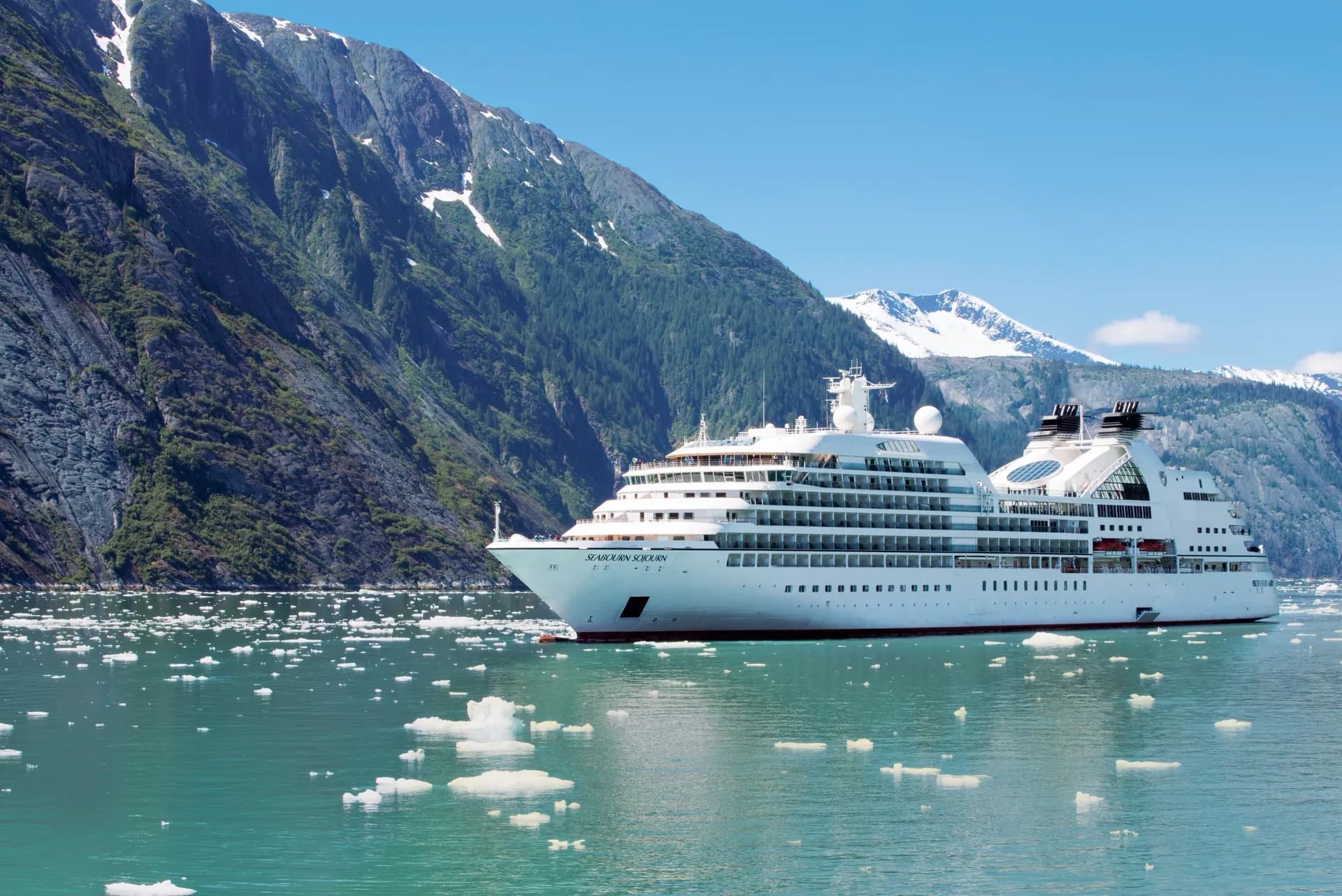
Seabourn5628
World Cruise: Jewels Of Japan
Date
April 4, 2026
Duration
10 nights · 3 sea days
Departure Port
Hong Kong
Hong Kong
Arrival Port
Busan
South Korea


Seabourn
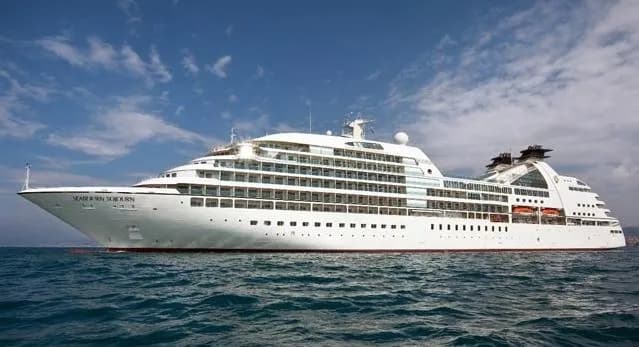
Seabourn Sojourn
Launched
2010-06-01
Tonnage
32,000 GT
Length
650 m
Speed
19 knots
Cabins
225 / 450 guests
Crew
330
Itinerary
Day 1
Day 1
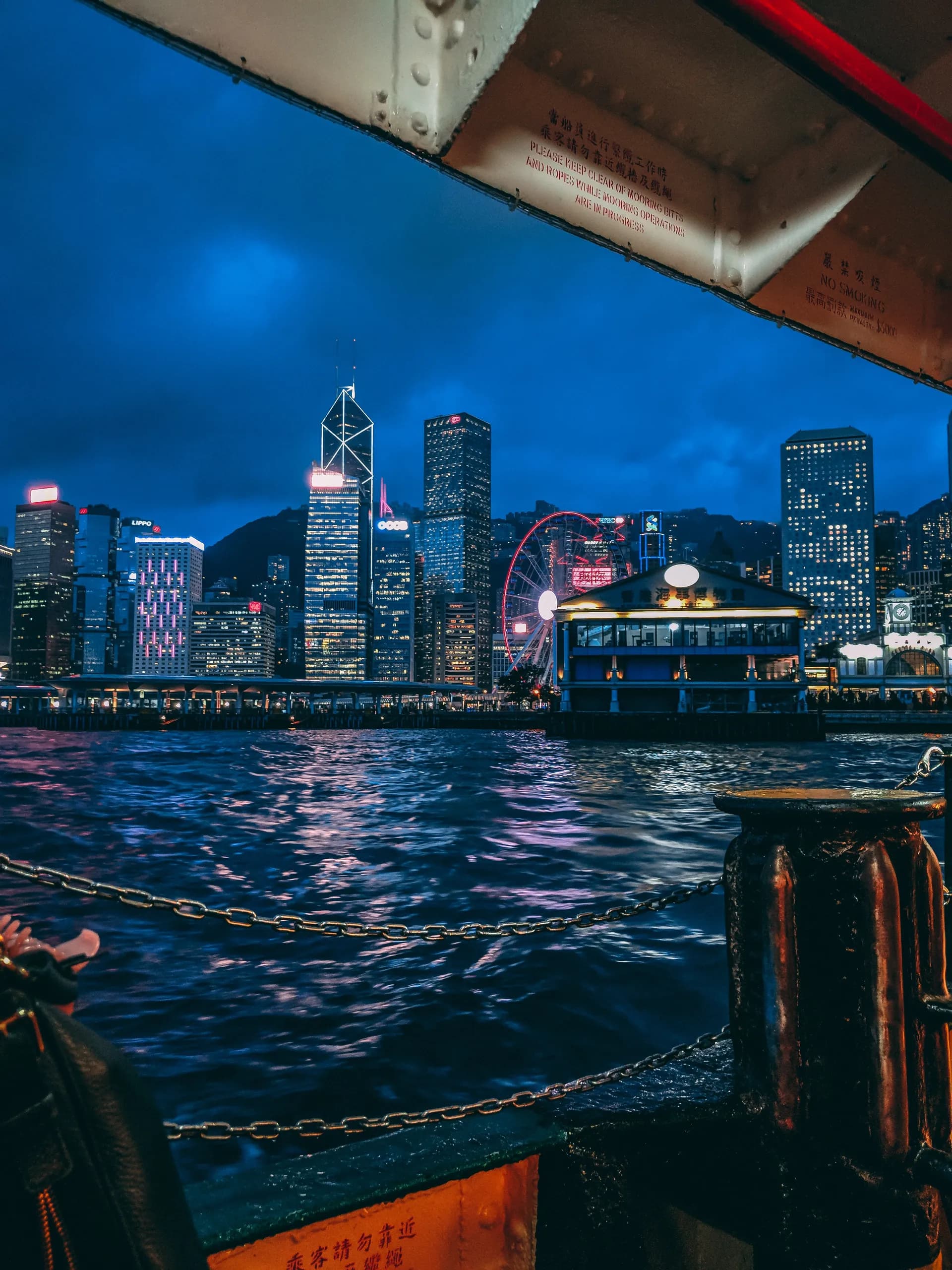
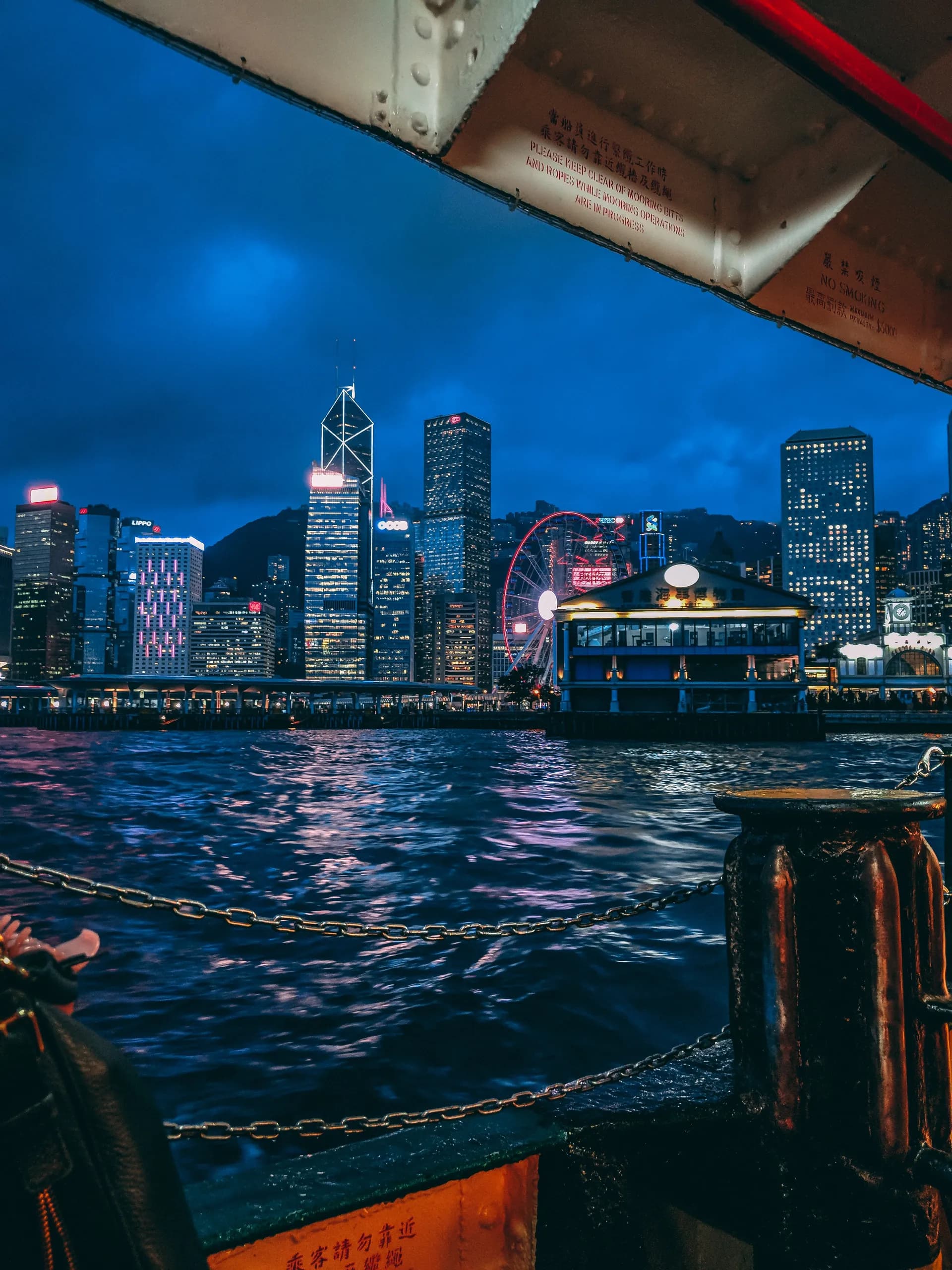
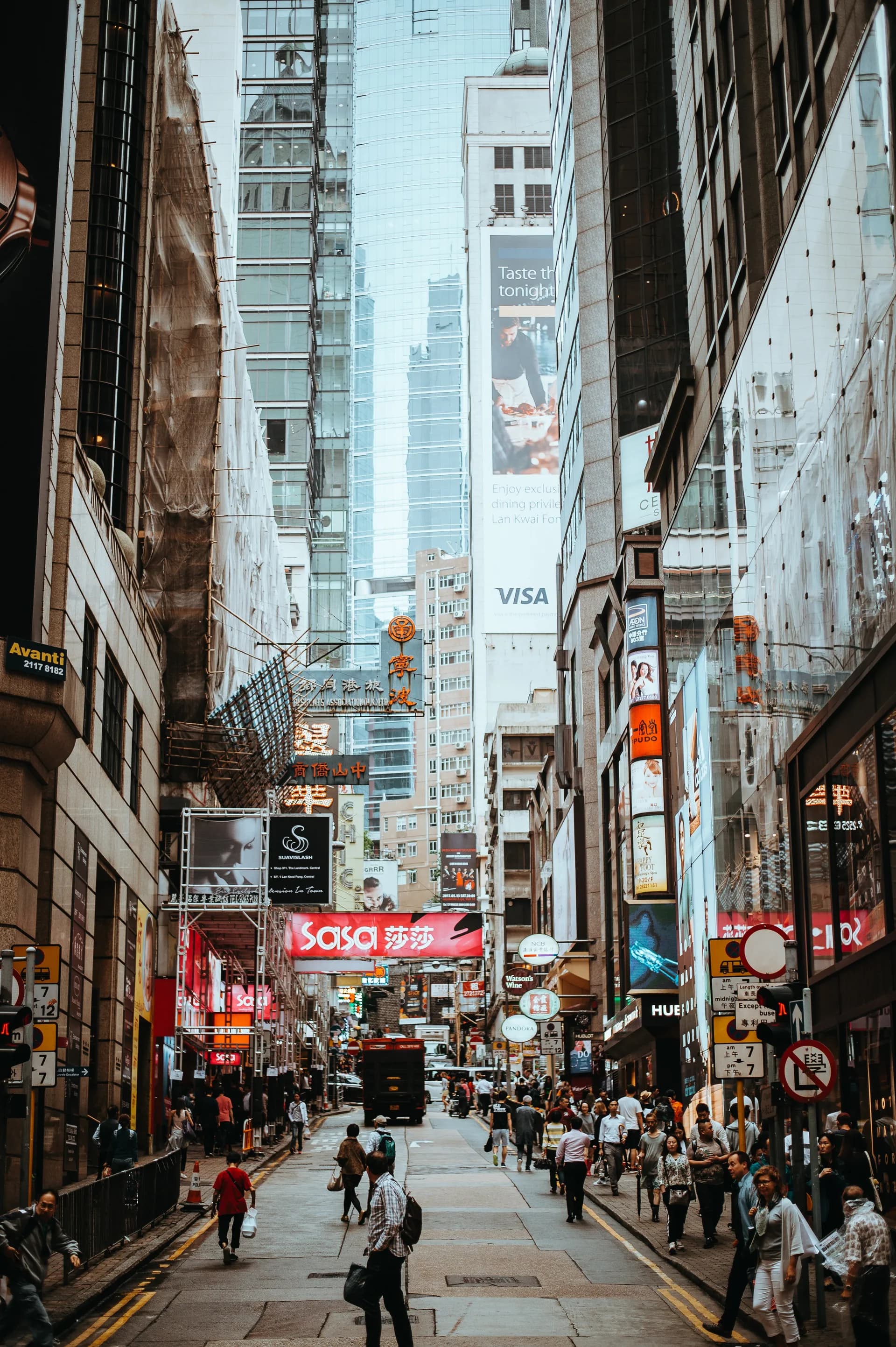
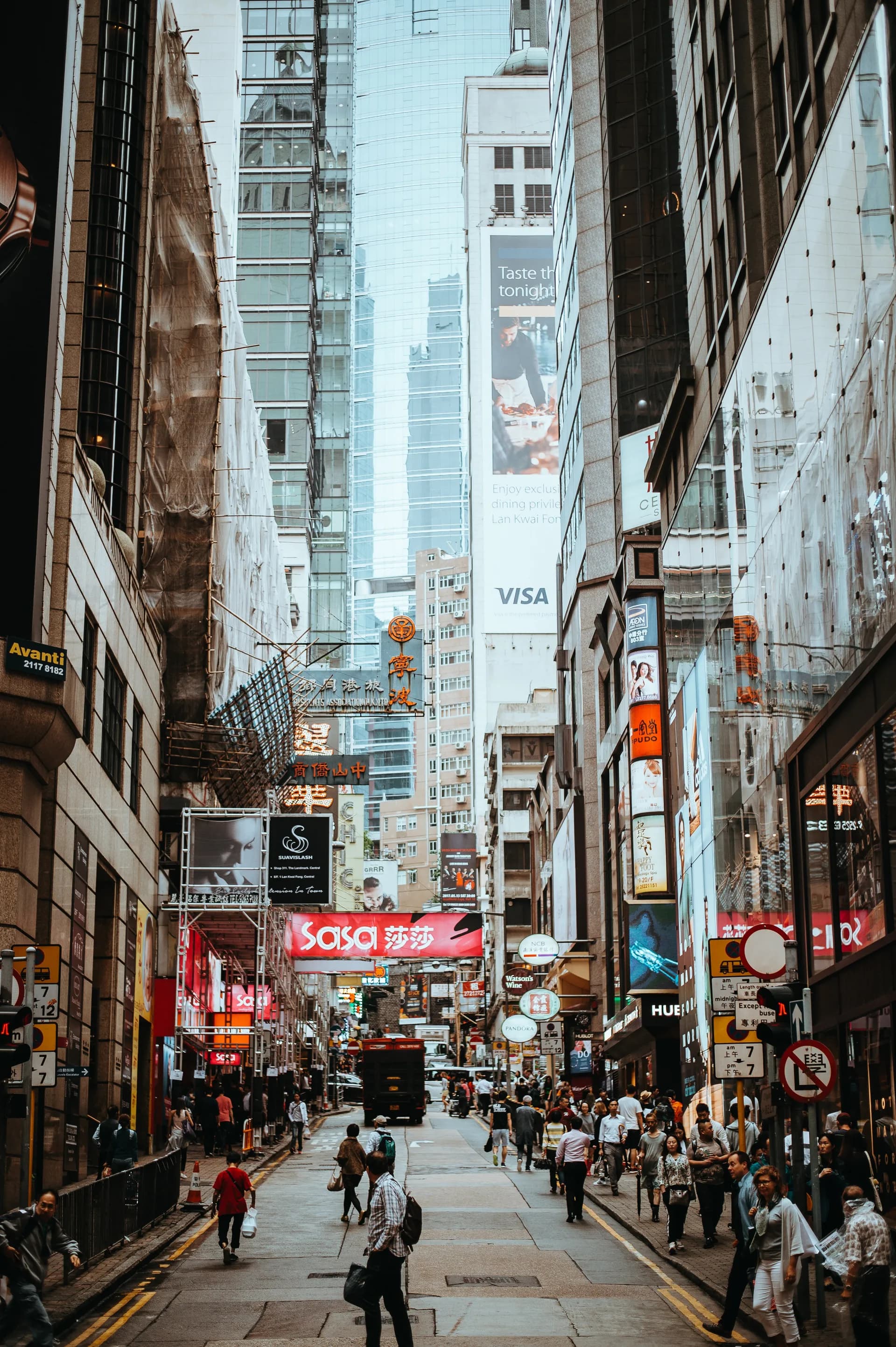
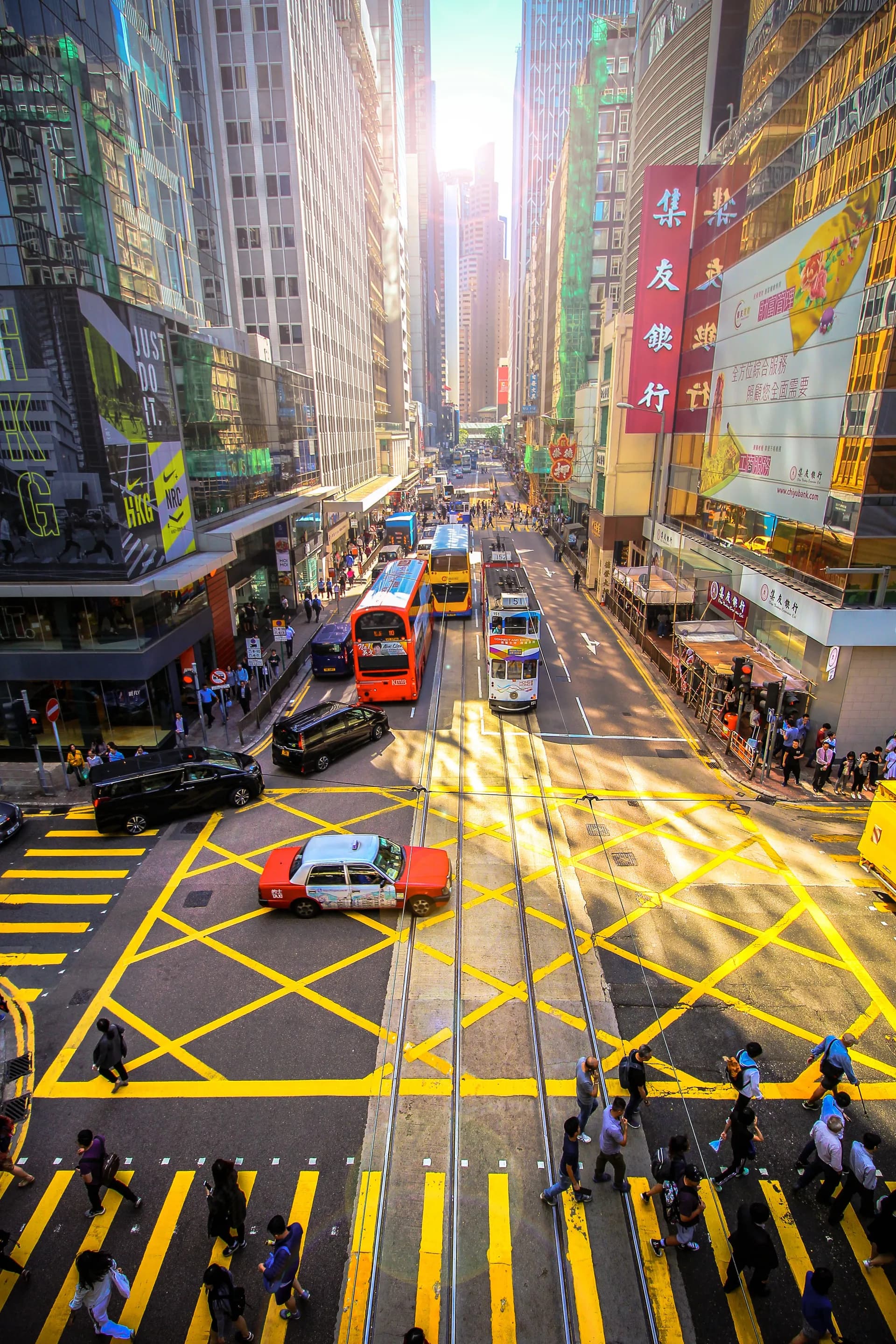
Hong Kong
Hong KongA spectacular cityscape As you will discover during your MSC Grand Voyages cruise, Hong Kong Island is the heart of the whole territory, its administrative and business centre and site of some of the most expensive real estate in the world. Development is concentrated along the island’s north shore, a 6km-long strip of financial, commercial and entertainment districts overlooking Victoria Harbour. At its core, Central sprouts an astounding array of high-tech towers, edged to the west by Sheung Wan’s smaller-scale and traditional Chinese businesses. Behind this the land climbs steeply to The Peak, wherever you get them from, vistas are stupendous, down over the island’s intensely crowded north shore, across the busy harbour to a lower-rise, unspectacular Kowloon and the green peaks of the New Territories. Man Mo Temple is one of the oldest in Hong Kong, waiting to be value on an MSC Grand Voyages cruise excursion. It dates to the 1840s and was originally founded as a charitable institution; the central atrium beyond is hung with great spiral incense coils suspended from the ceiling, filling the interior with eye-watering, aromatic smoke. Back along the harbour and moving east through Wan Chai and Causeway Bay, the emphasis shifts from finance to wining, dining and shopping. The south side of Hong Kong Island straggles into the sea in a series of dangling peninsulas and islets. The attractions here are separate towns such as Aberdeen and Stanley, with a flavour of their own, and also beaches, the best of which fronts the little outpost of Shek O. East of the Aberdeen expressway, Causeway Bay forms a knot of lively, seething streets packed with restaurants, accommodation and shopping plazas, its eastern part is dominated by Victoria Park, an extensive, open space containing shady paths, swimming pools and other sport facilities.
Day 2
Day 2
Hong Kong
Hong KongDepart 23:00
A spectacular cityscape As you will discover during your MSC Grand Voyages cruise, Hong Kong Island is the heart of the whole territory, its administrative and business centre and site of some of the most expensive real estate in the world. Development is concentrated along the island’s north shore, a 6km-long strip of financial, commercial and entertainment districts overlooking Victoria Harbour. At its core, Central sprouts an astounding array of high-tech towers, edged to the west by Sheung Wan’s smaller-scale and traditional Chinese businesses. Behind this the land climbs steeply to The Peak, wherever you get them from, vistas are stupendous, down over the island’s intensely crowded north shore, across the busy harbour to a lower-rise, unspectacular Kowloon and the green peaks of the New Territories. Man Mo Temple is one of the oldest in Hong Kong, waiting to be value on an MSC Grand Voyages cruise excursion. It dates to the 1840s and was originally founded as a charitable institution; the central atrium beyond is hung with great spiral incense coils suspended from the ceiling, filling the interior with eye-watering, aromatic smoke. Back along the harbour and moving east through Wan Chai and Causeway Bay, the emphasis shifts from finance to wining, dining and shopping. The south side of Hong Kong Island straggles into the sea in a series of dangling peninsulas and islets. The attractions here are separate towns such as Aberdeen and Stanley, with a flavour of their own, and also beaches, the best of which fronts the little outpost of Shek O. East of the Aberdeen expressway, Causeway Bay forms a knot of lively, seething streets packed with restaurants, accommodation and shopping plazas, its eastern part is dominated by Victoria Park, an extensive, open space containing shady paths, swimming pools and other sport facilities.
Day 3
Day 3
At Sea
Day 4
Day 4
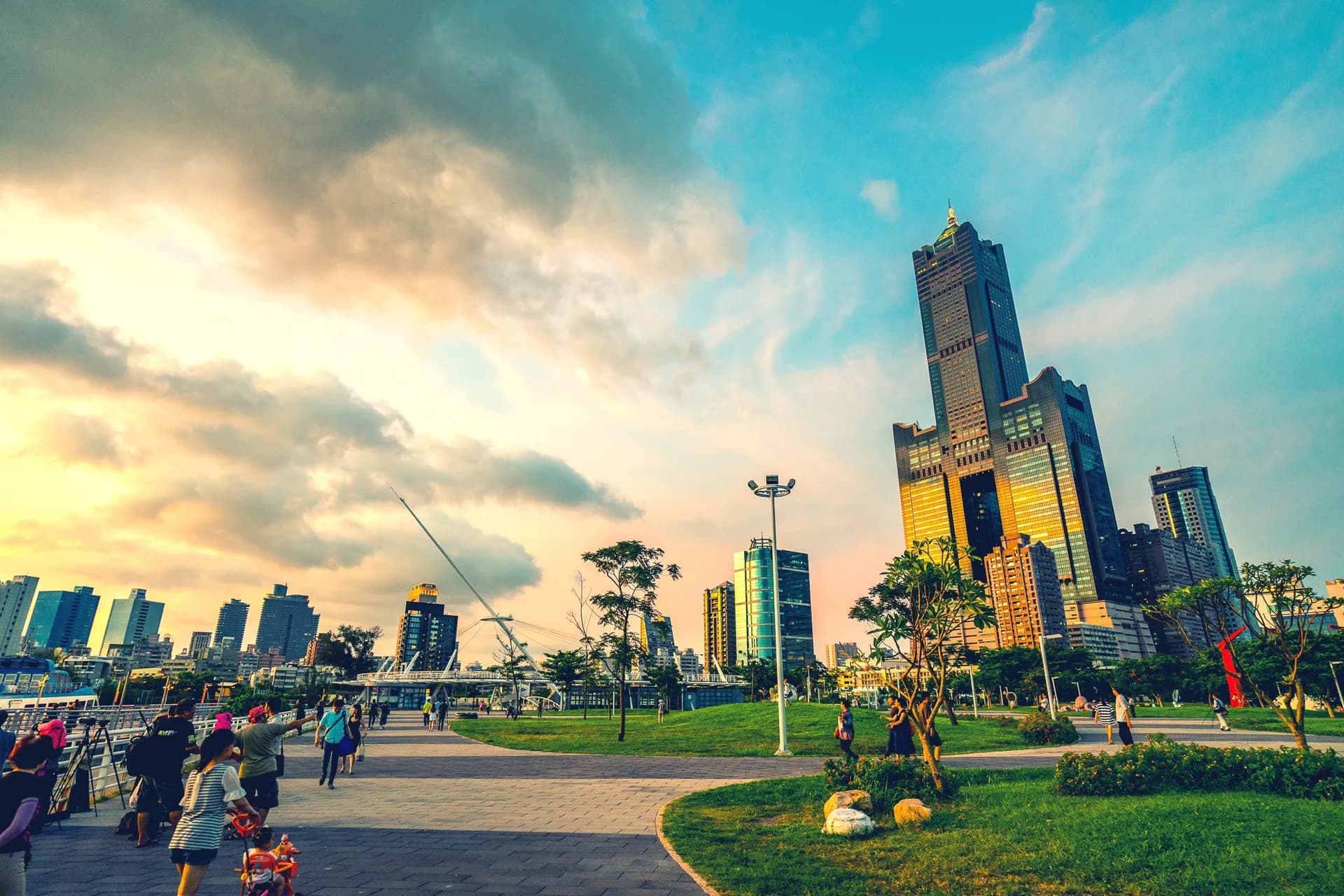
Kaohsiung
TaiwanArrive 07:00Depart 16:00
Adorned with huge public artworks and thrumming night markets, Kaohsiung is the perfect introduction to energetic Taiwan. The busy harbour of the country's third-biggest city fuelled rapid growth here, and while it's vast in scale, Kaohsiung has wide and airy boulevards - interspersed with parks where fountains fire water high into the sky. Filled with cultural splendour – you can visit soaring temples lit by softly glowing lanterns, and taste exotic street foods as you fall for this city, which is dissected by the Love River. View less The vividly coloured Dragon and Tiger Pagodas soar into the sky above the blooming flowers of Lotus Lake, promising visitors good luck – on the proviso that they enter through the dragon's mouth and leave via the tiger. The good fortune kicks in instantly, as you emerge to see the zigzagging path that leads to the Pei Chi Pavilion. Rows of long fishing rods lean out over the walls of Cijin Island, while the fruits of the ocean are served up amid a sensory overload of neon lights, and swells of people, in Liuhe night market. Try sea snails and lobster, before cooling off from Taiwan's heat with some shaved ice - flavoured with a sweet banana kick. Central Park is a green and spacious escape in the heart of Kaohsiung, while primates scamper through the airy forested mountain trails of Shou-Shan Mountain behind the city. Elsewhere, you can take the short hop out of the city to Fo Guang Shan Monastery, where a troupe of eight pagodas will lead you on the walk up to the humungous buddha which glints on top of the striking temple.
Day 5
Day 5
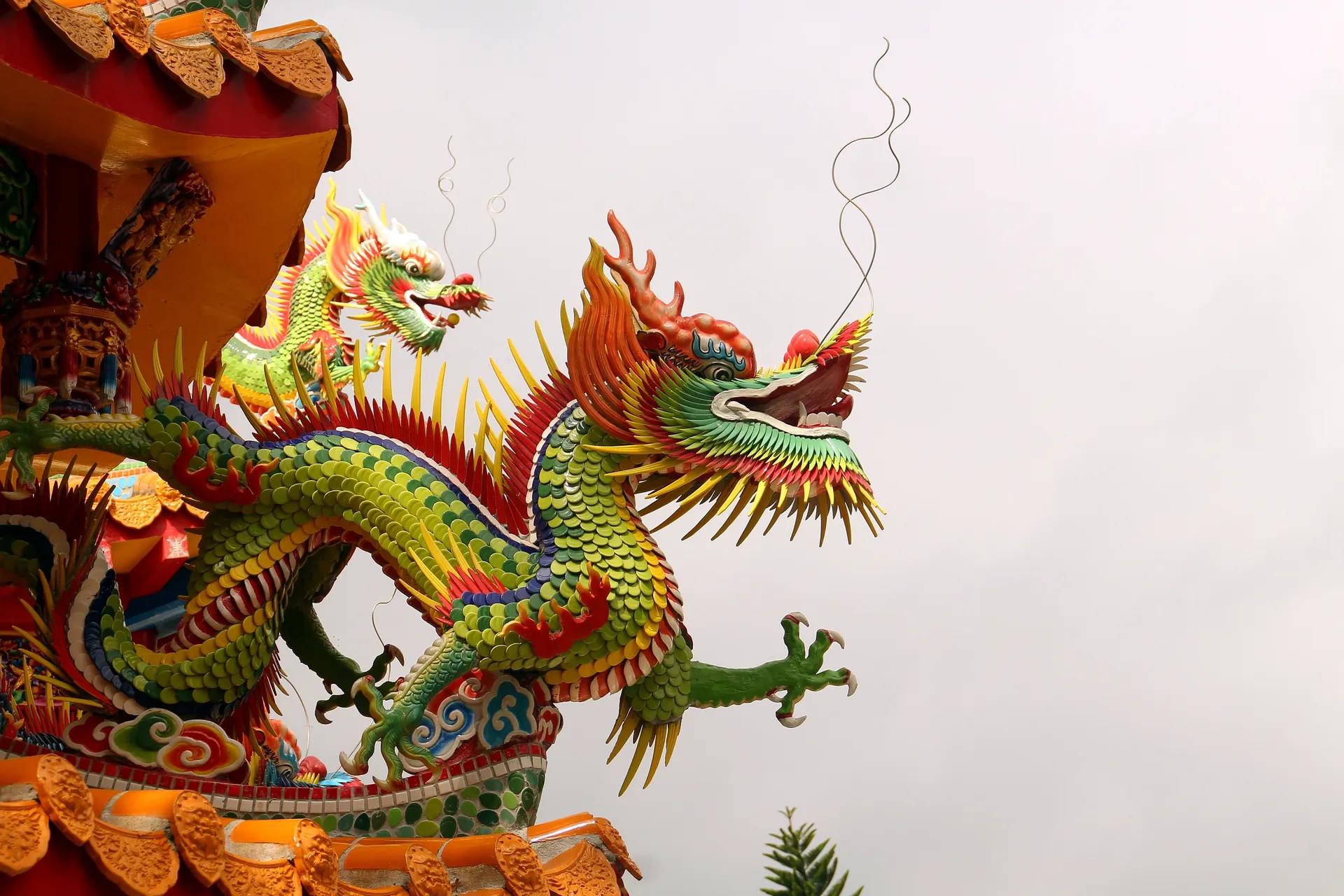
Hualien
TaiwanArrive 09:00Depart 18:00
Located on the Pacific coast of Taiwan island, where the Hualien River enters the sea, Hualien is a gateway to the island’s most spectacular natural splendors. It was here that Portuguese sailors in the 16th century caught a first glimpse of the grandeur and named the island Formosa. For a first visit nothing could beat a tour to the Taroko National Park, a swathe of mountain peaks, deep-cut canyons, rivers and waterfalls that is simply breathtaking. The rivers here have carved deep gorges into the marble cliffs, and attractions such as the Tunnel of Nine Turns make it even more dramatic. This path leads through marble-walled tunnels, interrupted by natural windows that let the light stream down from above, culminating in a rushing waterfall.
Day 6
Day 6
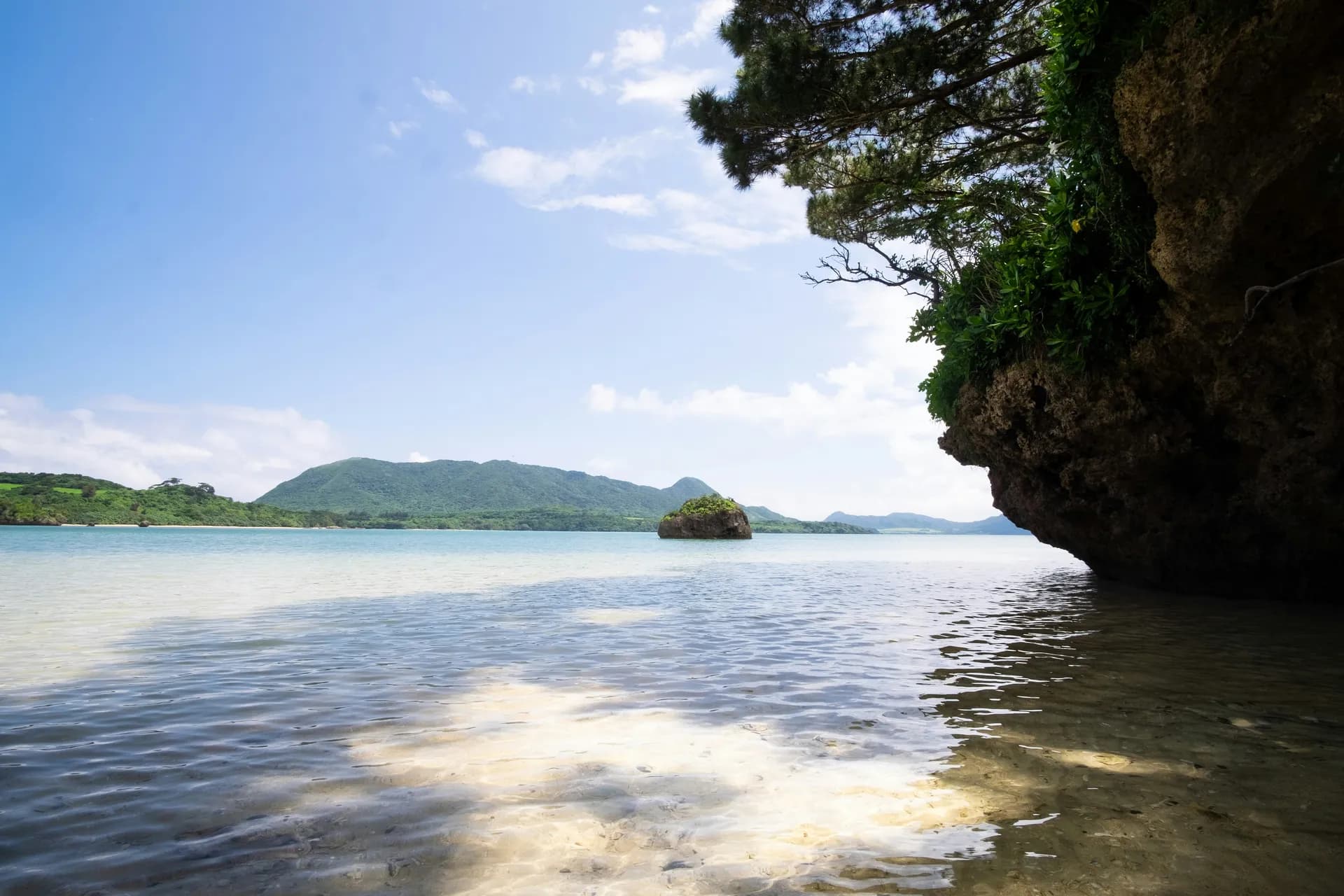
Ishigaki Island
JapanArrive 08:00Depart 17:00
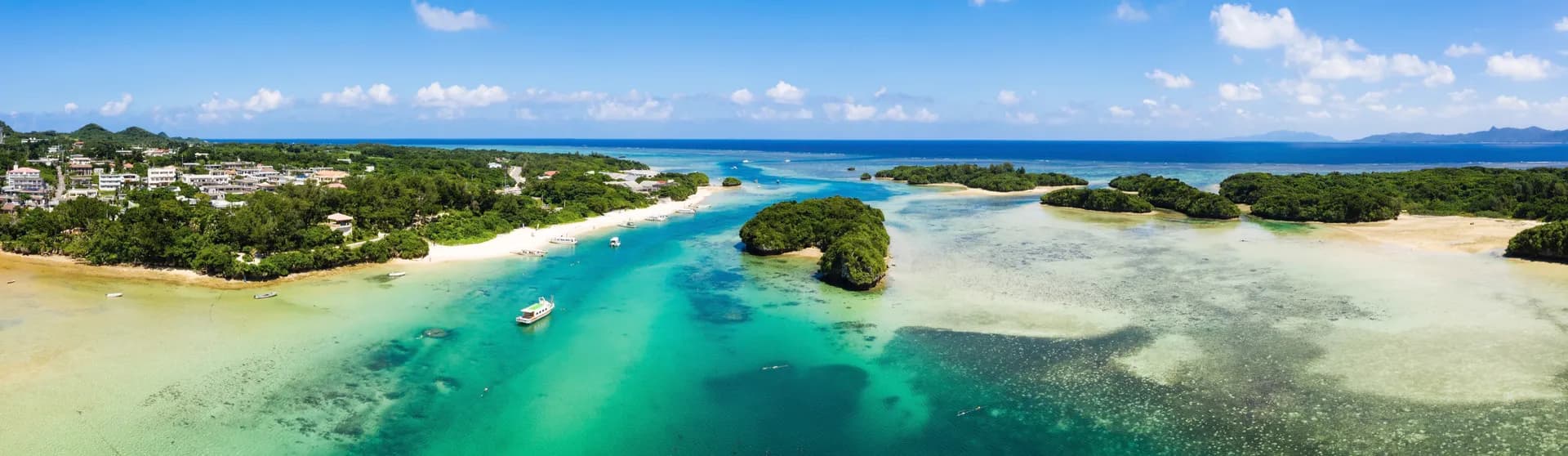
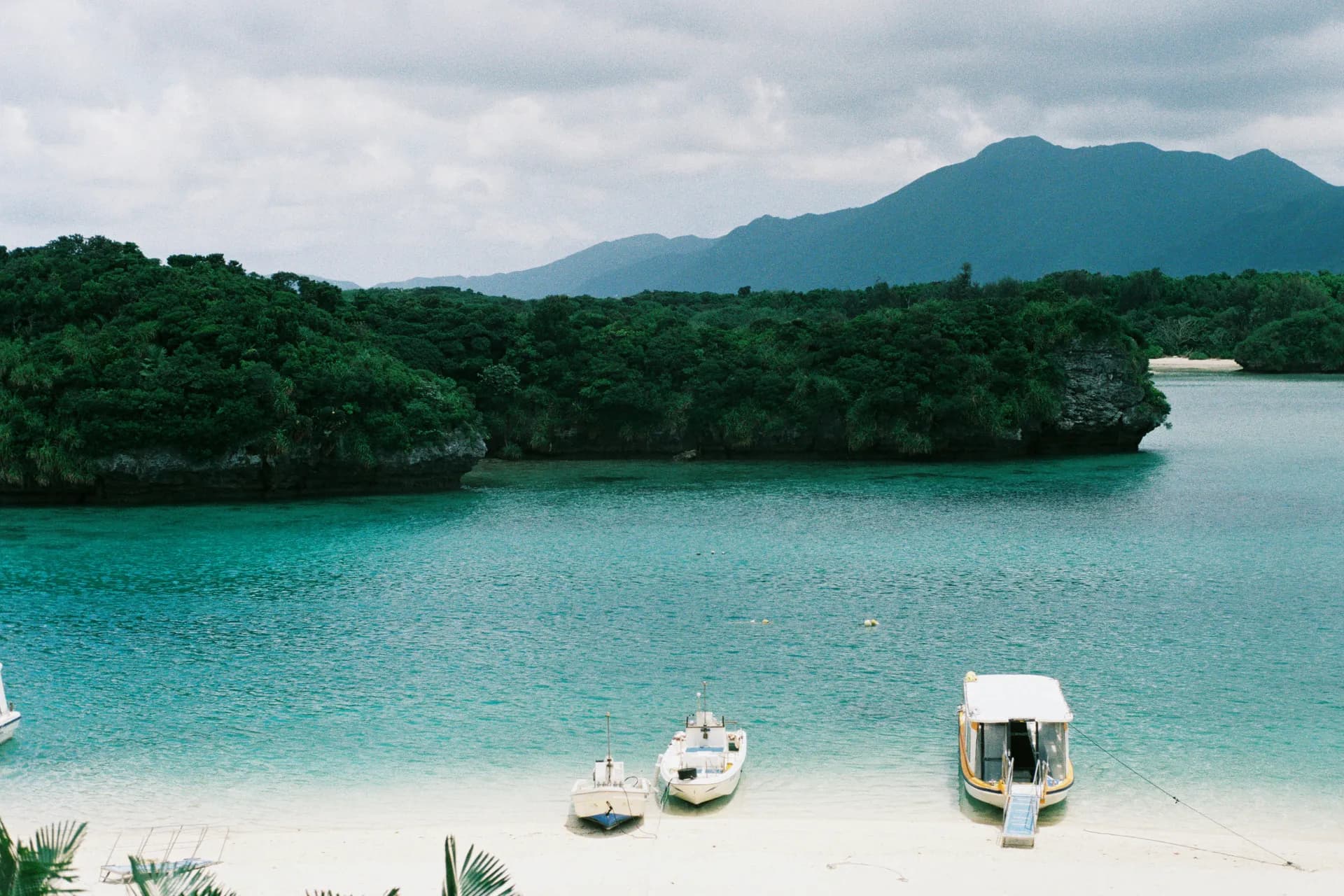
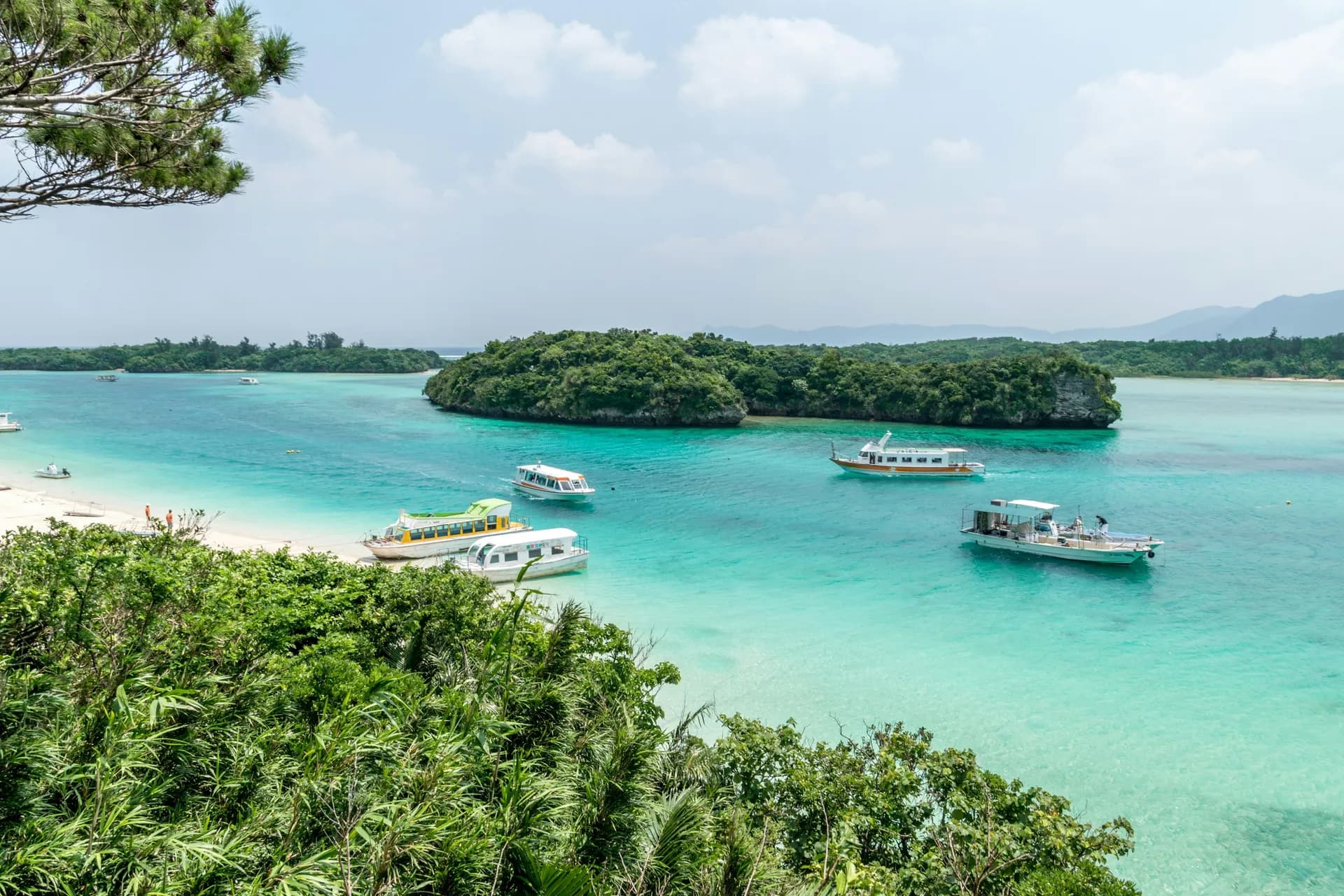
Talk with the Japanese a while about the Japanese and you’re going to hear the word shimagunikonjo. The breakdown is simple: shima—island; guni—nation; konjo—consciousness. In one word, it's the firm belief that people who live on islands are different from people who live on continents, and anyone who’s done both is likely to agree. American culture may be the strongest influence in Japan now, but the Japanese will understand the motivations of the Brits a whole lot better. Islands require a different mind-set than continents. Islands require manners. But what if your island was never meant to be part of another bunch of islands? That’s what’s happened with today’s Okinawa Prefecture. The people who’ve always been there are Okinawan, one of the healthiest, longest-living people on earth. But now they’re part of Japan and seriously outnumbered by the Japanese. (And they’re not at all happy that the Japanese interlopers gave so much of their land over to U.S. military bases.) Signs of Okinawan culture can be subtle but are easier to pick out in more remote islands of the chain, like Ishigaki. Traditional buildings are a mixture of Chinese and Japanese influences. In the markets, you’ll find fu chanpuru (an Okinawan stir fry dish) and whole-wheat soba, which the Japanese won't touch. The ryuso robe holds on despite crowded kimono stores. The few people left who speak Uchinaguchi are praying for a movement like the Hawaiian renaissance to bring the culture back. The tipping point is close. A trip to Ishigaki now is to witness either the beginning or the end.
Day 7
Day 7
At Sea
Day 8
Day 8
Amami
JapanArrive 07:00Depart 15:00
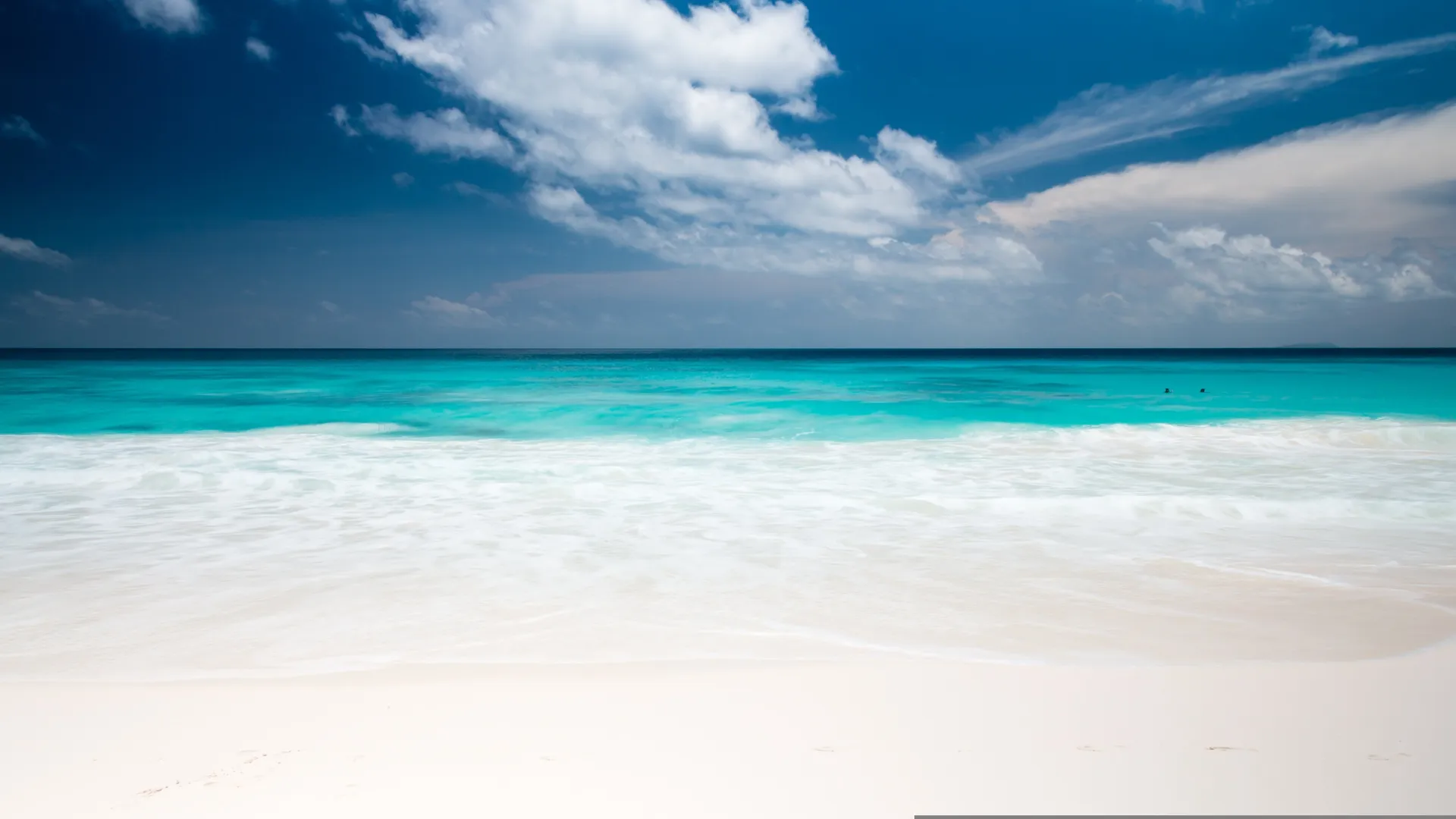
The Amami Islands is an archipelago in the Satsunan Islands, which is part of the Ryukyu Islands, and is southwest of Kyushu. Administratively, the group belongs to Kagoshima Prefecture, Japan.
Day 9
Day 9
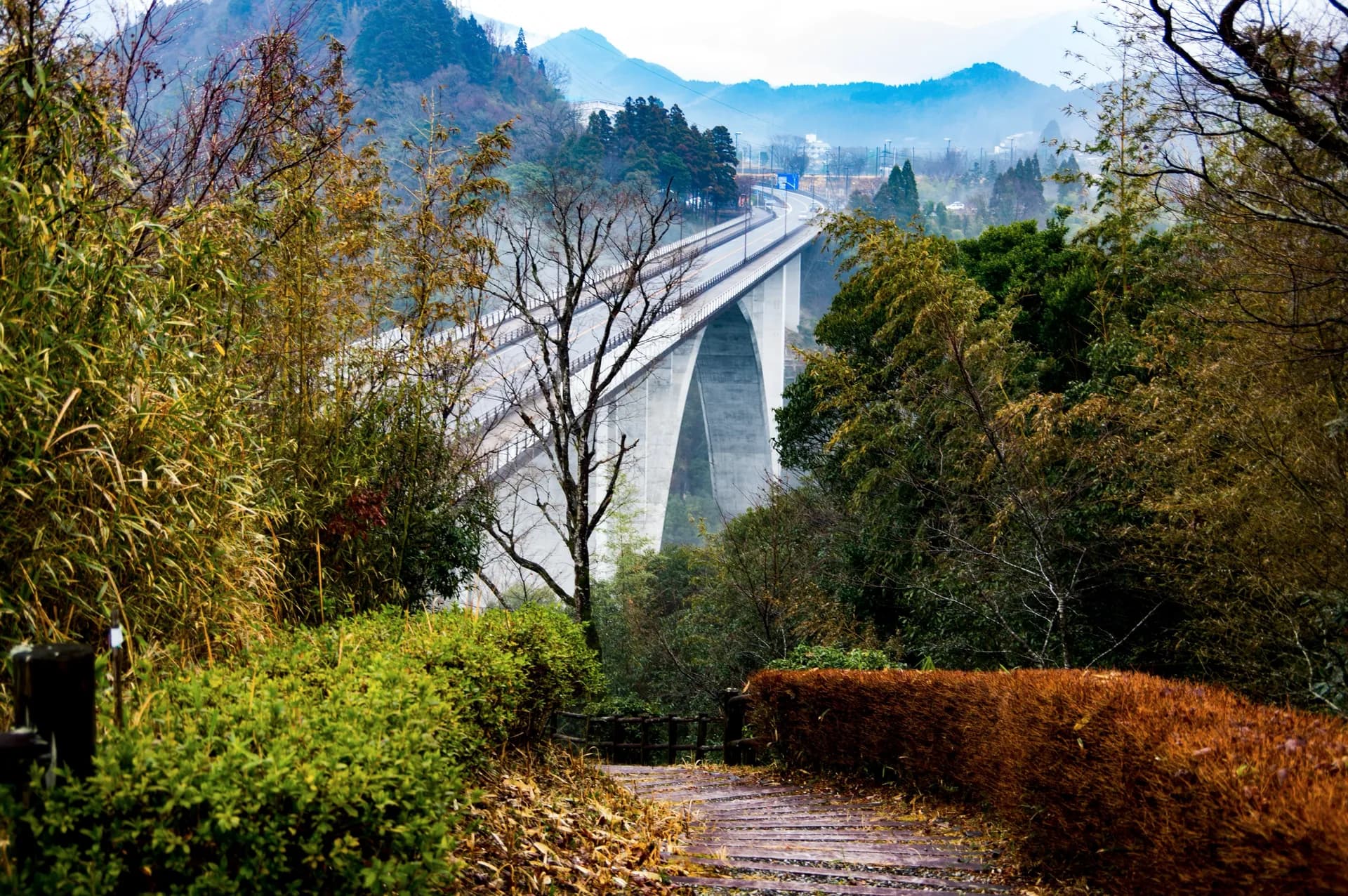
Takamatsu
JapanArrive 08:00Depart 17:00
Located on the south eastern side of Japan, Aburatsu is a tiny port that packs a big punch. More commonly known under the name of Miyazaki – the region where Aburatsu is found, the clement weather and fortuitous topography give Aburatsu a feeling of being on permanent holiday. Visitors should expect along with warm weather a warm welcome from the locals with samples of local culture – such as the traditional Nichinan Taihei dance being performed and bites of exquisite gastronomy for the more adventurous as soon as you disembark. Venturing further afield and one discovers an atypical town that is light years away from the Japan of the future that one might associate other parts of the country with. On the do not miss list should be first and foremost Aoshima, a tiny island of just 1.50km in circumference, connected to the mainland by a 300-metre long bridge. Not to be confused with an identically named island in Ehime Prefecture which is known for its cat population, those with allergies to felines need not worry! Celebrated for its lush vegetation, the island is ringed with white sandy beaches and shallow waters. At the center of the island is Aoshima Jinja, a colorful shrine set back in the jungle that is said to bring luck to married couples. Surrounded at low tide by the geological phenomenon known as Oni no Sentakuita (eroded sandstone and shale boulders) that protrude from the sea between the waves, the straight rows of basalt rock look man made. Because of this, Aoshima is designated a National Natural Monument. Finally, Obi Castletown is a definite must see. A highly impressive traditional castle, the gardens have a cherry tree orchard that is a fine example of Sakura, should you be lucky enough to visit in Spring.
Day 10
Day 10
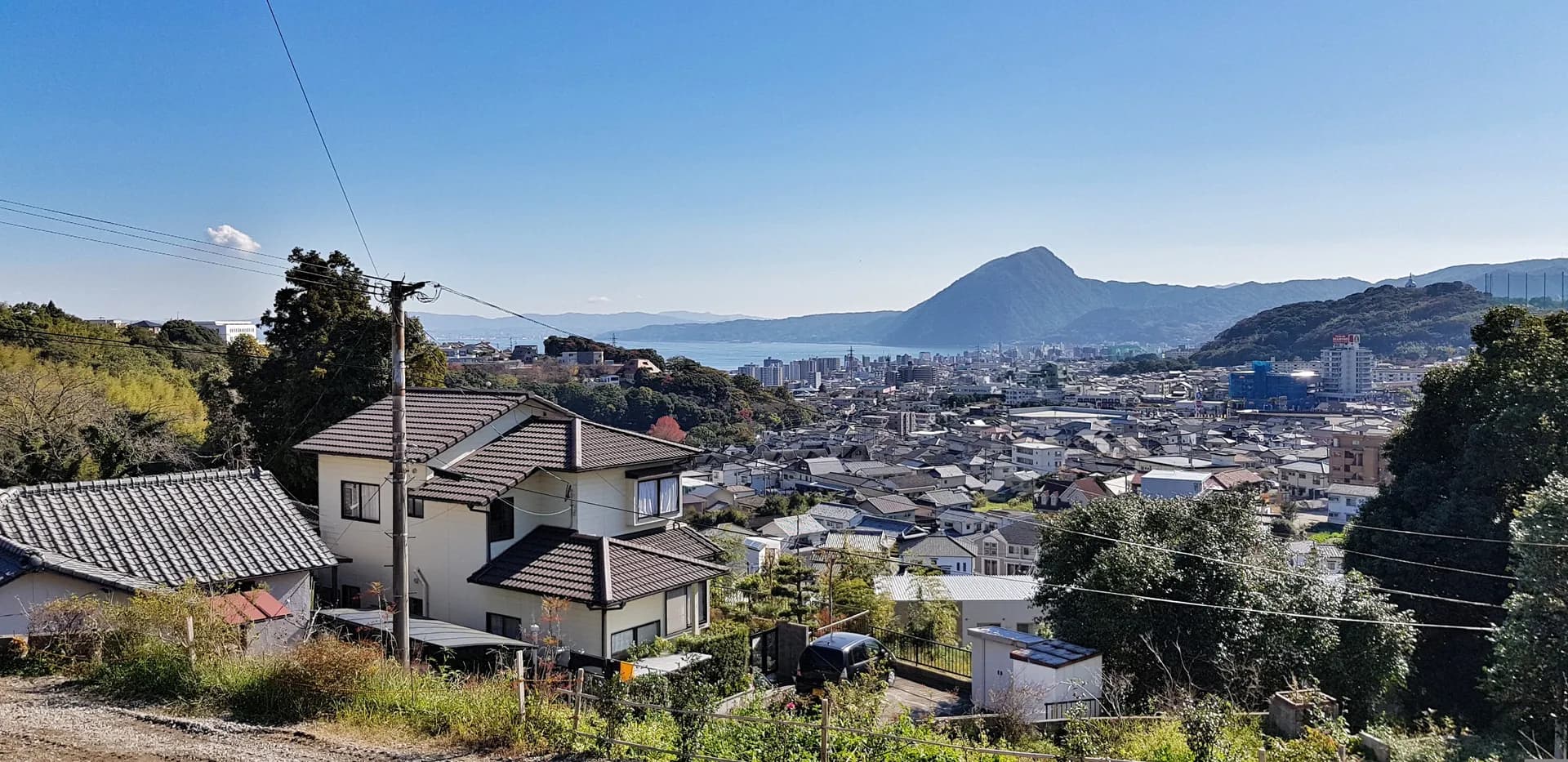
Beppu
Arrive 08:00Depart 14:00
The lantern-lit hot springs of Beppu, known for its eight scorching “Hells”, is a town that’s prettier than a picture. The town is found in a particularly volcanically active part of Japan (hence the abundance of hot springs, or in Japanese, onsens). The viewing pools have evocative names; think Sea Hell, Blood Pond Hell and Tornado Hell. While the names might seem a little off putting, the reality is stunning; sulphur laced air and vast spectrums of blues and reds, depending on the mineralisation of the earth. As if the gorgeous palette of colours at the onsen was not enough, Beppu is also world famous for its Sakura, or cherry blossom season. More than 2,000 cherry trees near the base of the ropeway to Mount Tsurumi make for one of Beppu’s most impressive hanami (flower viewing) spots. If not lucky enough to be in the area during Sakura, from May to June rhododendrons colour the mountain. The view from this 1,375m mountain is beyond impressive, allowing you to see all the way to the Kuju Mountains, Chugoku and Shikoku. If brave enough to climb all the way to the top, the stone Buddhas that were carved into the mountainside during the Heian Period (794-1185) are a worthy reward! As with much of Japan, duality is ever present. Modernity sits very comfortably by ancient buildings. While Beppu’s biggest pull is by far the hot springs and the thermal baths, nearby (10 km) Yufuin has a wealth of art museums, cafes and boutiques, catering to trend setters and urbanites alike.
Day 10
Day 10
Kanmon Strait
JapanThe lantern-lit hot springs of Beppu, known for its eight scorching “Hells”, is a town that’s prettier than a picture. The town is found in a particularly volcanically active part of Japan (hence the abundance of hot springs, or in Japanese, onsens). The viewing pools have evocative names; think Sea Hell, Blood Pond Hell and Tornado Hell. While the names might seem a little off putting, the reality is stunning; sulphur laced air and vast spectrums of blues and reds, depending on the mineralisation of the earth. As if the gorgeous palette of colours at the onsen was not enough, Beppu is also world famous for its Sakura, or cherry blossom season. More than 2,000 cherry trees near the base of the ropeway to Mount Tsurumi make for one of Beppu’s most impressive hanami (flower viewing) spots. If not lucky enough to be in the area during Sakura, from May to June rhododendrons colour the mountain. The view from this 1,375m mountain is beyond impressive, allowing you to see all the way to the Kuju Mountains, Chugoku and Shikoku. If brave enough to climb all the way to the top, the stone Buddhas that were carved into the mountainside during the Heian Period (794-1185) are a worthy reward! As with much of Japan, duality is ever present. Modernity sits very comfortably by ancient buildings. While Beppu’s biggest pull is by far the hot springs and the thermal baths, nearby (10 km) Yufuin has a wealth of art museums, cafes and boutiques, catering to trend setters and urbanites alike.
Day 11
Day 11
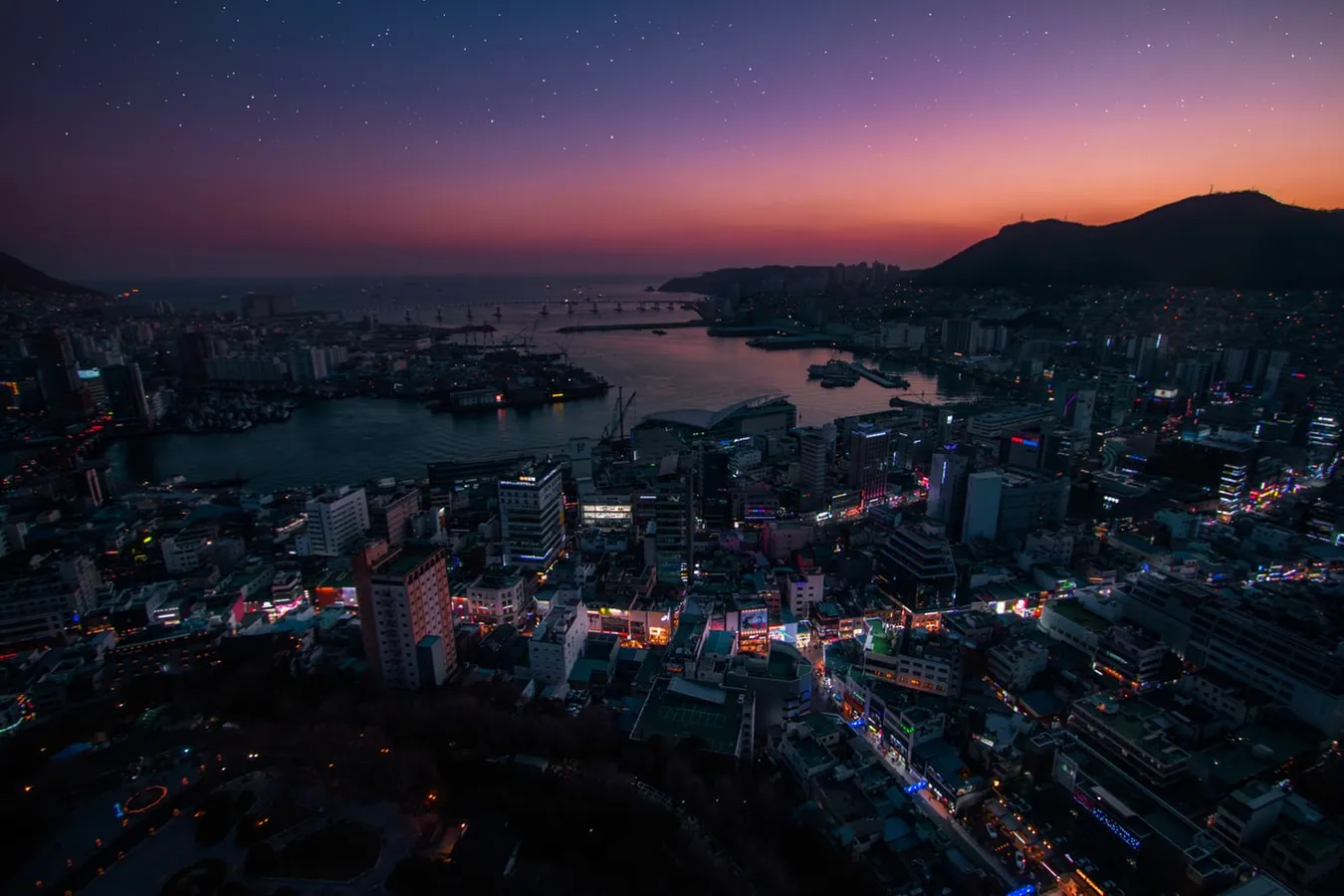
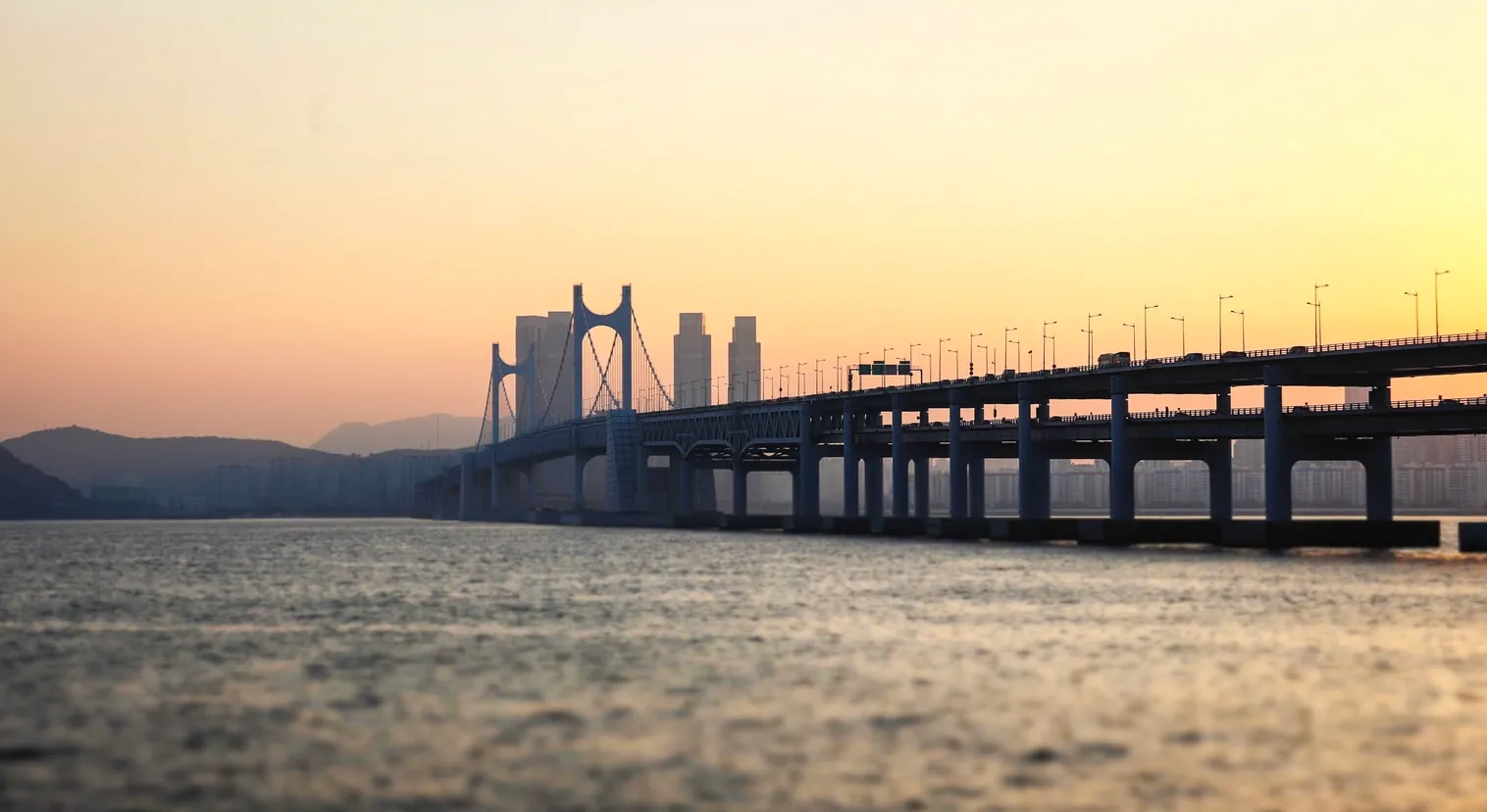
Busan (Pusan)
South KoreaArrive 07:00
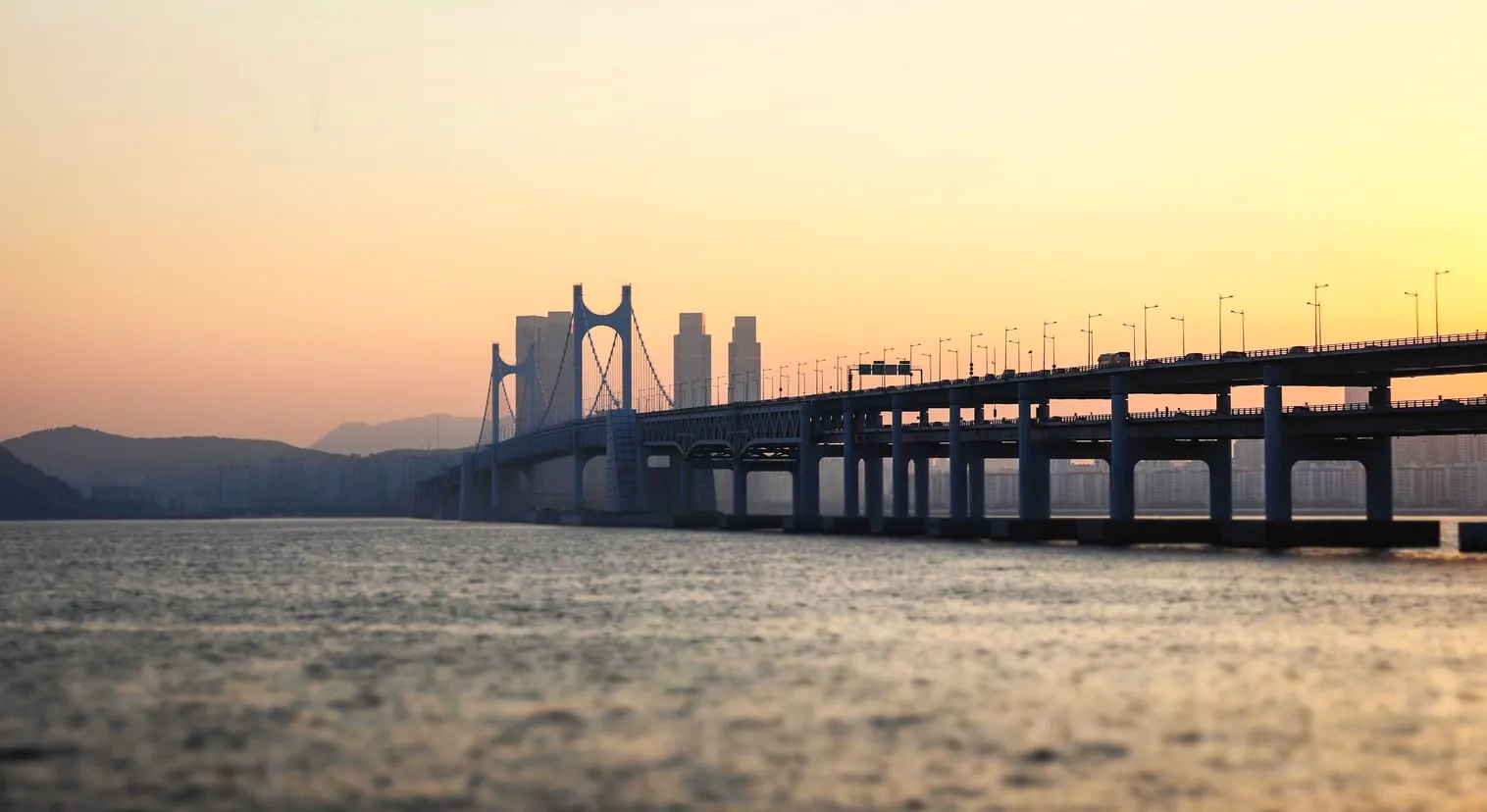
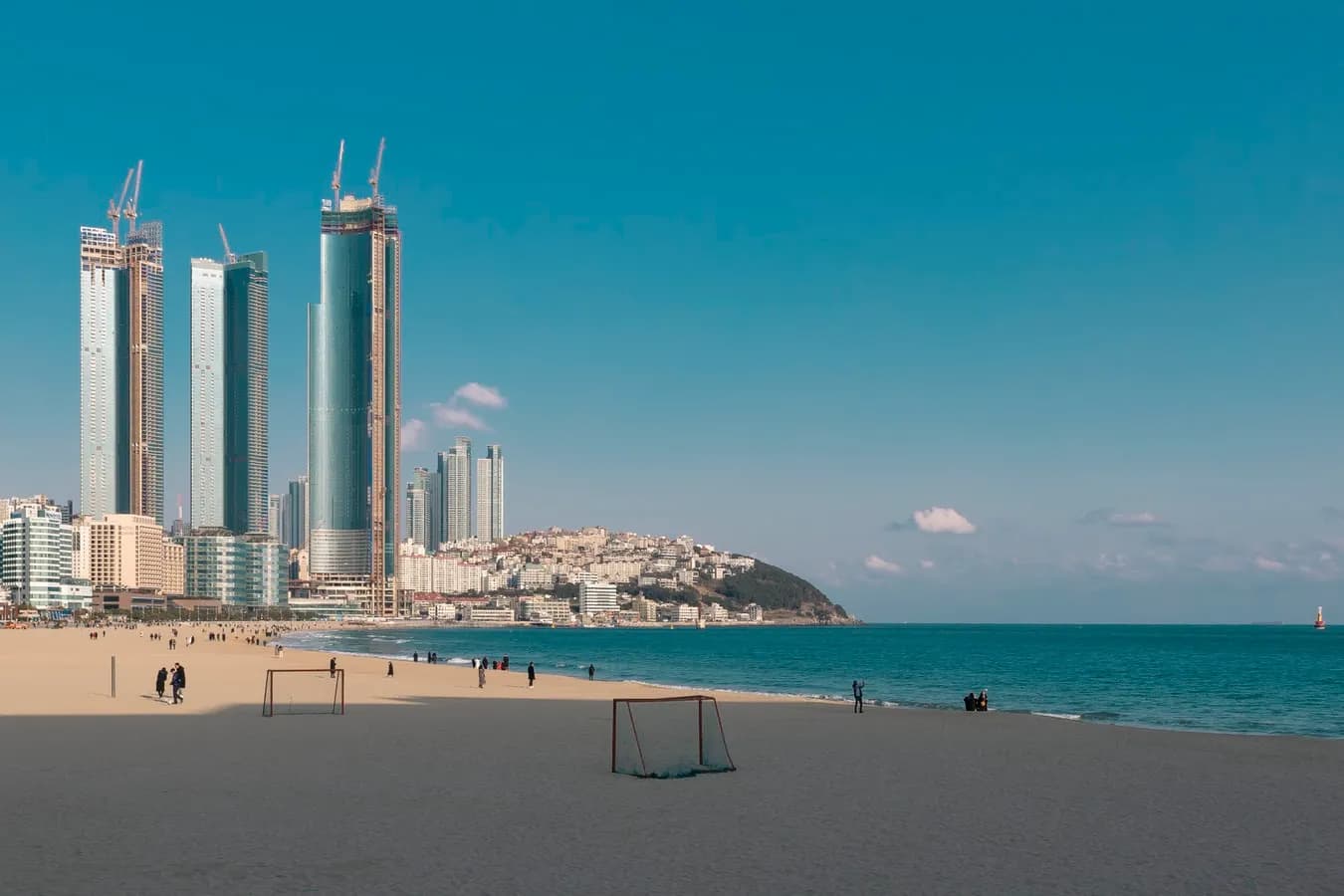
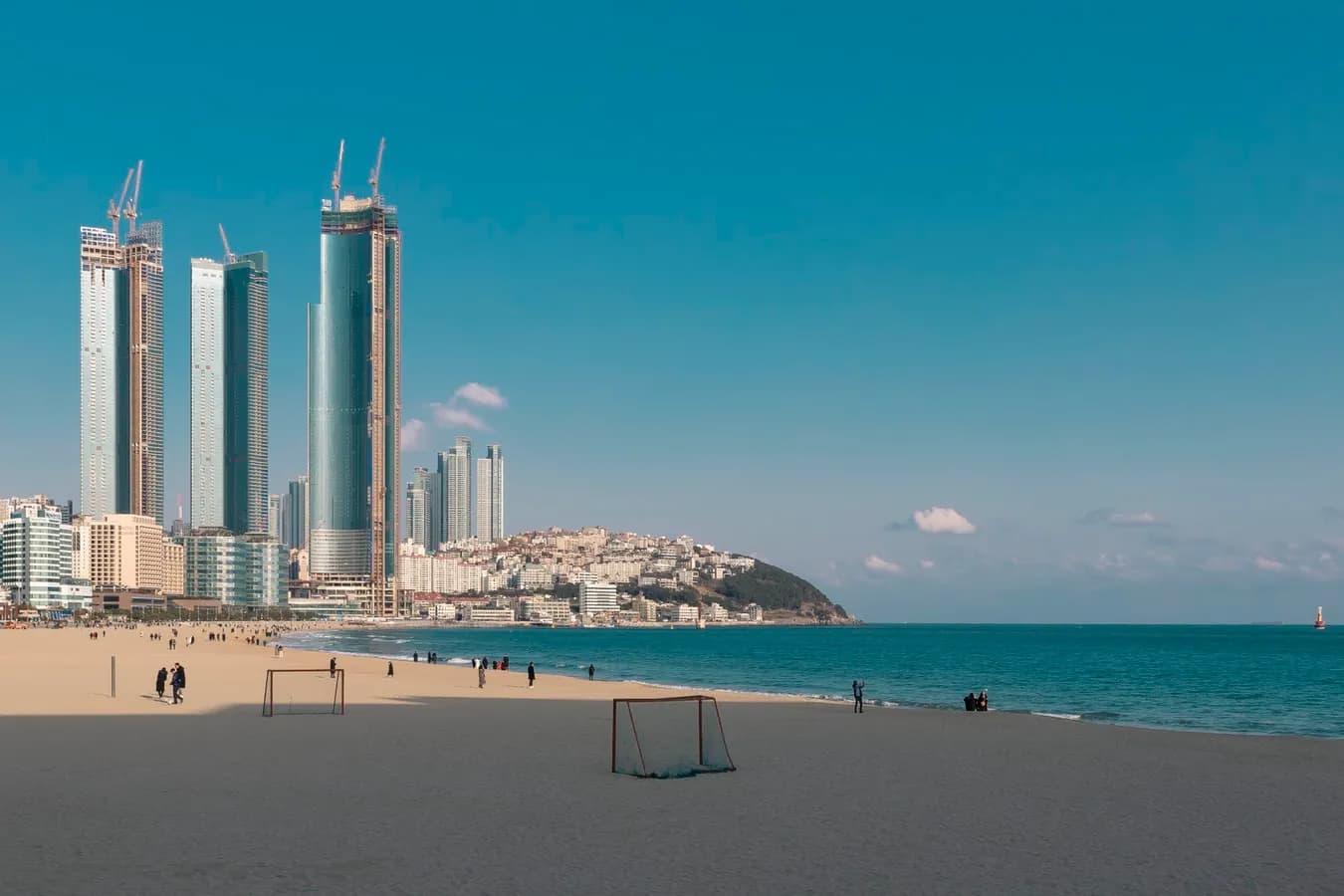
"A tapestry of kaleidoscopic colours, intense seafood flavours, and urban beach bliss, Busan rolls across a glorious natural setting on the Korean Peninsula's south-east. One of the largest and busiest ports in the world, 3.5 million people call South Korea's second city home, and the amiable locals help to lend the city its quirky, offbeat outlook. A spacious, playful and cosmopolitan place, Busan is a lively, liveable city, cradled by lush mountains and endless ocean scenery. Haedong Yonggung Temple nestles on a dramatic cliffside, just above the crumbling rocks and crashing waves of the East Sea. Dating back to 1376, the temple's multi-storey pagoda is adorned with lions - each representing a different emotion. Elsewhere, lanterns glitter in the night sky around Mount Geumjeongsan, freshly released from the beautiful Beomeosa Temple, which was established in AD 678. The hillside shantytown of Gamcheon Culture Village has completed an improbable transformation, blossoming from a sea of makeshift homes for Korean war refugees, into a colourful explosion of creativity and curiosity. Local artists have been let loose to create interactive installations, and the entire area is now an expansive canvas for expression. Lose yourself among vibrant alleyways of flamingo-pink, lemon-yellow and baby-blue painted facades in this unique area. Sample bibimbap, fiery-hot beef and rice, from street food vendors, before relaxing on one of South Korea's best beaches - Haeundae's banana bend of sand. Metallic skyscrapers offer an unusual backdrop to this pristine expanse of golden powder and are mirrored by elaborate sandcastles and sculptures during the annual sand festival - when spontaneous water fights and firework displays also take place. Gwangalli beach is another urban option, laying out spectacular views of the reaching Gwangan Bridge - the country's second largest bridge. At night, 16,000 bulbs bathe this engineering marvel in colour."
Cabin Categories
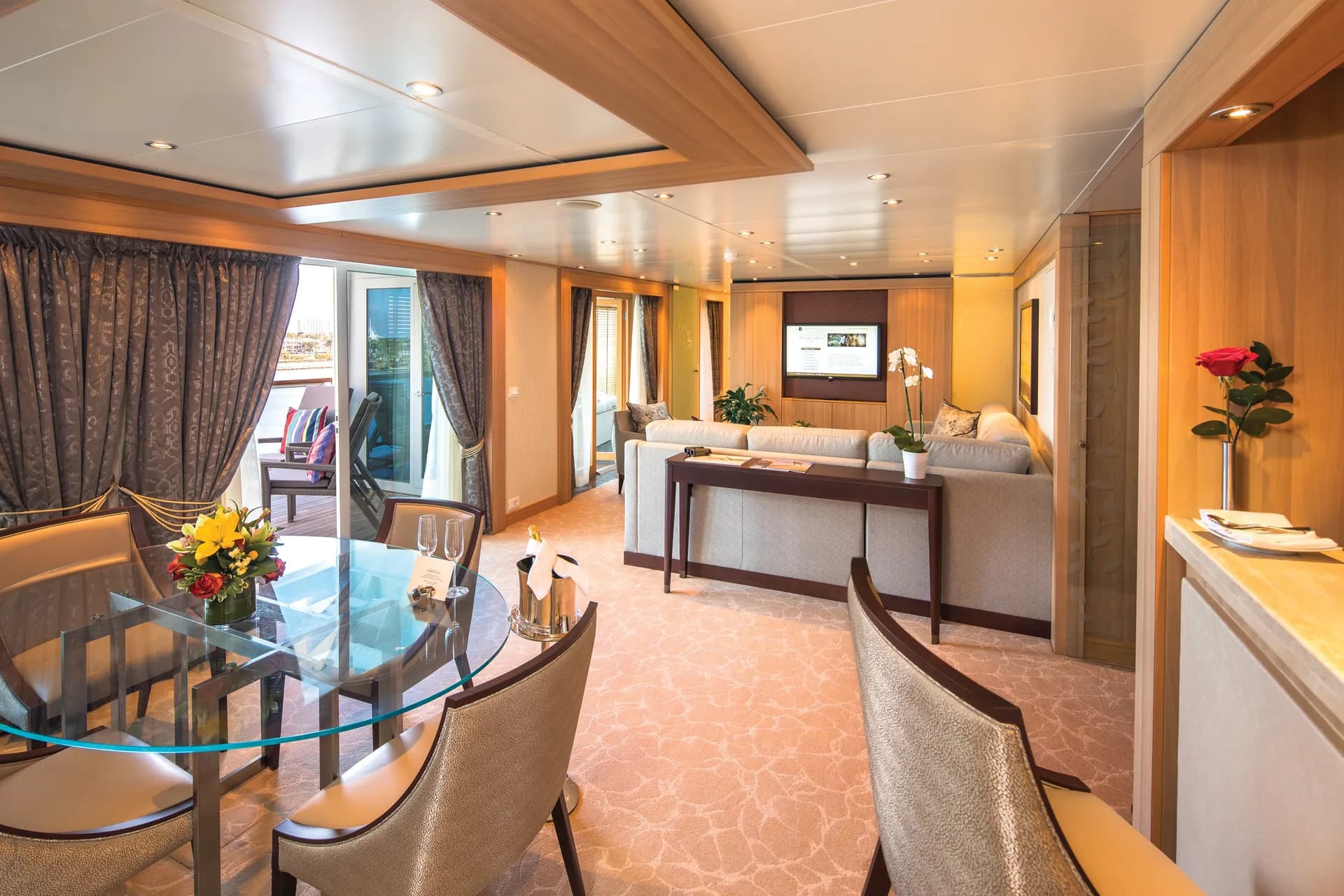
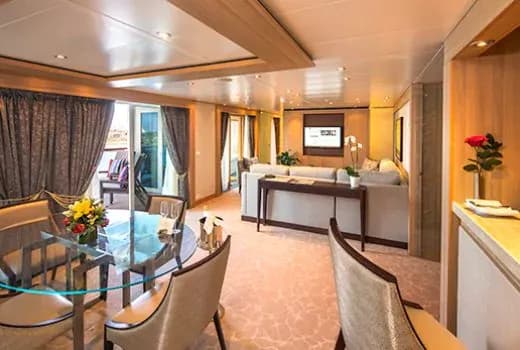
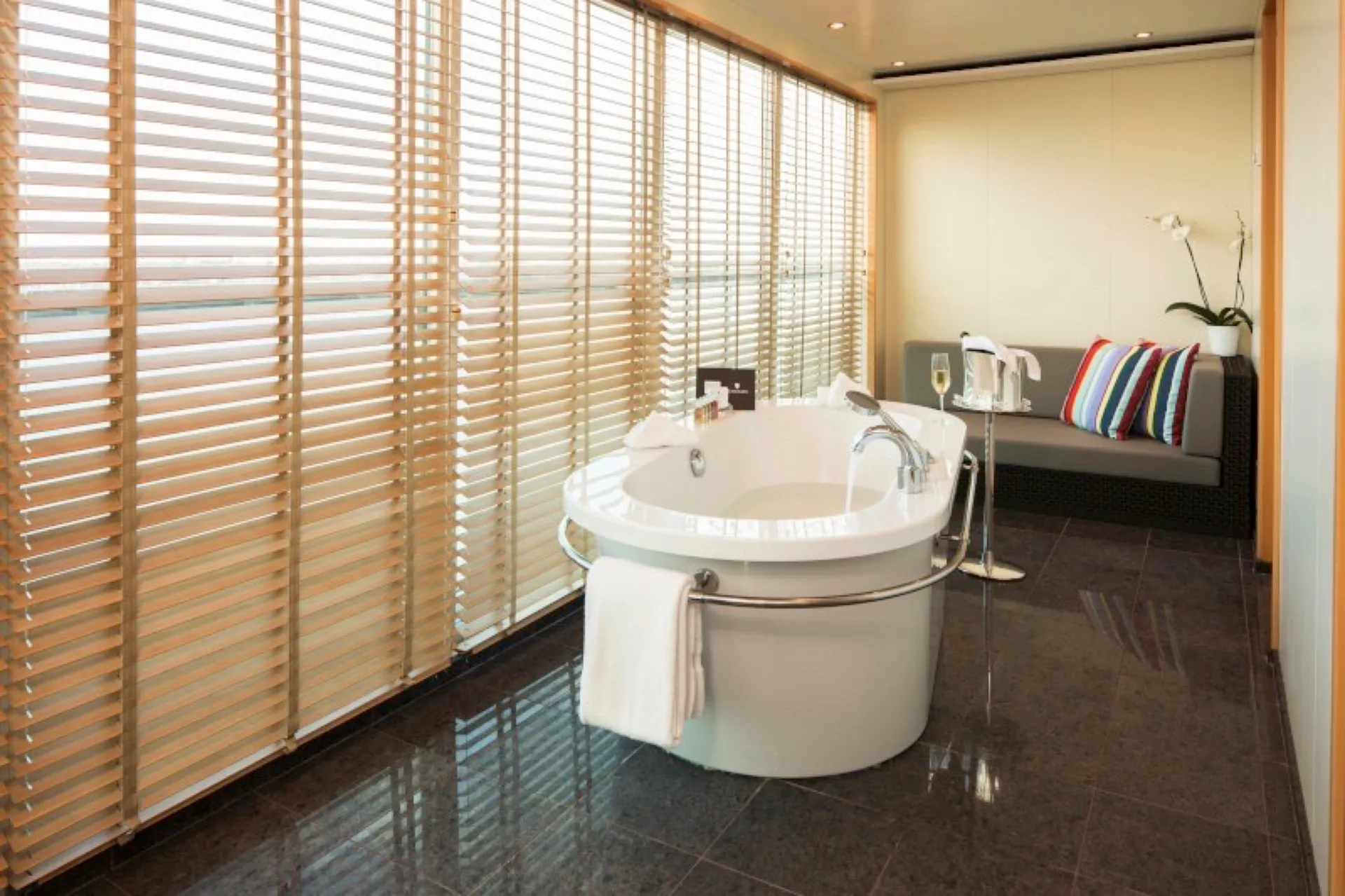
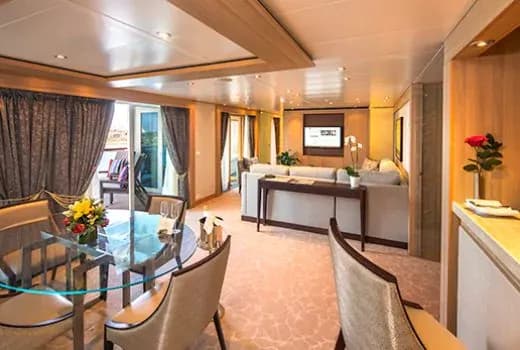
Grand Wintergarden Suite
Suite
1403 m²Max 5
GR
Approximately 1189 square feet (110 square meters) of inside space, plus two verandas totaling 214 square feet (20 square meters)
Grand Wintergarden Suites feature:
Large windows
Dining for six
Glass-enclosed solarium with tub and day bed
Bathroom with whirlpool bathtub
Guest bath
Glass-enclosed solarium with tub and day bed
Two bedrooms
Two bathrooms (one whirlpool)
Convertible sofa bed for one
Pantry with wet bar
Two flat-screen TVs
Complimentary Internet/Wi-Fi service.
Queen or Twin ConfigurationLounge AreaShowerBathWhirlpool BathSuite Benefits+14
Sold Out
View Details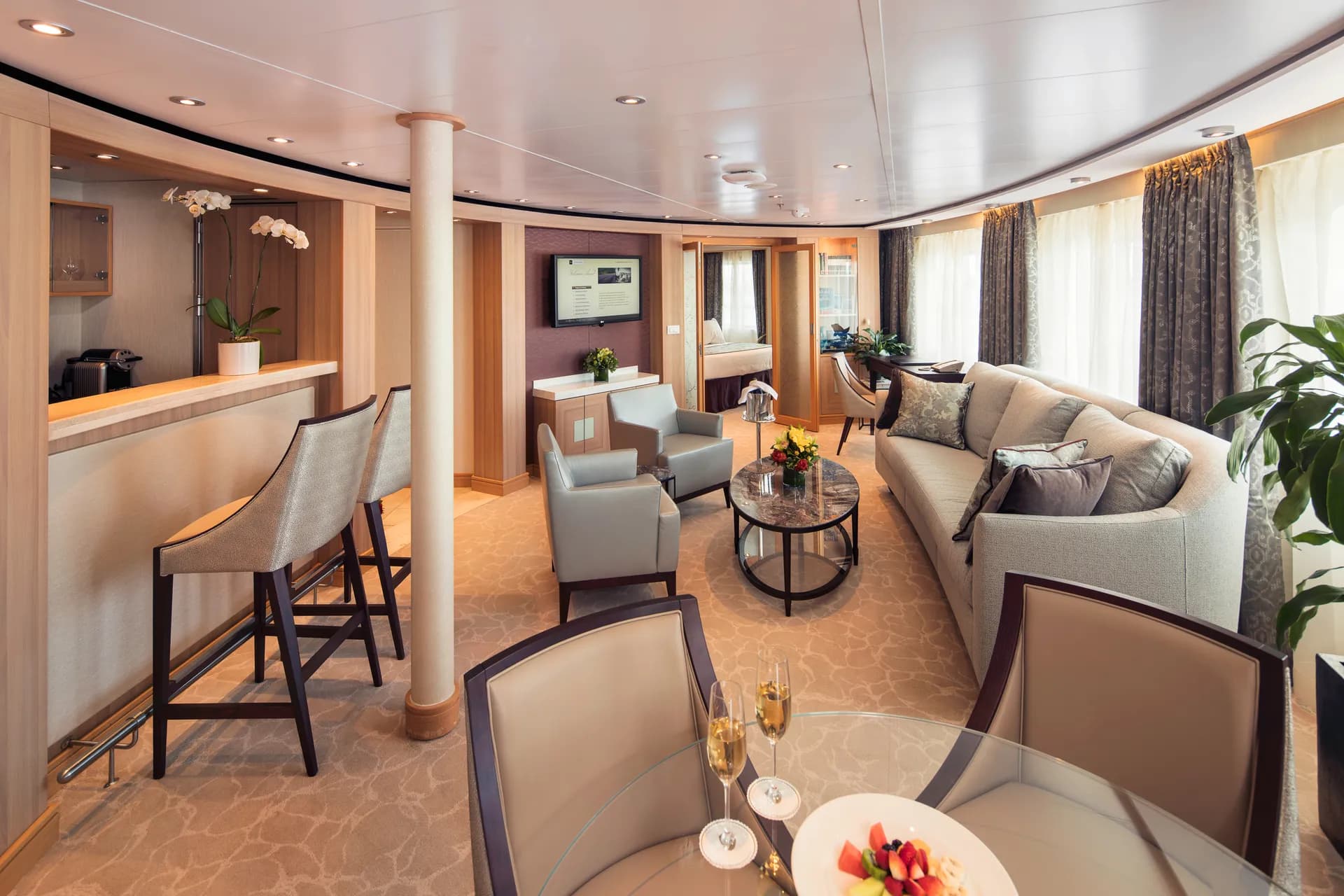
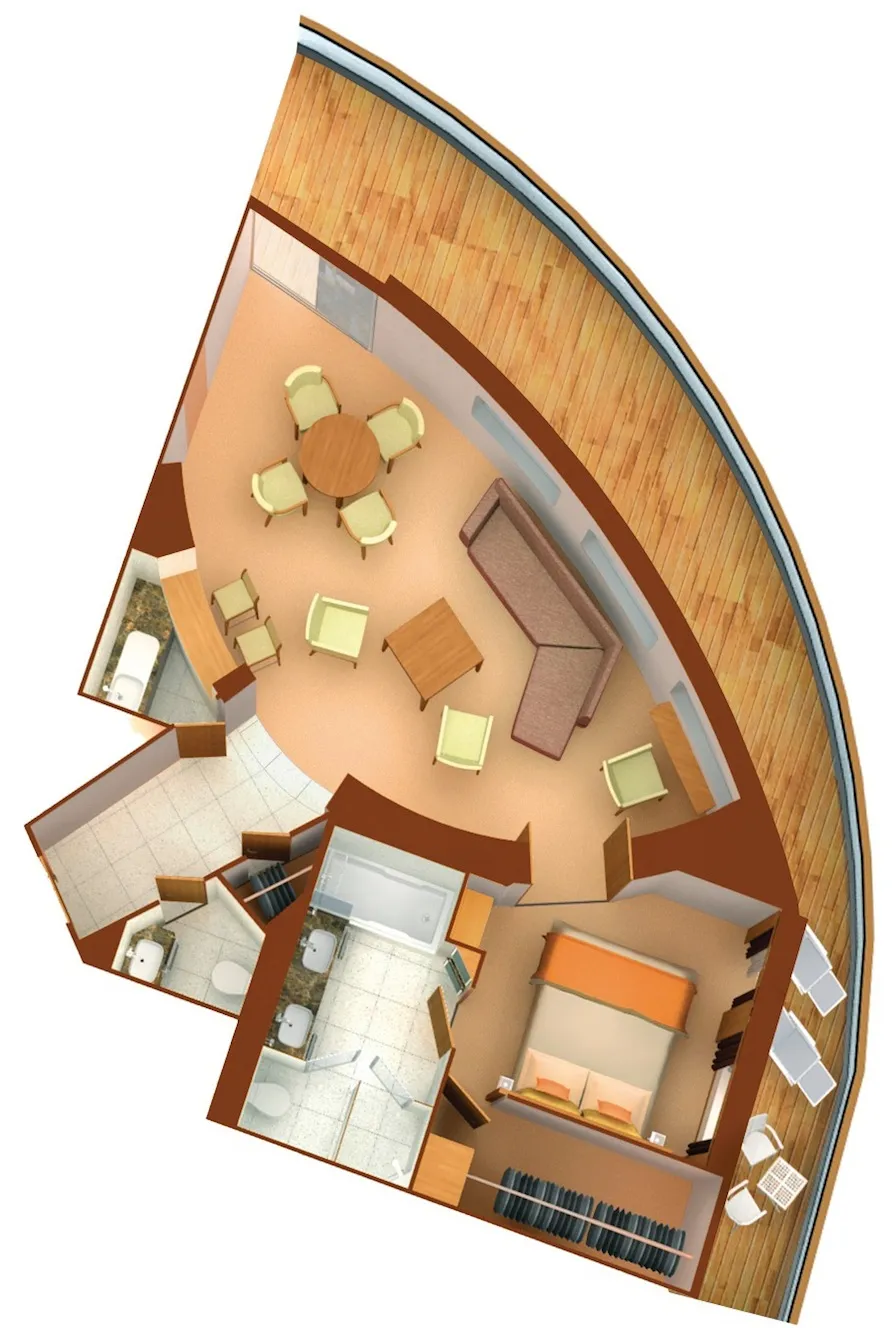
Owner's Suite
Suite
526–593 m²Max 3
O1O2
Approximately 526 and 593 square feet (49 and 55 square meters) of inside space, plus one veranda of 133 & 354 square feet (12 and 33 square meters).
Owner's Suites feature:
Expansive ocean views
Forward-facing windows
Dining for four to six
Bathroom with whirlpool bathtub
Guest bath
Pantry with wet bar
Two flat-screen TVs
Complimentary Internet/Wi-Fi service.
Queen or Twin ConfigurationLounge AreaShowerBathWhirlpool BathTV+10
Sold Out
View Details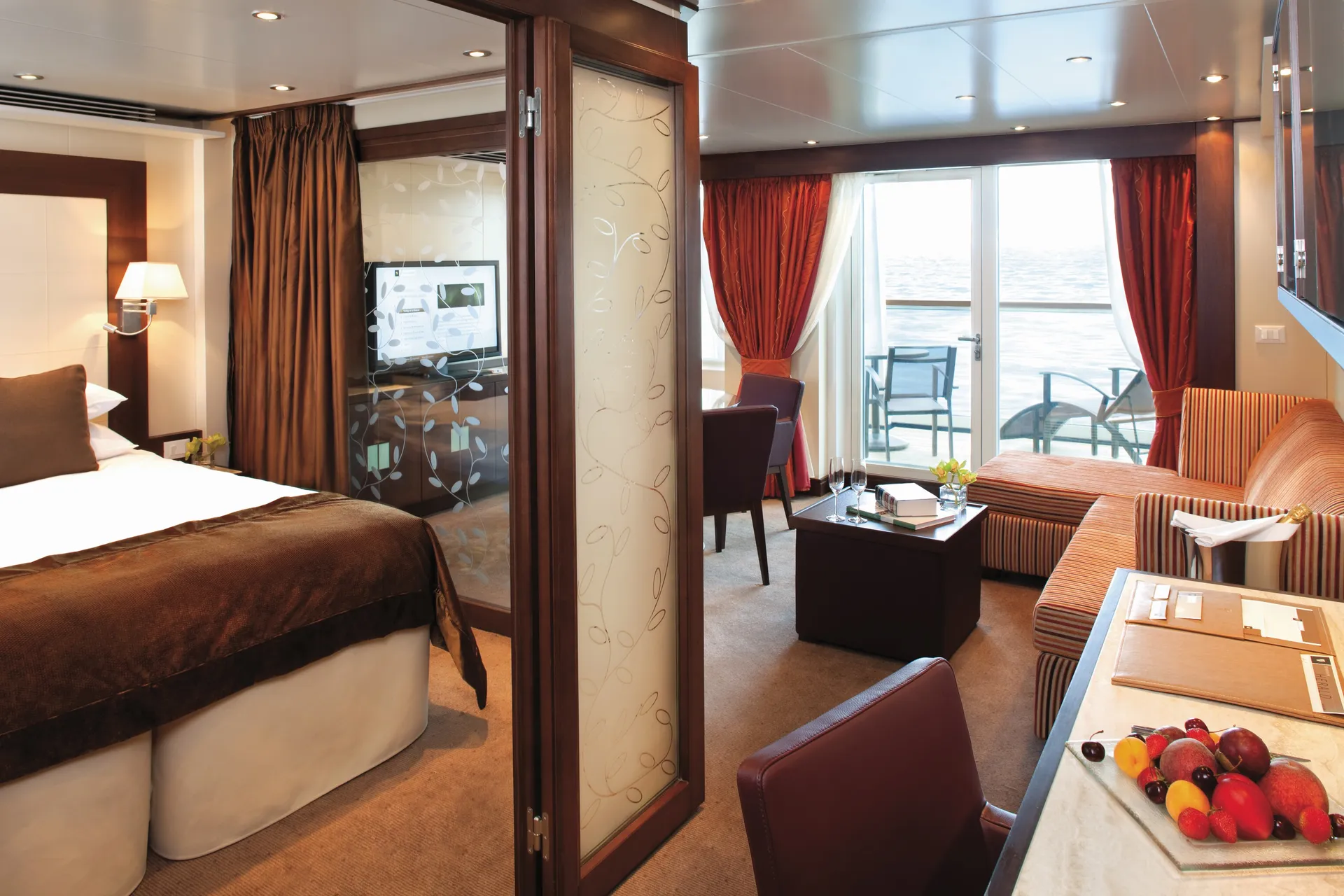
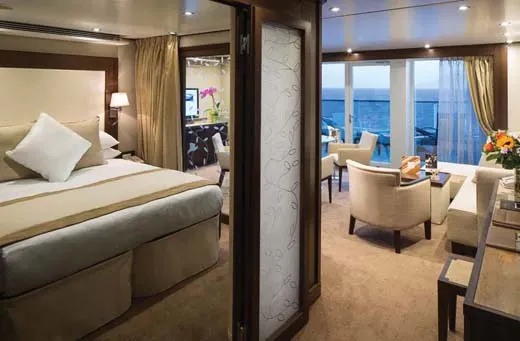
Penthouse Spa Suite
Suite
536–539 m²Max 2
PS
Approximately 536 to 539 square feet (50 square meters) of inside space, plus one veranda of 167 to 200 square feet (16 to 19 square meters)
All Penthouse Spa Suite feature
Dining table for two to four
Separate bedroom
Glass door to veranda
Two flat-screen TVs
Fully stocked bar
Spacious bathroom with tub, shower and large vanity
Queen or Twin ConfigurationShowerBathTVSafeHair Dryer+11
Sold Out
View Details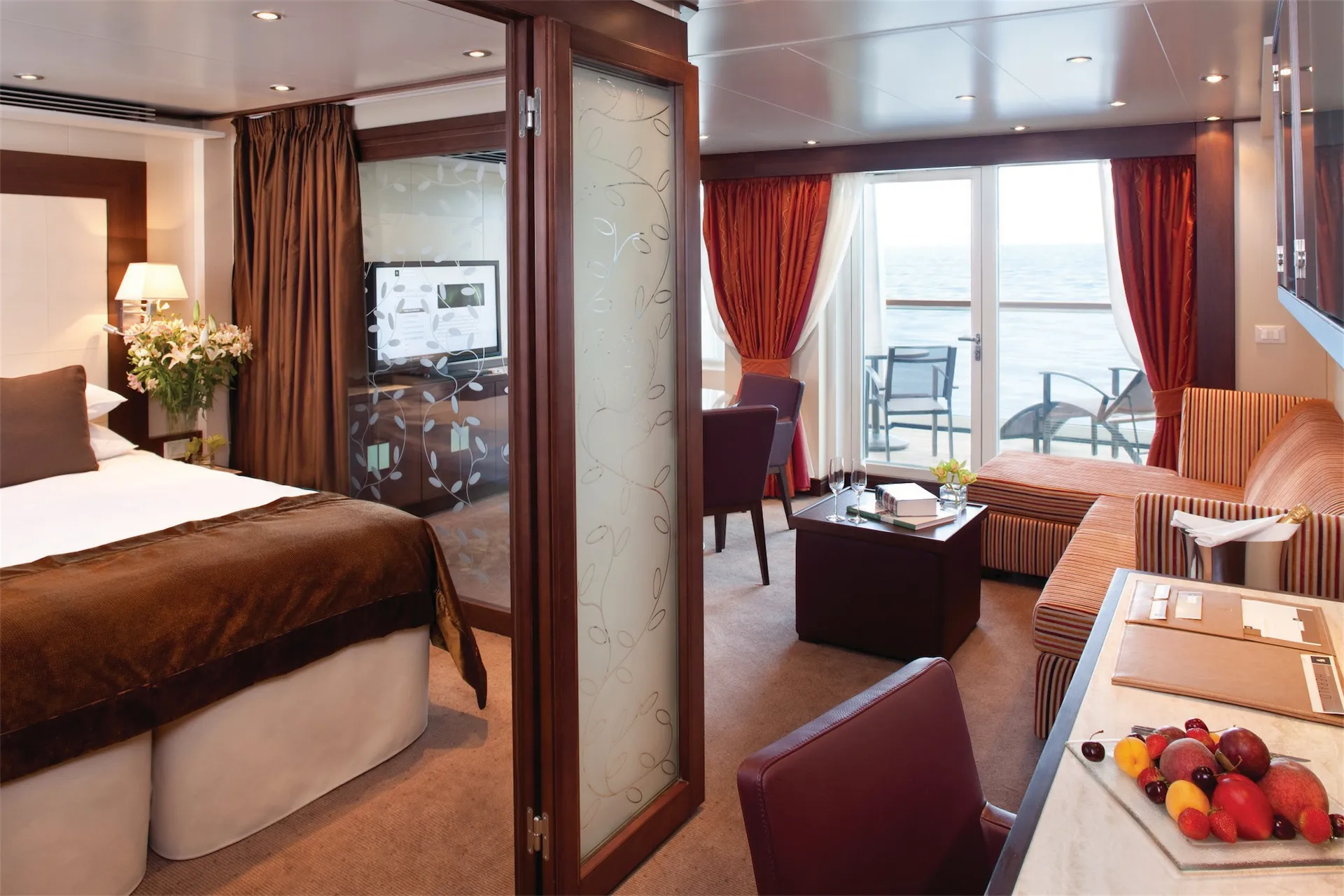
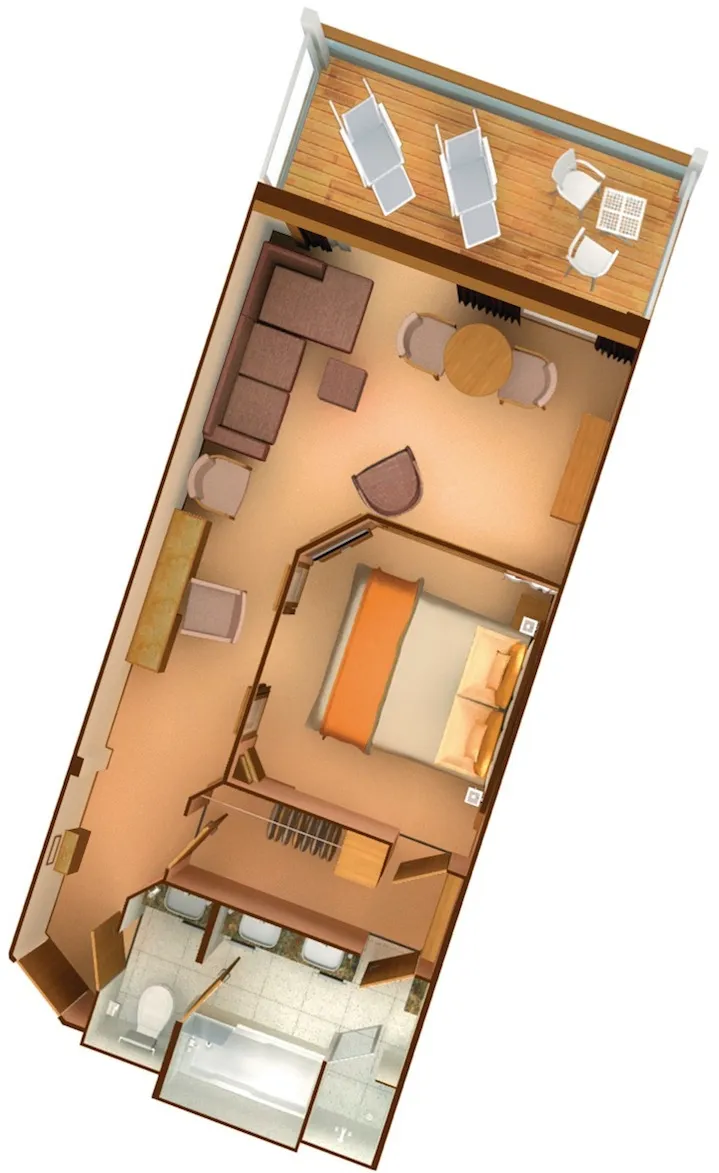
Penthouse Suite
Suite
436 m²Max 2
PH
Approximately 436 square feet (41 square meters) of inside space, plus one veranda of 98 square feet (9 square meters)
All Penthouse Suite feature
Dining table for two to four
Separate bedroom
Glass door to veranda
Two flat-screen TVs
Fully stocked bar
Spacious bathroom with tub, shower and large vanity.
Queen or Twin ConfigurationLounge AreaShowerTVSafeHair Dryer+10
Sold Out
View Details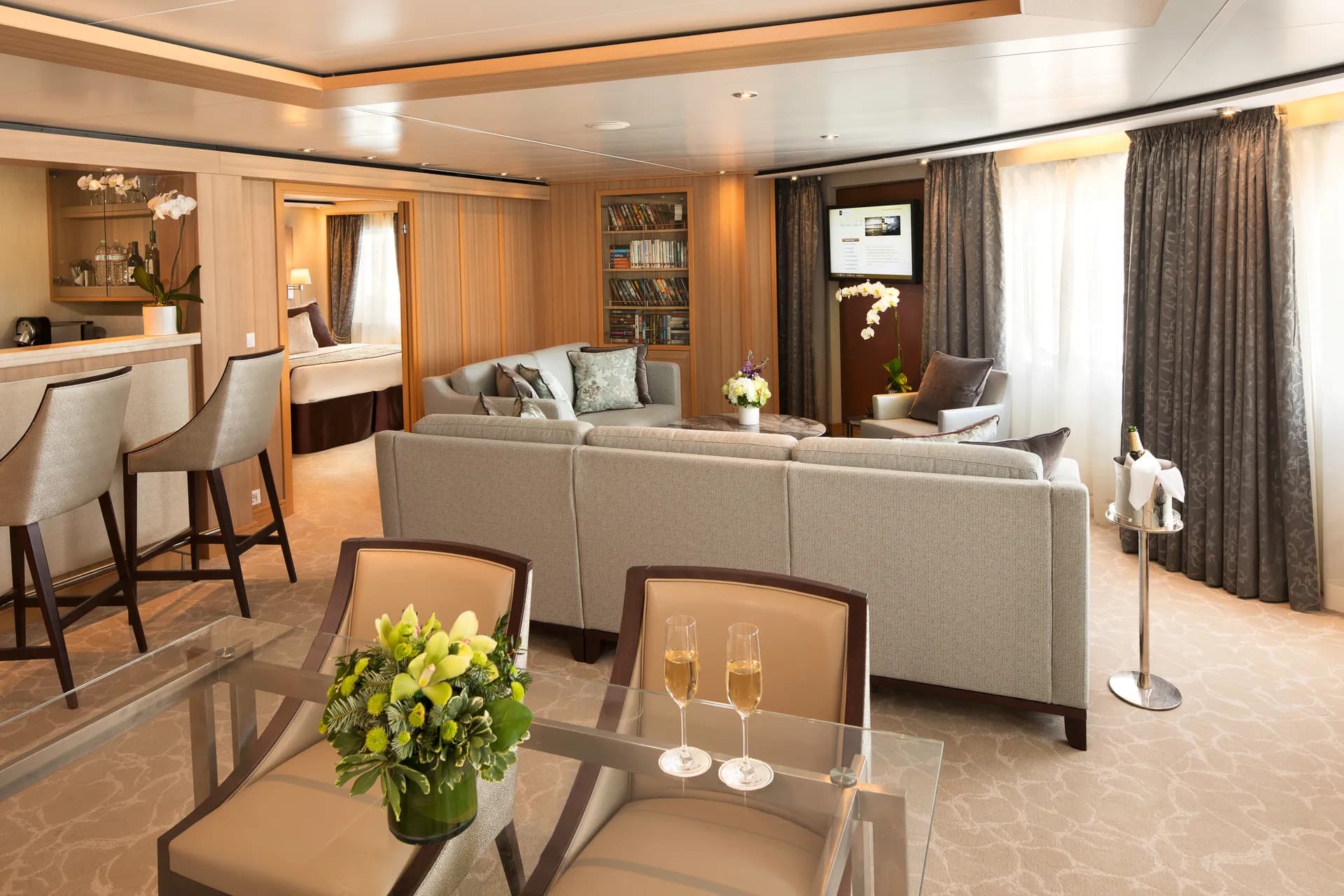
Signature Suite
Suite
859 m²Max 4
SS
Approximately 859 square feet (80 square meters) of inside space, plus one veranda of 493 square feet (46 square meters)
Signature Suites feature
Expansive ocean views
Forward-facing windows
Dining for four to six
Bathroom with whirlpool bathtub
Guest bath
Pantry with wet bar
Two flat-screen TVs
Complimentary Internet/Wi-Fi service.
Queen or Twin ConfigurationSecond BedroomShowerBathWhirlpool BathTV+12
Sold Out
View Details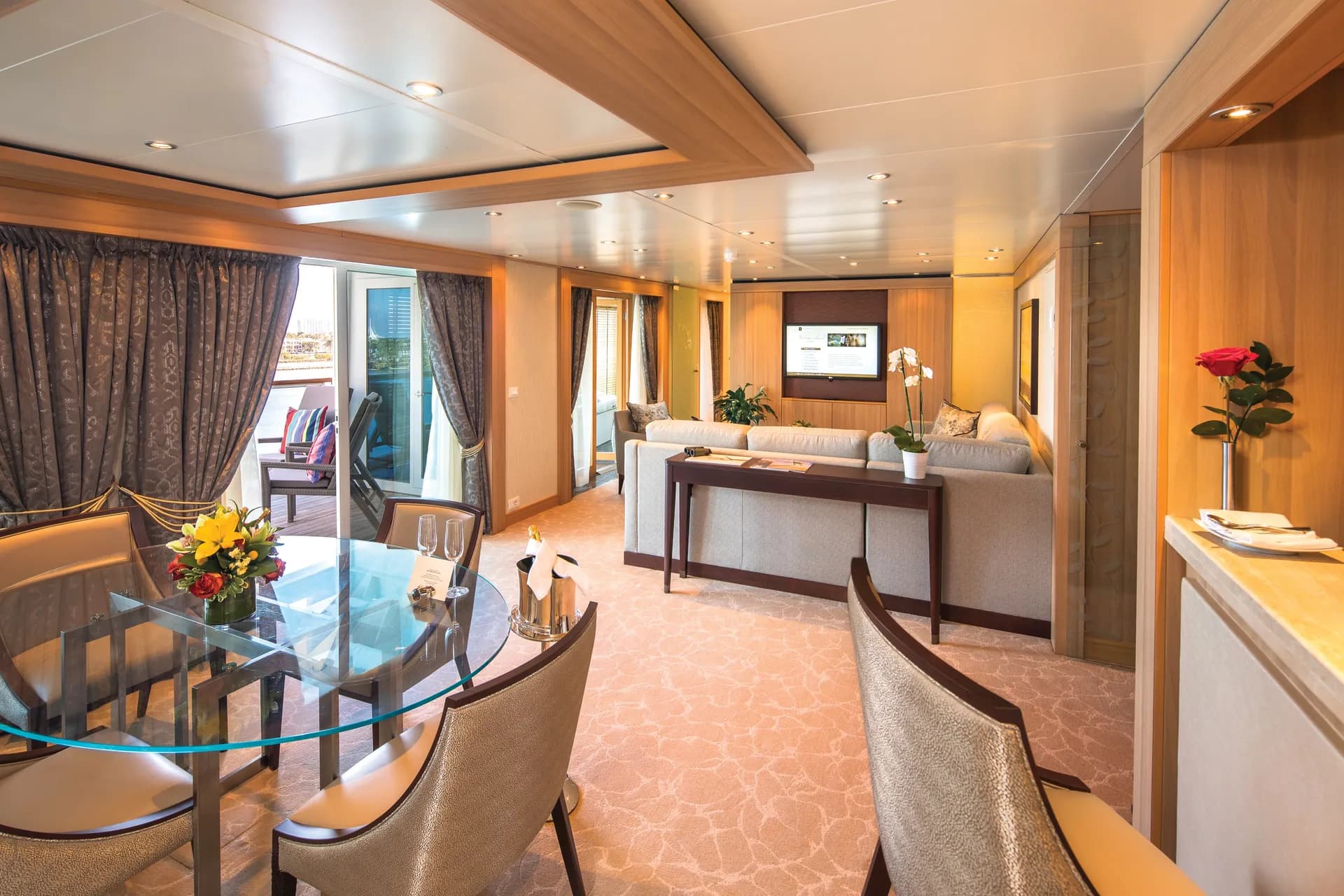
Wintergarden Suite
Suite
914 m²Max 3
WG
Approximately 914 square feet (85 square meters) of inside space, one veranda of 183 sq. ft. (17 square meters.).
Wintergarden Suites feature:
Large windows
Dining for six
Whirlpool bathtub
Guest bath
Convertible sofa bed for one
Pantry with wet bar
Glass-enclosed solarium with tub and day bed
Two closets
Two flat-screen TVs
Complimentary Internet/Wi-Fi service
Queen or Twin ConfigurationSofa BedLounge AreaShowerBathWhirlpool Bath+13
Sold Out
View Details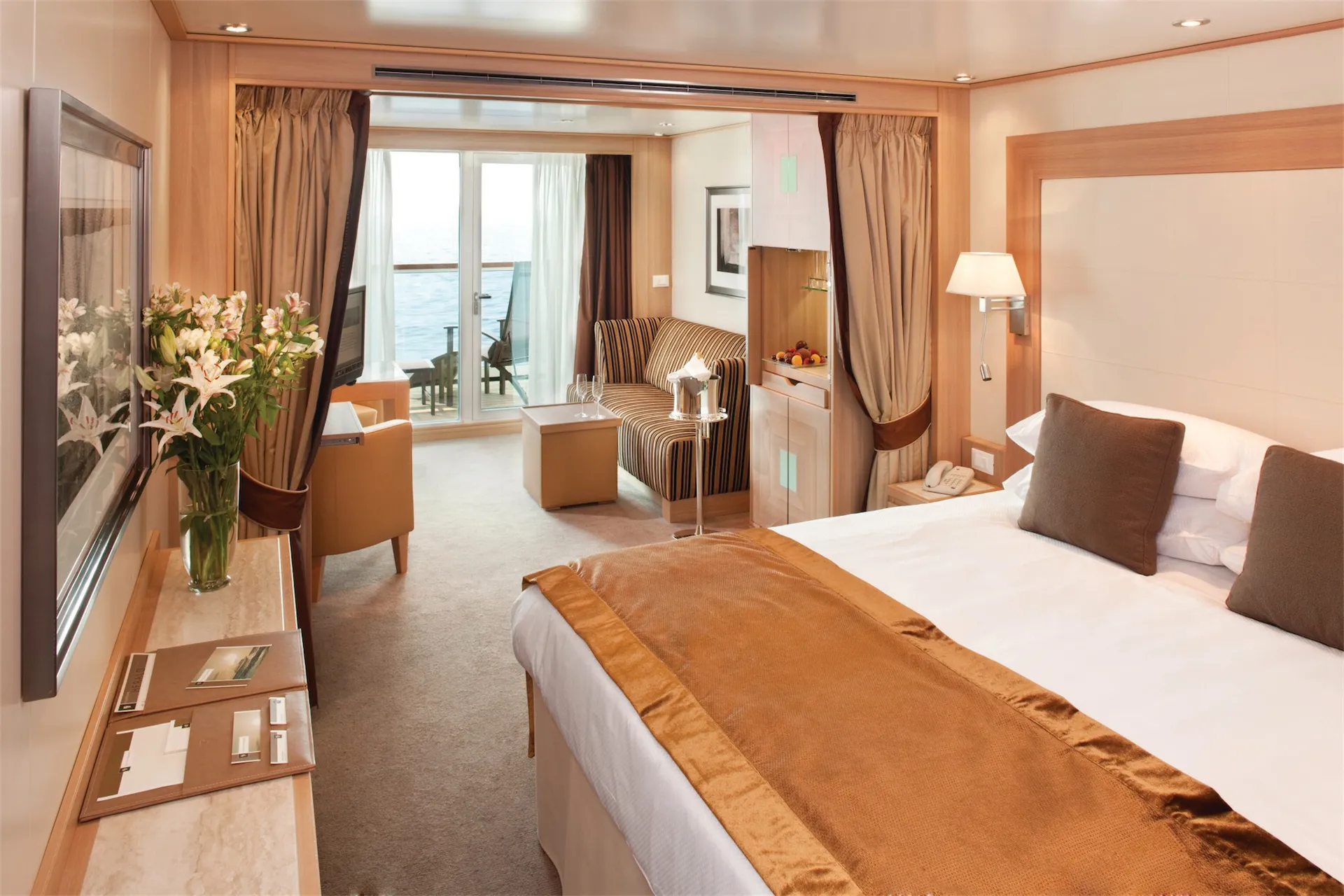
Veranda Suite
Suite
246–302 m²Max 2
V1V2V3V4
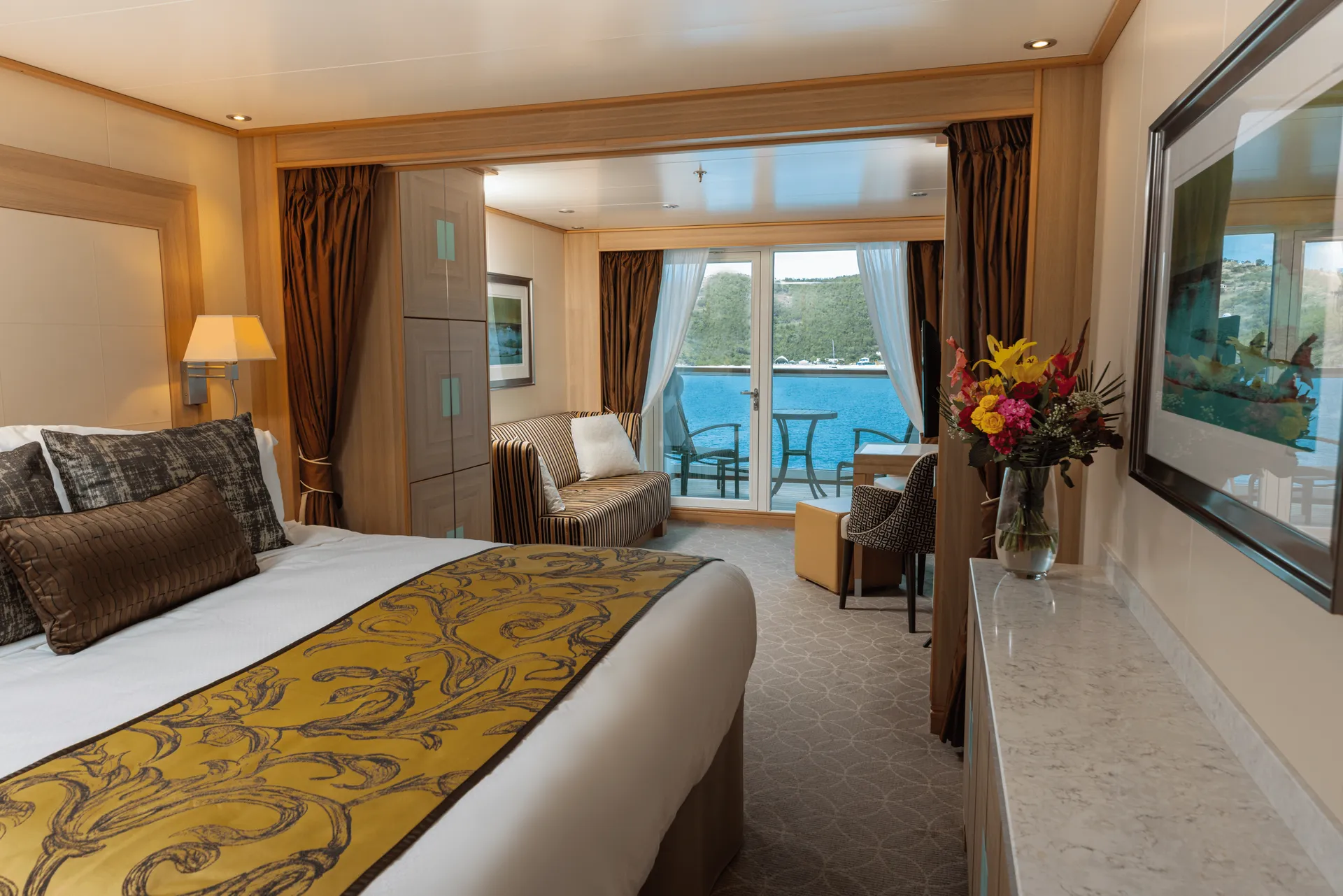
Located on Deck 7; Approximately 300 square feet (28 square meters) of inside space, plus one veranda of 65 square feet (6 square meters)
All Veranda Suites feature
A full-length window
Glass door to private veranda
Comfortable living area
Queen-size bed or two twin beds
Dining table for two
Walk-in closet
Interactive flat-screen television with music and movies
Fully stocked bar and refrigerator
Makeup vanity
Spacious bathroom with separate tub and shower
Queen or Twin ConfigurationLounge AreaShowerBathTVSafe+11
Sold Out
View Details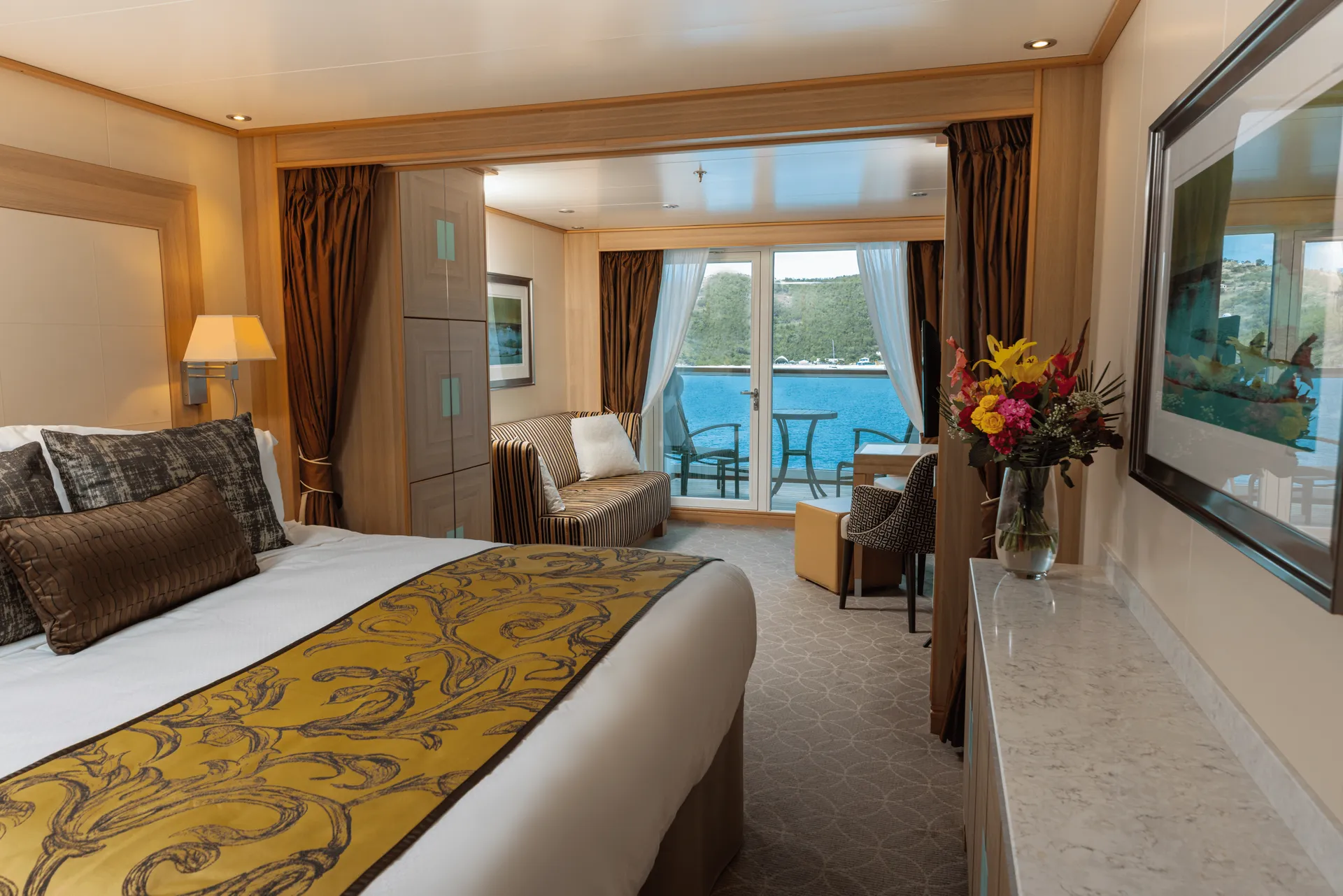
Veranda Suite Guarantee
Suite
Max 2
RB
Veranda Suite Guarantee
BathQueen or Twin ConfigurationLounge AreaShowerToiletries ProvidedRoom Service Available+9
Sold Out
View Details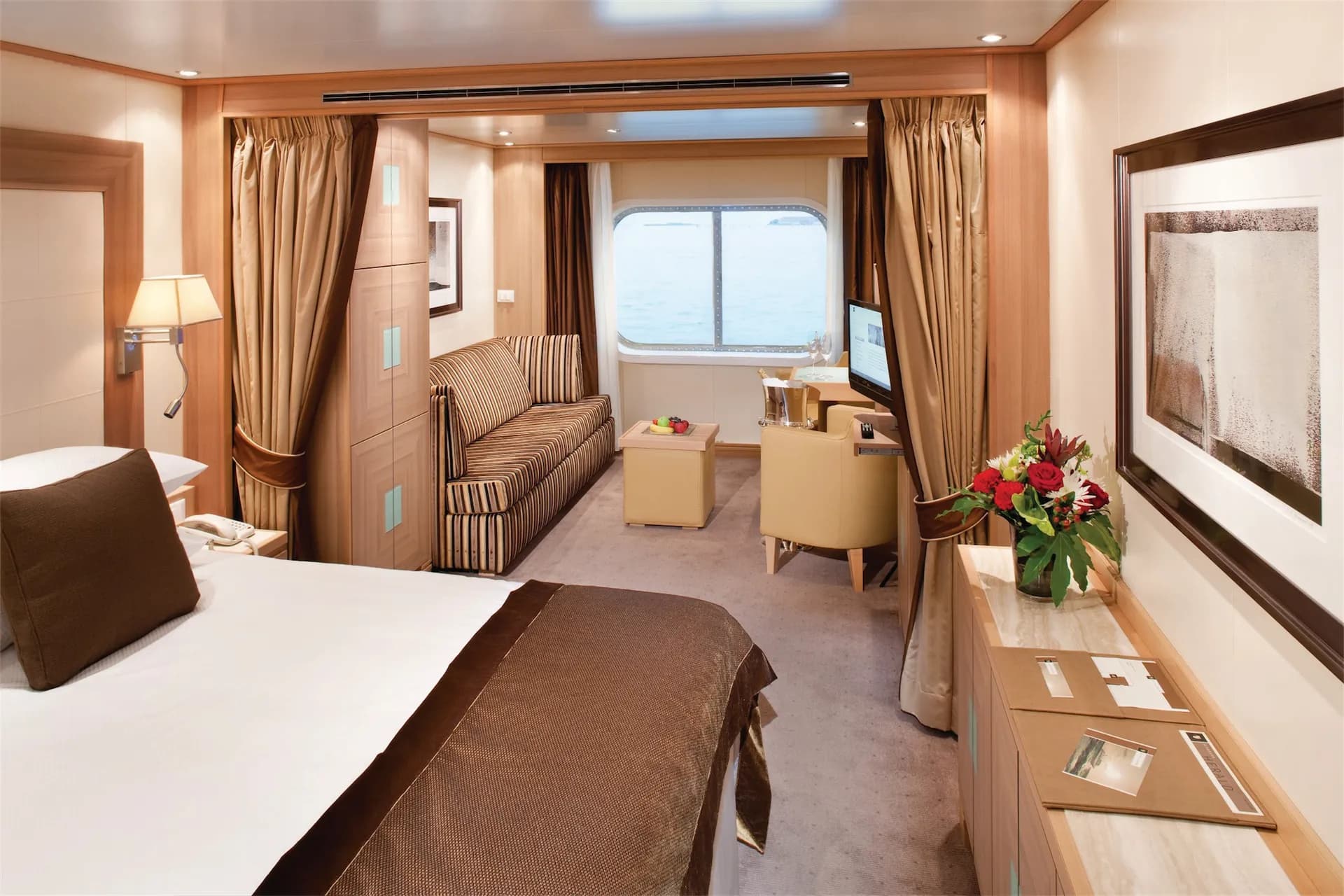
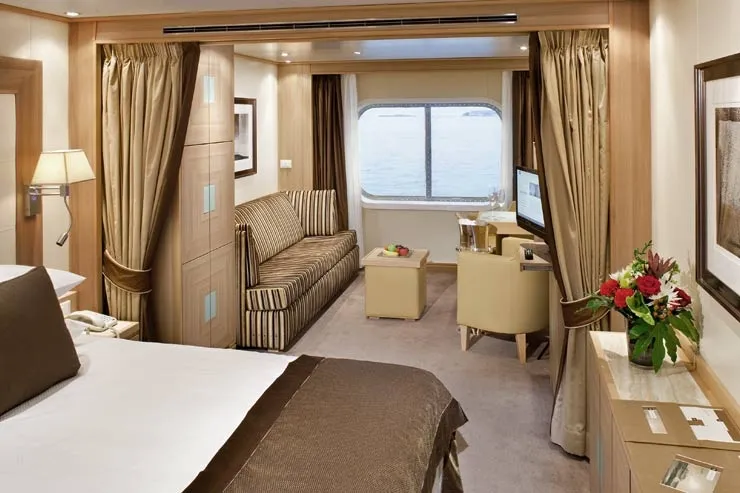
Ocean View Suite
Suite
295 m²Max 2
AA1
Located on Deck 4; Approximately 295 square feet (28 square meters) of inside space
All Ocean View Suites feature:
A large picture window
Comfortable living area
Queen-size bed or two twin beds
Dining table for two
Walk-in closet
Interactive flat-screen television with music and movies
Fully stocked bar and refrigerator
Makeup vanity
Spacious bathroom with separate tub and shower.
Queen or Twin ConfigurationShowerBathTVSafeHair Dryer+8
Sold Out
View DetailsInterested in This Voyage?
Our cruise specialists can help you find the perfect cabin and the best available pricing.
Contact Advisor