September 20, 2026
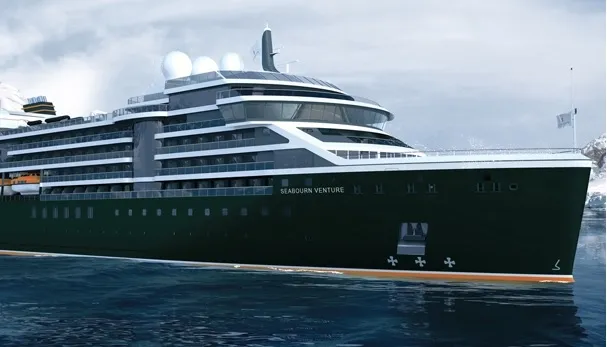
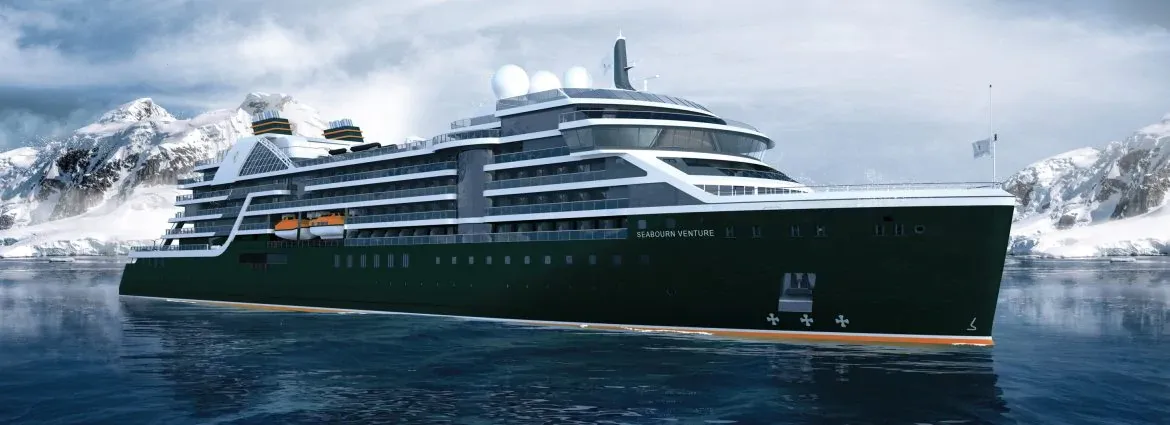
45 nights · 29 sea days
Halifax
Canada
Ushuaia
Argentina


Seabourn
2021-06-01
23,000 GT
558 m
19 knots
132 / 264 guests
120


Malacca City (also spelled Melaka) is the capital of the coastal state of Malacca, in southwestern Malaysia. At its center, Jonker Street, Chinatown’s main thoroughfare, is known for antique shops and its night market. Nearby, the 17th-century Chinese Cheng Hoon Teng temple has ornate decorations and multiple prayer halls. A green, 3-tiered roof tops the 18th-century, Javanese-influenced Kampung Kling Mosque. ― Google


An MSC Caribbean and Antilles cruise to St. Kitts and Nevis will introduce you to the sister volcanic islands of the Caribbean. These islands have been a premier destination for elite tourists for more than 200 years and served as a haven for European nobility in the 19th and 20th centuries. Basseterre, founded by the French in 1625, became the capital of St. Kitts in 1727, when the Eng-lish took over the island. It remained under British rule until the islands declared their independence in 1983. Throughout the city’s long history, natural disasters and conflicts have afflicted Basseterre; most buildings date from the latter part of the 1800s. A visit to the city’s two cathedrals, St. George’s Anglican Church and the Catholic Cathedral of Immaculate Conception, will appeal to those with a love of history and architecture. On South Square Street, visit Georgian House, one of the better-preserved examples of local 18th-century architecture. Leaving Basseterre, take a panoramic drive on an MSC excursion to the southeast peninsula en route for a kayaking adventure. Stop at Timothy Hill to enjoy a 360-degree view and a stunning glimpse of the Atlantic and Caribbean nearly side by side; the two bodies of water, each with a dis-tinct appearance, are separated by a spit of land. If it is adrenaline that quenches your thirst, go off-road on an excursion into the interior of St. Kitts in a specially modified 4x4 Land Rover to explore the lush rainforest and spot shy, green monkeys and other exotic tropical flora and fauna. At a private mountaintop property, 1,000 feet above sea level, enjoy amazing vistas of the rainforest, the coastline, Basseterre, and the neighbouring island of Nevis. Continue your journey through the mountains to the opposite side of the island to explore quaint villages and experience country life. Learn about wearable art at Romney Manor, home of the world-famous Caribelle Batik. Visit the demonstration room, where acclaimed artists present the wax and dye process of batik making. The Romney Manor Estate encompasses eight acres of historical ruins and features ancient Carib Indian rock drawings and a beautiful botanical garden. For an excursion unlike any other, book a land-and-sea tour combining train and catamaran. In the first leg of the trip, take in the scenery of St. Kitts on a narrow-gauge train, followed by a catama-ran cruise. The St. Kitts Scenic Railway has been showing visitors the island since 2003, but be-fore that it had transported sugar cane from the fields to the sugar mill in Basseterre for nearly 100 years. At the end of the train journey, board a catamaran to sail the storied western coast of the is-land and take in its gorgeous views. Fly through the rainforest 25 stories above the ground as you enjoy a spectacular zipline tour over a network of 5 cable lines at the historic Wingfield Estate. Enjoy fantastic panoramic views of Brimstone Hill National Fortress (a UNESCO World Heritage Site), Old Road Village, former sugar estates, the Caribbean Sea and Mount Liamuiga, with its volcano crater ridge marking the highest point in St. Kitts.

As one of the Caribbean’s most dramatic islands, Montserrat has always done thing a little differently. While the rest of its neighbours were busy promoting tourism in its masses, Montserrat was content to sit back and stay in the (metaphorical) shadow. The island remains relatively undeveloped for the archipelago, with off the beaten path beaches, hidden creeks and so much natural beauty that we fully expect this little island to soon become the next go-to eco-tourism destination. View less Much of Montserrat’s discretion is because it is governed by seismic activity and has endured more volcanic eruptions than any other Caribbean island. These have earned it the nickname the “Pompeii of the Caribbean”, understandably so, as much of the main city was covered in ash after the 1995 eruption. The cause of this is the mighty Soufriere Hills volcano, dormant since 2010 yet still spewing sulphur and smoke. However, it is not all doom and gloom and Monserrat’s other nickname is “the emerald isle”, is not only because of its lush verdant forests lined with lime trees and palms, but because its coasts bear a certain similarity to Ireland. And yes, Guinness is available! Montserratians are optimistic and fun loving and Little Bay locals are the perfect example. Set at the very tip of the island, the town is intended as the new capital, and is being enhanced with the modernity once would expect of such an honour. Little Bay beach is without doubt one of the most beautiful in Caribbean, and is a tonic for the soul.

This is the island’s yachting center, quieter and less crowded than the main port of Castries. You can visit the island’s “drive-in” volcano at Soufriere, view the iconic peaks of the Pitons or perhaps snorkel at Pigeon Island, one of Jacques Cousteau’s favorite dive spots.


When you arrive in Barbados on an MSC Caribbean and Antilles cruise, begin your exploration with the capital, Bridgetown. There are many attractions in this small Caribbean city, but by all means pause to admire its many colonial buildings, the Parliament Building and the statue of Lord Nelson standing in what is currently called the National Heroes Square. Barbados has retained somewhat of a British feel, with its place names, cricket, horse-racing and polo, Anglican parish churches and even a hilly district known as Scotland. But the Britishness can be exaggerated, for this is a distinctly West Indian country, covered by a patch-work of sugarcane fields and dotted with tiny rum shops. The Garrison Historic Area, a UNESCO World Heritage Site with magnificent 18th- and 19th-century buildings, is a must-see stop, featuring one of the world's finest collection of cannons. It also includes the George Washington House, where the American patriot spent six weeks of his life. The current St. John's Church, in the eastern parish of the same name, is the fifth reconstruction of the oldest local church, in Barbadian Gothic style. Perched on a cliff 800 feet above the sea, it dates back to 1836. Its interior hosts a sculpture by 18th-century British artist Richard Westmacott, while its churchyard contains the tomb of Ferdinando Paleologus, a direct descendant of the brother of Constantine XI, the last Byzantine emperor. Book an MSC excursion to discover the island’s history at the Barbados Museum and Historical Society in the St. Michael neighbourhood. And tour Sunbury Plantation House, located in the tranquil St. Philip countryside. Dating back to 1650, it’s a living monument to plantation life and a bygone era. Harrison’s Cave, in St. Thomas district, is a wonder of nature with its stalactites, stalagmites, streams, lakes and waterfalls. In one of the caverns, the play of light on the rocks is so in-tense that it has been nicknamed “The Crystal Room”. For some fun at the beach, head to Pirates Cove, one of the best beaches on Barbados. Featuring palm trees and chickee huts, white sand and crystal-clear water, it’s the perfect place to relax, just a stone’s throw from Bridgetown. If you’re brave enough to dive into the deep, set out on an MSC excursion inside a real submarine, the Atlantis, to explore the coral reef and discover the beauty that the depths reveal.


Discover colorful Port of Spain with its rich multicultural heritage, skyscrapers, lush gardens, and early 20th Century mansions. Explore The Savannah, a vast 260-acre park and its orchid house. Indulge in a chilled fresh coconut from one of the park’s vendors. Visit the National Museum and Art Gallery, The Red House and The Magnificent Seven, a row of beautifully restored mansions dating from the Colonial era. Admire the clock tower in the Queen’s Royal College. Frederick St. offers fabulous restaurants, galleries and world-class shopping. Look for local artwork, fine clothing and other unique souvenirs. Enjoy fresh seafood, roti or callaloo while moving to the rhythm of Calypso music in this dynamic setting.


French Guiana is best known for the infamous penal colony to which convicts and undesirables were deported from France. For a long time the small archipelago was known by the name of “Devil’s Island.” The notorious convict settlements were built in 1852. Today, discover a lush, green landscape, where tropical foliage has grown over the old prison buildings and softened their aspect from forbidding to quaint. The most famous prisoners were Alfred Dreyfus, the French Army officer falsely convicted of treason, and Henri Charrière, who was immortalized in the movie “Papillon” for supposedly being the only convict to escape from “the Green Hell.” Please be advised that due to the under-developed nature of this destination, organized tours are not available.
If you are a “pollywog,” who has never crossed the line at sea, you will be expected to undergo a mock trial by King Neptune and his court for the entertainment of the “shellbacks” who have already done so. Mild but hilarious indignities will be conjured, and in the end a good time will be had by most, if not all.

Lie back and let it all go in Fortaleza - a bright and breezy Brazillian beachside city of relaxation and rejuvenation. The ‘City of Light' basks in the reliable glow of the bountiful Brazilian sun for 2,800 hours each year, and the locals make the most of it, spreading out across sweeping stretches of pristine golden sand. Nestled on the north-eastern coast of Brazil, reaching towards the equator, the city is as off the beaten track as a vast state capital can be, and it moves to its own infectious forró rhythms. Get energised for a day exploring - or relaxing - with a morning swim. Dip into the sea at Praia do Futuro, or settle on the sand to listen to the soundtrack of the waves. Fresh coconut water served up from barracas - beach bars – will keep you feeling nice and refreshed. Iracema beach is another urban favourite, while Cumbuco Beach is a tempting option outside of Fortaleza, boasting a vast stretch of idyllic white sand that's punctuated only by the occasional leaning palm tree. Raise the pulse by skidding and roll across sand dunes while you're out here. If you've had your fill of sea and sand, explore Fortaleza itself to discover more of Brazil's fifth-largest city. Walk streets of ice-cream coloured colonial buildings, or head to Dragão do Mar Cultural Center - a mini-city of arts venues alive with culture and creativity. The Metropolitan Cathedral squeezes a congregation of 5,000 into its Neo-Romanesque architecture, and its stain glass windows blaze vivid colours across its elegant, white-wash interior.


Deemed the “Sun Capital” in a nation of sun and beach worshippers, Natal has much more to offer besides its expansive stretches of sand. North of the city, spectacular sand dunes tumble down to the sea. Inventive locals make the most of them, using skis, toboggans, dune buggies – even camels! – to traverse them. Founded on Christmas Day (Natal in Portuguese) in 1599, the city has preserved a number of edifices dating to colonial days. Three King's Fortress and the recently restored Metropolitan Cathedral both date back to the turn of the 16th Century. The landmark Albert Maranhão Theater dates back to 1898. Used as a strategic bridge to invade Brazil by the French, Portuguese and Dutch at various times, Natal was also home to an American airbase during World War II. The closest port to Africa in the Americas, Natal played a vital role in the Allies' struggle during the war. The base was used for anti-submarine service in the South Atlantic as well as the transport of planes, troops and supplies to the North African campaign, earning Natal the nickname “Trampoline of Victory.”


High above the enormous bay of Todos os Santos (All Saints), where your MSC cruise ship awaits your return, Salvador de Bahia has an electric feel from the moment you arrive. This is the great cultural and historical centre of Brazil, where Afro-Brazilian heritage is strongest and where capoeira, candomblé and samba de roda were created. MSC South America cruises offer excursions to the centro histórico of this magical place, a melange of narrow cobbled streets, peeling purple walls, grand Baroque churches, kids kicking footballs, rastas, locals sipping bottled beer on plastic chairs, the wafting aroma of herbs and the almost constant beating of drums, especially as the sun sets. Beyond the old town Salvador is a vast, sprawling city, with a vibrant beach life, modern skyscrapers and plenty of favelas. The centro histórico is the traditional heart of Salvador; it’s built around the craggy, 70m-high bluff that dominates the eastern side of the bay, and is split into upper and lower sections. Cidade Alta (or simply “Centro”) is strung along its top, linked to the less interesting Cidade Baixa (the old commercial centre, aka “Comércio”) by precipitous streets and the towering Art Deco lift-shaft of the Elevador Lacerda. Cidade Alta is the cultural centre of the city, and the section known as the Pelourinho is the groovy old district with colourful and hilly winding streets, its most vibrant and beguiling neighbourhood. The best spot to begin a walking tour of the city is at the Praça Municipal, the square dominated by the impressive Palácio do Rio Branco, the old governor’s palace which was in use until 1979. The fine interior is a blend of Rococo plasterwork, polished wooden floors and painted walls and ceilings.


On a peninsula north of Cabo Frio, Armação dos Búzios, or just Búzios, is an immensely scenic resort full of high-spending beautiful people, and a very popular port of call on holidays to Brazil with MSC Cruises. Armação, the main settlement, is built in a vaguely colonial style, its streets lined with restaurants, bars and chic boutiques, and has been nicknamed “Brazil’s St Tropez”. It comes then as little surprise to find that it was “discovered” by none other than Brigitte Bardot, who stumbled upon it while touring the area in 1964. Búzios consists of three main settlements, Manguinos, Armação and Ossos, each with its own distinct character. Manguinos, on the isthmus, is the main service centre, with a tourist office, a medical centre and banks. Midway along the peninsula, linked to Manguinos by a road lined with brash hotels, is Armação, an attractive village where cars are banned from some of the cobbled roads. Most of Búzio’s best restaurants and boutiques are concentrated here, along with some of the resort’s nicest pousadas, or inns, and there’s also a helpful tourist office on the main square, Praça Santos Dumont. When you step ashore from your MSC cruise, a fifteen-minute walk along the Orla Bardot – which follows the coast from Armação, passing the lovely seventeenth-century Igreja de NossaSenhora de Sant’Ana on the way –, brings you to Ossos, the oldest settlement, comprising a pretty harbour, a quiet beach and a few bars, restaurants and pousadas. Within walking distance of all Búzios’ settlements are beautiful white-sand beaches – 27 in total – cradled between rocky cliffs and promontories, and lapped by crystal-clear waters. The beaches are varied, with the north-facing ones having the calmest and warmest seas, while those facing the south and east have the most surf.


The Costa Verde's main attraction, the coastal village of Parati, is about 180 miles south of Rio de Janeiro. Inhabited since 1660, this small town has remained fundamentally unaltered since its heyday. It was a staging post for 18th-century trade in Brazilian gold from Minas Gerais to Portugal. Raids and pirate attacks necessitated the establishment of a new route linking Minas Gerais directly with Rio de Janeiro. A decline in Parati’s fortunes resulted; being off the beaten track, it remained quietly hidden away. Today, the entire town has been declared a national historic monument by UNESCO as one of the most important examples of colonial architecture. With its newly acclaimed status, Parati has become a popular destination. Its beautifully restored colonial buildings line narrow, cobbled streets which are closed to vehicular traffic. Parati's population of some 15,000 people depends on fishing, farming and tourism for its livelihood. Local artists display their attractive crafts in galleries and souvenir shops. The town, reached via a long pier from the tender landing, must be explored on foot. Among Parati’s attractions is the 1722 Church of Santa Rita de Cassia, a classic example of Brazilian baroque architecture. The surrounding area boasts a scenic backdrop with green-clad mountains and numerous islands are scattered across the bay.


Some cities need no introduction, and even fewer cities live up to their reputation the way Rio de Janeiro does, in both the best sense—how visitors experience sheer exhilaration being there—and the harsh reality of its social and economic strains. Situated in arguably the world’s most dramatic urban setting, it has apartment complexes that hang on huge granite peaks which rise smack in the middle of the city, and adding to the drama, its stunning beaches seem to stretch forever. A quick course in Rio: Before arriving, listen to some bossa nova and samba music to get in the swing of things. Second lesson: Practice pronouncing Rio as Hio in order to sound like a native Carioca. After that, it’s all about stopping at corner juice bars to enjoy fresh tropical drinks named for fruit you’ve never even heard of, and indulging in people-watching along the legendary Copacabana and Ipanema boardwalks. For more insight into the city, you might take the plunge into Maracaña Stadium to watch a crazy match between crosstown rivals Flamengo and Fluminense (imagine the Yankees and the Red Sox living in the same city) or jump on a bike to discover some of Rio’s far-flung and vastly diverse districts.


Located in the state of Santa Catarina in Brazil, Camboriú is one of the ports called on by MSC Cruises, a place so loved that its population during the peak season, increases tenfold. The city is characterized by a long stretch of sand that separates the Atlantic Ocean from the skyline of the skyscrapers, testimony to the economic development that this seaside town has had in recent years. Camboriú Bay is a treat for the eyes: the thick, lush, green vegetation gives way to the turquoise of the sea, placid and inviting, and also boasts a sunny, humid climate. In this place of relaxation and fun, the evening comes alive with tourists who enjoy the many clubs that overlook the ocean. Fish dishes, sweet cocktails made with fruit and hard liquor are a must on the coast of Brazil. On an MSC Cruises excursion , you can visit Barra Sul ‒ a walk along the sea to enjoy the view, take beautiful photos to share with friends and walk on the sand ‒ and the beach in front of Ilha das Cabras, the destination for those who love spending time getting warmed by the sun and bathing in the inviting water. From there, you can take a walk on Avenida Atlântica where there are thousands of the colorful, cheerful locals that populate Camboriú. And the city center is another discovery: losing yourself in the streets and craft shops on the search for objects to take home and give away is all part of the fun. One of the other MSC Cruises excursions, instead, is dedicated to Ilha das Cabras : you arrive on a pirate schooner to this place of privileged, strategic observation to enjoy Camboriú's landscape, and then continue in the direction of Laranjeiras Beach , the most beautiful in the region, where the blue waves lay placidly on the sandstone that is lost in the lush vegetation.


Uruguay’s capital city hugs the eastern bank of the Río de la Plata. A massive coastal promenade (malecón) that passes fine beaches, restaurants, and numerous parks recalls the sunny sophistications of the Mediterranean and is always dotted with Montevideans strolling, exercising, and lounging along the water. Montevideo has its share of glitzy shopping avenues and modern office buildings, balanced with its historic old city and sumptuous colonial architecture, as well as numerous leafy plazas and parks. It is hard not to draw comparisons to its sister city Buenos Aires across the river, and indeed Montevideo strikes many as a calmer, more manageable incarnation of Argentina's capital.When the weather's good, La Rambla, a 22-km (14-mile) waterfront avenue that links the Old City with the eastern suburbs and changes names about a dozen times, gets packed with fishermen, ice-cream vendors, and joggers. Around sunset, volleyball and soccer games wind down as couples begin to appear for evening strolls. Polls consistently rate Montevideo as having the highest quality of life of any city in Latin America. After one visit here, especially on a lovely summer evening, you probably will agree.

The Falkland Islands are situated some 350 miles east of Tierra del Fuego, 1,000 miles north of Antarctica and, as the locals claim, a mere 8,000 miles from Britain. Port Stanley is home to the majority of the island's residents -1,990 out of a total population of 2,490. These 700 islands have long been of historical importance to scientists and seamen alike. Prior to the construction of the Panama Canal, they offered safe anchorage and provisions for sailing vessels as they headed around Cape Horn. Today, maritime interests center mostly on the British Royal Navy, fishing fleets from a variety of nations and scientific expeditions to Antarctica. In 1982, world attention was riveted on these islands when Argentine and British forces fought fiercely for the right to call them their own. A number of vessels, numerous aircraft, thousands of troops and many local residents were involved in the conflict. After heavy combat, the will of Britain, supported by the island people, prevailed and the Falkland Islands remain British to this day.


Ushuaia, capital of Tierra del Fuego and the province’s main tourist hub, is located at the southern end of Isla Grande. Boasting a spectacular location, sandwiched between the mountains – including Cerro Martial and Mount Olivia – and the sea, Ushuaia extends down the hill towards the arm of land that surrounds the Bay, where the ship will stop during your MSC WorldCruise. The city is protected from the icy Southwest winds and occasional storms that occur in the Beagle Channel. Interesting excursions include the small islands in the middle of the channel in front of the city, with their colonies of seabirds, and the nearby Parque Nacional Tierra del Fuego. Ushuaia is the most populous and popular city in Tierra del Fuego, and depends largely on the thriving tourism industry, which capitalises on the beauty of the area’s natural landscapes. Overlooking the sea is the Antigua Casa de Gobierno, a late-20th century building that was originally the Governor's mansion before being used by the local government and then as a police station. It has been restored so as to return it to its original use, so you can get an idea of how the rich lived in Ushuaia at the dawn of the city. The Fin del Mundo Museum houses exhibitions that focus on the region’s history and wildlife, as well as the polychrome figurehead of the Duchess of Albany, an English ship wrecked on the eastern end of the island in 1883. The Parque Nacional Tierra del Fuego, 12 km west of Ushuaia, is 630 sq. km of rugged mountains, sinuous lakes, southern beech forests, marshy bogs, sub-Antarctic tundra and lush coasts. It extends along the border with Chile, from the Beagle Channel to Sierra Inju-Goiyin, north of the huge Lake Fagnano, which you can also visit on an MSC Cruise day trip, combined with Lake Escondido. This is just one of the fantastic destinations of our cruise around the world: MSC World Cruise 2020!


Deck 7 Combine mid-ship Suites 733 and 735 for Suite 7353, or Suites 734 and 736 for Suite 7364 Total space: 1,399 sq. ft. (130 sq. m.) including two verandas totaling 205 sq. ft. (19 sq. m.)
All Grand Wintergarden Suites onboard Seabourn Venture feature a comfortable living area; private veranda; queen-size bed or two twin beds; walk-in closet; personal safe; interactive TV with music and movies; fully stocked bar and refrigerator; writing desk with personalized stationery; makeup vanity; spacious bathroom, separate tub and shower, plush robes, slippers, luxury health and beauty products, hairdryer and 110/220V AC outlets.


Deck 7 Suites 700, 701 Total space 1,023 sq. ft. (95 sq. m.) incl. veranda of 484 sq. ft. (45 sq. m.)
Owner's Suites on Seabourn Venture feature a comfortable living area; private veranda; queen-size bed or two twin beds; extra-large walk-in closet for expedition gear; personal safe; interactive flat-screen TV with music and movies; fully stocked bar and refrigerator; writing desk with personalized stationery; makeup vanity; spacious bathroom with double vanities, tub and shower, plush robes, slippers, hairdryer and 110/220V AC outlets.


Suites 513-516, 611-614, 711-714, 802-805; Total space: 417 sq. ft. (39 sq. m.) incl. veranda of 85 sq. ft. (8 sq. m.) All Panorama Veranda Suites feature a comfortable living area; private veranda; queen-size bed or two twin beds; walk-in closet; personal safe; interactive TV with music and movies; fully stocked bar and refrigerator; writing desk with personalized stationery; makeup vanity; spacious bathroom, separate tub and shower, plush robes, slippers, luxury health and beauty products, hairdryer and 110/220V AC outlets. *Some veranda sizes vary.


Deck 8 Suites 818-821; Approximate total space: 527 sq. ft. (49 sq. m.) including veranda of 97 sq. ft. (9 sq. m.)
All Penthouse Suites onboard Seabourn Venture feature a comfortable living area; private veranda; queen-size bed or two twin beds; walk-in closet; personal safe; interactive TV with music and movies; fully stocked bar and refrigerator; writing desk with personalized stationery; makeup vanity; spacious bathroom, separate tub and shower, plush robes, slippers, luxury health and beauty products, hairdryer and 110/220V AC outlets.


All Signature Suites onboard Seabourn Venture feature a comfortable living area; private veranda; queen-size bed or two twin beds; walk-in closet, personal safe; interactive TV with music and movies; fully stocked bar and refrigerator; writing desk with personalized stationery; makeup vanity; spacious bathroom, separate tub and shower, plush robes, slippers, luxury health and beauty products, hairdryer and 110/220V AC outlets.


Deck 7 Suites 735, 736; Total space: 1,044 sq. ft. (97 sq. m.) including veranda of 129 sq. ft. (12 sq. m.)
All Wintergarden Suites onboard Seabourn Venture feature a comfortable living area; private veranda; queen-size bed or two twin beds; walk-in closet; personal safe; interactive TV with music and movies; fully stocked bar and refrigerator; writing desk with personalized stationery; makeup vanity; spacious bathroom, separate tub and shower, plush robes, slippers, luxury health and beauty products, hairdryer and 110/220V AC outlets.


Deck 5; Approximate total space: 355 sq. ft. (33 sq. m.) including veranda of 75 sq. ft. (7 sq. m.)*
All Veranda Suites onboard Seabourn Venture feature a comfortable living area; private veranda; queen-size bed or two twin beds; walk-in closet; personal safe; interactive TV with music and movies; fully stocked bar and refrigerator; writing desk with personalized stationery; makeup vanity; spacious bathroom, separate tub and shower, plush robes, slippers, luxury health and beauty products, hairdryer and 110/220V AC outlets. *Some veranda sizes vary.
Our cruise specialists can help you find the perfect cabin and the best available pricing.
Contact Advisor