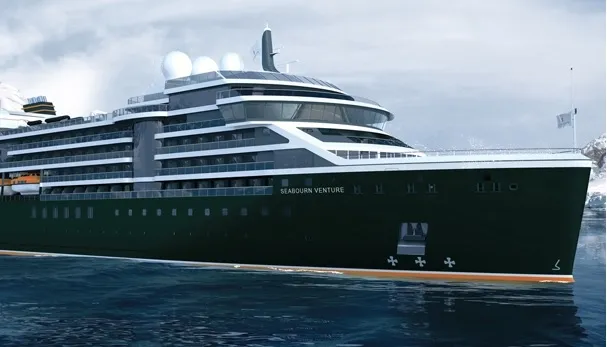
Date
2027-04-06
Duration
31 nights
Departure Port
Rio de Janeiro
Brazil
Arrival Port
Amsterdam
Netherlands
Rating
Expedition
Theme
—
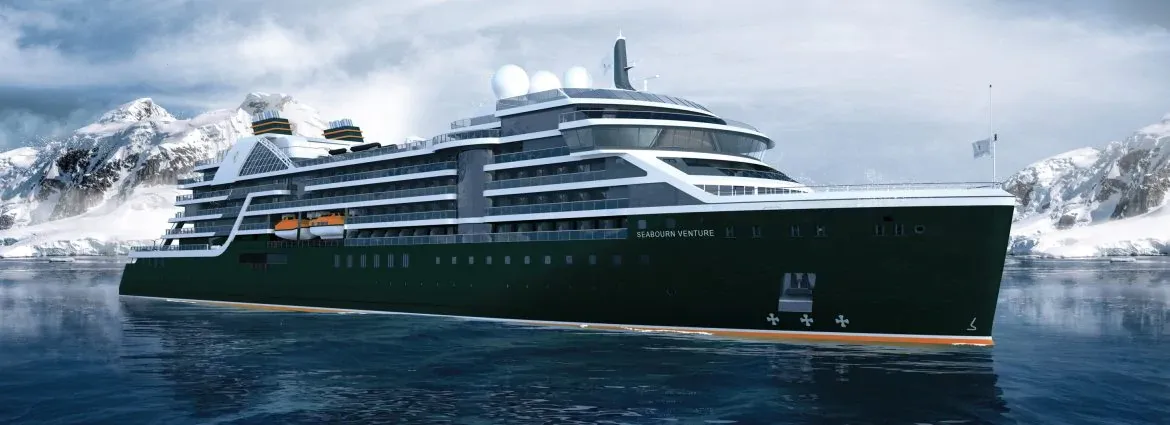


Seabourn
2021
—
23,000 GT
264
132
120
558 m
24 m
19 knots
No

Rio de Janeiro is Brazil's spectacular coastal metropolis, where granite peaks plunge into Atlantic beaches and imperial history meets vibrant Afro-Brazilian culture. Visitors should not miss the panoramic ascent of Sugarloaf Mountain by cable car and a traditional Saturday feijoada feast at a local boteco. The best season for cruise visits is October through March, when southern hemisphere summer brings warm temperatures and the city pulses with pre-Carnival energy, though the shoulder months of September and April offer pleasant weather with thinner crowds.

Salvador de Bahia, Brazil's first capital, is a cultural hub known for its Afro-Brazilian heritage and stunning colonial architecture. Must-do experiences include savoring traditional dishes such as acarajé and quindim, and exploring the lively Pelourinho district. The best season to visit is during the dry months from September to March, when the city's vibrant festivals and street life are in full swing.

Recife is Brazil's "Venice," a river-laced northeastern capital built across islands and bridges, where Dutch colonial history, Afro-Brazilian culture, and extraordinary street food converge. Must-dos include the Marco Zero square and Brennand sculptures, exploring UNESCO-listed Olinda's colonial churches, and tasting tapioca crepes and bolo de rolo cake. Visit September through March for dry, sunny weather.

Natal is a sun-blessed beach city at the northeastern tip of Brazil, closer to Africa than to Rio, where dramatic dune systems, warm turquoise waters, and the flavours of ginga com tapioca define the quintessential northeastern coast experience. Must-dos include buggy rides across the Genipabu dunes, snorkelling at the Maracajau reef pools, and tasting camarao na moranga. Visit September through February for dry season sunshine.

Praia is Cape Verde's Creole capital, where UNESCO-listed Cidade Velha witnessed the first European tropical colonization and transatlantic slave trade, and Cesária Évora's melancholic morna music tradition permeates the volcanic Atlantic archipelago's unique cultural identity. Visit November through June via Ponant or Azamara for cachupa feasts, colonial Plateau walks, and the extraordinary emotional depth of a culture that is neither Portuguese nor African but something entirely its own.

Mindelo, on the island of São Vicente, is Cape Verde's cultural capital — a harbour city of pastel colonial facades, vibrant street art, and the soulful musical heritage of Cesária Évora. Visitors should savour *cachupa rica* at a waterfront restaurant and take the ferry to Santo Antão for world-class hiking through terraced volcanic valleys. The best time to call is between November and June, when the trade winds temper the tropical heat and transatlantic cruise itineraries converge on Porto Grande's magnificent natural bay.

Tenerife, the crown of the Canary Islands, rises from the Atlantic around the mighty UNESCO-listed Mount Teide — Spain's highest peak and one of earth's great stratovolcanoes — its lunar caldera and forested flanks offering scenery of extraordinary drama just minutes from the coast. The island's northern towns of La Orotava and La Laguna preserve magnificent Canarian colonial architecture, while the dramatic cliffs of Los Gigantes and black-sand beaches of the south add to an almost implausible diversity of landscapes. The Canaries' celebrated year-round sunshine makes Tenerife a superb destination in any season, though spring brings blooming tajinaste wildflowers to the Teide slopes.

Arrecife, the unpretentious capital of Lanzarote in Spain's Canary Islands, serves as the gateway to one of the volcanic world's most surreal and spellbinding landscapes — shaped by César Manrique, the visionary artist who ensured there are no high-rises, no billboards, and no compromise between tourism and the island's extraordinary terrain. The Timanfaya National Park's lava fields, the underground lake of the Jameos del Agua, and Manrique's own clifftop home-turned-museum are among the most singular attractions in all of Spain. The Canary Islands enjoy a year-round temperate climate, making any month suitable for a visit. Gran Canaria lies forty minutes by ferry.

Tangier is Morocco's storied gateway between Africa and Europe, a city of Phoenician origins where a whitewashed medina, vibrant souks, and a cosmopolitan waterfront converge at the Strait of Gibraltar. Visitors should not miss savouring traditional pastilla in a rooftop riad and exploring the Kasbah's amber-lit ramparts at sunset. The ideal season to arrive is April through June or September through October, when mild Mediterranean temperatures and fewer crowds allow the city's layered beauty to reveal itself at an unhurried, luxurious pace.

Seville’s port is a vibrant gateway to Andalusia, steeped in history and cultural richness. Don’t miss the chance to indulge in local tapas and experience a traditional flamenco performance. The best time to visit is during the spring, when the city bursts into life with festivals and pleasant weather.

Seville’s port is a vibrant gateway to Andalusia, steeped in history and cultural richness. Don’t miss the chance to indulge in local tapas and experience a traditional flamenco performance. The best time to visit is during the spring, when the city bursts into life with festivals and pleasant weather.

Portimão is the Algarve's most storied port city, where Phoenician trading heritage meets golden-cliff beaches and Portugal's finest grilled sardine tradition along the Arade River. Visitors should not miss the charcoal-grilled sardines at the riverside churrasqueiras and the dramatic sandstone formations of Praia da Rocha. The port is at its luminous best from May through October, when long Atlantic days bathe the coastline in honeyed light and the August Sardine Festival electrifies the waterfront.

Porto, set dramatically on the granite bluffs above the Douro River, is among Europe's most romantically dishevelled cities — a place where baroque church towers rise above terracotta rooftops and century-old azulejo tilework lines every alley. Cross the iron Dom Luís I Bridge for sweeping views and descend into Vila Nova de Gaia's atmospheric wine lodges for a tasting of aged tawny port direct from the barrel. Seafood is magnificent: salt cod prepared a hundred ways, barnacles glistening with lemon, and custard tarts still warm from the oven. Spring and early autumn offer the finest conditions.

Vigo is Galicia's vibrant Atlantic port city, set along a dramatic ría with Celtic ruins, a storied naval past, and what may be Spain's finest seafood culture — from freshly shucked Arcade oysters at the Mercado da Pedra to smoky pulpo á feira in the old quarter. Visit between May and October, when long golden evenings illuminate the bay and the Cíes Islands beckon for a day trip to some of Europe's most pristine beaches.

Brest is Brittany's principal Atlantic port, where seventeen centuries of naval heritage meet vibrant Breton culture in a city rebuilt with defiant spirit after wartime destruction. Visitors should explore the ancient Château de Brest, feast on buckwheat galettes and Cancale oysters, and take excursions to the dramatic Crozon Peninsula. May through September is ideal, especially during the biennial Fêtes Maritimes tall ship festival.

Saint-Malo is a historic fortified port city in France, renowned for its maritime heritage and picturesque architecture. Must-do experiences include savoring local delicacies like galettes and oysters while exploring its charming cobbled streets. The best time to visit is during the summer months when the city comes alive with vibrant festivals and outdoor activities.

Cherbourg, a historic port city in Normandy, is renowned for its vibrant maritime heritage and rich culinary offerings. Must-do experiences include exploring the Place de Gaulle Market and savoring local dishes such as "moules marinières" and "calvados." The best season to visit is during the spring or early fall when the weather is mild and the local festivities are in full swing.

Rouen, the medieval capital of Normandy set in a wooded meander of the Seine, rewards slow exploration with one of France's richest concentrations of Gothic architecture. The vast cathedral — immortalised by Monet in his celebrated series of canvases — dominates a city where half-timbered lanes wind between Renaissance mansions and the square where Joan of Arc was burned in 1431. The covered market overflows with Normandy's great dairy bounty: camembert, livarot, and pont-l'évêque alongside cider and calvados. Paris lies just ninety minutes south by train. Spring and early autumn offer the most atmospheric conditions.

Amsterdam's UNESCO-listed canal ring — a concentric web of seventeenth-century merchant houses and arching stone bridges — remains one of the Western world's most perfectly preserved Golden Age cityscapes, best explored by bicycle or canal boat at a pace that lets the city's genius reveal itself slowly. The Rijksmuseum's collection of Rembrandt and Vermeer masterpieces is essential, while the Anne Frank House offers one of Europe's most profoundly moving historical encounters. Spring brings the iconic tulip season; summer fills the terraces of the Jordaan district. Schiphol Airport makes Amsterdam a seamless gateway to the entire European continent.
Day 1

Rio de Janeiro is Brazil's spectacular coastal metropolis, where granite peaks plunge into Atlantic beaches and imperial history meets vibrant Afro-Brazilian culture. Visitors should not miss the panoramic ascent of Sugarloaf Mountain by cable car and a traditional Saturday feijoada feast at a local boteco. The best season for cruise visits is October through March, when southern hemisphere summer brings warm temperatures and the city pulses with pre-Carnival energy, though the shoulder months of September and April offer pleasant weather with thinner crowds.
Day 2
Day 3
Day 4

Salvador de Bahia, Brazil's first capital, is a cultural hub known for its Afro-Brazilian heritage and stunning colonial architecture. Must-do experiences include savoring traditional dishes such as acarajé and quindim, and exploring the lively Pelourinho district. The best season to visit is during the dry months from September to March, when the city's vibrant festivals and street life are in full swing.
Day 5
Day 6

Recife is Brazil's "Venice," a river-laced northeastern capital built across islands and bridges, where Dutch colonial history, Afro-Brazilian culture, and extraordinary street food converge. Must-dos include the Marco Zero square and Brennand sculptures, exploring UNESCO-listed Olinda's colonial churches, and tasting tapioca crepes and bolo de rolo cake. Visit September through March for dry, sunny weather.
Day 7

Natal is a sun-blessed beach city at the northeastern tip of Brazil, closer to Africa than to Rio, where dramatic dune systems, warm turquoise waters, and the flavours of ginga com tapioca define the quintessential northeastern coast experience. Must-dos include buggy rides across the Genipabu dunes, snorkelling at the Maracajau reef pools, and tasting camarao na moranga. Visit September through February for dry season sunshine.
Day 8
Day 9
Day 10
Day 11
Day 12

Praia is Cape Verde's Creole capital, where UNESCO-listed Cidade Velha witnessed the first European tropical colonization and transatlantic slave trade, and Cesária Évora's melancholic morna music tradition permeates the volcanic Atlantic archipelago's unique cultural identity. Visit November through June via Ponant or Azamara for cachupa feasts, colonial Plateau walks, and the extraordinary emotional depth of a culture that is neither Portuguese nor African but something entirely its own.
Day 13

Mindelo, on the island of São Vicente, is Cape Verde's cultural capital — a harbour city of pastel colonial facades, vibrant street art, and the soulful musical heritage of Cesária Évora. Visitors should savour *cachupa rica* at a waterfront restaurant and take the ferry to Santo Antão for world-class hiking through terraced volcanic valleys. The best time to call is between November and June, when the trade winds temper the tropical heat and transatlantic cruise itineraries converge on Porto Grande's magnificent natural bay.
Day 14
Day 15
Day 16

Tenerife, the crown of the Canary Islands, rises from the Atlantic around the mighty UNESCO-listed Mount Teide — Spain's highest peak and one of earth's great stratovolcanoes — its lunar caldera and forested flanks offering scenery of extraordinary drama just minutes from the coast. The island's northern towns of La Orotava and La Laguna preserve magnificent Canarian colonial architecture, while the dramatic cliffs of Los Gigantes and black-sand beaches of the south add to an almost implausible diversity of landscapes. The Canaries' celebrated year-round sunshine makes Tenerife a superb destination in any season, though spring brings blooming tajinaste wildflowers to the Teide slopes.
Day 17

Arrecife, the unpretentious capital of Lanzarote in Spain's Canary Islands, serves as the gateway to one of the volcanic world's most surreal and spellbinding landscapes — shaped by César Manrique, the visionary artist who ensured there are no high-rises, no billboards, and no compromise between tourism and the island's extraordinary terrain. The Timanfaya National Park's lava fields, the underground lake of the Jameos del Agua, and Manrique's own clifftop home-turned-museum are among the most singular attractions in all of Spain. The Canary Islands enjoy a year-round temperate climate, making any month suitable for a visit. Gran Canaria lies forty minutes by ferry.
Day 18
Day 19

Tangier is Morocco's storied gateway between Africa and Europe, a city of Phoenician origins where a whitewashed medina, vibrant souks, and a cosmopolitan waterfront converge at the Strait of Gibraltar. Visitors should not miss savouring traditional pastilla in a rooftop riad and exploring the Kasbah's amber-lit ramparts at sunset. The ideal season to arrive is April through June or September through October, when mild Mediterranean temperatures and fewer crowds allow the city's layered beauty to reveal itself at an unhurried, luxurious pace.
Day 20

Seville’s port is a vibrant gateway to Andalusia, steeped in history and cultural richness. Don’t miss the chance to indulge in local tapas and experience a traditional flamenco performance. The best time to visit is during the spring, when the city bursts into life with festivals and pleasant weather.
Day 22

Seville’s port is a vibrant gateway to Andalusia, steeped in history and cultural richness. Don’t miss the chance to indulge in local tapas and experience a traditional flamenco performance. The best time to visit is during the spring, when the city bursts into life with festivals and pleasant weather.
Day 23

Portimão is the Algarve's most storied port city, where Phoenician trading heritage meets golden-cliff beaches and Portugal's finest grilled sardine tradition along the Arade River. Visitors should not miss the charcoal-grilled sardines at the riverside churrasqueiras and the dramatic sandstone formations of Praia da Rocha. The port is at its luminous best from May through October, when long Atlantic days bathe the coastline in honeyed light and the August Sardine Festival electrifies the waterfront.
Day 24

Porto, set dramatically on the granite bluffs above the Douro River, is among Europe's most romantically dishevelled cities — a place where baroque church towers rise above terracotta rooftops and century-old azulejo tilework lines every alley. Cross the iron Dom Luís I Bridge for sweeping views and descend into Vila Nova de Gaia's atmospheric wine lodges for a tasting of aged tawny port direct from the barrel. Seafood is magnificent: salt cod prepared a hundred ways, barnacles glistening with lemon, and custard tarts still warm from the oven. Spring and early autumn offer the finest conditions.
Day 25

Vigo is Galicia's vibrant Atlantic port city, set along a dramatic ría with Celtic ruins, a storied naval past, and what may be Spain's finest seafood culture — from freshly shucked Arcade oysters at the Mercado da Pedra to smoky pulpo á feira in the old quarter. Visit between May and October, when long golden evenings illuminate the bay and the Cíes Islands beckon for a day trip to some of Europe's most pristine beaches.
Day 26
Day 27

Brest is Brittany's principal Atlantic port, where seventeen centuries of naval heritage meet vibrant Breton culture in a city rebuilt with defiant spirit after wartime destruction. Visitors should explore the ancient Château de Brest, feast on buckwheat galettes and Cancale oysters, and take excursions to the dramatic Crozon Peninsula. May through September is ideal, especially during the biennial Fêtes Maritimes tall ship festival.
Day 28

Saint-Malo is a historic fortified port city in France, renowned for its maritime heritage and picturesque architecture. Must-do experiences include savoring local delicacies like galettes and oysters while exploring its charming cobbled streets. The best time to visit is during the summer months when the city comes alive with vibrant festivals and outdoor activities.
Day 29

Cherbourg, a historic port city in Normandy, is renowned for its vibrant maritime heritage and rich culinary offerings. Must-do experiences include exploring the Place de Gaulle Market and savoring local dishes such as "moules marinières" and "calvados." The best season to visit is during the spring or early fall when the weather is mild and the local festivities are in full swing.
Day 30

Rouen, the medieval capital of Normandy set in a wooded meander of the Seine, rewards slow exploration with one of France's richest concentrations of Gothic architecture. The vast cathedral — immortalised by Monet in his celebrated series of canvases — dominates a city where half-timbered lanes wind between Renaissance mansions and the square where Joan of Arc was burned in 1431. The covered market overflows with Normandy's great dairy bounty: camembert, livarot, and pont-l'évêque alongside cider and calvados. Paris lies just ninety minutes south by train. Spring and early autumn offer the most atmospheric conditions.
Day 31
Day 32

Amsterdam's UNESCO-listed canal ring — a concentric web of seventeenth-century merchant houses and arching stone bridges — remains one of the Western world's most perfectly preserved Golden Age cityscapes, best explored by bicycle or canal boat at a pace that lets the city's genius reveal itself slowly. The Rijksmuseum's collection of Rembrandt and Vermeer masterpieces is essential, while the Anne Frank House offers one of Europe's most profoundly moving historical encounters. Spring brings the iconic tulip season; summer fills the terraces of the Jordaan district. Schiphol Airport makes Amsterdam a seamless gateway to the entire European continent.


Deck 7 Combine mid-ship Suites 733 and 735 for Suite 7353, or Suites 734 and 736 for Suite 7364 Total space: 1,399 sq. ft. (130 sq. m.) including two verandas totaling 205 sq. ft. (19 sq. m.)
All Grand Wintergarden Suites onboard Seabourn Venture feature a comfortable living area; private veranda; queen-size bed or two twin beds; walk-in closet; personal safe; interactive TV with music and movies; fully stocked bar and refrigerator; writing desk with personalized stationery; makeup vanity; spacious bathroom, separate tub and shower, plush robes, slippers, luxury health and beauty products, hairdryer and 110/220V AC outlets.


Deck 7 Suites 700, 701 Total space 1,023 sq. ft. (95 sq. m.) incl. veranda of 484 sq. ft. (45 sq. m.)
Owner's Suites on Seabourn Venture feature a comfortable living area; private veranda; queen-size bed or two twin beds; extra-large walk-in closet for expedition gear; personal safe; interactive flat-screen TV with music and movies; fully stocked bar and refrigerator; writing desk with personalized stationery; makeup vanity; spacious bathroom with double vanities, tub and shower, plush robes, slippers, hairdryer and 110/220V AC outlets.


Suites 513-516, 611-614, 711-714, 802-805; Total space: 417 sq. ft. (39 sq. m.) incl. veranda of 85 sq. ft. (8 sq. m.) All Panorama Veranda Suites feature a comfortable living area; private veranda; queen-size bed or two twin beds; walk-in closet; personal safe; interactive TV with music and movies; fully stocked bar and refrigerator; writing desk with personalized stationery; makeup vanity; spacious bathroom, separate tub and shower, plush robes, slippers, luxury health and beauty products, hairdryer and 110/220V AC outlets. *Some veranda sizes vary.


Deck 8 Suites 818-821; Approximate total space: 527 sq. ft. (49 sq. m.) including veranda of 97 sq. ft. (9 sq. m.)
All Penthouse Suites onboard Seabourn Venture feature a comfortable living area; private veranda; queen-size bed or two twin beds; walk-in closet; personal safe; interactive TV with music and movies; fully stocked bar and refrigerator; writing desk with personalized stationery; makeup vanity; spacious bathroom, separate tub and shower, plush robes, slippers, luxury health and beauty products, hairdryer and 110/220V AC outlets.


All Signature Suites onboard Seabourn Venture feature a comfortable living area; private veranda; queen-size bed or two twin beds; walk-in closet, personal safe; interactive TV with music and movies; fully stocked bar and refrigerator; writing desk with personalized stationery; makeup vanity; spacious bathroom, separate tub and shower, plush robes, slippers, luxury health and beauty products, hairdryer and 110/220V AC outlets.


Deck 7 Suites 735, 736; Total space: 1,044 sq. ft. (97 sq. m.) including veranda of 129 sq. ft. (12 sq. m.)
All Wintergarden Suites onboard Seabourn Venture feature a comfortable living area; private veranda; queen-size bed or two twin beds; walk-in closet; personal safe; interactive TV with music and movies; fully stocked bar and refrigerator; writing desk with personalized stationery; makeup vanity; spacious bathroom, separate tub and shower, plush robes, slippers, luxury health and beauty products, hairdryer and 110/220V AC outlets.


Veranda Suite
Decks 6, 7, 8; Approximate total space: 355 sq. ft. (33 sq. m.) including veranda of 75 sq. ft. (7 sq. m.)*
All Veranda Suites onboard Seabourn Venture feature a comfortable living area; private veranda; queen-size bed or two twin beds; walk-in closet; personal safe; interactive TV with music and movies; fully stocked bar and refrigerator; writing desk with personalized stationery; makeup vanity; spacious bathroom, separate tub and shower, plush robes, slippers, luxury health and beauty products, hairdryer and 110/220V AC outlets. *Some veranda sizes vary.
Our cruise specialists can help you find the perfect cabin and the best available pricing.
(+886) 02-2721-7300Contact Advisor