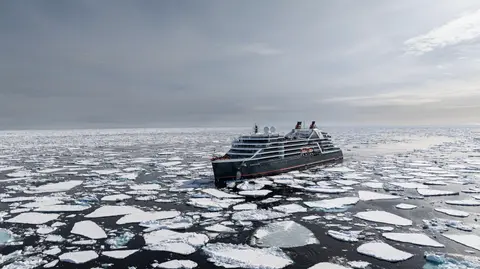
SeabournV744A
Iceland, Greenland & Exploring Scoresbysund
Date
2027-07-03
Duration
29 nights
Departure Port
Reykjavik
Iceland
Arrival Port
Reykjavik
Iceland
Rating
Expedition
Theme
—
Date
2027-07-03
Duration
29 nights
Departure Port
Reykjavik
Iceland
Arrival Port
Reykjavik
Iceland
Rating
Expedition
Theme
—
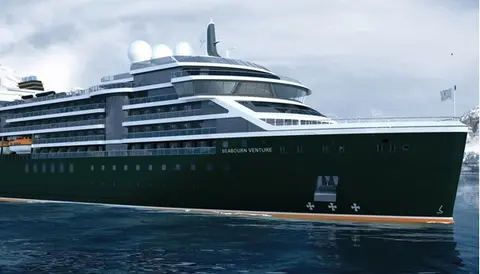






Seabourn
2021
—
23,000 GT
264
132
120
558 m
24 m
19 knots
No
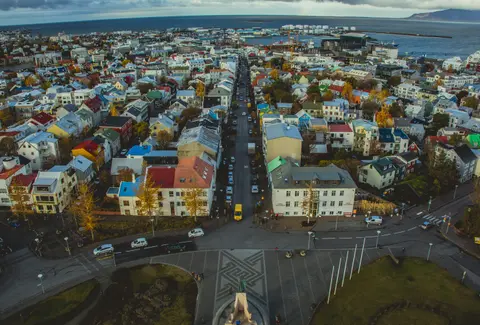
Reykjavik, the world's northernmost capital, distils the entire improbable beauty of Iceland into one compact, creatively charged city. The soaring basalt columns of Hallgrímskirkja dominate a skyline of primary-coloured rooftops, while the Harpa Concert Hall shimmers beside the harbour like a captured aurora. Day trips from the city unlock the Golden Circle's geysers and Geysir hot spring, the black sand beaches of Vík, and the ethereal glacier lagoon at Jökulsárlón. Geothermal pools — from the legendary Blue Lagoon to intimate neighbourhood hot pots — offer warmth year-round. June and July bring the bewitching midnight sun.
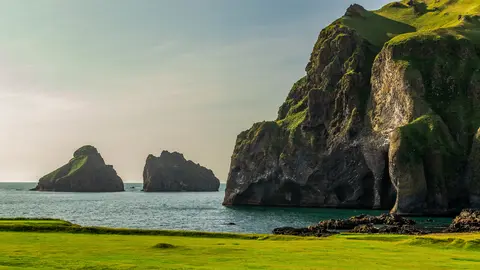
Heimaey is Iceland's volcanic island where the dramatic 1973 eruption story, the world's largest puffin colony of one million breeding pairs, and the children's annual puffling rescue create one of the North Atlantic's most extraordinary port experiences. Visit May through August via Lindblad or Windstar for Eldfell volcano hikes, the Eldheimar Museum's excavated homes, and the harbor approach through a channel literally reshaped by eruption.
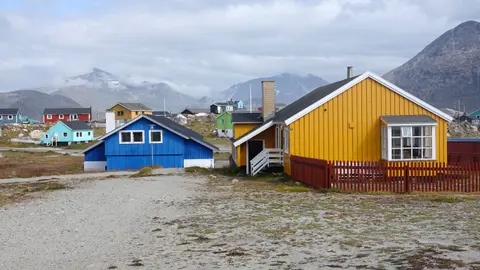
Qaqortoq is southern Greenland's largest town, where brightly painted houses climb above a fjord harbour amid open-air stone sculptures and Norse ruins. Must-do experiences include visiting the Hvalsey Norse church ruins, soaking in the Uunartoq hot springs surrounded by icebergs, and tasting Arctic char and musk ox. June through September offers the accessible season, with July and August warmest for fjord exploration.
Hvalsey, Greenland is a distinctive port city where deep cultural heritage meets authentic local atmosphere, featured on itineraries by Ponant. Must-do experiences include exploring the historic quarter to absorb centuries of architectural heritage, and sampling the distinctive northern cuisine that transforms local ingredients into refined dining experiences. The optimal time to visit is June through August, when summer months bring the warmest temperatures and longest days.
Qassiarsuk (Brattahlíð) in southern Greenland is where Erik the Red founded the first European settlement in the Americas in 985 AD — today a tiny sheep-farming village preserving Norse ruins, a reconstructed Viking church, and a graveyard of 144 colonists. Must-dos include walking the archaeological remains with a local guide, visiting Hans Lynge's bronze Erik the Red, and absorbing the fjord-and-ice-cap setting. June through September provides snow-free access and wildflower-dotted ruins.
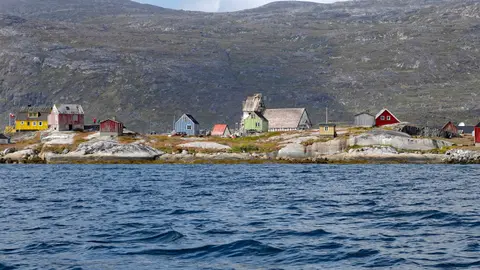
Nanortalik, Greenland's southernmost town, sits amid fjords of staggering granite walls and drifting icebergs at the edge of the inhabitable Arctic. Must-dos include boat excursions to Tasermiut Fjord's 1,500-meter granite spires, visiting the open-air museum of Inuit heritage, and tasting traditional Greenlandic cuisine. July through September offers the only navigable window for visiting.
Aapilattoq is a tiny Inuit settlement of roughly one hundred people in southeastern Greenland, clinging to a fjord shore amid calving glaciers and towering mountains. Expedition cruise visitors can witness traditional Arctic subsistence life and transit the spectacular Prince Christian Sound. The visiting window is extremely narrow — July through early September — when ice conditions permit passage through these remote waters.
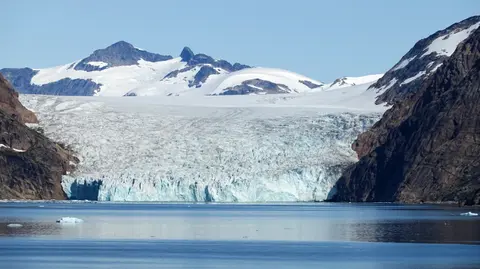
Prince Christian Sound is Greenland's most dramatic navigable passage — a forty-kilometer corridor between thousand-meter cliffs and hanging glaciers that expedition ships from Seabourn to Silversea transit when ice conditions permit. Navigate July through September for humpback whale encounters, iceberg-studded waters, and the visceral Arctic experience that empties every cabin and fills every open deck regardless of weather.
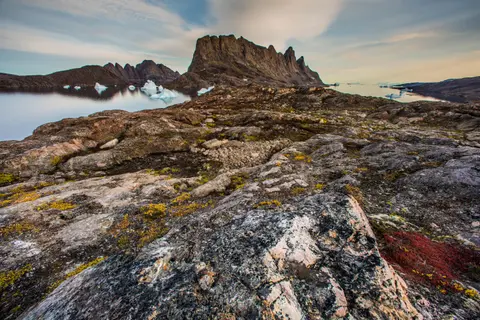
Skjoldungen, Greenland is a distinctive port city where deep cultural heritage meets authentic local atmosphere, featured on itineraries by Ponant. Must-do experiences include exploring the historic quarter to absorb centuries of architectural heritage, and sampling the distinctive northern cuisine that transforms local ingredients into refined dining experiences. The optimal time to visit is June through August, when summer months bring the warmest temperatures and longest days.
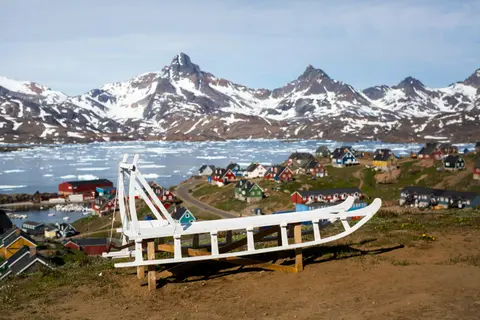
Tasiilaq is the largest settlement in East Greenland with just 2,000 residents, one of the most remote inhabited communities on Earth, surrounded by the spectacular Sermilik Icefjord, massive glaciers, and tundra that blooms intensely during the brief Arctic summer. Must-dos include a boat trip through the iceberg-filled Sermilik Icefjord, hiking the Valley of Flowers, and watching traditional tupilak carving and drum dancing. Visit August for the warmest weather and best icefjord access.
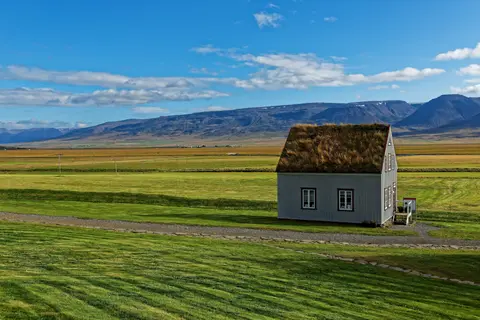
Patreksfjörður is a fishing town in Iceland's remote Westfjords, gateway to Látrabjarg — Europe's westernmost point and home to millions of nesting seabirds including famously approachable puffins — and the surreal beauty of Rauðisandur beach. Must-do experiences include the Látrabjarg cliff walk among puffins, contemplating the vast red sands of Rauðisandur, and soaking in the town's geothermal pool. June through August offers continuous daylight and peak seabird activity.
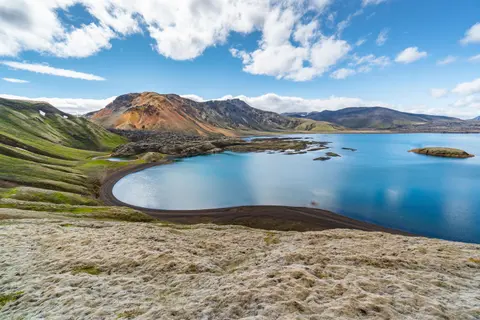
Flatey Island in Iceland offers dramatic Nordic landscapes where fjords, glaciers, and pristine wilderness create scenes of remarkable natural grandeur. The essential experience is immersion in the outdoor environment—hiking, wildlife watching, and savoring the region's exceptional seafood in settings of extraordinary beauty. Best visited June through August, when the midnight sun bathes the landscape in golden light for nearly twenty-four hours. Cruise lines including Lindblad Expeditions feature this port on their most compelling itineraries. Whether you have a few hours or a full day, the port rewards exploration at every pace and in every direction.
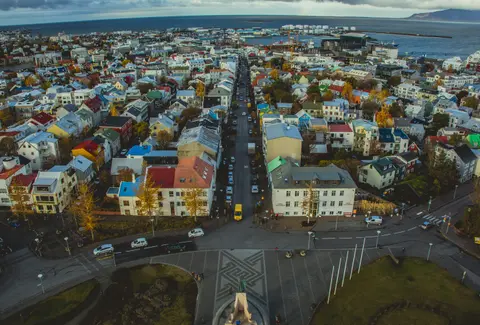
Reykjavik, the world's northernmost capital, distils the entire improbable beauty of Iceland into one compact, creatively charged city. The soaring basalt columns of Hallgrímskirkja dominate a skyline of primary-coloured rooftops, while the Harpa Concert Hall shimmers beside the harbour like a captured aurora. Day trips from the city unlock the Golden Circle's geysers and Geysir hot spring, the black sand beaches of Vík, and the ethereal glacier lagoon at Jökulsárlón. Geothermal pools — from the legendary Blue Lagoon to intimate neighbourhood hot pots — offer warmth year-round. June and July bring the bewitching midnight sun.
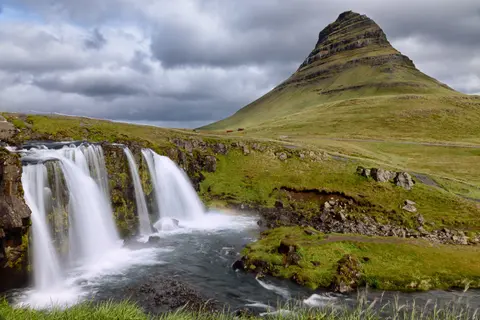
Grundarfjörður is a fishing town at the base of Kirkjufell, Iceland's most photographed mountain, and the gateway to the Snæfellsnes Peninsula—dubbed "Iceland in miniature" for its concentrated geological diversity. Must-dos include photographing Kirkjufell with its companion waterfall and exploring Snæfellsjökull, the glacier volcano from Jules Verne's novel. June and July offer midnight sun and the most reliable weather for peninsula exploration.
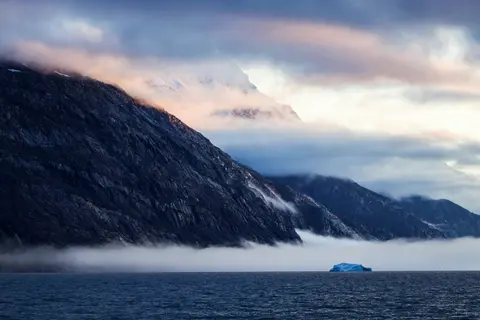
Ittoqqortoormiit is one of Earth's most isolated settlements, a 350-person Inuit community at the mouth of the world's longest fjord system on Greenland's remote east coast. Must-dos include Zodiac exploration of the monumental Scoresby Sund fjords, watching for musk oxen on the tundra, and visiting the colorful Arctic community. Mid-July through September offers the narrow window when sea ice permits access.
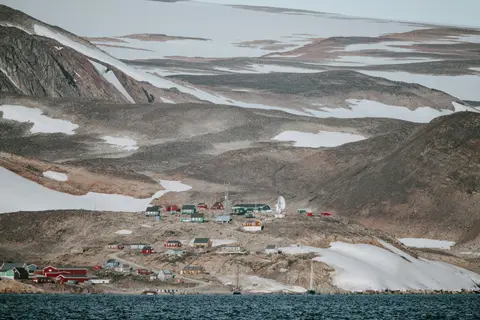
Ittoqqortoormiit is one of Earth's most isolated settlements, a 350-person Inuit community at the mouth of the world's longest fjord system on Greenland's remote east coast. Must-dos include Zodiac exploration of the monumental Scoresby Sund fjords, watching for musk oxen on the tundra, and visiting the colorful Arctic community. Mid-July through September offers the narrow window when sea ice permits access.
Umivik Bay on Greenland's remote southeastern coast is an uninhabited fjord of billion-year-old rock, calving glaciers, and drifting icebergs where polar bears patrol shores untouched by permanent human settlement. The bay is accessible only by expedition Zodiac during the brief July-to-September season, with every visit dependent on ice and weather. This is one of Earth's last truly wild places — a landscape of profound Arctic silence and overwhelming geological scale.
Prince Christian Sound is Greenland's most dramatic navigable passage — a forty-kilometer corridor between thousand-meter cliffs and hanging glaciers that expedition ships from Seabourn to Silversea transit when ice conditions permit. Navigate July through September for humpback whale encounters, iceberg-studded waters, and the visceral Arctic experience that empties every cabin and fills every open deck regardless of weather.
Qaqortoq is southern Greenland's largest town, where brightly painted houses climb above a fjord harbour amid open-air stone sculptures and Norse ruins. Must-do experiences include visiting the Hvalsey Norse church ruins, soaking in the Uunartoq hot springs surrounded by icebergs, and tasting Arctic char and musk ox. June through September offers the accessible season, with July and August warmest for fjord exploration.
Qassiarsuk (Brattahlíð) in southern Greenland is where Erik the Red founded the first European settlement in the Americas in 985 AD — today a tiny sheep-farming village preserving Norse ruins, a reconstructed Viking church, and a graveyard of 144 colonists. Must-dos include walking the archaeological remains with a local guide, visiting Hans Lynge's bronze Erik the Red, and absorbing the fjord-and-ice-cap setting. June through September provides snow-free access and wildflower-dotted ruins.
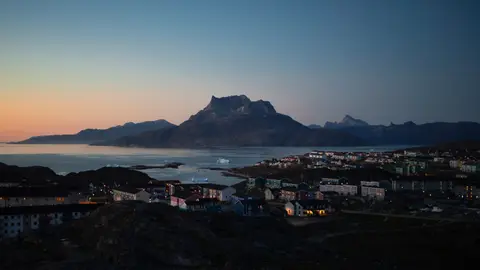
Nuuk, Greenland's diminutive capital, is a city of vivid contrasts — colourful colonial houses against Arctic granite, Inuit heritage alongside contemporary Nordic culture, and world-class museums steps from untamed fjords. Visitors should not miss the Greenland National Museum's Qilakitsoq mummies and a Zodiac excursion into the surrounding iceberg-studded fjord system. The prime cruising season runs from June through September, when extended daylight illuminates the landscape in an ethereal sub-Arctic glow and waters remain navigable for expedition vessels.
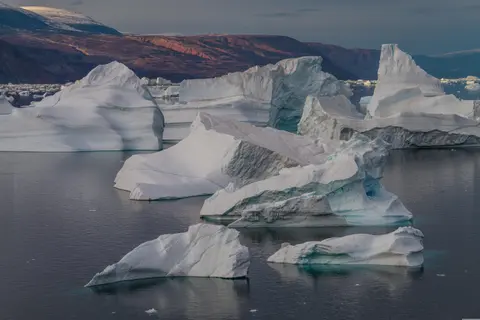
Evighedsfjorden is Greenland's 'Fjord of Eternity' — a seventy-five-kilometer passage flanked by ice-capped peaks and tidewater glaciers that provides one of expedition cruising's most profound Arctic landscape encounters. Navigate July through August via Ponant or Seabourn for midnight-sun glacial photography, humpback whale encounters echoing off cliff faces, and a passage so vast it transforms the concept of eternity from abstraction to sensory reality.
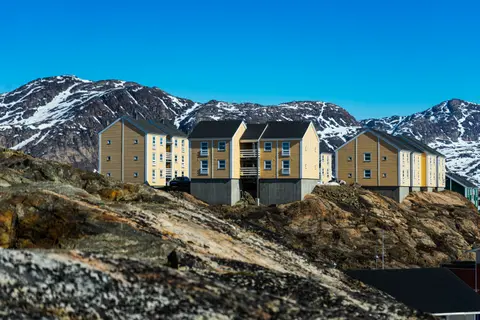
Sisimiut is Greenland's adventure capital, a colourful Arctic town of 5,500 people just north of the Arctic Circle on the west coast. Must-dos include hiking the Arctic Circle Trail, whale watching for humpbacks and narwhals, and exploring the colonial-era museum. Summer brings midnight sun and hiking conditions, while winter offers dog-sledding, skiing, and northern lights.
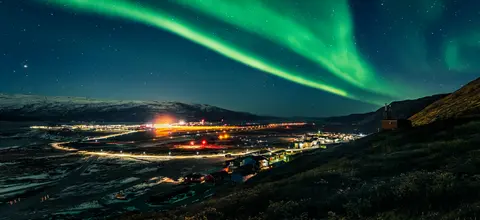
Kangerlussuaq Havn is the eastern Greenlandic gateway to the Scoresby Sund — the world's longest fjord system — where sheer basalt cliffs, colossal icebergs, and one of Earth's most isolated Inuit communities await expedition vessels from Ponant and Hapag-Lloyd. Visit July through September for muskox encounters, midnight-sun ice photography, and the Arctic in its most concentrated and demanding form.
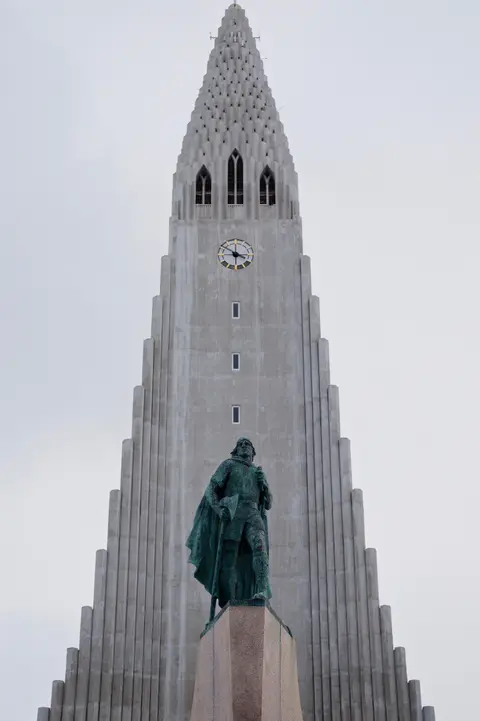
Reykjavik, the world's northernmost capital, distils the entire improbable beauty of Iceland into one compact, creatively charged city. The soaring basalt columns of Hallgrímskirkja dominate a skyline of primary-coloured rooftops, while the Harpa Concert Hall shimmers beside the harbour like a captured aurora. Day trips from the city unlock the Golden Circle's geysers and Geysir hot spring, the black sand beaches of Vík, and the ethereal glacier lagoon at Jökulsárlón. Geothermal pools — from the legendary Blue Lagoon to intimate neighbourhood hot pots — offer warmth year-round. June and July bring the bewitching midnight sun.
Day 1
Reykjavik, the world's northernmost capital, distils the entire improbable beauty of Iceland into one compact, creatively charged city. The soaring basalt columns of Hallgrímskirkja dominate a skyline of primary-coloured rooftops, while the Harpa Concert Hall shimmers beside the harbour like a captured aurora. Day trips from the city unlock the Golden Circle's geysers and Geysir hot spring, the black sand beaches of Vík, and the ethereal glacier lagoon at Jökulsárlón. Geothermal pools — from the legendary Blue Lagoon to intimate neighbourhood hot pots — offer warmth year-round. June and July bring the bewitching midnight sun.
Day 2
Heimaey is Iceland's volcanic island where the dramatic 1973 eruption story, the world's largest puffin colony of one million breeding pairs, and the children's annual puffling rescue create one of the North Atlantic's most extraordinary port experiences. Visit May through August via Lindblad or Windstar for Eldfell volcano hikes, the Eldheimar Museum's excavated homes, and the harbor approach through a channel literally reshaped by eruption.
Day 3
Day 4
Day 5
Qaqortoq is southern Greenland's largest town, where brightly painted houses climb above a fjord harbour amid open-air stone sculptures and Norse ruins. Must-do experiences include visiting the Hvalsey Norse church ruins, soaking in the Uunartoq hot springs surrounded by icebergs, and tasting Arctic char and musk ox. June through September offers the accessible season, with July and August warmest for fjord exploration.
Hvalsey, Greenland is a distinctive port city where deep cultural heritage meets authentic local atmosphere, featured on itineraries by Ponant. Must-do experiences include exploring the historic quarter to absorb centuries of architectural heritage, and sampling the distinctive northern cuisine that transforms local ingredients into refined dining experiences. The optimal time to visit is June through August, when summer months bring the warmest temperatures and longest days.
Day 6
Qassiarsuk (Brattahlíð) in southern Greenland is where Erik the Red founded the first European settlement in the Americas in 985 AD — today a tiny sheep-farming village preserving Norse ruins, a reconstructed Viking church, and a graveyard of 144 colonists. Must-dos include walking the archaeological remains with a local guide, visiting Hans Lynge's bronze Erik the Red, and absorbing the fjord-and-ice-cap setting. June through September provides snow-free access and wildflower-dotted ruins.
Day 7
Nanortalik, Greenland's southernmost town, sits amid fjords of staggering granite walls and drifting icebergs at the edge of the inhabitable Arctic. Must-dos include boat excursions to Tasermiut Fjord's 1,500-meter granite spires, visiting the open-air museum of Inuit heritage, and tasting traditional Greenlandic cuisine. July through September offers the only navigable window for visiting.
Day 8
Aapilattoq is a tiny Inuit settlement of roughly one hundred people in southeastern Greenland, clinging to a fjord shore amid calving glaciers and towering mountains. Expedition cruise visitors can witness traditional Arctic subsistence life and transit the spectacular Prince Christian Sound. The visiting window is extremely narrow — July through early September — when ice conditions permit passage through these remote waters.
Day 9
Prince Christian Sound is Greenland's most dramatic navigable passage — a forty-kilometer corridor between thousand-meter cliffs and hanging glaciers that expedition ships from Seabourn to Silversea transit when ice conditions permit. Navigate July through September for humpback whale encounters, iceberg-studded waters, and the visceral Arctic experience that empties every cabin and fills every open deck regardless of weather.
Day 10
Skjoldungen, Greenland is a distinctive port city where deep cultural heritage meets authentic local atmosphere, featured on itineraries by Ponant. Must-do experiences include exploring the historic quarter to absorb centuries of architectural heritage, and sampling the distinctive northern cuisine that transforms local ingredients into refined dining experiences. The optimal time to visit is June through August, when summer months bring the warmest temperatures and longest days.
Day 11
Tasiilaq is the largest settlement in East Greenland with just 2,000 residents, one of the most remote inhabited communities on Earth, surrounded by the spectacular Sermilik Icefjord, massive glaciers, and tundra that blooms intensely during the brief Arctic summer. Must-dos include a boat trip through the iceberg-filled Sermilik Icefjord, hiking the Valley of Flowers, and watching traditional tupilak carving and drum dancing. Visit August for the warmest weather and best icefjord access.
Day 12
Day 13
Patreksfjörður is a fishing town in Iceland's remote Westfjords, gateway to Látrabjarg — Europe's westernmost point and home to millions of nesting seabirds including famously approachable puffins — and the surreal beauty of Rauðisandur beach. Must-do experiences include the Látrabjarg cliff walk among puffins, contemplating the vast red sands of Rauðisandur, and soaking in the town's geothermal pool. June through August offers continuous daylight and peak seabird activity.
Day 14
Flatey Island in Iceland offers dramatic Nordic landscapes where fjords, glaciers, and pristine wilderness create scenes of remarkable natural grandeur. The essential experience is immersion in the outdoor environment—hiking, wildlife watching, and savoring the region's exceptional seafood in settings of extraordinary beauty. Best visited June through August, when the midnight sun bathes the landscape in golden light for nearly twenty-four hours. Cruise lines including Lindblad Expeditions feature this port on their most compelling itineraries. Whether you have a few hours or a full day, the port rewards exploration at every pace and in every direction.
Day 15
Reykjavik, the world's northernmost capital, distils the entire improbable beauty of Iceland into one compact, creatively charged city. The soaring basalt columns of Hallgrímskirkja dominate a skyline of primary-coloured rooftops, while the Harpa Concert Hall shimmers beside the harbour like a captured aurora. Day trips from the city unlock the Golden Circle's geysers and Geysir hot spring, the black sand beaches of Vík, and the ethereal glacier lagoon at Jökulsárlón. Geothermal pools — from the legendary Blue Lagoon to intimate neighbourhood hot pots — offer warmth year-round. June and July bring the bewitching midnight sun.
Day 16
Grundarfjörður is a fishing town at the base of Kirkjufell, Iceland's most photographed mountain, and the gateway to the Snæfellsnes Peninsula—dubbed "Iceland in miniature" for its concentrated geological diversity. Must-dos include photographing Kirkjufell with its companion waterfall and exploring Snæfellsjökull, the glacier volcano from Jules Verne's novel. June and July offer midnight sun and the most reliable weather for peninsula exploration.
Day 17
Day 18
Ittoqqortoormiit is one of Earth's most isolated settlements, a 350-person Inuit community at the mouth of the world's longest fjord system on Greenland's remote east coast. Must-dos include Zodiac exploration of the monumental Scoresby Sund fjords, watching for musk oxen on the tundra, and visiting the colorful Arctic community. Mid-July through September offers the narrow window when sea ice permits access.
Day 20
Ittoqqortoormiit is one of Earth's most isolated settlements, a 350-person Inuit community at the mouth of the world's longest fjord system on Greenland's remote east coast. Must-dos include Zodiac exploration of the monumental Scoresby Sund fjords, watching for musk oxen on the tundra, and visiting the colorful Arctic community. Mid-July through September offers the narrow window when sea ice permits access.
Day 21
Day 22
Umivik Bay on Greenland's remote southeastern coast is an uninhabited fjord of billion-year-old rock, calving glaciers, and drifting icebergs where polar bears patrol shores untouched by permanent human settlement. The bay is accessible only by expedition Zodiac during the brief July-to-September season, with every visit dependent on ice and weather. This is one of Earth's last truly wild places — a landscape of profound Arctic silence and overwhelming geological scale.
Day 23
Prince Christian Sound is Greenland's most dramatic navigable passage — a forty-kilometer corridor between thousand-meter cliffs and hanging glaciers that expedition ships from Seabourn to Silversea transit when ice conditions permit. Navigate July through September for humpback whale encounters, iceberg-studded waters, and the visceral Arctic experience that empties every cabin and fills every open deck regardless of weather.
Day 24
Qaqortoq is southern Greenland's largest town, where brightly painted houses climb above a fjord harbour amid open-air stone sculptures and Norse ruins. Must-do experiences include visiting the Hvalsey Norse church ruins, soaking in the Uunartoq hot springs surrounded by icebergs, and tasting Arctic char and musk ox. June through September offers the accessible season, with July and August warmest for fjord exploration.
Day 25
Qassiarsuk (Brattahlíð) in southern Greenland is where Erik the Red founded the first European settlement in the Americas in 985 AD — today a tiny sheep-farming village preserving Norse ruins, a reconstructed Viking church, and a graveyard of 144 colonists. Must-dos include walking the archaeological remains with a local guide, visiting Hans Lynge's bronze Erik the Red, and absorbing the fjord-and-ice-cap setting. June through September provides snow-free access and wildflower-dotted ruins.
Day 26
Nuuk, Greenland's diminutive capital, is a city of vivid contrasts — colourful colonial houses against Arctic granite, Inuit heritage alongside contemporary Nordic culture, and world-class museums steps from untamed fjords. Visitors should not miss the Greenland National Museum's Qilakitsoq mummies and a Zodiac excursion into the surrounding iceberg-studded fjord system. The prime cruising season runs from June through September, when extended daylight illuminates the landscape in an ethereal sub-Arctic glow and waters remain navigable for expedition vessels.
Day 27
Evighedsfjorden is Greenland's 'Fjord of Eternity' — a seventy-five-kilometer passage flanked by ice-capped peaks and tidewater glaciers that provides one of expedition cruising's most profound Arctic landscape encounters. Navigate July through August via Ponant or Seabourn for midnight-sun glacial photography, humpback whale encounters echoing off cliff faces, and a passage so vast it transforms the concept of eternity from abstraction to sensory reality.
Day 28
Sisimiut is Greenland's adventure capital, a colourful Arctic town of 5,500 people just north of the Arctic Circle on the west coast. Must-dos include hiking the Arctic Circle Trail, whale watching for humpbacks and narwhals, and exploring the colonial-era museum. Summer brings midnight sun and hiking conditions, while winter offers dog-sledding, skiing, and northern lights.
Day 29
Kangerlussuaq Havn is the eastern Greenlandic gateway to the Scoresby Sund — the world's longest fjord system — where sheer basalt cliffs, colossal icebergs, and one of Earth's most isolated Inuit communities await expedition vessels from Ponant and Hapag-Lloyd. Visit July through September for muskox encounters, midnight-sun ice photography, and the Arctic in its most concentrated and demanding form.
Day 30
Reykjavik, the world's northernmost capital, distils the entire improbable beauty of Iceland into one compact, creatively charged city. The soaring basalt columns of Hallgrímskirkja dominate a skyline of primary-coloured rooftops, while the Harpa Concert Hall shimmers beside the harbour like a captured aurora. Day trips from the city unlock the Golden Circle's geysers and Geysir hot spring, the black sand beaches of Vík, and the ethereal glacier lagoon at Jökulsárlón. Geothermal pools — from the legendary Blue Lagoon to intimate neighbourhood hot pots — offer warmth year-round. June and July bring the bewitching midnight sun.
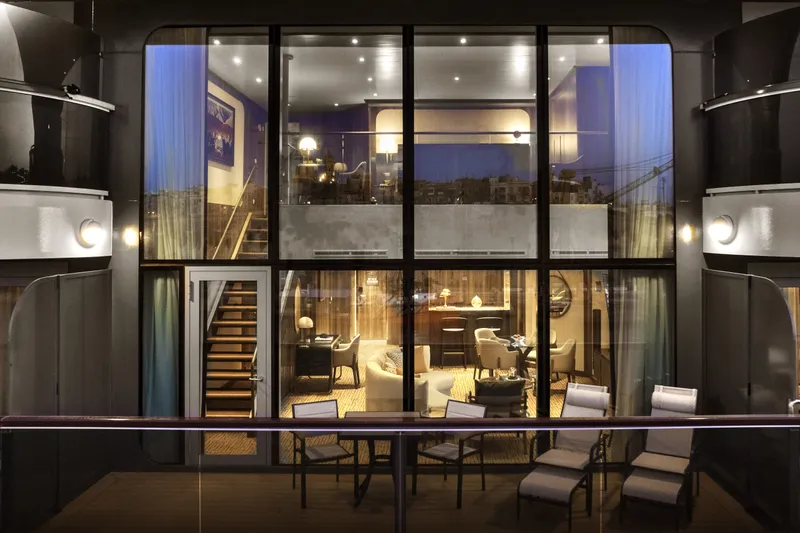
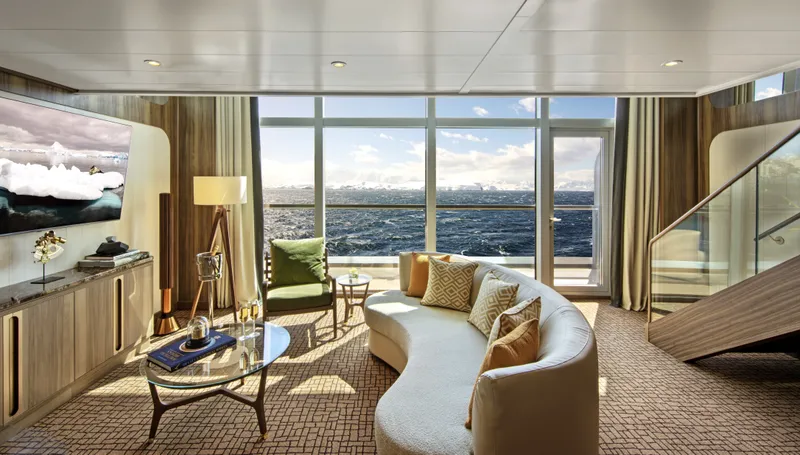
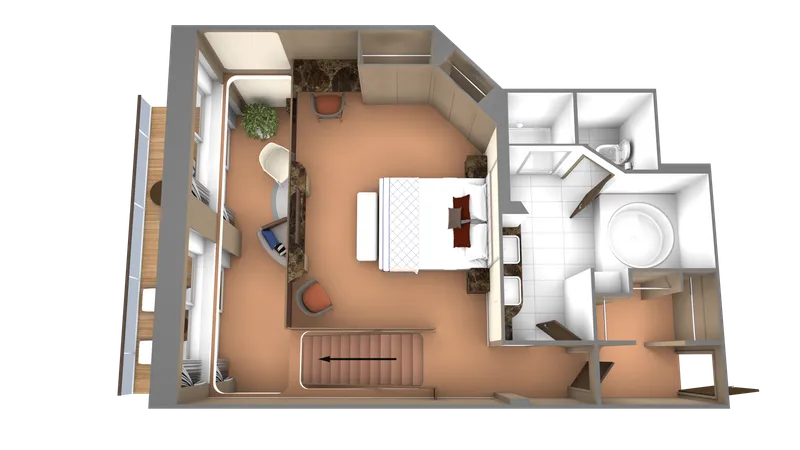
Deck 7 Combine mid-ship Suites 733 and 735 for Suite 7353, or Suites 734 and 736 for Suite 7364 Total space: 1,399 sq. ft. (130 sq. m.) including two verandas totaling 205 sq. ft. (19 sq. m.)
All Grand Wintergarden Suites onboard Seabourn Venture feature a comfortable living area; private veranda; queen-size bed or two twin beds; walk-in closet; personal safe; interactive TV with music and movies; fully stocked bar and refrigerator; writing desk with personalized stationery; makeup vanity; spacious bathroom, separate tub and shower, plush robes, slippers, luxury health and beauty products, hairdryer and 110/220V AC outlets.
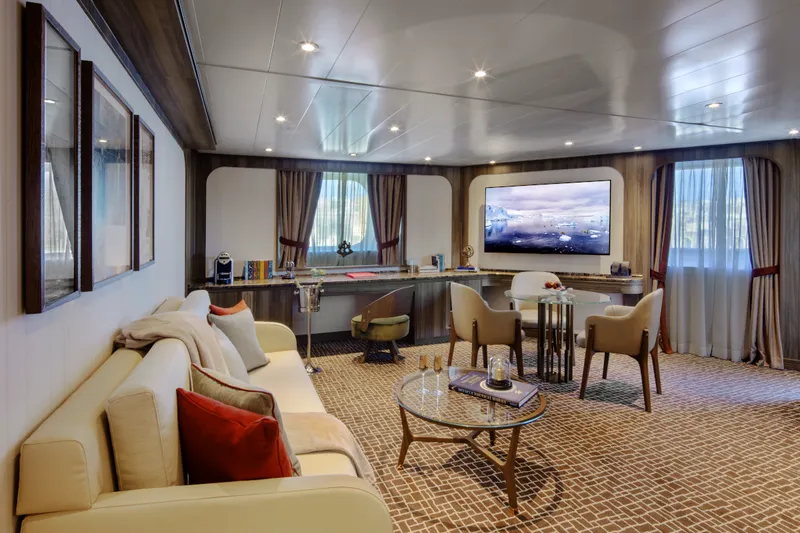
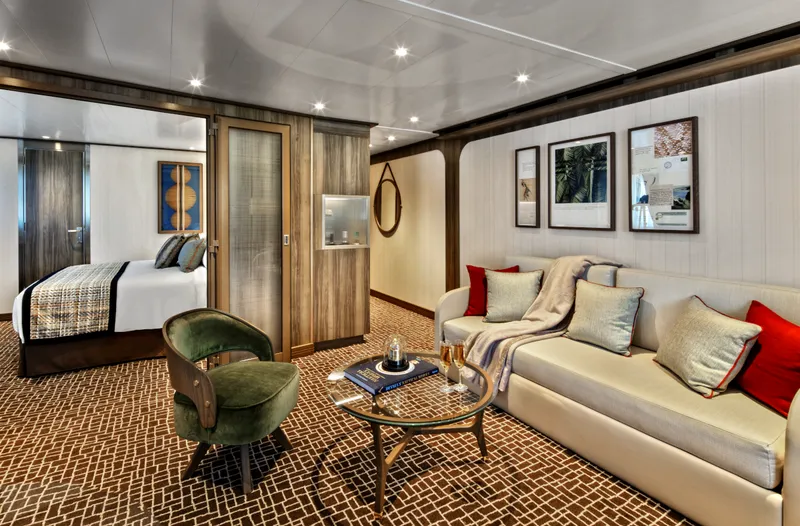
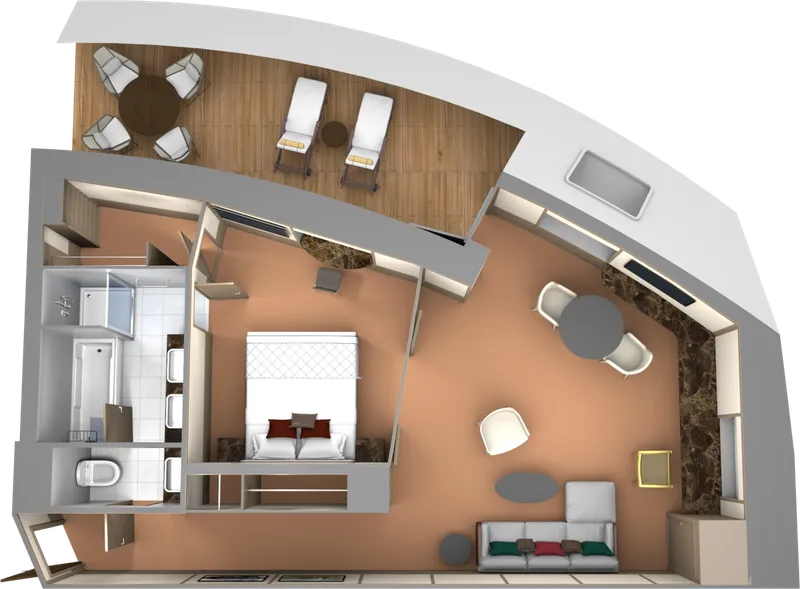
Deck 7 Suites 700, 701 Total space 1,023 sq. ft. (95 sq. m.) incl. veranda of 484 sq. ft. (45 sq. m.)
Owner's Suites on Seabourn Venture feature a comfortable living area; private veranda; queen-size bed or two twin beds; extra-large walk-in closet for expedition gear; personal safe; interactive flat-screen TV with music and movies; fully stocked bar and refrigerator; writing desk with personalized stationery; makeup vanity; spacious bathroom with double vanities, tub and shower, plush robes, slippers, hairdryer and 110/220V AC outlets.
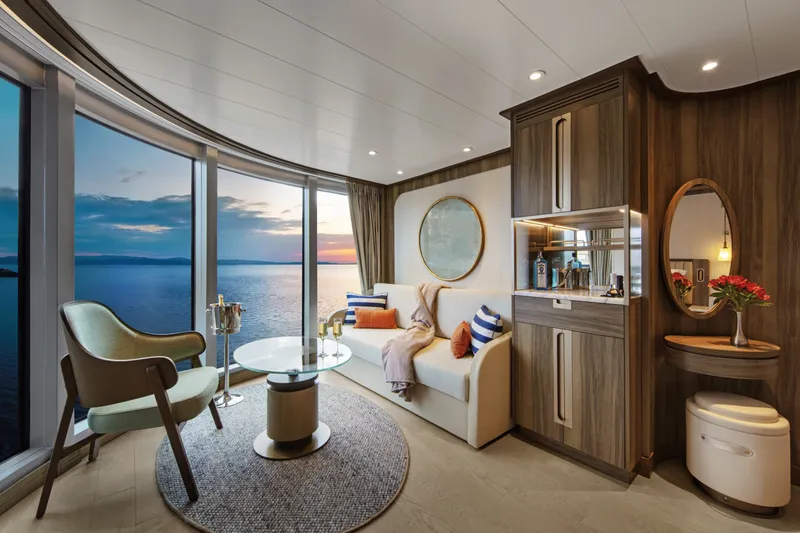
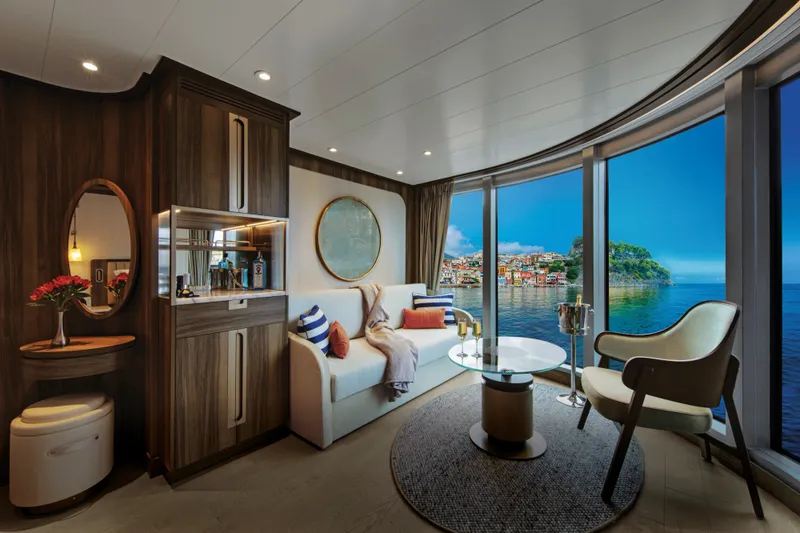
Suites 513-516, 611-614, 711-714, 802-805; Total space: 417 sq. ft. (39 sq. m.) incl. veranda of 85 sq. ft. (8 sq. m.) All Panorama Veranda Suites feature a comfortable living area; private veranda; queen-size bed or two twin beds; walk-in closet; personal safe; interactive TV with music and movies; fully stocked bar and refrigerator; writing desk with personalized stationery; makeup vanity; spacious bathroom, separate tub and shower, plush robes, slippers, luxury health and beauty products, hairdryer and 110/220V AC outlets. *Some veranda sizes vary.

Deck 8 Suites 818-821; Approximate total space: 527 sq. ft. (49 sq. m.) including veranda of 97 sq. ft. (9 sq. m.)
All Penthouse Suites onboard Seabourn Venture feature a comfortable living area; private veranda; queen-size bed or two twin beds; walk-in closet; personal safe; interactive TV with music and movies; fully stocked bar and refrigerator; writing desk with personalized stationery; makeup vanity; spacious bathroom, separate tub and shower, plush robes, slippers, luxury health and beauty products, hairdryer and 110/220V AC outlets.
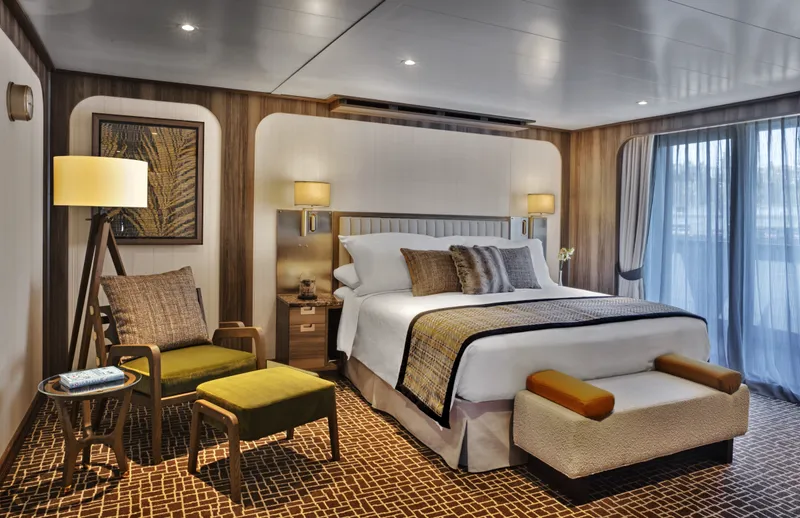
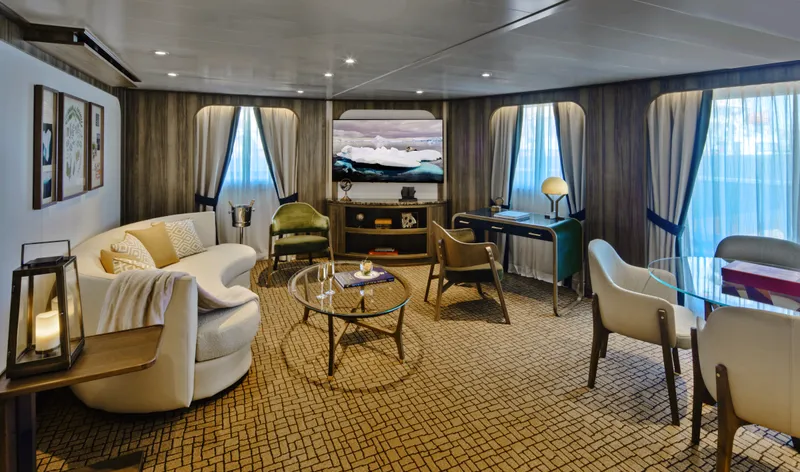
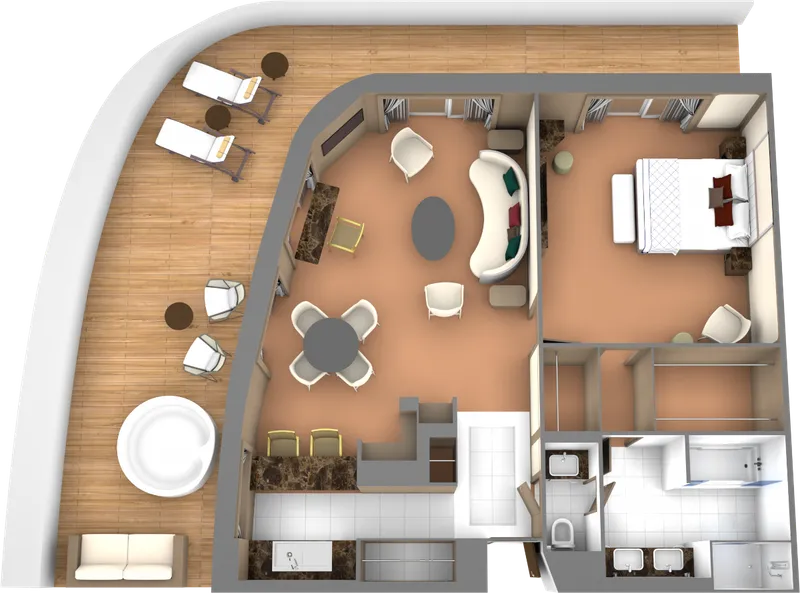
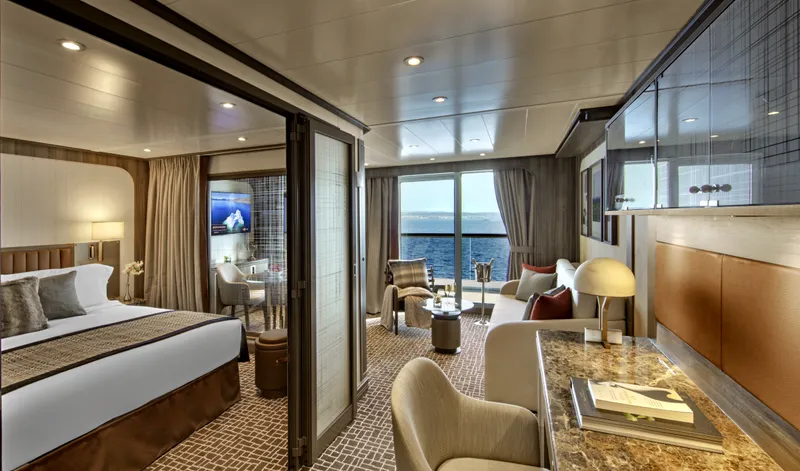
All Signature Suites onboard Seabourn Venture feature a comfortable living area; private veranda; queen-size bed or two twin beds; walk-in closet, personal safe; interactive TV with music and movies; fully stocked bar and refrigerator; writing desk with personalized stationery; makeup vanity; spacious bathroom, separate tub and shower, plush robes, slippers, luxury health and beauty products, hairdryer and 110/220V AC outlets.
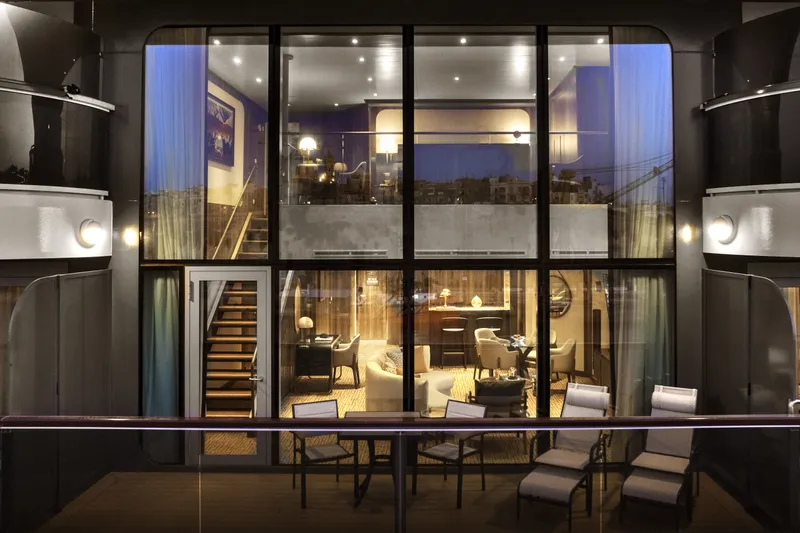
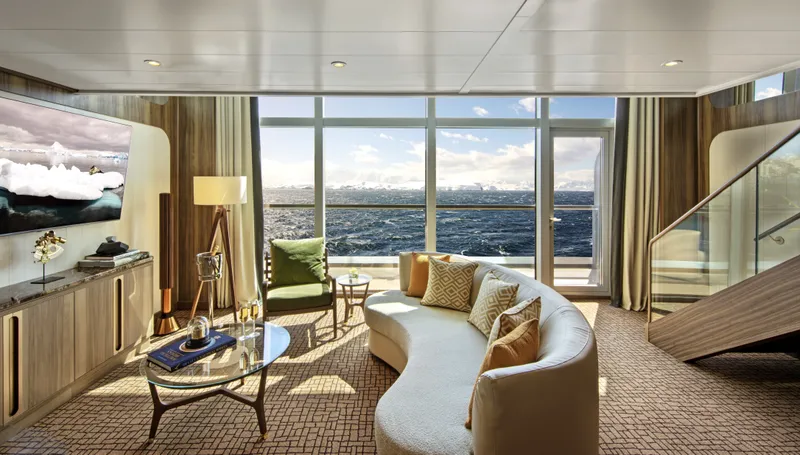
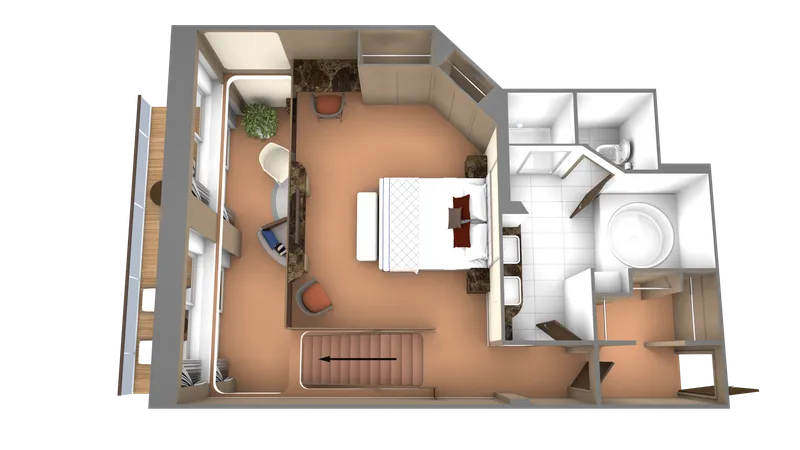
Deck 7 Suites 735, 736; Total space: 1,044 sq. ft. (97 sq. m.) including veranda of 129 sq. ft. (12 sq. m.)
All Wintergarden Suites onboard Seabourn Venture feature a comfortable living area; private veranda; queen-size bed or two twin beds; walk-in closet; personal safe; interactive TV with music and movies; fully stocked bar and refrigerator; writing desk with personalized stationery; makeup vanity; spacious bathroom, separate tub and shower, plush robes, slippers, luxury health and beauty products, hairdryer and 110/220V AC outlets.
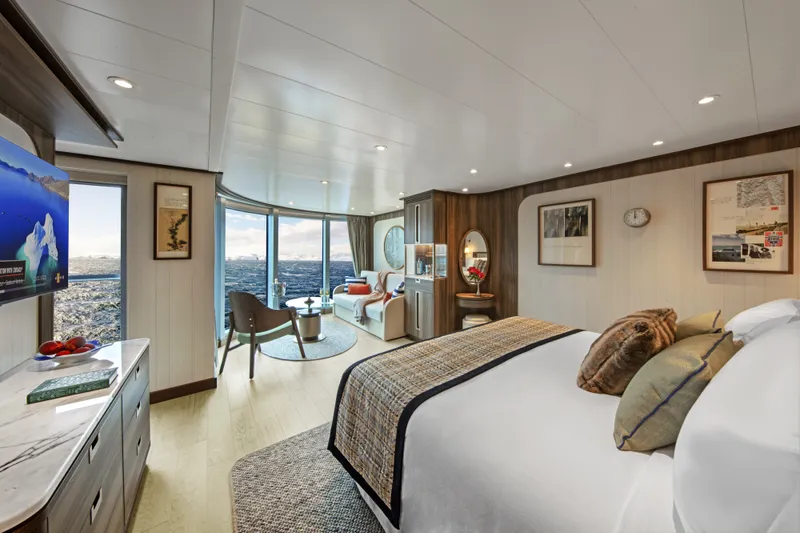
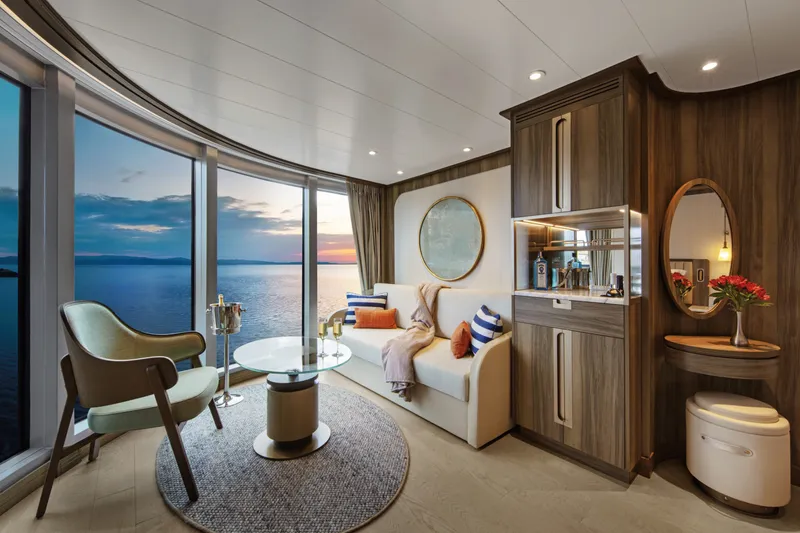
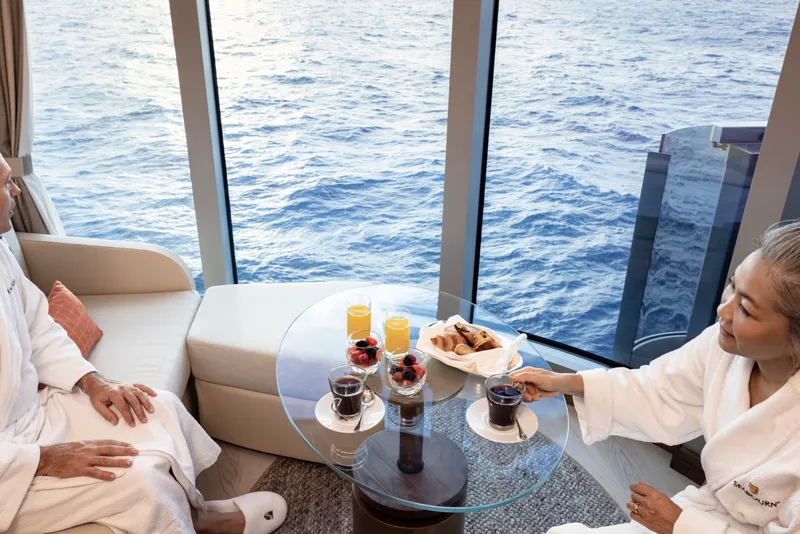
Decks 6, 7, 8; Approximate total space: 355 sq. ft. (33 sq. m.) including veranda of 75 sq. ft. (7 sq. m.)*
All Veranda Suites onboard Seabourn Venture feature a comfortable living area; private veranda; queen-size bed or two twin beds; walk-in closet; personal safe; interactive TV with music and movies; fully stocked bar and refrigerator; writing desk with personalized stationery; makeup vanity; spacious bathroom, separate tub and shower, plush robes, slippers, luxury health and beauty products, hairdryer and 110/220V AC outlets. *Some veranda sizes vary.
Our cruise specialists can help you find the perfect cabin and the best available pricing.
(+886) 02-2721-7300Contact Advisor