October 3, 2026
15 nights · 3 sea days
Kolkata
India
Mumbai
India


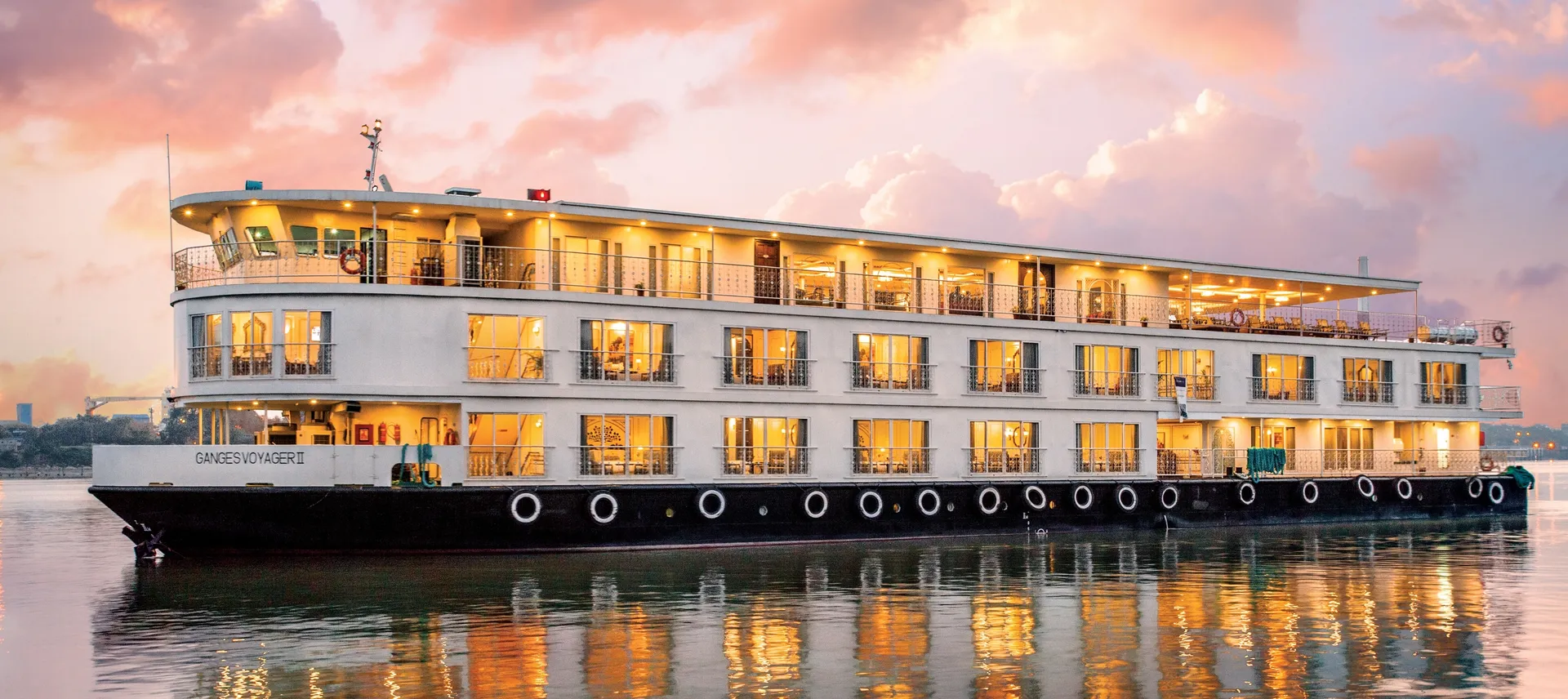
Uniworld River Cruises
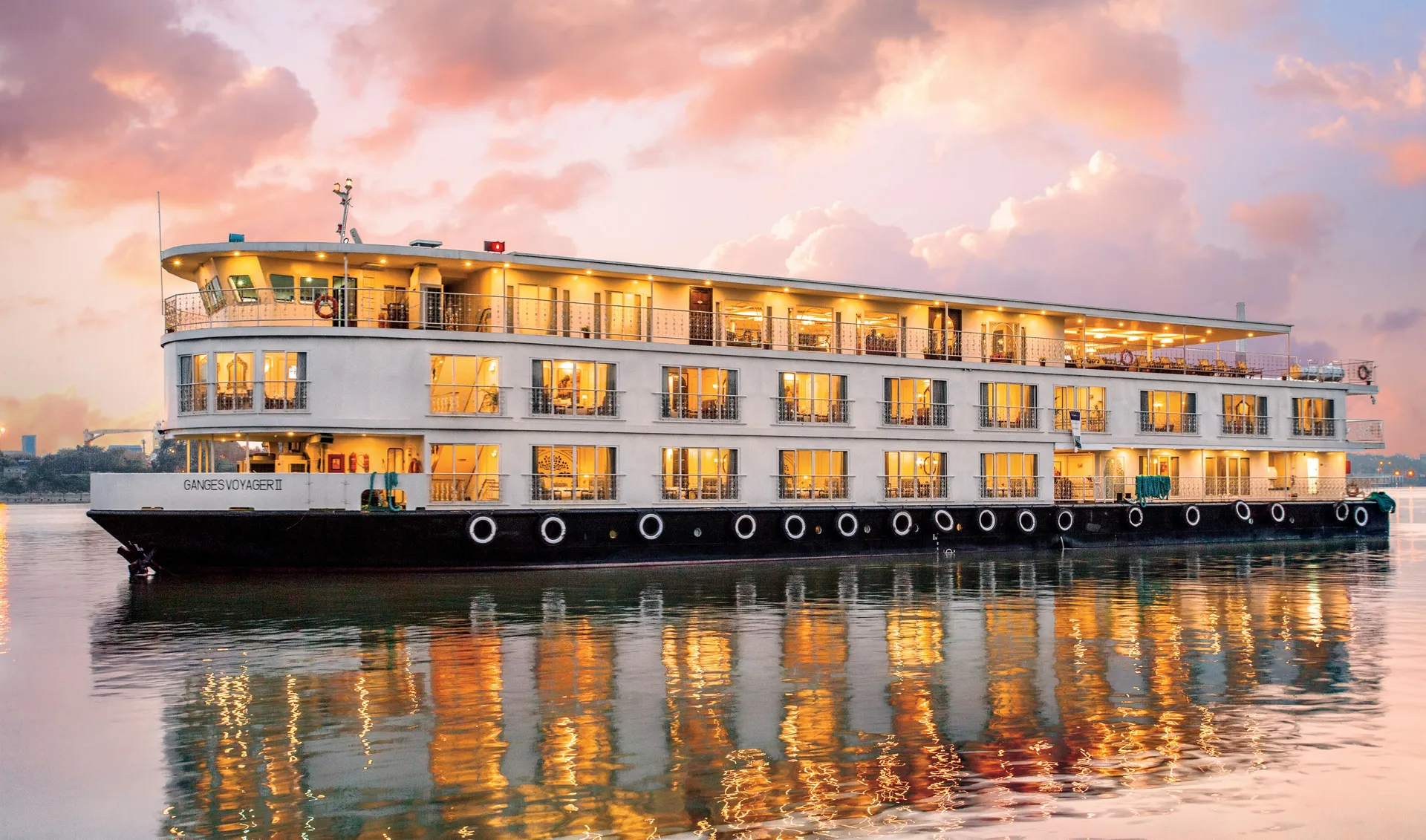
185 m
9 knots
28 / 56 guests
36

Kolkata (formerly Calcutta) is the capital of India's West Bengal state. Founded as an East India Company trading post, it was India's capital under the British Raj from 1773–1911. Today it’s known for its grand colonial architecture, art galleries and cultural festivals. It’s also home to Mother House, headquarters of the Missionaries of Charity, founded by Mother Teresa, whose tomb is on site.

Kalna or Ambika Kalna is a town in the Purba Bardhaman district of West Bengal, India. It is the headquarters of the Kalna subdivision, situated on the western bank of the Bhāgirathi. The city is more popularly known as Ambika Kalna, named after the goddess Kali, Maa Ambika.
Matiari is a census town and a gram panchayat in the Kaliganj CD block in the Krishnanagar Sadar subdivision of the Nadia district in the state of West Bengal,


Murshidabad is a town in the Indian state of West Bengal. It is located on the eastern bank of the Hooghly River, a distributary of the Ganges River. It forms part of the Murshidabad district. During the 18th-century, Murshidabad was a prosperous city.

Kolkata (formerly Calcutta) is the capital of India's West Bengal state. Founded as an East India Company trading post, it was India's capital under the British Raj from 1773–1911. Today it’s known for its grand colonial architecture, art galleries and cultural festivals. It’s also home to Mother House, headquarters of the Missionaries of Charity, founded by Mother Teresa, whose tomb is on site.

Mayapur, previously known as Miyapur is a neighborhood of Bamanpukur area, situated adjacent to Nabadwip, at the confluence of two rivers, where the waters of the river Jalangi mix with the Ganga. It is located about 130 km north of Kolkata within Nadia district, West Bengal, India.

Kolkata (formerly Calcutta) is the capital of India's West Bengal state. Founded as an East India Company trading post, it was India's capital under the British Raj from 1773–1911. Today it’s known for its grand colonial architecture, art galleries and cultural festivals. It’s also home to Mother House, headquarters of the Missionaries of Charity, founded by Mother Teresa, whose tomb is on site.


New Delhi, the capital of India, is a bustling metropolis blending rich history with modernity. Known for its grand architecture, New Delhi houses iconic landmarks like India Gate, Rashtrapati Bhavan, and Qutub Minar, a UNESCO World Heritage Site. The city showcases the Mughal legacy through monuments like Humayun's Tomb and the Red Fort. New Delhi is also a cultural hub, hosting vibrant festivals, diverse cuisines, and bustling markets like Chandni Chowk. As the political and administrative heart of India, it features wide avenues, lush gardens, and a dynamic urban lifestyle, embodying the essence of contemporary India.


Agra is a city on the banks of the Yamuna river in the Agra district of the Indian state of Uttar Pradesh. It is 206 kilometres south of the national capital New Delhi. Agra is the fourth-most populous city in Uttar Pradesh and 24th in India.


Ranthambore National Park, India, is a renowned wildlife sanctuary in Rajasthan, celebrated for its population of Bengal tigers. Nestled amidst the Aravalli and Vindhya hills, it offers a dramatic landscape of dense forests, ancient ruins, and serene lakes. Visitors can embark on thrilling safaris to spot tigers, leopards, and diverse flora and fauna. Key attractions include the majestic Ranthambore Fort and picturesque Padam Talao lake. Ranthambore's blend of rich wildlife, historical sites, and natural beauty make it a premier destination for nature enthusiasts and photographers.

Jaipur is the capital of India’s Rajasthan state. It evokes the royal family that once ruled the region and that, in 1727, founded what is now called the Old City, or “Pink City” for its trademark building color. At the center of its stately street grid (notable in India) stands the opulent, colonnaded City Palace complex. With gardens, courtyards and museums, part of it is still a royal residence.


Bikaner, India, is a vibrant desert city known for its grand forts and palaces, such as the Junagarh Fort and Lalgarh Palace. Located in Rajasthan, it features intricate havelis, bustling markets, and unique attractions like the Karni Mata Temple, home to thousands of revered rats. Bikaner's rich culture is evident in its traditional crafts, folk music, and the famous camel festival. Surrounded by the Thar Desert's golden sands, Bikaner offers a captivating blend of history, architecture, and desert charm.

Jodhpur, India, the Blue City, captivates with its vivid blue houses and the imposing Mehrangarh Fort. Nestled on the edge of the Thar Desert, Jodhpur boasts stunning architecture, bustling bazaars, and rich cultural heritage. The city's vibrant streets are filled with the aroma of Rajasthani cuisine and the sounds of traditional music. Historic landmarks, such as the Umaid Bhawan Palace and Jaswant Thada, highlight its regal past. Jodhpur's blend of vivid colors, desert landscapes, and royal history make it a mesmerizing destination.


Udaipur, India, the City of Lakes, enchants with its majestic palaces, serene lakes, and lush hills. Known for the splendid City Palace and the romantic Lake Palace, Udaipur's architecture reflects regal heritage. The vibrant bazaars, intricate temples, and cultural festivals showcase its rich traditions. Boating on Lake Pichola, exploring the historic streets, and experiencing local cuisine add to Udaipur's charm. Its blend of natural beauty and royal grandeur makes Udaipur a captivating destination.


Nowhere reinforces your sense of having arrived in Mumbai, with an MSC Grand Voyages cruise ship, quite as emphatically as the Gateway of India, the city’s defining landmark. Only a five-minute walk north, the Prince of Wales Museum should be next on your list of sightseeing priorities during your cruise to Mumbai, as much for its flamboyantly eclectic architecture as for the art treasures inside. The museum provides a foretaste of what lies in store just up the road, where the cream of Bartle Frere’s Bombay – the University and High Court – line up with the open maidans on one side, and the boulevards of Fort on the other. But for the fullest sense of why the city’s founding fathers declared it Urbs Prima in Indis, you should press further north still to visit the Chhatrapati Shivaji Terminus (CST), the high-water mark of India’s Raj architecture. Beyond CST lie the crowded bazaars and Muslim neighbourhoods of central Mumbai, at their liveliest and most colourful around Crawford Market and Mohammed Ali Road. Possibilities for an MSC excursion include a trip out to Elephanta, a rock-cut cave on an island in Mumbai harbour containing a wealth of ancient art. Another great excursion is the Gateway of India. Commemorating the visit of King George V and Queen Mary in 1911, India’s own honey-coloured Arc de Triomphe, the Gateway of India, is Colaba’s principal monument and the landmark most iconic of Mumbai in the Indian imagination. The aforementioned Prince of Wales Museum of Western India ranks among the city’s most distinctive Raj-era constructions. It stands rather grandly in its own gardens off MG Road, crowned by a massive white Mughal-style dome, beneath which one of India’s finest collections of paintings and sculpture is arrayed on three floors.


Nowhere reinforces your sense of having arrived in Mumbai, with an MSC Grand Voyages cruise ship, quite as emphatically as the Gateway of India, the city’s defining landmark. Only a five-minute walk north, the Prince of Wales Museum should be next on your list of sightseeing priorities during your cruise to Mumbai, as much for its flamboyantly eclectic architecture as for the art treasures inside. The museum provides a foretaste of what lies in store just up the road, where the cream of Bartle Frere’s Bombay – the University and High Court – line up with the open maidans on one side, and the boulevards of Fort on the other. But for the fullest sense of why the city’s founding fathers declared it Urbs Prima in Indis, you should press further north still to visit the Chhatrapati Shivaji Terminus (CST), the high-water mark of India’s Raj architecture. Beyond CST lie the crowded bazaars and Muslim neighbourhoods of central Mumbai, at their liveliest and most colourful around Crawford Market and Mohammed Ali Road. Possibilities for an MSC excursion include a trip out to Elephanta, a rock-cut cave on an island in Mumbai harbour containing a wealth of ancient art. Another great excursion is the Gateway of India. Commemorating the visit of King George V and Queen Mary in 1911, India’s own honey-coloured Arc de Triomphe, the Gateway of India, is Colaba’s principal monument and the landmark most iconic of Mumbai in the Indian imagination. The aforementioned Prince of Wales Museum of Western India ranks among the city’s most distinctive Raj-era constructions. It stands rather grandly in its own gardens off MG Road, crowned by a massive white Mughal-style dome, beneath which one of India’s finest collections of paintings and sculpture is arrayed on three floors.


Colonial Suite (261 sq ft - 24.2 sq m).


Heritage Suite (280 sq ft - 26 sq m).


Maharaja Suite (400 sq ft - 37.2 sq m).


Signature Suite (261 sq ft - 24.2 sq m).


Viceroy Suite (360 sq ft - 33.4 sq m).
Our cruise specialists can help you find the perfect cabin and the best available pricing.
US$28,999 /person
Contact Advisor