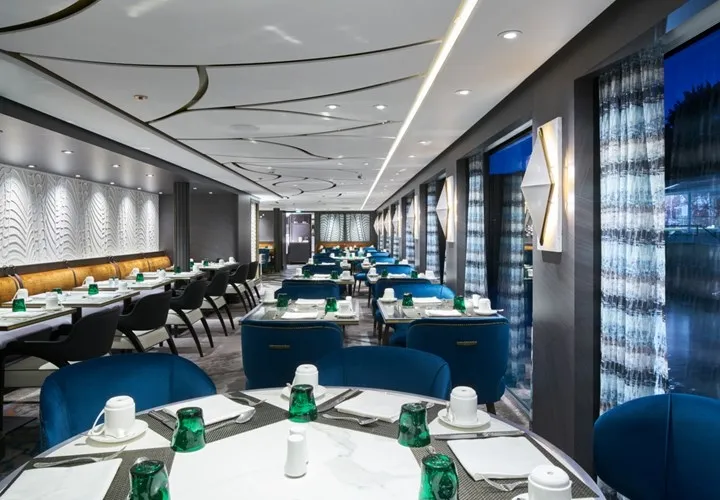
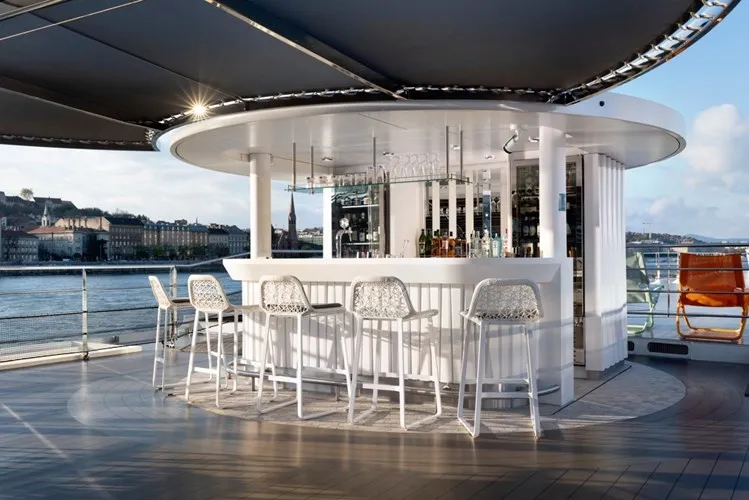
Date
2027-06-20
Duration
14 nights
Departure Port
Russel
New Zealand
Arrival Port
Basel
Switzerland
Rating
—
Theme
—


Uniworld River Cruises
Super Ship
2017
—
—
110
—
41
—
11 m
12 knots
No

Zeebrugge — Belgium's principal cruise port, whose very name means 'Sea-Bruges' — serves as the maritime portal to one of Europe's most perfectly preserved medieval cities, with the UNESCO-listed canal network of Bruges just fifteen minutes away, its lace shops, chocolate artisans, and moated Beguinage offering an almost impossibly picturesque step back into the Flemish Golden Age. The port itself carries its own dramatic history: the site of the audacious 1918 Zeebrugge Raid, when the Royal Navy launched a daring assault to block the harbor during World War I. Year-round access to Bruges, Ghent, and Brussels — each within easy reach — makes Zeebrugge a supremely versatile port of call.

Antwerp has been one of Europe's great mercantile capitals since the fifteenth century, when it commanded the world's first commodity exchange and Peter Paul Rubens made it the artistic capital of the Baroque world — a legacy preserved in the magnificent Rubenshuis studio and the soaring Cathedral of Our Lady, whose nave houses four of the master's greatest altarpieces. Today the city leads global fashion from the acclaimed Antwerp Six design school and remains the diamond capital of the world, with 84% of the world's rough diamonds trading through its storied district. Visit in spring or autumn; Brussels and Bruges are each under an hour away by train.

Maastricht is a two-thousand-year-old Meuse River city in the southern Netherlands, where Romanesque basilicas, Burgundian culinary traditions, and a vibrant cultural quarter converge in one of Europe's most refined yet unassuming destinations. Savour the slow-braised *zoervleis* stew and explore the medieval fortification tunnels for experiences found nowhere else in the Low Countries. Late spring through early autumn offers the finest conditions, with the celebrated asparagus season in May and long golden evenings along the Vrijthof square.
Cuijk (Nuenen) in Netherlands is a quintessential European river port where centuries of history line the waterfront in architectural layers. Visitors should wander the cobblestone streets, sample regional cuisine paired with local wines, and soak in an atmosphere perfected over generations. The town is at its most inviting May through October, when the climate is at its most welcoming for outdoor exploration. Cruise lines including Uniworld River Cruises feature this port on their most compelling itineraries. Whether you have a few hours or a full day, the port rewards exploration at every pace and in every direction.

Düsseldorf's port is a vibrant hub of culture and history, offering a unique blend of modern architecture and traditional charm. Must-do experiences include sampling the local Altbier and Rheintopf stew and exploring the nearby picturesque town of Wertheim. The best season to visit is during the spring, when the city blossoms and outdoor activities abound.

Cologne's twin-spired Gothic cathedral, six hundred years in the building and still the city's defining monument, is the inevitable starting point — but this ancient Rhine city rewards exploration well beyond its iconic silhouette. The Romano-Germanic Museum reveals the city's Roman foundations, while the Chocolate Museum on the riverbank offers a distinctly sweeter history lesson. Cologne's famed Kölsch beer culture thrives in the old town's traditional brew-houses, where one round follows another in centuries-old wooden halls. The city is welcoming year-round, though the legendary Christmas markets (November–December) attract visitors from across Europe.

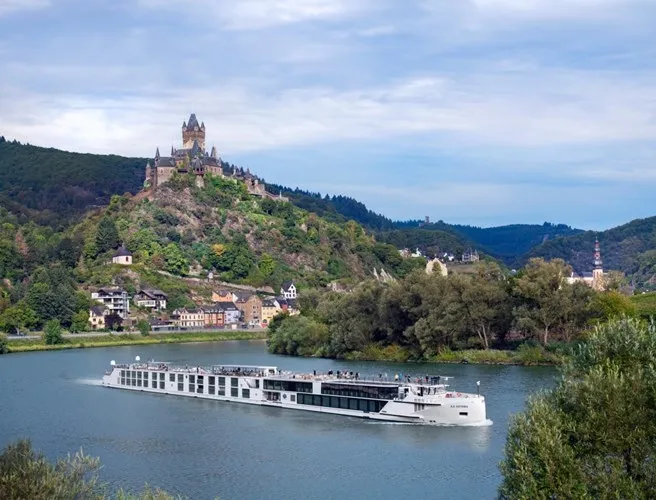
The Reichsburg Cochem — a turreted fairy-tale castle presiding over a loop of the Moselle River — is among Germany's most photogenic medieval fortresses, its silhouette rising above terraced vineyards of ancient Riesling vines. The town below offers a charming ensemble of half-timbered houses, wine-cellar tastings, and cycle paths threading through valley landscapes that have barely changed in centuries. Arrive in September for the harvest festival, when the whole town smells of fermenting Riesling, or choose May for blossom-framed panoramas and long golden evenings on the riverside terraces.

Trier is Germany's oldest city and once the northern capital of the Western Roman Empire, its incomparable UNESCO-listed ensemble of monuments — the blackened Porta Nigra gate, the vast Imperial Baths, the Amphitheater, and a Roman bridge still carrying traffic across the Moselle — more than justifying the title 'Rome of the North.' The birthplace of Karl Marx and a gateway to the Moselle wine region's elegant Riesling estates, Trier rewards a long visit with layers of history spanning two millennia within an effortlessly walkable historic center. The summer months from May to September are ideal, when Moselle Valley vineyard terraces gleam in full-leafed splendor.

Bernkastel-Kues, the twin town straddling the Moselle, has been synonymous with Riesling for six centuries — home to the legendary Bernkasteler Doctor vineyard, whose precipitous south-facing slope has produced wines of such renown that a single hectare once sold for a record price. The Marktplatz, virtually unchanged since the seventeenth century, is Germany's most photogenic half-timbered market square: a stage-set of crooked facades and flower-hung balconies best appreciated over a glass of Spätlese in the late afternoon light. September brings the annual Moselle Wine Festival to the riverbanks. Trier, Germany's oldest city with its spectacular Roman amphitheatre, lies forty minutes upstream.

Koblenz stands at the Deutsches Eck — the German Corner — where the Moselle river pours into the Rhine in a confluence so geographically commanding that the Romans built a fortress here in 9 BC. The result is a city of exceptional Rhine Gorge scenery, with the formidable Ehrenbreitstein Fortress, one of Europe's largest, crowning the opposite bank and reachable by gondola for panoramas that stretch across three river valleys. A Rhine wine tasting at one of the city's historic Weinstuben, followed by a stroll through the Altstadt's baroque squares, is the definitive Koblenz afternoon. The finest weather arrives April through October, with the Rhine in Flames fireworks festival in August being particularly spectacular.

Boppard is a two-thousand-year-old Rhine town in Germany's UNESCO-listed Middle Rhine Valley, where Roman fortress walls, Gothic churches, and half-timbered lanes converge beneath dramatic river cliffs. Visitors should ride the Vierseenblick chairlift for the legendary four-lakes panorama and taste the local Riesling from the renowned Bopparder Hamm vineyard. Late spring through early autumn offers the most rewarding experience, when the terraced vineyards are lush and the Weinstuben spill onto sunlit riverside terraces.

Speyer, one of the oldest cities in Germany, rises from the Rhine plain with a skyline dominated by its magnificent Romanesque Imperial Cathedral — a UNESCO World Heritage site and the burial place of eight Holy Roman Emperors. The adjacent Jewish Quarter, also UNESCO-listed, preserves a medieval synagogue and mikveh of extraordinary rarity. The Technik Museum houses one of Europe's most celebrated collections of historic aircraft, including a full-sized Space Shuttle replica. The surrounding Palatinate wine country produces fine Riesling and Pinot Noir. Spring and early autumn offer the most agreeable conditions for exploring this quietly remarkable city.

Strasbourg is one of Europe's great border cities, its Franco-German soul etched into every half-timbered façade of the UNESCO-listed Grande Île and every turret of the soaring rose-sandstone cathedral that reigned as the world's tallest building for over two centuries. As the seat of the European Parliament and home to the European Court of Human Rights, this sophisticated Alsatian capital savors outstanding Riesling and choucroute garnie with equal Continental pride. The city dazzles year-round, though December's legendary Christmas market — among the oldest in Europe — transforms its medieval squares into an enchanted winter spectacle.

Basel, where Switzerland, France, and Germany converge at the Rhine's northward bend, hosts a concentration of world-class art institutions that rivals any city its size on earth — the Kunstmuseum alone, the world's oldest public art collection, could occupy days, and Art Basel each June draws every name that matters in the contemporary art world to this compact, elegant city. The Rhine itself is the city's great social artery: in summer, locals jump in with waterproof bags and float downstream, a tradition as charming as any museum. Spring through autumn is ideal for outdoor exploration; Paris is just three hours by TGV and Strasbourg a mere twenty minutes by train.
Day 1

Zeebrugge — Belgium's principal cruise port, whose very name means 'Sea-Bruges' — serves as the maritime portal to one of Europe's most perfectly preserved medieval cities, with the UNESCO-listed canal network of Bruges just fifteen minutes away, its lace shops, chocolate artisans, and moated Beguinage offering an almost impossibly picturesque step back into the Flemish Golden Age. The port itself carries its own dramatic history: the site of the audacious 1918 Zeebrugge Raid, when the Royal Navy launched a daring assault to block the harbor during World War I. Year-round access to Bruges, Ghent, and Brussels — each within easy reach — makes Zeebrugge a supremely versatile port of call.
Day 2

Antwerp has been one of Europe's great mercantile capitals since the fifteenth century, when it commanded the world's first commodity exchange and Peter Paul Rubens made it the artistic capital of the Baroque world — a legacy preserved in the magnificent Rubenshuis studio and the soaring Cathedral of Our Lady, whose nave houses four of the master's greatest altarpieces. Today the city leads global fashion from the acclaimed Antwerp Six design school and remains the diamond capital of the world, with 84% of the world's rough diamonds trading through its storied district. Visit in spring or autumn; Brussels and Bruges are each under an hour away by train.
Day 3

Maastricht is a two-thousand-year-old Meuse River city in the southern Netherlands, where Romanesque basilicas, Burgundian culinary traditions, and a vibrant cultural quarter converge in one of Europe's most refined yet unassuming destinations. Savour the slow-braised *zoervleis* stew and explore the medieval fortification tunnels for experiences found nowhere else in the Low Countries. Late spring through early autumn offers the finest conditions, with the celebrated asparagus season in May and long golden evenings along the Vrijthof square.
Day 4
Cuijk (Nuenen) in Netherlands is a quintessential European river port where centuries of history line the waterfront in architectural layers. Visitors should wander the cobblestone streets, sample regional cuisine paired with local wines, and soak in an atmosphere perfected over generations. The town is at its most inviting May through October, when the climate is at its most welcoming for outdoor exploration. Cruise lines including Uniworld River Cruises feature this port on their most compelling itineraries. Whether you have a few hours or a full day, the port rewards exploration at every pace and in every direction.
Day 5

Düsseldorf's port is a vibrant hub of culture and history, offering a unique blend of modern architecture and traditional charm. Must-do experiences include sampling the local Altbier and Rheintopf stew and exploring the nearby picturesque town of Wertheim. The best season to visit is during the spring, when the city blossoms and outdoor activities abound.
Day 6

Cologne's twin-spired Gothic cathedral, six hundred years in the building and still the city's defining monument, is the inevitable starting point — but this ancient Rhine city rewards exploration well beyond its iconic silhouette. The Romano-Germanic Museum reveals the city's Roman foundations, while the Chocolate Museum on the riverbank offers a distinctly sweeter history lesson. Cologne's famed Kölsch beer culture thrives in the old town's traditional brew-houses, where one round follows another in centuries-old wooden halls. The city is welcoming year-round, though the legendary Christmas markets (November–December) attract visitors from across Europe.
Day 7

The Reichsburg Cochem — a turreted fairy-tale castle presiding over a loop of the Moselle River — is among Germany's most photogenic medieval fortresses, its silhouette rising above terraced vineyards of ancient Riesling vines. The town below offers a charming ensemble of half-timbered houses, wine-cellar tastings, and cycle paths threading through valley landscapes that have barely changed in centuries. Arrive in September for the harvest festival, when the whole town smells of fermenting Riesling, or choose May for blossom-framed panoramas and long golden evenings on the riverside terraces.
Day 8

Trier is Germany's oldest city and once the northern capital of the Western Roman Empire, its incomparable UNESCO-listed ensemble of monuments — the blackened Porta Nigra gate, the vast Imperial Baths, the Amphitheater, and a Roman bridge still carrying traffic across the Moselle — more than justifying the title 'Rome of the North.' The birthplace of Karl Marx and a gateway to the Moselle wine region's elegant Riesling estates, Trier rewards a long visit with layers of history spanning two millennia within an effortlessly walkable historic center. The summer months from May to September are ideal, when Moselle Valley vineyard terraces gleam in full-leafed splendor.
Day 9

Bernkastel-Kues, the twin town straddling the Moselle, has been synonymous with Riesling for six centuries — home to the legendary Bernkasteler Doctor vineyard, whose precipitous south-facing slope has produced wines of such renown that a single hectare once sold for a record price. The Marktplatz, virtually unchanged since the seventeenth century, is Germany's most photogenic half-timbered market square: a stage-set of crooked facades and flower-hung balconies best appreciated over a glass of Spätlese in the late afternoon light. September brings the annual Moselle Wine Festival to the riverbanks. Trier, Germany's oldest city with its spectacular Roman amphitheatre, lies forty minutes upstream.
Day 10

Koblenz stands at the Deutsches Eck — the German Corner — where the Moselle river pours into the Rhine in a confluence so geographically commanding that the Romans built a fortress here in 9 BC. The result is a city of exceptional Rhine Gorge scenery, with the formidable Ehrenbreitstein Fortress, one of Europe's largest, crowning the opposite bank and reachable by gondola for panoramas that stretch across three river valleys. A Rhine wine tasting at one of the city's historic Weinstuben, followed by a stroll through the Altstadt's baroque squares, is the definitive Koblenz afternoon. The finest weather arrives April through October, with the Rhine in Flames fireworks festival in August being particularly spectacular.
Day 11

Boppard is a two-thousand-year-old Rhine town in Germany's UNESCO-listed Middle Rhine Valley, where Roman fortress walls, Gothic churches, and half-timbered lanes converge beneath dramatic river cliffs. Visitors should ride the Vierseenblick chairlift for the legendary four-lakes panorama and taste the local Riesling from the renowned Bopparder Hamm vineyard. Late spring through early autumn offers the most rewarding experience, when the terraced vineyards are lush and the Weinstuben spill onto sunlit riverside terraces.
Day 12

Speyer, one of the oldest cities in Germany, rises from the Rhine plain with a skyline dominated by its magnificent Romanesque Imperial Cathedral — a UNESCO World Heritage site and the burial place of eight Holy Roman Emperors. The adjacent Jewish Quarter, also UNESCO-listed, preserves a medieval synagogue and mikveh of extraordinary rarity. The Technik Museum houses one of Europe's most celebrated collections of historic aircraft, including a full-sized Space Shuttle replica. The surrounding Palatinate wine country produces fine Riesling and Pinot Noir. Spring and early autumn offer the most agreeable conditions for exploring this quietly remarkable city.
Day 13

Strasbourg is one of Europe's great border cities, its Franco-German soul etched into every half-timbered façade of the UNESCO-listed Grande Île and every turret of the soaring rose-sandstone cathedral that reigned as the world's tallest building for over two centuries. As the seat of the European Parliament and home to the European Court of Human Rights, this sophisticated Alsatian capital savors outstanding Riesling and choucroute garnie with equal Continental pride. The city dazzles year-round, though December's legendary Christmas market — among the oldest in Europe — transforms its medieval squares into an enchanted winter spectacle.
Day 14

Basel, where Switzerland, France, and Germany converge at the Rhine's northward bend, hosts a concentration of world-class art institutions that rivals any city its size on earth — the Kunstmuseum alone, the world's oldest public art collection, could occupy days, and Art Basel each June draws every name that matters in the contemporary art world to this compact, elegant city. The Rhine itself is the city's great social artery: in summer, locals jump in with waterproof bags and float downstream, a tradition as charming as any museum. Spring through autumn is ideal for outdoor exploration; Paris is just three hours by TGV and Strasbourg a mere twenty minutes by train.


Luxurious riverview suite (506 sq ft - 47 sq m) with a spacious living room
King-sized bed (convertible to 2 singles), fine custom linens, walk-in closets, hair dryer, safe, individual thermostat, and flat-screen TV with infotainment center
Large bathroom with Asprey bath and body products, plush towels, comfortable bathrobes and slippers, double sink vanity, and rain shower
Additional amenities and service include: in-suite butler service; packing and unpacking assistance; in-room breakfast; daily fruit and cookie plate, and an elegant evening snack; espresso machine and fine teas; fully stocked mini bar; bottle of wine upon arrival; shoe shine; and free laundry service
Note that amenities may differ from those of a Uniworld company-owned ship


Luxurious riverview suite (253 sq ft - 23.5 sq m)
King-sized bed (convertible to 2 singles), fine custom linens, built-in closets, hair dryer, safe, individual thermostat, and flat-screen TV with infotainment center
Large bathroom with Asprey bath and body products, plush towels, comfortable bathrobes and slippers, double sink vanity, and rain shower
Additional amenities and services include in-suite butler service, packing and unpacking assistance, in-room breakfast, daily fruit and cookie plate and an elegant evening snack, espresso machine and fine teas, fully stocked mini bar, bottle of wine upon request, shoeshine, and free laundry service
Note that amenities may differ from those of a Uniworld company-owned ship


Luxurious riverview stateroom (188 sq ft - 17.5 sq m)
King-sized bed (convertible to 2 singles), fine custom linens, built-in closets, hair dryer, safe, individual thermostat, espresso machine, and flat-screen TV with infotainment center
Bathroom with Asprey bath and body products, plush towels, rain shower, comfortable bathrobes, and slippers
Note that amenities may differ from those of a Uniworld company-owned ship


Luxurious riverview stateroom (188 sq ft - 17.5 sq m)
King-sized bed (convertible to 2 singles), fine custom linens, built-in closets, hair dryer, safe, individual thermostat, espresso machine, and flat-screen TV with infotainment center
Bathroom with Asprey bath and body products, plush towels, rain shower, comfortable bathrobes, and slippers
Note that amenities may differ from those of a Uniworld company-owned ship.


Luxurious riverview stateroom (237 sq ft, 22 sq m; stateroom is 16 sq ft, 1.5 sq m smaller than the other Signature French Balcony staterooms)
King-sized bed (convertible to 2 singles), fine custom linens, built-in closets, hair dryer, safe, individual thermostat, espresso machine, and flat-screen TV with infotainment center
Bathroom with Asprey bath and body products, plush towels, rain shower, comfortable bathrobes, and slippers
Note that amenities may differ from those of a Uniworld company-owned ship
Our cruise specialists can help you find the perfect cabin and the best available pricing.
(+886) 02-2721-7300Contact Advisor