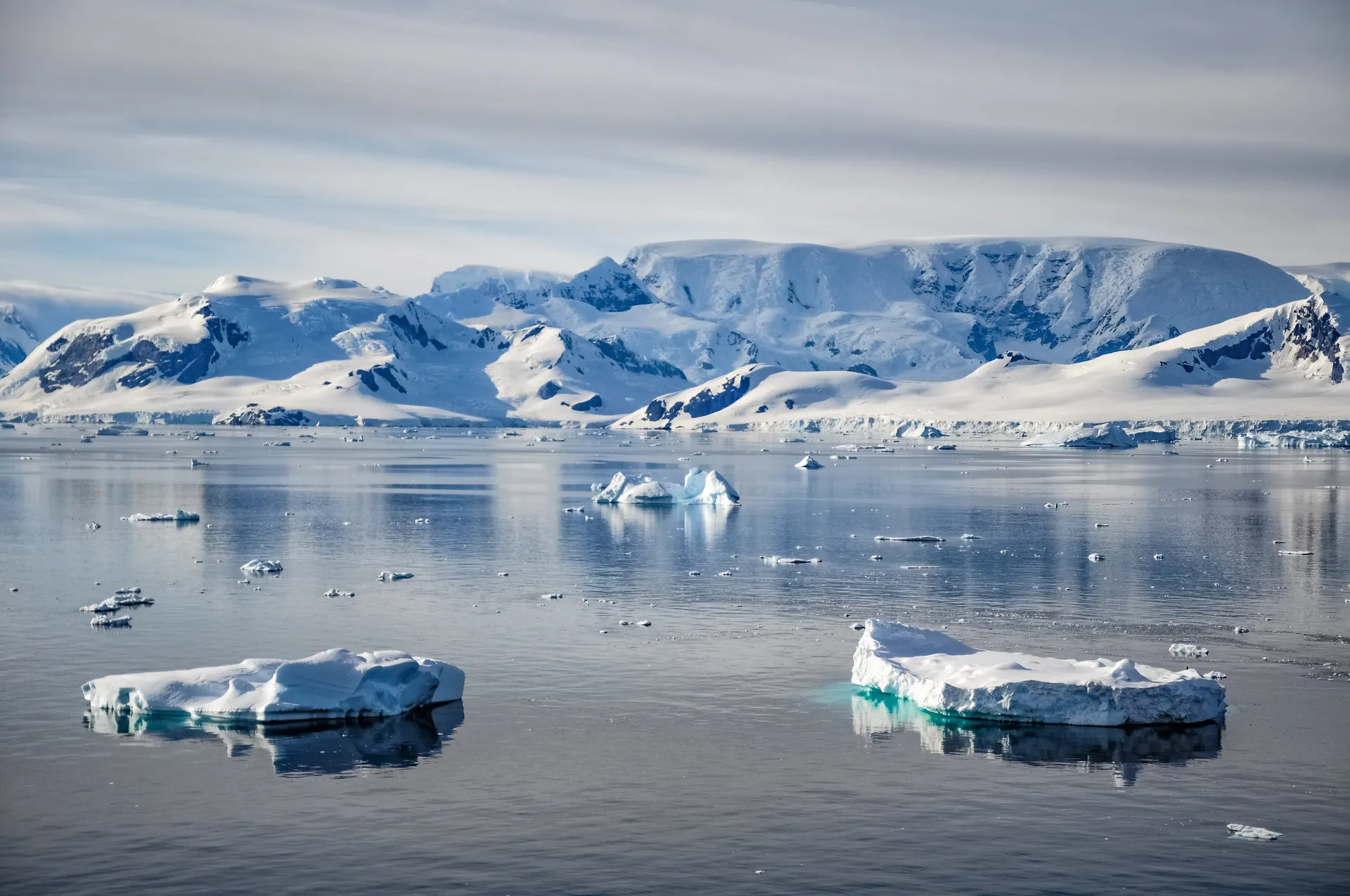
Named by the Swedish Antarctic Expedition of 1901–1904 after their vessel *Antarctic*—which would ultimately be crushed by pack ice and sink in these very waters in February 1903—Antarctic Sound carries the weight of polar exploration in its name alone. Otto Nordenskjöld and his crew survived two harrowing winters on nearby Snow Hill Island before their rescue, a testament to the unforgiving grandeur of this narrow strait separating the tip of the Antarctic Peninsula from Joinville Island. It is a passage steeped in the mythology of the Heroic Age, where every iceberg drifting through feels like a monument to those who dared come before.
To sail through Antarctic Sound is to enter what seasoned expedition leaders reverently call "Iceberg Alley"—a corridor where tabular bergs the size of city blocks calve from the Weddell Sea's vast ice shelves and parade northward in stately procession. The light here is otherworldly: at certain hours, the ice glows in shades of cerulean and violet that no photograph fully captures, while the surrounding peaks of the peninsula rise in jagged silhouette against skies that refuse to darken. Adélie and gentoo penguins crowd the rocky shorelines in their thousands, seemingly indifferent to the Zodiac boats that slip quietly past. There is a silence here so complete it becomes its own sound—broken only by the crack of calving ice or the exhalation of a humpback whale surfacing alongside the hull.
Antarctica offers no terroir in the traditional sense, yet the culinary experience aboard expedition vessels has become a quiet hallmark of polar luxury travel. Leading ships serve multi-course dinners featuring sustainably sourced king crab and Patagonian toothfish—the latter known in finer dining rooms as Chilean sea bass—alongside grass-fed Patagonian lamb slow-roasted with Fuegian herbs. Many expeditions include a legendary "polar barbecue" on deck, where chefs grill Argentine *asado*-style cuts and Falkland Islands calamari beneath a sky streaked with seabirds, while passengers sip warming *calafate* berry liqueur, the Patagonian digestif said to guarantee one's return to the southern latitudes. It is dining as ceremony, each meal a deliberate counterpoint to the raw wilderness outside.
Beyond the Sound itself, the surrounding waters reward the curious traveller with extraordinary side passages. Pourquoi Pas Island—named for Jean-Baptiste Charcot's expedition vessel—and the sweeping, ice-choked embrace of Marguerite Bay lie further south along the peninsula, offering encounters with emperor penguins and leopard seals in waters few ships venture to reach. To the east, across the Ross Sea, the historic hut at Cape Royds on Ross Island still stands as Ernest Shackleton left it during the Nimrod Expedition of 1907–1909, its tins of provisions and personal effects frozen in time beneath volcanic Mount Erebus. Even distant Swift Bay, nestled along the Australian coastline, serves as an embarkation point for Southern Ocean voyages, linking the temperate world to this polar cathedral through the roaring latitudes between.
Reaching Antarctic Sound demands both logistical precision and the right vessel. Silversea's *Silver Endeavour*, with its ice-strengthened hull and butler-attended suites, glides through these waters with the quiet authority of a ship built expressly for polar passage, while HX Expeditions—formerly Hurtigruten—deploys hybrid-powered vessels that combine Scandinavian expedition heritage with a commitment to minimising the environmental footprint in these fragile ecosystems. Azamara offers a more intimate approach, weaving Antarctic Sound into broader Southern Ocean itineraries that connect Ushuaia, the Falkland Islands, and South Georgia in voyages designed for travellers who measure luxury not in thread counts but in the rarity of the experience itself. The season is brief—November through early March—and berths are allocated years in advance, a scarcity that only deepens the privilege of arrival.

