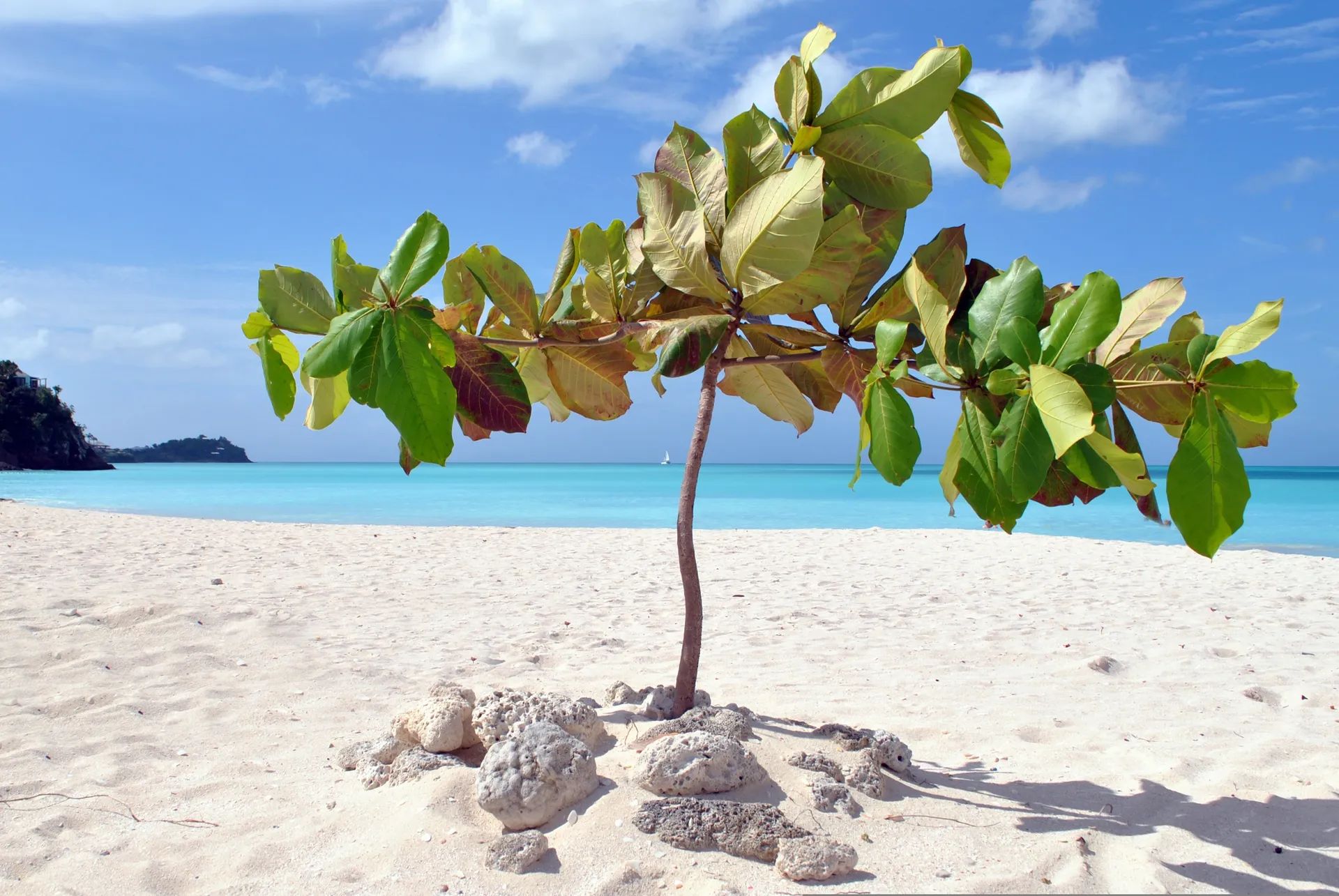
In the crystalline waters north of Antigua, where the Caribbean Sea and Atlantic Ocean negotiate their boundary in gradients of turquoise and sapphire, Prickly Pear Island rises from the shallows like a castaway’s fantasy made real. This uninhabited cay—part of the nation of Antigua and Barbuda—consists of two small islands connected by a sandbar that emerges and submerges with the tide, creating a shifting landscape of white sand, sea grape trees, and coral reefs teeming with tropical fish. There are no hotels, no roads, no permanent structures beyond a seasonal beach bar—just the elemental Caribbean reduced to its purest components.
The snorkeling at Prickly Pear is exceptional even by Caribbean standards. The surrounding reef systems, protected from heavy boat traffic by the island’s remote position, harbor healthy hard and soft corals in waters so clear that visibility routinely exceeds 30 meters. Parrotfish, sergeant majors, blue tangs, and barracuda patrol the reef edges, while southern stingrays glide over the sandy patches between coral heads. The deeper waters beyond the reef occasionally reveal hawksbill turtles and nurse sharks, adding an element of encounter that elevates snorkeling here from recreational to memorable.
The island’s beaches are divided between the Atlantic-facing north shore—where gentle waves create a natural infinity pool effect over the sandbar—and the calmer, Caribbean-facing south shore, where the water achieves a stillness and clarity that make it indistinguishable from a swimming pool but for the occasional pelican dive-bombing for fish. The sand itself is remarkably fine and white, composed of coral and shell fragments ground by millennia of wave action into a powder that is cool underfoot even under the tropical sun.
Antigua, the main island visible to the south, provides the cultural and historical context that Prickly Pear’s pristine simplicity intentionally lacks. St. John’s, the capital, offers the Museum of Antigua and Barbuda, the baroque St. John’s Cathedral, and a lively market scene. English Harbour and Nelson’s Dockyard—a UNESCO World Heritage Site and the only surviving Georgian naval dockyard in the world—speak to Antigua’s strategic importance during the Age of Sail. Falmouth Harbour, adjacent to English Harbour, hosts a superyacht marina that anchors Antigua’s status as a premier Caribbean yachting destination.
Emerald Yacht Cruises and Ponant tender guests to Prickly Pear Island, and the experience is one of deliberate simplicity—a day spent in the Caribbean’s essential state, unmediated by resort infrastructure or organized entertainment. The island’s seasonal beach bar provides grilled lobster, rum punch, and cold beer, and beyond this modest hospitality, the invitation is simply to swim, snorkel, and surrender to the rhythm of waves on white sand. The driest and most comfortable months run from December through April, though the island’s appeal is year-round for those who find luxury in absence rather than abundance.

