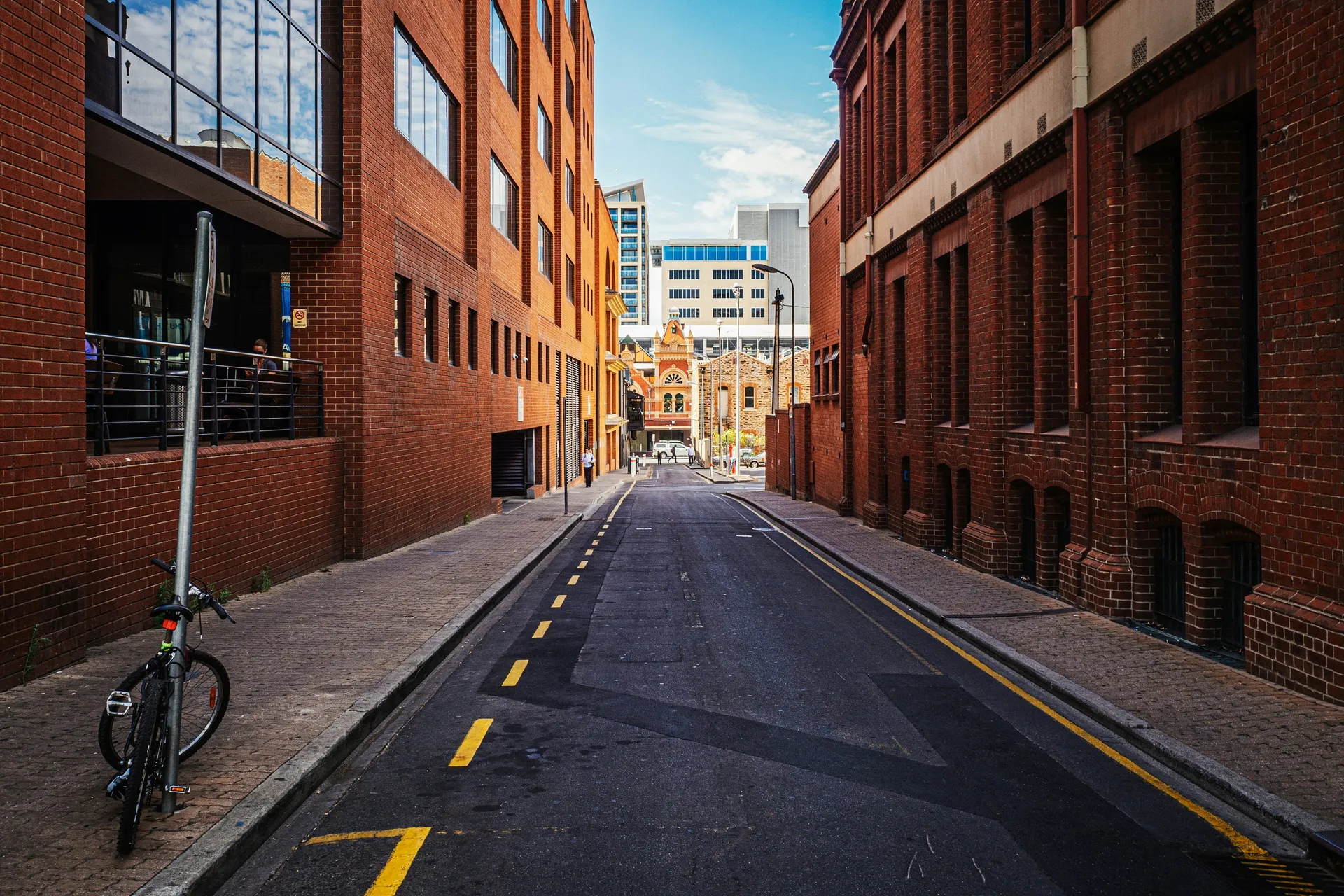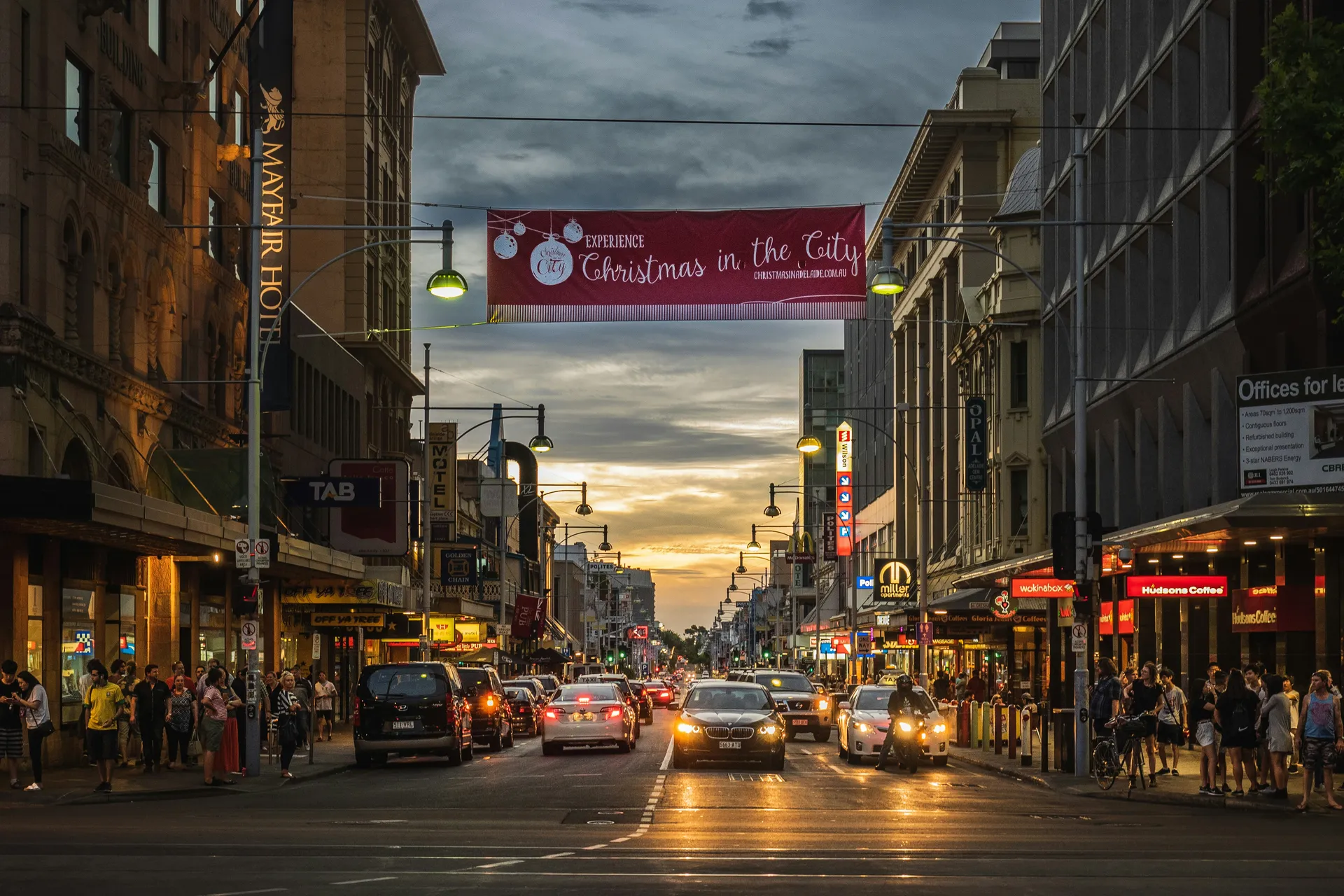
Adelaide was designed to be different. When Colonel William Light surveyed the site for South Australia's capital in 1836, he laid out a city of mathematical precision — a grid of wide boulevards surrounded by a continuous belt of parkland that separates the city centre from its suburbs like a green moat. The colony itself was unique: founded not as a penal settlement but as a province of free settlers, Adelaide attracted Nonconformist English families, German Lutherans fleeing religious persecution, and Scottish professionals seeking opportunity — communities whose values of industry, religious tolerance, and cultural aspiration still shape the city's character nearly two centuries later.
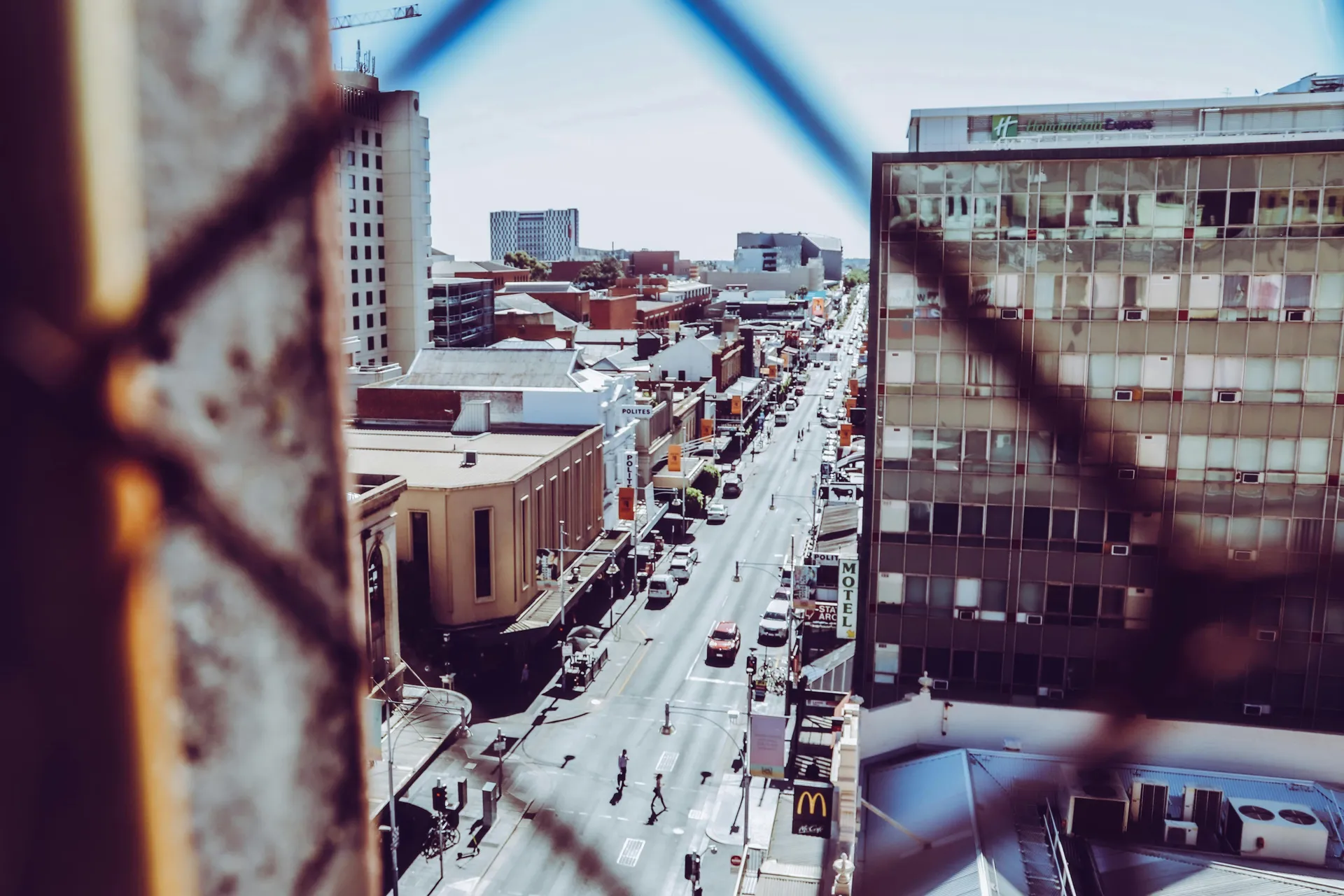
Today Adelaide is a sophisticated metropolitan centre of 1.4 million that wears its quality of life lightly. The city centre remains walkable, leafy, and human-scaled — the kind of place where a morning spent at the Central Market segues naturally into an afternoon at the Art Gallery of South Australia and an evening at one of East End's innovative restaurants. The Central Market, operating since 1869, is one of the largest covered food markets in the Southern Hemisphere — its 80-plus stalls a sensory overload of Barossa Valley cheeses, Coorong mullet, Adelaide Hills berries, and the dried goods, spices, and condiments brought by successive waves of Greek, Italian, Vietnamese, and Chinese immigrants whose culinary traditions have made Adelaide one of Australia's most diverse food cities.
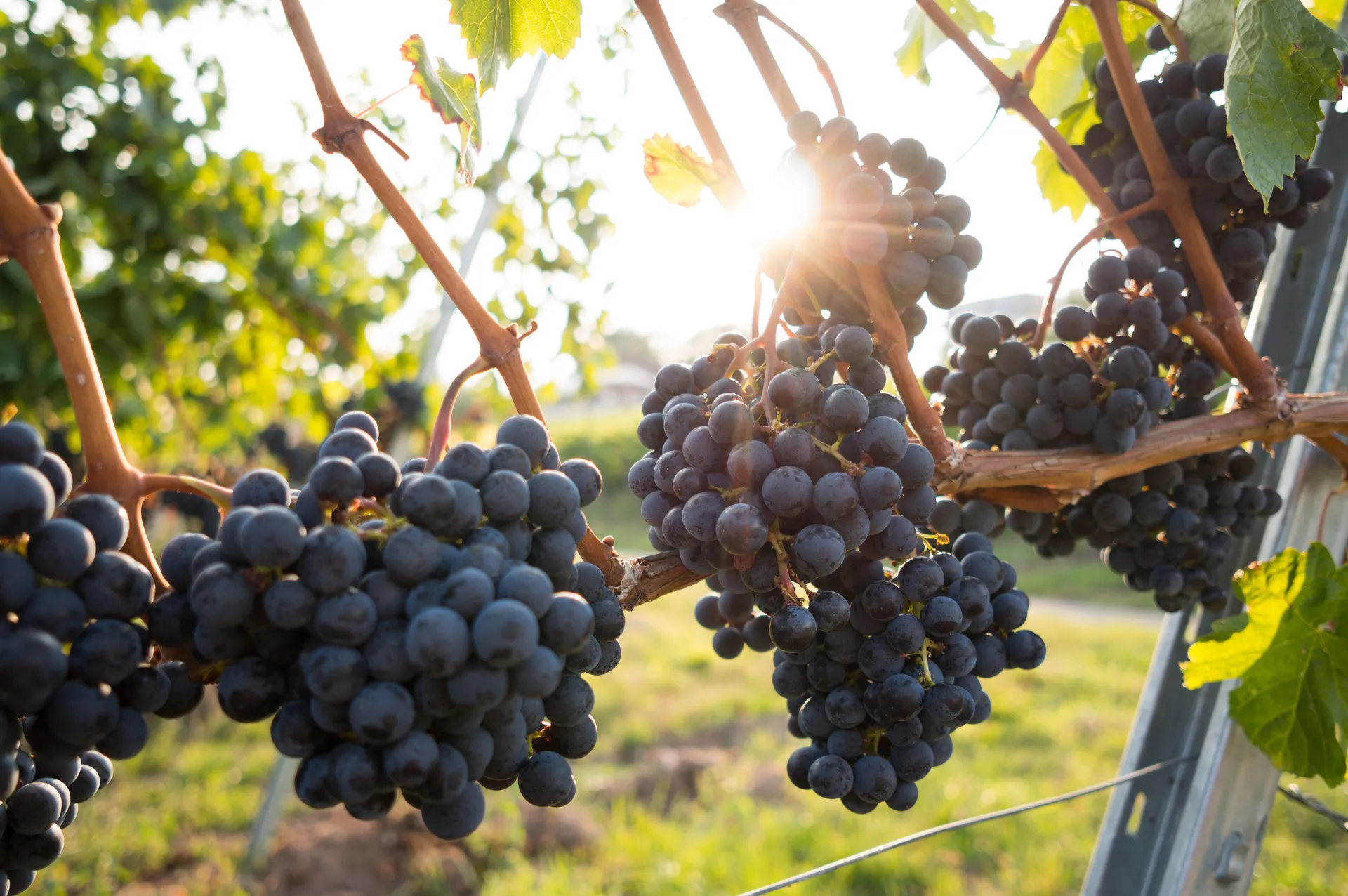
The wine regions surrounding Adelaide are its greatest natural asset. The Barossa Valley, 60 kilometres northeast, produces some of the world's most celebrated Shiraz — Penfolds Grange, Henschke Hill of Grace, and the old-vine estates whose gnarled centenarian vines produce fruit of concentrated intensity. McLaren Vale, 40 kilometres south, adds Grenache, Cabernet, and the beachside tasting experiences that combine wine with the coastal landscape of the Fleurieu Peninsula. The Adelaide Hills, just 20 minutes from the city centre, produce cool-climate Sauvignon Blanc, Pinot Noir, and the artisan cheeses and ciders that have made the Hills one of Australia's premier food tourism destinations. No other city in Australia — arguably no other city in the world — has three distinct, world-class wine regions within an hour's drive of its centre.
The cultural infrastructure of Adelaide is anchored by the Adelaide Festival, held each March — one of the world's great arts festivals, drawing theatre, dance, music, and visual art from across the globe for three weeks of performances in the Festival Centre and venues scattered across the parklands. The Fringe Festival, running concurrently, is the largest arts fringe in the Southern Hemisphere and the second-largest in the world after Edinburgh. North Terrace, the city's cultural boulevard, lines up the Art Gallery, the South Australian Museum (housing the world's largest collection of Aboriginal artifacts), the State Library, and the University of Adelaide in an academic and cultural precinct of uncommon density.
Adelaide is served by Norwegian Cruise Line, P&O Cruises, and Princess Cruises on Australian coastal and trans-Pacific itineraries, with ships docking at the Outer Harbor terminal. The most pleasant visiting season is October through April, with the Adelaide Festival in March providing the pinnacle of the cultural calendar. The Mediterranean climate delivers warm, dry summers and mild winters, making Adelaide one of the most reliably sunny cities in Australia.