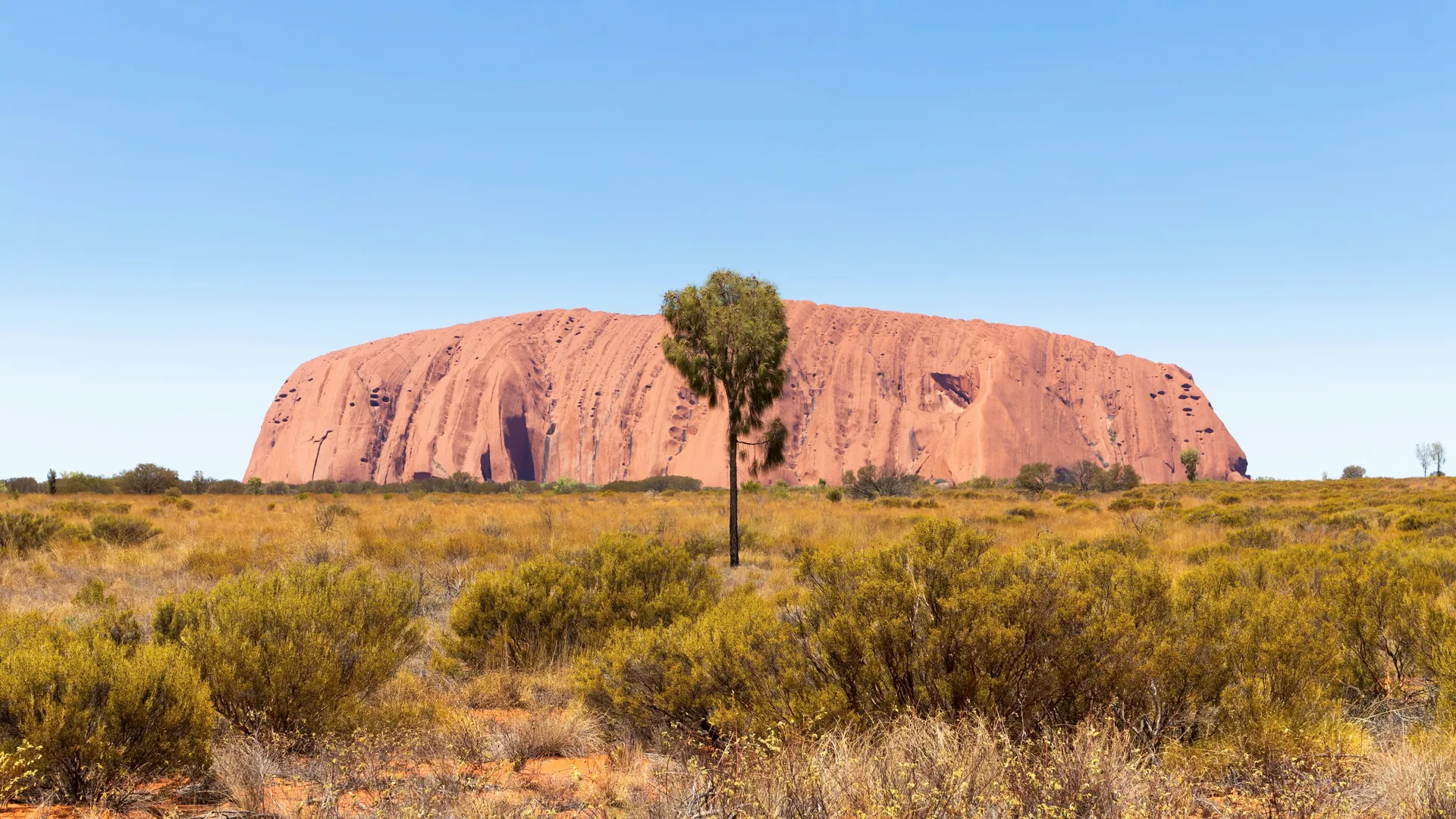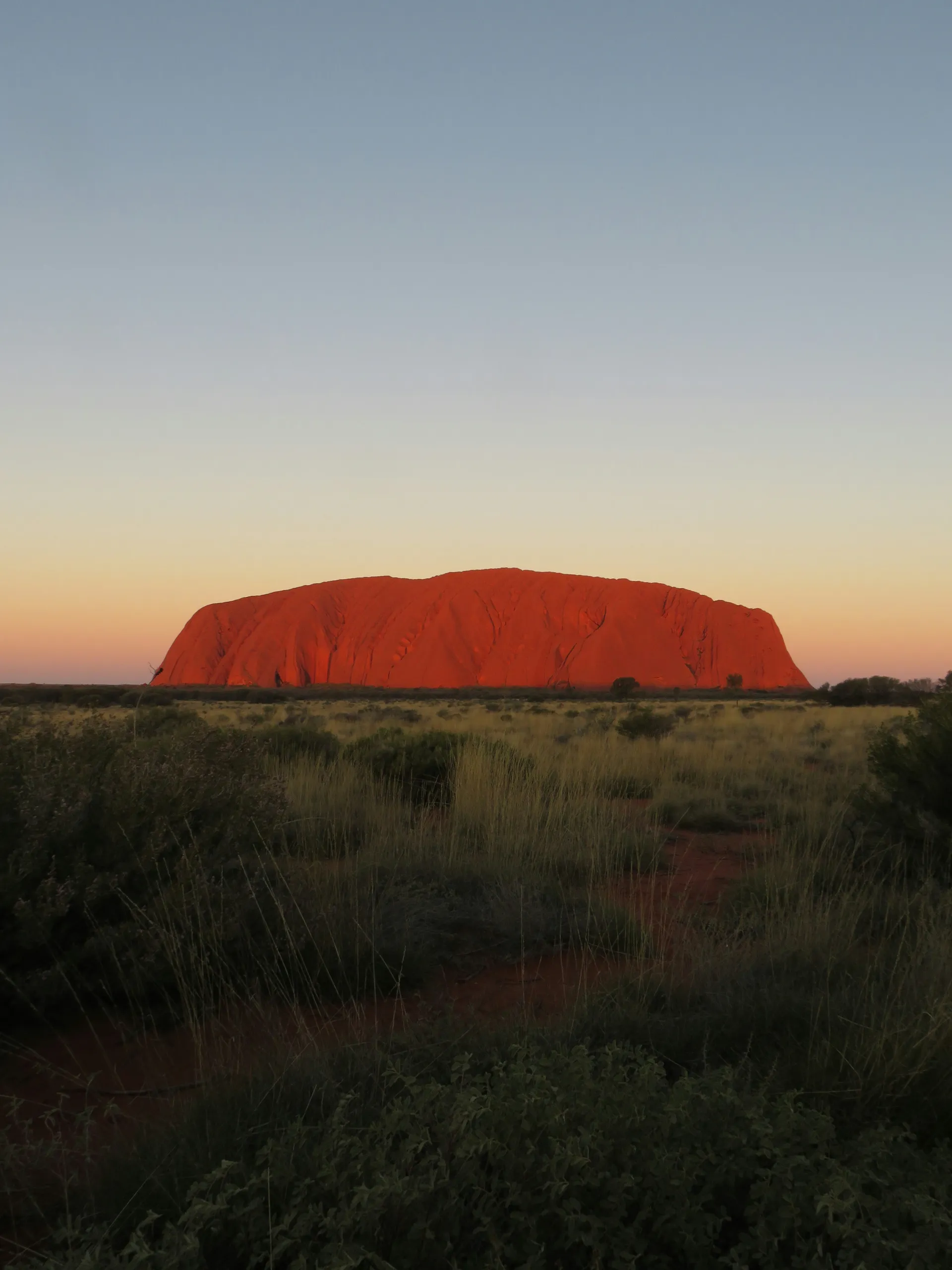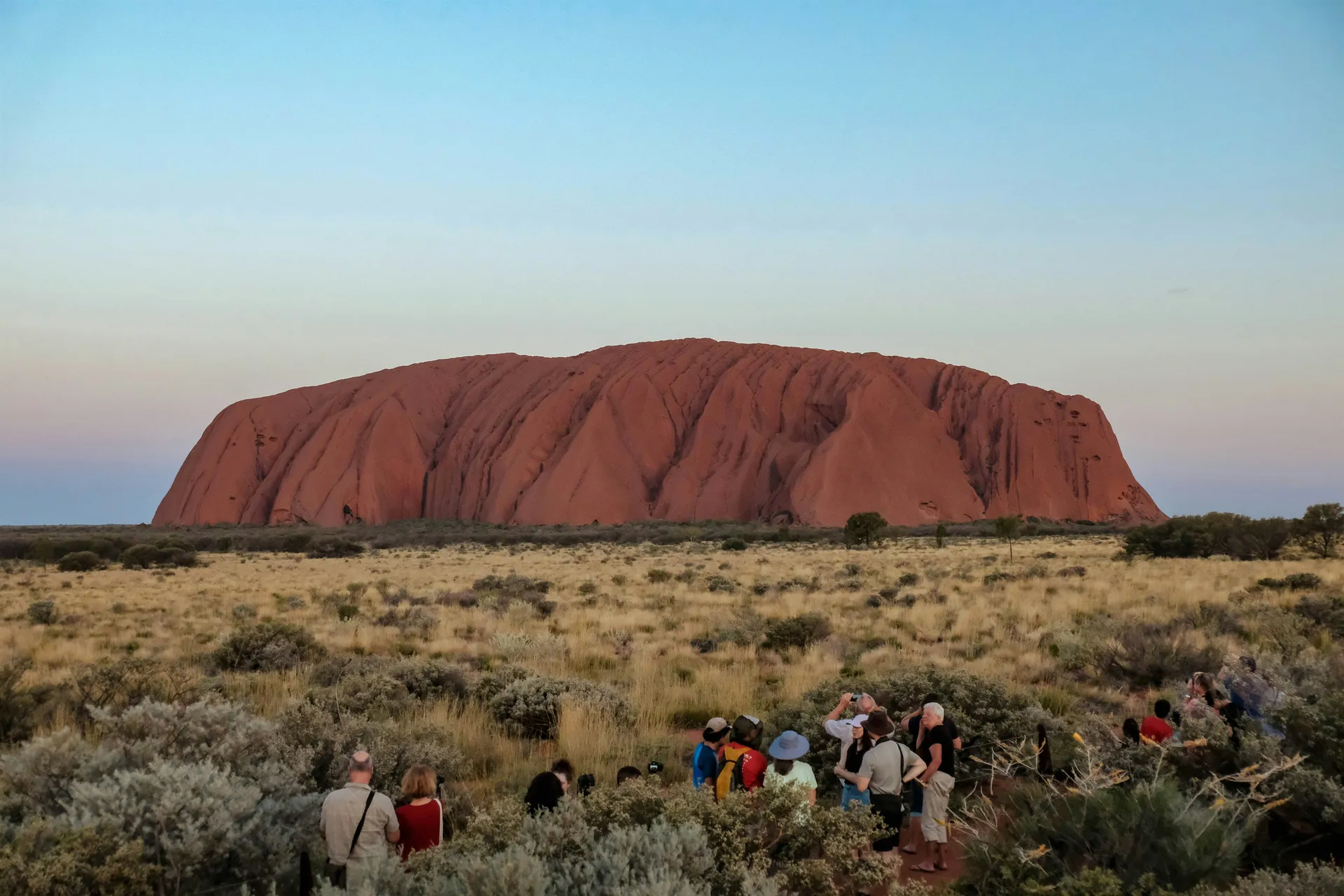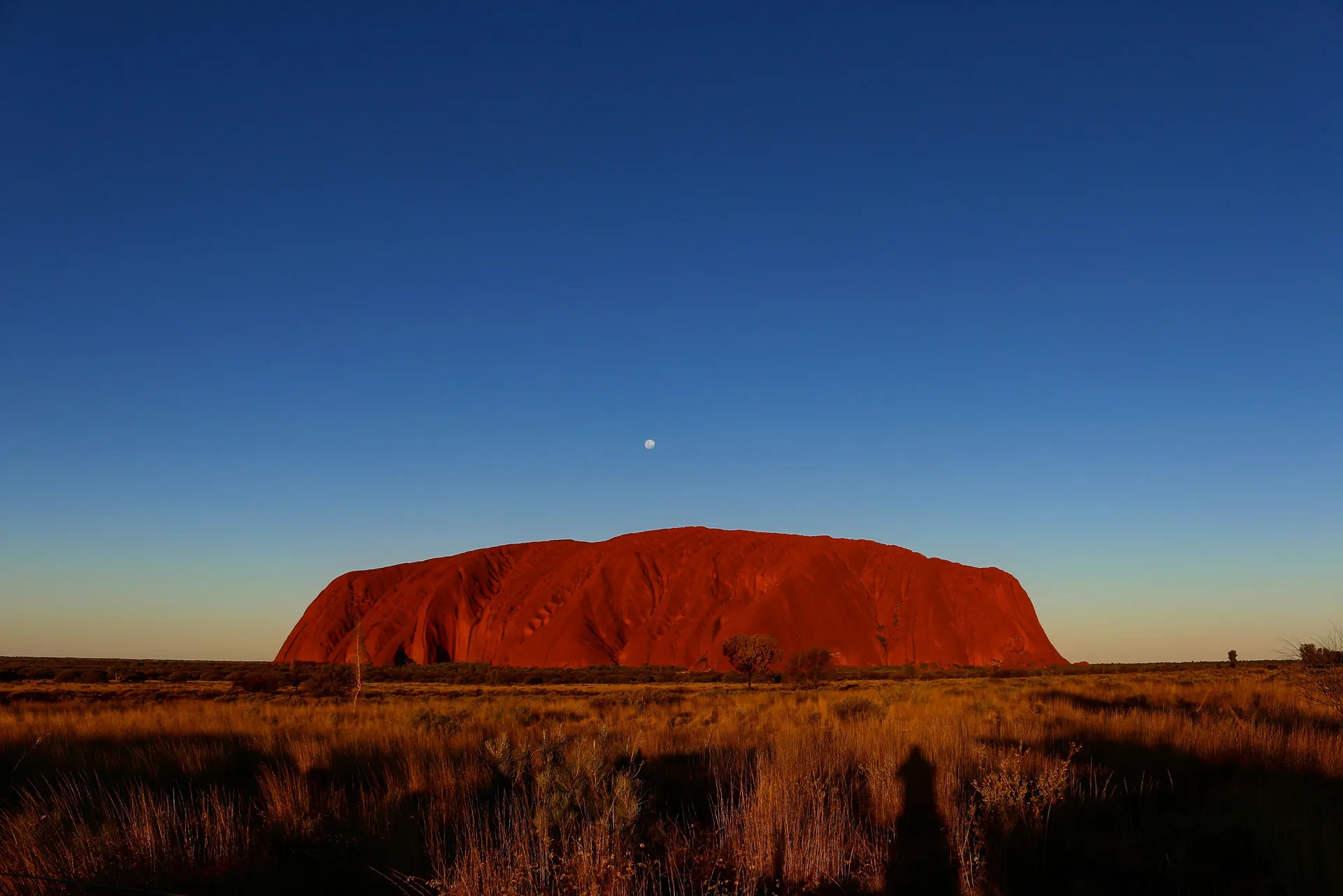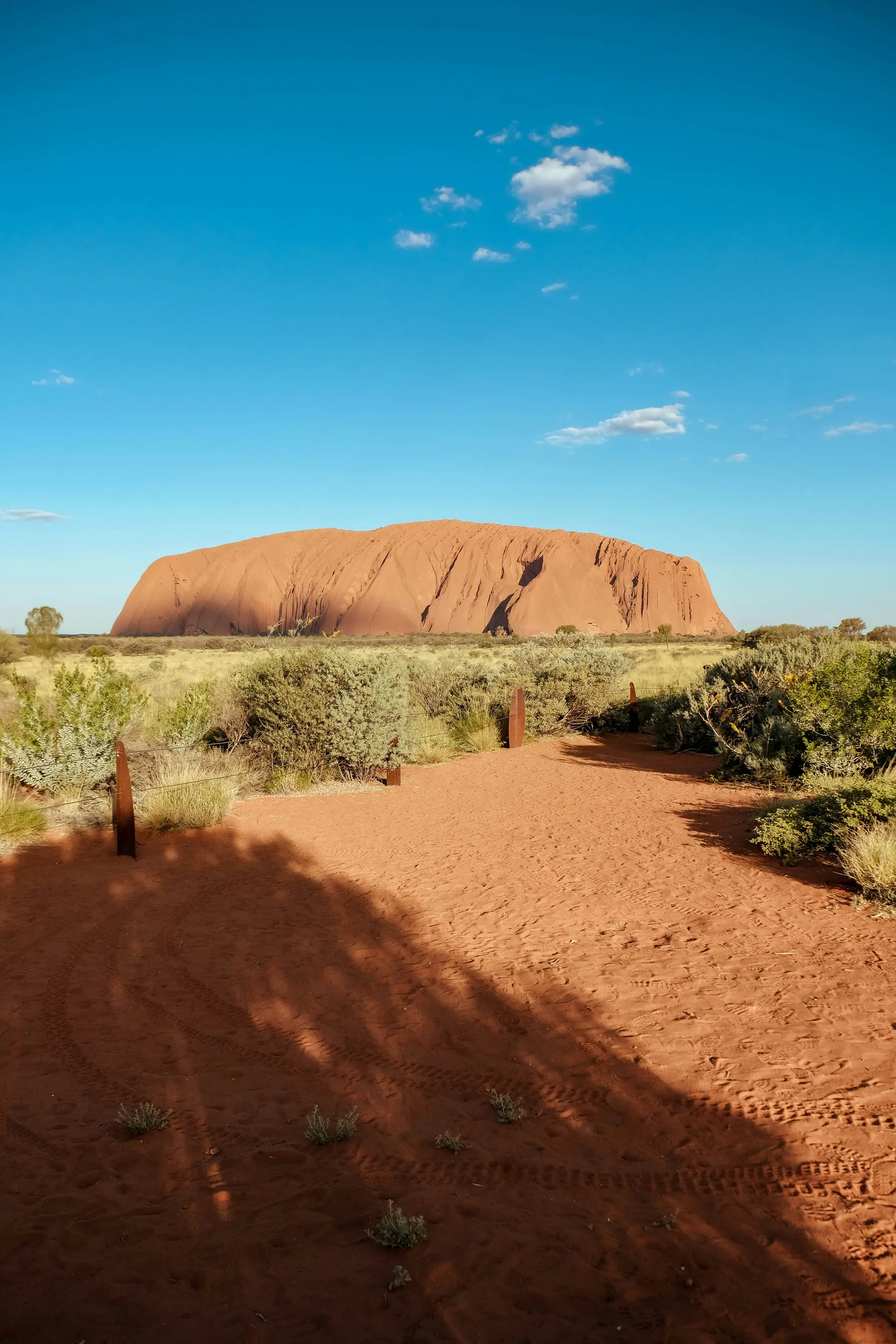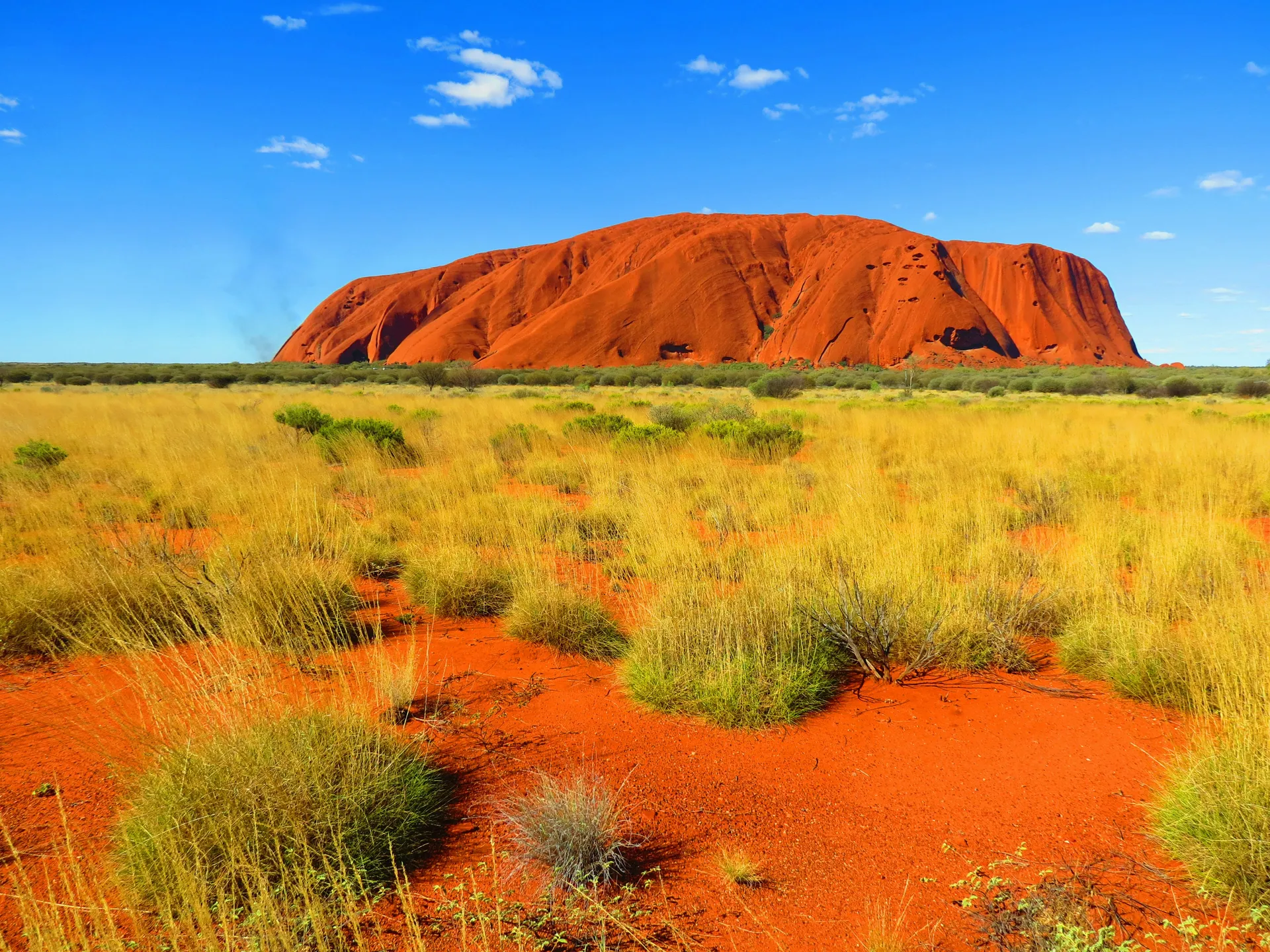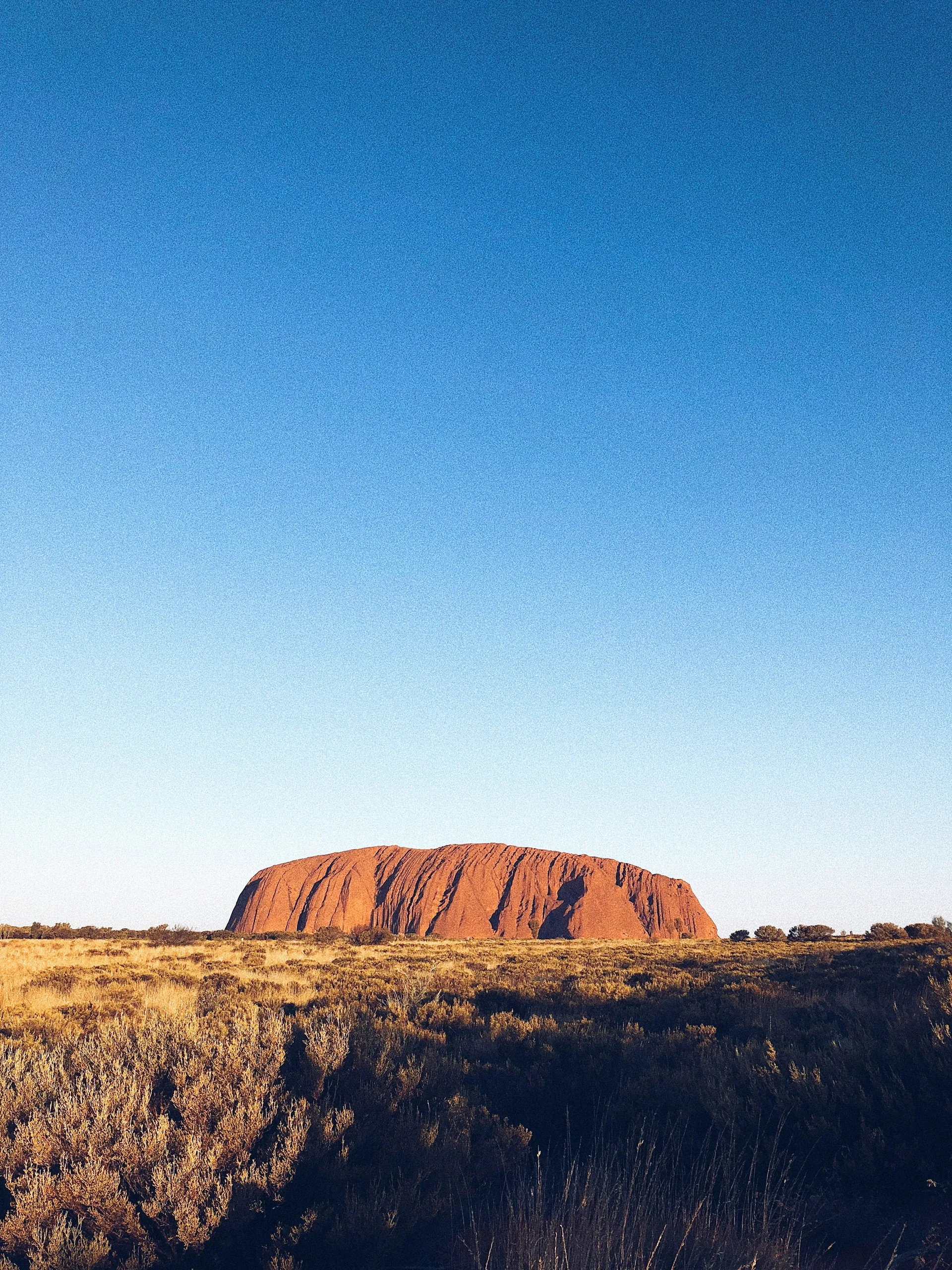
Rising from the red earth of Australia's Central Desert with the abruptness of a geological hallucination, Uluru is among the most instantly recognizable natural landmarks on Earth — and among the most spiritually significant. This massive sandstone monolith, standing 348 meters above the surrounding plain and extending an estimated 2.5 kilometers below the surface, has been sacred to the Aṉangu people for tens of thousands of years, serving as a repository of Tjukurpa (the Dreaming) — the complex system of law, knowledge, and spirituality that governs Aṉangu life. The rock's handover from the Australian government to its traditional owners in 1985, and the subsequent closure of climbing in 2019, represented landmarks in the recognition of Indigenous cultural sovereignty.
Uluru's power lies not merely in its scale but in its mutability. The rock's iron-rich sandstone performs a continuous light show throughout the day, its surface shifting through a palette that ranges from dusty rose at dawn through burnt orange at midday to a deep, almost incandescent crimson at sunset, with occasional displays of purple and violet that seem to emanate from within the stone itself. After rare desert rains, waterfalls cascade down the rock's scored surface, and the surrounding desert erupts in wildflowers with a speed and abundance that beggars belief — the red earth transformed overnight into carpets of white, yellow, and pink that persist for brief, glorious weeks.
The Aṉangu-guided experiences around Uluru's base reveal a landscape far more complex than the distant silhouette suggests. The rock's surface is scored with caves, overhangs, and water holes, many adorned with paintings that connect to specific Tjukurpa stories encoded in the landscape. Guided walks led by Aṉangu rangers share selected cultural knowledge — stories of Kuniya (the python woman), Liru (the venomous snake), and other ancestral beings whose journeys created the features of the landscape. The Maruku Arts center offers direct engagement with Aṉangu artists whose dot paintings and wooden carvings translate ancient knowledge into contemporary visual language.
The culinary landscape around Uluru blends resort dining with bush tucker experiences that connect food to country. Native ingredients — bush tomatoes, wattleseed, desert limes, quandong — appear in preparations that range from traditional Aṉangu cooking methods to contemporary Australian fine dining. The nearby Sounds of Silence dinner, held on a desert dune under a canopy of Southern Hemisphere stars, combines bush-tucker-inspired cuisine with didgeridoo performances and astronomy — an experience of orchestrated wonder that somehow avoids feeling contrived because the natural setting is so overwhelming.
Kata Tjuṯa (the Olgas), a collection of thirty-six massive domed rock formations located thirty kilometers west of Uluru, offers a complementary experience of geological and spiritual power. The Valley of the Winds walk threads between these enormous formations, creating perspectives of scale and enclosure that are profoundly moving.
Uluru is accessed by air from all major Australian cities via Ayers Rock Airport, or as an overland excursion from Alice Springs (approximately five hours by road). Cruise itineraries incorporating inland Australian experiences sometimes include air transfers to Uluru. The most pleasant conditions occur from April to September, when temperatures are moderate (5-25°C) and skies reliably clear. Summer (December-February) brings extreme heat exceeding 40°C and should be approached with serious caution. Sun protection is essential year-round, and respectful engagement with Aṉangu cultural protocols — including observance of no-photography zones — is both expected and appropriate.