On the Kimberley coast of Western Australia, where the continent's ancient sandstone plateau plunges into the tidal waters of the Indian Ocean, Careening Bay holds a remarkable piece of European exploration history etched directly into the bark of a living tree. In 1820, Lieutenant Phillip Parker King of HMS Mermaid careened his vessel here—hauling it onto the beach to repair its copper-sheathed hull—and carved the ship's name and the date into a boab tree that still stands, making it one of the oldest European inscriptions in Western Australia. The tree, now protected by a heritage fence, continues to grow around the carved letters, preserving a direct physical connection to the age of maritime exploration in one of the most remote locations on the Australian coastline.
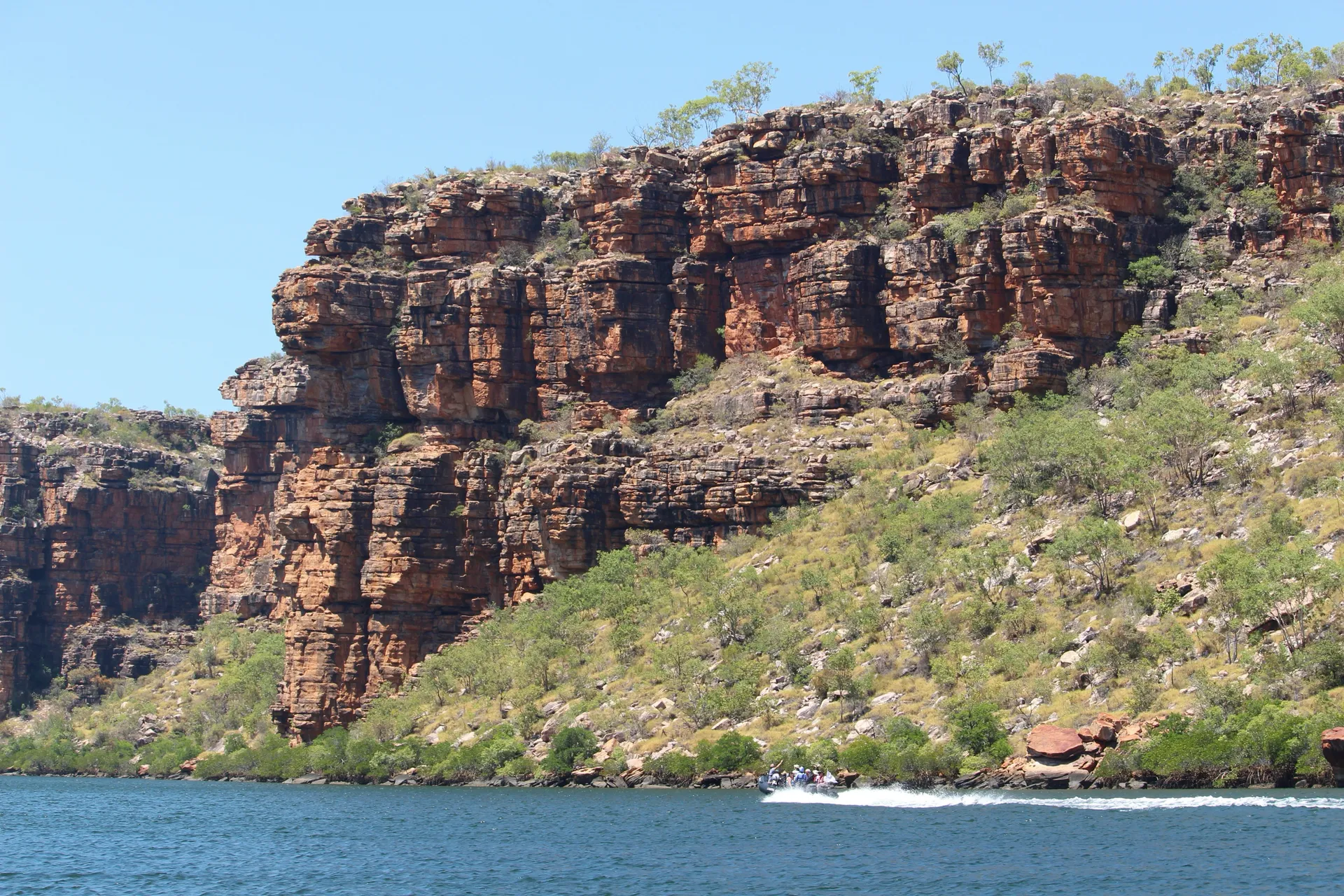
The character of Careening Bay is defined by the Kimberley's primal landscape: billion-year-old Kimberley sandstone in tones of rust and ochre, mangrove-fringed tidal creeks that fill and empty with some of the largest tidal movements on earth, and a silence broken only by birdsong, the lap of tidal water, and the distant boom of surf on the outer reef. The boab trees that dot the landscape—their swollen, bottle-shaped trunks storing water against the dry season—lend an almost African character to the Australian bush, a botanical connection that speaks to the ancient Gondwanan heritage shared by these two continents.
The natural environment surrounding Careening Bay is in pristine condition, benefiting from the absence of roads, settlements, or any infrastructure beyond the protected heritage tree. Saltwater crocodiles—the world's largest living reptiles—inhabit the tidal waterways, and their presence ensures that all shore activities are conducted with appropriate awareness and respect. White-bellied sea eagles nest in the coastal trees, ospreys fish the tidal shallows, and the mudflats exposed at low tide attract migratory shorebirds that have traveled from breeding grounds as distant as Siberia. The waters offshore support dugongs, sea turtles, and the seasonal humpback whales that calve in the warm Kimberley waters between July and October.
The Aboriginal cultural heritage of the Careening Bay region extends back tens of thousands of years. The Worrorra people, traditional custodians of this stretch of coastline, left their artistic and spiritual mark on the landscape in the form of Wandjina rock art—the distinctive wide-eyed, haloed spirit figures that adorn rock shelters throughout the Kimberley. These paintings, some of which are periodically refreshed by traditional custodians, represent one of the longest continuous artistic traditions on earth and provide a cultural context that places King's 1820 inscription in proper temporal perspective—a momentary scratching on the surface of a story that stretches back to the dawn of human artistic expression.
Careening Bay is accessible only by expedition cruise vessel operating along the Kimberley coast, typically on itineraries departing from Broome or Wyndham between April and October during the dry season. Zodiac craft deposit visitors on the beach for the short walk to the heritage boab tree, and excursions typically include exploration of the surrounding tidal creeks and mangrove systems. The dry season offers clear skies and manageable temperatures, though the heat can be intense even in the cooler months. There are no facilities of any kind—visitors should bring water, sun protection, and sturdy footwear for the rocky terrain.

