Darwin: Australia's Tropical Gateway to the Top End
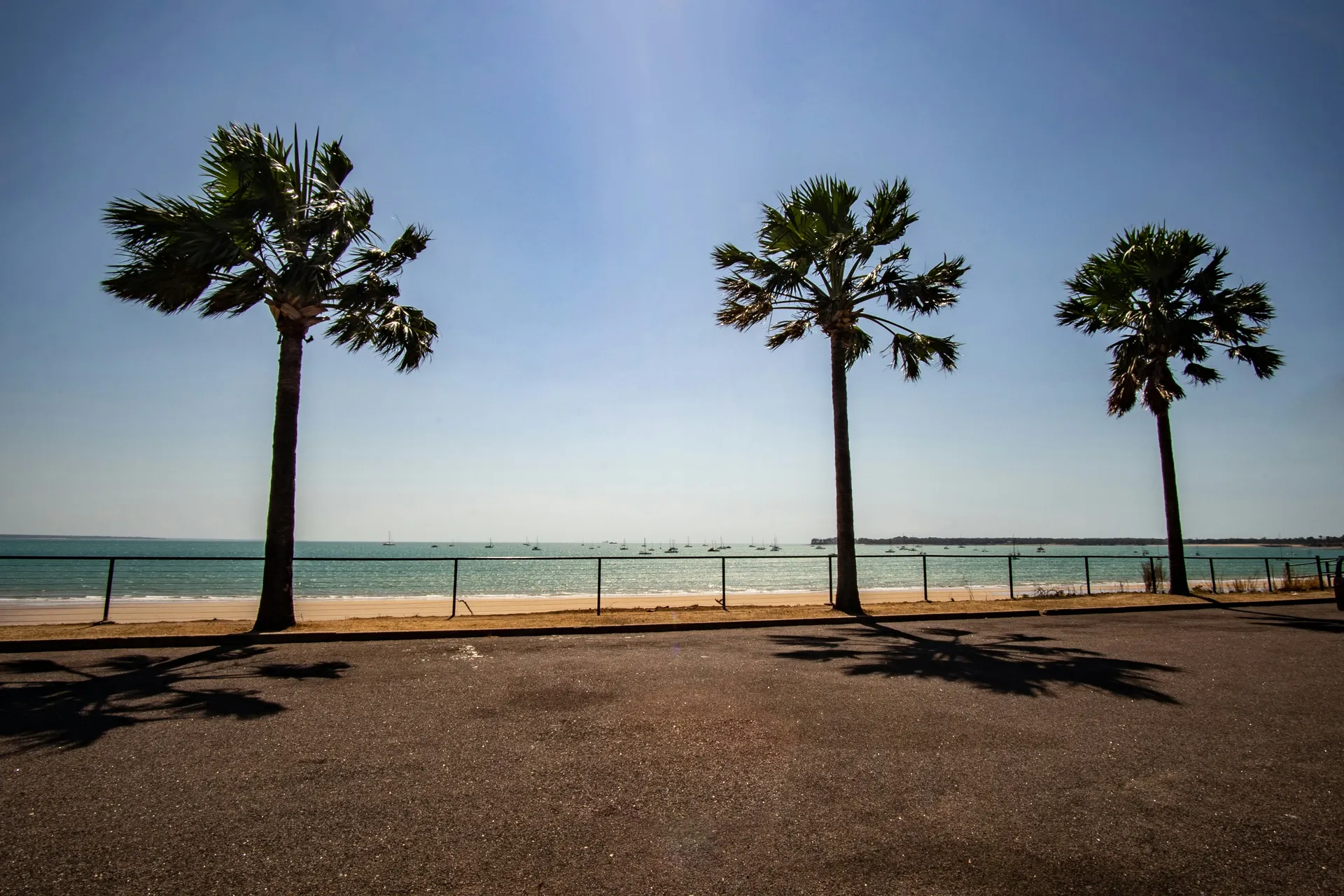
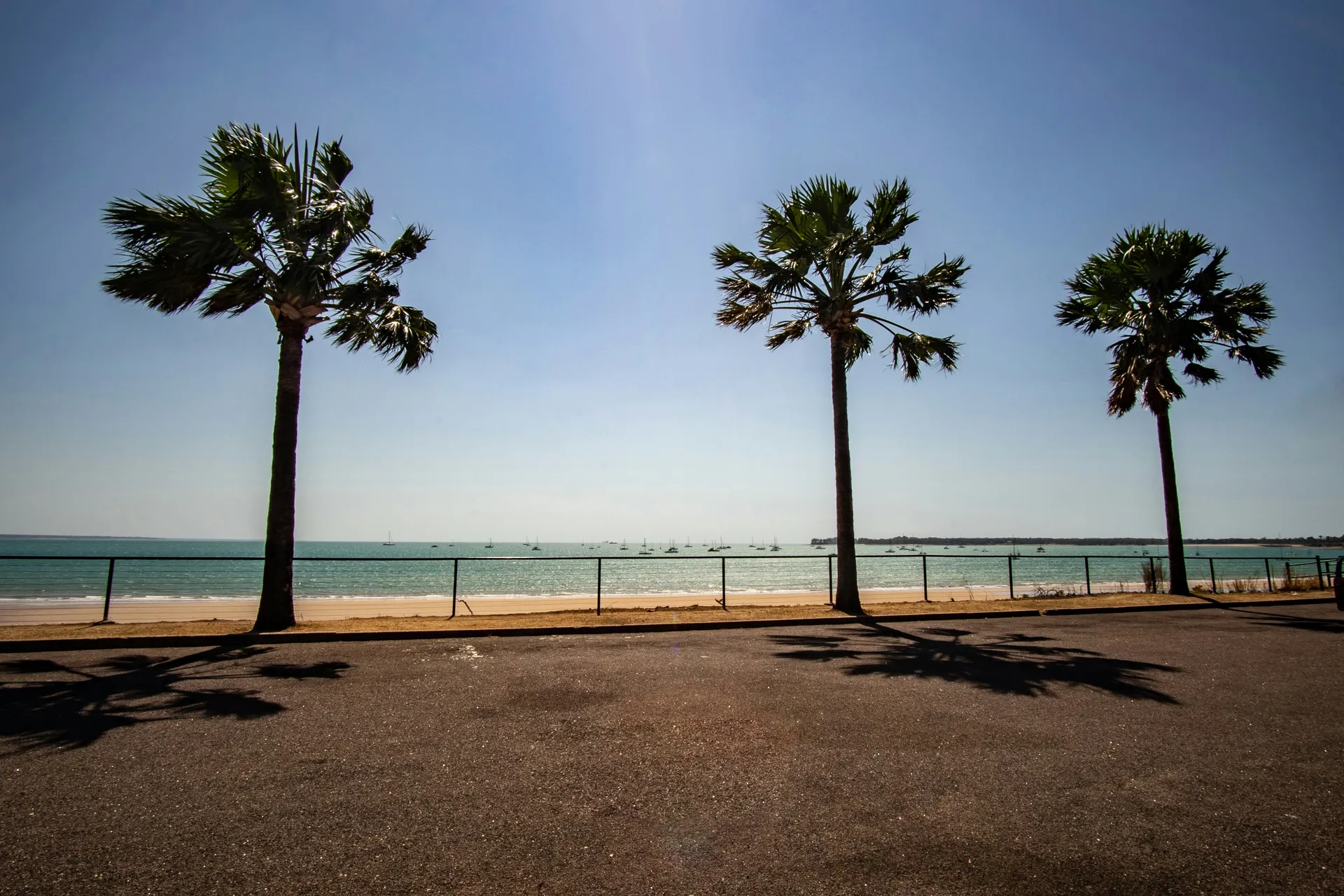
Darwin occupies the northernmost point of Australia's continental coastline, a city of seventy thousand that feels simultaneously like a frontier outpost and a cosmopolitan tropical capital. Named after Charles Darwin — who never actually visited — the city sits on a harbour that Indigenous Larrakia people have called home for at least sixty-five thousand years, making it one of the oldest continuously inhabited landscapes on earth. European settlement began in 1869 after several failed attempts, and Darwin has been destroyed and rebuilt multiple times: Cyclone Tracy devastated the city on Christmas Day 1974, and Japanese bombs had already levelled much of it during sixty-four air raids in 1942-43, making Darwin the most heavily bombed city in Australian history. This cycle of destruction and reinvention has given Darwin a resilient, forward-looking character that refuses to dwell on the past.
The character of Darwin is defined by its proximity to the wild. Saltwater crocodiles patrol the harbour and coastal estuaries. Flocks of sulphur-crested cockatoos wheel overhead at sunset. The tropical wet-dry climate — two distinct seasons, the Wet and the Dry — shapes everything from architecture to social life. During the Dry (May to October), Darwin comes alive with outdoor markets, festivals, and the remarkable Deckchair Cinema, where films are screened under the stars in a natural amphitheatre overlooking the harbour. The Mindil Beach Sunset Market, held Thursday and Sunday evenings during the Dry, is a celebration of Darwin's extraordinary multiculturalism — Greek, Sri Lankan, Indonesian, Thai, Vietnamese, and Indigenous Australian food stalls compete for attention as the sun drops into the Timor Sea in a nightly display of tropical pyrotechnics.
Darwin's food culture reflects its position as Australia's most multicultural city per capita. The laksa at the Mindil Beach market — rich, coconut-based, fragrant with lemongrass and galangal — is legendary. Barramundi, the iconic tropical fish, is served beer-battered, grilled, or pan-fried at waterfront restaurants. Crocodile and kangaroo appear on menus as distinctly Australian proteins. The Darwin Waterfront Precinct, a modern development around a wave lagoon and swimming area (the harbour itself being too crocodile-rich for swimming), has become the city's dining hub, with restaurants offering sunset views over the harbour. Cavenagh Street in the CBD is Darwin's unofficial Asian food quarter, its Malaysian, Indonesian, and Vietnamese restaurants rivalling anything in Sydney or Melbourne.
The excursion possibilities from Darwin are extraordinary. Kakadu National Park — a UNESCO World Heritage Site encompassing nearly twenty thousand square kilometres of wetlands, escarpments, and monsoon forest — contains Aboriginal rock art galleries at Ubirr and Nourlangie that are among the most significant and visually stunning in the world, some paintings estimated at twenty thousand years old. Litchfield National Park, closer to the city, offers swimming beneath waterfalls that cascade from the sandstone plateau into plunge pools surrounded by monsoon vine forest — Florence Falls and Wangi Falls are unforgettable. The Adelaide River, between Darwin and Kakadu, is famous for its "jumping crocodile" cruises, where massive saltwater crocodiles launch themselves out of the water to take bait from tour operators — thrilling, unsettling, and utterly Australian.
Cunard, Holland America Line, Princess Cruises, Seabourn, and Silversea all call at Darwin on their Australian circumnavigation and Southeast Asian itineraries. The cruise terminal at Fort Hill Wharf sits adjacent to the CBD, making independent exploration straightforward. For travellers who know Australia's southern cities but have never ventured to the Top End, Darwin presents a radically different country — tropical, multicultural, ancient in its Indigenous heritage, and possessed of a landscape whose scale and wildness can be genuinely overwhelming. The Dry season from May to October is prime visiting time, with clear skies, comfortable temperatures, and the outdoor markets in full swing.