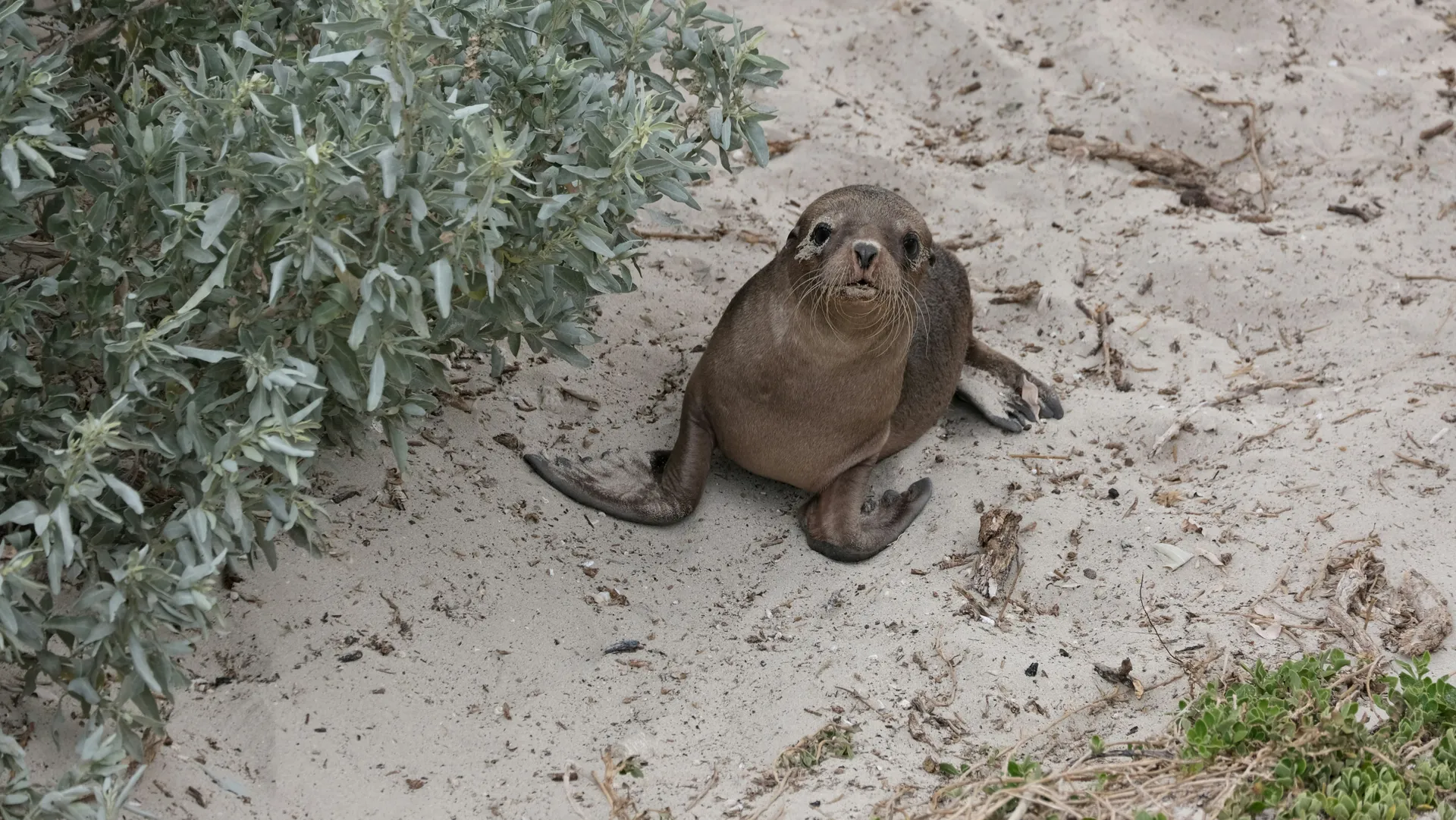
Separated from the South Australian mainland by the turbulent waters of Backstairs Passage, Kangaroo Island is Australia's third-largest island and one of the country's most important wildlife sanctuaries. Here, in a landscape that alternates between wind-sculpted coastline, dense eucalyptus bushland, and productive farmland, Australian wildlife exists in densities and with a tameness that has largely vanished from the mainland — a Noah's Ark riding at anchor in the Southern Ocean.
The island's wildlife encounters are genuinely extraordinary. At Seal Bay Conservation Park, visitors walk among one of Australia's largest colonies of Australian sea lions — over eight hundred animals that lounge, nurse their pups, and surf the breakers in apparently total indifference to human observers. Koalas, introduced to the island in the 1920s and now numbering in the tens of thousands, drape themselves over eucalyptus branches with the boneless ease that makes them irresistible to photograph. At dusk, little penguins waddle ashore at Penneshaw and Kingscote, while echidnas trundle through the underbrush and platypuses — those improbable creatures — inhabit the island's freshwater streams.
The coastal scenery is spectacular. Flinders Chase National Park, occupying the island's western end, contains some of Australia's most photographed natural landmarks: the Remarkable Rocks, a cluster of enormous granite boulders sculpted by 500 million years of wind and rain into surreal organic forms, and Admirals Arch, a natural rock bridge where a colony of New Zealand fur seals plays in the surge below. The south coast presents sheer limestone cliffs battered by swells that have traveled unimpeded from Antarctica, while the north coast offers sheltered bays with white-sand beaches and calm turquoise water.
Kangaroo Island has also established itself as a gourmet destination of note. The island's producers craft artisan cheeses, Ligurian honey (from the world's only remaining population of purebred Ligurian bees), free-range eggs, marron (freshwater crayfish), and gin distilled from native botanicals. The island's wineries, concentrated around the American River area, produce cool-climate wines — particularly crisp whites and elegant shiraz — that reflect the maritime influence of the surrounding ocean.
Cruise ships anchor off Penneshaw on the island's eastern tip, with passengers tendering ashore to the small jetty. The island is large — 150 kilometers long — so organized excursions are the most practical way to experience its highlights. The Australian summer from December through February offers the warmest weather and longest days, but spring (September-November) brings wildflower displays and newborn wildlife, while winter (June-August) offers dramatic coastal storms and migrating southern right whales visible from shore. The island rewards visitors in every season, each bringing its own distinctive natural spectacle.

