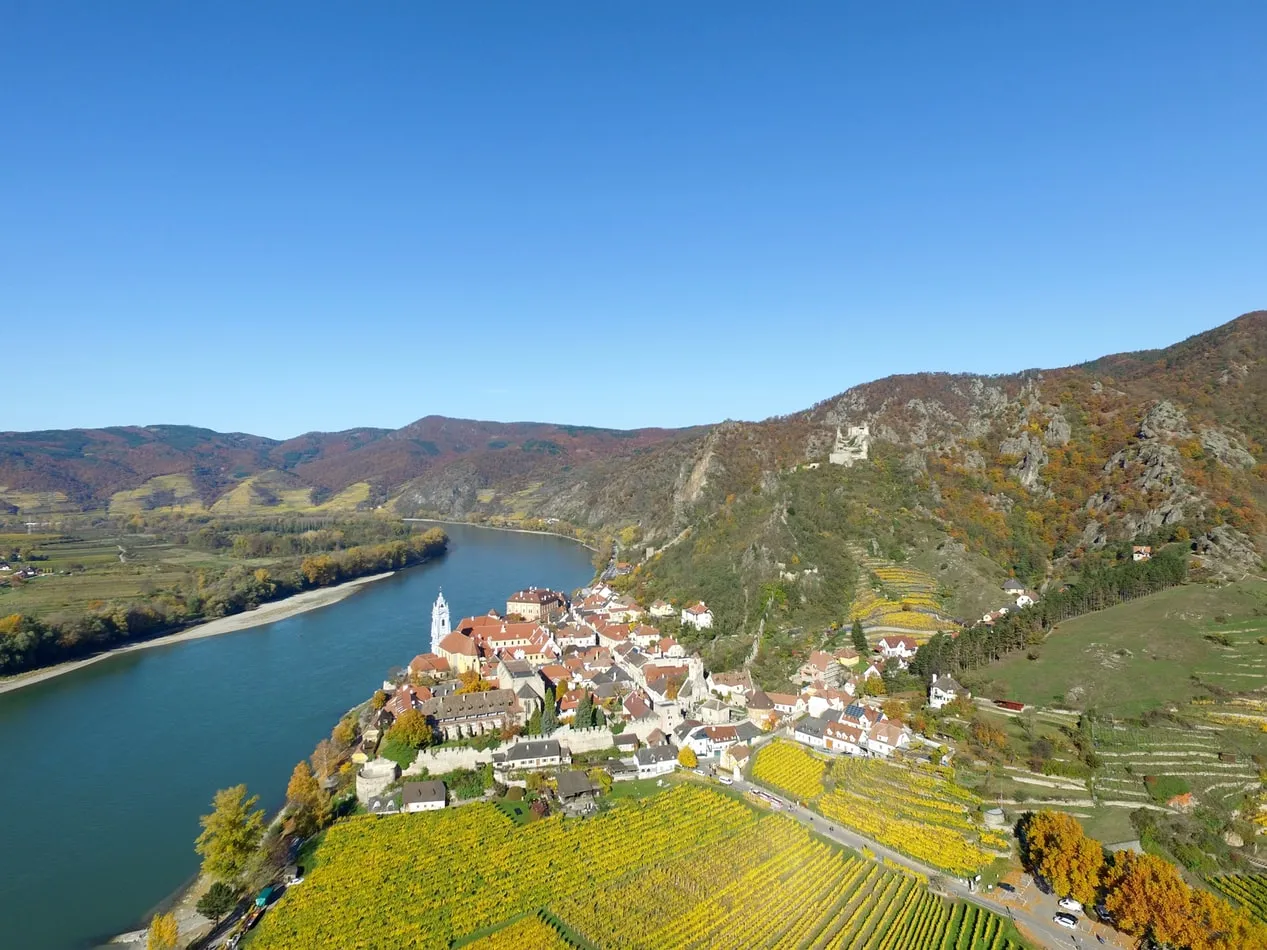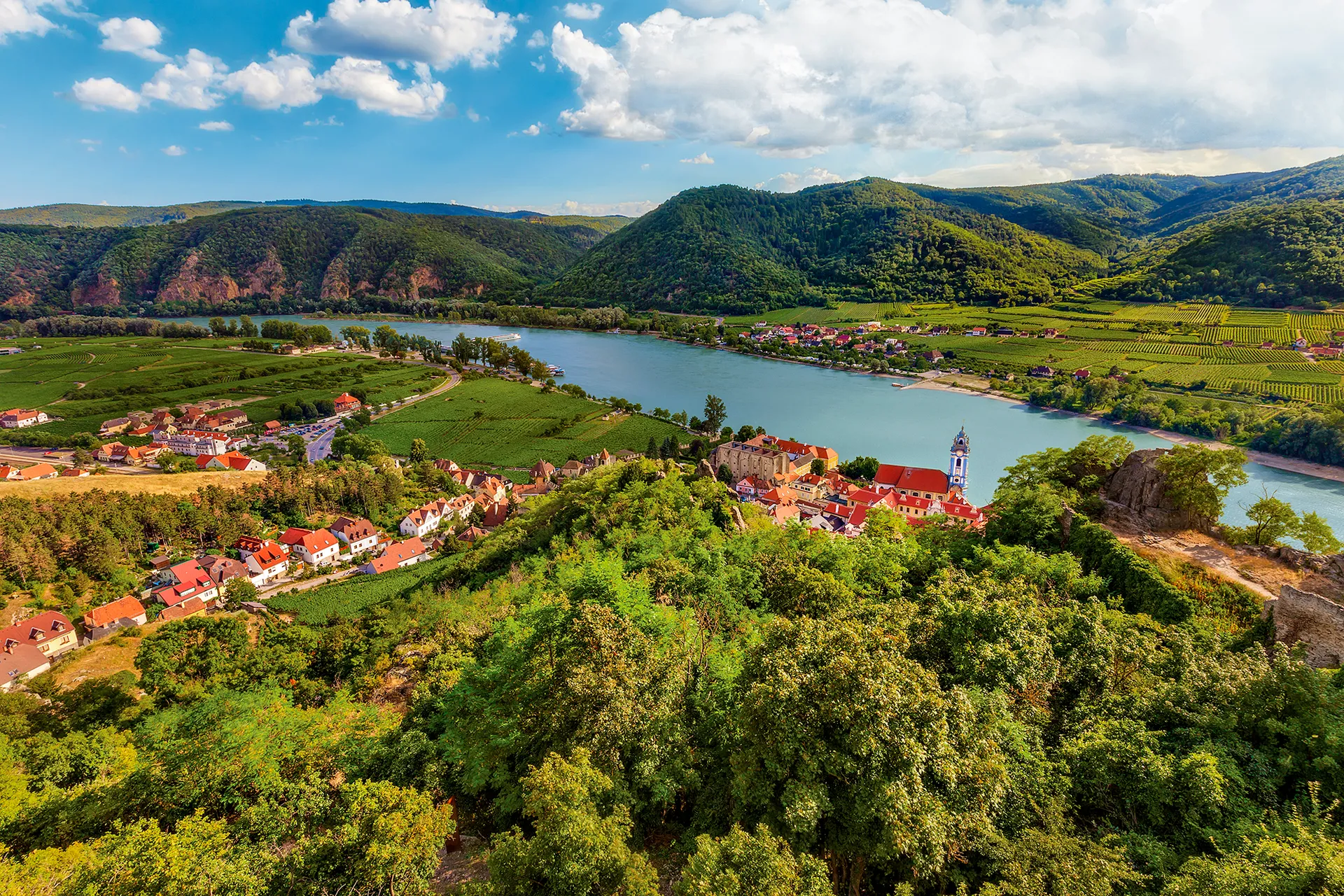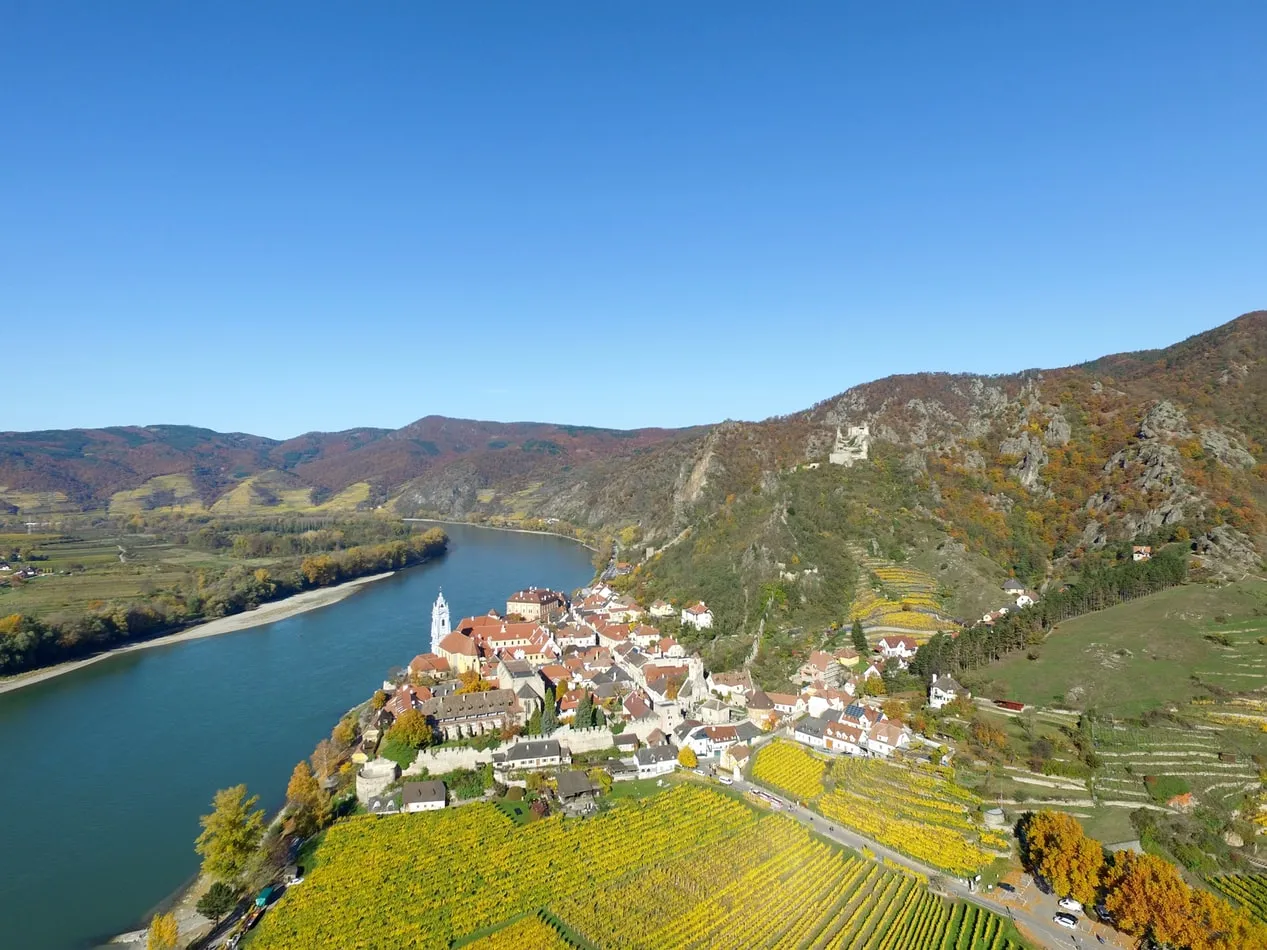
In December 1192, King Richard I of England — the Lionheart — was captured and imprisoned in the castle above Dürnstein by Duke Leopold V of Austria, a consequence of insults exchanged during the Third Crusade. Legend holds that Richard's loyal minstrel, Blondel de Nesle, wandered from castle to castle singing their shared song until he heard the king's voice echo from behind the walls of this Wachau fortress. The romantic ruins of that castle still crown the rocky bluff above the village, accessible by a steep trail that rewards hikers with panoramic views of the Danube winding through terraced vineyards and apricot orchards.
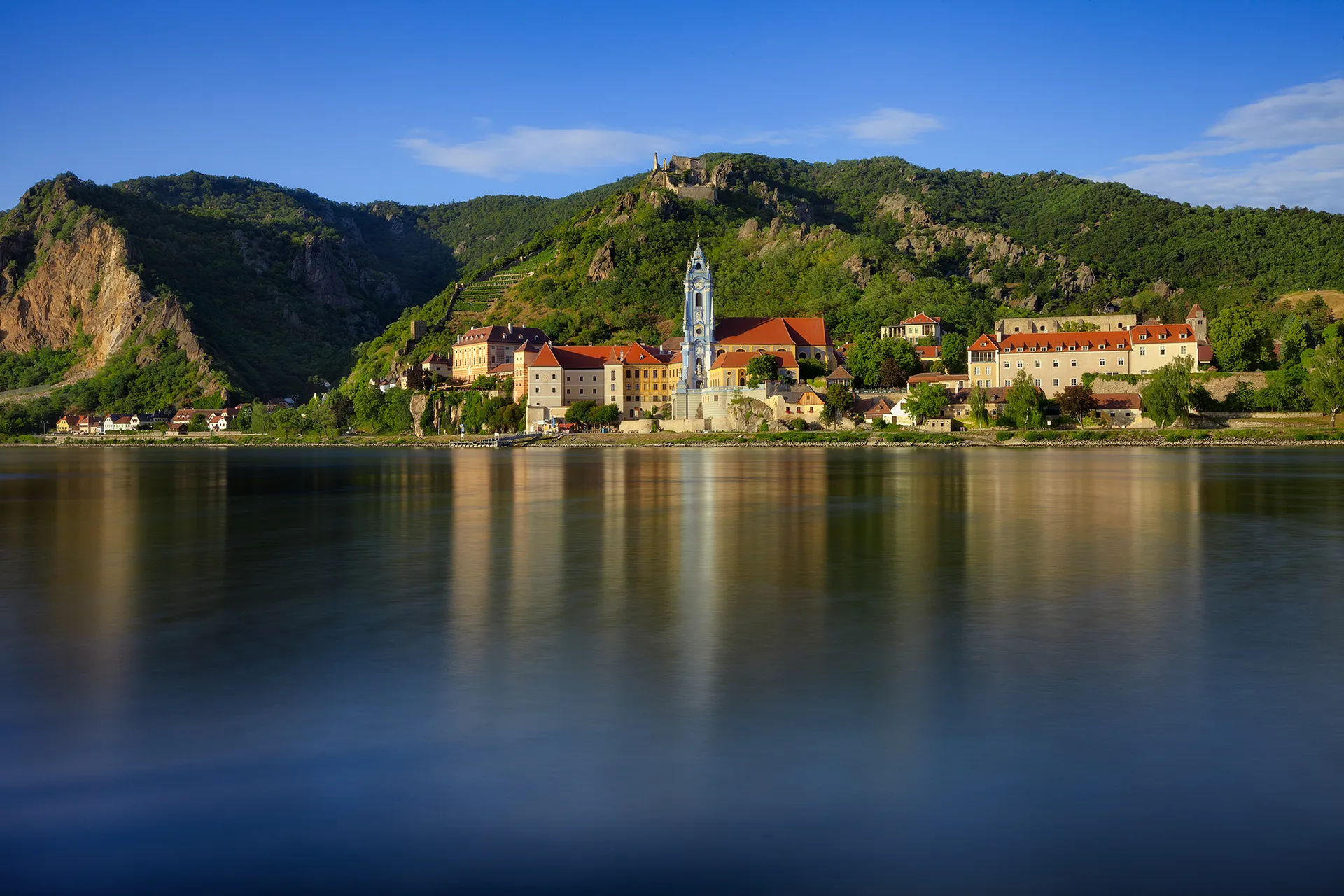
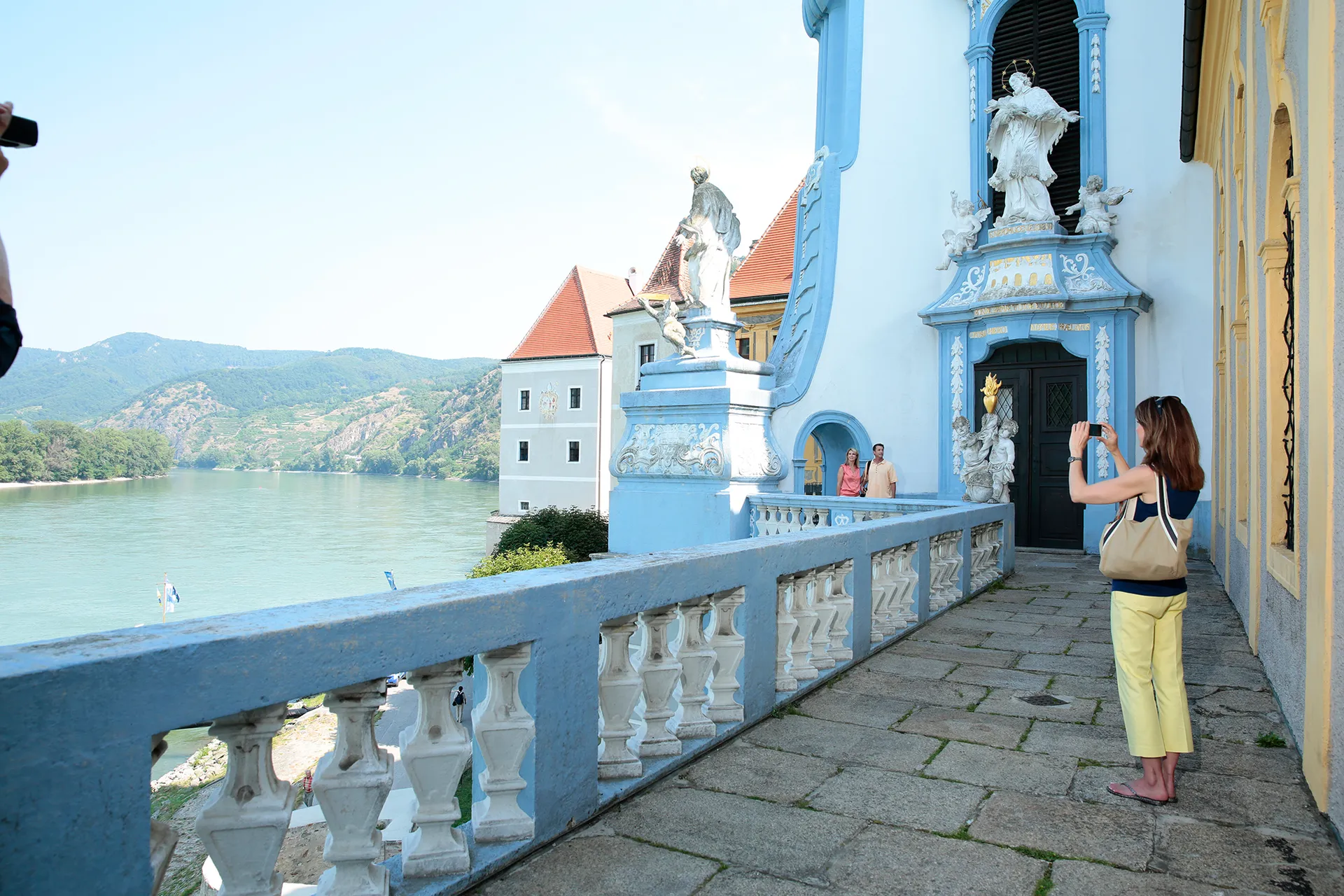
Dürnstein is the jewel of the Wachau Valley, a thirty-kilometre stretch of the Danube between Melk and Krems that UNESCO has recognised as a cultural landscape of outstanding universal value. The village itself is impossibly picturesque: a single cobblestoned main street threads between Renaissance and baroque houses, leading to the Stiftskirche, whose blue-and-white baroque tower — one of the most photographed landmarks in Austria — rises above a cluster of cream-coloured buildings like an exclamation point. With a permanent population of barely nine hundred, Dürnstein feels less like a town than a stage set, its flower-laden balconies and pastel facades composed with theatrical precision.
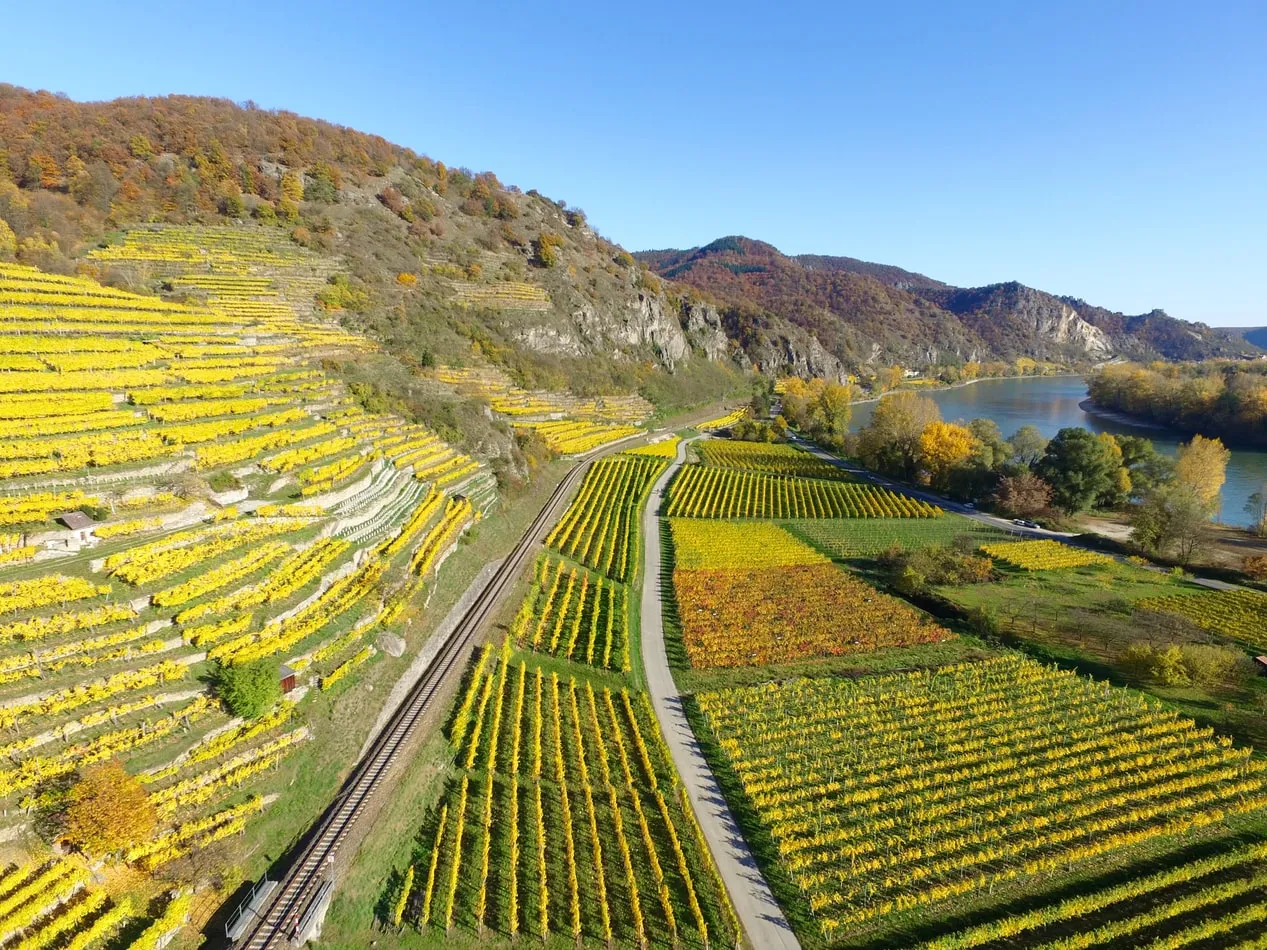
The Wachau is Austria's premier wine region, and Dürnstein sits at its heart. The steep, south-facing terraces above the village produce Grüner Veltliner and Riesling of extraordinary mineral complexity, shaped by the valley's unique microclimate where Pannonian warmth from the east meets cool Atlantic air from the west. Visit a Heuriger — a traditional wine tavern where vintners serve their own new-vintage wines alongside platters of cold cuts, cheese, bread, and pumpkin seed oil — for an authentically Austrian evening. The Wachau is equally famous for its Marillen (apricots); in late June and July, the fruit ripens to golden perfection, appearing in Marillenknödel (apricot dumplings), Marillenschnaps, jams, and every conceivable confection. A slice of Wachauer Marillenkuchen with a coffee on a terrace overlooking the Danube is one of life's quiet perfections.
From Dürnstein, the Wachau Valley unfolds in both directions with medieval splendour. Melk Abbey, ten kilometres upstream, is one of the world's great baroque monasteries — its golden library, marble hall, and church interior of almost delirious opulence inspired Umberto Eco's The Name of the Rose. Downstream, Krems offers art galleries, medieval lanes, and the Kunsthalle Krems for contemporary exhibitions. Göttweig Abbey, perched on a hilltop across the Danube, provides sweeping views of the valley. Vienna itself lies just seventy-five minutes east by road, making it possible to combine the imperial capital with a Wachau sojourn.
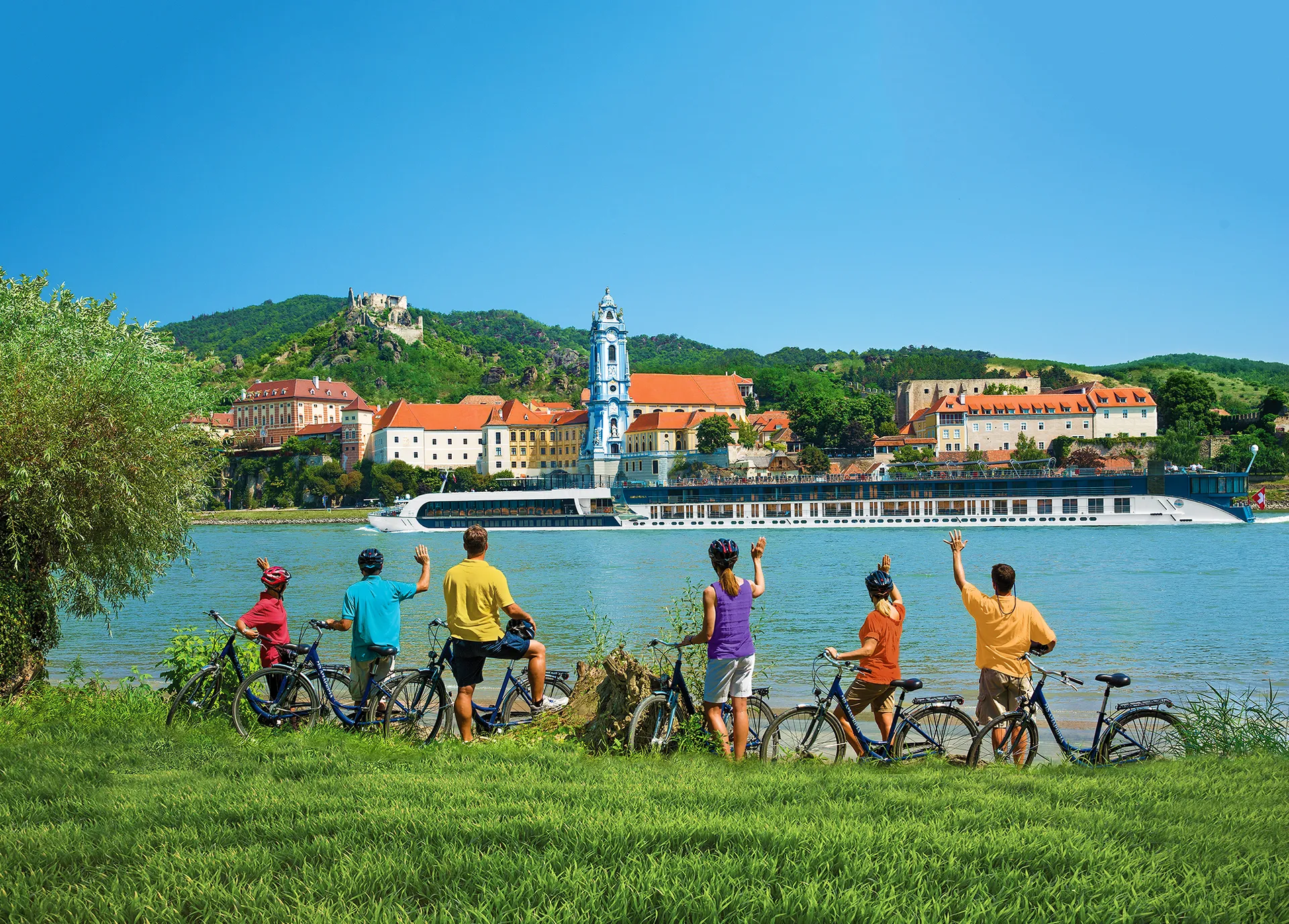
Dürnstein is a beloved stop on Danube river cruises, with A-ROSA, AmaWaterways, APT Cruising, Avalon Waterways, Celebrity Cruises, CroisiEurope, Emerald Cruises, P&O Cruises, Riviera Travel, Scenic River Cruises, Uniworld River Cruises, and VIVA Cruises all calling here. Nearby ports include Vienna, Linz, Emmersdorf, and Krems. The Danube cruising season runs from April through October, with April's apricot blossoms, June's long twilights, and October's grape harvest and autumn colours each casting the Wachau in a different, equally enchanting light.