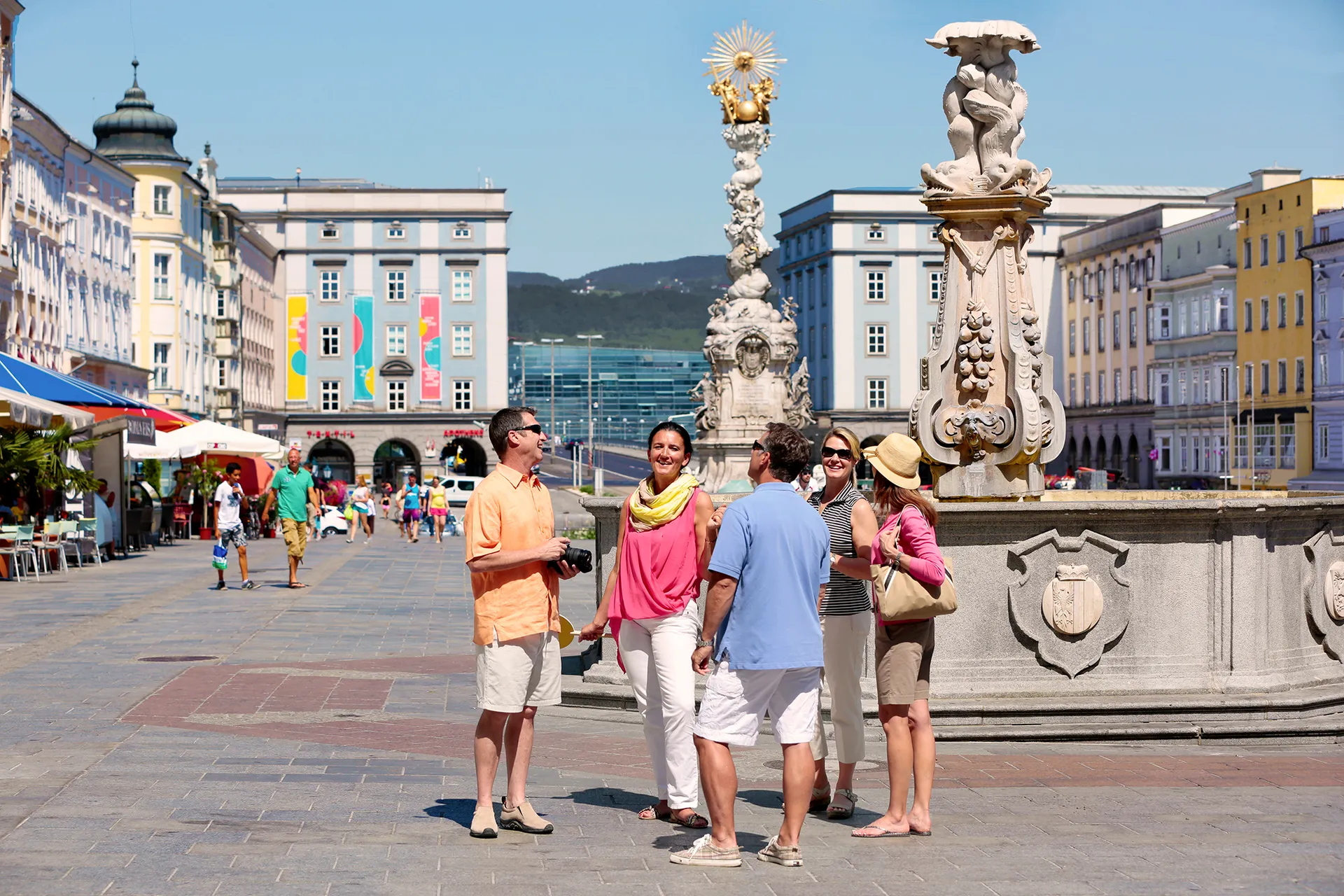
Linz, Austria's third-largest city, has reinvented itself from an industrial centre into one of Europe's most forward-thinking cultural destinations — a transformation recognised in 2009 when it was named European Capital of Culture. Yet the city's history reaches back to the Roman frontier fortress of Lentia, established on the Danube to guard the empire's northern border. In 1490, the Holy Roman Emperor Frederick III died here, and Mozart composed his "Linz" Symphony (No. 36) in a frenzied four days during a visit in 1783. The city's Hauptplatz, one of Austria's largest medieval squares, is framed by baroque and rococo facades in ice-cream pastels — pink, pistachio, and cream — that catch the afternoon light with photogenic precision.
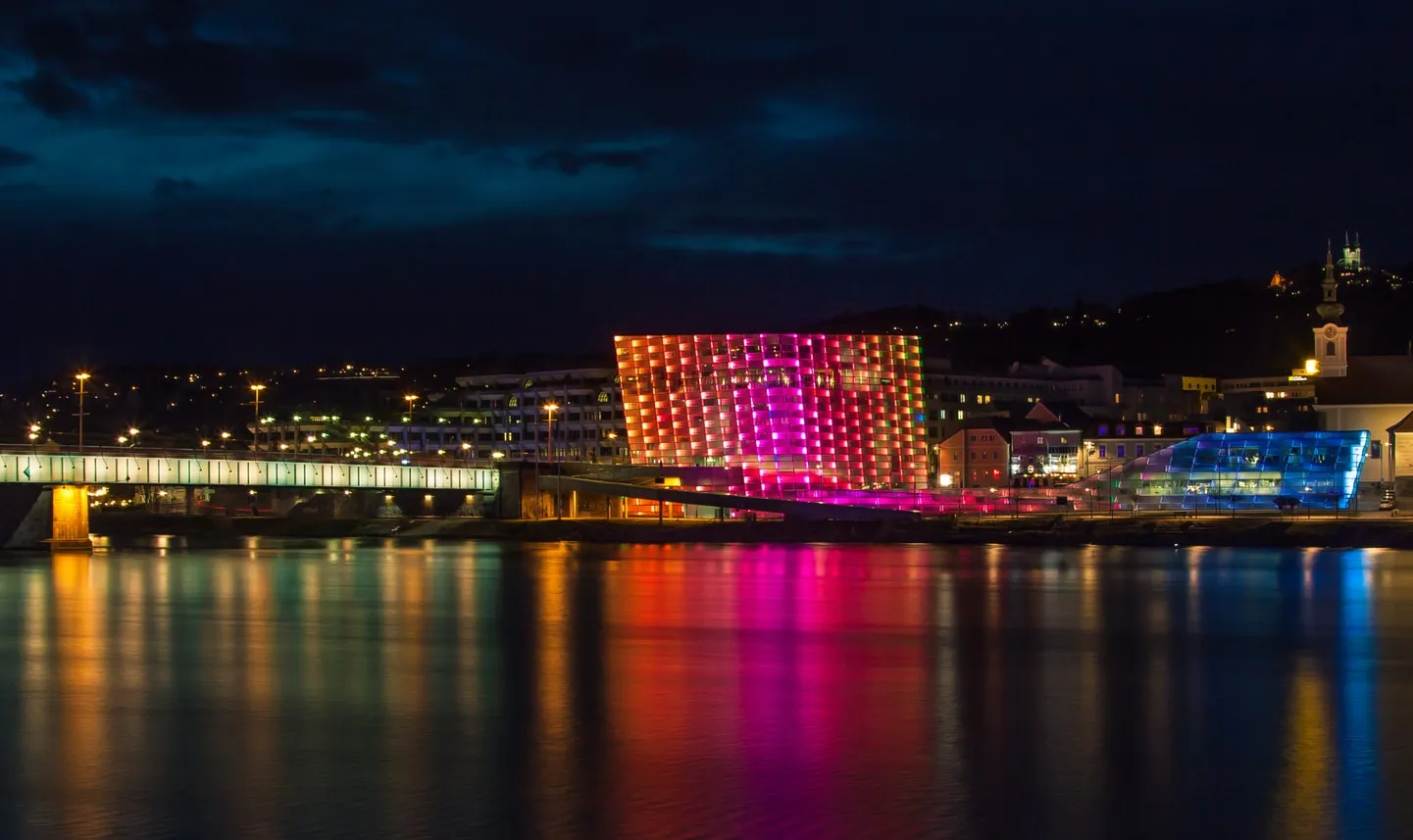
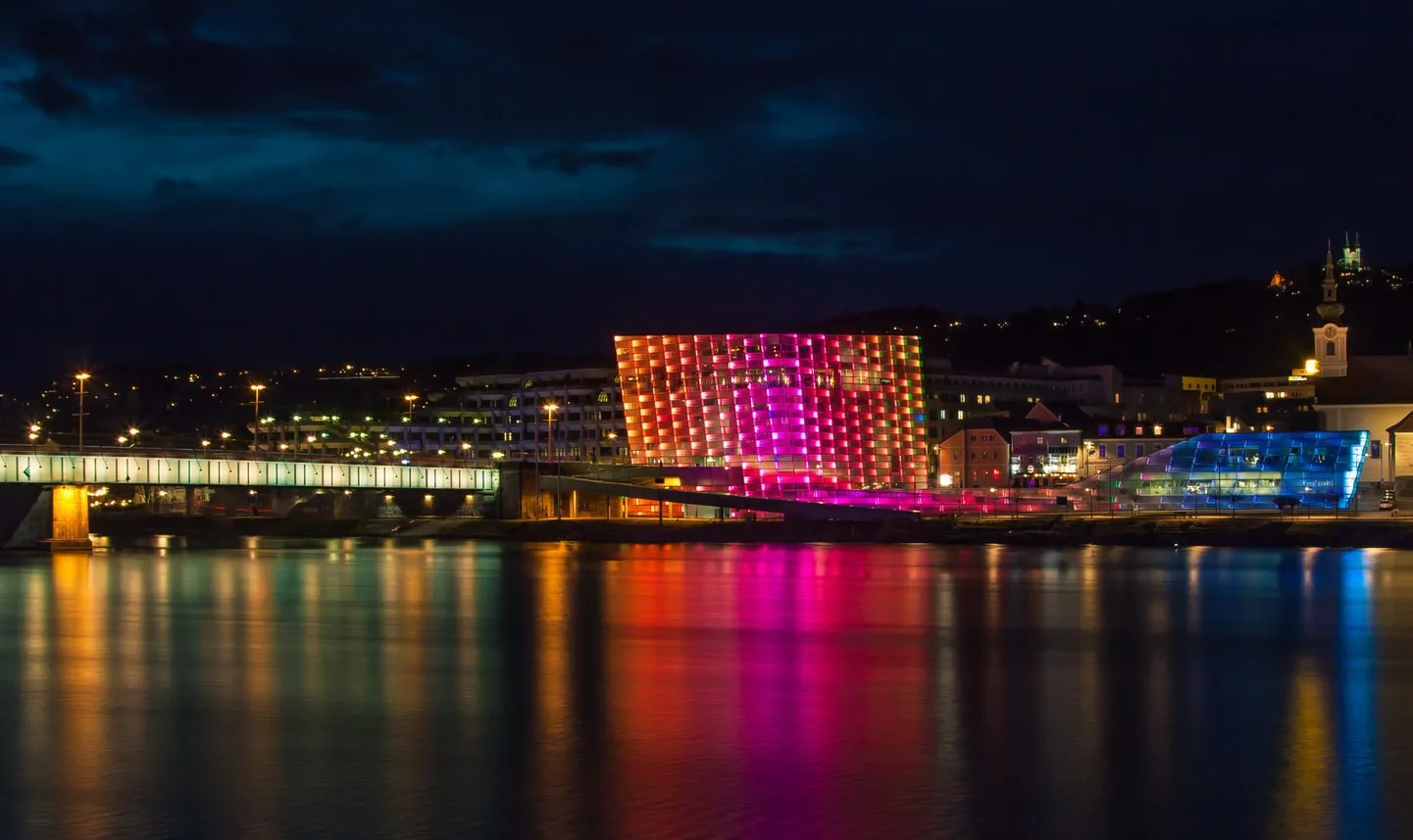
The Ars Electronica Center, Linz's most distinctive landmark, glows at night like a blue-lit spacecraft on the north bank of the Danube. Inside, this "Museum of the Future" explores the intersection of art, technology, and science through interactive exhibitions on artificial intelligence, biotechnology, and digital media. Across the river, the Lentos Kunstmuseum, a glass-and-steel rectangle illuminated in shifting colours after dark, houses an outstanding collection of modern and contemporary art including works by Klimt, Schiele, and Kokoschka. The Schlossmuseum, set in a hilltop castle overlooking the Danube, traces Upper Austria's history from prehistory to the present. Together, these institutions give Linz a cultural density that surprises visitors expecting only a provincial stopover.
Linz claims a sweet distinction: the Linzer Torte, widely considered the world's oldest known cake recipe (dating to 1653), is the city's signature confection. This lattice-topped tart, made with ground almonds, spiced with cinnamon and cloves, and filled with redcurrant jam, is served in every café and bakery. Beyond the torte, Linz's culinary scene reflects hearty Upper Austrian traditions: Knödel (bread or potato dumplings) accompany roast pork and sauerkraut; Tafelspitz (boiled beef in broth with apple-horseradish cream) remains a Sunday institution; and the local Stiegl and Hofstettner beers wash everything down. The Südbahnhofmarkt, Linz's largest open-air market, is the best place to sample local produce, from pumpkin seed oil to Bergkäse mountain cheese.
From Linz, the Danube corridor offers easy access to a range of attractions. The Augustinian monastery of St. Florian, twenty kilometres south, houses the Bruckner organ — one of the world's largest church organs — and the composer Anton Bruckner is buried beneath it. The Mauthausen Memorial, a sobering reminder of the Nazi concentration camp system, lies twenty kilometres east. The Wachau Valley, with its terraced vineyards, medieval villages, and Melk Abbey, begins less than an hour downstream. And the lakes and mountains of the Salzkammergut — Hallstatt, Traunsee, and Wolfgangsee — are within ninety minutes by car or train.
Linz is a popular Danube river cruise stop served by A-ROSA, AmaWaterways, Avalon Waterways, Celebrity Cruises, Emerald Cruises, Scenic River Cruises, Uniworld River Cruises, Viking, and VIVA Cruises. Nearby river ports include Vienna, Dürnstein, Melk, and Passau. The Danube cruising season runs from April through October, with the Christmas market season in December offering a magical alternative for winter sailings.