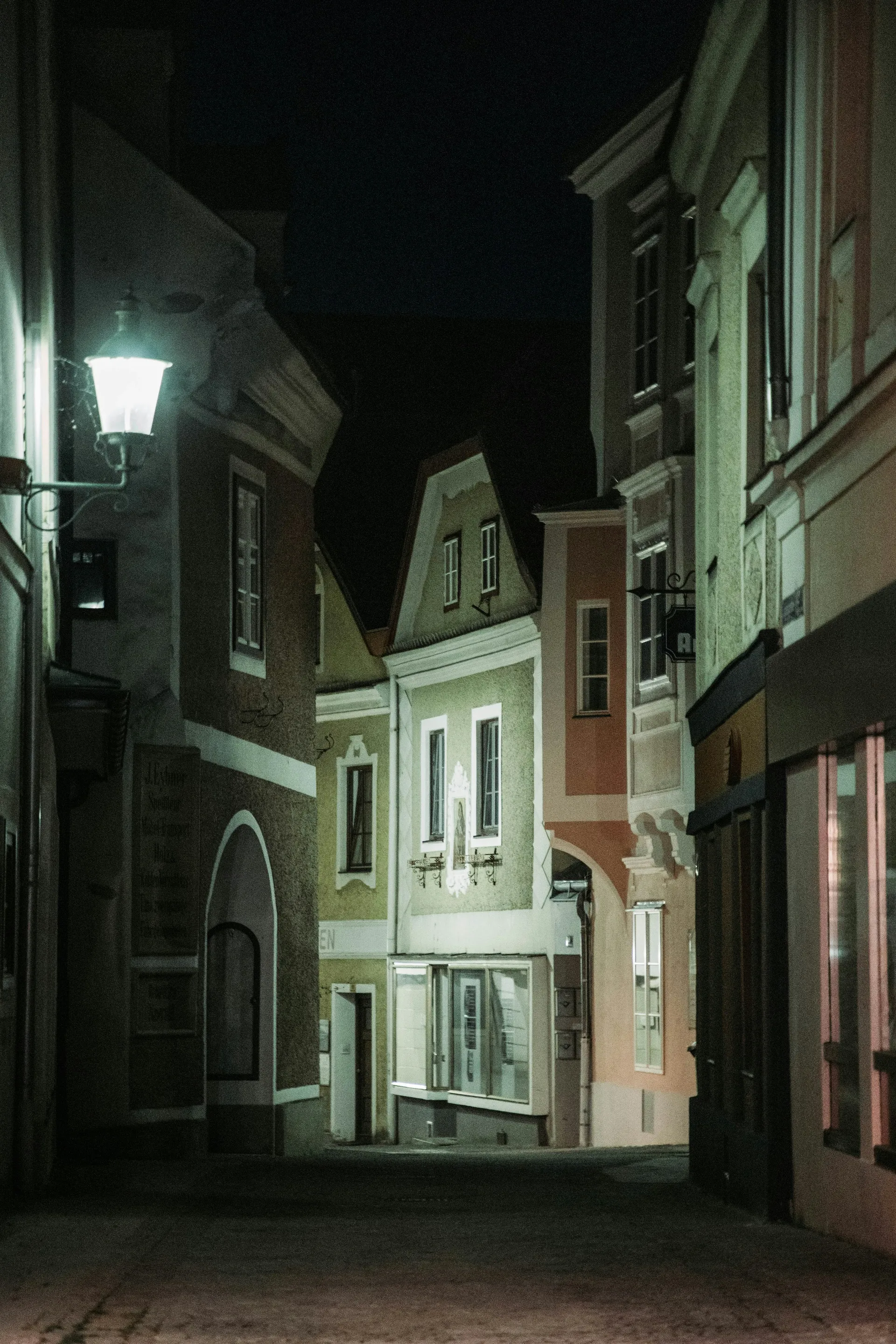
Mauthausen occupies a hillside above the Danube in Upper Austria, a picturesque town of granite houses, flower-boxed windows, and a handsome market square that would be indistinguishable from dozens of other charming Austrian river towns—were it not for the former concentration camp on the plateau above, whose granite walls and watchtowers serve as one of Europe's most important and most sobering memorials to the victims of National Socialism.
The Mauthausen Memorial—the former Konzentrationslager Mauthausen—operated from August 1938 until its liberation by American forces in May 1945, during which time approximately 190,000 people from over forty nations were imprisoned within its walls. Over 90,000 of them died—from starvation, disease, exhaustion from forced labor in the adjacent granite quarries, or deliberate murder. The memorial preserves the camp largely as it was found at liberation: the double perimeter walls of granite, the main gate, the SS barracks, the gas chamber, and the crematorium remain in situ, their clinical ordinariness adding to rather than diminishing the horror they represent.
The quarry, known as the Wiener Graben, is central to both the camp's purpose and its memorial significance. The 186 steps of the "Staircase of Death"—the stone stairway carved into the quarry wall down which prisoners carried blocks of granite weighing up to fifty kilograms—have become one of the most powerful symbols of the camp's brutality. The quarry walls, scarred with the marks of forced extraction, and the parachutists' wall from which prisoners were pushed to their deaths provide a landscape of remembrance that transcends any museum display.
The memorial's exhibition spaces, renovated and expanded in recent years, provide comprehensive historical context through documents, photographs, personal testimonies, and multimedia installations. The Room of Names lists all known victims, and national memorials erected by the many countries whose citizens were imprisoned here create an international commemorative landscape within the camp's perimeter. The educational programs offered by the memorial attract thousands of students annually, fulfilling the memorial's dual purpose of honoring the dead and educating the living.
The town of Mauthausen below the memorial continues its daily life with the quiet dignity of a community that lives in the permanent shadow of history. The Danube at Mauthausen is broad and calm, and the town's granite architecture—the same stone quarried by the camp's prisoners—serves as a constant, uncomfortable reminder of the connection between the town's traditional industry and the camp's forced labor economy. River cruise ships dock at the town's quay, with shuttle transport to the memorial. The memorial is open year-round, and the seriousness of the visit demands comfortable weather—April through October is most suitable. The experience is emotionally demanding but essential, and most visitors emerge with a deepened understanding of both history's darkest chapter and the imperative of remembrance.

