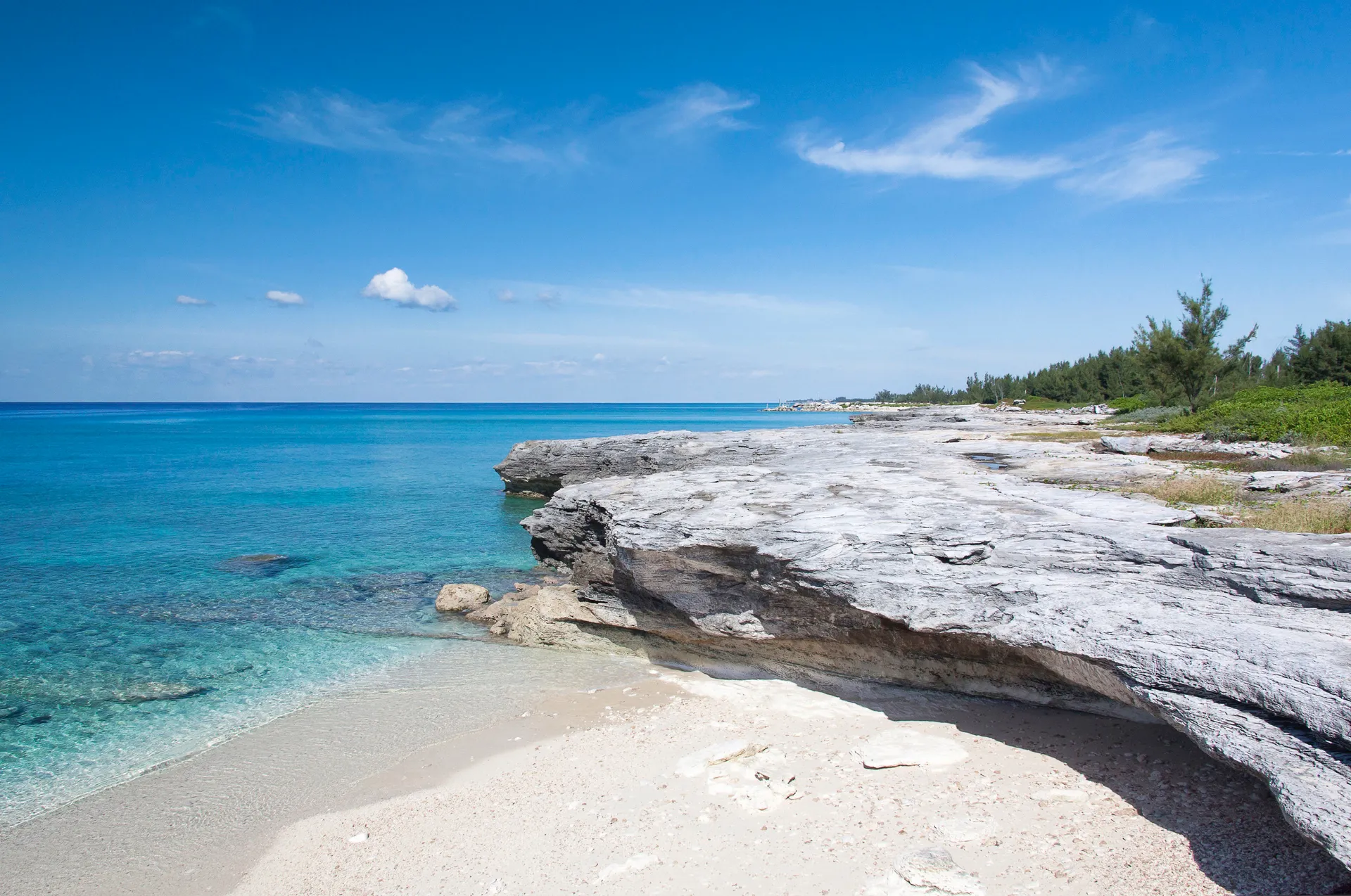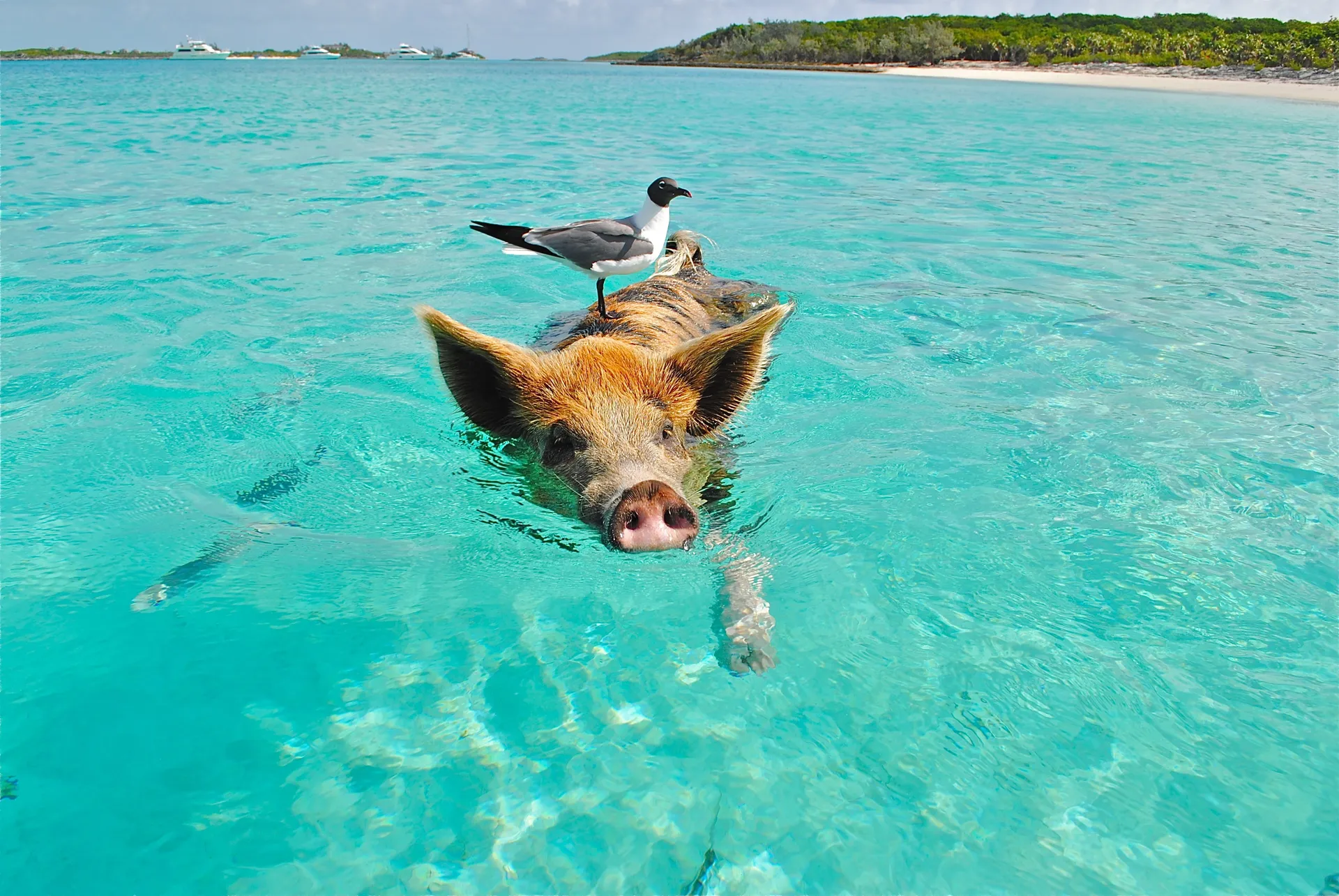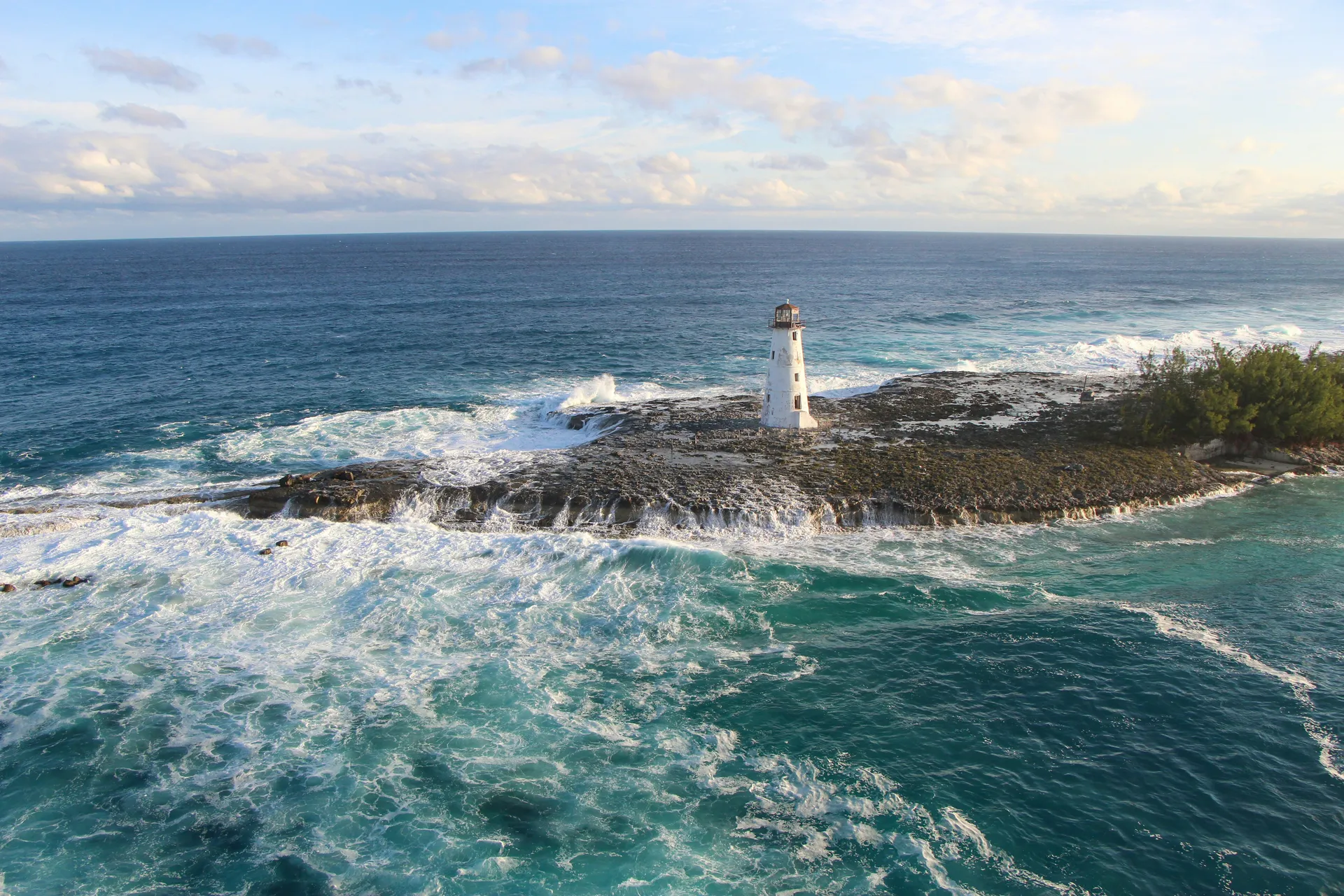
Freeport is Grand Bahama Island's planned resort city—a mid-century creation carved from Caribbean pine forest in the 1950s by American financier Wallace Groves, who envisioned a tax-free haven that would attract international business and tourism to the Bahamas' second-largest island. Unlike Nassau's organic colonial charm, Freeport was designed on a modern grid with wide boulevards, manicured gardens, and purpose-built commercial districts. The result is a city that feels distinctly different from the rest of the Bahamas—more spacious, more suburban, more international in flavor—yet ringed by beaches, reefs, and marine environments that rival anything in the Caribbean.
The Port Lucaya Marketplace, Freeport's social and commercial heart, occupies a waterfront complex of pastel buildings, open-air restaurants, and craft stalls surrounding Count Basie Square—named for the jazz legend who performed regularly in the Bahamas during the 1960s and '70s. Live music, particularly Junkanoo and rake-and-scrape (the Bahamas' indigenous musical traditions), fills the square most evenings. The adjacent Port Lucaya Marina provides berths for fishing charters, dive boats, and the glass-bottom vessels that carry snorkelers to nearby reefs. The Rand Nature Centre, a 100-acre preserve within the city, protects native Caribbean pine forest and serves as a sanctuary for the Bahama parrot and other endemic species.
Bahamian cuisine in Freeport celebrates the islands' maritime heritage with distinctive preparations. Conch—the large marine snail that is the national dish—appears in every conceivable form: cracked conch (battered and fried), conch salad (raw, diced, and marinated in citrus with peppers and onions), conch fritters, and conch chowder. Grouper, snapper, and lobster are grilled, blackened, or fried and served with peas 'n' rice (pigeon peas cooked with rice in coconut milk)—the starchy staple that accompanies virtually every Bahamian meal. Johnny cake, a sweet, dense cornbread, and guava duff (a rolled pastry with guava filling, steamed and served with rum butter sauce) round out the traditional repertoire. The local beer, Kalik, is named for the sound of the cowbells in a Junkanoo parade.
Grand Bahama's natural attractions extend well beyond its beaches. The Lucayan National Park, on the island's southern shore, protects one of the longest charted underwater cave systems in the world—over 10 kilometers of submerged passages that attract cave divers from across the globe. The park also preserves the island's finest beach, Gold Rock Beach, a sweeping crescent of white sand accessible by a short boardwalk through mangrove and pine forest. Peterson Cay National Park, a tiny island offshore, offers outstanding snorkeling over a pristine reef accessible by kayak or charter boat. The island's bonefishing flats on the northern shore attract fly-fishing enthusiasts from around the world—Grand Bahama is considered one of the premier bonefishing destinations in the Caribbean.
Norwegian Cruise Line calls at Freeport, with ships docking at the cruise port within a short drive of the Port Lucaya Marketplace and the island's major attractions. The Bahamas enjoy a warm, subtropical climate year-round, with peak tourism season from December through April when temperatures average 24–27°C and humidity is lower. Summer and early autumn (June–November) bring warmer temperatures, higher humidity, and hurricane risk, though rates are lower and the island is quieter. Freeport may lack the storied history of Nassau or the exclusive cachet of the Out Islands, but it delivers exactly what its founders intended: sun, sea, and the warm hospitality that Bahamians call "the islands' greatest natural resource."