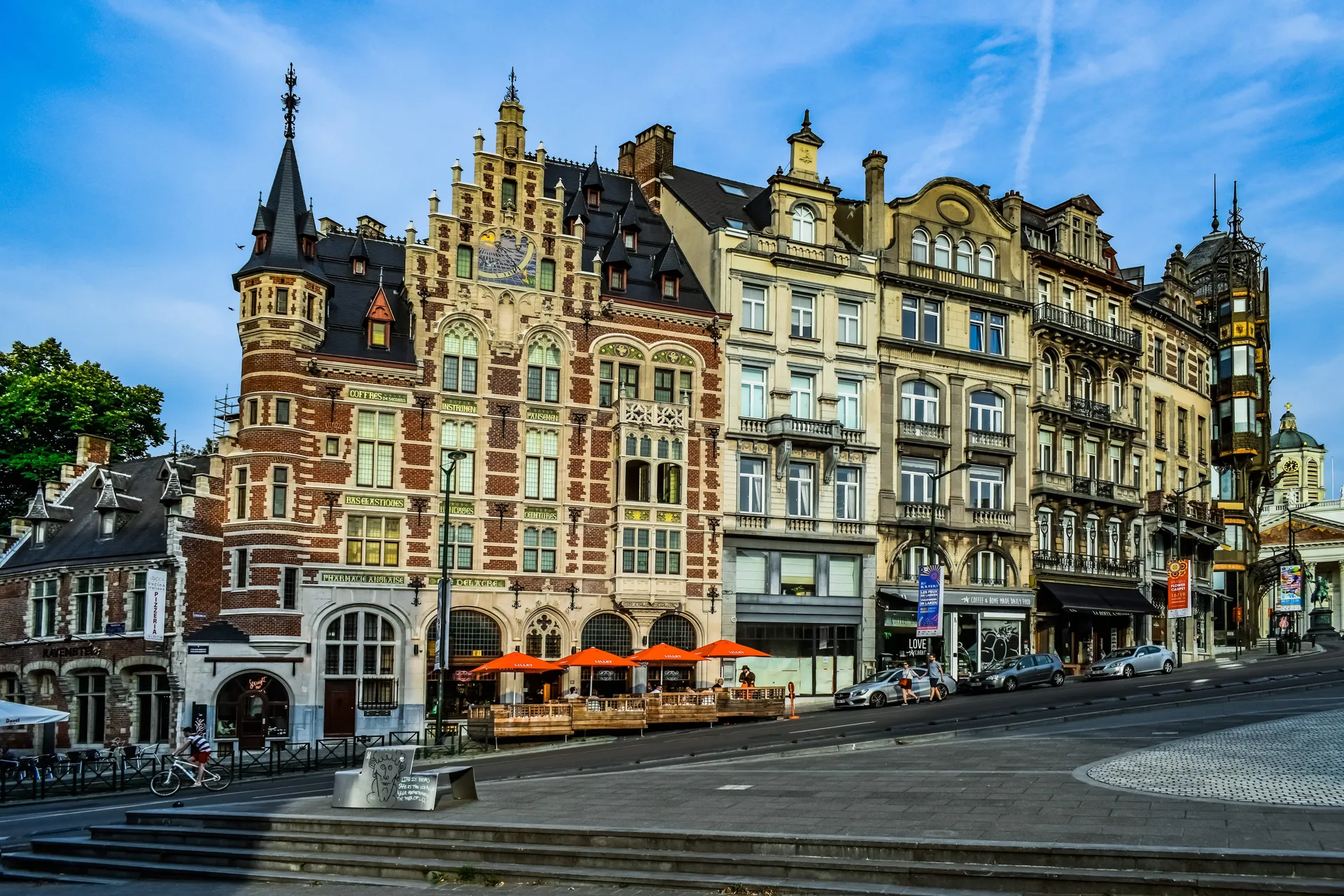
Where the cobblestoned lanes of the Lower Town meet the neoclassical grandeur of the Upper Town, Brussels reveals itself as a city shaped by centuries of ambition and artistry. Founded in the tenth century along the banks of the River Senne, this capital rose to extraordinary prominence under Burgundian and Habsburg rule, its Grand-Place — recognised by UNESCO in 1998 — standing as one of Europe's most breathtaking civic squares. From the Gothic tracery of the Hôtel de Ville, begun in 1402, to the gilded façades of the guild houses rebuilt in triumphant Baroque splendour after Louis XIV's bombardment of 1695, Brussels wears its history not as a museum piece but as a living, breathing testament to resilience and reinvention.
The city's character defies easy categorisation. It is at once the administrative heart of the European Union and a fiercely local place where neighbourhood markets still dictate the rhythm of the week. Art Nouveau masterpieces by Victor Horta curve along quiet residential streets in Saint-Gilles and Ixelles, their sinuous ironwork and stained glass offering an architectural treasure hunt that rewards the unhurried wanderer. The Royal Museums of Fine Arts house Bruegel and Magritte under one institutional roof, while the BOZAR centre — Henry van de Velde's 1928 masterwork — pulses with contemporary exhibitions and world-class concerts. There is a confident cosmopolitanism here, tempered by a distinctly Belgian self-deprecation that makes the city feel intimate even at its most grand.
To dine in Brussels is to understand why Belgians quietly regard their cuisine as superior to their neighbours'. Begin at a white-tablecloth institution with a starter of croquettes aux crevettes grises — impossibly crisp shells yielding to a molten core of hand-peeled North Sea shrimps in creamy béchamel. Follow with moules-frites at Chez Léon or a refined waterzooi, the velvety Flemish stew of chicken simmered in cream, leek, and root vegetables that originated in nearby Ghent but finds its most elegant expression in Brussels' fine-dining rooms. For dessert, seek out a gaufrette de Bruxelles — the authentic Brussels waffle, rectangular and featherlight, dusted with nothing more than powdered sugar — from a stand near the Manneken Pis. And no visit is complete without a reverent pilgrimage to one of the great chocolatiers: Pierre Marcolini's sleek atelier on the Sablon, or the century-old Maison Mary, where pralines are still crafted by hand in copper kettles.
Brussels commands a strategic position that places some of Belgium's most captivating cities within effortless reach. Bruges, with its mirror-still canals and medieval belfry, lies barely an hour to the northwest — a day trip that feels like stepping into a Flemish painting. Antwerp, thirty minutes north by rail, offers the magnificent Cathedral of Our Lady, Rubens' former studio, and a diamond district that has glittered since the fifteenth century. Ghent, often overlooked yet arguably the most authentic of the three, rewards with its Gravensteen castle and the luminous Ghent Altarpiece by the Van Eyck brothers. Even Mons, the 2015 European Capital of Culture near the French border, merits exploration for its Collegiate Church of Sainte-Waudru and the spirited Doudou festival, a UNESCO-listed tradition dating to the fourteenth century.
River cruises threading through Belgium's waterways increasingly position Brussels as a destination of substance rather than a mere transit point. AmaWaterways features the city on its Rhine and Moselle itineraries, pairing onboard wine-pairing dinners with guided explorations of the Grand-Place. Avalon Waterways offers panoramic suite sailings that use Brussels as a gateway to the Flemish art cities, while Scenic River Cruises includes exclusive all-inclusive experiences with private transfers into the city centre. Uniworld River Cruises, with its boutique-hotel aesthetic, curates bespoke cultural programmes here — think private after-hours viewings at the Magritte Museum or guided chocolate tastings led by a maître chocolatier. Each line recognises what seasoned travellers have long understood: Brussels is not a city you pass through but one that asks you to linger.

