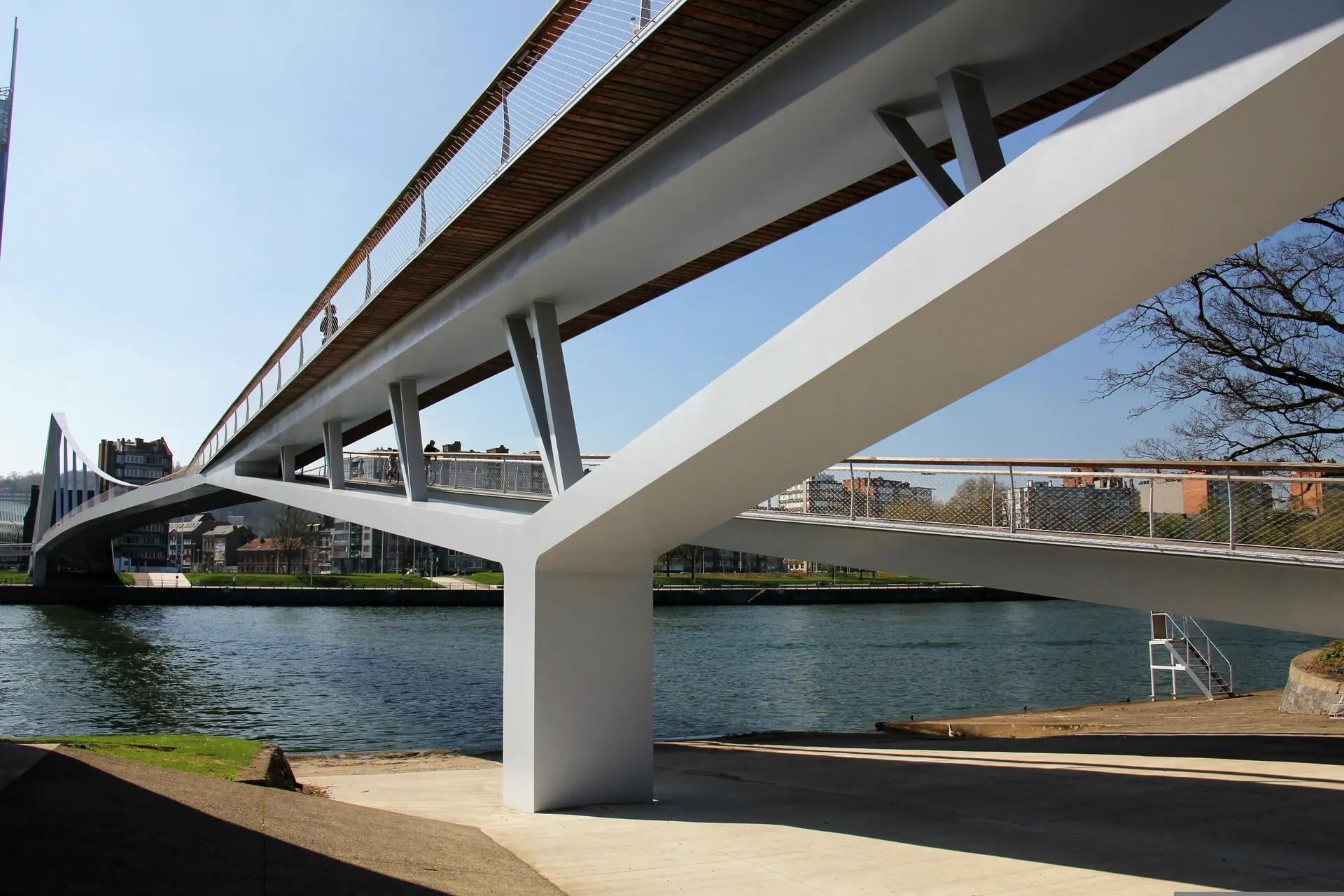
At the confluence of the Meuse and the Ourthe rivers in eastern Belgium, Liège is a city that has burned hotter, fought harder, and celebrated more passionately than perhaps any other in the Low Countries. Known as the "Ardent City" — la Cité Ardente — for the ferocity with which it has defended its independence over a thousand years of turbulent history, Liège is a place of startling contrasts: world-class museums and gritty post-industrial quarters, magnificent Art Nouveau architecture and brutalist concrete, some of Belgium's finest food and some of its grittiest nightlife.
The character of Liège is defined by its refusal to be polished. Unlike the manicured beauty of Bruges or the bureaucratic order of Brussels, Liège wears its complexity openly. The Montagne de Bueren — a staircase of 374 steps climbing from the city centre to the Citadel — is both a remarkable physical challenge and a metaphor for the city's character: steep, demanding, and rewarding only those who commit. At the summit, the view over the city's rooftops, the Meuse valley, and the distant hills of the Ardennes justifies every step.
The food culture of Liège is arguably Belgium's richest. The Liège waffle — denser, sweeter, and more caramelised than its Brussels cousin, studded with pearl sugar that melts into pockets of crystalline crunch — is one of the world's great street foods. Boulets à la liégeoise — meatballs in a sweet-and-sour sauce made with sirop de Liège (a concentrated fruit syrup) — is the city's signature dish. The Friday market at La Batte, stretching over a kilometre along the Meuse, is the largest weekly market in Belgium, overflowing with artisan cheeses, charcuterie, and fresh produce.
The cultural institutions of Liège punch far above the city's weight. The Grand Curtius museum, housed in a magnificent Renaissance mansion, spans archaeology, decorative arts, weaponry, and religious art in collections that would anchor a national museum. The Liège-Guillemins railway station, designed by Santiago Calatrava, is a cathedral of white steel and glass that has become one of Belgium's most photographed buildings. The Opéra Royal de Wallonie maintains a programme of international quality in an intimate nineteenth-century house.
Liège is a major railway hub, connected by high-speed train to Brussels (one hour), Paris (two and a half hours), and Cologne (one hour). River cruise itineraries on the Meuse pass through regularly. The city is also a starting point for excursions into the Ardennes — Belgium's wooded, hilly southern region. The best time to visit is May through September, though the Christmas market — one of the largest in Belgium — makes December particularly atmospheric. The August 15th festival celebrating the Assumption of the Virgin Mary is Liège at its most ardent.

