Long before the first cruise ships traced the leeward coast of Bonaire, Kralendijk served as a modest colonial outpost of the Dutch West India Company, established in 1639 as a depot for the salt trade and the forced labor that sustained it. The pastel-painted warehouses lining the waterfront — many dating to the eighteenth century — still carry the quiet weight of that history, their coral-stone facades now softened by bougainvillea and the unhurried rhythms of Caribbean life. Fort Oranje, built in 1639 and now home to the island's courthouse, stands as a sun-bleached sentinel at the harbor's edge, a reminder that this unassuming capital was once a strategic foothold in the contest for the New World.
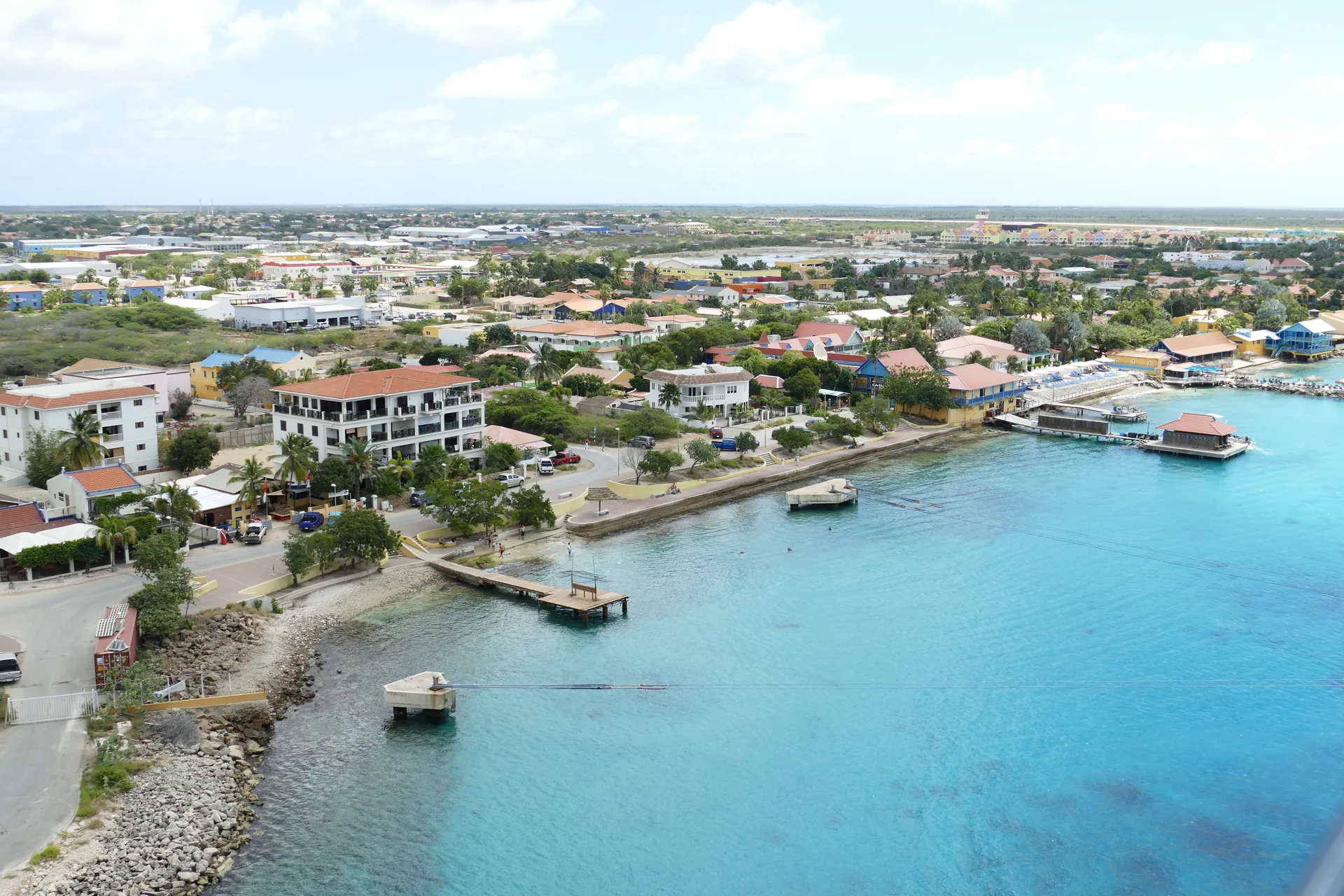
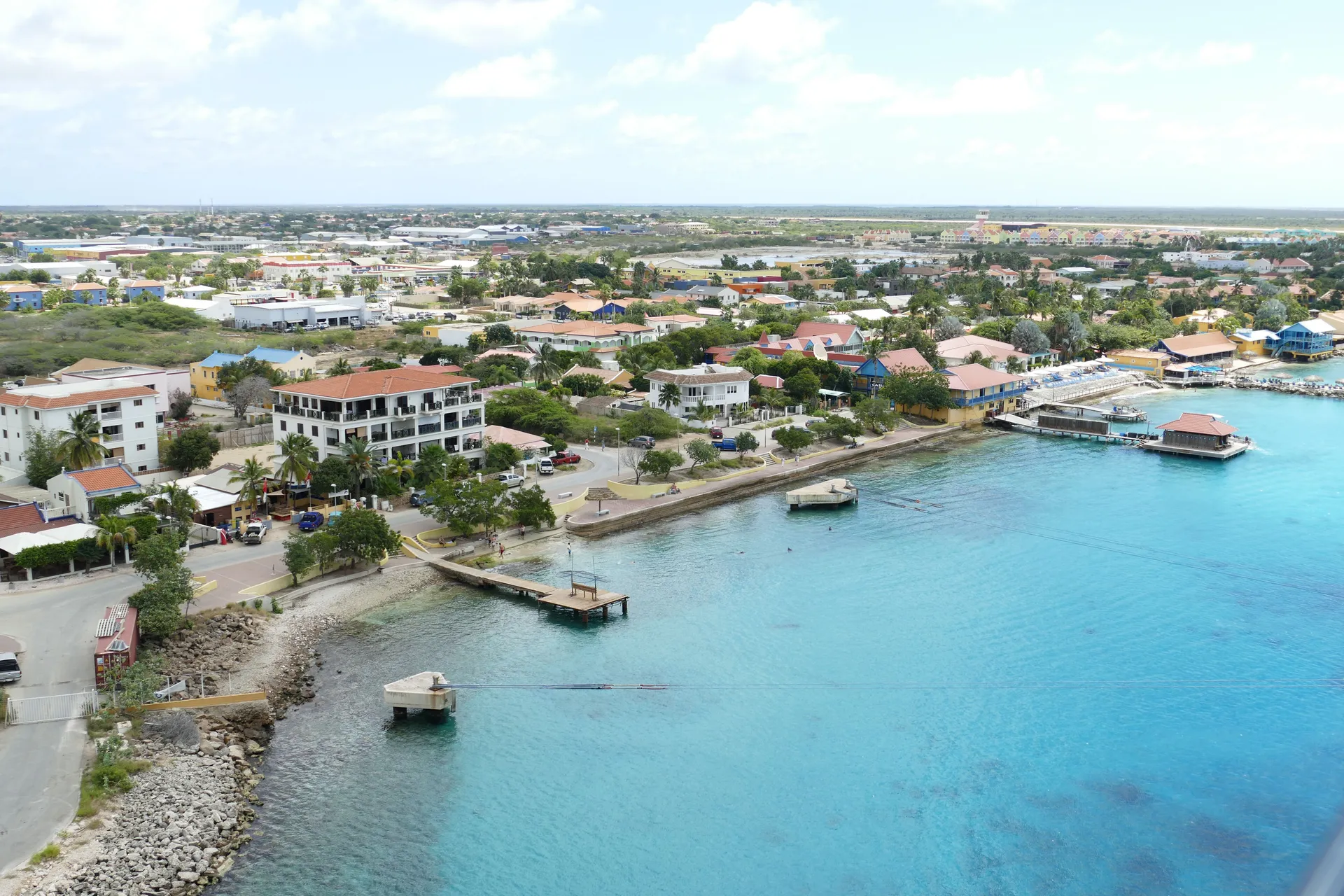
Today, Kralendijk unfolds with the intimacy of a village that has resisted the gravitational pull of overdevelopment. Kaya Grandi, the single commercial artery, is a corridor of candy-colored shopfronts, independent galleries, and the kind of jewelers and boutiques that reward slow browsing rather than impulse purchasing. The waterfront promenade — barely five minutes from Flamingo International Airport — offers an unobstructed view of Klein Bonaire, the uninhabited islet that floats offshore like a mirage of white sand and crystalline shallows. With a resident population of roughly three thousand, Kralendijk possesses that rarest of Caribbean qualities: genuine tranquility without a trace of neglect.
The culinary landscape here is an unpretentious fusion of Dutch, Surinamese, and Antillean traditions, best discovered at family-run establishments rather than resort dining rooms. Seek out *kabritu stobá*, a slow-braised goat stew fragrant with cumin, bay leaf, and Madeira wine, served alongside *funchi*, the polenta-like cornmeal staple that anchors nearly every Bonairean plate. At waterfront terraces, grilled wahoo arrives minutes from the dock, dressed simply with *pika* — a fiery vinegar-and-Scotch-bonnet condiment — while *pastechi*, crescent-shaped pastries stuffed with spiced tuna or Gouda, make for the island's most satisfying street food. For something sweet, *pan bati*, a subtly sweet pancake griddle-cooked to order, pairs improbably well with a glass of chilled Curaçao liqueur.
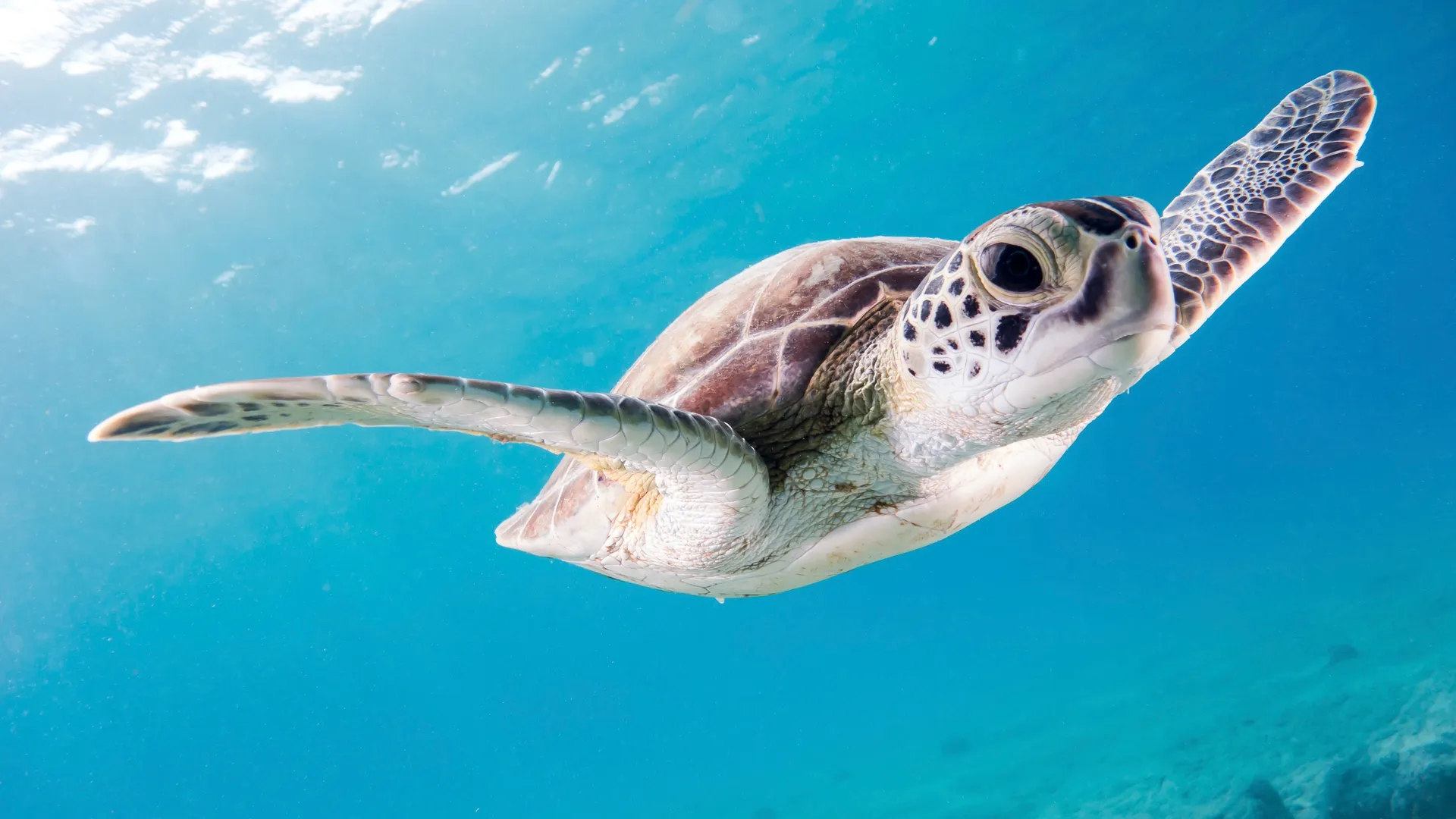
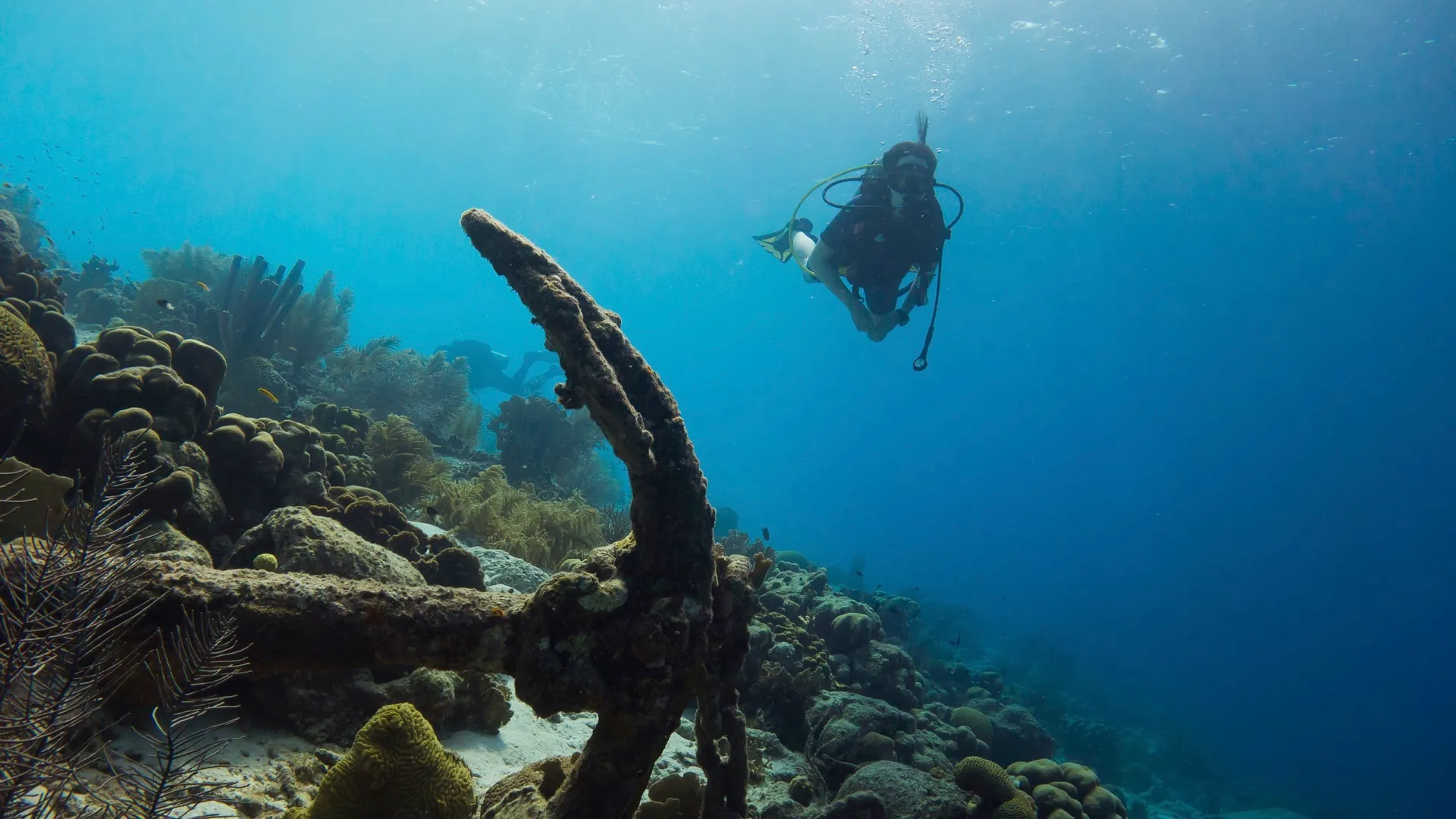
Beyond Kralendijk, Bonaire reveals itself as one of the Caribbean's most ecologically significant destinations. The island's entire surrounding waters constitute the Bonaire National Marine Park, established in 1979 and widely regarded as the hemisphere's finest shore-diving sanctuary, where sixty-three marked dive sites are accessible directly from the coastline. Washington Slagbaai National Park, occupying the island's rugged northern quarter, shelters flamingo breeding colonies, wild parrots, and cactus-studded landscapes that feel more like the Galápagos than the Antilles. The neighboring islands of Sint Eustatius and Saba — fellow members of the BES Islands — offer their own austere rewards: Statia's submerged colonial ruins and the Quill's volcanic rainforest, Saba's vertiginous Mount Scenery trail rising through elfin cloud forest to the highest point in the Kingdom of the Netherlands.
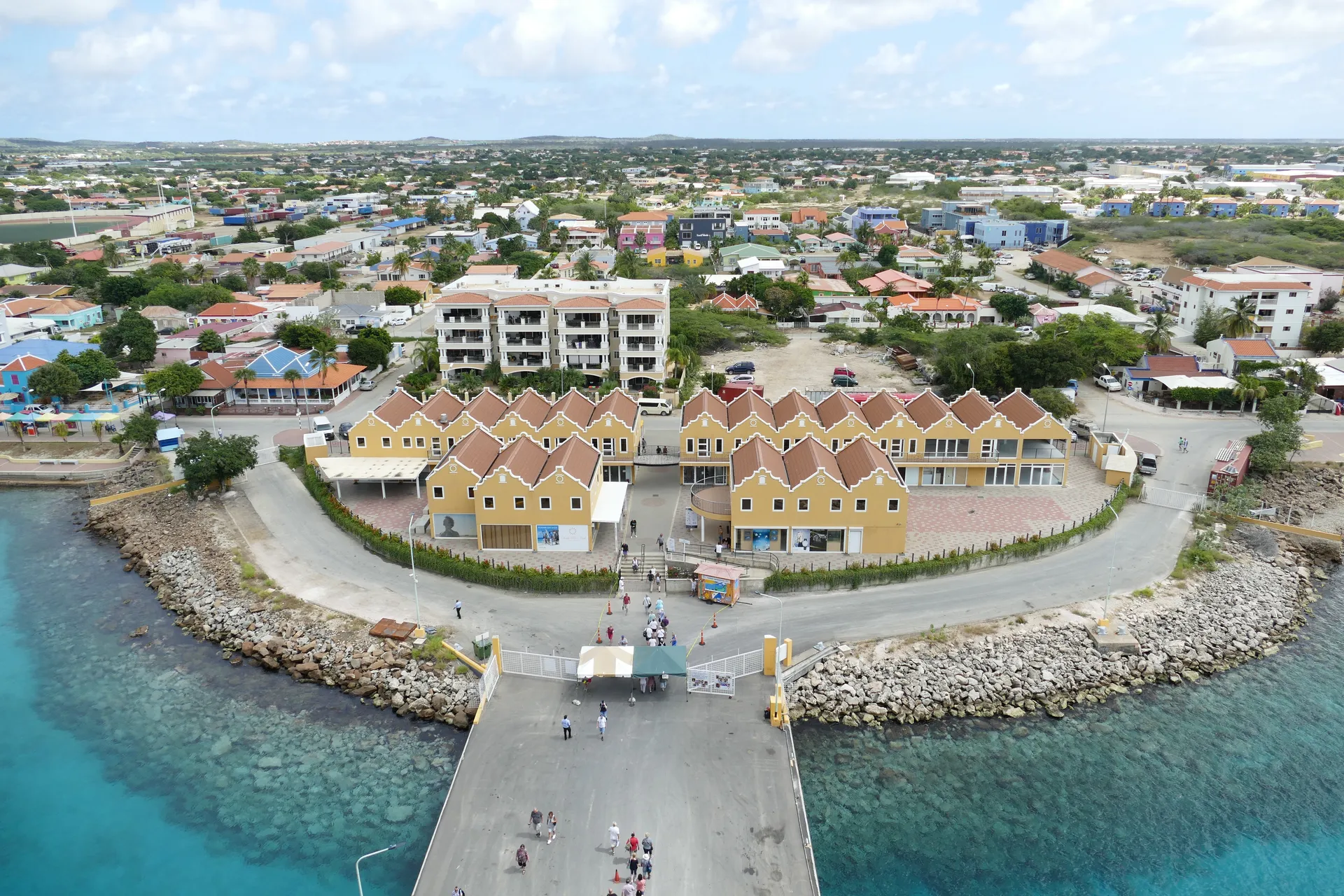
Kralendijk's deep-water harbor and dedicated cruise terminal at the South Pier accommodate vessels from across the industry's spectrum. Ambassador Cruise Line and Azamara bring intimately scaled ships that suit the island's contemplative character, while Carnival Cruise Line, Celebrity Cruises, Costa Cruises, and MSC Cruises deliver larger-format calls that fill Kaya Grandi with a welcome pulse of energy. Explora Journeys and Silversea position Bonaire as a connoisseur's port within their curated Caribbean itineraries, and Oceania Cruises and Regent Seven Seas Cruises treat the island as a centerpiece rather than a passing waypoint. Norwegian Cruise Line, Princess Cruises, Royal Caribbean, and Virgin Voyages round out the roster, ensuring that Kralendijk appears on southern Caribbean rotations throughout the winter sailing season from November through April — precisely the months when the island's arid climate delivers reliable sunshine and the trade winds temper the heat to a civilized warmth.
What distinguishes Bonaire from its more commercialized neighbors is a philosophical commitment to preservation that permeates every encounter. The island charges a nature fee to every visitor — diver, snorkeler, and day-tripper alike — and the revenue flows directly into marine and terrestrial conservation. It is a place where the reef matters more than the resort, where a flamingo's nesting ground commands more reverence than a shopping plaza. In Kralendijk, luxury is not performed; it is simply present in the clarity of the water, the warmth of the welcome, and the conspicuous absence of anything that tries too hard.