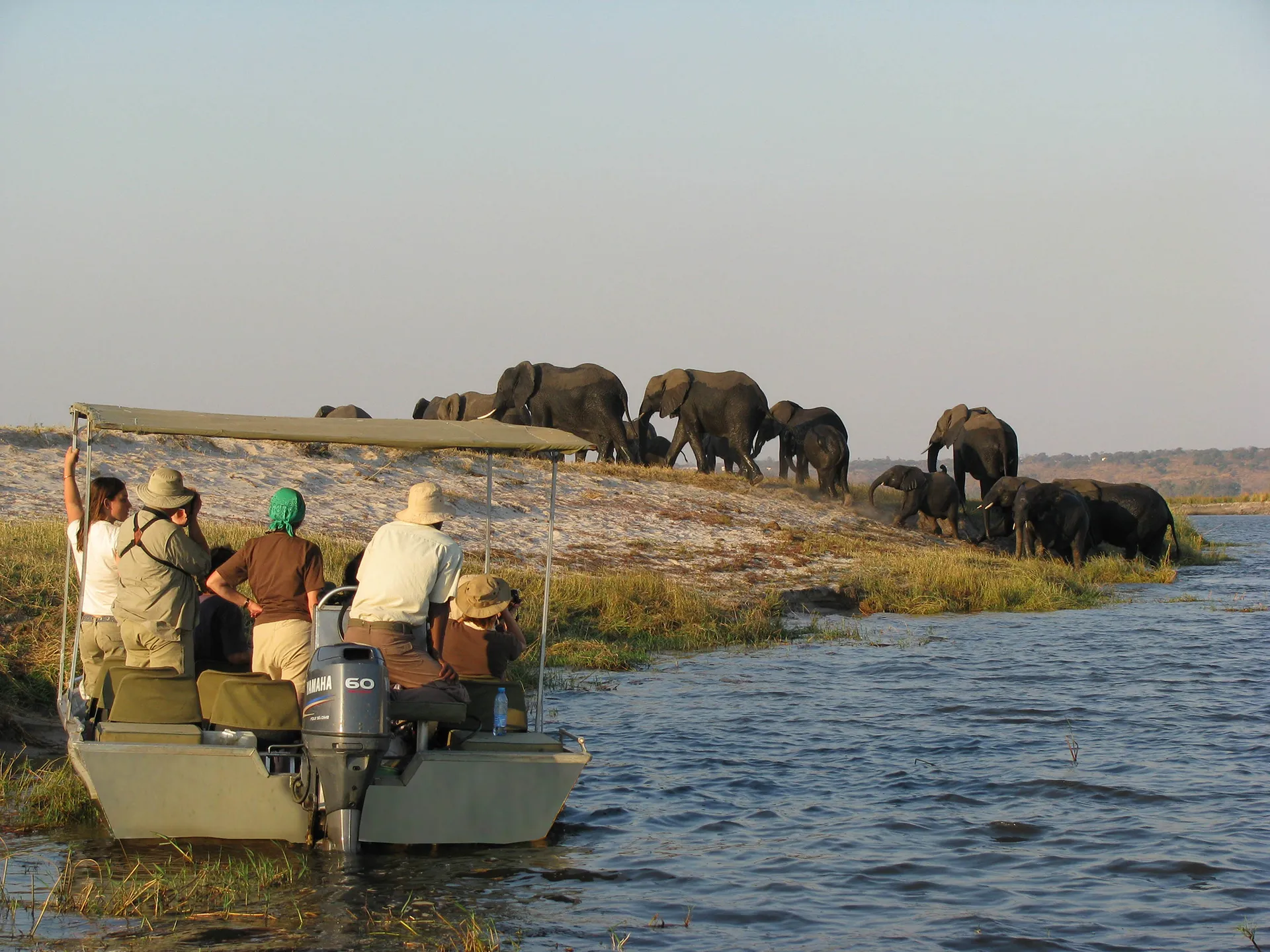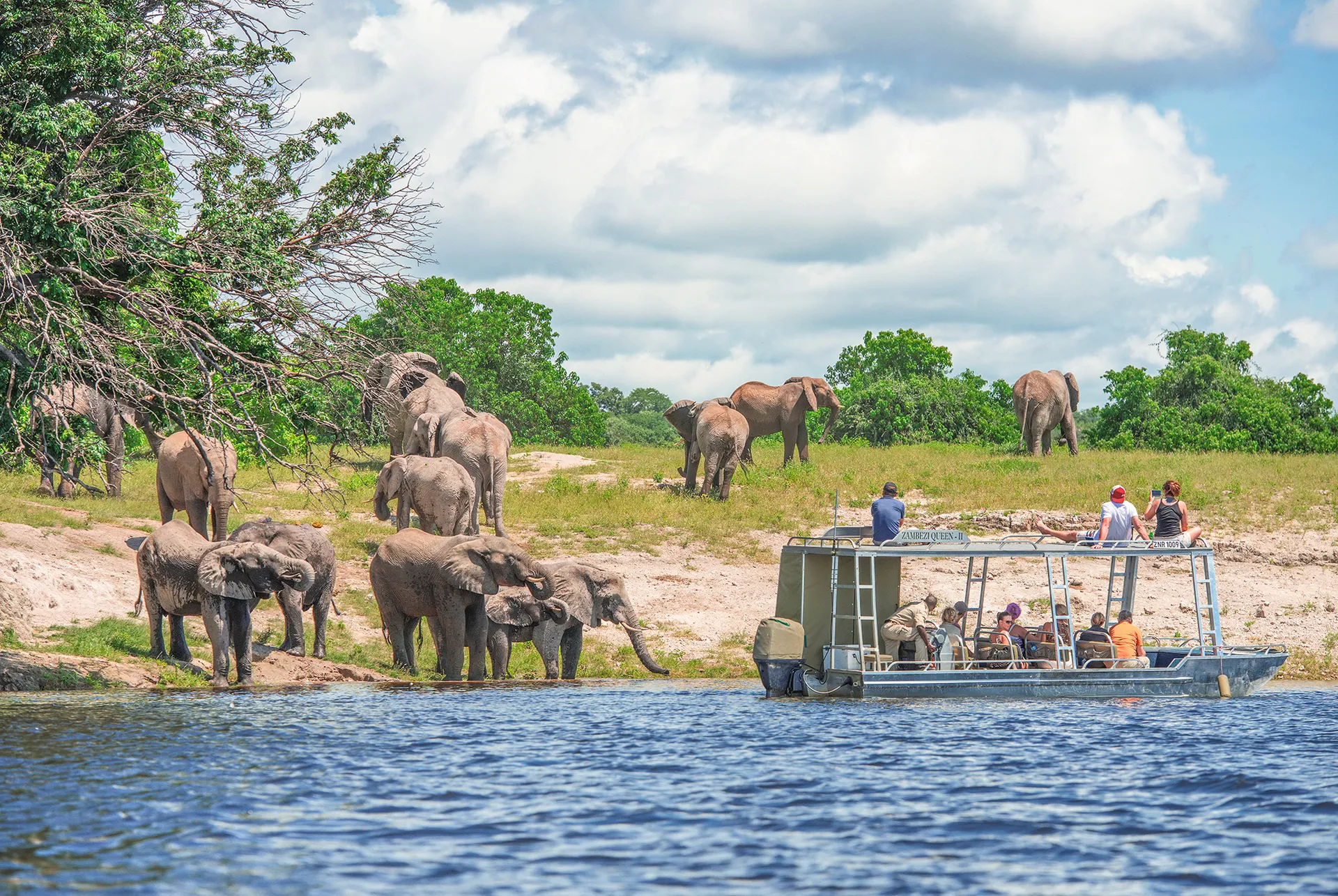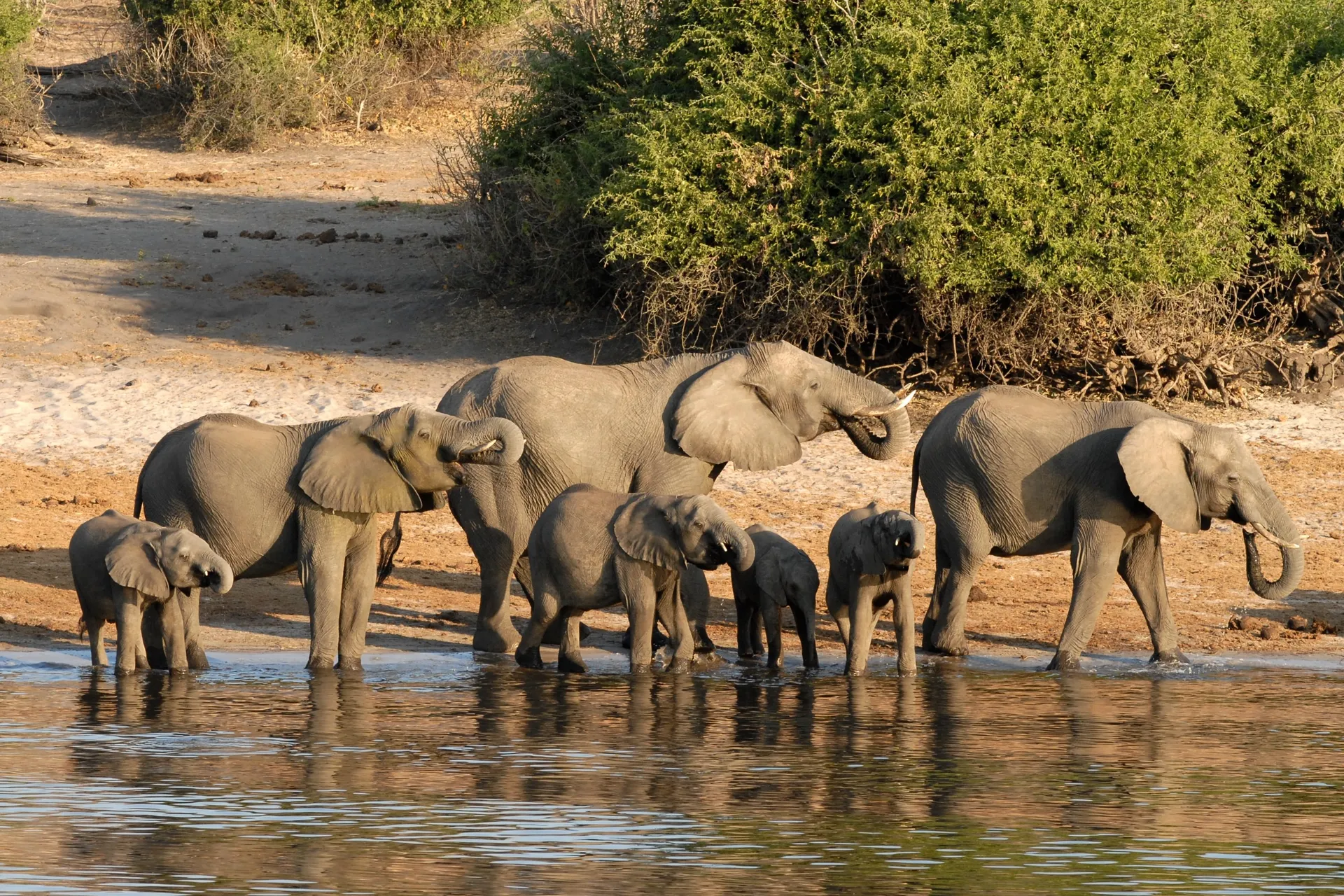
Along the northern border of Botswana, where the Chobe River draws a liquid boundary with Namibia before feeding into the vast Zambezi system, Chobe National Park harbors the largest elephant concentration on Earth. An estimated 120,000 elephants roam the park’s 11,700 square kilometers—a number so vast that during the dry season, herds hundreds strong converge on the Chobe riverfront in scenes that defy the conventions of wildlife photography. This is not merely a national park; it is an ecosystem operating at a scale that reminds visitors what Africa looked like before the modern era.
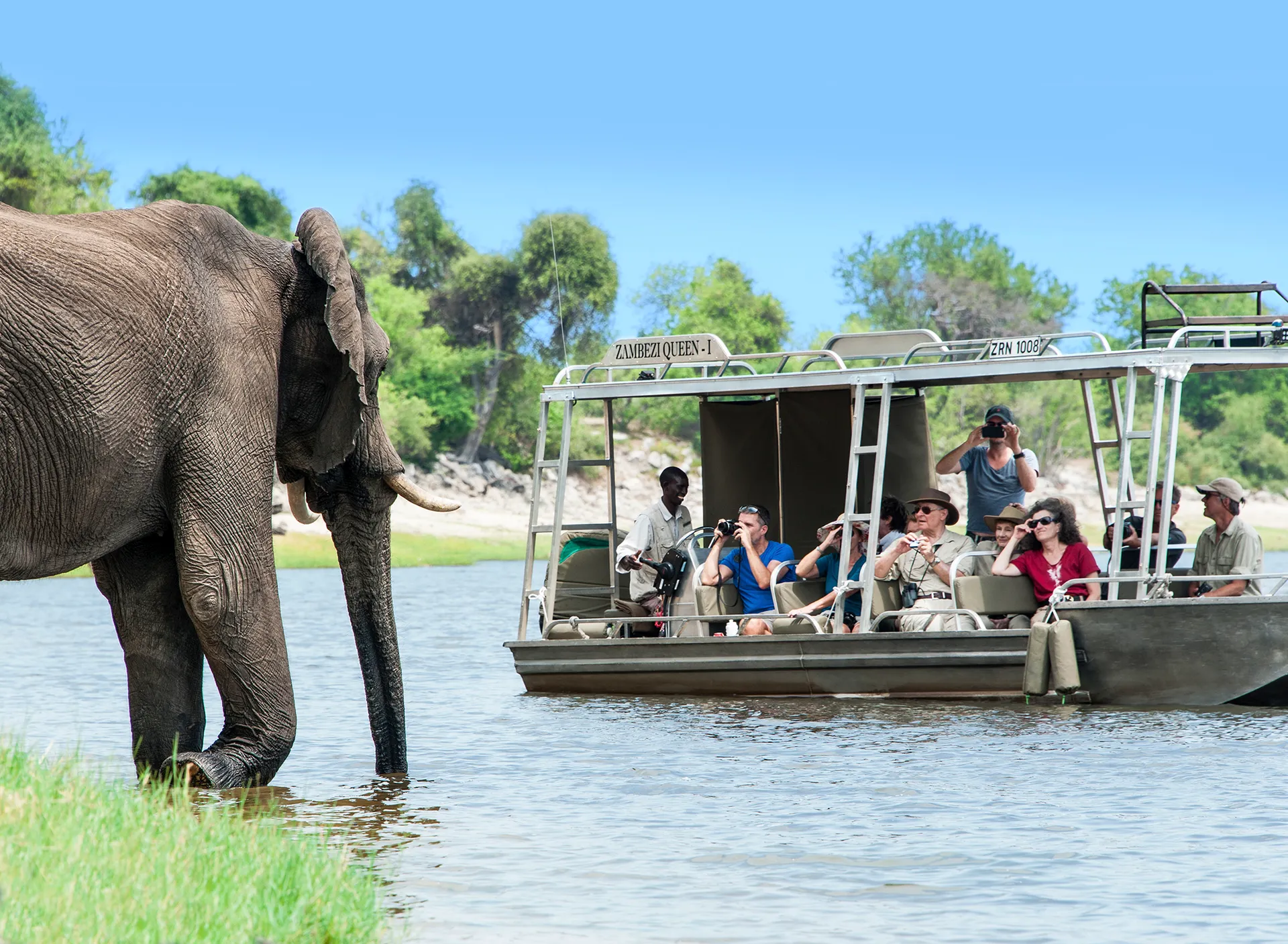
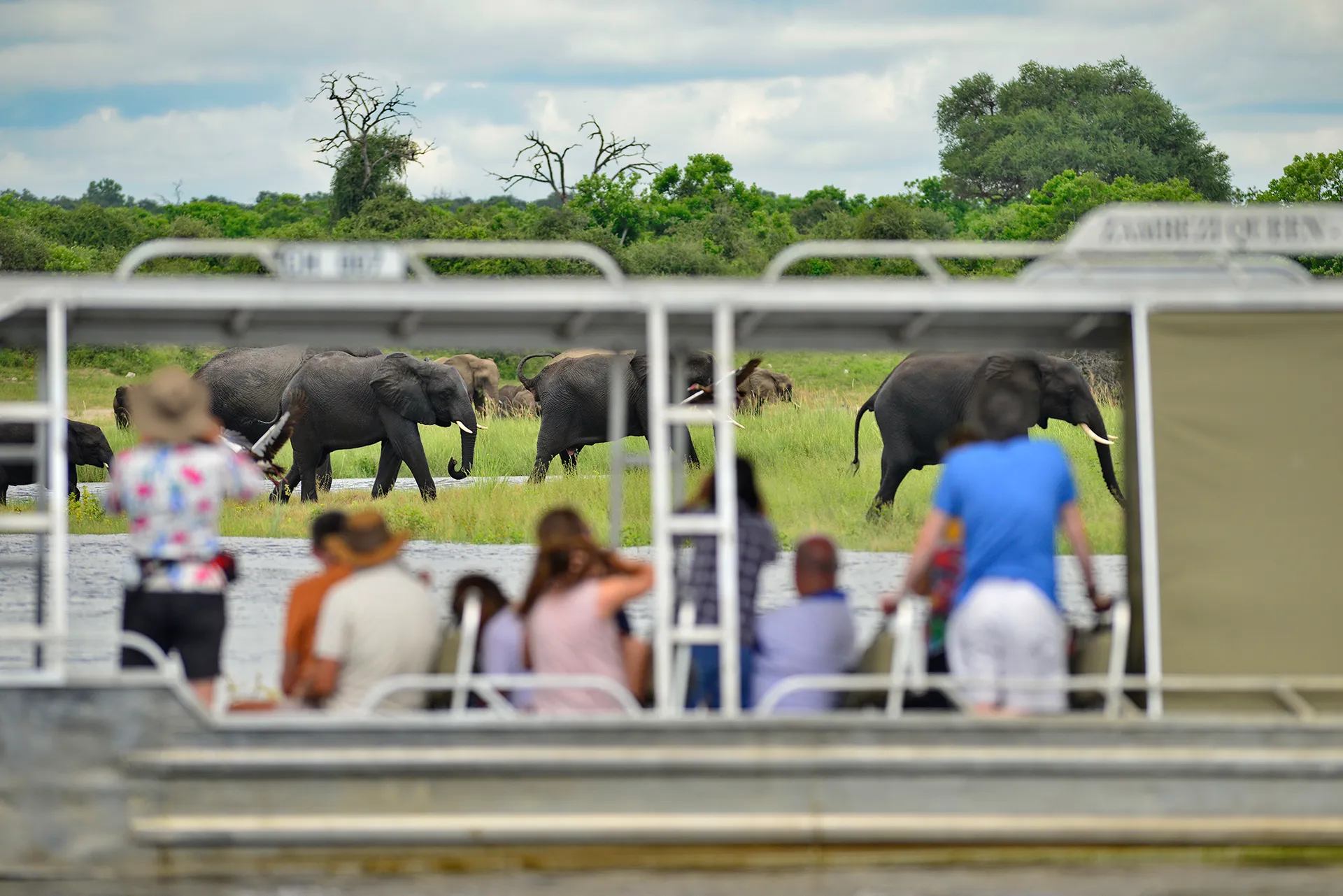
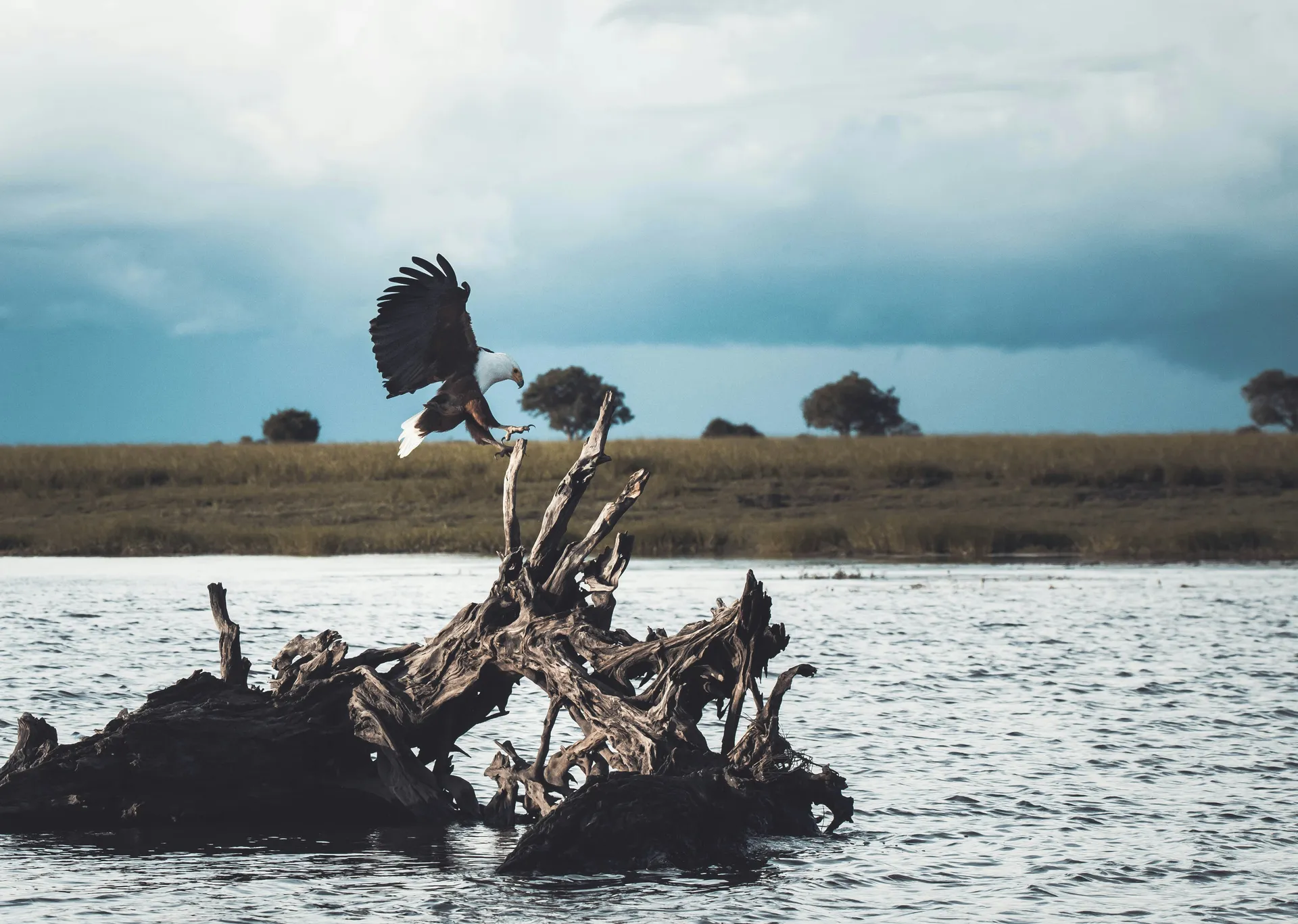
The Chobe riverfront—the park’s most accessible and dramatic zone—stages its greatest performances between May and October, when the dry season concentrates wildlife along the water’s edge. Boat safaris along the Chobe River provide a perspective unavailable in most African parks: eye-level encounters with elephants swimming across the river, hippo pods surfacing in choreographed exhalations, and crocodiles basking on sandbanks while fish eagles call from riverside trees. The afternoon light on the Chobe—golden, diffused by the river’s humidity—is considered among the finest in Africa for wildlife photography.
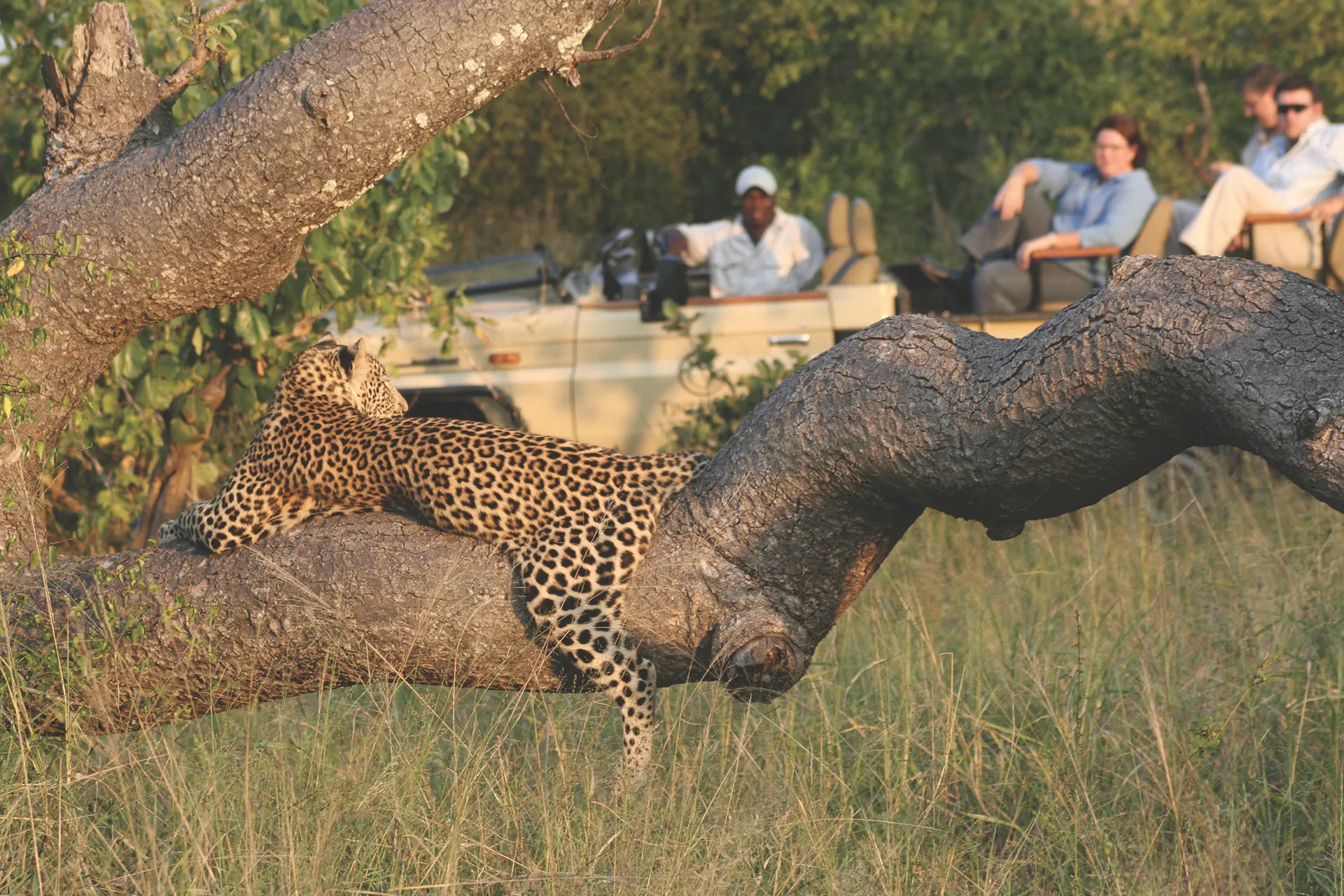
Beyond the riverfront, Chobe encompasses diverse habitats rarely seen by casual visitors. The Savuti Marsh, in the park’s west, is famous for its lion prides that have learned to hunt elephants—a behavior documented nowhere else and the subject of numerous wildlife films. The Linyanti Marshes, in the northwest, offer exclusive safari experiences in private concessions where guest numbers are strictly limited. The interior’s mopane woodland and Kalahari sandveld support wild dog packs, sable antelope, roan antelope, and leopards that drape themselves in riverside trees.
Kasane, the gateway town on the park’s northeastern tip, sits at the extraordinary junction of four countries: Botswana, Namibia, Zambia, and Zimbabwe. This geographic quirk means that Victoria Falls—the world’s largest waterfall by combined width and height—lies just 80 kilometers away, making Chobe a natural pairing with one of Africa’s other superlative attractions. The town’s lodges and restaurants serve Botswanan cuisine including seswaa (pounded beef), morogo (wild spinach), and vetkoek (fried dough), alongside international fare catering to the safari set.
CroisiEurope, Scenic River Cruises, and Tauck feature Chobe in their southern African itineraries, with river-based exploration perfectly suited to the park’s character. The Chobe River essentially functions as a floating game drive route, with the added advantage of approaching wildlife from the water—a less intrusive method that yields remarkably close encounters. The dry season (May–October) is prime time, when receding waters compress the animal kingdom into the riverfront corridor, but the green season (November–April) brings migrant birds, dramatic thunderstorms, and newborn animals that add different dimensions to the safari experience.